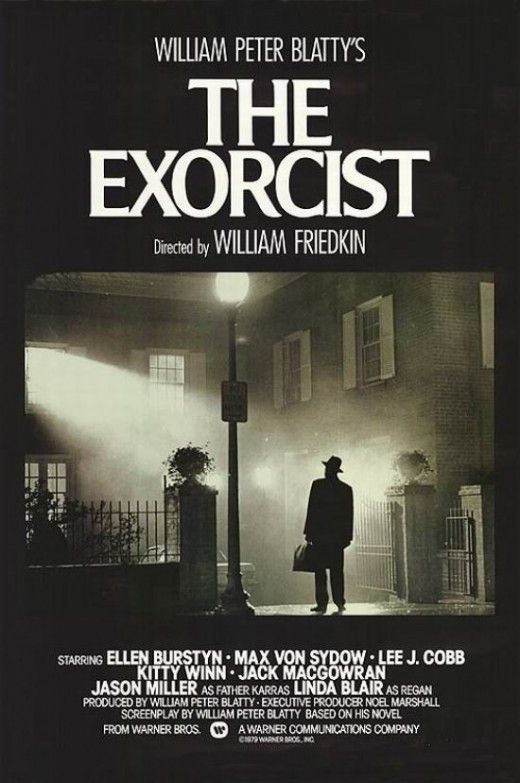
When I think of horror movies..this one tops the list. I don’t get scared easily and slasher films make me laugh more than anything. This film is different to me than other horror movies. It’s been copied with sometimes awful results.
I got to see this in a theater in 2000 on Halloween at the re-release of the director’s cut. It was an experience I’ll never forget. The place was full of teenagers who were scared even though they had seen more modern horror movies but this one still worked.
When it was released in 1973 it was a huge success. Lines wrapped around street corners waiting to get in to see this. It broke records across the nation in most theaters it opened. The Exorcist went on to gross $232.91 million (1.6 Billion adjusted to today) domestically. The Exorcist film has grossed over $441 million at the worldwide box office.
I remember firsthand how this was handled by theaters. My cousin was pregnant at the time this movie premiered in 1973 and they would not let her in to see the movie because they did not want to be liable.
People were fainting or becoming ill at almost every show. This movie has its place firmly in 70’s pop culture.
Stephen King: [The Exorcist] is a film about explosive social change, a finely honed focusing point for that entire youth explosion that took place in the late sixties and early seventies. It was a movie for all those parents who felt, in a kind of agony and terror, that they were losing their children and could not understand why or how it was happening.
I would not call it a great movie, no one would ever mistake this with Citizen Kane but it is a very interesting sci-fi – horror movie. When I first watched this movie…I did not know what it was about and I ended up liking the twist. I wanted to know where the term came from…Katherine Ross is great as Joanna. I have not watched the remake of it nor have I read the book. I liked how this movie draws you in suburbia only to start hinting at things that were not completely right with the Stepford Wives.
A husband and wife with kids (one kid being future 80s star Mary Stuart Masterson) move from New York City to Fairfield County, Connecticut to a suburb called Stepford. Walter Eberhart (Joanna’s husband) made the decision to move here without much input from Joanna. She is not happy about the move but tries to make the best out of it. Walter joins a men’s social club and Joanna starts noticing the wives not acting normal. All they talked about is cleaning and cooking and are happy all of the time. All the wives have model looks, spotless houses, and are sickeningly optimistic.
Joanna meets two other women (Bobbie and Charmaine) who notice the same thing and together they start investigating what is going on.
After Charmaine takes a trip with her husband, Joanna and Bobbie notice that when she returns she is not the same anymore. She is just like the others. They both at first think the men are adding something to the water but it is much worse than that.
It’s interesting to see Tina Louise from Gilligans Island in this as Charmaine.
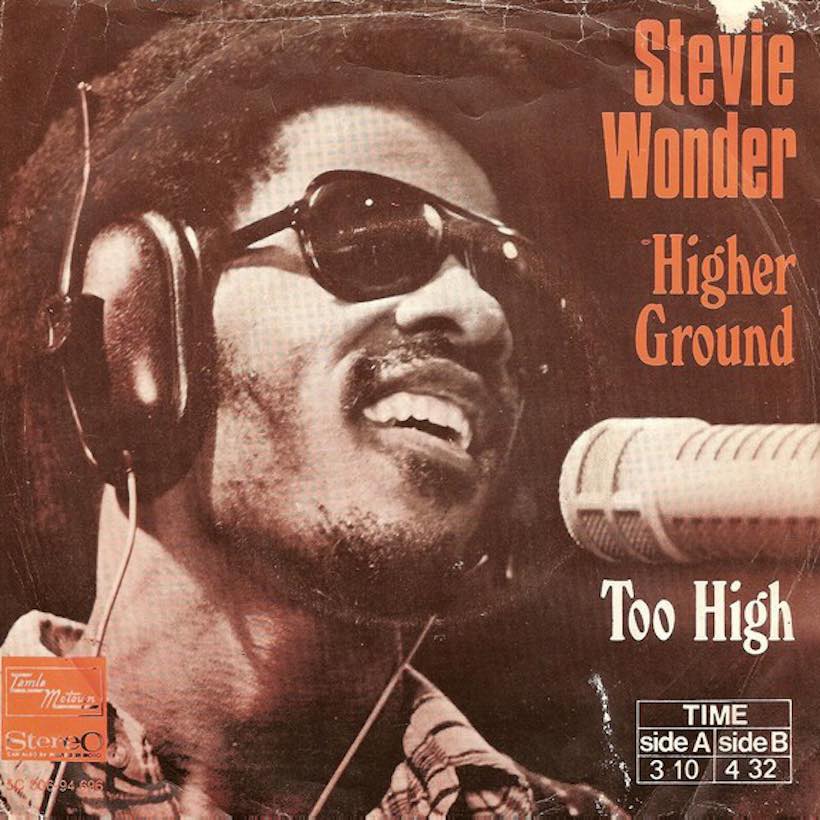
Stevie Wonder in the 60s and 70s was unbeatable. Not discounting his 80s output but for me, it’s hard to beat his 70s output.
Higher Ground peaked at #4 in the Billboard 100, #29 in the UK, and #9 in Canada. The song was on the album Innervisions ($4) released in 1973. Right after the album was released Stevie was riding in a car when it collided it with a logging truck. Some logs crashed through the windshield and hit Stevie. He was in a coma for 4 days with a severe brain contusion.
Steve Wonder on the song: I would like to believe in reincarnation. I would like to believe that there is another life. I think that sometimes your consciousness can happen on this earth a second time around. For me, I wrote “Higher Ground” even before the accident. But something must have been telling me that something was going to happen to make me aware of a lot of things and to get myself together. This is like my second chance for life, to do something or to do more, and to value the fact that I am alive.
From Songfacts
The lyrics deal with getting a second chance (“So darn glad he let me try it again”) and making the most of it. Strangely, Wonder recorded it three months before he was almost killed on his way to a benefit concert in Durham, North Carolina. The car he was riding in was behind a truck carrying a load of logs, which stopped suddenly, sending a log through the windshield and hitting Wonder in the head. The accident put Wonder in a coma for four days. His road manager and good friend, Ira Tucker Jr., knew that Stevie liked to listen to music at high volume, so he tried singing this song directly into his ear. At first he got no response, but the next day, he tried again and Wonder’s fingers started moving in time with the song – the first sign that he was going to recover.
Recalling his time in the coma, Wonder said, “For a few days I was definitely in a much better spiritual place that made me aware of a lot of things that concern my life and my future and what I have to do to reach another higher ground. This is like my second chance for life, to do something or to do more and to face the fact that I am alive.”
Innervisions was released on August 3, 1973, just three days before Wonder’s accident.
Guided by a mix of Christian morality and astrological mysticism, Wonder believed he was writing a “special song” whose lyrics suggested a coming day of judgment. “I did the whole thing in three hours” he told Q magazine. It was almost as if I had to get it done. I felt something was going to happen. I didn’t know what or when, but I felt something.”
When he turned 21, Wonder renegotiated his deal with Motown Records, taking control of his recordings by forming his own production and publishing companies. Motown was very regimented in terms of what musicians and producers were used on recordings, but Stevie wanted to do most of this work himself. In 1971, he teamed with the engineers Robert Margouleff and Malcolm Cecil and began a constant cycle of recording in which he played most of the instruments himself. On this track, Wonder is the only credited musician, listed as playing Hohner clavinet, drums, and Moog bass.
In 1993 UB40 included a cover version on their Promises And Lies album that reached #45 in the US and #8 in the UK.
Wonder was a huge influence on The Red Hot Chili Peppers, who remade this with a more uptempo beat on their Mother’s Milk album. They even thank him in the lyrics by adding the phrase “You know what Stevie says.” Their version helped introduce many listeners to Wonder. >>
Wonder sang an a cappella version of this song with Alicia Keys at the Grammy Awards in 2006.
Higher Ground
People keep on learnin’ Soldiers keep on warrin’ World keep on turnin’ ‘Cause it won’t be too long
Powers keep on lyin’ While your people keep on dyin’ World keep on turnin’ ‘Cause it won’t be too long
I’m so glad that he let me try it again ‘Cause my last time on earth I lived a whole world of sin I’m so glad that I know more than I knew then Gonna keep on tryin’ Till I reach my highest ground
Lovers keep on lovin’ Believers keep on believin’ Sleepers just stop sleepin’ ‘Cause it won’t be too long Oh no
I’m so glad that he let me try it again ‘Cause my last time on earth I lived a whole world of sin I’m so glad that I know more than I knew then Gonna keep on tryin’ Till I reach my highest ground
Woo! Till I reach my highest ground No one’s gonna bring me down Oh no Till I reach my highest ground
Don’t let nobody bring you down (they’ll sho ‘nough try) God is gonna show you higher ground
There is probably not a song on Who’s Next that hasn’t been played to death…but I dont’ hear this one as much as some of the others.
One of my favorite Keith Moon drum tracks… It’s not the most noticeable part he played but no other drummer would have played it this way. I included an isolated drum track of this song at the bottom.
Pete Townshend wrote this and sang it… it was part of his “Lifehouse” project, which was a film script featuring The Who in a future world where rock ‘n’ roll saves the masses. The Who scrapped plans for the concept double album and released most of the songs on Who’s Next…pretty much agreed their best album and one of the best in rock.
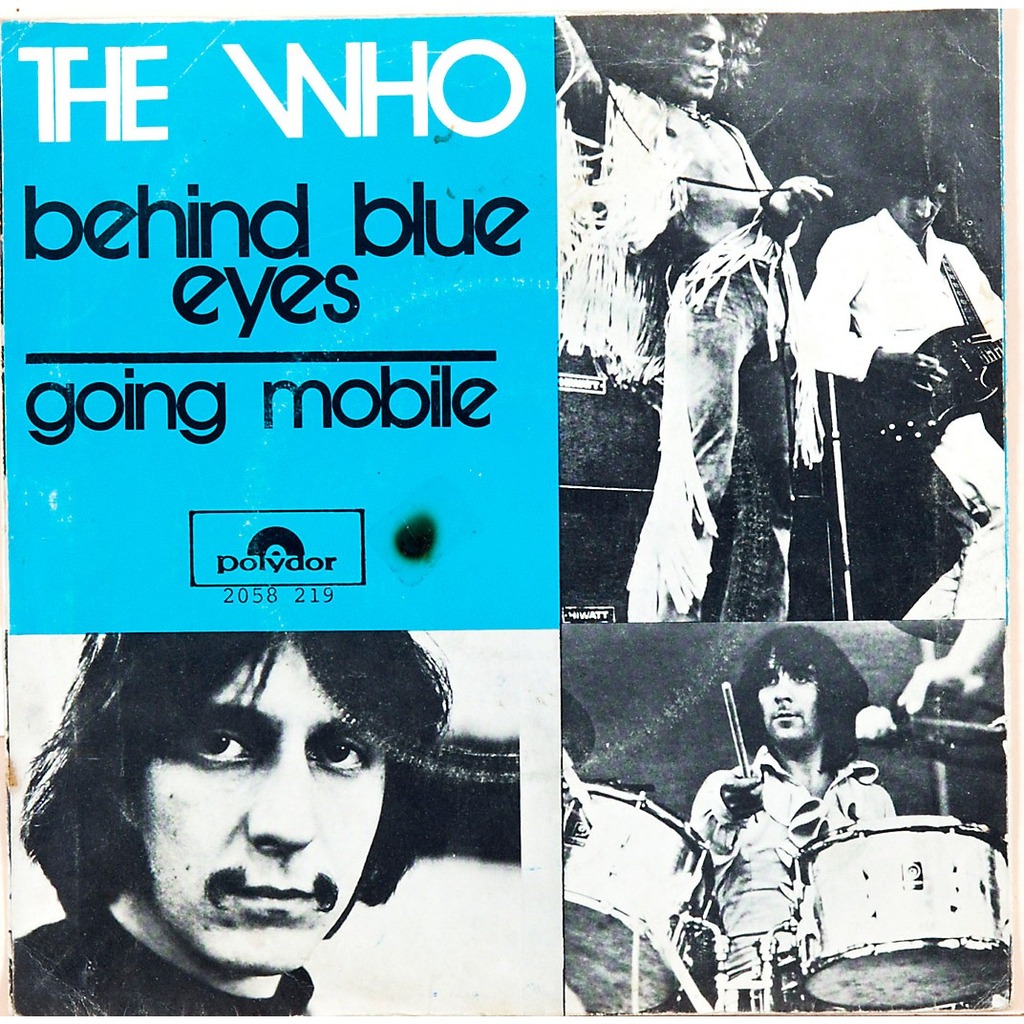
The song was the B side to Behind Blue Eyes in 1971.
From Songfacts
This is about taking a vacation by riding around in a car with no particular destination. It was something Pete Townshend liked to do.
This was much lighter and more simplified than the other songs on the album.
For the solo, Townshend ran his guitar through a device called an Envelope Follower. It was a type of synthesizer distortion that made it sound like he was playing under water.
Keith Moon’s isolated drums on Going Mobile
Going Mobile
I’m going home And when I want to go home, I’m going mobile Well I’m gonna find a home on wheels, see how it feels, Goin’ mobile Keep me moving
I can pull up by the curb, I can make it on the road, Goin’ mobile I can stop in any street And talk with people that we meet Goin’ mobile Keep me moving, mmm
Out in the woods Or in the city It’s all the same to me When I’m driving free The world’s my home When I’m mobile, ey woo, beep beep
Play the tape machine Make the toast and tea When I’m mobile Well, I can lay in bed with only highway ahead When I’m mobile Keep me moving
Keep me moving Over fifty Keep me groovin’ Just a hippie gypsy Come on move now Movin’ Keep me movin’ yeah
Keep me movin’, movin’, movin’, yeah Movin’ yeah Mobile, mobile, mobile, mobile, mobile, mobile, mobile
I don’t care about pollution I’m an air-conditioned gypsy That’s my solution Watch the police and the taxman miss me! I’m mobile! Oh yeah he he Mobile, mobile, mobile, yeah
A great little pop/rock song. The song was on the album Labor of Lust and the album peaked at #31 in the Billboard Album Charts in 1979. Rockpile recorded this album and at the same time recorded Edmunds solo album Repeat When Necessary.
12 was popular with this song…The song peaked at #12 in many charts… Billboard 100, Canada RPM, New Zealand, and the UK… In Ireland, it only reached #19.
Nick Lowe said about the song: “I wrote that when I was with a band, Brinsley Schwarz, that I was with from the early ’70s to about the mid-’70s. … We recorded it on a demo, it never came out, and when I signed to Columbia Records the A&R man [Gregg Geller] there at the time suggested I record it again. And I didn’t think it would do anything, but he kind of bullied me into it.”
The video featured Nick’s wife Carlene Carter who had just got married Nick shortly before and included some real footage of the ceremony in the video. Rockpile guitarist Dave Edmunds plays the chauffeur in the video. Drummer Terry Williams was the photographer. Guitarist Billy Bremner also got a role, playing the guy who serves the cake.
This would be Nick’s only top forty hit in Billboard.
From Songfacts
This song reflects on a lover’s rather antagonistic attitude. Nick Lowe co-wrote the song with his Brinsley Schwarz bandmate, Ian Gomm, for the Brinsley Schwarz album, It’s All Over Now, though said album was never officially released. In 1979, Lowe re-recorded the song for his second solo album, Labour of Lust.
Lowe and Gomm were hoping the song would be a pop hit for Brinsley Schwarz, and crafted it for mass consumption. Lowe only grudgingly recorded it, and he considered it an aberration – a pop sell-out song. When he performed the song on The David Letterman Show, he called it “wimpy” and had little interest in discussing it.
Lowe cribbed the phrase “cruel to be kind” from Shakespeare, who used it in Hamlet:
I must be cruel only to be kind
Thus bad begins and worse remains behind
Lowe revealed the musical influence behind this song to The A.V. Club: “I wrote with ‘The Love I Lost’ by Harold Melvin & the Blue Notes in mind.”
This was Lowe’s highest charting hit in the US, where it peaked at #12 (coincidentally, it also peaked at #12 in the UK, Canada and New Zealand). Lowe spoke to The A.V. Club about his chart success: “I remember coming to Los Angeles when it was a hit, and did that thing where you change the radio station, and it was on about two or three at the same time. You could hear it starting on one station and finishing on another. Amazing.”
The official video is a comedic reenactment of Lowe’s marriage to Carlene Carter, who plays herself in the clip.
The couple was married on August 18, 1979 after Lowe had just finished a tour with his band Rockpile. Figuring he could kill two birds with one stone, Lowe made the wedding the theme of the video, and used some actual footage of the event, turning his wedding day into a video shoot (although aren’t they all, sort of?). The day before, director Chuck Statler shot staged footage of Lowe preparing for the nuptials and Rockpile performing the song outside of the Tropicana Hotel in Los Angeles, where the reception was held.
The wedding took place at Carlene’s house in Hollywood. Guests at the wedding show up in the clip – you can spot Carter’s stepsister Rosanne Cash sitting on the couch.
Carter and Lowe toured together in 1982, opening for The Cars, with both singers sharing the same band. The couple divorced in 1990.
“We were having great fun,” Edmunds said in his Songfacts interview. “In that band, the four years we were together, we never had any falling out – it was a little club of our own.”
The drum kit in the video says “The Textones.” That’s because Rockpile didn’t have a drum kit handy, so they borrowed one from a local band. Kathy Valentine, who would later join The Go-Go’s, was a member of this band.
In 1982, Enjoh Santyuutei released a Japanese cover version of this song and in 2010, Stavros Michalakakos recorded it in Greek.
The video was one of 206 that aired on MTV’s first day of broadcasting: August 1, 1981.
Cruel To Be Kind
Oh I can’t take another heartache Though you say you’re my friend, I’m at my wit’s end You say your love is bonafide, but that don’t coincide With the things that you do And when I ask you to be nice, you say
You’ve gotta be cruel to be kind, in the right measure Cruel to be kind, it’s a very good sign Cruel to be kind, means that I love you, baby (You’ve gotta be cruel) You gotta be cruel to be kind
Well I do my best to understand dear But you still mystify and I want to know why I pick myself up off the ground To have you knock me back down, again and again And when I ask you to explain, you say
You’ve gotta be cruel to be kind, in the right measure Cruel to be kind, it’s a very good sign Cruel to be kind, means that I love you, baby (You’ve gotta be cruel) You gotta be cruel to be kind
Well I do my best to understand dear But you still mystify and I want to know why I pick myself up off the ground To have you knock me back down, again and again And when I ask you to explain, you say
You’ve gotta be cruel to be kind, in the right measure Cruel to be kind, it’s a very good sign Cruel to be kind, means that I love you baby (You’ve gotta be cruel) You gotta be cruel to be kind
(Cruel to be kind), oh in the right measure (Cruel to be kind), it’s a very very very good sign (Cruel to be kind), it means that I love you, baby (You’ve gotta be cruel) You gotta be cruel to be kind
(Cruel to be kind), oh in the right measure (Cruel to be kind), yes it’s a very very very good sign (Cruel to be kind), it means that I love you, baby (You’ve gotta be cruel) You gotta be cruel to be kind
(Cruel to be kind), oh in the right measure (Cruel to be kind), yes it’s a very very very good sign (Cruel to be kind), it means that I love you
That guitar intro and tone hooked me into this song. Gray said in an interview that the song’s hook of “Gimme the beat boys and free my soul” has been misheard and incorrectly sung as “Gimme the Beach Boys,” “Gimme the wheat boys” (proposed for a cereal commercial), “Gimme the peat moss,” and “Gimme the meatballs.”
The song was recorded at Quad Studio in Nashville. Drift Away was written by producer/songwriter Mentor Williams in 1973. Mentor is the brother of Paul Williams.
The Rolling Stones recorded a version of Drift Away for their “It’s Only Rock and Roll” album in November of 1973 but it didn’t make the album and has never been released except on bootlegs.
Drift Away peaked at #5 in the Billboard 100 in 1973.
From Songfacts
This was originally sung by John Henry Kurtz, an actor whose 1972 Reunion album also featured Kenny Loggins and a cover of Loggins’ “Danny’s Song.”
Virtuoso guitarist and session man Reggie Young Jr. played on this track, which is known for its distinctive intro. His son, Reggie Young III, told us that his father had to re-learn the signature guitar lines for a live radio broadcast around 1993, when Lonnie Mack did a special out of Nashville and invited several people to perform as guests. Said Young, “Dobie Gray asked my father to join him in playing ‘Drift Away’ live. This was the first time since 1973 that they had played the song together. In the ’80s my father was showing another guitar player how to play the intro to ‘Drift Away,’ but the other guy said he thought that my father was playing it wrong. In fact he was playing in the wrong key. Also, when this was re-recorded in 1997 for Gray’s CD Diamond Cuts, he declined, as he didn’t think he could do it any better than he did on the original.”
In 2002, Gray recorded this as a duet with Uncle Kracker. When this track reached the Billboard top 10 in 2003, 30 years later, Gray broke the record for the biggest gap between top US top 10 appearances.
His record of 30 years, two months and one week was broken in 2018 by Andy Williams. The late crooner had a gap of 47 years, eight months and three months between his two visits to the upper reaches of the chart with “It’s the Most Wonderful Time of the Year” in 2018 and “(Where Do I Begin) Love Story” in 1971.
This song was not only a commercial breakthrough for Mentor Williams but also a breakthrough as a recording project. He explained to American Songwriter MagazineMarch/April 1988: “I think one of the hardest things for me to learn about songwriting was to really expose my feelings and weaknesses and to write personal, emotional things. As soon as I started doing that, I realized other people were relating to my songs. You can study how to write and spend a lot of time writing, but without this emotional content in a song, it’s just not there. ‘Drift Away’ was a big breakthrough for me. It was a song where it suddenly was okay for me to write about being hurt and let people know that I had been hurt and I wasn’t afraid to expose my feelings.”
The updated version with Uncle Kracker holds the record for the longest run atop the Adult Contemporary chart, having reigned for 28 weeks in 2003-04.
This has been featured in several movies, including the 1988 comedy Heartbreak Hotel (starring David Keith as Elvis Presley), the 2003 drama Wonderland (starring Val Kilmer), and 2006 sports biopic Invincible (starring Mark Wahlberg). It was also used on The Office (US), in the 2007 episode “Product Recall.”
Drift Away
Day after day I’m more confused So I look for the light in the pouring rain You know that’s a game that I hate to lose I’m feelin’ the strain, ain’t it a shame
Oh, give me the beat boys, and free my soul I want to get lost in your rock and roll and drift away
Beginning to think that I’m wastin’ time I don’t understand the things I do The world outside looks so unkind I’m countin’ on you to carry me through
And when my mind is free You know a melody can move me And when I’m feelin’ blue The guitar’s comin’ through to soothe me Thanks for the joy that you’ve given me I want you to know I believe in your song Rhythm and rhyme and harmony You help me along makin’ me strong
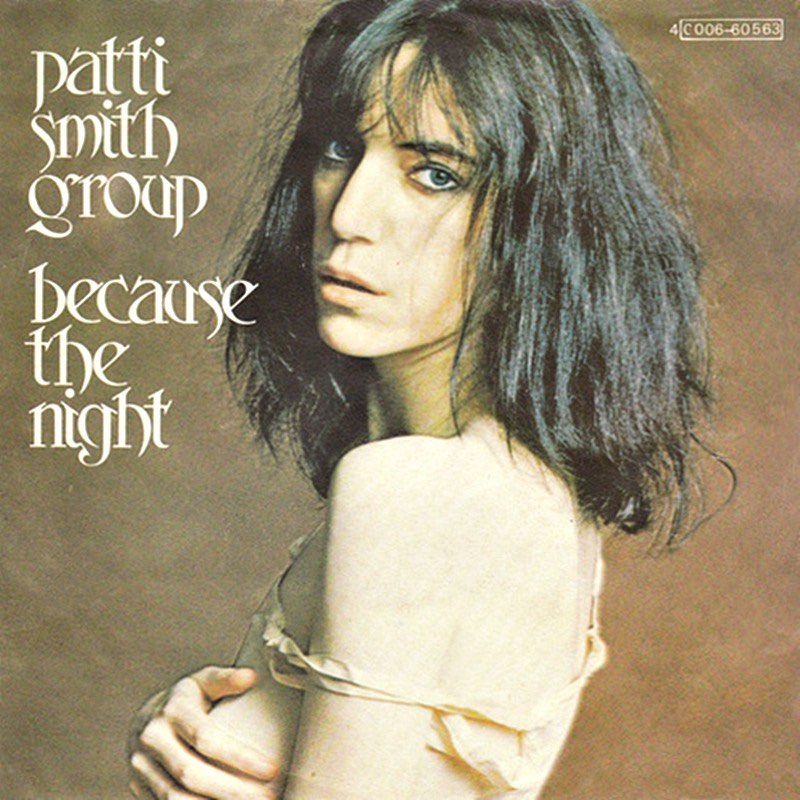
Patti Smith has always had a cult following and is in the Rock and Roll Hall of Fame yet this is her only top 40 hit…it peaked at #13 in the Billboard 100 ad #5 in the UK in 1978.
Bruce Springsteen started writing this song in 1976, but he couldn’t come up with verses. He couldn’t finish it but he couldn’t record it anyway because he was in a legal battle with his manager, Mike Appel, that kept him from recording for almost three years.
The song lay dormant until his producer, Jimmy Iovine, convinced him to give a copy to Patti Smith, who eventually got around to filing in the verses and recording the song. Iovine was also producing Smith’s Easter album and convinced her to record it for the set.
Bruce talked about the song: “It was a love song and I really wasn’t writing them at the time. I wrote these very hidden love songs like For You, or Sandy, maybe even Thunder Road, but they were always coming from a different angle. My love songs were never straight out, they weren’t direct. That song needed directness and at the time I was uncomfortable with it. I was hunkered down in my samurai position. Darkness… was about stripping away everything – relationships, everything – and getting down to the core of who you were. So that song is the great missing song from Darkness On The Edge. I could not have finished it as good as she did. She was in the midst of her love affair with Fred ‘Sonic’ Smith and she had it all right there on her sleeve. She put it down in a way that was just quite wonderful.”
From Songfacts
For many not familiar with Smith’s career or the history of punk, this is the only recognizable song of hers. The producers of the 2013 movie CBGB played to this audience when they portrayed Smith singing this song at the famous club in 1975 – two years before she recorded it and a year before it was written. In the film, Smith is played by Mickey Sumner, who is Sting’s daughter.
Smith wrote the verses in one night in 1977 while waiting for her boyfriend, Fred “Sonic” Smith, to call. Fred, a founding member of the MC5, lived in Michigan and performed with his band Sonic’s Rendezvous; Patti was in New York. They relied on phone calls to stay in touch, but they were both poor and long distance calls were very expensive, so they limited their talks to about once a week, always at night when the rates were cheaper. One night, Patti was expecting his call at 7:30, but it didn’t come. That’s when she played Springsteen’s cassette demo for the first time, listening to it over and over while she wrote lyrics about her yearning love. She got rather specific:
Love is a ring, a telephone
By the time Fred called around midnight, the song was done. This was very unusual for her, as she typically took a lot longer to compose lyrics.
Springsteen didn’t release a studio version of this song until 2010 for his album The Promise, but he often played it at his live shows with different lyrics. The first time his version was released came in 1986 on the boxed set Live 1975-1985.
Smith’s producer on the Easter album was Jimmy Iovine, who would go on to great things as a producer and entrepreneur, but was still getting started in the business at the time. “Because The Night” was his first hit as a producer, and he credits Bruce Springsteen for granting him the opportunity. Iovine had worked on Bruce’s 1975 Born To Run album, and Springsteen gave him the song to deliver to Smith. This “really launched by career,” Iovine said.
Smith was hesitant to use a song written by someone else, and even after writing the verses she wasn’t sure she would record it. Jimmy Iovine and her band members helped convince her to give it a go. “In the end, we were a good match for that particular song,” she told Billboard. “I could have never written a song like that. I’d never write a chorus like that.”
10,000 Maniacs covered this song in 1993, outcharting Smith at #11 US. When Smith’s husband (and the song’s muse), Fred, died of a heart attack on November 11, 1994, at age 45, royalties from that cover helped keep her solvent financially – she had two young children, son Jackson and daughter Jesse, and little money.
The song became a lasting tribute to Fred; Smith later took to performing it with Jackson and Jesse, who became musicians.
Springsteen and Smith performed the song together at the Tribeca Film Festival in New York on April 23, 2018. Smith said: “This song always makes me think of three men: Fred ‘Sonic’ Smith who inspired it, Jimmy Iovine who produced it, and Bruce Springsteen who wrote it.” Springsteen insisted they sing her lyrics, not the ones he typically sang.
This wasn’t the first time they shared a stage: Springsteen joined Smith onstage several times from 1976-1977, while legal battles kept Bruce from recording.
Smith bought her dad a new 1978 Cordoba with the money she made from this song.
Because The Night
Take me now, baby, here as I am Pull me close, try and understand Desire is hunger is the fire I breathe Love is a banquet on which we feed
Come on now try and understand The way I feel when I’m in your hands Take my hand come undercover They can’t hurt you now Can’t hurt you now, can’t hurt you now Because the night belongs to lovers Because the night belongs to lust Because the night belongs to lovers Because the night belongs to us
Have I doubt when I’m alone Love is a ring, the telephone Love is an angel disguised as lust Here in our bed until the morning comes
Come on now try and understand The way I feel under your command Take my hand as the sun descends They can’t touch you now Can’t touch you now, can’t touch you now Because the night belongs to lovers Because the night belongs to lust Because the night belongs to lovers Because the night belongs to us
With love we sleep With doubt the vicious circle Turn and burns Without you I cannot live Forgive, the yearning burning I believe it’s time, too real to feel
So touch me now, touch me now, touch me now
Because the night belongs to lovers Because the night belongs to lust Because the night belongs to lovers Because the night belongs to us Because tonight there are two lovers If we believe in the night we trust Because the night belongs to lovers Because the night belongs to lust Because the night belongs to lovers Because the night belongs to us
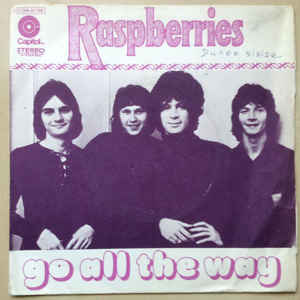
This was before Eric Carmen went solo and started doing ballads. One of my favorite Power Pop groups. This song was the big one…their only top 10 hit but they had 4 top 40 songs altogether. Go All The Way peaked at #5 in the Billboard 100 in 1972. The song has a mixture of Who, Beatles, and Beach Boys styles.
It’s back in popularity because of the Guardians of the Galaxy movie.
From Songfacts
Raspberries lead singer and bass player Eric Carmen wrote this song. He went on to fame as a solo artist (“Hungry Eyes”) and songwriter (“All By Myself”).
This song is about a girl trying to convince a guy to “Go all the way,” meaning to have sex with him. Carmen told Blender magazine in 2006 that he was inspired by The Rolling Stones performance of “Let’s Spend The Night Together” when Mick Jagger had to sing it as “Let’s spend some time together.”
Said Carmen, “I knew then that I wanted to write a song with an explicitly sexual lyric that the kids would instantly get but the powers that be couldn’t pin me down for.”
The Raspberries dressed in matching suits. “Go All The Way” was part of their first album, and it was their only hit. They made two more albums before breaking up.
The album contained a raspberry-scented scratch-and-sniff sticker.
When the group was trying to think of a name, one of the four members rejected a suggestion with the phrase, “Aw, Raspberries” (an old Our Gang line). They had their name. , IL)
Eric Carmen explained: “I remember ‘Go All The Way’ vividly. The year was 1971. I was 21. I had been studying for years. I had spent my youth with my head between two stereo speakers listening to The Byrds and The Beatles and later on The Beach Boys – just trying to figure out what combinations of things – whether it was the fourths harmonies that The Byrds were singing on ‘Mr. Tambourine Man’ – I must have worn out 10 copies of that first Byrds album listening to it over and over, and turning off the left side and turning on the right side trying to figure out why these certain combinations of instruments and echo and harmonies made that hair on your arms stand up. I did the same thing with Beatles records, and I tried to learn construction.
Then I went to school on Brian Wilson. That was a real breakthrough for me because he was doing things that I thought were so incredibly sophisticated before anybody was doing anything even close. The Pet Sounds album is, to me, the best pop album of all time. Brian introduced me to the idea of writing a bridge for a song that really had nothing to do with the verse and chorus.
In the early days, I spent a lot of time concentrating on writing bridges that took you someplace that you didn’t expect to go. Many songwriters wrote a song, the song’s in the key of C, it comes time for a bridge and they go to A minor. That bored me. Brian would go to E flat or somewhere strange, and he managed to do it smoothly. He also had a way of delivering you out of the bridge in such a way that you felt like maybe the song had modulated up a step, but you were really back in the original key. That, to me, was artwork. So when I sat down to write ‘Go All The Way,’ there were a couple things I had in mind. I thought, ‘What part of the song is it that people really want to hear? It’s the chorus.’ As a result of all that, ‘Go All The Way’ has a 10-second verse, and then the chorus is a minute long. I figured just to get to the chorus as fast as I can. That was the plan behind the song. I repeated that when I wrote ‘I Wanna Be With You.'”
This was an early example of “Power Pop,” which were rock songs with radio-friendly hooks.
The title was inspired by a book Carmen came across by Dan Wakefield called Going All The Way.
The Killers covered this song for the 2012 film Dark Shadows.
This song appears in the 2000 film Almost Famous but was not included on the soundtrack. It did make the soundtrack to the 2014 film Guardians Of The Galaxy, which went to #1 in America and revived many ’70s hits.
Go All The Way
I never knew how complete love could be ‘Til she kissed me and said
Baby, please, go all the way It feels so right (feels so right) Being with you here tonight Please, go all the way Just hold me close (hold me close) Don’t ever let me go
I couldn’t say what I wanted to say ‘Til she whispered, I love you
So please, go all the way It feels so right (feels so right) Being with you here tonight Please, go all the way Just hold me close (hold me close) Don’t ever let me go
Before her love I was cruel and mean I had a hole in the place Where my heart should have been
But now I’ve changed And it feels so strange I come alive when she does All those things to me
And she says (Come on) Come on (Come on) Come on (Come on) Come on (Come on) I need ya (come on) I love ya (come on) I need ya (come on) Oh, oh, baby
Please, go all the way It feels so right (feels so right) Being with you here tonight Please, go all the way Just hold me close (hold me close) Don’t ever let me go no
Most Nashvillians know her name even if they were not alive when Marcia Trimble was murdered in 1975…Nashville was never the same again.
I saw it all happen on the news when I was 8 years old. That is when I learned that the world wasn’t a nice safe place. I’ve seen it written many times…1975 is when Nashville lost its innocence. It was never crime free…no city ever is but this changed people forever here. It became high profile and went national.
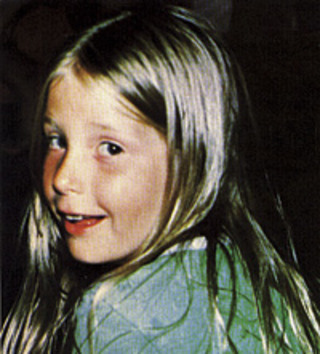
Marcia Trimble was a 9-year-old Girl Scout selling cookies on February 25, 1975, and disappeared where she lived in Green Hills…a very affluent part of Nashville then as well as now.
My Uncle Fulton was a Sergeant in the Vice Squad at that time. We were at my grandmother’s for Easter and I saw his car pulling up the drive and his three girls looked shocked. I saw him walking over to my mom so I walked over also. I remember he looked at my mom and then me and said…we found her and it’s beyond bad. He didn’t have to say who or what…we knew what he was talking about.
Marcia was found murdered and sexually assaulted under a tarp in a garage near her Green Hills home 33 days after she was declared missing.
The prime suspect was Jeffrey Womack…a then 15-year-old neighbor who had told the cops that Marcia had been by his house but he had no money and didn’t buy anything. The police later thought he kill Marcia…and he was suddenly the prime suspect… until 2008.
There has been plenty of crime here before and after this murder but none had the impact of this horrible event. I live north of Nashville but it affected everyone around middle Tennessee. At the time parents were obviously more on guard and kids would stick together while out.
From the Nashville Scene…about the neighborhood it happened in.
Former homicide Lt. Tommy Jacobs, who investigated the murder, says that for whatever reason, many of the children in the neighborhood stagnated in the years after the killing. “We interviewed the kids when they were 9 and 10 years old and went back and interviewed them 20-some-odd years later,” he says. “You won’t believe how many of the kids wound up in a mental institution or working at a gas station. Several of the kids were still living at home.”
60-year-old Jerome Sydney Barrett was convicted after DNA was examined in 2008 and he was sentenced to 44 years in prison in 2009…Barrett had killed more people in Nashville in 1975 and was finally connected to Marcia.
Jeffrey Womack, the kid that was falsely accused, was finally free of suspicion after 33 years.
This was on the album Coda it was released two years after John Bonham’s death and features outtakes from sessions throughout their career.
the song was supposed to be released as a single to coincide with their 1979 tour, but it was delayed because of production problems. This was Zeppelin’s answer to the Punk Rock groups at the time. It was recorded during the making of the In Through The Out Door album.
I don’t think it would have fit well on In Through The Out Door but it is too bad they didn’t release it as a single at the time.
From Songfacts
John Bonham died before this could be released. It was included on Coda, an album of unreleased tracks.
They planned to release this under the name of a fake band so it would not be judged as a Zeppelin song and could compete against the popular Punk bands.
Led Zeppelin never performed this live, but in 1990, Page and Plant played it at the Knebworth Festival in England.
Wearing and Tearing
It starts out like a murmur Then it grows like thunder Until it bursts inside of you Try to hold it steady Wait until you’re ready Any second now will do Throw the door wide open Not a word is spoken Anything that you want to do
Ya know, ya know, ya know Ya know, ya know, ya know
Don’t you feel the same way? Don’t you feel the same way? But you don’t know what to do No time for hesitatin’ Ain’t no time for hesitatin’ All you got to do is move They say you’re feeling blue, well I just found a cure It’s a thing you gotta do, yeah
(Ya know, ya know, ya know)
Now listen, when you say your body’s aching? I know that it’s aching Chill bumps come up on you Yeah, the funny fool I love the funny fool Just like foolin’ after school? And then you ask for medication Who cares for medication When you’ve worn away the cure
(Ya know, ya know, ya know)
(Hey, hey) Go back to the country yeah, go back to the country Feel a change is good for you When you keep convincin’ Ah, don’t keep convincin’ What’s that creeping up behind a you? It’s just an old friend, it’s just an old friend And what’s that he’s got for you?
(Ya know, ya know, ya know)
Yeah, yeah, yeah I can feel it, I can feel it ? Oh, medication, medication, medication
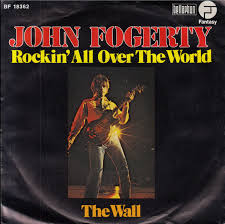
In 1975 John Fogerty was battling his old record label Fantasy and his ex-bandmates in Creedence. He released his second solo album, John Fogerty, it was released by Asylum Records in the United States and Fantasy Records internationally. The album peaked at #78 in 1975.
It contained two songs are among my favorite of Fogerty’s solo material… this one and Almost Saturday Night. Rockin’ All Over The World peaked at #27 in the Billboard 100 in 1975.
Status Quo did a cover of this song and it peaked at #3 in the UK Charts. John isn’t concerned that many people think it was written by Status Quo. He said: “It’s wonderful to have a cover that’s much better known than the original. Even at the time, when I was still lost in the woods, the fact that there was a song I’d written that was doing quite well made me feel much better.”
From Songfacts
Creedence Clearwater Revival was one of the top American acts from 1968 until their split in 1972. Their leader, John Fogerty, released an album under the name The Blue Ridge Rangers in 1973 that got away from the CCR sound, with covers of classic country songs. For his next album, released in 1975 under his own name, he wanted to re-establish himself as a rocker, which he did on this song, which is the first single.
The 2:50 “Rockin’ All Over The World” finds Fogerty singing about life as musician bringing rock to the masses, which is something he knew well. The song did well, but the album stalled at #78. The following year, Fogerty said in an interview with Phonograph Record, “When I finished it, there was something wrong that I just couldn’t put my finger on. It sounded dated in a way, like it should have come out in 1971.”
Bruce Springsteen added this song to his setlist when he toured the UK in 1981, typically playing it as part of his encore. The song would show up again on tours in 1985 and 1993, then occasionally at concerts in the ’00s and ’10s.
Typical of Fogerty’s solo work, he played all the instruments on this track and did all the vocals himself.
The British group Status Quo took this to #3 in the UK with their 1977 cover. Their guitarist Rick Parfitt got the idea to cover the song; he first heard it after a night in the studio when copious amounts of alcohol were consumed. Driving home, he stopped to pick up what he thought was a hitchhiker, but was really a mailbox. Realizing he was quite impaired, he turned on the radio and “Rockin’ All Over The World” came on, which he later suggested to the band.
“When we all heard it, it just sounded piddly to us,” Quo frontman Francis Rossi told us. “But once we’d done the track and then Rick got that kind of ‘Singin’ in the Rain’ piece on the end, it started to build into something.”
Status Quo made this the title track of their 1977 album, and embarked that year on the “Rockin’ All Over The World” tour. This tour, however, skipped America. After making stops in the US the previous four years, the group gave up on the States, where their only significant hit was the 1968 track “Pictures Of Matchstick Men.”
This was the first song performed at Live Aid. Status Quo was the opening act at the London stage, and played it first in their set, which also included “Caroline” and “Don’t Waste My Time.”
Status Quo re-recorded the song in 1988, to support Sport Aid, as “Running All Over The World” with slightly amended lyrics. The new version reached #17 in the British Singles Chart.
The song has been reworked by the supporters of several football teams. Southend United fans, for instance, began singing “Shrimping All Over the World” after the 2004 Football League Trophy final and it is now their anthem. Also supporters of the Northern Ireland national football team often sing the song, particularly on away trips, changing the lyrics to “Drinkin’ All Over the World.”
Status Quo have a devoted rock following who love this song, even thought it’s one of their poppier efforts. As Francis Rossi tells it, even in 2013 when they played the Sweden Rock festival, metal bands were clearly enjoying this song. “It went out as a single and it was just monstrous,” he said. “I don’t really understand why.”
By the time Quo were ready to film the video, bassist Alan Lancaster had moved to Australia to get married. When the band asked him to fly back for the promo, he refused. Quo’s solution was to replace him with a life-sized puppet with a guitar, its strings operated by the band’s manager from the studio ceiling. “I didn’t mind the puppet,” Lancaster told Q magazine April 2013, “But that was the first time we’d done something without all four of us.”
John Fogerty recorded his original during a dark period when he was boycotting his old Creedence Clearwater songs.
Rockin’ All Over The World
Oooh! Ah!
Well, a-here-ee-yup, a-here-ee-yup, a-here we go,
Four in the mornin’, justa hittin’ the road,
Here we go-oh! Rockin’ all over the world! Yeah.
Well, a-geedeeup, a-geedeeup, a-get away,
We’re goin’ crazy, and we’re goin’ today, here we go-oh!
Rockin’ all over the world!
[Chorus:]
Well I like it, I like it, I like it, I like it,
I la-la-like it, la-la-la, here we go-oh! Rockin’ all over the world!
Yeah! Yeah!
Well, I’m gonna tell your Mama what your Daddy do,
He come out of the night with your dancin’ shoes,
Here we go-oh! Rockin’ all over the world! Yeah.
After reading about Keith’s exploits it doesn’t surprise me this incident happened to him, what surprises me is that it didn’t happen more often.
On the 1973 tour opener at the Cow Palace in San Fransico Keith found out that Horse Tranquilizers and Brandy don’t mix with drumming. It has been said that someone slipped the tranquilizer in his drink backstage. Dougal Butler his PA said it was a Monkey Tranquilizer.
Keith was playing erratic most of the night slowing down and speeding up the tempo. The Who were coming towards the end of their set and Moon was clearly struggling. A few minutes into Won’t Get Fooled Again he ground to a halt, and left the stage. He came back and played Magic Bus and just fell over on his drums near the end of the song…he looked out of it on the video. He was soon carried off stage
Pete Townshend told the audience “We’re just gonna revive our drummer by punching him in the stomach,” “He’s out cold. I think he’s gone and eaten something he shouldn’t have eaten. It’s your foreign food…”
Pete then asked if anyone can play the drums… someone really good.
It’s hard to imagine one of the biggest bands in the world at that time asking for someone in the audience to fill in for their passed out drummer.
19-year-old Scott Halpin was there with a friend and said…“My friend was pushing me forward and saying, ‘Come on man, you can go up there and play, you can play,’” said Halpin. “He’s really the one that got me into it.”
In interviews, Halpin claimed the last thing he remembered was swallowing a shot of brandy and being introduced to the crowd by Roger Daltrey. That, and the size of Keith Moon’s kit: “It was ridiculous. The tom-toms were as big as my bass drum.” Scott did really well and Daltrey said afterward that he was really good. Halpin walked away from the kit an even bigger Keith Moon fan than before: “I only played three numbers, and I was dead.”… He talked later about the stamina that Moon must have had to play just a set.
From Wiki
Halpin was born in Muscatine, Iowa, to Elizabeth and Richard Halpin, of Muscatine. He grew up in Muscatine, showing early promise as a visual artist and musician. In the early 1970s, he moved to California, where he met his wife and lifetime collaborator Robin Young at City College of San Francisco in 1978. Halpin went on to earn an MA in Interdisciplinary Arts from San Francisco State University.
Halpin became a composer in residence at the Headlands Center for the Arts, in Sausalito, California, and played with a number of bands over the years, including The Sponges, Funhouse, Folklore, SnakeDoctor and Plank Road. While on the West Coast, Halpin and his wife managed a new wave punk rock night club, The Roosevelt, before moving to Indiana in 1995 to pursue opportunities in the visual arts.
From 1995 until his death, Halpin resided in Bloomington, Indiana, with his wife Robin and son, James. According to local newspapers in the Bloomington area, Halpin died February 9, 2008, of an inoperable non-malignant brain tumor.
Keith leaves the stage 1:13:40 … and then passes out around 1:29:48. Pete talks to the audience and asks someone to play drums 1:37:50.
I have a friend named Bob who lived in Boston in 1976. His father worked for MCA Records and he saw The Who with Moon. After the first two songs, I Can’t Explain and Substitute Moon passed out and the show was canceled. The show was rescheduled but he didn’t make it to the makeup show…he regrets it now but he got to see Moon in action for 2 songs anyway… No call out for replacements in this concert since it was so early in the show.
San Francisco and Boston are the only two occasions that I know of that Keith passed out and caused a cancellation. I sent Bob this link and told him at least he has a short audio souvenir of the concert he attended. It doesn’t have the opener Can’t Explain but it does have Substitute and Pete telling the audience about Keith at 3:22… you can hear people talking about it on this bootleg. The cause of this one was too much Brandy and downers.
Lennon wrote this when he was in The Beatles. They recorded it as a demo called “Child of Nature,” which he’d written about their trip to India to study with Maharishi Mahesh Yogi. It didn’t make it onto any Beatles albums, so Lennon used it on his Imagine album with the lyrics changed to reflect his jealous nature. It was not released as a single in 1971.
The single reached #80 in the Billboard Hot 100 in1988, in conjunction with the release of the film Imagine John Lennon.
Joey Molland and Tom Evans of Badfinger both played acoustic guitar on this track. Badfinger was signed to the Beatles-run Apple label and George Harrison recommended to Lennon, “if you need some guitar players on Imagine, use the Badfinger guys.”
John Lennon said this about the song: My song, melody written in India. The lyrics explain themselves clearly: I was a very jealous, possessive guy. Toward everything. A very insecure male. A guy who wants to put his woman in a little box, lock her up, and just bring her out when he feels like playing with her. She’s not allowed to communicate with the outside world – outside of me – because it makes me feel insecure.
From Songfacts
John Lennon confronts the green-eyed monster in this song, where he sings about the fits of jealousy that controlled him. At the time, he was married to Yoko Ono, who believes the jealousy Lennon describes is not sexual, but more an unfounded feeling of inadequacy. “He was jealous about the fact that I had another language in my head, you know, Japanese, that he can’t share with me,” she told Uncut in 1998. “It was almost on a very conceptual, spiritual level. It wasn’t on a level of physical or anything ’cause I just would never give him a reason for that.”
Paul McCartney stated in the February 1985 issue of Playgirl: “He (John) used to say, ‘Everyone is on the McCartney bandwagon.’ He wrote ‘I’m Just a Jealous Guy,’ and he said that the song was about me. So I think it was just some kind of jealousy.”
Speaking with Rolling Stone months after Lennon’s death, she said that he made her write out a list of all the men she slept with before they met. “He wrote a song, ‘Jealous Guy,’ that should have told people how jealous he was,” she said. “After we started living together, it was John who wanted me there all the time. He made me go into the men’s room with him. He was scared that if I stayed out in the studio with a lot of other men, I might run off with one of them.”
Klaus Voormann played bass on this track. He was an old friend of the Beatles and designed the cover of Revolver. Other musicians were Jim Keltner on drums, Alan White on vibes and John Barham on harmonium.
In 1981 Roxy Music recorded this as a tribute to Lennon, who was murdered on December 8, 1980. Their version went to #1 in the UK. Many other groups have covered it as well, including The Faces and The Black Crowes.
Joey Molland recalled working with Lennon in an interview with Gibson.com, “It was great! He was just a plain-talking, regular guy. No b.s. at all. Now, of course, he was John Lennon, so he had that energy about him; he kind of lit up the room, you know? But he welcomed us, said he was thrilled to have us, and then he said, ‘The first song we’re going to do is something called ‘Jealous Guy.” It was pretty amazing, sitting there with your headphones on, hearing John Lennon singing this fantastic song. Totally remarkable.”
Yoko Ono contributed to the track’s lyrics. However, because of the public’s negative attitude towards her at the time, her role was downplayed. She told NME: “Well, if it was just John, [he] would have given me the right credit, but it was a difficult time. No famous songwriter would have thought of splitting the credit with his wife.”
Yoko added regarding her influence on the track: “I think it’s a good song from a women’s point of view as well. John was trying to create a fun song about going on a trip to Rishikesh. That might have been great too, but it ended up not being that.”
Jealous Guy
I was dreaming of the past And my heart was beating fast I began to lose control I began to lose control I didn’t mean to hurt you I’m sorry that I made you cry Oh my I didn’t want to hurt you I’m just a jealous guy
I was feeling insecure You might not love me anymore I was shivering inside I was shivering inside Oh I didn’t mean to hurt you I’m sorry that I made you cry Oh my I didn’t want to hurt you I’m just a jealous guy
I didn’t mean to hurt you I’m sorry that I made you cry Oh my I didn’t want to hurt you I’m just a jealous guy
I was trying to catch your eyes Thought that you was trying to hide I was swallowing my pain I was swallowing my pain I didn’t mean to hurt you I’m sorry that I made you cry Oh no I didn’t want to hurt you I’m just a jealous guy Watch out baby I’m just a jealous guy Look out baby I’m just a jealous guy
Back Off Boogaloo was Ringo’s follow up to his 1971 hit It Don’t Come Easy. It was released as a single only in 1972.
Some say Ringo wrote this song about Paul McCartney to stop his snide remarks in the press about the other Beatles and also to make better music. I can see why some people saw that in:
Wake up, meat head Don’t pretend that you are dead Get yourself up off the cart
Get yourself together now And give me something tasty Everything you try to do You know it sure sound wasted
That last line was because Paul was very fond of Cannabis at the time. Ringo has since cleared that up and said it was inspired by Marc Bolan of T-Rex. Bolan had often said the word Boogaloo and Ringo wrote the song. Later on, George helped him finish the song but didn’t want songwriting credit as was the case in It Don’t Come Easy.
The song peaked at #9 in the Billboard 100 and #2 in the UK in 1972.
Chris Welch wrote in Melody Maker: “A Number One hit could easily be in store for the maestro of rock drums. There’s a touch of the Marc Bolan in this highly playable rhythmic excursion … It’s hypnotic and effective, ideal for jukeboxes and liable to send us all mad by the end of the week.”
Back Off Boogaloo
Back off, Boo-ga-loo, I said Back off, Boo-ga-loo, come on Back off, Boo-ga-loo, Boo
Back off, Boo-ga-loo What d’yer think you’re gonna do I got a flash right from the start
Wake up, meat head Don’t pretend that you are dead Get yourself up off the cart
Get yourself together now And give me something tasty Everything you try to do You know it sure sound wasted
Back off, Boo-ga-loo, I said Back off, Boo-ga-loo You think you’re a groove Standing there in your wallpapers shoes And your socks that match your eyes
Back off, Boo-ga-loo, I said Back off, Boo-ga-loo, come on Back off, Boo-ga-loo, Boo
Another positive song from George. The song peaked at #1 in the Billboard 100, #8 in the UK and #9 in Canada in 1973. Just another good song from George that continues his positive message.
“Give Me Love (Give Me Peace on Earth)” replaced Wings’ “My Love” at number 1 on the Hot 100 singles chart…For the week ending 30 June that year, the Harrison and McCartney songs were ranked numbers 1 and 2 respectively.
George Harrison said this about the song: “Sometimes you open your mouth and you don’t know what you are going to say, and whatever comes out is the starting point. If that happens and you are lucky, it can usually be turned into a song. This song is a prayer and personal statement between me, the Lord, and whoever likes it.”
Give Me Love (Give Me Peace On Earth)
Give me love
Give me love
Give me peace on earth
Give me light
Give me life
Keep me free from birth
Give me hope
Help me cope, with this heavy load
Trying to, touch and reach you with,
Heart and soul
Om m m m m m m m m m m m m m
M m m my lord . . .
Please take hold of my hand, that
I might understand you
Won’t you please
Oh won’t you
Give me love
Give me love
Give me peace on earth
Give me light
Give me life
Keep me free from birth
Give me hope
Help me cope, with this heavy load
Trying to, touch and reach you with,
Heart and soul