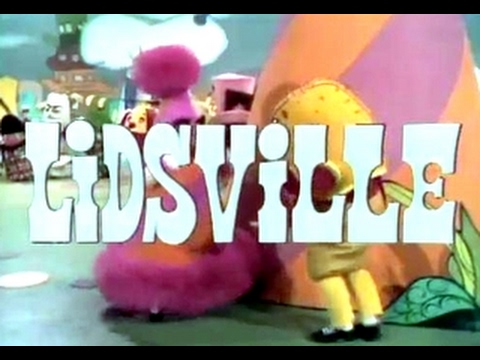
Lidsville

The show is just plain bizarre…for me, it is the strangest show Sid and Marty Krofft produced….and besides Land of the Lost, it’s my favorite Sid and Marty Krofft show. The show premiered on September 11, 1971.

It has been rumored that the Sid and Marty Krofft were inspired by hallucination drugs such as LSD. The brothers have always denied this claim. The title “Lid” is an old slang term for a hat, but by the 1970s the word “Lid” had taken on an entirely new meaning, namely as slang for an eighth of an ounce of pot. Whether they were or not…the shows they produced were NOT boring…they were very colorful and entertaining.

The show was conceived by Sid Krofft, who had a huge hat collection.  He thought one day…what if all of the hats had different personalities? Sid was also influenced by Lewis Carroll and it is obvious.

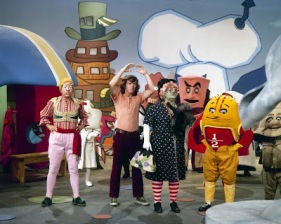
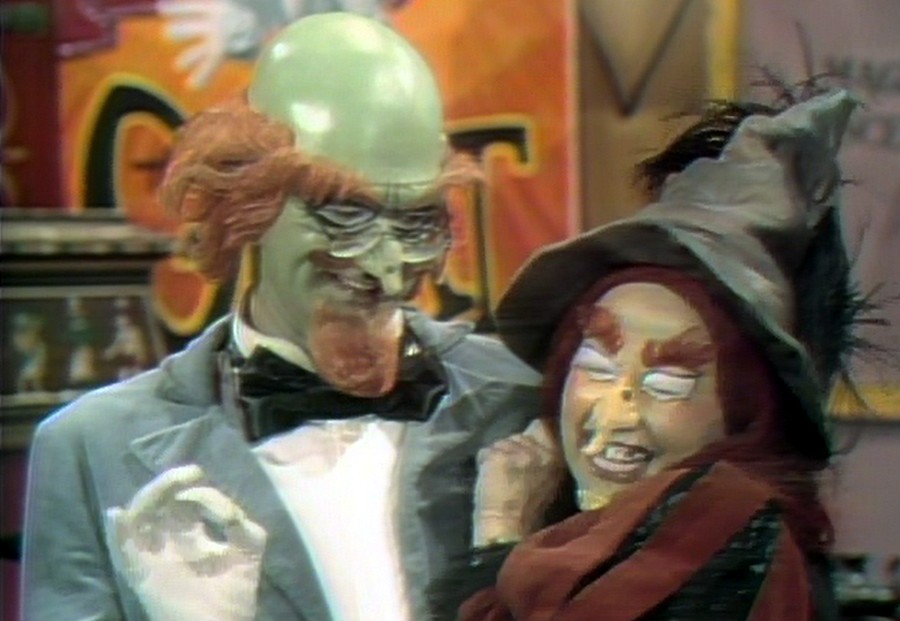
The plot is: A boy (Mark), the original Eddie Munster, Butch Patrick falls down a large top hat at an amusement park and ends up in a land of Hats…there was also a genie named Weenie (Billy Hayes)…who played Witchiepoo in HR Pufnstuf. The bad guy was Charles Nelson Reilly the magician and he would go around zapping people. The seventeen episodes they made revolved around Mark’s attempts to return to the real world as Hoo Doo made life miserable for him and the good hat people.

It has a similar plotline as the more famous HR Pufnstuf…I remember the reruns through the seventies and I always hoped Mark would get out of Lidsville and back home…of course not knowing they made only 17 episodes…kinda like wanting Gilligan to get off that island.

Image result for lidsville charactersImage result for lidsville characters

Image result for lidsville characters

The Knack – My Sharona —Powerpop Friday

This song launched the Knack into temporary stardom and the song would last much longer than their stardom would. When they first came out I read some articles stating the kiss of death phrase “the next Beatles.” Their second album made it to #15 and after that their popularity declined.

Lead singer Doug Fieger wrote this song about a girl named Sharona Alperin (more of the full story is below in song facts) and they were together for around 4 years. Alperin was with Fieger the last week of his life; he died of cancer on February 14, 2010.

The song peaked at #1 in the Billboard 100, #6 in the UK, #1 in Canada and #3 in New Zealand… in 1979…. The album Get The Knack also peaked at #1 in 1979.

From Songfacts

The Knack lead singer Doug Fieger wrote the lyrics to this song, which is about a girl he fancied. Doug was in a long-term relationship when he walked into the clothing store where a high school student named Sharona Alperin (who had a boyfriend), was working. The age difference (he was about eight years older) and relationship status didn’t deter Fieger, who was immediately lovestruck. With his girlfriend looking on, he invited Sharona to a show. Not long after, he broke up with the girlfriend and professed his love for Sharona, creating a weird dynamic where he would come on to her even though she had a boyfriend who often attended Knack concerts with her. It got pretty heavy when Fieger started writing songs about her – they weren’t together when he composed “My Sharona.”

About a year after they first met, Sharona gave in and they started dating. She joined the band on tour and watched as the song Fieger wrote about her elevated them to stardom. The couple were together for about four years (and engaged at one point) before the rock and roll lifestyle and Fieger’s alcoholism became too much for Sharona, and they called it off. In the aftermath, Sharona answered questions about the breakup by saying that she needed to become her own Sharona, not someone else’s.

After a cooling-off period, Alperin and Fieger became friends.

In the US, this was the best-selling single of 1979.

Sharona Alperin became a high-end real estate agent in California, specializing in celebrity clientele. After the passing of Fieger, Alperin wrote on her website: “From the time Doug and I first met, both of our lives changed forever. It’s very rare for two people to have such an impact on each other. The bond we shared is something that I will treasure as long as I live, he will always have a special place in my heart.”

Doug Fieger wrote this song with Knack guitarist Berton Averre, who co-wrote many songs for the band with Fieger.

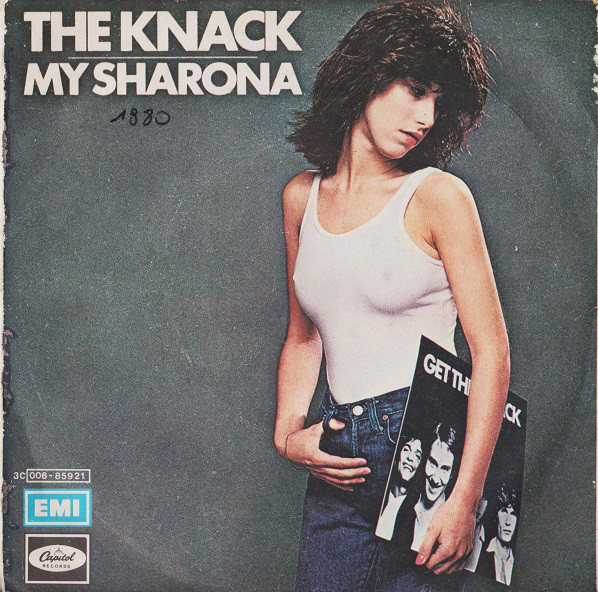
That’s Sharona Alperin on the cover of the single holding the Get The Knack album. She posed for the art even though she and Doug Fieger weren’t yet dating.

In an interview with the Washington Post, Doug Fieger said: “I was 25 when I wrote the song. But the song was written from the perspective of a 14-year-old boy. It’s just an honest song about a 14-year-old boy.”

The Chicago DJ Steve Dahl (of disco demolition fame) did a parody of this during the Iran hostage crisis, changing Sharona to “Ayatollah.” The single was a hit in Chicago, and The Knack sang it with Dahl at the International Amphitheater in 1980. 

This song returned to the UK singles chart in 2009, peaking at #59 thanks to its use in a TV advert for Oatibix.

This wasn’t the only song on the album that was about Sharona and Fieger’s feelings for her. The songs “That’s What the Little Girls Do” and “(She’s So) Selfish” were also inspired by her.

Sharona is a Hebrew name, which is how Sharona Alperin ended up with it – her parents sent her to Hebrew school. It’s also the name of a small area in Israel.

In America, it’s very uncommon; in the years leading up to the song only about 10 Sharonas were born each year. In 1980 though, about 70 American Sharonas entered the world, a spike attributed to this song.

The album version runs 4:52, but the single version was edited down to 3:58. The victim of this cut was Knack guitarist Berton Averre, whose much-admired solo was chopped.

Doug Fieger of The Knack was the younger brother of famed attorney Geoffrey Fieger, who defended Dr. Jack Kervorkian.

Weird Al Yankovic did a parody of this called “My Bologna.” It was the song that kickstarted his career in song parody and his first single.

Al (before he was “weird”) recorded a few song parodies as a high school student, including a takeoff on “You Don’t Bring Me Flowers” called “You Don’t Take Your Showers.” He sent some to the popular syndicated radio host Dr. Demento, who wrote back, informing Al that he had potential.

This potential was realized when Yankovic was a 19-year-old student at Cal Poly San Luis Obispo, where he was studying architecture. He was a DJ on the school radio station, where “My Sharona” was the most-requested song. Many of Al’s parodies had to do with food, so he wrote one called “My Bologna” and recorded it in the bathroom across the hall from the station. He sent it to Dr. Demento, who played it on his show to wide acclaim, making #1 on his “Funny Five” countdown for two weeks.

When The Knack played a show at the college, Al went backstage and introduced himself as the man behind “My Bologna.” As Al tells it, Doug Fieger said he loved the song and introduced him to the vice president of The Knack’s label, Capitol Records, who was standing nearby. The Capitol exec signed Al to a deal to release the single, which they did, but with minimal effort: instead of re-recording the song they just issued Al’s bathroom version (in mono) and gave it little promotion. That was the end of Al’s association with Capitol, but he had success on other labels with “I Love Rocky Road” and “Ricky,” and hit paydirt with his Michael Jackson parody, “Eat It.”

“My Bologna” wasn’t the only parody of this Knack song. Others include “Ayatollah” by the radio personality Steve Dahl, and “Babylona” by the parody band ApologetiX.

Quentin Tarantino wanted to use this in Pulp Fiction during the scene where Bruce Willis and Ving Rhames are being set upon by Zed and his brother (and the chained submissive). Fieger ended up nixing the request and the song appeared in the 1994 movie Reality Bites instead. Stacey Sher, a producer who was working on both films, recalled why Fieger chose the gas-station singalong over the basement dungeon with The Gimp. “He loved the notion of this sweet moment commemorating the person that he always loved very much,” she said. >>

The song was produced by Mike Chapman and recorded at MCA Whitney Recording Studios in Glendale, California. Chapman, who had produced Blondie and Suzi Quatro, says he told the band it would be a #1 hit the first time they played it for him.

Run-D.M.C. used the guitar riff for their 1986 song “It’s Tricky.” The Rogue Traders UK #33 hit “Watching You” in 2006 was based around this song’s melody.

My Sharona

Ooh, my little pretty one, my pretty one
When you gonna give me some time, Sharona
Ooh, you make my motor run, my motor run
Got it coming off o’ the line, Sharona

Never gonna stop, give it up, such a dirty mind
I always get it up, for the touch of the younger kind
My, my, my, aye-aye, whoa!
M-m-m-my Sharona

Come a little closer, huh, a-will ya, huh?
Close enough to look in my eyes, Sharona
Keeping it a mystery, it gets to me
Running down the length of my thigh, Sharona

Never gonna stop, give it up, such a dirty mind
I always get it up, for the touch of the younger kind
My, my, my, aye-aye, whoa!
M-m-m-my Sharona
M-m-m-my Sharona

When you gonna give to me, a gift to me
Is it just a matter of time, Sharona?
Is it d-d-destiny, d-destiny
Or is it just a game in my mind, Sharona?

Never gonna stop, give it up, such a dirty mind
I always get it up, for the touch of the younger kind
My, my, my, aye-aye, whoa!
M-m-m-m-m-m-m-my, my, my, aye-aye, whoa!
M-m-m-my Sharona
M-m-m-my Sharona
M-m-m-my Sharona
M-m-m-my Sharona

Ooooooo-ohhh, my Sharona

Ramones – I Wanna Be Your Boyfriend

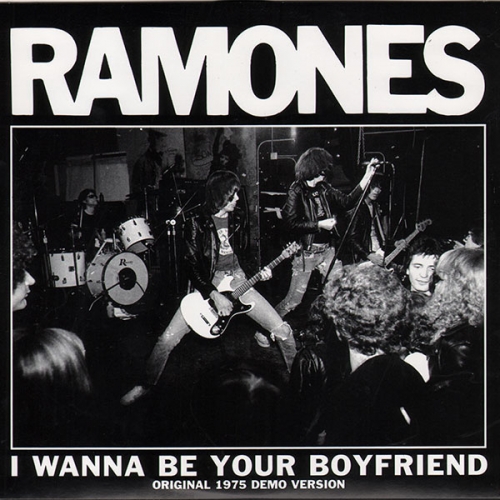
I could post a Ramone song every day and be happy. This song was on the Ramone’s first album, the self-titled Ramones album in 1976. Tommy Ramone the drummer wrote this song.

Tommy Ramone:  “I wrote ‘I Wanna Be Your Boyfriend’ because we had all these other songs with ‘I Don’t Wanna’ – ‘I Don’t Wanna Walk Around With You,’ ‘I Don’t Wanna Go Down To The Basement.’ The only other positive song we had was ‘Now I Wanna Sniff Some Glue.’
One thing we all had in common was we were frustrated. We escaped from our anger with humor. A lot of that came from Dee Dee’s sensibility, this Dada sensibility that got squeezed into ‘I Don’t Wanna.'”

The song was released as a single but didn’t chart.

From Songfacts

There were some unusual instruments used on this song, including 12-string guitars, tubular bells and a glockenspiel. Studio musicians were brought in to play them. 

A track from the first Ramones album, this was their second single, following “Blitzkrieg Bop.” Like “I Remember You,” it’s a love song, just a very straightforward one.

Per Gessle of Roxette recorded this for the 2001 Ramones tribute album The Song Ramones the Same. Released as a single in his native Sweden, the song made #44.

I Wanna Be Your Boyfriend

Hey, little girl I want to be your boyfriend
Sweet little girl I want to be your boyfriend
Do you love me babe?
What do you say?
Do you love me babe?
What can I say?
Because I want to be your boyfriend

Hey, little girl I want to be your boyfriend
Sweet little girl I want to be your boyfriend
Uuu uuu uuu uuu-au
Because I want to be your boyfriend

Hey, little girl I want to be your boyfriend
Sweet little girl I want to be your boyfriend
Do you love me babe?
What do you say?
Do you love me babe?
What can I say?
Because I want to be your boyfriend

Hey, little girl I want to be your boyfriend
Sweet little girl I want to be your boyfriend
Hey, little girl I want to be your boyfriend

Yogi Bear

Yogi Bear –  “I’m smarter than the average bear”,

I always liked Yogi Bear and would watch it when I got a chance…if only for the way he said pic-a-nic baskets.

Yogi first started out as a sidekick in a Hanna-Barbera show called The Huckleberry Hound Show in 1958. He was the first Hanna-Barbera character to break out.

In 1961 he was given his own show called The Yogi Bear Show. His show included other segments like Yakky Doodle and Snagglepuss.  The show also featured episodes with Yogi Bear breaking away from the unadventurous life of other bears in Yellowstone Park.

The plot was basically Yogi raiding picnic baskets, dodging hibernation, being chased by Ranger Smith,  and making money together with his more honest sidekick Boo-Boo Bear. The show also featured episodes of Ranger Smith trying to tame Yogi and Boo-Boo Bear.

Around this time the great baseball player Yogi Berra sued Hanna-Barbera for defamation. But Hanna-Barbera claimed that the similarity of the names was just purely coincidental. Eventually, Yogi Berra withdrew his suit. When Yogi Berra died the AP’s wire service mistakenly announced the death of Yogi Bear instead…that is sad.

Yogi starred in a feature film, Hey There, It’s Yogi Bear, in 1964.

Yogi’s personality was based on Art Carney’s character from The Honeymooners.

The Yogi Bear Show lasted only 2 season but other shows featuring Yogi continued on. Yogi Bear and Friends, Yogi’s Gang, Yogi’s Space Race, Galaxy Goof-Ups, Yogi’s Treasure Hunt, The New Yogi Bear Show, and Yo Yogi! Yogi was on the air from 1958 to the 1990s.

Daws Butler originated the voice of Yogi and did it from 1958 to 1988 when he passed away. He was replaced by Greg Burson who was personally taught by Butler on how to do Yogi’s voice and other characters.

Sly & The Family Stone – Everybody Is A Star

I’ve always liked Sly Stone’s music…most of the radio hits were positive like this one and Everyday People. He was huge during his heyday but has been neglected since.

This was released as a double-A-side single with “Thank You (Falettinme Be Mice Elf Agin).” The single peaked at #1 in the Billboard 100 in 1970, the chart position is attributed to both songs combined.

All together Sly Stone put 17 songs in the Billboard 100, 5 top 10 hits and 3 number 1 songs all between 1968 and 1975.

From Songfacts

This song is about how everyone is equal and how people try to change themselves to be what the media wants them to be. For black individuals, it can be about how we try to change ourselves to “act white” but in the end the system brings us down, yet we bring ourselves back up with the help of our people. 

Like many Sly & the Family Stone songs of this era – “Everyday People” and “Stand!” among them – “Everybody Is A Star” has a message of togetherness and self-worth. These songs were set against joyful melodies that kept them from sounding preachy. They went over very well at live shows where a sense of community formed.

The nonsense chorus (“ba pa-pa-pa ba…”) actually makes a lot of sense – it’s about the power of music, which can speak without words. In this case, the rhythmic syllables play against horn lines in a very similar fashion to Otis Redding’s 1966 track “Fa-Fa-Fa-Fa-Fa (Sad Song).”

Everybody Is A Star

Everybody is a star
Who the rain, chase the dust away
Everybody wants to shine
Ooh, come out on a cloudy day
‘Til the sun that loves you proud
When the system tries to bring you down
Every hand to shine tonight
You don’t need darkness to do what you think is right, hee hee

Ba pa-pa-pa ba pa-pa ba ba ba pa-pa ba pa-pa ba pa-pa ba ba ba,
Ba-pa ba-pa ba ba, ooh, ooh, ooh, ooh, ooh
Ba pa-pa-pa ba pa-pa ba ba ba pa-pa ba pa-pa ba pa-pa ba ba ba,
Ba-pa ba-pa ba ba, ooh, ooh,

Everybody is a star
I can feel it when you shine on me
I love you for who you are
Not the one you feel you need to be
Ever catch a falling star
Ain’t no stopping ’til it’s in the ground
Everybody is a star
One big circle going round and round

Ba pa-pa-pa ba pa-pa ba ba ba pa-pa ba pa-pa ba pa-pa ba ba ba,
Ba-pa ba-pa ba ba, ooh, ooh, ooh, ooh, ooh

Ba pa-pa-pa ba pa-pa ba ba ba pa-pa ba pa-pa ba pa-pa ba ba ba,
Ba-pa ba-pa ba ba, ooh, ooh, ooh, ooh, ooh

Ba pa-pa-pa ba pa-pa ba ba ba pa-pa ba pa-pa ba pa-pa ba ba ba,
Ba-pa ba-pa ba ba, shine, shine, shine, shine

Ba pa-pa-pa ba pa-pa ba ba ba pa-pa ba pa-pa ba pa-pa ba ba ba,
Ba-pa ba-pa ba ba, shine, shine, shine, shine

Ba pa-pa-pa ba pa-pa ba ba ba pa-pa ba pa-pa ba pa-pa ba ba ba,
Ba-pa ba-pa ba ba, ooh, ooh, ooh, ooh, ooh

Ba pa-pa-pa ba pa-pa ba ba ba pa-pa ba pa-pa ba pa-pa ba ba ba,
Ba-pa ba-pa ba ba, ooh, ooh, ooh, ooh, ooh

Petticoat Junction

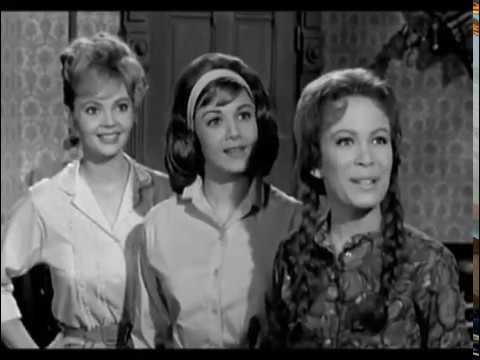
I would watch Petticoat Junction at my grandmother’s and loved seeing Kate Bradley’s three daughters Billie Jo, Bobbie Jo, and Betty Jo…

The show was created by Paul Henning who also created The Beverly Hillbillies and Green Acres. All three shows were in the same universe so to speak. They all crossed over into each other’s shows. Petticoat Junction took place in Hooterville, the same location as Green Acres. The show ran 7 seasons from 1963 to 1970.

The series takes place at the Shady Rest Hotel, which is run by Kate Bradley (Bea Benaderet) and the three daughters. The Hotel is usually empty and barely staying open. The only way to the Hotel is the train called the Cannonball ran by engineer Charley Pratt (Smiley Burnette) and fireman/railway conductor Floyd Smoot (Rufe Davis). Uncle Joe played by the great character actor Edgar Buchanan was more a hindrance than a help. Joe would come up with get rich quick schemes that would cost the Kate money and time.

They did have a dog…name “The Dog” played by Higgins…better known as the original Benji. Sam Drucker played by Frank Cady was a cast member in this show and in Green Acres. Out of the three shows, this one was probably the weakest but I still enjoyed it…and I still watch it.

The show lasted 7 seasons. Bea Benaderet died of lung cancer on October 13, 1968, during the 6th season. Her position in the show…but, not her character was replaced by June Lockhart as the matriarch of the Hotel. She played Dr. Janet Craig, a medical professional who rents a room at the Shady Rest Hotel…and gives the three sisters advice.

The ever-changing sisters…

The first two seasons the sisters were played by – Billy Jo – Jeannine Riley, Bobbie Jo – Pat Woodell, and Betty Jo – Linda Kaye Henning

Image result for petticoat junction second season changing

In the third season, Jeannine Riley and Pat Woodell left the show. They were replaced with Gunilla Hutton and Lori Saunders (my favorite)… and of course, Higgins played “The Dog”

Image result for petticoat junction third season

In the 4th season, Gunilla Hutton left the show and was replaced with Meredith MacRae. This would remain the lineup until the end.

Image result for petticoat junction 4th season

Petticoat Junction was a good family show with laughs. Who wouldn’t want to stay at the Shady Rest Hotel and travel to Hooterville and Pixley on the Cannonball? Seeing Betty Jo, Billy Jo, and Bobbie Jo would not be a chore either.


David Bowie – Starman

This was from my favorite era of Bowie. After Bowie appeared on the Top of the Pops in 1972 performing this song…the song and Ziggy took off.

The song peaked at #65 in the Billboard 100 and #10 in the UK in 1972. The song was on the album The Rise and Fall of Ziggy Stardust and the Spiders from Mars which peaked at #75 in the Billboard Album Charts in 1972 and #21 in 2016.

Woody Woodmansey the drummer in Bowie’s backing band, The Spiders From Mars: “I love ‘Starman’ as it’s the concept of hope that the song communicates. That ‘we’re not alone’ and ‘they’ contact the kids, not the adults, and kind of say ‘get on with it.’ ‘Let the children boogie’: music and rock ‘n’ roll! It lifted the attention away from the depressing affairs in the ’70s, made the future look better. ‘Starman’ was the first Bowie song since ‘Space Oddity’ with mass appeal. After ‘Starman,’ everything changed.”

From Songfacts

This forms part of the Ziggy Stardust story, in which the end of the world lingers just five years away. This song tells of salvation waiting in the sky, as revealed through Starman’s messenger, Ziggy Stardust. The song is told from the perspective of a person listening to Ziggy on the radio. 

In 1972, Bowie performed this song on the British TV show, Top of the Pops. Bowie appeared as the flame-haired Ziggy Stardust dressed in a multicolored jump suit. Bowie strummed a blue guitar while he moved flirtatiously alongside his guitarist, Mick Ronson. It was the first time many had seen Bowie and people were fascinated by his stage presence. This performance would catapult Bowie to stardom and prove wildly influential on the next generation of English rockers.

Among the many who have cited this specific appearance as a transformative moment is Lol Tolhurst of The Cure, who writes in his memoir, “I remember sitting on my couch at home with my mother, watching this spectacle unfold, and at the point where Bowie sang the line, ‘I had to phone someone so I picked on you,’ he pointed directly at the camera, and I knew he was singing that line to me and everyone like me. It was a call to arms that put me on the path that I would soon follow.”

Bowie was influenced by the song “Over The Rainbow,” which is most obvious during the chorus (“There’s a Starman…”). 

This was the last song written for The Rise and Fall of Ziggy Stardust and the Spiders from Mars, supposedly because nobody had heard a potential single on the album. It became Bowie’s first UK hit in three years. His only previous chart entry had been “Space Oddity” in 1969.

“We’d finished recording the Ziggy Stardust album at that time and it went into the record company. They said: ‘We can’t release this. It doesn’t have a single on it!'” Woody Woodmansey recalled to The Quietus. “So, we came out of the studio and in about a month he had written ‘Starman’ and we were back in the studio by January. It was an obvious single! I think Mick and I went out in the car after David played it for us the first time, and we were already singing it, having only heard it only once.”

“At the time, we thought it might be a bit too poppy, a bit too commercial,” he continued. “It might seem strange, but we just hadn’t done anything that commercial before. I always thought Bowie had that ability, that any time he felt like it, he could write a hit single. He just had that about him. I think he chose not to right through his career. If he felt like it, he would write one, and if he didn’t, he wouldn’t. That was just the impression of working with him. It’s not a fluke to be able to write all those amazing tunes.”

This is also the title of John Carpenter’s 1984 sci-fi movie, starring Jeff Bridges as an alien who takes the form of a woman’s (Karen Allen) dead husband and needs her help to get home. The song is not used in the movie.

This was used in a 2016 commercial for the Audi R8 that first aired during the 2016 Super Bowl about two months after David Bowie died. In the spot, a retired astronaut has lost his passion for life, but gets it back after his son presents with the car and he goes for a drive under a moonlit sky. The end panel pays tribute to Bowie, stating, “In memory of the Starman.”

Starman

Didn’t know what time it was and the lights were low
I leaned back on my radio
Some cat was layin’ down some rock ‘n’ roll ‘lotta soul, he said
Then the loud sound did seem to fade
Came back like a slow voice on a wave of phase
That weren’t no D.J. that was hazy cosmic jive

There’s a starman waiting in the sky
He’d like to come and meet us
But he thinks he’d blow our minds
There’s a starman waiting in the sky
He’s told us not to blow it
‘Cause he knows it’s all worthwhile
He told me
Let the children lose it
Let the children use it
Let all the children boogie

I had to phone someone so I picked on you
Hey, that’s far out so you heard him too!
Switch on the TV we may pick him up on channel two
Look out your window I can see his light
If we can sparkle he may land tonight
Don’t tell your poppa or he’ll get us locked up in fright

There’s a starman waiting in the sky
He’d like to come and meet us
But he thinks he’d blow our minds
There’s a starman waiting in the sky
He’s told us not to blow it
‘Cause he knows it’s all worthwhile
He told me
Let the children lose it
Let the children use it
Let all the children boogie

There’s a starman waiting in the sky
He’d like to come and meet us
But he thinks he’d blow our minds
There’s a starman waiting in the sky
He’s told us not to blow it
‘Cause he knows it’s all worthwhile
He told me
Let the children lose it
Let the children use it
Let all the children boogie

La, la, la, la, la, la, la, la

Lynn Anderson – (I Never Promised You A) Rose Garden

I beg your pardon
I never promised you a rose garden

I heard this so many times on country and pop radio around my parents. The song is still played today. It was the rare country cross over hit. It peaked at #1 in the Billboard Country Charts in 1970 and #3 in the Billboard 100 in 1971.

Joe South wrote this for his 1969 debut album, Introspect. It was covered by artists like Freddy Weller, Billy Joe Royal, and Dobie Gray before Lynn Anderson made it an international crossover hit in 1971.

This earned Anderson a Grammy Award for Best Female Country Vocal Performance in 1971.

From Songfacts

“I never promised you a rose garden” is another way of saying “I never said it would be easy.” The singer encourages her lover to enjoy the good times in their relationship because the bad times are inevitable (“Along with the sunshine there’s gotta be a little rain sometime”).

Because of lyrics like “I could promise you things like big diamond rings,” Anderson’s producer (and husband) Glenn Sutton considered this a man’s song and tried to dissuade her from covering it. Only when they had some extra studio time left did he consider it for an album cut, but with some changes. They reworked the track with an uptempo arrangement that included a string section and mandolin. When Columbia Records’ exec Clive Davis heard it, he insisted it be released as a single.

“It was popular because it touched on emotions,” Anderson told the Associated Press of the song in 1987. “It was perfectly timed. It was out just as we came out of the Vietnam years and a lot of people were trying to recover. This song stated that you can make something out of nothing. You take it and go ahead.”

(I Never Promised You A) Rose Garden

I beg your pardon
I never promised you a rose garden
Along with the sunshine
There’s gotta be a little rain some time
When you take you gotta give so live and let live
Or let go oh-whoa-whoa-whoa
I beg your pardon
I never promised you a rose garden

I could promise you things like big diamond rings
But you don’t find roses growin’ on stalks of clover
So you better think it over
Well if sweet-talkin’ you could make it come true
I would give you the world right now on a silver platter
But what would it matter
So smile for a while and let’s be jolly
Love shouldn’t be so melancholy
Come along and share the good times while we can

I beg your pardon
I never promised you a rose garden
Along with the sunshine
There’s gotta be a little rain some time

I beg your pardon
I never promised you a rose garden

I could sing you a tune and promise you the moon
But if that’s what it takes to hold you
I’d just as soon let you go
But there’s one thing I want you to know
You better look before you leap, still waters run deep
And there won’t always be someone there to pull you out
And you know what I’m talkin’ about
So smile for a while and let’s be jolly
Love shouldn’t be so melancholy
Come along and share the good times while we can

I beg your pardon
I never promised you a rose garden
Along with the sunshine
There’s gotta be a little rain some time,
I beg your pardon
I never promised you a rose garden

The Beat – Rock N Roll Girl —Powerpop Friday

This song is full of great little guitar hooks. “Rock ‘n’ Roll Girl” is from The Beat’s first album, titled The Beat from 1979.

Paul Collins formed The Beat in 1979, recruiting members of various rock bands including Steven Huff, Larry Whitman, and Michael Ruiz. He studied at the prestigious Julliard Music School and eventually moved to San Francisco where he joined songwriter Jack Lee and bassist Peter Case to form The Nerves in 1974.

The Nerves proved to be one of the pioneers of the burgeoning US punk rock scene, independently releasing their own 4 song EP which included the classic “Hanging on the Telephone,” later to become a hit for Blondie.

Rock N Roll Girl

I went down to check out the local disco show.
I saw the people dancing on the floor.
I wish there was an easier way
To meet the girls of today.
And if I had a chance, this is what I’d say:
I want to be with a rock and roll girl.
I pick up the phone and get a dial tone.
I call up the number, but nobody is home.
But I saw it on my TV.
They said they have someone for me.
I wish she would answer and give me her name.
I want to be with a rock and roll girl.
I see them walking one by one.
I hear them talking, then they are done.
I wish there was an easier way, hey hey!
To meet the girls of today.
I really want to talk, but what can I say?
I want to be with a rock and roll girl.

Blondie – Dreaming

Dreamin’, dreamin’ is free
In the late seventies early eighties for a short window, Blondie couldn’t lose. Blondie only had 10 songs in the top 100 but they made the best of it. Out of those 10 songs were four number one hits. This one wasn’t of the number ones but it’s a great song nonetheless. It peaked at #27 in the Billboard 100 in 1979.

Blondie guitarist Chris Stein wrote the music for this song and came up with the line “dreaming is free.” Lead singer Debbie Harry wrote the other lyrics to the songs like she did on their other songs.

When I think of Blondie the image of Debbie Harry comes to mind of course…but as a band, they were really good. Chris Stein was a very good musician but my favorite member…other than Debbie is the drummer Clem Burke who is exceptionally good. He is a huge Keith Moon fan and when Keith died he destroyed his drum kit in Keith’s honor. He also thanked Keith Moon and the Beatles at Blondie’s Rock and Roll Hall of Fame acceptance speech.

From Songfacts

The song starts out with a coherent story – Harry getting propositioned in a restaurant – but it quickly veers off in many directions, simulating a dream where one idea jumps to the next with no real rhyme or reason. It works well with the theme and with the track, including the bridge where Harry repeats the first word of each line:

Feet feet, walking a two mile
Meet meet, meet me at the turnstile

A similar structure can be heard in the 1982 Kim Wilde song “Kids In America.”

Chris Stein said this song was “pretty much a cop” of “Dancing Queen” by ABBA.

Perhaps is was just a convenient word to rhyme with “pleasure,” but when Harry sings “A movie or a measure,” the word “measure” could be interpreted a few different ways. It might mean a plan of action, as in taking some kind of trip, or possibly a measure in the musical sense, meaning the rhythm.

Dreaming

When I met you in the restaurant you could tell I was no debutante
You asked me what’s my pleasure, “A movie or a measure”?
I’ll have a cup of tea and tell you of my dreamin’
Dreamin’ is free
Dreamin’, dreaming is free

I don’t want to live on charity
Pleasure’s real or is it fantasy?
Reel to reel is living verite
People stop and stare at me, we just walk on by
We just keep on dreamin’

Beat feet, walking a two-mile
Meet me, meet me at the turnstile
I never met him, I’ll never forget him
Dream dream, even for a little while
Dream dream, filling up an idle hour
Fade away, radiate

I sit by and watch the river flow
I sit by and watch the traffic go
Imagine something of your very own, something you can have and hold
I’d build a road in gold just to have some dreamin’
Dreamin’ is free
Dreamin’, dreamin’ is free

Dreamin’, dreamin’ is free

Scooby Doo Where Are You!

On Saturday morning, September 13, 1969, Scooby-Doo, Where Are You! premiered. This is probably one of the most popular cartoons ever that even spawned a few live-action movies and tons of merchandise. The show went through many stages before it was ready for the public.

In 1968 Fred Silverman envisioned the show as a cross between the popular I Love a Mystery radio serials of the 1940s and the popular early 1960s TV show The Many Loves of Dobie Gillis.

Joe Ruby and Ken Spears, and artist/character designer Iwao Takamoto worked on Silverman’s idea. Their original concept of the show had the title Mysteries Five, and featured five teens (Geoff, Mike, Kelly, Linda, and Linda’s brother “W.W.”) and their dog, Too Much, who were all in a band called “The Mysteries Five” (even the dog; he played the bongos). When “The Mysteries Five” weren’t performing at gigs, they were out solving spooky mysteries involving ghosts, zombies, and other supernatural creatures. Ruby and Spears then had to decide what to make their dog. The dog was going to be a sheepdog but that would conflict with the Archies (who had a sheepdog, Hot Dog, in their band) but then settled on a Great Dane.

The executives felt that the presentation artwork was too frightening for young viewers, and, thought the show would be the same, decided to pass on it.

Ruby and Spears reworked the show to make it more comedic and less frightening. They dropped the rock band element and began to focus more attention on Shaggy and Too Much. According to Ruby and Spears, Silverman was inspired by the ad-lib “doo-be-doo-be-doo” he heard at the end of Frank Sinatra’s interpretation of Bert Kaempfert’s song “Strangers in the Night” on the way out to one of their meetings, and decided to rename the dog “Scooby-Doo” and re-rechristened the show Scooby-Doo, Where are You?… The rest as they say…is history!

Matthew Sweet did a version of the theme that I really like


The original theme song


http://scoobyaddicts.com/History.aspx

Cat Stevens – Morning Has Broken

Morning Has Broken is a beautiful piece of music.

Stevens got the lyrics from a hymn book he found at a bookstore while looking for song ideas. It was a children’s hymn by Eleanor Farjeon, who also wrote a lot of children’s poetry.

Cat Stevens: “I accidentally fell upon the song when I was going through a slightly dry period and I needed another song or two for Teaser And The Firecat. I came across this hymn book, found this one song, and thought, This is good. I put the chords to it and then it started becoming associated with me.”

The song peaked at #6 on the Billboard 100, #9 in the UK, #3 in New  Zealand and #4 in Canada. It was on the album Teaser and the Firecat which peaked at #2 on the Billboard Album Charts in 1972.

From Songfacts

Children in England would have heard Farjeon’s hymn in primary school. Scottish children sang the old Gaelic hymn, “Child in a manger, Infant of Mary” to this tune. This hymn predated “Morning” and was written in Gaelic by Mary MacDonald before being translated into English. For Scottish children it was a Christmas hymn. >>

Rick Wakeman, who later became a member of Yes, played keyboards on this track. He claims he was never paid for his work.

This was Stevens’ first single that did better in America than in England. “Peace Train” and “Wild World” were not released in the US.

This song is set to a Scottish tune entitled “Bunessan,” a melody that was named for a small island town in Scotland. >>

Neil Diamond recorded this in 1992 for his Christmas album (yes, Diamond is Jewish). His version went to #36 in the UK.

Morning Has Broken

Morning has broken like the first morning
Blackbird has spoken like the first bird
Praise for the singing
Praise for the morning
Praise for them springing fresh from the world

Sweet the rain’s new fall, sunlit from heaven
Like the first dewfall on the first grass
Praise for the sweetness of the wet garden
Sprung in completeness where his feet pass

Mine is the sunlight
Mine is the morning
Born of the one light Eden saw play
Praise with elation, praise ev’ry morning
God’s recreation of the new day

Morning has broken like the first morning
Blackbird has spoken like the first bird
Praise for the singing
Praise for the morning
Praise for them springing fresh from the world

WKRP in Cincinnatti

A few weeks ago I posted about Jan Smithers…who portrayed Bailey Quarters on WKRP. it was one of the shows from the late 70s that I wouldn’t miss.

This show was not like the Mary Tyler Moore Show, Bob Newhart, or All In The Family. Those are great shows…some of the best ever sitcoms…but they were aimed more at adults while this one I always felt was largely aimed at teenagers. The show aired from 1978 to 1982. Rock and Roll on a sitcom was not common.

WKRP in Cincinnati” was produced by MTM – the studio Mary Tyler Moore and Grant Tinker built that produces shows such as The Bob Newhart Show, Mary Tyler Moore Show, Phyllis, The White Shadow, Rhoda, and many others.

The episode I remember the most having an effect on me was about the horrible event in 1979 when eleven people were killed at a Who concert in Cincinnati’s Riverfront Park. The show handled the tragic situation very well.

The plot…to make it short was about a Program Director (Andy Travis) who had a perfect record in turning bad radio stations around joins the staff at WKRP. The station is in the bottom of the ratings and he wants to change the format to Rock which is met with trepidation from the oddball staff.

The show would feature new rock music as well as old. Blondie gave the show one of their gold records in appreciation because the show played “Heart of Glass” and helped to make it number 1.

The extended theme song by Steve Carlisle Wkrp In Cincinnati peaked at #65 on the Billboard 100 in 1979…video at the bottom

The Cast

Bailey Quarters – Jan Smithers – A shy soft-spoken lady in charge of billing and station traffic soon worked herself up to an on-air personality and other duties. She and Jennifer on the show were a bit like Mary Ann and Ginger on Gilligans Island.

Andy Travis – Gary Sandy –Andy comes to the station as the new Program Director to turn the station around and finds the station’s employees…are like from the Island of Misfit Toys. He finds their strengths and tries to make it work. His character was based on real-life Program Director Mikel Herrington.

Dr. Johnny Fever – Howard Hesseman – Fun Fact…David Cassidy was offered this role but turned it down!

Johnny had been around for a while and was fired off a Los Angeles radio station for saying booger on air. He was probably my favorite character…next to Bailey…on the show when I first watched. Dr. Johnny Fever was based on real DJ “Skinny” Bobby Harper.

Venus Flytrap – Tim Reid – Venus was the night DJ and was one of the smoothest DJ’s ever…Venus wears 70’s type flashy clothes and in the series eventually becomes Assistant Program Director.

Herb Tarlek –  Frank Bonner – Herb was a salesman and dressed very tacky and loud. He hits on Jennifer at every opportunity, despite being married… but gets turned down constantly.

Jennifer Marlowe – Loni Anderson – She was Ginger to Bailey’s Mary Ann. Mr. Carlson’s receptionist…she was the highest-paid employee at the station even though refusing to do most things that receptionists are required to do.

Arthur Carlson –  Gordon Jump – The lovable but ineffective station manager who is the son of the station’s owner. He never wanted to know what was going on…, but when he tries to be hands-on…it leads to disastrous results (see Turkey’s Away episode)

Les Nessman – Richard Sanders – The incompetent News Director…Les was obsessed with the region’s hog farming industry…constantly mispronounced names… ignored obvious news stories for Hog Reports…but he would win the Silver Sow Award and The Buckeye Newshawk Award.


https://tvtropes.org/pmwiki/pmwiki.php/Series/WKRPInCincinnati


Nerves – Hanging On The Telephone Line —Powerpop Friday

Although this was a big hit for Blondie in 1978, it was actually first recorded by The Nerves, who released it on their one and only EP, in 1976.  The song was written by the band’s guitarist Jack Lee.

It was picked up by Blondie, it reached #5 on the UK singles chart. It was Blondie’s second release from the Parallel Lines album on the Chrysalis label

When Debbie Harry rang asking Lee if she could record this song, Lee readily agreed and the rest was history. Jack Lee said the call couldn’t have come at a better time.  “I remember the day vividly,” he recalled. “It was a Friday. They were going to cut off our electricity at six o’clock, the phone too.”

From Songfacts

Lee regretted his own version was never a hit, but said he always knew it was a special song: “Even people who hated me – and there were plenty – had to admit it was great.”

The song has subsequently been covered by many acts. These include UK girl band Girls Aloud and Def Leppard, who in 2006, both released covers of the song, on a limited edition bonus disc to The Sound of Girls Aloud and on Yeah! respectively.

Hanging On The Telephone Line

I’m in the phone booth, it’s the one across the hall
If you don’t answer, I’ll just ring it off the wall
I know he’s there, but I just had to call

Don’t leave me hanging on the telephone

I heard your mother, now she’s going out the door
Did she go to work or just go to the store?
All those things she said, I told you to ignore
Oh, why can’t we talk again?

Don’t leave me hanging on the telephone

It’s good to hear your voice, you know it’s been so long
If I don’t get your calls, then everything goes wrong
I want to tell you something you’ve known all along

Don’t leave me hanging on the telephone

I had to interrupt and stop this conversation
Your voice across the line gives me a strange sensation
I’d like to talk when I can show you my affection
Oh, I can’t control myself

Don’t leave me hanging on the telephone

Hang up and run to me
Whoa, hang up and run to me
Whoa oh oh oh, run to me

Cheap Trick – I Want You To Want Me —Powerpop Friday

I Want You To Want me is when I first started to notice Cheap Trick…the version off of the Cheap Trick At Budokon album

The song was included on their second album In Color, which was released later in 1977. This version had a medium tempo with a country feel and a honky-tonk piano throughout the song.

By 1978, the band had dropped this song from their setlist but restored it when they toured Japan that year since Japanese audiences loved the song. They played it on April 28 and 30 at their famous concerts that took place at the Budokan temple in Tokyo, which was a big deal because many Japanese citizens felt the temple was sacred and not appropriate for rock concerts. When the Beatles played at Budokan their were protests a decade before.

The song peaked at #7 on the Billboard 100 in 1979.


From Songfacts

This song has a long and intriguing history. It was written by Cheap Trick’s guitarist Rick Nielsen and recorded for their 1977 self-titled debut album, but it didn’t make the cut. 

 The concerts were released as the Live At Budokan album, which captured Cheap Trick’s live energy and turned their fortunes around in America, where the album was released in February 1979 and sold over 3 million copies. The extracted “I Want You To Want Me” became their first hit, charting at #7.

According to Rick Nielsen, the band considered this “sort of hokey pop” when they first recorded it, and the arrangement matched that sentiment, with finger snaps and a plaintive country feel. Robin Zander played up the schmaltz in the vocal, sounding like a woebegone cornpoke. This studio version fell flat, but when they played it as an earnest rocker, it worked.

The famous At Budokan version of this song was inspired by a French cover version (“J’attends Toutes les Nuits”) by a fairly obscure French synthpop artist named Niko Flynn, who sped up the tempo and put a beat to the song.

Many early Cheap Trick songs written by Rick Nielsen are from the perspective of characters who are a little unhinged (see: “Dream Police”), and the band played that up with their eccentric fashions and accessories. The guy in this song is a bit desperate and delusional, figuring a shoeshine and a new shirt will make the girl love him.

This is one of the few rock songs that starts with the chorus.

In 1978, this appeared as the B-side of Cheap Trick’s single “California Man.”

In 1997, the group recorded a new version of the In Color album (complete with this song), with producer Steve Albini, but it was never released.

The studio version

The live version

I Want You To Want Me

I want you to want me
I need you to need me
I’d love you to love me
I’m beggin’ you to beg me
I want you to want me
I need you to need me
I’d love you to love me

I’ll shine up my old brown shoes
I’ll put on a brand new shirt
I’ll get home early from work
If you say that you love me
Didn’t I, didn’t I, didn’t I
See you cryin’ (cryin, cryin’)
Oh, Didn’t I, didn’t I, didn’t I
See you cryin’ (cryin, cryin’)
Feelin’ all alone without a friend
You know you feel like dyin’ (dyin’, dyin’)
Oh, didn’t I, didn’t I, didn’t I
See you cryin’ (cryin’, cryin’)

I want you to want me
I need you to need me
I’d love you to love me
I’m beggin’ you to beg me

I’ll shine up my old brown shoes
I’ll put on a brand new shirt
I’ll get home early from work
If you say that you love me
Didn’t I, didn’t I, didn’t I
See you cryin’ (cryin, cryin’)
Oh, Didn’t I, didn’t I, didn’t I
See you cryin’ (cryin, cryin’)
Feelin’ all alone without a friend
You know you feel like dyin’ (dyin’, dyin’)
Oh, didn’t I, didn’t I, didn’t I
See you cryin’ (cryin’, cryin’)

Feelin’ all alone without a friend
You know you feel like dyin’ (dyin’, dyin’)
Oh, didn’t I, didn’t I, didn’t I
See you cryin’ (cryin’, cryin’)
Feelin’ all alone without a friend
You know you feel like dyin’ (dyin’, dyin’)
Oh, didn’t I, didn’t I, didn’t I
See you cryin’ (cryin’, cryin’)

I want you to want me
I need you to need me
I’d love you to love me
I’m beggin’ you to beg me