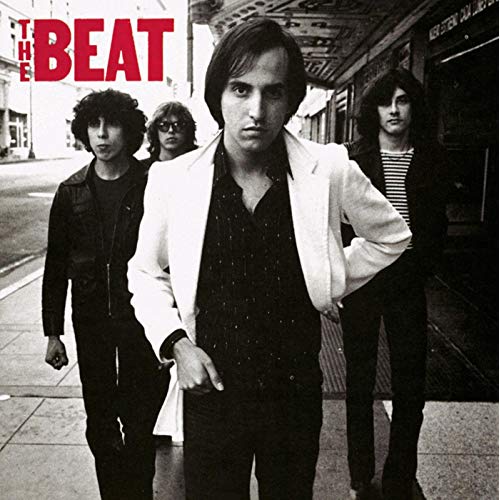
This song is full of great little guitar hooks. “Rock ‘n’ Roll Girl” is from The Beat’s first album, titled The Beat from 1979.
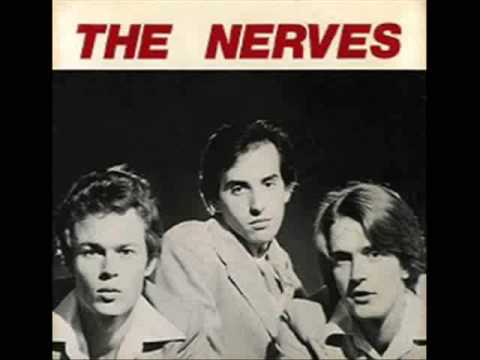
Paul Collins formed The Beat in 1979, recruiting members of various rock bands including Steven Huff, Larry Whitman, and Michael Ruiz. He studied at the prestigious Julliard Music School and eventually moved to San Francisco where he joined songwriter Jack Lee and bassist Peter Case to form The Nerves in 1974.
The Nerves proved to be one of the pioneers of the burgeoning US punk rock scene, independently releasing their own 4 song EP which included the classic “Hanging on the Telephone,” later to become a hit for Blondie.
Rock N Roll Girl
I went down to check out the local disco show. I saw the people dancing on the floor. I wish there was an easier way To meet the girls of today. And if I had a chance, this is what I’d say: I want to be with a rock and roll girl. I want to be with a rock and roll girl. I want to be with a rock and roll girl. I pick up the phone and get a dial tone. I call up the number, but nobody is home. But I saw it on my TV. They said they have someone for me. I wish she would answer and give me her name. I want to be with a rock and roll girl. I want to be with a rock and roll girl. I want to be with a rock and roll girl. I see them walking one by one. I hear them talking, then they are done. I wish there was an easier way, hey hey! To meet the girls of today. I really want to talk, but what can I say? I want to be with a rock and roll girl. I want to be with a rock and roll girl. I want to be with a rock and roll girl.
Dreamin’, dreamin’ is free
In the late seventies early eighties for a short window, Blondie couldn’t lose. Blondie only had 10 songs in the top 100 but they made the best of it. Out of those 10 songs were four number one hits. This one wasn’t of the number ones but it’s a great song nonetheless. It peaked at #27 in the Billboard 100 in 1979.
Blondie guitarist Chris Stein wrote the music for this song and came up with the line “dreaming is free.” Lead singer Debbie Harry wrote the other lyrics to the songs like she did on their other songs.
When I think of Blondie the image of Debbie Harry comes to mind of course…but as a band, they were really good. Chris Stein was a very good musician but my favorite member…other than Debbie is the drummer Clem Burke who is exceptionally good. He is a huge Keith Moon fan and when Keith died he destroyed his drum kit in Keith’s honor. He also thanked Keith Moon and the Beatles at Blondie’s Rock and Roll Hall of Fame acceptance speech.
From Songfacts
The song starts out with a coherent story – Harry getting propositioned in a restaurant – but it quickly veers off in many directions, simulating a dream where one idea jumps to the next with no real rhyme or reason. It works well with the theme and with the track, including the bridge where Harry repeats the first word of each line:
Feet feet, walking a two mile
Meet meet, meet me at the turnstile
A similar structure can be heard in the 1982 Kim Wilde song “Kids In America.”
Chris Stein said this song was “pretty much a cop” of “Dancing Queen” by ABBA.
Perhaps is was just a convenient word to rhyme with “pleasure,” but when Harry sings “A movie or a measure,” the word “measure” could be interpreted a few different ways. It might mean a plan of action, as in taking some kind of trip, or possibly a measure in the musical sense, meaning the rhythm.
Dreaming
When I met you in the restaurant you could tell I was no debutante You asked me what’s my pleasure, “A movie or a measure”? I’ll have a cup of tea and tell you of my dreamin’ Dreamin’ is free Dreamin’, dreaming is free
I don’t want to live on charity Pleasure’s real or is it fantasy? Reel to reel is living verite People stop and stare at me, we just walk on by We just keep on dreamin’
Beat feet, walking a two-mile Meet me, meet me at the turnstile I never met him, I’ll never forget him Dream dream, even for a little while Dream dream, filling up an idle hour Fade away, radiate
I sit by and watch the river flow I sit by and watch the traffic go Imagine something of your very own, something you can have and hold I’d build a road in gold just to have some dreamin’ Dreamin’ is free Dreamin’, dreamin’ is free
Dreamin’, dreamin’ is free Dreamin’, dreamin’ is free
On Saturday morning, September 13, 1969, Scooby-Doo, Where Are You! premiered. This is probably one of the most popular cartoons ever that even spawned a few live-action movies and tons of merchandise. The show went through many stages before it was ready for the public.
In 1968 Fred Silverman envisioned the show as a cross between the popular I Love a Mystery radio serials of the 1940s and the popular early 1960s TV show The Many Loves of Dobie Gillis.
Joe Ruby and Ken Spears, and artist/character designer Iwao Takamoto worked on Silverman’s idea. Their original concept of the show had the title Mysteries Five, and featured five teens (Geoff, Mike, Kelly, Linda, and Linda’s brother “W.W.”) and their dog, Too Much, who were all in a band called “The Mysteries Five” (even the dog; he played the bongos). When “The Mysteries Five” weren’t performing at gigs, they were out solving spooky mysteries involving ghosts, zombies, and other supernatural creatures. Ruby and Spears then had to decide what to make their dog. The dog was going to be a sheepdog but that would conflict with the Archies (who had a sheepdog, Hot Dog, in their band) but then settled on a Great Dane.
The executives felt that the presentation artwork was too frightening for young viewers, and, thought the show would be the same, decided to pass on it.
Ruby and Spears reworked the show to make it more comedic and less frightening. They dropped the rock band element and began to focus more attention on Shaggy and Too Much. According to Ruby and Spears, Silverman was inspired by the ad-lib “doo-be-doo-be-doo” he heard at the end of Frank Sinatra’s interpretation of Bert Kaempfert’s song “Strangers in the Night” on the way out to one of their meetings, and decided to rename the dog “Scooby-Doo” and re-rechristened the show Scooby-Doo, Where are You?… The rest as they say…is history!
Matthew Sweet did a version of the theme that I really like
Stevens got the lyrics from a hymn book he found at a bookstore while looking for song ideas. It was a children’s hymn by Eleanor Farjeon, who also wrote a lot of children’s poetry.
Cat Stevens: “I accidentally fell upon the song when I was going through a slightly dry period and I needed another song or two for Teaser And The Firecat. I came across this hymn book, found this one song, and thought, This is good. I put the chords to it and then it started becoming associated with me.”
The song peaked at #6 on the Billboard 100, #9 in the UK, #3 in New Zealand and #4 in Canada. It was on the album Teaser and the Firecat which peaked at #2 on the Billboard Album Charts in 1972.
From Songfacts
Children in England would have heard Farjeon’s hymn in primary school. Scottish children sang the old Gaelic hymn, “Child in a manger, Infant of Mary” to this tune. This hymn predated “Morning” and was written in Gaelic by Mary MacDonald before being translated into English. For Scottish children it was a Christmas hymn. >>
Rick Wakeman, who later became a member of Yes, played keyboards on this track. He claims he was never paid for his work.
This was Stevens’ first single that did better in America than in England. “Peace Train” and “Wild World” were not released in the US.
This song is set to a Scottish tune entitled “Bunessan,” a melody that was named for a small island town in Scotland. >>
Neil Diamond recorded this in 1992 for his Christmas album (yes, Diamond is Jewish). His version went to #36 in the UK.
Morning Has Broken
Morning has broken like the first morning Blackbird has spoken like the first bird Praise for the singing Praise for the morning Praise for them springing fresh from the world
Sweet the rain’s new fall, sunlit from heaven Like the first dewfall on the first grass Praise for the sweetness of the wet garden Sprung in completeness where his feet pass
Mine is the sunlight Mine is the morning Born of the one light Eden saw play Praise with elation, praise ev’ry morning God’s recreation of the new day
Morning has broken like the first morning Blackbird has spoken like the first bird Praise for the singing Praise for the morning Praise for them springing fresh from the world
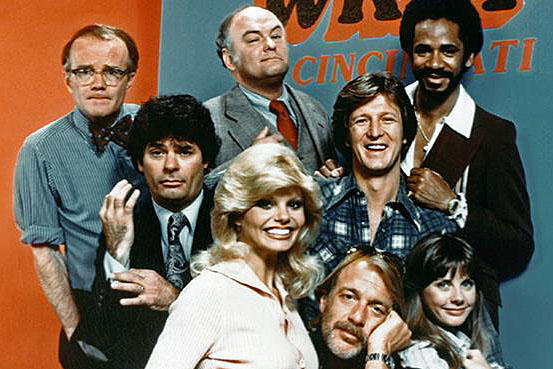
This show was not like the Mary Tyler Moore Show, Bob Newhart, or All In The Family. Those are great shows…some of the best ever sitcoms…but they were aimed more at adults while this one I always felt was largely aimed at teenagers. The show aired from 1978 to 1982. Rock and Roll on a sitcom was not common.
WKRP in Cincinnati” was produced by MTM – the studio Mary Tyler Moore and Grant Tinker built that produces shows such as The Bob Newhart Show, Mary Tyler Moore Show, Phyllis, The White Shadow, Rhoda, and many others.
The episode I remember the most having an effect on me was about the horrible event in 1979 when eleven people were killed at a Who concert in Cincinnati’s Riverfront Park. The show handled the tragic situation very well.
The plot…to make it short was about a Program Director (Andy Travis) who had a perfect record in turning bad radio stations around joins the staff at WKRP. The station is in the bottom of the ratings and he wants to change the format to Rock which is met with trepidation from the oddball staff.
The show would feature new rock music as well as old. Blondie gave the show one of their gold records in appreciation because the show played “Heart of Glass” and helped to make it number 1.
The extended theme song by Steve Carlisle Wkrp In Cincinnati peaked at #65 on the Billboard 100 in 1979…video at the bottom
The Cast
Bailey Quarters – Jan Smithers – A shy soft-spoken lady in charge of billing and station traffic soon worked herself up to an on-air personality and other duties. She and Jennifer on the show were a bit like Mary Ann and Ginger on Gilligans Island.
Andy Travis – Gary Sandy –Andy comes to the station as the new Program Director to turn the station around and finds the station’s employees…are like from the Island of Misfit Toys. He finds their strengths and tries to make it work. His character was based on real-life Program Director Mikel Herrington.
Dr. Johnny Fever – Howard Hesseman – Fun Fact…David Cassidy was offered this role but turned it down!
Johnny had been around for a while and was fired off a Los Angeles radio station for saying booger on air. He was probably my favorite character…next to Bailey…on the show when I first watched. Dr. Johnny Fever was based on real DJ “Skinny” Bobby Harper.
Venus Flytrap – Tim Reid – Venus was the night DJ and was one of the smoothest DJ’s ever…Venus wears 70’s type flashy clothes and in the series eventually becomes Assistant Program Director.
Herb Tarlek – Frank Bonner – Herb was a salesman and dressed very tacky and loud. He hits on Jennifer at every opportunity, despite being married… but gets turned down constantly.
Jennifer Marlowe – Loni Anderson – She was Ginger to Bailey’s Mary Ann. Mr. Carlson’s receptionist…she was the highest-paid employee at the station even though refusing to do most things that receptionists are required to do.
Arthur Carlson – Gordon Jump – The lovable but ineffective station manager who is the son of the station’s owner. He never wanted to know what was going on…, but when he tries to be hands-on…it leads to disastrous results (see Turkey’s Away episode)
Les Nessman – Richard Sanders – The incompetent News Director…Les was obsessed with the region’s hog farming industry…constantly mispronounced names… ignored obvious news stories for Hog Reports…but he would win the Silver Sow Award and The Buckeye Newshawk Award.
Although this was a big hit for Blondie in 1978, it was actually first recorded by The Nerves, who released it on their one and only EP, in 1976. The song was written by the band’s guitarist Jack Lee.
It was picked up by Blondie, it reached #5 on the UK singles chart. It was Blondie’s second release from the Parallel Lines album on the Chrysalis label
When Debbie Harry rang asking Lee if she could record this song, Lee readily agreed and the rest was history. Jack Lee said the call couldn’t have come at a better time. “I remember the day vividly,” he recalled. “It was a Friday. They were going to cut off our electricity at six o’clock, the phone too.”
From Songfacts
Lee regretted his own version was never a hit, but said he always knew it was a special song: “Even people who hated me – and there were plenty – had to admit it was great.”
The song has subsequently been covered by many acts. These include UK girl band Girls Aloud and Def Leppard, who in 2006, both released covers of the song, on a limited edition bonus disc to The Sound of Girls Aloud and on Yeah! respectively.
Hanging On The Telephone Line
I’m in the phone booth, it’s the one across the hall If you don’t answer, I’ll just ring it off the wall I know he’s there, but I just had to call
Don’t leave me hanging on the telephone Don’t leave me hanging on the telephone
I heard your mother, now she’s going out the door Did she go to work or just go to the store? All those things she said, I told you to ignore Oh, why can’t we talk again? Oh, why can’t we talk again? Oh, why can’t we talk again?
Don’t leave me hanging on the telephone Don’t leave me hanging on the telephone
It’s good to hear your voice, you know it’s been so long If I don’t get your calls, then everything goes wrong I want to tell you something you’ve known all along
Don’t leave me hanging on the telephone
I had to interrupt and stop this conversation Your voice across the line gives me a strange sensation I’d like to talk when I can show you my affection Oh, I can’t control myself Oh, I can’t control myself Oh, I can’t control myself
Don’t leave me hanging on the telephone
Hang up and run to me Whoa, hang up and run to me Whoa, hang up and run to me Whoa, hang up and run to me Whoa oh oh oh, run to me
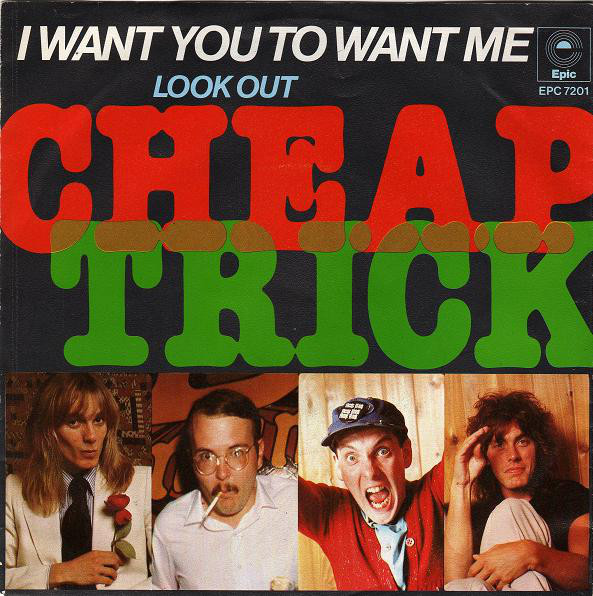
I Want You To Want me is when I first started to notice Cheap Trick…the version off of the Cheap TrickAt Budokon album
The song was included on their second album In Color, which was released later in 1977. This version had a medium tempo with a country feel and a honky-tonk piano throughout the song.
By 1978, the band had dropped this song from their setlist but restored it when they toured Japan that year since Japanese audiences loved the song. They played it on April 28 and 30 at their famous concerts that took place at the Budokan temple in Tokyo, which was a big deal because many Japanese citizens felt the temple was sacred and not appropriate for rock concerts. When the Beatles played at Budokan their were protests a decade before.
The song peaked at #7 on the Billboard 100 in 1979.
From Songfacts
This song has a long and intriguing history. It was written by Cheap Trick’s guitarist Rick Nielsen and recorded for their 1977 self-titled debut album, but it didn’t make the cut.
The concerts were released as the Live At Budokan album, which captured Cheap Trick’s live energy and turned their fortunes around in America, where the album was released in February 1979 and sold over 3 million copies. The extracted “I Want You To Want Me” became their first hit, charting at #7.
According to Rick Nielsen, the band considered this “sort of hokey pop” when they first recorded it, and the arrangement matched that sentiment, with finger snaps and a plaintive country feel. Robin Zander played up the schmaltz in the vocal, sounding like a woebegone cornpoke. This studio version fell flat, but when they played it as an earnest rocker, it worked.
The famous At Budokan version of this song was inspired by a French cover version (“J’attends Toutes les Nuits”) by a fairly obscure French synthpop artist named Niko Flynn, who sped up the tempo and put a beat to the song.
Many early Cheap Trick songs written by Rick Nielsen are from the perspective of characters who are a little unhinged (see: “Dream Police”), and the band played that up with their eccentric fashions and accessories. The guy in this song is a bit desperate and delusional, figuring a shoeshine and a new shirt will make the girl love him.
This is one of the few rock songs that starts with the chorus.
In 1978, this appeared as the B-side of Cheap Trick’s single “California Man.”
In 1997, the group recorded a new version of the In Color album (complete with this song), with producer Steve Albini, but it was never released.
The studio version
The live version
I Want You To Want Me
I want you to want me I need you to need me I’d love you to love me I’m beggin’ you to beg me I want you to want me I need you to need me I’d love you to love me
I’ll shine up my old brown shoes I’ll put on a brand new shirt I’ll get home early from work If you say that you love me Didn’t I, didn’t I, didn’t I See you cryin’ (cryin, cryin’) Oh, Didn’t I, didn’t I, didn’t I See you cryin’ (cryin, cryin’) Feelin’ all alone without a friend You know you feel like dyin’ (dyin’, dyin’) Oh, didn’t I, didn’t I, didn’t I See you cryin’ (cryin’, cryin’)
I want you to want me I need you to need me I’d love you to love me I’m beggin’ you to beg me
I’ll shine up my old brown shoes I’ll put on a brand new shirt I’ll get home early from work If you say that you love me Didn’t I, didn’t I, didn’t I See you cryin’ (cryin, cryin’) Oh, Didn’t I, didn’t I, didn’t I See you cryin’ (cryin, cryin’) Feelin’ all alone without a friend You know you feel like dyin’ (dyin’, dyin’) Oh, didn’t I, didn’t I, didn’t I See you cryin’ (cryin’, cryin’)
Feelin’ all alone without a friend You know you feel like dyin’ (dyin’, dyin’) Oh, didn’t I, didn’t I, didn’t I See you cryin’ (cryin’, cryin’) Feelin’ all alone without a friend You know you feel like dyin’ (dyin’, dyin’) Oh, didn’t I, didn’t I, didn’t I See you cryin’ (cryin’, cryin’)
I want you to want me I need you to need me I’d love you to love me I’m beggin’ you to beg me
Ever notice that a few teenage characters in cartoons in the early seventies tended to look a lot like Shaggy from Scooby Doo?
Speed Buggy took its name from the main character–a talking orange dune buggy named “Speedy.” It also featured a trio of human characters who travel the world with Speedy to participate in races and win trophies… Mark, Debbie, and Tinker, the mechanic/driver…and Shaggy clone. The show was a huge success… it ended up airing on all three major networks.
Only sixteen 30-minute episodes of Speed Buggy were produced in 1973. It aired first run on CBS until 1975. Reruns aired on ABC in January 1976, replacing Uncle Croc’s Block, then on NBC, replacing the canceled McDuff, The Talking Dog, from November 27, 1976, until September 3, 1977 (thus completing the cycle of being on all three networks). Then was picked up by the USA Network for its Cartoon Express shows from 1982 to about 1990.
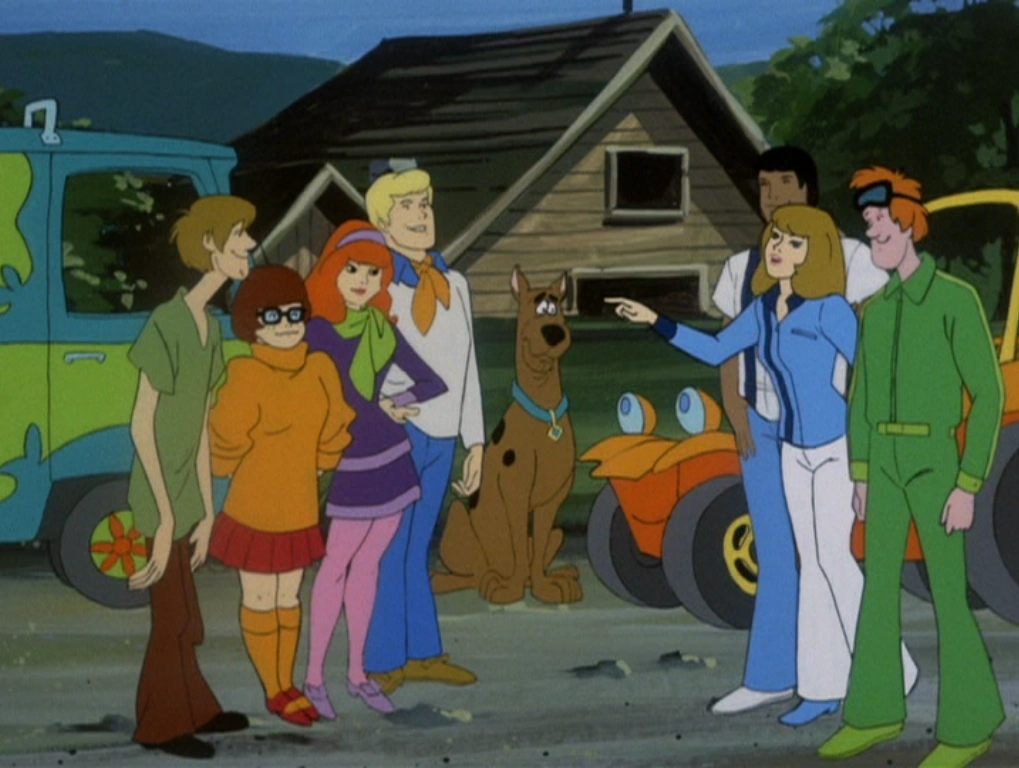
Not only is “Tinker” pretty much a copy of Shaggy… there are some similar character traits between Mark and Fred Jones (the blonde guy from Scooby Doo) and Debbie appears to be very similar to Daphne Blake in multiple ways.
Here is a picture of Speed Buggy cast and their doppelgangers from Scooby Doo
The voice talent comprised Mel Blanc as Speed Buggy, Michael Bell as Mark, Arlene Golonka as Debbie and Phil Luther Jr. as Tinker.
I’ve read where they based Speed Buggy off of Herbie The Love Bug
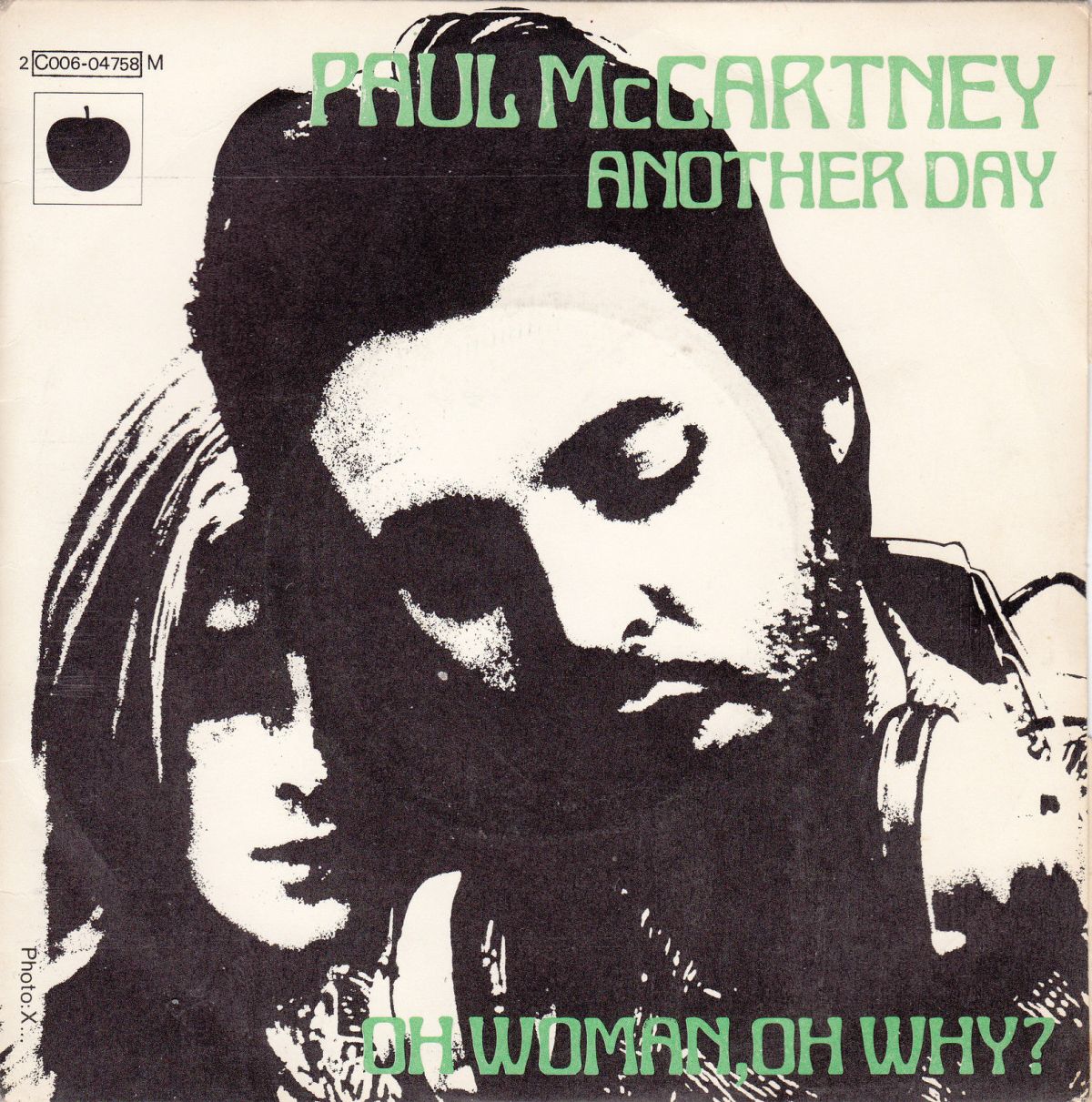
Jim from newepicauthor hosts Song Lyric Sunday and this week the theme is Clothing/Hat/Pants/Scarf/Shirt/Shoes/Tie… so here is Another Day… The song was written by Sir Paul McCartney… though he wasn’t a Sir when he wrote this song.
Slipping into stockings, stepping into shoes
Dipping in the pocket of her raincoat
This song doesn’t get played like some other Paul songs but I’ve always thought it had a charm about it. It always reminded me a little of the song Two Of Us from Let It Be.
Paul recorded this in New York in 1970, during the sessions for his album Ram. Although it was the first single of McCartney’s solo career, “Another Day” was actually written and previewed during The Beatles’ Let It Be Sessions in 1969. It was not included in the original Ram album though.
A reference to this song came from John Lennon’s not so nice song aiming his anger at Paul with this lyric: “The only thing you done was Yesterday, and since you’ve gone you’re just Another Day“
Paul on Another Day: I like the idea of writing songs about ordinary people and day-to-day lives, and Another Day is one of them. We all get up in the morning and do our usual stuff, yet somehow – even through it all – there are often magic moments. We recorded it in New York with the help of Phil Ramone and it was a hit which, at that time, was especially pleasing.
The song peaked at #5 in 1971 on the Billboard 100
Another Day
Every day she takes a morning bath she wets her hair
Wraps a towel around her as she’s heading for the bedroom chair
It’s just another day
Slipping into stockings, stepping into shoes
Dipping in the pocket of her raincoat
It’s just another day
At the office where the papers grow she takes a break
Drinks another coffe and she finds it hard to stay awake
It’s just another day
Do do do do do do, it’s just another day
Do do do do do do, it’s just another day
So sad, so sad
Sometimes she feels so sad
Alone in her apartment she’d dwell
Till the man of her dreams come to break the spell
Ah, stay, don’t stand her up
And he comes and he stays but he leaves the next day
So sad
Sometimes she feels so sad
As she posts another letter to the sound of five
People gather ’round her and she finds it hard to stay alive
It’s just another day
Do do do do do do, it’s just another day
Do do do do do do, it’s just another day
So sad, so sad
Sometimes she feels so sad
Alone in her apartment she’d dwell
Till the man of her dreams come to break the spell
Ah, stay, don’t stand her up
And he comes and he stays but he leaves the next day
So sad
Sometimes she feels so sad
Every day she takes a morning bath she wets her hair
Wraps a towel around her as she’s heading for the bedroom chair
It’s just another day
Slipping into stockings, stepping into shoes
Dipping in the pocket of her raincoat
It’s just another day
Do do do do do do, it’s just another day
Do do do do do do, it’s just another day
I didn’t watch Bonanza as much as Gunsmoke as a kid but I knew this guy. He looked so big on the screen and he seemed like a nice and gentle guy. He played Hoss Cartwright and that was an appropriate name for him. Dan’s other claim to fame was that he was the largest baby ever born in Bowie County (14 lbs.), in the town of DeKalb Texas in 1928. While still in school Dan stood six-foot-three and weighed 300 pounds.
His parents, Ora “Shack” Blocker and Mary Arizona Blocker managed to open up a grocery store after the depression in O’Donnell Texas where a young Dan helped out, carrying groceries to customers’ cars. He football skills earned him a scholarship to Sul Ross State University where he played football and studied English.
He appeared in a play Arsenic and Old Lace and was hooked on acting. He fought in the Korean War, where he served with distinction, earning a Purple Heart, among several other medals, citations and awards.
He got bit parts in television and soon landed the Bonanza role which he would forever be known.
On May 13, 1972, Dan entered a Los Angeles hospital for simple gall bladder surgery. A blood clot in his lung changed everything. Dan Blocker died and left a wife and four children. He was on Bonanza for 13 seasons
Dan was part owner of the successful, once popular chain restaurant, Ponderosa/Bonanza Steakhouse… He also owned a race car.
This song jumps out of the radio right at you. The horn section is great and so is Van’s voice in this song. Robert Christgau, writing in the Village Voice in 1971, described “Domino” as one of the “superb examples of Morrison’s loose, allusive white r&b.”
Domino peaked at #9 in 1971 on the Billboard 100. It was on the album His Band and the Street Choir which peaked at #32 on the Billboard Album Charts in 1971. Like I said in another post…I bought this album without knowing much about it except Blue Money and Domino…because it was Van Morrison and I wasn’t disappointed.
Van Morrison: “The record company was asking me for singles, so I made some like “Domino”, which was actually longer but got cut down.”
From Songfacts
This song is a musical tribute to Morrison’s inspiration, Fats Domino. Its musical style combines those of Irish Celtic (something that people from Ireland are terribly proud of) and urban contemporary gospel.
In his 1989 book The Heart of Rock and Soul, The 1001 Greatest Singles Ever, Dave Marsh ranks this song at #197.
Morrison’s then wife, Janet Planet, sang vocals on the album.
On this track, Morrison’s used lyrics from an earlier song he wrote titled “Down the Maverick.”
“Down the Maverick” referred to a radical artists’ colony started by Hervey White in Woodstock, New York. The Maverick still exists today as part of the Woodstock Art Colony.
Domino
Don’t want to discuss it I think it’s time for a change You may get disgusted Start thinkin’ that I’m strange
In that case I’ll go underground Get some heavy rest Never have to worry About what is worst and what is best (get it)
Oh oh Domino (all right) Roll me over Romeo There you go Lord have mercy
I said oh oh Domino Roll me over Romeo There you go Say it again
I said oh oh Domino I said oh oh Domino, dig it
There’s no need for argument There’s no argument at all And if you never hear from him That just means he didn’t call or vice versa That depends on wherever you’re at Or and if you never hear from me That just means I would rather not
Oh oh Domino Roll me over Romeo There you go Lord have mercy I said oh oh Domino Roll me over Romeo
There you go Say it again Oh oh Domino I said oh oh Domino.
Hey Mr. DJ I just want to hear some rhythm and blues music On the radio On the radio On the radio Uh-uh, all right Uh-uh, all right Uh-uh, all right Uh-uh Hear the band One more time
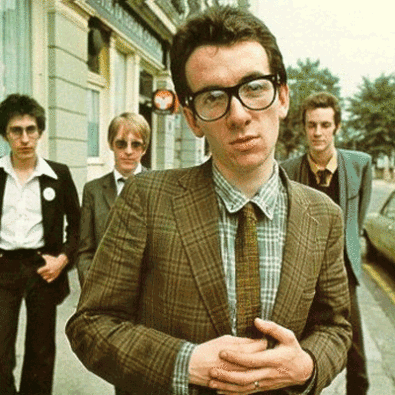
Great song and great performance by Elvis Costello and the Attractions. The song was written by Nick Lowe and first released in 1974 by the band he was in called Brinsley Schwarz named after their guitar player.
The American and Canadian release of Elvis’s album Armed Forces contained this song. The album peaked at #10 on the Billboard 100 in 1979.
Nick Lowe on writing the song: “I wrote the song in 1973, and the hippie thing was going out, and everyone was starting to take harder drugs and rediscover drink. Alcohol was coming back, and everyone sort of slipped out of the hippie dream and into a more cynical and more unpleasant frame of mind. And this song was supposed to be an old hippie, laughed at by the new thinking, saying to these new smarty-pants types, ‘Look, you think you got it all going on. You can laugh at me, but all I’m saying is, ‘What’s so funny about peace, love, and understanding?’ And that was the idea of the song. But I think as I started writing it, something told me it was too good idea to make it into a joke. It was originally supposed to be a joke song, but something told me there was a little grain of wisdom in this thing, and not to mess it up.”
From Songfacts
This was written by Nick Lowe and originally recorded by his band Brinsley Schwarz in 1974. Despite a wealth of talent and great deal of promotional support, Brinsley Schwarz never managed a hit, but were very influential to artists like The Clash and Elvis Costello. Nick Lowe became a very successful producer and scored a hit as a solo artist with “Cruel To Be Kind.”
Costello and Lowe were both signed to Stiff Records, and Costello’s version, credited as “Nick Lowe & His Sound” was first released as the B-side of Lowe’s 1978 single “American Squirm.” Costello’s version was more energetic and had more Pop appeal. It was included on American editions of Costello’s 1979 album Armed Forces. With its simple message of unity and love in a troubled world, the song became an anthem for peace and tolerance, and was recorded by many artists, including A Perfect Circle, Lucy Kaplansky, The Flaming Lips and The Wallflowers.
This lifts from the Judee Sill song, “Jesus Was A Cross Maker,” Lowe told The A.V. Club: “I always would ‘fess up that there is one lick in the tune I did steal from Judee Sill. She had a song called ‘Jesus Was A Cross Maker’ at about that time that I really thought was a super song. I haven’t heard that song for many years, but I always think I took a little lick from Judee’s song.”
In 1992, this was covered by Curtis Stigers for the Whitney Houston film, The Bodyguard. The film’s soundtrack album went on to sell 44 million copies worldwide, landing Lowe a large royalty check that financed his less commercial music. Lowe told The Telegraph: “It was a tremendous piece of good fortune. I made an astonishing amount of money from that.”
This appears in the 2003 movie Lost in Translation, where Bill Murray sings a karaoke version.
This was sung by Stephen Colbert, John Legend, Elvis Costello (in a bear suit), Feist, Toby Keith, and Willie Nelson on the TV special A Colbert Christmas: The Greatest Gift of All! after John Legend told Stephen that he (Stephen) didn’t understand Christmas.
(What’s So Funny ‘Bout) Peace, Love, and Understanding
As I walk through This wicked world Searchin’ for light in the darkness of insanity. I ask myself
Is all hope lost? Is there only pain and hatred, and misery? And each time I feel like this inside, There’s one thing I want to know:
What’s so funny ’bout peace love & understanding? Ohhhh What’s so funny ’bout peace love & understanding? And as I walked on Through troubled times
My spirit gets so downhearted sometimes So where are the strong And who are the trusted? And where is the harmony?
Sweet harmony. ‘Cause each time I feel it slippin’ away, just makes me want to cry. What’s so funny ’bout peace love & understanding? Ohhhh What’s so funny ’bout peace love & understanding?
So where are the strong? And who are the trusted? And where is the harmony? Sweet harmony.
‘Cause each time I feel it slippin’ away, just makes me want to cry. What’s so funny ’bout peace love & understanding? Ohhhh What’s so funny ’bout peace love & understanding? Ohhhh What’s so funny ’bout peace love & understanding?
This is a lively song by Van the Man…Van Morrison. First heard this song after I bought the Van Morrison album Saint Dominic’s Preview in the 80s without knowing any song on it…I didn’t need to…it was Van Morrison. Van is one of my favorite singers…it’s not just his voice but the way he phrases his words. If you ever get a chance to see him live…do it. I got that honor (The Pay The Devil tour) once and I have to say he sounded better live than on record and that doesn’t happen a lot.
The song peaked at #62 on the Billboard 100 in 1972. This song is an obvious tribute to the great Jackie Wison.
The opening track of Saint Dominic’s Preview, this is a tribute to Jackie Wilson, one of Morrison’s influences. Released as the first single from the album, it charted at #61 on the Hot 100.
Guitarist Doug Messenger recalled the recording of the song to Uncut: “Jackie Wilson Said was totally disorganized. He didn’t know where anything went, and no one seemed to know what to do with it. Van went away and the band worked on the basic structure. When he came back we went through it a couple of times and he was real happy because all of a sudden it seemed to be making sense. He said, ‘I think it’s coming together,’ which is what he always said when he felt it was working.”
“I remember he said to the drummer, Ricky Schlosser, ‘When I sing “boom boom boom,” hit the tom and the kick drum at the same time.’ We ran through it once or twice, and the first recorded take is what’s on the album. It was all over the place, but somehow it worked. Even when he ad-libbed at the end -‘One more time’- somehow we all kept it together. At the end, Van was smiling like a Cheshire Cat. ‘I think we got it!’ We tried a second take and – of course – it all fell apart.”
The song was used as the opening theme for the 1991 comedy movie Queens Logic.
This was covered by Dexys Midnight Runners on their 1982 album Too-Rye-Ay. Released as a single, it reached #5 on the UK singles chart.
Jackie Wilson Said (I’m in Heaven When You Smile)
Jackie Wilson said It was Reet Petite Kinda love you got Knock me off my feet Let it all hang out Oh, let it all hang out And you know I’m so wired up Don’t need no coffee in my cup Let it all hang out Let it all hang out
Ding a ling a ling Ding a ling a ling ding Ding a ling a ling Ding a ling a ling ding Do da do da I’m in heaven, I’m in heaven I’m in heaven, when you smile When you smile, when you smile When you smile And when you walk Across the room You make my heart go Boom boom boom Let it all hang out Baby, let it all hang out And every time You look that way Honey child, you make my day Let it all hang out Like the man said let it all hang out
Ding a ling a ling Ding a ling a ling ding Ding a ling a ling Ding a ling a ling ding Do da do da I’m in heaven, I’m in heaven I’m in heaven, when you smile When you smile I’m in heaven, I’m in heaven I’m in heaven, when you smile One more time I’m in heaven, I’m in heaven I’m in heaven, when you smile When you smile
I would watch this on those magical Saturday mornings when the cartoons last until around noon. Then out the door, I would go but from 7am – noon it was a kids world.
Wacky Races is about a series of car competitions where eleven racers race in different location all over North America. The story revolves around Dick Dastardly and his dog Muttley who is determined to cheat just to win the game but they always lose every time. Wacky Races was produced by Hanna-Barbera and aired from 1968 to 1970.
Inspired by the 1965 film The Great Race the cartoon features eleven teams of racers competing to win the title of “World’s Wackiest Racer.” The roster of competitors included: Dick Dastardly and Muttley, The Slag Brothers, The Gruesome Twosome, Professor Pat Pending, The Red Max, Penelope Pitstop, Sergeant Blast and Private Meekly, The Ant Hill Mob, Lazy Luke, and Blubber Bear, Peter Perfect, and Rufus Ruffcut and Sawtooth.
The song was on the album Out of the Blue which was a favorite of mine. The song peaked at #35 on the Billboard 100 and #6 in the UK in 1978.
Jeff Lynne locked himself away to write this album: “It was dark and misty for two weeks, and I didn’t come up with a thing. Suddenly the sun shone and it was, ‘Wow, look at those beautiful Alps.’ I wrote Mr. Blue Sky and 13 other songs in the next two weeks.”
The song renewed its popularity with the inclusion on the Guardians of the Galaxy Vol 2 soundtrack.
From Songfacts
This song closes the side of the Out Of The Blue album known as “Concerto For A Rainy Day.” The lyric is suitably uplifting, following the concept of a rainy day that comes to an end.
Jeff Lynne has a “blue” streak: Other songs he wrote for ELO include “Out of the Blue” and “Midnight Blue.” Lynne is from the Birmingham area in England, where the Birmingham Football Club (or as Americans call it, “soccer team”) is called the Birmingham Blues. The “blues” in these songs are in some way a tribute to his team.
The synthesized voice at the end of the song sings, “Please turn me over” because in the old days when we used to listen to our music on vinyl, we had to turn the record over to hear the other side.
In 2003, this was featured in commercials for the Volkswagen convertible Bug. The spot shows a man slogging through his workday until he stops to look out a window and sees what’s out there. The song was also used in commercials for Sears.
This is played before the start of every football (soccer) match played by Birmingham City Football Club (nickname: “The Blues”). Many fans of the club associate the song with a former player (and later manager), Trevor Francis, who, through his association with the club in the ’70s, was believed to be friends with supporter Jeff Lynne.
This was used as the theme song to the short-lived series on NBC called LAX, which starred Heather Locklear and Blair Underwood as the runway and terminal managers, respectively.
This song was used in the Jim Carrey movie Eternal Sunshine of the Spotless Mind and was also featured in the movie Martian Child with John Cusack.
Jeff Lynne and Richard Tandy of ELO performed this song with Ed Sheeran at the Grammy Awards in 2015. ELO, which never won a Grammy, had returned to action in 2014 with a concert at Hyde Park in London.
According to data provided by music discovery app Shazam, Lynne, Tandy and Sheeran’s performance provided the most Shazamed moment of the entire telecast.
This plays during the opening credits of the 2017 movie Guardians of the Galaxy Vol. 2 in what director James Gunn called “the most hugely insane shot I’ve ever done.” Like the first film, the soundtrack is made up of ’70s hits that Chris Pratt’s character plays throughout on a Walkman.
Mr. Blue Sky
Sun is shinin’ in the sky There ain’t a cloud in sight It’s stopped rainin’ everybody’s in the play And don’t you know It’s a beautiful new day, hey hey
Runnin’ down the avenue See how the sun shines brightly in the city On the streets where once was pity Mr. Blue Sky is living here today, hey hey
Mr. Blue Sky please tell us why You had to hide away for so long (so long) Where did we go wrong?
Mr. Blue Sky please tell us why You had to hide away for so long (so long) Where did we go wrong?
Hey you with the pretty face Welcome to the human race A celebration, Mr. Blue Sky’s up there waitin’ And today is the day we’ve waited for
Oh Mr. Blue Sky please tell us why You had to hide away for so long (so long) Where did we go wrong?
Hey there Mr. Blue We’re so pleased to be with you Look around see what you do Everybody smiles at you
Hey there Mr. Blue We’re so pleased to be with you Look around see what you do Everybody smiles at you
(Mr. Blue Sky, Mr. Blue Sky) (Mr. Blue Sky)
Mr. Blue, you did it right But soon comes Mr. Night creepin’ over Now his hand is on your shoulder Never mind I’ll remember you this I’ll remember you this way
Mr. Blue Sky please tell us why You had to hide away for so long (so long) Where did we go wrong?
Hey there Mr. Blue (sky) We’re so pleased to be with you (sky) Look around see what you do (blue) Everybody smiles at you









 PowerPop... An Eclectic Collection of Pop Culture