Randy from mostlymusiccovers.com and I teamed up to write about different brothers in rock and roll through the years. This is the first one of the series. I combined the introduction with this first post. I will post these on Sunday mornings.
We all know the great album Brothers in Arms from Dire Straits, but sometimes those brothers are “at arms” rather than in them. In a periodic mini-series Randy, from mostlymusiccovers.com, and I will explore some “Rock ‘Em Sock ‘Em” Siblings. As it happens the Knopfler brothers are among many sets and while we can’t talk about all of them, we will feature some of the better-known sibling rivalries. Two, three, and sometimes even more brothers in a band, well, stop being a band of brothers. How many more cheesy puns can we come up with? Just some of the names Randy and I discussed were; The Everly’s, The Fogerty’s, The Gibb’s, to the Gallagher’s, Allmans, and the Davies.
For those of you who have not checked out Randy and his blog, you really need to. He has been writing a blog about Cover Songs, music genres, and artists since early 2018. He gets in-depth with many artists You can read about the origins of Rock and Roll, Blues, R&B, and Country Music. There are Cover Song and Chart statistics as well, all with a focus on the 1950s, 60s, and 70s at MostlyMusicCovers.com. He has also helped me out with blues artists and Canadian Charts in general.
While we can’t get too in-depth as literally books have been written, we can give a good thumbnail sketch of the bash ups and the break ups. A few days ago Randy mentioned that brothers Doug and Rusty Kershaw had split, but I did not read about it being that acrimonious, more of a creative differences situation. Our brother stories have a bit more ‘punch’ to them.
This is the first post in a periodic mini-series where Randy from mostlymusiccovers.com and I will explore some “Rock ‘Em Sock ‘Em” Siblings. The original post is here. Randy tells us about Don and Phil Everly.
“Bye, Bye, Love” The Everly Brothers first big hit from 1957.
Don was born in 1937 (2021) and Phil in 1939 (2014), raised in Kentucky, the brothers would move to Nashville in 1955 to pursue a recording career. As in the above clip it was “Bye, Bye, Love” in 1957 that sent the brothers skyrocketing. Written by Felice and Boudleaux Bryant it was #1 on the Country chart, #2 in the US and Canada, #6 in the UK and 14 in Australia, and #14 on the R&B chart. Their next song “Wake Up Little Susie” was #1 in the US and Canada, #2 in the UK, and #3 in Australia.
They toured with Buddy Holly in 1957 and 1958 and became very close, Buddy’s death, Feb. 3, 1959 would have a devastating impact on the pair. Don wrote their next and last #1 hit “Cathy’s Clown” in 1960. This was after a dispute with the record/publishing company, leaving Acuff/Rose and unfortunately songwriters Felice and Boudleaux Bryant.
Still, they had a busy schedule, the demands of touring and the pressures of performing and recording, the inevitable happened. The use of amphetamines was rampant in the business and they both got hooked.
By the mid 1960’s they fought over just about everything and of the two it was Don that had the most severe drug problem. Chart success was eluding them and the brothers were not getting along, but it was kept a closely guarded secret that they were able to hold for several years. Don attempted to go solo in 1970 but had no success. Things finally came to a head and in 1973 they agreed their July 14/15 show would be the last one.
Don was drunk before the show started, part way into the show Phil smashed his guitar and walked off stage. Don would finish the show and perform solo the next night. They did not speak for nearly ten years. They would reunite in 1983, had a great reunion concert, and released an album EB84, produced and named in his style 1 by Dave Edmunds that charted #38 on Billboard and #24 on the Country Album chart. They continued to perform periodically, and in 2003 they toured with Paul Simon. They remained close until Phil’s death at age 74 in 2014. Don passed in 2021 at age 84.
“On the Wings of a Nightingale” written for The Everly Brothers by Paul McCartney
Despite the battles and the hardship, they gave us some of the most remarkable harmonies ever-ly recorded.
Dave Edmunds released his 7th Studio album called D.E. 7th in 1982.
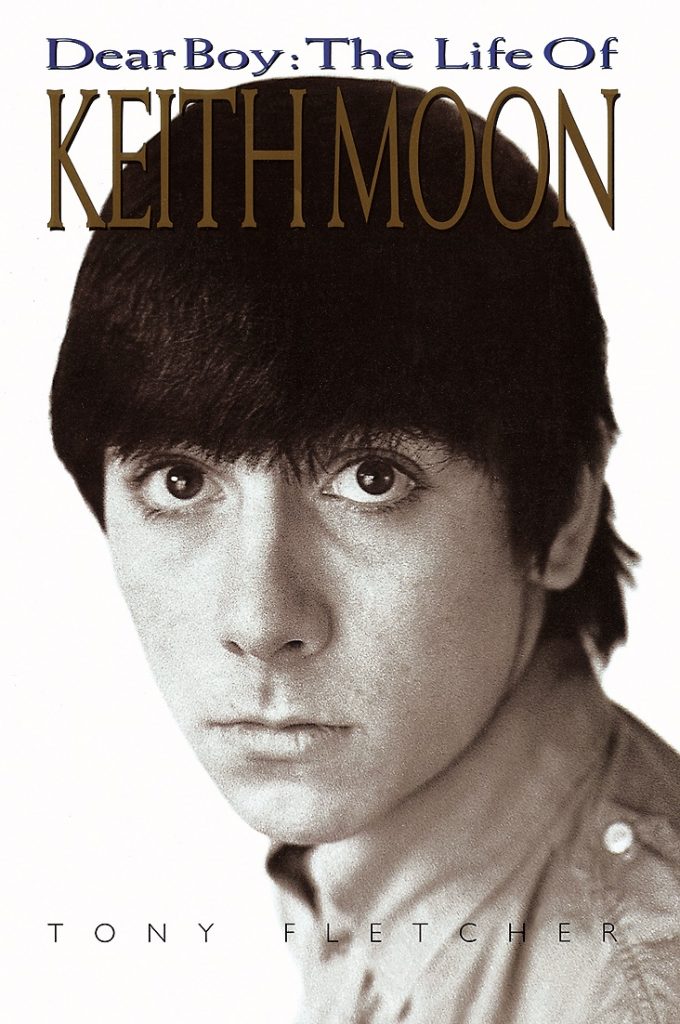
I didn’t think I would ever see an extensive book (nearly 600 pages) on Keith Moon. Tony Fletcher wrote this book and he thoroughly researched Keith and he had been a fan since his teenage years. As a teenager, he actually met Keith before he died.
Fletcher talks to everyone of importance in Keith’s life. The only disappointing thing for me and for Fletcher himself is he had to debunk some of the myths about Keith. The great story of him driving a car in the pool of a Flint Michigan Holiday Inn… didn’t happen… but the real story is just as interesting though.
The veil is drawn back on a lot of myths. It’s not a book full of Keith doing wild things like the book “Full Moon”. This one shows his ugly side also. Keith had one of the most dangerous traits you could have…the ability not to be embarrassed. Think about that…that keeps us in check at times. With Keith, anything could happen at any time.
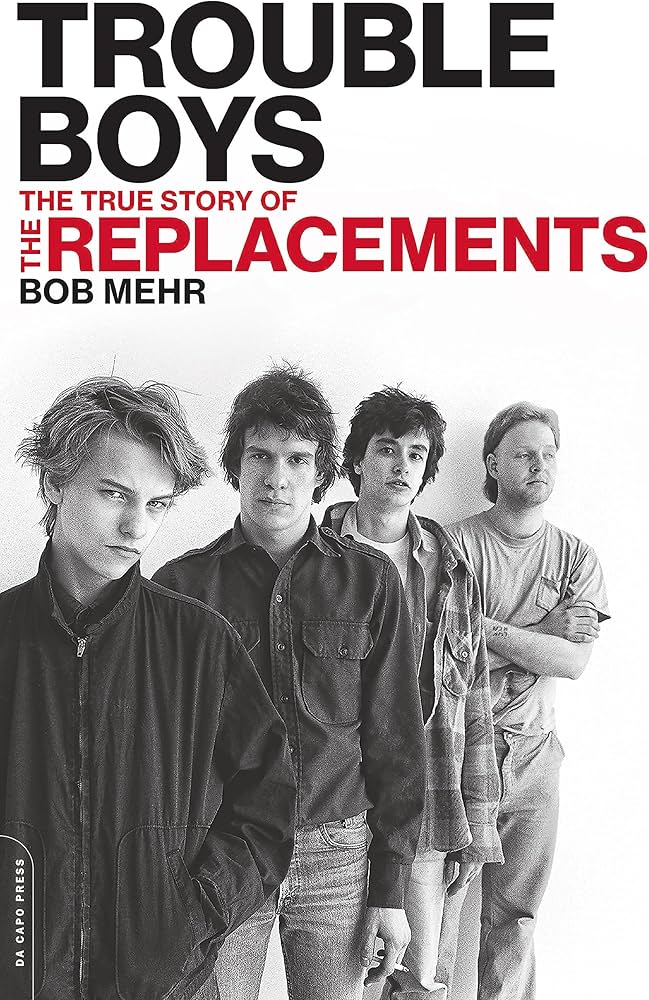
Trouble Boys – Bob Mehr
One of the only books about The Replacements. After this book, I started to understand the reckless and sabotaging behavior of the band. It also goes through the tough decision of Bob Stinson leaving the band only to die a few years later.
It was interesting to see the relationship they had with other bands such as REM at the time. They would goad each other into making better albums. I was a fan before I read it but it increased my interest by a bunch afterwards.
Up and Down with the Rolling Stones – Tony Sanchez
This was the first book I read on the Rolling Stones when I was around 13. It’s an easy but dark read. It’s written by Tony Sanchez, Keith’s drug dealer and sometimes partner in crime. Tony was also a photographer who took photos of the Stones and the Moody Blues. Spanish Tony, as he was called hung around with the Stones, Moody Blues and also knew the Beatles.
It’s full of wrecked cars, heroin, dead friends, sleazy characters, and some eventful journeys. At first, I would take some of the stories with a grain of salt but most of the events were verified by Keith’s book “Life.”
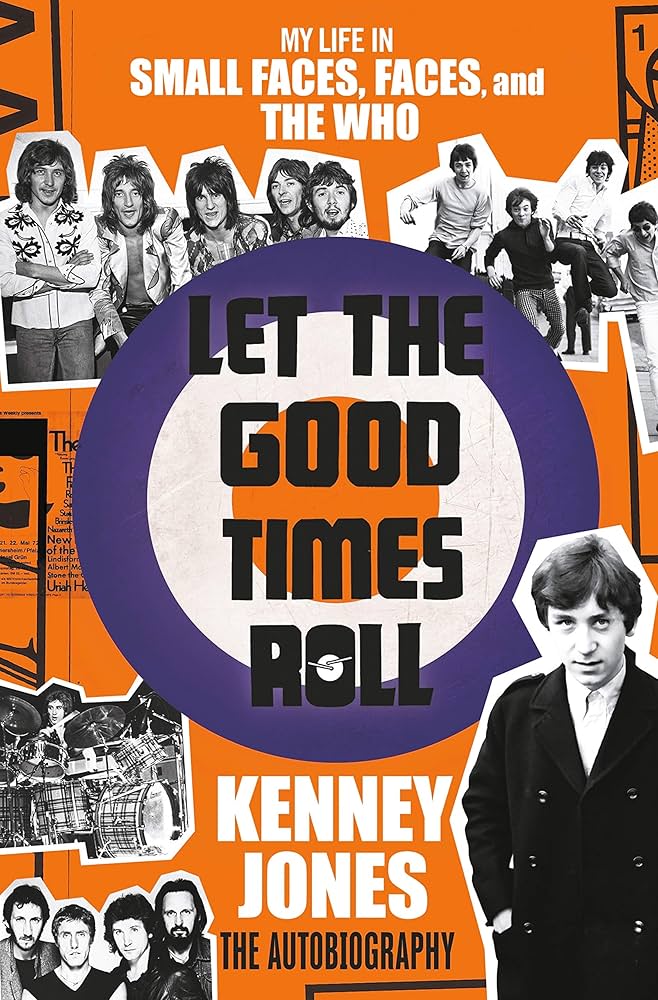
Let The Good Times Roll – Kenney Jones
Kenney Jones was the drummer of three of England’s most influential bands – The Small Faces, The Faces and for a few years The Who. I was pleasantly surprised by this book. Kenney keeps the book interesting from his childhood, teen years, swinging London, the Swinging Seventies, up til now.
I never knew much about the Small Faces and Faces and this book answered some questions I had about both bands. He gave much more information than Roger Daltrey did in his book about Jone’s tenure as the drummer of the Who and their difficulties. Personally, I don’t think Kenney was the right drummer for the Who but then again…I don’t think anyone could have taken Moon’s place. He does give an interesting perspective on it though.
I didn’t’ realize that Keith Moon and Kenney were as close as they were. Kenney had played with the Who before in sound checks when the Small Faces and Who were touring with each other and Moon couldn’t be found. After Moon died a few strange things happened to Kenney right before Bill Curbishley (The Who’s Manager) called to see if he would join. The strange events helped him make the decision.
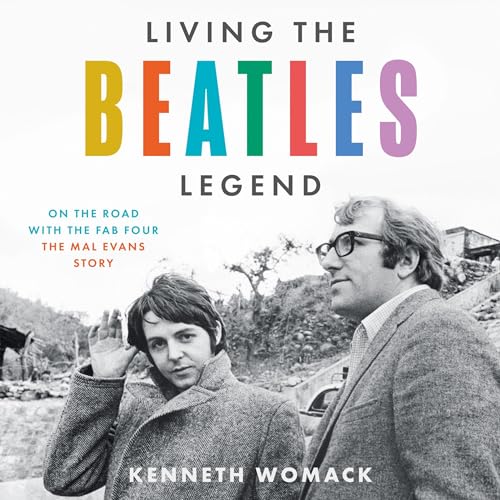
Living The Beatles Legend – Kenneth Womack
I did a review on this last year but I wanted to get it in here.
I’ve been waiting on this book since I read about the Beatles in the 70s as a kid. I knew the story…after a showdown with police Mal Evans was shot and killed on January 5, 1976. He was working on his autobiography at the time. Evans was the last person you would think would die that way…and in this case…he wanted it. Could the police have handled it better? Yes, but Mal had said that is how he wanted to go out. He forced the situation. He was only 40 years old.
Mal Evans along with Neil Aspinal were the roadies for the Beatles. Imagine that…2 roadies for the world’s biggest band. Mal worked at a telephone company in the early ’60s but he loved rock and roll…especially Elvis Presley. He would go see bands at the Cavern and struck up a friendship with George Harrison. George told him since he loved music…take a part-time job as a bouncer at The Cavern. The Beatles automatically liked him from the start. He was a big guy at 6’4″ but he never wanted to use violence. More times than not…he talked his way out of trouble. Aspinal was their only roadie and when Love Me Do and then Please Please Me came out…they needed another person because Aspinal was worn out.
I would highly recommend this book. Kenneth Womack had full access to his diaries and used many of the entries. This book turned up a lot of things about them that I had no clue about. It also gave a different look at their personalities on an everyday basis. Near the end, Mal went to the 2nd Beatles convention and spoke. He started to battle depression in the seventies after living in California and missing his wife and kids back in London. He picked up a girlfriend in California and that made his guilt worse. Drugs also affected him in the end.
You could blindfold me and I could tell you if Mick Taylor was playing with The Stones live. He had his own unique sound because of the Les Paul he played. He made those songs in the classic Stones period go.
Many people think that Mick Taylor went uncredited on this and many songs. The melody doesn’t sound like a Keith melody but in any case, Jagger/Richards get credited with this one. They rarely if ever play it live.
The solo in this song is great by Mick Taylor. It reminds me a little of Carlos Santana. He quit shortly after this album was released and it was the end of the classic Stones era. They would never sound the same again after this. The song was on It’s Only Rock and Roll which was a good album but not up to the level of the five preceding albums. A big reason was because of the absence of producer Jimmy Miller.
So why did Mick Taylor leave the band? I’ve read different things from him and others. Taylor felt underappreciated and frustrated that he didn’t receive proper credit for his contributions to the band’s music. He claimed to have co-written several songs, such as Sway and Moonlight Mile but Jagger and Richards would not give a songwriting credit to him. I do believe that because Brian Jones and Ronnie Wood also had the same problem.
His health and well-being were also factors in his decision to leave. The intense touring schedule and the pressures of being in The Stones took a toll on him. Besides pot…he said he didn’t take drugs when he joined the band but like others before and after him…he slowly started to do harder drugs while with the band. When he quit the band it took him a while to get off of heroin.
The song is a favorite among many Stones fans I know and it should be more well known.
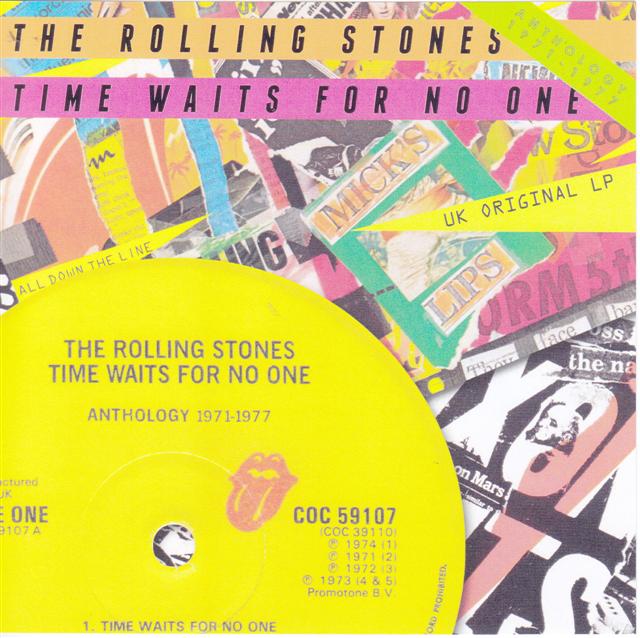
Time Waits For No One
Yes, star-crossed in pleasure, the stream flows on by Yes, as we’re sated in leisure, we watch it fly, yes
And time waits for no one, and it won’t wait for me And time waits for no one, and it won’t wait for me
Time can tear down a building or destroy a woman’s face Hours are like diamonds, don’t let them waste
Time waits for no one, no favors has he Time waits for no one, and he won’t wait for me
Men, they build towers to their passing Yes, to their fame everlasting Here he comes, chopping and reaping Hear him laugh at their cheating
And time waits for no man, and it won’t wait for me Yes, time waits for no one, and it won’t wait for thee
Drink in your summer, gather your corn The dreams of the nighttime will vanish by dawn
And time waits for no one, and it won’t wait for me And time waits for no one, and it won’t wait for me No, no, no, not for me, no, not for me
I like movies that are directed and written by the same person. That is the reason I like Buster Keaton and Charlie Chaplin movies. You won’t find this much anymore unless it’s an indie movie. Movies that are written by a committee are sometimes slick and predictable. We need more movies and music like this. I talked about this last Friday in the comments with different people about The Texas Chainsaw Massacre and remembered I wrote it about this one as well.
You will hear one word in many of these reviews…and that word is gritty. The 1970s movies set in New York have grit, filth, and realism. The way these were made looks like they were made on the fly. I mean that in the best way. The characters look as if they were lifted off the streets and filmed. There is a good reason for that. It had a small budget so they couldn’t afford a union-shot movie. Many scenes were shot with natural lighting, and guerrilla filmmaking techniques were employed to save costs. They shot it in 26 days and made excellent use of a handheld camera.
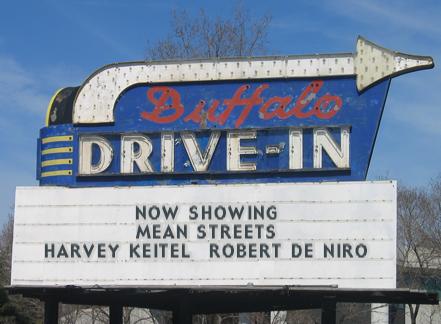
This 1973 film opens with a famous monologue by Charlie, played by Keitel, which sets the tone for the character’s internal conflict. This introspective voice-over became a signature element of Scorsese’s storytelling style. Mean Streets is set in New York City’s Little Italy and follows Charlie (Harvey Keitel), a small-time hood trying to make his way in the local Mafia, and his reckless friend Johnny Boy (Robert De Niro), who owes money all over town. The film explores the struggling street life and the demands of mob life…along with a lot of guilt.
It’s directed by Martin Scorsese and I think this is one of the best movies of its kind. He would later make other mob movies that are more well-known such as Goodfellas, Casino, and The Irishman but none of them are as, here is that word again, gritty as this. Scorsese knew the vibe well, growing up in his New York City neighborhood and dealing with a formative period in his life during the early 60’s. He shot this movie with Roger Corman’s crew with 6 days of location in New York and with most of the interiors done in Los Angeles. Scorsese edited much of the movie in his bedroom. It was written by Scorsese and his childhood friend Mardik Martin. What lends to the atmosphere is many of the film’s scenes were improvised. Scorsese encouraged his actors to ad-lib their lines to create a more authentic and natural feel.
The actors were fantastic. Harvey Keitel, De Niro, Amy Robinson, Victor Argo, and many more. Keitel stands out to me in this like he does in most of the films he made. Here he balances out toughness with vulnerability. He got this part because Jon Voight had dropped out.
Let’s talk about the music a little bit here. Not many directors are as good as Scorsese at placing music in movies. In the first few minutes of this movie, you hear two Stones songs and Derek and the Dominos as he fits the scenes beautifully.
The movie is not action-packed…it’s almost like a day in the life of these characters. You can see parts of Scorsese’s later movies in this one as well. Much like you can see Pulp Fiction in Reservoir Dogs for Quentin Tarantino.
Quotes:
Voice in Charlie’s Mind: You don’t make up for your sins in church. You do it in the streets. You do it at home. The rest is bullshit, and you know it.
Charlie: You know what the Queen said? If I had balls, I’d be King.
Charlie: It’s all bullshit except the pain. The pain of hell. The burn from a lighted match increased a million times. Infinite. Now, ya don’t fuck around with the infinite. There’s no way you do that. The pain in hell has two sides. The kind you can touch with your hand; the kind you can feel in your heart… your soul, the spiritual side. And ya know… the worst of the two is the spiritual.
I saw this review about a book on mobster films that talks about this movie.
Over time, Scorsese would make “slicker, better-crafted movies,” according to authors George Anastasia and Glen Macnow in The Ultimate Book of Gangster Movies, “but the nuts and bolts of who he is and what he’s about are here.” The authors rank Mean Streets No. 14 of the Top 100 gangster movies, just behind Léon: The Professional and ahead of Reservoir Dogs. “On one level, watching Mean Streets is like finding some old film of Joe DiMaggio and Mickey Mantle and Willie Mays during their first seasons in the big leagues,” the authors wrote. “The raw talent is there. There are sparks and smoldering potential.”
The first time I heard this song I loved it. Many people have covered it but I know it primarily through CCR. Huddie Ledbetter, better known as Lead Belly, wrote this song and recorded it in 1940. Back when I was playing in a band…around one am, a couple of hours before closing we would do this song. People would be singing along with us.
Some bands and artists seem to cross genres and CCR is one of those bands. Yes, I’ve met people who didn’t love them but most like something they do. I’ve met metal heads, hard rock fans, country, bluegrass, pop, and rock fans who like them. Most can’t believe they came from California and not the swamps of Louisana. They looked like blue-collar workers going to work every day…and by their music…they were.
I visited secondhandsongs.com and found that this song has 187 versions of it. It’s been covered by Harry Belafonte, Odetta, Bill Monroe, Buck Owens, The Staple Singers, The Beach Boys, Van Morrison, and so many more.
Creedence covered it on the Willy and the Poor Boys album released in 1969. It was not released as a single in America but it peaked at #1 in Mexico in 1970. The album had the well-known hits Fortunate Son, Down On The Corner, The Midnight Special, and the fan favorite It Came Out of the Sky. The album peaked at #3 on the Billboard Album Charts, #2 in Canada, and #10 in the UK.
Creedence had 18 songs in the top 100 and 9 top 10 hits yet no number 1’s in the Billboard 100 until Have You Ever Seen The Rain in 2021!
Cotton Fields
When I was a little bitty baby My mama would rock me in the cradle In them old cotton fields back home
It was down in Louisiana Just about a mile from Texarkana In them old cotton fields back home
Oh, when them cotton bolls get rotten You can’t pick very much cotton In them old cotton fields back home
It was down in Louisiana Just about a mile from Texarkana In them old cotton fields back home
When I was a little bitty baby My mama would rock me in the cradle In them old cotton fields back home
It was down in Louisiana Just about a mile from Texarkana In them old cotton fields back home
Oh, when them cotton bolls get rotten You can’t pick very much cotton In them old cotton fields back home
It was down in Louisiana Just about a mile from Texarkana In them old cotton fields back home
When I was a little bitty baby My mama would rock me in the cradle In them old cotton fields back home
It was down in Louisiana Just about a mile from Texarkana In them old cotton fields back home
I would have loved to have gone to this concert. The Grateful Dead, The Band, and The Allman Brothers! How much more Americana could you get? Many people felt the same…I mean MANY. 51 years ago today this mammoth concert happened.
I would love to hear from you if you were at this concert. I have one person who did give me a comment.
I first read about this festival in a Grateful Dead biography… There is not much video footage from the concert. No professional film because The Dead didn’t want it to be a movie or soundtrack. I could never understand why this concert wasn’t as well known as The Atlanta Pop Festival and others. It drew more than any other festival including Woodstock with some others combined.
Fans who arrived early were treated to an impromptu soundcheck by the Grateful Dead on July 27, which essentially turned into an extra set…it lasted for hours. Despite the enormous crowd, the atmosphere was surprisingly peaceful and communal. Whether they knew it or not…they were part of something truly historic.
Some cars were abandoned and a few of them are still there! I have a video below that shows some of the rusted cars now that were left.
An estimated 600,000 people attended this concert on July 28, 1973, in Watkins Glen N.Y. 51 years ago. Below is a blogger who was there and a member from each band talking about the concert. I’ll let all of them do the talking.
Jim from Unique Title For Me wrote this about going to this concert. He was one of the lucky ones that got to see Summer Jam.
Jim: That was my favorite concert that I attended, and I have some great memories of being there. We drove into the concert with an ounce of pot on the dashboard and since it was sold out, they were no longer collecting tickets, so they just waved us through the gate. There was this spaced-out naked guy standing nearby Danny, Patty, Irene and I and Danny said that we had to move because he was ruining the show for us. He had a snake around his neck, and he kept drooling, but I liked the spot we had so I grabbed him by his arm and flung him into the mud pit in front of the stage where all the other naked weirdos were.
From the bands themselves, almost all agree the sound check on Friday was better than the concerts.
Perspective about the concert by a member from each band.
Robbie Robertson from his book Testimony
Then we got a request from Bill Graham, who was putting together a show “just up the highway from us” at the Watkins Glen Raceway. We’d be performing with the Allman Brothers and the Grateful Dead. Playing some gigs could help us get “back on the stick,” as they say. We went up to Watkins Glen the day before the show for the sound check. Bill Graham said that the Dead would go on first and play for three or four hours—that was part of their thing, giving the audience their money’s worth. “Until the drugs wear off,” said Bill, laughing. We’d go on in the late afternoon, and the Allmans would take over at sundown. As we were leaving the sound check, it looked like cars were heading toward the racetrack from every direction. Bill said he expected maybe a hundred thousand or more. When we came back the next day, we couldn’t believe our eyes. Hundreds of thousands of people had showed up, and more just kept coming and coming. The crowds mowed down the high chain-link fences around the racetrack and filled the area as far as the eye could see. Bill was running around trying to make people pay admission, but the mobs were out of control. When it came time for the Band to take the stage, it started pouring. As we waited, hoping it was going to let up, Bill came over. “They’ve determined there are 650,000 people here. It’s the biggest concert in history.” The news was somewhere between an incredible accomplishment and a huge disaster. The rain started letting up, and Garth played some churchy, rainy-day keyboard sounds out over the crowd. When it was safe to go on, we decided to start our set with Chuck Berry’s “Back to Memphis.” And wouldn’t you know, as Levon sang that baby, the sun came out.
Gregg Allman from My Cross to Bear
Right before Brothers and Sisters came out, we played the festival at Watkins Glen with the Band and the Grateful Dead, in front of six hundred thousand people—the biggest show in history to that point. People always talk about Woodstock. Watkins Glen was like three Woodstocks. I think actually it might’ve been a little too big. They should have had people all the way around the raceway, and maybe had the stage in the center revolving real slowly, do a revolution in a minute. That’s not that complicated. A show like Watkins Glen was uncomfortable, because you know that you’re getting the show across to this many people, but you still got two times that many behind them. You could finish a song, take your guitar off, put it in the case, and latch it up before the last guy heard the last note. Sound ain’t all that fast, not compared to light.
When you’re playing in that situation, you’re kind of thinking about the end. Not that you’re wishing it to be over, but you can’t even hear yourself—that was back before we had the in-ear monitors. Everything was so loud. You just walk out there and start to wince before you even start playing. It’s hard to get any kind of coziness, any kind of feel with the audience. I guess there’s something about that many people seeing you all at once that’s real nice, but it’s just too much. You’re just like a little squeak in the middle of a bomb going off. But it was interesting, and it was a pretty fun day. People were OD’ing all over the place. And of course, Uncle Bill was there, which cured everything. It was exciting to be there and see it—and to be able to make ’em stand up, now that was something else.
Bill Kreutzmann from Deal
We made some questionable business decisions and we couldn’t sell records, but we sure could sell tickets. We sold around 150,000 tickets for a single show at a racetrack in Watkins Glen, New York, on July, 28, 1973. Yes, and more than 600,000 people ended up coming out for it. The lineup was just us, the Allman Brothers, and the Band. That show, called the Summer Jam at Watkins Glen, made it into the Guinness Book of World Records for what, at the time, was the largest audience ever assembled at a rock concert. In fact, that record may still hold today, at least in the U.S., and some have even proposed that it was the largest gathering in American history. Originally, the bill was supposed to just be the Dead and the Allmans, but our respective camps fought with the promoter over which band would get headliner status. The solution was that both bands would co-headline and they’d add a third, “support” act. The friendly (“-ish”) competition between us and the Allman Brothers carried through to the event itself. And yet, the memory that I’m most fond of and hold most dear from that whole weekend was jamming backstage with Jaimoe, one of the Allman’s drummers. We were just sitting in the dressing room, banging out rhythms, and that was a lot of fun for me. Jaimoe backed Otis Redding and Sam & Dave before becoming a founding member of the Allman Brothers, where he remains to this day. He’s a soulful drummer and just an incredible guy who is impossible not to like. As for the show itself, it is a well-known fact that the Grateful Dead always blew the big ones. Watkins Glen was no exception. However, we still got a great night of music out of it—the night before. The show took place on a Saturday, but by Friday afternoon there were already about 90,000 people in front of the stage. I’ve heard others place that number closer to 200,000. Either way, the audience was already many times the size of any of our regular shows, and the show was still a full day away. The only duty we had on Friday was to do a soundcheck, and even that was somewhat optional. The Band soundchecked a couple of songs. The Allman Brothers soundchecked for a bit. Then, perhaps spurred on by our friendly rivalry, we decided to one-up both bands by turning our soundcheck into a full-on, two-set show. Naturally, without any of the pressure of the “official show” the next day, we really let loose and played a good one. There was an eighteen-minute free-form jam that eventually made it onto So Many Roads, one of our archival box sets. It’s good music, all right, and it still holds its own. On the day of the actual show, we had to fly into the venue via helicopter because the roads were all backed up, like what happened at Woodstock. People left their cars on the side of the road and walked for miles to the gig. I remember looking down from the helicopter and seeing the most incredible impressionist painting, a Monet of heads, shoulders, tie-dyes, baseball caps, and backpacks, packed front to back. You couldn’t see the ground for the crowd. To this day, I’ve never seen anything else like that. Nowadays at large music events and festivals, they have golf carts for artists and crews to get around, but back then they used little motor scooters. Early, during the day of our supposed “soundcheck,” I commandeered one of these scooters and, because the venue was an actual racetrack, I decided to do a lap. This was before the gates were opened. The scooter went maybe fifteen or eighteen miles an hour, something stupid like that, and it took forever just to do one lap. But I did it. And that’s when I first started to get a feel for the scale of the event and just how large it was. During the Summer Jam itself, I watched the other bands play and I honestly thought the Allman Brothers played better on the big day than we did. As for the Band, well, they always sounded great.
Peter Wolf was doing his thing in this song. Wolf is the complete package as a lead singer. He can give you a great voice to drive the songs and move around the stage like he is on fire. I would put him up as one of the best in rock. In the era of Roger Daltrey, Robert Plant, Rod Stewart, and Mick Jagger. Peter Wolf could keep up with the best…and still can.
The song Looking for a Love was originally recorded by The Valentinos, a soul group featuring Bobby Womack, in 1962. It became an R&B hit (#8) at the time and was written by J. W. Alexander and Zelda Samuels. The J Geils Band took the song and lit it up with energy. It’s some fantastic fun R&B that the band covered great. That was their strong suit…infectious driving live band who had soul and some funk to boot.
The J. Geils version peaked at #25 in Canada and #39 on the Billboard 100 in 1971. It was on the band’s second album called The Morning After. It peaked at #63 on the Billboard Album Charts and #73 in Canada.
Bobby Womack re-recorded it in 1974 and had a massive hit with it that peaked at #1 on the R&B Charts and #10 on the Billboard 100.
The J. Geils Band was formed in 1967 in Worcester, Massachusetts. The band came out of the Boston club scene in the late sixties. I always thought they should have been bigger than they were in the 1970s. They didn’t hit their commercial peak until the early 80s with Love Stinks, Come Back, and then the hugely popular Freeze-Frame album in 1983 but their 70s output gets lost at times and that is a big shame.
Also, there are a couple of you who recommended their live album Full House…that would be CB and John Holton…I appreciate it because it’s one of the best live albums I’ve heard.
Looking For a Love
Somebody help me Somebody help me now Somebody help me now
Somebody help me Find my baby Somebody help me Find my baby right now
I`m looking for a love I`m looking for a love I`m looking here and there I`m searching everywhere I`m looking for a love To call my own
Gonna get up in the morning And rub my head I`m looking for a love To call my own
Fix my breakfast And bring it to my bed I`m looking for a love To call my own
Do my love Do it all the time I`m looking for a love To call my own
With lots of love and kisses But people until then I`m looking for a love To call my own
I`m looking for a love I`m looking for a love I`m looking here and there I`m searching everywhere I`m looking for a love To call my own
Stay in my corner All the way, yeah I`m looking for a love To call my own
Stick by me, baby No matter what they say I`m looking for a love To call my own
I`ll give my love To her all the time I`m looking for a love To call my own
Loving, kissing People on the way I`m looking for a love To call my own
I`m looking for a love I`m looking for a love I`m looking here and there I`m searching everywhere I`m looking for a love To call my own
Somebody help me To find my baby I said I`ve got to find My baby right now
I`m looking in the morning I`m looking at night Got to find my baby But she`s nowhere in sight
Somebody help me To find my baby I said I`ve got to find My baby right now
I`m looking in the morning I`m looking at night Got to find my baby She`s nowhere in sight
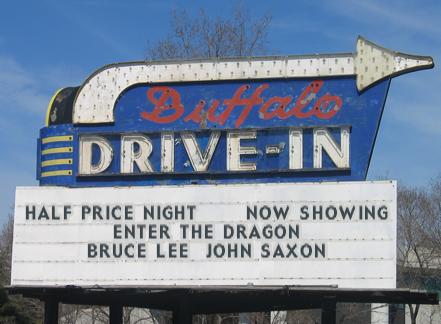
Today I’ll feature a double feature…sort of. The B-Horror movie It’s Alive had a commercial that scared me to death when I was a kid. I would hear that baby scream at night. Both of these movies came out in 1974 so I’m sure they were billed together at some places. I reviewed It’s Alive a while back if you want to follow that link…now to our featured movie…The Texas Chainsaw Massacre.
This is the first film I think of when I think of Drive-In Theaters…
The spoken intro:
The film which you are about to see is an account of the tragedy which befell a group of five youths, in particular Sally Hardesty and her invalid brother, Franklin. It is all the more tragic in that they were young. But, had they lived very, very long lives, they could not have expected nor would they have wished to see as much of the mad and macabre as they were to see that day. For them an idyllic summer afternoon drive became a nightmare. The events of that day were to lead to the discovery of one of the most bizarre crimes in the annals of American history, The Texas Chain Saw Massacre.
Who spoke these words? Future Night Court and film star John Larroquette. So would this also be one of the first mockumentaries?
I don’t like slasher films unless they are smart or good. This one was probably the first one. Just like Animal House was the first of its kind of comedy…I didn’t like the bad copy movies that kept coming after but I love this original.
I saw this 1974 movie in the 1980s at a theater when they reissued it. It was sadly not a drive-in theater. My dad had me for that weekend and asked me what I wanted to see. There it was…The Texas Chainsaw Massacre was on the marquee and of course, I picked it. A wonderful father and son movie? Probably not but it worked for us.
Ok… let’s get on with the movie. The look of it is wonderful…and not in a clear way but in a 1970s film way. The look sets the mood for this movie. It has a long look…what I mean is everything seems to be just a tiny bit stretched and everything looks taller than life in some parts. Also, the sun in the seventies was singled out in films. The film has a soft look to it and the sun glows. I’m not sure if it was the camera lens, the development of the film, or if the sky was clearer than now.
We have 5 teenagers in a van…we know where this was heading. That is now days though after the bad slasher movies followed the same blueprint. This was fairly new to the viewers back then. Everything seemed so realistic in this film not cartoonish. The actors and actresses talked like real life…not a Hollywood script. The first taste of the bizarre was a hitchhiker they picked up. A guy that slowly gets crazier as the ride continues until they throw him out.
They get to their destination and that is when things start going sideways. I’m going to save you all of the gory details but it is thrilling, suspenseful, and scary. The closing scene to me, is one of the most famous in horror movie history. Notice the sun in the shot above and how it radiates.
The film’s raw and realistic style, combined with its disturbing themes of cannibalism, madness, and sadism makes you feel for the characters… It’s like you are stuck in the film with them. The state of Texas is a character also…the oppressive Texas heat and desolate rural landscape contribute to a sense of isolation and vulnerability. Even for a fifty-year-old movie… it can still shock and disturb you.
Tobe Hooper directed this movie and went on to direct Poltergeist and other well-known horror movies.
The Plot:
The story follows a group of friends who travel to rural Texas to visit an old homestead. Along the way, they encounter a family of cannibals, including the iconic character Leatherface, who wears a mask made of human skin and wields a chainsaw. The group is systematically hunted and killed in gruesome ways.
Quotes:
Old Man: I just can’t take no pleasure in killing. There’s just some things you gotta do. Don’t mean you have to like it.
Old Man: [to Sally] Why, old Grandpa was the best killer there ever was. Why, it never took more than one lick, they say. Why, he did sixty in five minutes once. They say he could’ve done more if the hook and pull gang could’ve gotten the beeves out of the way faster.
You can see the complete movie below and the trailer at the bottom.
I found out yesterday that one of my comedy heroes died…Bob Newhart. I watched him as a small kid and didn’t always understand the adult humor at the time but I loved it. He delivered it in a way that you could understand. I wrote this back in 2018 or so but I wanted to repost it. Also…having a crush on Suzanne Pleshette didn’t hurt either.
If you don’t like a dry sense of humor…Bob was NOT for you. Bob Newhart excelled in dry humor…and talking on the telephone, a part of his long history in standup.
One of my personal favorite sitcoms of the seventies. It would never be rated as the best by many people or critics…I just like Newhart’s dry sense of humor. Bob Newhart also was in a sitcom in the 1980s called “Newhart” that was set in Vermont which sometimes people confuse with this show. That one was good but this one was more believable to me…although Newhart had the best last episode ever.
This show was set in Chicago with Bob playing psychologist Bob Hartley. He lived with his wife Emily Hartley in an apartment complex. He worked in an office building with a receptionist named Carol and an Orthodontist name Jerry. There is also a neighbor named Howard Borden…who sometimes can be just a little too out there (or dumb) but he is more like Bob and Emily’s child at times. Speaking of Emily…I was around 9 years old when I started to watch this…Suzanne Pleshette was one of my first of many crushes growing up.
The show ran from 1972 to 1978 with 142 episodes. It was never a Nielson Rating giant despite following the Mary Tyler Moore Show but it was in the top 20 in its first few years.
A college drinking game originated from this show. Every time you heard “Hi Bob” you would consume alcohol…sounds like a better time than Yahtzee or Monopoly!
The show’s plot takes place usually in three different locations. Bob is at home with Emily, Bob with his patients, and Bob with Carol and Jerry. Elliot Carlin was a patient of Bob’s and the most pessimistic character I ever saw on a sitcom. He thought the worst of people and himself and often would puncture Bob’s optimism.
This show was part of CBS’s Super Saturday night lineup that featured All In The Family, The Jeffersons, The Mary Tyler Moore Show, The Bob Newhart Show, and then The Carol Burnett Show. All of those shows are remembered today.
It is a smartly written sitcom…the two episodes I would recommend is “Motel” in season 2 episode 2 and the classic episode “Over the River and Through the Woods” season 4 episode 11…a great one to watch at Thanksgiving.
If you like a dry sense of humor this show is for you. Some trivia about the show, the bedspread, and sheets in Bob and Emily’s bedroom were designed by Suzanne Pleshette. She designed bedding for JP Stevens Utica brand.
The Bob Newhart Show might be the driest American sitcom to ever attain anything like major success. While the show was buoyed by running after The Mary Tyler Moore Show for much of its run, making it more of a beneficiary of a good time slot than a breakout hit, in some ways, Bob Newhart has aged even better than that series. Mary Tyler Moore was more historically important, but the center of the show is the uneasy tension arising from the increased entry of women into the workplace in the ’60s and ’70s, which gives the series a certain quaintness in 2014. Bob Newhart—produced by MTM Enterprises, the studio behind Mary Tyler Moore—is about the perils of trying to lead a mentally sound and fulfilling life in the morass of modern society. It’s a subject that will never go out of fashion—even if the series’ ’70s trappings and outfits seem occasionally ridiculous.
The Bob Newhart Show has gotten even more modern in tone with the passage of time, an unusual trick for a TV show. The complete series, collected on DVD for the first time by Shout Factory recently, centers on the home and work lives of Dr. Bob Hartley (Newhart), a Chicago psychologist whose life is rigidly defined by dealing with his patients—both individually and in the group therapy sessions that became a famous source of jokes for the show. The personalities at his office—orthodontist Jerry (Peter Bonerz) and their receptionist, Carol (Marcia Wallace)—are rarely the draw for the show, but they’re perfectly fine as foils both for Bob and his patients.
It’s on the other side of the series that the show crackles to life. When Bob goes home, he arrives to his wife, Emily (Suzanne Pleshette), and the relationship between the two is the thing about the show that most feels like something no network executive would ever greenlight today. The two are deeply in love, and reading between the lines of their dialogue also reveals they’re having lots of sex. But the show codes their conversation as their sex, taking a tip from the great screwball comedies of the ’30s and ’40s. There’s nothing they love so much as ribbing each other with jokes that would be acidic in lesser hands but feel affectionate coming from the mouths of Newhart and Pleshette. What’s more, the two don’t have children and rarely discuss having them. This was because Newhart didn’t want the show to turn into one where he played off of cute kids, but it played as quietly revolutionary at the time and even more so now. The Hartleys are eternally childless, finding their fulfillment in their professional lives and each other, building a marriage that’s more about finding a solid partner to navigate life with than anything else.
The Bob Newhart Show is also notable for breaking down into three rough eras of two seasons each. Where many other sitcoms of this era (the best ever for American sitcoms) were shepherded by a handful of the same producers from start to finish, Bob Newhart began life as a sort of drier, chillier riff on Mary Tyler Moore, under the tutelage of Lorenzo Music and David Davis. This version of the show, its weakest but still an enjoyable one, ran for the first two years, before spending the next two seasons with Tom Patchett and Jay Tarses working first as head writers, then as showrunners. Tarses’ darkly misanthropic streak and lack of love for the sitcom form blended well with a show about psychoanalysis, and the series became one of the darker sitcoms in TV history. By its fifth (and best) season, it was practically death-obsessed, with frequent riffs on suicide and serious psychological conditions. Yet these final two seasons (which gave some of the best TV writers in history their big break) also up an absurdist quality that was already in the show to quantities that hadn’t been seen in the sitcom since the heyday of Green Acres.
That absurdism also taught future writers who would work on shows starring Newhart a valuable lesson: Newhart, in and of himself, is not the driver of the story. He is, instead, the reactor, the modern man trapped in an absurd system and forced to remark quietly on how bizarre it is. Despite being deliberately low-concept, The Bob Newhart Show is one of the weirdest sitcoms in history, especially as it goes on. Even the characters who seem to be the most traditional sitcom types, like Bill Daily’s Howard Borden, go beyond what they initially seem to be (in Howard’s case, a generic dumb guy) and take on a specificity that other shows would avoid. Howard, for instance, is a navigator for an airline, who has terrible luck in love and a tendency to spiral blame for things he’s done wrong outward at others. What seemed like a generic riff on Mary’s Ted Baxter early in the show’s run becomes something else entirely—not a buffoon but, rather, a man limited by his own perceptions.
All of this reaches its apex in the show’s best character, Jack Riley’s Elliot Carlin, one of Bob’s patients and an almost perfect foil for Dr. Hartley, his dark, dour demeanor acting like a funhouse-mirror version of his therapist. The scenes between the two can feel like minimalist one-act plays at times, with Newhart and Riley bouncing off of each other in barely varying monotones that take on the vibe of complex business negotiations disguised as therapy sessions. In Carlin and Hartley, the show found two very similar men who looked at the dehumanizing state of American society of the ’70s and chose wildly different reactions. Hartley, an optimist, chose to believe people could improve themselves; Carlin, a pessimist, was pretty sure they never would. The genius of The Bob Newhart Show was how it knew Carlin was right but admired Bob Hartley for trying anyway.
***I feel like this is an every other week announcement but lately, it has been crazy at work. I’m traveling on Sunday and won’t be back until Friday so I won’t be posting until I return. I’ll be too busy to comment back so I’ll hold off.***
Since I took a week and dedicated it to the UK a few months ago I’ve been listening to T-Rex quite a bit. The songs were commercial but very good commercial.
America missed the boat on T-Rex. The only substantial hit they had here was Bang a Gong. This song was their second release as T. Rex…it peaked at #1 in the UK, #7 in New Zealand, #47 in Canada, and #72 on the Billboard 100 in 1071. The song was a non-album single. It was written by Marc Bolan and produced by Tony Visconti who would go on to produce Bowie, Badfinger, Gentle Giant, The Moody Blues, and The Boomtown Rats among others. He also scored the orchestral arrangements for Band on the Run by McCartney.
This was the band’s second big hit single and it gave Marc Bolan what he had always dreamed of… his first No.1 hit. Bolan was influenced by Elvis Presley’s Heartbreak Hotel and the coda repeating structure from The Beatles Hey Jude. Bolan was smart with this song, he kept the rhythm simple and didn’t deviate from that.
T. Rex was huge in the UK starting around 1970 but then declining in 1974. They did have a documentary made about them produced and directed by Ringo Starr called Born to Boogie. Bolan has been credited with starting Glam Rock.
Bolan went on to host a musical TV show called Marc in which he hosted a mix of new and established bands and performed his own songs. Marc’s final show was recorded on September 7, 1977, with special guest David Bowie…who was a friend of Bolan. I have a video of this appearance at the bottom of the post.
Bolan would die in a car wreck 9 days later on September 16, 1977.
Marc Bolan: “I know it’s like a million other songs, but I hope it’s got a little touch of me in it too.”
Hot Love
Well, she’s my woman of gold And she’s not very old, a-ha-ha Well, she’s my woman of gold And she’s not very old, a-ha-ha I don’t mean to be bold, a-but a-may I hold your hand?
Well, she ain’t no witch And I love the way she twitch, a-ha-ha Well, she ain’t no witch And I love the way she twitch, a-ha-ha I’m a laborer of love in my Persian gloves, a-ha-ha
Well, she’s faster than most And she lives on the coast, a-ha-ha Well, she’s faster than most And she lives on the coast, a-ha-ha I’m her two penny prince and I give her hot love, a-ha-ha Take it out on me, mama
Aw! Aw! Oh!
Well, she ain’t no witch And I love the way she twitch, a-ha-ha Well, she ain’t no witch And I love the way she twitch, a-ha-ha I’m her two penny prince and I give her hot love, a-ha-ha
La la la, la-la-la la La la la, la-la-la la La la la, la-la-la la La la la, la-la-la la Ooh, oh, do what you do
La la la, la-la-la la La la la, la-la-la la La la la, la-la-la la La la la, la-la-la la Ooh, lay it all down
La la la, la-la-la la La la la, la-la-la la La la la, la-la-la la La la la, la-la-la la Ooh
La la la, la-la-la la La la la, la-la-la la La la la, la-la-la la La la la, la-la-la la Ooh, lay it all down
La la la, la-la-la la La la la, la-la-la la La la la, la-la-la la La la la, la-la-la la Ooh, jetzt kommt sie doch
La la la, la-la-la la La la la, la-la-la la La la la, la-la-la la La la la, la-la-la la Ooh, ba-ba-ba
La la la, la-la-la la La la la, la-la-la la La la la, la-la-la la (yeah) La la la, la-la-la la Ooh, yeah
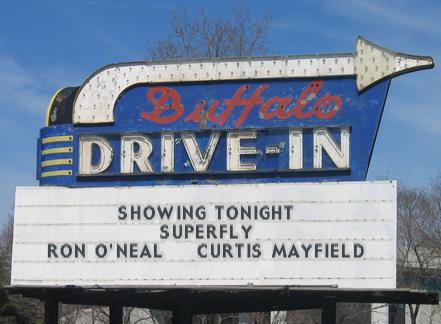
This movie was based on a true story. A book was written by Robin Moore called The French Connection about two real detectives named Eddie Egan and Sonny Grosso. Their screen counterparts were Jimmy ‘Popeye’ Doyle and Buddy ‘Cloudy’ Russo. It wasn’t an exact retelling of the true events but much of it aligned with the truth.
One thing I love about this movie is no one looks like a movie star in it. The style of this movie was like someone filming real life. That will probably be a theme here in these drive-in movies. I won’t cover just classics like this one though but I love gritty movies.
The plot is around two New York City cops who are trying to intercept a 32-million-dollar heroin shipment. They concentrate on ‘Popeye’ Doyle (Gene Hackman) who some would say is uncouth and doesn’t have a love for people. He is like a bulldog on a bone. There is nothing that will stop him. The main person they are chasing is Alain Charnier, a suave and urbane gentleman but is a supplier of pure heroin to America.
The Car Chase. Oh yes, this one is different and very intense. Popeye is chasing a train that is above the street. He stops a pedestrian and uses his car and it is unrelenting. A little trivia… it was shot with no permits and featured actual crashes with real New Yorkers. They did have a few policemen that controlled traffic for the shot but the chase then went into unpatrolled places. Gene Hackman did a lot of the driving but the dangerous stunts in the chase were performed by stuntman Bill Hickman.
The stars Gene Hackman and Roy Scheider patrolled with the real subjects… Eddie Egan and Sonny Grosso for a month. Hackman even helped restrain a subject at one stop.
Let’s go to the director now. Before this film, William Friedkin was best known as a documentary maker. That probably helped the realism in this movie. He had directed a few TV movies and movies before though. He would later direct The Exorcist.
Quotes
Jimmy ‘Popeye’ Doyle: All right! You put a shiv in my partner. You know what that means? Goddammit! All winter long I got to listen to him gripe about his bowling scores. Now I’m gonna bust your ass for those three bags and I’m gonna nail you for picking your feet in Poughkeepsie.
[a few scenes later:]
Walt Simonson: Popeye. You still picking your feet in Poughkeepsie?
The line “picking your feet in Poughkeepsie” was used in real life by real cop Eddie Egan while interrogating suspects. Grosso and Egan would play good cop and bad cop. It’s a phrase that Egan would sometimes use during interrogations to disorient and confuse suspects during interrogations, with the aim of Grosso getting them to open up by asking more direct queries actually related to the case.
Today is the 44th anniversary of this Rock Festival at Love Valley.
What a festival this was and what a town it still is. It happened in Love Valley North Carolina. The headliners were The Allman Brothers who at that time only had one album out and were largely unknown to the masses. This huge festival was soon known as Woodstock South. Between 100,000-200,000 showed up.
A man named Andy Barker always wanted to live in a western town. When he was 29 years old he bought some land in 1954 and moved his family there. The land was in Iredell County and he he built the town and it was chartered in 1963. It has a saloon, hitching posts, a small church, and more. No cars are allowed in town…you can walk or ride a horse through.
It’s the place for riding horses, rodeos, and hiking trails with 2000 acres to cover. The population of Love Valley is right now at 96. Through the years it seems to stay around 100.
In 1969 Andy’s daughter Tonda wanted to go to Woodstock but he thought she was too young. So he asked her and her 16-year-old brother Jet Barker to organize a festive concert in Love Valley. While in college she had worked with an entertainment coordinator at college and knew the ropes. She managed to secure the Allman Brothers Band who at the time were known in the south but that is about it. They also got some more local bands to fill it out…it was a large bill. It took place Thursday, July 16-18, 1970.
One interesting thing that happened was that the Hell’s Angels and Outlaws showed up to battle each other. According to witnesses, Andy Barker stopped them, confiscated a chain and ax from each, and told them there would be no trouble there. They seemed to respect this man because after that the gangs dispersed and some camped out with no reported trouble. The festival went off without any major hitch.
Tonda:“It was perfect, it was like a dream. We had worked so hard and we could finally just sit down and enjoy it.”
Andy planned to make a documentary of it but it didn’t happen. All we have to look at is some grainy footage but that grainy footage shows Duane Allman a year before At Fillmore East was released. They were finishing up their second album Idlewild South at this time. Some very nice bootlegs are out there from their multiple sets.
Along with the Allman Brothers, the lineup consisted of these bands: Big Brother and the Holding Company (without Janis), Radar, Peace Core, Wet Willie, Johnny Jenkins, Tony Joe White, Hampton Grease Band, Donnydale, Catfish Freedom, Sundown, Chakra, Hot Rain, Kallabash, Warm Stone Blind, Captain John’s Fishmarket. There were over 40 bands over that weekend.
Some like Wet Willie would go on to have a few hits. Tony Joe White had a top ten hit with Polk Salad Annie the year before.
Ed Buzzell was a UPI stringer and took these photographs...they are amazing. They don’t show many bands…just the people…you feel like you are there.
On August 12, 2024, I will post two weeks of Kinks songs from different bloggers… I’m looking forward to it as we will hit many Kinks eras… 1963 – 1993.
See You Then! Also…a huge thank you to all the bloggers who agreed to do this. I really appreciate you giving your time for this. I think the readers will enjoy it.
Destination Burlesque I got all my cards in one shoe
I posted the Streetwalkers last Sunday and I got a lot of positive comments so I thought I would post the band that started them. I kept hearing the song Burlesque played by the Streetwalkers but could not find a studio version… it’s because Family did the original.
Some of the UK readers may know more about this band. I like what I’ve heard from them. I’m no expert but they blend progressive rock, blues, folk, and psychedelia. Just like I said with The Streetwalkers…Roger Chapman is a hell of a lead singer…he was the lead singer for both bands.
Altogether they released 7 studio albums that were quite successful. All of their studio albums were top 40 in the UK with 3 being in the top 10 and two in the top 20. This song was on their album Bandstand released in 1972. The song peaked at #13 and the album peaked at #15 in the UK. They also had one album called Anyway that peaked at #18 on the Billboard 200 in 1970.
Family was formed in Leicester, England, in 1966 by Roger Chapman (vocals), John Charlie Whitney (guitar), Jim King (saxophone, harmonica, vocals), Ric Grech (bass, violin, vocals), and Rob Townsend (drums). The name that pops out to me is Ric Grech who was the bass player for supergroup Blind Faith.
Whitney lays down some great guitar and Chapman does his usual fantastic job of singing. This is a band that I’m going to explore. Some trivia here…their debut album I’ve heard of from reading about The Beatles. It was called “Music in a Doll’s House” and released in 1968. The Beatles were going to name their new album “A Doll’s House” and even had a cover drawn up but changed their mind after Family’s album. Instead of that name…they chose The Beatles, or as it’s more popularly known as The White Album.
Chapman and guitarist Charlie Whitney were the primary songwriters for Family. They often sought to blend various musical styles and to experiment.
Roger Chapman: Charlie would come up with these difficult and magical chord sequences that were just outrageous, and I had some lyrics and just sang a melody straight through them. I could do that without even thinking about it. Maybe if he had been with a more classical person there might have been a more classical direction to these chords. I was the simple one! I had one talent, he had the other, and we merged together very well, it seems.
I thought I would give you the studio version by Family and a great live version by the Streetwalkers.
Burlesque
Rolling and tumbling ain’t done me no harm Gonna boogie my night all away Rita and Greta been twisting my arm into Heading out west Down to the Burlesque Saving my ace through to you
Well, drinking and sinking, I’m feeling alright Right down to my snakey spat shoes Just about shutdown and three in the night Because I’m heading out west Down to the Burlesque Show ’em a moon at the door
We got to show the Burlesque
Rolling, tumbling Sure ain’t done me no harm Drinking, sinking Just been too bad on my arm
Well I finally lost Rita and Greta went home I guess that leaves just me and you Been kinda sneaky to get you alone Oh but you in that dress Destination Burlesque I got all my cards in one shoe
I got all my cards in one
Rolling, tumbling Sure ain’t done me no harm Drinking, sinking Just been too bad on my arm
Well I finally lost Rita and Greta went home I guess that leaves just me and you Been kinda sneaky to get you alone Oh but you in that dress Destination Burlesque I got all my cards in one shoe
Everlasting summer filled with ill-content This government had us walkin’ in chains This isn’t my turf This ain’t my season Can’t think of one good reason to remain
I will say that my favorite Canadian export is The Band. Combine the 4 Canadians with one southern American and you have gold…no scratch that… you have diamonds. Something I will confess about this band… after I’ve heard songs like The Weight, all of my life, sometimes I don’t realize or forget…wow that is great songwriting! I guess because those songs are so ingrained in my head and I don’t give them as much notice but I want to say something about that now. After posting Daniel and the Sacred Harp and now Acadian Driftwood…my respect for Robbie Robertson’s songwriting knows no bounds. This is songwriting at its best. Don’t get me wrong…I always knew those popular songs were great but I took The Band for granted for a while.
Robertson was inspired by the history of the Acadians, a group of French settlers in Canada who were forcibly removed from their land during the Great Expulsion (Le Grand Dérangement) between 1755 and 1764. This event scattered the Acadians across various regions, including Louisiana, where they became known as Cajuns. He was also influenced by Henry Wadsworth Longfellow’s 1847 poem Evangeline, which describes the deportation of Acadians
Just like with Daniel And The Sacred Harp this song showcases the vocals of Rick Danko, Levon Helm, and Richard Manuel. Each takes a turn singing different parts of the song, contributing to the narrative’s depth and meaning. There were some other Americana bands but none sounded like The Band.
Who would even think about writing a song about this subject? The song was on the Northern Lights – Southern Cross album released in 1975. The album peaked at #27 in Canada and #26 on the Billboard Album Charts.
Anyway…now when I listen to The Weight, Cripple Creek, The Night They Drove Old Dixie Down, and the other well-known Band songs…I will stop and listen a little more carefully.
Acadian Driftwood
The war was over and the spirit was broken
The hills were smokin’ as the men withdrew
We stood on the cliffs
Oh, and watched the ships
Slowly sinking to their rendezvous
They signed a treaty and our homes were taken
Loved ones forsaken
They didn’t give a damn
Try’n’ to raise a family
End up the enemy
Over what went down on the plains of Abraham
Acadian driftwood
Gypsy tail wind
They call my home the land of snow
Canadian cold front movin’ in
What a way to ride
Oh, what a way to go
Then some returned to the motherland
The high command had them cast away
And some stayed on to finish what they started
They never parted
They’re just built that way
We had kin livin’ south of the border
They’re a little older and they’ve been around
They wrote a letter life is a whole lot better
So pull up your stakes, children and come on down
Fifteen under zero when the day became a threat
My clothes were wet and I was drenched to the bone
Been out ice fishing, too much repetition
Make a man wanna leave the only home he’s known
Sailed out of the gulf headin’ for Saint Pierre
Nothin’ to declare
All we had was gone
Broke down along the coast
But what hurt the most
When the people there said
“You better keep movin’ on”
Everlasting summer filled with ill-content
This government had us walkin’ in chains
This isn’t my turf
This ain’t my season
Can’t think of one good reason to remain
We worked in the sugar fields up from New Orleans
It was ever green up until the floods
You could call it an omen
Points ya where you’re goin’
Set my compass north
I got winter in my blood
Acadian driftwood
Gypsy tail wind
They call my home the land of snow
Canadian cold front movin’ in
What a way to ride
Ah, what a way to go