Kinks Weeks – When I Turn Off The Living Room Light …thesoundofonehandtyping.com

This post is by John from https://thesoundofonehandtyping.com . John’s blog has different subjects and he will post songs that I had completely forgot about. I like talking guitars with John also…He is an internet disc jockey, lover of old TV (especially the commercials), inveterate wise guy.

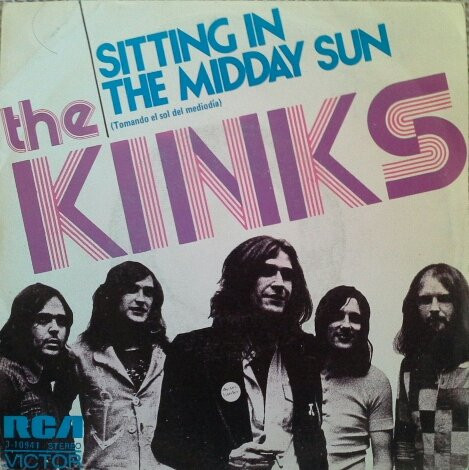
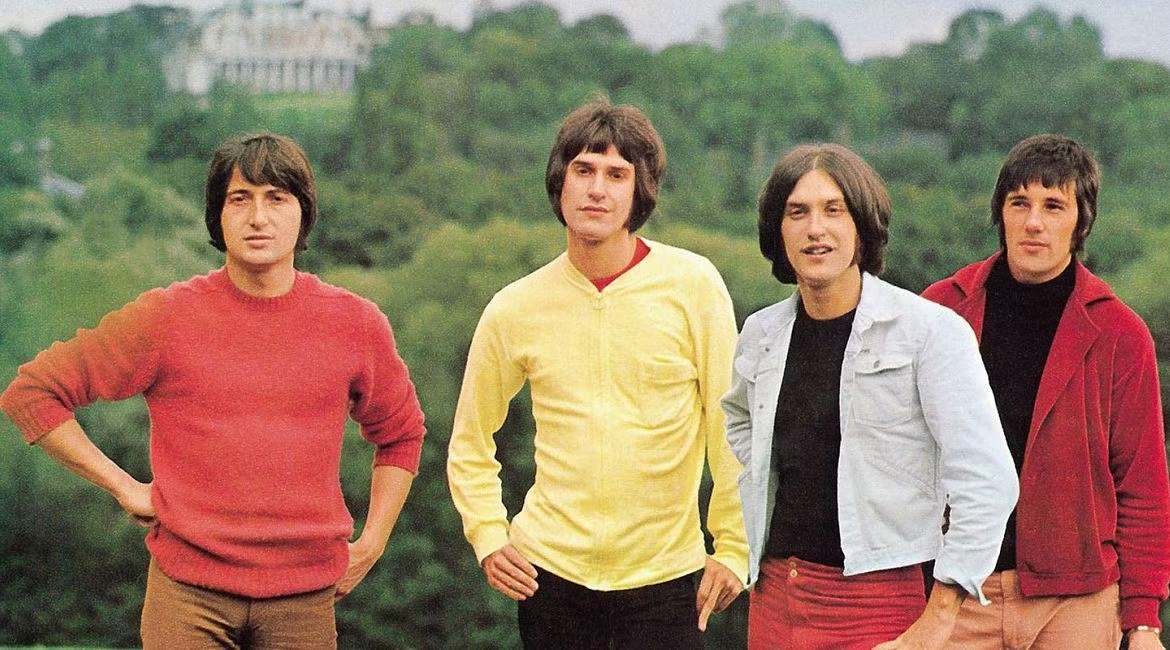
I’m not a huge Kinks fan, as I told Max, but there is one song I’m familiar with that I’m rather fond of…

Back in the late 1960’s and early 1970’s, Warner Brothers Records would advertise sample albums on the inner sleeves of their albums. They were cheap as chips (maybe $2 for a double album), and had songs from albums they were trying to sell. That’s where I first heard this song, “When I Turn Off The Living Room Light.” At the time, the song was marked as “unreleased,” but it later appeared on the band’s 1973 Reprise album, The Great Lost Kinks Album. Wikipedia (https://en.wikipedia.org/wiki/The_Great_Lost_Kinks_Album), which, as everyone knows, is The Blogger’s Best Friend (trademark), tells the story of that album…

On 2 July 1969, Ray Davies and manager Robert Wace delivered numerous tracks to Reprise Records’s offices. Most of them were for the Kinks’ 1969 studio album, Arthur, as well as a potential Dave Davies solo album. They delivered an extra reel of twelve songs, marked as “spare tracks” and not assigned a master tape number, indicating they were likely not planned for an immediate release. Author Doug Hinman suggests the additional songs’ delivery was likely due to a contractual obligation that the Kinks provide the label a set number of songs over a scheduled period. Ray Davies later expressed he was hesitant to deliver them because he did not feel they were up to standard and wanted to include a note explaining, “please, we’re just fulfilling our contract, just put it in a vault somewhere.”

 In 1971, the Kinks’ seven-year contract with Reprise was set to expire. Disappointed with several clauses in the band’s contract, Davies opted to instead sign the band with RCA Records. The same year, Reprise rejected the Percy soundtrack album for US release, finding it lacked commercial potential in the American market. Because they did not release Percy, executives at Reprise determined that the Kinks contractually owed the label one more album.

All that said, here’s the song. I will warn you that the first line implies that Jewish women aren’t attractive. At the time, I was in high school where a significant number of my classmates were Jewish girls, many of whom were VERY attractive, so I don’t know what he was talking about… Anyway, the lyrics are in the video…

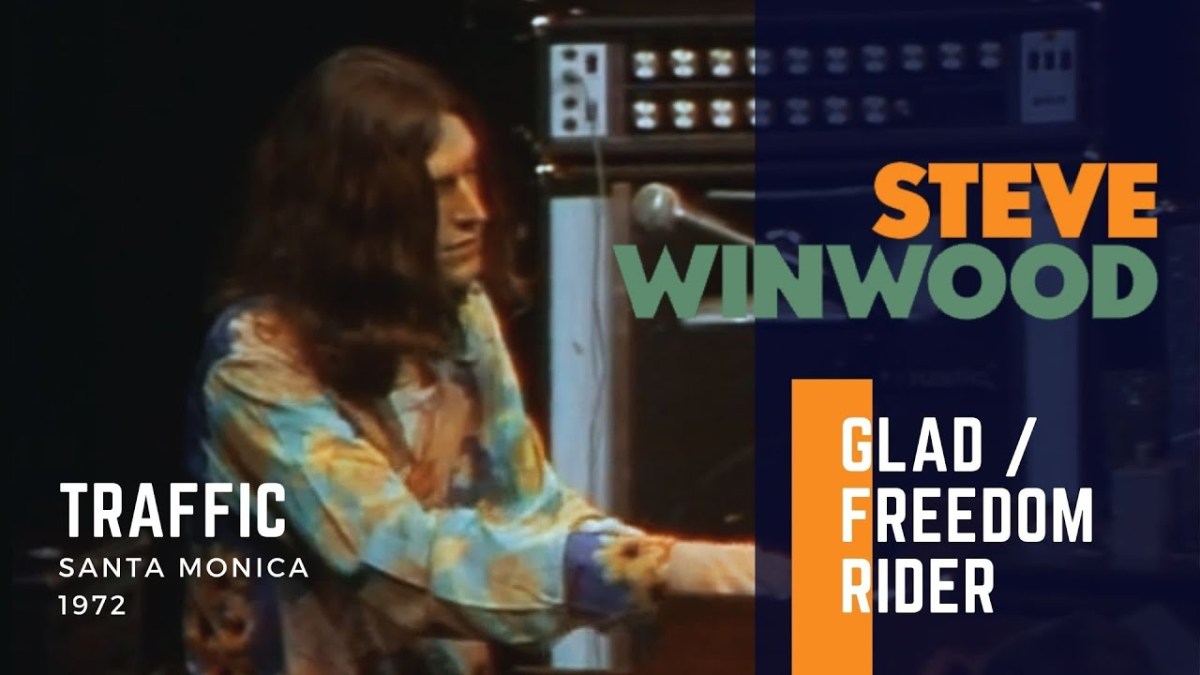
Traffic – Freedom Rider

Here is a small intermission from The Kinks…

I listen to this and it’s a fantastic escape from this world we live in. You have Winwood’s great voice with this free-flowing music. There are not too many songs you will hear me say “Hey listen to that flute!” but this is one of them. It’s not a commercial song but it’s pure Traffic.

This song was on the album John Barleycorn Must Die released in 1970. It was originally intended to be a Steve Winwood solo project after Traffic had disbanded in 1969. However, during the recording process, Winwood reunited with Jim Capaldi and Chris Wood, and the project turned into a Traffic album although they didn’t have Dave Mason.

The album was recorded at Island Studios in London. The sessions were mostly free-form and experimental, with the band members bringing their different influences. This differs from their earlier psychedelic sound to a more jazz-influenced and progressive rock style. It works well and I’ve listened to the album this week at work several times through.

The album peaked at #5 in the Billboard 200, #6 in Canada, and #11 in the UK in 1970 but the song did not chart.

Freedom Rider

Like a hurricane around your heart
When earth and sky are torn apart
He comes gathering up the bits
While hoping that the puzzle fits

He leaves you
He leaves you
Freedom rider

With a silver star between his eyes
That open up at hidden lies
Big man crying with defeat
See people gathering in the street

You feel him
You feel good
Freedom rider

When lightning strikes you to the bone
You turn around, you’re all alone
By the time you hear that siren sound
Then your soul is in the lost and found

Kinks Weeks – Low Budget … freefallin.home.blog

This is Ricky and he is my cousin I’ve known since I was a kid. I would go over to his house in the ’70s and ’80s, play baseball, ride bikes, and later on…watch MTV. He has some good posts about some well-known and rare bands. You can find him at https://freefallin.home.blog/

The title cut from their 1979 album. The song did not chart, but the album became their best-selling non-compilation album in the U.S. It was a flop in the U.K. I’m always on a low budget.

From Wikipedia

“Low Budget” was recorded in January 1979. It describes a man giving up his “expensive tastes” in order to save money. Like many of the tracks on Low Budget, it applies to the economic troubles occurring during the time that the album was released, such as strikes in Great Britain. However, AllMusic‘s Richard Gilliam claimed that the track’s theme could “easily apply to just about any modern recession”.

Although “Low Budget” refers to economic problems of the times in general, it also refers to some of Ray Davies’ own personal concerns. In the song, Davies mocks his own fear of not having money and his frugality. The song also references Davies’ vanity. The singer describes himself as once being well dressed and able to afford cigars, but now has to buy discount clothes and chew mints. He describes himself as “a cut-price person in a low-budget land.” But despite being reduced to poverty, the singer expresses pride in his hair and his teeth. Author Thomas Kitts notes that even the title, used in the refrain “I’m on a low budget” could refer to Davies keeping himself on a tight budget.

When asked which guitar performance he was most proud of, The Kinks’ guitarist Dave Davies noted “Low Budget,” as well as “You Really Got Me,” as a favorite. He said of this:

I like “Low Budget” [1979]. It’s wild. I like that kind of, almost country-style playing. It’s like a shape; I don’t even worry about what notes I play as I’m doing it. And if you catch a few open strings, you might get lucky with a weird clunk or a harmonic or something. I think all the best stuff is the stuff that happens before you’ve even realized what you’ve done. So “Low Budget” and, obviously, “You Really Got Me.”

— Dave Davies, Guitar World, 2014

Low Budget

Cheap is small and not too steep
But best of all cheap is cheap
Circumstance has forced my hand
To be a cut price person in a low budget land
Times are hard but we’ll all survive
I just got to learn to economize

I’m on a low budget
I’m on a low budget
I’m not cheap, you understand
I’m just a cut price person in a low budget land
Excuse my shoes they don’t quite fit
They’re a special offer and they hurt me a bit
Even my trousers are giving me pain
They were reduced in a sale so I shouldn’t complain
They squeeze me so tight so I can’t take no more
They’re size 28 but I take 34

I’m on a low budget
What did you say
I’m on a low budget
I thought you said that

I’m on a low budget
I’m a cut price person in a low budget land

I’m shopping at Woolworth and low discount stores
I’m dropping my standards so that I can buy more
Low budget sure keeps me on my toes
I count every penny and I watch where it goes
We’re all on our uppers we’re all going skint
I used to smoke cigars but now I suck polo mints

I’m on a low budget
What did you say
Yea I’m on a low budget
I thought you said that
I’m on a low budget
I’m a cut price person in a low budget land
I’m on a low budget
Low budget
Low budget

Art takes time, time is money
Money’s scarce and that ain’t funny
Millionaires are things of the past
We’re in a low budget film where nothing can last
Money’s rare there’s none to be found
So don’t think I’m tight if I don’t buy a round

I’m on a low budget
What did you say
Yes, I’m on a low budget
I thought you said that
I’m on a low budget
I’m a cut price person in a low budget land
I’m on a low budget
Say it again
Low budget
One more time
Low budget

Source: Musixmatch

Songwriters: Raymond Douglas Davies

Brothers At Arms – John and Tom Fogerty

We all know the great album Brothers in Arms from Dire Straits, but sometimes those brothers are “at arms” rather than in them. In this part of the mini-series Randy, from mostlymusiccovers.com, talks about the “Rock ‘Em Sock ‘Em” Siblings of the Fogerty brothers from Creedence Clearwater Revival.

“Proud Mary” written by John Fogerty was CCR’s first big hit single peaking at #2.

Tom was the elder of the two brothers, he was born in 1941 (1990) and John was born in 1945, now age 78. They were born in Berkley but grew up in El Cerrito, California. Tom signed a record contract in 1959 but had little success in terms of recording a hit. John and his band would eventually provide backing to Tom and this led to the creation of the Golliwogs where John and Tom shared lead vocals. By the time Credence Clearwater Revival (CCR) had formed in 1967, John had stepped to the forefront as lead singer, guitar player, and principal songwriter.

That is Tom on the left and John on the right.

CCR would go on to what is now regarded as legendary success. Between 1968 and 1970 they released six albums, two of them charting #1. They still hold the record for having five songs reach #2 without ever having a #1 on the Billboard Hot 100.

Tom left the band early in 1971 to pursue a solo career. CCR would release just one more album Mardi Gras in 1972 but had recorded two of the songs before Tom left. There is no evidence that things got physical but they argued a lot and the tension was high.

Tom’s departure leads us further into the discussion about the feud between him and John was more than just that. As with any break-up, there are two sides to every story, and with this one, there are at least 5 sides, the most notorious falling out suffice to say is with John and their former boss at Fantasy Records, Saul Zaentz. I won’t get too much into that story today and most will be familiar with Zaentz taking control of the CCR music and also controlling the copyright and the infamous lawsuits. I discussed this in a post back in 2018.

John admittedly was so bitter he stopped playing music for almost 10 years. Some years after the nasty split up of CCR, Fogerty recorded two songs aimed squarely at Zaentz, “Zanz Kant Danz” and “Mr. Greed”. John would eventually emerge victorious over the lawsuits brought by Zaentz and his own subsequent countersuit.

For Tom’s part, he clearly sided with Zaentz. Early on Tom was named in the lawsuit against John and at one time referred to Zaentz as his “best friend”. The band, including Tom and Zaentz had their money invested and got a tip to pull out, they didn’t tell John and he lost almost everything. At the heart of the trouble was that Tom left CCR as he felt John had taken control of the band. This I think, is a fair statement. John wrote most all of the lyrics and the music. Certainly for all their big hits. He had the best and most distinctive voice, and at lead guitar was the best musician.

As a band member, Tom in all honesty could not, and did not do better. At their height, they were one of the most successful Rock bands and history has certainly born that out. An estimated 50 million in record sales in about five years is nothing to sneeze at. John as a solo artist has almost doubled that number.

“Have You Ever Seen the Rain”, words and music by John Fogerty and the last hit single before the departure of Tom from the band.

Now I am not saying John is blameless for the falling out, I am sure he might have handled things better, but his ego I think would get in the way. But there may have been little he could have done. Tom’s actions in many ways seem born of jealousy. He decided to leave CCR. I understand his reasoning, he felt he had some good songs and he wanted to sing lead on them, John felt that the band was doing just fine with the way things were, and he wasn’t wrong. Despite the success John brought to CCR, it seems after the breakup it was John that got the cold shoulder from everyone.

Once the band split a year or so later the acrimonious relationship(s) only got worse, with John at the center and Tom and the others all playing a part.

As mentioned, Tom would embark on a solo career with his first album charting at #78 which is the best he would do. I did hear Tom in an interview say that had he been able to do things over, he would not have left the band. John did contribute some guitar tracks on Tom’s Zephyr National (1974). John also attended Tom’s wedding in 1980 and a high school reunion in 1984, and at both they jammed a bit.

John released Blue Ridge Rangers (1973) which charted at #47 and then in 1975 his album John Fogerty had the hit single “Rockin’ All Over the World” that peaked at #27. The weight of the various lawsuits and his admitted bitterness over the feud with Tom and the others led him to withdraw from the business. He was actually barred from playing any CCR songs for several years.

Over the years that followed John made some attempts to reconcile, motivated more for their mother’s benefit. Tom would receive an HIV-contaminated blood transfusion after back surgery and the ensuing complications would lead to his eventual death in 1990. Truly tragic.

The brothers never did reconcile and for John’s part, he says he has forgiven Tom.

Kinks Weeks – Apeman … onceuponatimeinthe70s.com

I’m very happy to have Colin Jackson from Once Upon A Time In The 70’s guest host my blog today. Colin Jackson and Paul Fitzpatrick who both run Once Upon A Time In The 70’s grew up in Bearsden, a northern suburb of Glasgow, Scotland. They were school friends from the age of five until in 1974, aged sixteen, Paul left school to start a career working with fashion and sportswear brandsTheir paths would not cross again for forty-four years, during which time Colin pursued a career in Banking. Their site will take you back in time…just as well as a time machine!

THE KINKS: ‘Apeman’

Should Andy Murray have been born ten years either side of when he was, he’d have been the best tennis player of his generation. As it was, despite two Olympic gold medals and three Grand Slam titles amongst goodness knows how many other achievements, he will be forever mentioned almost as an afterthought in any conversation of the greatest players of the 2000s – possibly all time.

Damn those Federer, Nadal and Djokovic fellas!

A similar fate befell The Kinks, and Ray Davies in particular. Maybe they wouldn’t have gone down in history as the best band ever, but they certainly would have benefitted from a greater appreciation.

Damn those Lennon and McCartney and Jagger and Richards fellas!

Then again, I suppose it could be argued that without the Beatles and Stones, The Kinks wouldn’t have capitalised on The British Invasion of America.

Whatever, throughout the ‘60s and ‘70s The Kinks were always playing catch-up in the popularity stakes, despite their critical acclaim and string of hits. Sticking within those two decades, the band had nineteen Top 40 hits here in the UK, including three Number 1s. Not bad on any level.

I must confess, though, that I too am guilty of overlooking them in favour of (most definitely) The Rolling Stones and (yes, probably even) The Beatles. Which is a terrible admission to make, when I take a proper look at the prolificacy of Davies’s writing.

I’d not long turned twelve years old when this single was released. My musical bias had not yet been shaped. I just liked what I liked. I had no idea of what was ‘cool’ or otherwise. It would be a year further down the line before I decided I was a fan of The Sweet and John Kongos … but there was something about ‘Apeman’ I found so appealing.

Perhaps it was the catchy hook. Or maybe it was the (now cringeworthy) faux Caribbean accent during the short, spoken word passage. Or maybe, most likely it was, the silly video of some geezer dressed up like a gorilla and following the band around a most ‘un-jungle-like’ wet and miserable (London?) park.

It certainly wouldn’t have been the lyrics – not at that age. In fact, as I’ve alluded in the past, I’m still a bit of a philistine when it comes to song lyrics.  However, even a very young ‘me’ was aware of the Cold War at that time, and the line about not wanting to die in a nuclear war did hit home.

Ray Davies had of course by this time already shown a great deal of social conscience and disdain for the forsaking of tradition. I’m sure others will cover these, but think of ‘Dead End Street,’ ‘Autumn Almanac’ and ‘The Village Green Preservation Society’ for starters. So, for him to display the utopian spirit of peace and freedom would have come as no surprise who already appreciated his work.

Davies had (has) a knack of making serious comment from entertaining, upbeat and melodic songs. Almost fifty-four years on from ‘Apeman’ peaking at #5 in the UK charts, sadly nothing much appears to have changed. Indeed, the words are perhaps even more pertinent today:

… So I’m no better than the animals sitting

In the cages in the zoo man

‘Cause compared to the flowers and the birds and the trees

I am an apeman

I think I’m so educated and I’m so civilized

‘Cause I’m a strict vegetarian

But with the over-population and inflation and starvation

And the crazy politicians

I don’t feel safe in this world no more

I don’t want to die in a nuclear war

I want to sail away to a distant shore and make like an apeman


________

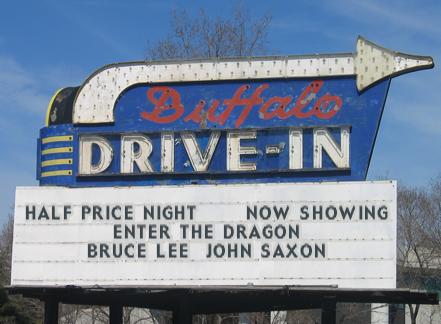
Max’s Drive-In Movie – Enter The Dragon

Enter The Dragon Final

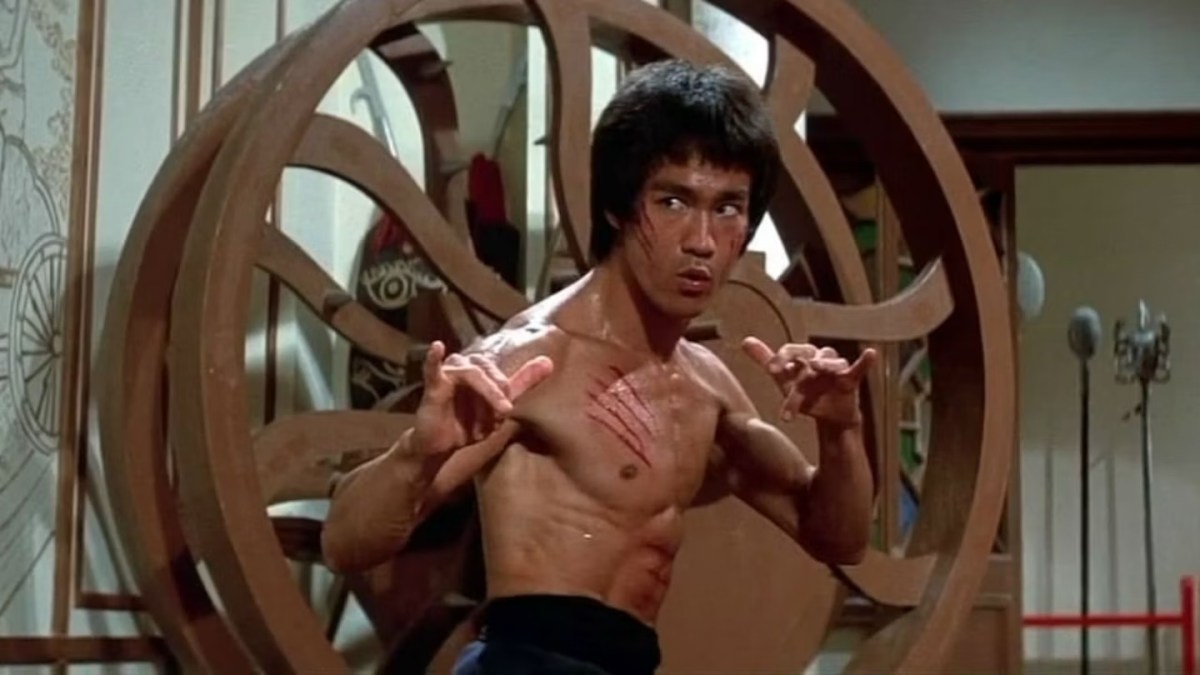
I remember black velvet paintings in the 1970s. Two of the biggest subjects of those paintings were Elvis Presley and Bruce Lee and at one time I had a Bruce Lee painting. Lee was one of my non-musical and non-baseball childhood heroes. This guy was the MAN. Bruce Lee was Rambo, Rocky, and the Terminator rolled into one…but with one difference…he was real. He also had a coolness about him.

After watching his movies when I was young I also purchased some nunchucks when I was a teenager and konked my noggin enough times to realize I was no Bruce Lee. Lee was the first actor to bridge East and West. He understood how to speak to both audiences no one else ever had. Enter the Dragon was the first film co-produced in Hong Kong and Hollywood. Bruce greatly influenced the action movie genre from the 70s to now.

Bruce would run into nut cases at times. Some person idiot would call him out and want to challenge him to a fight while he would be walking down the street and Bruce would have to defend himself while teaching the person a lesson. Imagine being the dolt who saw Bruce Lee and thought it would be a good idea to fight him. A boxer who sparred with him said “Body of a lightweight with a hit stronger than a heavyweight.”

Bob Wall who appeared in some of Bruce Lee’s movies said this.

One day, while filming Enter the Dragon, an extra taunted Bruce Lee and challenged him to fight. The extra told Bruce he was just an actor, not a martial arts expert… The whole thing went won like this. This kid was good. He was no punk. He was strong and fast, and he was really trying to punch Bruce’s brains in. But Bruce just methodically took him apart.

I mean Bruce kept moving so well, this kid couldn’t touch him…Then all of a sudden, Bruce got him and rammed his ass into the wall and swept him, he proceeded to drop his knee into his opponent’s chest, locked his arm out straight, and nailed him in the face repeatedly.

This 1973 movie was Bruce Lee’s final completed film before his death. The movie contributed to martial arts’s global popularity and helped make Bruce Lee’s legacy. I also want to include John Saxon in this. I’ve always been a fan of Saxon in whatever movie he was in. He plays a character named Roper in this flick. Saxon was also a student of Bruce Lee.

The movie’s plot is about a British intelligence agent named Braithwaite to participate in a martial arts tournament organized by the mysterious and reclusive crime lord named Han. Han is suspected of being involved in illegal activities such as prostitution, and human and drug trafficking, and the tournament is a cover for these operations. Lee’s mission is to gather evidence against Han and bring down his criminal empire.

It’s a good story movie with plenty of action scenes. I’ve seen some martial arts movies that dump the story and just go for action. This one is not like that…quality writing and acting throughout the film. It influenced many of the action films that came later. The film keeps the action, drama, and some comedy flowing. It’s worth it to see Bruce Lee with his almost balletic moves.

While filming Bruce in fight scenes Bruce had to slow down his movements so the camera would catch it. His training methods were legendary and some say he was the fastest human they had ever seen.

Before this, Bruce had problems finding acting jobs after the TV series The Green Hornet. He became a private instructor to the stars such as Steve McQueen, John Saxon, and more. He moved to Hong Kong in 1971 and made three Asian movies, Fists of Fury, The Chinese Connection, and Return the Dragon. 

The next movie was a joint production between Hong Kong and US production companies. The movie was Enter the Dragon and it was Bruce’s breakthrough movie. Unfortunately, Bruce Lee died six days before the film’s Hong Kong release.

Quotes:

  • Lee: Teacher?
  • Shaolin Abbott: I see your talents have gone beyond the mere physical level. Your skills are now at the point of spiritual insight. I have several questions. What is the highest technique you hope to achieve ?
  • Lee: To have no technique.
  • Shaolin Abbott: Very good. What are your thoughts when facing an opponent?
  • Lee: There is no opponent.
  • Shaolin Abbott: And why is that ?
  • Lee: Because the word “I” does not exist.
  • Shaolin Abbott: So, continue…
  • Lee: A good fight should be like a small play, but played seriously. A good martial artist does not become tense, but ready. Not thinking, yet not dreaming. Ready for whatever may come. When the opponent expands, I contract. When he contracts, I expand. And when there is an opportunity, I do not hit. It hits all by itself.

Kareem Abdul-Jabbar: Bruce created a jambalaya of martial arts, adding and discarding moves that were less effective. No wasted movements I took it to heart, I dedicated myself to preparation by maintaining complete focus during basketball practice and my training with Bruce. As a result, I became stronger, faster and a much more intense player. Bruce was an innovator and caused martial arts to move forward. … The skyhook is the embodiment of an efficient shot that requires minimal movement but sudden speed.

Kinks Weeks – Kinky, Romantic, & Purple? …mojohorizon.home.blog

I’ve been visiting Cork’s site for years and it’s one of my favorite blogs to visit. I’ve read posts about Eric Clapton, Sasquatch, Frozen Pizza, Iron Maiden, movies, blues songs, and many more. Take a visit to his site at https://mojohorizon.home.blog/ it’s totally worth it. 

Made you look! This isn’t an exploration of the erotic — sorry, if you’re disappointed. It’s a comparison of recordings. The song is called “She’s Got Everything”. It’s a pretty generic title, but it’s definitely in the hidden gem category. I came to know The Romantics’ version of this song when I was a college student. (You might be more familiar with “What I Like About You” which precedes it on their self-titled release.) Both songs are in the world of three-chord-or-so garage rock. I used to hear the songs back-to-back at college parties when enough people were feeling loose enough to dance.

If I had a time machine, I’d go back and yell, “It’s a TWIN SPIN!!” in the middle of them. I can honestly say I actually saw people doing “the monkey” to this song in the late 80’s and early 90’s. The song rocks! It’s got a great feel to it. Loud, fast, raucous. What more could you want?

If I’m not mistaken, I had The Romantics album on vinyl and discovered “She’s Got Everything” was actually written and sung by The Kinks’ Ray Davies from the liner notes. It took me awhile to find it or find it in a collection I wanted. It was apparently the B side to “Days.” The original version of “She’s Got Everything” by The Kinks is worth a listen.

I’m biased towards The Romantics version, but I love The Kinks and the songwriting of Ray Davies. Naturally, Ray’s brother Dave Davies plays an aggressive-sounding lead guitar solo on the track. “Pretty ringlets in her hair” is my favorite line from this song. I don’t think I’ve ever heard the word ringlets used in song outside of this example. (I always pictured a ringlet as a ribbon or something, but it’s a style of “princess curls” a la Shirley Temple.)

I recently listened to The Kinks’ tune again and dialed in the little instrumental bit around the 1:30 mark. When I listened to it, I heard the first few seconds of Deep Purple’s “Woman from Tokyo.” Listen to the DP tune around 8 seconds into it.

Deep Purple’s song didn’t come out until 1973. Did they own a copy of the 1968 Kinks release “She’s Got Everything”? I don’t know, but it’s just what I hear. The two songs are in different keys, but both feature the same chord changes of I to V, which is a distinct feature.

Till next time, keep your Mojo on the Horizon!

Kinks Weeks – A Rock ‘n’ Roll Fantasy …jimadamsauthordotcom.wordpress.com

I want to welcome my friend Jim to Kinks Weeks. Jim’s site is https://jimadamsauthordotcom.wordpress.com . I hope you can check it out. He has music and other subjects and…when I have a question about The Grateful Dead…Jim is the man I go to. He tackles one of my favorite Kinks songs today. He also has Song Lyric Sunday that is fun to participate in…and I have on a few occasions. Take it away Jim…

Still Have a Way to Go

Ray Davies wrote the Kinks song ‘A Rock ‘n’ Roll Fantasy’ which was released on their 1978 seventeenth studio album Misfits and the single charted #30 in the US.  The lyrics to this song are written as a one-way conversation till the very end when he finally gets a response, where a musician (let’s assume, this is Ray Davies) is talking to another member in the band and Ray is trying to convince them not to quit, but the other musician lets him know that he doesn’t want a rock ‘n’ roll lifestyle.  Ray wants the guy to hang in there, because this could just be a bump in the road and if they can get through this period, the sky is the limit.  Ray relates a story to this band member that is thinking about leaving the group about a guy (most likely, Dan the fan) that he knows who lives on his block that lives for rock and plays records all the time.  When this neighbor of his feels the world is closing in, he turns his stereo way up high in order to live the rock ‘n’ roll fantasy on the edge of reality.  Davies tells this wavering musician that he has nothing left to prove, because the King is dead, and even if the undecided musician quits the group, that he will still be playing in it, as he feels like he has just begun since there is plenty of life left in him.  While Ray was writing this song, he learned that Elvis Presley had died, which influenced the “the King is dead” lyrics.  He was in New York at the time, and when he looked out his window late at night, he saw a single light on in one of the buildings.  Davies imagined that light being the apartment of an ardent Elvis fan, which became the character Dan the Fan in the song.

The Kinks were going through a rough period around this time, with their guitarist Dave Davies wanting to quit touring, and their keyboard player (piano, organ, synthesizer) for the past 8 years John Gosling and bass player Andy Pyle leaving after only one album, both decided that Misfits would be their last album with the group.  For a long time, the Kinks were immersed in concept albums and theatrical rock operas where they stopped making hit songs, till their 1977 previous album Sleepwalker.  Davies learned his lesson and although Misfits didn’t have the punch like their earlier songs, it did feature a more rock-oriented style giving the Kinks a commercial rebirth.  The Kinks signed with Arista Records in 1977 and Misfits was the second of 6 albums recorded on this label. 

‘A Rock ‘n’ Roll Fantasy’ was the Kinks best showing on the charts since their hit with ‘Lola’ eight years previously.  

Hello you, hello me
Hello people we used to be
Isn’t it strange, we never changed
We’ve been through it all, yet we’re still the same

And I know, it’s a miracle we still go
For all we know, we might still have a way to go

Hello me, hello you
You say you want out, want to start anew
Throw in your hand, break up the band
Start a new life, be a new man

But for all we know, we might still have a way to go
Before you go, there’s something you ought to know

There’s a guy in my block, he lives for rock
He plays records day and night

And when he feels down he puts some rock ‘n’ roll on
And it makes him feel alright

And when he feels the world is closing in
He turns his stereo way up high

He just spends his life living in a rock ‘n’ roll fantasy
He just spends his life living on the edge of reality
He just spends his life in a rock ‘n’ roll fantasy

He just spends his life living in a rock ‘n’ roll fantasy
He just spends his life living on the edge of reality
He just spends his life in a rock ‘n’ roll fantasy

He just spends his life living in a rock ‘n’ roll fantasy
Look at me, look at you
You say we’ve got nothing left to prove
The King is dead, rock is done
You might be through, but I’ve just begun

I don’t know, I feel free and I won’t let go
Before you go, there’s something you ought to know

Dan is a fan and he lives for our music
It’s the only thing that gets him by
He’s watched us grow and he’s seen all our shows
He’s seen us low and he’s seen us high

Oh, but you and me keep thinking
That the world’s just passing us by

Don’t want to spend my life living in a rock ‘n’ roll fantasy
Don’t want to spend my life living on the edge of reality
Don’t want to waste my life hiding away any more

Don’t want to spend my life living in a rock ‘n’ roll fantasy

Max’s Drive-In Movie – Superfly

When the idea of the drive-in movie posts came up…this was one of the first ones I thought of. You get a glimpse of the 1970s drug dealing life in New York. I will eventually hit some other eras rather than just the early to mid-seventies.

I saw this movie at the Belcourt Theatre in Nashville in 2018. It was like being in a time warp and back in 1972. This movie has some padding and some wooden acting (but there is a reason) but you can tell where Quentin Tarantino was inspired. I’ve always liked the movie and seeing it on the big screen made it that much better. I do think Tarantino’s Jackie Brown was hugely influenced by this movie.

They filmed Superfly on the cheap with some real criminals in the movie to add authenticity. The character “KC” was a pimp in real life and the famous car from the movie is, in fact, KC’s car. The car is no longer with us…it was seized by the IRS when KC got into trouble.

Charles McGrego“Fat Freddie”(Charles McGregor) in real life was a reformed criminal. He helped the realism and went on to appear in more blaxploitation films in the 1970s. He also ended up going to schools and counseling children on the dangers of a life in crime.

I had some sympathy for the lead character Youngblood Priest played by Ron O’Neal. He lived well financially but knew he was living on borrowed time. He was a cocaine dealer who knew the walls were closing in. He wanted out but was in a cycle that was almost impossible to break. He needed a great plan to get out of it. It reminds me of mafia members wanting out but are trapped.

The highlight of the movie, of course, is the music. Curtis Mayfield’s soundtrack is great. Curtis does appear in the movie playing in a bar. The movie’s budget was under 500,000 but grossed over 30 million at the box office. The film was shot in only 19 days! This led to some creative choices, like using a car’s headlights for lighting in certain scenes. The film was celebrated but also condemned by civil rights groups who said it glorified drug dealers. I didn’t see that as much. Yeah, Priest had a lot of money but at what cost?

One quote got a laugh from the 2018 audience…and it was because of the mention of an eight-track. You’re gunna give all this up? Eight Track Stereo, color T.V. in every room, and can snort a half a piece of dope everyday?! That’s the American Dream.” I’m glad they didn’t clean the film up too much. It had some grainy elements and it fit the atmosphere perfectly. It’s not a great, great movie but the story is good with a nice twist… and it did make a cultural impact.

Quotes:

Georgia (Priest’s Girlfriend): Look maybe you should get out now, now before something really bad happens. I could be happy with a plain life, a poor one if only you were.

Youngblood Priest: Look what would I do? With my record I can’t even work civil service or join the damn army. If I quit now, then I took all this chance for nothing and I go back to being nothing. Working some jive job for chump change day after day. Well if that’s all I’m supposed to do then they gonna have to kill me ’cause that ain’t enough.

Superfly

From IMDB

The plot revolves around Youngblood Priest, an African-American cocaine dealer in New York City who is looking to make one last big score before getting out of the drug business for good. The film is a defining example of the blaxploitation genre and became iconic for its gritty portrayal of the urban drug trade and its anti-hero protagonist.

..,

Brothers At Arms – Ray and Dave Davies

I thought this was appropriate today since tomorrow will kick off two weeks of Kinks songs. A huge Thank You to Randy from mostlymusiccovers.com for publishing all of these that him and I wrote.

We all know the great album Brothers in Arms from Dire Straits, but sometimes those brothers are “at arms” rather than in them. In part two of the mini-series Max (that’s me!), from PowerPop, talks about the “Rock ‘Em Sock ‘Em” Siblings of Ray and Dave Davies of the legendary band The Kinks.

Ray Davies was born in 1944 and Dave in 1947 in Muswell Hill, North London. One of the granddads of rock’s sibling rivalries starts with the Davies brothers. Ray Davies, as the lead vocalist and principal songwriter of The Kinks, often clashed with his younger brother Dave Davies, who played lead guitar in the band. Their tumultuous relationship was fueled by creative differences, sibling rivalry, and personal conflicts. The two have admitted coming to blows many times right before shows.

Ray Davies is known for being a perfectionist and prickly at the best times. Dave is known as a free spirit who likes to go with the flow. The Kinks were formed in 1963 by the brothers and included Peter Quaife and Mick Avory. Their first success came the following year with worldwide hits such as You Really Got Me, All Day and All of the Night, and Tired of Waiting for You all top 10 hits in the UK and America. The Kinks never got to the level of The Who, Beatles, or Stones. One of the reasons was because they were banned for 4 years from touring in America for using non-union roadies during a tour. Another rumor was bad behavior, but it seems the non-union help rings truer.

They were the youngest in a family with 6 sisters. At age 13 Ray was thrilled by being gifted a guitar by his 31-year-old sister Rene, but she died the same night. Dave, got an underage girl pregnant when they were both 15 and the parents kept the couple apart. Dave remembers fighting Ray and he knocked Ray down once and thought he seriously hurt him. He goes over to check on Ray and Ray pummeled him. Nice.

When Ray got married in 1964, he made Dave the best man, but Dave was smashed and could not function at the wedding. At Dave’s 50th birthday party…Ray came in and smashed the cake and left. In 2013 they got together again and wrote some songs in Ray’s kitchen in harmony. It only lasted a short time. They started an old argument over the song.

‘You Really Got Me”. Dave said that yes, his older brother wrote the riff and the song, but he cut a slit in the amp speaker to make that sound. Ray refused to acknowledge how important that sound was to the success of the song. Underneath it all though they do love each other and protect each other from
other people. They are not above fighting with each other though. In 2021 there was a statement by the brothers that they were going to regroup and record again. We can only hope that they make it to the end and finish it.

A duet by the brothers!

Blaze Foley – Clay Pigeons

I always thought Blaze was a Texan but I was wrong…but technically that is where he made his mark in music. Blaze Foley (Michael David Fuller) was born in Malvern, Arkansas, but grew to be an important figure in the Texas outlaw country music scene. I started to listen to Foley’s songs and the strength of the lyrics has won me over. This was an interesting man. A documentary was made about him called “Duct Tape Messiah: Blaze Foley.” If you have time at some point, watch it. This documentary is based on a hell of a story.

Foley grew up in a musical family, moving frequently throughout the South. His parents were part of a gospel band, and he was exposed to music from a young age. The family’s traveling lifestyle and deep-rooted religious beliefs influenced Foley’s music.

Foley became a fixture in the Austin music scene in the 1970s and 1980s, where he befriended and collaborated with other songwriters, including Townes Van Zandt (he wrote a song about Foley after his death called Blaze’s Blues). His music was deeply personal, often reflecting his struggles with homelessness, addiction, and relationships. Despite his talent, Foley struggled to gain commercial success during his lifetime, partly due to his unpredictable behavior and refusal to compromise his artistic integrity. I do have a Townes Van Zandt story at the bottom.

This song gained a wider audience after being covered by several artists, most notably John Prine, who included it on his 2005 album Fair & Square. Prine’s version introduced the song to a broader audience and solidified its place in the Americana and folk music canon.

On February 1, 1989, Foley was tragically shot and killed at the age of 39 in Austin, Texas. He was trying to defend a friend, Concho January, from his violent son. Foley accused him of stealing January’s checks. Foley’s death was a big loss to the music community, and his life story has since been the subject of many articles, documentaries, and films.

He didnt’ gain popularity until after his death. He only released one 1984 studio album before his death and those tapes were confiscated by the DEA when the executive producer was caught in a drug bust. He also recorded one in 1980 but the tapes were stolen out of his car. He did get some singles released during the 80s but a lot of live and some studio material came out after he died. Some tribute albums have come out as well with other artists covering his songs. Artists such as Townes Van Zandt, Calvin Russell, Merle Haggard, Willie Nelson, Lucinda Williams, Timbuk 3 and many more.

Now the Townes Van Zandt Blaze Foley story. Blaze was known as The Duct Tape Messiah for the strappings that held his boots together. His life was disorderly, to say the least. He had said that when he died he wanted Townes to have his guitar. When Foley died, Van Zandt and his friends went for the guitar but found out that the late singer/songwriter had pawned the guitar among other things. Van Zandt told the Pawn Shop clerk that the guitar had been left for him and he was there to collect it. However, the clerk insisted that without a pawn stub, that transaction was impossible. So, along with the rest of Foley’s friends, they searched every possession (which wasn’t much) that the late musician had left behind. The pawn slip was nowhere to be found.

They figured out it must be in Foley’s front pocket in the suit he was buried in. Townes then borrowed a backhoe and dug his friend up. He went through his pockets and there it was…the pawn ticket. Van Zandt went straight to the pawn shop with the freshly dug-up stub and collected Foley’s guitar that he kept in his possession until he, too, passed away.

Now whether this was true or not I don’t know… but that is what the documentary is all about that I mentioned in the first paragraph. Here is a picture of Townes Van Zandt with Foley’s guitar.

As you see the duct tape...this was Blaze Foley's guitar.

Clay Pigeons

I’m goin’ down to the Greyhound stationGonna get a ticket to rideGonna find that lady with two or three kidsAnd sit down by her side

Ride ’til the sun comes up and down around me‘Bout two or three timesSmokin’ cigarettes in the last seatTryin’ to hide my sorrow from the people I meetAnd get along with it all

Go down where the people say y’allSing a song with a friendChange the shape that I’m inAnd get back in the game and start playin’ again

I’d like to stay, but I might have to goTo start over againMight go back down to TexasMight go to somewhere that I’ve never been

And get up in the mornin’ and go out at nightAnd I won’t have to go homeGet used to bein’ aloneChange the words to this songAnd start singin’ again

I’m tired of runnin’ ’roundLookin’ for answers to questions that I already knowI could build me a castle of memoriesJust to have somewhere to go

Count the days and the nights that it takesTo get back in the saddle againFeed the pigeons some clay, turn the night into dayAnd start talkin’ again when I know what to say

I’m goin’ down to the Greyhound stationGonna get a ticket to rideGonna find that lady with two or three kidsAnd sit down by her side

Ride ’til the sun comes up and down around me‘Bout two or three timesSmokin’ cigarettes in the last seatTry to hide my sorrow from the people I meetAnd get along with it all

Go down where the people say y’allFeed the pigeons some clayTurn the night into dayAnd start talkin’ again when I know what to say

ThanksIt’s called “Clay Pigeons”Anywhere I roam, there’s askThat’s rightRoad-hog didWe have a lot of requests, so we’re gonna do it anywayAin’t never had a lesson in his life, alright

Gunsmoke, the Early Years

I’m reading a book on James Arness…or Matt Dillion from Gunsmoke. When you watch these beginning shows you see Arness turn into a fine actor. He was in many movies before Gunsmoke but he looked a little uncomfortable in the first season. By the second season, you could see a huge change. Arness said he wasn’t comfortable and he got an acting teacher to help refine his acting for television.

I liked the show because I grew up watching the hour-long color episodes (seasons 12-20) of Gunsmoke in reruns. The first 6 seasons were black and white and 30 minutes long. Seasons 7-11 were one-hour black and white shows. As I said seasons 12-20 were one-hour color shows. 

gunsmoke 1

Now I’m watching the first 6 seasons for about the 6th time… There is no Festus or Newly…we have Chester (Dennis Weaver), who is a refreshing character. They never played these episodes on television when I was younger. There still is Doc Adams  (Milburn Stone)and the astonishing Kitty Russell (Amanda Blake).

These episodes dealt with murder, rape, human trafficking, and plenty of Matt Dillon (James Arness) decking bad guys with his fist or the butt of his gun. They are 30 minutes long which is great. They got to the point quickly. Some of the stories were grim but matched the look of the series. It was an adult show at this time.

I was surprised at how rough, violent, and authentic they were and that is not knocking the later episodes but there is a huge difference. The violence was toned down as the series continued. The later color episodes centered more around the guest stars and the old black and white ones centered more on the local residents of Dodge City. That was by design because of the hour format…and some shows had some filler in them in that format.  

Have Gun Will Travel was also on CBS along with Gunsmoke. You will see some of the same character actors and sets. Some Have Gun Will Travel scenes were filmed in a redecorated Long Branch… Too bad there wasn’t a crossover at least once.

Chester…I’ve always liked Dennis Weaver as an actor…in McCloud, Duel, and anything he was in… He brings his character Chester alive as a real person. Chester had a limp on the show and Dennis Weaver said he would take yoga classes so he could do things like putting on a boot to look believable with a bad leg…he also put a pebble in his boot on his right foot so he would not forget which leg was lame. He said it took him months after Gunsmoke not to use the limp on camera because he was so used to it.

Chester could be lazy but he was invaluable and loyal to a fault to Matt Dillon. Dennis Weaver left the show after the 9th season with no explanation on what happened to Chester as was the way back then with TV shows. He was mentioned one time in the 20th season. Burt Reynolds joined the show for two years in seasons 8 and 9. He said it was his best experience in entertainment. The cast was extremely close. 

If you are a fan and have seen only the later episodes…check these out. It puts a new light on the show. Unlike other Westerns, Native Americans were not usually the bad guys in Gunsmoke. Matt Dillion was a good friend to many of them.

Here is a badly recorded clip of Matt Dillion, Chester, and Ken Curtis who would later take Chester’s place in the show and play Festus.

Slade – Skweeze Me, Pleeze Me

I bet English teachers hated this band! This is such a fun band and it’s too bad they were not heard in America until the 1980s. Slade was not like The Small Faces who never toured the US. They toured extensively with bands like Humble Pie, ZZ Top, J Geils Band, Black Sabbath, Santana, and Aerosmith opened for them in a few places until Toys in the Attic hit…and then they reversed it.

Slade was very successful in the UK with 6 number ones, 16 top ten, and 24 top 40 singles. They could not duplicate their success in America where they only had two top forty singles…Run, Runaway, and My, Oh My both in the 80s.

Jim Lea was at a pub watching a pianist named Reg Kierle perform and it inspired him to write this song. He got with Noddy Holder to finish it. They were the primary songwriters for Slade, responsible for many of their hits. Noddy’s voice is the key to Slade…only a few can sound like he does.

The song peaked at #1 in the UK and high in other countries besides America and Canada.

It was produced by former Animals bass player Chas Chandler, who had been instrumental in shaping Slade’s sound and had previously worked with Jimi Hendrix. Chandler’s production emphasized the raw energy and the fun that characterized Slade’s music.

Skweeze Me, Pleeze Me

You know how to squeeze me(Woah, oh)You know how to please me(Woah, oh)You’re learnin’ it easy(Woah, oh)

And I thought you might like to knowWhen a girl’s meaning “Yes”, she says, “No”

You got rude talkYou got one walkAll your jokes are blueYou’ve got long nailsYou tell tall talesSome you think are true

And there’s nowhere to go, you won’t goIf there’s nowhere to run, you go slowIf you move up to me, then I’ll showYou the wayThen you’ll know

How to squeeze me(Woah, oh)You know how to please me(Woah, oh)You’re learnin’ it easy(Woah, oh, oooh)

And I thought you might like to knowHow to squeeze me(Woah, oh)You know how to please me(Woah, oh)You’re learnin’ it easy(Woah, oh, ooh)

And I thought you might like to knowWhen a girl’s meaning “Yes”, she says, “No”

You got a sweet tongueYou sing love songsCan’t you learn to spell?Take me back homeYou got it all wrong‘Cause we sing that as well

And there’s nowhere to go, you won’t goIf there’s nowhere to run, you go slowIf you move up to me, then I’ll showYou the wayThen you’ll know

How to squeeze me(Woah, oh)You know how to please me(Woah, oh)You’re learnin’ it easy(Woah, oh, ooh)

And I thought you might like to knowHow to squeeze me(Woah, oh)You know how to please me(Woah, oh)You’re learnin’ it easy(Woah, oh, ooh)

And I thought you might like to knowWhen a girl’s meaning “Yes”, she says, “No”

Oh, you know how to squeeze me(Woah, oh)You know how to please me(Woah, oh)You’re learnin’ it easy(Woah, oh, oooh)

And I thought you might like to knowHow to squeeze me(Woah, oh)You know how to please me(Woah, oh)You’re learnin’ it easy(Woah, oh, ooh)

And I thought you might like to knowWhen a girl’s meaning “Yes”, she says, “No”

You know how to squeeze me(Woah, oh)You know how to please me(Woah, oh)You’re learnin’ it easy(Woah, oh, yeah)

And I thought you might like to know nowHow to squeeze me(Woah, oh)You know how to please me(Woah, oh)You’re learnin’ it easy(Woah, oh, yeah, you do)

And I thought you might like to know nowHow to squeeze me(Woah, oh)You know how to please me(Woah, oh)You’re learnin’ it easy(Woah, oh, ooh, ooh)

And I thought you might like to (na, na, na, na, na, na, na) knowHow to squeeze me(Woah, oh)You know how to please me(Woah, oh)You’re learnin’ it easy(Woah, oh, ooh)

I thought you might like to knowHow to squeeze me(Woah, oh)You know you please me (woah, oh)Oh, oh, yes(Woah, oh)Yes, yes, you knowHow to squeeze me(Woah, oh)You know how to please me(Woah, oh)

Deep Purple – Woman from Tokyo

Thanks to Dave for posting this song. It was a response to Dave asking us about songs that mention a city on Turntable Talk. This one and Nashville Cats came to mind…but I went with the Purple.

This song is all about the riff…it is a memorable riff… The song has drive and suspense. The dynamics are great after the middle section when the intro riff is reintroduced. What made Deep Purple different from other hard rock bands at the time was the Hammond C3 organ played by Jon Lord. In this song the Hammond sounds as mean as the guitar.

The song was inspired by Deep Purple’s first tour of Japan in 1972. The band was struck by the contrast between the crowded bustling, modern city of Tokyo and the traditional aspects of Japanese culture. Tokyo is personified as a woman.

Woman from Tokyo was on the album Who Do We Think We Are released in 1973. The band members were dealing with exhaustion from constant touring and the pressure to deliver another hit album. The album did quite well peaking at #4 in the UK, #15 on the Billboard Album Charts, and #11 in Canada.

Deep Purple wasn’t a singles band, but this one got a lot of airplay on radio. The song peaked at #60 on the Billboard 100 and #55 in Canada in 1973. That surprises me because I did hear this one a lot growing up.

The band never liked it very much. They didn’t start playing it live until they re-formed in 1984 after their 1976 split. Roger Glover insists that no real live versions of this song existed until the 80s despite being on live compilation albums from their 1970s period.

Because of endless touring and fatigue, Ian Gillan gave a six-month notice stating that he was leaving the band after fulfilling all his commitments in 1973. After lead singer Ian Gillian left Deep Purple in 1973, they had two other lead singers before reforming in 1984…and they were David Coverdale and Joe Lynn Turner. To me though…Ian Gillian is the singer I think of when I think of Deep Purple.

Ritchie Blackmore: “We were in Japan, and it was an incredible experience for us. The song came out of our admiration for the country and the fans there. Tokyo had a lasting impression on us.”

Ritchie Blackmore: “I wanted ‘Woman from Tokyo’ to have a strong, catchy riff that would stay with the listener. The middle section was intended to give it a different feel, almost like taking the listener on a journey.”

Ritchie Blackmore: “The recording sessions for ‘Who Do We Think We Are’ were tough. There was a lot of tension in the band, but ‘Woman from Tokyo’ was one of the moments where things came together well.”

Woman from Tokyo

Fly into the rising sun
Faces, smiling everyone
Yeah, she is a whole new tradition
I feel it in my heart

My woman from Tokyo
She makes me see
My woman from Tokyo
She’s so good to me

Talk about her like a Queen
Dancing in a Eastern Dream
Yeah, she makes me feel like a river
That carries me away

My woman from Tokyo
She makes me see
My woman from Tokyo
She’s so good to me

But I’m at home and I just don’t belong 

So far away from the garden we love
She is what moves in the soul of a dove
Soon I shall see just how black was my night
When we’re alone in Her City of light

Rising from the neon gloom
Shining like a crazy moon
Yeah, she turns me on like a fire
I get high

My woman from Tokyo
She makes me see
My woman from Tokyo
She’s so good to me

Max’s Drive-In Movie – Walking Tall

Walking Tall Marquee

The movie is about what happened in McNairy County Tennessee with the big stick-carrying Sherriff named Buford Pusser. Don’t get this one mixed up with the modern version… you will not get the “Rock” in this one. It has more of a realistic feel than the latest remake. This movie is not slick or smooth…it was made on a small budget but it works well. I grew up hearing stories about Buford Pusser. A policeman friend of the family knew him well. 

Before I get into the film. The movie stuck with me through the years and I have a personal story about ending up at his house.

My wife and I traveled to Memphis to visit Graceland in the late 90s. On the way back home we got lost (pre-GPS and I have no sense of direction) and ended up in McNairy County. I remembered the name and we looked saw Pusser’s old  home which was turned into a museum. We walked in and the lady working there was super nice. We sat on his couch and looked at his car, badges, guns, and uniforms. Before I left I could not resist…I just had to buy one of those big sticks…which was just an ax handle with his name and also a VHS tape of the Sheriff’s story. I checked today…now they have his furniture behind glass. 

It was pretty cool being able to touch and walk around freely after the “stay behind the rope!” mentality at Graceland…which I understand completely…Hey, it’s the home of the big E. If you ever go to Graceland and if you have a couple of hours to spare, drive to this museum it is interesting… it’s like going back in time to the mid-seventies…it was just a fluke that we found it but it was fun.

Ok back to the movie. It’s a vigilante drama and a revenge story that paces itself pretty well. Joe Don Baker is very believable in this movie. If you hate violence this is not for you because it’s loaded with it. The Sheriff almost single-handedly cleans up the town with the aid of a big stick and his loyal deputies. The film quality is cleaned up and not as grainy as I remembered. You will see the future 70s pinup singer Leif Garret as the Sheriff’s son…also future Rockford Files dad Noah Beery Jr. I watched the movie recently and it holds up very well. 

A little about the history of Pusser. He was the son of Carl and Helen Pusser. His father was the police chief of Adamsville, Tennessee, which likely influenced Pusser’s future career in law enforcement. Before becoming a lawman, Pusser served in the United States Marine Corps and was also a professional wrestler.

He became the sheriff of McNairy County in 1964. The 26-year-old sheriff was fearless and wasted no time cracking down on mafia activity, concentrating on the state border between Tennessee and Mississippi, which was controlled by two separate gangs… the Dixie Mafia and the State Line Mob. The mob gangs made a lot of money off of moonshine, so Pusser’s crackdown was obviously not appreciated. His battle against all of this was intense and personal. His wife, Pauline, was killed in an ambush meant for him, which fueled his determination to clean up the county.

Did he bend the rules? Yes, sometimes into a pretzel but he was playing against a stacked deck. Despite his wife being killed, his family being terrorized, and numerous attempts on his life, he kept going. He was stabbed 7 times and shot 8 during his time as sheriff. I’m sure Hollywood massaged some truth, but it wasn’t cartoonish. 

The movie grossed over $40 million at the box office and led to two sequels: Walking Tall Part 2 (1975) and Final Chapter: Walking Tall (1977), as well as a television series and a 2004 remake I told you about earlier starring The Rock (Dwayne Johnson).

Buford Pusser agreed to portray himself in Walking Tall Part II but, hours after signing the contract, he was killed when his car ran off the road near his home. Some believe his car was sabotaged in retribution for his stamping out the illegal activities of the Stateline mob on the Tennessee-Mississippi border.

Bufford Pusser

Buford Pusser

Quotes: 

Buford: There’s only two rules, and thats all… But don’t ever forget them. Number one we enforce the law equally. Number two, any man caught taking a bribe gets his head knocked off by me.

Plot from IMDB:

“Walking Tall” depicts Buford Pusser’s real-life crusade against the corruption that plagued his hometown. After being severely beaten by criminals, Pusser decides to run for sheriff and wins. He then begins a relentless campaign to rid the county of illegal activities, facing numerous threats and attempts on his life. His story is one of resilience, justice, and personal loss.

The cast included Joe Don Baker, Elizabeth Hartley, Leif Garrett, Dawn Lyn, and Noah Beery Jr.

I have a Jimmy Buffett and Buford Pusser story after the video. It’s well worth the read!

Off topic of the movie but Jimmy Buffet had a Buford Pusser story. I’ve heard this from different sources but this is from http://www.buffettworld.com… The movie was good but this would have been GREAT to see. Jimmy was on the wrong side of Pusser.

In 1974, Jimmy Buffett had a run-in with famed “Walking Tall” sheriff Buford Pusser. The story is referred to in “Presents To Send You” from the 1974 album A1A and also in “Semi-True Stories” from the 1999 album Beach House On The Moon.
In both songs, few details are mentioned. But at a show in 1974 at the Exit Inn in Nashville, just a few months after the incident, Buffett took some time to tell the crowd about the altercation:

“There were a lot of rumors circling around that I had an encounter with this young man. Which are true. We finished doing our recording over at Woodland Studio, real happy that the album had come out so well. All the lightweights had went out to get a few bottles of champagne and celebrate. Sammy Creason and Chuck Nease and I decided to go out and get a bottle of Cuervo Gold Tequilla and 3 straws. We went at it and in 15 minutes we were just knee-crawlin’ drunk. So we proceeded to the flashiest night spot in town, the roof of the King of the Road Hotel.

We’re there dining and dancing. Ronnie Milsap was on vacation. Sammy Creason was with me, so we provided just a gala of entertainment. Me on acoustic guitar so drunk I couldn’t hit the chords and him just pounding the drums out in 3-quarter time. Ran everybody out. We got the screaming munchies and we were going to Charlie Nickens to eat. And I couldn’t find my rent-a-car, which was parked somewhere amidst thousands of cars in the parking lot of the fabulous, plush King of the Road hotel. It was a little bitty car. It was hiding among many big ones there. And there was a Tennessee Prosecutors convention going on there. If they had made it to room 819 they would’ve had a closed door case.

So I stood on the hood of this car with a pair of… actually, they were old Ra Ra’s that I bought in Miami for 2 bucks. They were white and brown old Ra Ra’s but they were golf shoes so I had to take the cleats out but they still had the posts in them so they clicked a lot. I was standing on the hood of this particular car and as fate would have it it belonged to a rather large man who came up behind me and threatened my life real quickly. And I hadn’t been in a fight since junior high school on the city bus in Mobile. He came up and said “Son you stay right there, you’re under arrest”. So I politely turned around and said “You kiss my ass”. He didn’t. Instead he followed me over to the car which Sammy had found. I got in the driver’s side and Sammy got in the passenger’s side. My window was up, his was down and this fellow poked his head in and said “Would you like for me to turn this car over?”.

I was not scared of this individual. I just thought he was some ex-football player turned counselor. And Sammy said “look whatever damage we did ABC will pay for everything” which was awfully generous of Sammy since he didn’t have the authority to say so. Being a good company man I took up for my company and said “No they won’t. I’m still gonna beat your ass if you don’t leave us alone”. With that he pulled up then stuck his big head and his hand in and grabbed me by my hair until it separated from my head. I had a big bald spot on the back of it and I looked like a monk for about 3 months. Then he punched Sammy right in the nose. We knew he wasn’t kidding. So Sammy defended himself bravely with a big pen. He starts stabbing at this man’s arm trying to get it out of the window because we couldn’t start the car because with the new modern features of ‘74 automobiles you can not start your car unless your seat belt’s buckled and we were too drunk to get ours hooked up.

So we sit there while this man pounded the hell out of both of us. I looked over at Creason and I said “Sammy I don’t wanna die in a Gremlin.” Eaten by a shark, killed in a plane crash, but what’s my mother gonna say? Smashed to death in a Gremlin in the parking lot of the plush King of the Road hotel. Nope. So I mustered all the courage and energy I had and all the coordination I had left in my poor body and got the seat belt buckled and went to Charlie Nickens. We ordered our barbecue and on the way back we hit the Jefferson St. Bridge. Luckily there was no one around so we just backed up and headed for the hotel.

Got back, and we decided that this man may be lurking in the bushes or else may have been snorkeling around in the pool trying to scoop up coins that people threw in. So we decided to defend ourselves with a classic southern weapon: a tire tool. So we destroyed the back end of the Gremlin looking for the tire tool, found it. Walked through the lobby of these prosecutors, and we had caused a turmoil by this time. And got up to the 8th floor where we were staying and figured we were all safe. But I had forgotten my key.

So I had to go back downstairs and Sammy said well you take this I’m not going back down there. And he gave me the weapon, which I stuck in my back pocket. Walked down into the plush lobby of the plush King of the Road hotel, walked up to the desk and asked for the key to my room. This man snuck up behind me and took the tire tool out of my back pocket. I whipped around and I said “look you, that was for my protection and you started this whole thing. I didn’t mean to get on your car and I’m still gonna beat your ass if you don’t quit bothering me.” At this point, two detectives seized me, drug me into the elevator and said “son, we would call the police and have you arrested. You’ve caused quite a disturbance here tonight. But we figure your just lucky to be alive because that was Buford Pusser.” And I went “Oh. 8th floor please.”