

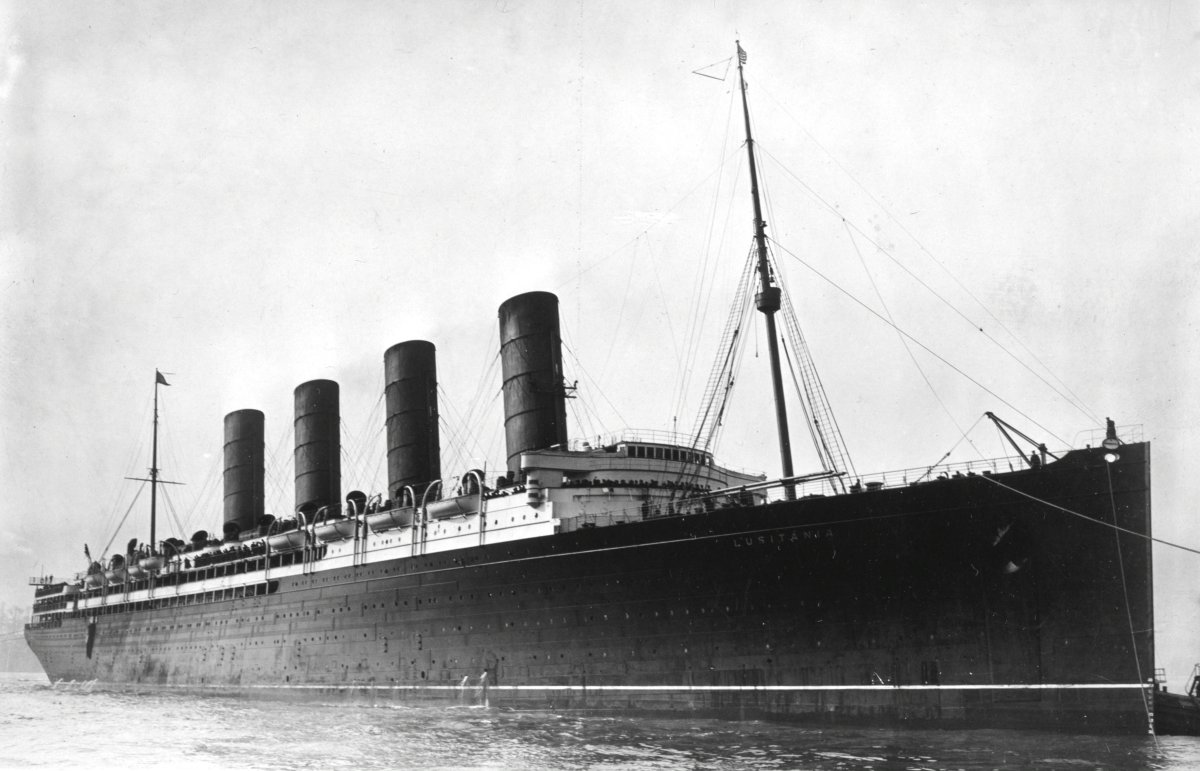
Happy Friday! Hope you can check out the Sinking of the Lusitania today.
Category: 1910s
SS Eastland: Chicago’s Forgotten Disaster

Hope you have a great Friday! Please come over and visit oldsteamships.blog… I’d love to have you.
SS Waratah: Australia’s missing ship
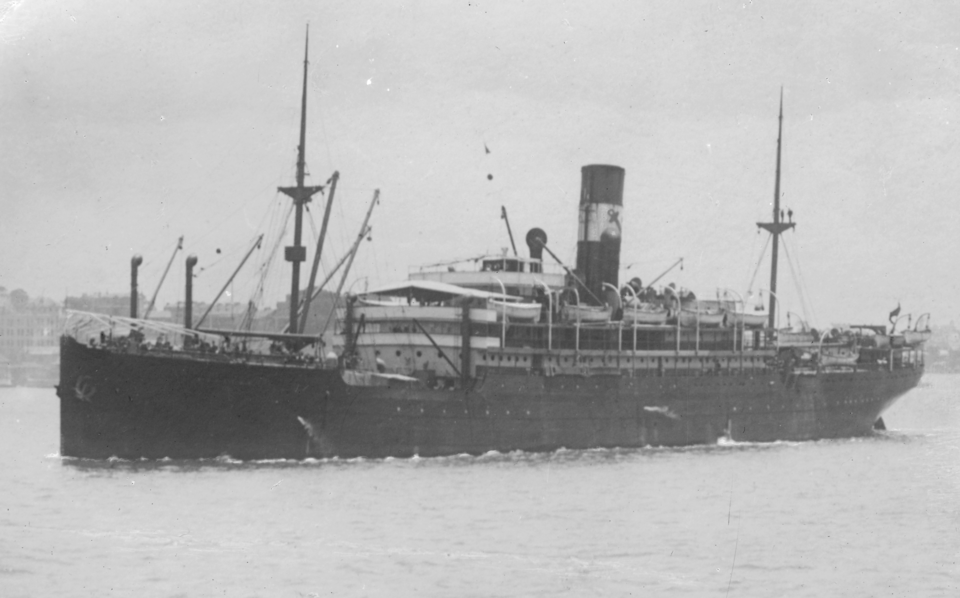
My reblog is missing on my other blog, so I’ll do this manually. This ship is still being hunted to this day.
The Arctic Ship SS Endurance
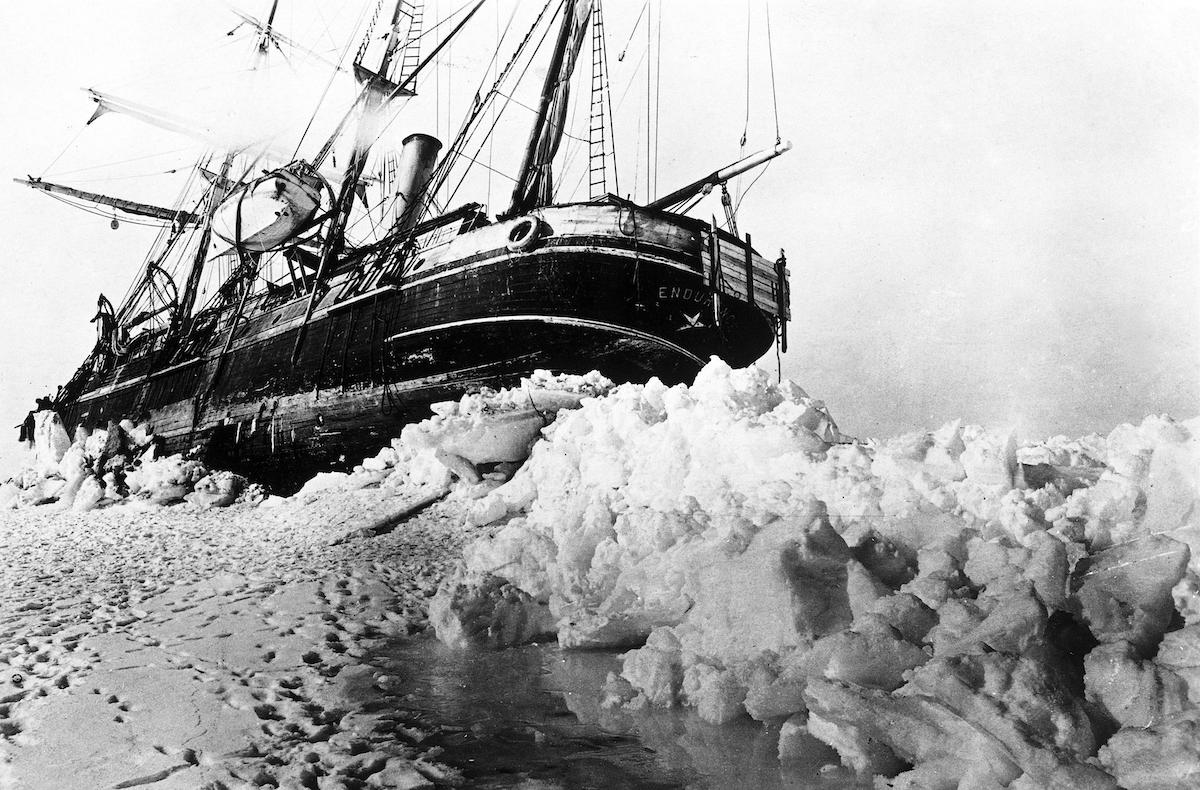
I want to thank all of you for helping me get this new blog about ships off the ground. I won’t continue to reblog indefinitely, I don’t think, but I just wanted to give it a boost. After The Prisoner is finished, I will probably only blog on https://oldsteamships.blog on Fridays unless I have a post that doesn’t fit on the weekend. I plan to do one post on Fridays, period, and on that other blog….and my regular posts on the weekend on this one…that won’t change…only Fridays.
New Site: oldsteamships.com
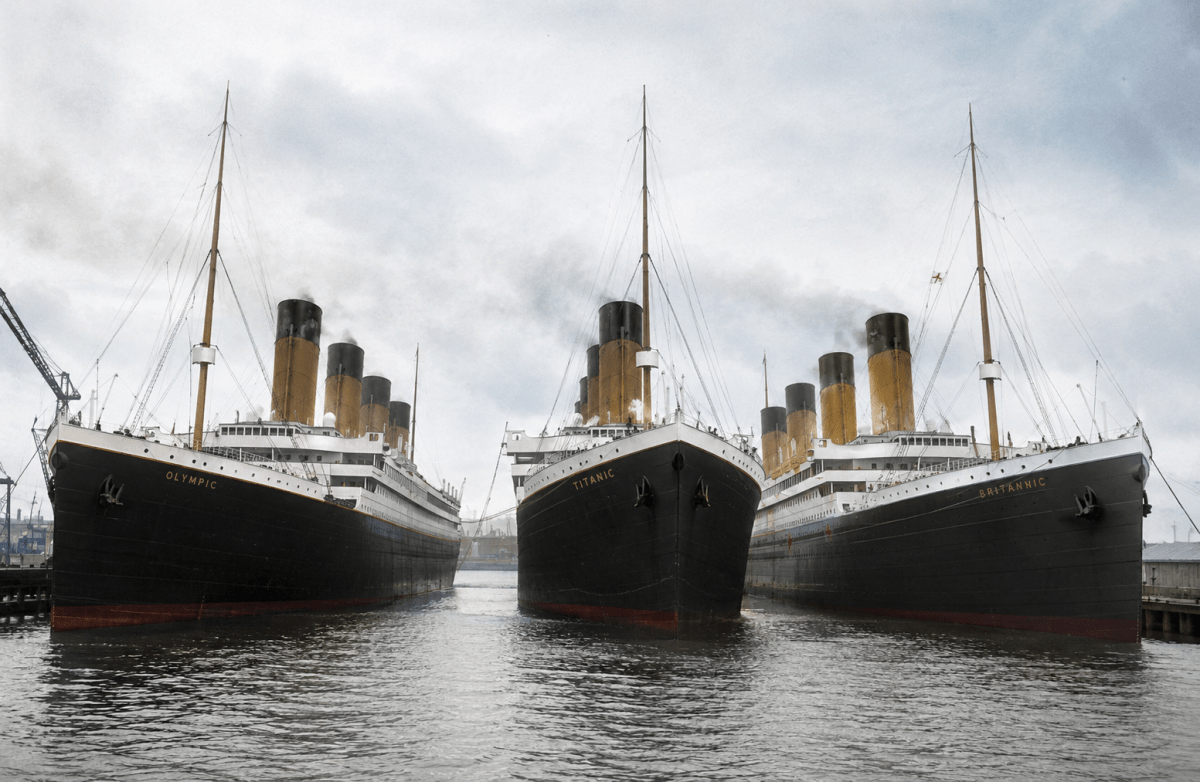
I have been writing about the RMS Titanic on my blog, and I think it fits the pop culture theme I have, but I would like to write about the Olympic, Britannic, and other ships like the SS Edmund Fitzgerald and the RMS Empress of Ireland. But I thought it would work better in a separate blog. I won’t be posting a ton to it, but it will give me a place to write about them without disrupting the flow at powerpop.blog. If you are interested, come along, but I get it if you are not. That is why I’m making this blog. A release valve for me to explore this subject when I find something interesting. Thank you all for reading as always.
RMS Titanic – Charles Lightoller and “a bad omen.”
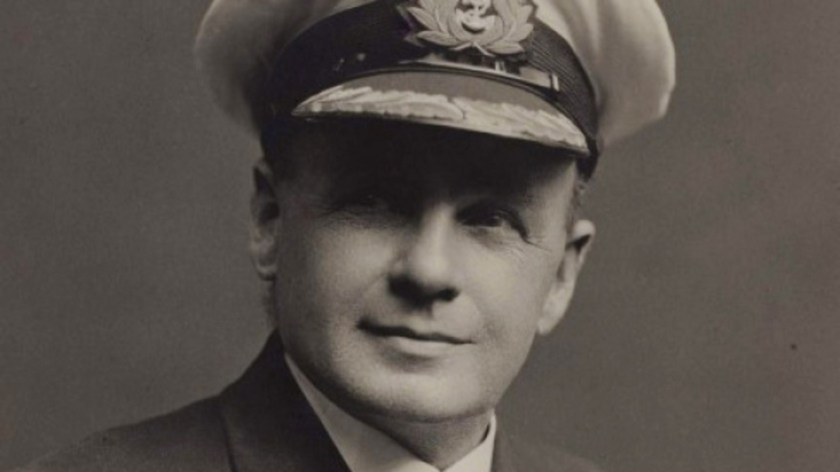
Charles Hebert Lightoller: Mr. Lightoller was born on March 30, 1874, in Chorley, Lancashire. This man lived a full life. He was stranded on a deserted island for 80 days, survived the sinking of the Titanic (while saving many lives), sunk a German U-boat in WW1, and did something at 66 years old that topped everything else. When I first read about Lightoller, I didn’t know what to think of him; he was strict on the women and children first policy. He interpreted it as women and children only on the Titanic. But in that situation, I can see why. This was standard practice at the time. Lifeboats were not seen as a way to save everyone. But as a way to ferry people from one ship to another. I would suggest watching a documentary or reading a book about this man.
He lived a life that almost reads like fiction. Before the RMS Titanic disaster ever happened, he had already been through shipwrecks and survival situations that would have broken most people. As a young sailor in the 1880s, he was aboard the ship Holt Hill when it caught fire in the Indian Ocean. Lightoller and others escaped in small boats and were stranded on a deserted island for 80 days, with little food or water, before being rescued. Years later, he joined the White Star Line and became Second Officer on the Titanic. On the night of April 14, 1912, he worked steadily as the ship sank, loading women and children into lifeboats and refusing to panic even as the decks tilted into the freezing Atlantic. When the water finally swept over the bridge, Lightoller was pulled under against a ventilator grate before a blast of air forced him back to the surface. He survived by climbing onto an overturned collapsible lifeboat with other men and was the highest-ranking officer to survive the sinking.
During World War I, he served in the Royal Navy and commanded torpedo boats and destroyers in dangerous waters. He fought at the Battle of Jutland in 1916 aboard HMS Garry, where his ship rammed and sank a German U-boat, an action that earned him recognition for bravery. Lightoller also took part in Atlantic convoy duty and anti-submarine patrols during the war.
Most people would have spent the rest of their lives talking about surviving the Titanic, fighting in WW1, and being shipwrecked, but Lightoller still had another chapter ahead of him. During World War II in 1940, when British troops were trapped on the beaches of Dunkirk, the British government called for civilian boats to help with the evacuation. Lightoller was 66 years old by then, old enough to stay safely at home, but instead he took his small motor yacht, the Sundowner, across the English Channel himself with his son and a young Sea Scout. German aircraft were attacking the beaches and the Channel was filled with burning ships and wreckage, but Lightoller pushed on anyway. The Sundowner was built to carry around 20 people comfortably, yet Lightoller brought back more than 120 exhausted British soldiers packed onto the little boat. He could easily have been killed during the crossing, but the same calmness he showed on Titanic appeared again at Dunkirk. He was shot at and bombed by German airplanes. It turned Charles Lightoller into one of the few men connected to two of the most famous sea stories of the 20th century.
He married in 1903 to Iowa Sylvania Zillah Hawley-Wilson, whom he was married to until he died in 1952. They had 5 children: Frederick Roger, Herbert Brian, Richard Trevor, Sylvia Mavis, and Claire Doreen. Roger was killed on March 9, 1945, near the end of the war; Herbert Brian was killed on September 4, 1939, near the start of the war.
His famous boat, the Sundowner, is being refurbished and saved. I want to thank Bruce Goodman for helping me with research about Charles Lightoller.
A Bad Omen
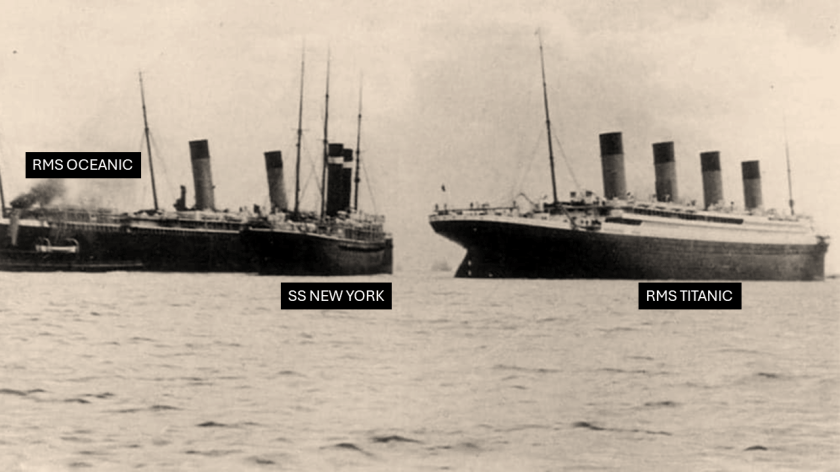
When RMS Titanic first pulled away from Southampton on April 10, 1912, thousands of people lined the docks to watch the biggest ship in the world begin her maiden voyage. As her massive propellers started turning, they created a strong suction in the harbor. Nearby was the smaller liner SS New York, tied up alongside the dock. The force from Titanic’s spinning propellers snapped New York’s mooring ropes and pulled the ship toward Titanic’s stern. For a few tense minutes, it looked like the two ships might collide before tugboats rushed in to push New York away. Titanic missed her by only a few feet. Many passengers and dock workers were shaken by what they had just seen.
Below is a picture taken on the Titanic which shows just how close the SS New York was to her.
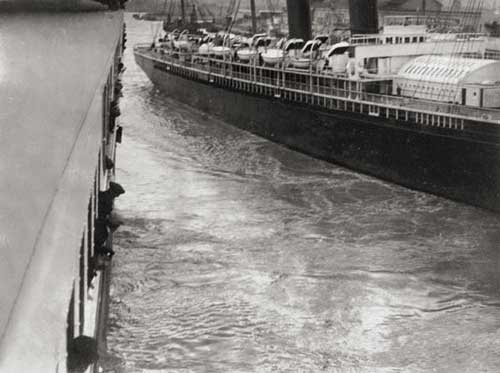
Afterward, some people quietly called it a bad omen. In the early 1900s, sailors and passengers often believed strange accidents before a voyage meant trouble ahead. At the time, most people brushed it off as just the danger of handling a ship so large in a crowded harbor. But after the disaster, survivors and historians looked back on the near collision with SS New York as one of the eerie moments connected to Titanic’s short life. It is possible that even a moderate collision on April 10, 1912, could have changed history.
If you are wondering what the RMS stood for, it stands for Royal Mail Ship (or Royal Mail Steamer). It was a prestigious designation indicating that the vessel was contracted by the British government to transport mail for the Royal Mail Service
Below is an excellent video, but long on Charles Lightoller’s heroism at Dunkirk.
RMS Titanic – Schemes to Raise the Titanic…and personal stories
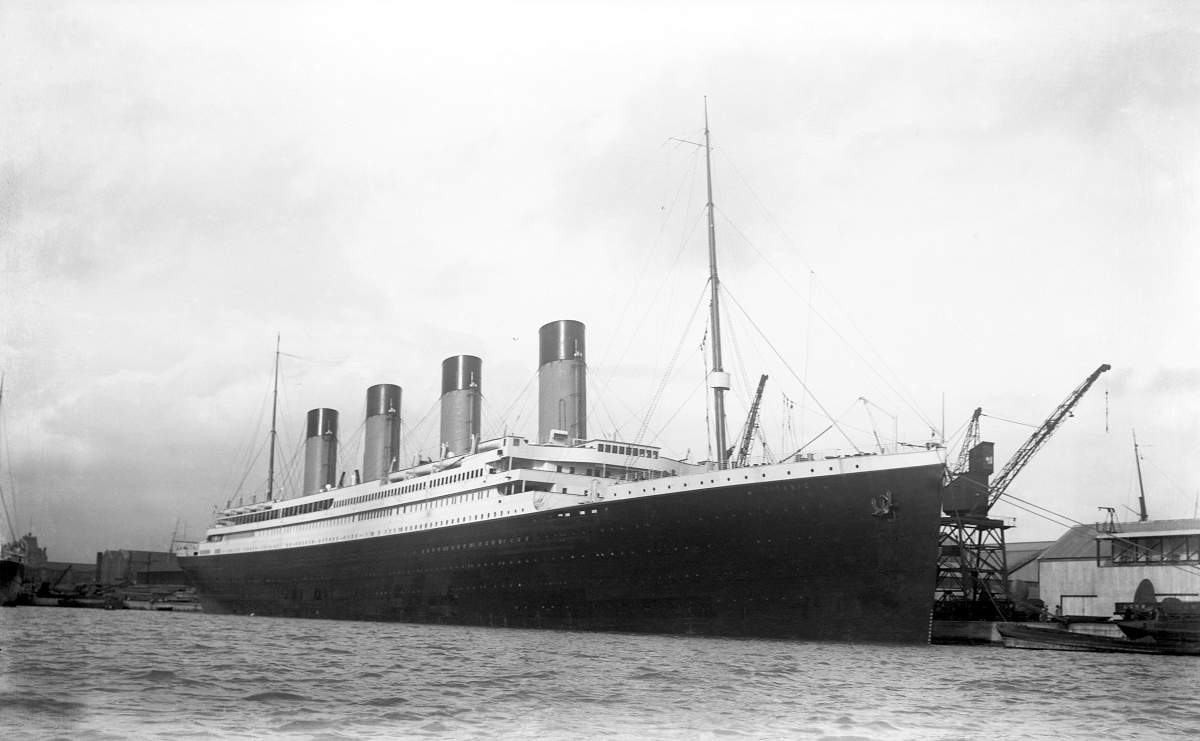
When I was a kid, I dreamed of finding and raising the Titanic. I could picture what it would look like and then take her to New York. Back then, many people thought she went down in one piece. Then, in 1980, they made a movie called To Raise The Titanic. Although it wasn’t a good movie, it was fun seeing their version of the raised ship. It actually matched my naive vision. I wanted so badly to walk on its deck. I’m keeping this post a little lighter at first anyway. Along with Walter Lord’s book, I remember hearing about crazy plans to raise her. Then, we will get into something more serious.
Before it was finally found in 1985, there were many ideas about how to raise her, many of them based on guesses about where the ship was and what condition it might be in. Since nobody had seen the wreck, engineers and dreamers came up with plans that ranged from serious engineering proposals to ideas that sounded like science fiction. Because again, most people thought the ship was in one piece.
One early idea was to attach giant electromagnets to the hull and lift the ship with cables from salvage ships above. Another proposal involved filling the Titanic with ping-pong balls or petroleum jelly to create buoyancy. In the 1960s and 1970s, some suggested pumping liquid nitrogen (it would take only 500,000 tons) into the wreck to freeze the water inside and out and make the ship buoyant enough to rise. Ironically, encasing it in an iceberg! You can’t make this stuff up. Others thought about attaching enormous flotation tanks or inflatable balloons to the hull. There was also an idea to use millions of hollow glass spheres that would sink down and displace water around the ship, helping lift it from the bottom. But you had to find it first!
Even back right after she sank, there were plans to get the family’s possessions off the ship. Little did they know where it was, and nothing at that time could have got even near it. The maximum they could dive in 1912 would have been 90 to 100 meters (300–330 feet). Much shorter than the 3,800 meters (12,500 feet) it would take.
Personal Stories
Most of the male passengers who survived the Titanic had to live with the stigma of surviving the wreck. That was because people automatically thought they took a child’s or a woman’s place. The truth is, there weren’t many at all like that. People did not want to get into a lifeboat at all at first. They wanted the warmth and the lit Titanic. They were sending out boats that were not completely full. They soon let some male crew members row, and if there were no women or children around, they would let a man get in. Boys over 13 years old were considered men. The crew was not immune to this stigma either. Although no one would want to put inexperienced men, women, and children in a lifeboat in the Atlantic without an experienced hand.
Some of the crew were ridiculed by passengers when they woke them up and tried to get them on a lifeboat. The ship was never advertised as “unsinkable,” but many of the passengers believed that. The press used phrases like “practically unsinkable“. The company stated that the ships were “designed to be unsinkable as far as it is possible to do so,” and many did think it was unsinkable.
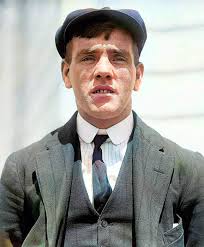
Frederick Fleet was one of the lookouts aboard the RMS Titanic and is remembered as the crewman who first spotted the iceberg that led to the sinking. Stationed in the crow’s nest with fellow lookout Reginald Lee, Fleet saw the dark shape directly ahead and rang the warning bell three times before telephoning the bridge with the famous message, “Iceberg, right ahead!” Although the officers reacted quickly by attempting to turn the ship, there was not enough time to avoid impact. Fleet survived the sinking by escaping in Lifeboat 6, but he later testified during official inquiries about the events of that night, including the absence of binoculars in the crow’s nest. Fleet struggled financially and emotionally and died by suicide in 1965 after his wife died, and he was evicted from his home at age 77 by his wife’s brother. He carried the weight of that night for decades.
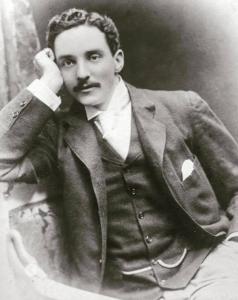
Bruce Ismay was painted as the villain at the time, but not as much now. Ismay survived, and that was not what people wanted to hear. He was the chairman of the White Star Line and traveled aboard during its maiden voyage. As one of the most senior company officials connected to the ship, Ismay became controversial after surviving the sinking while many passengers and crew died. During the evacuation, he helped load lifeboats and eventually entered a collapsible boat shortly before the ship made its final plunge. After being rescued by the RMS Carpathia, Ismay faced harsh criticism in newspapers and public opinion, with many accusing him of saving himself while others stayed behind. Official inquiries found no evidence that he had disguised himself or taken a place from a woman or child, but his reputation never fully recovered. He resigned as chairman of the White Star Line and president of the International Mercantile Marine (IMM) in 1913. He lived the rest of his life close to his family, staying out of the public light as much as possible. His wife forbade anybody from bringing up the Titanic tragedy around him.
RMS Titanic … Personal Stories and the gangway door theory
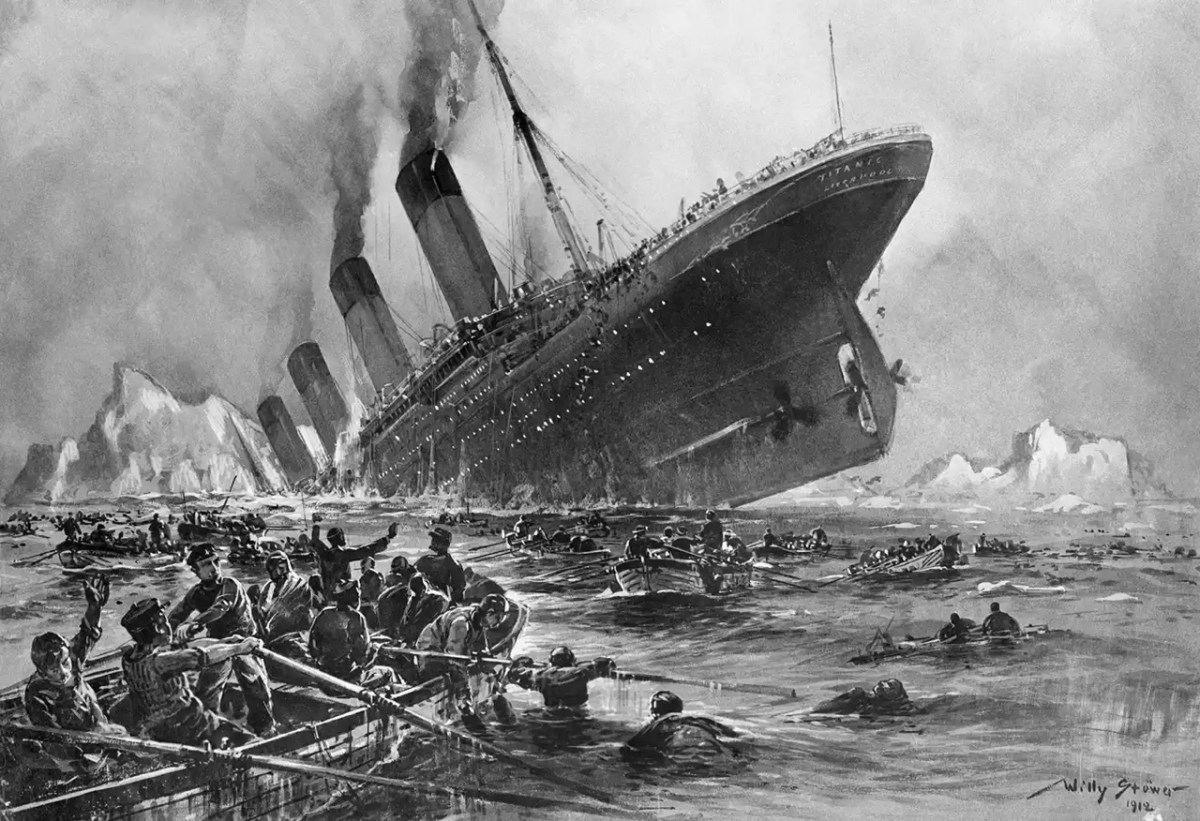
Someone asked me the other day if the RMS Titanic was rebuilt using the same blueprints today, would you sail on her? I said yes, I would. Titanic’s damage was catastrophic and a fluke. It wasn’t poor design that caused her to sink; it was the fact that she was dealt a long, glancing blow that pierced multiple compartments. An astronomically small percentage eventuality that no engineer would plan for. She was designed with a double bottom and watertight compartments for safety. She was also a huge ship. The biggest man-made movable object at that time in the world. To put the Titanic’s size in context, she comes up to almost 3 American Football fields put together. It was 269.1 meters long.
Many engineers say she would have survived if she had hit the iceberg head-on. That ship was built for that to happen, so it’s probably true. But if you were driving down the road at night and suddenly saw an object in the middle of the road, like a deer or cow, your first instinct would not be to hit it head-on. You would try to steer around it. If they had spotted it a minute earlier, they probably would have missed it. Here are some personal stories and a little-known accident that could have caused the ship to sink faster.
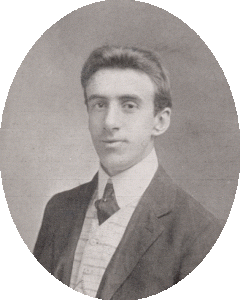
Since this is a music blog mostly, I had to talk about Wallace Hartley. He was the bandleader aboard the ship and became one of the most remembered figures from the sinking because he and his fellow musicians continued playing as the ship sank. He had worked on several passenger liners before joining Titanic’s maiden voyage. As panic spread and lifeboats were lowered, Hartley led the ship’s band in playing music to calm passengers and maintain order during the final hours. Survivors later recalled hearing hymns and popular tunes drifting across the deck as the bow slipped beneath the water, with many believing the final piece played was “Nearer, My God, to Thee.” Hartley’s body was recovered weeks later, still wearing his band uniform, and he was buried in England, where thousands attended his funeral in recognition of his courage and composure. His violin was also found floating in the case, and now it is in a museum.
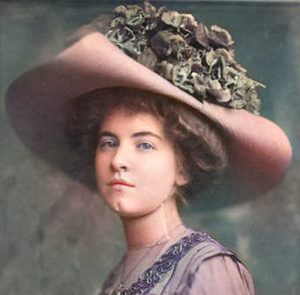
Margaret Brown (The Unsinkable Molly Brown) was an American socialite and philanthropist who became famous after surviving the sinking. Brown and her husband found wealth through mining investments. On the Titanic, she boarded Lifeboat No. 6 after the collision, where she reportedly urged the crew to row back to search for survivors. After being rescued by the RMS Carpathia, she organized aid for poorer passengers, raising money and helping create survivor lists. Her outspoken personality and determination earned her the nickname “The Unsinkable Molly Brown,” though she was never actually called that during her lifetime. I love this woman; she threatened to throw the officer overboard on the lifeboat if he didn’t go back and get survivors. To be fair, he was afraid of the lifeboat getting swamped and capsizing with people.
While she was a hero, the “Molly” nickname is a posthumous invention that transformed her into a colorful, legendary character. There is more information at Molly Brown House Museum.
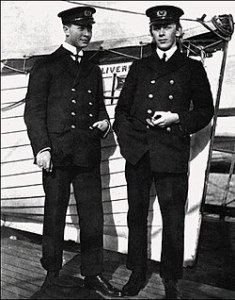
On the night of April 14–15, 1912, Jack Phillips and Harold Bride were already busy clearing a backlog of passenger messages when their Marconi wireless system had earlier broken down, forcing them to spend hours repairing the set so it could get back on the air, work that paid off when it came time to send distress calls after the collision. Phillips stayed at the key almost continuously, tapping out CQD and the newer SOS signals while Bride assisted. They relayed information and helped keep the failing equipment running as power weakened. Even as water crept closer and the strain on the system grew, they continued transmitting ship positions and pleas for help, giving nearby vessels a chance to respond. Bride was eventually washed off the deck and survived, while Phillips remained at his post until the end and died, an example of two operators who kept the line open as long as there was any current left to carry their signal. It paid off as well; the next morning, the survivors were picked up. They would not have survived on those lifeboats long on the Atlantic.
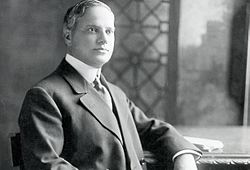
Benjamin Guggenheim was a wealthy American businessman and heir to the Guggenheim mining fortune who traveled aboard as a first-class passenger. When the ship struck an iceberg, Guggenheim initially slept through the impact but soon understood the seriousness of the situation. He and his valet helped with the deck evacuation. He famously said to some of the survivors: I am willing to remain and play the man’s game if there are not enough boats for more than the women and children. Tell my wife I played the game straight out and to the end. No woman shall be left aboard this ship because Ben Guggenheim is a coward. Near the end, he said this about him and his valet dressed in their best clothes: We dressed in our best and are prepared to go down like gentlemen, but we would like a brandy. Witnesses last saw Guggenheim and Victor Giglio (his valet) seated in deck chairs near the Grand Staircase as the ship’s final moments approached. His body was never recovered, but his acceptance of fate became one of the enduring stories of that night. I really like this guy! Guggenheim’s business morphed into the current company that owns the Los Angeles Dodgers.
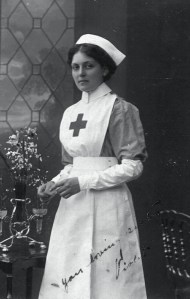
Violet Jessop was either really lucky or unlucky. Violet was an ocean liner stewardess who became known as “Miss Unsinkable” after surviving not only the Sinking of the RMS Titanic in 1912, but also two other major maritime disasters. Jessop worked for the White Star Line and served aboard the ship as a stewardess. After the collision with the iceberg, she helped passengers reach lifeboats and was eventually ordered into Lifeboat 16, where an officer handed her a baby to care for during the evacuation. She was rescued by the RMS Carpathia and later continued working at sea, surviving the collision of the RMS Olympic with another ship (the Olympic was repaired and good) in 1911 and the sinking of the hospital ship HMHS Britannic (Titanic’s young sister, it was sunk by a German mine and it was a hospital ship at that time) during World War I. Her remarkable survival story made her one of the most unusual figures connected to the Titanic. Here is a companion page with more information on Violet.
The Gangway Door theory.
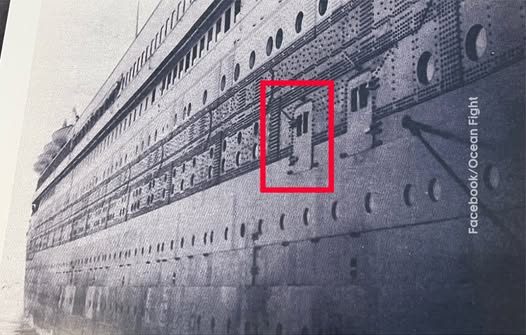
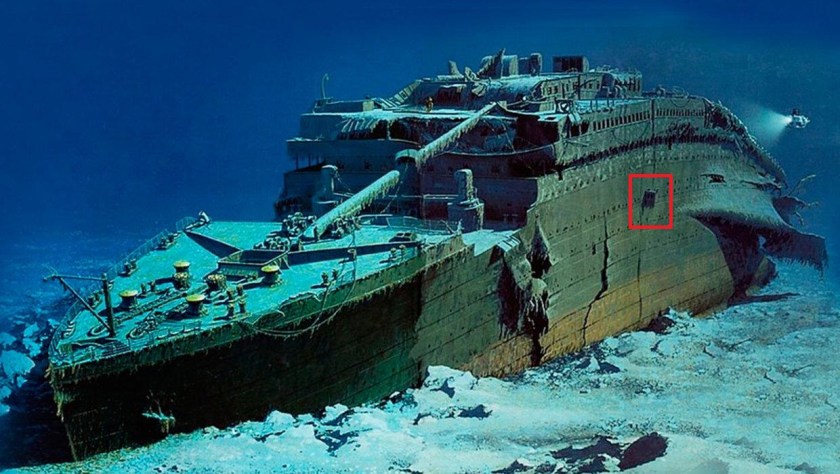
The Gangway door was opened and never closed. One of the lesser-known details of the sinking involves the port-side gangway door on D Deck, a large shell door typically used to board passengers and cargo while in port. During the evacuation, Second Officer Charles Lightoller ordered crewmen to open it so lifeboats could come alongside and take on passengers closer to the rising waterline, rather than forcing everyone to climb down from the Boat Deck. The idea made sense because many lifeboats were leaving partially filled. Evidence suggests the door was successfully opened, as it was later found open on the wreck. Some Titanic researchers believe that once the bow sank lower, seawater pouring through that opening may have accelerated flooding on the port side and shaved minutes off the ship’s remaining time afloat, though the exact effect is still debated. I DON’T fault the crew for this, with what was going on, who can blame them? BTW…this door was 3 x 6 feet, and that was maybe bigger than the smaller leaks that the iceberg brought. To be clear, the ship was sinking by that point anyway, but this very well could have sped it up.
Now, could it have blown open when the ship hit the bottom? Yes, but officers said at the inquiry that they did, in fact, load some lifeboats from there. So they did say it was open, and either they were in a hurry and didn’t close it all the way, they forgot to close it, or it was blown open at the sinking. Although there is a door right beside it that didn’t open. That would, though, explain the 20-minute difference in the computer simulations. Not that I entirely trust computer simulations, but it does make sense.
To put it into context. After using sonar (the damaged side is buried in the mud) to assess the damage caused by the iceberg on the wreck, the total was 12 square feet. The gangway door measures 18 square feet. Also, the damage wasn’t a huge gash. It was mostly a dented hull, with the rivets giving out. Just cuts, not a huge gash. Its length is what sank the ship. Five watertight compartments were breached. If there is one thing that could have made her stronger, it would be welding instead of rivets, but that wouldn’t come until The SS Fullagar was the first welded ship in 1920.
RMS Titanic… lifeboats and other things.
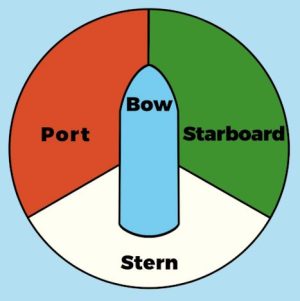
I can’t tell you how happy I was to get that reaction to the last Titanic post, and thank you all for reading. Thank you for indulging me. You all probably know these terms, but I didn’t, so if any of you were like me, this will help. The Bow is the front of the ship, and the Stern is the back end. The Port Side = left-hand side of a ship when you are on board and facing forward toward the bow. Starboard Side = right-hand side of a ship when you are on board and facing forward toward the bow. I’m going to tell you a not-so-well-known event about some fortunate luck the RMS Titanic had (yes, it could have been much worse), the lifeboat dilemma, and a couple of personal stories.
The coal fire. Before the iceberg ever struck RMS Titanic, a smoldering coal fire had been burning in one of the ship’s starboard coal bunkers, something not uncommon on steamships of the era (she had stops in Cherbourg, France, and Queenstown (now Cobh), Ireland before moving to the open Atlantic). To control it, stokers spent a couple of days shoveling an estimated 300 tons of coal from the starboard side over to the port side, a backbreaking task done in intense heat below deck. That weight shift reportedly gave the ship a slight port list (list = leaning) even before the voyage settled into the Atlantic. When the iceberg opened the starboard side to the sea, some historians believe that extra coal weight on the port side briefly helped counter the incoming flooding, slowing the list to starboard for a short time and giving the ship a little more balance during the early stages of the sinking. They did a computer simulation, and the computer said it should have sunk in 90 minutes. Then they entered the coal being moved, then the computer said it would take 3 hours, or 180 minutes. It really took 160 minutes, more on that with the next post.
When the call came for women and children first, there weren’t many wanting to do that. Lowering lifeboats was dangerous at that time, and many people have been killed doing that. You are 80 feet or so up in the air, being lowered into cold and darkness. It was incredibly dark on that moonless night. They had only the stars and the ship’s lights over the Atlantic.
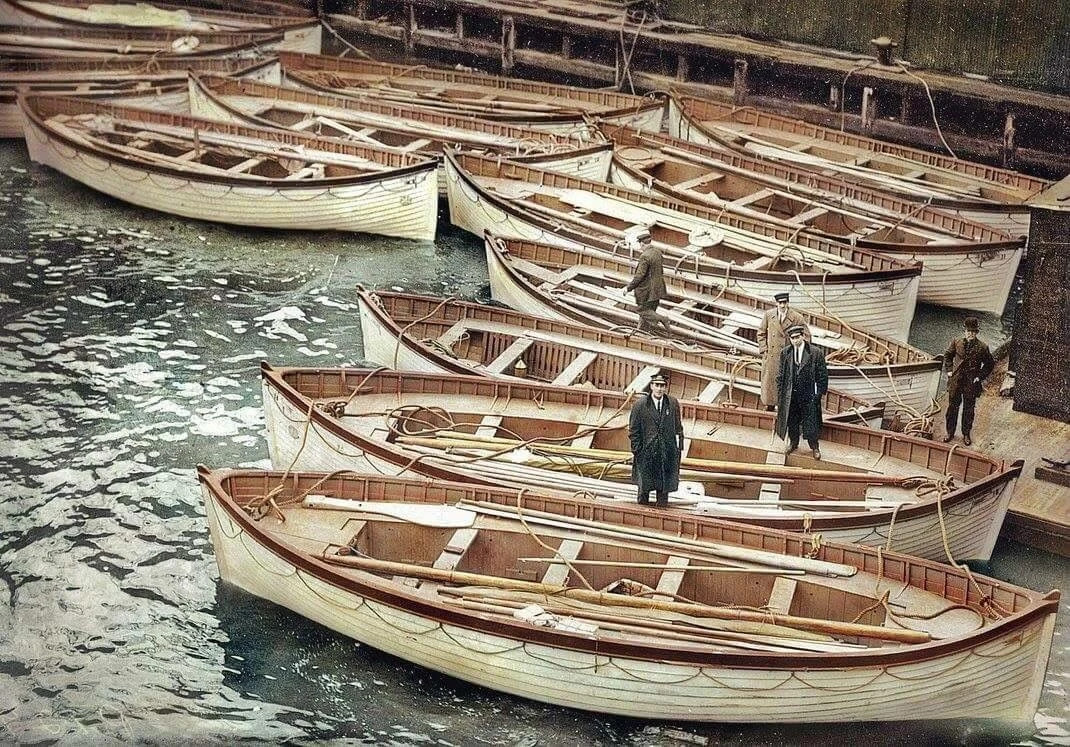
Life Boats. One thing that I didn’t understand was why the Titanic didn’t have enough lifeboats for the people she carried. The maritime law at the time was based on the ship’s tonnage. The Titanic had more lifeboats than she needed by law. Also, the Titanic was built so you could cut her into 3 sections and she would float (so she was a lifeboat as well), but that was without damaging 5-6 compartments. Back then, lifeboats were there to ferry people between the sinking ship and a rescue ship. They were not meant to be boats that people would stay on for hours or days in the Atlantic. They were also fortunate that the ocean was calm that night, not usual for the Atlantic. These were not light fiberglass boats; they were heavy wooden boats, weighing almost 6 tons with all of the equipment!
They had 20 lifeboats (The 20 boats consisted of 14 standard wooden boats, two emergency cutters, and four collapsible boats), and they didn’t even get all of those off properly. Remember, they were lowered by davits (crane-like devices used on ships to support, raise, and lower equipment such as boats, anchors, or dinghies). The Titanic gave them 160 minutes, which, compared to other shipwrecks, is quite a bit of time. What they needed more than anything was more time. I’m not saying that it would be a bad thing to have enough lifeboats. But when you think about it, launching those boats back then from so high up (around 80 feet) was not easy. Imagine being lowered into complete darkness up 80 feet. That is why passengers didn’t want to leave the warm ship to freeze in the Atlantic. They still thought the Titanic would not sink. It took so long that it drew people into a false sense of security. There were so many ships in the shipping lanes that they thought another ship would be close by and they would have enough time. That night, the Californian was 20 miles away at most (Titanic’s crew saw the ship and kept signaling), but their Marconi (radio operator) operator had gone to bed, and Titanic’s pleas were not heard by them. It was heard by the Carpathia (further away), which came to the Titanic’s rescue, but she didn’t get there until around 4am the next morning. They picked up the survivors, but that is it. The Titanic struck the iceberg at 11:40 pm on April 14, 1912, and sank at 2:20am on April 15, 1912.
So yes, I do believe more lifeboats would be a good idea, but more training and also passenger drills would have made a huge difference. You must remember, though, when a ship is listing to one side badly, you have to use the other side to lower boats, which wipes out half of your lifeboats on the up high side. Now they have made davits that will handle the listing, I’m happy to say.
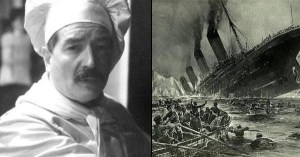
Personal Story: Charles Joughin (one of my favorites) was the chief baker aboard the Titanic, and his story became one of the most unusual survival accounts from the disaster. He knew he would not take a lifeboat seat, but he was going to help as many as possible and feel good at the same time. He didn’t give up, but knew what could happen. After the ship struck the iceberg, Joughin helped load women and children into lifeboats and threw deck chairs overboard so people in the freezing water might have something to cling to. Unlike many passengers who panicked, he stayed busy and calm as the ship’s final moments approached… Well, yes, he stayed calm and warm because, in between helping women and children, Mr Joughin would go to his cabin for shots of whiskey. When the final lifeboats departed, Joughin remained calm and rode the Titanic down like an elevator. Witnesses confirmed this. Luckily for him, there was no big suction from the stern going down. He was the last one to get off the stern as it plunged. He was picked up by a lifeboat and survived! He wasn’t falling down drunk, but he was highly buzzed, and he said he didn’t feel the 28-degree water and stayed in the water longer than most. Others say he was in the water longer than most that lived. He did a great job and saved a lot of lives.
Charles did everything he could, like sending bread to the lifeboats, helping to load people into them, throwing wooden chairs into the water for floatation devices, and still having time for a drink or two or three.
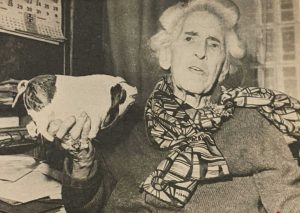
Personal Story: Fashion buyer and journalist Edith Rosenbaum (an older Edith in the 1970s above) boarded the RMS Titanic in first class after covering fashion collections in Europe, carrying with her a small toy pig music box given by her mother for good luck. When the ship struck the iceberg on April 14, 1912, Rosenbaum at first resisted leaving her cabin, worried about her belongings, but a crew member reportedly insisted she get into Lifeboat No. 11. She got the crew member to go get her toy pig. Finally, the crew member had to throw the pig into the boat just so that Edith would get in. The pig was a small mechanical music box that played the tune “La Maxixe.” During the long hours in the freezing Atlantic, she wound it up to calm frightened passengers and children in the lifeboat. Rosenbaum survived the disaster and later credited the pig with helping keep spirits up during the ordeal. The toy itself survived as well, becoming one of the more personal artifacts connected to the sinking of the Titanic.
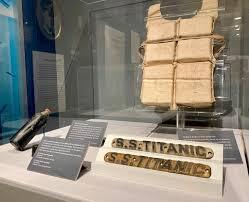
No authenticated, fully intact lifeboats from the Titanic are known to exist today. Of the 20 boats, 13 were brought to New York by the Carpathia, where they were stored briefly, stripped for souvenirs, and likely broken up, sold, or re-purposed for other White Star Line vessels by 1913. Some plaques that went on them still exist, as shown above.
If you get really interested in the Titanic, I recommend two YouTube channels. These young guys are historians and have a huge passion. You have Mike Brady from Oceanliner Designs and Sam Pence from Historic Travels. Mike is very professional and personable. Sam is very personable and professional. Both are ship fans, especially the old steamer liners. I get lost in their YouTube sites.
RMS Titanic
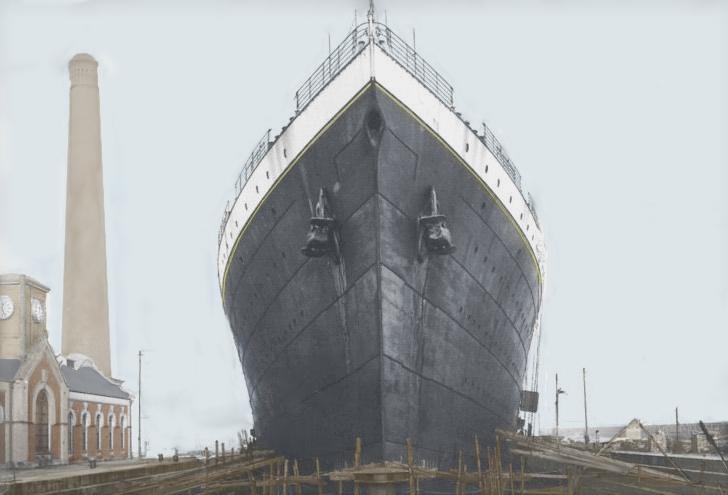
First of all, no, this is not about the 1997 movie! Speaking of which, if you want to see more of the true story of the Titanic through a movie (though I highly recommend a documentary or better yet a book), watch A Night to Remember, which was filmed in 1958. Titanic experts have said that the 1958 movie is closer to the truth than the 1997 movie. What brought this up again on my radar was Titanic’s 114th anniversary on April 15, 2026. I felt like a kid again reading about this once great ship. This was one of my loves as a kid.
Along with growing up with baseball, dinosaurs, and The Beatles…I had other interests. The Titanic was so interesting to me because it was such a mystery. I was also interested in her two sister ships, The Olympic and the Britannic. I’ve read a lot of books and watched countless documentaries on the Titanic. One of my first non-Beatles books I ever read was the book by Walter Lord named A Night To Remember (the one they made the movie about). I’m reading one now called On a Sea of Glass: The Life & Loss of the RMS Titanic, and I would highly recommend it. It’s probably the best book I’ve ever read on this subject. You get to know the human side of this, which has been missing.
She was built well with new watertight compartments. Today’s ships have that feature. I remember the day in 1985 when they found her. I was so excited, but also bummed that she split in half while sinking. Although many said that the ship did split in half at the 1912 hearings, they were ignored, but were vindicated decades later. Why does this continue to interest me? I can’t tell you why.
The Titanic and her older sister, Olympic. They were hard to tell apart, but the Titanic was slightly larger and heavier; both were 882 feet and 9 inches long. Most of the pictures you see of the “Titanic” are really of the Olympic.
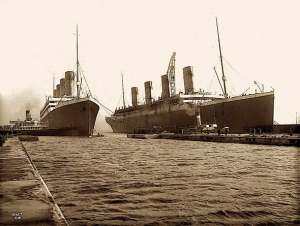
It was a safe ship, but its Achilles heel was found with that iceberg. Some modern ships would sink as well if the same damage happened. The Titanic had 16 watertight compartments and could take 4 of them being breached, but 6 were breached, and it was going to sink. It wasn’t a huge gash but just puncture marks. She took 2:40 minutes to sink; they have done tests with other ships of the period, and most sink within an hour or way less with the same damage. There are so many stories from that ship. I wanted to post this and see if there would be any interest in hearing some of the stories in future posts.
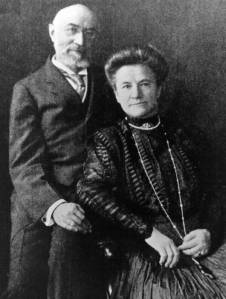
I’ll give you one story in this post, a short one. Isidor and Ida Straus sailed on this ship. They owned Macy’s Department Store. Isidor Straus was a co-owner of Macy’s and had served as a U.S. Congressman. He and his wife, Ida, were returning from Europe in April 1912, traveling first class on the Titanic. By all accounts, they were devoted to each other after more than 40 years of marriage.
When the ship struck the iceberg, and it became clear that lifeboats would be needed, the rule of “women and children first” was enforced. One of the officers did “women and children only” and sent half empty boats down. Ida was offered a seat in a lifeboat, and Isidor, as a man, was expected to remain behind. At first, Ida stepped toward the lifeboat. But when she realized her husband would not be allowed to go with her, she refused to leave him. She reportedly said words that have been passed down in different forms (where you go, I go), but the meaning is clear: she would not be separated from him after a lifetime together.
Isidor also refused special treatment. He was told he could take a place in a boat because his age and prominence, but he declined, saying he would not go before other men who were in greater need. Ida then gave her seat in the lifeboat to her maid, Ellen Bird, and even handed over her fur coat, telling her she would not need it anymore.
The last widely accepted account is that the two were seen sitting together on deck chairs, calm in the middle of chaos, waiting as the ship went down. Other accounts say they were seen holding hands near the railing as the end came. Either way, they chose to remain together rather than be separated.
Isidor’s body was later recovered at sea. Ida’s body was never found.
Their story became a symbol of loyalty and sacrifice at the time, often compared to the dignity shown by others that night. That included the ship’s musicians who continued playing as the situation worsened. In the years since, the Strauses have been remembered for what they valued most, staying together to the end.
When the maid made it home, she went to the daughter of the Straus family, Sara Straus. The maid (Ellen Bird) offered the coat back to the family, but the daughter said no. She told her that her mom wanted her to have it and to keep it in her memory.
The Titanic had heroes, like the crew who worked in the engine rooms to keep the lights on until the final plunge. They all lost their life. If those lights had not been on, many more would have perished. It’s an interesting ship and human story.
Titanic finds her voice again with 3 of her whistles salvaged from the ocean floor. The ship had 3 sets of three whistles. This one is a complete set. It didn’t take too much work to make these work again. It had not been heard since 1912.
