Uncle Tupelo w/Doug Sahm – Give Back The Key To My Heart

Yes, I posted Sahm recently, but here he is leading the way with Uncle Tupelo. What a great and natural combination. Running across this was just fantastic! I can’t put into words how much I love the down-home sound of this. One more legend is on this album that I will reveal at the bottom of the post…no skipping or peaking!

When Uncle Tupelo teamed up with Doug Sahm on this song, it felt less like a guest spot and more like a handoff between two generations. Sahm had already lived a lifetime in Texas blues, country, and rock and roll. Uncle Tupelo were still mapping out what roots rock could sound like in the early ’90s. The song sits right in the middle of that meeting point.

Sahm sounds relaxed, like he’s telling a story on a porch. Jay Farrar and Jeff Tweedy hang back just enough to let the song lead. I always liked Uncle Tupelo anyway, but add Doug Sahm? Oh hell yes! I could listen to this type of music all day and twice on Sunday, as the saying goes. It gives me a great feeling, and it just fits all together so well. The backup vocals are on target, but also riding around the edges; it’s such a lived-in sound that I love. There is no overdubbing or big production…just back porch sounding goodness. 

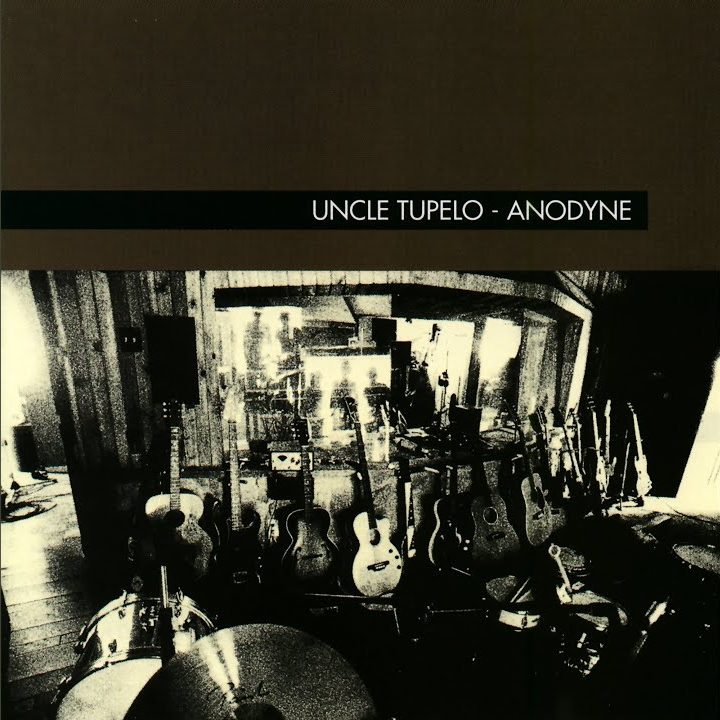
This track shows what Uncle Tupelo were always good at, connecting past and present without making it sound like a museum piece. Doug Sahm doesn’t feel like a legend that was just dropped in for credibility. He feels like part of the band, which in this he is. Doug Sahm wrote this song, and it was on the Uncle Tupelo album called Anodyne, released in 1993. He first released it as Sir Doug and the Texas Tornados in 1976. 

There is one more legend on this album doing some vocals…the one and only Joe Ely. He did the lead vocals on Are You Sure Hank Done It This Way?

Give Back The Key To My Heart

Take my picture off the wallIt don’t matter to me at allSaid I was headed for a fallBut you wanted me to crawl

Give back my TVIt don’t mean that much to meWhile you’re giving back my thingsGive me back the key to my heart

Give back the key to my heartGive back the key to my heartAnd let my love flow like a riverStraight into your heart, dear

Well, you say I was the oneTo blame for the wrong that’s been doneWell, you got a friend named cocaineAnd to me, he is to blame

He has drained life from your faceHe has taken my placeWhile you’re alone in San AntoneGive me back the key to my heart

Give back the key to my heartGive back the key to my heartAnd let my love flow like a riverStraight into your heart, dear

Kolchak: The Night Stalker – The Sentry

March 28, 1975 Season 1 Episode 20

If you want to see where we are…HERE is a list of the episodes.

First of all, thank you all for following this series. This is the final episode, unfortunately. It’s been a fun trip down this lane! It was a lot of fun watching these again after at least a decade for me. Sometimes older shows, even 5 years old, don’t hold up as well. These really do, and even the weaker episodes have something to offer. Not many times can I say I watched a complete series without one clunker. I can see why this series is a cult favorite.

What were you doing on March 28, 1975? I was 8 and probably in bed when this came on, but now I’m catching up. In this one, we have Kathie Browne (Star Trek, Wink of an Eye episode, Gunsmoke, etc, 93 acting credits) as Lieutenant Irene Lamont. She was also Darren McGavin’s real-life wife. Their chemistry is evident, and it strengthens this episode. She knows how to handle Kolchak, about as well as you can anyway. If the show had gone on to another season, it would have been smart to bring her in to play Lieutenant Irene Lamont for good. Unlike the other reporters, Kolchak is not charmed by a pretty face like the other reporters were. 

Tom Bosley (Mr. C on Happy Days) also guest stars as Jack Flaherty, who works at an underground data-storage facility where the trouble begins. The data storage was there in case of nuclear war. Companies can have all their records stored safely, and for personal items. 

This episode started at the end with a flashback, with Kolchak racing down a long corridor in a golf cart. He is being chased by something, and then the story begins as he talks into his recorder. Before this, a wave of violent attacks in the data storage center tunnels happened in Chicago. Victims are found torn apart, and police believe a large animal may be responsible. Carl Kolchak notices the injuries don’t match any known animal in the area and begins tracing the incidents to locations connected by buried passageways beneath the city.

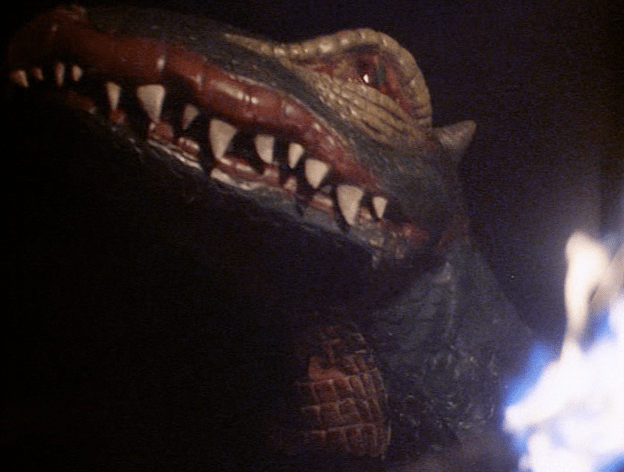
Kolchak impersonates a doctor to be there for an autopsy and an insurance man to get information out of a data storage worker. Just a typical day for him. Conning his way into the underground facility, Kolchak sees a large, reptilian creature, and when he tries to tell the police, he discovers what appears to be a government and military cover-up. He also realizes that the exciting geologic find, which appears to be rock are actually a nest of eggs.

In the final moments, Kolchak follows the creature into the tunnels and comes face-to-face with it again. He finishes his report, aware it will likely never be published, yet again.

Anyone familiar with Star Trek will recognize this plot as a close remake of the classic episode, “The Devil In The Dark” in which a creature with the ability to travel through solid rock kills miners who have mistakenly destroyed its eggs.

So long, Carl, we thank you for being such a truly iconic character.

Closing Narration

I know what’s gonna happen now. As far as the authorities are concerned, the events of April twentieth and twenty-first will never have occurred. They-They’re gonna tell me that if I ever breathe a word of this, they’re gonna break me like a straw man. Now what about the sentry? Will its eggs hatch in the warm, dark dank dampness of its nesting place? Who knows? Maybe the government will find the nest, maybe they won’t. We’ll probably never know. But if you’re in the subway or in a pedestrian tunnel underneath a ballpark and you think you hear something moving in the walls, it may not be your imagination. Take my advice, don’t walk, run to the nearest exit.

Kolchak: The Night Stalker – The Youth Killer

March 14, 1975 Season 1 Episode 19

If you want to see where we are…HERE is a list of the episodes.

We have the very lovely Cathy Lee Crosby in this episode as Helen Surtees. She runs the Max-Match Corporation, a dating service. It also had John Fiedler, whose voice is very thin and right above a whisper. His voice was probably more well-known than he was. John Fiedler voiced Piglet in Disney’s Winnie the Pooh franchise for 37 years, from 1968 to 2005. He was on Star Trek and guested on The Bob Newhart Show many times as one of Bob’s patients. George Savalas, Telly’s brother, played Demosthenes, which, funny enough, was his real middle name. A nice support from a funny Kathleen Freeman as Bella Sarkof,  a matchmaker hoping to find Kolchak a wife (she may, in fact, still be waiting for Kolchak’s return call).

This episode opens with a string of murders where older men and women are found with their bodies showing signs of extreme aging in a short time. Police think it is a normal homicide case with strange medical results, but Kolchak notices that every victim had recently crossed paths with the same young person. 

He uncovers records going back decades showing the same face connected to deaths. Doctors confirm the victims lost years of life in hours. Kolchak realizes the killer is not just murdering but absorbing life itself, using it to stay young. The trail leads to Max-Match. 

In the final stretch, Kolchak confronts the problem and forces a showdown that reveals the truth and stops the killing. Kolchak files another report that will likely be buried, while the city moves on as if nothing unusual happened. It’s an odd episode. It has some very funny and entertaining scenes in this one, but overall, it’s not one of the top episodes. 

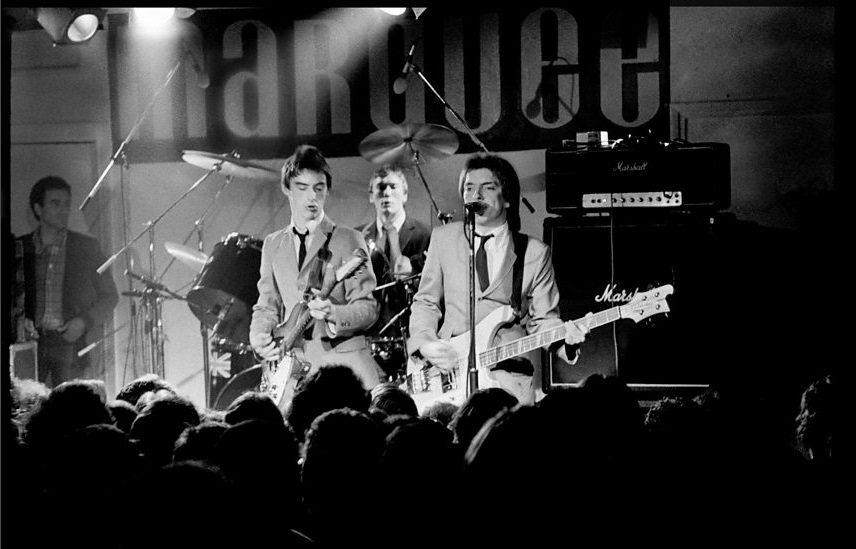
Jam – Worlds Apart

I first heard about The Jam in the 80s, around the same time I found Big Star, The Replacements, The Clash, and REM. When I listen to The Jam, I think of the Kinks and The Who right away, and that is always a good thing. 

When people talk about the British punk explosion of the late ’70s, The Jam always stand a little apart. While others were known for being abrasive and loud, The Jam drew influence from 1960s Mod culture. Paul Weller had a knack for crafting sharp, pop-infused songwriting about everyday British life. They were formed in Woking in the early ’70s by Paul Weller, bassist Bruce Foxton, and drummer Rick Buckler. The band was a trio that was tight and direct.

They went from pub stages to one of the biggest bands in Britain, leaving behind a catalog that is very strong. There is not much information on this song out there. It wasn’t on a studio album, nor was it a B-side. It was released in 1997 for the first time on their Direction Reaction Creation album, which covered all the studio albums, non-album singles, and demos. They broke up in 1982 after releasing 6 albums in all. 

From what I found, it was recorded around 1978 for the album All Mod Cons, but never made the album. I’m sure that is the case because it was also included on the All Mod Cons (Deluxe Edition) that was released in 2002. They were an incredible band, being a tight full trio. Direction Reaction Creation peaked at #8, fifteen years after they broke up in 1997. 

Worlds Apart

Worlds apart, you and I, we’re worlds apart

The difference between every day
I can’t think of the words to say

Worlds apart, you and I, we’re worlds apart

I’ve been in some clubs where the music’s loud
‘cos I see your face in every crowd
But it’s not really you

It’s like having a cold on a summers day
Something ain’t right and I want you to stay
You must know that

Worlds apart, you and I, we’re worlds apart

Doug Sahm – Is Anybody Goin’ to San Antone

I’ve posted a few of Sahm’s tracks in the past 4-5 months. I was inspired this time to post again. I have been reading 11.22.63 by Stephen King, and it’s about a man who was told about a time portal that takes you to September 9, 1958. He walked through and was going back to stop Oswald from killing JFK if Oswald was the one. The book is interesting because of the time he has to kill between 1958 and 1963, and the side trips he takes.

One of them is in Texas in a fictional town called Jodie. He is at a picnic, and this is the paragraph that caught my attention: I got my beer in a paper cup and walked closer to the bandstand. The kid’s voice was familiar. So was the keyboard, which sounded like it desperately wanted to be an accordion. And suddenly it clicked. The kid was Doug Sahm, and not so many years from now he would have hits of his own: “She’s About a Mover” for one, “Mendocino” for another. That would be during the British Invasion, so the band, which basically played Tejano rock, would take a pseudo-British name: The Sir Douglas Quintet.

Hey, inspiration may come from anywhere for a post. After reading that…I’ve been in a Doug Sahm mood. The recording blends country, soul, and Texas rhythm in a way that was natural for Sahm. The groove leans on a steady beat, light horns, and a melody that sticks without trying too hard. It came out during a period when he was working under his own name after years with Sir Douglas Quintet, and it showed how easily he could move between styles. The song had crossed over to country charts and pop audiences, which wasn’t common at the time.

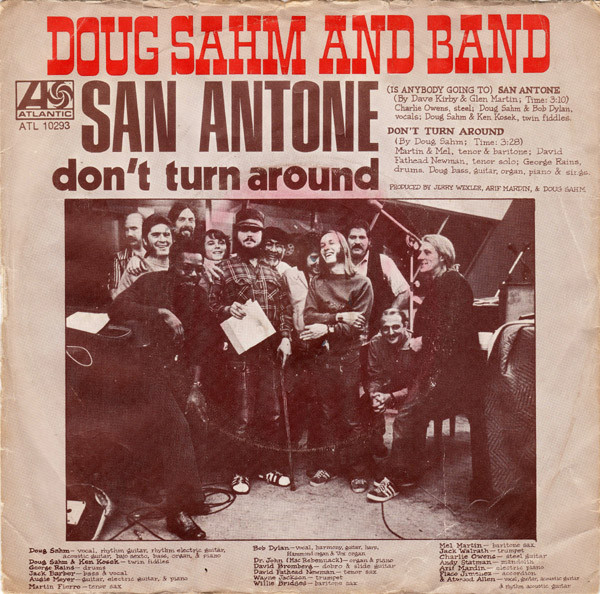
You may remember the version by Charley Pride that peaked at #1 on the Country Charts in 1970. Sahm recorded this for his 1973 album Doug Sahm and Band. Something about Sahm’s version just sounds so authentic that I had to post his version. That is something about Sahm I’ve realized, everything he does sounds authentic. It was written by Glenn Martin and Dave Kirby. The first version was by Bake Turner in 1970. 

Doug Sahm and Band peaked at #125 on the Billboard Album Charts and #54 in Canada in 1973. This is another artist where the charts don’t tell the story. His albums are accessible and are full of good songs. 

Is Anybody Goin’ to San Antone

Rain drippin’ off the brim of my hatIt sure is cold todayHere I am walkin’ down 66Wish she hadn’t done me that way

Sleepin’ under a table in a roadside parkA man could wake up deadBut it sure seems warmer than it didSleepin’ in our king-sized bed

Is anybody goin’ to San AntoneOr Phoenix, Arizona?Any place is alright as long as ICan forget I’ve ever known her

Wind whippin’ down the neck of my shirtLike I ain’t got nothin’ onBut I’d rather fight the wind and rainThan what I’ve been fightin’ at home

Yonder comes a truck with the U.S. MailPeople writin’ letters back homeTomorrow, she’ll probably want me backBut I’ll still be just as gone

Is anybody goin’ to San AntoneOr Phoenix, Arizona?Any place is alright as long as ICan forget I’ve ever known her

Rolling Stones – Moonlight Mile

When I hear this song, I think of deep winter, which fits perfectly right now. That is when I first heard it, during a cold January. Our drummer turned me on to this song and most of the Stones’ album cuts. I was the Beatles guy, and he was the Stones guy of our band, so our car trips were full of great music picked by either of us.

Keith Richards was not at the recording session for one reason or another. Richard likes the song, though. With Richards gone, Mick Taylor did all the guitar work on the recording, and it’s outstanding as usual for Taylor. Mick Taylor really defined much of their sound through this period. When he left, the sound they had stretched over their golden period of 5 albums was gone. Additionally, producer Jimmy Miller also left, and he had a huge role in the sound.

I’ve looked up what Moonlight Mile, the title, means, and I have found one source that says it means a nighttime cocaine session. I can totally buy that during that time. Others say it was just a song about profound loneliness, weariness, and longing for home while touring. This is one of the Stones’ most human and honest recordings. No blues rewrite, no stadium chorus anthems or big hit. Just fatigue, longing, and the sound of a band that knew when not to overdo it.

The song was on Sticky Fingers, and the album peaked at #1 on the Billboard Album Chart, #1 in the UK, and #1 in Canada in 1971. On an album packed with headlines, this quiet closer is the one I return to when I want to hear who they really were in that moment. Beggars Banquet is my favorite Stones album, but Sticky Fingers is probably their artistic best.

If you want to hear a different version…here is the Grateful Dead’s live version of it in 1976.

Mick Jagger: That’s a dream song. Those kinds of songs with kinds of dreamy sounds are fun to do, but not all the time – it’s nice to come back to reality.”

Mick Jagger: “I also came up with an Oriental-Indian riff on my acoustic guitar. At some point during the tour I played it for Mick Taylor, because I thought he would like it. At that point, I really hadn’t intended on recording the song. Sometimes you don’t want to record what you’re writing. You think, ‘This isn’t worth recording, this is just my doodling.’

“When we finished our European tour in October 1970, we were at Stargroves… We were sitting around one night and I started working on what I had initially written. I felt great. I was in my house again and it was very relaxing. So the song became about that – looking forward to returning from a foreign place while looking out the window of a train and the images of the railway line going by in the moonlight.”

Moonlight Mile

When the wind blows and the rain feels cold
With a head full of snow
In the window there’s a face you know
Don’t the nights pass slow

The sound of strangers sending nothing to my mind
Just another mad mad day on the road
I am just living to be lying by your side
But I’m just about a moonlight mile on down the road

Made a rag pile of my shiny clothes
Gonna warm my bones
Gonna warm my bones
I got silence on my radio
Let the air waves flow

Oh I’m sleeping under strange strange skies
Just another mad mad day on the road
My dreams is fading down the railway line
I’m just about a moonlight mile down the road

I’m hiding sister and I’m dreaming
I’m riding down your moonlight mile
I’m hiding baby and I’m dreaming
I’m riding down your moonlight mile
I’m riding down you moonlight mile

Let it go now, come on up babe
Yeah, let it go now
Yeah, flow now baby
Yeah move on now yeah

Yeah, I’m coming home
‘Cause, I’m just about a moonlight mile on down the road
Down the road, down the road

Kolchak: The Night Stalker – The Knightly Murders

March 07, 1975 Season 1 Episode 18

If you want to see where we are…HERE is a list of the episodes.

In this one, we have another police captain. John Dehner plays Captain Vernon Rausch in this episode. His name is not Steve McQueen or Marlon Brando, but he had an incredible 305 acting credits to his name. A wonderful character actor that you have probably seen in the 1940s through the 1980s. He was in Gunsmoke, Twilight Zone, Mission Impossible, and so many other television shows. Compared to the other captains, he actually talked to Kolchak without making him go away for the most part…but he is “playing out the string” to his career, so to speak, and he gets reporters like Kolchak to do a lot of the investigating for him.  Carl calls him out on this. 

Another character actress, Lieux Dressler, played Minerva Musso an interior decorator. She livened the episode up with her couple of appearances. 

The 18th episode of Kolchak begins with a series of killings in Chicago tied to a museum exhibit of medieval artifacts. Victims are found run through with what appears to be a lance. The police look for a modern suspect using antique weapons, but Kolchak sees a pattern linked to a specific suit of armor on display. Each murder is connected to members of a small historical society, men who share a past dispute that dates back years.

Kolchak digs into the background of the group and learns they were once part of a medieval re-enactment order. One of their former members died under questionable circumstances. The armor in the exhibit had belonged to that man. As more society members are killed, Kolchak concludes that the armor itself is animated, moving on its own to carry out revenge. Witnesses describe a towering knight appearing and vanishing without explanation.

SPOILER Below

In the final act, Kolchak tracks the armor to the museum after hours. He confirms that the spirit of the dead member is driving the killings from within the suit of armor. Using quick thinking rather than force, he disrupts the armor and ends the threat, exposing the truth even as the authorities dismiss the supernatural angle. As usual, Kolchak files his story, and as usual, it is unlikely to see print.

I love this quote by Tony:

  • Carl Kolchak: What is important is that it takes 420 pounds of pressure – psi. – to crush a telephone. Now, it says right here that a medieval knight in full armor and in full weaponry weighs well over 400 pounds.
  • Tony Vincenzo: Oh, I feel much better. All my life I wanted to know that a medieval knight could crush a telephone.

Kolchak: The Night Stalker – Legacy Of Terror

February 14, 1975 Season 1 Episode 17

If you want to see where we are…HERE is a list of the episodes.

In this one, Carl Kolchak investigates the brutal, unsolved murders of healthy people whose hearts were removed. It seems that an Aztec cult is offering them as sacrifices for their mummified warrior chief. It’s needed every 52 years in a ten-cycle pattern; this being the ninth, and the fifth and final offering must be a willing one. Pepe Torres seems to be that man, though if Carl has any say in the matter, he may make him change his mind…

Though not tightly plotted, this is still an interesting episode that makes use of its millennium theme and 52-year cycles – we’ll have to watch out for the year 2027! This had some gruesome things in it, especially for network television at the time. If this were on today, it would be an HBO series, I’m sure. 

In this episode, we have toothy Erik Estrada (playing Pepe Torres) before his fame in CHiPs. Three lovely ladies, Vicky (Sondra Currie), Nina (Merrie Lynn Ross), and Lona (Dorrie Thomson), who is at Pepe Torre’s beck and call, but the story drops the ball by mostly ignoring them, with only Currie getting much screen time. We also have Sorrell Booke, a wonderful character actor made famous by The Dukes of Hazzard and many other shows he was in. 

I must say this. One thing I didn’t understand here. Tony Vincenzo is attending a journalist’s convention and has invited Carl Kolchak along. Kolchak hears of a homicide over his police radio and abruptly leaves. I can’t believe that any editor or company, for that matter, would try to prevent a reporter from going to the scene of a crime. But to give it some credit, it’s not a secret that Kolchak doesn’t exactly listen to Tony anyway, so there would be some frustration on Tony’s part. 

You know, it would have been cool if Simon Oakland could have been written to help Kolchak a little more. In fact, Oakland said, “I wish he would, then I could get away from the office, but the scripts have been running this way. They want more of me in the office, but we’ve found we’re competing with the other networks for action, so it’s been all Darren’s (McGavin) show. I suppose I could help him, but…”

“Well, I’m supposed to keep the office scenes alive because they can go dead. I’ve got to bring some organic life into them, and I’m really trying to bring a feeling to it…I wish I had a little more to do in the show. I don’t like it, but I don’t mind.”

Fun Note…Simon Oakland and Darren McGavin got along well both on and off set. They were both featured in a Gunsmoke episode called “The Hostage” in 1965. 

Kolchak: The Night Stalker – Demon In Lace

February 07, 1975 Season 1 Episode 16

If you want to see where we are…HERE is a list of the episodes.

A stone tablet is found in the Middle East and is brought back to America for study. A deadly mystical force is unleashed. In that way, it reminds me of The Exorcist. Kolchak investigates the strange murders of healthy young men who died of apparent heart attacks, all accompanied by the deaths of young women under strange circumstances. 

It opens with an Illinois state college athlete out for a spin one night who gives a lift to an attractive young woman. The young athlete is later found dead of a massive shock-induced heart attack, with the body of the girl he’d picked up lying next to him. The only problem is that the girl he picked up had died hours before of a drug overdose.

Another college student dies under the same circumstances. Kolchak starts to realize the killer isn’t just a person with a grudge. The episode plays with the idea of beauty as bait. As Kolchak digs deeper, the answers get stranger, and the people around him either don’t believe him or don’t want to.

Spoilers Next

It turns out to be the result of a succubus, a female demonic spirit, as mentioned in the ancient stone tablet from the Chicago college. He must persuade the disbelieving professor (played well by Andrew Prine) in charge to destroy the tablet to stop the demon. Keenan Wynn makes a return as police captain Joe “Mad Dog” Siska.

While not quite among the best monsters of the series, the Succubus’s method of luring her victims is certainly an interesting angle. By the end, you get the usual mix of danger and frustration; he finds the truth, survives it, and still has to fight to get anyone to listen. The makeup and special effects in this episode are really good. 

Cheap Trick – Dream Police

Cheap Trick…unlike some of their power-pop brethren had staying power. They toured like crazy and released some great music. They are still out there today playing. I became a fan of them when I heard Surrender. This song is a perfect example of them. Power chords, power pop, power vocals, with a fun subject.

Rick Nielsen has talked over the years about the “dream police” concept as that feeling of being watched or chased, even when you’re trying to shut your brain off. That’s why the song moves the way it does; it’s got a steady drive but it also feels a little tense. Robin Zander sells that perfectly; he keeps the vocal clean and direct, but there’s a nervous edge to it.

This song dates back to 1976. It was one of 22 songs the band had written for their first album, and it didn’t make the cut. The song evolved as they played it live and refined it in the studio, and it was released as the title track of their fourth studio album. By this time, their live album At Budokan had been released, making them big with the single “I Want You To Want Me.” They were wise to release it after they had hit with the live Budokan album.

They went into the studio with producer Tom Werman to make the Dream Police album, and the goal was pretty clear: keep the hooks, keep the punch, and prove they could deliver a big studio record, not just a great live one. The title track was built to be a centerpiece, something that sounded like a single but also carried the album’s theme of paranoia and late-night unease.

The next single was “Dream Police,” which became one of their most popular songs, peaking at #26 on the Billboard 100, #9 in Canada, and #7 in New Zealand in 1979. If you want one track that shows how this band could balance power-pop hooks with a harder bite, Dream Police is the one to listen to.

Dream Police

The dream police
They live inside of my head
The dream police
They come to me in my bed
The dream police
They’re coming to arrest me
Oh no

You know that talk is cheap
And rumors ain’t nice
And when I fall asleep
I don’t think I’ll survive

The night the night

‘Cause they’re waiting for me
Looking for me
Every single night
(They’re) driving me insane
Those men inside my brain

The dream police
They live inside of my head
The dream police
They come to me in my bed

The dream police
They’re coming to arrest me
Oh no

Well I can’t tell lies
‘Cause they’re listening to me
And when I fall asleep
Bet they’re spying on me tonight,
Tonight

‘Cause they’re waiting for me
Looking for me
Every single night
(They’re) driving me insane
Those men inside my brain

I try to sleep
They’re wide awake
They won’t let me alone
They don’t get paid to take vacations
Or let me alone
They spy on me
I try to hide
They won’t let me alone
They persecute me
They’re the judge and jury all in one

‘Cause they’re waiting for me
Looking for me
Every single night
(They’re) driving me insane
Those men inside my brain

The dream police
They live inside of my head
The dream police they come
To me in my bed

The dream police
They’re coming to arrest me

The dream police (police, police)

Captain Beefheart – Upon The My O My

Captain Beefheart, like Zappa, has always been known as odd. I love odd so that music fits me in a lot of ways. I’ve always liked the quirky artists who try something out of the ordinary and believe me…Captain Beefheart is that. This song has a hell of an intro groove to it. I also liked Happy Love Song.

Captain Beefheart was born Don Van Vliet and was a prodigious sculptor in his childhood. I first heard about him from a Beatles book…as I did with a lot of the artists I know. John and Paul were fans of his albums Trout Mask Replica and Safe As Milk. There are two stories about how he got his name – the one he gave to David Letterman was that he chose it because he had a “beef in his heart” about how humanity was ruining the environment.

This song and album are very accessible to a lot of people. It’s almost like he’s daring you to admit he can write “normal” without losing the weirdness. The song comes from the album Unconditionally Guaranteed in 1974, the Captain Beefheart album, where the edges got filed down. The band and some fans didn’t like the album because it was more conventional than some of his other albums. The man couldn’t win either way he went.

He is taking blues and R&B shapes and bending them until they look unfamiliar, but still feel like music you’ve heard and loved. He did bring in some other musicians on this album, like Mark Marcellino on keyboards, Andy DiMartino on guitar, and Del Simmons with the sax and flute. His Magic band played as well.

After this album, the Magic Band quit because of financial reasons and also because Beefheart ran a tight ship. Here is the full album Unconditionally Guaranteed on YouTube.

Upon the My-O-My

The decks were stacked
The wind blew low, the wind blew high
The stakes were low, the stakes were high
Upon the My-O-My
Hands low, hands high,
Ho-ho-ho, hi-hi-hi
Hands low, hands high
Upon the My-O-My
How was I to know she was so shy?
Upon the My-O-My
Across the light, across the night
You can hear the Captain’s cry
Hands low, hands high
Upon the My-O-My
Got to make her roll, got to make her fly
Upon the My-O-My
Now tell me, good Captain,
How does it feel
To be driven away from your own steering wheel
Upon the My-O-My . . .

Kolchak: The Night Stalker – Chopper

January 31, 1975 Season 1 Episode 15

If you want to see where we are…HERE is a list of the episodes.

The writing in this one is a little weaker than the others to me. It has some gaps and some padding. It’s still entertaining, though, like the rest.

A bad summer in Chicago centers on a string of deaths involving decapitated victims. The murders seem random at first, but Kolchak notices that each killing follows a clear pattern. Witnesses report a motorcycle rider who appears suddenly, strikes, and vanishes. The police treat it as a gang or copycat case, but Kolchak suspects something older at work. We have some stars in this episode. Larry Linville (the notorious Frank Burns on Mash…and some Frank is in him in this episode), Jim Backus (Mr. Howell on Gilligan’s Island), and Jesse White (a great character actor).

Digging into city records and the morgue, Kolchak links the killings to the legend of the Headless Horseman. The motorcycle becomes a modern stand-in for the horse. Kolchak uncovers past incidents that were quietly buried, all involving the same method and the same result. The pattern has resurfaced, and the cycle (no pun intended) has begun again.

Kolchak clashes with the police as he pushes the supernatural theory. The evidence he gathers and witness statements support his theory, but no one wants to accept it. Tony remains cautious, knowing the story will be dismissed if it goes too far. Kolchak has also helped drive Tony to an ulcer, and there is a good scene with them talking about it. Carl really pours it on in this episode. Telling tall tales to get what he wants.

The episode works by placing folklore into a modern setting. The Headless Horseman is not treated as fantasy but as a recurring force that adapts to its surroundings. Kolchak does what he always does: identifies the truth and watches the official story erase it. By the end, the threat is stopped for now, and Chicago returns to normal, unaware of how close it came to something it doesn’t believe exists.

Next week’s episode for those who want to stay ahead.

Lou Reed – I’m So Free

I’ve been listening to different tracks from Lou Reed recently and found that many are catchy and likeable in one listen. He has many more songs than Walk on the Wild Side. I’ve never explored him like I should have, and I’ve been doing that along with Frank Zappa. It took me a while to pick a song to cover because I couldn’t decide on one.

This song is on his 1972 great album called Transformer. I love Lou’s delivery, half sung, half tossed off, like he’s talking to you from the corner of the room. It’s not a grand hit centerpiece like Walk on the Wild Side, but it shows what the Transformer sessions were really about. Taking Lou’s New York voice and framing it so the world couldn’t miss it.

It was recorded during the Transformer sessions in London in 1972, with David Bowie and Mick Ronson producing and helping shape the sound. Lou came in with the songs, but Bowie and Ronson gave the album a tighter sound than the rougher Velvet Underground days. Cleaner takes and separation between instruments. They gave the songs more of a punch. Ronson wasn’t just producing, he was also arranging and playing as well.

Transformer peaked at #29 on the Billboard Album Charts, #12 in Canada, and #13 in the UK in 1972. Transformer was Lou Reed’s most commercially successful and iconic solo album. The first single, Walk on the Wild Side became a Top Forty hit on both sides of the Atlantic. Within a year, Lou Reed transformed from a cult artist to an international star.

Lou ReedThere was this whole glam thing going on so I just put myself in that head. Its not like I had to go very far to do it. I have about a thousand selves running around. It’s easy.

Demo from 1971. Also my friend at thepressmusicreviews reviewed the RCA demos a while back. 

I’m So Free

Yes, I am Mother Nature’s son (uh, uh)And I’m the only oneI do what I want, and I want what I see (uh, uh)Could only happen to me

I’m so free (uh, uh, uh, uh)I’m so free (uh, uh, uh, uh)

Oh, please, St. Germaine (uh, uh)I have come this wayDo you remember the shape I was in? (Uh, uh)I had horns that bent

I’m so free (uh, uh, uh, uh)I’m so free (uh, uh, uh, uh)

Do you remember the silver walks?You used to shiver and I used to talkThen we went down to Times SquareAnd ever since I’ve been hangin’ ’round there

I’m so free (uh, uh, uh, uh)I’m so free (uh, uh, uh, uh)

Yes, I am Mother Nature’s son (uh, uh)And I’m the only oneI do what I want, and I want what I see (uh, uh)Could only happen to me

I’m so free (uh, uh, uh, uh)I’m so free (uh, uh, uh, uh)Oh-oh, I’m so freeOh-oh, I’m so freeOh-oh, I’m so free

In the morning, I’m so freeLate in the evening, I’m so freeYeah, yeah, yeah, I’m so freeWhen I feel good, I’m so free

And when it’s in the morning, I’m so freeAnd when it’s in the evening, I’m so freeI’m so free, I’m so freeI’m so free, I’m so free

Feel so good now, I’m so freeOh-oh, I’m so freeYeah, yeah, yeah, I’m so freeOh-oh, I’m so free

Feel so free now, I’m so freeFeel a little nice, I’m so freeFeel a little down now, I’m so freeYou’re so free, I’m so free

I’m so free, I’m so freeI’m so free, I’m so freeI’m so free, I’m so freeI’m so free, I’m so free

Commander Cody and His Lost Planet Airmen – Smoke Smoke Smoke (That Cigarette)

This song and Hot Rod Lincoln were part of my childhood on AM radio. Love the guitar they put in both songs. The song was written by Merle Travis and Tex Williams. Tex sang the song, which went to number one for 16 non-consecutive weeks on the Hot Country Songs Charts.

The band formed in Ann Arbor, Michigan, in the late 1960s, centered around pianist and singer George Frayne, who went by Commander Cody. Cody was obsessed with jump blues, western swing, honky-tonk, boogie-woogie, and the kind of records that sounded like they’d been played to death in roadside bars. The “Lost Planet Airmen” weren’t a gimmick; they were keeping that music alive.

The song itself dates back to the 1940s, a country lament about addiction long before the word was fashionable, but Cody and the Airmen turbocharged it. That rolling piano and the rhythm section swing instead of stomps. Commander Cody delivers the lyrics as a cautionary but also a sing-along.

When Commander Cody and His Lost Planet Airmen cut their version in the early 1970s, they were reviving the forgotten corners of jump blues, western swing, and boogie-woogie. Commander Cody covered the song, and it peaked at #94 on the Billboard 100 and #97 on the Country Charts in 1973. It is somewhat of a novelty song, but a novelty song done right.

The band’s style mixed country, rock, western swing, rockabilly, and blues together. This song sounded similar to their other hit song Hot Rod Lincoln from the year before. Decades later, it still feels like a late-night radio find, the kind of record that makes you turn it up, grin like an idiot.

Smoke Smoke Smoke (That Cigarette)

Now I’m a fellow with a heart of gold
With the ways of a gentleman I’ve been told
A kind of a fellow that wouldn’t even harm a flea
But if me and a certain character met
That guy that invented the cigarette
I’d murder that son of a gun in the first degree

That ain’t that I don’t smoke myself
And I don’t reckon they’ll injure your health
I’ve smoked ’em all my life and I ain’t dead yet
But nicotine slaves are all the same
At a pheasant party or a poker game
Everything’s gotta stop when they have that cigarette

Smoke smoke smoke that cigarette
Puff puff puff
And if you smoke yourself to death
Tell St Peter at the Golden Gate
That you hate to make him wait
But you just gotta have another cigarette

Now at a game of chance the other night
Ol’ Dame Forson wasn’t doin’ me right
Them kings and queens just kept on comin’ round
Well I got a full and I bet it high
But my plug didn’t work on a certain guy
He just kept a risin’ and a layin’ that money down
He’s raise me and I’d raise him
I sweated blood I had to sink or swim
He finally called and he didn’t raise the bet
I said “aces is full pal how about you?”
He said “I’ll tell you in a minute or two
But I just gotta have another cigarette”

Smoke smoke smoke that cigarette
Puff puff puff
And if you smoke yourself to death
Tell St Peter at the Golden Gate
That you hate to make him wait
But you just gotta have another cigarette

The other night I had a date with
The cutest gal in the fifty states
A high bred uptown social little dame
She said she loved me and it seemed to me
That things were like they ought a be
So hand in hand we strolled down Lover’s Lane
She was oh so far from a chunk of ice
And our smoochin’ party was a goin’ real nice
So help and I think I’d of been there yet
But I give her a hug and a little squeeze
And she said “Willie excuse me please
But I just gotta have another cigarette”
Smoke smoke smoke that cigarette
Puff puff puff
And if you smoke yourself to death
Tell St Peter at the Golden Gate
That you hate to make him wait
But you just gotta have another cigarette
Smoke smoke smoke that cigarette
Puff puff puff
And if you smoke yourself to death
Tell St Peter at the Golden Gate
That you hate to make him wait
But you just gotta have another cigarette
Just gotta have another cigarette

Kolchak: The Night Stalker – The Trevi Collection

January 24, 1975 Season 1 Episode 14

If you want to see where we are…HERE is a list of the episodes.

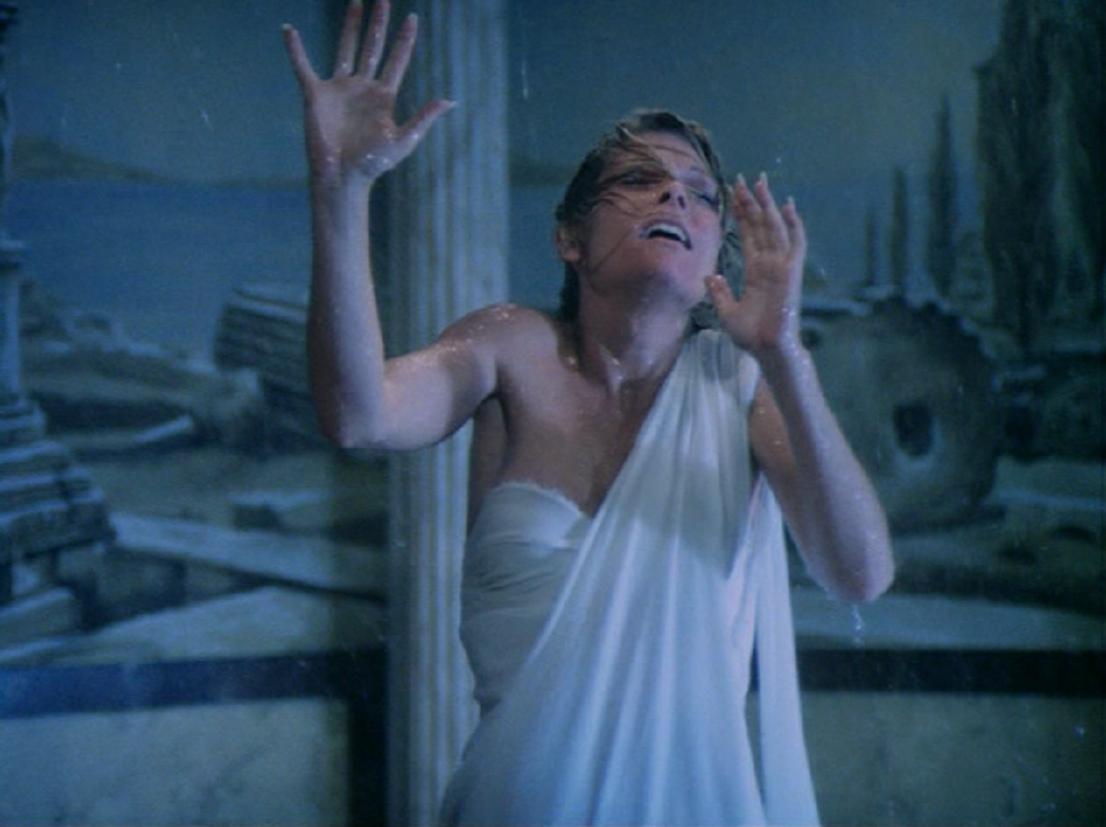
In the first few minutes, we have a lot happening. A man named Mickey Patchek jumps out of a salon window and dies. A model’s face gets attacked by a cat. Another model gets scorched to death in a shower. This episode involves a lot of moving parts. The snooty fashion industry and the mob. The mob thinks Kolchak has some evidence, and they want it within 60 hours. This episode is different. More like a noir detective show for part of it. So far, this doesn’t sound like a Kolchak episode… okay, let’s throw in The Witch. Now we are getting somewhere!

As Kolchak investigates, he uncovers the presence of Madame Trevi, a powerful and wealthy woman who runs a private fashion empire and lives surrounded by luxury and secrecy. Beneath the surface glamour, Kolchak begins to suspect something far older and darker is at work. She treats him with contempt, like most do, but he has to investigate a little more to get to the bottom of it. 

Lara Parker, who plays Madeleine, is a good actress, but she does go over the top a little but considering the subject, it does get the point across. Not a girl you would want to take out for dinner or to meet the folks. One scene I really like was when Kolchak visited a witches’ coven in their robes. It shows he will go to the end of the earth to find the truth. 

While overall this episode is never exactly scary, it IS somewhat creepy. It’s one of my favorite episodes. There are some well-known television stars in this one. Marvin Miller (voice of Robby the Robot) as the lecturer, Bernie Kopell (Love Boat) as a doctor, Richard Bakalyan (Chinatown) as a mobster, Douglas Fowley as a super, and Henry Brandon in a bit part. 

Spoilers!

Very good episode, and it has a satisfying ending. For once, a big article will come out over the fashion world fraud…but of course, nothing about The Witch…but she gets hers…who I’ll never tell.