The Cavern

Thanks to Dave from A Sound Day for publishing this post on October 25, 2024. It was part of his Turntable Talk: Our guest columnists are invited to go on a magical musical road trip and visit any musical location they want to – past or present – and see it in all its glory. 

I would love to go to the Cavern. The Beatles would not have to be there for me to enjoy its dark wet walls. They have built a new one but it’s not the same location of the original. That is great for the tourists but what’s the point? I would love to go back to 1957 – 1972 to walk into the cavern. Just to feel the history inside of that place. The Beatles were not the only big name to play there as you will see. A small cellar club that would be known around the world…including a small town in Tennessee.

The original Cavern Club was founded on January 16, 1957, by Alan Sytner. Sytner was inspired by jazz clubs he had visited in Paris such as the Le Caveau de la Huchette. The Cavern Club was initially a jazz club, with early performances focusing on traditional jazz and skiffle, a blend of folk and jazz. No rock and roll or blue jeans were allowed in the club. Ringo Starr debuted there on July 31, 1957, playing drums in the Eddie Clayton Skiffle Group. John Lennon would appear there on August 7, 1957, with the Quarrymen Skiffle Group. That year Big Bill Broonzy played there along with jazz great Ronnie Scott. In 1959 Sonny Terry and Brownie McGhee played there as well.

In the early 1960s, rock ‘n’ roll became popular in Liverpool, with skiffle bands embracing electric guitars and rhythm. The Beatles made their first appearance on February 9, 1961. They performed there 292 times between 1961-1963. Brian Epstein ran a record store called NEMS and when a teen asked for My Bonnie by Tony Sheridan and The Beatles…Brian wanted to find it. He was told that The Beatles played at the Cavern so on November 9, 1961, Brian walked down the steps in the Cavern to discover The Beatles’ playing.

In less than a year he had them sign an EMI contract and Ringo replaced Pete Best in August of 1962. A year later on August 3, 1963, the Beatles played their last show there…they had outgrown the Cavern and had to start touring nationally. After The Beatles left, other bands came there to play in Liverpool. The Cavern became a hotspot for other British acts, including The Rolling Stones, The Who, The Kinks, Queen, The Yardbirds, Black Sabbath, Elton John, and The Hollies.

Paul McCartney didn’t forget the place. In 1968 he and Linda went back to visit the Cavern. The band Curiosity Shop was rehearsing, and Paul decided to join them by helping on the drums. Before getting on stage with the band Paul got behind the piano in the lounge and performed a solo performance of Hey Jude.

After struggling with financial issues, the original club was closed in 1973 due to the construction of a railway ventilation shaft. Much of the original Cavern was demolished, though some bricks were saved. A lot of the Cavern was filled in by rubble. In the early eighties architect David Backhouse said that the plans to excavate and re-open the Cavern Club in its original form would not be possible for structural reasons. Tests had revealed the arches of the old cellar had been too badly damaged during the demolition of the ground floor of the Cavern Club and the warehouses above.

There is a new Cavern as I said at the beginning and if I make it over there yes, I will see it but it would not be the same as seeing the real deal. That got me thinking…is that stage still there just covered with rubble from 1973?  Dave, Obbverse, Randy, Keith, John, and Christian…grab a shovel and meet me there now!

Car Songs… Part 4

This is part 4 of this series and I thought it was about time to do another installment. I found some more rare songs this time except for Mr. Berry. 

Kinks – Cadillac

I think all of these I do must have Cadillac in at least one song. This one was on their debut album and it was written and recorded by Bo Diddley in 1960. The Kinks debut album Kinks was released in 1964. 

 Gene Vincent – Pink Thunderbird

This song was written by Tex Davis and Paul Peek. It was released by Gene Vincent in 1957. Gene Vincent’s voice and slap back echo go together perfectly. Every rock artist after Gene Vincent has gone after that sound including Springsteen.

Cliff Gallup played some great guitar on this recording. He recorded 35 tracks with Vincent including Be-Bop-A-Lula

Chuck Berry – Maybellene

Chuck Berry was THE first guitar hero in Rock and Roll. He was also rock’s first poet. This song evolved out of “Ida Red,” a hillbilly song by Bob Wills and The Texas Playboys from the early ’50s. Berry heard that song on the Country radio station KMOX in St. Louis but didn’t know who recorded it.

Not only is the music great with the steady beat… but those lyrics. The motor cooled down the heat went down, And that’s when I heard that highway sound, the Cadillac a-sittin’ like a ton of lead, a hundred and ten half a mile ahead, the Cadillac lookin’ like it’s sittin’ still, and I caught Mabellene at the top of the hill

You can see what is happening in the song in your head with no problem… no MTV story video needed. He was one of the best descriptive lyricist rock and roll has ever had.


The Three Milkshakes – Jaguar

They were a rockabilly band from the 1980s led by singer Mark Kermode, who is now well-known as a British film critic. The group specialized in vintage rock ‘n’ roll and rockabilly music, covering songs in a classic ’50s style. They were part of the vibrant rockabilly revival scene in the UK during that time.

Bob Dylan – From A Buick 6

This song is from Bob Dylan’s album Highway 61 Revisited released in 1965. This song was the B side to the single Positively 4th Street. It’s a cool bluesy song that has those Dylan lyrics going everywhere. It resembles Sleepy John Estes’ Milk Cow Blues.

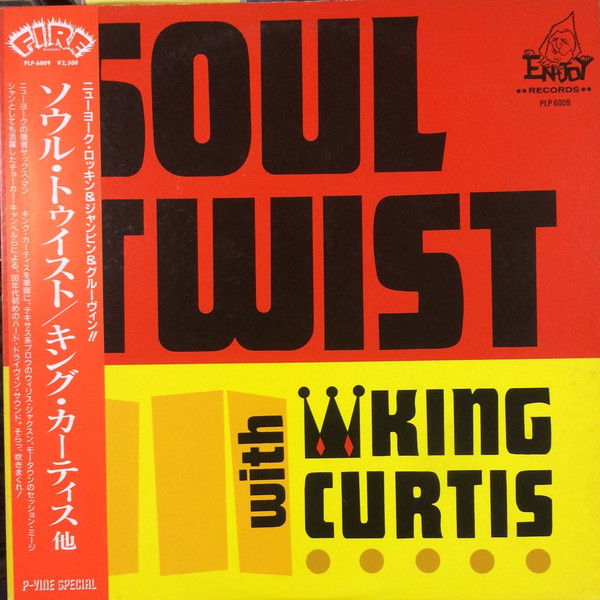
King Curtis – Soul Twist

As I was searching for 50s and early 60s songs for my painting playlist…I ran across this cool instrumental. I love that guitar and Curtis’s sax is really cool.  It has a dirty sound when it starts up and I find it quite infectious. The one guitar is playing that cool small riff and then the rhythm comes in to lift it up. Another new/old song to add to my playlist. John from https://thesoundofonehandtyping.com/ suggested it and I wanted to add to it anyway. 

Curtis was a great saxophonist who worked with many artists. He was on the Coasters Yakety Yak and Aretha Franklin’s Respect. He also worked with Buddy Holly, Nat King Cole, and The Shirelles to mention a few.

He also worked with Duane Allman and they formed a friendship. They worked on a few songs together but the one I like the best is their version of The Weight. Curtis’s sax sounds so good and clear in this version along with Duane’s slide playing.

In 1965, Curtis and the Kingpins opened for The Beatles at Shea Stadium. On August 13, 1971, King Curtis was tragically killed at the age of 37. He was stabbed during an argument outside his apartment in New York City. His sudden death shocked the music world, and Aretha Franklin sang at his funeral, along with other artists like Stevie Wonder and Duane Allman.

The song was successful…it peaked at #1 on the Billboard R&B Charts and #17 on the Billboard 100 in 1962. I have a playlist at the bottom that I made of instrumentals during my break. 

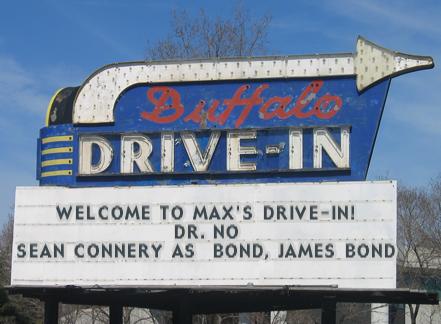
Max’s Drive-In Movie – Dr. No

Dr No

I have a different relationship with James Bond than some. I didn’t watch them as a kid but I started to watch them in my late 20s. I finally found out what all the fuss was about. I do remember seeing parts of Moonraker when it came out but it just didn’t pique my interest at 12. I recently read a review of From Russia With Love from princecranoir and would recommend everyone reading. That one may be my favorite James Bond film but this one holds a special place for me as well. My favorite always changes when I do a Bond marathon at home. I did a post a while back about my favorite Bond films…and Dr No was at the top…so it does change.

Dr. No was a commercial success, paving the way for numerous sequels and establishing the template for future Bond films. Sean Connery’s portrayal of Bond became iconic, and the film is credited with launching the spy genre in cinema. We will still be watching this in 2062.

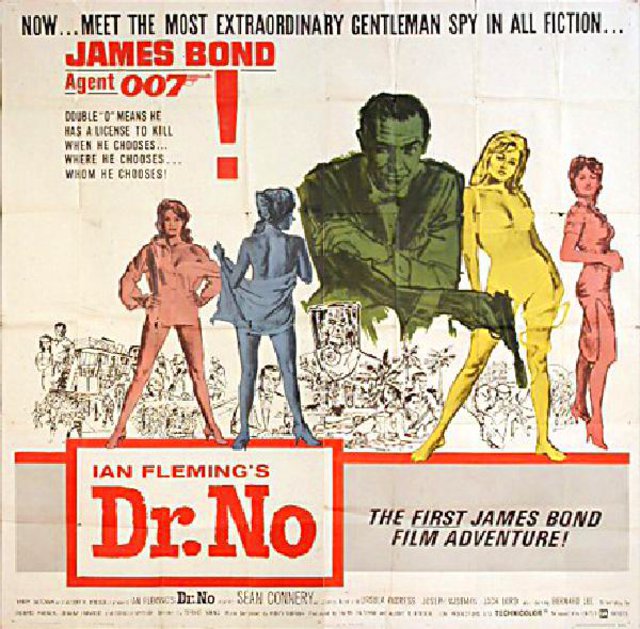
Dr. No was the first Bond film I ever watched all the way through. Released in 1962, it introduced the world to James Bond, a suave, sophisticated British secret agent with a license to kill. Based on Ian Fleming’s novel of the same name, the film marked the first installment of one of the most successful and enduring franchises in cinematic history. Dr. No laid the foundation that would define Bond for decades—high-stakes espionage, glamorous locations, and, of course, iconic villains. There were really no gadgets in this one…that would come in the next film.

It was based on Ian Fleming’s 6th book about the Spy but the first one was adapted into a movie. Sean Connery is James Bond to me and there was no better way of kicking off a franchise than this. The film looks great in its vivid color and scenery. The bulk of the film was filmed in Jamaica in early 1962.

There is no better use of a Sunday afternoon than to spend it with James Bond and the absolutely stunning Ursula Andress. When she walked out of the water on Crab Key, it was close to everything magically turning to color in The Wizard of Oz… She was the first of many Bond girls to follow and you could not find a better first one. I was humming Under the Mango Tree for days after I saw it.

JFK, an avid Ian Fleming fan, even hosted a private screening of “Dr. No” at the White House. Legend has it he remarked, “I wish I had James Bond on my staff.” Who wouldn’t? If you haven’t seen this film, treat yourself and immerse yourself in Bond’s world; and for those who have, a rewatch is always a pleasure.

Plot (Spoilers)

The movie starts with Bond, played by Sean Connery, being sent to Jamaica to figure out why a fellow British agent went missing. Pretty mysterious, right?

When Bond gets to Jamaica, things get tense. He teams up with some local allies, like a fisherman named Quarrel and CIA agent Felix Leiter. They help him uncover clues, which eventually lead to a creepy, secretive island called Crab Key. This is where Dr. No, the villain, is hiding. He’s a super smart but evil scientist who works for a dangerous organization called SPECTRE. His plan? To mess with American space missions using some kind of high-tech radio beam. Bond realizes he needs to stop him before things get out of hand.

Bond’s adventure takes him into Dr. No’s hidden lair, where he also meets Honey Ryder (played by Ursula Andress), a woman who’s just out collecting shells but gets tangled in Bond’s mission. Together, they navigate the dangers of the island, avoiding Dr. No’s guards and traps.

In typical Bond fashion, he manages to outsmart Dr. No, destroy his base, and save the day. The movie ends with a big explosion as Bond and Honey escape. It’s classic spy action, with all the charm, gadgets, and danger you’d expect from a Bond film!

Quotes

  • Dr. No: The Americans are fools. I offered my services; they refused. So did the East. Now they can both pay for their mistake.
  • James Bond: World domination. The same old dream. Our asylums are full of people who think they’re Napoleon. Or God.

_______________________________________

  • [Honey describes how she killed the man who had hurt her]
  • Honey Ryder: I put a black widow spider underneath his mosquito net… a female, they’re the worst. It took him a whole week to die.
  • [Bond looks shocked]
  • Honey Ryder: Did I do wrong?
  • James Bond: Well, it wouldn’t do to make a habit of it.

_______________________________________

  • [explaining why she believes the legend about Crab Key’s fire-breathing dragon]
  • Honey Ryder: How well do you know about animals? Did you ever see a mongoose dance? Or, a scorpion with sunstroke sting itself to death? Or, a praying mantis eat her husband after making love?
  • James Bond: I hate to admit it, but, I haven’t.
  • Honey Ryder: Well, I have.

Original Trailer

..

Doors – Touch Me

In the early eighties, I joined Columbia House and I would sign up fictional people and get free albums. I would buy the required albums for these fictional people but you would get 6-7 free albums for signing up someone to buy one album. Plus that person would get free albums when they joined. I saw the loophole and took advantage of it but I always paid. I got most of my Doors, Moody Blues, and a few other albums through Columbia House. 

This Robbie Krieger-written song is immediately likable. This Doors song and album differed from many others because of its orchestral arrangement, which includes brass and strings. It was largely arranged by producer Paul Rothchild. It was also very radio-friendly and Morrison’s voice sounded great in this pop backdrop…he did keep his edge up on the track. Many critics and fans saw the track as a sell-out for The Doors. To me, it was just them expanding their sound to a different genre. Plus the solo in the middle is clearly jazz-influenced not heard in many top 40 hits at the time. 

The song was on the Soft Parade album released in 1969. The album peaked at #6 on the Billboard Album Charts and #4 in Canada. The song did really well. It peaked at #3 on the Billboard 100, #1 in Canada, and #6 in New Zealand. 

Soft Parade was their 4th studio album. They would only release two more albums with Morrison, Morrison Motel, and L.A. Woman (my personal favorite). With Soft Parade the band decided to experiment with a more polished, orchestral sound. Producer Paul A. Rothchild and arranger Paul Harris introduced horns, strings, and elaborate arrangements and this song is a good example. The two singles off this album were Touch Me and Wishful Sinful which just missed the top forty at #44.

In the Smothers Brothers clip, you will see Robbie Krieger with a black eye. Ray Manzarek said this: Three rednecks got in a fight with Jim and Robbie down the street from the Doors’ office at a bar and there was pushing and shoving and Robbie Krieger got whacked in the eye. Jim ducked a punch, Robbie wasn’t able to duck the punch. That was 2 days before we went on The Smothers Brothers’ Show. They said to Robbie on the show, Let’s put some make-up on that black eye. You don’t want to be on national television with a black eye. And Robbie said, Yes, I do! No one has ever gone on TV with a black eye. I’m going to be the first! It’s a badge of honor.

Touch Me

Come on, come on, come on, come on
Now touch me, babe
Can’t you see that I am not afraid?
What was that promise that you made?
Why won’t you tell me what she said?
What was that promise that you made?

Now, I’m going to love you
‘Til the heavens stop the rain
I’m going to love you
‘Til the stars fall from the sky
For you and I

Come on, come on, come on, come on
Now touch me, babe
Can’t you see that I am not afraid?
What was that promise that you made?
Why won’t you tell me what she said?
What was that promise that you made?

Now, I’m going to love you
‘Til the heavens stop the rain
I’m going to love you
‘Til the stars fall from the sky
For you and I

I’m going to love you
‘Til the heavens stop the rain
I’m going to love you
‘Til the stars fall from the sky
For you and I

Stronger than dirt


Who – Shout and Shimmy

If this song doesn’t get you up nothing will! I’ve probably covered The Who more than any other band but I’ve missed this excellent cover they did back in 1965. In this post, we will look at the song and the original drummer of The Who. 

This is a cover of a lively James Brown original from 1962. The Who recorded in 1965, it was on their My Generation album. It was also part of their appearance on the music show Ready, Steady, Go! alongside the song Anyway, Anyhow, Anywhere. Shout and Shimmy did not achieve widespread fame, it reflects the band’s devotion to R&B and soul, influences that heavily shaped their early sound. They also covered the Marvelettes song Heat Wave which was a part of the Mod culture. James Brown wrote and released Shout and Shimmy in 1962.

The Who’s rendition captures the raw energy of their early sound. Keith Moon in the live cut of this is a blur on drums. He was 19 years old and joined The Who the year before replacing The Who’s original drummer Doug Sandom.

Sandom was a good guy and a solid drummer but he was 34 in 1964 and considered far too old for The Who by the record company. Pete Townshend wrote a moving forward to Sandom’s book in 2014: Had we continued together back in 1964 with Doug on drums we may never have become as successful as we are today. Keith Moon was a born publicist as well as a highly eccentric performer. But I have no doubt that personally, I would have been happier as a young man. Partly because I think we would have continued to put music and friendship first in our band because that was Doug’s way. With Doug as my friend, I believe I could have been a better man.

Doug drummed for them as The Detours and The Who. He had this to say about The Detours changing to The Who: “We were setting up our gear when the Ox arrived and told us there was another band called The Detours and they’d already been on TV so we had to change our name. That night we all went back to a friend of Pete’s – a wonderful chap called Richard Barnes (an author and has worked with the Who for decades), or Barnsy, to try to find a new name.

Barnsy initially suggested The Group and Pete favoured The Hair. Someone else suggested No One until we imagined a compere on stage saying: ‘Ladies and gentlemen, please welcome No One.’ We’d have been a laughing stock. It was Barnsy who came up with The Who. Pete tried to compromise by suggesting The Hair And The Who until it was pointed out that it made us sound like a pub. Anyway, Roger came round to mine the next day and said it was to be The Who.”

On one of their recording dates, Townshend and Sandom were not in good moods and Sandom retold it: “He had a terrible go at me, snarling, ‘What’s wrong with you? If you can’t get it right then you’re out.’ I just got up from my stool and said, ‘That’s it, I quit.’ It was the biggest mistake of my life.

Sandom stayed in touch with the band until he passed in 2019 at the age of 89 years old. 

I always try to give a studio and live version…but in this case…live is the way to go. Around 1:29 is where Moon kicks in. 

Shout and Shimmy

Do you feel alright? Well do you feel alright children? Do you feel alright?You know you make me want to shout shimmy, oh yeah you gonna shout shimmy,Oh yeah you gonna shout shimmy, oh yeah you gonna shout shimmy,Oh yeah you know I walk up to the front, I try to do the flop,I walk up to the back, and I move on side to side,Then I stop, oh yeah and then I drop,Oh yeah and then I drop, oh yeah and then I do a little thing ?????,Do you feel alright? Do you feel so good? Do you feel so good?Do you feel alright? Do you feel alright? Tell me now, tell me now,Do you feel alright? Do you feel alright? Everybody do you feel so good?You know I feel alright, you know you make me want to shout shimmy,Oh yeah you gonna shout shimmy, oh yeah you gonna shout shimmy,Oh yeah you gonna shout a little bit soft, shout a little bit quieter,Shout a little bit soft, come on soft, shout a little bit soft,A little bit soft, cool down, cool down, come on, cool it down,I feel so good, I feel alright, drum on, drum on, drum on drummer,Everybody everybody everybody clap your hands, come on clap your hands,Clap your hands, a little bit harder, a little bit louder,A little bit harder, a little bit louder, a little bit louder,Come on and shout, everybody, come on and shout, come on and shout baby,Come on and shout baby, do you feel alright? Do I feel so good?Do you feel alright? Do I feel so good? Call a doctor, call a doctor,Do you feel alright? Do you feel alright? Do you feel alright?Do you feel alright? Do you feel alright?You know I feel so good I’m gonna shout and shimmy all night,I feel all, you know I feel alright.


Bob Dylan – Stuck Inside of Mobile with the Memphis Blues Again

I’ve seen the man live 8 times and this song…I saw him play one time. Whenever you see Bob Dylan you usually get a variety of songs. He is not an oldies show…he will throw in some but he doesn’t do a Vegas Greatest Hits show. 

I don’t post many Dylan songs…not because I’m not a huge fan…like I said I’ve seen the man 8 times. If I get a chance, I’ll see him 8 more times.  When you post a Dylan song you almost feel the urge to do an interpretation of the song…I have no interest in doing that. It would lead me down too many roads. Some people are good at that though…I’m not. 

Dylan was growing frustrated with the recording in New York so producer Bob Johnston mentioned Nashville. Dylan’s manager at the time, Albert Grossman, told Johnston if he ever mentioned Nashville again that he would fire him. Didn’t work…Dylan ended up recording Blonde On Blonde in Nashville. He would also go to record more here as well. 

This song was one of my many favorites of this album. Dylan is still going in 2024, but this was his peak for me. In the mid-60s, Dylan was on fire, cranking out songs that blurred the lines between folk, rock, blues, and poetry. Dylan later described the sound of Blonde on Blonde as “that thin, wild mercury sound”—a phrase as cryptic as Bob can be. What does that mean exactly? No one knows for sure, but the music does have a thin sound… almost surreal quality to it. 

In Al Kooper’s book, he talked about some of the stories that Johnston shared making the album. Kooper said that Bob Johnston shared one of the wilder stories from those sessions, one that captures the vibe of those late-night Nashville nights. He recounted an incident involving a blind keyboard player nicknamed Pig (Hargus “Pig” Robbins), who played on the album.

Pig was hanging out with some drunk friends one night when he suddenly declared, “I wanna drive. You so-and-so’s move over and let me navigate this Cadillac!” And because this was Nashville in the 60s, and because his buddies were drunker than Pig, they actually pulled over and let him behind the wheel.

Now, picture this… A blind man is driving a car down the highway, while a bunch of rowdy passengers coach him from the front seat: “A little to the left … good … now a little to the right … speed up a bit…” And for a few glorious moments, they were pulling it off until the red-and-blue lights of the Tennessee Highway Patrol appeared in the rearview. They panicked and had Pig pull over, but what happened next?  Johnston said people were laughing too hard by then to care how it ended.

Bob released 5 singles from this double album. He had two top 10 hits, two top 40 hits out of it. This was the end of an era for Bob. After this album, he had a motorcycle accident and he changed his songwriting style. He followed this album with John Wesley Harding and  Nashville Skyline which was nothing like his earlier music.

The musicians on this album included Robbie Roberston, Al Kooper, Rick Danko, Kenny Buttrey, Charlie McCoy, and Charlie McCoy. After this, his songs became a little less wordy and chaotic and became more structured. 

I checked on “Pig” for information about the blind session man. It looks like Pig drove a lot when given a chance. Walter Haynes was a Nashville studio session man and he told this story. “Pig and I have worked together many times in the studio, he has played on many sessions that I produced. He has a most remarkable ear and you only have to run a song once and he’s ready to do it. As you know, Pig is blind and one day I was walking behind Columbia Records and I saw pig driving a car down the alley, of course someone was sitting beside him telling him which way to turn the wheel, what a guy!”

Al Kooper: The credits are vague on the Blonde on Blonde album. Maybe I can fill in a few holes for the reader. Joe South is playing bass on “Visions of Johanna.” He has a very special style of playing bass, sort of hillbilly funk. His unique guitar style is most discernible in the mix on “Memphis Blues Again.” He and I have some nice organ-guitar trade-offs in that on

Stuck Inside Mobile With These Memphis Blues Again

Oh, the ragman draws circles
Up and down the block
I’d ask him what the matter was
But I know that he don’t talk
And the ladies treat me kindly
And they furnish me with tape
But deep inside my heart
I know I can’t escape
Oh, Mama, can this really be the end
To be stuck inside of Mobile with the
Memphis blues again

Well, Shakespeare, he’s in the alley
With his pointed shoes and his bells
Speaking to some French girl
Who says she knows me well
And I would send a message
To find out if she’s talked
But the post office has been stolen
And the mailbox is locked
Oh, Mama, can this really be the end
To be stuck inside of Mobile
With the Memphis blues again

Mona tried to tell me
To stay away from the train line
She said that all the railroad men
Just drink up your blood like wine
An’ I said, “Oh, I didn’t know that
But then again, there’s only one I’ve met
An’ he just smoked my eyelids
An’ punched my cigarette”
Oh, Mama, can this really be the end
To be stuck inside of Mobile
With the Memphis blues again

Grandpa died last week
And now he’s buried in the rocks
But everybody still talks about how
Badly they were shocked
But me, I expected it to happen
I knew he’d lost control
When I speed built a fire on Main Street
And shot it full of holes
Oh, Mama, can this really be the end
To be stuck inside of Mobile
With the Memphis blues again

Now the senator came down here
Showing ev’ryone his gun
Handing out free tickets
To the wedding of his son
An’ me, I nearly got busted
An’ wouldn’t it be my luck
To get caught without a ticket
And be discovered beneath a truck
Oh, Mama, is this really be the end
To be stuck inside of Mobile
With the Memphis blues again

Now the tea preacher looked so baffled
When I asked him why he dressed
With twenty pounds of headlines
Stapled to his chest
But he cursed me when I proved it to him
Then I whispered and said, “Not even you can hide
You see, you’re just like me
I hope you’re satisfied”
Oh, Mama, can this really be the end
To be stuck inside of Mobile
With the Memphis blues again

Now the rainman gave me two cures
Then he said, “Jump right in”
The one was Texas medicine
The other was just railroad gin
An’ like a fool I mixed them
An’ it strangled up my mind
An’ now people just get uglier
An’ I have no sense of time
Oh, Mama, can this really be the end
To be stuck inside of Mobile
With the Memphis blues again

And when Ruthie says come see her
In her honky-tonk lagoon
Where I can watch her waltz for free
‘neath her Panamanian moon
An’ I say, “Aw come on now
You know you knew about my debutante”
An’ she says, “Your debutante just knows what you need
But I know what you want”
Oh, Mama, can this really be the end
To be stuck inside of Mobile
With the Memphis blues again

Now the bricks lay on Grand Street
Where the neon madmen climb
They all fall there so perfectly
It all seems so well timed
An’ here I sit so patiently
Waiting to find out what price
You have to pay to get out of
Going through all these things twice
Oh, Mama, can this really be the end
To be stuck inside of Mobile
With the Memphis blues again

Steppenwolf – Move Over

The more I listen to this band’s non-hits…the more I like them. They have some great album tracks that didn’t make it as hits. This song was released as a single and it did make the top 40 but it’s not as well known as Born To Be Wild and Magic Carpet Ride. It was written by John Kay and Gabriel Mekler.

The song was on the Monster album which was released in 1969. The album was produced by Gabriel Mekler, who had produced their first four albums and really helped create their sound. The reason I mentioned him is because their early songs have a raw sound but are polished at the same time. That’s not always an easy thing to do.

John Kay’s voice still sounds great after all of these years. I’m happy I got to shake his hand at a chance meeting. I also saw him in the 80s fronting the 80s version of Steppenwolf. Not many singers take control of a stage like he does.

The song peaked at #31 on the Billboard 100 and #12 in Canada. The album peaked at #17 on the Billboard Album Charts and #11 in Canada in 1969.

By 1969, the U.S. was deep in the Vietnam War, and protests against the war were everywhere. The country was also experiencing unrest due to issues like civil rights, government corruption, and the assassinations of political figures, like  Martin Luther King Jr. and Robert F. Kennedy. Because of that,  Steppenwolf started to get a little more political in their songs.

This era was probably their most successful period, their following albums didn’t have as much commercial success but they are remembered and do get played.

Move Over

Things look bad from over here
Too much confusion and no solution
Everyone here knows your fear
You’re out of touch and you try too much

Yesterday’s glory won’t help us today
You wanna retire?
Get out of the way

The country needs a father
Not an uncle or big brother
Someone to keep the peace at home
If we can’t get together
Look out for stormy weather
Don’t make me pay for your mistakes
I have to pay my own

Yesterday’s glory won’t help us today
You wanna retire?
Get out of the way

I ain’t got much time
The young ones close behind
I can’t wait in line

If we can not wake you
Then we’ll have to shake you
Though some say you’ll only understand a gun
Got to prove them wrong
Or you will lose the battle
Don’t you know we’ll start a war
Which will be won by none

Yesterday’s glory won’t help us today
You wanna retire?
Get out of the way

I ain’t got much time
The young ones close behind
I can’t wait in line

Move over
Come on, Move Over

Max’s Drive-In Movie – The Devil Rides Out …..(Hammer Horror)

The Devil Rides Out Header

The two horror movie studios that were great in the sixties and seventies were Hammer and Amicus. They shared two actors Peter Cushing and Christopher Lee who appeared in many films of both studios. The difference between the two studios was that Amicus was mostly set in modern times and many were anthology films. Hammer was the best known out of the two and they were usually set in a certain time period (this movie was set in the 1920s)…but not always.

Place the speaker on your window and hold your date close for this one. I thoroughly enjoyed this movie. A very eerie film with some creepy characters. It was nice to see Christopher Lee in a hero role. Horror, fantasy, and a nifty bit of time travel.

Back in 1975, we moved to another town for a short while. It was a town named Dickson and we actually lived near the city. That was the only time in my young life that I lived within walking distance of a city unless I was visiting my dad.  My sister would take me to a movie theater there (sigh…not a drive-in) in a small shopping mall to see movies. They would sometimes show a double feature…and I remember some of the Hammer films shown as the first feature. I would hide my eyes watching these classic horror movies.

Hammer Horror films from the ’60s and ’70s are great popcorn horror films. It was directed by Terence Fisher and produced by Hammer Film Productions, known for their gothic horror films. This 1968 movie is based on Dennis Wheatley’s 1934 novel of the same name. It’s one of Hammer’s more famous supernatural thrillers and features themes of black magic, satanism, and occult rituals.

This one is thrilling and exciting and they dive straight into the satanic rituals starring the great Christopher Lee. Lee puts his fangs away in this movie and plays the sane figure trying to save his friends from the satanic faction that is fighting to get who they can. These movies have an atmosphere that is almost impossible to duplicate now. The film stock, the acting, and the great sets.

The film is considered one of the most authentic portrayals of occultism in popular cinema in the 1960s. It deals with black magic rituals, demonic summoning, and protective spells. Someone did their homework with this movie. The movie was a success at the time but not a blockbuster. It has gained a huge loyal following as well as the other Hammer films.

Plot

The story is set in the 1920s and follows Duke de Richleau (played by Christopher Lee) as he discovers that his friend’s son, Simon Aron, is involved with a satanic cult. Richleau must battle the cult leader, Mocata (played by Charles Gray), to save Simon and a young woman named Tanith, who is also under the cult’s influence. Using his knowledge of the occult, Richleau protects his friends from Mocata’s supernatural powers and attempts to thwart the cult’s plans, which include summoning the devil himself.

Quotes

  • Duc de Richleau: I’d rather see you dead than meddling with Black Magic!

______________________________________

  • Rex Van Ryn: You’ve got nothing to worry about.
  • Tanith Carlisle: I’ve got everything to worry about.

______________________________________

  • Duc de Richleau: [rising] I tell you, these people are devil worshippers.
  • Rex Van Ryn: That’s ridiculous.
  • Duc de Richleau: These are facts, Rex, not superstition. The final proof was in the hamper. They were about to practice the age-old sacrifice to their infernal master: the slaughter of the black cockerel and the white hen.

..,

Max’s Drive-In Movie – The Birds

The Birds Sign

I watched this 1963 movie growing up and it scared the hell out of me. For a while when I passed a tree full of birds…I always did a second take. Alfred Hitchcock was the master of suspense and the movie works today. Tippi Hedren (Melanie), Rod Taylor (Mitch), Jessica Tandy (Mitch’s mom Lydia), and Suzanne Pleshette (Annie) starred in this movie.

Like The Shining…it’s a movie where you can find deeper meanings or just sit back and enjoy a great film. There is a lot of ambiguity in this movie…everything is not spelled out for you. Why are the birds so angry? Why are they attacking people?

Birds Monkey Bars

Hitchcock built suspense probably better than anyone. I’ll use this one scene for an example. In one scene you see Tippi Hedren waiting outside of the school. You hear the kids singing a song. She looks around and there are some Monkey Bars and you see one bird landing on them. She sits down on a bench and smokes. After a few drags she looks around and there are 3 birds on the bars…repeat this a few times and more and more birds are on them. Then the bars are full of Birds and this is when she gets concerned and asks Pleshette’s character to evacuate the school as birds start dive-bombing the kids. It goes from 0 to 100 in a matter of 2-3 minutes.

That scene set up the action in the cafe that followed soon after… when all hell broke loose in the town of Bodega Bay. No one really believed Hedren’s character Melanie when she told people about the birds attacking. That is until it started to happen outside and they all saw what was going on. This was after the kids from the school were attacked while running toward their homes.

Hitchcock used silence and stillness in scenes better than anyone else not named Buster Keaton. His scenes would draw out the tension and then he would strike. Sometimes he didn’t strike and it keeps you on the edge of your seat. The direction and the acting were great obviously. This movie is 61 years old this year and it still works.

Pleshette’s character Annie was an ex-girlfriend of Mitch and the dynamic between her and  Melanie was fantastic. I also have to mention Lydia, Mitch’s possessive mom, who has a fear of being abandoned. You see the bond between her and Melanie grow as the film goes on.

Most of those birds were real and sometimes tied to Hedren by thread. Many of the cast had some injuries while making this movie.

The Plot from IMDB

Melanie Daniels is the modern rich socialite, part of the jet-set who always gets what she wants. When lawyer Mitch Brenner sees her in a pet shop, he plays something of a practical joke on her, and she decides to return the favor. She drives about an hour north of San Francisco to Bodega Bay, where Mitch spends the weekends with his mother Lydia and younger sister Cathy. Soon after her arrival, however, the birds in the area begin to act strangely. A seagull attacks Melanie as she is crossing the bay in a small boat, and then, Lydia finds her neighbor dead, obviously the victim of a bird attack. Soon, birds in the hundreds and thousands are attacking anyone they find out of doors. There is no explanation as to why this might be happening, and as the birds continue their vicious attacks, survival becomes the priority.

Birds - closing shot

Quotes

  • Boy in Diner: Are the birds gonna eat us, Mommy?

______________________________________

  • Cathy Brenner: [crying] When we got back from taking Michele home, we – we heard the explosion and went – went outside to see what it was. All – all at once the the birds were everywhere. All at once, she pushed me inside – and they covered her. Annie! She pushed me inside!

Animal Trainer Ray Berwick:  “We had about 12 or 13 crew members in the hospital in one day from bites and scratches,” he said. “The seagulls would deliberately go for your eyes. I got bitten in the eye region at least three times, and Tippi got a pretty nasty gash when one of the birds hit her right above the eye.”

Guess Who – No Time

I always had a soft spot for The Guess Who. Randy Bachman and Burton Cummings could write some really great songs. Both of them shared the credit on this one. I had a greatest hits package by the Guess Who given to me by a relative. At the time, I thought the Guess Who and The Who were the same. The Guess Who and Bachman Turner Overdrive were regulars on A.M. Radio in the 1970s. Randy Bachman would leave The Guess Who in 1970 and form BTO.

The Guess Who formed in Winnipeg, Manitoba in 1958. They would release their version of Shakin’ All Over in 1965. Their name came about when their label Quality Records released their first hit single (“Shakin’ All Over”) credited only to “Guess Who?” in an attempt to build a mystique around the band. They wanted the public to believe that this was a possible British band. The real name of the band was “Chad Allan & The Expressions,” but radio station DJs continued to refer to them as “The Guess Who.” when playing subsequent singles.

This song was on the album Canned Wheat released in 1969. The album had three charting singles No Time, Undone, and Laughing. The album peaked at #91 on the Billboard Album Charts and #23 in Canada. The song peaked at #1 in Canada, #5 on the Billboard 100, and #16 in New Zealand in 1969-1970.

The most significant reunion occurred in 1983 when Bachman, Cummings, Kale, and Peterson reunited for a concert and the live album Together Again. In 2000, another major reunion tour, Running Back Thru Canada,” featured Bachman and Cummings and was a huge success, reviving interest in the band.

No Time

(No time left for you)
On my way to better things
(No time left for you)
I’ll find myself some wings
(No time left for you)
Distant roads are calling me
(No time left for you)
Mm-da, mm-da, mm-da, mm-da, mm-da

No time for a summer friend
No time for the love you send
Seasons change and so did I
You need not wonder why
There’s no time left for you
No time left for you

(No time left for you)
On my way to better things
(No time left for you)
I’ll find myself some wings
(No time left for you)
Distant roads are calling me
(No time left for you)
Mm-day, mm-gay, mm-day, mm-gay, mm-day

No time for a gentle rain
No time for my watch and chain
No time for revolving doors
No time for the killing floor
There’s no time left for you
No time left for you

No time for a summer friend
No time for the love you send
Seasons change and so did I
You need not wonder why
There’s no time left for you
No time left for you

No time, no time, no time, no time

I got, got, got, got no time
No, no, no, no, no, no, no time
I got, got, got, got no time
No, no, no, no, no, no, no, no, no
No, no, no, no, no, no, no, no time
I got no time, got no time, got no time, no time, got no time
Got no time, got no time

Jerry Lee Lewis – Mean Woman Blues

After all of the talk of The Shining yesterday I watched a few more scenes of the movie and then ran across this Jerry Lee Lewis live cut on YouTube. I pulled it up on Spotify and Jerry Lee entertained me while I painted our upstairs bathroom as fast as my arms would go. I combined painting while playing air drums. This could be an Olympic event!

Yes, today I will have to clean some paint on the base boards and on the ceiling…but it was worth it.

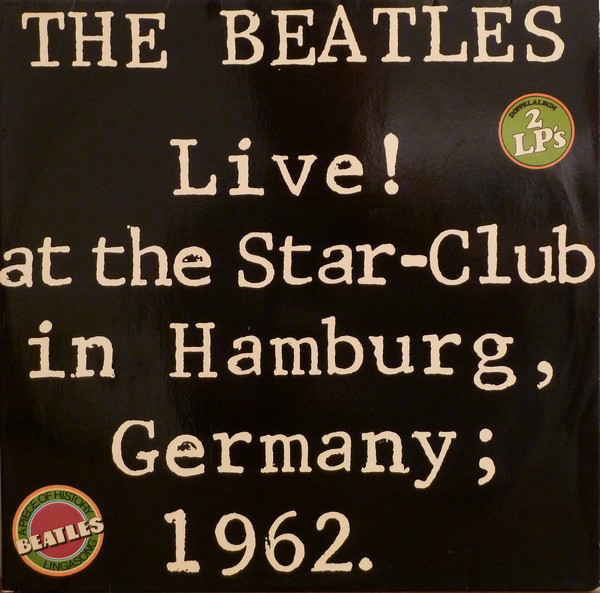
The album is called Live At The Star Club Hamburg released in 1964. This album is one of the best live rock albums I’ve ever listened to. The Star Club in Hamburg was one of the most important music venues of the era, having acts like The Beatles just a few years before. It was known for a crowd that demanded high-energy rock and roll, making it the perfect stage for Lewis. The audience was full of businessmen, dock workers, crooks, prostitutes, mobsters, and college kids. They all wanted hard-driving music.

The song was written by Claude Demetrius in 1957. It became famous through its association with several artists, such as Elvis Presley and Roy Orbison. Per secondhandsongs it’s been covered 126 times. I heard it first by Elvis but I love this live version by Jerry Lee. In this live version, he was backed up by The Nashville Teens, an English rock band, formed in Surrey in 1962.

If you have time check out the entire live album. You can’t go wrong with Jerry Lee. To show you what the critics thought… magazines such as Rolling Stone, Mojo, Digital Dream Door, Goldmine, and the NME all have this live album listed among the best live albums of all time.

The Killer Live below has the entire Star Club album on it. Click play on Spotify and enjoy your Sunday.

Mean Woman Blues

Hmm, I got a woman mean as she can beYeah, I got a woman mean as she can beSometimes I think she’s almost mean as me

Well, I ain’t braggin’, it’s understoodEverything I do, well, I sure do it goodWell, I got a woman mean as she can beOh, sometimes I think she’s almost mean as me, yeah

Well, she’s got ruby lips, shapely hipsBoy, she’d makes ol’ Jerry flipI got a woman mean as she can beOh, sometimes I think she’s almost mean as me, yeah

Well, I like a little coffee, like a little teaJerry, Jerry, it’s the thing for meI got a woman mean as she can beOh, sometimes I think she’s almost mean as me

Oh, a-ha, a-ha, a-ha-ha, ooh a-haHmm, uhm, uhmEasy now, ahh ooh, brr ha-ha-ha-haYeah, and let’s go one time

Hey, I got a woman mean as she can beYeah, got a little woman as mean as she can beWell, sometimes I think she’s almost mean as me

Brothers At Arms – Duane and Gregg Allman

We all know the great album Brothers in Arms from Dire Straits, but sometimes those brothers are “at arms” rather than in them. In this part of the mini-series with Max (Thats Me!) from PowerPop he talks about Duane and Gregg Allman from The  Allman Brothers… Randy from https://mostlymusiccovers.com posted this a few months back right here.

Rare Live Footage of “Statesboro Blues” (1970)

Duane (born November 20, 1946) and Gregg (born December 8, 1947) Allman were born in Nashville, Tennessee, and grew up with a loving but tough mother. Their father, Willis Turner Allman, was murdered in 1949 when Duane was 3 and Gregg was 2. They were raised by their strong mom Geraldine Robbins Allman. Geraldine never remarried because she was scared that a new husband might not treat the boys well. They lived in Nashville for a while but then moved to Daytona Beach and grew up there. Geraldine would soon go to a school to get her accounting degree and send the boys to Castle Heights Military Academy on two separate occasions in Lebanon, Tennessee.

The brothers were almost completely different except in music. Duane lived life on the very edge. Always doing things excessively, be it riding a motorbike, drugs, cars, or playing guitar. Gregg was much more conservative, thoughtful, and worried about the future. Gregg saved up his money from a paper route to buy a Silvertone acoustic guitar early on. He had $21, but the man at the store also wanted tax, so Gregg’s mom kicked in 95 cents.

In 1960, Duane had a small Harley Davidson and wrecked it. He quit school early and continued his partying ways. After a while, he started to get jealous of Gregg’s ability on guitar. Pretty soon they would be fighting over the guitar and the mom soon got Duane a guitar after he sold what was left of the Harley. Gregg showed Duane chords and Duane soon passed Gregg in ability. One, he had a natural gift, and two he had more time through the day. Soon Gregg and Duane started a band called The Allman Joys.

More Rare Live Footage “Whipping Post” (1970)

They developed a following as they started to tour in Florida after Gregg graduated from High School in 1965. Gregg had thoughts of being a dentist if it didn’t work out in music. Duane kept Gregg’s enthusiasm up through the rough times and kept him focused on his keyboard playing, songwriting, and vocals. They soon moved to California to start the band Hourglass and were signed. After two years Duane quit and moved back to the south. After Duane formed the band that would become The Allman Brothers…he called Gregg to come back home to sing. The brothers had a good relationship but were not above fights here and there. Gregg said that he was always Duane’s little brother and would listen to Duane like a second dad. Duane was killed on October 29, 1971, on a motorcycle. Gregg never got over it and it accelerated his drug use. He died on May 27, 2017, at age 69.

Byrds – Drug Store Truck Driving Man

This song is on the Dr. Byrds & Mr. Hyde album by the Byrds. It’s a really good song and the song’s origin is interesting. It was written in response to an on-air argument with Ralph Emery, who was an all-night country DJ on a country radio station at the time. It was written by Roger McGuinn and Gram Parsons. The song was an open letter to Emery.

Before I get into the song which I really like…I want everyone to know I’m not downing Emery because of this. I grew up with Ralph Emery on television in the 1970s. I was never a fan because his show wasn’t in my age group. To be fair to Ralph…he did invite Roger McGuinn on his show in 1985 when Vern Gosdin covered Turn, Turn, Turn and Roger played guitar. He was on there more than once so it was all in the past by that time. Times had changed so much by the 80s…rock and country went together by then but in the 60s Buck Owens touched on it but not many people were doing both…the Byrds with Gram Parsons were pioneers in a way with Sweetheart Of The Rodeo.

In 1968 The Byrds were in Nashville promoting their new country album Sweetheart of the Rodeo and got a cool reception at the Grand Ole Opry. They got into an argument with Emery on air when he said that “You Ain’t Going Nowhere” wasn’t country and then proceeded to call them long-haired hippies and would not play the record. He also didn’t understand what the song meant and Roger told him that Dylan wrote it…well that didn’t help!

Ralph Emery would not budge…It was the 1960s in a very fifties Nashville and Ralph could not get past the hair although they didn’t have excessively long hair. It would open up a bit in the early seventies with Outlaw country music by Willie Nelson, Kris Kristofferson, and Waylon Jennings. That movement would soon join traditionalists and the outlaw crowd together. They Byrds helped, in their own way, to make that happen.

The lyrics were about the narrow-mindedness of then certain segments of the country music industry. Lines like “He’s the all-American boy” and “he don’t like the way we play” reflect the hate that McGuinn and Parsons felt from some in Nashville. The title, “Drug Store Truck Drivin’ Man,” is a dig at Emery, suggesting that he was more of a conventional figure who could not appreciate or understand the Byrds’ approach to country music. But I’m glad it happened because we got a good country-rock song out of it.

Chris Hillman: “There was the funny story with Ralph Emery, the DJ in Nashville, where he had The Gilded Palace Of Sin tacked on the wall outside of his office, and with a big red pen it said, ‘This is not country music.’ Roger and Gram had gone to do an interview with him when we were all still with the Byrds, and Ralph was such a jerk to them then that they wrote that song “Drug Store Truck Driving Man”. A classic! I wish I’d written a part of that. But later, whenever I’d go on his show with the Desert Rose Band, Ralph would ask, “Did you write that song?” Finally, I had to say, “No, but I wish I had!” So when Roger was on later, Ralph would say, “Well, how is Gram doing?” and Roger would answer, “He’s still dead.” McGuinn was pretty darned quick in those situations!” 

I’m adding a live version and a hell of a story by Jason and the Scorchers…on how they played this song and it found a spot on Ralph Emery’s TV show in the early 80s.

Ralph Emery when he invited McGuinn on his show in 1985

Drug Store Truck Drivin’ Man

He’s a drug store truck-drivin’ man
He’s the head of the Ku Klux Klan
When summer rolls around
He’ll be lucky if he’s not in town

Well, he’s got him a house on the hill
He plays country records till you’ve had your fill
He’s a fireman’s friend he’s an all-night DJ
But he sure does think different from the records he plays

He’s a drug store truck-drivin’ man
He’s the head of the Ku Klux Klan
When summer rolls around
He’ll be lucky if he’s not in town

Well, he don’t like the young folks I know
He told me one night on his radio show
He’s got him a medal he won in the War
It weighs five-hundred pounds and it sleeps on his floor

He’s a drug store truck drivin’ man
He’s the head of the Ku Klux Klan
When summer rolls around
He’ll be lucky if he’s not in town

He’s been like a father to me
He’s the only DJ you can hear after three
I’m an all-night musician in a rock and roll band
And why he don’t like me I can’t understand

He’s a drug store truck-drivin’ man
He’s the head of the Ku Klux Klan
When summer rolls around
He’ll be lucky if he’s not in town

He’ll be lucky if he’s not in town

This one’s for you, Ralph

Sgt Peppers Album Cover Art

Thanks to Dave who published this on TurnTable Talk. This time the subject was more of rock’s arty album covers…well of course I had to pick this one.

I’ll never forget buying the Sgt Pepper album. I bought it in 1977, 10 years after it was released, and I played it constantly. I remember opening it and finding this cool sheet of cardboard that contained a cutout mustache, paper pins, Sgt stripes, a cool photo of the Beatles, and Sgt Pepper himself! Thinking back…it’s cool that they included these 10 years after the release date. Here is what a 10-year-old Max found in the album. I wore that mustache for days.

Sgt Pepper Paper Items


I would venture to say that Sgt Peppers Lonely Hearts Club Band is probably the most famous album by anyone. Personally, I never thought it was their best, but I know many Beatles fans who do think that. If they had added “Strawberry Fields Forever” and “Penny Lane” (which most bands would have done) and maybe dropped “Lovely Rita” and “When I’m 64”, then I would have probably considered it the best. Now, after saying that…I like both of those songs, don’t get me wrong. “ Lovely Rita” as a 10-year-old caught my attention. I think Revolver is very hard to beat and that is their best album artistically…personally as most of you know I have a soft spot for “The White Album” and that is my personal #1.

Sgt. Pepper’s is their most ambitious artistic statement, I think, but I listen to Revolver more often, I think it has higher replay value to me anyway. That is like comparing a great work of art by your favorite painter – you love both but see something else in one so it’s very subjective. As far as packaging… now that is where Sgt Pepper knocks it out of the park.

For really the first time on a massive scale, an album was like a work of art. The Beatles standing as Sgt Pepper’s band with a massive audience behind them. Beside them includes the younger Beatles and behind includes everyone from WC Fields to Lenny Bruce. John wanted Jesus and Hitler on the cover but was talked out of it by Sir Joesph Lockwood, the chairman of EMI.

It was designed by artists Peter Blake and Jann Haworth. The cover features the band members dressed in colorful, military-style outfits standing in front of a collage of life-sized cardboard cutouts of famous people. Surrounding The Beatles are cutouts of various cultural icons, artists, actors, musicians, and other notable figures. Some of these include Bob Dylan, Marilyn Monroe, Marlon Brando, Karl Marx, and Oscar Wilde.

There are five people still alive who were on the cover as of right now. Bob Dylan (top right), Dion DiMucci (smiling blond guy above and to the left of Lennon), Larry Bell (between Lennon and Starr), and obviously Paul McCartney and Ringo Starr.

The cover cost approximately £25,000 ((equivalent to £573,000 in 2023)) to produce, which was a significant amount for an album cover at the time. In comparison, most album covers in the 1960s typically cost around £50. The high cost was due to the elaborate design, the custom-made costumes, the creation of the collage with life-sized cutouts, and the use of wax figures borrowed from Madame Tussauds.

The Beatles recorded their debut album Please Please Me in a remarkably short amount of time. The entire recording process for the album took approximately 9 hours and 45 minutes of studio time. Now let’s fast forward five years from 1962 to 1966-67. The Beatles used up to 700 hours of recording time to record Sgt Pepper. The reason why is because they wanted more tracks than just four. They connected two four-track machines together and recorded the album. That wasn’t done all of the time, and they experimented as they went. This album is one of the most important in music history if only because of the newer recording techniques and how far music advanced because of it.

Going off different memories of the albums by people who were there by the time. Some of them said that all you had to do was walk down a UK street and you would hear it from the windows. It was massively popular and peaked at #1 on the Billboard Album Charts, #1 in Canada, and #1 in the UK in 1967. It also peaked at #1 on the Billboard CD charts in 1987 when it was re-released.

The following year The Band changed the course of music in some ways. they released Music From The Big Pink and influenced a generation. Bands started to play more earthy, more roots-oriented music. The Beatles did that by recording the rootsy “White Album”.

To close out…Sgt. Pepper was a game changer. Not one single was released from the album…it does need to be listened to as a whole.

A Day In The Life

I read the news today, oh boy
About a lucky man who made the grade
And though the news was rather sad
Well, I just had to laugh
I saw the photograph

He blew his mind out in a car
He didn’t notice that the lights had changed
A crowd of people stood and stared
They’d seen his face before
Nobody was really sure if he was from the House of Lords

I saw a film today, oh boy
The English Army had just won the war
A crowd of people turned away
But I just had to look
Having read the book
I’d love to turn you on

Woke up, fell out of bed
Dragged a comb across my head
Found my way downstairs and drank a cup
And looking up, I noticed I was late
Found my coat and grabbed my hat
Made the bus in seconds flat
Found my way upstairs and had a smoke
And somebody spoke and I went into a dream

I read the news today, oh boy
Four thousand holes in Blackburn, Lancashire
And though the holes were rather small
They had to count them all
Now they know how many holes it takes to fill the Albert Hall
I’d love to turn you on