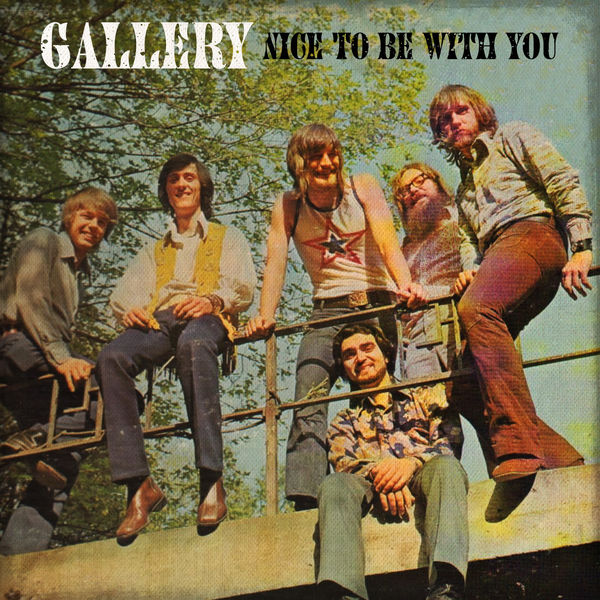
I had this song on a compilation album I had when I was around 18. Gallery was a 1970s American rock band, formed in Detroit, Michigan by Jim Gold. While they did record a number of songs, they are most famous for this 1972 hit single. They are a true one-hit wonder.
The song peaked at #4 on the Billboard 100 and #1 in Canada in 1972.
They had another hit as well as pointed out by a commenter…it was “I Believe In Music”, written by Mac Davis. It peaked at #22 on the Billboard 100 and #5 in Canada in 1972.
It’s So Nice To Be With You
Oh, it’s so nice to be with you I love all the things ya say and do And it’s so nice to hear you say You’re gonna please me in every way Honey, I got the notion you’re causin’ commotion in my soul
Baby, you and me have got somethin’ that’s real I know it’s gonna last a lifetime Aw, ya better believe it, girl at night I call your name Darkness fills my room, I’m only dreamin’ About the time I’m gonna be with you
Oh, it’s so nice to be with you I love all the things ya say and do And it’s so nice to hear you say You’re gonna please me in every way Honey, I got the notion you’re causin’ commotion in my soul
When I’m feelin’ down You’re there to pick me up and help me to carry on Aw, little things mean a lot when you need a shoulder to cry on I’m there to ease the pain and chase away the rain Aw, darlin’, I just gotta say
Oh, it’s so nice to be with you I love all the things ya say and do And it’s so nice to hear you say You’re gonna please me in every way
Oh, it’s so nice to be with you I love all the things ya say and do And it’s so nice to hear you say You’re gonna please me
This song has a gritty garage sound to it. There were many 1960’s garage bands that formed after The Beatles appeared on Ed Sullivan. The Seeds were formed in 1965 by Sly Saxon. Saxon wrote, “Pushin’ Too Hard” while sitting in the front seat of a car waiting for his girlfriend to finish grocery shopping at a supermarket. The song peaked at #36 in the Billboard 100 in 1967. The song is simple and repetitive but catchy in its own way.
Everyone’s list will be different but classic rock radio has just overplayed these songs. It does not mean I don’t/didn’t like the song to begin with…some I didn’t…some I did… There are more than this but I kept it at 20. No need for me to post youtube links…just turn on a classic rock station and they will come to you.
I’ve tried to keep it one per band or artist. The order of these is not really important…you could pull them out of a hat and be just as well. Sometimes the artists have other hits that you don’t hardly hear but no… they stick to the old reliables.
Radio has ruined these for me. Yes, I’m older and have heard them more than some other people but my 18-year-old son suggested a few of them.
Taking Care of Business – Bachman Turner Overdrive – I liked this song at one time…Now I would pull a hamstring getting up to turn it off.
Hotel California – Eagles – I still like the solos at the end with Joe Walsh and Don Felder but the rest I can do without.
More Than A Feeling – Boston – At one time it was refreshing and different. Radio has worked this song like the town pump.
In The Air Tonight– Phil Collins (just one of many) His songs saturated the market so much in the 80s that is was enough for 3 lifetimes
Jukebox Hero – Foreigner – I know huge Foreigner fans but I’m not one of them. This one I know more than I should.
Feel Like Making Love– Bad Company – Not a well-written song to begin with…it doesn’t get better with more spins. They have good songs…Painted Face, Crazy Circles but they don’t get played as much.
Don’t Stop Believing– Journey – Yes it’s catchy and an eighties theme…it fit at the end of the Sopranos…but I can do without it.
Start Me Up – Rolling Stones – Oh how I loved this song when it was released. I liked it a decade later…until Microsoft used it and since then you would think it was the Stones only song.
Tom Sawyer – Rush – See number 5
The Joker – Steve Miller – Hanspostcard says it all.
Money – Pink Floyd – Great band and they have so many others they could play.
Roundabout – Yes – When I hear the octave on the guitar I spin the dial like a top to another station.
Sweet Home Alabama – Lynyrd Skynyrd – In the south where I live this song is required listening…. over and over and over…They have better songs…
Sharp Dressed Man – ZZ Top – I loved the video, the car, and the girls in the video but the song no more. How about the older ZZ Top?
Bad to the Bone – George Thorogood & the Destroyers – In high school alone I heard it enough.
Old Time Rock and Roll– Bob Seger – The first 5 times I heard it…I liked it…but after the 1, 855th time…no more.
Stairway to Heaven – Led Zeppelin – It’s been played backward, forward and sideways…and the hidden message is the same…a worn out masterpiece.
Barracuda – Heart – This and Magic Man are like the bookends of worn out songs.
Black Water – Dobbie Brothers – I’ve never bought a record by them and they had great musicians in that band…but this is nauseatingly overplayed
You Give Love a Bad Name – Bon Jovi – Not for me the first time or the many times after…in cars, shopping centers, and grocery stores.
To be fair…there are songs that are worn out but yet I still listen to… Who Are You, Baba O’Riley, Hey Jude, Lola, Paint It Black, Brown Eyed Girl…
The first time I heard this song was the Dave Clark Five’s version. It was written by Motown president Berry Gordy Jr, who wrote it for The Temptations, but they failed to arrive for the recording session. At the same time but in a different Motown studio, The Contours arrived to record “It Must Be Love,” but Gordy had other ideas – he asked them to cut “Do You Love Me” instead. The song became one of Motown’s first hits.
The song peaked at #3 in the Billboard 100 in 1962. This would be The Contours last top 40 hits although they would place 8 songs in the top 100.
From Songfacts
Joe Billingslea of The Contours told Mojo magazine February 2009 the story of this song: “We had just left the record hop and we turned at the studio. The doors were always open in those days. Berry was down there at the piano and he said ‘I want you to try this song I’m writing.’ He told us how he wanted the backgrounds to go and we sang it. ‘Try it again, I didn’t quite like it,’ he said. After about the third time he said, ‘That’s not right. I think I’ll give it to The Temptations instead.’ I told him not to. We did it again and he said, ‘That’s exactly how I want it. Come in tomorrow morning, we’re going to record it.’ So we did.
I didn’t like the song. It reminded me of ‘Twist And Shout.’ I said: ‘This song ain’t gonna do nothin’, man.’ That same week it was released and the following week it made the charts. I turned around and said: I love that song! Did I change my opinion? Of course! We realized later that The Temptations could never have sung that song because it wasn’t suited to them but Berry had motivated us to sing it the way he wanted it.”
This song peaked in popularity just as Motown launched their first “Motortown Revue” tour to showcase their acts. The Countours were stars of the show, igniting crowds with “Do You Love Me.” Lower on the bill were some other Motown acts that had yet to hit, including Marvin Gaye, Little Stevie Wonder, and The Supremes.
After being featured in the 1988 movie Dirty Dancing, this was re-released 26 years after it was originally recorded. This time, it charted at #11. The song was a good fit for Dirty Dancing, which despite featuring some modern, original songs, was set in 1963. This was a great song of that era for a dance scene.
The Dave Clark Five recorded this in 1964 as the British Invasion was underway. Their rendition hit #11 in the US. On March 8, 1964, The DC5 played it on the first of their 12 appearances on The Ed Sullivan Show.
In his autobiography To Be Loved, recalls a confrontation with Motown’s primary bass player, James Jamerson, over this song. Jamerson, who is lauded as a creator of the Motown sound, was playing a jazz beat during the session despite Berry’s instructions. “You’ve got to stay on the f–kin’ downbeat,” Berry told him, hoping he wouldn’t have to kick his star bassist out of the session. When they rolled for the next take, Jamerson did as instructed, playing the Pop groove Gordy requested… until Berry took his eyes off him. “In that split second, Jamerson hit four or five Jazz upbeats in rapid succession,” Gordy recalled. “I turned to let him have it, but before I could say anything he had jumped back on the downbeat so brilliantly I could only smile.”
In 1963, London group Brian Poole And The Tremeloes recorded a version that topped the charts in 16 countries including the UK.
This song featured in a 2016 Pepsi commercial starring Janelle Monáe. In the spot, which debuted during the Super Bowl, Monáe dances to the song before entering another room where she goes through a time warp and joins in the celebration to Madonna’s “Express Yourself.”
Do You Love Me
You broke my heart ’cause I couldn’t dance, You didn’t even want me around And now I’m back to let you know I can really shake ’em down
Do you love me? (I can really move) Do you love me? (I’m in the groove) Now do you love me? (Do you love me now that I can dance?) Watch me, now (Work, work) ah, work it out baby (Work, work) well, I’m gonna drive you crazy (Work, work) ah, just a little bit of soul, now? (Work) Now I can mash potatoes (I can mash potatoes) I can do the twist (I can do the twist) Tell me, baby, do you like it like this? Tell me (tell me) tell me
Do you love me? Do you love me, baby? Now do you love me? (Do you love me now that I can dance?) Watch me, now (Work, work) ah, work it out baby (Work, work) well, I’m gonna drive you crazy (Work, work) you are getting kind of cold, now (Work) (Work, work) with just a little bit of soul, now ? (Work, work) come on, come on now (Work, work) I’m gonna drive you crazy (Work) I can mash potatoes I can do the twist Well now, tell me, baby, do you like it like this? Tell me (tell me) tell me
Do you love me? Do you love me, baby? Do you love me? Do you love me? Now that I can dance (Work, work) ah, work it out baby (Work, work) well, I’m gonna drive you crazy (Work, work) oh you are getting kind of cold, now (Work) (Work, work) with just a little bit of soul, now (Work, work) now don’t you get kinda bold, now? (Work, work) oh, work it out, baby
Bono once said before playing the song “This is a song Charles Manson stole from The Beatles, well we’re stealin’ it back.” Charles Manson did, in fact, hijack the song from the Beatles. The song is about an amusement park attraction (not a coded message to Charlie). A “Helter Skelter” is an amusement ride popularized mostly in the U.K. with a slide built in a spiral around a high tower. Paul McCartney read an interview with Pete Townshend saying that the Who just recorded the loudest, rawest and dirtiest song ever…it was “I Can See For Miles.” A great song… but not what Townshend described it as exactly…
Paul then started to write a song that fit that description and went above it. Helter Skelter was recorded with all four Beatles in studio two with their amps on 11. It’s a great brutal hard rock song. It was one of the rawest songs ever released by a well-known band at that time. If I hear someone call the Beatles only a pop band…I just point them to this song. Covers of this song range from Motley Crue who despite their image their version sounds light compared to this, Pat Benatar version is not up to this one…U2’s version tries but no version gets close to the Beatles version in rawness. Some credit this song as one of the inspirations of Heavy Metal…
This song fits great on the White Album. The album is the most diverse the Beatles ever made. On the same album, you have Helter Skelter, Rocky Racoon, Sexy Sadie, Honey Pie, Back In The USSR, Blackbird, While My Guitar Gently Weeps, Revolution Nine and many more.
Helter Skelter
When I get to the bottom I go back to the top of the slide Where I stop and I turn and I go for a ride Till I get to the bottom and I see you again
Yeah, yeah, yeah, heh, heh, heh, heh But do you, don’t you want me to love you? I’m (Ahhh) coming down fast but I’m miles above you (Ahhh) Tell me, tell me, tell me, come on tell me the answer
Well, you may be a lover but you ain’t no dancer Now Helter skelter
Helter skelter Helter skelter Yeah! Woo!, hoo!
A Will you, won’t you want me to make you? (Ahhh) I’m coming down fast but don’t let me break you (Ahhh)
Tell me, tell me, tell me the answer You may be a lover but you ain’t no dancer
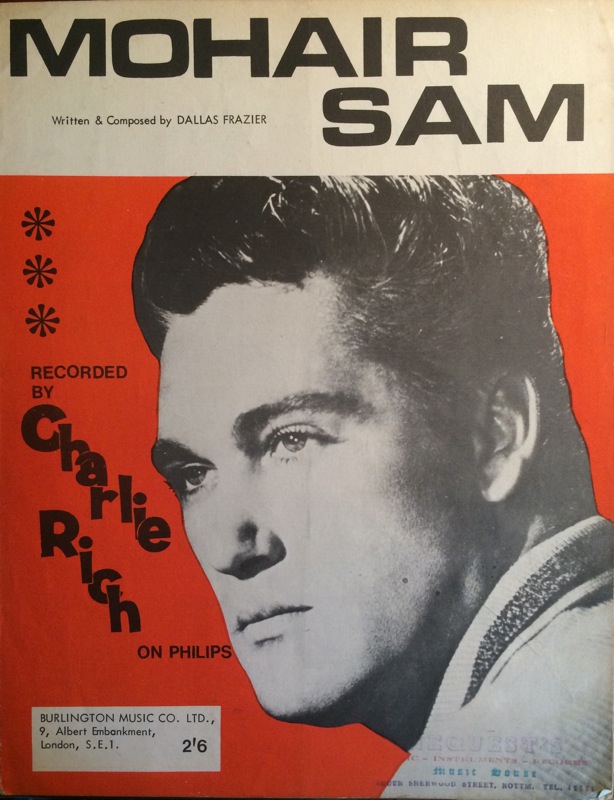
It’s a song by Charlie Rich who is more known as a country artist and his 1970s hits “Behind Closed Doors” and “The Most Beautiful Girl” off of his album Behind Closed Doors. This is not like Rich’s other hits but it’s a good song.
I first heard about this song when I read The Beatles were listening to this song when they met Elvis and Elvis had it on his jukebox when they all met. The song peaked at #21 in the Billboard 100 in 1966. The song became a hit, ending up in the top 30 on the pop charts.
Charlie played piano on Sun Records in the late 1950s and early 1960s, and then signed with Grove records…after that, he signed with Smash records and this was his first release on that label.
The song was written by Dallas Frazier who also wrote “Elvira”…the song that the Oak Ridge Boys made famous.
Mohair Sam
Well – who is the hippie that’s happenin’ all over our town? Tearin’ up chicks with the message that he lays down Who is the coolest guy, what is, what am? That’s fast-talkin’ – slow walkin’ – good-lookin’ Mohair Sam
Chicks are making reservations for his lovin’ so fine (so fine) Screamin’ and shoutin’ he’s got ’em all waitin’ in line Who is the coolest guy, what is, what am? That’s fast-talkin’ – slow walkin’ – good-lookin’ Mohair Sam
Who is the hippie that’s happenin’ all over our town? Tearin’ up chicks with the message that he lays down Who is the coolest guy, what is, what am? That’s fast-talkin’ – slow walkin’ – good-lookin’ Mohair Sam
It took me a few listens to warm up to this song…after that, I’ve been hooked. Roger Daltrey on Happy Jack. “I remember when I first heard ‘Happy Jack’, I thought, ‘What the f–k do I do with this? It’s like a German oompah song!’ I had a picture in my head that this was the kind of song that Burl Ives would sing, so ‘Happy Jack’ was my imitation of Burl Ives!”
The song peaked at #24 in the Billboard 100 and #3 in the UK in 1967.
Pete Townshend based the “Happy Jack” character on the strange and not-too-intelligent guys who used to hang around English beaches and play with the kids. Townshend would play on the Isle Of Man beach as a kid.
This was featured on The Who’s second album, A Quick One. In the US, the album title was changed to “Happy Jack” due to record company fears that the original title was a reference to sex.
In 1966 The Who were slotted to film a television series in much the same vein as the Monkees series. For the pilot episode, the band filmed a clip to go along with this song. It featured the 4 of them as robbers attempting to rob a safe. They get distracted, however, by a cake sitting close by and wackiness ensues as The Who smear themselves from head to foot with frosting. Finally a cop busts in and foils their plan, chasing them out of the room. The show never aired, but the clip can now be found in the Kids Are Alright DVD. The clip is light years ahead of its time for what other bands of the ’60s were doing.
A live version can be found on the expanded Live at Leeds album.
At the tail end of the song, you can hear Townshend yelling the phrase “I saw yer!” to Who drummer Keith Moon. Apparently, Moon had been banished from the studio and was trying to sneak back in.
This song was used in an ad campaign for the Hummer H2 in 2004. The commercial featured a boy in a wooden car rolling straight down a hill to win a soap box derby instead of taking the winding road down like everyone else.
Happy Jack
Happy Jack wasn’t old, but he was a man He lived in the sand at the Isle of Man The kids would all sing, he would take the wrong key So they rode on his head on their furry donkey
The kids couldn’t hurt Jack They tried and tried and tried They dropped things on his back And lied and lied and lied and lied and lied
But they couldn’t stop Jack, or the waters lapping And they couldn’t prevent Jack from feeling happy
But they couldn’t stop Jack, or the waters lapping And they couldn’t prevent Jack from feeling happy
The kids couldn’t hurt Jack They tried and tried and tried They dropped things on his back And lied and lied and lied and lied and lied
But they couldn’t stop Jack, or the waters lapping And they couldn’t prevent Jack from feeling happy
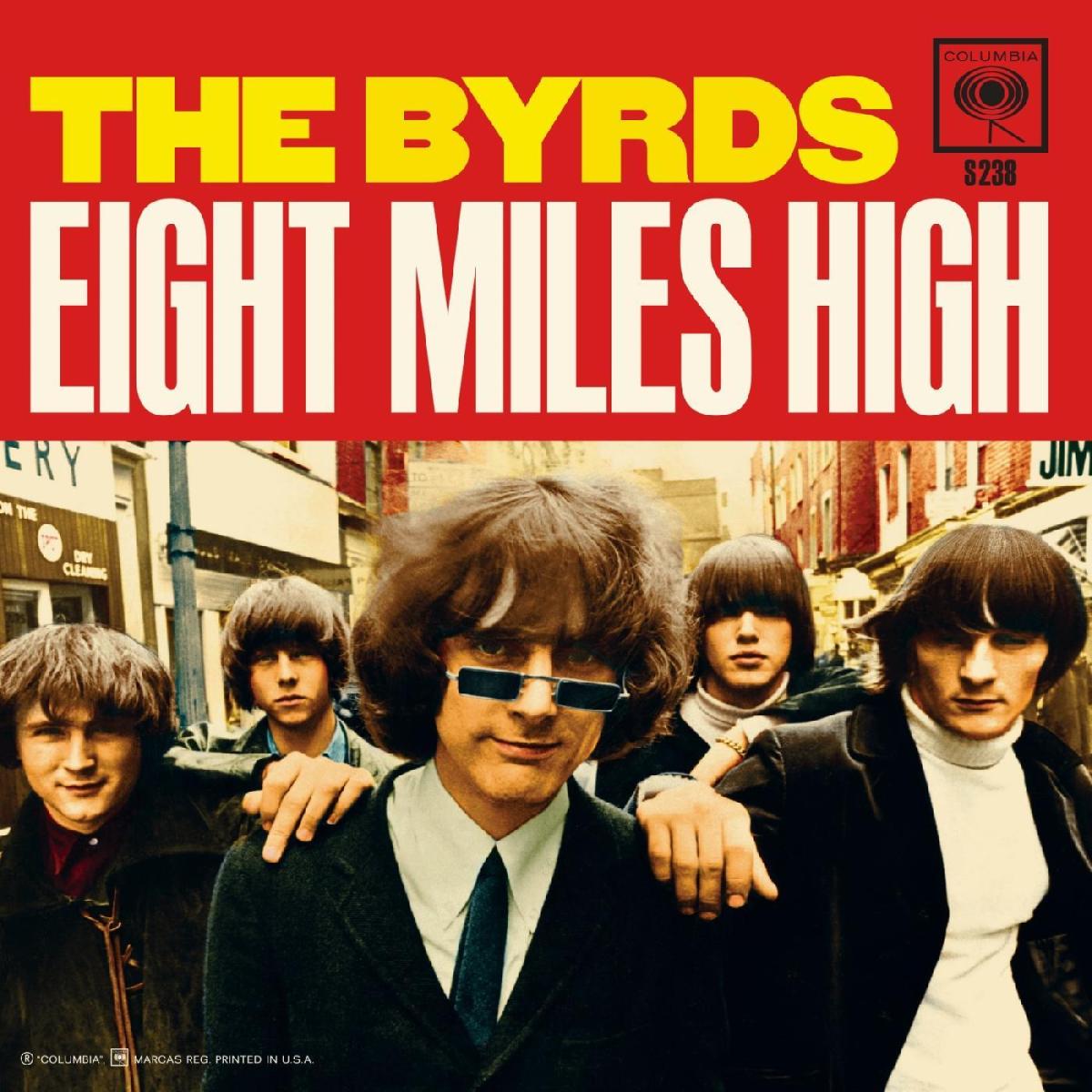
One of the reasons that Roger McGuinn is one of my favorite guitarists is because of this song. Roger has said he was influenced by John Coltrane when arranging the song.
The song peaked at #14 in the Billboard 100 and #24 in the UK in 1966
Many people…including me believe this song is about drugs, but the band claimed it was inspired by a flight where singer Gene Clark asked guitarist Roger McGuinn how high they were in the sky. McGuinn told him six miles, but for the song, they changed it to eight.
Roger McGuinn on Eight Miles High
Eight Miles High has been called the first psychedelic record. It’s true we’d been experimenting with LSD, and the title does contain the word “high”, so if people want to say that, that’s great. But Eight Miles High actually came about as a tribute to John Coltrane. It was our attempt to play jazz.
This story was likely a smokescreen to keep the song in the good graces of sensitive listeners. The band had been doing a lot of drugs at the time, including LSD, which is the likely inspiration. If the band owned up to the drug references, they knew it would get banned by some radio stations, and that’s exactly what happened when a radio industry publication reported that the song was about drugs and that stations should be careful about playing it. As soon as one station dropped it, others followed and it quickly sank off the charts.
When we asked McGuinn in 2016 if the song was really about drugs, he replied: “Well, it was done on an airplane ride to England and back. I’m not denying that the Byrds did drugs at that point – we smoked marijuana – but it wasn’t really about that.”
In his book Echoes, Gene Clark said that he wrote the song on his own with David Crosby coming up with one key line (“Rain gray town, known for its sound”), and Roger McGuinn arranging the song with help from Crosby.
In the Forgotten Hits newsletter, McGuinn replied: “Not true! The whole theme was my idea… Gene would never have written a song about flying. I came up with the line, ‘Six miles high and when you touch down.’ We later changed that to Eight because of the Beatles song ‘Eight Days a Week.’ I came up with several other lines as well. And what would the song be without the Rickenbacker 12-string breaks?”
This song is often cited in discussions of “Acid Rock,” a term that got bandied about in 1966 with the release of Bob Dylan’s Blonde on Blonde album. The genre covers a kind of psychedelic music that became popular at the time, and also the look and lifestyle that went with it. “Acid Rock” was hailed as a pathway to higher consciousness and derided as senseless drug music. At the end of the ’60s, the term petered out, as rock critics moved on to other topics for their think pieces.
The band recorded this on their own, but Columbia Records made them re-record it before they would put it on the album, partly because they had contracts with unions. The Byrds liked the first version better.
Don McLean referred to this in his song “American Pie,” which chronicles the change in musical style from the ’50s to the ’60s. The line is “Eight miles high and falling fast- landed foul out on the grass.” McLean could be sardonically implying that the song is about drugs, since “foul grass” was slang for marijuana.
Husker Du recorded a noise-pop version in 1985.
For decades, the story went that “Eight Miles High” was a commercial failure because it had been banned from radio due to its perceived pro-drug messages. Research presented by Mark Teehan on Popular Music Online challenges this theory. Teehan instead blames the song’s failure to chart on three factors:
First, its sound was too far ahead of its time, and radio stations didn’t know what to do with it.
Second, the departure of Gene Clark led to Columbia Records significantly shrinking the scope of the band’s advertising campaign.
Third, the success of Paul Revere and the Raiders’ “Kicks” further diminished Columbia’s support for the Byrds and “Eight Miles High.”
Eight Miles High
Eight miles high and when you touch down You’ll find that it’s stranger than known Signs in the street that say where you’re going Are somewhere just being their own
Nowhere is there warmth to be found Among those afraid of losing their ground Rain gray town known for its sound In places small faces unbound
Round the squares huddled in storms Some laughing some just shapeless forms Sidewalk scenes and black limousines Some living some standing alone
Merle Haggard wrote this song while serving time in San Quentin prison for robbery. The song is based on his life, and how his mother tried to help him but couldn’t… This song came out in 1968 and peaked at #1 in the Country Charts in 1968.
The man had 38 number one hits, 71 top ten hits, and 101 songs in the top 100 in the country charts. Merle is one of my favorite country artists. If only the new ones would listen and learn.
This song has been covered by a wide range of artists, including the Everly Brothers and the Grateful Dead.
From Songfacts
The song is largely autobiographical; Haggard’s father died when he was nine years old, and his mother, a devout member of the Church of Christ, tried to keep him on the straight and narrow with a strict upbringing based on her conservative values. This didn’t sit well with Haggard, who said he was an “incorrigible” child and constantly rebelling against her (“Despite all my Sunday learning, towards the bad I kept on turning”).
He was always hopping on freight trains (“The first thing I remember knowing was a lonesome whistle blowing”), an early indicator of his itinerant outlaw personality. He got into trouble for offenses like shoplifting and writing bad checks. Stints in reform school didn’t help, and in 1957 he landed in prison for burglary, where he spent his 21st birthday.
In this song, Haggard takes full responsibility for his choices and takes pity on his mother, who did the best she could (“No one could steer me right but Mama tried”).
Mama Tried
The first thing I remember knowing, Was a lonesome whistle blowing, And a young un’s dream of growing up to ride, On a freight train leaving town, Not knowing where I’m bound, And no one could change my mind but Mama tried One and only rebel child, From a family, meek and mild, My Mama seemed to know what lay in store Despite my Sunday learning, Towards the bad, I kept turning ‘Til Mama couldn’t hold me anymore
I turned twenty-one in prison doing life without parole. No one could steer me right but Mama tried, Mama tried Mama tried to raise me better, but her pleading, I denied That leaves only me to blame ’cause Mama tried
Dear old Daddy, rest his soul, Left my Mom a heavy load, She tried so very hard to fill his shoes Working hours without rest, Wanted me to have the best She tried to raise me right but I refused
I turned twenty-one in prison doing life without parole No one could steer me right but Mama tried, Mama tried, Mama tried to raise me better, but her pleading, I denied That leaves only me to blame ’cause Mama tried
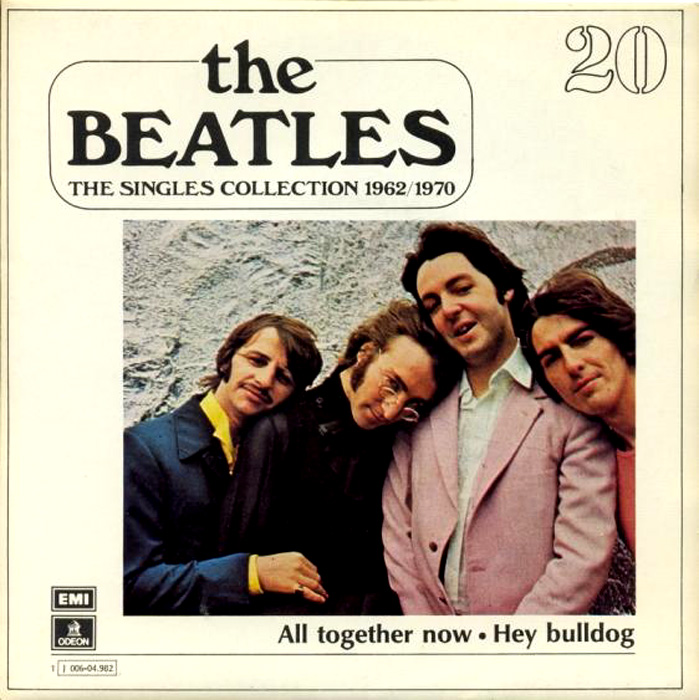
The Beatles recorded this while they were filming the promotional video for “Lady Madonna.” Since they had to be in a studio while filming, Paul McCartney thought they should record a song. This is a nice rocking song written by Lennon. The original name was “Hey Bullfrog” but Paul barked at the end and made John Lennon laugh. They kept in the barking and changed the title, even though there is no mention of a bulldog in the verses or chorus.
John said Hey Bulldog was “a good sounding record that means nothing.” This song would not be out of place today. It is one of the few Beatle songs that gets overlooked and underplayed.
Geoff Emerick, the engineer describes the events of this session. “Even though it was destined to be given to the ‘Yellow Submarine’ film, ‘Hey Bulldog’ was a really strong song. The vibe that day was great… all four Beatles were in an exceptionally good mood because they knew they would be heading to India in a matter of days. Despite the fact that there was a film crew underfoot, it was a Sunday session, so things were quite relaxed – the Abbey Road complex was largely deserted, and The Beatles could wander around the corridors if they wanted to.”
Dave Grohl played the song with Jeff Lynne in 2014 in a tribute to the Beatles after the Grammys.
This was the first recording session to which John Lennon brought Yoko.
This was the last song The Beatles recorded before leaving for a retreat in India to study meditation with the Maharishi.
John Lennon called this “a good sounding record that means nothing.” Musically, it has some interesting nuances. The middle part contains an interesting example of Lennon’s polyphonic technique: The piano in the background does not follow the singer. Near the end of the song, Lennon talks while accompanied by the music, which could be considered a forerunner to Rap. In the climax, Lennon starts shouting, and the others follow. They scream like mad while the guitar in the background plays the same notes again and again as if nothing has happened.
Hey Bulldog
Sheepdog, standing in the rain Bullfrog, doing it again Some kind of happiness is Measured out in miles What makes you think you’re Something special when you smile
Childlike no one understands Jackknife in your sweaty hands Some kind of innocence is Measured out in years You don’t know what it’s like To listen to your fears
You can talk to me You can talk to me You can talk to me If you’re lonely, you can talk to me
Big man (yeah) walking in the park Wigwam frightened of the dark Some kind of solitude is Measured out in you You think you know me, but you haven’t got a clue
You can talk to me You can talk to me You can talk to me If you’re lonely, you can talk to me
Hey hey
Roar
Hey, bulldog (hey bulldog)
Woof
Hey, bulldog Hey, bulldog Hey, bulldog
Hey man
Whats up brother?
Roof
What do ya say
I say, roof
You know any more?
Ah ah (you got it, that’s it, you had it) That’s it man, wo ho, that’s it, you got it
Woah
Look at me man, I only had ten children
Ah ah ah ah ah ah ha ha ha ha Quiet, quiet (ok) Quiet Hey, bulldog, hey bulldog
I posted this in 2017 when not many people knew I was here.
The questions:
Why did the professor bring that many books? Why did the Howells bring that much cash on a 3-hour cruise? How many dresses did Ginger pack? How many red/blue/white shirts did Gilligan, Skipper and the Professor own respectively? Why did they let Gilligan participate in getting rescued ploys? The Professor was a Macgyver times 20… He could make anything out of coconut shells, vines, and a spare part off of the SS Minnow…but he couldn’t build a raft or boat?
You tend to overlook that and just have fun. The network and critics hated the show. The public liked it and it has never stopped being broadcast because of syndication. Every day after school this was always on and I was always hoping as a kid for them to get off that island. I had no clue it was filmed years before I was watching it. They finally were rescued in some TV movies in the 70s long after the show had gone off the air. When I was a kid I went to a muscular dystrophy telethon and there she was…Dawn Wells standing there and I was 10 years old. She gave me an autographed picture and shook my hand…I didn’t wash that hand for at least a week…until mom made me. Sadly I lost the picture but I will never forget meeting her. She was down to earth and really kind.
Gilligan’s Island was a fun slapstick comedy show. My favorite episode is the one with The Mosquitos rock band. The Mosquitos were really a group called the Wellingtons… they are the group that sang the theme song to Gilligan’s Island and Davy Crockett.
My son’s 14th birthday party happened a few years ago and we had a projector set up for a giant screen…what did 14-year-old kids want to see in 2014? Gilligan’s Island. One thing I noticed about the color shows…they are very vivid….the color jumps out at you.
And THE question that gets asked… answer…Mary Ann!
Mary Ann
The Mosquitoes…Bingo, Bango, Bongo, and Irving.. love the glasses that Irving is wearing…in real life…the Wellingtons.
Starts off with a nice guitar riff. The Vogues are from Turtle Creek, Pennsylvania, a suburb of Pittsburgh. This was the first of eight US Top 40 hits for The Vogues, who recorded the song in Pittsburgh’s Gateway Studios. Its follow-up, “Five O’Clock World,” is their best-known tune.
This song peaked at #4 in the Billboard 100 in 1964.
Petula Clark is best known as a recording artist with a resumé that includes the American #1 hits “Downtown” and “My Love,” both of which were penned by Tony Hatch. However the English songbird is also a fine songwriter, having composed over 100 tunes including this hit for The Vogues. Petula told us it came about because she needed one more song for her I Know a Place album and Tony Hatch had run out of ideas. He asked her to write something and she came up with this song’s melody, to which he added the lyric.
This was the first of eight US Top 40 hits for Turtle Creek, Pennsylvania Pop group The Vogues, who recorded the song in Pittsburgh’s Gateway Studios. Its follow-up, “Five O’Clock World,” is their best-known tune.
The success of the Vogues’ cover alerted Petula Clark’s UK label to the song’s hit potential. Pye rush released Clark’s own version as a single and it peaked at #23 in the singer’s native country and also reached #4 in Australia. In addition Clark recorded a French version entitled “Un Mal Pour Un Bien,” which climbed to #6 in France. However, the English songstress vetoed her US label, Warner Bros’, suggestion to issue it as a single in America to battle with the Vogues’ version.
Surprisingly, despite her success, Petula does not consider herself to be a songwriter at all. She told us: “I’m a sometime songwriter. I’ll write a song if it comes to me, but nobody could say to me, “Will you write me a song?” Because I wouldn’t know how to do that. It just has to come.”
You’re The One
Every time we meet, everything is sweet Oh, you’re so tender, I must surrender My love is your love, now and forever
You’re the one that I long to kiss Baby, you’re the one that I really miss (yeah, yeah, yeah) You’re the one that I’m dreamin’ of Baby, you’re the one that I love
Keep me in your heart, never let us part Ooh, never leave me, please don’t deceive me I want you only, you must believe me
You’re the one that I long to kiss Baby, you’re the one that I really miss (yeah, yeah, yeah) You’re the one that I’m dreamin’ of Baby, you’re the one that I love
I adore you and no one before you could make me feel this way, yay Since I met you I just can’t forget you, I love you more each day (Yeah, yeah, yeah, yeah)
There may be some tears through the comin’ years Ooh, all the while I know you’ll be smilin’ Your love will guide me through every mile ’cause
This is one of the best double A side singles ever released…The B side to I Get Around was “Don’t Worry Baby.” I had this single growing up and would watch the yellow and orange 45 spin. I’m not an audiophile but I will say the vinyl version of I Get Around jumps off the record at you while the cd seems flat.
I Get Around peaked at #1 in the Billboard 100 while reaching #7 in the UK in 1964. This was The Beach Boys first number 1 in the US. It was rated fifth biggest seller of 1964 by both Billboard and Cash Box indicating close to 2 million US units sold.
From Songfacts.
Like most early Beach Boys songs, this does not have deep lyrical content; it’s a fun song about a teenage lifestyle featuring friends, girls and cars. Musically, however, it was incredibly innovative, with an opening fuzz guitar, stop-start rhythms and a keyboard line working in and out of the song. Written by Brian Wilson with contributions from Mike Love, it was the first Beach Boys recording after The Beatles took hold in America, and Wilson responded with this rather complex creation.
This was The Beach Boys first #1 in their own country (“Surfin’ Safari” went to #1 in Sweden two years earlier). Father-manager Murry Wilson and therefore his beleaguered son Brian despaired over not hitting the top spot in the US, coming off second best first to the Four Seasons through 1962 and into ’63, then to Jan & Dean when they got to #1 that summer with “Surf City” – a song Brian Wilson wrote – and then into 1964 with the Beatles took over.
This was The Beach Boys real breakthrough in the UK, reaching #7 in a chart that for months had seen only British faces. It was effusively pushed by Mick Jagger on British TV’s Juke Box Jury and he personally circulated copies of it to the UK’s independent pirate radio stations offshore. It was also #1 in Canada and New Zealand.
Fuzzed and reverbed guitar were demonstrated in this way before anyone else in rock, but too subtle for the general public to notice. It was about three years later that fuzz and reverb became a huge deal from the amplifiers of Jimi Hendrix, Eric Clapton, and Keith Richards.
In our interview with Randy Bachman, he recalls a conversation with Brian Wilson where Wilson explained that this song is based on the Broadway show tune “Five Foot Two, Eyes of Blue.” Said Bachman:
“I said, ‘How did you do that?’ He said, ‘Well, when they say to stay on the C chord for two beats, I stay on it for four. Or if they say stay on the C chord for eight beats, I stay on it for two.’ So if you listen to ‘Five Foot Two, Eyes of Blue, oh, what those five feet could do,’ that’s ‘I Get Around.’ But they went, ‘Round, round, get around, I get around.’ And then he put his own, ‘Woo oo,’ and then he wrote his own song and he put in his own lyrics.”
I Get Around
Round round get around I get around Yeah Get around round round I get around I get around Get around round round I get around From town to town Get around round round I get around I’m a real cool head Get around round round I get around I’m makin’ real good bread
I’m gettin’ bugged driving up and down the same old strip I gotta finda new place where the kids are hip
My buddies and me are getting real well known Yeah, the bad guys know us and they leave us alone
I get around Get around round round I get around From town to town Get around round round I get around I’m a real cool head Get around round round I get around I’m makin’ real good bread Get around round round I get around I get around Round Get around round round oooo Wah wa ooo Wah wa ooo Wah wa ooo
We always take my car cause it’s never been beat And we’ve never missed yet with the girls we meet
None of the guys go steady cause it wouldn’t be right To leave their best girl home now on Saturday night
I get around Get around round round I get around From town to town Get around round round I get around I’m a real cool head Get around round round I get around I’m makin’ real good bread Get around round round I get around I get around Round Ah ah ah ah ah ah ah ah
Round round get around I get around Yeah Get around round round I get around Get around round round I get around Wah wa ooo Get around round round I get around Oooo ooo ooo Get around round round I get around Ahh ooo ooo Get around round round I get around Ahh ooo ooo Get around round round I get around Ahh ooo ooo
I can’t listen to this every day but once in a while, it’s alright. It’s very mid-sixties plus it has the word groovy in it. Winner winner …
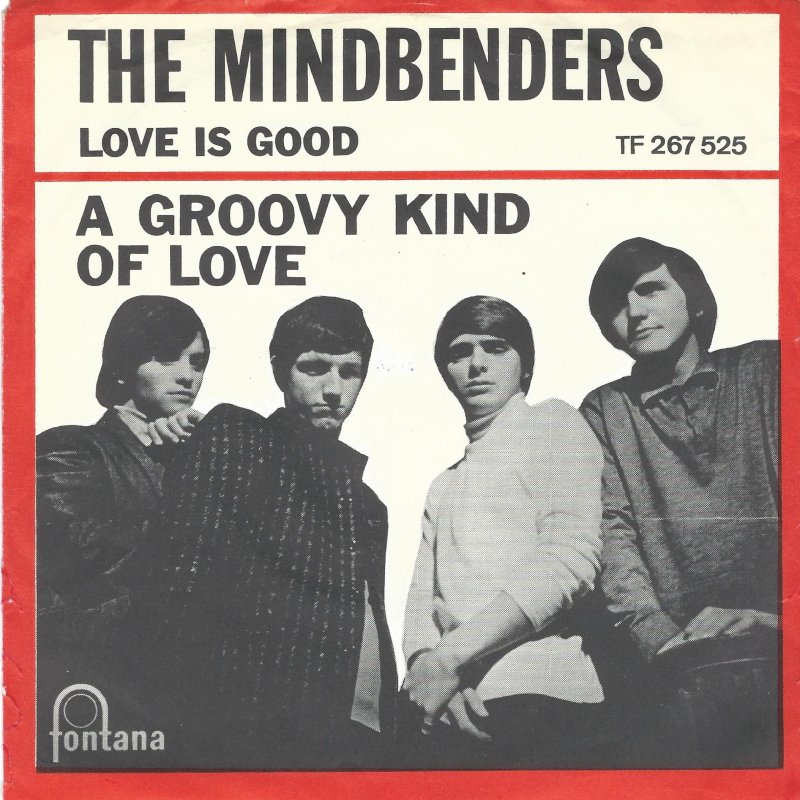
They were a beat group from Manchester, England. They were known as Wayne Fontana and the Mindbenders but Mr. Fontana decided to quit in the middle of a concert in 1965… Eric Stewart (later in 10cc) became the lead singer.
The song peaked at #2 in the Billboard 100 in 1966.
Phil Collins covered the song in the 1980s and it peaked at #1 in 1988.
From Songfacts.
This was written by New York songwriters Carole Bayer Sager and Toni Wine; Sager was 22 when they wrote it, and Wine was 17. They wrote the song for Screen Gems publishing, and Jack McGraw, who worked at Screen Gems’ London office, thought the song would be perfect for the British group The Mindbenders. The song became a huge hit in England, and was released in America a year later, where it was also very successful.
Sager was still teaching high school when she wrote this, and Wine was still in high school. Both went on to very successful careers in the music industry, with Sager writing popular songs for stage productions and movies (including “Arthur’s Theme (Best That You Can Do)”), and Wine writing the hit “Candida” and singing on many famous songs, including Willie Nelson’s version of “Always On My Mind” and “Sugar, Sugar” by The Archies. They wrote this in Sager’s apartment.
In our interview with Toni Wine, she explained: “We were talking about ‘Groovy’ being the new word. The only song we knew of was 59th Street Bridge Song, Paul Simon and Art Garfunkel. You know, ‘Feelin’ groovy.’ And we knew we wanted to write a song with that word in it. Because we knew it was the happening word, and we wanted to jump on that. Carole came up with ‘Groovy kinda… groovy kinda… groovy…’ and we’re all just saying, ‘Kinda groovy, kinda groovy, kinda…’ I don’t exactly know who came up with ‘Love,’ but it was ‘Groovy kind of love.’ And we did it. We wrote it in 20 minutes. It was amazing. Just flew out of our mouths, and at the piano, it was a real quick and easy song to write. Those are incredible things when those songs can get written. Like some you can just be hung on for so long, and then others just happen very quickly. And that was one of them. And it’s been so good to us.”
In 1966, this was also recorded by Patti LaBelle And The Bluebelles, but the version recorded by The Mindbenders, who released it as their first single without lead singer Wayne Fontana, became the hit.
Wayne Fontana left the Mindbenders after numerous singles failed to chart after their hit “Game of Love.” To quote an angry Eric Stewart after Wayne just walked off the stage while they were playing: “All we lost was our tambourine player. Wayne had been threatening to leave the band for some time and drummer Ric Rothwell had reached the end of patience with his groaning an moaning. Ric was urging him to take his ego trip and p–s off.”
This was a #1 UK and US hit for Phil Collins in 1988. His version was used in the movie Buster, where Collins plays the title role of Buster Edwards. Collins put together the soundtrack using various ’60s songs because that’s when the movie was set (he enlisted Motown hitmaker Lamont Dozier to co-write “Two Hearts,” another US #1 hit used in the film). According to Toni Wine, “Separate Lives” composer Stephen Bishop wanted to record a cover and brought a demo to his pal Collins, hoping he would produce it. Instead, Collins convinced Bishop to let him record it for the movie.
A child actor, Collins was wary about taking a movie role after becoming famous as a musician, and he made sure the song didn’t appear until the end of the film so musical perceptions wouldn’t taint his performance. The film was a box office flop, but Collins stood by it, saying it was an excellent film.
The music is based on the Rondo from “Sonatina in G Major” by Muzio Clementi.
Collins’ version was nominated for Best Male Pop Vocal Performance at the 1989 Grammy Awards, but lost to Bobby McFerrin’s “Don’t Worry Be Happy.”
Sonny & Cher recorded this for their 1967 album, In Case You’re In Love.
A Groovy Kind Of Love
When I’m feelin’ blue, all I have to do is take a look at you, Then I’m not so blue. When you’re close to me I can feel you heart beat I can hear you breathing in my ear.
Wouldn’t you agree, baby, you and me got a groovy kind of love. We got a groovy kind of love.
Any time you want to you can turn me on to anything you want to. Any time at all. When I taste your lips Oh, I start to shiver can’t control the quivering inside.
Wouldn’t you agree, baby, you and me got a groovy kind of love. We got a groovy kind of love.
When I’m in your arms nothing seems to matter If the world would shatter I don’t care. Wouldn’t you agree, baby, you and me got a groovy kind of love. We got a groovy kind of love. We got a groovy kind of love. We got a groovy kind of love
When I was 18 I would listen to 96.3 in Nashville that would only play oldies. This one I heard quite a bit but never knew who performed this song…until now. It’s a nice 60s soul song that you don’t hear every day.
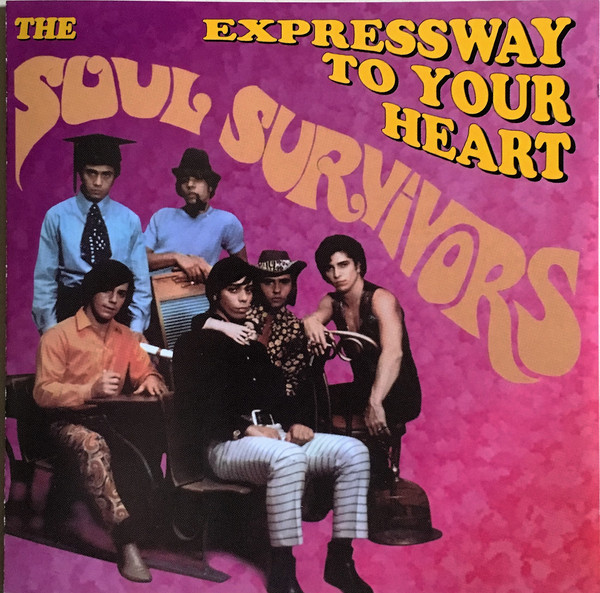
The song was written by Kenny Gamble and Leon Huff. The song peaked at #4 in the Billboard 100 in 1967. It was on the Soul Survivors album When the Whistle Blows Anything Goes.
This was the first hit record written and produced by Kenny Gamble and Leon Huff, who helped create the Philadelphia Soul sound with songs like “If You Don’t Know Me By Now” and “TSOP (The Sound of Philadelphia),” which were released on their Philadelphia International label. Gamble and Huff are from Camden, New Jersey, which is just east of Philadelphia, and often took the Schuylkill Expressway, which is the “Expressway To Your Heart.” Gamble wrote the lyrics, and he explained to National Public Radio: “I was on my way over to see a young lady, and the expressway was backed up. This is when they just started the expressway in 1967 – I was sitting there for what seemed like hours, so I started beating on the dashboard and singing, ‘Expressway to your heart, trying to get to you.’ Songs come from your imagination. You have to be quick to capture the moment.”
This song starts with the sound of car horns, which came from records containing sound effects. The horns were inspired by the Lovin’ Spoonful song “Summer In The City,” which also used the effect.
Gamble and Huff reused the lyrics “Shower you with love and affection, now you won’t look in my direction” on the song I’m Gonna Make You Love Me, which contains the line, “I’m gonna shower you with love and affection, look out, it’s comin’ in your direction.”
The Soul Survivors were a white group from New York City. They had one more Top 40 hit: “Explosion (In My Soul).”
Expressway To Your Heart
I’ve been tryin’ to get to you for a long time Because constantly you been on my mind I was thinkin’ ’bout a shortcut I could take But it seems like I made a mistake
I was wrong, mmm, I took too long I got caught in the rush hour A fellow started to shower You with love and affection Now you won’t look in my direction
On the expressway to your heart The expressway is not the best way At five o’clock it’s much too crowded Much too crowded, so crowded No room for me (too crowded) Oh, too crowded
Now there’s too many ahead of me They’re all the time gettin’ in front of me I thought I could find a clear road ahead But I found stoplights instead
I was wrong, baby, I took too long I got caught in the rush hour A fellow started to shower You with love and affection Come on, look in my direction
On the expressway to your heart The expressway is not the best way At five o’clock it’s much too crowded Much too crowded, so crowded No room for me (too crowded) Oh, too crowded