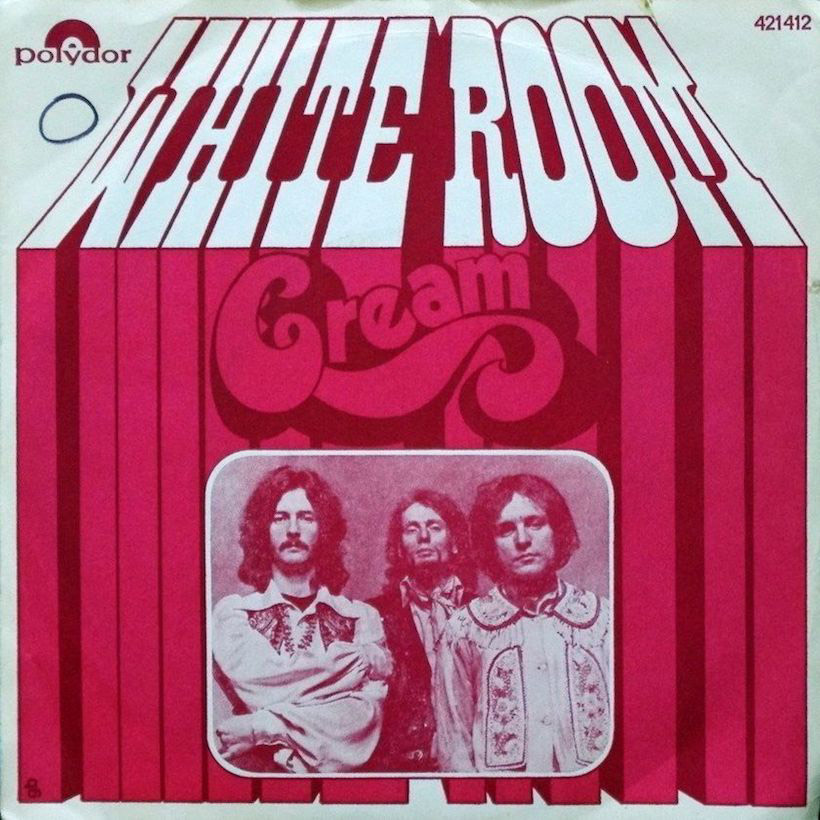
Cream – White Room

Ginger Baker passed away Sunday, October 6th… Ginger was one of the best drummers in rock history.

Paul McCartney: Ginger Baker, great drummer, wild and lovely guy. We worked together on the ‘Band on the Run’ album in his ARC Studio, Lagos, Nigeria. Sad to hear that he died but the memories never will. X Paul

Mick Jagger: Sad news hearing that Ginger Baker has died, I remember playing with him very early on in Alexis Korner’s Blues Incorporated. He was a fiery but extremely talented and innovative drummer.

John Densmore: A drumming force of nature, Ginger Baker has broke on through. Emblematic of his influence, I put 2 bars of his reverse-beat in “Hello, I Love You.” 

Pete Brown wrote the lyrics and Jack Bruce wrote the music to White Room. He was inspired by a cycling tour that he took in France. The “white room” was a literal place: a room in an apartment where Pete Brown was living. It was not, as some suspected, an institution.

The music was written first. Pete Brown’s first attempt at a lyric was something about a doomed hippie girl – the song was called “Cinderella’s Last Goodnight.” Jack Bruce didn’t like it, so he scrapped that idea and pulled up an eight-page poem he had written earlier, which he reworked into White Room.

Pete Brown: “It was a miracle it worked, considering it was me writing a monologue about a new flat.”

The song peaked at #6 in the Billboard 100 in 1968.

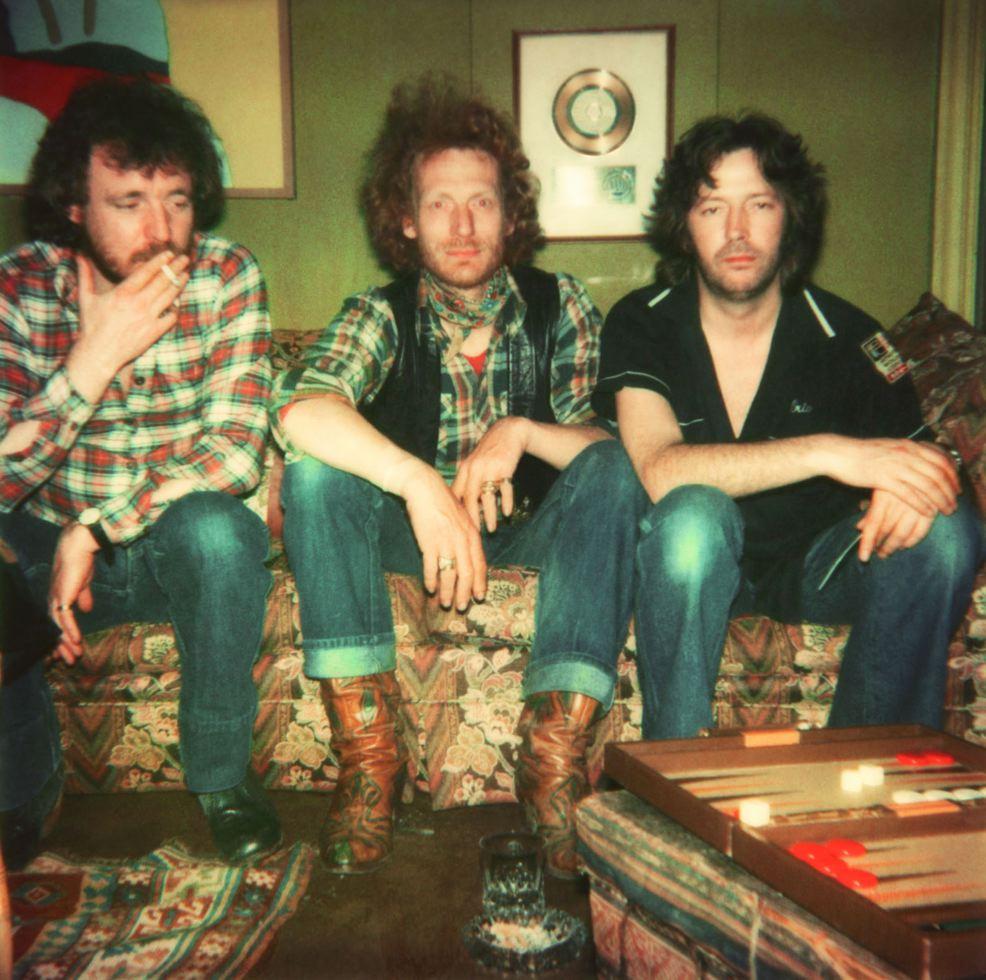
Cream in the 1970s… Pattie Boyd took the photo.
From Songfacts

This song is about depression and hopelessness, but the setting is an empty apartment. The lyrics were written by a poet named Pete Brown, who was a friend of Cream bass player Jack Bruce, the lead vocalist on the track. Brown also wrote the words for “Sunshine Of Your Love,” “I Feel Free” and “SWLABR.”

In a Songfacts interview with Pete Brown, he told the story: “It was a meandering thing about a relationship that I was in and how I was at the time. It was a kind of watershed period really. It was a time before I stopped being a relative barman and became a songwriter, because I was a professional poet, you know. I was doing poetry readings and making a living from that. It wasn’t a very good living, and then I got asked to work by Ginger and Jack with them and then started to make a kind of living.

And there was this kind of transitional period where I lived in this actual white room and was trying to come to terms with various things that were going on. It’s a place where I stopped, I gave up all drugs and alcohol at that time in 1967 as a result of being in the white room, so it was a kind of watershed period. That song’s like a kind of weird little movie: it changes perspectives all the time. That’s why it’s probably lasted – it’s got a kind of mystery to it.”

Upon its release, Wheels Of Fire was given a terrible review by Rolling Stone magazine. They claim that “White Room” has “The exact same lines for guitar, bass and drums” as “Tales Of Brave Ulysses.” If you listen to both songs, they are somewhat similar, but nowhere near the level they claim. 

Eric Clapton used a wah-wah pedal on his guitar. He got the idea from Jimi Hendrix.

Clapton’s solo earned the #2 spot on Guitar World’s greatest wah solos of all time in 2015. The #1 spot? Hendrix’ “Voodoo Child (Slight Return).”

Why are the starlings tired? Because the pollution in London was killing them. Pete Brown also told us: “The ‘tired starlings’ is also a little bit of a metaphor for the feminine in a way, as well. It was women having to put up with rather a lot – too much pressure on them at the time.”

More lyric interpretation courtesy of Pete Brown:

“Goodbye Windows” – “Just people waving goodbye from train windows.”

“Black-roof Country” – “That was the kind of area that I lived in. There were still steam trains at one point around that area, so the roofs were black. It was black and sooty. It’s got that kind of a feel to it.”

On their last tour before the band broke up, Cream opened most of their shows with this song. When Cream did a reunion tour in 2005, they played it near the end of the sets.

Clapton refused to play this after leaving Cream until 1985, when Paul Shaffer urged him to play it while he was sitting in with the band on Late Night With David Letterman. That same year, Clapton played it at Live Aid.

This was released as a single after Cream had broken up. It did better in the US than in England, since Cream had caught on in the States.

In 2000, Apple Computer used this in commercials for their white iMacs. While the song does have the word “white” in the title, the subject matter is not good for selling computers.

Jack Bruce recorded a new, Latin-influenced version on his 2001 album Shadows In The Air. Clapton played on this as well as his new recording of “Sunshine Of Your Love.”

Clapton performed this in 1999 for the album Sheryl Crow and Friends: Live From Central Park. Clapton and Crow were an item for a time in the ’90s.

White Room

In the white room with black curtains near the station
Black roof country, no gold pavements, tired starlings
Silver horses ran down moonbeams in your dark eyes
Dawnlight smiles on you leaving, my contentment

I’ll wait in this place where the sun never shines
Wait in this place where the shadows run from themselves

You said no strings could secure you at the station
Platform ticket, restless diesels, goodbye windows
I walked into such a sad time at the station
As I walked out, felt my own need just beginning

I’ll wait in the queue when the trains come back
Lie with you where the shadows run from themselves

At the party she was kindness in the hard crowd
Consolation for the old wound now forgotten
Yellow tigers crouched in jungles in her dark eyes
She’s just dressing, goodbye windows, tired starlings

I’ll sleep in this place with the lonely crowd
Lie in the dark where the shadows run from themselves

Yogi Bear

Yogi Bear –  “I’m smarter than the average bear”,

I always liked Yogi Bear and would watch it when I got a chance…if only for the way he said pic-a-nic baskets.

Yogi first started out as a sidekick in a Hanna-Barbera show called The Huckleberry Hound Show in 1958. He was the first Hanna-Barbera character to break out.

In 1961 he was given his own show called The Yogi Bear Show. His show included other segments like Yakky Doodle and Snagglepuss.  The show also featured episodes with Yogi Bear breaking away from the unadventurous life of other bears in Yellowstone Park.

The plot was basically Yogi raiding picnic baskets, dodging hibernation, being chased by Ranger Smith,  and making money together with his more honest sidekick Boo-Boo Bear. The show also featured episodes of Ranger Smith trying to tame Yogi and Boo-Boo Bear.

Around this time the great baseball player Yogi Berra sued Hanna-Barbera for defamation. But Hanna-Barbera claimed that the similarity of the names was just purely coincidental. Eventually, Yogi Berra withdrew his suit. When Yogi Berra died the AP’s wire service mistakenly announced the death of Yogi Bear instead…that is sad.

Yogi starred in a feature film, Hey There, It’s Yogi Bear, in 1964.

Yogi’s personality was based on Art Carney’s character from The Honeymooners.

The Yogi Bear Show lasted only 2 season but other shows featuring Yogi continued on. Yogi Bear and Friends, Yogi’s Gang, Yogi’s Space Race, Galaxy Goof-Ups, Yogi’s Treasure Hunt, The New Yogi Bear Show, and Yo Yogi! Yogi was on the air from 1958 to the 1990s.

Daws Butler originated the voice of Yogi and did it from 1958 to 1988 when he passed away. He was replaced by Greg Burson who was personally taught by Butler on how to do Yogi’s voice and other characters.

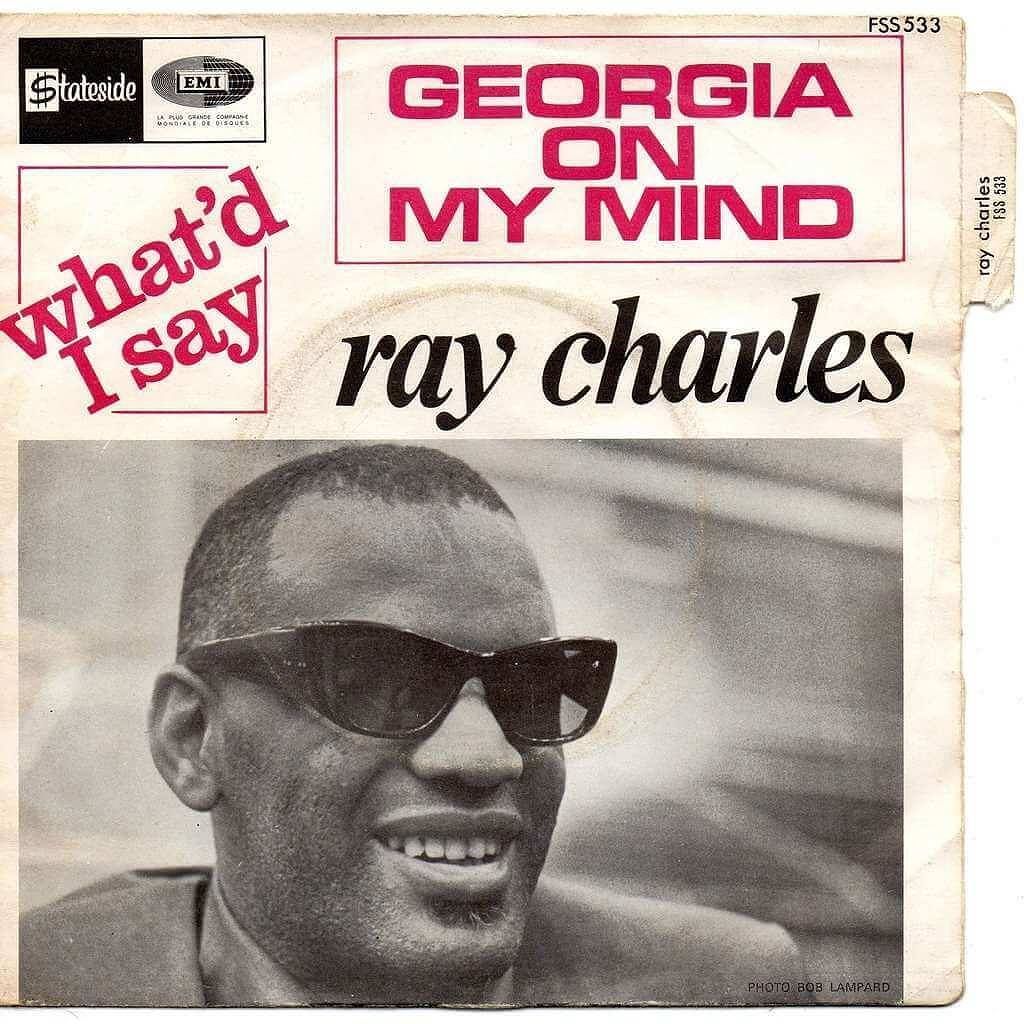
Ray Charles – Georgia On My Mind

I first heard this at home because my mom had Ray Charles’s greatest hits. One of the most beautiful songs ever…and Ray’s voice made it that much better.

This was written by Hoagy Carmichael and Stuart Gorrell in 1930. Carmichael was an actor, performer, and popular songwriter, some of his other compositions include “Stardust” and “Winter Moon.” Gorrell was a banker living in New York City, and he wrote the lyrics.

The song peaked at #1 in the Billboard 100 in 1960. Mr. Charles had an incredible 75 songs in the top 100, 11 top 10 hits, and 3 number 1 hits.

On April 24, 1979, this became the official state song of Georgia.

From Songfacts

It’s possible that this was written about a woman, not the state. Carmichael and Gorrell didn’t live in Georgia, but Carmichael did have a sister named Georgia.

This was a #10 hit for a jazz saxophone player named Frankie Trumbauer in 1931. Many artists have recorded it over the years, including Louis Armstrong, James Brown (a Georgia native), Django Reinhardt, and Willie Nelson. Charles’ version is by far the most famous.

Charles decided to record this song after his driver suggested it, since Ray kept singing it while riding in the car.

Ray Charles was born in Albany, Georgia. His family moved to Florida when he was still a baby.

The orchestra was arranged by Ralph Burns, Woody Herman’s pianist.

This was recorded quickly in New York City – it took only four takes to complete (compared to Charles’ usual 10-12 takes).

This won Grammy awards for Best Male Vocal Recording and Best Pop Song Performance. The album also won for Best Male Vocal Performance Album, and another song on the album, “Let the Good Times Roll,” won for Best R&B Performance, giving Charles a total of four Grammys in 1960.

Five different versions of this song have made the US Hot 100. Here the four that came after Charles’ recording:

Righteous Brothers (#62, 1966)
Georgia Pines Candymen (#81, 1967)
Wes Montgomery (#91, 1968)
Willie Nelson (#84, 1978)
Michael Bolton (#36, 1990)

This was the first of three #1 singles on the US Hot 100 for Ray Charles. “Hit the Road, Jack” and “I Can’t Stop Loving You” are his others.

The song “Georgia on My Mind,” with lyrics by Mr. Stuart Gorrell and music by Mr. Hoagy Carmichael, has an enduring quality that has made it one of the best-loved songs in America for many years.

Although “Georgia on My Mind” describes a Georgian’s love for his state, its beautiful melody and lyrics have given the song a worldwide appeal.

“Georgia on My Mind” has been recorded by many outstanding artists, but the rendition by Mr. Ray Charles, a native Georgian, which was first recorded in 1958, has been greatly enjoyed by music lovers throughout the world.

It is appropriate that the official State song should be a beautiful song that has wide appeal throughout the country, and “Georgia on My Mind” is an outstanding example of these qualities.

Willie Nelson sang this at Charles’ funeral in 2004.

Charles won eight awards at the 2005 Grammy Awards, including Record of the Year and Album of the Year (for Genius Loves Company). He was honored throughout the show; Alicia Keys and Jamie Foxx performed this as part of the tribute. Foxx had recently portrayed Charles in the movie Ray.

Nelson’s version was recorded for his 1978 album, Stardust, a collection of pop standards. Rick Blackburn, an executive at CBS Records Nashville who went on to become president of Atlantic Records, thought Nelson was nuts for taking on the project, thinking it would alienate his growing fanbase. Blackburn recalled Nelson’s response in the 1988 biography Willie: “Willie said, ‘Great songs are great songs no matter when they’re written. The other thing is, my audience right now is young, college age, and mid-twenties. They’ll think these are new songs, and at the same time we’ll get the sentiment of the older audience who grew up with these songs but don’t necessarily know the artist. We will bridge that gap.”

Nelson was right. The album went to #1 on the country albums chart and stayed on the chart for ten years. His rendition of “Georgia On My Mind” was also a #1 hit on the country singles chart and earned him the Grammy Award for Best Male Country Vocal Performance in 1979.

Georgia On My Mind

Georgia, Georgia
The whole day through
Just an old sweet song
Keeps Georgia on my mind (Georgia on my mind)

I said Georgia
Georgia
A song of you
Comes as sweet and clear
As moonlight through the pines

Other arms reach out to me
Other eyes smile tenderly
Still in peaceful dreams I see
The road leads back to you

I said Georgia
Ooh Georgia, no peace I find
Just an old sweet song
Keeps Georgia on my mind (Georgia on my mind)

Other arms reach out to me
Other eyes smile tenderly
Still in peaceful dreams I see
The road leads back to you

Whoa, Georgia
Georgia
No peace, no peace I find
Just this old, sweet song
Keeps Georgia on my mind

I said just an old sweet song
Keeps Georgia on my mind

Petticoat Junction

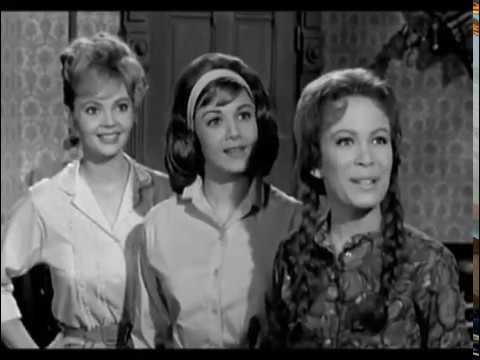
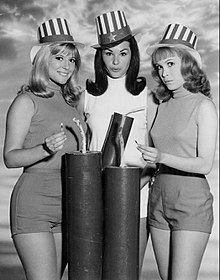
I would watch Petticoat Junction at my grandmother’s and loved seeing Kate Bradley’s three daughters Billie Jo, Bobbie Jo, and Betty Jo…

The show was created by Paul Henning who also created The Beverly Hillbillies and Green Acres. All three shows were in the same universe so to speak. They all crossed over into each other’s shows. Petticoat Junction took place in Hooterville, the same location as Green Acres. The show ran 7 seasons from 1963 to 1970.

The series takes place at the Shady Rest Hotel, which is run by Kate Bradley (Bea Benaderet) and the three daughters. The Hotel is usually empty and barely staying open. The only way to the Hotel is the train called the Cannonball ran by engineer Charley Pratt (Smiley Burnette) and fireman/railway conductor Floyd Smoot (Rufe Davis). Uncle Joe played by the great character actor Edgar Buchanan was more a hindrance than a help. Joe would come up with get rich quick schemes that would cost the Kate money and time.

They did have a dog…name “The Dog” played by Higgins…better known as the original Benji. Sam Drucker played by Frank Cady was a cast member in this show and in Green Acres. Out of the three shows, this one was probably the weakest but I still enjoyed it…and I still watch it.

The show lasted 7 seasons. Bea Benaderet died of lung cancer on October 13, 1968, during the 6th season. Her position in the show…but, not her character was replaced by June Lockhart as the matriarch of the Hotel. She played Dr. Janet Craig, a medical professional who rents a room at the Shady Rest Hotel…and gives the three sisters advice.

The ever-changing sisters…

The first two seasons the sisters were played by – Billy Jo – Jeannine Riley, Bobbie Jo – Pat Woodell, and Betty Jo – Linda Kaye Henning

Image result for petticoat junction second season changing

In the third season, Jeannine Riley and Pat Woodell left the show. They were replaced with Gunilla Hutton and Lori Saunders (my favorite)… and of course, Higgins played “The Dog”

Image result for petticoat junction third season

In the 4th season, Gunilla Hutton left the show and was replaced with Meredith MacRae. This would remain the lineup until the end.

Image result for petticoat junction 4th season

Petticoat Junction was a good family show with laughs. Who wouldn’t want to stay at the Shady Rest Hotel and travel to Hooterville and Pixley on the Cannonball? Seeing Betty Jo, Billy Jo, and Bobbie Jo would not be a chore either.


Beatles – Revolution 9

My son walked into his first college Music Appreciation class in August. The Professor was waiting for everyone and played this piece by The Beatles. He turned around and asked the class…Is this considered music or not?

Bailey wasn’t the only one who knew this strange piece and in the end…the Professor said yes it was music…like art, music can come in different forms.

I went to youtube to see some of the comments…I’m going to list a few.

“This is what it feels like to have anxiety.”
“I use this song to test my sanity”
“Terrifying for sure, but it’s kind of beautiful in an abstract way”
“I listened to She Loves You right before this. I can’t believe it’s the same band”
“Still better than Justin Bieber” 

And last but not least: “Listened to this blind drunk and by the end, I swear I saw John wearing Ringo’s skin as an overcoat”

I remember listening to this at 2 in the morning alone in the dark in around 1981…scared me to death. The memory has stayed with me to this day. I have grown to appreciate this sound collage. They were trying something new…and it is interesting.

John Lennon wrote this with contributions from Yoko and George Harrison. It’s a highly experimental piece, which Lennon once called “The music of the future.” It is the most controversial and bizarre track on the album.

John Lennon: “an unconscious picture of what I actually think will happen when it happens; that was just like a drawing of revolution.” “All the thing was made with loops, I had about thirty loops going, fed them onto one basic track. I was getting classical tapes, going upstairs and chopping them up, making it backward and things like that, to get the sound effects. One thing was an engineer’s testing tape and it would come on with a voice saying ‘This is EMI Test Series #9.’ I just cut up whatever he said and I’d number nine it. Nine turned out to be my birthday and my lucky number and everything. I didn’t realize it; it was just so funny the voice saying ‘Number nine’; it was like a joke, bringing number nine into it all the time, that’s all it was.”

From Songfacts

This was made by layering tape loops over the basic rhythm of “Revolution.” Lennon was trying to create an atmosphere of a revolution in progress. The tape loops came from EMI archives, and the “Number 9” voice heard over and over is an engineer testing equipment.

Paul McCartney and Beatles producer George Martin hated this and tried to keep it off the album.

This is the longest Beatles song – it runs 8:15. It also took longer to complete than any other track on album.

This helped fuel the “Paul is dead” rumors. If played backwards, you were supposed to hear the car crash where Paul died, and a voice saying “Turn me on, dead man.” Also, playing the line, “I’m not in the mood for wearing clothing” in reverse eventually becomes a rather odd but clear reversal, “There were two, there are none now.”

This is referencing the rumor that Paul McCartney died in a car with “Lovely Rita” and that the two were burned away after the wreck.

The rumor took off in October 1969 when a listener called the radio station WKNR in Detroit and told the DJ Russ Gibb about the backward message. When Gibb played it backwards on his show, listeners went wild and spent the next week calling in and offering their own rumors. The story quickly spread, and McCartney helped it along by laying low and letting it play out.

Lennon felt the number 9 was quite significant. He was happy that, after he changed his name to John Ono Lennon, his and Yoko’s names collectively contained 9 O’s. >>

According to the book The Beatles, Lennon And Me, by John Lennon’s childhood friend Pete Shotton, One evening, Lennon was with Shotton in the attic of his Kenwood home, tripping on LSD and smoking a few joints. They messed about with John’s Brunnel recorders, fiddling with feedback, running recordings backwards and creating tape loops. Opening the windows for some fresh air, John and Pete began to shout whatever was on their minds at the trees outside, the recorder running. This night’s lark was to later captured on “Revolution 9.” >>

Marilyn Manson released their own version of this on the B-side of the single for “Get Your Gunn.” It was called “Revelation 9” and ran 12:57. >>

This was parodied on an episode of The Simpsons. When the guys for a group called The B-Sharps, Barney meets a girl during recording. He exclaims at the studio that he’s making the music of all time. The song is Barney’s girl friend (with striking resemblance to Yoko Ono) saying “Number 8” and Barney burping. >>

Charles Manson thought that when they screamed the words “Right!” it was actually “Rise!” meaning the black community rising over the white people. Charles Manson was of course crazy, and thought The Beatles were warning about a race war.

Revolution 9

lyrics?… Oh, yea…Number 9, Number 9…then the madness starts.

Scooby Doo Where Are You!

On Saturday morning, September 13, 1969, Scooby-Doo, Where Are You! premiered. This is probably one of the most popular cartoons ever that even spawned a few live-action movies and tons of merchandise. The show went through many stages before it was ready for the public.

In 1968 Fred Silverman envisioned the show as a cross between the popular I Love a Mystery radio serials of the 1940s and the popular early 1960s TV show The Many Loves of Dobie Gillis.

Joe Ruby and Ken Spears, and artist/character designer Iwao Takamoto worked on Silverman’s idea. Their original concept of the show had the title Mysteries Five, and featured five teens (Geoff, Mike, Kelly, Linda, and Linda’s brother “W.W.”) and their dog, Too Much, who were all in a band called “The Mysteries Five” (even the dog; he played the bongos). When “The Mysteries Five” weren’t performing at gigs, they were out solving spooky mysteries involving ghosts, zombies, and other supernatural creatures. Ruby and Spears then had to decide what to make their dog. The dog was going to be a sheepdog but that would conflict with the Archies (who had a sheepdog, Hot Dog, in their band) but then settled on a Great Dane.

The executives felt that the presentation artwork was too frightening for young viewers, and, thought the show would be the same, decided to pass on it.

Ruby and Spears reworked the show to make it more comedic and less frightening. They dropped the rock band element and began to focus more attention on Shaggy and Too Much. According to Ruby and Spears, Silverman was inspired by the ad-lib “doo-be-doo-be-doo” he heard at the end of Frank Sinatra’s interpretation of Bert Kaempfert’s song “Strangers in the Night” on the way out to one of their meetings, and decided to rename the dog “Scooby-Doo” and re-rechristened the show Scooby-Doo, Where are You?… The rest as they say…is history!

Matthew Sweet did a version of the theme that I really like


The original theme song


http://scoobyaddicts.com/History.aspx

Band – Up On Cripple Creek

What a great single this was… Up On Cripple Creek with the B side of The Night They Drove Old Dixie Down. Robbie Robertson wrote this song and it appeared on The Band’s sophomore self-titled album.

This song was their highest-charting Billboard song and it peaked at #25 in 1970.

The Band rented Sammy Davis’s house turning the pool house into a recording studio, nailing baffles all along the outside wall and getting a great sound inside. The album was recorded there except “Up On Cripple Creek”, “Jemima Surrender” and “Whispering Pines” which was recorded at the Hit Factory studio in New York City.

The unusual sound that sounds like a jaw harp was achieved by Hudson with a wah-wah pedal on his clavinet.

The song has a great Americana sound to it. Hard to believe this band was all Canadian except for the southern Levon Helm.

From Songfacts

Guitarist Robbie Robertson wrote this song, which tells a disjointed story about a mountain man and a girl named Bessie. We hear about a trip to the horse races, listening to Spike Jones, and how what really makes him happy is when she “dips her doughnut in my tea.”

Like many songs by The Band, it’s wide open for interpretation. Robertson claims he doesn’t even know what’s going on. “I don’t really write songs with anything other than just a storytelling sense,” he said when asked about the song in Goldmine (August, 1998). “You sit down and write the song, and usually when something happens, you just don’t even know where it came from, or why it came, or anything like that. That’s the best. You know, when something comes out of you that surprises you. And it was one of those. You know, I was just sitting down to see if I could think of anything, and that’s what came out. But it was a fun song to write.”

Drummer Levon Helm sang lead on this track, giving it a very folksy vibe.

The guy in this song is one of the many curious characters Robbie Robertson has conceived. “We’re not dealing with people at the top of the ladder,” he said. “We’re saying what about that house out there in the middle of that field? What does this guy think, with that one light on upstairs, and that truck parked out there? That’s who I’m curious about.”

Robertson is listed as the only songwriter on this track, which is something his bandmates disputed, as they claimed they helped write it. Songwriting credits going to Robertson was a great source of friction in The Band.

That funky sound on “Up On Cripple Creek” was created by keyboardist Garth Hudson, who played a Hohner Clavinet D6 through a Vox Wah Wah pedal.

In The Band’s 2000 Greatest Hits compilation, Levon Helm said, “It took a long time to seep into us. We cut it two or three times, but nobody really liked it. It wasn’t quite enough fun. Finally one night we just got hold of it, doubled up a couple of chorus and harmony parts, and that was it.”

There are Cripple Creeks throughout the United States and Canada, including one in an old mining town in Colorado and another near Hamilton, Ontario. The title may have come from one of these places, but the song doesn’t appear to be set in one specific Cripple Creek.

The B-side of the single was “The Night They Drove Old Dixie Down,” which became a hit for Joan Baez in 1971.

The Band performed this on The Ed Sullivan Show in 1969. It was their only appearance on the show.

The rap duo Gang Starr sampled this on their 1990 track “Beyond Comprehension.”

Up On Cripple Creek

When I get off of this mountain
You know where I want to go
Straight down the Mississippi River
To the Gulf of Mexico

To Lake George, Louisiana
Little Bessie, girl that I once knew
And she told me just to come on by
If there’s anything she could do

Up on Cripple Creek she sends me
If I spring a leak she mends me
I don’t have to speak she defends me
A drunkard’s dream if I ever did see one

Good luck had just stung me
To the race track I did go
She bet on one horse to win
And I bet on another to show

Odds were in my favor
I had him five to one
When that nag came around the track
Sure enough we had won

Up on Cripple Creek she sends me
If I spring a leak she mends me
I don’t have to speak she defends me
A drunkard’s dream if I ever did see one

I took up all of my winnings
And I gave my little Bessie half
And she tore it up and blew it in my face
Just for a laugh

Now there’s one thing in the whole wide world
I sure would like to see
That’s when that little love of mine
Dips her doughnut in my tea

Up on Cripple Creek she sends me
If I spring a leak she mends me
I don’t have to speak she defends me
A drunkard’s dream if I ever did see one

Now me and my mate were back at the shack
We had Spike Jones on the box
She said, “I can’t take the way he sings
But I love to hear him talk”

Now that just gave my heart a fall
To the bottom of my feet
And I swore and I took another pull
My Bessie can’t be beat

Up on Cripple Creek she sends me
If I spring a leak she mends me
I don’t have to speak she defends me
A drunkard’s dream if I ever did see one

As a flood out in California
And up north it’s freezing cold
And this living off the road
Is getting pretty old

So I guess I’ll call up my big mama
Tell her I’ll be rolling in
But you know, deep down, I’m kinda tempted
To go and see my sweet Bessie again

Up on Cripple Creek she sends me
If I spring a leak she mends me
I don’t have to speak she defends me
A drunkard’s dream if I ever did see one

The Who – I Can See For Miles

The sound of this song is amazing…from the drums to the guitar. It was very different than their other singles to this point.

It’s hard to believe that I Can See For Miles was The Who’s only top 10 hit in the Billboard 100. It peaked at #9 in the Billboard 100 and #10 in the UK in 1967. The song was recorded for the band’s 1967 album, The Who Sell Out.[3] It was the only song from the album to be released as a single. The album peaked at #48 in the Billboard Album Charts in 1968.

Pete Townshend considered this some of his best songwriting, calling it “a remarkable song.” He thought it would be a huge hit and was disappointed when it wasn’t.

Pete Townshend talking about this song: “I swoon when I hear the sound,” “The words, which aging senators have called ‘drug oriented,’ are about a jealous man with exceptionally good eyesight. Honest.”

The song is ranked #40 on Dave Marsh’s The 1001 Greatest Singles Ever Made


From Songfacts

Pete Townshend wrote this shortly after meeting his future wife Karen. It was a reminder that even though he was on the road, he could still keep an eye on her from miles away.

The song was inspired by the jealousy and suspicion that would well up inside him when he left to tour, but the song is written in character as a vindictive type who wants to get back at a girl. It’s a little creepy:

Well, here’s a poke at you
You’re gonna choke on it too
You’re gonna lose that smile
Because all the while
I can see for miles and miles

He’s warning her that she can’t get out of his sight.

In real life, Townshend married Karen Astley in 1968. They were together until their divorce in 2009.

Townshend’s guitar was overdubbed in the studio. They rarely played this live because it was impossible to recreate the sound with one guitar.

The Who Sell Out is a concept album that makes fun of radio commercials. Fake ads were inserted between songs on the first side of the album.

The word “Miles” is said 57 times in the song. 

This was covered in a lighter, easygoing, and rather corny manner by Vegas lounge lizard Frankie Randall (who sang the lyric “There’s magic in my eyes” as “There’s magic in your eyes”, thus rather confusing the song’s meaning). It is included on the Golden Throats CD. 

Townshend’s played a one-note guitar solo on this song. According to an interview he conducted with his mate Richard Barnes for the book The Story of Tommy, Townshend did this because he “couldn’t be bothered.” He later admitted that he felt very intimidated at the arrival of Hendrix on the London scene during that time and that he couldn’t ever compete in the guitar solo stakes. 

Paul McCartney set out to write “Helter Skelter” shortly after reading a Pete Townshend interview, which described this track as, “The most raucous rock ‘n’ roll, the dirtiest thing they’d ever done.”

This is the theme song for the TV series CSI: Cyber, which debuted in 2015. It’s the fourth in the CSI franchise, with each series using a Who song as its theme. The song has some relevance to the show content, as the detectives use technology to investigate crimes that could be many miles away.

I Can See For Miles

I know you’ve deceived me, now here’s a surprise
I know that you have ’cause there’s magic in my eyes

I can see for miles and miles and miles and miles and miles
Oh yeah

If you think that I don’t know about the little tricks you’ve played
And never see you when deliberately you put things in my way

Well, here’s a poke at you
You’re gonna choke on it too
You’re gonna lose that smile
Because all the while

I can see for miles and miles
I can see for miles and miles and miles and miles and miles
Oh yeah

You took advantage of my trust in you when I was so far away
I saw you holding lots of other guys and now you’ve got the nerve to say

That you still want me
Well, that’s as may be
But you gotta stand trial
Because all the while

I can see for miles and miles
I can see for miles and miles and miles and miles and miles
Oh yeah

I know you’ve deceived me, now here’s a surprise
I know that you have ’cause there’s magic in my eyes

I can see for miles and miles and miles and miles and miles
Oh yeah

The Eiffel Tower and the Taj Mahal are mine to see on clear days
You thought that I would need a crystal ball to see right through the haze

Well, here’s a poke at you
You’re gonna choke on it too
You’re gonna lose that smile
Because all the while

I can see for miles and miles
I can see for miles and miles and miles and miles and miles
And miles and miles and miles

I can see for miles and miles

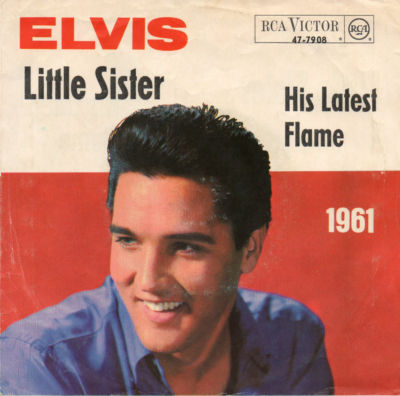
Elvis Presley – Little Sister

This song sounds so good. The mix is great with the bass coming through. Little Sister  was written by the Brill Building songwriters Doc Pomus and Mort Shuman. They also wrote the 1959 hit A Teenager In Love.

The song peaked at #5 in the Billboard 100 and #1 in the UK in 1961. Elvis recorded it at the RCA Nashville, Tennessee, studio in 1961. On the recording besides Elvis, was Scotty Moore (acoustic guitar), Hank Garland (electric guitar), Bob Moore (bass), D.J. Fontana and Buddy Harmon (drums), Floyd Cramer (organ), and The Jordanaires (backing vocals).

Dwight Yokum also does a great cover of this song.


Little Sister

Little sister, don’t you
Kiss me once or twice
Then say it’s very nice
And then you run
Little sister, don’t you
Do what your big sister done

Well, I dated your big sister
And took her to a show
I went for some candy
Along came Jim Dandy
And they snuck right out of the door

Little sister, don’t you
Kiss me once or twice
Then say it’s very nice
And then you run
Little sister, don’t you
Do what your big sister done

Every time I see your sister
Well, she’s got somebody new
She’s mean and she’s evil
Like that old Boll Weevil
Guess I’ll try my luck with you

Little sister, don’t you
Kiss me once or twice
Then say it’s very nice
And then you run
Little sister, don’t you
Do what your big sister done

Well, I used to pull your pigtails
And pinch your turned-up nose
But you been a growin’
And, baby, it’s been showin’
From your head down to your toes

Little sister, don’t you
Kiss me once or twice
Then say it’s very nice
And then you run
Little sister, don’t you
Do what your big sister done
Little sister, don’t you
Do what your big sister done

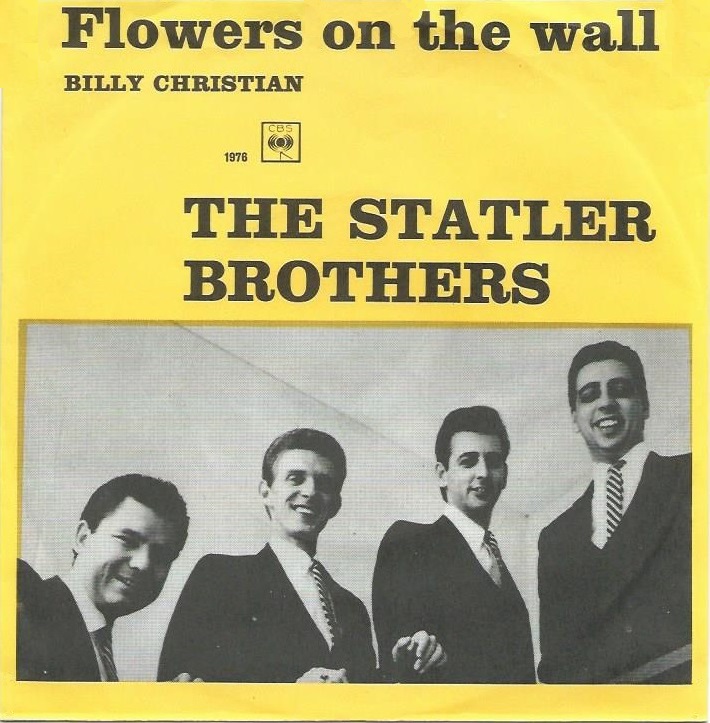
Statler Brothers – Flowers On The Wall

I have heard this called a psychedelic Country song… CMT named it one of the 100 greatest Country songs of all-time. You know when the Muppets cover you…you have a hit. I remember it early on as a kid and in more modern times when Bruce Willis was mouthing the words it in Pulp Fiction.

Lew DeWitt, the original tenor for The Statler Brothers, wrote “Flowers on the Wall. He described it: “We took gospel harmonies and put them over in country music.” However, it did crossover to the pop charts.

Buoyed by interest from the country fans, folk listeners began to demand that rock stations play Flowers On The Wall. In December, the song appeared on Billboard’s Hot 100. Nine weeks later, it had peaked at #4 in the Billboard 100 and #2 in the Billboard Country Charts in 1966.

All together the Statler Brothers had 66 songs in the top 100, 33 in the Top Ten and 4 number 1’s in the Billboard Country Charts. Flowers On The Wall was their only top 10 Billboard 100 hit.

In 1966 it won the Grammy Award for Best Contemporary Performance-Group (Vocal or Instrumental.)

From Songfacts

Written by Statler Brothers singer Lew DeWitt, this song is about a guy who has been left lonely and nearly catatonic by the one he loves. He’s in a pretty bad spot, counting flowers on the wall and playing solitaire with a deck that’s missing a card.

This appears on the soundtrack to the movie Pulp Fiction. Bruce Willis is singing along to the song, which is playing on his car radio, just before he runs over Marsellus Wallace at an intersection. There’s another Bruce Willis connection to the song as well: Willis mentions spending his suspension “Smoking cigarettes and watching Captain Kangaroo” in Die Hard With A Vengeance. 


Flowers On The Wall

I keep hearin’ you’re concerned about my happiness
But all that thought you’re givin’ me is conscience I guess
If I was walkin’ in your shoes, I wouldn’t worry none
While you ‘n’ your friends are worried about me I’m havin’ lots of fun

Countin’ flowers on the wall
That don’t bother me at all
Playin’ solitaire till dawn with a deck of fifty-one
Smokin’ cigarettes and watchin’ Captain Kangaroo
Now don’t tell me I’ve nothin’ to do

Last night I dressed in tails, pretended I was on the town
As long as I can dream it’s hard to slow this swinger down
So please don’t give a thought to me, I’m really doin’ fine
You can always find me here, I’m havin’ quite a time

Countin’ flowers on the wall
That don’t bother me at all
Playin’ solitaire till dawn with a deck of fifty-one
Smokin’ cigarettes and watchin’ Captain Kangaroo
Now don’t tell me I’ve nothin’ to do

It’s good to see you, I must go, I know I look a fright
Anyway my eyes are not accustomed to this light
And my shoes are not accustomed to this hard concrete
So I must go back to my room and make my day complete

Countin’ flowers on the wall
That don’t bother me at all
Playin’ solitaire till dawn with a deck of fifty-one
Smokin’ cigarettes and watchin’ Captain Kangaroo
Now don’t tell me I’ve nothin’ to do

Don’t tell me I’ve nothin’ to do

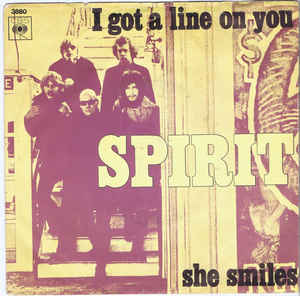
Spirit – I Got A Line On You

I have always liked this song. I saw this song listed in my friend Hanspostcard‘s countdown of the songs of 1969 a few months ago and I have been listening to it ever since.

I Got A Line On You peaked at #25 in 1969. Randy California wrote this song and it was on their second album The Family That Plays Together which peaked at #22 in 1969. Spirit was formed in 1967 in Los Angeles.  Randy California (born as Randy Craig Wolfe)(guitars, vocals), Mark Andes (bass), and Jay Ferguson (vocals, percussion). With the addition of California’s stepfather Ed Cassidy on drums, and keyboard player John Locke.

Jimi Hendrix gave Randy Wolfe the nickname Randy California.


I Got A Line On You

Let me take you, baby, down to the river bed
Got to tell you somethin’, go right to your head
I, I got a line, I got a line on you, babe

Gotta put your arms around me with every bit of your love
If you know what to do, I’ll make love to you
We got the right line to make it through these times

I, I got a line, I got a line on you, babe

I, I got a line, I got a line on you, babe

Now listen, our winter’s almost over
This summer, she’s comin’ on strong
I can love you, love you, love you
Love you all year long

I, I got a line, I got a line on you, babe

I, I got a line, I got a line on you, babe


https://en.wikipedia.org/wiki/Spirit_(band)


Dan Blocker

I didn’t watch Bonanza as much as Gunsmoke as a kid but I knew this guy. He looked so big on the screen and he seemed like a nice and gentle guy. He played Hoss Cartwright and that was an appropriate name for him. Dan’s other claim to fame was that he was the largest baby ever born in Bowie County (14 lbs.), in the town of DeKalb Texas in 1928. While still in school Dan stood six-foot-three and weighed 300 pounds.

His parents, Ora “Shack” Blocker and Mary Arizona Blocker managed to open up a grocery store after the depression in O’Donnell Texas where a young Dan helped out, carrying groceries to customers’ cars. He football skills earned him a scholarship to Sul Ross State University where he played football and studied English.

He appeared in a play Arsenic and Old Lace and was hooked on acting. He fought in the Korean War, where he served with distinction, earning a Purple Heart, among several other medals, citations and awards.

He got bit parts in television and soon landed the Bonanza role which he would forever be known.

On May 13, 1972, Dan entered a Los Angeles hospital for simple gall bladder surgery. A blood clot in his lung changed everything. Dan Blocker died and left a wife and four children. He was on Bonanza for 13 seasons

Dan was part owner of the successful, once popular chain restaurant, Ponderosa/Bonanza Steakhouse… He also owned a race car.

Image result for dan blocker race car

Loretta Lynn – You Ain’t Woman Enough (To Take My Man)

I’ve always liked Loretta Lynn…I’ve met the lady and she was one of the most down to earth people I’ve ever met. I do remember this song being played when I was really young…that title has to get your attention.  Being married to her husband Doolittle (Oliver Vanetta “Doolittle” Lynn), was not an easy task, but he was an influence in all of her songs, including her next single “Don’t Come Home A-Drinkin’ (With Lovin’ on Your Mind),”

Loretta made a comeback in the early 2000’s with Jack White producing Van Lear Rose in 2004.

Loretta had a very successful career. She had 16 number 1 hits,  51 Top Ten hits, and  76 Songs in the top 100 in the country charts. This song peaked at #2 in the Billboard Hot 100 Country Charts in 1966. 

Loretta talked about the inspiration to write this song: “When I wrote ‘You Ain’t Woman Enough (To Take My Man),’ this little woman come backstage, and she said, ‘Loretta, my husband didn’t bring me to the show tonight.’ She said, ‘He’s got a girlfriend, and he brought her. She’s sitting out in that second row with my husband.’ And we kind of pulled the curtain back and looked at him. I looked around at that lady that came backstage, and I said, ‘Honey, she ain’t woman enough to take your man.’ I went in the dressing room right then and wrote that song before the show ever started.”


From Songfacts

The biggest hit of Loretta Lynn’s career to this point, “You Ain’t Woman Enough” went to #2 on the Country charts and the You Ain’t Woman Enough album hit #1. Written by Lynn, it shows her strong side, as she confronts a woman who is going after her man. No wilting flower, Lynn makes it clear that she’s not going to give up on her man – especially to this common floozy. She sings:

Donna Jean Godchaux often performs this song and sang it on stage when she was a vocalist with The Grateful Dead. Another popular cover is by the husband and wife duo Joey + Rory, who released it as a download in 2010. When we spoke with Joey Feek of Joey + Rory, she told us: “I didn’t know a lot of Loretta’s story until later in my young adult life, and then watching Coal Miner’s Daughter and reading the book. Just the strength that she had – she just said what she thought, and she didn’t have anything to hold back. There were parts of it that I just loved, because she was innocent. And on ‘You Ain’t Woman Enough,’ Loretta was raising that flag about supporting her man and standing beside him and fighting for him and everything else. She held that flag way before any other female country artist did. And then we have a song like ‘Cheater,’ and there’s some parallels there. I just love Loretta. You just can’t help but love her, and you hear her talk and she’s honest with every word that she says. She doesn’t hide a thing.”

Lynn says there was a time when a woman went after her husband and she had to put a stop to it. She took this woman to “Fist City.”

You Ain’t Woman Enough (To Take My Man)

You’ve come to tell me something you say I ought to know
That he don’t love me anymore and I’ll have to let him go
You say you’re gonna take him oh but I don’t think you can
‘Cause you ain’t woman enough to take my man

Women like you they’re a dime a dozen you can buy ’em anywhere
For you to get to him I’d have to move over
And I’m gonna stand right here
It’ll be over my dead body so get out while you can
‘Cause you ain’t woman enough to take my man

Sometimes a man start lookin’ at things that he don’t need
He took a second look at you but he’s in love with me
Well I don’t know where they leave you oh but I know where I’ll stand
And you ain’t woman enough to take my man

Women like you they’re a dime a dozen you can buy ’em anywhere
For you to get to him I’d have to move over
And I’m gonna stand right here
It’ll be over my dead body so get out while you can
‘Cause you ain’t woman enough to take my man
No, you ain’t woman enough to take my man

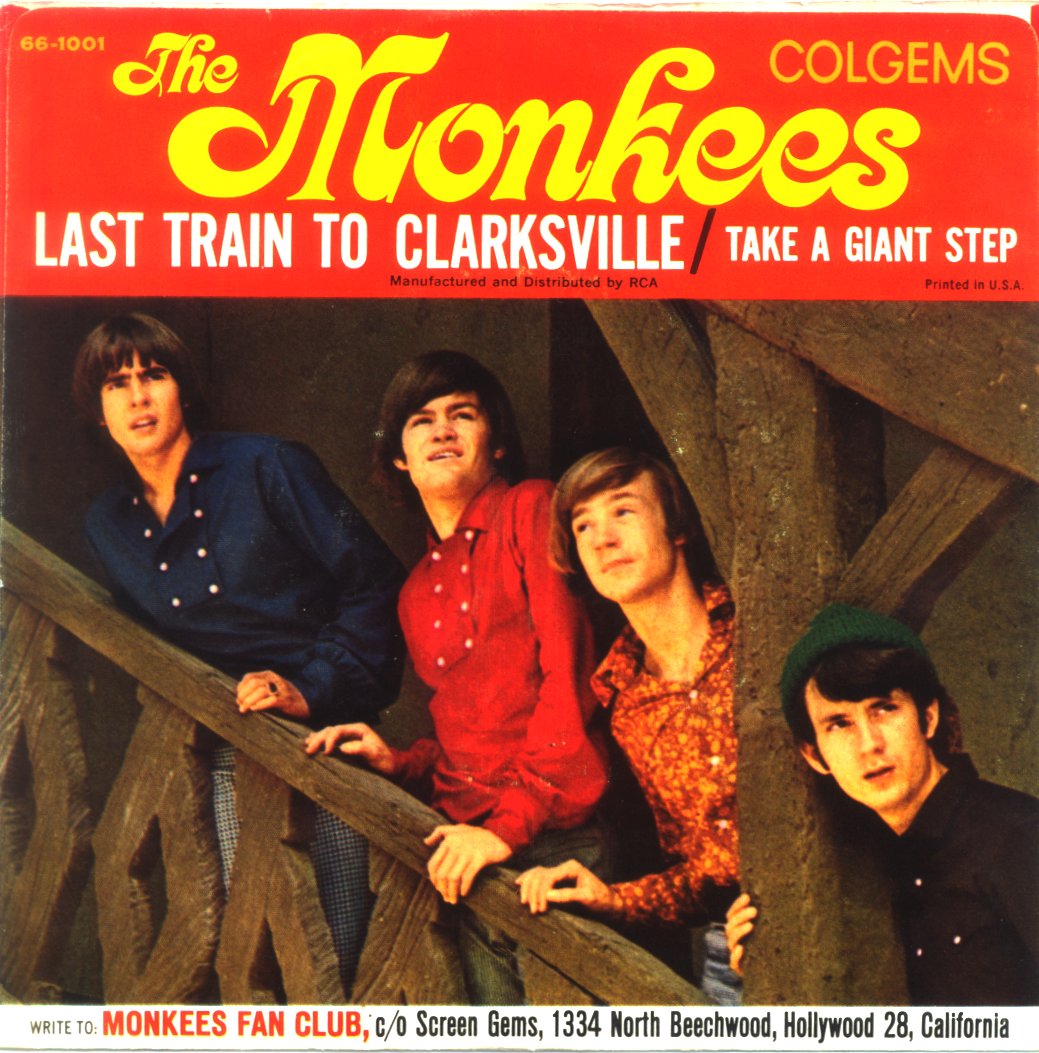
Monkees – Last Train To Clarksville

When I first heard this song as an eight-year-old in 1975 I thought wow…The Monkees are singing about Clarksville Tennessee…right up the road from me! Well no they were not but ignorance is bliss. It ended up fitting Clarksville TN very well because Bobby Hart (co-writer) said the song was written as a protest song against Vietnam but they had to hide that because it was The Monkees.

The song is about a guy who gets drafted and goes to fight in the war. The train is taking him to an army base, and he knows he may die in Vietnam. At the end of the song, he states, “I don’t know if I’m ever coming home.”

Bobby Hart said: “We were just looking for a name that sounded good. There’s a little town in Northern Arizona I used to go through in the summer on the way to Oak Creek Canyon called Clarksdale. We were throwing out names, and when we got to Clarksdale, we thought Clarksville sounded even better. We didn’t know it at the time, [but] there is an Air Force base near the town of Clarksville, Tennessee – which would have fit the bill fine for the storyline. We couldn’t be too direct with The Monkees. We couldn’t really make a protest song out of it – we kind of snuck it in.”

Tommy Boyce and Bobby Hart, a songwriting team came up with many songs for The Monkees. They also wrote songs for Chubby Checker and Jay & the Americans.

The only Monkee to appear on this was Mickey Dolenz singing the lead vocal. The Monkees would get beat down by the music press because they didn’t play their own instruments. Some bands like the Beach Boys used the same session musicians. Peter Tork and Michael Nesmith were good musicians who played long before the Monkees. Later on, they DID play their own instruments starting with their 3rd album Headquarters and still had hits. As far as Rock and Roll Hall Of Fame…they should be inside the Hall. The Monkees influenced many young kids through more than just one generation.

Last Train To Clarksville peaked at #1 on the Billboard 100 in 1966. They followed this up with another number 1 with I’m A Believer.


From Songfacts

Bobby Hart got the idea for the lyrics when he turned on the radio and heard the end of The Beatles “Paperback Writer.” He thought Paul McCartney was singing “Take the last train,” and decided to use the line when he found out McCartney was actually singing “Paperback Writer.” Hart knew that The Monkees TV series was pitched as a music/comedy series in the spirit of The Beatles movie A Hard Day’s Night, so he knew emulating The Beatles would be a winner. To do that, he made sure to put a distinctive guitar riff in this song, and wrote in the “Oh No-No-No, Oh No-No-No” lyrics as a response to the Beatles famous “Yeah Yeah Yeah.”

The only Monkee to appear on this song was Micky Dolenz, who sang lead. The four members of the group were chosen from over 400 applicants to appear on a TV show based on The Beatles movie A Hard Day’s Night. The show was about a fictional band, so the members were chosen more for their looks and acting ability than for their musical talent.

Session musicians played on the Monkees albums, usually some combination of Glen Campbell, Leon Russell, James Burton, David Gates, Carol Kaye, Jim Gordon and Hal Blaine. According to the liner notes on the 1994 reissue of the album, however, members of a group called the Candy Store Prophets did the instrumental backing on this track at a session that took place July 25, 1966 at RCA Victor Studios in Hollywood. The Candy Store Prophets were Tommy Boyce and Bobby Hart’s band, and included Boyce on acoustic guitar, Gerry McGee on electric guitar, Larry Taylor on bass and Billy Lewis on drums. Additional musicians on this track were Wayne Erwin and Louie Shelton on guitar, and Gene Estes on percussion.

Often reported as having played guitar on this track is Jesse Ed Davis, a Native American whose accomplishment included backing George Harrison at the Concert for Bangla Desh and playing the solo on Jackson Browne’s first hit, “Doctor My Eyes.”

This was The Monkees’ first single. It was released shortly after their TV show started on NBC and got a lot of publicity as a result. The Monkees followed it up with another hit, “I’m A Believer,” and had several more chart entries before their show was canceled in 1968. Eventually, the group wrote their own songs and played their own instruments.

When this song was released as a single, it went straight to #1, knocking “96 Tears” by ? & the Mysterians down to #2.

The Monkees took a lot of heat when they became successful recording artists without playing on their songs. Their drummer Micky Dolenz explained in The Wrecking Crew film: “I think there was a lot of resentment in the recording industry that we’d come out of nowhere, left field, and sort of just shot right to the top without having to kind of go through the ropes. The music industry back then was pretty crooked, and some people say even to this day. And I didn’t know at the time anything about the business end of it, but all of the sudden, the radio stations, the rack jobbers, the distributors, all these people that had a lot of power at that time – all of the sudden, they had to start playing the Monkees songs; they had to start racking them, they had to start distributing them. They had no choice. It was just so huge because of the television show. And that’s the first time anything like that had ever happened. And I think that probably created a lot of resentment.”

There is a certain lyrical dissonance in this song, as the upbeat music is contrasted with lyrics about being shipped off to war. Carol Kaye, who played bass on the session, told Songfacts, “The tempo of the tune was a good tempo. And that’s the main thing is to keep that tempo going. Back in the ’60s, you’re playing for people who dance. And if the tempo is 1-2-3-4, that’s a dance tempo. So you’re going to keep the tempo up, that’s important. So no, the mood of the song is not critical if the tempo is high, if the tempo is fast. If it’s slow, yeah, it’s kind of critical, and it depends upon how much is happening in the tune, too.”

One of the key elements of the song came out of sheer exhaustion. Micky Dolenz explains: “We were working 24/7. Normally, you do a TV series – eight, 10 hours a day – and go home. But after filming the show, I would go into the studio and sometimes record two or three lead vocals a night. So, it’s all a bit of a blur. That middle bit, there were words to that. Bobby Hart tells the story that I said, ‘It’s midnight, I have to be on the set at six. I can’t learn to sing that.’ He said, ‘Okay, just go ‘Doo-doo-doo-doo-doo-doo-doo-doo…’ You never know, if I’d sang all those words, it might not have worked.”

Last Train To Clarksville

Take the last train to Clarksville
And I’ll meet you at the station
You can be there by four-thirty
‘Cause I’ve made your reservation, don’t be slow
Oh, no, no, no
Oh, no, no, no

‘Cause I’m leaving in the morning
And I must see you again
We’ll have one more night together
Till the morning brings my train and I must go
Oh, no, no, no
Oh, no, no, no

And I don’t know if I’m ever coming home

Take the last train to Clarksville
I’ll be waiting at the station
We’ll have time for coffee-flavored kisses
And a bit of conversation
Oh, no, no, no
Oh, no, no, no

Take the last train to Clarksville
Now I must hang up the phone
I can’t hear you in this noisy railroad station all alone
I’m feeling low
Oh, no, no, no
Oh, no, no, no

And I don’t know if I’m ever coming home

Oh

Take the last train to Clarksville
And I’ll meet you at the station
You can be here by four-thirty
‘Cause I’ve made your reservation, don’t be slow
Oh, no, no, no
Oh, no, no, no

And I don’t know if I’m ever coming home
Take the last train to Clarksville

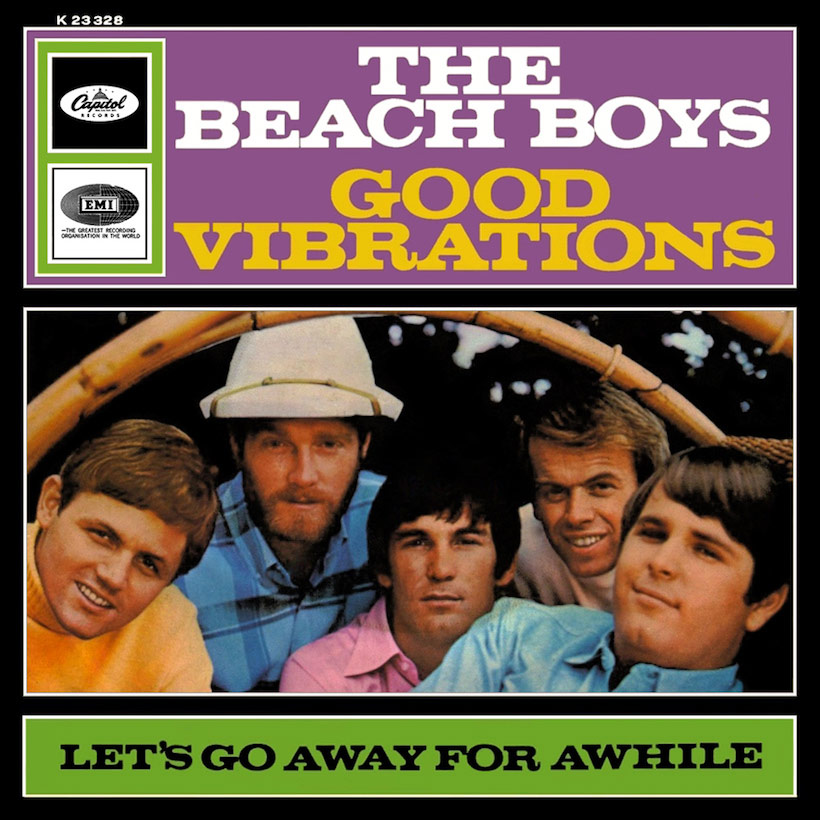
Beach Boys – Good Vibrations

This song is a masterpiece by Brian Wilson.

This was recorded over a two-month period using top Los Angeles session musicians. The Beach Boys didn’t play any instruments on the track. About 90 hours of studio time and 70 hours of tape were used, and at least 12 musicians played on the sessions. It’s hard to know whose performances ended up on the record, but some of the musicians involved were Glen Campbell (lead guitar), Carol Kaye (Electric Bass), Lyle Ritz (Standup Bass), Hal Blaine (drums), Larry Knechtel (organ) and Al de Lory (piano).

Brian Wilson has said that Capital Records thought the song was too long at 3:35 and had psychedelic overtones. Brian had to plead with them to release it. It peaked at #1 on the Billboard 100, #1 in the UK, #2 in Canada, and #1 in New Zealand in 1966. The song was written by Brian Wilson and Mike Love.

Brian Wilson: “My mother used to tell me about vibrations. I didn’t really understand too much of what she meant when I was a boy. It scared me, the word ‘vibrations’ – to think that invisible feelings existed. She also told me about dogs that would bark at some people, but wouldn’t bark at others, and so it came to pass that we talked about good vibrations.”

Ok… A Theremin was used in the song. I was always fascinated by this invention. This unique instrument was invented in 1920 by Russian  Léon Theremin. Jimmy Page would play one in the middle of Led Zeppelin concerts…Before we get to Good Vibrations lets see Léon Theremin play his invention.


From Songfacts

Brian Wilson called this song a “Pocket Symphony,” and experimented with it over the course of 17 recording sessions. At the time, it was the most expensive pop song ever recorded, costing about $50,000 to make.

Brian Wilson worked on this obsessively. At the time, he stayed home and wrote music while the rest of the band toured. Wilson was just starting a very bizarre phase of his life where he would spend long periods in bed and work in a sandbox. During this period, many considered him a genius because of the groundbreaking songs and recording techniques he came up with.

Brian Wilson played bass when the Beach Boys went on the road, but he brought in Carol Kaye to play bass guitar and Lyle Ritz to play upright bass on these sessions. Kaye recalled in a Songfacts interview, “He did the very first take on that with Ray Pohlman at Goldstar and scrapped that. And the other 12 dates I’m playing on – that’s 36 hours – he did not change that bass part all during that time. He changed all the rest of the music, he didn’t change the bass part. This is what he wrote. It was both bass players at that point – I’m playing the upper part and Lyle’s playing the lower part. If you listen to jazz, that’s the feel that he wrote.”

Beach Boys lead singer Mike Love wrote the lyrics for this song, which he told us were “basically a flowery poem.” The song seems to describe a really good acid trip, and while there is nothing specifically in the lyrics about drugs, Love admits that the psychedelic vibe was an influence on his words. Said Love: “It was this flowery power type of thing. Scott McKenzie wrote “If you’re going to San Francisco, be sure to wear some flowers in your hair,” and there were love-ins and all that kind of thing starting to go on.

So the track, the music of ‘Good Vibrations,’ was so unique and so psychedelic in itself. Just the instrumental part of it alone was such a departure from what we have done, like ‘Surfin’ USA’ and ‘California Girls’ and ‘I Get Around’ and ‘Fun, Fun, Fun,’ all of which I had a hand in writing. I wanted to do something that captured this feeling of the track and the times, but also could relate to people. Because I thought that the music was such a departure that who knows how well it would relate to Beach Boys fans at that time.

The one thing that I figured is an absolute perennial is the boy/girl relationship, the attraction between a guy and a girl. So I came up with that hook part at the chorus. It didn’t exist until I came up with that thought. Which is ‘I’m pickin’ up good vibrations, she’s giving me the excitations.’ ‘Excitations’ may or may not be in Webster’s Dictionary, however, it rhymes pretty well with ‘good vibrations.’ It was kind of a flower power poem to suit the times and complement the really amazingly unique track that Cousin Brian came up with.” (Here’s our full Mike Love interview.)

The unusual, high-pitched sound in this song was produced using an electro-theremin, which produces a similar sound to a traditional theremin, an instrument that uses electric current to produce sound (you don’t touch a theremin to play it, but move your hand across the electric field). The theremin was invented in 1919, but was very hard to play, and ended up being used mostly as a sound effects device.

Brian Wilson was familiar with the instrument, as it was used to create eerie sounds in low budget horror movies like The Day the Earth Stood Still and It Came from Outer Space. When he put cellos on “Good Vibrations,” he envisioned an unusual high frequency sound to go along with them, and he thought of the instrument. Wilson couldn’t track down a real theremin, but found an inventor named Paul Tanner who’d been a trombonist with the Glenn Miller Orchestra between 1938-’42. Tanner had developed a similar device with Bob Whitsell called an electro-theremin, which unlike a regular theremin, had no antennas. Tanner was brought in to play the device on the recording.

A huge challenge was re-creating the sound of the theremin for live performances. On the road, they used a modified synthesizer with a ribbon controller that Mike Love would play. In the ’90s, another inventor named Tom Polk created a device called a tannerin, which created a similar sound using a sliding knob and manual volume control. This was much easier to play, and Brian Wilson used it for his 1999 comeback tour.

When Wilson went back to work on the Smile album, he used the tannerin on his new version of “Good Vibrations,” which appeared on the 2004 album. The device was seen at the 2012 Grammy Awards when The Beach Boys performed the song.

Brian Wilson called this song “the summation of my musical vision. A harmonic convergence of imagination and talent, production values and craft, songwriting and spirituality.” He wrote it while on LSD, which explains why the song is the musical embodiment of a spectacular acid trip.

This was recorded in fragments – six different LA studios were used in the recording process, and tape from four of these studios was used in the final cut of the track. It was the first pop song pieced together from parts. In the next few years, The Beatles did a lot of this, as they took various unfinished songs they had written and combined them to make one. >>

Brian Wilson started writing this while recording The Beach Boys’ Pet Sounds album. Once the album was finished, he focused on this song. Wilson was not happy about the poor reviews critics gave Pet Sounds, which today is considered a landmark record, so he worked even harder on this.

Most of The Beach Boys songs featured the vocals of either Mike Love or Brian Wilson, but Carl Wilson was the lead singer on this one. Beach Boy drummer Dennis Wilson was initially tagged to sing the lead vocal but eventually brother Carl was chosen. Dennis claimed to have played the organ on the “na na na na na na” build up. >>

This was the beginning of what was going to be an album called Smile. Wilson recorded the album in about 50 sessions, but it was never released. Considered a “lost album,” Wilson finally finished it in 2004. When he played the album on tour that year, “Good Vibrations” got a rousing response.

This was the last US #1 hit for The Beach Boys until “Kokomo” went to #1 22 years later, setting the record for longest gap between #1 hits on the Hot 100. This record was broken by Cher when “Believe” hit #1 in 1999, 25 years after her previous chart-topper,

In the ’80s, Sunkist used this song in popular commercials for their orange soda (“I’m drinking up good vibrations, Sunkist orange soda taste sensation…”). The vocalist on these spots was Jim Peterik, who was working as a jingle singer at the time but would later form Survivor and co-write all of their hits, including “Eye of the Tiger.” Peterik and Brian Wilson would later cross paths when they worked together on the Beach Boys comeback song “That’s Why God Made the Radio.”

In 2005, a Broadway musical called Good Vibrations opened. The show was based on Beach Boys songs, but failed to find an audience; it closed less than three months later.

Brian Wilson was the only songwriter credited on this track until a 1994 lawsuit awarded Mike Love composer credit for his contributions to the lyrics on this and 34 other Beach Boys songs. Love maintains that Murry Wilson (Brian’s father), handled the publishing details and screwed him out of the songwriting credits.

Todd Rundgren covered this in 1976 on his Faithful album. True to the album’s name, Todd went to great lengths to reproduce every vocal and instrumental aspect of the song (along with several other ’60s hits). Rundgren’s almost-exact copy was a minor hit single on its own, reaching #34 US

Good Vibrations

I-I love the colorful clothes she wears
And the way the sunlight plays upon her hair
I hear the sound of a gentle word
On the wind that lifts her perfume through the air

I’m pickin’ up good vibrations
She’s giving me the excitations (oom bop bop)
I’m pickin’ up good vibrations (good vibrations, oom bop bop)
She’s giving me the excitations (excitations, oom bop bop)
I’m pickin’ up good vibrations (oom bop bop)
She’s giving me the excitations (excitations, oom bop bop)
I’m pickin’ up good vibrations (oom bop bop)
She’s giving me the excitations (excitations)

Close my eyes, she’s somehow closer now
Softly smile, I know she must be kind
When I look in her eyes
She goes with me to a blossom world

I’m pickin’ up good vibrations
She’s giving me excitations (oom bop bop)
I’m pickin’ up good vibrations (good vibrations, oom bop bop)
She’s giving me excitations (excitations, oom bop bop)
Good, good, good, good vibrations (oom bop bop)
She’s giving me excitations (excitations, oom bop bop)
Good, good, good, good vibrations (oom bop bop)
She’s giving me excitations (excitations)

Ah, ah, my my, what elation
I don’t know where but she sends me there
Oh, my my, what a sensation
Oh, my my, what elation
Oh, my my, what

Gotta keep those lovin’ good vibrations a-happenin’ with her
Gotta keep those lovin’ good vibrations a-happenin’

(Ahh)

Good, good, good, good vibrations (oom bop bop)
She’s giving me the excitations (excitations, oom bop bop)
I’m pickin’ up good vibrations

Na na na na na, na na na
Na na na na na, na na na (bop bop-bop-bop-bop, bop)
Do do do do do, do do do (bop bop-bop-bop-bop, bop)