Brothers At Arms – John and Tom Fogerty

We all know the great album Brothers in Arms from Dire Straits, but sometimes those brothers are “at arms” rather than in them. In this part of the mini-series Randy, from mostlymusiccovers.com, talks about the “Rock ‘Em Sock ‘Em” Siblings of the Fogerty brothers from Creedence Clearwater Revival.

“Proud Mary” written by John Fogerty was CCR’s first big hit single peaking at #2.

Tom was the elder of the two brothers, he was born in 1941 (1990) and John was born in 1945, now age 78. They were born in Berkley but grew up in El Cerrito, California. Tom signed a record contract in 1959 but had little success in terms of recording a hit. John and his band would eventually provide backing to Tom and this led to the creation of the Golliwogs where John and Tom shared lead vocals. By the time Credence Clearwater Revival (CCR) had formed in 1967, John had stepped to the forefront as lead singer, guitar player, and principal songwriter.

That is Tom on the left and John on the right.

CCR would go on to what is now regarded as legendary success. Between 1968 and 1970 they released six albums, two of them charting #1. They still hold the record for having five songs reach #2 without ever having a #1 on the Billboard Hot 100.

Tom left the band early in 1971 to pursue a solo career. CCR would release just one more album Mardi Gras in 1972 but had recorded two of the songs before Tom left. There is no evidence that things got physical but they argued a lot and the tension was high.

Tom’s departure leads us further into the discussion about the feud between him and John was more than just that. As with any break-up, there are two sides to every story, and with this one, there are at least 5 sides, the most notorious falling out suffice to say is with John and their former boss at Fantasy Records, Saul Zaentz. I won’t get too much into that story today and most will be familiar with Zaentz taking control of the CCR music and also controlling the copyright and the infamous lawsuits. I discussed this in a post back in 2018.

John admittedly was so bitter he stopped playing music for almost 10 years. Some years after the nasty split up of CCR, Fogerty recorded two songs aimed squarely at Zaentz, “Zanz Kant Danz” and “Mr. Greed”. John would eventually emerge victorious over the lawsuits brought by Zaentz and his own subsequent countersuit.

For Tom’s part, he clearly sided with Zaentz. Early on Tom was named in the lawsuit against John and at one time referred to Zaentz as his “best friend”. The band, including Tom and Zaentz had their money invested and got a tip to pull out, they didn’t tell John and he lost almost everything. At the heart of the trouble was that Tom left CCR as he felt John had taken control of the band. This I think, is a fair statement. John wrote most all of the lyrics and the music. Certainly for all their big hits. He had the best and most distinctive voice, and at lead guitar was the best musician.

As a band member, Tom in all honesty could not, and did not do better. At their height, they were one of the most successful Rock bands and history has certainly born that out. An estimated 50 million in record sales in about five years is nothing to sneeze at. John as a solo artist has almost doubled that number.

“Have You Ever Seen the Rain”, words and music by John Fogerty and the last hit single before the departure of Tom from the band.

Now I am not saying John is blameless for the falling out, I am sure he might have handled things better, but his ego I think would get in the way. But there may have been little he could have done. Tom’s actions in many ways seem born of jealousy. He decided to leave CCR. I understand his reasoning, he felt he had some good songs and he wanted to sing lead on them, John felt that the band was doing just fine with the way things were, and he wasn’t wrong. Despite the success John brought to CCR, it seems after the breakup it was John that got the cold shoulder from everyone.

Once the band split a year or so later the acrimonious relationship(s) only got worse, with John at the center and Tom and the others all playing a part.

As mentioned, Tom would embark on a solo career with his first album charting at #78 which is the best he would do. I did hear Tom in an interview say that had he been able to do things over, he would not have left the band. John did contribute some guitar tracks on Tom’s Zephyr National (1974). John also attended Tom’s wedding in 1980 and a high school reunion in 1984, and at both they jammed a bit.

John released Blue Ridge Rangers (1973) which charted at #47 and then in 1975 his album John Fogerty had the hit single “Rockin’ All Over the World” that peaked at #27. The weight of the various lawsuits and his admitted bitterness over the feud with Tom and the others led him to withdraw from the business. He was actually barred from playing any CCR songs for several years.

Over the years that followed John made some attempts to reconcile, motivated more for their mother’s benefit. Tom would receive an HIV-contaminated blood transfusion after back surgery and the ensuing complications would lead to his eventual death in 1990. Truly tragic.

The brothers never did reconcile and for John’s part, he says he has forgiven Tom.
Kinks Weeks – Sunny Afternoon …eclecticmusiclover.com

I’ve been going to Jeff’s site for years at https://eclecticmusiclover.com. He features newer music on his blog from a large range of bands. He does a lot of great work there… often getting inside information and interviews with the bands themselves. Go check Jeff out…he is a fine writer. 

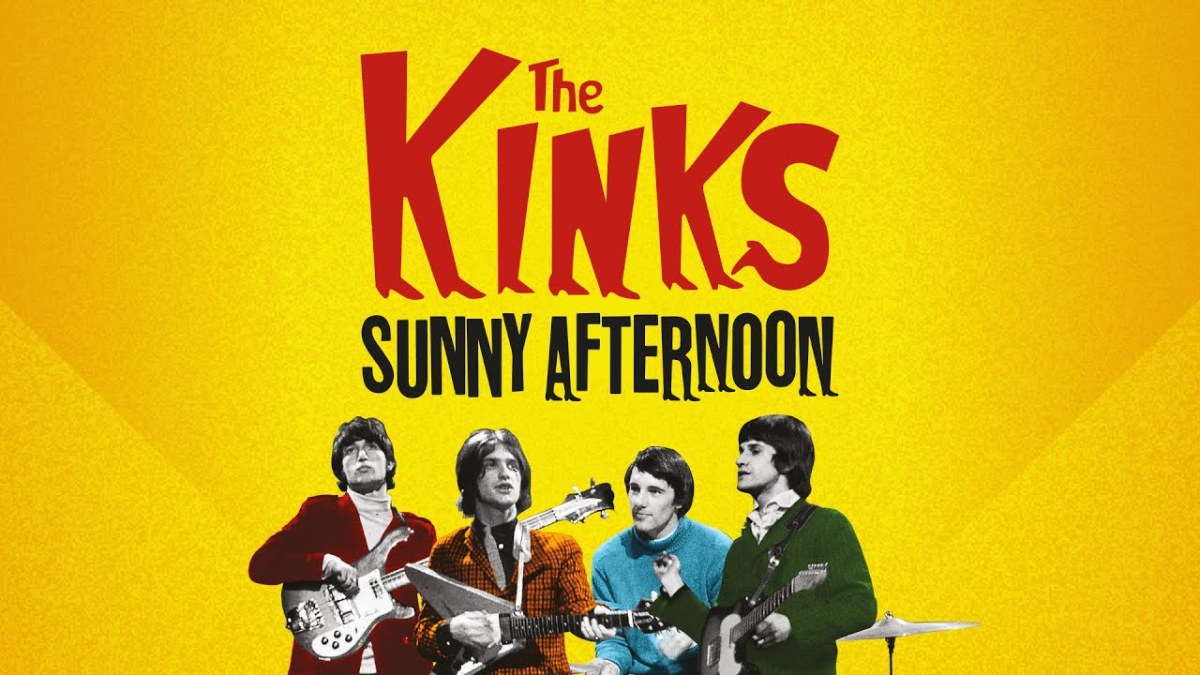
I’m honored to be included in Max’s series on The Kinks, and my pick is their 1966 single “Sunny Afternoon”, which ranks among my top ten favorites of their songs. I was 11 when the song came out and I remember liking it a lot, not only because of its catchy, upbeat melody but also for the lines “Save me, save me, save me from this squeeze. I gotta big fat mama trying to break me” which, being an 11-year-old, I found pretty funny. Though I didn’t fully comprehend the deeper meaning of the lyrics at the time, my guess was that the song was generally about a guy’s discontent over his current life situation.

Written by Kinks frontman Ray Davies while he was at home suffering from a bad cold, “Sunny Afternoon” was inspired by the high levels of progressive tax imposed by the British Labour government of Harold Wilson (a subject also covered by the Beatles in their song “Taxman”), as well as a host of difficult issues he was facing at the time. Despite the Kinks’ immense success, group tensions, lawsuits, an unrealistic workload and unsupportive management was making them miserable. Davies was also dealing with new fatherhood, and had even left the band for a while.

In writing the song, Davis composed the melody first, then created an alter ego to express his feelings. He later recalled: “The only way I could interpret how I felt was through a dusty, fallen aristocrat who had come from old money as opposed to the wealth I had created for myself.” In order to prevent the listener from sympathizing with the song’s protagonist, a spoiled aristocrat bemoaning the loss of his vast unearned wealth, Davies said, “I turned him into a scoundrel who fought with his girlfriend after a night of drunkenness and cruelty.” (Songfacts)

Regarding those lyrics I loved as a kid, Davies explained in a 2016 interview with Q magazine: “My mother was quite large. But that also alludes to the government, the British Empire, trying to break people.”

Davies was still suffering from his cold on the day he recorded the song on May 13, 1966, and now that I know this, his nasal congestion is apparent in his vocals, which nevertheless still sound great to me. He recalled to Q magazine: “I did it in one take and when I heard it back I said, ‘No, let me do it properly,’ but the session was out of time. So that was the vocal. I heard it again the other day. I was 22 but I sound like someone about 40 who’s been through the mill. I really hang on some of the notes. A joyous song, though, even if it’s suppressed joy. I had real fun writing that.” Backing vocals were sung by Dave Davies, Kinks bassist Pete Quaife, and Ray Davies’ then wife Rasa.

With its strong music hall vibe (a type of British theatrical entertainment similar to American vaudeville that was popular from the early Victorian era through World War I, characterized by a mix of popular songs, comedy and specialty acts), “Sunny Afternoon” was a continuation of the stylistic departure from the band’s earlier hard-driving, power chord songs like “You Really Got Me” and “All Day and All of the Night” that began with 1965’s “A Well Respected Man”. Besides Davies’ wonderful vocals, I love Pete Quaife’s jaunty bass riff, session musician Nicky Hopkins’ spirited piano, and the charming little musical touches like the harmonica, tambourine and lively percussion heard throughout the track.

Released as a single on June 3, 1966, “Sunny Afternoon” went to #1 on the UK Singles Chart that July, where it spent three weeks. The song also reached #1 in Ireland, Canada, the Netherlands and Norway, and peaked at #14 on the Billboard Hot 100 chart in the U.S. It was later included on their fourth album Face to Face, released in October 1966, as well as becoming the title track for their 1967 compilation album.

The promotional video produced for the single featured the band performing in a cold, snowy environment, in sharp contrast to the lyrics about enjoying a sunny afternoon.

Kinks Weeks – Kinky, Romantic, & Purple? …mojohorizon.home.blog

I’ve been visiting Cork’s site for years and it’s one of my favorite blogs to visit. I’ve read posts about Eric Clapton, Sasquatch, Frozen Pizza, Iron Maiden, movies, blues songs, and many more. Take a visit to his site at https://mojohorizon.home.blog/ it’s totally worth it. 

Made you look! This isn’t an exploration of the erotic — sorry, if you’re disappointed. It’s a comparison of recordings. The song is called “She’s Got Everything”. It’s a pretty generic title, but it’s definitely in the hidden gem category. I came to know The Romantics’ version of this song when I was a college student. (You might be more familiar with “What I Like About You” which precedes it on their self-titled release.) Both songs are in the world of three-chord-or-so garage rock. I used to hear the songs back-to-back at college parties when enough people were feeling loose enough to dance.

If I had a time machine, I’d go back and yell, “It’s a TWIN SPIN!!” in the middle of them. I can honestly say I actually saw people doing “the monkey” to this song in the late 80’s and early 90’s. The song rocks! It’s got a great feel to it. Loud, fast, raucous. What more could you want?

If I’m not mistaken, I had The Romantics album on vinyl and discovered “She’s Got Everything” was actually written and sung by The Kinks’ Ray Davies from the liner notes. It took me awhile to find it or find it in a collection I wanted. It was apparently the B side to “Days.” The original version of “She’s Got Everything” by The Kinks is worth a listen.

I’m biased towards The Romantics version, but I love The Kinks and the songwriting of Ray Davies. Naturally, Ray’s brother Dave Davies plays an aggressive-sounding lead guitar solo on the track. “Pretty ringlets in her hair” is my favorite line from this song. I don’t think I’ve ever heard the word ringlets used in song outside of this example. (I always pictured a ringlet as a ribbon or something, but it’s a style of “princess curls” a la Shirley Temple.)

I recently listened to The Kinks’ tune again and dialed in the little instrumental bit around the 1:30 mark. When I listened to it, I heard the first few seconds of Deep Purple’s “Woman from Tokyo.” Listen to the DP tune around 8 seconds into it.

Deep Purple’s song didn’t come out until 1973. Did they own a copy of the 1968 Kinks release “She’s Got Everything”? I don’t know, but it’s just what I hear. The two songs are in different keys, but both feature the same chord changes of I to V, which is a distinct feature.

Till next time, keep your Mojo on the Horizon!

Brothers At Arms – Ray and Dave Davies

I thought this was appropriate today since tomorrow will kick off two weeks of Kinks songs. A huge Thank You to Randy from mostlymusiccovers.com for publishing all of these that him and I wrote.

We all know the great album Brothers in Arms from Dire Straits, but sometimes those brothers are “at arms” rather than in them. In part two of the mini-series Max (that’s me!), from PowerPop, talks about the “Rock ‘Em Sock ‘Em” Siblings of Ray and Dave Davies of the legendary band The Kinks.

Ray Davies was born in 1944 and Dave in 1947 in Muswell Hill, North London. One of the granddads of rock’s sibling rivalries starts with the Davies brothers. Ray Davies, as the lead vocalist and principal songwriter of The Kinks, often clashed with his younger brother Dave Davies, who played lead guitar in the band. Their tumultuous relationship was fueled by creative differences, sibling rivalry, and personal conflicts. The two have admitted coming to blows many times right before shows.

Ray Davies is known for being a perfectionist and prickly at the best times. Dave is known as a free spirit who likes to go with the flow. The Kinks were formed in 1963 by the brothers and included Peter Quaife and Mick Avory. Their first success came the following year with worldwide hits such as You Really Got Me, All Day and All of the Night, and Tired of Waiting for You all top 10 hits in the UK and America. The Kinks never got to the level of The Who, Beatles, or Stones. One of the reasons was because they were banned for 4 years from touring in America for using non-union roadies during a tour. Another rumor was bad behavior, but it seems the non-union help rings truer.

They were the youngest in a family with 6 sisters. At age 13 Ray was thrilled by being gifted a guitar by his 31-year-old sister Rene, but she died the same night. Dave, got an underage girl pregnant when they were both 15 and the parents kept the couple apart. Dave remembers fighting Ray and he knocked Ray down once and thought he seriously hurt him. He goes over to check on Ray and Ray pummeled him. Nice.

When Ray got married in 1964, he made Dave the best man, but Dave was smashed and could not function at the wedding. At Dave’s 50th birthday party…Ray came in and smashed the cake and left. In 2013 they got together again and wrote some songs in Ray’s kitchen in harmony. It only lasted a short time. They started an old argument over the song.

‘You Really Got Me”. Dave said that yes, his older brother wrote the riff and the song, but he cut a slit in the amp speaker to make that sound. Ray refused to acknowledge how important that sound was to the success of the song. Underneath it all though they do love each other and protect each other from
other people. They are not above fighting with each other though. In 2021 there was a statement by the brothers that they were going to regroup and record again. We can only hope that they make it to the end and finish it.

A duet by the brothers!

Gunsmoke, the Early Years

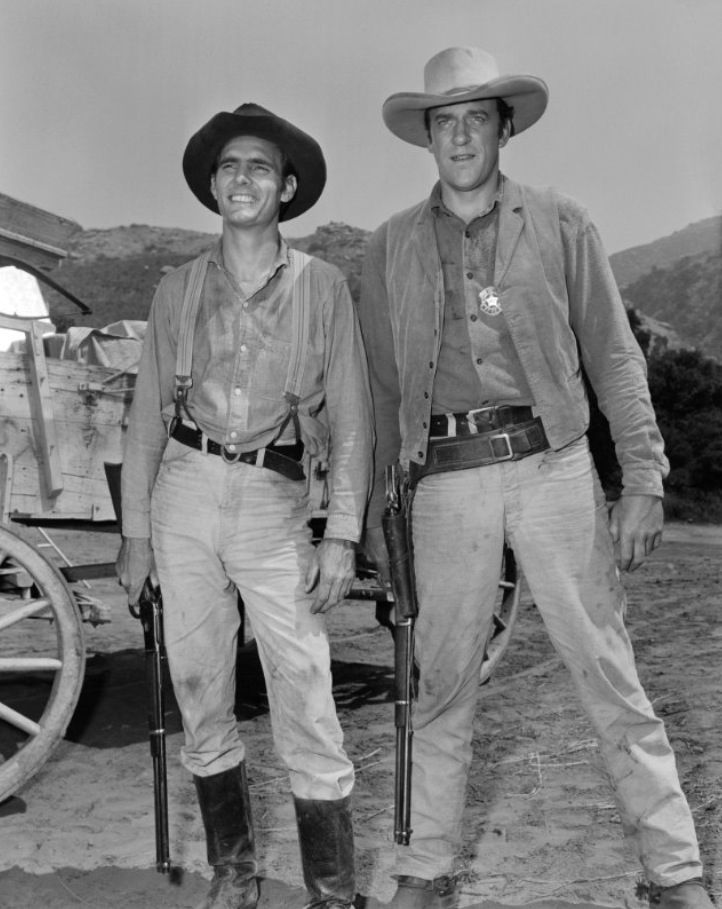
I’m reading a book on James Arness…or Matt Dillion from Gunsmoke. When you watch these beginning shows you see Arness turn into a fine actor. He was in many movies before Gunsmoke but he looked a little uncomfortable in the first season. By the second season, you could see a huge change. Arness said he wasn’t comfortable and he got an acting teacher to help refine his acting for television.

I liked the show because I grew up watching the hour-long color episodes (seasons 12-20) of Gunsmoke in reruns. The first 6 seasons were black and white and 30 minutes long. Seasons 7-11 were one-hour black and white shows. As I said seasons 12-20 were one-hour color shows. 

gunsmoke 1

Now I’m watching the first 6 seasons for about the 6th time… There is no Festus or Newly…we have Chester (Dennis Weaver), who is a refreshing character. They never played these episodes on television when I was younger. There still is Doc Adams  (Milburn Stone)and the astonishing Kitty Russell (Amanda Blake).

These episodes dealt with murder, rape, human trafficking, and plenty of Matt Dillon (James Arness) decking bad guys with his fist or the butt of his gun. They are 30 minutes long which is great. They got to the point quickly. Some of the stories were grim but matched the look of the series. It was an adult show at this time.

I was surprised at how rough, violent, and authentic they were and that is not knocking the later episodes but there is a huge difference. The violence was toned down as the series continued. The later color episodes centered more around the guest stars and the old black and white ones centered more on the local residents of Dodge City. That was by design because of the hour format…and some shows had some filler in them in that format.  

Have Gun Will Travel was also on CBS along with Gunsmoke. You will see some of the same character actors and sets. Some Have Gun Will Travel scenes were filmed in a redecorated Long Branch… Too bad there wasn’t a crossover at least once.

Chester…I’ve always liked Dennis Weaver as an actor…in McCloud, Duel, and anything he was in… He brings his character Chester alive as a real person. Chester had a limp on the show and Dennis Weaver said he would take yoga classes so he could do things like putting on a boot to look believable with a bad leg…he also put a pebble in his boot on his right foot so he would not forget which leg was lame. He said it took him months after Gunsmoke not to use the limp on camera because he was so used to it.

Chester could be lazy but he was invaluable and loyal to a fault to Matt Dillon. Dennis Weaver left the show after the 9th season with no explanation on what happened to Chester as was the way back then with TV shows. He was mentioned one time in the 20th season. Burt Reynolds joined the show for two years in seasons 8 and 9. He said it was his best experience in entertainment. The cast was extremely close. 

If you are a fan and have seen only the later episodes…check these out. It puts a new light on the show. Unlike other Westerns, Native Americans were not usually the bad guys in Gunsmoke. Matt Dillion was a good friend to many of them.

Here is a badly recorded clip of Matt Dillion, Chester, and Ken Curtis who would later take Chester’s place in the show and play Festus.

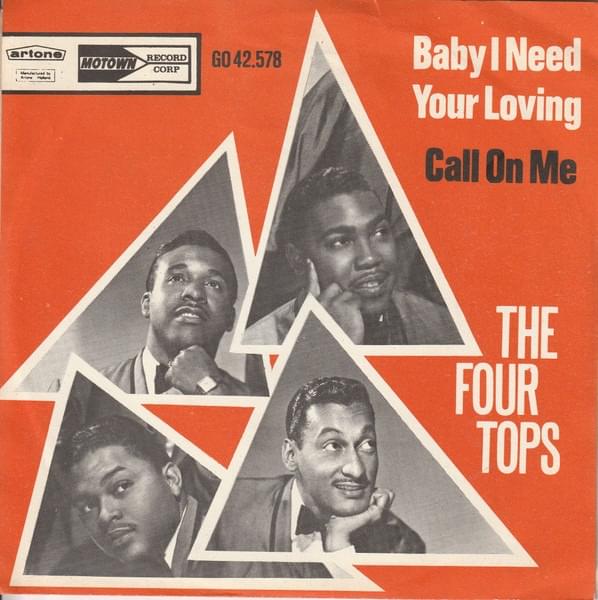
Four Tops – Baby I Need Your Loving

I saw the Four Tops and The Temptations in the 80s. It was held at Opryland and I had a friend who worked there. He snuck us in the back way with me using his sister’s work ID badge they never checked. Both groups were super and it was a great concert. Those voices were pure gold. Hmmm…I hope the statute of limitations has run out!

The song was written by the songwriting team of Holland-Dozier-Holland (Lamont Dozier, Brian Holland, and Eddie Holland). It was recorded at the Hitsville U.S.A. studio in Detroit, Michigan, which was the primary recording studio for Motown Records.

This song was their first Motown release which was in 1964. The song peaked at #11 on the Billboard 100 and #4 in Canada. The song is one of those near-perfect pop songs. Johnny Rivers would later peak at #3 with this song in 1967. Altogether there are 62 cover versions of this song.

The Four Tops were formed in Detroit, Michigan, in 1953. Initially, they performed under the name the Four Aims before changing it to the Four Tops to avoid confusion with the Ames Brothers who were popular at the time.

Baby, I Need Your Loving

Baby, I need your lovin’Baby, I need your lovin’Although you’re never nearYour voice I often hearAnother day, ‘nother nightI long to hold you tight‘Cause I’m so lonely

Baby, I need your lovin’Got to have all your lovin’Baby, I need your lovin’Got to have all you lovin’

Some say it’s a sign of weaknessFor a man to begThen weak I’d rather beIf it means having you to keep‘Cause lately I’ve been losing sleep

Baby, I need your lovin’Got to have all your lovin’Baby, I need your lovin’Got to have all you lovin’

Empty nights echo your nameWhoa, sometimes I wonderWill I ever be the same?Oh yeah!

When you see me smiling, you knowThings have gotten worseAny smile you might seeHas all been rehearsedDarling, I can’t go on without youThis emptiness won’t let me live without youThis loneliness inside, darlingMakes me feel half alive

Baby, I need your lovin’Got to have all your lovin’Baby, I need your lovin’Got to have all your lovin’Baby, I need your lovin’Got to have all your lovin’

Brothers At Arms – Don and Phil Everly

Randy from mostlymusiccovers.com and I teamed up to write about different brothers in rock and roll through the years. This is the first one of the series. I combined the introduction with this first post. I will post these on Sunday mornings.

We all know the great album Brothers in Arms from Dire Straits, but sometimes those brothers are “at arms” rather than in them. In a periodic mini-series Randy, from mostlymusiccovers.com, and I will explore some “Rock ‘Em Sock ‘Em” Siblings. As it happens the Knopfler brothers are among many sets and while we can’t talk about all of them, we will feature some of the better-known sibling rivalries. Two, three, and sometimes even more brothers in a band, well, stop being a band of brothers. How many more cheesy puns can we come up with? Just some of the names Randy and I discussed were; The Everly’s, The Fogerty’s, The Gibb’s, to the Gallagher’s, Allmans, and the Davies.

For those of you who have not checked out Randy and his blog, you really need to. He has been writing a blog about Cover Songs, music genres, and artists since early 2018. He gets in-depth with many artists You can read about the origins of Rock and Roll, Blues, R&B, and Country Music. There are Cover Song and Chart statistics as well, all with a focus on the 1950s, 60s, and 70s at MostlyMusicCovers.com. He has also helped me out with blues artists and Canadian Charts in general.

While we can’t get too in-depth as literally books have been written, we can give a good thumbnail sketch of the bash ups and the break ups. A few days ago Randy mentioned that brothers Doug and Rusty Kershaw had split, but I did not read about it being that acrimonious, more of a creative differences situation. Our brother stories have a bit more ‘punch’ to them.

This is the first post in a periodic mini-series where Randy from mostlymusiccovers.com and I will explore some “Rock ‘Em Sock ‘Em” Siblings. The original post is here. Randy tells us about Don and Phil Everly.

“Bye, Bye, Love” The Everly Brothers first big hit from 1957.

Don was born in 1937 (2021) and Phil in 1939 (2014), raised in Kentucky, the brothers would move to Nashville in 1955 to pursue a recording career. As in the above clip it was “Bye, Bye, Love” in 1957 that sent the brothers skyrocketing. Written by Felice and Boudleaux Bryant it was #1 on the Country chart, #2 in the US and Canada, #6 in the UK and 14 in Australia, and #14 on the R&B chart. Their next song “Wake Up Little Susie” was #1 in the US and Canada, #2 in the UK, and #3 in Australia.

They toured with Buddy Holly in 1957 and 1958 and became very close, Buddy’s death, Feb. 3, 1959 would have a devastating impact on the pair. Don wrote their next and last #1 hit “Cathy’s Clown” in 1960. This was after a dispute with the record/publishing company, leaving Acuff/Rose and unfortunately songwriters Felice and Boudleaux Bryant.

Still, they had a busy schedule, the demands of touring and the pressures of performing and recording, the inevitable happened. The use of amphetamines was rampant in the business and they both got hooked.

By the mid 1960’s they fought over just about everything and of the two it was Don that had the most severe drug problem. Chart success was eluding them and the brothers were not getting along, but it was kept a closely guarded secret that they were able to hold for several years. Don attempted to go solo in 1970 but had no success. Things finally came to a head and in 1973 they agreed their July 14/15 show would be the last one.

Don was drunk before the show started, part way into the show Phil smashed his guitar and walked off stage. Don would finish the show and perform solo the next night. They did not speak for nearly ten years. They would reunite in 1983, had a great reunion concert, and released an album EB84, produced and named in his style 1 by Dave Edmunds that charted #38 on Billboard and #24 on the Country Album chart. They continued to perform periodically, and in 2003 they toured with Paul Simon. They remained close until Phil’s death at age 74 in 2014. Don passed in 2021 at age 84.

“On the Wings of a Nightingale” written for The Everly Brothers by Paul McCartney

Despite the battles and the hardship, they gave us some of the most remarkable harmonies ever-ly recorded.

Dave Edmunds released his 7th Studio album called D.E. 7th in 1982.

Sam The Sham and the Pharaohs – Wooly Bully

Uno dos, one two tres quatro!

This 1965 song still works…it can light up a party in a heartbeat. This is one of those songs that you can play without rehearsing if you are in a band. A fun rock and roll song that doesn’t take itself seriously.

The exact meaning of Wooly Bully is left ambiguous, fitting the song’s fun nature. Others must agree because according to secondhandsongs.com it has 190 cover versions. Those versions include Dave Edmunds, Lindisfarne, and of course…Billy Bacon and The Forbidden Pigs. I don’t know much about them but with that name…I had to include them.

The song peaked at #2 on the Billboard 100. They were kept out of the top spot by those two upstart bands…The Rolling Stones with Satisfaction and The Beatles with Help!. The song peaked at #2 in Canada as well in 1965 and #11 in the UK.

They were not a one-hit wonder though. They had one other top ten song (#2) with Li’l Red Riding Hood. They had 6 top-40 hits between 1965 and 1970. Look at the variety of the 1960s. Satisfaction, Help!, Like A Rolling Stone, and Wooly Bully all within a couple of years.

sam_the_sham_and_pharaohs_performing

The band’s leader, Domingo “Sam” Samudio, was born in Dallas, Texas. He first started performing in the late 1950s. Sam joined various bands before forming The Pharaohs in 1961 and another version in 1963 and that time it stuck. Samudio wrote this song as well.

In 1970, Sam started a solo career and was awarded a Grammy in 1971 for Best Album Liner Notes to his record Sam, Hard and Heavy. He later started to cover gospel and country as well.

Wooly Bully

Uno dos, one two tres quatro

Ay, wooly bullyWatch it now, watch it

Here he comes, here he comesWatch it now, he get ‘cha

Matty told HattyAbout a thing she sawHad two big hornsAnd a wooly jawWooly bullyWooly bullyYeah driveWooly bullyWooly bullyWooly bullyHatty told MattyLet’s don’t take no chanceLet’s not be L-sevenCome and learn to danceWooly bullyWooly bullyWooly bullyWooly bullyWooly bullyWatch it now, watch it watch it watch itAy…Ay, drive, drive, drive

Matty told HattyThat’s the thing to doGet you someone reallyPull the wool with youWooly bullyWooly bullyWooly bullyWooly bullyWooly bullyWatch it now, watch it, here he comesYou got it, you got it

….

King Crimson – 21st Century Schizoid Man

This is my first King Crimson post. I’ve heard their debut album the most and I like it. I went exploring, found some others I liked, and wrote up one song (publishing later) but I decided to start with this. I have been a Robert Fripp fan from way back. This song is the opening track to their debut album In the Court of the Crimson King. I found out about this band through a big brother of a friend I have…the same one who introduced me to Big Star and The Grateful Dead.

The song was written by the original lineup of King Crimson, which included Robert Fripp (guitar), Greg Lake (bass and vocals), Ian McDonald (saxophone, flute, keyboards), Michael Giles (drums), and Peter Sinfield (lyrics). The debut album was called In The Court of the Crimson King. The album was a hit. It peaked at #5 in the UK, #27 in Canada, and #28 on the Billboard Album Charts in 1969.

For me to like progressive rock it has to have a good melody to it. King Crimson, ELP, and some of Yes do…, especially the live cuts. The musicianship on these albums is out of this world. I like this song’s changing time signatures and the rock, jazz, and classical feel.

This live cut is short but it’s the only thing I could find in this era. I always try to include a live version in the era it was released. 

21st Century Schizoid Man

Cat’s foot iron clawNeuro-surgeons scream for moreAt paranoia’s poison door.Twenty first century schizoid man.

Blood rack barbed wirePolititians’ funeral pyreInnocents raped with napalm fireTwenty first century schizoid man.

Death seed blind man’s greedPoets’ starving children bleedNothing he’s got he really needsTwenty first century schizoid man.

Books I Would Recommend…Part 3

Keith Moon Dear Boy

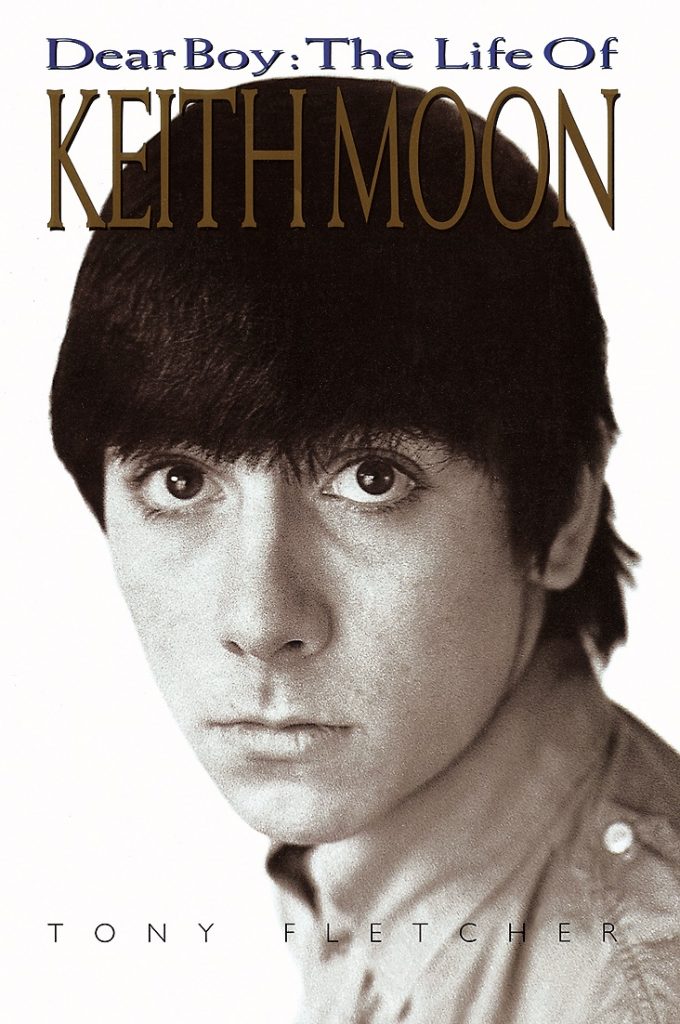
Keith Moon: Dear Boy – Tony Fletcher

I didn’t think I would ever see an extensive book (nearly 600 pages) on Keith Moon. Tony Fletcher wrote this book and he thoroughly researched Keith and he had been a fan since his teenage years. As a teenager, he actually met Keith before he died.

Fletcher talks to everyone of importance in Keith’s life. The only disappointing thing for me and for Fletcher himself is he had to debunk some of the myths about Keith. The great story of him driving a car in the pool of a Flint Michigan Holiday Inn… didn’t happen… but the real story is just as interesting though.

The veil is drawn back on a lot of myths. It’s not a book full of Keith doing wild things like the book “Full Moon”. This one shows his ugly side also. Keith had one of the most dangerous traits you could have…the ability not to be embarrassed. Think about that…that keeps us in check at times. With Keith, anything could happen at any time.

Replacements - Trouble Boys

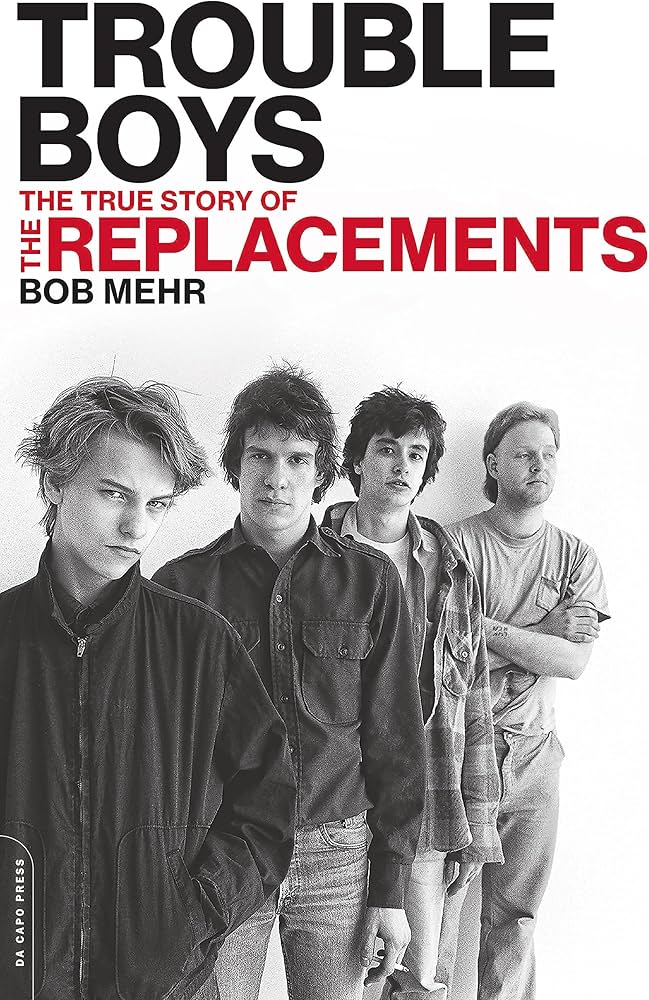
Trouble Boys – Bob Mehr

One of the only books about The Replacements. After this book, I started to understand the reckless and sabotaging behavior of the band. It also goes through the tough decision of Bob Stinson leaving the band only to die a few years later.

It was interesting to see the relationship they had with other bands such as REM at the time. They would goad each other into making better albums. I was a fan before I read it but it increased my interest by a bunch afterwards.

Up and Down with the Rolling Stones - Tony Sanchez

Up and Down with the Rolling Stones – Tony Sanchez

This was the first book I read on the Rolling Stones when I was around 13. It’s an easy but dark read. It’s written by Tony Sanchez, Keith’s drug dealer and sometimes partner in crime. Tony was also a photographer who took photos of the Stones and the Moody Blues. Spanish Tony, as he was called hung around with the Stones, Moody Blues and also knew the Beatles.

It’s full of wrecked cars, heroin, dead friends, sleazy characters, and some eventful journeys. At first, I would take some of the stories with a grain of salt but most of the events were verified by Keith’s book “Life.”

Let The Good Times Roll - Kenney Jones

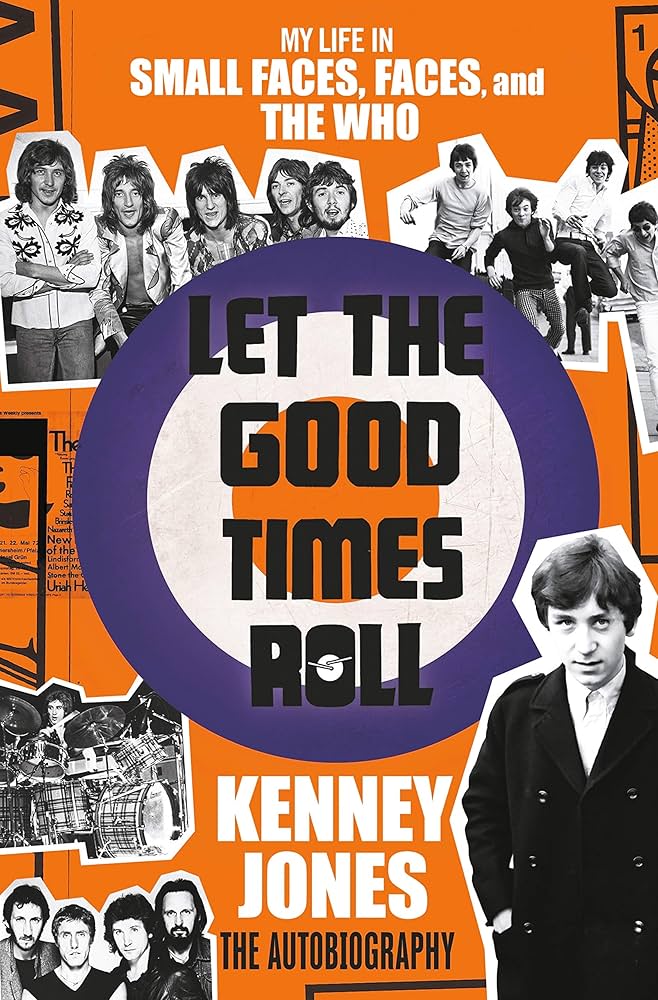
Let The Good Times Roll – Kenney Jones

Kenney Jones was the drummer of three of England’s most influential bands – The Small Faces, The Faces and for a few years The Who. I was pleasantly surprised by this book. Kenney keeps the book interesting from his childhood, teen years, swinging London, the Swinging Seventies, up til now.

I never knew much about the Small Faces and Faces and this book answered some questions I had about both bands.  He gave much more information than Roger Daltrey did in his book about Jone’s tenure as the drummer of the Who and their difficulties. Personally, I don’t think Kenney was the right drummer for the Who but then again…I don’t think anyone could have taken Moon’s place. He does give an interesting perspective on it though.

I didn’t’ realize that Keith Moon and Kenney were as close as they were.  Kenney had played with the Who before in sound checks when the Small Faces and Who were touring with each other and Moon couldn’t be found. After Moon died a few strange things happened to Kenney right before Bill Curbishley (The Who’s Manager) called to see if he would join. The strange events helped him make the decision.

Living The Beatles Legend

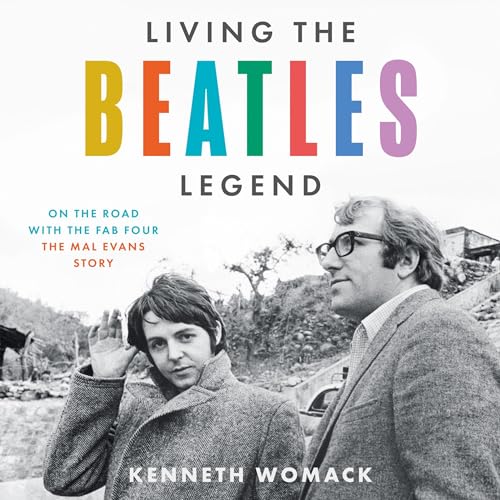
Living The Beatles Legend – Kenneth Womack

I did a review on this last year but I wanted to get it in here.

I’ve been waiting on this book since I read about the Beatles in the 70s as a kid. I knew the story…after a showdown with police Mal Evans was shot and killed on January 5, 1976. He was working on his autobiography at the time. Evans was the last person you would think would die that way…and in this case…he wanted it. Could the police have handled it better? Yes, but Mal had said that is how he wanted to go out. He forced the situation. He was only 40 years old.

Mal Evans along with Neil Aspinal were the roadies for the Beatles. Imagine that…2 roadies for the world’s biggest band. Mal worked at a telephone company in the early ’60s but he loved rock and roll…especially Elvis Presley. He would go see bands at the Cavern and struck up a friendship with George Harrison. George told him since he loved music…take a part-time job as a bouncer at The Cavern. The Beatles automatically liked him from the start. He was a big guy at 6’4″ but he never wanted to use violence. More times than not…he talked his way out of trouble. Aspinal was their only roadie and when Love Me Do and then Please Please Me came out…they needed another person because Aspinal was worn out.

I would highly recommend this book. Kenneth Womack had full access to his diaries and used many of the entries. This book turned up a lot of things about them that I had no clue about. It also gave a different look at their personalities on an everyday basis. Near the end, Mal went to the 2nd Beatles convention and spoke. He started to battle depression in the seventies after living in California and missing his wife and kids back in London. He picked up a girlfriend in California and that made his guilt worse. Drugs also affected him in the end.

Gene Chandler – Duke Of Earl

Well we might as well close out July with this classic.

When I hear this song I automatically think of the 1950s. One problem with that thought…it was released in late 1961 but it doesn’t matter…it’s pretty damn awesome. This is one of the songs that I missed on my Max’s Picks. The song has a magical quality about it…I have to smile when I hear it.

The song originated from warm-up exercises by the doo-wop group The Dukays. The group’s members would sing “doo doo doo” to prepare their voices, which evolved into “duke duke duke.” The song was written by Gene Chandler, Earl Edwards, and Bernice Williams. The song was recorded in one take.

The song established Gene Chandler’s career and became his signature hit. He adopted the persona of the “Duke of Earl,” often appearing in a cape and top hat during performances. Chandler went on to have a long career. He released music until 1986. He had a lot of success on the Billboard R&B charts and had some more top 40 singles as well, but nothing as big as The Duke of Earl.

This song is just one of those songs that you know the instant it starts. It’s one of the most famous openings of any song from the rock ’n’ roll era. Chandler was inducted into the Grammy Hall of Fame in 2002 for “The Duke of Earl” and the Rhythm and Blues Music Hall of Fame in 2014.

The song peaked at #1 on the Billboard 100 and #1 in Canada (from all I’ve found) in 1962. There are 35 cover versions of this song but it would be impossible to wipe away the memory of the original.

Duke Of Earl

Duke, Duke, Duke, Duke of Earl
Duke, Duke, Duke of Earl

Duke, Duke, Duke of Earl

As I walk through this world
Nothing can stop the Duke of Earl
And-a you, you are my girl
And no one can hurt you, oh no

Yes-a, I, oh I’m gonna love you, oh oh
Come on let me hold you darlin’
‘Cause I’m the Duke of Earl
So hey yea yea yeah

And when I hold you
You’ll be my Duchess, Duchess of Earl
We’ll walk through my dukedom
And a paradise we will share

Yes-a, I, oh I’m gonna love you, oh oh
Nothing can stop me now
‘Cause I’m the Duke of Earl
So hey yeah yeah yeah

Well, I, oh I’m gonna love you, oh oh
Nothing can stop me now
‘Cause I’m the Duke of Earl
So hey yeah yeah yeah

Status Quo – Ice in the Sun

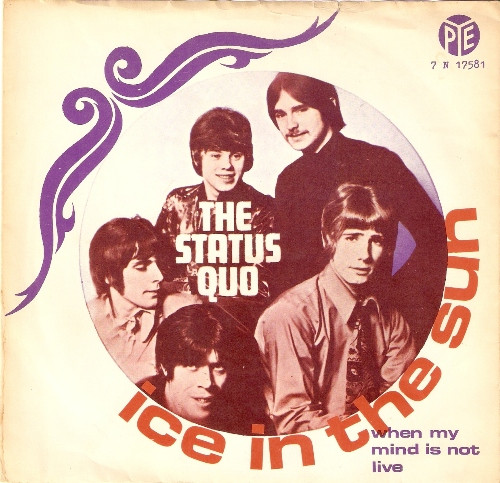
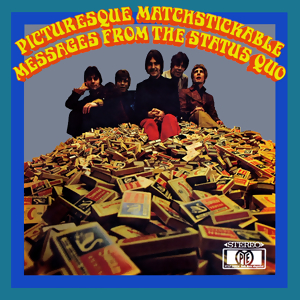
This song was on the band’s debut album Picturesque Matchstickable Messages from the Status Quo. I’m just learning about them but they started off with a psychedelic phase with this album. I really admire their career…their discography reads like War and Peace. They released their last album Backbone in 2019. This album was before their shift to boogie music of the 1970s.

Picturesque Matchstickable Messages from the Status QuoIce in the Sun peaked at #8 in the UK, #29 in Canada, and #70 on the Billboard 100. It charted well in the rest of the world. The song was written by Marty Wilde (a popular British rock and roll singer in the 50s) and Ronnie Scott (a British pop promoter). It’s a cool blend of psychedelic pop and rock. I really love the 1965-1968 era in rock because you had psychedelic, pop, rock, hard rock, folk, Americana, country, and a little bit of everything.

When Pictures of Matchstick Men hit the American charts, the group made the decision to remain in Europe, focusing their efforts on the UK market…they would regret this later on. It paid off in the UK as Status Quo became one of the most popular bands in Britain, charting over 60 singles but they missed out in America. Their only other chart entry here was Ice In The Sun.

The album received positive, especially for its single Pictures of Matchstick Men, which peaked at #7 on the UK Singles Chart and #12 on the Billboard 100. Ice in the Sun has stuck in their live repertoire through the years.

Status Quo

I’m not a little boyI’ve lived alone and loved so many moreBut when she touches me I’m on the wayI’m underneath the floor

Like ice in the sun I melt awayWhenever she comes I melt awayLike ice in the sun I melt away

I sit down in a chair andRead a book as if I couldn’t thereBut she is in a room andI must look I see her everywhere

Like ice in the sun I melt awayWhenever she comes I melt awayLike ice in the sun I melt away

She opens up her eyes as if to speakShe looks at me and I am weakHer eyes they seem much bigger than beforeI cannot think anymore

Like ice in the sun I melt awayWhenever she comes I melt awayLike ice in the sun I melt away

Like ice in the sun I melt awayWhenever she comes I melt awayLike ice in the sun I melt away

Like ice in the sun I melt awayWhenever she comes I melt awayLike ice in the sun

Creedence Clearwater Revival – Cotton Fields

The first time I heard this song I loved it. Many people have covered it but I know it primarily through CCR. Huddie Ledbetter, better known as Lead Belly, wrote this song and recorded it in 1940. Back when I was playing in a band…around one am, a couple of hours before closing we would do this song. People would be singing along with us. 

Some bands and artists seem to cross genres and CCR is one of those bands. Yes, I’ve met people who didn’t love them but most like something they do. I’ve met metal heads, hard rock fans, country, bluegrass, pop, and rock fans who like them. Most can’t believe they came from California and not the swamps of Louisana. They looked like blue-collar workers going to work every day…and by their music…they were. 

I visited secondhandsongs.com and found that this song has 187 versions of it. It’s been covered by Harry Belafonte, Odetta, Bill Monroe, Buck Owens, The Staple Singers, The Beach Boys, Van Morrison, and so many more. 

Creedence covered it on the Willy and the Poor Boys album released in 1969. It was not released as a single in America but it peaked at #1 in Mexico in 1970. The album had the well-known hits Fortunate Son, Down On The Corner, The Midnight Special, and the fan favorite It Came Out of the Sky. The album peaked at #3 on the Billboard Album Charts, #2 in Canada, and #10 in the UK.

Creedence had 18 songs in the top 100 and 9 top 10 hits yet no number 1’s in the Billboard 100 until Have You Ever Seen The Rain in 2021!

Cotton Fields

When I was a little bitty babyMy mama would rock me in the cradleIn them old cotton fields back home

It was down in LouisianaJust about a mile from TexarkanaIn them old cotton fields back home

Oh, when them cotton bolls get rottenYou can’t pick very much cottonIn them old cotton fields back home

It was down in LouisianaJust about a mile from TexarkanaIn them old cotton fields back home

When I was a little bitty babyMy mama would rock me in the cradleIn them old cotton fields back home

It was down in LouisianaJust about a mile from TexarkanaIn them old cotton fields back home

Oh, when them cotton bolls get rottenYou can’t pick very much cottonIn them old cotton fields back home

It was down in LouisianaJust about a mile from TexarkanaIn them old cotton fields back home

When I was a little bitty babyMy mama would rock me in the cradleIn them old cotton fields back home

It was down in LouisianaJust about a mile from TexarkanaIn them old cotton fields back home

In them old cotton fields back home

Coming Soon… Kinks Weeks starts on August 12

On August 12, 2024, I will post two weeks of Kinks songs from different bloggers… I’m looking forward to it as we will hit many Kinks eras… 1963 – 1993.

See You Then! Also…a huge thank you to all the bloggers who agreed to do this. I really appreciate you giving your time for this. I think the readers will enjoy it.

Beatles – Dizzy Miss Lizzy

This is one of the first songs that I learned the riff on and played it live. Up to this point, I was on bass but I had to start singing some so I took over rhythm guitar. It’s such a simple riff anyone could do it but it gave me some confidence on guitar. It’s a song you can sing and play the riff with no trouble. 

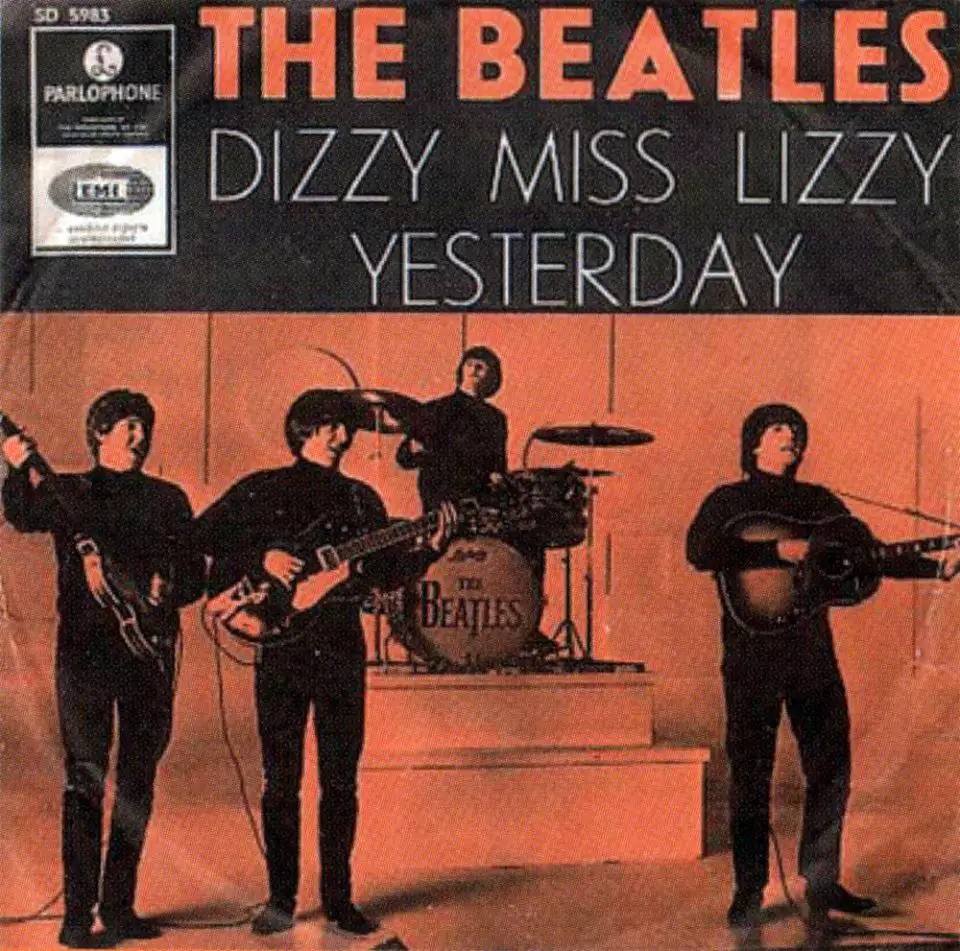
What makes this song is not the riff, it’s Lennon’s rock voice that I would give about anything to have. This is one of the covers that the Beatles would do in The Cavern and Hamburg. They recorded two covers in 1965 to satisfy Capitol Records who wanted to add on to an album called Beatles VI. They recorded Bad Boy (probably my favorite cover by them) and Dizzy Miss Lizzy. They ended up including Dizzy Miss Lizzy on The Help! UK-only soundtrack as well. 

Both Bad Boy and Dizzy Miss Lizzy were written by Larry Williams. They covered him three times in total. Slow Down, Bad Boy, and Dizzy Miss Lizzy. They covered more of Williams’s songs live but Lennon, in particular, loved his songs and did the lead vocals on all three while recording. 

Larry Williams released the song in 1958 on Speciality Records, the same record company his friend Little Richard was on. The B-side was Slow Down, a song that the Beatles would cover as well. It was one of the last charting top 100 singles he ever released. It peaked at #69 on the Billboard 100. He would score a couple of R&B charting songs in 1966 and 1967. 

This song is better live in my opinion and I’ve included a live more raunchy version of it by The Beatles.

Dizzy Miss Lizzy

Ow!

You make me dizzy, Miss LizzyThe way you rock and rollYou make me dizzy, Miss LizzyWhen you do the strollCome on, Miss LizzyLove me ‘fore I grow too old

Come on, give me feverPut your little hand in mineYou make me dizzy, dizzy, LizzyOh girl, you look so fineJust a-rocking and a-rollingGirl, I said I wish you were mine

Ah!Ow!Woo!

You make me dizzy, Miss LizzyWhen you call my nameOoh, babySay you’re driving me insaneCome on, c’mon, c’mon, c’mon babyI want to be your loving man

Ah!MmMm, ow!

Run and tell your mamaI want you to be my brideRun and tell your brotherBaby, don’t run and hideYou make me dizzy, Miss LizzyGirl, I want to marry you

Come on, give me feverPut your little hand in mine, girlYou make me dizzy, dizzy, LizzyGirl, you look so fineYou’re just a-rocking and a-rollingOoh, I said I wish you were mine