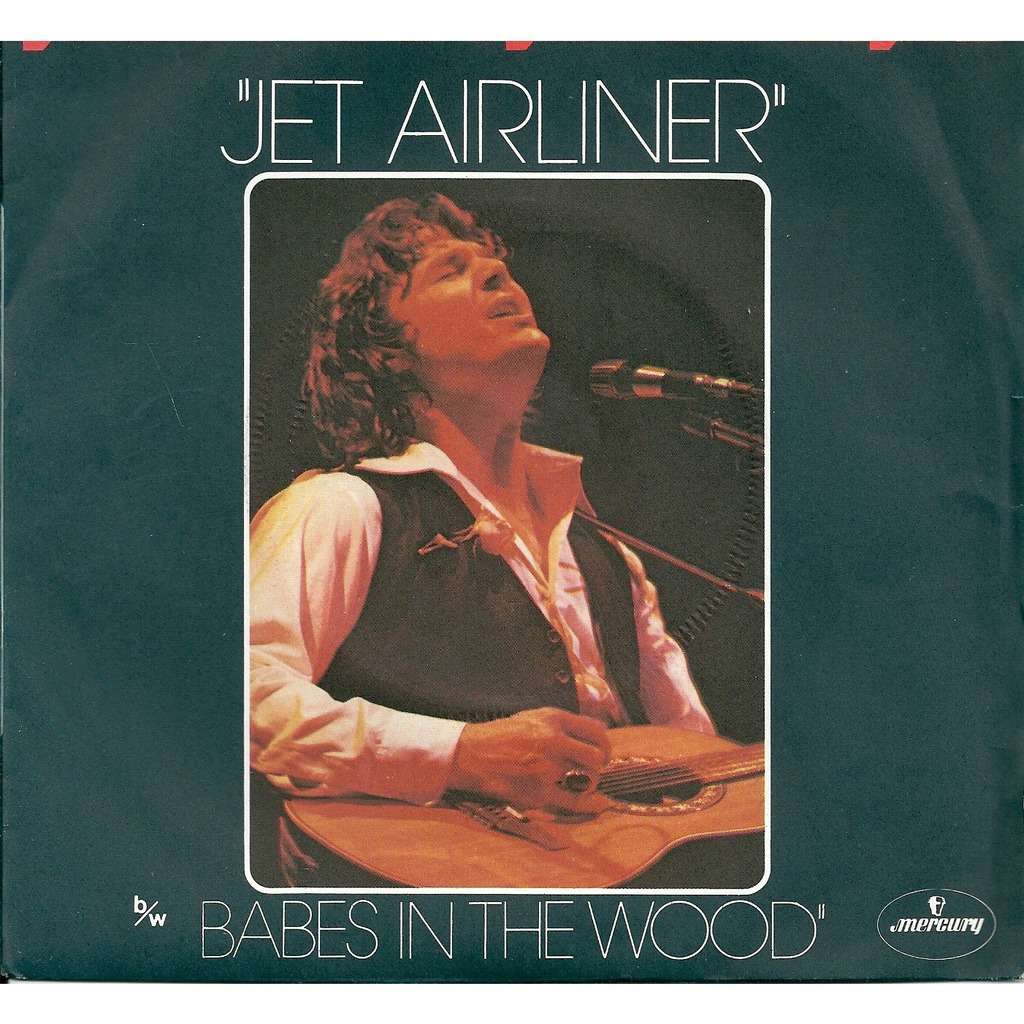
Steve Miller – Jet Airliner …Under The Covers Week

This ends Under The Covers Week. I hope you all have enjoyed it…I wrote a few more but I will post them later.

I’ve stayed away from Steve Miller as far as posting because of the constant play on classic radio he gets. I have to admit though, that guitar lick in the intro never gets old. I always thought he wrote this song. I had no idea that someone did this before.
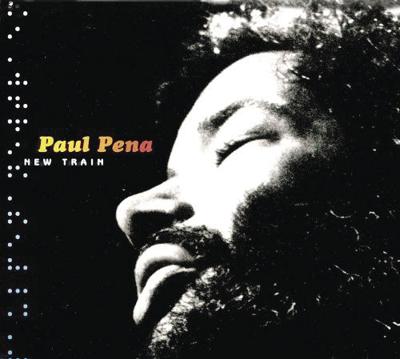
Paul Pena - New Train

Jet Airliner was written by Paul Pena, a blind folk singer from Cape Cod. Pena played at the Newport Folk Festival in 1969 but was unable ever to make it big in the music business. Pena wrote this song in 1973 and the song tackled his unhappiness over working on his album New Train which, as a result of disagreements, remained unreleased for 27 years. In 2000 it was finally released and praised.

He was grateful that Steve Miller covered this song. For the rest of his life, his royalties from Miller’s version was his only source of income. In 1997 he was in a fire and with heavy smoke inhalation and was in a coma for four days. In the last years of his life, he had diabetes and pancreatitis…he passed away in 2005 because of both complications. In the eighties, he also lived through his wife passing away.

In 1975, Steve Miller needed one more song to record his Book Of Dreams album. This one fit perfectly…the original song had angry verses that Miller re-shaped and it turned out to be a big hit for him. Personally, I like both versions but Pena’s is really raw and I like it. Miller tightened it up and streamlined it.

The album peaked at #2 in the Billboard Album Charts, #1 in Canada, #5 in New Zealand, and #12 in the UK in 1977. He had 2 top twenty hits off of that album along with Jungle Love which peaked at #23.

The song peaked at #8 on the Billboard 100, #3 in Canada, #12 in New Zealand, and didn’t chart in the UK.

Steve Miller talked about Pena’s song: “‘Jet Airliner’ was about those people and his treatment on the East Coast when he went out, He really didn’t want to leave California and go to the East Coast and record this record, and this was a song about it. When he brought it to me, he had recorded an album, and nothing had happened. On that album, there were five or six really, really great songs, and I needed one song.”

Steve Miller: “it was very long, verse after verse after verse of anger, a lot of it. So I took the song and said, ‘Can I reshape it? Can I play with it?’ They said, ‘You can do anything you want to with it.’ I remember laying out all the lyrics, typing them up on big sheets of paper… I had them all out on my kitchen table, moving the verses around… then I got it all together and went, ‘Yeah, this’ll work – it’s great!’”

Jet Airliner

Leavin’ home, out on the road
I’ve been down before
Ridin’ along in this big ol’ jet plane
I’ve been thinkin’ about my home
But my love light seems so far away
And I feel like it’s all been done
Somebody’s tryin’ to make me stay
You know I’ve got to be movin’ on

Oh, oh big ol’ jet airliner
Don’t carry me too far away
Oh, oh big ol’ jet airliner
‘Cause it’s here that I’ve got to stay

Goodbye to all my friends at home
Goodbye to people I’ve trusted
I’ve got to go out and make my way
I might get rich you know I might bet busted
But my heart keeps calling me backwards
As I get on the 707
Ridin’ high I got tears in my eyes
You know you got to go through hell
Before you get to heaven

Big ol’ jet airliner
Don’t carry me too far away
Oh, oh big ol’ jet airliner
‘Cause it’s here that I’ve got to stay

Touchin’ down in New England town
Feel the heat comin’ down
I’ve got to keep on keepin’ on
You know the big wheel keeps on spinnin’ around
And I’m goin’ with some hesitation
You know that I can surely see
That I don’t want to get caught up in any of that
Funky shit goin’ down in the city

Big ol’ jet airliner
Don’t carry me too far away
Oh, oh big ol’ jet airliner
‘Cause it’s here that I’ve got to stay

Oh, oh big ol’ jet airliner
Don’t carry me too far away
Oh, oh big ol’ jet airliner
‘Cause it’s here that I’ve got to stay
Yeah, yeah yeah, yeah

Big ol’ jet airliner
Don’t carry me too far away
Oh, oh big ol’ jet airliner
‘Cause it’s here that I’ve got to stay

Oh, oh big ol’ jet airliner
Carry me to my home
Oh, oh big ol’ jet airliner
‘Cause it’s there that I belong

Star Trek – The Menagerie Part 2

★★★★★ November 24, 1966 Season 1 Episode 12

If you want to see where we are…and you missed a few…HERE is a list of the episodes in my index located at the top of my blog.

This episode was written by Gene Roddenberry

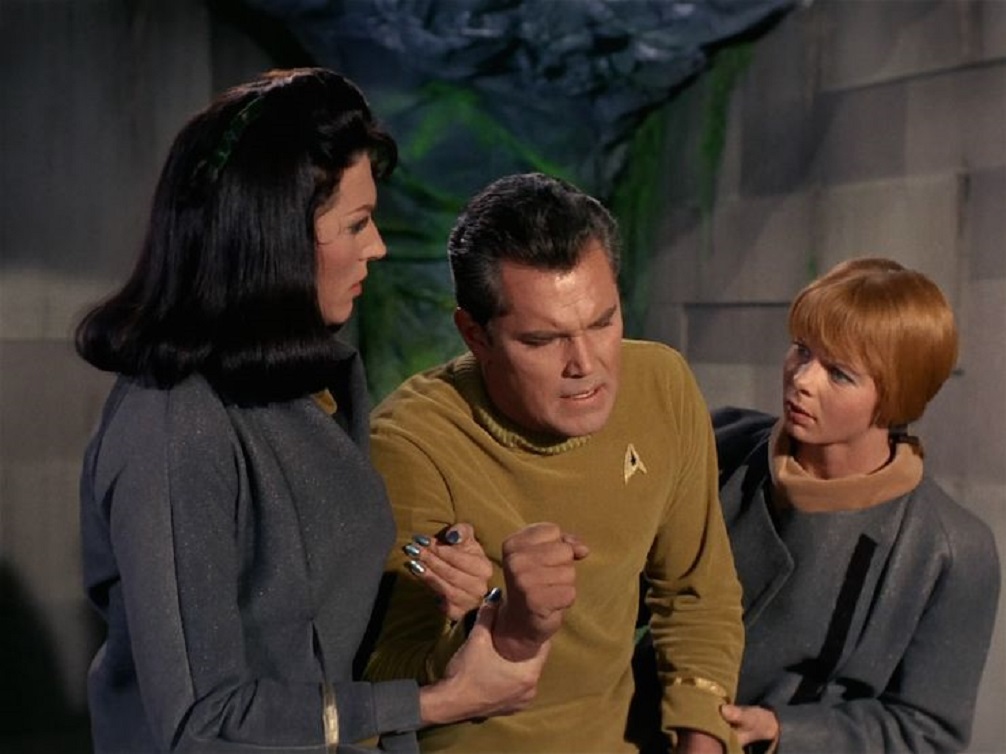
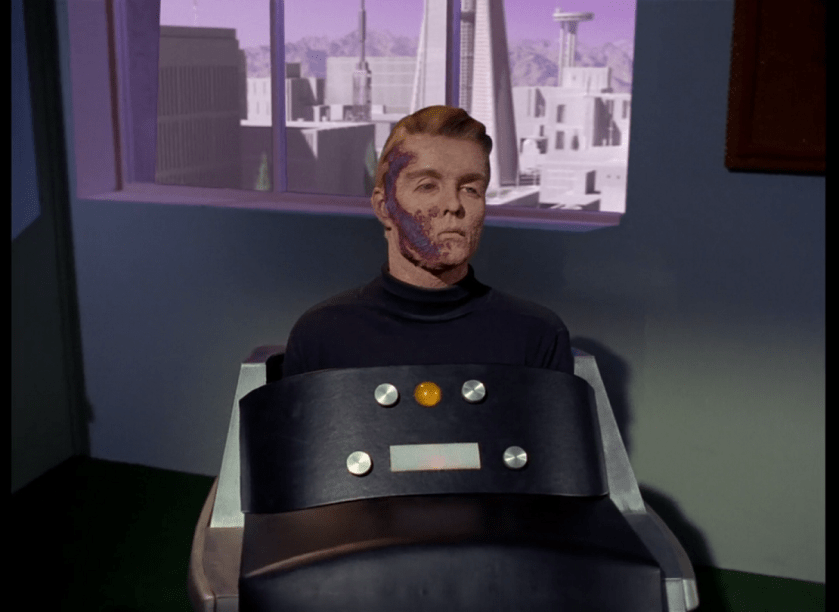
How much do The Talosians want Pike back? How much does his former first officer want to help him? What lengths will Spock go to free Pike from his confinement? The planet that Spock was trying to take the Captain is called Talos IV. Starfleet had given strict orders not to go to that planet and the punishment was the death penalty.

The second part of this wonderful two-parter episode has a great payoff. It’s interesting seeing Captain Kirk on the screen watching his predecessor Captain Pike at the helm of the Enterprise. Regular cast members don’t get that much to do. As we find out, Pike had been taken prisoner by the Talosian people, a species that has mastered the art of illusion. It’s how they continue to survive. And they have a plan in store for Pike, as well as for the lovely Vina (Susan Oliver), the sole survivor of a previous expedition.

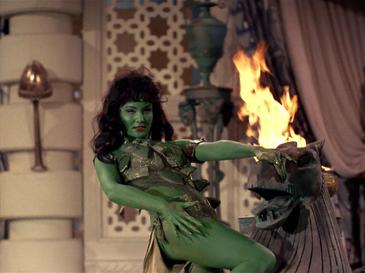
Orion Slave Girl

We get to see an Orion slave girl…who is described as vicious, animal-like, and irresistible to any man. She is in one of the many illusions Captain Pike has been thrust into. This is the first appearance of an Orion Slave Girl in Star Trek not counting The Cage because it wasn’t aired until the 80s.

I really like The Cage, but this story inserted into that one makes it that much better and more well-rounded. If you want to start watching the original Star Trek…these two are not a bad place to start.

At the end of the episode, you have Spock, whose closing exchange with Kirk is a thoughtful dialog on the topic of emotionalism versus logic. It would set the stage for future episodes, many of which would have to be dealt with on the basis of sound reasoning instead of irrational fear or succumbing to the unknown. Quite a remarkable accomplishment for a show more than 50 years old… the stories growing richer and more vibrant with the passage of time.

From IMDB:

In the script, McCoy and Scott have a scene in which they explain to Kirk how they figured out which computer bank Spock tampered with to lock the ship on course. They took perspiration readings on all banks, and since Spock’s sweat has copper in it, traces of copper were found. This scene isn’t shown.

When Number One and Yeoman J.M. Colt transport to the planet, Vina states that Capt. Pike would be better reproducing with a computer than Number One. Majel Barrett provided the standard Federation computer voice throughout the various Star Trek series.

The Talosian “Keeper” alien was actually played by a woman – Meg Wyllie, as were all Talosians. The voice was dubbed by Malachi Throne, who portrays Commodore Jose Mendez. In order to differentiate the ‘Talosians’ voice from the Commodores, Throne’s voice as the Talosian was slightly sped up.

Spock uses the term “hyperdrive” instead of warp drive. Hyperdrive was the propulsion mechanism for the United Planets Cruiser C-57D featured in Forbidden Planet (1956), a movie which Gene Roddenberry used as a source for many other Star Trek elements.

In the images of the Enterprise of the past, the crew prepares for departure from Talos IV. Pike signals the crew by saying “engage”. This is another characteristic of Captain Pike that Picard borrows in Star Trek: The Next Generation (1987), along with referring to the First Officer as “Number One”.

Sean Kenney took over the role of Pike from Jeffrey Hunter. Kenney also appeared as DePaul in TOS Season 1. Because Malachi Throne was cast as Commodore Mendez, it was necessary to re-dub The Keeper’s dialogue by altering the pitch of the actor’s voice. Throne later played Romulan Senator Pardek in Star Trek: The Next Generation: Unification I (1991) and Star Trek: The Next Generation: Unification II (1991).

Summary

Spock’s court-martial board views the video stream from Talos IV of Captain Pike’s imprisonment 13 years earlier and of the Enterprise’s attempts to rescue him. The Talosians, using their powers of mind-reading and illusion, place Pike in worlds from both his memory and his imagination. The one constant is Vina, the beautiful blonde survivor of a crashed Earth ship (the other half of a Talosian plan for a captive Adam and Eve). Number One’s attempts to liberate Pike result in her and Yeoman Colt’s capture (additional breeding stock for the Talosian plan), but when the humans and Talosians learn more of each other, the situation takes a turn neither side expects. As the Enterprise approaches Talos IV once again, Kirk and the court watch the past unfold and learn the real reason for Spock’s mutiny.

CAST

William Shatner … Captain James Tiberius ‘Jim’ Kirk
Leonard Nimoy … Mister Spock
Jeffrey Hunter … Captain Christopher Pike (archive footage)
Susan Oliver … Vina (archive footage)
Malachi Throne … Commodore José Mendez
Majel Barrett … Number One / Enterprise Computer (archive footage) (as M. Leigh Hudec)
Peter Duryea … Lt. José Tyler (archive footage)
John Hoyt … Dr. Phil Boyce (archive footage)
Adam Roarke … C.P.O. Garrison (archive footage)
DeForest Kelley … Doctor Leonard ‘Bones’ McCoy
James Doohan … Lieutenant Commander Montgomery ‘Scotty’ Scott
Nichelle Nichols Nichelle Nichols … Lieutenant Nyota Uhura
Sean Kenney … Christopher Pike
Hagan Beggs … Lt. Hansen
Julie Parrish … Miss Piper
Bill Blackburn … Lieutenant Hadley (uncredited)
Tom Curtis … Jon Daily (uncredited)
Frank da Vinci … Guard (uncredited)
Brett Dunham … Guard (uncredited)
Sandra Lee Gimpel … Third Talosian (archive footage) (uncredited)
James Holt … Starfleet Officer (uncredited)
Clegg Hoyt … Transporter Chief Pitcairn (archive footage) (uncredited)
Anthony Jochim … Third Survivor (archive footage) (uncredited)
Bob Johnson … First Talosian / Transporter Chief Pitcairn (voice) (uncredited)
Jon Lormer … Dr. Theodore Haskins (archive footage) (uncredited)
Tom Lupo … Security Guard (uncredited)
Ed Madden … Enterprise Geologist (archive footage) (uncredited)
Leonard Mudie … Second Survivor (archive footage) (uncredited)
Eddie Paskey … Lieutenant Leslie (uncredited)
Jan Reddin … Enterprise Court Recorder (uncredited)
Serena Sande … Second Talosian (archive footage) (uncredited)
George Sawaya … Chief Humboldt (uncredited)
Georgia Schmidt … First Talosian (archive footage) (uncredited)
Meg Wyllie … The Keeper (archive footage) (uncredited)

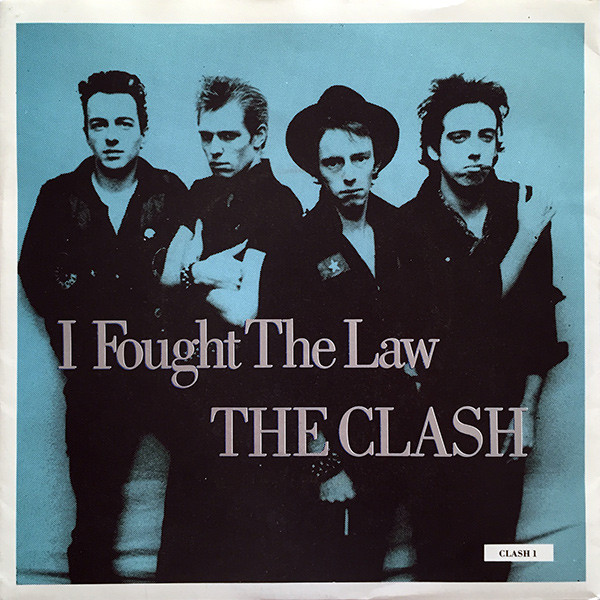
Clash – I Fought The Law ….Under The Covers Week

This is such a powerful song no matter who covers it. Sonny Curtis of the Crickets wrote this song and the most famous version is by The Bobby Fuller Four in 1965. This song was made for the Clash to cover and they do a great job on this.

The Clash’s version only charted in Ireland at #24 in 1979. It was on the EP The Cost Of Living. The original song sounded like a punk song before punk was a genre. The song was written two decades before The Clash recorded it in 1959. The song was ranked No. 175 on the Rolling Stone list of The 500 Greatest Songs of All Time in 2004.

The Clash covered the song after they heard Fuller’s version on a jukebox.  When playing the song live they made the song bleaker, changing the line, “I left my baby” to “I killed my baby.” Their version got them noticed in America, where the song was released in 1979, with “(White Man) In Hammersmith Palais” as the B-side.

The song was re-released in 1988 and peaked at #29 in the UK and #17 in New Zealand.

Sonny Curtis: “It was some time during the summer of 1959, and I would have been about twenty-one at the time,” the now 84-year-old songwriter tells Classic Rock. “I was sitting in my living room, about three o’ clock in the afternoon, in a little town called Slaton, Texas, outside of the city of Lubbock, where Buddy and a whole bunch of us started out. 

“It was a real windy day, which happens a lot in west Texas. The sand was blowing outside. I picked up my guitar, and I can’t imagine where the idea came from, but I just started writing this song, I Fought The Law. It only took about twenty minutes. You can tell that it didn’t take a rocket scientist to come up with those lyrics. But it’s my most important copyright.” 

I Fought The Law

Breakin’ rocks in the hot sun
I fought the law and the law won [x2]
I needed money ’cause I had none
I fought the law and the law won [x2]

I left my baby and it feels so bad
Guess my race is run
She’s the best girl that I ever had
I fought the law and the law won
I fought the law and the

Robbin’ people with a six-gun
I fought the law and the law won [x2]
I lost my girl and I lost my fun
I fought the law and the law won [x2]

I left my baby and it feels so bad
Guess my race is run
She’s the best girl that I ever had
I fought the law and the law won
I fought the law and the

I fought the law and the law won [x7]
I fought the law and the

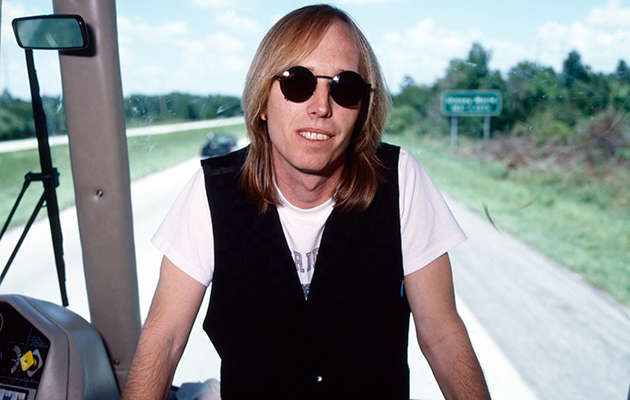
Tom Petty – Feel a Whole Lot Better ….Under The Covers Week

I hope you enjoy this Byrds cover by Tom Petty. One of the best B-side songs I can think of.

I posted The Waiting not long ago and talked about the similarities between The Byrds and Tom Petty. This Byrds song fits Tom Petty perfectly but the original song was not sung by McGuinn but by its writer…Gene Clark. Clark wrote this song in the mid-sixties when a girl he was seeing started to bother him. He also co-wrote Eight Miles High.

Although the song was the B side to The Byrd’s song All I Realy Want To Do, it gained a lot of promotion from Columbia Records and a lot of radio air time. It also became a classic rock standard, with dozens of artists giving their versions of the song.

This song was on Tom Petty’s solo album Full Moon Fever in 1989. The original name of the album was Songs From the Garage. It would have been an appropriate name for it. They worked on this album mostly in Heartbreaker Mike Campbell’s garage. This album caused a riff in The Heartbreakers. The other members thought Tom was going to leave the band. He kept reassuring them but they were not sure.

What’s unbelievable about it is, MCA rejected the album because they didn’t hear a single. This album would have 5 singles released from it.

Tom was absolutely stunned and depressed. He went back and added Feel A Whole Lot Better and the song Alright For Now and presented MCA with basically the same album again. There had been a regime change at MCA and this time they loved it. Ah…record companies…sometimes they are the spawn of Satan.

Although the album was released in 1989…Petty recorded it back in 1987 and 1988. MCA caused much of the delay when they rejected it.

Gene Clark of the Byrds: “There was a girlfriend I had known at the time, when we were playing at Ciro’s. It was a weird time in my life because everything was changing so fast and I knew we were becoming popular. This girl was a funny girl, she was kind of a strange little girl and she started bothering me a lot. And I just wrote the song, ‘I’m gonna feel a whole lot better when you’re gone,’ and that’s all it was, but I wrote the whole song within a few minutes.”

Tom Petty: “I didn’t see much of the Heartbreakers during that period, Mike I kept in touch with, of course, because he was working on Full Moon Fever with me. I never thought of leaving. And I kept reassuring them that I wasn’t going to leave. But I think there was some doubt in their mind.”

Feel A Whole Lot Better

The reason why, oh, I can’t say
I had to let you go, baby, and right away
After what you did, I can’t stay on
And I’ll probably feel a whole lot better when you’re gone

Baby, for a long time, you had me believe
That your love was all mine and that’s the way it would be
But I didn’t know that you were putting me on
And I’ll probably feel a whole lot better when you’re gone
Oh, when you’re gone

Now I gotta say that it’s not like before
And I’m not gonna play your games any more
After what you did, I can’t stay on
And I’ll probably feel a whole lot better when you’re gone

Yeah, I’ll probably feel a whole lot better when you’re gone
Oh, when you’re gone

Beatles – Twist And Shout ….Under The Covers Week

Usually, I don’t like covers better than the original but with this song I do. John Lennon sounds demented and he pushed his vocals over the edge. Lennon has said he screamed the lyrics more than sang them but it worked. He provided the power to this song with just his vocals. The Beatles didn’t have monitors live…no one else at this time didn’t either so they had to sing loud to be heard.  Author Mark Lewisohn called it “arguably the most stunning rock and roll vocal and instrumental performance of all time.”

This is probably close to sounding like they did live in Hamburg and The Cavern. This session took place on February 11, 1963, at EMI Studios in London, which was later renamed Abbey Road Studios. The Beatles did 10 songs that day, nine of which ended up on Please Please Me, their first UK album. Think about that for a minute… in one day they recorded their debut album except for the song Please Please Me which was recorded later.

When The Beatles played the Royal Command Performance with the Queen watching. During the introduction to this song, John Lennon famously said, “For the people in the cheaper seats, clap your hands and the rest of you, if you’d just rattle your jewelry.” He told Brian Epstein that he was going to say “rattle your fu**ing jewelry” and Epstein was on pins and needles worried that John would go through with that…but he didn’t. John wasn’t a fan of playing at these functions.

They actually did two takes of the song and kept the first one. John was sick with a cold and had stripped off his shirt to let himself sweat it out, but he pulled it off. The next day…February 12, 1963 – The Beatles played two shows, one at the Azena Ballroom in Yorkshire and another at the Astoria Ballroom in Lancashire. No rest for the weary.

This was the first song ever written by Bert Burns. He went on to write, Piece of My Heart, Here Comes the Night, Hang on Sloopy, Cry to Me and Everybody Needs Somebody to Love to name just a few. He signed Van Morrison to his first solo deal with Bang Records. Unfortunately, he died at 38 of a heart attack in 1967. Phil Medley did get a co-writing credit on the song.

The song peaked at #2 on the Billboard 100, #5 in Canada, and #1 in New Zealand in 1964. The Beatles version was not done yet. In the film, Ferris Bueller’s Day Off in 1986, the song was used and charted again. It peaked at #23 on the Billboard 100 and #16 in Canada.

The Isley Brothers’ version is great and there have been many other charting versions of it.

Norman Smith engineer:  “Someone suggested they do ‘Twist and Shout’ with John taking the lead vocal. But by this time all their throats were sore; it was 12 hours since we had started working. John’s, in particular, was almost completely gone so we really had to get it right the first time. The Beatles on the studio floor and us in the control room. John sucked a couple more Zubes (a brand of throat lozenges), had a bit of a gargle with milk and away we went.”

Twist and Shout

Well, shake it up, baby, nowTwist and shoutCome on, come on, come, come on, baby, nowCome on and work it on outWell, work it on out, honeyYou know you look so goodYou know you got me goin’ nowJust like I knew you would

Well, shake it up, baby, nowTwist and shoutCome on, come on, come, come on, baby, nowCome on and work it on outYou know you twist, little girlYou know you twist so fineCome on and twist a little closer nowAnd let me know that you’re mine, woo

Ah, ah, ah, ah, wowBaby, nowTwist and shoutCome on, come on, come, come on, baby, nowCome on and work it on outYou know you twist, little girlYou know you twist so fineCome on and twist a little closer nowAnd let me know that you’re mineWell, shake it, shake it, shake it, baby, nowWell, shake it, shake it, shake it, baby, nowWell, shake it, shake it, shake it, baby, nowAh, ah, ah, ah

Star Trek – The Menagerie Part 1

★★★★★ October 27, 1966 Season 1 Episode 11

If you want to see where we are…and you missed a few…HERE is a list of the episodes in my index located at the top of my blog.

This show was written by Gene Roddenberry

My star rating system goes to 5…but this one…I would give a 12 if I could…that includes Part 1 and Part 2. I point this episode out to people who have never seen the original series before. This two-parter would be a great place to start. It gives you some history of the crew, especially Spock and Captain Pike from the unseen pilot at the time.

Spock charged with mutiny and court marshal? Has the world gone mad? This is part one of a two-parter. They used the unseen pilot (The Cage) to make this one. It takes place 13 years after the episode The Cage that had Captain Pike.

You don’t know how Spock will not be in trouble for all the chaos he has caused. When Spock turns himself into Bones to be arrested…the shock of all the crew around them is priceless. When Kirk tries to pry the Enterprise from Spock’s control he fails. Spock has thought this out down to every single detail.

I have to give Roddenberry a lot of credit for writing this one. He took the pilot and developed this fantastic story around it and got to use the pilot’s footage that the network rejected. It could have been easily a patch job all the way around but it’s a great episode. Even some of the plot holes were explained. While watching the video screen of detailed past events, Kirk remarked that the Enterprise didn’t keep that good of video records but it was explained.

Captain Pike

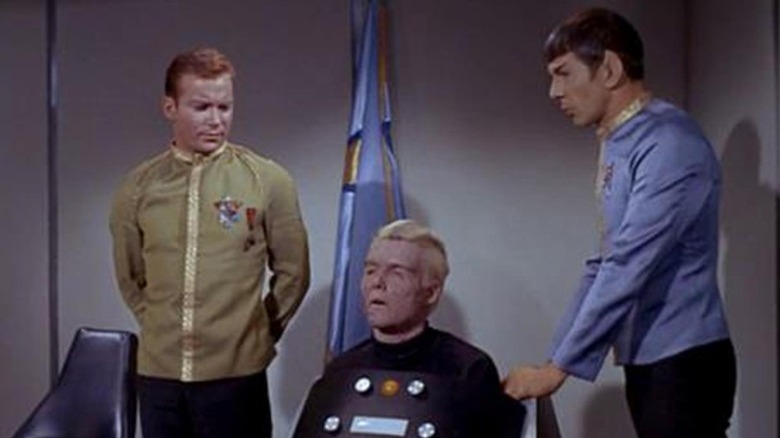
We learn that Vulcans are fiercely loyal, and seeing that Spock served under Captain Pike for over 11 years it would make sense that he still feels a sense of loyalty to his old Captain. Even though Pike rejects Spock’s plan with a series of beeps (Pike cannot talk) Spock still takes Pike against his will with good intentions. We also learn that Vulcans cannot lie, but it certainly appears that Spock did indeed lie in this episode, which seems impossible until Bones acknowledges that Spock is only half-human.

I remember first watching this episode in the 1980s. I totally bought the plot and still do. You are thinking, why is Spock risking everything, his career, and life, against his old Captain’s wishes? Kirk trusts Spock and is shocked when he finds out Spock has taken over the ship. You can see the hurt and confusion in the character. Good acting all the way around. Part II is just as good and has the payoff.

From IMDB

Although scenes from Star Trek: The Cage (1966) feature Jeffrey Hunter as Captain Christopher Pike, he was unavailable and unaffordable for the framing story into which the scenes were to be inserted. Sean Kenney, an actor who resembled Hunter, was used instead. He plays the mute, crippled Captain Pike, now wheelchair-bound after an accident.

According to James Doohan, Gene Roddenberry originally wanted to sell the failed pilot as a theatrical film. However, it needed to be expanded with additional material to reach the feature length. Roddenberry planned to film the crash of the Columbia on Talos IV, because it didn’t require Jeffrey Hunter, who was neither available nor affordable to reprise his role as Captain Pike. However, plans for the feature release were soon abandoned.

The “frame” story of Captain Pike’s injury and abduction to Talos IV was necessitated because the producers’ inability to use the original pilot Star Trek: The Cage (1966) in its unedited form. Normally, series producers count on being able to use the pilot as an episode of the season, despite possible minor changes from the regular series, such as differences in uniform styles, terminology, and props; the second pilot, Star Trek: Where No Man Has Gone Before (1966), was used despite such discrepancies. But the differences between the series and the original pilot were too stark to be used unaltered – without the elaborate “frame” placing it 13 years in the past.

This episode was the first Star Trek material to be officially released by Paramount on any home video format in the United States, first in 1980 on VHS and Betamax, followed by a RCA SelectaVision CED videodisc release in 1981, and a US Laserdisc release in 1984.

The novel “Burning Dreams” establishes that the subspace message summoning Enterprise to Starbase 11 was not a fabrication by Spock, but instead an illusion by the Talosians making Spock think he actually did receive a message. The Talosians then spoke telepathically to Spock, making him aware of Pike’s condition and asking him to bring Pike to Talos IV. The novel also establishes that at the end of the teaser, when Spock tells Pike, “I have no choice,” their conversation continued with Spock telling Pike that the Talosians were aware of his condition and wanted to give him a chance for a better life than what he had and that Spock actually asked Pike for permission to try to help him.

Jeffrey Hunter accepted the lead role of Captain Christopher Pike in “The Cage”, the first pilot episode of Star Trek, but declined to film a second Star Trek pilot, requested by NBC in 1965, deciding to concentrate on films. Footage from the original pilot was subsequently adapted into a two-part episode called “The Menagerie” and screened in 1966. It wasn’t until 1988 that it was screened intact as a filler episode in Star Trek: The Next Generation (1987) due to a writers’ strike.

There have been many reasons given for Jeffrey Hunter not continuing as the captain. The one that rings most true is from Shatner’s book, where he relates that Hunter’s wife was a constant irritant to the production staff, with never-ending demands for how Hunter was to be handled and treated. Other books say that his wife came to a screening pitch for the pilot and declared that he wasn’t interested because he “was a movie star”. It seems likely the second story is a cover for the first and the first is the closest to the truth. Roddenberry decided that he wanted to be rid of Hunter, his wife, and their demands, and so never actually offered him a contract to continue.

It seems the nation of Cuba still exists in the 23rd century. During the court-martial scene, if you look carefully (to the right of where Captain Kirk is seated), you can see a flag stand in the back of the room. The flag hanging on it has the blue stripes and red triangle, which are part of the Cuban flag.

Summary

The Enterprise is summoned to Starbase 11 only to learn that no one there sent a message to them. The base is home to Fleet captain Christopher Pike, Kirk’s predecessor as Captain of the Enterprise. Unfortunately, Pike has recently had a serious accident, rendering him unable to speak and confining him to an automated chair. The base Commander, Commodore Mendez, begins to suspect Mr. Spock but Kirk defends his friend. That is until Spock takes command of the Enterprise and heads to Talos IV, a planet for which all Federation personnel are forbidden to visit under the sentence of death. Kirk and Mendez catch up with the Enterprise in a space shuttle at which time Mr. Spock is arrested. At his trial, he pleads guilty and offers mitigating circumstances in the form of detailed video logs recounting the time the Enterprise visited Talos IV 13 years before with Pike in command and Spock as its science officer.

CAST

William Shatner … Captain James Tiberius ‘Jim’ Kirk
Leonard Nimoy … Mister Spock
Jeffrey Hunter … Captain Christopher Pike (archive footage)
Susan Oliver … Vina (archive footage)
Malachi Throne … Commodore José Mendez
Majel Barrett … Number One / Enterprise Computer (archive footage) (as M. Leigh Hudec)
Peter Duryea … Lt. José Tyler (archive footage)
John Hoyt … Dr. Phil Boyce (archive footage)
Adam Roarke … C.P.O. Garrison (archive footage)
DeForest Kelley … Doctor Leonard ‘Bones’ McCoy
James Doohan … Lieutenant Commander Montgomery ‘Scotty’ Scott
Nichelle Nichols Nichelle Nichols … Lieutenant Nyota Uhura
Sean Kenney … Christopher Pike
Hagan Beggs … Lt. Hansen
Julie Parrish … Miss Piper
Bill Blackburn … Lieutenant Hadley (uncredited)
Tom Curtis … Jon Daily (uncredited)
Frank da Vinci … Guard (uncredited)
Brett Dunham … Guard (uncredited)
Sandra Lee Gimpel … Third Talosian (archive footage) (uncredited)
James Holt … Starfleet Officer (uncredited)
Clegg Hoyt … Transporter Chief Pitcairn (archive footage) (uncredited)
Anthony Jochim … Third Survivor (archive footage) (uncredited)
Bob Johnson … First Talosian / Transporter Chief Pitcairn (voice) (uncredited)
Jon Lormer … Dr. Theodore Haskins (archive footage) (uncredited)
Tom Lupo … Security Guard (uncredited)
Ed Madden … Enterprise Geologist (archive footage) (uncredited)
Leonard Mudie … Second Survivor (archive footage) (uncredited)
Eddie Paskey … Lieutenant Leslie (uncredited)
Jan Reddin … Enterprise Court Recorder (uncredited)
Serena Sande … Second Talosian (archive footage) (uncredited)
George Sawaya … Chief Humboldt (uncredited)
Georgia Schmidt … First Talosian (archive footage) (uncredited)
Meg Wyllie … The Keeper (archive footage) (uncredited)

Joan Jett – I Love Rock And Roll ….Under The Covers Week

Our small town got a record store in 1982. We had one in the seventies but it went out of business. In the new one…this is the first single I bought there. The store only lasted a year at the most but we enjoyed it while we had it. In 1982 you could not go to school, a store, or anywhere without hearing this song. If you didn’t hear it you heard someone hum it. Much like Another One Bites The Dust from two years earlier…you just couldn’t escape it.

In 2016 I saw The Who in Nashville and I didn’t know who was opening up. I was pleasantly surprised when Joan Jett was announced. She and her band were tight and very loud. The Who had ties with Jett back in 1979 as they helped finance Jett’s debut album Bad Reputation.

This was originally recorded by a British group called The Arrows in 1975, and it was written by their lead singer Alan Merrill and guitarist Jake Hooker. The song was released as a B-side with The Arrows’ “Broken Down Heart.” Co-writer Alan Merrill said  “That was a knee-jerk response to the Rolling Stones’ ‘It’s Only Rock ‘N’ Roll.’ I remember watching it on Top of the Pops. I’d met Mick Jagger socially a few times, and I knew he was hanging around with Prince Rupert Lowenstein and people like that – jet setters. I almost felt like ‘It’s Only Rock and Roll’ was an apology to those jet-set princes and princesses that he was hanging around with – the aristocracy, you know. That was my interpretation as a young man: Okay, I love rock and roll. And then, where do you go with that?”

The Arrows did get their own TV show called The Arrows Show. It ran from 1976-1977 in the UK for two full 14-week seasons on the ITV network. It was this show that Joan Jett saw in 1976. A fun fact about the song. The Arrows were based in England, where they don’t use dimes. At that time they would put a sixpenny in the jukebox to buy a song. That would have had a different ring to it, but the original producer Mickie Most liked dime because it sounded American,  and that’s the way The Arrows recorded it. Joan Jett didn’t really differ much from the Arrows version…just a little louder.

When the Runaways broke up in 1979, Joan Jett and her producer Kenny Laguna put her first solo album together with studio time and travel arrangements fronted by The Who. They struggled to get a record deal and had to form their own label, Blackheart Records, to release the album in America. Joan remembered The Arrows singing I Love Rock N Roll in 1976 while touring the UK and knew it sounded like a hit. She wanted the Runaways to cover the song but they turned it down. The reason they turned it down was that they had already covered a song called Rock and Roll by Lou Reed on their debut album and didn’t want another song with “rock” in the title at that time.

Jett recorded it with Paul Cook and Steve Jones of The Sex Pistols and released it as a B-side in 1979. Polygram Records owned that version of the song but they were not excited about the song or Joan Jett. They basically let her go and signed some of the other Runaways. Boy was that a mistake! Joan would end up being the best-known Runaway. Lita Ford was successful also along with Michael Steele with the Bangles but neither became as popular as Joan Jett…and this song was a big reason.

I like the original and both Jett covers. The hit version peaked at #1 on the Billboard 100, #1 in Canada, #1 in New Zealand, and #4 in the UK in 1982.

The album was called I Love Rock And Roll released in 1981. The album peaked at #2 on the Billboard Album Charts, #1 in Canada, #1 in New Zealand, and #25 in the UK in 1982.

The producers were Ritchie Cordell, Kenny Laguna, and Glen Kolotkin.

The song’s co-writer, Alan Merrill, died at 69 on March 29, 2020. Joan Jett offered condolences on Twitter, posting: “I can still remember watching the Arrows on TV in London and being blown away by the song that screamed hit to me.”

Joan Jett: “I think most people who love some kind of rock ‘n’ roll can relate to it. Everyone knows a song that just makes them feel amazing and want to jump up and down. I quickly realized, this song is gonna follow you, so you’re either gonna let it bother you, or you gotta make peace with it, and feel blessed that you were involved with something that touched so many people.”

Producer Kenny Laguna on Polygram Records: “They could care less about Joan Jett, they were busy signing every other Runaway. They thought Joan was the loser and they signed the other girls, who we’re all friends with, but I looked at the band and thought she was the Mick Jagger and Keith Richards of the band. The company decided that if I would pay the studio cost of $2,300, I could have all the rights, and I got three songs. I got ‘I Love Rock and Roll’ with The Sex Pistols, I got ‘You Don’t Own Me’ – they did a great version of the Lesley Gore hit, and they did a song Joan wrote called ‘Don’t Abuse Me.’ So I buy these songs back. In the meantime, Joan has a couple of fans. Rodney Bingenheimer of K-ROCK, KMAC in Long Beach, BCN in Boston, LIR in Long Island, they were playing The Sex Pistols’ kind of cruddy version of the song, and it was #1 on the alternative stations. It was really alternative music, they were way-out stations that would play some pretty adventurous stuff, that’s why they would play Joan, because Joan was not getting a record deal, Joan was way on the outside, like a Fugazi of her day. We saw some kind of potential there. I remember these guys from the big record distributors in Long Island kept calling and saying, ‘This is a hit record, we’re getting so many requests for it.’ So we cut it over and did a really good version of it.”

THE 1979 VERSION

I Love Rock and Roll

I saw him dancin’ there by the record machine
I knew he must a been about seventeen
The beat was goin’ strong
Playin’ my favorite song
An’ I could tell it wouldn’t be long
Till he was with me, yeah me, singin’

I love rock n’ roll
So put another dime in the jukebox, baby
I love rock n’ roll
So come an’ take your time an’ dance with me

He smiled so I got up and’ asked for his name
That don’t matter, he said,
‘Cause it’s all the same

Said can I take you home where we can be alone

An’ next we were movin’ on
He was with me, yeah me

Next we were movin’ on
He was with me, yeah me, singin’

I love rock n’ roll
So put another dime in the jukebox, baby
I love rock n’ roll
So come an’ take your time an’ dance with me

Said can I take you home where we can be alone

An we’ll be movin’ on
An’ singin’ that same old song
Yeah with me, singin’

I love rock n’ roll
So put another dime in the jukebox, baby
I love rock n’ roll
So come an’ take your time an’ dance with me

Creedence Clearwater Revival – I Heard It Through The Grapevine ….Under The Covers Week

Creedence cut through his song and stripped it bare with their version. I love Marvin Gaye’s version of this song but Creedence spun it into a garage band’s dream. I really like the steady drums that keep it tethered to earth. CCR’s drummer Doug Clifford played off of John Fogerty’s rhythm and it created the atmosphere of the song.

California Rasins - Heard It Through The Grapevine

This is embarrassing but this song really hit my radar through constant commercials in 1987. It was used in California Raisin commercials that played, and played, and played more. When I would go to Hardees for lunch…they would give me a plastic figure of one of the raisins. Yea…I collected them. Former drummer of the Jimi Hendrix Band of Gypsies, Buddy Miles, sang lead in those commercials.

Creedence’s album version was a whopping (I love using that word) 11-minute song. This was a change from their other compact songs. This of course was not an original. It was written by Norman Whitfield and Barrett Strong. Strong came up with the idea and asked Motown writers Holland-Dozier-Holland to work on it with him. They refused to credit another writer, so Strong took it to Whitfield, who helped put it together…so it was credited to Norman Whitfield and Barrett Strong.

In December 1975, CCR’s label Fantasy Records re-released the song as a single, which peaked at #43 on the Billboard 100 and #76 in Canada. This release came in the middle of some heated legal battles between the band and the label, which resulted in John Fogerty taking a 10-year break from making music. The song was edited down to a more reasonable length for radio.

The song was originally on their Cosmo’s Factory album released in 1970 which is possibly their best album.

Below….the first is one of the many commercials, the second was the single version, and the third is the album’s 11-minute version. 

I Heard It Through The Grapevine

Ooh-ooh, bet you’re wondering how I knew
‘Bout your plan to make me blue
With some other guy that you knew before?
Between the two of us guys, you know I love you more
Took me by surprise, I must say, when I found out yesterday

Ooh-ooh, I heard it through the grapevine
Not much longer would you be mine
Ooh-ooh, I heard it through the grapevine
And I’m just about to lose my mind
Honey, honey yeah

You know that a man ain’t supposed to cry
But these tears I can’t hold inside
Losing you would end my life, you see
‘Cause you mean that much to me
You could’ve told me yourself that you found someone else
Instead

I heard it through the grapevine
Not much longer would you be mine
Ooh-ooh, I heard it through the grapevine
And I’m just about to lose my mind
Honey, honey yeah

People say “You hear from what you see
Not, not, not from what you hear.”
I can’t help but being confused
If it’s true, won’t you tell me dear?
Do you plan to let me go
For the other guy that you knew before?

Ooh-ooh, I heard it through the grapevine
Not much longer would you be mine
Ooh-ooh, I heard it through the grapevine
And I’m just about to lose my mind
Honey, honey yeah

Ooh-ooh, I heard it through the grapevine
Not much longer would you be mine
Ooh-ooh, I heard it through the grapevine
And I’m just about to lose my mind
Ooh-ooh, I heard it through the grapevine
Not much longer would you be mine
Aah-aah, I heard it through the grapevine
And I’m just about to lose my mind
Honey, honey yeah

Faces – Maybe I’m Amazed ….Under The Covers Week

This week I want to mix it up a bit so I’m doing cover versions all this week. I thought I would kick it off with The Faces. I don’t think I’ve ever heard a version of this that I don’t like. A blog that I would highly recommend that specializes in covers is Randy at Mostly Music Covers. Check him out when you can…he goes in-depth on music covers.

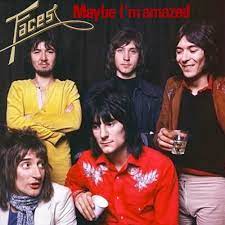
The Faces were fun…any band that would have a bartender on stage with a bar…has my vote. Ronnie Lane would sing the first part of this song with Rod the Mod Stewart would pick it up after the first verse. I like Ronnie’s voice a lot…it wasn’t Rod Stewart but it was very rootsy. Lane was a very good singer in a band with a great singer…twice. He was in the Small Faces with Steve Marriott and The Faces with Rod Stewart. Those two types of singers don’t come very often.

Faces - Long Player

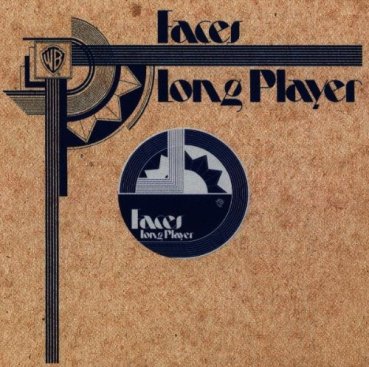
The song was on their album Long Player… They did an excellent version of this song. They added to it without losing its charm. The album was their sophomore album and it peaked at #29 on the Billboard Album Charts, #32 in Canada, and #31 in the UK in 1971. Their next album A Nod Is As Good As a Wink… to a Blind Horse (that is a great title!) peaked at #6 on the Billboard Album Charts later that year.

This song was written by Paul McCartney on his debut album. It should have been released as a single. He did release it as a single in 1976, a live version off the triple record set…Wings Over America. Paul wrote this song for Linda who helped pull him through a bad depression after The Beatles broke up. I did read an interesting fact about this song. “This was the first song with the word “amazed” in the title to reach the Hot 100. Another didn’t appear until 1999 when Lonestar charted with “Amazed.”

It’s hard to believe that the Faces single didn’t chart because McCartney never released it as a single himself…you would think the market would have been ready for it. Although FM stations did play the McCartney version.

Stewart always called Ronnie Lane the heart of the band and that was probably true. Lane got frustrated not being able to sing many songs and was upset at Stewart’s lack of commitment and quit. After Lane quit in 1973, Tetsu Yamauchi took his place for touring but then they broke up in 1975 when Ron Wood joined the Stones and Stewart continued his solo career.

Ron Wood talks about Maybe I’m Amazed and has a special guest in this 1:24 clip. 

Maybe I’m Amazed

Baby I’m amazed at the way you love me all the time
Maybe I’m afraid of the way I’ll leave you
Baby, I’m amazed at the way you fool me all the time
You hung me on a line
Baby, I’m amazed at the way I really need you

Baby, I’m a man, oh baby,
I’m a lonely man who’s in the middle of something
That he doesn’t really understand
Baby, I’m a man, oh baby,
You’re the only woman that could ever help me
Baby, won’t you try to understand

Baby, I’m a man, oh baby,
I’m a lonely man who’s in the middle of something
That he does not really understand
Baby, I’m a man, oh baby,
You’re the only one that could ever help me
Baby, won’t you try to understand

Baby, I’m amazed at the way you’re with me all the time
Baby, I’m afraid of the way I’ll leave ya’
Baby, I’m amazed at the way you help me sing the song
You right me when I’m wrong
Baby I’m amazed at the way I really need you

Baby, I’m a man, oh baby,
I’m a lonely man who’s in the middle of something
That he does not really understand
Baby, I’m a man, oh baby,
You’re the only woman that could ever help me
Baby, won’t you try to understand

Star Trek –  The Corbomite Maneuver

★★★★1/2 November 10, 1966 Season 1 Episode 10

If you want to see where we are…and you missed a few…HERE is a list of the episodes in my index located at the top of my blog. 

This episode was written by Jerry Sohl and Gene Roddenberry

This was a really good episode. It’s a very dramatic and suspenseful episode. Kirk is seen as a commander worthy of the title as this episode shows his skills quite well. The Enterprise wanders into a part of space where they are warned to turn back and proceed no further…but that is not part of the 5-year mission.

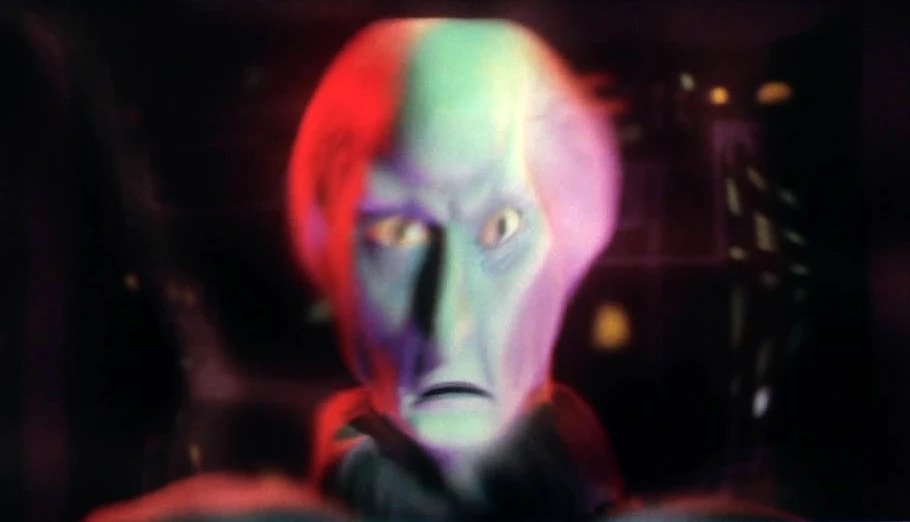
Blalok

A mysterious alien attacker claims to be able to destroy the ship with no risk of anything stopping him, and therefore grants the crew ten minutes…but they didn’t count on Captain Kirk pulling victory out of defeat. I love the look of the alien as his image gets transmitted to the Enterprise… a very handsome young man. 

Kirk has a lot of boldness in this episode. He is risking the ship on a bluff but he didn’t have many options at that point.  I have to say, the most disturbing thing to me was the episode’s final reveal of Balok. His appearance and the ship’s interior design, mixed with the incongruous voice really had an uncomforting effect. The episode offers a good look at the political climate of the Cold War.

The ending of this episode will throw you. You will not see it coming. I watched this one for the first time in years a few weeks ago…and yes I completely forgot about the ending. Great episode. 

From IMDB

Although the script instructed Leonard Nimoy to emote a fearful reaction upon his first sight of Big Balok, director Joseph Sargent suggested to Nimoy that he ignore what the script called for and instead simply react with the single word “Fascinating.” The suggestion of this response helped refine the Spock character and provide him with a now-legendary catchphrase.

McCoy says “What am I, a doctor or a moon shuttle conductor?” which can be considered the first of the “doctor not a” quotes. In later days, the quote would have been phrased “I’m a doctor, not a moon shuttle conductor!”

James Doohan’s wartime injury to his right hand (incurred at Normandy on D-Day) is briefly visible in the conference room scene when he passes a coffee thermos. Generally this was carefully hidden off-camera, but it can also be seen when he’s holding a phaser in Star Trek: Catspaw (1967), as he carries a large bundle of tribbles in Star Trek: The Trouble with Tribbles (1967), as he reverses the probe polarity in Star Trek: That Which Survives (1969) and very briefly in freeze-frame when he’s reaching into the box to restrain the evil dog in Star Trek: The Enemy Within (1966).

This episode was originally scheduled to air much earlier than it did, but the large amount of visual effects took several months to complete. The producers had to delay the planned airdate twice, before eventually broadcasting it as the tenth episode of the season.

Both in terms of its order on the production schedule, and its order of televised broadcast, this episode marks the very first time that the Enterprise fires its phasers. The actual burst that the ship fires at the warning buoy is unique to this episode.

Summary

In a section of unexplored space, the Enterprise comes across a marker of sorts that will not let it pass. They destroy the marker and move on but soon find themselves in conflict with an unknown alien who accuses them of trespassing and tells them they have only 10 minutes to live. Kirk decides it’s time to play a little poker and literally bluff his way out of the situation by telling the alien that the Enterprise has a device on board that will destroy the alien as well as the Enterprise. The bluff works but the alien turns out to be something quite unexpected.

CAST

William Shatner … Captain James Tiberius ‘Jim’ Kirk
Leonard Nimoy … Mister Spock
Anthony D. Call … Dave Bailey (as Anthony Call)
Clint Howard … Balok
DeForest Kelley … Doctor Leonard ‘Bones’ McCoy
Grace Lee Whitney … Yeoman Janice Rand
George Takei … Lieutenant Hikaru Sulu
James Doohan … Lieutenant Commander Montgomery ‘Scotty’ Scott
Nichelle Nichols … Lieutenant Nyota Uhura
Majel Barrett … Nurse Christine Chapel (voice) (uncredited)
Bill Blackburn … Lieutenant Hadley (uncredited)
Ted Cassidy … Balok’s Puppet (voice) (uncredited)
Frank da Vinci … Crewman (uncredited)
Walker Edmiston … Balok (voice) (uncredited)
Jeannie Malone … Yeoman (uncredited)
Sean Morgan … Crewman (uncredited)
Eddie Paskey … Lieutenant Leslie (uncredited)
Eddie Smith … Crewman (uncredited)
Ron Veto … Crewman (uncredited)

Gary U.S. Bonds – Out Of Work

Lately, I needed to do something different so…tomorrow I will start“Under The Covers Week” here…nothing but covers next week. I hope you enjoy it. It’s good to breakup things once in a while.

When I posted the song Soul Deep by the Box Tops…CB reccomended the Gary US Bonds version and yes…it’s very soulful and and a great version. That got me listening to Bonds again and I can’t believe I forgot about this song. I remember this song in the early 80s but I haven’t heard it in forever. When heard This Little Girl in the early 80s I didn’t know much about Bonds. I soon found the song Quarter Till Three and more of his sixties hits. His voice is just golden and still is. He puts a ton of soul and grit into every song I’ve heard from him.

This song has a Springsteen feel for good reason. Bruce wrote it and backed Bonds in a comeback in the early eighties. This song and This Little Girl were the first hits Bonds had since the 60s. This one was on the album On The Line released in 1982.

Springsteen wrote more songs than he could record, and three of them went to Bonds: “This Little Girl,” “Your Love” and the title track. Springsteen and members of his E Street band also played on the album and worked on the production. “This Little Girl” was a hit, going to #11 in the US and reviving Bonds’ career. When Springsteen brought Bonds on stage a few times in 1981, the crowds were far more familiar with him. In 1982, Springsteen and his band worked on another album for Bonds… On the Line and more songs like Out of Work

The album Dedication peaked at #27 on the Billboard Album Charts, and On The Line peaked at #52. Out of Work peaked at #21 on the Billboard 100 and #22 in Canada in 1982. This was the last single to date to chart in the Billboard 100.

Out Of Work

Eight a.m., I’m up and myFeet beatin’ on the sidewalkDown at the unemployment agencyAll I get’s talkI check the want ads but thereJust ain’t nobody hiringWhat’s a man supposed to doWhen he’s down and

Out of workI need a job, I’m out of workI’m unemployed, I’m out of workI need a job, I’m out of work

I go to pick my girl upHer name is Linda BrownHer dad invites me inHe tells me to sit downThe small talk that we’re makingIs going pretty smoothBut then he drops a bomb“Son, what d’ya do?”

I’m out of workI need a job, I’m out of workI’m unemployed, I’m out of workI need a job, I’m out of workYeah, yeah, yeah

Hey, Mr. PresidentI know you got your plansYou’re doing all you can nowTo aid the little manWe got to do our best toWhip that inflation downMaybe you got a job for meJust driving you around

These tough times, they’re enoughTo make a man lose his mind(I’m out of work)Up there you got a job but down here below

I’m out of workI need a job, I’m out of workI’m unemployed, I’m out of workI need a job, I’m out of work

Ooh, I’m out of workI’m out of workI’m out of workI’m out of workI’m out of workI’m out of workI’m out of work

Star Trek – Dagger Of The Mind

★★★★1/2 November 3, 1966 Season 1 Episode 9

If you want to see where we are…and you missed a few…HERE is a list of the episodes in my index located at the top of my blog. 

This show was written by Shimon Wincelberg and Gene Roddenberry


This episode is excellent. Morgan Woodward played Dr. Simon van Gelder and did a superb job. He stated that the part of Van Gelder was perhaps the most physically and emotionally exhausting role he played…and it affected him for weeks. James Gregory as Dr. Tristan Adams turned in a nice performance as the sadistic doctor that has been corrupted by his power over the patients. James Gregory had a long successful career. He played on Barney Miller and many other shows.

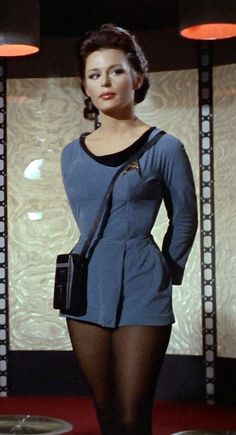
Star Trek - Marianna Hill

Marianna Hill as Helen Noel did a great job as well but I felt she was underutilized in the row. She played a psychologist who knew Kirk in the past and helps save him in this episode. Her character is independent, strong, and viral. She holds her own throughout the episode and displays a strong female, not usually common, for 1960s television.

This episode also shows Spock doing the first mind meld in the series with a distraught Dr. Simon van Gelder. Provocative, intriguing, and intelligent, with some good tension with some great acting, makes this one a must. This episode is a pure human drama that explores the consequences of not only experimentation on humans but also of the need for past experiences to define us.

From IMDB

In several interviews, Morgan Woodward noted that his work on the episode greatly affected him on both a personal and professional level. Woodward felt the part of Van Gelder was perhaps the most physically and emotionally exhausting role he played. He also stated his experience in playing the part resulted in his being in a largely anti-social state of mind for a few weeks following. However, Woodward, who would later play Captain Tracey in Star Trek: The Omega Glory (1968), credits his work on Star Trek in helping him to finally break away from his being typecast in Western roles.

James Doohan and George Takei do not appear in this episode. Scotty appeared in the original script, operating the transporter in the first scene, when Van Gelder is beamed aboard. His appearance was nixed by Robert H. Justman, who saw this as a way of saving costs by eliminating Doohan, who would have been paid $890 for the episode, and replacing him with a random performer (Anthony Larry Paul, playing Lieutenant Berkeley), hired for a much lower salary.

A shipping label produced for Star Trek: Deep Space Nine (1993) shows that a (now elderly) Dr. Van Gelder is still in charge of the Tantalus Penal Colony in the 2370s. TBF More likely to be the son or even grandson of the original Dr. Van Gelder given he would have to be at least 153 years old by the time of DS9.

This episode marks the first appearance of the Vulcan mind meld. The final shooting draft of this script had Spock placing his hands on Van Gelder’s abdomen while performing the mind meld. According to The Making of Star Trek, the mind meld was developed as an alternative to the scripts use of hypnosis to stabilize Van Gelder. They did not want to inaccurately depict hypnosis as a medical technique. Nor did they want to shoehorn into the script a pretext that Spock was qualified to act as a hypnotist in a medical capacity. Lastly, they did not want to risk accidentally hypnotizing viewers at home.

During filming of this episode, William Shatner was pulled away from the sound stage and rushed to a recording studio where, in 2 takes, he recorded the famous “Where No Man Has Gone Before” monologue, which had been re-written several times by different writers (mostly John D.F. Black). He read the first take flawlessly, but associate producer Robert H. Justman felt it should have a subtle echo, so he had the sound engineer create it for the second take. Since most of the effects sequences of the Enterprise were late and not yet been completed for the series debut, the opening credits were hurriedly assembled from existing shots from Star Trek: The Cage (1966) and Star Trek: Where No Man Has Gone Before (1966).

Summary

After a psychologically disturbed patient from the Tantalus penal colony, Dr. Simon Van Gelder manages to escape to the Enterprise, Dr. McCoy begins to suspect that something is amiss on the colony. Captain Kirk and Dr. Helen Noel beam down to the planet to investigate.

CAST

William Shatner … Captain James Tiberius ‘Jim’ Kirk
Leonard Nimoy … Mister Spock
James Gregory … Dr. Tristan Adams
DeForest Kelley … Doctor Leonard ‘Bones’ McCoy
Morgan Woodward … Dr. Simon van Gelder
Marianna Hill … Helen Noel
Nichelle Nichols … Lieutenant Nyota Uhura
Susanne Wasson … Lethe
John Arndt … First Crewman
Ed McCready … Inmate
Eli Behar … Therapist
Frank da Vinci … Lt. Brent (uncredited)
Walt Davis … Tantalus (uncredited)
Louie Elias … Inmate Guard (uncredited)
Ron Kinwald … Tantalus Inmate (uncredited)
John Hugh McKnight John Hugh McKnight … Inmate Guard (uncredited)
Eddie Paskey … Lieutenant Leslie (uncredited)
Anthony Larry Paul … Crewman (uncredited)


Kinks – Till The End Of The Day

Growing up I had a greatest hits album by the Kinks and this song was on it. Later, I would buy Give The People What I Want, Low Budget, and their 80s albums. It was later when I got The Kinks Are the Village Green Preservation Society and I started to listen to more of their 60s music that wasn’t just the big hits… but was just as good or in some cases better. I also know the song through Big Star as they covered it on their album Third/Sister Lovers. Ace Frehley also covered the song.

By 1966 The Kinks were in a touring, recording, and promotion cycle that put enormous strain on the band. Ray Davies was married and had a child and was still counted on writing more songs. Ray was growing as a songwriter. Their career started with You Really Got Me and as they went along…the sophistication of the songs grew with Davies’s songwriting ability.

This single was one of the last early harder-rocking songs. What came after this was introspective pop songs like Waterloo Sunset and Dedicated Follower of Fashion. I like the jarring guitar intro plus Mick Avory’s drums. Nicky Hopkins, the supersession piano player, played on this track. The harmonies by Dave Davies and Peter Quaife elevate this song also.

The song peaked at #8 in the UK, #34 in Canada, and #50 on the Billboard 100 in 1966. For me, it ranks high on my list of early Kinks songs.

Ray Davies: “That song was about freedom, in the sense that someone’s been a slave or locked up in prison. It’s a song about escaping something. I didn’t know it was about my state of mind.”

Ray Davies: “I remember how ‘Till the End of the Day’ came about. I had a bit of writer’s block, and my managers were getting worried because I hadn’t produced anything in almost a month. They sent Mort Shuman around to my house, one of my hit-writing heroes. He wrote ‘Save the Last Dance For Me” with Doc Pomus. This mad, druggy New Yorker came ’round to my little semi-detached house in London. He said, ‘I’m here to find out what you’re thinking about. I’m not interested in what you have written; I’m interested in what you’re gonna write.’ He was completely paid off by my managers to say it. I thought it was ridiculous that there was so much importance put on it. If I don’t want to write for a month, I won’t. To say the least, I was pressured into doing it. Then I went off to stay with my sister and bought a new toy, a little upright piano, and wrote ‘Till The End Of The Day.”

Till The End Of The Day

Baby, I feel good
From the moment I arise
Feel good from morning
Till the end of the day
Yeah, you and me
We live this life
From when we get up
Till we go sleep at night
You and me were free
We do as we please, yeah
From morning, till the end of the day
Till the end of the day
Yeah, I get up
And I see the sun up
And I feel good, yeah
Cause my life has begun
You and me were free
We do as we please, yeah
From morning, till the end of the day
Till the end of the day
You and me were free
We do as we please, yeah
From morning, till the end of the day
Till the end of the day

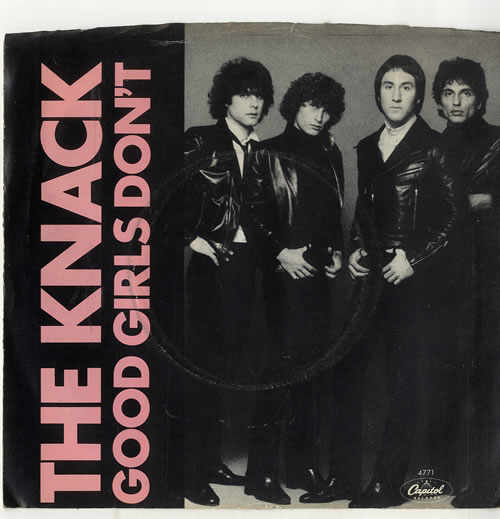
Knack – Good Girls Don’t ….Power Pop Friday

Good girls don’tGood girls don’tBut, she’ll be telling youGood girls don’tBut I do

The Knack was huge after their debut album but the record company wanted another one quickly. That was a huge mistake. A band takes years and years to make their first album. What I mean is they are writing songs as teenagers and later until they get a record deal. They use most of them up for the debut and now are stuck with coming up with a new album in a few months. That is a hard chore to do and why there is a sophomore slump with some bands.

Good Girls Don’t was released by the Knack in 1979 off the album Get the Knack. It was written by Knack singer  Doug Fieger and peaked at 11 on the Billboard Charts. Everyone knows their other big single off that album “My Sharona” but I really liked this one at the time and still do. I was going to write…this song would not fly today but…I’ve heard rap songs that make this sound like Mother Goose.

One of the main reasons I like this song is the bridge. I don’t talk about a song’s bridge very much but it’s put together well. It starts with it’s a teenage sadness and builds. I will say this…I still like My Sharona…but I’ve My Sharonaed out. I still like it but in small doses. This one is a lot of fun.

I was 12 about to be 13 when I heard this song for the first time. For a new teenage boy, it was a great song. Fieger wrote this song in 1972 and didn’t want to record it for the album until the producer talked him into it. It is a strong power pop song with some edgy lyrics for 1979 and a “clean” single was released also that edited out the naughty things. It is a teenage song but it’s still fun.

The first video is the cleaner version of them in the studio…the second is the real version.

Good Girls Don’t

She’s your adolescent dreamSchool boy stuffA sticky, sweet romanceAnd she makes you wanna screamWishing you could get inside her pants

So you fantasize awayWhile you’re squeezing herYou thought you heard her saying

Good girls don’tGood girls don’tBut, she’ll be telling youGood girls don’tBut I do

So you call her on the phoneTo talk about the teachers that you hateAnd she says she’s all aloneAnd her parents won’t be coming home ’til late

There’s a ringing in your brain‘Cause you could have sworeYou thought you heard her saying

Good girls don’tGood girls don’tBut, she’ll be telling youGood girls don’tBut I do

And it’s a teenage sadnessEveryone has got to tasteAn in-between age madnessThat you know you can’t erase‘Til she’s sitting on your face

You’re alone with her at lastAnd you’re waiting ’til you think the time is right‘Cause you’ve heard she’s pretty fastAnd you’re hoping that she’ll give you some tonight

So, you start to make your play‘Cause you could have sworeYou thought you heard her saying

Good girls don’tGood girls don’tBut, she’ll be telling youGood girls don’tBut I do

And it’s a teenage sadnessEveryone has got to tasteAn in-between age madnessThat you know you can’t erase‘Til she’s sitting on your face(And it hurts)

Good girls don’tGood girls don’tBut, she’ll be telling youGood girls don’tBut I do

Good girls don’tGood girls don’tBut, she’ll be telling youGood girls don’tBut I doBut I doBut I doBut I do

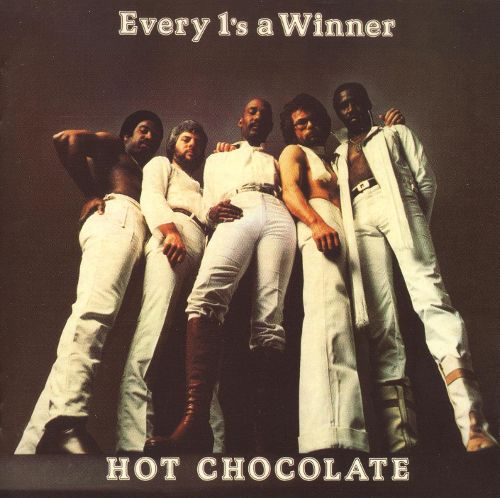
Hot Chocolate – Everyone 1’s A Winner

Some songs take me back to a point in time. This one is no different but it takes me to two points. I remember this when I was a small kid growing up. I didn’t hear it again until the early 2000s.

I was driving around in Panama City Beach Florida and this song came on the radio. As soon as I heard it I knew the song but I didn’t know what band did it. I loved that riff and that tone…was it a guitar or synth??? Whatever it was I had to find it. I searched for it on the internet…I used the only word I remembered…”winner” plus a great guitar riff. This one finally came up and I was on my way. I grew up with a single my sister had by them called “You Sexy Thing.”

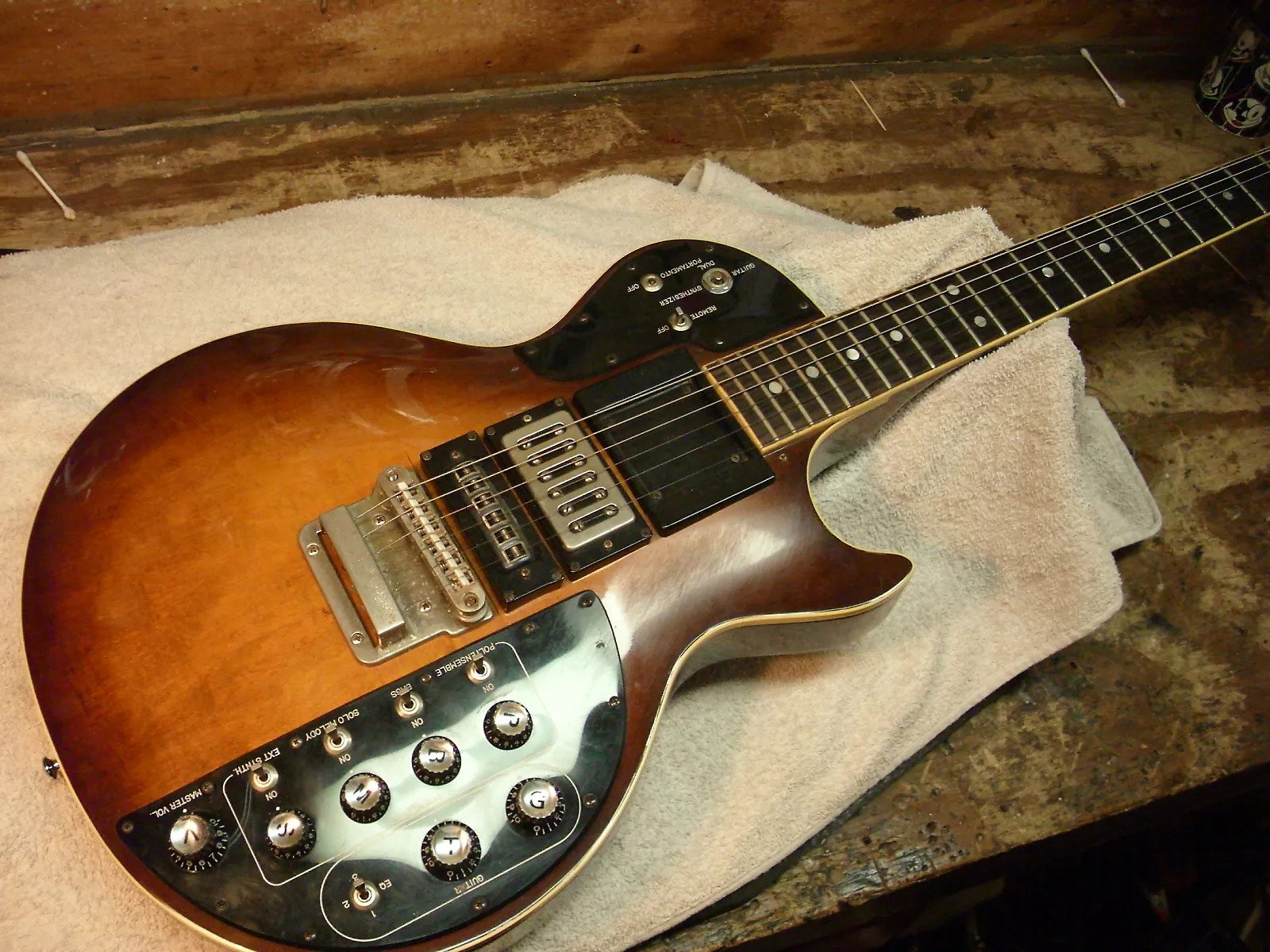
Les Paul GR500

1978 Roland GR500

Everyone 1’s A Winner came off an album of the same name by Hot Chocolate. It peaked at #6 on the Billboard 100,#5 in Canada, #7 in New Zealand, and #12 in the UK in 1978.

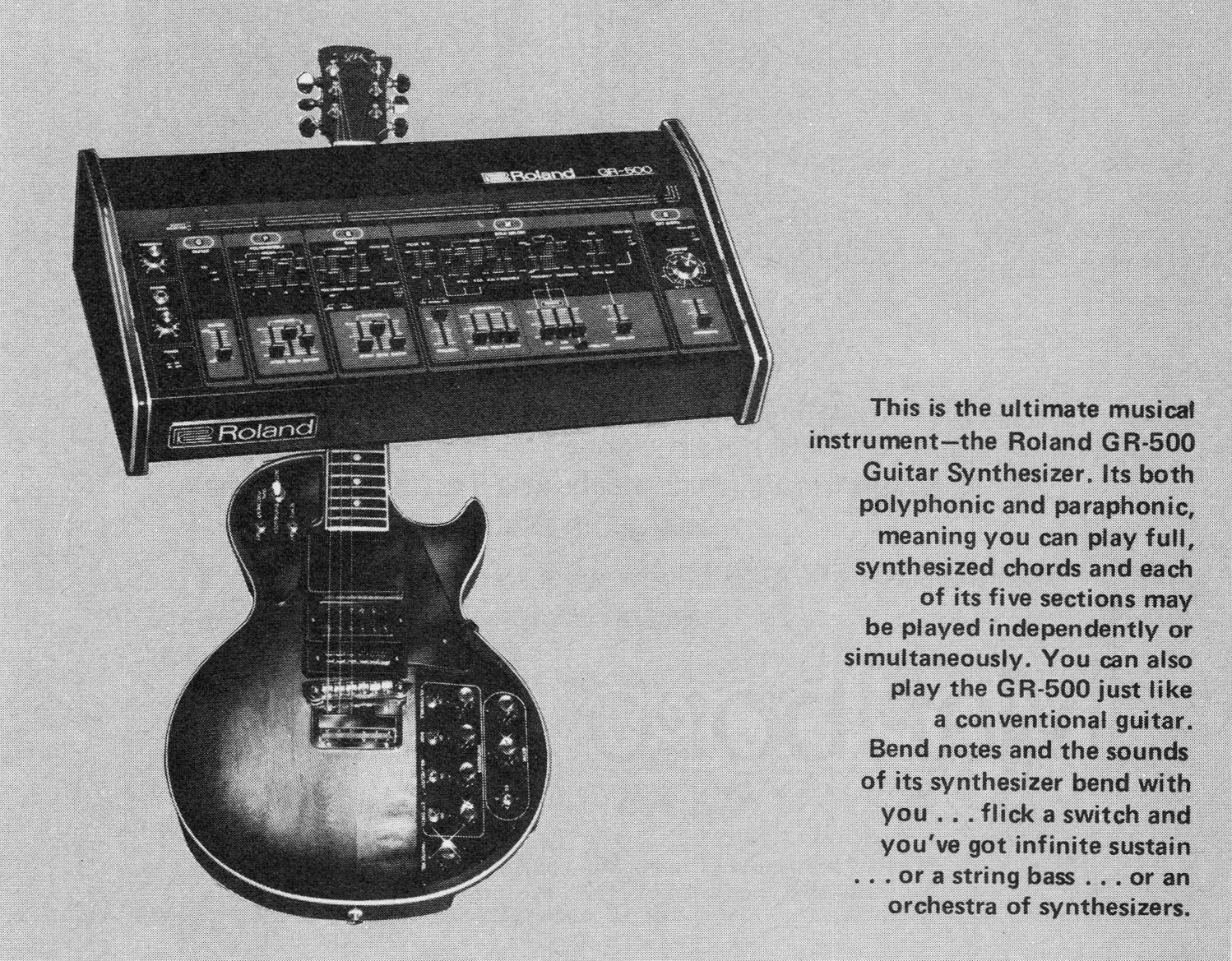
It’s known for the great guitar riff that was played using the first Roland guitar synth with the Les Paul-type guitar-the GR500. Yea my urge that my wife hates is kicking in…the urge to track one of these babies down and buy it. 

Roland-GR-500-1978_Print_Advertisement

They are best known for “You Sexy Thing” but this is one that sticks with me. Hot Chocolate was briefly signed with The Beatle’s Apple Records and they did a reggae version of John Lennon’s “Give Peace a Chance.”

This band charted a song every year between 1970 and 1984. The song was written by Errol Brown the lead singer.

Lead Guitar player Harvey Hinsley: The guitar I used on most of our records was an SG standard, It had a thicker sound than Fenders, Usually double-tracked the riffs, etc; The amp was a sound city 200 watt, or 125 pa amp, [no distortion on amps back then-just turned amp up] – they sounded much the same; On early stuff like Brother Louis, You’ll always be a friend & I believe in love, -I used Larry Ferguson’s Leslie cab; On Cadillac, I used a phaser pedal; On Emma, Sexy thing, so you win, I used a foot volume pedal too, on Every 1′ a winner I used the first Roland guitar synth with the Les Paul type guitar-the GR500; Put your love in me I used a Watkins echo & a waa-waa pedal set half on to give a more trebly sound

Lead singer Errol Brown: “I was getting nowhere with it when I heard my eldest daughter crying in a particular rhythm and used that for the melody.”

Every 1’s A Winner

Never could believe the things you do to me,Never could believe the way you are.Every day I bless the day that you got through to me,‘Cause baby, I believe that you’re a star.

Everyone’s a winner, baby, that’s the truth (yes, the truth)Making love to you is such a thrill.Everyone’s a winner, baby, that’s no lie (yes, no lie)You never fail to satisfy (satisfy)

Never could explain just what was happening to me,Just one touch of you and I’m a flame.Baby, it’s amazing just how wonderful it isThat the things we like to do are just the same.

Everyone’s a winner, baby, that’s the truth (yes, the truth)Making love to you is such a thrill.Everyone’s a winner, baby, that’s no lie (yes, no lie)You never fail to satisfy (satisfy)

Let’s do it again.

Everyone’s a winner, baby, that’s the truth (yes, the truth)Making love to you is such a thrill.Everyone’s a winner, baby, that’s no lie (yes, no lie)You never fail to satisfy (satisfy)