Power Pop fan, Baseball, Beatles, Alternative music, old movies, and tv show fan. Also anything to do with pop culture in the 60s and 70s... I'm also a songwriter, bass and guitar player. Not the slightest bit interested in politics at all.
There she is again Standin’ over by the record machine Looking like a model On the cover of a magazine
Every single time I post a Chuck Berry song I go on and on about how great a lyricist he was…and this one will be no different. The words in his songs have a flow to them that seems so natural.
This song has the Chuck Berry style all over it. It appeared on the 1959 album Chuck Berry Is on Top and was released as a double A-side with “Almost Grown.” He has a line in the song that people seem to frown on these days. “She’s too cute to be a minute over seventeen” because of her age. What some forget is back then the target audience was teenagers. The singer whether it be Chuck Berry, Little Richard, Fats Domino, or Buddy Holly…they were the voice of the teens. They were the teenagers talking…the rock stars were the teen’s voices.
The song peaked at #80 on the Billboard 100 in 1959.
Later on in the late 60s and to the 2000’s he would tour by himself and in his contract…the promoter had to provide a backing band. He did this to save money but it affected the quality of the shows at times. He did have a super backing band at one of his gigs in 1973.
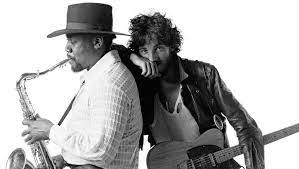
Berry’s contract stipulated that it was the promoter’s responsibility to supply him with a backing band for this concert. Apparently, Bruce Springsteen learned about a week before the show that the promoter was seeking a group to support Berry and immediately volunteered his band’s services for free, which the promoter gladly accepted.
There was no rehearsal or soundcheck with Berry, so Bruce and the band improvised as best they could. The show was Bruce’s first known appearance in Maryland. Bruce and the E-Street Band opened their part of the show with a 50-minute set, followed by a 60-minute set by Jerry Lee Lewis and his band. Chuck Berry (with Springsteen’s entire band backing him, including Bruce and Southside Johnny) closed the evening’s festivities with a 70-minute performance.
Springsteen asked Chuck what songs they were going to do. Berry said: “We’re going to do some Chuck Berry songs.” That is one of the funniest rock stories I’ve ever heard. Imagine being on stage and not knowing what song is coming. What makes it worse is that Chuck would change the keys of songs. So instead of playing in the universally known A chord to Johnny B Goode…he would start in an F# chord sometimes. Luckily the bass player Gary Tallent was a music historian so he led the band that night. He played in those keys because his former piano player Johnnie Johnson helped him write and arrange those songs so Chuck would play them in keys as a piano player would.
More than 20 years later, Springsteen again played backup for Berry, at a concert at Cleveland Municipal Stadium, celebrating the opening of the Rock and Roll Music Hall of Fame.
Bruce Springsteen when Chuck Berry died: “Chuck Berry was rock’s greatest practitioner, guitarist, and the greatest pure rock ‘n’ roll writer who ever lived. This is a tremendous loss of a giant for the ages.”
Little Queenie
I got lumps in my throat When I saw her comin’ down the aisle I got the wiggles in my knees When she looked at me and sweetly smiled There she is again Standin’ over by the record machine Looking like a model On the cover of a magazine She’s too cute to be a minute over seventeen
Meanwhile I was thinkin’
If she’s in the mood no need to break it I got the chance and I oughta take it If she can dance we can make it C’mon queenie let’s shake it
Go, go, go, little queenie Go, go, go, little queenie Go, go, go, little queenie
Tell me who’s the queen Standin’ over by the record machine Looking like a model On the cover of a magazine She’s too cute to be a minute over seventeen
Meanwhile, I was still thinkin’ If it’s a slow song, we’ll omit it If it’s a rocker, then we’ll get it And if it’s good, she’ll admit it C’mon queenie, let’s get with it
Go, go, go, little queenie Go, go, go, little queenie Go, go, go, little queenie
I want to start something called “Max Picks” and go through every year from 1955 to around 1990 or so. Right now I’ll try to get these in on Wednesday after Star Trek. When Star Trek ends on August 26th I might move it to the weekends. I will try to make each of these short and sweet. This post will hopefully be the longest one I write only because of telling you about it. I will pick 5 songs out of each year…now of course I’m breaking my rule in the first one! You will see why.
I won’t just pick hits as we go along. In the 80s there will be some “alternative” music and I will try to mix it up. The reason I am starting in 1955? The first song below is the reason. It helped jumpstart Rock and Roll.
1955
Ok, let’s get this rolling. The huge hit this year? The one you will know later on in Happy Days. Bill Haley and His Comets Rock Around The Clock. It was one of the most important rock songs of all time. This one was huge in America and it popped into the UK charts in 1955. Whether you are a rock fan, pop fan, heavy metal fan, or anything in between…1955 helped kick it all off.
Here…a middle age looking man takes the world by storm. The following year it would be in the movie of the same name featuring Bill and his Comets. Take it away big fellow.
Mr. Chuck Berry also debuted with his first single…the classic Maybelline. The song was written by Chuck Berry and the song just flat out rocks. This song and its beat influenced young kids like Keith Richards, Jimmy Page, Eric Clapton, and many more.
Now one of my favorites from the year and decade. The one and only Fats Domino Ain’t That A Shame. I love Cheap Tricks version but Fats is Fats…he was one of the most understated rockers of this decade. This song was written by Fats Domino and Dave Bartholomew.
I could not have this without the Big E! Elvis Presley…I’m stuck between two songs to pick. Heartbreak Hotel and Mystery Train. So…on my first post in this…I’m going to pick both! This is the Elvis that I love… before the Army and Tom Parker took his soul away. Junior Parker wrote this song and the great Sam Phillips produced it. Heartbreak Hotel was written by Mae Boren Axton (Hoyts Mom!) and Tommy Durden. Tom Parker got Elvis’s name writing credits but he didn’t have anything to do with it but singing.
Since we have thrown in rockers…I thought I would try a ballad that’s been in a lot of movies and was huge at the time. The Penguins doing Earth Angel (Will You Be Mine) written by Curtis Williams, Gaynel Hodge, and Jesse Belvin.
If you want to see where we are…and you missed a few…HERE is a list of the episodes in my index located at the top of my blog.
This show was written by Gene Roddenberry
***I’ll be starting a new series called “Through The Years” starting after this post.***
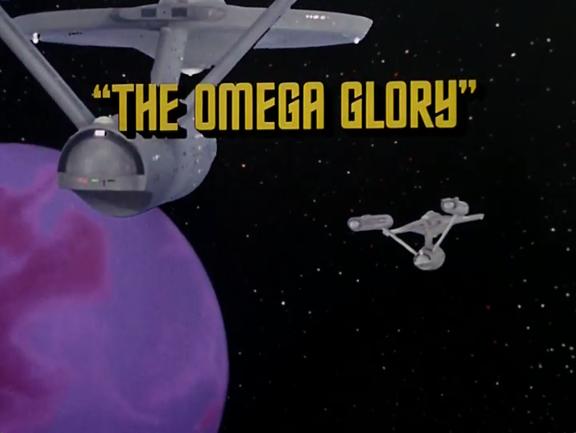
This episode has been called really good and the worst of the series. I don’t think it’s the worse by any stretch of the imagination. For me it was a little convoluted but a good episode to watch.
Gene Roddenberry originally wanted to produce this script early in the first season, along with Star Trek: Mudd’s Women, but NBC thought the script was weak and ordered the staff to ‘shelve’ it for an indefinite time to be possibly reworked and produced later on. Despite NBC still objecting against it, Roddenberry finally had his way to make “The Omega Glory” late in the second season.
The Enterprise comes across the U.S.S. Exeter, and finds its entire crew dead — victims of absolute dehydration resulting from a plague contracted from the surface of the planet the Exeter was orbiting. Kirk, Spock, and McCoy beam down to the planet’s surface and learn that the inhabitants are immune and that the newest inhabitant is Ron Tracey, captain of the Exeter. Unfortunately, the inhabitants of the planet are divided into the urban-dwelling “Khoms” and the more rustic “Yangs,” each in deadly combat with the others.
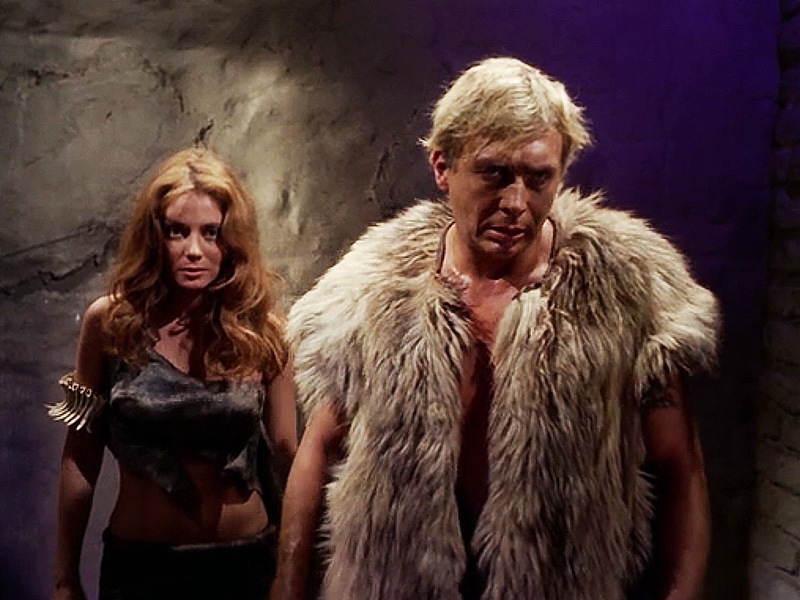
They find themselves in a town where relatively backward villagers are preparing to execute two captives who are apparently savages. The execution is stopped by the sole survivor of the Exeter, Capt. Ron Tracey. He explains that they are in a Kohm village and the savage Yangs are waging a war against them. It turns out Tracey has broken the prime directive by arming the Kohms because he has learned that not only are people living on the surface immune to the condition that killed his crew… they also live to a great age… he intends to find out how then make a fortune with the knowledge.
Tracey has Kirk, Spock and McCoy locked up, Galloway is dead by now, and while confined Kirk is put in a cell with a Yang. After a fight the Yang escapes and warns his people about a Kohm ambush. They are then victorious and take the village; it is then that Kirk learns that the Yangs have some shocking similarities with the United States… only this society lost a war and forget the meanings of its familiar ‘holy words’.
This episode is not a veiled observation on communism…it’s in the open completely.
From IMDB:
This is the second of three times the Enterprise encounters another Constitution-class star ship with the entire crew dead. The other two were in Star Trek: The Doomsday Machine (1967) and Star Trek: The Tholian Web (1968).
NBC announced that Star Trek would be renewed for a third season during the closing credits of “The Omega Glory,” broadcast on 1 March 1968. In the announcement, they also wrote “Please do not send any more letters”, responding to the vast amount of mail received during the protests organized by Gene Roddenberry and Bjo Trimble.
This was one of three scripts submitted to NBC (along with Star Trek: Where No Man Has Gone Before (1966) and Star Trek: Mudd’s Women (1966)) when they were seeking to do a second pilot for the series. They ultimately chose to kickstart the series with “Where No Man Has Gone Before”.
Only episode where a victim of the Vulcan neck-pinch actually makes a sound at the time of the pinch. Normally, the neck-pinch incapacitates the victim before he/she can make a sound.
This episode marks the first and only time in the original series that a reference is made to phaser “power packs.”
The original 1965 script draft named the missing starship as the USS Argentina. The Enterprise landing party consisted of Kirk, Spock, a young navigator named Lieutenant Commander Piper, a helmsman called Lieutenant Phil Raintree, and the ship’s doctor named Milton Perry.
A letter reprinted in Inside Star Trek: The Real Story reveals that Gene Roddenberry personally submitted his teleplay for consideration for an Emmy Award.
Here the USS Enterprise visits another world possessing a parallel-Earth culture. Other such examples include Star Trek: Miri (1966) and Star Trek: Bread and Circuses (1968). There are also Earth cultures in Star Trek: A Piece of the Action (1968), Star Trek: Patterns of Force (1968), Star Trek: The Paradise Syndrome (1968), and Star Trek: Plato’s Stepchildren (1968), but they were introduced deliberately or accidentally by people from Earth and/or the Federation, and did not originate organically.
Scenes from The Omega Glory were featured in a set of View Master (3-D) slides. In this adaptation, the Yangs were renamed the Meraks.
Morgan Woodward (USS Exeter Captain Ronald Tracey) had previously played another wild-eyed madman, Simon Van Gelder in Star Trek: Dagger of the Mind (1966).
This is the first time the chief medical officer of another Federation star ship, Dr. Carter, is seen. Although he is sitting in the command chair on the bridge, it is unclear if he is in command of the Exeter or is merely recording his warning. Not until Star Trek: The Next Generation: Descent, Part II (1993) would a doctor clearly be in command of a star ship. (Star Trek: The Next Generation: Remember Me (1990) had teased viewers with the possibility.)
The Kohm guarding Dr. McCoy can be seen in green coveralls in Star Trek: The Man Trap (1966), both in the corridor and in the turbolift, and as one of the miners in Star Trek: The Devil in the Dark (1967). He can also be seen extensively as a background character in Kung Fu (1972) and Hawaii Five-O (1968).
Spock attempting to telepathically “suggest” Sirah to pick up the communicator was reminiscent of the early concepts that Spock has special powers over women.
The remastered version of “The Omega Glory” aired in many North American markets during the weekend of 30 June 2007. The episode included dramatic new effects shots of the Enterprise and the Exeter in orbit of a more Earth-like, computer-generated Omega IV. Among the fine details inserted into the show, a small glimpse of the Exeter appears on the Enterprise viewscreen as it approaches the planet at the start of the episode.
Roy Jenson’s voice was electronically altered. The preview trailer contains unaltered dialogue for Cloud William which doesn’t have the “slowed down” effect.
It is learned that the Exeter had a standard complement of four shuttlecraft. During the search for survivors, Galloway informed Kirk that “all four of the craft” were still on the hangar deck. Whether all Constitution-class vessels were equipped with that number of shuttles is not made clear.
The shot of Sulu manning the helm station with an empty captain’s chair in the background in mid-Act One is recycled from Star Trek: Arena (1967).
This takes place in 2268.
Empty phasers make a click noise just like an empty gun. (When Tracey tries to shoot Kirk a second time.)
When Sirah holds the communicator while hypnotized by Spock, the lid/antenna appears to open by itself, without being flipped open in any way. In actuality, Sirah is seen using her right index finger to pull the right top hinge; thereby opening the cover.
Wu was born in 1806.
Scotty and Chekov do not appear in this episode.
Wu’s father was born well before 1268.
A canned female scream is also heard in Star Trek: A Private Little War (1968) and Star Trek: The Gamesters of Triskelion (1968).
For the scenes involving the American flag Fred Steiner, the original “Perry Mason” theme composer, provided the only original music written for this show.
McCoy gives the prognosis that an Omega lV serum can’t prolong alien life. And that the Kohms’ & the Yangs’ vast prolonged lifespan is evolutionary. However, Spoke is a product of genetic engineering. So at least offspring might enjoy “immortality.” And with 23rd century science & medicine, “adulthood” gene splicing is feasible.
Roy Jenson (Cloud William) and Irene Kelly (Sirah) both appeared in different shows of “Mission: Impossible”, another initial Desilu production. Jenson appeared in the “The Killing” of season two, and Kelly in “The Elixir” of season three.
Summary
As the Enterprise approaches planet Omega IV, they find another starship, the U.S.S. Exeter, in orbit. Kirk, Spock, and McCoy beam aboard to find the ship abandoned but strewn with uniforms and crystals. The last log entry from the ship’s surgeon tells them they have been infected with a deadly virus brought aboard from a returning landing party. Kirk’s party beams down to the planet’s surface and finds there is one Exeter survivor: Captain Ron Tracey. He has apparently ignored the Prime Directive and has taken sides in a local dispute supporting the Kohms against their arch-rivals, the Yangs. As McCoy tries to find a cure for the virus, Spock and Kirk try to make sense of the situation. They eventually realize there is an odd parallel with Earth’s own history.
CAST
William Shatner … Captain James Tiberius ‘Jim’ Kirk Leonard Nimoy … Mister Spock DeForest Kelley … Dr. McCoy Morgan Woodward … Captain Tracey Roy Jenson … Cloud William George Takei … Sulu Nichelle Nichols … Uhura Irene Kelly … Sirah Morgan Farley … Yang Scholar David L. Ross … Lt. Galloway Lloyd Kino … Wu Ed McCready … Dr. Carter Frank Atienza … Kohn Villager Bill Blackburn … Lieutenant Hadley (uncredited) Frank da Vinci … Security Guard (uncredited) Ed Fury Ed Fury … Guard (uncredited) Eddie Paskey … Lieutenant Leslie (uncredited) Adele Yoshioka … Kohm Servant (uncredited)
John Lennon’s voice in this song is razor-sharp. He could sing a rock song like no other and could handle ballads well.
I first heard this song by the Beatles. They discovered the song in Brian Epstein’s NEMS record store before they knew Brian. It was not a hit in the UK. Many of the songs the Beatles covered were B sides or nonhits in the UK. They tried to stay away from songs that other beat bands were playing at the time. It worked out for them and later for the writers of all of these B sides.
This song was not written by the Beatles but by Berry Gordy with help from an assistant at the company, Janie Bradford. Along with “You’ve Really Got A Hold On Me” and “Please Mr. Postman,” this was one of three Motown songs The Beatles released on their second album, titled With The Beatles in the UK and The Beatles’ Second Album in the US.
Barrett Strong has contested the writer’s credit. He stated that he helped write the song with Berry Gordy and Janie Bradford but his name was kept off of the credits. He WAS credited when the song was released but his name was removed three years later in 1962. Berry has maintained that his name was on there because of a clerical error.
Berry was thrilled that the Beatles thought enough of Motown songs to cover them. He also must have enjoyed the cash register Cha Chinging when their albums were sold. Barrett Strong’s signature tune is thought to have been among the first tracks recorded at Motown’s studio at 2648 West Grand Boulevard, Detroit, in the summer of 1959.
“Money (That’s What I Want)” was released as a Tamla single in August of ’59. The local reaction was so strong that Gordy opted to lease the track to his sister Gwen’s label, Anna, because it had national distribution via Chess Records. The song peaked at #2 on the Billboard R&B Charts in 1959 and #23 on the Billboard 100 Charts.
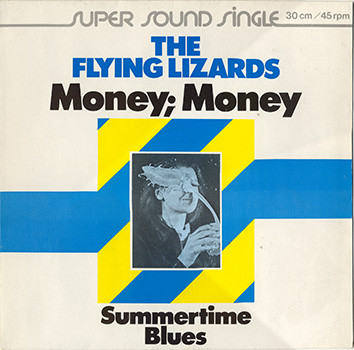
Another popular version of this song that charted was by the new wave band The Flying Lizards in 1979. That version peaked at #5 in the UK, #7 in Canada, #50 on the Billboard 100, and #5 in New Zealand.
Barrett Strong passed away recently on January 23, 2023, and he was 81 years old.
Money
The best things in life are free
But you can keep them for the birds and bees
Now give me money
(That’s what I want)
That’s what I want
(That’s what I want)
That’s what I want, yeah (that’s what I want)
That’s what I want
Your lovin’ gives me a thrill
But your lovin’ don’t pay my bills
Now give me money
(That’s what I want)
That’s what I want
(That’s what I want)
That’s what I want, yeah (that’s what I want)
That’s what I want
Money don’t get everything, it’s true
What it don’t get, I can’t use
Now give me money
(That’s what I want)
That’s what I want
(That’s what I want)
That’s what I want, yeah (that’s what I want)
That’s what I want, whoa
Money don’t get everything, it’s true
What it don’t get, I can’t use
Now give me money
(That’s what I want)
That’s what I want
(That’s what I want)
That’s what I want, yeah (that’s what I want)
That’s what I want
Well, now give me money
(That’s what I want)
A lot of money
(That’s what I want)
Wow, yeah, I wanna be free
(That’s what I want)
A lot of money
That’s what I want
That’s what I want, well
(That’s what I want)
Well, now give me money
(That’s what I want)
A lot of money
(That’s what I want)
Wow, yeah, you need money
(That’s what I want)
Now, give me money
(That’s what I want)
That’s what I want, yeah (that’s what I want)
That’s what I want
CB sent me a link to this song. Never did I think in a million years this was the Jackson 5 song that he covered when I saw the title. This cover knocked me out…it’s a mature cover version of the song…and that is no disrespect to the others but I like the way Parker takes this cover.
Parker released this non-album song in 1979. It managed to peak at #103 on the Billboard 100. This one to me must have come out of left field for Graham Parker fans in 1979.
The more I get into Parker’s songs…I don’t understand why he wasn’t played more. He compares to Elvis Costello pretty well. Apparently, radio only had room for one quirky, bespectacled, British pub rocker (Costello).
His record label Mercury Records has been blamed by many for not getting behind Parker and pushing his records. Parker thought the same as he said: “their promotion’s so lame, they could never take it to the real ball game.” He did eventually sign with Arista and Squeezing Out Sparks was the first album on that label for him.
He released this song and on the flip side of the single was a song called Mercury Poisoning. A clear jab at his former label. He didn’t include Mercury Poisoning on the album because he didn’t think it fit. “Sometimes some of the little throwaway things that take a few minutes to write, you just don’t think that they really have the integrity. I mean, ‘Mercury Poisoning’ is a bit of fun and all that, but I didn’t think it had the integrity to be on Squeezing Out Sparks.”
Arista saw that the single was popular so they began to include a free “Mercury Poisoning” single with every purchase of the Squeezing Out Sparks album in the UK. It was also the flip side to Local Girls in America.
The original version is of course by a young Jackson 5. It was written by a team of Motown writers called The Corporation. The head of the label, Berry Gordy, was one of the writers. They were based in California, unlike most Motown writers who were in the Detroit offices.
Michael Jackson reminded Berry Gordy of Frankie Lymon, another teenage star. Gordy helped write this as if he was writing for Lymon. The song was originally envisioned as a vehicle for Gladys Knight but Berry saw it as a way to break the Jacksons into the charts. They released it in 1969.
I Want You Back
Ohh-oh-oh-oh, let me tell you now, uh-huh, uh-uh-uh
When I had you to myself I didn’t want you around
Those pretty faces always make me stand up in a crowd
Someone picked you from the bunch, and that was all it took
And now it’s much too late for me to take a second look
Oh baby, give me one more chance
Won’t you please let me back in your heart
Oh darling, I was blind to let you go
Now that I see you in his arms
Oh I do now
Oh-oh baby
Oh I do now
Oh-oh baby
Tried to live without your love, one of those sleepless nights
But that just shows you, girl, that I know wrong from right
And every street you walk down, I leave tear stains on the ground
Following you girl, I can feel you all around, let me tell you now
Oh baby, give me one more chance
Won’t you please let me back in your heart
Oh darling, I was blind to let you go
But now that I see you in his arms
Oh yeah
Oh yeah
Oh-oh-oh-oh-oh
Oh-oh-oh-oh-oh
Oh-oh-oh-oh-oh
You’re all I want
You’re all I want
You’re all I need
Ah yeah, one more chance
Won’t you please let me back in your heart
Oh darling, I must have been blind to let you go
Now that I see you in his arms
Webb Wilder:It’s sorta like we’re a roots band for rock ‘n’ roll fans and a rock band for roots fans” He also uses these phrases…“Swampadelic”, “Service-station attendant music”, “Uneasy listening”, “Psychobilly.”
Good morning everyone…since posting about the Scorchers yesterday…I thought Wilder would be good to go over today. Webb deserved more attention than he got. Good songwriting and his voice fits the roots music he plays.
In 1991 I was walking through a street fair in Nashville and there he was, playing with his band. He had just put out an album called Doo Dad that got some local and national airplay. His music is a mixture of rock/country/rockabilly/punk and anything else he can throw in. The man has the gift of gab also. His music is just different. He looks like he dropped out of a 50’s black-and-white detective show. I also saw him shortly later at the Exit Inn.
Webb Wilder’s quote when asked what kind of music he plays.
“I came to Nashville as kind of a hunch, an educated guess that it would be a good place for me. Rock ‘n’ roll and country have more in common than not. We don’t have the typical Nashville country sound, but we thought we could use that to our advantage. It’s sorta like we’re a roots band for rock ‘n’ roll fans and a rock band for roots fans” he also adds these phrases…“Swampadelic”, “Service-station attendant music”, “Uneasy listening”, “Psychobilly.”
His real name is John “Webb” McMurry and according to wiki “The Webb Wilder character was created in 1984 for a short comedy film created by friend called “Webb Wilder Private Eye.” The character was a backwoods private detective who fell out of the 1950s and happened to also be a musician. The short appeared on the television variety show “Night Flight.”[Whatever it is… it works.
This song I first heard on our local then rock radio station WKDF in Nashville. Poolside is what first drew me in. After I saw him in Nashville at a street fair I was a fan for life. I like unique…and Webb is unique…God bless him…
It also has elements of the 80s cowpunk music and just good rock and roll. I saw him twice through the nineties and he was excellent each time I saw him. This song was released in 1986 and it was on the album It Came From Nashville. Again…the local play in Nashville turned it into a regional hit.
My favorite song by Wilder is this one called Meet Your New Landlord. I purchased the Doodad album and this song is what I zeroed in on. The hit off the album was Tough It Out which peaked at #16 on the Mainstream Charts. It included guest appearances by Al Kooper and Sonny Landreth.
The guitar riff is instantly catchy and the first verse was about losing your house/land in a poker game. A great storytelling song.
He slapped his cards down on the table Said, “Boys, I got me a winning hand.” But the sight that made old T. Jim tremble Was the king that took his land
This was probably his closest thing to a hit in America. In Nashville, it was played a lot on local rock stations. The song peaked at #16 in the Mainstream Rock Songs in 1992. This song came off of Doo Dad and is about the time I saw him for the first time. This song was being played on MTV at the time.
In 1990 this song charted on the Australian charts and it got a lot of airplay here.
Human Cannonball
Saw the ad in the paper Said the hell with it all Took a gig with the circus As the human cannonball
It didn’t take long To learn my trade Very first show, man I blew the folks away Now the job’s a little risky But I’m my own boss I gotta tell ya, Jack It really gets me off
I live in a tent with The world’s strongest man When I met the mother Like to broke my hand My baby she’s a lady In the high wire act When I’m feeling tense She walks on my back
Now the pay’s OK The benefits are great I get to shoot the bull With the world’s smartest ape
Ahh hahhh I’m the human cannonball I’m the human cannonball y’all
Well, I’m a hot shot I’m a cool breeze Underneath the big top I’m the big cheese I lay it on the line Let it all hang When I go least I know I’ll go with a bang
I reckon I’m living Every kid’s dream It’s a buzz, its a gas It’s a real scream
Ahh hahhh I’m the human cannonball I’m the human cannonball y’all
Yeah…
Alright folks, just make yourself at home Have a snow cone and enjoy the show
They put me on the cover Of the USA Today Tell the world what the Human cannonball got to say On the Carson show They said “HC. What you do you got to be Right out of your tree”
Well, it’s a little risky But I’m my own boss I got to tell you, John, It really gets me off
Ahh hahhh I’m the human cannonball I’m the human cannonball y’all
I’m the human cannonball I’m the human cannonball y’all
If you want to see where we are…and you missed a few…HERE is a list of the episodes in my index located at the top of my blog.
This show was written by Gene Roddenberry, D.C. Fontana, and Jerome Bixby
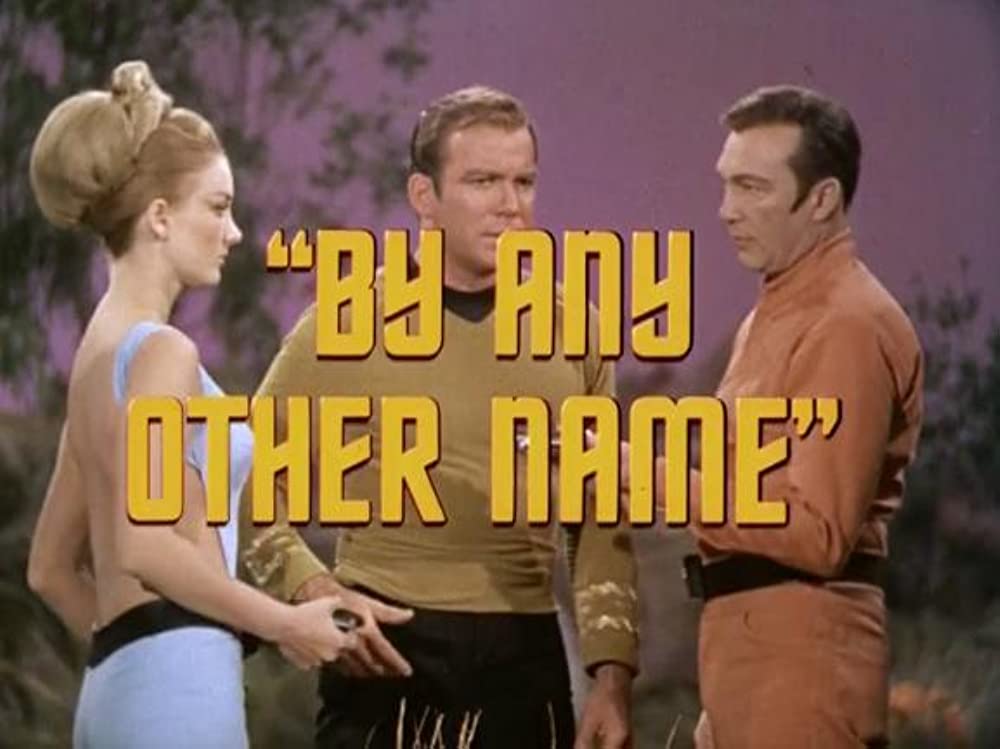
The Enterprise Crew finds themselves being conquered by a superior alien race (Kelvans). A small group of superior alien beings takes the form of humans in order for them to hijack the Enterprise.
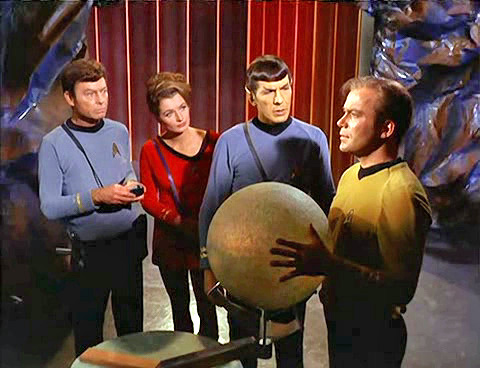
They need the ship so they can return to their old world which is beyond the Great Barrier. They turn almost the whole crew into these clay balls, except for Kirk, Spock, Scotty, and Bones, whom they need to help them run the ship. The only weakness the hijackers seem to have is that since they’re in human form for the time being, they’re vulnerable to human emotions.
Once the senior crew realizes the Kelvans are susceptible to human weaknesses things get quite amusing as Scotty gets one of them drunk, McCoy gives injections saying they are vitamin supplements but actually, they just make him very irritable and, perhaps inevitably Kirk sets about seducing the beautiful Kelinda causing Rojan to get jealous.
In human form, they cannot resist the emotions that they are getting. Will it be the Achilles heel that Kirk has been looking for? This is a good solid episode…not a classic one but not all of them can be.
***Spoiler***
The only thing I didn’t like about the episode is… there was no action or punishment for the death of Yeoman Leslie Thompson.
From IMDB:
While drinking with Tomar, Scotty finds a bottle of unidentifiable alcohol, and when Tomar asks, “What is it?” Scotty hesitates for a moment and finally says “It’s green.” This has become an iconic Scotty moment, and is even spoofed in Star Trek: The Next Generation: Relics (1992).
Direct references to two previous episodes were made. After Rojan mentions the galactic barrier, Kirk says, “We’ve been there.” (Star Trek: Where No Man Has Gone Before (1966)); Even Spock repeats his analysis of the barrier word for word: “Density negative. Radiation negative. Energy negative.” When the landing party is detained in a cave, Kirk recalls their imprisonment on Eminiar VII and Spock’s use of a mind-meld to fool the guards. (Star Trek: A Taste of Armageddon (1967)).
Jerome Bixby’s original script was much darker than the filmed episode. The Kelvans (then called the Dvenyens) executed ten Enterprise crew members by opening the shuttle bay doors and letting them be blown out into space. (Technically, they would be blown out by escaping air. This could have been a goof because, even in the Orignal Series, the shuttle bay had force fields to prevent this happening, unless the Kelvans deliberately lowered them.) Kirk was put through “hellish torture”. Also, crew members were chosen to mate with each other (Kirk was paired with Yeoman Leslie Thompson) to breed slaves for the Kelvans. NBC objected to all these, which led producer Gene L. Coon to order a heavy rewrite. The production staff also deemed the mating aspect too similar to Star Trek: The Cage (1966).
Kirk mentions that an intergalactic voyage by a 23rd century starship would take “thousands of years” to reach the Andromeda Galaxy. For the Kelvans, intergalactic travel is a three-century journey. In the 24th century, as seen in Star Trek: The Next Generation: Where No One Has Gone Before (1987), Federation technology has apparently matched the Kelvans, perhaps due to this encounter, when it is discussed that a return trip to the Milky Way from the Triangulum Galaxy would take three hundred years at maximum warp.
A three-dimensional chess set is often seen in the series, but a three-dimensional checkers set can be seen in the rec room in this episode. It is later destroyed in a fight.
The Kelvan word for flower is “sasheer.” Actress Sasheer Zamata of Saturday Night Live (1975) fame was named after it by her Trek-loving parents.
Scotty’s quarters are only seen in this episode. Decorations include a tartan kilt, a sporran, bagpipes, a Scottish targe (shield), medieval armor, and a wall plaque. Although the plaque apparently depicts stylized drafting tools, they also resemble part of a three-dimensional chess set and the primary hull of a Klingon battle cruiser.
A shot in the end credits is an outtake from Star Trek: Return to Tomorrow (1968), which was produced one week earlier and aired two weeks later. It shows actor Bill Blackburn removing his latex make-up as one of Sargon’s androids. It was from a clip later used in the second season blooper reels: Blackburn gratefully peeled off the makeup as assistant director Tiger Shapiro said, “Well, son, you wanted show business. Goddammit, you got it!”
The basis of this episode can be found in Gene Roddenberry’s first ever produced science fiction script, Chevron Hall of Stars: The Secret Weapon of 117 (1956). The episode featured a pair of aliens (the male played by Ricardo Montalban, Star Trek’s “Khan”) who disguise themselves as humans to study Earth people, get overwhelmed by the sensations and experiences of their new host bodies, and decide to remain human.
When Mr. Scott offers to fill the glass of the Kelvan Tomar from his bottle of prized Scotch whisky, on pause you can clearly see that the middle finger on his right hand, which he always tries so hard to cover up, is missing. Doohan lost the finger in battle on D-Day.
Second appearance of the Galactic Barrier at the edge of the galaxy. The first was Star Trek: Where No Man Has Gone Before (1966).
The title is from William Shakespeare’s Romeo and Juliet: “What’s in a name? That which we call a rose, by any other name would smell as sweet.”
Stewart Moss (Hanar) played Joe Tormolean in Star Trek: The Naked Time (1966).
Robert Fortier (Tomar, one of the Kelvans) had played a small role in the earlier William Shatner vehicle Incubus (1966), a novelty horror film famous for being “the Esperanto movie.”
The remastered version of this episode premiered in syndication on the weekend of 8 March 2008. It featured new effects shots of the Kelvan outpost from space, an expanded matte painting of the planet’s terrain as the landing party beams down, a swirling Andromeda Galaxy, and the galactic barrier’s new look.
Julie Cobb (Yeoman Leslie Thompson) was married from 1986 until 2006 to James Cromwell (Zefram Cochrane in Star Trek: First Contact (1996), and numerous other Trek roles).
This was the only episode lensed by cinematographer Keith C. Smith, replacing Gerald Perry Finnerman, who was apparently unavailable for an unknown reason. Smith was the director of photography on Mission: Impossible (1966), filmed next door to Star Trek at Desilu Studios at the time.
The Saurian Brandy container makes an appearance in this episode. The distinctive-shape bottle was actually a modified George Dickel 1964 commemorative edition “powder horn” whisky bottle.
Jerome Bixby based his teleplay for “By Any Other Name” on a short story he wrote and published in 1950, “Cargo to Callisto.” In the story, four Martian criminals, with the ability to take over human beings and assume their shape and mannerisms, use that ability to escape from a Martian prison and flee the planet. The story’s protagonist realizes that his wife and two friends have been taken over, finds the Martians’ bodies, kills them and thus restores to normal the humans that they’d taken. Before Bixby wrote this story, the idea of a hostile alien being able to shape-shift into any human form was used by John W. Campbell Jr. in his novella “Who Goes There?”, the basis of The Thing from Another World (1951), The Thing (1982), and The Thing (2011), although the 1951 version left out the shape shifting element.
As Scotty, Spock, and Kirk left engineering to head to the bridge in the turbolift, it is seen going sideways prior to going upwards to the bridge.
A similar, if not identical, green drink to the one shared between Scotty and Tomar was also seen in Star Trek: Enterprise: In a Mirror, Darkly, Part II (2005), aboard the Defiant.
The swiveling biobed normally situated in sickbay was removed to allow McCoy and Tomar to roll the gurney carrying Spock to the biofunction monitor.
Tomar’s name is the Spanish word for ‘to drink’.
This is the tenth consecutive episode from which Sulu is absent, but he returns to the series in the next episode to be produced, Star Trek: Return to Tomorrow (1968).
According to guest star Stewart Moss after filming was complete, he asked fellow guest star Barbara Bouchet out for a date. She replied, “But for what purpose? You’re an attractive man, but what can you do for me? Six months later Moss married actress Marianne McAndrew, and Bouchet eventually married Italian film producer Luigi Borghese.
This takes place in 2268.
Michael Jan Friedman’s novel ‘The Valiant: The Untold Story of Picard’s First Command’ (2000) is a sequel to both Star Trek: Where No Man Has Gone Before (1966) and ‘By Any Other Name’. After a prologue set in 2069, the main story takes place in the 24th century, in the decades leading up to the start of Star Trek: The Next Generation (1987).
Warren Stevens (Rojan) played Dr. Oslow in Forbidden Planet (1956), one of Gene Roddenberry’s stated inspirations for Star Trek.
Summary
The Enterprise is taken over by Kelvans, an advanced race from the Andromeda galaxy that is intent on making the 300-year journey home. Their leader, Rojan, immobilizes all of the crew but for Kirk, Spock, McCoy, and Scott. As the trip progresses, however, Spock realizes that having taken human form, the Kelvans are now developing emotions. Kirk introduces romance into the equation by purposely wooing Kelinda thereby rendering Rojan insanely jealous.
CAST
William Shatner … Captain James Tiberius ‘Jim’ Kirk Leonard Nimoy … Mister Spock DeForest Kelley … Dr. McCoy Warren Stevens … Rojan Barbara Bouchet … Kelinda James Doohan … Scott Nichelle Nichols … Uhura Majel Barrett … Christine Stewart Moss … Hanar Walter Koenig … Chekov Robert Fortier … Tomar Lezlie Dalton … Drea Carl Byrd … Lt. Shea Julie Cobb … Yeoman Thompson Bill Blackburn … Lieutenant Hadley (uncredited) Frank da Vinci … Lt. Brent (uncredited) Roger Holloway … Lt. Lemli (uncredited) Eddie Paskey … Lieutenant Leslie (uncredited)
I truly love this band. They filled a space in the 80s for me. Loud unprocessed guitars with sparse production. They were close to the Georgia Satellites but more of a Rockabilly band on steroids. I was talking to fellow blogger Obbverse and he brought them up and I was very surprised he knew them. Not many outside the Southeast of America know much about them.
In the mid-eighties, I had a friend who was big into Jason and the Scorchers so I gave them a listen. They were big on college radio and they had many ties with Nashville and played here quite often. I saw them and Webb Wilder live downtown once. That is when I heard them do “The Race Is On”…the old George Jones song and it won me over. Their music seemed to have a kinship to the Georgia Satellites but they were a little more robust. They did have some MTV play with the song Golden Ball and Chain.
The band was formed in 1981. They were together through the 80s till the drummer Perry Baggs was diagnosed with diabetes and could not finish a 1990 tour. They have regrouped since then off and on and altogether have released 15 albums with the last one being in 2010. In 2012 Perry Baggs passed away because of diabetes.
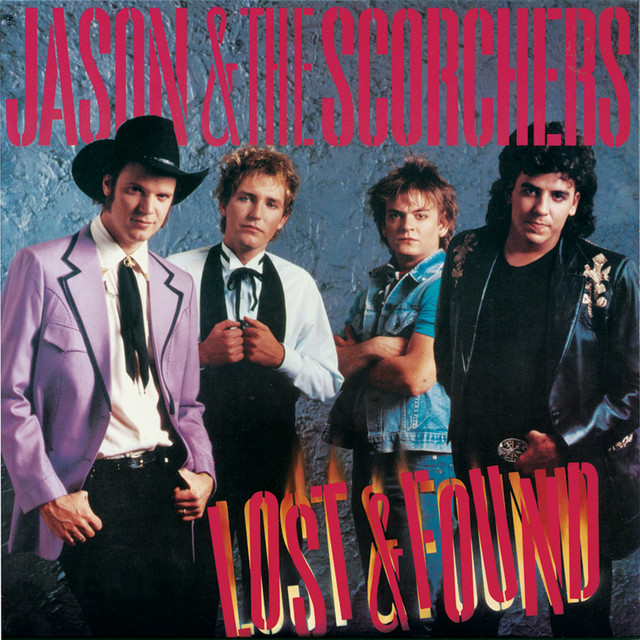
They played a mixture between country and rock but fell into the cracks. They seemed too rock for country and too country for rock. Their concerts were simply unbeatable. They were led by frontman Jason Ringenberg and they released a couple of EPs before releasing their debut album Lost & Found in 1985. They were classified at one time as alt-country but I would add rock/punk/rockabilly in there also.
One of the things that made the band different is Jason wanted to sound country but guitar player Warner Hodges wanted to sound like AC/DC…that interplay made them unique. This song was on their 1985 album Lost and Found. The album peaked at #86 on the Australian album chart in 1987.
Most people will know the song Lost Highway…a hit by Hank Williams. It’s surprising but Hank didn’t write this song. Leon Payne wrote and released this song in 1948. Blind since he was a child, Payne wrote hundreds of songs, some of which were recorded by Hank Williams, John Prine, Elvis Presley, George Jones, Johnny Cash, and many more.
I also added another live cover they did as a bonus…the old George Jones hit The Race Is On.
Jason Ringenberg: “I kinda wanted to make a supercharged roots-rock band, some people were caught by surprise, but by and large people fell in love immediately. There was nobody else like us.”
Lost Highway
I’m a rollin’ stone, all alone and lost
For a life of sin I have paid the cost
When I pass by all the people say
Just another guy on the lost highway
Just a deck of cards, and a jug of wine
And a woman’s lies makes a life like mine
Oh, the day we met, I went astray
I started rollin’ down that lost highway
I was just a lad, nearly twenty-two
Neither good nor bad, just a kid like you
And now I’m lost, too late to pray
Lord, I’ve paid the cost on the lost highway
Now, boys, don’t start your ramblin’ around
On this road of sin, or you’re sorrow bound
Take my advice, or you’ll curse the day
You started rollin’ down that lost highway
If you want to see where we are…and you missed a few…HERE is a list of the episodes in my index located at the top of my blog.
This show was written by Gene Roddenberry and John Meredyth Lucas
This is a very interesting episode. Kirk and crew take on another planet’s Nazis. A plague of thought/speech spread on a planet called Ekos. The Ekosians, a warlike primitive people, are subverted to channel their aggression against their peaceful neighboring planet, Zeon. The Zeons were more advanced up until a few years ago; but now, Ekos have the same technology, and plans are made to exterminate the Zeons. It all started innocently enough. It’s a bit strange.
The Federation has had this non-interference directive, the Prime Directive, in place for at least a century or more. I understand a sometimes aggressive hotshot like Kirk rationalizing around this directive at times of intense situational imperative, but now an elderly Federation historian, a supposed expert on what tampering with history means, decides to re-arrange a culture’s status quo on what appears to be a whim…a chance to play God, as McCoy puts it.
The Ekosians are the Nazis here, whereas the Zeons are stand-ins for the persecuted Jews. The episode does succeed in capturing some of that brutality associated with the Nazi regime and there’s plenty of suspense as Kirk & Spock attempt to infiltrate the Nazi HQ to see their Federation rep, now Fuhrer.
If anything, this is the serious version of “A Piece of the Action” – the scary contemplation of how an entire society can be deluded into following a certain doctrine. The most intriguing aspect is Melakon, the deputy Fuhrer who is, in fact, the actual incarnation of Hitler or Himmler…take your pick.
From IMDB:
Due to the post-war German ban on Nazi-related imagery and paraphernalia, this was the only Star Trek episode that was not shown on German TV until mid-1990s, when these restrictions were gradually relaxed to allow for artistic expression.
All the Nazi uniforms used in this episode are taken from Paramount’s costume storage, and were previously featured in many of the studio’s World War II-era films. Many of them featured mismatched epaulets, collar tabs, and other rank-identifying insignia. However, McCoy’s collar tabs, bearing a single silver oak leaf, correctly identify him as a colonel, as Kirk had ordered.
Leonard Nimoy refused to have any publicity pictures taken of him in Nazi uniform. He was due to attend Hanukkah services later that month (filming took place in December), and did not want any controversies to arise.
This episode with its Nazi storyline proved rather difficult to make for a lot of the cast and crew who were Jewish. This included William Shatner and Leonard Nimoy.
The name of the planet Zeon is a variation of the word “Zion”, a Hebrew term, as in Mount Zion, near the city of Jerusalem. The names of the Zeons: Isak, Davod and Abrom are obvious references to Isaac, David and Abraham, traditional Hebrew biblical names.
According to Valora Noland (Daras), her costume originally did not have a swastika on it and it was added right before filming. Noland, whose parents fled Nazi Germany, was offended by this and stated that she would not have taken the role if she knew she would be wearing a swastika. Noland quit acting entirely after this episode.
This is the second mention of Nazi Germany in Star Trek, the first being in Star Trek: The City on the Edge of Forever (1967). However, in Star Trek: Mirror, Mirror (1967), Scotty did compare Evil Sulu’s security system to “the ancient Gestapo”.
In one of the sequences of news footage, all of which consisted of stock shots and stock footage, a car with Adolf Hitler accompanied by soldiers is used to represent John Gill as the Führer on the planet Ekos. The sequence is a use of stock footage from The Triumph of the Will (1935), the infamous Nazi propaganda film for whose production Leni Riefenstahl was responsible.
The “leader principle” Kirk mentions at the end of the episode was a foundation of the leadership in Nazi Germany. Known in German as “Führerprinzip”, it essentially can be described as a state of law in which there are no laws above those of the Führer, and that the government must obey and enforce such laws.
The character Eneg (Patrick Horgan) is Gene Roddenberry’s first name, spelled backwards.
Skip Homeier, who plays Melakon, would later play the insane demagogue Dr. Sevrin in Star Trek: The Way to Eden (1969).
The front of the Ekosian Chancellery has all of its windows and shutters closed, for the real world reason that the actual building was an active office of Paramount Pictures with daily business going on inside while the film crew and actors were shooting the exterior. Even so, two individuals who appear to be curious Paramount Pictures employees can be seen looking down on the courtyard from an upper window.
This is the only episode of Star Trek besides Star Trek: The City on the Edge of Forever (1967) in which Leonard Nimoy is seen without a shirt.
The underground area is the same set as was used for Star Trek: The Devil in the Dark (1967).
The remastered version of “Patterns of Force” aired in many North American markets during the weekend of 19 May 2007. While the episode required very few new effects, an entirely new shot of the Enterprise phasering the Ekosian warhead was substituted. In addition, Ekos was given a CGI-makeover as a more Earth-like planet, with new orbital shots of the Enterprise, and the rubindium crystal beam was refined.
The Schulberg Building (formerly, the Directors Building) and the Lubitsch Building (formerly, the Producers Building), both located on the Paramount Studios lot, were used for the exterior shots of the Ekosian Nazi headquarters complex.
The attacking V-2 rocket on the viewscreen of Enterprise was reused footage of the Orion scout ship from Star Trek: Journey to Babel (1967) earlier in the season.
This episode was finally shown on German pay TV in 1996 and included on all DVD/Blu-ray season sets. This episode was also finally shown on the public network channel ZDFneo on November 4, 2011.
The missile fired at the Enterprise was shown to be a V2. In 1942, one of these ethanol/liquid oxygen-fueled rockets reached an altitude of 118 miles, making it the first man-made object in space.
Skip Homeier, who plays Melakon, had his feature film debut playing a Nazi youth in Tomorrow, the World! (1944).
Several uniforms, such as Kirk and McCoy’s, show cuffbands reading “Adolf Hitler”. They represent members of the Leibstandarte Adolf Hitler, special bodyguards of the Führer.
V-2 rocket footage from World War II Germany is used in the newscast showing Ekosian missiles.
Due to a re-rating in late 2016, this episode is now suitable for ages 12 and up in Germany.
An early draft had the source of cultural contamination arriving aboard a small Ambassador-class vessel called the Magellan. The name was later applied in Star Trek: The Next Generation (1987) to the Ambassador-class of ships in the mid-24th century.
Gilbert Green, who played the S.S. Major, also played Nazi General Hans Stofle in Hogan’s Heroes: Hello, Zolle (1966).
The second occasion, after Star Trek: The City on the Edge of Forever (1967), where Vulcans are shown to have body hair, with Spock fully removing his shirt to show a full front torso covered in hair.
This takes place in 2268.
Two of the main guest stars, Richard Evans (Isak) and Patrick Horgan (Eneg), died four days apart on October 2 and 6, 2021, respectively. Eddie Paskey (as a Nazi storm trooper rather than his regular role of Lt. Leslie) had died a few weeks earlier on August 17, 2021. Two other iconic Trek guest stars would die just a matter of days after Evans and Horgan. They were Jan Shutan (Lt. Mira Romaine in Star Trek: The Lights of Zetar (1969)) just a day after Horgan on October 7, 2021, and then, three days later, the repeat Trek actor and stunt performer Bob Herron (Jeffrey Hunter’s stunt double in the pilot Star Trek: The Cage (1966)), Kirk’s gym buddy Sam in Star Trek: Charlie X (1966) and the recreation of the villainous Klingon warrior Kahless the Unforgettable in Star Trek: The Savage Curtain (1969)). Evans’s passing had not been widely known until a time after the later death of Horgan was reported. Learning afterward that Evans had died first lent an oddly spiritual twist to his most famous line, referring to their respective characters, when Isak says “Eneg is one of us.”
Summary
The Enterprise travels to the planet Ekos to search for the missing Federation cultural observer Professor John Gill. When they arrive, they find that Ekosian society has been completely patterned after Nazi Germany – down to its uniforms and the hatred of everyone from their neighboring planet Zeon – and the Fuhrer of this neo-Nazi regime is John Gill! Kirk and Spock are soon taken prisoner, but they also learn that there is an underground movement that opposes the totalitarian and vicious regime. As they realize that Gill has been incapacitated, they focus their efforts on dethroning the real power – Melakon, the Deputy Fuhrer.
HERE IS THE PREVIEW…I TRIED 5 DIFFERENT VIDEOS AND ALL CAME UP AS “AGE RESTRICTED” AND WOULD NOT LET YOU GET TO THE VIDEO…SO CLICK ON THE LINK.
CAST
William Shatner … Captain James Tiberius ‘Jim’ Kirk Leonard Nimoy … Mister Spock DeForest Kelley … Dr. McCoy Richard Evans … Isak Valora Noland … Daras Skip Homeier … Melakon David Brian … John Gill James Doohan … Scott Nichelle Nichols … Uhura Patrick Horgan … Eneg William Wintersole … Abrom Gilbert Green … S.S. Major Walter Koenig … Chekov Lev Mailer … S.S. Lieutenant (as Ralph Maurer) Ed McCready … S.S. Trooper Peter Canon … Gestapo Lieutenant Paul Baxley … First Trooper Chuck Courtney … Davod Bart La Rue … Newscaster Benjie Bancroft … Soldier at Party (uncredited) Bill Blackburn … Lieutenant Hadley / S.S. Trooper (uncredited) John Blower … Ekosian Gestapo Lt. Col. (uncredited) Frank da Vinci … Soldier at Party (uncredited) Len Felber … Soldier at Party (uncredited) Adolf Hitler … Self (archive footage) (uncredited) Roger Holloway … Soldier at Party (uncredited) Jeannie Malone … Blonde in Audience (uncredited) Sean Morgan … Second Trooper (uncredited) Basil Poledouris … Trooper (uncredited) Robert Strong Robert Strong … Soldier at Party (uncredited) Bob Whitney … Soldier at Party (uncredited)
I’ve almost written this song up on numerous occasions so I thought I would finish it because it’s been in my drafts for a while. Great power pop from this band.
The Hoodoo Gurus are an Australian rock band combining elements of power pop, Beatleesque harmonies, psychedelia, and grungy garage rock. Guitarists Dave Faulkner, Rod Radalj, and Kimble Rendall were joined by drummer James Baker when the band formed in Sydney in 1981.
I Want You Back” was the final single to be released for the band’s debut album, Stoneage Romeos. The band’s debut Stoneage Romeos, full of garage punk songs and pop references, was named Australian Debut Album of the Year and was released in America where it stayed at number 1 in the Alternative / College charts for 7 weeks, becoming one of the most played albums for the year on the college network. Their next two albums also reached #1 on the Alternative College charts.
This song was played alongside The Replacements, R.E.M., and other alternative bands at the time throughout America. They were not well known to the masses here but in Australia they were huge. In 2007 were inducted into the Australian Recording Industry Association (ARIA) Hall of Fame.
They have released 10 studio albums and the last one, Chariot of the Gods, was released last year in 2022.
I Want You Back
I can still recall the time
She said she was always mine
Then she left as people do
And forget what we’ve been through
It’s not that she’s gone away, yeah
It’s the things I hear that she has got to say
About me and about my friends
When we, we’ve got no defense
That’s her, I’ll never believe her again
She might have deceived all my friends
I know they will see in the end
What it all means when she says, yeah
(Ah, ah) I want you back
(Ah, ah) I want you back
I, I, I want you
She says (she says)
She says (she says)
She says (she says)
She says, yeah, yeah
But what’s worse, she thinks it’s true
But that’s just her, she always was a little bit confused, and
She’s not worth the time I had to lose
That’s her, I’ll never believe her again
She might have deceived my friends
I know they’ll see what it means when she says, yeah
(Ah, ah) I want you back
(Ah, ah) I want you back
I, I, I want you
She says (she says)
She says (she says)
She says (she says)
She says
She says (ah, ah)
She says (ah, ah)
I want you back
She says (ah, ah)
She says (ah, ah)
I want you and only you (ah, ah)
She says (she says)
She says (she says)
She says (she says)
She says
I can’t get enough of the early Animals. At the time I would say they were the grittiest-sounding band of the British Invasion. The Animals were one of the many British bands I learned about through reading about the Beatles. The Animals influenced the future of rock from the garage rock of the 60s to 70s punk.
I’m Crying was written by the group’s lead vocalist Eric Burdon and organist Alan Price. The song was released as a single in September 1964 and became their second transatlantic hit after “The House of the Rising Sun”, which was released earlier in the year.
The Animals first appeared on The Ed Sullivan Show on October 18th, 1964. With young girls screaming, The Animals rocked the audience as they played “I’m Crying” followed by their massive hit “House of the Rising Sun.” The audience got so out of control that Sullivan shushed them several times.
They formed in 1963, from the fusion between two rival groups, one headed by bassist Chas Chandler, the other headed by organist Alan Price, stage veteran, former jazz pianist, and disciple of Ray Charles. Eric Burdon, who had played with Price until 1962, was hired as the singer. The Kontours changed their name first to The Alan Price Combo, after adding drummer John Steel, and then to The Animals, after adding guitarist Hilton Valentine.
The original lineup only recorded three albums, yet nevertheless managed to break out eight Top 40 hits between 1964 and 1966. Alan Price left in 1965, and John Steel the following year. Also in 1966, Chandler left to start managing artists, and he discovered Jimi Hendrix in Greenwich Village. Now a very different group, they were known as Eric Burdon & The Animals and had six additional Top 40 hits before finally disbanding in 1968.
Bruce Springsteen:For some, the Animals were just another one the really good beat groups that came of the Sixties, but to me, the Animals were a revelation. The first records with full-blown class consciousness that I had ever heard.
John Steel:We were hot enough to get on several times on The Ed Sullivan Show, and at that time in 1964, we were rated in the Top 5 bands of the British Invasion along with The Beatles, The Rolling Stones and The Kinks, so we were pretty highly regarded.
I’m Crying
I don’t hear your knock upon my door
I don’t have your lovin’ anymore
Since you been gone I’m a-hurtin’ inside
Well I want you baby by my side, Yeah
I’m cryin’, I’m cryin’
Hear me cryin’ baby
Hear me cryin’
Im lonely and blue baby every night
Yeah, you know you didn’t treat me right
And now my tears begin to fall
Well I want you baby and that’s all
I’m cryin’, I’m cryin’
Hear me cryin’ baby
Hear me cryin’
I don’t hear your knock upon my door
I don’t have your lovin’ anymore
Since you been gone I’m hurtin’ inside, yeah
Well I want you baby by my side
But I’m cryin’, you know I’m cryin’
Hear me cryin’ baby
Hear me crying
Hear me crying
Hope you all are having a good week…happy Wednesday!
And he dug up her grave and built a cage with her bones Excitable boy, they all said well, he’s just an excitable boy …. Warren Zevon
I’ll be in my basement room with a needle and a spoon And another girl can take my pain away…Rolling Stones
We were the first band to vomit at the bar and find the distance to the stage too far meanwhile it’s getting late at ten o’clock rock is dead they say Long Live Rock…The Who
Cause when life looks like Easy Street there is danger at your door… The Grateful Dead
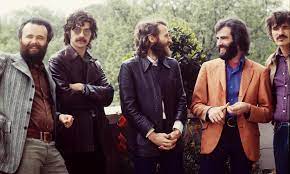
Then here come a man with a paper and a pen tellin’ us our hard times are about to end… The Band
I could walk like Brando right into the sun then dance just like a Casanova… Bruce Springsteen
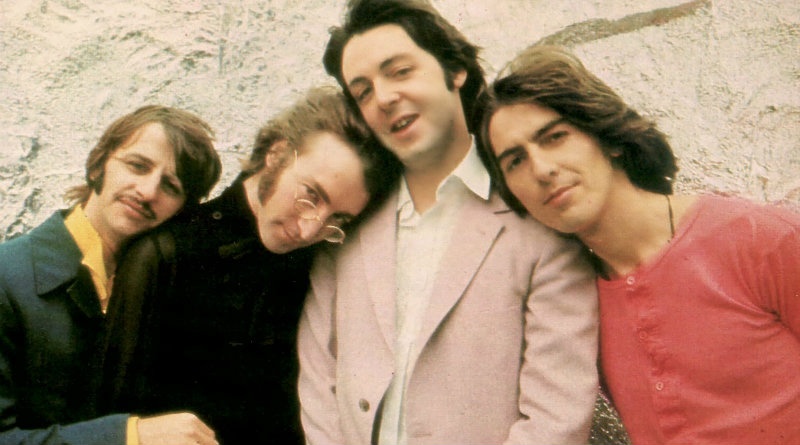
Elementary penguin singing Hare Krishna man, you should have seen them kicking Edgar Allen Poe …The Beatles
Mother, you had me but I never had you I, I wanted you You didn’t want me so, I just got to tell you goodbye … John Lennon
Exchanging “good luck”s face to face checkin’ his stash by the trash at St. Mark’s place …The Replacements
We come from the land of the ice and snow from the midnight sun where the hot springs flow… Led Zeppelin
Every day, I look at the world from my window but chilly, chilly is the evening time Waterloo sunset’s fine… The Kinks
I don’t wanna be a candidate for Vietnam or Watergate… Queen
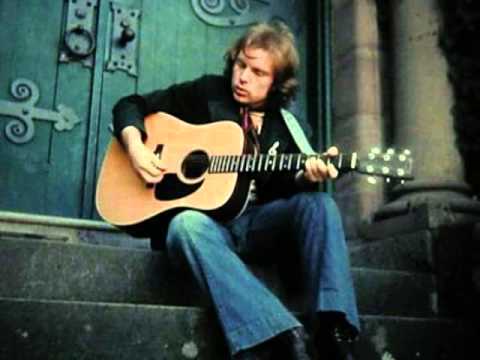
If I ventured in the slipstream between the viaducts of your dream… Van Morrison
I am just a dreamer but you are just a dream and you could have been anyone to me… Neil Young
So we bought a pack of cigarettes and Mrs. Wagner pies and walked off to look for America…Simon and Garfunkel
If you want to see where we are…and you missed a few…HERE is a list of the episodes in my index located at the top of my blog.
This show was written by Gene Roddenberry and John T. Dugan
A very good episode of three survivors of a race that were killed millions of years ago. They are just energy without form. The crew has to transport under 112.37 miles of rock. As Spock would say…the episode is fascinating.
In a region of space where no other Federation sip has yet been, the Enterprise comes across a planet with three impressive survivors. All that remains of these beings is pure energy, their bodies lost in some cataclysmic war fought 500,000 years ago.
Their minds are capable of feats that 23rd-century humanity can scarcely dream of. So they’ve been waiting around in these containment globules for half a million years, waiting for their probable descendants to start exploring space. The reason the survivors contacted the Enterprise was to borrow three humanoid bodies (Kirk, Spock, and Ann Mulhall) in order to construct android shells for themselves. They borrow Kirk’s (now call him Sargon), Spock’s (now Henoch, from the ‘other’ side), and Dr. Mulhall’s (now Thalassa). It was just to be temporary. The longer they stay in the body the more the body deteriorates.
There’s a kink in the plans though. Apparently, Henoch hasn’t spent the past half million years contemplating peaceful pursuits… we learn this in short order when Spock’s face assumes an uncharacteristically evil grin as Henoch confidently makes plans to remove Sargon from the equation and take over everything. He plans to be free and live as a human. Will Spock, Kirk, and Doctor Mulhall’s bodies and souls die?
We get to see Spock act out as a sadistic villain…there’s a creepy chilling tone to some of this as Thalassa starts turning bad also. Majel Barrett as Christine Chapel does a great job in this episode as well. She gets to share something that she has always wanted.
From IMDB:
As a lieutenant commander, Ann Mulhall has the distinction of being the highest-ranking female Starfleet character shown in The Original Series.
The voice of Sargon was played by James Doohan. Sargon of Akkad was a Mesopotamian king, who by most accounts, began ruling around 2269 B.C. In the show the year is around 2268 A.D.
First Star Trek appearance of Diana Muldaur. She would also appear as Miranda Jones in the episode Star Trek: Is There in Truth No Beauty? (1968), and as Dr. Kathryn Pulaski in 20 episodes of Star Trek: The Next Generation (1987).
This episode marks George Takei’s return to the series after an absence of some months while filming The Green Berets (1968). His last appearance was Star Trek: I, Mudd (1967), which was ten episodes earlier in production order.
One of the fiberglass globes was re-used later as part of the Romulan cloaking device in Star Trek: The Enterprise Incident (1968), and for M-4 in Star Trek: Requiem for Methuselah (1969).
Thalassa is a Greek name for the sea. Henoch is a variation of the Hebrew name Enoch, who in the Book of Genesis was a man taken bodily to Heaven without dying.
Writer John T. Dugan wrote the original script of this episode after he had read an article about highly sophisticated robots. In his original draft, Sargon and Thalassa continue their existence as spirits without bodies, floating around the universe. However, Gene Roddenberry, who did an uncredited re-write on the script, changed the ending to the aliens fading out into oblivion. This led to Dugan using his pen-name John Kingsbridge in the episode’s credits.
Joseph Pevney was originally slated to direct this episode; however, he quit the series after Star Trek: The Immunity Syndrome (1968), citing the lack of discipline from the actors after producer Gene L. Coon left the show.
A still image taken from blooper reel of Bill Blackburn (Hadley/Android) removing the latex android make-up from his head appears in the end credits of Star Trek: By Any Other Name (1968). That episode was produced the week before this one and aired two weeks later, on 23 February 1968.
The stand for one of the globes was later turned upside-down and used as a piece of technology on Atoz’s desk in Star Trek: All Our Yesterdays (1969).
This episode features colorful back lights on the Enterprise sets, mostly green and purple, which were not used since the early episodes of the first season.
The name of the planet itself, Arret, is never mentioned onscreen. Arrete means “stop” in French, from which the English word “arrest” is derived.
The remastered version of this episode aired in many North American markets during the weekend of 7 July 2007. It featured new effects shots of the Enterprise and a new, more realistic version of planet Arret. It also included shots of the planet matted into interior viewscreen shots.
Still photos of a smiling Spock leaning against a doorway and a non-canonical image of Bill Blackburn, dressed as the android, were used in the end credits of Star Trek: The Immunity Syndrome (1968). That episode was produced before this one, but did not go to air until 19 January 1968.
This episode and its writer, John T. Dugan, earned a Writers Guild of America Award nomination in the category Best Written Dramatic Episode in 1968.
This is the second time a reference is made in Star Trek about the Apollo moon program, after Star Trek: Tomorrow Is Yesterday (1967). Filmed more than a year-and-a-half before the first lunar landing, Kirk rhetorically asks McCoy in this episode, “Do you wish that the first Apollo mission hadn’t reached the Moon?” The first manned Apollo mission, Apollo 1 (intended to be a test-flight of the Command and Service Module in Earth orbit only), never flew, since a tragic fire claimed the lives of three astronauts. This happened on 27 January 1967, months before the script was submitted to the production team and a full year before this episode aired. The first Apollo mission in which astronauts orbited, and technically “reached”, the moon was Apollo 8 in December 1968, ten months after this episode aired. However, the Apollo 11 astronauts were the first to “reach” the moon by landing on it in 20 July 1969, after Star Trek was canceled. Kirk’s next comments about going “on to Mars and then to the nearest star” seem to suggest that he is referring to the Apollo 11 lunar mission.
This takes place in 2268.
This episode is the latest in any season to feature a new score, albeit a partial one, by George Duning. Parts of the new score would be heard for the rest of the season, including the menacing Henoch cues in Star Trek: Patterns of Force (1968) and Star Trek: The Omega Glory (1968). However, most of this score, notably the love themes, would never be reused in another episode. This sets it apart from other scores, such as those from Star Trek: Who Mourns for Adonais? (1967) and Star Trek: Elaan of Troyius (1968), whose themes would be reused extensively.
Summary
Brought deep into an uncharted part of the galaxy, the Enterprise comes across three disembodied beings, their essence each contained in a globe-like receptacle. Their leader, Sargon, asks only one thing of Kirk and his crew – lend them the bodies of Kirk, Spock and crew member Ann Mulhall long enough for them to build robot bodies to inhabit for perpetuity. The beings have been without physical form since their civilization was destroyed over 500,000 years ago but have powers far greater than ordinary humans. Kirk and the rest agree to the exchange, but the alien occupying Spock’s body, Henoch, clearly has designs on keeping the body he has just obtained. When he manages to convince Thalassa to do the same, Sargon – and the body of Capt. Kirk – is in trouble.
CAST
William Shatner … Captain James Tiberius ‘Jim’ Kirk / Sargon Leonard Nimoy … Mister Spock / Henoch DeForest Kelley … Dr. McCoy Diana Muldaur … Ann Mulhall / Thalassa James Doohan … Scott / Voice of Sargon Nichelle Nichols … Uhura George Takei … Sulu Cindy Lou … Nurse Majel Barrett … Christine Chapel Bill Blackburn … Lieutenant Hadley / Android (uncredited) Frank da Vinci … Lt. Brent (uncredited) Roger Holloway … Lt. Lemli (uncredited) Jeannie Malone … Nurse (uncredited) John Hugh McKnight … Command Lieutenant (uncredited) Eddie Paskey … Guard (uncredited)
I first heard this song by Springsteen before I ever heard it by Patti Smith. I’m not sure how I kept missing her version.
Patti Smith has more of a cult following and this is by far the biggest hit she ever had.
Bruce Springsteen started to write this song in 1976. That was a troubled year for the singer. He sued his manager Mike Appel and Bruce wanted to work with Jon Landau. This went on for around 10 months. This was coming after 1975 which was huge in Springsteen’s life. He would be on the cover of Newsweek and Time at the same time. His Born To Run album blanketed rock at the time and he was hailed as the future of Rock and Roll. But instead of capitalizing on his success and hitting the studio to record another album he put on a suit and went to court.
Springsteen did what a lot of artists at that time did…he signed a management contract on the hood of a car in a New Jersey parking lot, Springsteen’s contract allotted him 18¢ per album sold. Appel made a minimum royalty of 40¢ per record. On top of that, the contract called for Springsteen to record 10 albums for CBS but it only called for Springsteen to record five for Appel’s Laurel Canyon management and production company. It was a terrible contract and although Springsteen didn’t care about the money then…he was always broke because he was keeping less than 10 percent of his income.
Appel wanted to stop Landau from working with Bruce also…who had just helped Springsteen with Born To Run. When Appel started to tell Bruce what he could and could not do…that was it. Bruce sued Appel and they went to court. Two days after Springsteen filed suit against Appel for fraud, undue influence, and breach of trust, Appel responded by seeking a permanent injunction in New York State Supreme Court barring Springsteen and Landau from entering the recording studio together. He stated that only he and Springsteen would make a “winning combination.”
So long story short…he was barred from recording until this was settled. All he could do was tour…and tour he did. They ended up settling the suit. Appel gave up publishing rights on most of Springsteen’s music in exchange for $800,000, and he took a cut in production points from six to two. Bruce was free to record.
So this song was born in this chaos. It wasn’t completely finished but he could not record the song. The song lay dormant until Springsteen’s producer, Jimmy Iovine, convinced him to give a copy to Patti Smith, who eventually got around to filing in the verses and recording the song. Iovine was also producing Smith’s Easter album and convinced her to record it for the set.
Smith’s boyfriend at the time was Fred “Sonic” Smith and while waiting for him to call…she finished the verses in 1977. It makes sense because she used the longing for Smith for some of the verses like… Have I doubt when I’m alone Love is a ring, the telephone.
The song appeared on Smith’s album called Easter. At first,. she didn’t want to use the song because she didn’t write all of it. Jimmy Iovine, her producer, along with bandmates convince Smith to record the song.
Fred Smith died of a heart attack in 1994. A year before 10,000 Maniacs recorded the song and it was a hit. The royalties from that song helped keep Smith above water and care for her two young children.
The Patti Smith version peaked at #13 on the Billboard 100, #13 in Canada, and #5 in the UK in 1978. The album Easter peaked at #20 on the Billboard Album Charts.
Bruce Springsteen: “It was a love song and I really wasn’t writing them at the time. I wrote these very hidden love songs like For You, or Sandy, maybe even Thunder Road, but they were always coming from a different angle. My love songs were never straight out, they weren’t direct. That song needed directness and at the time I was uncomfortable with it. I was hunkered down in my samurai position. Darkness… was about stripping away everything – relationships, everything – and getting down to the core of who you were. So that song is the great missing song from Darkness On The Edge. I could not have finished it as good as she did. She was in the midst of her love affair with Fred ‘Sonic’ Smith and she had it all right there on her sleeve. She put it down in a way that was just quite wonderful.”
Patti Smith: “I could have never written a song like that. I’d never write a chorus like that.”
Because The Night
Take me now, baby, here as I am
Pull me close, try and understand
Desire is hunger, is the fire I breathe
Love is a banquet on which we feed
Come on now, try and understand
The way I feel when I’m in your hands
Take my hand, come undercover
They can’t hurt you now
Can’t hurt you now, can’t hurt you now
Because the night belongs to lovers
Because the night belongs to love
Because the night belongs to lovers
Because the night belongs to us
Have I doubt when I’m alone
Love is a ring, the telephone
Love is an angel disguised as lust
Here in our bed until the morning comes
Come on now, try and understand
The way I feel under your command
Take my hand as the sun descends
They can’t touch you now
Can’t touch you now, can’t touch you now
Because the night belongs to lovers
Because the night belongs to love
Because the night belongs to lovers
Because the night belongs to us
With love we sleep
With doubt the vicious circle
Turns and burns
Without you, oh, I cannot live
Forgive, the yearning burning
I believe it’s time, too real to feel
So touch me now, touch me now, touch me now
Because the night belongs to lovers
Because the night belongs to love
Because the night belongs to lovers
Because the night belongs to us
Because tonight there are two lovers
If we believe, in the night we trust
Because the night belongs to lovers
Because the night belongs to love
Because the night belongs to lovers
Because the night belongs to love
‘Cause we believe tonight we’re lovers
‘Cause we believe, in the night we trust
Because the night belongs to lovers
Around 1990 I was playing a club and we usually got off around 2am in the morning. Early on a Sunday morning around 2:30…the guitar player and I packed the car and headed out to Pensacola Florida. One of those spontaneous trips. On the way, we listened to a Dennis Leary comedy tape and The Rolling Stone’s Tattoo You. This is the song that stuck with me on that trip for some reason.
Tattoo You was made up of outtakes and songs that were almost a decade old going back to Emotional Rescue, Black and Blue, and the Goats Head Soup album. Tattoo You to me…was their last great album. They originally recorded this song around 1972 (that version at the bottom). They worked on this song at least 4 different times. : Dynamic Sounds Studios, Kingston, Jamaica, Nov. 25-Dec. 21 1972; Village Recorders, Los Angeles, USA, Jan.13-15 1973; EMI Pathé Marconi Studios, Paris, France, Jan. 5-March 2 1978; June 10-Oct. 19 1979. In 1981 Mick redid all of his vocals to the song.
Even though he had left the band seven years earlier, Mick Taylor’s guitar solo was left on this track and it is fantastic. Pianist Nicky Hopkins also appears on the track, as does the band’s old producer Jimmy Miller, who plays percussion.
Associate producer Chris Kimsey remembers there was a need to put an album out very quickly. A tour was already planned and Mick and Keith were not talking that much at the time. Kimsey told the band that he could probably make an album just out of the unused songs they had going back to 1972. Despite coming from different eras the songs fit together quite nicely. Personally, I think the album was much better than it’s predecessor Emotional Rescue.
The song was written by Jagger/Richards and was pulled from 10 years prior…it was one of the few not pulled as a single.
A version they recorded in 1972
The Tattoo You version from 1981
Tops
Every man is the same, come on
I’ll make you a star
I’ll take you a million miles from all this
Put you on a pedestal
Come on (come on, come on)
Have you ever heard those opening lines?
You should leave this small town way behind
I’ll be your partner, show you the steps
With me behind, you’re tasting of the sweet wine of success
‘Cause I’ll, I’ll take you to the top, baby (hey, baby)
I’ll take you to the top
I’ll take you to the top, baby
I’ll take you to the top
Step on the ladder, toe in the pool
You’re such a natural, you don’t need no acting school
Don’t need no casting couch or be a star in bed
And never, never let success go to you pretty head
‘Cause I’ll, I’ll take you to the top, baby
I swear I would never gonna stop, baby
I’ll take you to the top
Don’t let the world pass you by
Don’t let the world pass you by
Don’t let the world pass you by
You take your chance now, baby
I’m sorry for the rest of your sweet loving life, baby
Oh, sugar
Hey sugar, I’ll take you to the top
I’ll take you to the top
I’ll take you to the top, sugar
I’ll take you to the top
Oh, baby
I’ll take you to the top
I’ll take you to the top
I’ll take you to the top
I’ll take you to the top
I’ll take you to the top


















 PowerPop... An Eclectic Collection of Pop Culture