Power Pop fan, Baseball, Beatles, Alternative music, old movies, and tv show fan. Also anything to do with pop culture in the 60s and 70s... I'm also a songwriter, bass and guitar player. Not the slightest bit interested in politics at all.
My little dog spot got hit by a car Hubba hubba hubba hubba hubba Put his guts in a box and put him in a drawer Hubba hubba hubba hubba hubba
This past weekend I posted a Beat Farmers song…well actually two and the album. If you would have scrolled down to the last track on that album…this is it. On Nashville’s station WKDF a disc jockey would play this song quite a lot in the mornings and afternoons.
My best friend growing up is named Ron. Ron played guitar in our band and we absolutely loved this song. We would go around and just break out singing this song over and over again. I even had a Kazoo I would take around with me.
If you are feeling low…this should pick you right up or send you even further down! The song is on the Tales Of The New West album.
Happy Boy
I was walkin’ down the street on a sunny day Hubba hubba hubba hubba hubba A feeling in my bones that I’ll have my way Hubba hubba hubba hubba hubba
Well I’m a happy boy (happy boy) Well I’m a happy boy (happy boy)
Oh ain’t it good when things are going your way, hey hey My little dog spot got hit by a car Hubba hubba hubba hubba hubba Put his guts in a box and put him in a drawer Hubba hubba hubba hubba hubba
Well I’m a happy boy (happy boy) Well I’m a happy boy (happy boy)
I forgot all about it for a month and a half Hubba hubba hubba hubba hubba I looked in the drawer and started to laugh Hubba hubba hubba hubba hubba
Well I’m a happy boy (happy boy) Well I’m a happy boy (happy boy)
We’re gonna tear down the mailbox, rip up the floor Smash out the windows and knock down the door
Bill Haley heard this song played on an R&B station and wanted to try it. It was different from the country he played. He started this off in a nightclub and people went crazy. He described it as “Cowboy Jive” and everyone rose to their feet…he knew he was on to something here. The song is credited to Doc Bagby, Don Keene, and Harry Crafton.
Bill had a radio show also during this point. The man that followed him on air was a disc jockey named Jim Reeves (not the singer Jim Reeves) and he played R&B. Haley had heard Jimmy Preston’s version of Rock This Joint on Reeves’s show. Haley had been wanting to incorporate countryfied rocking boogies in the repertoire of his band, The Saddlemen, this song seemed to him to be the perfect way to take that concept further.
The one thing I noticed about Haley’s version is guitar player Danny Cedrone’s solo… it was recycled for Rock Around The Clock…note for note. Later on…Bill Haley and his Comets would re-record this song as well.
It was released by Essex Records in 1952 but didn’t get into the national charts. Preston’s version was released in 1949 and is known as one of the first rock and roll records. In 1957 this version was rereleased in the UK and peaked at #20. That same year the Comets would rerecord it and release it but it didn’t chart.
It’s a cool early rock and roll song. There have been 16 different versions of it. Billy Swan and Reverend Horton Heat another to play it.
Rock This Joint
We’re gonna tear down the mailbox, rip up the floor
Smash out the windows and knock down the door
We’re gonna rock, rock this joint
We’re gonna rock, rock this joint
We’re gonna rock, rock this joint
We’re gonna rock this joint tonight
Well, six times six is thirty six
I ain’t gonna hit for six more licks
We’re gonna rock
Rock this joint
We’re gonna rock
Rock this joint
We’re gonna rock
Rock this joint
We’re gonna rock this joint tonight
Do the sugar foor rag, side by side
Flying low and flying wide
We’re gonna rock
Rock this joint
We’re gonna rock
Rock this joint
We’re gonna rock
Rock this joint
We’re gonna rock this joint tonight
Do an ol’ Paul Jones and a Virginia Reel
Just let your feet know how you feel
We’re gonna rock
Rock this joint
We’re gonna rock
Rock this joint
We’re gonna rock
Rock this joint
We’re gonna rock this joint tonight
Well six times six is thirty six
I ain’t gonna hit but six more licks
We’re gonna rock
Rock this joint
We’re gonna rock
Rock this joint
We’re gonna rock
Rock this joint
We’re gonna rock this joint tonight
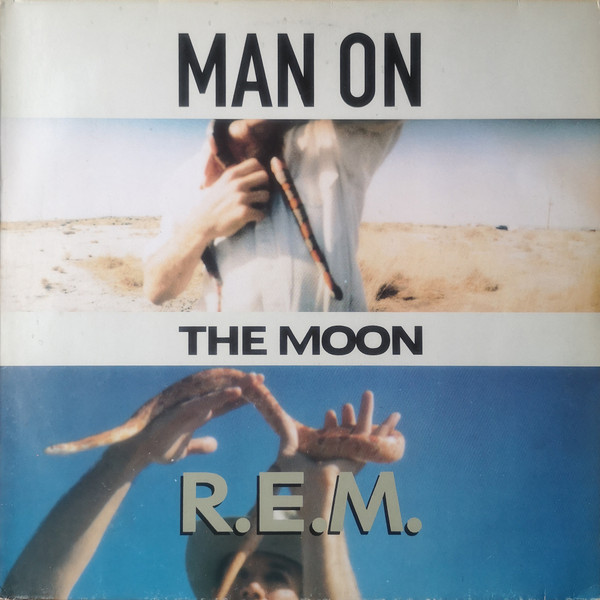
I noticed doing my Max Picks that I have never covered this song before by REM (I guess I’m giving this one away)…which really shocks me because it’s one of my favorites by them. This one is in my top three or four of REM songs. Its subject matter is no other than Mr. Andy Kaufman and that is probably the reason I like it so much. I’ve read a couple of books about Andy…what an interesting fellow. First a little about Andy.
Andy Kaufman covered the bases…Mighty Mouse, Foreign Man, wrestling women, Elvis Impersonator (I think the best), Tony Clifton, bongo player, Great Gatsby reader and generally pissing people off, boring them or making them laugh. He was a performance artist – a comedian who sometimes was uncomfortable to watch but great. He was not a joke comedian…not remotely close. He loved making the audience uncomfortable to the point of booing him at times. He ate all of that up. More than once he started to read The Great Gatsby…and he continued to read it until everyone left. Not one of his best routines but people noticed. After a show at Carnegie Hall, he took his entire audience out for milk and cookies with buses taking all the audience out.
I remember seeing him on a clip from the Tonight Show… as the very innocent childlike “foreign man” talking for a while and doing terrible celebrity impersonations and then suddenly shedding that character like a used coat and doing an Elvis impersonation…no, he WAS Elvis… I’ve read that Elvis said that Andy was his favorite impersonator but whether that is true or not I don’t know. He did do that show before Elvis died so it’s quite possible.
The song was originally titled ‘C to D Slide’ because that is the chord pattern that drummer Bill Berry had for it. Bill Berry came up with the melody and Peter Buck helped finish it off. Stipe came up with the lyrics as their back was against the wall to finish the album. It’s one of their most beloved songs. It was on the album Automatic for the People.
One line that I like is “Mr. Fred Blassie and the breakfast mess” which refers to Kaufman’s movie My Breakfast With Blassie…which is a good but different…as is everything to do with him. It was Andy talking and yes…having breakfast with wrestler Fred Blassie.
There are always rumors about celebrities being alive. You know…Lennon and Cobain hang out on an island having Mai Tai cocktails while jamming with Elvis. The only one that I thought if any more could pull it off…it would have been Andy.
The song was released in 1992 and peaked at #30 on the Billboard 100, #3 in Canada, #18 in the UK, and #8 in New Zealand. I double-checked it and #30 on Billboard is much lower than I thought it would be…I was thinking top 10.
Andy died in 1984…or did he? Bob Zmuda has said that Andy did say he was going to fake his death and said that he actually helped Andy plan it. More people have come forward saying the same thing. Every few years we get an Andy sighting in Albuquerque or somewhere else. No, I don’t believe he did fake it…but hey I would love it if he popped up well and alive anytime in the future. The world needs original people. You know he would be loving the rumors about him being alive…if he is alive or not…yeah, yeah, yeah, yeah.
Mike Mills: “Bill Berry is still a very good songwriter, he had a lot of musical ideas, then he and Petr Buck fleshed the rest of it out musically. It was a song that me, Pete, and Bill really loved and had musically finished right up to the last day of recording and mixing in Seattle, and we’d been leaning on Michael very heavily for some time trying to finish it.”
Man On The Moon
Mott the Hoople and the Game of Life, yeah, yeah, yeah, yeah
Andy Kaufman in the wrestling match, yeah, yeah, yeah, yeah
Monopoly, twenty-one, checkers, and chess, yeah, yeah, yeah, yeah
Mister Fred Blassie in a breakfast mess, yeah, yeah, yeah, yeah
Let’s play Twister, let’s play Risk, yeah, yeah, yeah, yeah
I’ll see you in heaven if you make the list yeah, yeah, yeah, yeah
Now, Andy, did you hear about this one?
Tell me, are you locked in the punch?
Andy, are you goofing on Elvis?
Hey baby, are we losing touch?
If you believed they put a man on the moon
Man on the moon
If you believe there’s nothing up his sleeve
Then nothing is cool
Moses went walking with the staff of wood, yeah, yeah, yeah, yeah
Newton got beaned by the apple good, yeah, yeah, yeah, yeah
Egypt was troubled by the horrible asp, yeah, yeah, yeah, yeah
Mister Charles Darwin had the gall to ask, yeah, yeah, yeah, yeah
Now, Andy, did you hear about this one?
Tell me, are you locked in the punch?
Hey Andy, are you goofing on Elvis?
Hey baby, are you having fun?
If you believed they put a man on the moon
Man on the moon
If you believe there’s nothing up his sleeve
Then nothing is cool
Here’s a little agit for the never-believer, yeah, yeah, yeah, yeah
Here’s a little ghost for the offering, yeah, yeah, yeah, yeah
Here’s a truck stop instead of Saint Peter’s, yeah, yeah, yeah, yeah
Mister Andy Kaufman’s gone wrestling, yeah, yeah, yeah, yeah
Now, Andy, did you hear about this one?
Tell me, are you locked in the punch?
Hey Andy, are you goofing on Elvis?
Hey baby, are we losing touch?
If you believed they put a man on the moon
Man on the moon
If you believe there’s nothing up his sleeve
Then nothing is cool
If you believed they put a man on the moon
Man on the moon
If you believe there’s nothing up his sleeve
Then nothing is cool
If you believed they put a man on the moon
Man on the moon
If you believed there’s nothing up his sleeve
Then nothing is cool
If you believed they put a man on the moon
Man on the moon
If you believed there’s nothing up his sleeve
Then nothing is cool
John Hiatt released this song in 1983 on the album Riding With The King which was his sixth album. Like all his other efforts at this time, the album was a critical success but little heard or bought by the public. They both are great versions of the song.
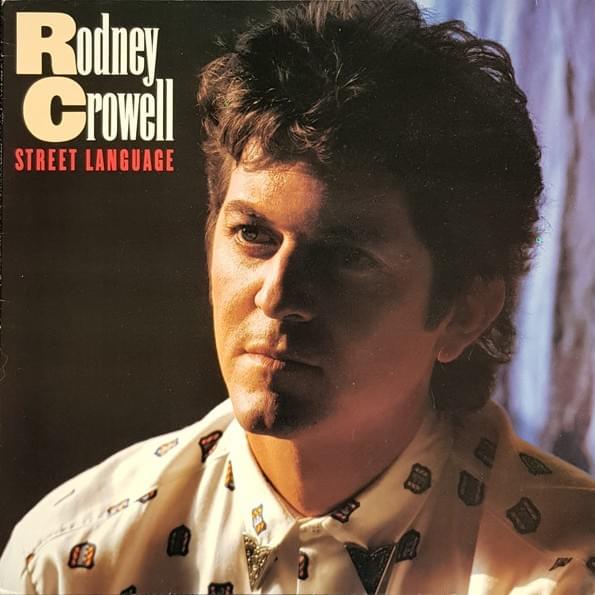
In 1986 Rodney Crowell released his album Street Language which was on Columbia Records for his first release on that label. He left Warner Brothers at the time and brought in Booker T. Jones to produce this album. He had some heavy hitters on this album. Vince Gill, David Lindley, Dave Loggins, and Anton Fig just to name a few.
The album peaked at #38 on the Billboard Country Charts and #177 on the Billboard Album Charts. The song peaked at #71 on the Billboard Country Charts in 1986. This was the album before Diamonds and Dust that soared to number 1 in the Country Charts with 5 number 1 Country hits.
John Hiatt said it was written in 1982 while he was living in Los Angeles at the time. The inspiration came from earlier in his life… the first girl he ever thought he was in love with. He was 15 and she was 18 and it was unrequited love. Another artist who covered this song was Elvis Costello. He released the demo version of it.
She Loves The Jerk
We’ve talked it to death, cryin’ on the telephone
Nights when he drinks at home
She has to whisper throught her tears
“Johnny,” she says, “You’d never do these things to me”
But I can never make her see he’s wasted such precious years
Well, “You married the wrong guy” is all I ever say
He’s a no good so and so, but she’ll never let him go
Though she knows it will never work, she loves the jerk
She loves the jerk
He was the guy always out on the make
I guess he had what it takes to turn the heads of pretty girls
She thought he would change; the worst of us will settle down
But he couldn’t stay out of town, not even with this precious pearl
Now she lives with the lies and the bumps and the bruises
He’s a no good so and so, but she’ll never let him go
Though she knows it will never work, she loves the jerk
She loves the jerk
Well, I hang up the phone and I pretend she’s in my arms
What I wouldn’t give for just one-tenth of what she gives Mister Charming
He’s a no good so and so, but she’ll never let him go
Though she knows it will never work, she loves the jerk
She loves the jerk
He’s a no good so and so, but she’ll never let him go
Though she knows it will never work, she loves the jerk
She loves the jerk
Don’t be a square man… listen to Eddie Cochran and play backseat bingo. Well, I thought I would try some of the fifties phrases.
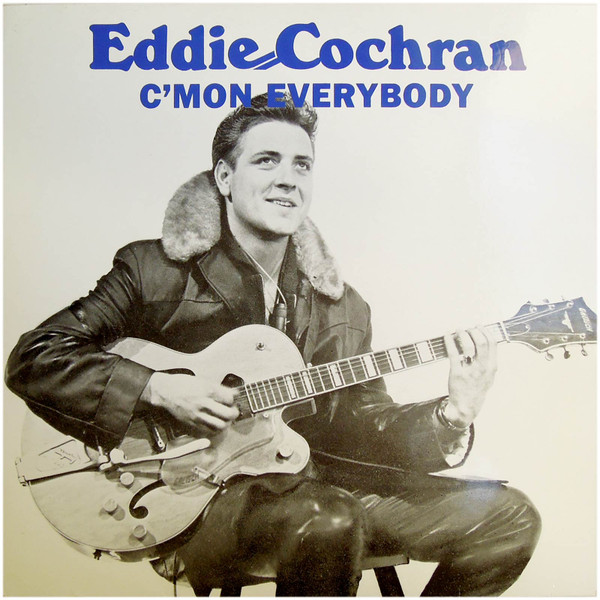
Eddie Cochran was one of the first rock star guitar players…he was ahead of his time. He didn’t use his guitar as a prop like some did (cough cough Elvis)…he played it and played it well. He also worked as a session musician. He helped bring rock guitar along in more ways than just his playing. He was one of the first to modify his pickups and he did away with the wound G string on the guitar. He replaced it with an unwound string which made it easier to bend. Many future musicians were paying attention, sitting on the front row of his British tour.
His influence can be heard throughout rock and roll…It was because Paul McCartney knew the chords and words to “Twenty Flight Rock” that impressed John Lennon enough to ask Paul to become a member of the Quarrymen.
Eddie was popular, especially in the UK where they never forgot the 50s stars that started it all. C’mon Everybody peaked at #6 in the UK and #35 on the Billboard 100 in 1958.
During a British tour in 1960, Eddie Cochran, Gene Vincent, Sharon Sheeley (Eddie’s fiancé), and tour manager Pat Thompkins were in a taxi. They were leaving a show in Bristol, England to go to the London Airport…the taxi hit a lamp post and Eddie was thrown from the car and suffered a head injury and died in a hospital. He was only 21 years old. Gene Vincent received injuries to his already bad leg and walked with a limp after the crash. Eddie was the only one to die.
Sharon Sheeley was a songwriter. She wrote Ricky Nelson’s first hit “Poor Little Fool” and a couple of songs (Love Again and Cherished Memories) for Cochran.
I love the set of this video!
C’mon Everybody
Oh, well, c’mon everybody and let’s get together tonight I got some money in my jeans, and I’m really gonna spend it right Well, I’ve been a doin’ my homework all the week long And now, the house is empty and the folks are gone Ooh, c’mon everybody
Oh well, my baby’s number one, but I’m gonna dance with three or four And then the house’ll be shakin’ from the bare feet a-slappin’ the floor Well, when you hear that music, you can’t sit still If your brother won’t rock, then your sister will Ooh, c’mon everybody
Oh well, we’ll really have a party, but we gotta put a guard outside If the folks come home, I’m afraid they’re gonna have my hide There’ll be no more movies for a week or two No more runnin’ ’round with the usual crew Who cares, c’mon everybody
CB sent me a link to The Beat Farmers. I knew heard of them but at first, I was thinking hard punk. I then realized and I remembered. I first heard of the Beat Farmers in the 1980s. WKDF in Nashville was at one time the premiere rock station in Nashville. Anyway, during some spots they would play a song by the Beat Farmers that was both strange, dark, and fun. I’ll get to that one on the next Beat Farmers post-Wednesday.
I’ve listened to this album at least 5-6 times this week. The hardest part was picking one song to post on…so I’m going to pick one but include two. The one I picked has a rockabilly feel to it but that is not necessarily the sound of the entire album.
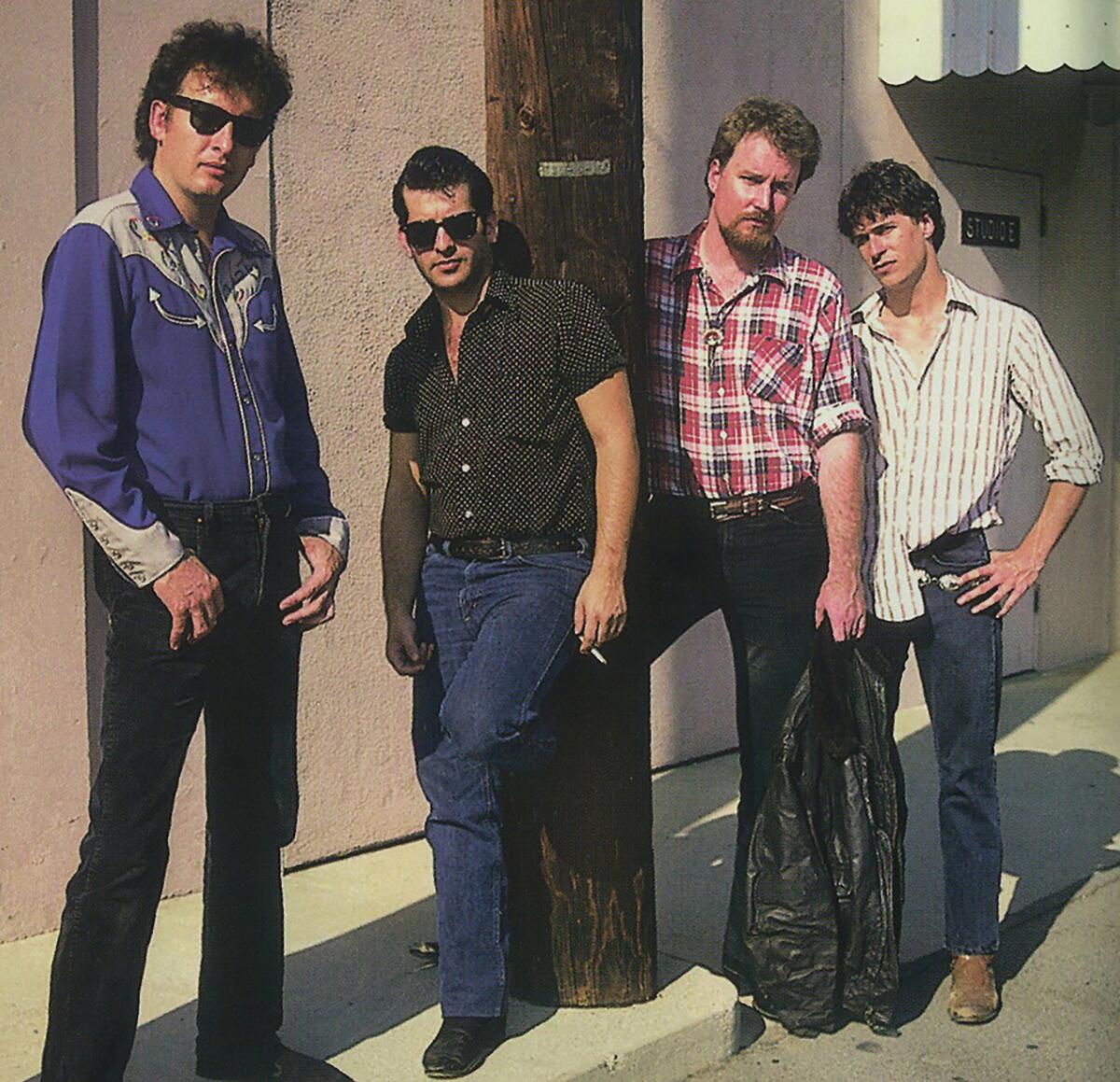
The Beat Farmers formed in San Diego California in 1983. They went to a studio with a $4000 budget, and they recorded Tales Of The New West. The album was released in 1985. The members were Country Dick Montana, Jerry Raney on guitar, Rolle Dexter on bass, Buddy Blue on guitar, and Joey Harris on guitar. They did a tour opening up for the Blasters and then signed a 7 Record Deal with CURB Records…which turned out to be a mistake…they fought for years to get away from them.
They also had several solo projects like Country Dick’s Petting Zoo, Country Dick’s Garage, Jerry and Joey acoustic, Jerry and Buddy jam nights, and the Pleasure Barons. Country Dick was recording a solo effort. Dick also worked with Mojo Nixon.
Together they released 6 albums and 15 singles + EPs. The band came to a halt on November 8, 1995, when Country Dick Montana died on stage. They have occasionally got together since then.
Below is the album Tales Of The New West… Give it a listen. They have a great base sound and their songs vary.
A cover of The Velvet Underground There She Goes Again
Goldmine
Well you can’t say that you are mine no more We’re history, I’m walking right out the door Well you can have your men and your liquor too But without me baby whatcha gonna do Baby you lost a goldmine when you lost me
I was faithful and I shared everything that I own I was always there when you cried babe I’m feeling alone But I ain’t no chump and you’re gonna find That those men that you’ve been seeing are the hurting kind And I don’t need you running on back to me
Well the smile that you’re wearing gonna disappear When you see that I was right Well you’ll rue the day that you pushed me till I walked right out of your life
Well there’s plenty of women that can keep me satisfied And I don’t need your cheating or your foolish lies Well I ain’t gonna miss none of your embrace So go shake that thing in someone else’s face Baby you lost a goldmine when you lost me
Well folks have got to reap just what they sow And you got some things-a coming to you don’t you know You’ll get no more loving or sympathy From the lonesome fool that you thought was me Baby you lost a goldmine when you lost me
I never knew that Buddy Holly covered this song…somehow I missed or forgot that he covered it.
This was recorded back in 1956 as one of his first recordings. It wasn’t released until 4 years after he died. The original version is just Buddy on guitar and vocals and Jerry Allison on drums. Producer Norman Petty then overdubbed the other instruments with help from a band called The Fireballs.
I consider him the beginning of power pop. His Fender playing a clean jangling melody. Songs like Maybe Baby, Peggy Sue, and Words of Love influenced future artists like The Beatles, Hollies, Bob Dylan, and the list is endless. He wrote his own songs and is still influencing artists today with a recording career that only lasted less than three years.
Buddy Holly’s music is still relevant almost sixty years after he passed away in 1959. He didn’t have a big voice like Elvis, Little Richard, or some of his peers but he wrote and crafted beautiful melodies for his voice to weave through.
This song peaked at #4 on the UK Charts and #116 on the Billboard 100 in 1963. The song was on an album called Reminiscing. The album peaked at #2 on the UK Album Charts and #40 on the Billboard Album Charts.
Not only was he a great songwriter but also a great producer and he would have only got better. Unlike many of his fifties counterparts, I believe that Buddy Holly would have fit in the music scene post-Beatles. I always thought his best songs were in front of him. Most of his music transcends the fifties and would have fit nicely in the sixties.
Here are two versions…the bottom WITH the overdubs and the other the original raw recording.
Bo Diddley
Bo Diddley buy baby a diamond ring If that diamond ring don’t shine He gonna take it to a private eye If that private eye can’t see
He better not take that ring from me Won’t you come to my house back at home Take a-my baby on away from home Love a-that photo, where ya been Up to your house and gone again Bo Diddley caught a fat cat
To make a-pretty baby a Sunday hat Bo Diddley caught him a nanny goat To make a pretty baby a Sunday coat Bo Diddley, Bo Diddley have you heard My pretty baby says she wants a bird
Chris Stamey formed the power pop band The dB’s with Peter Holsapple in 1978. A band that admired Big Star and followed their footsteps in releasing some critically acclaimed albums that did not sell. Chris Stamey even played bass for Alex Chilton in 1977.
The dB’s were a great unknown power pop band…who would influence many bands but not sell many records. They were from Winston-Salem, North Carolina but the group was formed in New York City in 1978. The members were Peter Holsapple, Chris Stamey, Will Rigby, and Gene Holder.
Stamey left the dB’s for a while in the 80s to pursue a solo career. He formed a record company in New York in 1978 called Cars Records and managed to release Chris Bell’s (Big Star guitarist, singer, and songwriter) single I Am The Cosmos.
From The Word Go was on Stamey’s second solo album It’s Alright. It was released in 1987 and is the only solo album of his to be released on a major label A&M/Universal. He has released 8 solo albums over a career that is still going now. The dB’s released an album in 2012.
Chris Stamey on Big Star:“They were my favorite, and as far as I knew they were popular all the way across America. At least for that moment, I forgot about Emerson, Lake, and Palmer.”
Starting with The Who’s Tommy album…everything after that gets noticed. Their brilliant early singles sometimes get criminally overlooked. Personally, and I know I am in the minority, I think many of their early singles trump both the Beatles’ and Stones’s early singles. The Who and Kinks didn’t have the quality of the sound of those bigger bands…but that was the point. Those singles were exciting and raw…a few experimental. Paul McCartney was influenced heavily by The Who when he wrote Paperback Writer and Helter Skelter.
On July 8, 1989, I traveled to Atlanta Georgia to see The Who for the first time. Nashville at that time had no place really big enough for them to play. Vanderbilt wasn’t allowing rock concerts at their stadium at that time. I’ll never forget when The Who played this song that night. Roger forgot the words to it and said “I don’t know the bloody words to this song.” I found the clip and I’ll have it below.
The only part of that concert that bothered me was the volume or the lack of really. Entwistle had to turn down his volume and they carried a brass section with them because of Pete’s tinnitus. It sounded great of course but not as in your face as when I saw them in Nashville in 2016. My only guess is now the PA equipment is better because The Who were much louder in 2016 than when I heard them in 1989.
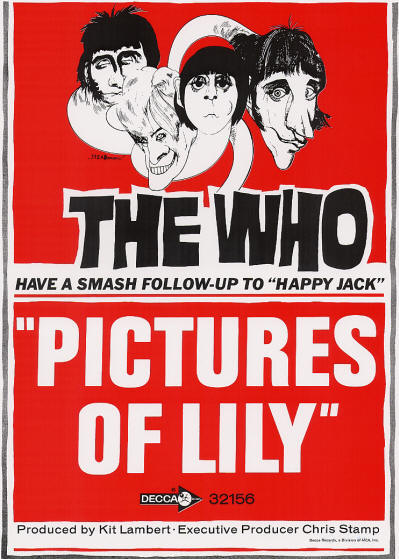
Describing The Who’s next new single (Pictures of Lily)…Pete Townshend coined the term “Power Pop” to describe this song before it was released. It made it to #4 in the UK Charts, #60 on the Billboard 100, and #36 in Canada in 1967. The song tells the story of a father giving his son risque pictures of a woman taken in the 1920s…and after a while, the son finds out that she had died many years ago.
It is a song about the lust of a teenage boy…we will keep it at that. John Entwistle played the French Horn on this that he later didn’t like.
Pete Townshend: On Karen’s (his future wife) bedroom wall were three Victorian black-and-white postcard photographs of scantily dressed actresses. One was the infamous Lily Langtry, mistress of Prince Edward, later King Edward VII, and one sunny afternoon while Karen was at work I scribbled out a lyric inspired by the images and made a demo of ‘Pictures of Lily’. My song was intended to be an ironic comment on the sexual shallows of show business, especially pop, a world of postcard images for boys and girls to fantasise over. ‘Pictures of Lily’ ended up, famously, being about a boy saved from burgeoning adolescent sexual frustration when his father presented him with dirty postcards over which he could masturbate.
John Entwistle: “The thing I hate about ‘Pictures Of Lily’ is that bloody elephant call on the French horn. I also hated the backing vocals, the mermaid voices, where we’d sing all the ‘oooooohs.’ I hated ‘oooooohs.'”
Below is the concert I was at when Roger forgot the words. It’s around the 1:36 mark.
Pictures Of Lily
I used to wake up in the morning I always feel so glad I got so sick of having sleepless nights I went and told my dad
He said, “Son, now here’s some little somethings” And stuck them on my wall And now my nights ain’t quite so lonely In fact I don’t feel bad at all (I don’t feel bad at all)
Pictures of Lily that make my life so wonderful Pictures of Lily that let me sleep at night Pictures of Lily that solved my childhood problem Pictures of Lily, they make me feel alright
Pictures of Lily (pictures of Lily) Pictures of Lily (Lily, oh Lily) Pictures of Lily (Lily, oh Lily) Pictures of Lily (pictures of Lily) Pictures of Lily, pictures of Lily Pictures of Lily, pictures of Lily
And then one day things weren’t so fine I fell in love with Lily I asked my dad where Lily I could find He said, “Don’t be silly”
“She’s been dead since 1929” Oh, how I cried that night If only I’d been born in Lily’s time It would have been alright There were always pictures of Lily to help me sleep at night Pictures of Lily to help me feel alright
‘Cause me and Lily are together in my dreams (my mind) And I was wonderin’, mister, have you ever seen?
Pictures of Lily to help you sleep at night Pictures of Lily to help you feel alright
‘Cause me and Lily are together in my dreams And I was wonderin’, mister, have you ever seen Pictures of Lily?
This song played a key part in making me love the power pop genre. It’s one of my favorite power pop songs of all time. It was originally released in 1988 but wasn’t played over in America until 1990. So I’m cheating on this but I had no way of hearing it before then.
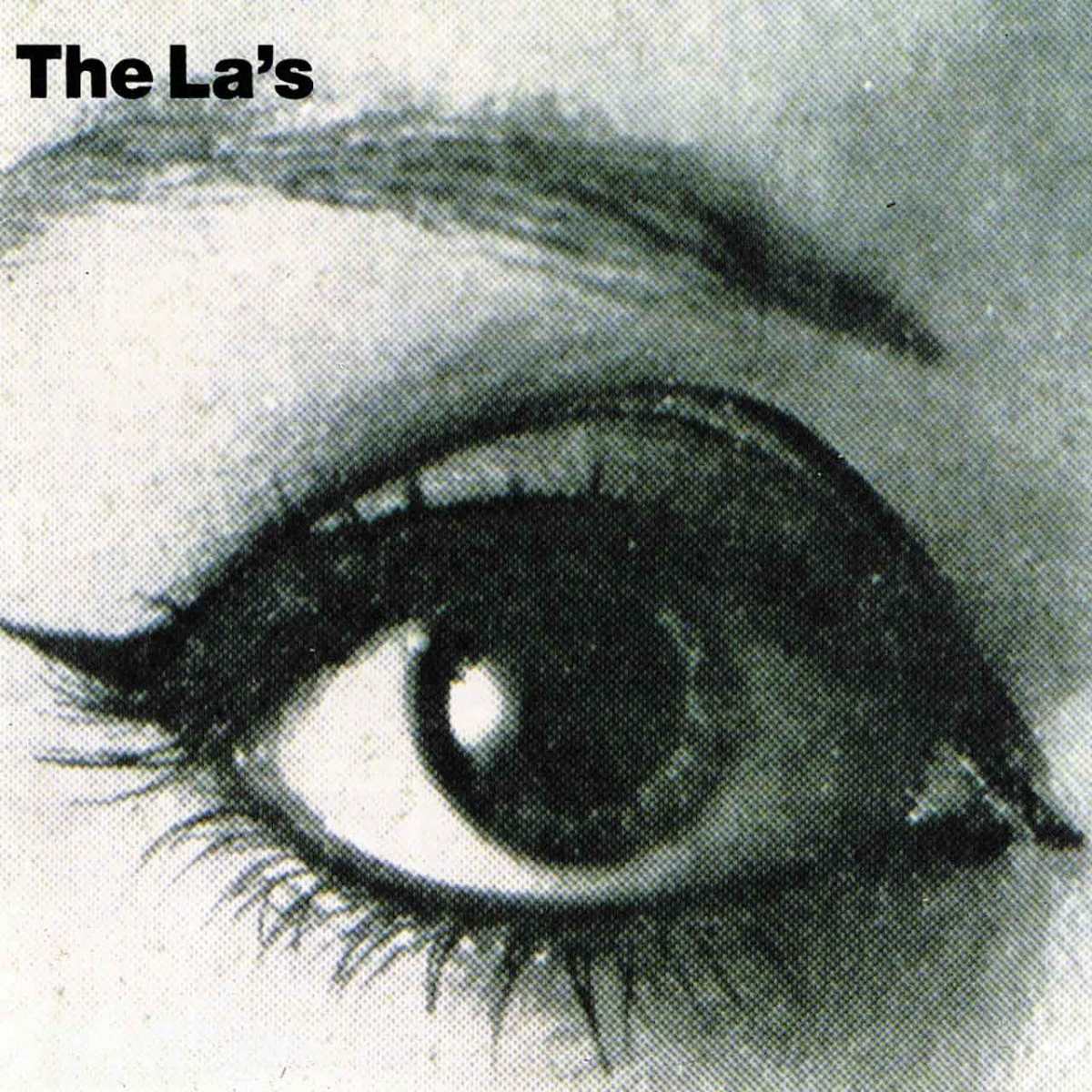
A song by a British band called The La’s. A very good pop song that has no verses…it just repeats the chorus four different ways four different times. It was written by the singer Lee Mavers and recorded in 1988 and remixed and released again in 1990. It only peaked at #49 in 1990 in the US.
Many people think the song was about heroin. Paul Hemmings an ex-guitarist for the band denies that rumor. Either way, it is a perfectly constructed pop song. It’s been covered by a lot of artists but probably most successfully by Sixpence None the Richer. I’ve always liked The La’s version the best.
The Black Crowes – Hard To Handle
When I heard this song in 1990 I was thrilled because it sounded like the Faces of the 70s. It was plain rock and roll and had a timeless quality about it. I waited the entire 1980s for rock and roll like this to be back on the mainstream charts. The Replacements were the other rock band but not in the charts. It happened occasionally (Georgia Satellites and Guns and Roses) but not much. This song was originally recorded by Otis Redding, who wrote it with Allen Jones and Al Bell. It was the only cover song on The Black Crowes debut album which sold over five million copies.
The album also had songs like Jealous Again and She Talks To Angels. I knew things were changing when I saw the success of their album.
The two other versions that I like are Otis Redding and Grateful Dead version with Pigpen taking the lead.
The Replacements – Merry Go Round
This one is off of their last studio album All Shook Down. I was going to conclude with this one having one off of their studio albums but there is one more coming next week.
This is not my favorite off the album but it did have a commercial sound for that time and it’s something that I thought would have charted in the Billboard 100. Merry Go Round did peak at #1 on the alternative charts. The album peaked at #69 in the Billboard Album Chart in 1990.
“Merry Go Round” was written about the lives of Westerberg and his sister Mary (“They ignored me with a smile, you as a child”).
The band went to Los Angeles to make a video for Merry Go Round. With Westerberg’s okay, Warner Bros. hired Bob Dylan’s twenty-three-year-old son Jesse Dylan, who was just starting to direct.
AC/DC – Thunderstruck
As much as I love Angus Young’s intro to this…it’s his brother’s rhythm guitar that makes this song go. Brothers Angus and Malcolm Young wrote this song.
A side note to this song. In 2012 a couple of Iranian uranium-enrichment plants were hacked and their computers shut down but not before blasting Thunderstruck at maximum volume like you are probably doing right now or will be soon.
The album was recorded with producer Bruce Fairbairn at his Little Mountain Sound Studios in Vancouver, where he also produced Bon Jovi’s Slippery When Wet and the Aerosmith albums Permanent Vacation and Pump. It was the group’s first time working with Fairbairn.
Sinéad O’Connor – Nothing Compares 2 U
This song was everywhere in 1990. Prince wrote this song in 1984 but didn’t release it. He gave it to a group called The Family that was signed to his label. The Family included it on a 1985 album but it never went anywhere. Five years later it became the biggest hit of 1990. Prince recorded his own version as well, but it wasn’t released until 2018, two years after his death.
It was O’Connor’s manager, Fachtna O’Kelly, who suggested she record a version of the track. O’Kelly knew it would be perfect for her.
This one is only 16 years old…for this site that is practically brand new!
When I first heard this I thought this song had a Stevie Wonder feel to it…none of my friends shared the same opinion… Nonetheless, it’s a good song. It’s a straight-ahead pop song without much production.
James Morrison is an English singer-songwriter and guitarist from Rugby, Warwickshire. James attributes his gravelly voice to a near-fatal childhood bout of whooping cough. The song peaked at #3 on the Billboard Triple-A Charts in 2009. The song was written by James Morrison, and Barry and Mark Taylor.
The song was on his second studio album Songs for You, Truths for Me, which peaked at #49 in the Billboard 100 in 2008.
“Nothing Ever Hurt Like You” received critical acclaim and was well-received by audiences. While it did not win any major awards, it helped James Morrison’s career as a respected singer-songwriter.
Nothing Ever Hurt Like You
1, 2, 3, 4
Oh, oh, oh,
Yeah yeah yeah
HeyIf loving you is easy,
Playing by the rules,
But you said love taste so much better when its cruel
To you everything was just a game,
Yeah you played me good,
But I want you, I want you, I want you,
So much more than I should,
Yes I do.I’ve got my hands up so take your aim,
Yeah I’m ready,
There’s nothing that we can’t go through,
Oh it hit me like a steal freight train,
When you left me,
And nothing ever hurt like you,
Nothing ever hurt like you.I was naive and wide eyed,
But you made me see,
That you don’t get to taste the honey,
Without the sting of a bee,
No you don’t.Yes you stung me good,
Oh yeah you dug in deep,
But ill take, ill take it, ill take it
Till I’m down on my knees.
I’ve got my hands up so take your aim,
Yeah I’m ready,
There’s nothing that we can’t go through,
Walk a thousand miles on broken glass,
It wont stop me,
From making my way back to you,
Its not real till you feel the pain,
And nothing ever hurt like you,
Nothing ever hurt like you.Oh everything was just a game,
Yeah you played me good,
But I want you, I want you, I want you,
I want you, I want you.I’ve got my hands up so take your aim,
Yeah I’m ready,
There’s nothing that we can’t go through,
Walk a thousand miles on broken glass,
It wont stop me,
From making my way back to you,
Its not real till you feel the pain,
And nothing ever hurt like you,
Nothing ever hurt like you.
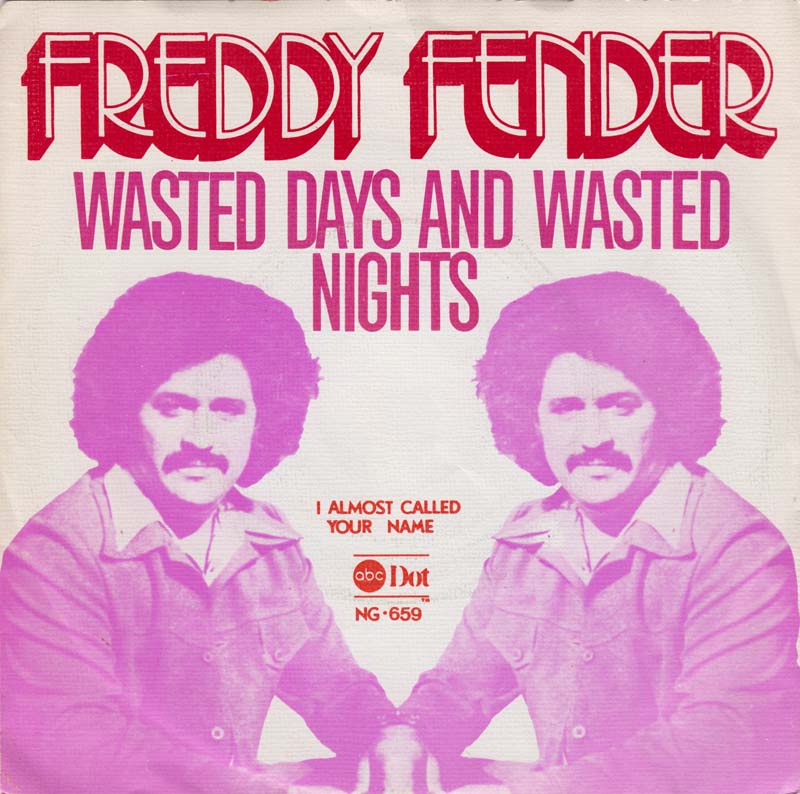
I remember Freddy Fender as a kid and this song. I remember it being played everywhere. It was a huge crossover hit and I saw him on television at the time singing it on different shows.
Freddy Fender wrote and recorded it in 1959 for a small label. It wasn’t until 1975 that he was able to release it again under his name. He and some band members were charged with pot possession in Baton Rouge, Louisiana in 1960.
Fender served 3 1/.2 years in prison until he was pardoned by Governor Jimmie Davis. There was a condition though…he had to stay away from anywhere that served alcohol. In the late sixties, he started to work in a garage and play music on the weekends.
He started to record again in 1974 and struck gold with his first two releases. Before the Next Teardrop Falls peaked at #1 in the Billboard Country Charts, #1 on the Billboard 100, and #1 on the Canadian Country Charts. Wasted Days and Wasted Nights peaked at #1 on the Billboard Country Charts, #8 on the Billboard 100, #2 on the Canadian Country Charts, and #6 in Canada in 1975.
He would have more number 1s in the Country Charts for Billboard and Canada. Later on, Fender would later join the Texas Tornados and Los Super 7.
Here is Freddie with the Texas Tornados doing the song.
Wasted Days Wasted Nights
Wasted days and wasted nights I have left for you behind For you don’t belong to me Your heart belongs to someone else
Why should I keep loving you When I know that you’re not true? And why should I call your name When you’re to blame For making me blue?
Don’t you remember the day That you went away and left me? I was so lonely Prayed for you only My love
Why should I keep loving you When I know that you’re not true? And why should I call your name When you’re to blame For making me blue?
Don’t you remember the day That you went away and left me? I was so lonely Prayed for you only My love
Wasted days and wasted nights I have left for you behind For you don’t belong to me Your heart belongs to someone else
Why should I keep loving you When I know that you’re not true? And why should I call your name When you’re to blame For making me blue?
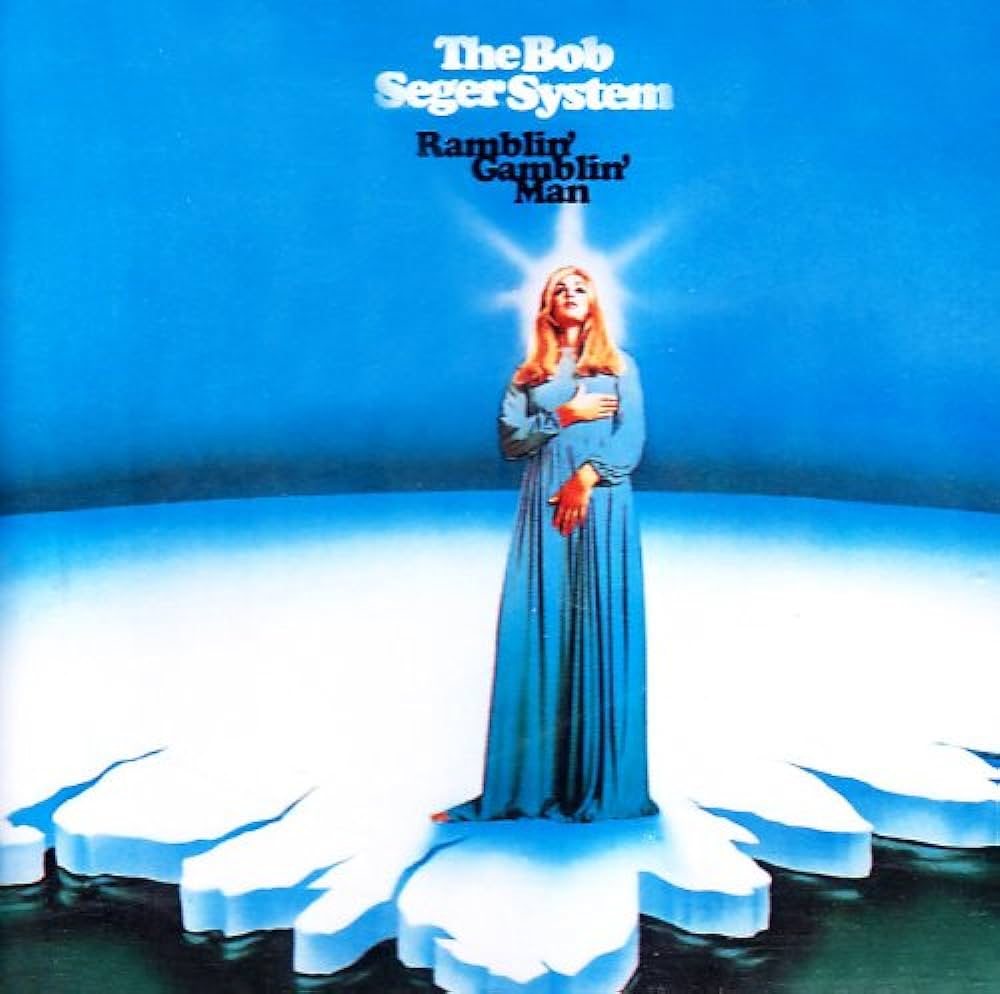
Something about Bob Seger…the man paid his dues. Bob started in 1961 in the Detroit music scene in the Decibels. He kicked around in different bands through the years. His break-out song is this one. His friend, 19-year-old Glen Frey, plays acoustic guitar and sings backup on this song.
The song was a big hit in Michigan and eventually started to climb the charts. The song peaked at #17 on the Billboard 100 in 1969. It would be 1975 before Seger broke nationally. After hearing Gimme Some Loving by the Spencer Davis Group, Seger wanted that organ in a song. Bob Schultz, a Seger’s band member, played it on this track. From then on it became a part of the live sound.
Seger has had an interesting career. Before Against The Wind, before Night Moves, before the Silver Bullet Band even existed, Bob Seger made gritty, experimental garage rock. It was far from the radio hits that made him famous, and much closer to the punk of fellow Michigan musicians like Iggy Pop. At this time he would hang out with The Stooges and The MC5. They would eventually fade away but Seger matured as a songwriter and became a hit machine.
I’ve always liked Bob Seger. He gets heavy play here in the south and many of his songs have been played to death…but not this one. I like the rawness of this single.
Bob Seger: “We’d had a few records that were popular around town and you’d hear on the radio a lot, but, yeah, that was a little different. That was a hit.”
“I wasn’t necessarily a great songwriter at that time, I think I focused more on playing the guitar and singing… even though Dylan and Van Morrison were important to me and influences on me. That craft was something that developed slowly.”
A live version
Here is a very early look at Bob Seger
Ramblin’ Gamblin’ Man
Yeah, I’m gonna
Tell my tale, come on
Come on, ha, give a listen
Cause I was born lonely
Down by the riverside
Learned to spin fortune wheels
And throw dice
I was just thirteen
When I had to leave home
Knew I couldn’t stick around
I had to roam
Ain’t good looking
But you know I ain’t shy
Ain’t afraid to look
A girl in the eye
So if you need some loving
And you need it right away
Take a little time out
And maybe I’ll stay
[CHORUS]
But I got to ramble (rambling man)
I got to gamble (gambling man)
Got to, got to ramble (rambling man)
I was born a rambling, gambling man
Yeah, yeah, yeah….
Ha ha, bring it on
Come on down, yeah
All right, here we go
Now, now
I’m out of money
Cause you know I need some
Ain’t gone run out of loving
And I must run
Gotta keep moving
Never gonna slow down
You can have your funky world
See you round
Cause I got to ramble (rambling man)
I got to gamble (gambling man)
I got to ramble (rambling man)
Lord, I’m a rambling, gambling man
Oh, I’m just a rambler
Yeah, I’m just a gambler
Come on and sing along
Cause I’m just a rambler (rambling man)
Lord, I’m a gambler (gambling man)
I’m a rambler (rambling man)
Yeah, I’m a rambler…
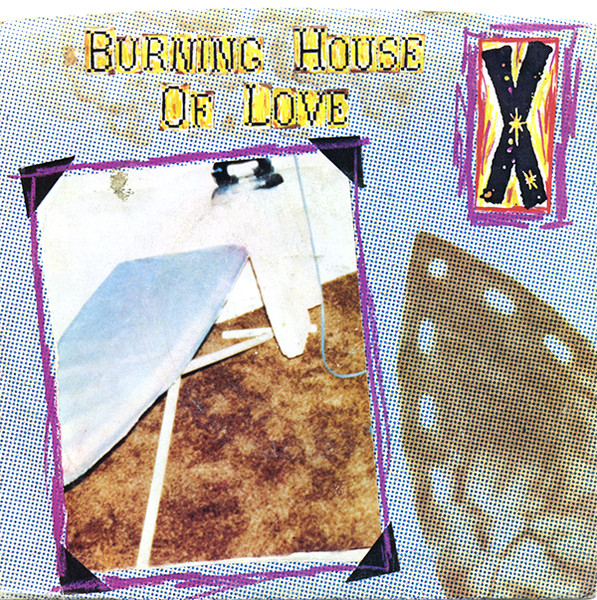
This song was released in 1985 from their album Ain’t Love Grand. They had made a change in the producer spot. They replaced former Doors keyboard player Ray Manzarek with Michael Wagner. Manzarek had produced all of their albums up to this point. The band wanted a more accessible sound.
X was formed in Los Angeles in 1977 and comprised of founding members singer John Doe, guitarist Billy Zoom, drummer D.J. Bonebrake, and singer Exene Cervenka. With their first album in 1981, their album Los Angeles was critically praised and considered a great one of that period.
The band was founded by Doe (real name John Nommensen Duchac) and Zoom. Soon Doe would bring his girlfriend Exene Cervenka to band practice, she was a poet and the band liked her work so she joined permanently. When trying to think of a name…Doe looked around the band members and focused on Exene Cervenka. Her unusual first name was shortened to X…Exene to X…
After Manzarek saw them live…he really connected to the lyrics. He was instantly struck by the lyrics to X’s song Johny Hit And Run Paulene: ‘He got a sterilized hypo, to shoot a sex machine drug/He got 24 hours, to shoot Paulene between the legs.’ Manzarek thought to himself…those are not lyrics…those are poetry.
The song peaked at #27 on the Billboard Mainstream Charts and the album Ain’t Love Grand peaked at #89 on the Billboard Album Charts in 1985.
Tensions were rising in the band and Zoom left and would be replaced for a bit by Dave Alvin of The Blasters. X announced they were breaking up in 1998 but would do a last tour. They did a farewell tour with Zoom back on guitar.
They reunited and from 2004 onward, X has continued to perform frequently around North America.
Billy Zoom: “I think it’s the best songs we’ve ever done, and the best-produced record, and the best-engineered, and the best-sounding record we’ve made. It’s the first one I’m really happy with. The others were always kind of hit-and-miss.” Doe said, “Sonically, it’s designed to fit into radio airplay. We’re waving a typical… somewhat typical sounding carrot under radio listeners’ noses. Then they’ve got the opportunity to see that there’s more going on.
Burning House Of Love
Drive by my house late at night
You can see from the freeway above
No silhouette, but a light left on
Burning there for love
Burning there for love
Smoke is rising from the fire
Coming out my back door
I’m inside, sound asleep
Cigarette on the floor
Burning there for love
Burning there for love
Well, I can still remember
A couple of years ago
When the smoke and flame called my name
It was a burning house of love
Yeah, a burning house of love
A burning house of love
Burning house of love
Burning house of love
Oh, I can still remember
A couple of years ago
When the smoke and flame called my name
Was a burning house of love
Yeah, a burning house of love
A burning house of love
The rusty nail over our front door
Is where I hung our tears in the rain
I threw that horseshoe into the weeds
I’ll see what luck can bring
I’ll see what luck can bring
Now, you’re in your bed and I’m in mine
On either side of town
I think I might take a ride
And burn your love house down
Like a burning house of love
Burning house of love
I can still remember
A couple of years ago
When the smoke and flame called my name
Was a burning house of love
Yeah, a burning house of love
A burning house of love
Burning house of love
Burning house of love
Burning house of love
Burning house of love
Underneath a pork pie hat Until hell freezes over Maybe you can wait that long But I don’t think Ronnie Milsap’s gonna ever Record this song
I somehow missed this Hiatt song. I absolutely love the guitar on this track. Come to find out there is a reason I like it. Ry Cooder is on guitar, Nick Lowe on bass, Jim Keltner on drums, and Paul Carrack on keyboards and backing vocals. Later on, B.B. King and Eric Clapton covered this song.
Hiatt had only four days to make an album and this song kicked off his 1987 album Bring The Family. The song has a cool groove and shuffle to it. Hiatt was in Nashville at the time when he took a trip with his family to Memphis which of course inspired this song.
He mentions Ronnie Milsap in this song. At the time Nashville was known to make slick country songs. They would produce the soul out of a song. Milsap was listening though. On his next album, he recorded a John Hiatt song called Old Habits Are Hard To Break and yes… he inserted some Memphis funk in the song. Probably more than Hiatt could have thought at the time. Another thing that was happening at this time was Dwight Yoakam and Steve Earle were shaking Nashville out of its rut.
Hiatt found himself drawn to the city’s renowned musical history and culture. I’m not sure how it was in the 1980s as much but now on Beale Street, there is always something interesting going on.
John Hiatt: “It sounds like a car with four bald tires, it’s like a four-man groove sputtering down the road, and I really like the record for that.”
John Hiatt: “It’s a day trip, only three hours, and it’s a terrific city, I’d been there before and there is truly something in the air, although there’s nothing going on musically speaking, they say. It’s just a great town and one of the only truly integrated cities in America, it seemed to me, where black people and white people actually live together in the neighborhoods and not only that, seem to get along I was real impressed by that.”
John Hiatt and The Goners…featuring Sonny Landreth…I really like this live cut. They add another dimension to the song.
Memphis in the Meantime
I got some’n’ to say little girl You might not like my style But we been hangin’ around this town Just a little too long a while You say you’re gonna get your act together Gonna take it out on the road But if I don’t get out o’ here pretty soon My head’s going to explode Sure I like country music And I like mandolins But right now I need a Telecaster Through a Vibrolux turned up to 10
Let’s go to Memphis in the meantime baby Ahw, Memphis in the meantime girl Let’s go to Memphis in the meantime baby Memphis in the meantime girl
I need a little shot of that rhythm baby Mixed up with these country blues I wanna trade in these ol’ cowboy boots For some fine Italian shoes Forget the mousse and the hairspray sugar We don’t need none of that Just a little dab’ll do ya girl Underneath a pork pie hat Until hell freezes over Maybe you can wait that long But I don’t think Ronnie Milsap’s gonna ever Record this song
Lets go to Memphis in the meantime baby Let’s go to Memphis in the meantime girl Lets go to Memphis in the meantime baby Let’s go to Memphis in the meantime girl
Maybe there’s nothin’ happenin’ there But maybe there’s somethin’ in the air Before our upper lips get stiff Maybe we need us a big ol’ whiff
If we could just get off-a that beat little girl Maybe we could find the groove At least we can get ourselves a decent meal Down at the Rendezvous ‘Cause one more heartfelt steel guitar chord Girl, it’s gonna do me in I need to hear some trumpet and saxophone You know sound as sweet as sin And after we get good and greasy Baby we can come on home Put the cow horns back on the Cadillac And change the message on the Cordaphone But
Lets go to Memphis in the meantime baby Let’s go to Memphis in the meantime girl Lets go to Memphis in the meantime baby Let’s go to Memphis in the meantime girl
I’m a talking about Memphis I’m talkin’ ’bout Memphis Memphis








 PowerPop... An Eclectic Collection of Pop Culture