David Essex – Rock On

The bassline and minimalist nature to this song…makes it all worth the repeat listens. It’s very much a cultural artifact that encapsulates its time.

This is a song from childhood that I will never forget. It had a strange sound and that is what made it special. No other than Herbie Flowers played bass on this song and he made it stand out. Yes this song is worn out but I will turn it up sometimes just to hear that bass.

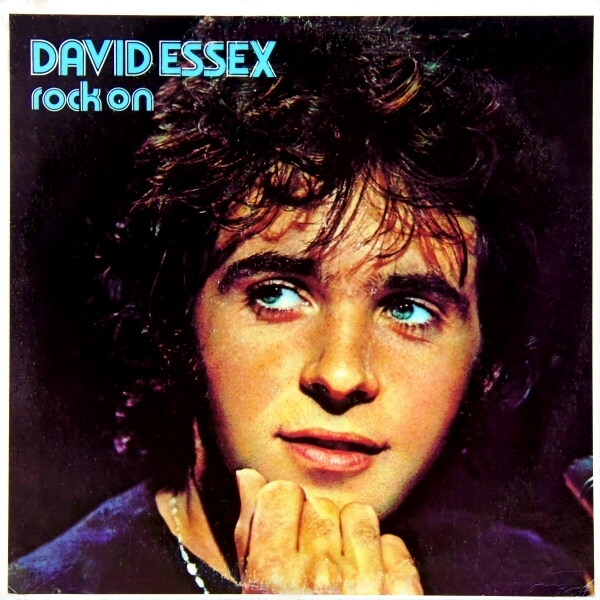
David wrote and released this song in 1973. It appeared in the movie he and Ringo Starr were appearing in called That’ll Be The Day. Essex made unsuccessful recordings in the sixties until found success as an actor. This was the first of his many hits in the UK.

On another note. That’ll Be The Day is a really good movie and so is the follow-up… Stardust. I would suggest if you get the chance…watch them. I think it’s the best movie Ringo Starr ever appeared in excluding A Hard Days Night.

The song peaked at #1 in Canada, #5 in the Billboard 100, and #3 in the UK in 1973. Essex never charted another hit in America, although the Grammy nomination he got for “Rock On” was enough to give him a cult following in America.

The producer of this song was a jingle composer named Jeff Wayne. Wayne was an unusual choice, but his background in jingles, which must be very efficient, proved worthy.

Jeff Wayne: “I can recall the three musicians on the backing track for ‘Rock On’ all looking around in a mostly empty Advision Studios, Studio 1, wanting to know when the rest of the band was arriving! I explained there weren’t any others for that track, and I was relying on them to understand my idea for the production. While the drums and percussion parts were written out, it was definitely Herbie that grasped immediately that a bass guitar playing a lead riff could fill a large part of the spatial spectrum and he took my idea and turned some basic notes of mine, into his amazing bass riff. Then to top it off, he suggested playing it again an octave higher. So you get this unusual bass sound right up front – now it couldn’t have been up front if the arrangement didn’t allow the air and the space to be created that way.”

Rock On

Hey kids rock and roll,
Rock on, oh my soul
Hey kids boogey too, did ya

Hey shout, summertime blues,
Jump up and down in my blue suede shoes
Hey kids rock and roll, rock on

And where do we go from here?
Which is the way that’s clear

Still looking for that blue jean, baby queen
Prettiest girl I’ve ever seen
See her shake on the movie screen, Jimmy Dean
James Dean, rock on
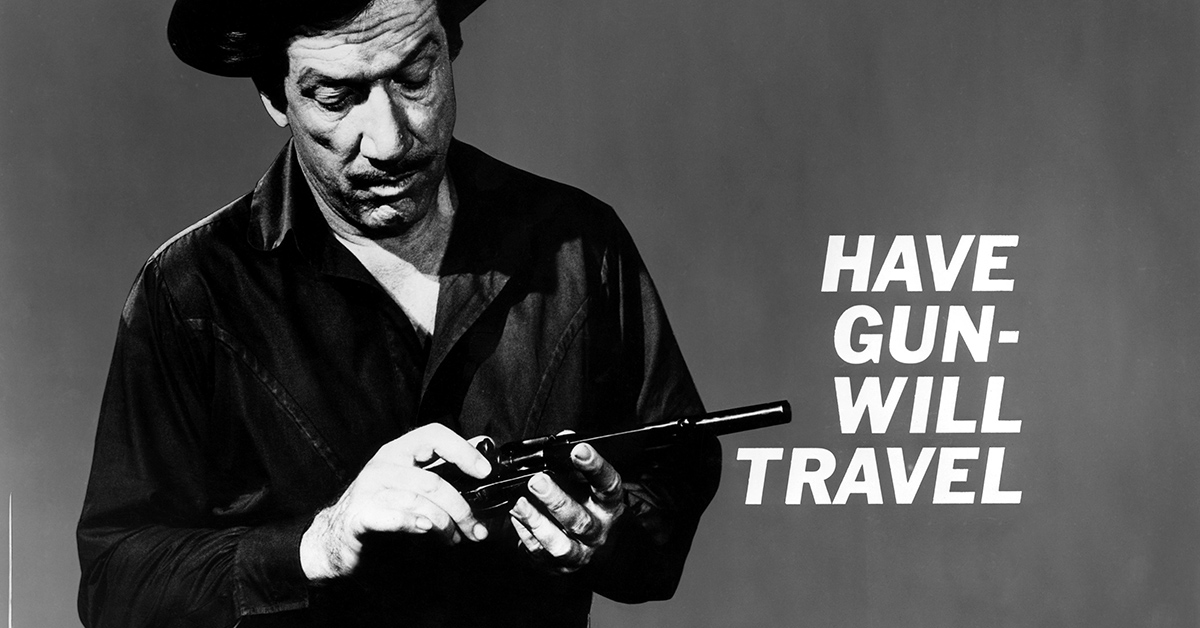
Have Gun Will Travel

I never got into TV westerns very much but this one was different. It was on for 6 seasons from 1957 – 1963 that featured very different leading man type… Richard Boone. Boone was the perfect to play Paladin and I always liked him in his movies.

24 episodes were written by Gene Roddenberry before he tackled Star Trek. The writing and the stories set this show apart from Bonanza and many other Westerns from this period. That is not a knock on the other Westerns but this one was unique.

A rich sophisticated gunslinger (that goes by the name Paladin)…with morals…. lives in an 1880s hotel in San Francisco. Anyone in trouble can hire him at his normal fee of 1000 dollars (if the cause is good….he sometimes doesn’t charge)… He is a problem solver and only kills if he has to.  Paladin never reveals his real name but during each episode, he will flash his business card to a prospective client, and then Paladin changes from socialite clothing to an all-black outfit. He is a man’s man who is a fast draw and quotes Shakespeare, Homer, Oscar Wilde, and many more… Not your average Western gunslinger…

Guest stars included Charles Bronson, Jack Lord, Buddy Ebsen, Harry Morgan, Dan Blocker, DeForest Kelley, Ken Curtis, Lon Chaney Jr., John Carradine and many more.

I’m surprised it lasted as long as it did because they did not dumb it down like so many shows did then and especially now.

If you decide to give this series a try…watch the 1st episode of the 6th season (Genesis) first… because it explains where Paladin got his name…but still never gives his real name.

Frankie Lymon and the Teenagers – I’m Not A Juvenile Delinquent

I like quite a few doo-wop songs of the 1950s. The song was written by George Goldner and it was featured on their 1956 album, The Teenagers Featuring Frankie Lymon. It peaked at #12 on the UK Singles Chart in 1957. The song was featured in the movie Rock, Rock, Rock.

Their big hit was Why Do Fools Fall In Love released in 1956. The group only lasted until 1957 when the manager kept pushing Lymon over the group and he started a solo career. He never reached the heights he did with the Teenagers.

I like concentrating on the music but this story has a sad ending.

They did reunite for a brief time in 1965 but the times had changed. They didn’t have much success so Lymon went back to a solo career. At age 15, he tried heroin for the first time in the mid-fifties. In 1966, he was arrested for heroin possession and was drafted into the Army instead of going to jail. He got off of heroin while in the army but kept going awol…he was dishonorably discharged from the army in 1967 and signed with Roulette Records in 1968.

He celebrated signing by using heroin for the first time in two years. Lymon had a sad ending to his life as he only lived to be 25 and died of a heroin overdose in February 1968. Another music business casualty. He was Michael Jackson before Michael Jackson.

Why Do Fools Fall In Love

I’m Not a Juvenile Delinquent

I’m not a juvenile delinquentNo-no-no-no-no-no-no-noNo-no-no-no-no-no-no-noNo-no-no, I’m not a juvenile delinquentDo the things that’s rightAnd you’ll do nothing wrongLife will be so nice, you’ll be in paradiseI know, because I’m not a juvenile delinquent

But listen boys and girlsYou need not be blueAnd life is what you make of itIt all depends on youI know, because I’m not a juvenile delinquent

It’s easy to be good, it’s hard to be badStay out of trouble, and you be gladTake this tip from me, and you will seeHow happy you will beOh-oh, boys and girls, this is my storyAnd I add all of my gloryI know, because I’m not a juvenile delinquent

It’s easy to be good, it’s hard to be badStay out of trouble, and you be gladTake this tip from me, and you will seeHow happy you will beOh-oh, boys and girls, this is my storyAnd I add all of my gloryI know, because I’m not a juvenile delinquent

No-no-no, I’m not a juvenile

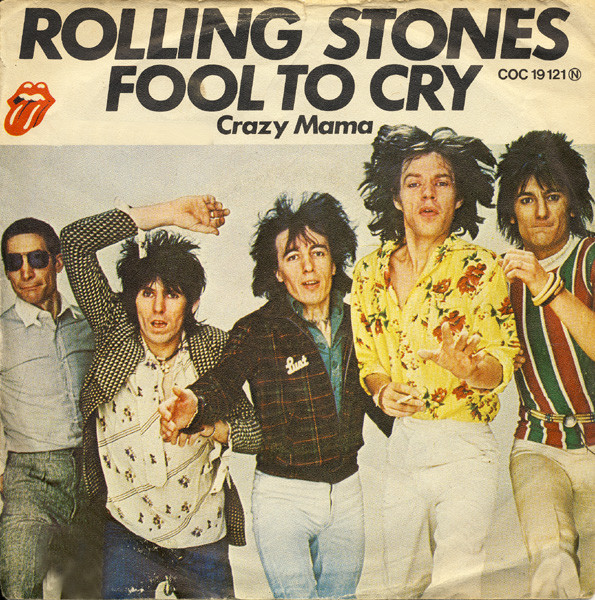
Rolling Stones – Fool To Cry

This song was on the forgotten Black and Blue album. My all-time favorite Stones song is on that album…Memory Motel.

This album was made when the best guitarist the Stones ever had…left them. That’s no knock on Keith, Brian, or soon-to-be Ronnie Wood at this time…Mick Taylor was just that good. He was on 4 of the 5 classic albums they are mostly known for. Another significant person left before Taylor did…Jimmy Miller produced the albums Beggars Banquet, Let It Bleed, Sticky Fingers, Exile On Main Street, and Goats Head Soup. He was the most important producer they worked with. He gave them a sound that they did not have before.

Ronnie Wood is not the guitar player in this song. They were auditioning guitar players on this album. The three guitar players were Wayne Perkins, Harvey Mandel, and Ronnie Wood. Wayne Perkins, a super-session player, was the lead guitar player on this song. He didn’t get the job because he was from Alabama. Keith said that was hard to get over because they wanted the Stones to remain an English band. Wayne Perkins was probably the best guitar player they auditioned…but Ronnie Wood looked the part and fit in.

The album was not as well received but still peaked at #1 on the Billboard Album Charts, #2 in Canada, #2 in the UK, and #4 in New Zealand in 1976.

Fool To Cry peaked at #10 on the Billboard 100, #11 in Canada, #6 in the UK, and #38 in New Zealand.

Mick Jagger has said of this song: This dates from the period when I had a young child, my daughter Jade, around a lot, calling me daddy and all that. It’s another of our heartmelting ballads, a bit long and waffly at the end maybe, but I like it.

Keith Richards: “I was just glad somebody in the band could sing that falsetto. I got a pretty good falsetto myself. But when you got a singer and he can hit those notes, baby go for it. And Mick was always fascinated with the falsetto Soul singers like Aaron Neville. That’s crafty stuff, you know what I mean? But he’d been listening to so many people. It’s kinda like what goes in, will come out. You’ll just hear a phrase or a piece of music. And one way or another it’s part of your experience. And a lot of the time it comes out what you do without even realizing it. I don’t really like to think about these things too much. It’s more to do with feeling than intellectualizing about it.” 

Keith Richards: Ronnie wasn’t necessarily a shoo-in as our new guitarist, despite our closeness at the time. He was still, for one thing, a member of the Faces. We tried other players before him–Wayne Perkins, Harvey Mandel. Both great players, both of them are on Black and Blue. Ronnie turned up as the last one, and it was really a toss-up. We liked Perkins a lot. He was a lovely player, same style, which wouldn’t have ricocheted against what Mick Taylor was doing, very melodic, very well-played stuff. Then Ronnie said he had problems with the Faces. So it came down to Wayne and Ronnie. Ronnie’s an all-rounder. He can play loads of things and different styles, and I’d just been playing with him for some weeks, so the chips fell there. It wasn’t so much the playing, when it came down to it. It came down to the fact that Ronnie was English! Well, it is an English band, although you might not think that now. And we all felt we should retain the nationality of the band at the time. Because when you get on the road, and it’s “Have you heard this one?,” you’ve all got the same backgrounds. Because of being London-born, Ronnie and I already had a built-in closeness, a kind of code, and we could be cool together under stress, like two squaddies. Ronnie was damn good glue for the band. He was a breath of fresh air. We knew he’d got his chops, we knew he could play, but a big decider was his incredible enthusiasm and ability to get along with everybody. Mick Taylor was always a bit morose. You’ll not see Mick Taylor lying on the floor, holding his stomach, cracking up with laughter for anything. Whereas Ronnie would have his legs in the air.

Fool To Cry

When I come home baby
And I’ve been working all night long
I put my daughter on my knee, and she says
Daddy what’s wrong?
She whispers in my ear so sweet
You know what she says, she says
Ooh, daddy you’re a fool to cry
You’re a fool to cry
And it makes me wonder why

Daddy you’re a fool
You know, I got a woman (daddy you’re a fool)
And she lives in the poor part of town
And I go see her sometimes
And we make love, so fine
I put my head on her shoulder
She says, tell me all your troubles
You know what she says?
She says, ooh, daddy you’re a fool to cry
You’re a fool to cry
And it makes me wonder why

Daddy you’re a fool to cry
Yeah, she says
Oh, Daddy you’re a fool to cry
You’re a fool to cry
And it makes me wonder why

She says, ooh, daddy you’re a fool to cry
Ooh, daddy you’re a fool to cry

Even my friends say to me sometimes
And make out like I don’t understand them
You know what they say?
They say, ooh daddy you’re a fool to cry
You’re a fool to cry
And it makes me wonder why, ah

I’m a fool baby, ah ya
I’m a certified fool, ah yeah
Gotta tell ya, baby
I’m a fool baby, ah yeah
Whoo
Certified fool for ya, mama, ya, yeah, come on, yeah
I’m a fool, yeah

Foghat – Third Time Lucky (First Time I Was A Fool)

I thought it was time for another 1970s arena rock track. This one is more of a ballad which you didn’t get much from Foghat. This was one of their biggest singles.

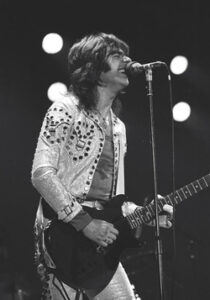
Lonesome Dave” Peverett
David “Lonesome Dave” Peveret

Their lead singer during this time was David “Lonesome Dave” Peverett. Dave Peverett was a good singer, guitar player, and songwriter. Other Foghat alumni who made their mark elsewhere in music include replacement lead vocalist Charlie Huhn, who was also in Humble Pie and in Ted Nugent’s band before that. Also, Foghat guitarist Bryan Bassett is better known as the lead strings on “Play That Funky Music” by Wild Cherry.

I always liked their name…Foghat…it just sounds like a cool rock and roll name. Foghat was born out of the blues band Savoy Brown. Dave Peverett, the drummer Roger Earl, and the bassist Tony Stevens quit that band and decided to form their own band in 1970. The band wanted to take the sound of Savoy Brown a step further and add a rock edge to its basic boogie blues. The name Foghat was taken from a word that Peverett and his brother, John, had invented in a Scrabble game. I also looked up the name and it said… Foghat: A euphemism for getting high on marijuana.

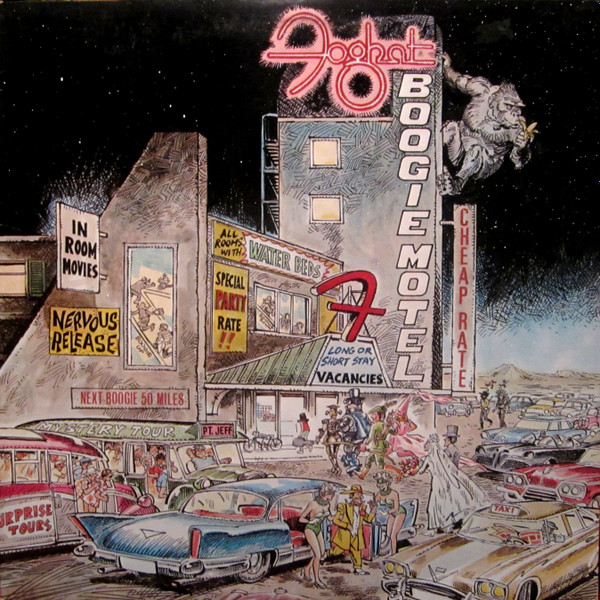
Foghat - Boogie Motel

Third Time Lucky (First Time I Was a Fool) peaked at #23 on the Billboard 100 and #33 in Canada in 1979. This was their second-highest charting single…right behind the #20 Slow Ride. This song is from the album Boogie Motel. The album peaked at #35 on the Billboard Album Charts.

This album was a little different from their earlier ones. They sounded a bit more radio-friendly on this album. Another song that charted on the album was Somebody’s Been Sleepin’ in My Bed. The band is still out there playing and releasing albums. Unfortunately, Lonesome Dave passed away in 2000 from kidney cancer. For me…he was the band.

Third Time Lucky (First Time I Was a Fool)

It’s all behind meThere’s good luck up aheadCan’t break what’s left of my heartOnce bitten twice shyI hate to see it all fall apartFirst love I had I was seventeen and I was youngerLove to us was some kind of gameAnd all my letters said I would never forget herNow I can’t recall her name

The first time I was a foolnever knew that love could be so cruelIt happened againThird time luckyOh Yeah

I was in love one timeI thought it was the real thingBut I kept the feelings to myselfAfraid to show themExpecting her to knowIt’s the reason she found someone else

It’s all behind meThere’s good luck up aheadCan’t break what’s left of my heartOnce bitten twice shyI hate to see it all fall apart

The first time I was a foolnever knew that love could be so cruelIt happened againThird time luckyOh Yeah

The first time I was a foolnever knew that love could be so cruelIt happened againThird time luckyOh Yeah

The first time I was a foolnever knew that love could be so cruelIt happened againThird time luckyOh Yeah

Butch Hancock – To Each His Own

After listening to the Flatlanders…I’ve listened to Joe Ely and Johnnie Dale Gilmore but never Butch Hancock. I was struck by his voice and was reminded a little of Dylan, Prine, Buddy Holly, and a little of Steve Earle at times.

In the early 1970s, Hancock co-founded The Flatlanders with fellow Lubbock musicians Joe Ely and Jimmie Dale Gilmore. The group initially struggled to find commercial success but later became famous within the Americana and alternative country scenes. Hancock has been a very good songwriter. Artists who covered him include Willie Nelson, Joe Ely, Jimmie Dale Gilmore, The Texas Tornados, Emmylou Harris, Jerry Jeff Walker, and more.

This song was on the album Eat Away The Night which was released in 1994. He has released 12 albums since 1978. This man is worth checking out. He will never make the top 40 but he has some quality songs that are worth hearing. This song has his voice and also a twangy guitar that sold it for me.

As I’ve been perusing his catalog…I’ve noticed a lot of storytelling, a sense of humor, good lyrics plus that voice.  The album’s sound is powered by a classic rock ‘n’ roll combination of a Hammond B-3 organ, electric guitars, an acoustic, harmonica, and steel guitar at the edges for country and folk flavorings.

The title song closes the album, and I will include that above To Each His Own. Eats Away the Night sounds like something a musician would play at four in the morning after a six-hour gig. A quiet, restrained, and thoughtful tune to settle down with. A good way to end a night of music-making and an album. It’s almost a solo performance, with only a slide guitar accompanying Hancock’s voice and guitar.

Here is a link to the complete album.

To Each His Own

Down in the pit of my stomach
I knew it couldn’t last…
It left me just as fast…
I tried to blame it on the moon above…
As I walked the beach alone
But all I heard were these few words…
To each his own

Down in the heart of the matter…
I first lost touch with you…
But for rosy and her constant chatter…
There was not much i could do
The world I tried to reach with her…
You can only reach alone
I even heard rose say to herself…
To each his own…

I’ve seen survival’s violent side…
I’ve seen some beast of prey…
Bring down some beasts of burden…
That just got in their way…
Some tore the hide…some chewed the
Flesh…right down to the bone
Some stopped there but some kept going…
To each his own…

I’ve run these things around my mind…
I’ve run ’em through my heart
In the mighty dream of life, i seem…
To play the strangest part
If I’m buried when I die…
Carve this on my stone…
Take a little here and leave a little there but
give…to each his own…

Bodeans – Closer to Free

Take a little Americana and mix it with a little jangle and you get this song. The Bodeans were a great band in the 80s and 90s but never got to the masses consistently. However, this song did reach a big audience.

In 1977 Sophomores Sam Llanas and Kurt Neumann meet in study hall at Waukesha South High School and bond over a shared love of music. The two later end up playing music together. In 1980 At Neumann’s urging, Llanas dropped out of college to pursue music full-time. The group pursues gigs at small bars, clubs, dances, and events. Llanas comes up with the name, Da BoDeans.

Llanas and Neumann added drummer Guy Hoffman (Oil Tasters, Confidentials, later the Violent Femmes) and bass player Bob Griffin (The Agents) to fill out their sound in 1983.

Upon its release, “Closer to Free” did not achieve huge chart success. However, its fortunes changed when it was selected as the theme song for the Fox television drama Party of Five, which premiered in 1994.

The song was on their 5th studio album called Go Slow Down. It was produced by the legendary T-Bone Burnett in 1993. The album peaked at #127 on the Billboard Album Chart.

The song peaked at #16 on the Billboard 100 and #1 in Canada in 1993.

Closer To Free

Everybody wants to live how they wanna live and
Everybody wants to love how they wanna love and
Everybody wants to be closer to free

Everybody wants respect, just a little bit
And everybody needs a chance once in a while
Everybody wants to be closer to free

Everybody one, everybody two, everybody free
Everybody needs to touch, you know now and then and
Everybody wants a good good friend
Everybody wants to be closer to free

I said everybody one, everybody two, everybody free
Everybody wants to live like they wanna live
And everybody wants to love like they wanna love
And everybody wants to be closer to free

Closer to free
Closer to free
Closer to free

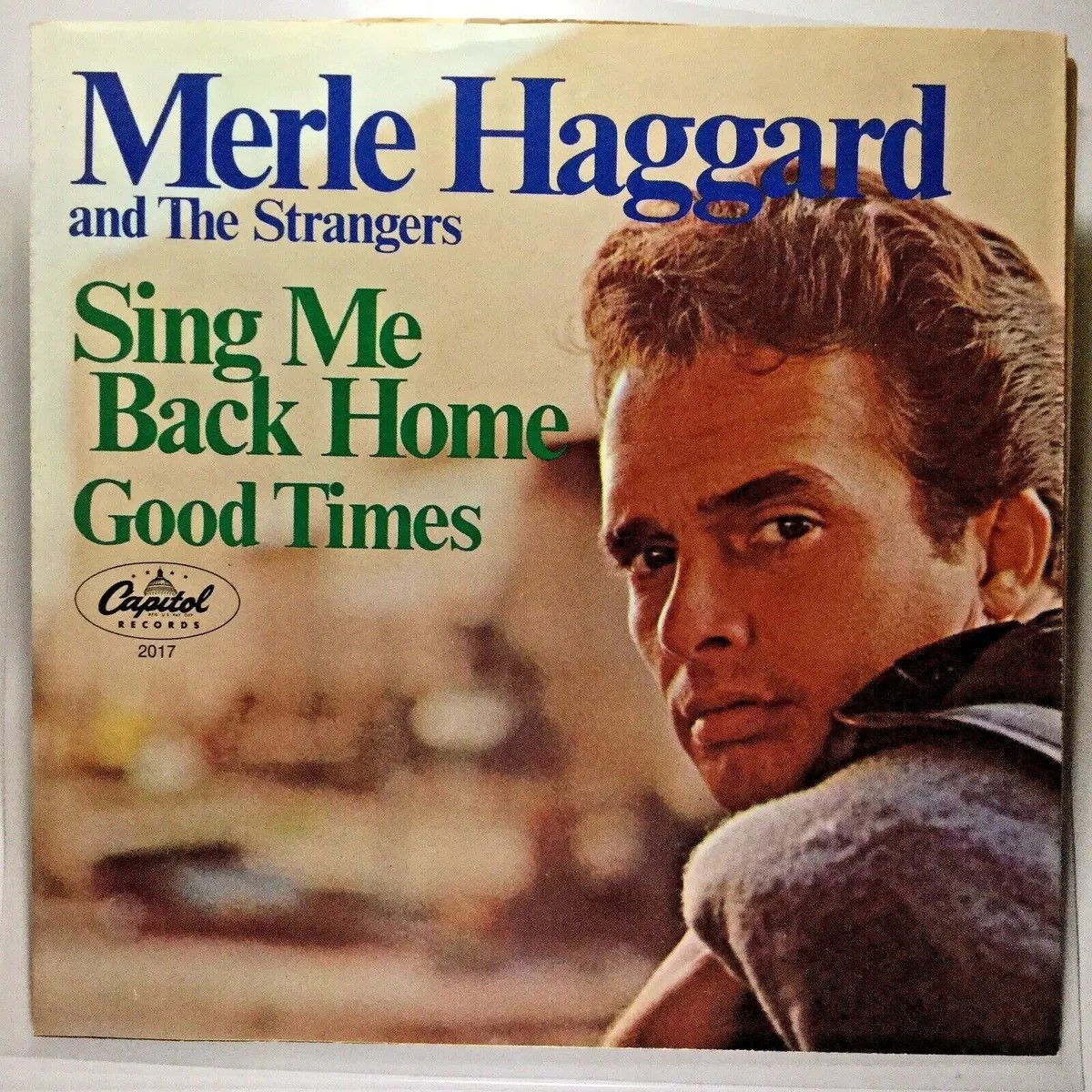
Merle Haggard – Sing Me Back Home

One of the many Haggard songs that my dad would play. This one along with a song called Sam Hill I heard a lot when I was a child. Sing Me Back Home was released in 1967, and it became one of Haggard’s most enduring hits.

Most people know that he spent his early adulthood behind bars for a failed attempt at robbery. While in San Quentin State Prison, Haggard wrote many songs while dreaming of freedom and life beyond the bars of a cell.

Sing Me Back Home was inspired by his fellow inmates James Rabbit and Caryl Chessman. Rabbit was executed in 1961 for killing a California Highway Patrolman, and Chessman was the first modern American executed for a non-lethal kidnapping.

Haggard and James Rabbit hatched a plan one night to escape (they would hide inside a desk he was building in the prison furniture factory), though at the last moment, Rabbit advised Haggard not to take part in the plan. Rabbit escaped, was recaptured, killed an officer, and was brought back to San Quentin to be executed. It was the first of many events to change something in Haggard’s criminal ways.

It is an incredibly sad song and you get it with the first two lines of the song. The warden led a prisoner down the hallway to his doom, I stood up to say goodbye like all the rest.  The song was on his Sing Me Back Home album released in 1968. The album peaked at #1 on the Billboard Country Album Charts. The song peaked at #1 on the Billboard Country Charts and #7 on the Canadian Country Charts.

Merle Haggard: “Something happened to me there, I came to the fork in the road and took it, you might say. And I kind of started back in the other direction, trying to make something out of myself rather than to dig myself in a deeper hole.”

Sing Me Back Home

The warden led a prisoner down the hallway to his doomI stood up to say goodbye like all the restAnd I heard him tell the warden just before he reached my cellLet my guitar playing friend, do my request

Let him sing me back home with a song I used to hearMake my old memories come aliveTake me away and turn back the yearsSing me back home before I die

I recall last Sunday morning a choir from ‘cross the streetCame to sing a few old gospel songsAnd I heard him tell the singersThere’s a song my mama sangCan I hear once before we move along?

Sing me back home, the song my mama sangMake my old memories come aliveTake me away and turn back the yearsSing me back home before I die

Sing me back home before I die

….

Flatlanders – Dallas

Well Dallas is a rich man with a death wish in his eyes

What a find this was for me. When CB recommended Joe Ely a while back, I found that he played in this band from 1972 until now. Their music is not the tears in my beer Nashville country music that you heard at the time and sometimes now. I would call it Americana…they have developed a big following following over the years. Comparing their music to country music at the time…this sounds like it came from a different planet.

They were formed in 1972 by three singer-songwriters: Jimmie Dale Gilmore, Joe Ely, and Butch Hancock. The band was born out of the music scene in Lubbock, Texas, where all three members grew up. They recorded their first album, All American Music in Nashville. Initially, the album was released only as an 8-track tape by Plantation Records, with the title “Jimmie Dale and the Flatlanders.” This limited release received little attention at the time, and the band members soon went their separate ways to pursue solo careers.

They then released an album in 1980 called One More Road. Their debut album was re-released in 1990 as More a Legend Than A Band after all of them had some success during their solo careers. They have released 9 albums including a live album in 2004 from 1972 to 2021. Their last album was released in 2021 called Treasure Of Love. They started to chart in the music charts in the 2000s.

Dallas was on their debut album All American Music released in 1972. This song was written by Jimmie Dale Gilmore. The track has a cool tool/instrument on it that always interested me…Steve Wesson is playing a saw on this. Take a listen to this and I included a much more recent live cut from Austin City Limits.

In 2016 The Flatlanders were voted into the Austin Music Awards Hall of Fame.

Jimmie Dale Gilmore: “The hook line of the song occurred to me while I was actually flying into Dallas, the line just presented itself to me. I had all those mixed feelings about the city and the song just came gradually. I’ve never felt that I’ve got it down right though. I’ve always been a perfectionist about that song. Joe also recorded it several times before he got the version that they put on the Musta Notta Gotta Lotta album. I’ve had a strange relationship with the song. I’ve had periods when I wish I’d never written it, then I’ve rediscovered it, looking at it through different eyes.”

Jimmie Dale Gilmore: “It so happened that in 1970 we all happened to be back in Lubbock, I had been in Austin working with a band called the Hub City Movers. Joe had been traveling in Europe and Butch had been in San Francisco. We just coincidentally moved back to Lubbock at the same time and started playing together. There was no design to put a band together as such but the chemistry was so great that it just took on a life of its own. We all had a common love of folk music, country and country blues-but then we also loved the Beatles. We had very eclectic taste. There was great radio in Lubbock at that time especially the border stations at night. We listened to it all.”

Joe Ely on the album:  “It’s pretty crude but there’s a certain flavor about the record. It had an eerie, lonesome sound which reflected our roots in Lubbock and the wind, the dust and the environment.”

Music Critic Robert Christgau: In 1972, Joe Ely, Butch Hancock, and leader Jimmie Dale Gilmore–drumless psychedelic cowboys returned to Lubbock from Europe and San Francisco and Austin–recorded in Nashville for Shelby Singleton, and even an eccentric like the owner of the Sun catalogue and “Harper Valley P.T.A.” must have considered them weird. With a musical saw for theremin effects, their wide-open spaceyness was released eight-track only, and soon a subway troubadour and an architect and a disciple of Guru Mararaji had disappeared back into the diaspora. In cowpunk/neofolk/psychedelic-revival retrospect, they’re neotraditionalists who find small comfort in the past, responding guilelessly and unnostalgically to the facts of displacement in a global village that includes among its precincts the high Texas plains. They’re at home. And they’re lost anyway. A-

Dallas

Did you ever see Dallas from a DC-9 at night?
Well Dallas is a jewel, oh yeah, Dallas is a beautiful sight
And Dallas is a jungle but Dallas gives a beautiful light
Did you ever see Dallas from a DC-9 at night?

Well, Dallas is a woman who will walk on you when you’re down
But when you are up, she’s the kind you want to take around
But Dallas ain’t a woman to help you get your feet on the ground
And Dallas is a woman who will walk on you when you’re down

Well, I came into Dallas with the bright lights on my mind,
But I came into Dallas with a dollar and a dime

Well Dallas is a rich man with a death wish in his eyes
A steel and concrete soul with a warm hearted love disguise
A rich man who tends to believe in his own lies
Yeah Dallas is a rich man with a death wish in his eyes

Well, I came into Dallas with the bright lights on my mind,
But I came into Dallas with a dollar and a dime

Did you ever see Dallas from a DC-9 at night?
Well Dallas is a jewel, oh yeah, Dallas is a beautiful sight
And Dallas is a jungle but Dallas gives a beautiful light
Did you ever see Dallas from a DC-9 at night?

Rod Stewart – Every Picture Tells a Story

Spent time feelin’ inferior
standing’ in front of my mirror

Combed my hair in a thousand ways, but I came out lookin’ just the same

*If you are on the main site…sorry for the formatting but if I correct the spaces it will publish everything as one huge paragrah…thanks WP*

This is my favorite song by Rod Stewart hands down. It’s an acoustic-driven
rocker with Rod never relenting on the lyrics. The song has a
stream-of-consciousness feel to it. Every Picture Tells a Story was written by
Stewart and Ron Wood.

For my money…this is Rod Stewarts best era. He sounds sharp, the music is
alive, and he is not following a trend. I just wish they would have saved some
of these songs for The Faces also. This song has something some of his later
songs did not…a raw energetic sound.

He had some guests on this song. Maggie Bell with vocals, Long John Baldry with vocals, Ian McLagan on Hammon organ, Ronnie Wood on lead and acoustic guitar, and Kenney Jones on drums.

Stewart went from recording the second Faces’ album Long Player,
while also squeezing in tour dates with the group, to starting up the sessions
for Every Picture Needs a Story. He also produced this album and
laid the songs down fast. This album made Rod Stewart in a lot of ways. The
album had Maggie May, Reason To Believe, (I Know) I’m Losing You (with the
Faces), Mandolin Wind, and of course the title song. It is my favorite Stewart
album. I grew up with most of the singles.

One lyric that I’ve heard wrong…well not really heard wrong. In the line On
the Peking ferry I was feeling merry, sailing on my way back here.
I knew
what he was singing…but I thought it was “Peking Ferry I was feeling Mary
which I think would have fit perfectly.

Rod Stewart: “I can remember the build up. You
know what the song’s about – your early teenage life when you’re leaving home
and you’re exploring the world for yourself. Ronnie (Wood) and I rehearsed
round my house at Muswell Hill and recorded it the next day. That whole album
was done in 10 days, two weeks, about as long as it takes to get a drum sound
right nowadays.”


Every Picture Tells a Story

Spent some time feeling inferiorStanding in front of my mirrorCombed my hair in a thousand waysBut I came out looking just the same

Daddy said, “Son, you better see the worldI wouldn’t blame you if you wanted to leaveBut remember one thing, don’t lose your headTo a woman that’ll spend your bread”So I got out, whoo

Paris was a place you could hide awayIf you felt you didn’t fit inThe French police wouldn’t give me no peaceThey claimed I was a nasty person

Down along the Left Bank, minding my own, whooWas knocked down by a human stampedeGot arrested for inciting a peaceful riotWhen all I wanted was a cup of teaI was accused, whoo

I moved onDown in Rome, I wasn’t getting enoughOf the things that keep a young man aliveMy body stunk, but I kept my funk, whooAt a time when I was right outta luck

Getting desperate, indeed I was, yeahLooking like a tourist attractionOh, my dear, I better get outta hereFor the Vatican don’t give no sanctionI wasn’t ready for that, no, no

I moved right out east, yeahListenOn the Peeking ferry, I was feeling merrySailing on my way back hereI fell in love with a slit-eyed ladyBy the light of an eastern moon

Shanghai Lil never used the pillShe claimed that it just ain’t naturalShe took me up on deck and bit my neckOh, people, I was glad I found herOh, yes, I was glad I found her, whoo-hoo

Wait a minuteI firmly believed that IDidn’t need anyone but meI sincerely thought I was so completeLook how wrong you can be

The women I’ve known I wouldn’t let tie my shoeThey wouldn’t give you the time of dayBut the slit-eyed lady knocked me off my feetGod, I was glad I found her

And if they have the words I can tell to youTo help you on the way down the roadI couldn’t quote you no Dickens, Shelley or Keats‘Cause it’s all been said beforeMake the best out of the bad, just laugh it off, haYou didn’t have to come here anyway

So, remember, every picture tells a story, don’t it?Every picture tells a story, don’t it?Every picture tells a story, don’t it? WhooEvery picture tells a story, don’t it?

Every picture tells a story, don’t it? WhooEvery picture tells a story, don’t it?Every picture tells a story, don’t it?Every picture tells a story, don’t it?Every picture tells a story, don’t it?

Every picture tells a story, don’t it?Every picture tells a story, don’t it?Every picture tells a story, don’t it?Every picture tells a story, don’t it?Every picture tells a story, don’t it?

Every picture tells a story, don’t it? WhooEvery picture tells a story, don’t it? WhooEvery picture tells a story, don’t it? WhooEvery picture tells a story, don’t it? WhooEvery picture tells a story, don’t it? Whoo

Every picture tells a story, don’t it?Every picture tells a story, don’t it?Every picture tells a story, don’t it?Every picture tells a story, don’t it?

Drifters – Save the Last Dance for Me

The Drifters are a perfect group to take on a date with you. My father had the greatest hits of them and The Platters but I never dived into them as much as I should have. I’ve always liked them and lately have been listening to them more. To my great surprise, this song was a B-Side to the A-side Nobody But Me. On American Bandstand…Dick Clark flipped the single and the song hit.

Doc Pomus and Mort Shuman wrote this song. They wrote songs such as A Teenager In Love, Surrender (Elvis), Little Sister, Young Blood, and more. This song was inspired by Pomus’ own life experiences. Pomus, who had polio and used crutches and a wheelchair, wrote the song for his wife, Willi Burke, a Broadway actress and dancer. At their wedding, Pomus watched his bride dance with other guests and was inspired by the moment to pen the heartfelt message that she should save the final dance of the evening for him.

This one is a classic fantastic song. The lead singer for the Drifters on this one was no other than Ben E. King. After the Atlantic Records leader, Ahmet Ertegun told King how Pomus and Shuman wrote this song he tried to reflect that in his vocals.

The song peaked at #1 on the Billboard 100, #1 on the Billboard R&B Charts, #1 in Canada, #1 in New Zealand, and #2 in the UK in 1960.

Save The Last Dance For Me

You can dance
Every dance with the guy
Who gives you the eye
Let him hold you tight

You can smile
Every smile for the man
Who held your hand
‘Neath the pale moonlight

But don’t forget who’s taking you home
And in whose arms you’re gonna be
So darlin’
Save the last dance for me, hmm

Oh, I know (oh, I know)
That the music’s fine (yes, I know)
Like sparkling wine (oh, I know)
Go and have your fun (yes, I know, oh, I know)

Laugh and sing (yes, I know)
But while we’re apart (oh, I know)
Don’t give your heart (yes, I know)
To anyone (oh, I know, yes, I know)

But don’t forget who’s taking you home
And in whose arms you’re gonna be
So darlin’
Save the last dance for me, hmm

Baby, don’t you know I love you so?
Can’t you feel it when we touch?
I will never, never let you go
I love you, oh, so much

You can dance (you can dance)
Go and carry on (you can dance)
‘Till the night is gone (you can dance)
And it’s time to go (you can dance, you can dance)

If he asks (you can dance)
If you’re all alone (you can dance)
Can he take you home (you can dance)
You must tell him, no (you can dance)

‘Cause don’t forget who’s taking you home
And in whose arm’s you’re gonna be
So darlin’
Save the last dance for me

‘Cause don’t forget who’s taking you home
And in whose arm’s you’re gonna be
So darlin’
Save the last dance for me, hmm

Save the last dance for me, hmm-hmm
Save the last dance for me, hmmm
Save

Alone in the Wilderness…documentary

If you ever watch something I recommend…please give this short one-hour film a chance.  Someone brought a DVD of this for me to watch around 7 years ago. I thought it was going to be boring. I ended up watching it twice in one sitting. It will draw you in. I watch it at least once every year or two. 

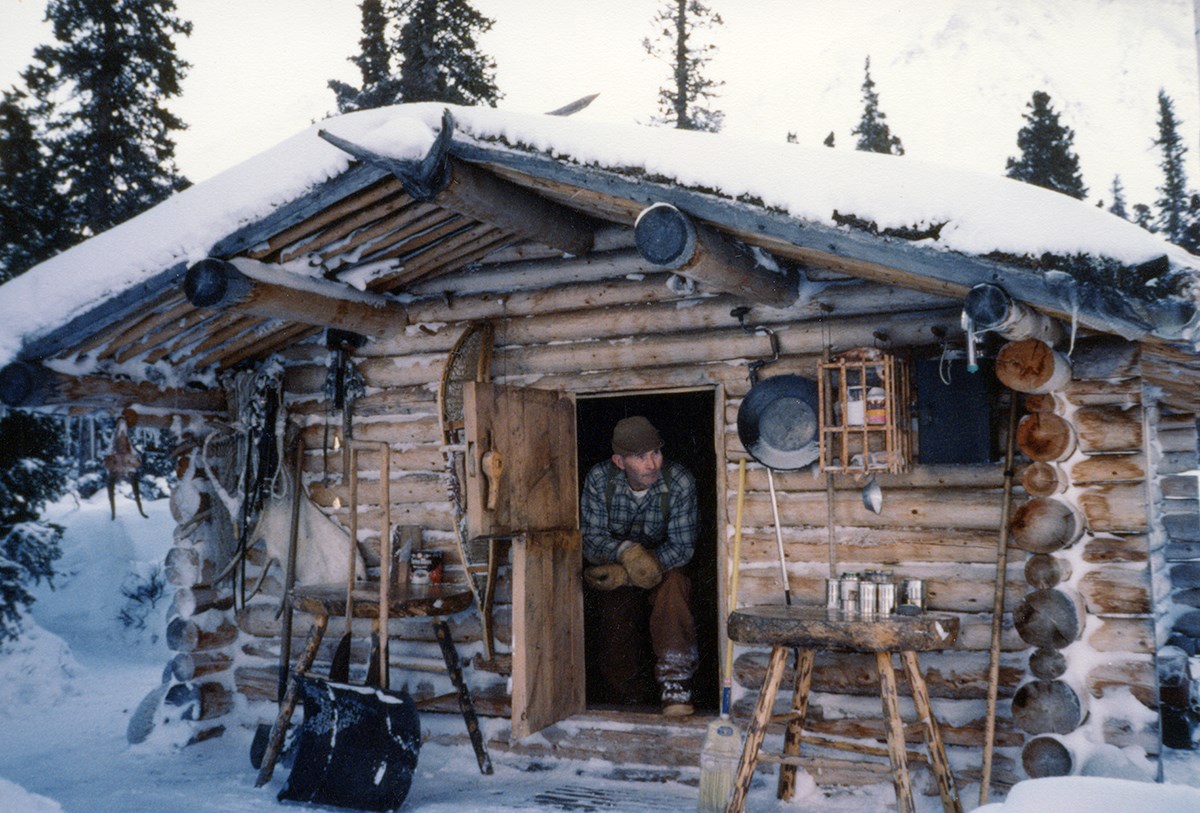
A 50-year-old man named Dick Proenneke is in Twin Lakes Alaska in 1968 and films himself building a retirement cabin. He starts out by staying in a friend’s cabin. He starts gathering wood and making some of the tools he uses as he goes.  This man…is a real man. if he needs a spoon…he starts carving himself out one. He builds this cabin and makes everything including wood hinges for the door. He also made hinges out of his tin containers. He gathers rocks from somewhere down the lake and brings them back… then he starts building his chimney.

He is by himself and sets up the camera everywhere he goes. He goes out fishing when he is hungry and hunting for meat for the winter only taking what he needs. He uses just what he needs and doesn’t take more from nature than he could use. He makes almost everything from scratch. He uses his tin canisters for different things. He buries one and covers for a refrigerator. The only help he receives is a pilot friend who lands every now and again to deliver supplies. He was a master craftsman, to say the least.

He also filmed all the wildlife around. Rams, wolves, bears, birds, and Caribou. He also gets some great shots of the area around Twin Lakes. The snowy mountains were breathtaking. 

It doesn’t sound that special but I have watched it at least 6 more times since the night I watched it twice… sometimes showing it to other people. He makes it look so easy. He filmed enough to have a few more short documentaries which were released but nothing matches that first one. This man made me feel like a mouse, a kid, a beginner, a slouch. He is so talented and tough.

He ended up staying there until 1999 alone and then left to live with his brother at age 82. Dick passed away at 86 in 2003. The cabin is still there and is on the National Register of Historic Places. People come from all over the world to visit it. 

I wish YouTube had the complete documentary but they don’t. I watch modern YouTube videos of people visiting the cabin now. They see his cache in the back, his sled, and all the cabin parts. You see him in 1968 building those items. Like I said earlier, there are more documentaries on him but start with this one. This one is great. I’ve never had someone tell me they were disappointed in it. 

The cabin now

Here is the first 9:34 minutes or so

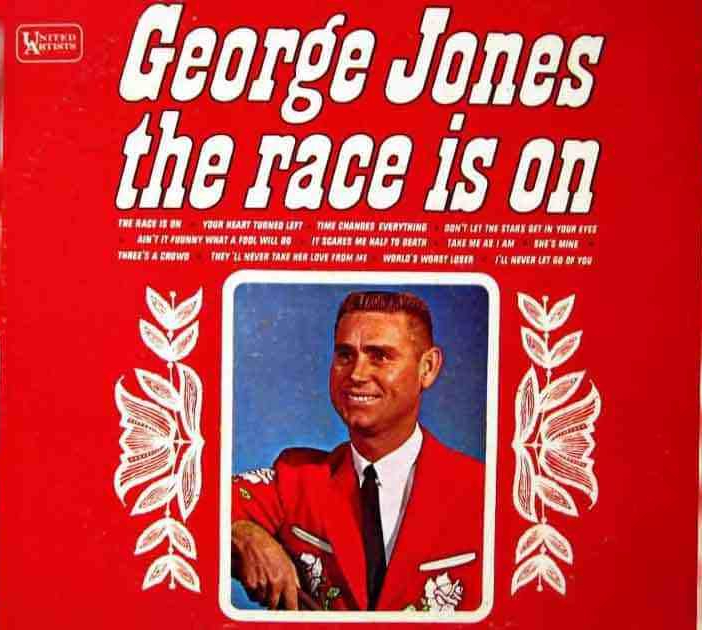
George Jones – The Race Is On

I first heard this song through Jason and the Scorchers giving it a high-octane slant. On my Car Songs post the other day Lisa recommended this one and instead of waiting to include it in part 3…I thought I would write a post on it.

When I think of George Jones I think of the voice. I would be lying if I didn’t also say that I think of the lawnmower story and some of the stories that I heard from some session musicians. My guitar tech had many come in his shop and they would tell stories about the country stars. They always spoke highly of George Jones, adding he was down-to-earth and a good guy. He could be a lot of fun and wild…and match his rock counterparts.

It has often been said that he had the purest country voice ever. Frank Sinatra called Jones “The second-best singer in America.” When Keith Richards (who is a huge Jones fan) heard this, he asked…who’s the first Frank?

Don Rollins, a Nashville songwriter, wrote The Race Is On with a cool twist, comparing the end of a romantic relationship to a horse race.

The song was a huge hit in Country Music. It peaked at #3 on the Billboard Country Charts in 1964.

Keith Richards on recording a duet with George Jones: There was another wonderful expedition to record a duet with George Jones at the Bradley Barn sessions, “Say It’s Not You,” a song that Gram Parsons had turned me on to. George was a great guy to work with, especially when he had the hairdo going. Incredible singer. There’s a quote from Frank Sinatra, who says, “Second-best singer in this country is George Jones.” Who’s the first, Frank? We were waiting and waiting for George, for a couple of hours, I think. By then I’m behind the bar making drinks, not remembering that George is supposed to be on the wagon and not knowing why he was so late. I’ve been late many times and so no big deal. And when he turns up, the pompadour hairdo is perfect. It’s such a fascinating thing. You can’t take your eyes off it. And in a fifty-mile-an-hour wind it would still have been perfect. I found out later that he’d been driving around because he was a bit nervous about working with me. He’d been doing some reading up and was uncertain of meeting me.

George Jones on Keith Richards: “I’ll be honest with you: I love Keith Richards more than anything as a person. He’s a character – just fun to be around.” 

Dolly Parton: Anyone who knows or cares anything about real country music will agree that George Jones is the voice of it.

The Race Is On

I feel tears wellin’ upCold and deep insideLike my heart’s sprung a big breakAnd a stab of loneliness sharp and painfulThat I may never shakeNow, you might say that I was takin’ it hardSince you wrote me off with a callBut don’t you wager that I’ll hide the sorrowWhen I may break right down and bawl

Now the race is onAnd here comes pride up the backstretchHeartaches are goin’ to the insideMy tears are holdin’ backThey’re tryin’ not to fallMy heart’s out of the runnin’True love’s scratched for another’s sakeThe race is on and it looks like heartacheAnd the winner loses all

One day I ventured in loveNever once suspectin’What the final result would beHow I lived in fear of wakin’ up each mornin’And findin’ that you’re gone from meThere’s ache and pain in my heartFor today was the one I hated to faceSomebody new came up to win herAnd I came out in second place

Now the race is onAnd here comes pride up the backstretchHeartaches are goin’ to the insideMy tears are holdin’ backThey’re tryin’ not to fallMy heart’s out of the runnin’True love’s scratched for another’s sakeThe race is on and it looks like heartachesAnd the winner loses all

Wilson Pickett – Land of 1000 Dances

This song has to have a world record attached to it… song most used in pep rallies. I heard the na na na parts from elementary to high school. It was high school before I heard the actual song.

The original version was by Chris Kenner, a New Orleans R&B singer and songwriter, first recorded and released “Land of 1000 Dances” in 1962 and it only made it to #77 on the Billboard 100. Kenner wrote the song as well. He promised Fats Domino a writing credit if he recorded it…Fats did but it didn’t go anywhere. On some copies, he is listed as a co-writer.

This song has been covered a lot. Secondhandsongs says it has 150 cover versions which is very good. Cannibal and The Headhunters covered it in 1965 and they peaked at #30 on the Billboard 100 but Wilson Pickett had the highest charting position for the song. It’s no telling how many times it’s been played live by famous and nonfamous artists.

Land of 1000 Dances peaked at #6 on the Billboard 100, #6 in Canada, and #22 in the UK in 1966 for Pickett. The sound of this record is great…it has a raw edge that only Stax had at the time.

Land of 1000 Dances

One, two, three
One, two, three
Ow! Uh! Alright! Uh!

Got to know how to Pony
Like Bony Moronie
Mash Potato
Do The Alligator
Put your hand on your hips, yeah
Let your backbone slip
Do the Watusi
Like my little Lucy

Ow! Uh!
Na, na-na na-na
Na-na na-na
Na-na na-na na-na
Na-na na-na
Need somebody help me say it one time!
Na, na-na na-na
Na-na na-na
Na-na na-na na-na
Na-na na-na

Wow!
Ow!
Uh!
You know I feel alright?
Hah!
Feel pretty good, y’all
Uh-hah!

Na, na-na na-na
Na-na na-na
Na-na na-na na-na
Na-na na-na
C’mon y’all, let’s say it one mo’ time!
Na, na-na na-na
Na-na na-na
Na-na na-na na-na
Na-na na-na

Ohh!

Dancin’ in the alley
With Long Tall Sally
Twistin’ with Lucy
Doin’ the Watusi
Roll over on your back
I like it like that
Do that Jerk, oh
Watch me work, y’all

Ow! Do it!
Wow! Do it!
Watch me do it
Ohh, help me!
Ohh, help me!
Ohh, help me!
Ohh, help me!

The Concorde

When I started this blog…I had no idea that I would concentrate on single songs. I was going to cover pop culture and I did at the beginning more. I would like to get one in every now and then.

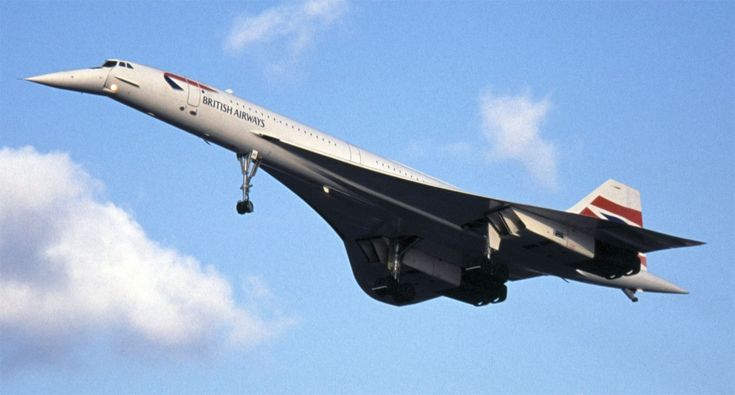
Today… everything seems to be bigger, stronger, and faster. That isn’t true though with a certain passenger airplane. A flight from New York to London now will take around 7 hours and 35 minutes to 8 hours and 10 minutes long. How fast would that flight be in the 1970s on the Concorde? That would take you a cozy three-and-a-half hours. The fastest flight was two hours and fifty-two minutes. It would travel at 1,354 mph. It was more than twice the speed of sound.

I’m not a huge airplane guy but this aircraft fascinated me and I always wanted to ride on one. The nose cone would come down so the pilots could see the runway…it looked like something from a Scifi movie. It would reach Mach 2 between London and New York. I would see pictures of it as a kid or on the news and I thought it was the coolest plane I’d seen. I probably still do. I do remember complaints about the sonic boom.

In November 1962, the British and French governments signed a treaty to jointly develop the Concorde. The Concorde prototype made its maiden flight on March 2, 1969. After some more prototypes, they tested and made modifications, including addressing issues with noise, fuel efficiency, and environmental impact. received its airworthiness certificate in 1975, with the first commercial flights beginning on January 21, 1976, by British Airways and Air France.

There was a plan for a Concorde-type supersonic plane in the US called a Boeing 2707. It would have gone 3 times the speed of sound and held 277 passengers compared to the 100 passengers the Concorde held. It was too expensive to build and was called “the most expensive aircraft never built.” Here is a picture of a 1966 mock-up of the 2707.

Boeing 2707
Boeing 2707

In 1977, it cost £431 to fly one way onboard Concorde between London and Washington. Adjusted for inflation, that’s about £2,200 ($2,800) in today’s money. However, fare prices gradually went up, and by 1996, a roundtrip across the Atlantic would generally be priced at around $12,500 in today’s money. So it was very expensive. The meals and service were great but it was cramped inside compared to other airplanes at the time. It was also noisy…

All together… two prototypes, two pre-production aircraft, two development aircraft, and 14 production aircraft for commercial service. All of them except the two pre-production builds are preserved in museums.

This all leads us to why the Concorde is in museums now and not in the sky. The price, noise, and it was so expensive to operate. Every hour in the sky had to have 22 hours of maintenance. Also on July 25, 2000, the Concorde crashed. It was shortly after takeoff and 109 people died onboard plus 4 on the ground. That was its only crash. They did go on until 2003 but officially retired the plane that year.

A New York Times writer wrote this about the food served. “What followed the coffee was a breakfast of fresh papaya, guava, pineapple, strawberries and mangoes, croissants and brioche that might have come from a Paris bakery, a pretty good approximation of eggs benedict and a soufflé Gruyère, all washed down with Piper‐Heidsieck Cuvée Diplomatique. The china, of course, was Limoges.”

This video shows the take-off from inside the plane by a passenger.