Power Pop fan, Baseball, Beatles, Alternative music, old movies, and tv show fan. Also anything to do with pop culture in the 60s and 70s... I'm also a songwriter, bass and guitar player. Not the slightest bit interested in politics at all.
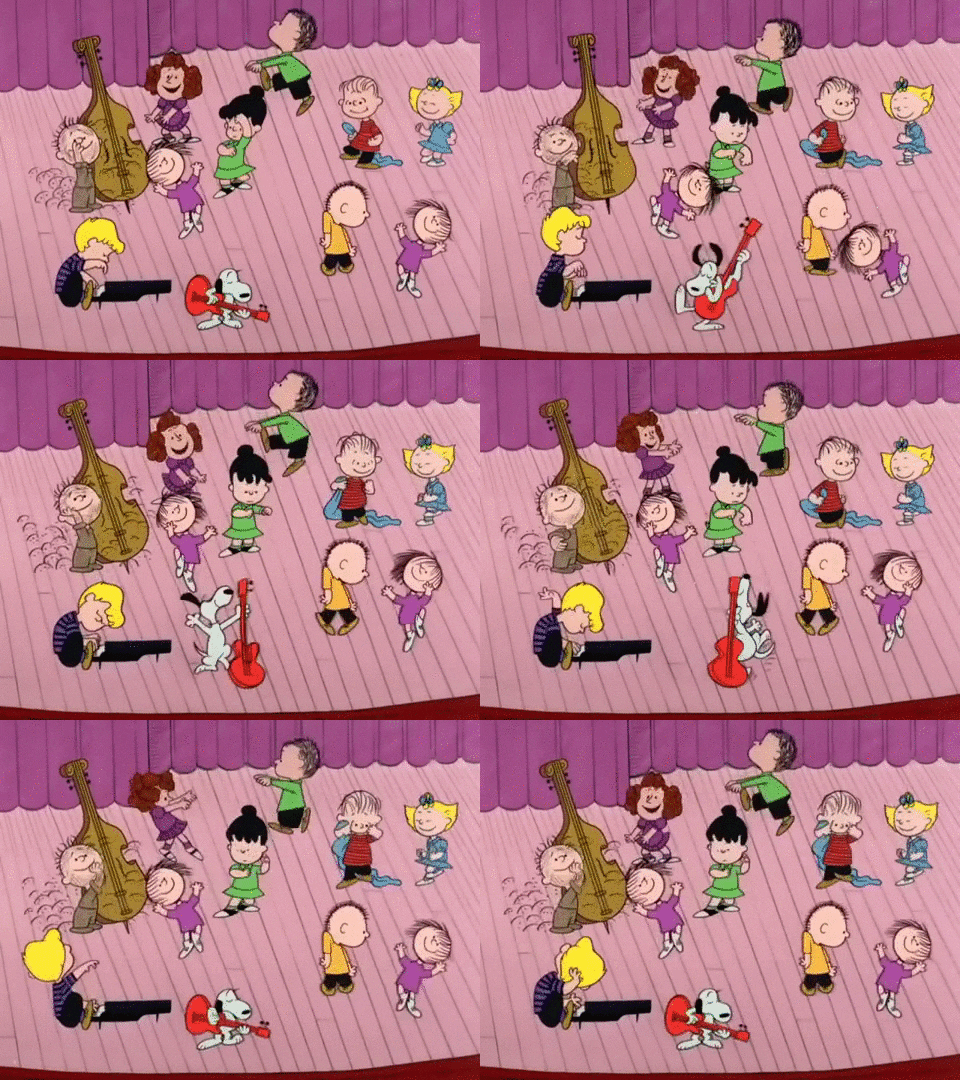
I watched this last night…gearing up for Christmas…it’s not Christmas without The Peanuts and watching them all dance to “Linus and Lucy.”
The Peanuts were my favorite cartoon growing up and I would never miss their Thanksgiving, Halloween, and Christmas specials. Everyone can relate to Charlie Brown because we all lose more than we win in life. He doesn’t get to kick that football, his dog has more things than he does, and he is forever trying to get the elusive little redhead girl to notice him.
The Peanuts inhabit a kids world where grownups are felt but not heard. At least not in English. I’ve said this before but… Charlie Brown, one day when you grow up… I hope you end up with the little red head girl that you like so much and win just for once…for all of us.
This 1965 special has everything good about them in one show.
The gang is skating and Charlie Brown is telling Linus that despite Christmas being a happy time he is depressed. Linus tells Charlie that is normal and Lucy pipes in with “Of all the Charlie Browns in the world, you’re the Charlie Browniest.” That sums it all up.
Charlie gets to direct the Christmas play and his main job was to get a spectacular Christmas tree under Lucy’s orders. …He picks the only real tree there…more like a branch but he is sure it will do the job. Most of the gang do not agree when he comes back with the tree but Charlie persists. Linus gets up and reads from the Bible and the inflection he lends to the reading is great.
After that, you will need to watch because it will be worth it.
Aluminum Christmas trees were marketed beginning in 1958 and enjoyed fairly strong sales by eliminating pesky needles and tree sap. But the annual airings of A Charlie Brown Christmas swayed public thinking: In the special, Charlie Brown refuses to get a fake tree. Viewers began to do the same, and the product was virtually phased out by 1969. The leftovers are now collector’s items.
Actors and Actresses The early Peanuts specials made use of both untrained kids and professional actors: Peter Robbins (Charlie Brown) and Christopher Shea (Linus) were working child performers, while the rest of the cast consisted of “regular” kids coached by Melendez in the studio. When Schulz told Melendez that Snoopy couldn’t have any lines in the show—he’s a dog, and Schulz’s dogs didn’t talk—the animator decided to bark and chuff into a microphone himself, then speed up the recording to give it a more emotive quality.
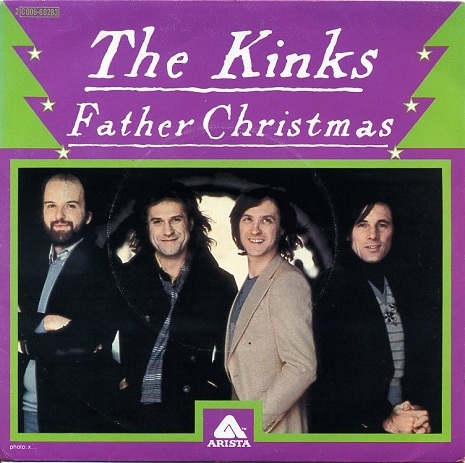
Father Christmas, give us some money We’ll beat you up if you make us annoyed Father Christmas, give us some money Don’t mess around with those silly toys
This song always brings a smile to my face. Any Kinks Christmas song would have to be different…and this one is.
I’ve always like this raw and rough Christmas song. A writer at the NME wrote “Successful Xmas songs are more about mood than specifics, but as this is an anti-Christmas song, it’s fine.” This is the kind of song you would expect from Ray Davies. Anti-Christmas or not…it has become a popular classic Christmas song that gets airplay every year.
The single was released during the height of punk rock and certainly exudes a punk attitude. Dave Davies told ABC Radio that he “always thought The Ramones would do a great version of it. I don’t know why they didn’t do it.”… thinking about it…Dave was right…it would have fit them perfectly.
The song was released in 1977 with the B side Prince Of The Punks. The track was included on the Arista compilation Come Dancing with The Kinks and is also available as a bonus track on the CD reissue of the Kinks’ 1978 album Misfits.
In England, Father Christmas is the personification of Christmas, in the same way as Santa Claus is in the United States. Although the characters are now synonymous, historically Father Christmas and Santa Claus have separate entities, stemming from unrelated traditions.
Ray Davies on performing the song as an opening act in the 70s:
“When the record came out we were on tour with a very successful band at the time supporting them,” he recalled during an interview with Southern California radio station KSWD. “I went on dressed as Santa at the end of the show to do ‘Father Christmas.’ And the other band found it hard to follow us. The following night with the same band I went to run on but there was a bunch of heavies preventing me from running on stage. And I was protesting. But the people said, ‘The Kinks didn’t do an encore but Santa Claus was there and they were stopping him from going on stage.'”
From Songfacts:First written about in Tudor England and pre-dating the first recording of Santa Claus, Father Christmas was a jolly, well-nourished man who typified the spirit of good cheer at Christmas, bringing peace, joy, good food and wine and revelry. In time, the tradition merged with America’s Santa Claus with both riding in a reindeer-pulled sleigh carrying a sackful of toys that lands on the roofs of houses that contain good children. The mythical, white bearded Santa/Father Christmas then enters the properties through their chimneys clutching gifts for the well-behaved little ones inside.
Father Christmas
When I was small I believed in Santa Claus Though I knew it was my dad And I would hang up my stocking at Christmas Open my presents and I’d be glad
But the last time I played Father Christmas I stood outside a department store A gang of kids came over and mugged me And knocked my reindeer to the floor
They said Father Christmas, give us some money Don’t mess around with those silly toys We’ll beat you up if you don’t hand it over We want your bread so don’t make us annoyed Give all the toys to the little rich boys
Don’t give my brother a Steve Austin outfit Don’t give my sister a cuddly toy We don’t want a jigsaw or monopoly money We only want the real mccoy
Father Christmas, give us some money We’ll beat you up if you make us annoyed Father Christmas, give us some money Don’t mess around with those silly toys
But give my daddy a job ’cause he needs one He’s got lots of mouths to feed But if you’ve got one I’ll have a machine gun So I can scare all the kids on the street
Father Christmas, give us some money We got no time for your silly toys We’ll beat you up if you don’t hand it over Give all the toys to the little rich boys
Have yourself a merry merry Christmas Have yourself a good time But remember the kids who got nothin’ While you’re drinkin’ down your wine
Father Christmas, give us some money We got no time for your silly toys Father Christmas, please hand it over We’ll beat you up so don’t make us annoyed
Father Christmas, give us some money We got no time for your silly toys We’ll beat you up if you don’t hand it over We want your bread so don’t make us annoyed Give all the toys to the little rich boys
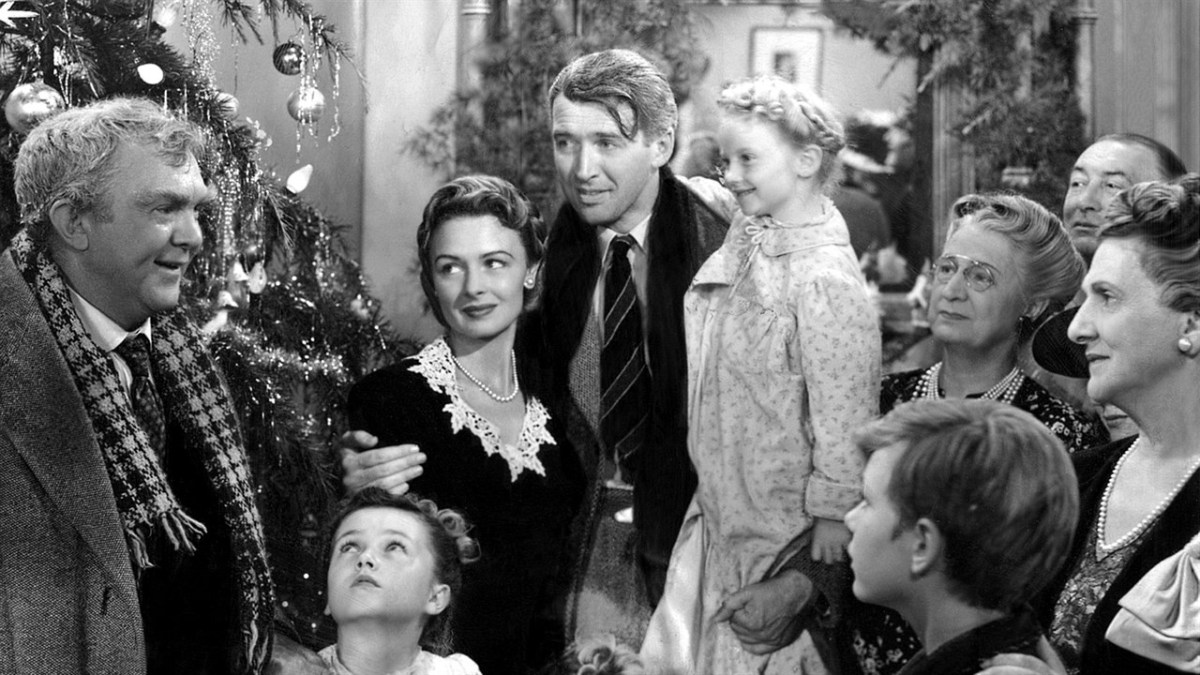
If someone said…you can only watch just one Christmas movie every year…this one would be it. It’s very close to a long Twilight Zone. I have seen this movie more times than any other…hands down.
I didn’t watch this great movie until the late 80s. All it took was one time and I haven’t missed a year of watching it. I don’t tear up very easy..but it never fails at the end of the movie when Zuzu says… Every time a bell rings, an angel gets his wings…it gets me every time. This movie was released in 1946.
Poor George Bailey. All he wanted to do was travel and get out of Bedford Falls to see the world. Every single time he gets close…so close that it hurts…something happens and George ends up doing the right thing.
Bedford Falls needs George Bailey…every town needs a George Bailey but many end up with only a Mr. Potter. There is one thing about this movie which was unusual. Mr. Potter was never punished for what he did…which drew criticism at the time but it was more in line with reality to me.
This is a Christmas movie but really only the last part of the movie is about Christmas. It is a movie for any time not just for December. We were thinking of names for our unborn child and couldn’t think of one…I was watching this movie in November of 1999 and it hit me…Bailey…so the movie means more than some movies do.
Here is a small summary from IMDB…don’t read it…watch the movie instead. If you haven’t seen it…give it a shot…whether it is Christmas or July.
George Bailey has spent his entire life giving of himself to the people of Bedford Falls. He has always longed to travel but never had the opportunity in order to prevent rich skinflint, Mr. Potter, from taking over the entire town. All that prevents him from doing so is George’s modest building and loan company, which was founded by his generous father. But on Christmas Eve, George’s Uncle Billy loses the business’s $8,000 while intending to deposit it in the bank. Potter finds the misplaced money and hides it from Billy. When the bank examiner discovers the shortage later that night, George realizes that he will be held responsible and sent to jail and the company will collapse, finally allowing Potter to take over the town. Thinking of his wife, their young children, and others he loves will be better off with him dead, he contemplates suicide. But the prayers of his loved ones result in a gentle angel named Clarence coming to earth to help George, with the promise of earning his wings. He shows George what things would have been like if he had never been born.
Most of us had favorite Christmas specials we would watch as kids. Mine was Rudolph, A Charlie Brown Christmas, The Grinch, and this one…Frosty The Snowman. These four would get me primed and ready for Christmas…like I needed anything else.
“Frosty the Snowman,” debuted in 1969. It was by Rankin/Bass Productions, the same company that produced many holiday specials.
Narrated by the legend Jimmy Durante, the special involves a magic hat that transforms a snowman, Frosty, into a living being. The magician who owned the hat wants it back now that he knows it contained actual magic, so the kids had to get together and find a way to bring Frosty to the North Pole to keep him from melting. However, once there, Frosty sacrifices himself to warm up the little girl, Karen, who took him to the North Pole. He melts, but Santa Claus explains that Frosty is made out of special Christmas snow and thus can never truly melt. Frosty then comes back to life and everyone has a Merry Christmas.
The song was written in 1950 by Walter “Jack” Rollins and Steve Nelson. They wrote it for Gene Autry, especially, after Autry had such a huge hit with “Rudolph the Red-Nosed Reindeer” the previous year. It was later recorded by Jimmy Durante as we hear in this wonderful cartoon.
This wasn’t the only animation of Frosty…
In 1954, United Productions of America (UPA) brought Frosty to life in a short cartoon that is little more than an animated music video for a jazzy version of the song. It introduced the characters mentioned in the lyrics visually, from Frosty himself to the traffic cop. The three-minute, black-and-white piece quickly became a holiday tradition in various markets, particularly in Chicago, where it’s been broadcast annually on WGN since 1955.
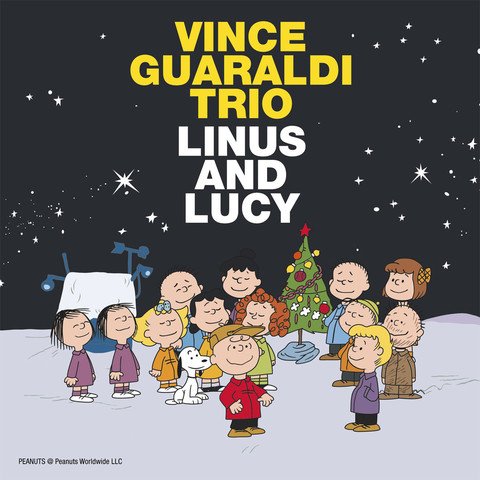
Ironically, just about everyone would call this “the Charlie Brown song” even though it’s actually titled after Linus and Lucy Van Pelt, brother and sister in Charles Schulz’s Peanuts comic strip universe.
The song is most famous for its use in the yearly favorite A Charlie Brown Christmas, which first aired in 1965, but it was written two years earlier for a documentary about Schulz and the Peanuts gang called A Boy Named Charlie Brown, which never aired.
Producer Lee Mendelson was in charge of the documentary and asked Vince Guaraldi to compose music for it
Guaraldi was huge in the jazz world and won the 1962 Grammy for Best Original Jazz Composition for “Cast Your Fate To The Wind” for his group, the Vince Guaraldi Trio. Mendelson was searching for what kind of music to play for the documentary when he took a taxi cab and “Cast Your Fate To The Wind” was playing as he crossed the Golden Gate bridge. He loved it and his decision was made.
Guaraldi wrote a series of songs for the project, including “Linus and Lucy,” that he recorded with his group, the Vince Guaraldi Trio. Even though A Boy Named Charlie Brown was shelved, the soundtrack was released in 1964, which is where “Linus and Lucy” first appeared.
In 1965, Mendelson put together the first Peanuts TV special, A Charlie Brown Christmas, using many of the same people who worked on the documentary. “Linus and Lucy” formed the score, and a song he wrote with Guaraldi called “Christmas Time Is Here” was included in a key scene.
When A Charlie Brown Christmas debuted in 1965, it quickly turned the Peanuts franchise into a television institution. That first special also shot Guaraldi to greater fame, and he became connected to all subsequent Peanuts shows.
Guaraldi would continue to work on Peanuts films until his death in 1976.
I like this episode….it has a backwoods eerie feel to it. The show reminded me of the 1940s and 1950s horror movies like the Wolfman but set in a rural enviroment. There is some padding but that doesn’t stop this from being a good episode. Each character portrays superstitious beliefs and they play off of that for the story. A story of how love can sometimes blind people to the consequences of their actions. This was written by Waltons creator Earl Hamner Jr.
If you noticed the date…This haunting love story originally aired on Valentine’s Day in 1963.
The stand out in this episode was Jeanette Nolan as the creepy Granny Hart. A woman not to be messed with. She has an authentic backwoods dialect that she used in a previous episode…The Hunt. She was a marvelous character actress. James Best plays Billy Ben Turner in this one. Before he was in The Dukes of Hazzard he guest starred in the Andy Griffith Show among many shows. The two leading ladies Anne Francis and Laura Devon were on the mark. Anne Francis was in another Twilight Zone….the classic “After Hours” where she played a mannequin.
From IMDB: Jeanette Nolan played Granny Hart, from whom Jess-Belle Stone obtains a love potion to win over Billy-Ben Turner. In The Twilight Zone: The Chaser (1960), Nolan’s husband John McIntire played Professor A. Daemon, from whom Roger Shackleforth obtains a love potion to win over Leila.
This show was written by Rod Serling and Earl Hamner, Jr.
Rod Serling’s Opening Narration:
The Twilight Zone has existed in many lands in many times. It has its roots in history, in something that happened long, long ago and got told about and handed down from one generation of folk to the other. In the telling the story gets added to and embroidered on, so that what might have happened in the time of the Druids is told as if it took place yesterday in the Blue Ridge Mountains. Such stories are best told by an elderly grandfather on a cold winter’s night by the fireside in the southern hills of the Twilight Zone.
Summary
After the love of her life, Billy Ben Turner, gets engaged to Ellwyn, the daughter of a rich farmer, a jealous Jess-Belle turns to a local witch to help her get him back. Granny Hart is known in the area as the person to go to for any potion you might want. Jess-Belle has no money, however, and all Granny Hart can give her is a potion that carries a high price. Jess-Belle is prepared to pay any price, and the potion she takes seems to work: as soon as Billy Ben sets eyes on her, he falls madly in love with her. When the clock strikes midnight, however, Jess-Belle is transformed and later realizes that she, too, is now a witch.
Rod Serling’s Closing Narration:
The episode did not feature a closing narration from Rod Serling. Instead, it ends with the folk song heard at the beginning:
Fair was Elly Glover, Dark was Jess-Belle. Both they loved the same man And both they loved him well.
CAST
Rod Serling … Narrator / Self – Host (uncredited) Anne Francis … Jess-Belle Stone James Best … Billy Ben Turner Laura Devon … Ellwyn Glover Jeanette Nolan … Granny Hart Virginia Gregg … Ossie Stone George Mitchell … Luther Glover Helen Kleeb … Mattie Glover Jim Boles … Obed Miller Jon Lormer … Minister
It’s that time of year…and this is one holiday song that is on my list and not worn out. I first heard this in 1994 when I bought the Beatles Anthology album. I never knew of this song before. this song was never officially released until it appeared as the B-side to “Free As A Bird” in 1994. I’ve posted it every year since I’ve blogged and will continue to do so…it’s repetitive butI like it…it drives home the point.
My friend Dave posted this song a few days ago and he has more info than I do so check it out.
The song, credited to Lennon-McCartney-Harrison-Starkey. The original version was distributed to The Beatles fan club in 1967. It’s the only song ever written specifically for the Beatles Fan Club members. Along with the Beatles…actor Victor Spinetti and roadie Mal Evans were on the recording.
Between December 1963 to December 1969, sent out 7 flexi discs that had spoken and musical messages to their official fan clubs in the UK and the US at Christmas time.
The Beatles recorded this in 1967 and wasn’t released until 1994 paired with “Free As A Bird”. It is a fun Christmas song that will stick in your head. The Beatles did not release a Christmas song commercially… only to their fan club when they were active.
Many performers of this era like The Beach Boys and The Four Seasons released Christmas songs, but The Beatles never had an official Christmas release.
Christmas time is here again
Christmas time is here again Christmas time is here again Christmas time is here again Christmas time is here again
Ain’t been round since you know when Christmas time is here again O-U-T spells “out”
Christmas time is here again Christmas time is here again Christmas time is here again Christmas time is here again
Ain’t been round since you know when Christmas time is here again O-U-T spells “out”
Christmas time is here again Christmas time is here again Christmas time is here again Christmas time is here again
Ain’t been round since you know when Christmas time…[music continues and fades to background]
[spoken]
This is Paul McCartney here, I’d just like to wish you everything you wish yourself for Christmas.
This is John Lennon saying on behalf of the Beatles, have a very Happy Christmas and a good New Year.
George Harrison speaking. I’d like to take this opportunity to wish you a very Merry Christmas, listeners everywhere.
This is Ringo Starr and I’d just like to say Merry Christmas and a really Happy New Year to all listeners
[a John Lennon pastiche at this point, very hard to understand]
This is one of my favorite episodes of the 4th season. All three main actors bring something to the table. This one shows denial from the three main characters and the will to go on. They see a spaceship (their spaceship) has crashed and they see themselves dead. How is this possible? Are they really dead or is it just an hallucination? They spend the episode investigating different reasons as Captain Ross pushes the other two to the brink.
Jack Klugman plays Captain Ross and he is great as always and he would appear in 4 Twilight Zones. Ross Martin appears as Lt. Ted Mason and Martin would have 130 tv credits in the 60s and 70s. He was turned down in starring roles because of a heart condition and studios were afraid to take a chance on him in starring roles. He had mostly had guest appearances and was a great character actor. Fred Beir as Lt. Mike Carter had over 100 screen credits to his name.
This episode is quite creepy and the twist at the end is good…even if you guess it before hand. The hour long format works well in this episode. You get background information on each character.
The special effects were really good for this one. Included in Death Ship are a number of futuristic props, including the spaceship itself (a leftover from the movie Forbidden Planet) and an on-bridge device that scans the planets surface. Realistic paintings show the wrecked spaceship and the exterior of a house back on Earth. Also worth noting are the day and night shots of the spaceship landing and taking off.
Russ Martin who was separted from his wife and daughter: I had found that certain personal things with regard to my own daughter motivate me or drive me or move me. Years ago, I was in a class taught by Marty Ritt, who is now a brilliant director, and one of the exercises we had was to move a distance of something like eighteen feet in three steps and sit in a chair. I mean, just move, three steps and youre sitting in the chair. And I said, Tt just cant be done. He said, You give yourself something thatll make you do that.
So I pictured my daughter under certain circumstances. Now, its horrible to me even now, as I mention it but the truth is that I pictured her at a window, inside a burning building, calling to me in near panic, Daddy! Daddy! And I took those steps! It was effortless to stride the length of a mans body. It was almost as though I had been shot out of a cannon, but that was because that was meaningful to me. And I used similar circumstances involving my own daughter, in my mind, in preparation for that scene, so that when I turned and saw her my heart just broke. The joy, the joy at seeing her!
Special effects supervisor Herbert Hirschman : I supervised the construction and told them what I wanted. We built a miniature to show the ship landing and taking off. It was on a table with sand and little plants. The ship was suspended from invisible wires. And as the ship was slowing in the descent, I wanted to see the sand billowing up. It was very expensive, but I felt that it was essential to the credibility of the show. The attention to detail was well worth the effort; its a beautiful effect. It was an awful lot of fun, says Hirschman, I kept asking for more and they kept doing it.
IMDB: The story proposes that 1997 is the year that spaceships are being sent from an overpopulated Earth to find planets suitable for colonization. A similar notion was later used as one of the main premises of Lost in Space (1965), a series which starred many Twilight Zone alumni.
Of the three main actors, Jack Klugman (Captain Ross) was the only one who lived to see the actual 1997.
The spaceship E-89, is the same miniature prop that was originally created as the saucer-shaped United Planets Cruiser C-57D for the 1956 MGM science fiction classic Forbidden Planet (1956). The external set of the ship and its staircase, and the crew uniforms, are also from the same film. “The Twilight Zone” was able to make extensive use of props and costumes created for “Forbidden Planet” (including Robby The Robot) thanks to the fact that it was regularly filmed at MGM Studios, which kept all these items in storage in its prop department for many years.
This show was written by Rod Serling and Richard Matheson
Rod Serling’s Opening Narration:
Picture of the spaceship E-89, cruising above the 13th planet of star system 51, the year 1997. In a little while, supposedly, the ship will be landed and specimens taken: vegetable, mineral, and if any, animal. These will be brought back to overpopulated Earth, where technicians will evaluate them, and if everything is satisfactory, stamp their findings with the word ‘inhabitable’ and open up yet another planet for colonization. These are the things that are supposed to happen.
Picture of the crew of the spaceship E-89: Captain Ross, Lieutenant Mason, Lieutenant Carter. Three men who have just reached a place which is as far from home as they will ever be. Three men who in a matter of minutes will be plunged into the darkest nightmare reaches of the Twilight Zone.
Summary
In 1997, the spaceship E-89 arrives at the 13th planet in star system 51. Their mission is to collect plant samples to take back to an overpopulated Earth so it can be determined if the planet could be colonized. What they find however is a crashed spaceship of Earth design. Inside the ship they discover three dead crew members – but the dead are their duplicates and the crashed vessel is the E-89. The captain refuses to accept that they might be dead and explores several possibilities to explain what has happened including the theory that they may have time-traveled. The two crewmen hallucinate and come to believe they are already dead but the captain refuses to accept that and intends to prove that they are very much alive.
Rod Serling’s Closing Narration:
Picture of a man who will not see anything he does not choose to see, including his own death. A man of such indomitable will that even the two men beneath his command are not allowed to see the truth; which truth is, that they are no longer among the living, that the movements they make and the words they speak have all been made and spoken countless times before, and will be made and spoken countless times again, perhaps even unto eternity. Picture of a latter-day Flying Dutchman, sailing into the Twilight Zone.
CAST
Rod Serling … Narrator / Self – Host (uncredited) Jack Klugman…Capt. Paul Ross Ross Martin…Lt. Ted Mason Fred Beir (as Fredrick Beir)…Lt. Mike Carter Mary Webster…Ruth Mason Ross Elliott…Kramer Sara Taft…Mrs. Nolan Tammy Marihugh…Jeannie Mason
Merry Christmas everyone… another year older…and a new one just begun. Dave just covered this one a few days ago.
This is my favorite Christmas song hands down. This song gets me in the Christmas mood like no other. The song is highly idealistic but that is alright. It was the early seventies and the time for idealism.
In 1969 John and Yoko had rented billboard spaces in 12 major cities around the world, for the display of black-and-white posters that declared “WAR IS OVER! If You Want It – Happy Christmas from John & Yoko”. Two years later this slogan became the basis for this song when Lennon decided to make a Christmas record with an anti-war message…plus John said he was sick of White Christmas.
John’s voice goes so well with this song. The song peaked at #2 in the UK charts in 1971….the song did peak at #42 in the Billboard 100 in 2019.
John Lennon and Yoko Ono wrote this in their New York City hotel room and recorded it during the evening of October 28 and into the morning of the 29th, 1971 at the Record Plant in New York. It was released in the US for Christmas but didn’t chart. The next year, it was released in the UK, where it did much better, charting at #2. Eventually, the song became a Christmas classic in America, but it took a while.
Lennon originally wrote this as a protest song about the Vietnam War, and the idea “that we’re just as responsible as the man who pushes the button. As long as people imagine that somebody’s doing it to them and that they have no control, then they have no control.”
The children’s voices are the Harlem Community Choir, who were brought in to sing on this track. They are credited on the single along with Yoko and The Plastic Ono Band.
I think of High School when I hear this song. Our school had a Christmas poster contest and a buddy and I made a poster as a joke and wrote “So this is Christmas and what have you done another year over, and a new one just begun” and won first prize…with an assist from John.
This didn’t appear on an album until 1975, when it was included on Lennon’s Shaved Fish singles compilation. This is one of the first Lennon albums I bought.
Happy Xmas (War is Over)
(Happy Christmas Kyoko) (Happy Christmas Julian)
So this is Christmas And what have you done Another year over And a new one just begun And so this is Christmas I hope you have fun The near and the dear one The old and the young
A very Merry Christmas And a happy new year Let’s hope it’s a good one Without any fear
And so this is Christmas For weak and for strong For rich and the poor ones The world is so wrong And so happy Christmas For black and for white For yellow and red ones Let’s stop all the fight
A very Merry Christmas And a happy new year Let’s hope it’s a good one Without any fear
And so this is Christmas And what have we done Another year over A new one just begun And so happy Christmas We hope you have fun The near and the dear one The old and the young
A very Merry Christmas And a happy new year Let’s hope it’s a good one Without any fear War is over, if you want it War is over now
I watched this movie Monday night. It gets me in the mood for Christmas. Alastair Sim is such a pleasure to watch and he is the reason that this is my favorite interpretation of A Christmas Carol.
There have been many versions of this great story. This is the version that I like the most. The great Alastair Sim plays Ebenezer Scrooge and he is the reason I like this so much. When I think of the Scrooge… I think of him.
The movie is in black and white which turns some people off but it makes it that much better to me. They do have a color version but trust me…watch the black and white version. It gives the movie a darker feeling.
The effects they use are obviously not CGI but they get the point across well and serve the story. I like the scene where the ghost of Jacob Marley is warning Ebenezer of being greedy…the two were not on the set at the same time…it looked really good for being 1951…or anytime for that matter.
So get some eggnog or hot butter rum and sit back and watch this great movie.
From IMDB…spoilers
Ebenezer Scrooge (Alastair Sim) is a greedy businessman who thinks only of making money. For him, Christmas is, in his own words, a humbug. It has been seven years since his friend and partner, Jacob Marley (Sir Michael Hordern), died and on Christmas Eve. Marley’s ghost tells him he is to be visited during the night by three spirits. The Ghost of Christmas Past (Michael Dolan) revisits some of the main events in Scrooge’s life to date, including his unhappy childhood, his happy apprenticeship to Mr. Fezziwig (Roddy Hughes), who cared for his employees, and the end of his engagement to a pretty young woman due to a growing love of money. The Ghost of Christmas Present (Francis De Wolff) shows him how joyously is nephew Fred (Brian Worth) and his clerk, Bob Cratchit (Mervyn Johns), celebrate Christmas with those they love. The Ghost of Christmas Yet to Come (Czeslaw Konarski) shows him what he will leave behind after he is gone. Scrooge awakens on Christmas morning, a new man intent on doing good and celebrating the season with all of those around him.
. Normally I would not sit around and think to myself… lets listen to some 70’s arena rock! Sometimes though it hits the spot. Foghat knew that genre very well. Slow Ride, Fool For the City, and this one rattled the windows. I always liked “Lonesome Dave” Dave Peverett the singer and guitar player. For me he was Foghat.
I also always liked their name…Foghat…it just sounds like a cool rock and roll name. Foghat was born out of the blues band Savoy Brown. Dave Peverett, the drummer Roger Earl and the bassist Tony Stevens quit that band and decided to form their own band in 1970. The band wanted to take the sound of Savoy Brown a step further and add a rock edge to its basic boogie blues. The name Foghat was taken from a word that Peverett and his brother, John, had invented in a Scrabble game.
I also looked up the name and it said… Foghat: A euphemism for getting high on marijuana
This song was written by Willie Dixon and first recorded in 1954 by Muddy Waters. Foghat’s version peaked at #28 in the Billboard 100 and #33 in Canada in 1977. The song was on the live album Foghat Live that peaked at #11 in the Billboard Album Charts. It was their highest charting album.
Our band covered this song and with no lyric sheet in those days…we would just make up words until the chorus. We would not have been radio friendly with our lyrics but it never failed to get people up. This one and Jumpin’ Jack Flash did the trick.
I Just Want To Make Love To You
I don’t want you cook my bread I don’t want you make my bed I don’t want your money too I just want to make love to you
I don’t want you be no slave I don’t want you work all day I don’t want you to be sad and blue I just want to make love to you
I can tell by the way that you baby talk And I can see by the way that you twitch and walk I can tell by the way that you treat your man But I can love you, baby, it’s a crying shame
I don’t want you wash my clothes I don’t want you keep a home I don’t want you to be true I just want to make love to you
I don’t want you be no slave I don’t want you work all day I don’t want you to be true I just want to make love to you
I don’t want you keep a home I don’t want you wash my clothes I don’t want you to be true I just want to make love
I really like this one. It’s not among the best but again a really good sci-fi episode. The show has some very good character actors like Frank Overton and Barbara Baxley. A girl who loses her parents in a fire manages to escape their burning house. A couple named Harry and Cora take her in but cannot uderstand why Ilse doesn’t talk. It turns out that Ilse used telepathy with her parents…her parents were molding her to use that skill. When Harry and Cora took her to school for the first time Ilse was horrified and could not commuicate like other kids.
This episode has depth and there are a lot of moving parts. What I saw in this episode is parents who treat their children as objects to be molded rather than people with needs and rights. Its a good episode and moves quite well. It does give a back story on why Ilse’s parents were teaching her telepathic abilities.
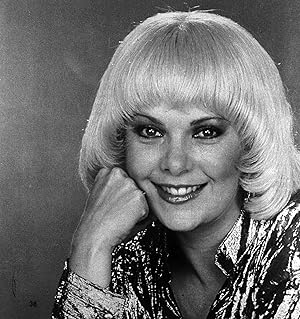
The biggest surprise to me was who played Ilse…it was an 80s sitcom actress…Ann Jillian.
From IMDB: The main street that Ilsa runs across is the same one used in The Twilight Zone: I Sing the Body Electric (1962). Located on the MGM backlot in Culver City, it was known as the “New England Street”, and is same set that was featured in the Andy Hardy movies, starring Mickey Rooney., Elvis Presley’s “Jailhouse Rock”, Frank Sinatra’s “Some Came Running” and the 1970s musical fantasy “Sgt. Pepper’s Lonely Heart’s Club Band”, starring The Bee Gees, which was the last major film shot there. Much of the MGM backlot had been demolished in 1974, and the remainder, including the New England Street, was pulled down in 1978, soon after filming wrapped on “Sgt Pepper’s”.
This show was written by Rod Serling and Richard Matheson
Rod Serling’s Opening Narration:
What you’re witnessing is the curtain-raiser to a most extraordinary play; to wit, the signing of a pact, the commencement of a project. The play itself will be performed almost entirely offstage. The final scenes are to be enacted a decade hence and with a different cast. The main character of these final scenes is Ilse, the daughter of Professor and Mrs. Nielsen, age two. At the moment she lies sleeping in her crib, unaware of the singular drama in which she is to be involved. Ten years from this moment, Ilse Nielsen is to know the desolating terror of living simultaneously in the world and in the Twilight Zone.
Summary
Sometime after World War II, a small group of people make a pact to develop their telepathic abilities as a means of communicating, foregoing any type of oral communication. One couple, the Nielsens, announce that they are migrating to a small town in the USA, German Corners, Pa. After a tragic fire at their house 10 years later, Sheriff Harry Wheeler and his wife Cora take in the only survivor, the now orphaned Ilsa Nielsen. The young girl has never learned to speak, always using telepathy to communicate with her parents. They don’t quite understand why Ilsa won’t speak to them and Cora sees her as a replacement for the daughter she lost in an accident some years ago. When they enroll Ilsa in school, her teacher is determined to make her act like all the other children.
It has been noted in a book of proven wisdom that perfect love casteth out fear. While it’s unlikely that this observation was meant to include that specific fear that follows the loss of extrasensory perception, the principle remains, as always, beautifully intact. Case in point, that of Ilse Nielsen, former resident of the Twilight Zone.
CAST
Rod Serling … Narrator / Self – Host (uncredited)
Barbara Baxley … Cora Wheeler
Frank Overton … Harry Wheeler
Irene Dailey … Miss Frank
Ann Jillian … Ilse (as Ann Jilliann)
Éva Szörényi … Frau Werner (as Eva Soreny)
Robert Boon … Holger Nielsen
Claudia Bryar … Frau Nielsen
Percy Helton … Tom Poulter
Oscar Beregi Jr. … Karl Werner (as Oscar Beregi)
Fred Aldrich … Pedestrian (uncredited)
William Challee … Rude man on porch (uncredited)
Bill Erwin Bill Erwin … Man in Flashback (uncredited)
Charles Morton … Bartender (uncredited)
Norbert Schiller … Committee member in prologue (uncredited)
Glen Walters … Pedestrian (uncredited
The only song I knew from Dexy Midnight Runners was Come On Eileen but UK #1s Blog (Check him out if you haven’t already) featured this #1 UK song from 1980. I have been listening to it ever since.
This song is about Geno Washington, a US Soul singer the band admired. Geno Washington was not huge in America but was popular in the UK.
There is a reason that America never heard the single. This was the second Dexys Midnight Runners single released in the UK, and it shot to #1 on the chart, becoming a crowd favorite along the way. They had no distribution in America, so the song wasn’t heard in the US.
They would soon be heard in the US with Come On Eileen. Kevin Archer, Kevin Rowland wrote the song and it peaked at #1 in the UK in 1980.
Dexys frontman Kevin Rowland was originally in a punk band called The Killjoys with guitarist Kevin “Al” Archer. Rowland had an idea to form a big soul band with a brass section and he founded Dexy’s Midnight Runners in 1978 in Birmingham, England with Archer. They took their name from Dexedrine…. a pep pill favored by ’60 mods.
Kevin Rowland : “I saw Geno Washington in 68 at the Railway Hotel in Harrow. I was 15 years old and out with all the older kids – you had to be 18 to get in – short-haired, cool-looking mods-turning-into-skinhead types. Looking back, it’s probably not the best gig I’ve ever been to, but I didn’t have anything to compare it to.”
From Songfacts
As Dexys Midnight Runners were on the upswing, packing club shows and getting positive press, Washington’s career had faded, and the once-revered singer found himself on the cabaret circuit. “Geno,” which was written by Dexys lead singer Kevin Rowland and guitarist Al Archer, is a tribute to Washington and also a look at the cyclical nature of entertainment.
Dexys Midnight Runners made their mark by adding their distinctive Celtic flavor to Soul music. They championed artists like Washington and did covers of songs by Sam And Dave, Aretha Franklin and the lesser-known Zoot Money. “Soul” was part of Rowland’s stage patter (“our hearts are full of soul…”), as he made it clear where their musical roots had grown.
On the band’s second album, they had a hit with a cover of “Jackie Wilson Said,” which was Van Morrison’s tribute to another Soul singer.ne.
Rowland told The Guardian that the lyrics are all true. He recalled:
The video features plenty of scenes running around alleyways and jumping over railway station ticket barriers. Al Archer told Mojo: “We did all those things. It wasn’t any kind of gimmick, we did actually bunk the trains and all that.”
Back in ’68 in a sweaty club (Oh, Geno) Before Jimmy’s Machine and The Rocksteady Rub (Oh, Geno) On a night when flowers didn’t suit my shoes After a week of flunkin’ and bunkin’ school The lowest head in the crowd that night Just practicin’ steps and keepin’ outta the fights
Academic inspiration, you gave me none But you were Michael the lover The fighter that won But now just look at me as I’m looking down at you No, I’m not bein’ flash, It’s what I’m built to do
That man took the stage, his towel was swingin’ high (Oh Geno) This man was my bombers, my Dexy’s, my high (Oh, Geno) How the crowd, they all hailed you, and chanted your name But they never knew like we knew Me and you were the same And now you’re all over, your song is so tame, brrr You fed me, you bred me, I’ll remember your name
Academic inspiration, you gave me none But you were Michael the lover The fighter that won But now just look at me as I’m looking down at you No, I’m not bein’ flash, It’s what I’m built to do
I just posted a song by Howlin’ Wolf a week or so ago but I’ve been listening to him lately so here is another. This song comes with an interesting story between Jimi Hendrix and Eric Clapton.
When Jimi Hendrix came to England he made a huge impression right away. At a Cream gig he requested a chance to jam with the band. No one in those days asked to do this because Clapton was “God” on guitar to many people…plus Cream as a unit were super talented. Jack Bruce later said that Jimi was a brave person to do that because Cream were all top notch musicans.
Jimi plugged into Jack Bruce’s amp and broke into Killing Floor. Clapton was blown away by it because he never mastered the song. Jimi was ripping right through it at breakneck speed. According to Chas Chandler…Clapton just dropped his hands and was shocked.
Wolf released his version in 1964 and it was written by him.
Hubert Sumlin played guitar on the original version. He said that Wolf played the field, with several ladies in his stable. One of them, a woman named Helen, was so fed up with his philandering that she got a shotgun filled with buckshot and fired at him from a second-floor window.
So, the killing floor is a metaphor for depression, in Wolf’s case triggered by a woman who was so mad she was literally trying to kill him.
Led Zeppelin later used this song as the basis for The Lemon Song.
Eric Clapton:
“I remember thinking that here was a force to be reckoned with. It scared me, because he was clearly going to be a huge star, and just as we are finding our own speed, here was the real thing.”
“It was amazing,”“and it was musically great, too, not just pyrotechnics.”
From Songfacts
In this song, Howlin’ Wolf sings about how he should have left his woman a long time ago, imagining how much better he would have it if he went to Mexico when he had the chance. Now, he’s down here on the killing floor.
Wolf wasn’t the first to use the phrase “killing floor” in a song; the Mississippi blues musician Skip James recorded “Hard Time Killing Floor Blues” in 1931. James’ version was re-released in 1964, a year before Wolf recorded his “Killing Floor.”
Artists to cover this song include Albert King, Jimi Hendrix and Otis Rush.
Killing Floor
I should have quit you, a long time ago I should have quit you, babe, long time ago I should have quit you, and went on to Mexico If I had-a followed my first mind If I had-a followed my first mind I’d been gone, since my second time
I shoulda went on, when my friend come from Mexico at me I shoulda went on, when my friend come from Mexico at me But no, I was foolin’ with ya, baby, I let ya put me on the killin’ floor Lord knows, I shoulda been gone Lord knows, I shoulda been gone And I wouldn’t have been here, down on the killin’ floor Yeah
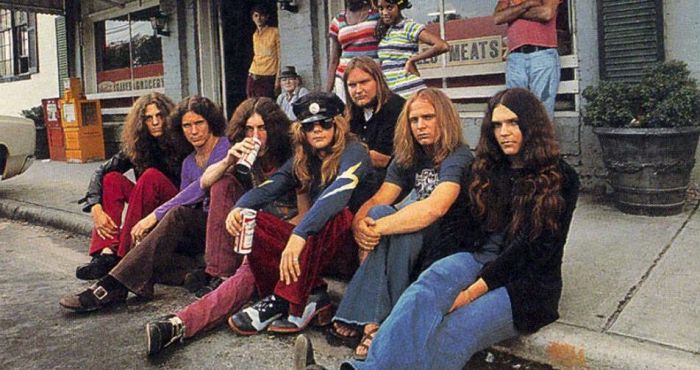
This album track came off of their second album Second Helping released in 1974. It was less than a year after their fantastic debut album called Pronounced ‘Lĕh-‘nérd ‘Skin-‘nérd.
In my opinion they had some good albums after this one but not until their final one Street Survivors did they match their first two.
Second Helping contained their big hit Sweet Home Alabama. The album peaked at #12 in the Billboard Album Chart and #9 in Canada in 1974.
They played schools, parties, and bars for years before they hit it big. The band was first discovered in a rock club called Funnochio’s, on Peachtree Street in Atlanta, Georgia, in 1972. They were found by the famous Al Kooper, who had just landed an executive position at MCA Records and was searching to find some new talent for MCA’s “Sounds of the South” label. At that time Kooper was on tour supporting Badfinger at the time.
This album was produced by Al Kooper who was a founding member of Blood, Sweat, and Tears and he also played organ on Bob Dylan’s classic Like A Rolling Stone.
The three guitar attack was important with this band but it was Ronnie Van Zant’s songwriting that made them what they were. This song is a little slower but has that Skynryd build up of guitars. The band had some great album cuts and this is one of them.
Al Kooper:“Ronnie Van Zant was Lynyrd Skynyrd. I don’t mean to demean the roles the others played in the group’s success, but it never would have happened without him. His lyrics were a big part of it – like Woody Guthrie and Merle Haggard before him, Ronnie knew how to cut to the chase. And Ronnie ran that band with an iron hand. I have never seen such internal discipline in a band. One example: These guys composed all of their guitar solos. Most bands improvised solos each time they performed or recorded. Not them. Ronnie’s dream was that they would sound exactly the same every time they took the stage.”
I Need You
Ain’t no need to worry There ain’t no use to cry ‘Cause I’ll be comin’ home soon To keep you satisfied
You know I get so lonely That I feel I can’t go on And it feels so good inside babe Just to call you on the telephone An’ I said…
Ooh baby I love you What more can I say Ooh baby I need you I miss you more everyday
I woke up early this mornin’ And sun came shining down And it found me wishin’ and a’hoping Mama you could be around
Well you know I need you More than the air I breathe And I guess I’m just tryin’ to tell you woman Oh what you mean to me yeah, yeah
Ooh baby I love you What more can I say Ooh baby I need you I miss you more everyday What I say…
I’m tryin’ to tell you I love you In each and every way I’m tryin’ to tell you I need you Much more than just a piece of leg
Ooh baby I love you What more can I say Ooh baby I need you I miss you more everyday
Ooh baby I love, love, love, love you What more can I say yeah ‘Cause ooh baby I need your sweet lovin’ I miss you more an’ more everyday










 PowerPop... An Eclectic Collection of Pop Culture