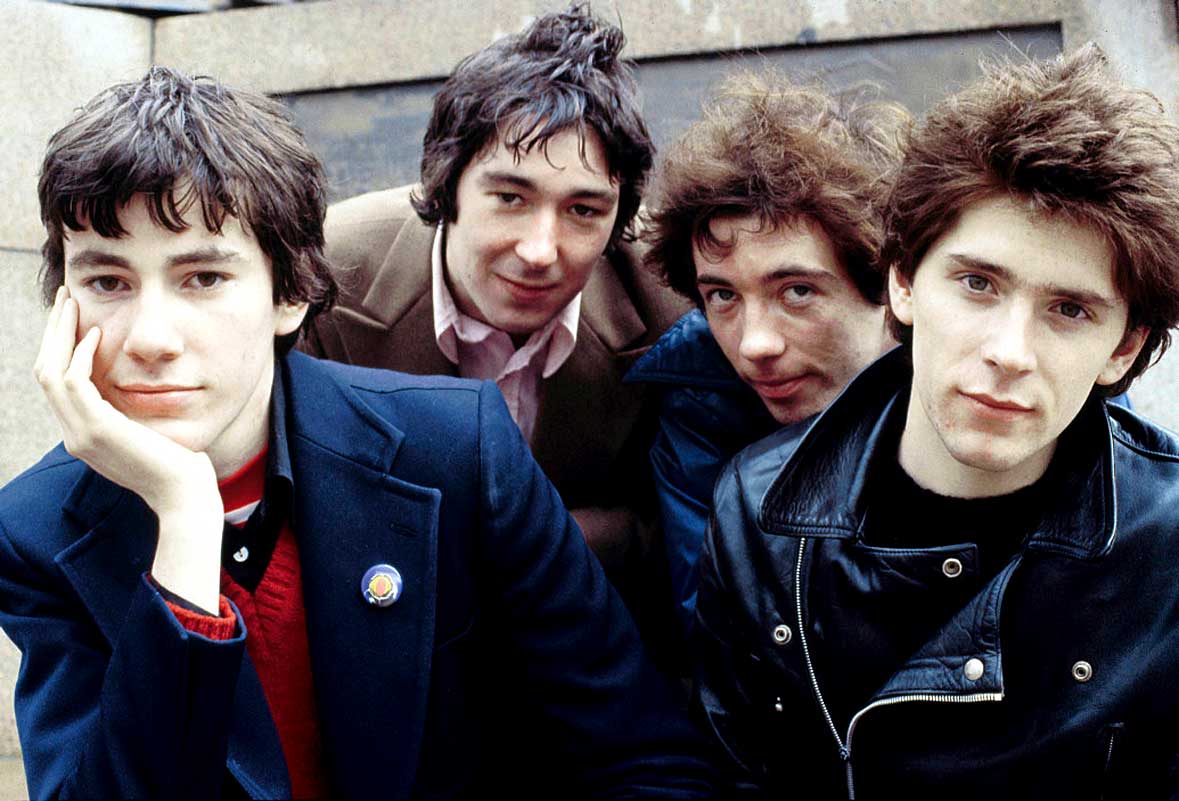
Jam – In The City

As with the Buzzcocks…I had friends with Jam albums and that is how I found out about them.

This was their first single and introduction to the Jam and singer/guitarist and Jam songwriter Paul Weller. Weller wrote this song and borrowed the title from a Who single I’m A Boy with the B side In The City.

It was released in 1977 and peaked at #40 inn the UK Charts. This was their first Top 40 single and the beginning of their streak of 18 consecutive Top 40 singles. The single came off the album of the same name. The album peaked at #20 in 1977.

The song’s opening bassline re-appeared a few months later on the Sex Pistols’ single “Holidays in The Sun.” Weller had a fight with Sex Pistols bassist Sid Vicious in the Speakeasy Club over stealing the riff.

Paul Weller: “We had a different sort of birth to a lot of the bands, our contemporaries of that time. Because we’d been playing for five years – pubs and working men’s clubs and anywhere that would have us really. I’d been plating since I was 14, sort of semi-pro if you like. So I never got the thing about not turning your guitar.”

“I wrote this after I’d seen the Pistols and The Clash and I was obviously into my Who phrase. I just wanted to capture some of that excitement.” “It was a big tune for us. We’d open our set with it, we’d probably play it at the end and if we could get an encore, we’d play it again. The reaction it got from the audience, we knew it was a big tune.”

“I’m not sure about some of the lyrics in … I was 17, 18 man. But it was a good youth anthem, I thought.”

From Songfacts

While only a minor hit on the charts, this mod/punk number is well remembered for serving as England’s first introduction to singer/guitarist and Jam songwriter Paul Weller. The song’s #40 chart position when the song was first released marked the beginning of his band’s streak of 18 consecutive Top 40 singles. After their breakup in 1982, Weller would continue to notch up chart entries well into the 21st century firstly with Style Council, then under his own name.

Weller was only 18 when he penned this celebration of youth in the big city. He recalled writing this song to Q magazine April 2011: “It was the sound of young Woking, if not London, a song about trying to break out of suburbia. As far as we were concerned, the city was where it was all happening; the clubs, the gigs, the music, the music. I was probably 18, so it was a young man’s song, a suburbanite dreaming of the delights of London and the excitement of the city. It was an exciting time to be alive. London was coming out of its post-hippy days and there was a new generation taking over. The song captured that wide-eyed innocence of coming out of a very small community and entering a wider world, seeing all the bands, meeting people, going to the clubs, and the freedom that it held.”

The single has the particular distinction of reaching the UK Top 50 on four different occasions. The song originally peaked at #40, then when “Going Underground” became the group’s first #1 single three years later, Polydor decided to re-issue all nine of the group’s prior singles and “City” was the only one to make the Top 40 again, peaking at #40 for a second time. After the group’s breakup at the end of 1982, the record company re-issued every single of the band’s career in early 1983 and this time “City” peaked at #47. Finally, in May 2002, Polydor decided to commemorate the 25th anniversary of The Jam by re-releasing their debut single in its original packaging, in its original 7″ vinyl record format, and at its original price of 75 pence. The limited pressing sold out immediately, this time peaking at #36, higher than it ever did in its original release and two subsequent reissues.

In The City

In the city there’s a thousand things I want to say to you
But whenever I approach you, you make me look a fool
I want to say, I want to tell you
About the young ideas
But you turn them into fears

In the city there’s a thousand faces all shining bright
And those golden faces are under 25
They want to say, they gonna tell ya
About the young idea
You better listen now you’ve said your bit-a

And I know what you’re thinking
You still think I am crap
But you’d better listen man
Because the kids know where it’s at

In the city there’s a thousand men in uniforms
And I’ve heard they now have the right to kill a man
We want to say, we gonna tell ya
About the young idea
And if it don’t work, at least we said we’ve tried

In the city, in the city
In the city there’s a thousand things I want to say to you
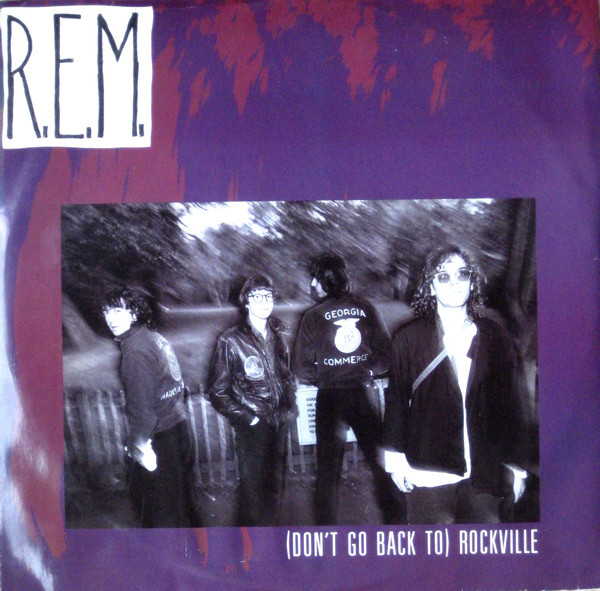
REM – (Don’t Go Back To) Rockville

This is one of the first songs I remember hearing from R.E.M. A buddy of mine had the Reckoning album and wore it out. It is up in the top ten of my favorite REM songs.

This song is about Ingrid Schorr, a girl the band knew at the University of Georgia whose hometown was Rockville, Maryland. She got a lot of attention on campus as classmates lamented her departure.

Don’t Go Back To Rockville is a R.E.M. song that bass player Mike Mills wrote most of the lyrics but as always with R.E.M. credited to the entire band. Mills exaggerated in the song and he wasn’t a boyfriend to Ingrid…only good friends but he saw a good song in the story.

The orginal version of the song was really fast like a Ramones kind of punk rock song. They slowed it down to a country tinged feel as a nod to their manager Bertis Downs, who really loved the song.

This was the second single from the album Reckoning released in 1984. The song didn’t chart but the album peaked at #27 in the Billboard Album Charts, #23 in New Zealand, and #91 in the UK.

Mike Mills:  “There was a girl Ingrid Schorr. We were seeing each other and we really liked each other, but we were not boyfriend and girlfriend. She was going back to Rockville for the summer. And I thought that ‘going back to Rockville’ just screamed song, right there. As I wrote it, it turned into what if we were in love and she was leaving and never coming back. And that’s how it turned into ‘(Don’t Go Back To) Rockville.’ It just morphed as it went along.”

Mike Mills:  “I remember sitting at the kitchen table on Little Oconee Street in Athens, (Georgia),” Mills explains. “There’s a turnaround in the song that’s inspired by part of a Simon & Garfunkel song (“Mrs. Robinson”) that I heard, and I started building the song around that. Sometimes the first line is the hardest line and once I got that first line (‘Looking at your watch a third time/Waiting in the station for a bus’), the rest of it flowed naturally.”

From Songfacts

The band had already been playing this song in a much faster, punk-like style for a long time and didn’t even consider it for the Reckoning album until their legal advisor, Bertis Downs, begged them to “at least do one take of it for me … please!?!?”

Drummer Bill Berry remembers tweaking the song to mess with Downs: “To playfully suggest to him that the song wasn’t in contention, we recorded a much slower version than he was accustomed to hearing and we sprinkled it with a Nashville twang to drive the point home. It started out silly, but when Mike added piano, the tune took on new light. Thanks, Bert!” 

Don’t Go Back To Rockville

Looking at your watch a third time
Waiting in the station for the bus
Going to a place that’s far
So far away and if that’s not enough
Going where nobody says hello
They don’t talk to anybody they don’t know

You’ll wind up in some factory
That’s full time filth and nowhere left to go
Walk home to an empty house
Sit around all by yourself
I know it might sound strange but I believe
You’ll be coming back before too long

Don’t go back to Rockville
And waste another year

At night I drink myself to sleep and pretend
I don’t care if you’re not here with me
‘Cause it’s so much easier to handle
All my problems if I’m too far out to sea
But something better happen soon
Or it’s gonna be too late to bring you back

Don’t go back to Rockville
And waste another year

It’s not as though I really need you
If you were here I’d only bleed you
But everybody else in town only wants to bring you down and
That’s not how it ought to be
I know it might sound strange, but I believe
You’ll be coming back before too long

Don’t go back to Rockville
And waste another year

Don’t go back to Rockville
And waste another year

Twilight Zone – To Serve Man

★★★★★  March 2, 1962 Season 3 Episode 24

If you want to see where we are…HERE is a list of the episodes.

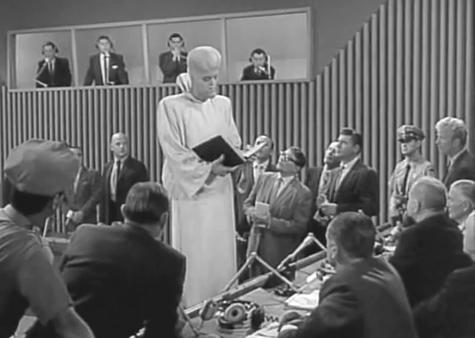
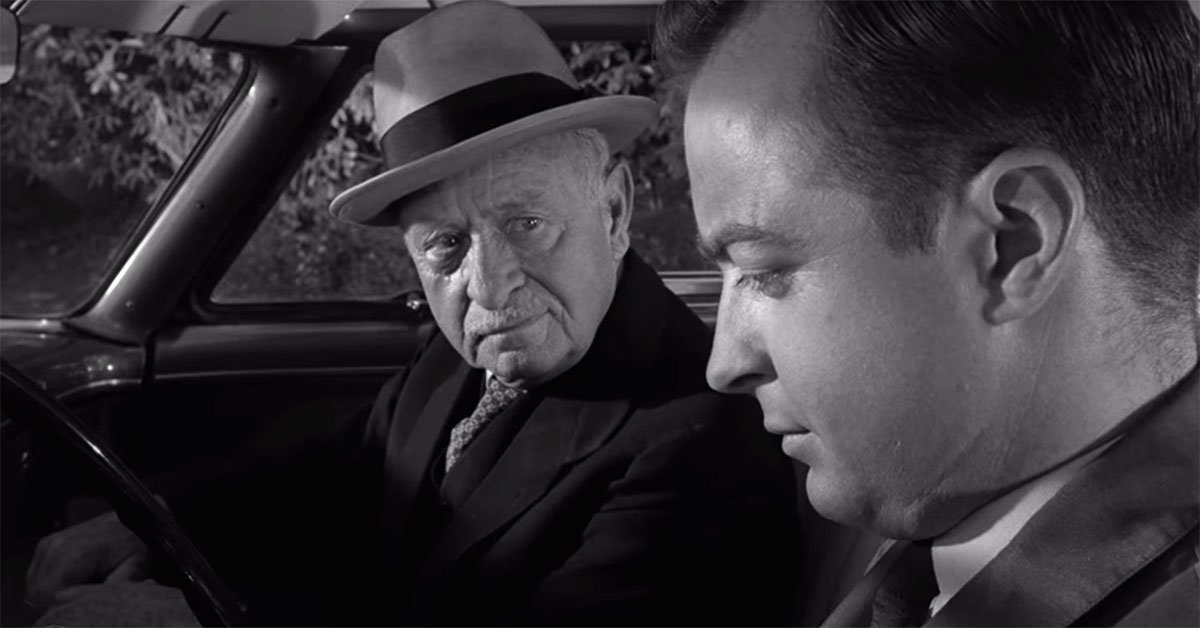
This episode may have the most famous of all twists and be the most remembered episode of the Twilight Zone. The Kanamits arrive on Earth with seemingly one purpose in mind: to aid mankind in every possible way using their superior technology. They end famine, supply a cheap power source and provide defensive force fields. Armies become obsolete. Earrth becomes without cold war or hunger worries…sounds great! As the old saying goes…nothing is for free.

Richard Kiel appeared as many of the Kanamits. He would later be better known as Jaws in a couple of James Bonds movies.

This one is a classic. It serves as a commentary on the Cold War mentality of the time and this scfi episode works today. This episode has been parodied in a lot of shows including The Simpson’s first Treehouse of Terror. Watch this one if you get a chance.

Damon Knight (writer): To Serve Man was written in 1950, when I was living in Greenwich Village and my unhappy first marriage was breaking up. I wrote it in one afternoon, while my wife was out with another man. Serling kept the basics of Knights story, but made some changes, the first of which was in the aliens themselves. In the story, the Kanamit (singular: Kanama) look something like pigs and something like people. In his script, Serling made them nine feet tall and essentially humanoid, noting, At the moment, no one knows whether we cast this part, or make it! As they appear in the show, the Kanamits (singular: Kanamit) resemble angels gone to seed, with full-length robes, high-domed heads, and just a hint of corruption about the eyes and mouth. The effect is striking, with seven-foot-two Richard Kiel (later to play the character Jaws in several James Bond films) playing the various Kanamits.

I thought the adaptation was kind of neat it made me famous in Milford, Pennsylvania; suddenly everybody knew who I was. I didnt mind the aliens being acromegalic giants, because I knew they couldnt film my pig-people without making it look like a Disney film. The only thing that bugged me was Serlings treating the alien language as if it were just another kind of code.

This show was written by Rod Serling and Damon Knight

Rod Serling’s Opening Narration: 

Respectfully submitted for your perusal – a Kanamit. Height: a little over nine feet. Weight: in the neighborhood of three hundred and fifty pounds. Origin: unknown. Motives? Therein hangs the tale, for in just a moment, we’re going to ask you to shake hands, figuratively, with a Christopher Columbus from another galaxy and another time. This is the Twilight Zone.

Summary

Michael Chambers recounts recent events on Earth after the arrival of a alien space craft. The aliens, known as Kanamit, seem friendly and assure everyone they have nothing to be afraid of. In fact, they offer to share wonderful technology that will provide limitless energy, cure all disease and convert deserts into lush gardens. For the people of Earth, paradise has arrived. Chambers is an encryption specialist and they try their best to decrypt a book the Kanamit left behind. The book’s title seems benign – but it’s not what they think it is.

The COMPLETE EPISODE on Daily Motion

Rod Serling’s Closing Narration:

The recollections of one Michael Chambers, with appropriate flashbacks and soliloquy. Or, more simply stated, the evolution of man. The cycle of going from dust to dessert. The metamorphosis from being the ruler of a planet to an ingredient in someone’s soup. It’s tonight’s bill of fare from the Twilight Zone.

CAST

Rod Serling… Narrator / Self – Host (uncredited)
Lloyd Bochner…Michael Chambers
Richard Kiel…the Kanamits (all of whom appear alike)
Susan Cummings…Patty
Joseph Ruskin…Kanamit voice
Hardie Albright…Secretary General
Theodore Marcuse…Citizen Gregori
Bartlett Robinson…Colonel #1
Carleton Young…Colonel #2 (credited…Carlton Young)
Nelson Olmsted…Scientist

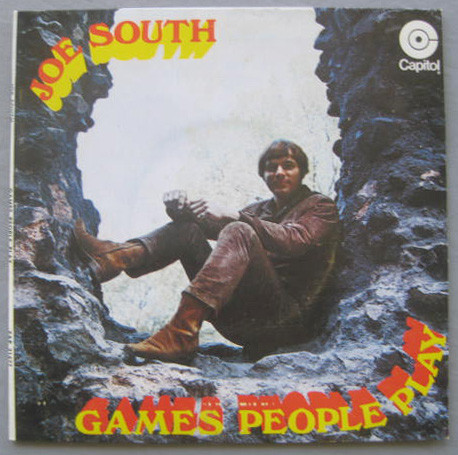
Joe South – Games People Play

I had this single when I was a kid that was passed down from a cousin. Joe South was a great songwriter. He wrote songs such as Hush, Rose Garden, Walk A Mile In My Shoes, and Down in the Boondocks.

Joe South did not record any more hits, but he did write and record the original version of Rose Garden, which three years later became a hit for the country artist Lynn Anderson.

He was originally a session man, and among the hits he played the guitar on are Aretha Franklin’s “Chain Of Fools,” Tommy Roe’s “Sheila” and Simon & Garfunkel’s “The Sound Of Silence.” He also played on Bob Dylan’s Blonde On Blonde album.

The Games People Play album was one of the first to be multitracked. Joe South performed all the vocal and instrumental parts himself, and some consider it the first ever Country-Soul album.

South won Grammy Awards for Song of the Year and Best Contemporary Song for this.

From Songfacts

Written by Joe South, this song is about how people can go through life preoccupied with negative thoughts. Instead of living lives of service and accomplishment, they deceive others in an effort to get ahead, which ultimately leads to unhappiness.

 It was originally released in 1968 as Introspect before being reissued as Games People Play when the title track became a hit.

Mel Tormé recorded a notable cover version of this song later in 1969 which appeared on his A Time for Us album. The prominent bass in his version was performed by Carol Kaye, who was one of the studio musicians behind hits for The Monkees, The Beach Boys, Joe Cocker and many others. In a Songfacts interview with Carol Kaye, she talked about this session: “There was one time when I overplayed on bass to try to wake up a drummer. The drummer was in on tour and he was sleeping. You could tell that. And it was a big band. He was slowing down in the parts and the part that I was playing was slow according to the tune. The tune required just a few notes on my part, so somebody in the band said, ‘Do something, Carol.’ So I played a lot of notes and it woke up the drummer. And I walked in the booth after the take, and I said, ‘Now we can do a take.’ And they looked at me and laughed and said, ‘That was the take.’ I said, ‘Oh, no, that’s a bass solo.’

The bass part that I invented is a test now at schools around the world. And he’s just going, ‘La di da’ and here’s all this bass and stuff coming in. I thought, That’ll never be a hit. And it was a big smash hit for him.”

Games People Play

Mmm
La-da-da, da-da-da, da-da
La-da-da, da-da-da, da-dee
La-da-da, da-da
La-da-da, da-da-da

Whoa, the games people play now
Every night and every day now
Never meanin’ what they say now
Never sayin’ what they mean

While they wile away the hours
In their ivory towers
‘Til they’re covered up with flowers
In the back of a black limousine
Whoa-ah

La-da-da, da-da-da, da-da
La-da-da, da-da da, da-dee
Talkin’ ’bout you and me
And the games people play now

Whoa, we make one another cry
Break a heart then we say goodbye
Cross our hearts and we hope to die
That the other was to blame
Whoa-ah

But neither one will ever give in
So we gaze at an eight by ten
Thinkin’ ’bout the things that might have been
And it’s a dirty rotten shame
Whoa-ah

La-da-da, da-da-da, da-da
La-da-da, da-da da, da-dee
Talkin’ ’bout you and me
And the games people play now

Oh, yes
Oh, alright
Oh, yes
C’mon, c’mon, c’mon, c’mon, c’mon

Whoa oh-oh-oh-oh-oh

Now look here
People walkin’ up to you
Singin’ glory hallelujah, ha-ha
And they try and to sock it to you
In the name of the Lord

They’re gonna teach you how to meditate
Read your horoscope, cheat your fate
And furthermore to hell with hate
Come on, get on board
Whoa-ah

La-da-da, da-da-da, da-da
La-da-da, da-da da, da-dee
Talkin’ ’bout you and me
And the games people play

Now, wait a minute
Look around tell me what you see?
What’s happenin’ to you and me?
God grant me the serenity
To just remember who I am
Whoa-ah

‘Cause you’ve given up your sanity
For your pride and your vanity
Turn you back on humanity
Oh, and you don’t give a
Da, da, da, da, da

La-da-da, da-da-da, da-da
La-da-da, da-da da, da-dee
I’ll keep a-talkin’ ’bout you and me, brother
And the games people play now, now

La-da-da, da-da-da, da-da
La-da-da, da-da da, da-dee
Gonna talk ’bout you and me
Oh, and the games people play
I wonder can you come out and play?
Early in the mornin’, whoa yes
Talkin’ ’bout you and me
And the games people play now

Green On Red – Death And Angels

These guys were in the Paisley Underground movement in the 1980s. They should be a classic band but they never broke through to the masses.

The Paisley Underground Scene had many different types of bands. The sound they all had was not united. Bands like Green on Red more of a country-ish/stones rock and roll,  Rain Parade more of a Beatles type, The Bangles were more of a pop/rock band. The scene had about any thing you would want except major hits…The Bangles are the ones that really broke through.

Death and Angels

In the event (In the event)
Of sudden disaster (sudden disaster)
Just look into a face (look into a face)
That matters

Death and angels (death and angels)
On the ground (on the ground)
Death and angels (death and angels)
I swear
Fly around (fly around)

(ahh ahh)
In the case of a sudden (ahh ahh)
Point of view (ahh ahh)
(ahh ahh)
Just listen to your heart (ahh ahh)
I swear
(ahh ahh)
That’s what’s true (ahh ahh)

Death and angels (ahh ahh)
On the ground (ahh ahh)
I swear
Death and angels (death and angels)
Flying (fly around)

Seems so dark and lonely
Seems …
Feels so cool
Oh no —
The lack of compassion
(in the world) in our world

Twilight Zone – The Last Rites of Jeff Myrtlebank

★★★★  February 23, 1962 Season 3 Episode 23

If you want to see where we are…HERE is a list of the episodes.

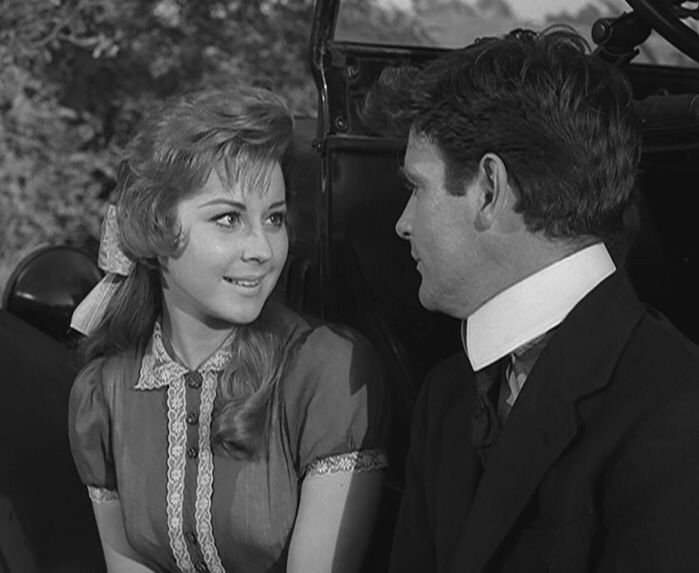
This episode has the look of a 1940s movie to me. Jeff Myrtlebank was supposedly dead but he had other ideas. James Best played this character well as did his girl Comfort Gatewood played by Sherry Jackson. It’s set in the 1920s in rural America where Jeff Myrtlebank was pronounce dead. After Myrtlebank popped up out of his coffin, the small community began talk about an evil spirit invading Jeff’s body.

Edgar Buchanan plays Doc Bolton and there is a little “Uncle Joe” (Petticoat Junction) in his performance which works in this episode. Ralph Moody and Ezelle Poule play Pa and Ma Myrtlebank and they are very authentic. I’ve seen this episode as a comedic The Monsters Are Due on Maple Street because of how rumors and ignornace can cause a mob mentality. I do like the ending of this episode…it keeps you guessing.

This show was written by Montgomery Pittman and Rod Serling

Rod Serling’s Opening Narration: 

Time, the mid-twenties. Place, the Midwest, the southernmost section of the Midwest. We were just witnessing a funeral, a funeral that didn’t come off exactly as planned, due to a slight fallout from the Twilight Zone.

Summary

Everyone at Jeff Myrtlebank’s funeral service is shocked when he pushes the coffin lid open and steps out, seemingly in perfect health. Old Doc Bolton mumbles some ridiculous explanation and the people there settle down a bit. Obviously his family is happy that he’s back with them and his fiancée welcomes him as he is, with no questions asked. They do notice that he’s a bit different. As time goes on however, rumors begin spread and the locals decide to take action.

Rod Serling’s Closing Narration:

Jeff and Comfort are still alive today, and their only son is a United States senator. He’s noted as an uncommonly shrewd politician, and some believe he must have gotten his education in the Twilight Zone.

CAST

Rod Serling… Narrator / Self – Host (uncredited)
James Best…Jeff Myrtlebank
Sherry Jackson…Comfort Gatewood
Edgar Buchanan…Doc Bolton
Lance Fuller…Orgram Gatewood
Dub Taylor…Mr. Peters
Ralph Moody…Pa Myrtlebank
Ezelle Poule…Ma Myrtlebank
Helen Wallace…Ma Gatewood
Vickie Barnes…Liz Myrtlebank
Jon Lormer…Strauss
James Houghton…Jerry
William Fawcett…Rev. Siddons

Lime Spiders – Slave Girl

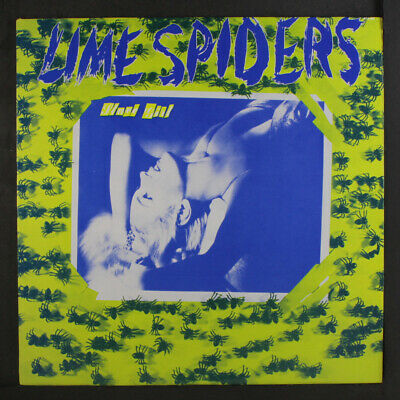
This is garage rock/punk and hits you right between the eyes. The Lime Spiders formed in 1979 in the Liverpool area (not that Liverpool) of Western Sydney Australia around a core of vocalist Mick Blood and guitarist Darryl Mather.

They played a mixture of blend of power pop, psychedelia and 60s garage punk and they won a lot of fans in Australia.

Allmusic has this to say… Lime Spiders were an Australian post-punk unit resurrecting the trashier elements of ’60s garage and psychedelic rock with willful abandon. Bless them for that! And more power to them for doing it in the middle of the 80s. Rolling Stone magazine once described them at times as The Sex Pistols on acid…that about sums it up.

In 1988 they released  the Weirdo Libido single, which appeared on the soundtrack to an Australian film called Young Einstein but after that they broke up. They did reunite in 1992 and again in 1997…they were together in some form or another until 2009. They last released an album in 2007.

They released 12 LP’s and EP’s all together with several singles. This one was released in 1984 as a single only at the time.

Slave Girl

Let me tell you ’bout a girl I know
I drag her around wherever I go
This little woman drives me insane
She’s tied to my ankle with a ball and chain

For sixteen years she’s been hangin’ around
Try’n’ to bury me in a hole in the ground
Well I think it’s time that I even the score
There’s only room for one in this cage of yours

Don’t save me when I’m startin’ to drown
Don’t use me when you don’t want me around
Just be my slave girl ’cause that’s all I need
So take a little step back to the stone age with me. Go!

Well I hear a strange noise as I lie in my bed
I feel a lotta water drippin’ on my head
I look around tried to see through my hair
You left me alone, but do you think I care?

‘Cause you moved me when I was takin’ my time
You abused me when I’m outta line
You tried to warn me of the danger sign
So watch out, go

Well, you got me in the bondage of another age
You drive me to distraction in a primitive way
I can’t control my instincts when I hear her say
“Just come around and see me if you lose your way”

So join my chain gang play along with me
I’ll be your caveman, it’s basic as can be
I’m not insane, man, I’m just outta my dream

Who – Tommy Can You Hear Me

A short song off of their 1968 album Tommy.

The rock opera Tommy tells the story of a “deaf, dumb, and blind” kid who becomes a Pinball Wizard and then a spiritual leader. The double album was The Who’s break though album. They performed the album in concert halls and opera theaters.

On their second album A Quick One, they were short of material, Kit Lambert (manager) encouraged Pete to create a mini-opera called A Quick One, While He’s Away by combining a suite of song snippets. By 1968 he was developing a full-album concept called Deaf, Dumb And Blind Boy, inspired by Indian spiritual mentor Meher Baba.

When the album was released to the world it was a huge hit… It was their first album to get into the top ten or the top forty for that matter in America. It wasn’t for the lack of trying. They released some great albums that only the UK enjoyed..they also had singles that rivaled the Kinks, Beatles, and Stones but were not heard here until the compilation album Meaty Beaty Big and Bouncy was released in 1971.

I like the Tommy album although it’s not my favorite Who album…that would be Who’s Next. I always thought the album sounded thin compared to the live version they played in 1969 and 70.

Unlike other bands such as the Stones…Townshend encouraged the others to write because he carried most of the burden. Entwistle was the most prolific writer next to Townshend. Daltrey and Moon only wrote occasionally.

All of them contributed vocals to this one.

From Songfacts

“Tommy Can You Hear Me?” is the sixth track on the first side of the second album (third side overall) and acts as a transition between two narratively important songs, “Go To The Mirror!” and “Smash the Mirror.”

In “Go to the Mirror!” a doctor (played by Jack Nicholson in the film version) tells Tommy’s parents that their son’s lifelong handicap is entirely psychosomatic, basically meaning it’s all in his head. That song leads into “Tommy Can You Hear Me?” In this track, the lyrics are meant to be the words of Tommy’s mother, who is extra frustrated by Tommy’s inability to hear her now that she knows it’s all in his head.

“Tommy Can You Hear Me” leads into “Smash the Mirror,” in which Tommy can indeed see his own reflection, but still doesn’t register seeing his mother, which enrages her so much, she shoves Tommy through a mirror. This scene leads to Tommy’s eventual awakening as a spiritual figure..

Bob Dylan references this song in “Murder Most Foul” with the lyric, “Tommy, can you hear me? I’m the Acid Queen.” That line also mentions “The Acid Queen,” which is another track on Tommy.

Tommy Can You Hear Me

Tommy can you hear me?
Can you feel me near you?
Tommy can you see me?
Can I help to cheer you?
Ooooh Tommy
Tommy
Tommy
Tommy

Tommy can you hear me?
Can you feel me near you?
Tommy can you see me?
Can I help to cheer you?
Ooooh Tommy
Tommy
Tommy
Tommy

Tommy can you hear me?
Can you feel me near you?
Tommy can you see me?
Can I help to cheer you?
Ooooh Tommy

Tommy
Tommy
Tommy
Tommy
Tommy
Tommy

Tommy
Tommy
Tommy
Tommy
Tommy

Twilight Zone – A Piano In The House

★★★★  February 16, 1962, 1962 Season 3 Episode 22

If you want to see where we are…HERE is a list of the episodes.

A Piano in the House is not a well known episode but one of my favorites. It flies under the Twilight Zone radar. The episode highlights two things rather well…cruelty and justice. Fitzgerald Fortune played by Barry Morse is a despicable and sadistic theater critic who thinks he is above everyone. He buys a magic player piano that has the ability to reveal peoples inner selves and uses it to humiliate his wife (Joan Hackett) and many of her friends.

This one does show the artificial nature of everyday human interactions. The ways we will go to hide things about ourselves when with other people. I could relate to this one. Working in IT in the early days…I knew people like Fitzgerald  Fortune who thought all the end users were idiots.

This show was written by Earl Hamner Jr. and Rod Serling

Rod Serling’s Opening Narration: 

Mr. Fitzgerald Fortune, theater critic and cynic at large, on his way to a birthday party. If he knew what is in store for him he probably wouldn’t go, because before this evening is over that cranky old piano is going to play “Those Piano Roll Blues” with some effects that could happen only in the Twilight Zone.

Summary

Theater critic Fitzgerald Fortune is looking to buy a different sort of gift for his wife’s birthday. In a curio shop, he buys an old player-piano. It’s delivered to his home, and when he starts it up, it has a strange effect on his manservant, a normally dour man who breaks into mirthful laughter. When he plays another song, this time for a guest, the man breaks down and admits he’s in love with Fortune’s wife Esther. He decides to have fun with his party guests that evening but Esther decides to turn the tables on him.

Rod Serling’s Closing Narration:

Mr. Fitzgerald Fortune, a man who went searching for concealed persons and found himself in the Twilight Zone.

CAST

Rod Serling… Narrator / Self – Host (uncredited)
Barry Morse…Fitzgerald “Jerry” Fortune
Joan Hackett…Esther Fortune
Don Durant…Gregory “Greg” Walker
Muriel Landers…Marge Moore
Philip Coolidge…Throckmorton
Cyril Delevanti…Marvin (the Butler)

Fanny – Last Night I Had A Dream

The vocals on this song won me over when I heard it. Keyboard player Nickey Barclay nails the vocals on this song. She goes from 0 to 100 and she turns into a Janis Joplin. It builds up slowly and then Barclay wails the vocal while June Millington breaks out on the slide guitar at the end to a huge crescendo. The drummer Alice de Buhr does a really cool rhythm pattern for this song…

There have been a few all female rock bands (not enough) but this one…to me is the most talented one I’ve heard. They were not a “girl group”…they were a full fledged rock band. They didn’t have the pop song to take them over the top but for what they did…they didn’t need it.

The live version I have on the Midnight Special is much better than the studio cut. This song was written by Randy Newman and it has such wonderful lines in it.

I saw a vampire, I saw a ghost
Everybody scared me, but you scared me the most
In the dream I had last night

From all the clips I’ve seen of Fanny live…their live sound just wasn’t caught in the studio and they were much better live. BTW…love the eye-shadow or glam-shadow (thanks Vic)…what ever it is…another reason to love the seventies.

Last Night I Had A Dream

Last night I had a dream
You were in it, and I was in it with you
And everyone that I know
And everyone that you know was in my dream
I saw a vampire, I saw a ghost
Everybody scared me, but you scared me the most
In the dream I had last night

In my dream

Last night I had a dream
Scared me before you know I woke up screaming
Saw all of my in-laws and whole lot of outlaws
In my dream
I saw the wolfman Jack and saw the mummy too

In the dream I had last night
In that dream

It started out in a barnyard at sundown
And everyone was laughing
And you were lying on the ground

You said, “honey, can you tell me what your name is?”
“Honey, can you tell me what your name is?”
I said, “damn damn what your game is”

You know what my game is

In the dream I had last night

I saw a vampire, I saw a ghost
Everybody scared me, but you scared me the most
In the dream I had last night

In the dream I had last night, in my dream

Last night I had a dream
You were in it, and I was in it with you
And everyone that I know
And everyone that you know was in my dream
I saw a vampire, I saw a ghost
Everybody scared me, but you scared me the most
In the dream I had last night
In the dream I had last night, in my dream

….

Buzzcocks – Harmony In My Head

Happy Monday everyone! Everything that I’ve heard by them is loud, catchy, aggressive, and with a power pop hook. I listened to the Buzzcocks in the 80s with some friends that owned some imports. I hoped they would break in America but never did.

The Buzzcocks crossed pop with punk. The Go-Go’s have said they were a huge influence. Jane Wiedlin said: “our favorite band, the band that we always tried to emulate was the Buzzcocks, who had that great pop song done in a punky style.”

Grunge bands admired the Buzzcocks also. Pearl Jam  invited the band to open US shows for them in 2003, including the Buzzcocks’ first ever appearance at New York’s Madison Square Garden. Nirvana invited them to open dates on their last ever European tour, in early 1994.

Steve Diggle wrote this song and did the lead vocals on it. He said the “harmony” in the song is the sound of the crowd when they played.

To get the right sound for the song, Diggle smoked 20 cigarettes to get the gruff sound of the vocals. The song peaked at #32 in the UK charts in 1979. The song was just released as a single not an album.

They released 3 albums, 6 non-album singles, and broke up in 1981 after a dispute with their record company. They reunited in 1989 and released 6 more albums. Pete Shelley continued to play with the band until his death of a heart attack in 2018. The band still continues to tour with Diggle.

Steve Diggle: “I was reading James Joyce’s Ulysses, which is a heavy book but it had a lot of cinematic imagery – so ‘Harmony’ wasn’t a linear story like pop songs are. The Arndale Centre had just been built and it gave me a real sense of alienation. I wanted to walk down the street and hear the percolation of the crowds – that was the ‘harmony.’ Life was never going to be sweet and nice and it’s not always doom and gloom. The ‘Harmony In My Head’ was the sound of the crowd. That’s how real life is.”

From Songfacts

When Buzzcocks played their first concert, Steve Diggle was their bassist, but founding frontman Howard Devoto’s departure prompted the band to reshuffle, with Pete Shelley becoming lead vocalist/guitarist and Diggle moving from bass to guitar and co-vocalist.

Diggle also had a few early co-writing credits and contributed chords and choruses to “Promises” shortly after Pete Shelley’s “Ever Fallen In Love (With Someone You Shouldn’t’ve).” “Harmony In My Head,” which reached #32 in the UK, is probably Diggle’s best known song.

 Engineer Alan Winstanley recalled to Uncut: “‘Harmony’ is interesting as it’s the only one Steve Diggle sings – it doesn’t have that Pete Shelley sweetness – but when he comes in on the chorus it really changes it. Then off Steve goes again with his growly voice.”

Released as a standalone single on July 13, 1979, the song spent six weeks on the UK singles chart, peaking at #32.

Harmony In My Head

Whenever I’m in doubt about things I do
I listen to the high street wailing sounds in a queue
Go out for my walking sailing social news
Don’t let it get me down I’m long in the tooth

When I’m out in the open clattering shoppers around
Neon signs that take your eyes to town
Your thoughts are chosen your world is advertising now
And extravagance matters to worshipers of the pound

But it’s a harmony in my head
It’s a harmony in my head

The tortured faces expression out aloud
And life’s little ironies seem so obvious now
Your cashed in cheques have placed the payments down
And there’s a line of buses all wait to take you out

But it’s a harmony in my head
It’s a harmony in my head
It’s a

It’s a harmony in my head

Whenever I’m in doubt about things I do
I listen to the high street wailing sounds in a queue
I go out for my walking sailing social news
Don’t let it get me down I’m long in the tooth

‘Cause it’s a harmony in my head
It’s a harmony in my head

In my head, in my head

Twilight Zone – Kick The Can

★★★★ 1/2  February 9, 1962 Season 3 Episode 21

If you want to see where we are…HERE is a list of the episodes.

This one is a borderline classic. What I get out of it is the idea that old age is just a state of mind. Being young is more about the willingness to take risks and having a sense of adventure rather than just playing it safe. Ernest Truex plays Charles Whitley who finds the secret of staying young. The pure joy that Truex shows is infectious. He appeared in the earlier Twilight Zone…What You Need.

I find it interesting in the contrasting dynamic between playful Charles Whitley and the stereotypical grouchy old man Ben Conroy played by Russell Collins. Charles moves around care free while Ben worries about everything and is determined to be a “get off my lawn” old man. This one is a little slower to develop but a great episode.

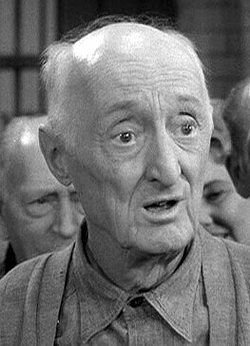
One character actor I do want to mention that appears in this episode is Burt Mustin. He doesn’t have a big part but Mustin seemed to be everywhere on 50s- 70s tv shows. Burt Mustin

Kick the Can was remade in the Twilight Zone movie with Scatman Crothers and it was one of the best stories they had in the movie.

This show was written by George Clayton Johnson, Rod Serling, and Richard P. McDonagh

Rod Serling’s Opening Narration: 

Sunnyvale Rest, a home for the aged – a dying place and a common children’s game called kick-the-can, that will shortly become a refuge for a man who knows he will die in this world, if he doesn’t escape into – The Twilight Zone.

Summary

Charles Whitley is an elderly resident of Sunnyvale Rest, a home for the aged. It’s not a happy place and Charles’ hopes of moving in with his son David are dashed when he’s told they can’t take him in. He wistfully recalls his youth where they played kick the can and didn’t have a worry in the world. His close friend Ben Conroy begins to worry him when Charles suggests all you have to do is wish it, and you can be young again. Ben is worried his friend will end up in the loony bin but it’s Ben who is in for a surprise.

Rod Serling’s Closing Narration:

Sunnyvale Rest, a dying place for ancient people, who have forgotten the fragile magic of youth. A dying place for those who have forgotten that childhood, maturity, and old age are curiously intertwined and not separate. A dying place for those who have grown too stiff in their thinking – to visit – The Twilight Zone.

CAST

Rod Serling… Narrator / Self – Host (uncredited)
Ernest Truex…Charles Whitley
Barry Truex…Charles’ son
Russell Collins…Ben Conroy
John Marley…Mr. Cox
Burt Mustin…Carlson
Earle Hodgins…Agee
Hank Patterson…Freitag
Marjorie Bennett…Mrs. Summers
Lenore Shanewise…Mrs. Densley
Eve McVeagh…Night nurse
Anne O’Neal…Mrs. Wister

Three Dog Night – The Family Of Man

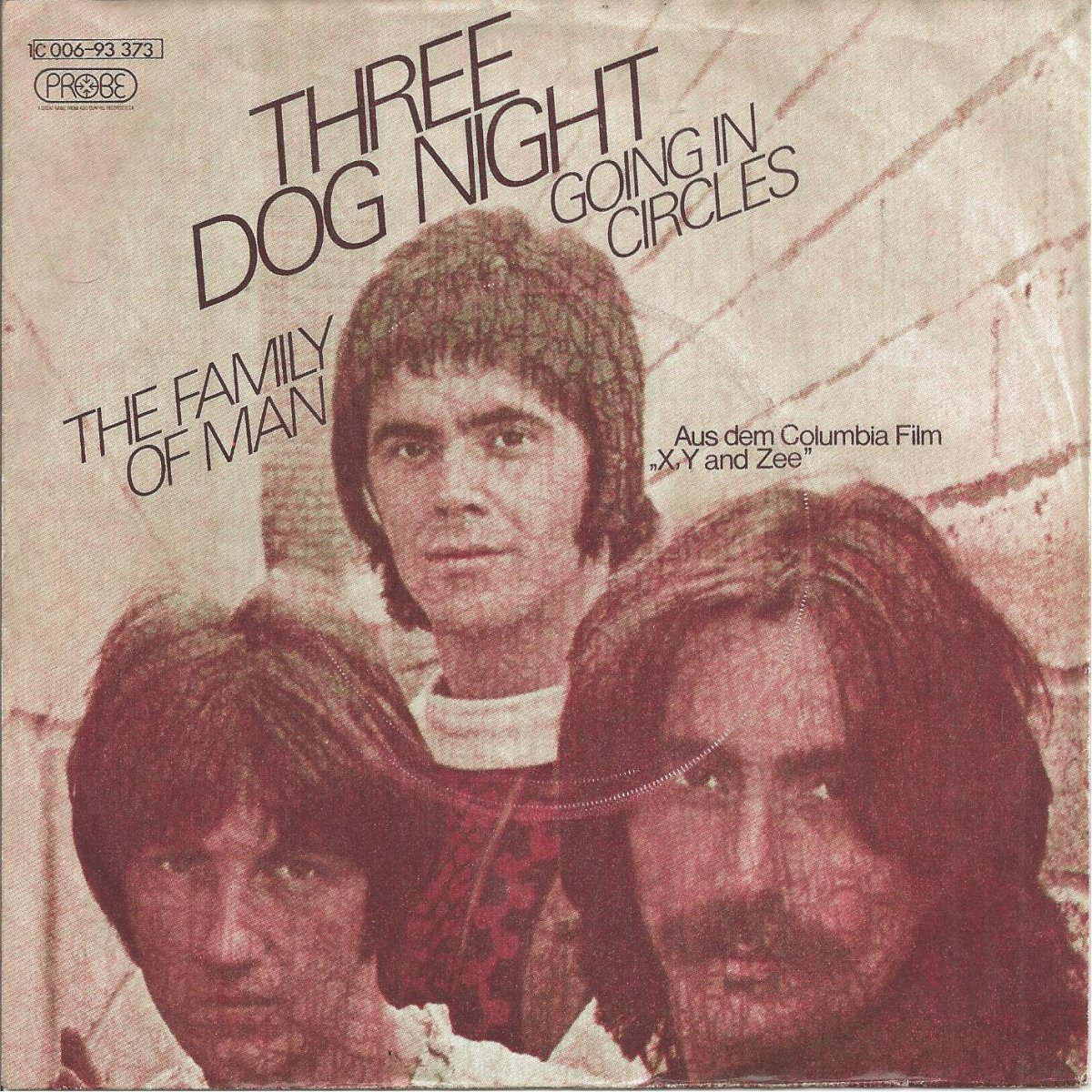
When I was around 10 years old …with help from mom, I ordered Three Dog NIght’s greatest hits off of a commercial on television. When I got it I wore it out and zeroed in on this song (and Celebrate). This is an environmental song…probably one of the first that I heard or least paid attention to. The message is really good.

I think the writers were influenced slightly by “It’s All Too Much” a Beatle song that George Harrison wrote. That is why I think I liked it so much…it sounded familiar. To be truthful about it…I thought this post was going to be a Three Dog Night “deep cut” (yea people would line up for that)…I had no clue it was a hit…of course being on the greatest “hits” should have clued me in. I just never heard it on the radio.

The Family of Man is a song written by Paul Williams and Jack Conrad, produced by Richard Podolor. It was on their 1971 album, Harmony.

The Family of Man peaked at  #12 in the Billboard 100, and #5 in Canada.  The album Harmony peaked at #8 in the Billboard Album Charts and #11 in Canada in 1971. So it just missed being a top 10 hit and was a top 5 hit in Canada.

Three Dog Night were huge in the seventies. They had 3 number 1 songs, 21 songs in the top 100, and 11 top ten hits in the Billboard 100. Not bad for a group with three lead singers. I’m alright with them as long as I don’t hear Joy To The World again.

The commercial that I ordered it from…

Family Of Man

This tired city was somebody’s dream
Billboard horizons as black as they seem
A four-level highway across the land
We’re building a home for the family of man

Prices are rising, the devil’s to pay
Moving the mountain that got in the way
Prayer books and meetings to find a plan
Deciding the fate of the family of man

So hard
Whatever are we coming to?
Yes, it’s so hard
With so little time and so much to do

Memories replacing the loves that we lost
Burning our bridges as soon as they’re crossed
Factories built where the rivers ran
Time’s running out for the family of man

So hard

So hard
So hard
So hard, family of man

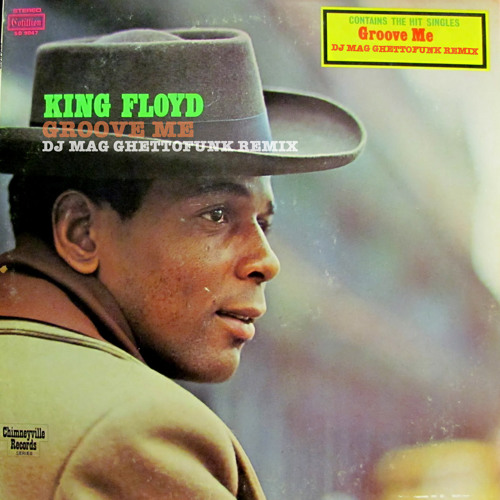
King Floyd – Groove Me

This is my eighth song pick for Hanspostcard’s song draft. King Floyd’s Groove Me.

The bass in this song punches you like a heavy weight fighter and will roll you like wholesale carpet…the timing is absolutely perfect. I hear some Otis and Wilson Pickett in this song and it will make you move. I wanted to touch on the seventies R&B/funk side in the draft…I can’t do any better than this one.

Floyd takes almost a full minute to build up to the chorus and it’s well worth the wait when he kicks it in. Also wanted to mention that a musician named Vernie Robbins plays the bass in this song…the bass along with Floyd carries the song…and the horns don’t hurt either. 

This was the B side to a song called What Our Love Needs and DJ’s played a role in making this a hit after spinning this side more. They started to play this song in the New Orleans region and it took off nationally… something that would not happen today.

This was recorded at the same session as Jean Knight’s “Mr. Big Stuff.” In the 80s I heard this song and was hooked on the first listen. Back then it took me a while to track it down…but track it down I did at Tower Records. I get all misty eyed when thinking of pulling into the parking lot of Tower or Port O’ Call Records.  .

This is a song that has not been worn out…in fact we need it more. I love the dynamics going on in the chorus when it kicks in. The song was released in 1970 and peaked at #6 in the Billboard Hot 100.

On how Floyd wrote this song… He was working at a box factory and noticed a woman there: She’d just watch me and smile at me all day. When I went to the water fountain, she would make it her purpose to come up to the water fountain. But, I was so shy. So, I decided one day that I was gonna write this poem and give it to her and I wrote ‘Groove Me.’ Believe it or not, after I finished it she never came back to work. It blew me away. So, I never gave her the poem. Man, I’d sure like to meet her one day just to thank her!”

Groove Me

Hey there sugar darlin’
Let me tell you something
Girl, I’ve been trying to say, now
You look so sweet
And you’re so doggone fine
I just can’t get you out of my mind
You’ve become a sweet taste in my mouth, now
And I want you to be my spouse
So that we can live happily, nah-nah
In a great big ol’ roomy house
And I know you’re gonna groove me, baby
Ahh, yeah, now
You make me feel good inside
Come on, and groove me, baby
I need you to groove me
Ahhh, yeah, now, now, darling
Uhh! Come on, come on!
Hey! Uhh!

Hey there, sugar darlin’
Come on, give me something
Girl, I’ve been needing for days
Yes, I’m good, good loving
With plenty, plenty hugging
Ooh, you cute little thang, you
Girl, between you and me, nah-nah
We don’t need no company
No other man, no other girl
Can enter into our world
Not as long as you groove me, baby
Ahh, come on
Make me feel good inside
Come on and groove me, baby
Move me, baby
Ahh, sock it to me, mama
Uhh! Ahh, I like it like that, baby
Uhh! Groove me, baby! Hey! Uhh!
Groove me, darling!
Come on, come on
I need you to sock it to me, mama
Come on and groove me, baby
Hey! Uhh! Good, God!
It makes me feel so good inside, mama
Now, come on, come on, and uhh
Groove me, baby, groove me, baby
Ahh, sock it to me
Sock it to me
Rock it to me
Come on, come on!
Come on!
And uhh
Groove me, mama, I want you to
Groove me!

Twilight Zone – Showdown With Rance McGrew

★★★ February 2, 1962 Season 3 Episode 20

If you want to see where we are…HERE is a list of the episodes.

Showdown With Rance McGrew is a lighthearted episode about a temperamental actor playing a cowboy hero. He is doing impossible stunts that would insult real legendary outlaws if they could see it. That part might just come into play in this one.  This episode was made during the golden age of westerns on television. You couldn’t turn a channel on without seeing a western. Bonanza, Gunsmoke, Wanted Dead or Alive, Wagon Train, The Rifleman, and that is just naming a few.

Larry Blyden as Rance McGrew is a whiny, pampered, and coward actor who tries the patience of all the actors and crew. The wonderful character actor Bob Kline plays Jesse James who might have something to say to Rance with him always winning against James and all of his outlaw friends in TV Shows…dead outlaws have their pride also. The episode is fun but far from a classic.

Rod Sering: Fred Fox had an interesting notion, which was quite serious, about a modern-day cowpoke, not a television star, who found himself living in the past. It had no sense of humor in it. It was a straightforward piece. But it struck me that it would be a terribly interesting concept to have a guy who plays the role of a Hollywood cowboy suddenly thrust into the maelstrom of reality in which he has to do all these acts of prowess against real people… . And it just occurred to me, My God, what would happen if the Ranee McGrews of our time had to face this? I used to think this about John Wayne all the time, who had fought most of our major wars. In truth, of course, they were fought on the backlot of Warner Brothers, in which the most deadly jeopardy would be to get hit by a flying starlet. And I always wondered what Waynes reaction would be if he ever had to lift up an M-l and go through a bloody foxhole on attack sometime. But this is the element of humor that I was striving to get.

This show was written by Rod Serling, Frederick Louis Fox, and Richard P. McDonagh

Rod Serling’s Opening Narration: 

Some one-hundred-odd years ago, a motley collection of tough mustaches galloped across the West and left behind a raft of legends and legerdemains, and it seems a reasonable conjecture that if there are any television sets up in cowboy heaven and any of these rough-and-wooly nail-eaters could see with what careless abandon their names and exploits are being bandied about, they’re very likely turning over in their graves—or worse, getting out of them. Which gives you a clue as to the proceedings that will begin in just a moment, when one Mr. Rance McGrew, a 3,000-buck-a-week phoney-baloney discovers that this week’s current edition of make-believe is being shot on location—and that location is the Twilight Zone.

Summary

Rance McGrew is the star of a weekly TV western where he plays the town Marshal. He is, to say the least, difficult to deal with. He is frequently late on the set, arrives unprepared and often requests script changes just as they are about to shoot a scene. To top it off, he’s quite inept at handling his gun which he inadvertently tosses into the saloon mirror on more than one occasion. He’s given a dose of reality however when he inexplicably finds himself back in time, coming face to face with the real Jesse James

Rod Serling’s Closing Narration:

The evolution of the so-called ‘adult’ western, and the metamorphosis of one Rance McGrew, formerly phony-baloney, now upright citizen with a preoccupation with all things involving tradition, truth and cowpoke predecessors. It’s the way the cookie crumbles and the six-gun shoots in the Twilight Zone.

CAST

Rod Serling… Narrator / Self – Host (uncredited)
Larry Blyden as Rance McGrew
Arch Johnson as Jesse James
Robert Cornthwaite as Director
Robert J. Stevenson as Bartender
William McLean as Property Man
Troy Melton as Cowboy #1
Jay Overholts as Cowboy #2