John Hiatt – Slow Turning

Now I’m in my car, I got the radio on, I’m yellin’ at the kids in the back seat
‘Cause they’re bangin’ like Charlie Watts

I love the way this song kicks off with that jangly, ragged guitar riff. John’s voice fits this song perfectly as well. It’s rootsy, raucous, and real, a reminder that the best rock & roll doesn’t have to be flashy or fast to hit you in the gut.

A brilliant performer…he is a songwriter’s songwriter.  The first time I heard this song, I loved it. When you mention Charlie Watts, you have my attention. John Hiatt always releases songs of quality, and they are all solid. Saying that, he is most remembered for his songs that other people cover. I don’t understand that because he has a fine, distinctive voice with a great band behind him. The keyword here is distinctive, I guess, which I look for.

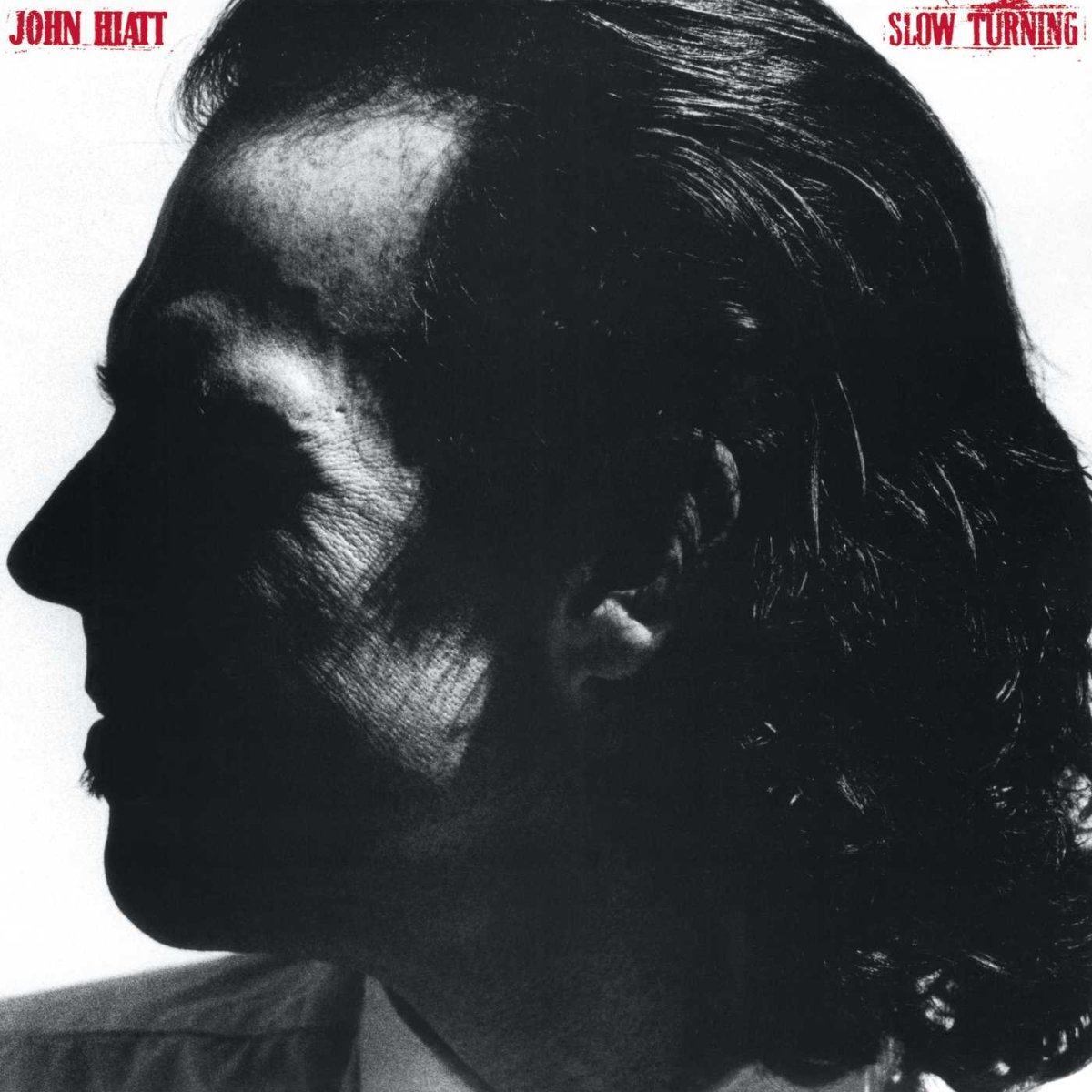
He has a tremendous catalog with 24 studio albums. He released his first album in 1974! By the time John Hiatt released the album Slow Turning in 1988, he wasn’t some wide-eyed newcomer chasing charts; he was a survivor. Some of the songs he wrote and were covered were Angel Eyes, Sure As I’m Sitting Here,  and Thing Called Love, just to name a few. Slow Turning is one of his best-known songs, with him singing.

I’ve seen a lot of Hiatt recently on live clips. He and his band are always great. It’s loose in the best way, the kind of groove that feels like it could fall apart at any second but never does. The rhythm section (Kenneth Blevins on drums and Dave Ranson on bass) just locks in with the kind of warmth that doesn’t come from studio perfection but from chemistry built from sweat on the road.

Slow Turning peaked at #22 on the Billboard Alternative Charts. The album peaked at #98 on the Billboard Album Charts. I thought it would have been higher in the charts. In my region, it got a lot of airplay. 

Slow Turning

When I was a boyI thought it just came to youBut I never could tell what’s mineSo it didn’t matter anyway

My only pride and joyWas this racket down hereBangin’ on an old guitarAnd singin’ what I had to say

I always thought our house was haunted‘Cause nobody said “boo” to meI never did get what I wantedBut now I get what I need

It’s been a slow turnin’From the inside outA slow turnin’, babyBut you come about

A slow learnin’But you learn to swayA slow turnin’, babyNot fade away, not fade away, not fade away

Now I’m in my carOoh, I got the radio downNow I’m yellin’ at the kids in the back‘Cause they’re bangin’ like Charlie Watts

You think you’ve come so farIn this one horse townThen she’s laughin’ that crazy laugh‘Cause you haven’t left the parking lot

Time is short and here’s the damn thing about itYou’re gonna die, gonna die for sureAnd you can learn to live with love or without itBut there ain’t no cure

It’s just a slow turnin’From the inside outA slow turnin’But you come about, ya

A slow learnin’, babyBut you learn to swayA slow turnin’Not fade away, not fade away, not fade awayNot fade away, not fade away

A slow turnin’A slow turnin’A slow turnin’A slow turnin’

Chicago – Colour My World

When I was sixteen I was playing with our band in a bar…no we shouldn’t have been at that age… and the owner paid us one night to learn this song. Not exactly an energetic song to learn but it did go over very well. I didn’t like playing it because it was so slow but I’ve grown to like it and the memories of it. The crowd absolutely loved it.

This was written by Chicago’s trombone player, James Pankow, and sung by Terry Kath. Pankow came up with the melody on the road at a Holiday Inn on a keyboard. He also came up with a melody for flute, he couldn’t wait, so he woke up Walter Parazaider, the saxophone/flute player in the band, and they worked out the song in Pankow’s room.

After Kath’s death in 1978, the band did not play the song for several years, eventually bringing It back with Bill Champlin on vocals when he joined in 1981. Champlin soon got tired of singing it and handed it off to Robert Lamm.  Since 2009, it has been sung by trumpeter Lee Loughnane. It gets handed down like a family recipe.

It was used as the B-side not once…but twice with Make Me Smile in April 1970, and as the B-side of “Beginnings” in June 1971. The song never charted.

James Pankow: “I titled it ‘Colour My World’ because it affected a lyric that again mirrors the emotion of love. In this case, I used the emotion of love and description as a Technicolor movie that takes places in my heart. It colors, it gives color and vivid definition to my life, like bringing this emotion to it.”

James Pankow: Frank Sinatra called our publicist and said, ‘Ask that kid to write another verse for that song.’ I thought about it, I called him back and said I can’t do it it’s like sewing another arm on your kid, I can’t do it.”

Colour My World

As time goes on
I realize
Just what you mean
To me
And now
Now that you’re near
Promise your love
That I’ve waited to share
And dreams
Of our moments together
Colour my world with hope of loving you

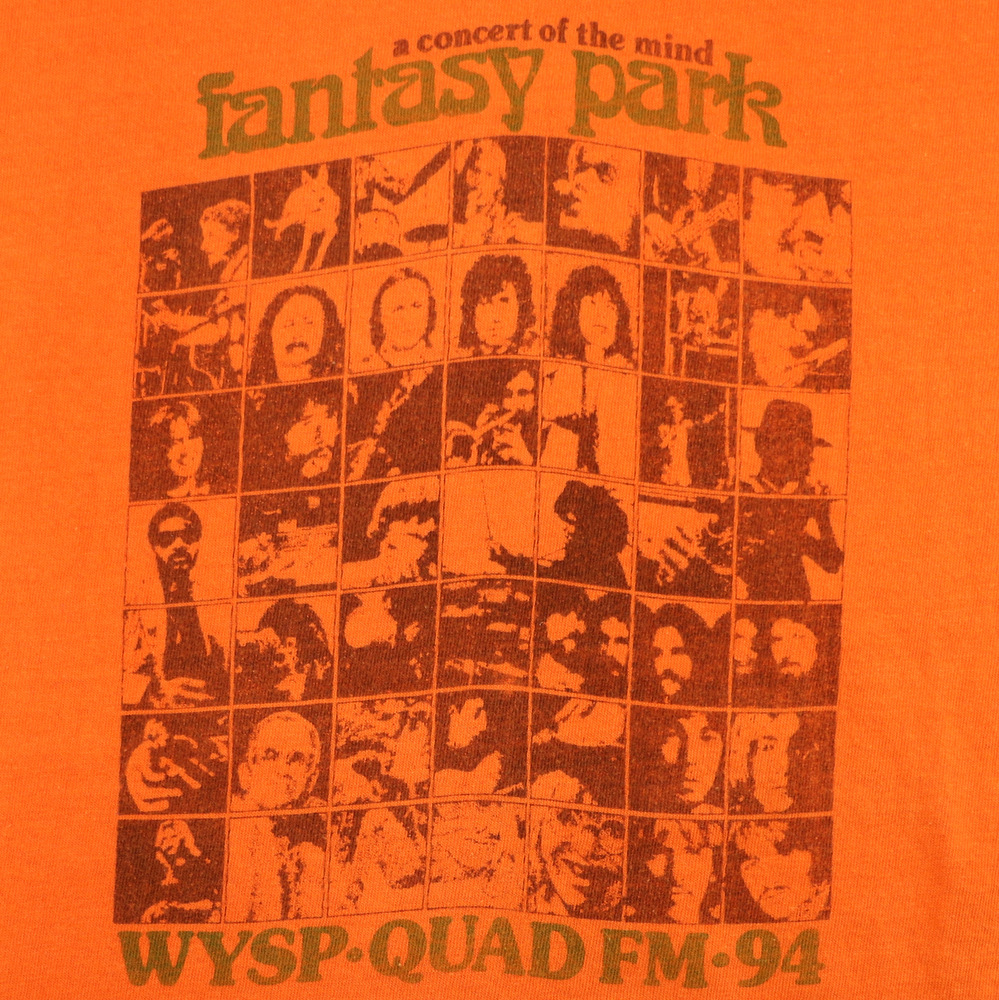
A Concert of The Mind…Fantasy Park


Fantasy Park: 1975 – Twin Cities Music Highlights

Imagine a concert in 1975 with The Beatles, Bob Dylan, the Allman Brothers, Linda Ronstadt, The Rolling Stones, The Who, and more. Well, it happened! Sorta. Rod Serling did all of the radio promos. It would be one of his last projects…he would pass away before it aired.

It was a 48-hour-long rock concert (Fantasy Park) that was aired by nearly 200 radio stations over Labor Day weekend in 1975. The program, produced by KNUS in Dallas, featured performances by dozens of rock stars of the day and even reunited The Beatles. It was also completely imaginary, a theatre-of-the-mind for the 70s.

The “concert” consisted of live and studio recordings by the artists with live effects added to make it sound legit.

The show had college students hitchhiking all over America hoping to get to Fantasy Park. In New Orleans when the concert aired, the IRS came knocking on the doors of WNOE trying to attach the gate receipts to make sure the Feds got their cut! Callers were asking where they could get tickets to this amazing show.

The show was so popular in Minnesota that they played it again in its entirety the next year…now that people knew it wasn’t real and weren’t looking for tickets. The greatest concert that never was.  Fantasy Park had their own emcee and special reporters covering the weekend event giving you the play-by-play details along with some behind-the-scenes updates.

The concert would always be halted due to rain on a Sunday morning to allow the locals to get in their regular (usually religious) programming. The whole event ended promptly at 6 pm on Sunday.

Now people look for the full 48-hour tapes of the show. They are a hot collector’s item. Rod Serling passed away on June 28, 1975.

Bands at Fantasy Park

Chicago
Elton John
Led Zeppelin
Joe Walsh
Cream
Shawn Phillips
Pink Floyd
Carly Simon
James Taylor (& Carol King)
Poco
Alvin Lee
Eagles
Linda Rondstadt
Dave Mason
Steve Miller
John Denver
Beach Boys
War
Grand Funk
Yes
Deep Purple
Rolling Stones
Cat Stevens
The Who
Rolling Stones
Moody Blues
Marshall Tucker Band
Allman Brothers Band
Seals & Crofts
America
Joni Mitchell
Doobie Brothers
Loggins and Messina
Crosby/Stills/Nash/Young
Bob Dylan
Beatles

Here is 10 minutes of it here.

Miracle Workers – You’ll Know Why

These garage bands were a breath of fresh air in the 80s. They sound like their 60’s predecessors but with an updated sound.

The Miracle Workers were formed in January 1982 in Chicago by Gerry Mohr, and Joel Barnett. The original guitarist and drummer left the band early on. Matt Rogers, a friend of Joel’s, became the guitarist. The band finally stabilized in 1984, with the addition of Dan Demiankow, and Gene Trautman.

They ended up recording 5 albums and 8 singles and EPs between 1984 and 1995. They play garage rock and fit with the  revival acts, such as The Chesterfield Kings and Lyres that I have covered.

They broke up in 1992 because of musical differences. The band came together back in Portland to record their last album “Anatomy of a Creep” and released it in 1995.

You Know Why

You thought you’d be back here but it’s not that
that it works for you, but you don’t know where it’s at
You’ll know why when you learn to cry
You can’t see through another’s eyes

Someday you’ll be hurt like others have been by you
Can you feel the pain inside when there’s nothing you can do
You’ll know why when you learn to cry
You can’t see through another’s eyes

You could be who you want to be if you change your state of mind
Look inside and you will find something you just can’t hide
You’ll know why when you learn to cry
You can’t see through another’s eyes

Toronto Rock and Roll Revival 1969

Since I posted Paul McCartney’s Concert for Kampuchea yesterday I thought I would concentrate on the festival John Lennon popped up at in 1969… The Toronto Rock and Roll Revival. Unlike Kampuchea which was spread out on multiple days and nights, this festival was held on one day September 13, 1969.

John Lennon and the Plastic Ono Band just played fifties songs plus John’s new song that Beatles rejected…Cold Turkey. The reason for the fifties’ songs was because the band had limited time to rehearse and they wanted to do songs they all knew.

It was a great festival lineup but it’s remembered mostly by John Lennon’s participation. The Doors were the headliners and John only agreed to do it

The concert was conceived by promoters John Brower and Ken Walker with financial backing from Eaton’s department store but stymied by poor ticket sales, the venture began to lose support. The festival was almost canceled but Brower called Apple Records in the UK to ask John Lennon to emcee the concert. Lennon agreed to appear on the condition he would be allowed to perform.

The Lennons flew in from England with a makeshift band that included Eric Clapton, Klaus Voormann, Alan White, and Yoko. They arrived at the backstage area at about 10 p.m, while Cat Mother and the All Night Newsboys were singing Good Old Rock ‘n’ Roll to an audience of about 20,000.

Lennon was quoted as saying “I threw up for hours until I went on” because it had been three years since he played live in a concert setting. The band went on and did a good job…ragged but it was a hastily assembled band with only a rehearsal on the plane ride and backstage.

John Lennon:  “The ridiculous thing was that I didn’t know any of the lyrics. When we did Money and Dizzy, I just made up the words as I went along. The band was bashing it out like hell behind me. Yoko came on stage with us, but she wasn’t going to do her bit until we’d done our five songs….Then after Money there was a stop, and I turned to Eric and said, ‘What’s next?’ He didn’t know either, so I just screamed out ‘C’mon!’ and started into something else.”

Little Richard: “I remember the show that people were throwing bottles at Yoko Ono. They were throwing everything at her. Finally, she had to run off the stage. Oh, boy, it was very bad.”

John Lennon: And we tried to put it out on Capitol, and Capitol didn’t want to put it out. They said, ‘This is garbage; we’re not going to put it out with her screaming on one side and you doing this sort of live stuff. And they just refused to put it out. But we finally persuaded them that, you know, people might buy this. Of course it went gold the next day.”

John Lennon and Yoko’s setlist

  • Blue Suede Shoes.
  • Money (That’s What I Want)
  • Dizzy Miss Lizzy.
  • Yer Blues.
  • Cold Turkey.
  • Give Peace a Chance.
  • Don’t Worry Kyoko (Mummy’s Only Looking for Her Hand in the Snow)
  • John John (Let’s Hope for Peace)

Performers 

John Lennon and the Plastic Ono Band

Whiskey Howl

Bo Diddley

Chicago

Junior Walker and the All Stars

Tony Joe White

Alice Cooper

Chuck Berry

Cat Mother and the All Night News Boys

Jerry Lee Lewis

Gene Vincent

Little Richard

Doug Kershaw

The Doors

Kim Fowley The Master of Ceremonies

Screaming Lord Sutch

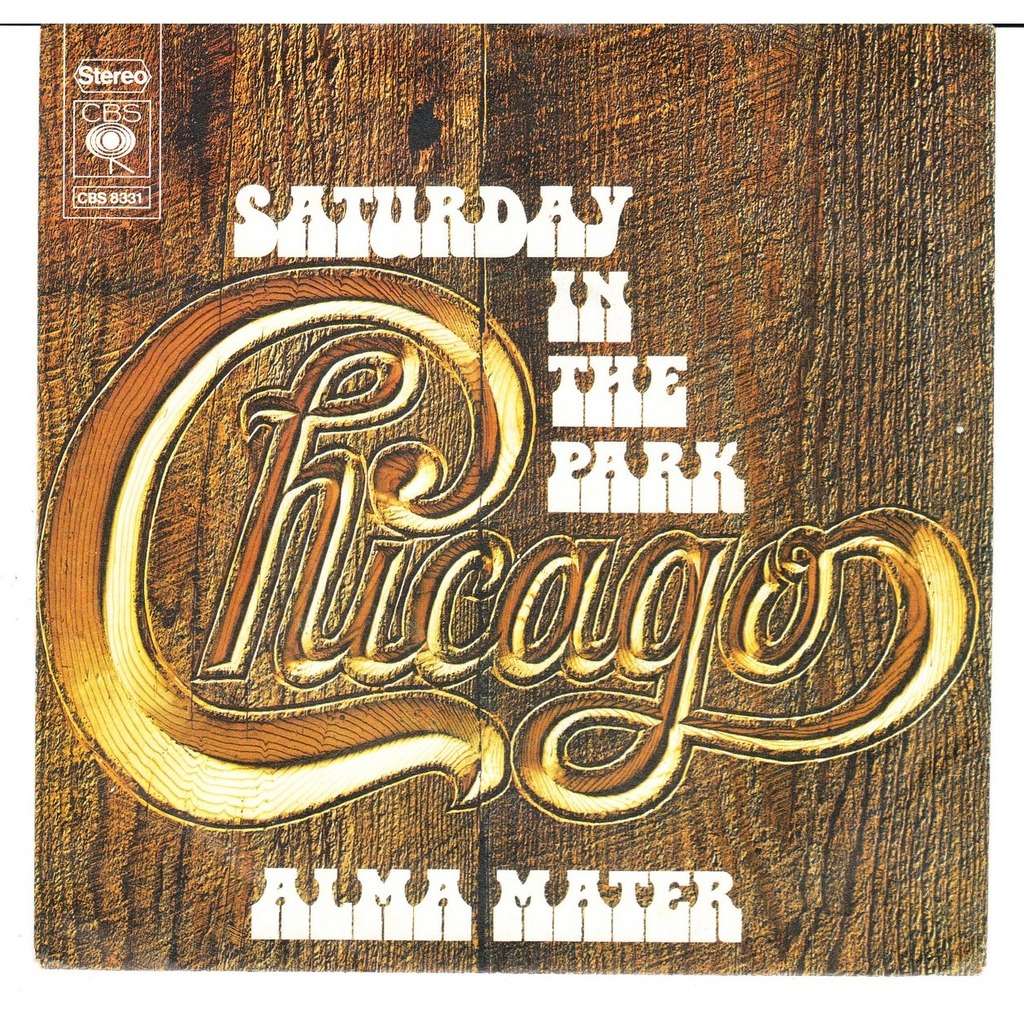
Chicago – Saturday In The Park

Chicago’s main songwriter, Robert Lamm, wrote this song.  Lamm and Peter Cetera sang lead on the track. Robert Lamm based the melody of this song on “You Won’t See Me” by The Beatles, something he openly admitted.

The piano riff, in the beginning, hooks you right away. The song peaked at #3 in the Billboard 100 and #2 in Canada in 1972.

Robert Lamm: It was written as I was looking at footage from a film I shot in Central Park, over a couple of years, back in the early ‘70s. I shot this film and somewhere down the line I edited it into some kind of a narrative, and as I watched the film I jotted down some ideas based on what I was seeing and had experienced. And it was really kind of that peace and love thing that happened in Central Park and in many parks all over the world, perhaps on a Saturday, where people just relax and enjoy each other’s presence, and the activities we observe and the feelings we get from feeling a part of a day like that.

From Songfacts

Like most Chicago singles, this didn’t chart in the UK. In America, however, it was their biggest chart hit to that point and also their first gold single, which at the time meant selling more than a million copies (“25 Or 6 To 4” somehow was never certified gold).

This song contains some of the most famous nonsense singing in rock: after Robert Lamm sings the line, “Singing Italian songs,” he sings some made up words approximating the Italian language.

In the 2000 Adam Sandler film Little Nicky, this song was used for comedic effect when it was played backwards to show that it contains satanic messages.

Other movies to use the song include The Spirit of ’76 (1990) and My Girl (1991). TV series to feature the song include The Sopranos (2002), My Name Is Earl (2005) and Fringe (2011).

Chicago and Robin Thicke performed part of this song at the 2014 Grammy Awards in a medley of Chicago’s hits leading into Thicke’s song “Blurred Lines.” The occasion: Chicago’s first album entering the Grammy Hall of Fame.

Saturday In The Park

Saturday in the park,
I think it was the Fourth of July
Saturday in the park,
I think it was the Fourth of July

People dancing, people laughing
A man selling ice cream
Singing Italian songs
Everybody is another
Can you dig it (yes, I can)
And I’ve been waiting such a long time
For Saturday

Another day in the park
I think it was the Fourth of July
Another day in the park
I think it was the Fourth of July

People talking, really smiling
A man playing guitar
And singing for us all
Will you help him change the world
Can you dig it (yes, I can)
And I’ve been waiting such a long time
For today

Slow motion riders fly the colors of the day
A bronze man still can tell stories his own way
Listen children all is not lost, all is not lost, oh no, no

Funny days in the park
Every day’s the Fourth of July
Funny days in the park
Every day’s the Fourth of July

People reaching, people touching
A real celebration
Waiting for us all
If we want it, really want it
Can you dig it (yes, I can)
And I’ve been waiting such a long time
For the day, yeah yeah

Hoo hoo oh
Hmm hmmm
Hmm hmmm

Max Headroom Hijack Airwaves in Chicago

Someone in 1987 hijacked the airwaves in Chicago and to this day no one has been identified.

On Sunday, Nov. 22, 1987, Chicago sportscaster Dan Roan was covering the sports highlights of the day like normal. This night would be different. At 9:14, Dan Roan disappeared from the screen. In fact, everything disappeared from the screen as it flickered into darkness. Then, 15 seconds later, a new figure appeared.

Someone with a rubber Max Headroom mask with just static…started bobbing his or her head on the screen. It only lasted around 20 seconds and Dan laughed and blamed it on the computer. The employees of the station thought it was an inside job but it wasn’t…they searched everywhere in the building but it did not come from inside the station. It was creepy but harmless…but whoever did it wasn’t finished yet.

Later on, viewers watching “Doctor Who” on WTTW-TV in Chicago got a big surprise.  A 90-second hijacking of the airwaves, featuring the same person dressed as Max Headroom. This time it was a little more action. Headroom bobbed his head again and said a few things. The audio was hard to make out on one viewing. He held up a can of Pepsi while reciting the Coca-Cola slogan “catch the wave.” Max Headroom was, at the time, being used as a spokesperson for Coke. Near the end, he turned around and was spanked by a woman…There was more to it and both videos are below in the post.

Most of Chicago found this hilarious but…The FCC did NOT see the humor at all. They used all of their resources to see who hijacked the airwaves. They offered a reward for anyone knowing the people responsible. They released this message:

“I would like to inform anybody involved in this kinda thing, that there’s a maximum penalty of $100,000, one year in jail, or both,” Phil Bradford, an FCC spokesman, told a reporter the following day.

“All in all, there are some who may view this as comical,” WTTW spokesman Anders Yocom said. “But it is a very serious matter because illegal interference of a broadcast signal is a violation of federal law. ”

The hijacker was never found and to this day people still wonder who it was and why they did it. The FCC worked out how it could have been accomplished without expensive equipment…by placing his or her own dish antenna between the transmitter tower, the hacker could have effectively interrupted the original signal by good timing and positioning.

1st incident.


2nd incident


https://en.wikipedia.org/wiki/Max_Headroom_broadcast_signal_intrusion


Chicago – Saturday in the Park

I’ve always liked early Chicago when Terry Kath was part of the band. Love the intro to this song and it takes me back to when I first heard the song. Saturday in the Park peaked at #3 in the Billboard 100 and #2 in Canada. Robert Lamm who wrote the song openly admits he based the melody on The Beatles “You Won’t See Me.”

Robert Lamm on Saturday in the Park

“Saturday in the Park is a prime example of how I take from what I experience in the world. It was written as I was looking at footage from a film I shot in Central Park, over a couple of years, back in the early ‘70s. I shot this film and somewhere down the line I edited it into some kind of a narrative, and as I watched the film I jotted down some ideas based on what I was seeing and had experienced. And it was really kind of that peace and love thing that happened in Central Park and in many parks all over the world, perhaps on a Saturday, where people just relax and enjoy each other’s presence, and the activities we observe and the feelings we get from feeling a part of a day like that.”

From Songfacts.

Chicago’s main songwriter, Robert Lamm, wrote this after a particularly exhilarating 4th of July spent in New York’s Central Park, where there were steel drum players, singers, dancers and jugglers. Lamm and Peter Cetera sang lead on the track.

like most Chicago singles, this didn’t chart in the UK. In America, however, it was their biggest chart hit to that point and also their first gold single, which at the time meant selling more than a million copies (“25 Or 6 To 4” somehow was never certified gold).

This song contains some of the most famous nonsense singing in rock: after Robert Lamm sings the line, “Singing Italian songs,” he sings some made up words approximating the Italian language.


Saturday In the Park

Saturday in the park, 
I think it was the Fourth of July
Saturday in the park, 
I think it was the Fourth of July

People dancing, people laughing
A man selling ice cream
Singing Italian songs
Everybody is another
Can you dig it (yes, I can) 
And I’ve been waiting such a long time
For Saturday

Another day in the park
I think it was the Fourth of July
Another day in the park
I think it was the Fourth of July

People talking, really smiling
A man playing guitar
And singing for us all
Will you help him change the world
Can you dig it (yes, I can)
And I’ve been waiting such a long time
For today

Slow motion riders fly the colors of the day
A bronze man still can tell stories his own way
Listen children all is not lost, all is not lost, oh no, no

Funny days in the park
Every day’s the Fourth of July
Funny days in the park
Every day’s the Fourth of July

People reaching, people touching
A real celebration
Waiting for us all
If we want it, really want it
Can you dig it (yes, I can)
And I’ve been waiting such a long time
For the day, yeah yeah

Hoo hoo oh
Hmm hmmm
Hmm hmmm