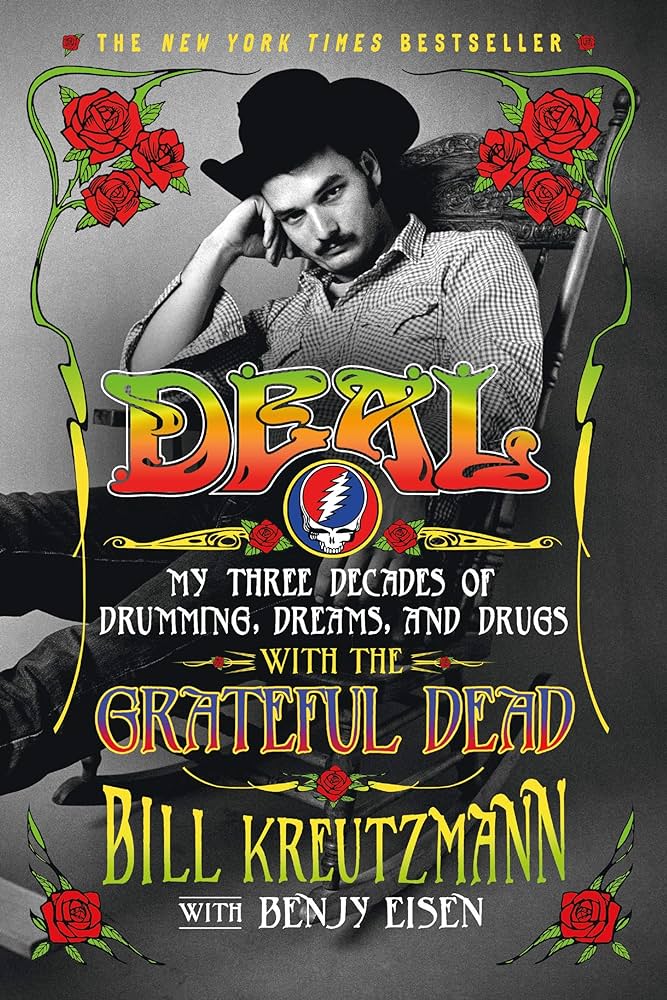
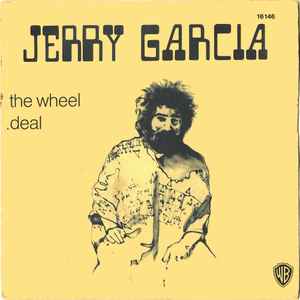
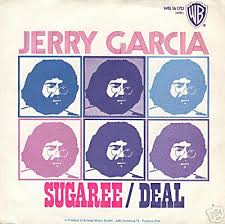
I read the book Deal by Bill Kreutzmann. the drummer for the Grateful Dead. I started listening to Garcia’s debut solo album because of that and ended up liking it. Another song I loved as a kid, Sugaree, came from this album. That song was the first Dead/Garcia song I remember. I remember skating at our local skating rink and the owner must have been a Dead fan…he would play this album at times.
Garcia wanted to see what he could do without the Dead while making this solo album. One of the driving reasons was that he and his wife Mountain Girl wanted a house and the advance from the record company helped them get it. When you listen to the album the songs really flow and seem effortless. I could listen to this music at any time. I don’t have to be in a mood.
The album Garcia peaked at #35 on the Billboard Album Charts. He wanted to play all of the instruments on the album and did except drums. He brought Kreutzmann in to do that job. He also brought roadie Ram Rod (Laurence Shurtliff) in for those sessions, doing roadie work essentially, running errands and moving around the equipment. Kreutzmann and Ram Rod both were listed as “production assistants” in the credits. He paid Ram Rod the same amount that he paid Bill Kreutzmann and that was Garcia’s sense of fairness, which speaks volumes for his character. Although Bill doesn’t really agree with this to this day but sees that as Garcia’s character. Ram Rod ended up as President of Grateful Dead Productions from 1976 to 1995.
Like the Allman Brothers, they formed a family atmosphere with their crew and it extended to their audience. From the early Kool-Aid acid tests to later allowing the audience to tape their shows drew their audience closer. They would later give them their own section to record in…while other bands like Led Zeppelin would send people to bust their tape recorder or head. Garcia commented:Well, my feelings are, the music is for the people…I mean after it leaves our instruments it’s of no value to us, ya know what I mean? it’s like, ya know…what good is it? So it might as well be taped, my feeling is that..and if people enjoy taping it and enjoy having the tapes to listen to, that’s real great. “
They never played the same show twice. They would take songs in different directions and Garcia has said that he couldn’t play something twice the same. He just wasn’t built like that. That made every show unique…not that every show was great. The Dead has admitted they had their share of bad ones.
Bill Kreutzmann Drummer for the Dead:The album, Garcia, was cut at Wally Heider Studios in July 1971 and released by Warner Brothers the following January. There are a lot of songs on there that became Grateful Dead mainstays, in addition to “Deal”—we’re talking about straight-up classics like “Sugaree,” “Loser,” and “The Wheel.” Also, “Bird Song” is on there, which, to this day, is one of my all-time favorite Dead songs and one of my absolute favorite songs to play live (along with “Dark Star” and “The Other One”).
When I want musicians I’m playing with to learn any of those songs, I give them the Garcia versions. They’re just so good. I had a really great time making that album. Dealing exclusively with Jerry was the most effortless thing in the world. I didn’t have to do anything other than be myself. And play.
Cocaine was our special guest throughout those recording sessions, but you’d never be able to tell because everything was very laid back. I have no idea how we were able to do that, because cocaine isn’t exactly known for its relaxing properties. Maybe it was just the dynamic between us that made it all so … easy.
Deal
Since it costs a lot to win And even more to lose You and me bound to spend some time Wondering what to choose
Goes to show, you don’t ever know Watch each card you play and play it slow Wait until that deal come ’round Don’t you let that deal go down, no, no
I been gambling hereabouts For ten good solid years If I told you now all that went down It would burn off both of your ears
Goes to show you don’t ever know Watch each card you play and play it slow Wait until that deal come ’round Don’t you let that deal go down, no, no
Since you poured the wine for me And tightened up my shoes I hate to leave you sittin’ there Composing lonesome blues
Goes to show you don’t ever know Watch each card you play and play it slow Wait until that deal come ’round Don’t you let that deal go down
Wait until that deal come ’round Don’t you let that deal go down Wait until that deal come ’round Don’t you let that deal go down Don’t you let that deal go down Don’t you let that deal go down Oh, no
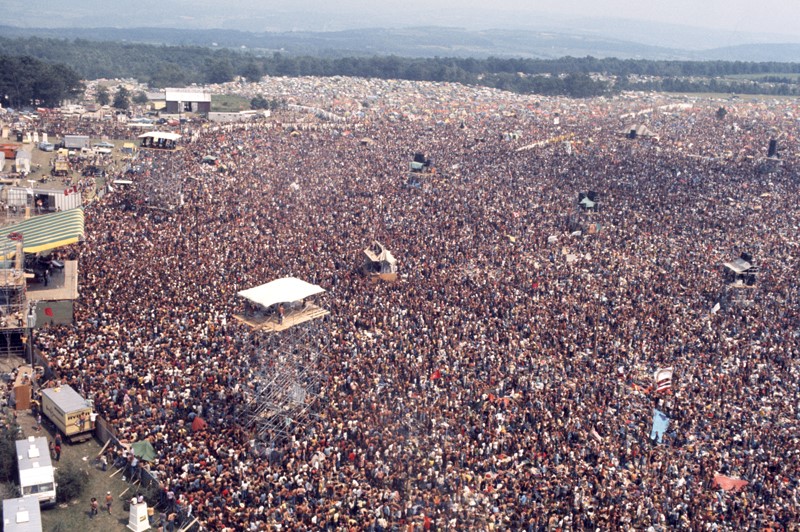
I would have loved to have gone to this concert. The Grateful Dead, The Band, and The Allman Brothers! How much more Americana could you get? Many people felt the same…I mean MANY. 51 years ago today this mammoth concert happened.
I would love to hear from you if you were at this concert. I have one person who did give me a comment.
I first read about this festival in a Grateful Dead biography… There is not much video footage from the concert. No professional film because The Dead didn’t want it to be a movie or soundtrack. I could never understand why this concert wasn’t as well known as The Atlanta Pop Festival and others. It drew more than any other festival including Woodstock with some others combined.
Fans who arrived early were treated to an impromptu soundcheck by the Grateful Dead on July 27, which essentially turned into an extra set…it lasted for hours. Despite the enormous crowd, the atmosphere was surprisingly peaceful and communal. Whether they knew it or not…they were part of something truly historic.
Some cars were abandoned and a few of them are still there! I have a video below that shows some of the rusted cars now that were left.
An estimated 600,000 people attended this concert on July 28, 1973, in Watkins Glen N.Y. 51 years ago. Below is a blogger who was there and a member from each band talking about the concert. I’ll let all of them do the talking.
Jim from Unique Title For Me wrote this about going to this concert. He was one of the lucky ones that got to see Summer Jam.
Jim: That was my favorite concert that I attended, and I have some great memories of being there. We drove into the concert with an ounce of pot on the dashboard and since it was sold out, they were no longer collecting tickets, so they just waved us through the gate. There was this spaced-out naked guy standing nearby Danny, Patty, Irene and I and Danny said that we had to move because he was ruining the show for us. He had a snake around his neck, and he kept drooling, but I liked the spot we had so I grabbed him by his arm and flung him into the mud pit in front of the stage where all the other naked weirdos were.
From the bands themselves, almost all agree the sound check on Friday was better than the concerts.
Perspective about the concert by a member from each band.
Robbie Robertson from his book Testimony
Then we got a request from Bill Graham, who was putting together a show “just up the highway from us” at the Watkins Glen Raceway. We’d be performing with the Allman Brothers and the Grateful Dead. Playing some gigs could help us get “back on the stick,” as they say. We went up to Watkins Glen the day before the show for the sound check. Bill Graham said that the Dead would go on first and play for three or four hours—that was part of their thing, giving the audience their money’s worth. “Until the drugs wear off,” said Bill, laughing. We’d go on in the late afternoon, and the Allmans would take over at sundown. As we were leaving the sound check, it looked like cars were heading toward the racetrack from every direction. Bill said he expected maybe a hundred thousand or more. When we came back the next day, we couldn’t believe our eyes. Hundreds of thousands of people had showed up, and more just kept coming and coming. The crowds mowed down the high chain-link fences around the racetrack and filled the area as far as the eye could see. Bill was running around trying to make people pay admission, but the mobs were out of control. When it came time for the Band to take the stage, it started pouring. As we waited, hoping it was going to let up, Bill came over. “They’ve determined there are 650,000 people here. It’s the biggest concert in history.” The news was somewhere between an incredible accomplishment and a huge disaster. The rain started letting up, and Garth played some churchy, rainy-day keyboard sounds out over the crowd. When it was safe to go on, we decided to start our set with Chuck Berry’s “Back to Memphis.” And wouldn’t you know, as Levon sang that baby, the sun came out.
Gregg Allman from My Cross to Bear
Right before Brothers and Sisters came out, we played the festival at Watkins Glen with the Band and the Grateful Dead, in front of six hundred thousand people—the biggest show in history to that point. People always talk about Woodstock. Watkins Glen was like three Woodstocks. I think actually it might’ve been a little too big. They should have had people all the way around the raceway, and maybe had the stage in the center revolving real slowly, do a revolution in a minute. That’s not that complicated. A show like Watkins Glen was uncomfortable, because you know that you’re getting the show across to this many people, but you still got two times that many behind them. You could finish a song, take your guitar off, put it in the case, and latch it up before the last guy heard the last note. Sound ain’t all that fast, not compared to light.
When you’re playing in that situation, you’re kind of thinking about the end. Not that you’re wishing it to be over, but you can’t even hear yourself—that was back before we had the in-ear monitors. Everything was so loud. You just walk out there and start to wince before you even start playing. It’s hard to get any kind of coziness, any kind of feel with the audience. I guess there’s something about that many people seeing you all at once that’s real nice, but it’s just too much. You’re just like a little squeak in the middle of a bomb going off. But it was interesting, and it was a pretty fun day. People were OD’ing all over the place. And of course, Uncle Bill was there, which cured everything. It was exciting to be there and see it—and to be able to make ’em stand up, now that was something else.
Bill Kreutzmann from Deal
We made some questionable business decisions and we couldn’t sell records, but we sure could sell tickets. We sold around 150,000 tickets for a single show at a racetrack in Watkins Glen, New York, on July, 28, 1973. Yes, and more than 600,000 people ended up coming out for it. The lineup was just us, the Allman Brothers, and the Band. That show, called the Summer Jam at Watkins Glen, made it into the Guinness Book of World Records for what, at the time, was the largest audience ever assembled at a rock concert. In fact, that record may still hold today, at least in the U.S., and some have even proposed that it was the largest gathering in American history. Originally, the bill was supposed to just be the Dead and the Allmans, but our respective camps fought with the promoter over which band would get headliner status. The solution was that both bands would co-headline and they’d add a third, “support” act. The friendly (“-ish”) competition between us and the Allman Brothers carried through to the event itself. And yet, the memory that I’m most fond of and hold most dear from that whole weekend was jamming backstage with Jaimoe, one of the Allman’s drummers. We were just sitting in the dressing room, banging out rhythms, and that was a lot of fun for me. Jaimoe backed Otis Redding and Sam & Dave before becoming a founding member of the Allman Brothers, where he remains to this day. He’s a soulful drummer and just an incredible guy who is impossible not to like. As for the show itself, it is a well-known fact that the Grateful Dead always blew the big ones. Watkins Glen was no exception. However, we still got a great night of music out of it—the night before. The show took place on a Saturday, but by Friday afternoon there were already about 90,000 people in front of the stage. I’ve heard others place that number closer to 200,000. Either way, the audience was already many times the size of any of our regular shows, and the show was still a full day away. The only duty we had on Friday was to do a soundcheck, and even that was somewhat optional. The Band soundchecked a couple of songs. The Allman Brothers soundchecked for a bit. Then, perhaps spurred on by our friendly rivalry, we decided to one-up both bands by turning our soundcheck into a full-on, two-set show. Naturally, without any of the pressure of the “official show” the next day, we really let loose and played a good one. There was an eighteen-minute free-form jam that eventually made it onto So Many Roads, one of our archival box sets. It’s good music, all right, and it still holds its own. On the day of the actual show, we had to fly into the venue via helicopter because the roads were all backed up, like what happened at Woodstock. People left their cars on the side of the road and walked for miles to the gig. I remember looking down from the helicopter and seeing the most incredible impressionist painting, a Monet of heads, shoulders, tie-dyes, baseball caps, and backpacks, packed front to back. You couldn’t see the ground for the crowd. To this day, I’ve never seen anything else like that. Nowadays at large music events and festivals, they have golf carts for artists and crews to get around, but back then they used little motor scooters. Early, during the day of our supposed “soundcheck,” I commandeered one of these scooters and, because the venue was an actual racetrack, I decided to do a lap. This was before the gates were opened. The scooter went maybe fifteen or eighteen miles an hour, something stupid like that, and it took forever just to do one lap. But I did it. And that’s when I first started to get a feel for the scale of the event and just how large it was. During the Summer Jam itself, I watched the other bands play and I honestly thought the Allman Brothers played better on the big day than we did. As for the Band, well, they always sounded great.
I thought I would go through my book collection (hardbacks, paperbacks, and audio) and see which ones I really like. I’m more of a non-fiction reader and I love biographies. I also like documentaries which I will do later on. There are some fiction books I’ve read that I will list later on. I thought I would do a few at a time.
1: Harpo Marx – Harpo Speaks – This is my top autobiography of all time. I have read it at least 8-9 times. When I fly, Harpo goes with me on every flight. Harpo was born in the latter half of the 19th century and his life is one of the most incredible stories I’ve read about. This guy adopted enough kids to fill up every window in his house. He would often wake his kids up just to play if he came home late. If rock bands tell sad stories of them just starting and how hard it was…you should read what the Marx Brothers went through. This book goes to 1964 when he passed away. The link on Harpo Speaks goes to my review of it. It was the first book post I did that actually got interest.
2: Beatles – Tune In – The absolute best biography on The Beatles and it only goes to 1962 and it’s well over 1000 pages. Mark Lewisohn wrote it and is planning to write a part two and then a part three. The criticism of this book is there are too many details…” who needs to know the color of George Harrison’s first car?” Well me that’s who! No, I have read at least 15 or more books on them and I learned a lot from this book. Lewisohn interviewed a lot of early fans who saw them in the Cavern and Hamburg. He uncovers events that no one knew before. He also backs things up so it’s the best by far on the Beatles.
Most books on the Beatles I don’t get through because all they are doing is repeating the well-known history…not this one. I’m impatiently waiting the Part II.
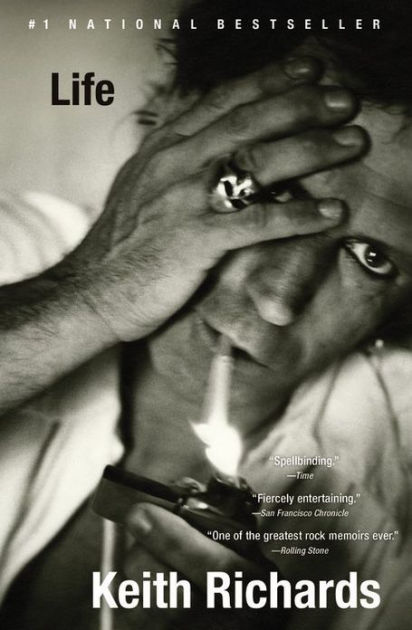
3: Keith Richards – Life– This book started a trend among older rock stars. Keith is upfront about his past and doesn’t hide much if anything. He is straightforward and you learn a lot about what was going on when the Stone’s golden years were happening. You would NEVER get a book like this with Mick Jagger. I’ve ranked this 3rd…but the following 2 could have easily switched places with this one but Keith is the one that started it. The format he used was soon used again by Gregg Allman, Robbie Robertson, and Bill Kreutzmann.
4: Gregg Allman – My Cross To Bear– It felt like Gregg was on a back porch telling you his story. I was an Allman Brothers fan but became a huge one after this book. I started to dive into their music and I saw how great they were. He goes through the Duane years, Cher, the narc incident, and up to the modern Allman Brothers. Even if you are not a huge fan…check this out.
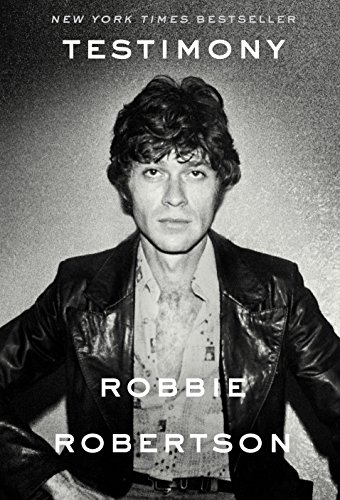
5: Robbie Robertson – Testimony – Same as Keith and Gregg…a wonderful book about The Band. I had no clue what they went through before they toured with Dylan. They were as tight as any band could be musically and physically. Robbie is very even-handed about his relationship with Levon Helm…he doesn’t rip him and generally treats him with respect. You also learn more about Bob Dylan than I ever knew about his personality. Robbie is also such a cool guy and very down to earth.
6: Bill Kreutzmann – Deal– OK, you want Sex, Drugs, and Rock and Roll? You have it here with the Grateful Dead’s drummer. It’s not a complete bio of the Dead but he tells stories that I never heard before. Of all the bands I read about…The Dead probably had more fun than any other. They did have their arguments and Garcia wasn’t always a hippie guy that went along with everything. I did learn more about the Dead’s dynamics from this book than any other.
This catchy 1967 song was on the Grateful Dead’s self-titled debut album. This is not one of the songs that they would play for years. According to Songfacts the Dead only performed it eight times, six during a roughly four-month span in 1967. In the 1990s Vince Welnick lobbied for them to play it because he played it in some of his own bands. The last time they played it was in 2015 at Chicago’s Soldier Field on a reunion tour.
The song fit the Summer of Love in which it was born. This was before they jelled into what they became. You can tell this was influenced by the British invasion bands. The song’s title is said to have been inspired by Aldous Huxley’s groundbreaking book, The Doors of Perception. The Doors of Perception explored the idea of inner consciousness and claimed that there was a way to transcend the everyday world and access heightened experiences. The Golden Road (To Unlimited Devotion) is seen by some as a nod to Huxley’s ideas and philosophy.
They hadn’t found their identity yet and would soon start improvising on stage into jams. This song clocks in at around two minutes…that would change. They had the album recorded and the record company said they needed a single. They went home and wrote this song and thought…this would fit the bill. It IS a catchy song and I have to wonder if it was pushed at all by the record company?
The band’s grasp of spontaneity and jamming can be seen in the music of other jam bands like Phish and Widespread Panic. The album peaked at #73 on the Billboard Album Charts in 1967. The song was credited to the entire band. From wiki… The band used the collective pseudonym “McGannahan Skjellyfetti” for their group-written originals and arrangements. The name was a misrendering of “Skujellifeddy”, a character in Kenneth Patchen’s comic novel The Memoirs of a Shy Pornographer, plus the name of then-frontman Pigpen’s cat.
Jerry Garcia: “After we recorded the album they said, ‘We still haven’t got anything here that’d be a strong single.’ So we said, ‘Ah, a strong single, sure!’ So we went home and wrote a song.’Wow, this’ll be a good single.'”
“This was recorded after we recorded the body of the album, and [it’s] a new song; we were thinking specifically of a single, so we just played around, and came up with some nice changes and cooperated on the entire thing, and came up with the Golden Road, which is a good song; I mean it’s like really fun to sing and fun to play … and it seems like a good single, whatever that is – we thought it could be a single.”
The Golden Road (To Unlimited Devotion)
See that girl, barefootin’ along,
Whistlin’ and singin’, she’s a carryin’ on.
There’s laughing in her eyes, dancing in her feet,
She’s a neon-light diamond and she can live on the street.
Hey hey, hey, oh, by the way, come and (party every day)
Hey hey, hey, oh, by the way, come and (party every day)
Well everybody’s dancin’ in a ring around the sun
Nobody’s finished, we ain’t even begun.
So take off your shoes, child, and take off your hat.
Try on your wings and find our where it’s at.
Hey hey, hey, come (party every day)
Hey hey, hey, come (party every day)
Take a vacation, fall out for a while,
Summer’s comin’ in, and it’s goin’ outa style.
Well lite up smokin’ buddy, have yourself a ball.
Cause your mother’s down in Memphis, won’t be back ’till the fall.
Hey hey, hey, come right away
Come and join the (party every day)
Hey hey, hey, come right away
Come and join the (party every day)
Hey hey, hey, come right away
Come and join the (party every day)
Hey hey, hey, come right away
Come and join the (party every day)
I want to thank all of you for reading last week’s “covers” week. Based on the positive response…I’ll start doing covers on Tuesdays coming up.
I just finished another Grateful Dead book so I’ve been listening to the Dead’s albums. Wake of the Flood has slowly become one of my favorites. It’s hard to beat American Beauty and Workingman’s Dead but it’s up there.
The verses of this song are straight-up Grateful Dead but the chorus reminds me a little of The Beatles. No, the Dead didn’t copy anything but it’s a type of chorus that the Beatles would attempt. Phil Lesh’s bass is prominent in this song…so is Jerry Garcia’s wonderful weaving guitar playing.
Garcia wrote the music and the Dead’s lyricist Robert Hunter wrote the verses. The song was influenced by a tragic event. Robert Hunter wrote in his book: Remembering the great Vanport, Washington flood of 1949, living in other people’s homes, a family abandoned by father, second grade. Hunter didn’t state the proper year or state of the flood but some about him.
Hunter was not in the flood but he was 7 years old and in second grade when it happened. His father around this time also abandoned his family. Hunter would live in different foster homes until he returned to his mom.
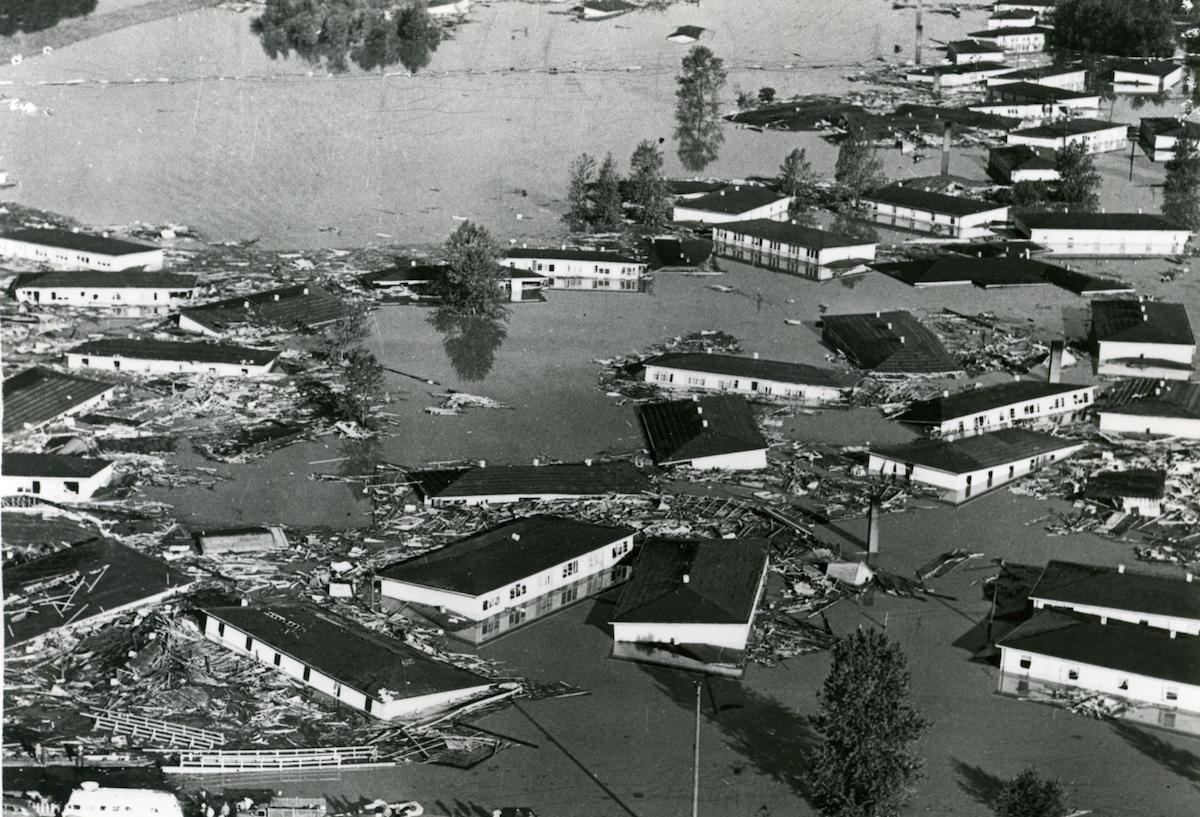
The song is about the flood that happened in Vanport City Oregon in 1948. Calling this a flood would be treating it mildly. It actually washed the town away. On Monday at 4:17 p.m. on Memorial Day 1948, a combination of heavy rainfall and the Columbia River heavy with melted snowfall broke a portion of the dike surrounding Vanport. Floodwaters fifteen feet deep washed Vanport away.
Residents had been assured by authorities that the dikes were holding and that they would be warned in ample time to evacuate. The break caught everyone, including the authorities, by surprise. Thankfully, the swamps within Vanport absorbed the initial surge, allowing around 40 minutes for most people to escape Vanport to higher ground along Denver Avenue. Still, 15-16 (different sources) people lost their lives in the flood.
Vanport is no more. Several acres of the former city became “West Delta Park” which is now the Portland International Raceway.
The song was on the Wake of the Flood album released in 1973… but not without its problems. It came three long years after the Dead’s previous studio album, American Beauty. They did release the live Europe 72 between the two albums. The Dead had just left Warner Bros and were without a record deal. So they did what other bands did at that time…make their own record company. This was the first album released on their new label.
Mickey Hart was not part of the Grateful Dead at this time. Mickey’s last show was 2/18/71 at the Capital Theater and he rejoined the band the last night of the “Farewell” shows at Winterland in October of ’74.
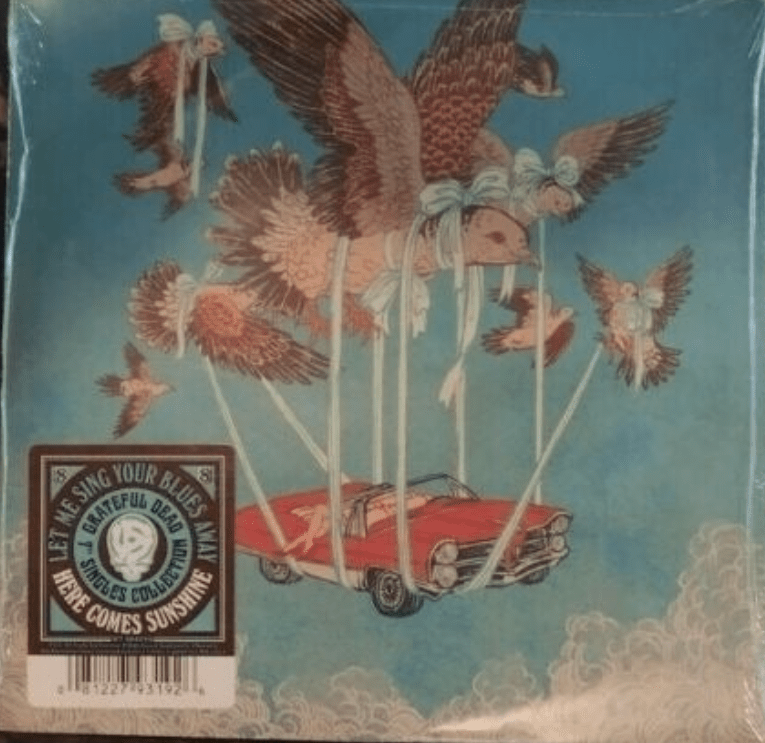
The album peaked at #18 on the Billboard Album Charts and #30 in Canada in 1973. This song was the B side to the single “Let Me Sing Your Blues Away.”
This would not be a Dead post if I didn’t give you a live version of it.
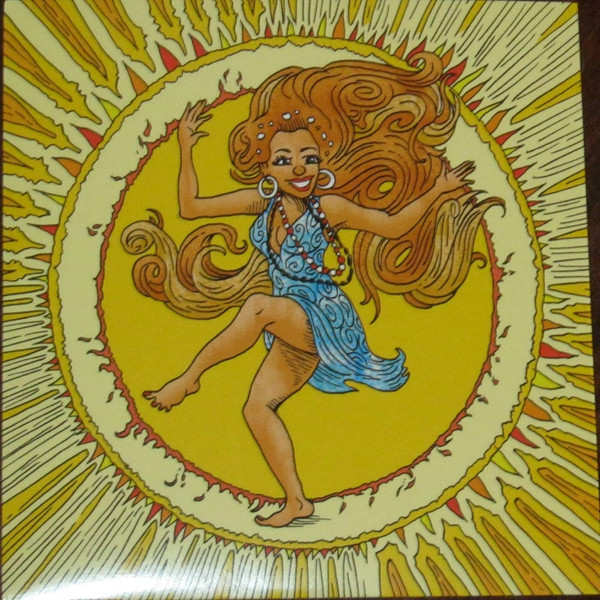
Here Comes Sunshine
Wake of the flood, laughing water, forty-nine
Get out the pans, don’t just stand there dreaming
Get out the way, get out the way
Here comes sunshine
Here comes sunshine
Line up a long shot maybe try it two times, maybe more
Good to know you got shoes to wear, when you find the floor
Why hold out for more
Here comes sunshine
Here comes sunshine
Asking you nice, now, keep the mother rollin’
One more time, been down before
You just don’t have to go no more, no more
I haven’t heard this song as much as Sugaree but I like it almost just as well.
It is so well crafted and it swings with the best of them. This was off of his debut Garcia album and his voice is in perfect form. When I think of Jerry Garcia I never think…hmm great vocalist… but this changes my mind. His voice is so clear…it shows what a good vocalist Garcia could be. Robert Hunter’s words flow through you while Garcia’s guitar dances all around. He tops it off with a versatile solo.
The album is a mix of folk, country, blues, jazz, experimental, and rock. I love the roots music because it’s so clean and genuine. He made the album in 1971 with mostly himself. Bill Kreutzmann (Dead Drummer) was the only other musician credited on Garcia, which was recorded at Wally Heider’s Studio D in San Francisco in July 1971 and released in January 1972.
Garcia also did the album for a cash infusion to buy a house for himself and Carolyn Adams (Mountain Girl) and two children. This was recorded a year after Working Man’s Dead and American Beauty…considered two of the best Grateful Dead albums. Many of the songs on this album became staples for the Grateful Dead in concert.
Bill Kreutzmann was credited as co-writer on 5 of the tracks and Garcia and Hunter on 5 tracks. Robert Hunter also collaborated with Bob Dylan on songs Duquesne Whistle, Ugliest Girl In The World, and the minor hit Silvio. He also co-wrote all but one track on the Bob Dylan album Together Through Life released in 2009.
Jerry Garcia on making the album: I’m doing it to be completely self-indulgent—musically. I’m just going on a trip. I have a curiosity to see what I can do and I’ve a desire to get into 16-track and go on trips which are too weird for me to want to put anybody else I know through. And also to pay for this house!
Jerry Garcia: I’ll probably end up doing it with a lot of people. So far I’m only working with Bill Kreutzmann because I can’t play drums. But everything else I’m going to try to play myself. Just for my own edification. What I’m going to do is what I would do if I had a 16-track at home, I’m just going to goof around with it. And I don’t want anyone to think that it’s me being serious or anything like that—it’s really me goofing around. I’m not trying to have my own career or anything like that. There’s a lot of stuff that I feel like doing and the Grateful Dead, just by fact that it’s now a production for us to go out and play, we can’t get as loose as we had been able to, so I’m not able to stay as busy as I was. It’s just a way to keep my hand in so to speak, without having to turn on a whole big scene. In the world that I live in there’s the Grateful Dead which is one unit which I’m a part of and then there’s just me. And the me that’s just me, I have to keep my end up in order to be able to take care of my part of the Grateful Dead. So rather than sit home and practice—scales and stuff—which I do when I’m together enough to do it—I go out and play because playing music is more enjoyable to me than sitting home and playing scales.
Deal
Since it costs a lot to win, and even more to lose, You and me bound to spend some time wond’rin’ what to choose. Goes to show, you don’t ever know, Watch each card you play and play it slow, Wait until that deal come round, Don’t you let that deal go down, no, no.
I been gamblin’ hereabouts for ten good solid years, If I told you all that went down it would burn off both of your ears. Goes to show you don’t ever know Watch each card you play and play it slow, Wait until that deal come round, Don’t you let that deal go down, no, no.
Since you poured the wine for me and tightened up my shoes, I hate to leave you sittin’ there, composin’ lonesome blues. Goes to show you don’t ever know Watch each card you play and play it slow, Wait until that deal come round, don’t you let that deal go down.
Wait until that deal come round, don’t you let that deal go down, Wait until that deal come round, don’t you let that deal go down, Don’t you let that deal go down, don’t you let that deal go down.
I’ve read a few books about the Dead but this one is probably the best I’ve read. I just finished re-reading it after finishing it three years ago. It is their complete history from beginning to end. The book I enjoyed the most was Deal: by Bill Kreutzmann The Deads drummer. He has some great stories and Steve Parish’s book is good also…but as far as the history…this has been the best.
This is not like reading a book about the Beatles, Stones, Dylan, or even the Allman Brothers. The Grateful Dead were totally different in the way they came about and what path they took. They were such a hippy band but along the way they turned into a corporate organization…a different kind of organization but one all the same. Their crew was known to be loud and sometimes violent along with the Hells Angels by the mid-seventies and the craziness wore off on everyone around them.
I always thought of them as this loose ensemble that just loved playing. Yes, they loved playing but they weren’t above pointing fingers when something went wrong on stage. At one point Weir and Pigpen were “fired” although accounts differ on if they really were let go. In other words, they were human… like anyone else. They did however think differently and for a bunch of hippies…they were very ambitious.
Speaking of Pigpen (Ron McKernan)… that was a wonderful thing about this book…his importance is highlighted and you see how important he was to the Grateful Dead. Jerry wasn’t the key focus when they started…it was Pigpen. Although he looked like a biker…he was described as an incredibly nice and sensitive man. He was the showman of the band and Jerry commented that he was the best musician in the band in the beginning.
The book covers their entire career and along with the way, there are many twists and turns. They cover Garcia’s slide down until his diabetic coma in 1986 when he had to re-learn how to play guitar again. Less than a year later they were back on the road and then recorded the In The Dark album.
The band never had a big hit single and now…over 20 years of being together and touring they were suddenly huge with the song Touch Of Grey. They even agreed to play the game with the record company and they made a video. They were signed to Arista Records and the record company and band were at a meeting. Garcia suddenly asked, “I don’t have to do Dick Clark, do I?” With that, the executives laughed at the thought of the Grateful Dead appearing on American Bandstand.
There were points where it looked like Garcia would beat his addictions but the threat of him going back to heroin was always there. They also cover all the members rather well…Garcia wasn’t the only one with drug problems but his problem probably affected the band the most.
If you want to learn about their history…this is a really good read.
I first noticed this song on the concert film The Festival Express a few years ago. I’ve heard the two studio versions but that live version is the one I like best. It’s something about it I really connect to. Garcia and Weir sound great singing together along with Pigpen playing the harmonica. It’s just a simple blues-type song but it works well for me anyway.
As soon as I heard it I took one of my acoustic guitars off the wall and kept running back the video file back and playing with them…I didn’t think they would mind.
This song was first released by the Dead in 1966 as their first single with Stealin on the flip side. That version is good and it reminds me of the band Them…not the voice but the music. They also released it again on their Go To Heaven album in 1980 but that version to me is a little too slick. The version on Festival Express shows all the ragged edges in the best way. It is pure Americana. They would do it live many times later on but I still go back to the Festival version.
They also covered it before they were the Grateful Dead. They started off as a jug band called Mother McCrees Uptown Jug Champions and most likely covered it when they were called the Warlocks.
They might have heard the version of the song by Henry Thomas…an old blues artist that lived from 1874 to around 1930. If you want to learn more in detail about Thomas and this song go here to Jim’s site. It also sounds close to a song by Jelly Roll Morton called Don’t You Leave Me Here. On the Go To Heaven album, it’s credited to “traditional arranged by The Grateful Dead.” The single that was released in 1966 was credited to Garcia but I’ve read where he didn’t authorize that and didn’t ask for a credit.
Speaking of the Festival Express…it was The Transcontinental Pop Festival… better known as the Festival Express. Great idea on paper… rounding up musicians in 1970 and placing them on a train going across Canada and stopping along the way to play festivals. What could go wrong? Actually, I would have loved to have been on that train. The lineup: The Band, The Grateful Dead, Janis Joplin, Buddy Guy Blues Band, The Fly Burrito Brothers, Sha Na Na, and Delaney & Bonnie & Friends.
There were artists that were not in the film like Traffic, Ten Years After, Tom Rush, Ian & Sylvia, Mountain, and more.
A DVD was released of this in 2004. All these musicians were on a train full of liquor and an assortment of drugs… liquor was the popular choice among the musicians on this ride. The tour was to have events in Montreal, Toronto, Winnipeg, Calgary, and Vancouver. The Montreal event was canceled as was Vancouver. In Toronto, protesters were saying the festival promoters were price gouging so The Grateful Dead played a free concert in a park nearby to ease tensions with the protesters.
When watching the film you can see the performers are having a ball jamming with each other because they didn’t get a lot of chances to do that on the road.
Here is the link to the full movie free on youtube…if you have time…it’s worth it!
Bill Kreutzmann (drummer for the Dead): We celebrated Janis Joplin’s birthday at the last stop the traditional way: with birthday cake. In keeping with our own kind of tradition, somebody—within our ranks, I would imagine—had secretly infused the cake with a decent amount of LSD. So it quickly became an electric birthday celebration. Allegedly, some generous pieces of that birthday cake made it to the hands and mouths of the local police who were working the show. “Let them eat cake!” (To be fair, I didn’t have anything to do with that … I was just another cake-eating birthday reveler, that night.) And that was it for the Festival Express. It was a wonderful time and I think what really made it great was the level of interaction and camaraderie among the musicians, day and night, as we were all trapped on this train careening across the great north. It probably helped that we were all trashed the entire time. Whiskey was in the conductor’s seat on that ride.
I would recommend getting the DVD of this event. It’s a great time capsule of that time in music and culture.
Don’t Ease Me In
Don’t ease, don’t ease, don’t ease me in I’ve been all night long coming home, don’t ease me in
I was standing on the corner, talking to Miss Brown When I turned around, sweet mama, she was way across town So I’m walking down the street, with a dollar in my hand I’ve been looking for a woman, sweet mama, ain’t got no manDon’t ease, don’t ease, don’t ease me in I’ve been all night long coming home, don’t ease me inThe girl I love, she’s sweet and true You know the dress she wears, sweet mama, it’s pink and blue She brings me coffee, you know she brings me tea She brings about every damn thing, but the jailhouse keyDon’t ease, don’t ease, don’t ease me in I’ve been all night long coming home, don’t ease me inDon’t ease, don’t ease, don’t ease me in I’ve been all night long coming home, don’t ease me inDon’t ease, don’t ease, don’t ease me in I’ve been all night long coming home, don’t ease me in
Talking to Miss Brown Well I turned around, sweet moma She was way cross town
So I’m walking down the street With a dollar in my hand I’ve been looking for a woman, sweet moma Ain’t got no man
The girl I love She’s sweet and true You know the dress she wears, sweet moma It’s pink and blue
She brings me coffee You know she brings me tea She brings ’bout every damn thing But the jailhouse key
I remember this song on the radio in the seventies. Of all places, it was played a lot at our local skating rink. It’s high on the list of my favorite songs. It wasn’t the best song written by Garcia and Hunter but I can listen to it at any time. Probably the first Dead…or close to a Dead song I ever heard. The song has stuck with me my entire life.
Jerry Garcia played most of the instruments on this album except drums and Dead drummer Bill Kreutzmann handled those. Sugaree was on the Garcia album released in 1972. He had teamed up with other players in the past but this was his first solo album. The song peaked at #94 on the Billboard 100 in 1972. I always liked the vague lyrics to this song. I first thought it was about death… you can take it a lot of ways.
The Grateful Dead did this live many times…Jerry Garcia and Robert Hunter wrote this song. The Dead made their reputation live. They got very little radio play and didn’t sell many albums, but they are one of the top-grossing concert acts of all time.
Like the Allman Brothers, they formed a family atmosphere with their crew and it extended to their audience. From the early Kool-Aid acid tests to later on allowing the audience to tape their shows drew their audience closer. They would later give them their own section to record in…while other bands like Led Zeppelin would send people to bust their tape recorder or head. Garcia commented:Well, my feelings are, the music is for the people…I mean after it leaves our instruments it’s of no value to us, ya know what I mean? it’s like, ya know…what good is it? So it might as well be taped, my feeling is that..and if people enjoy taping it and enjoy having the tapes to listen to, that’s real great. “
They never played the same show twice. They would take songs in different directions and Garcia has said that he couldn’t play something twice the same. He just wasn’t built like that. That made every show unique…not that every show was great. The Dead has admitted they had their share of bad ones.
On Deadheads following them around the country: “Well, it’s obviously very important to them. And more than that, it’s giving them an adventure. They have stories to tell. Like, “Remember that time we had to go all the way to Colorado and we had to hitchhike the last 400 miles because the VW broke down in Kansas.” Or something like that. Y’know what I mean? That’s giving them a whole common group of experiences which they can talk about. For a lot of people, going to Grateful Dead concerts is like bumping into a bunch of old friends.”
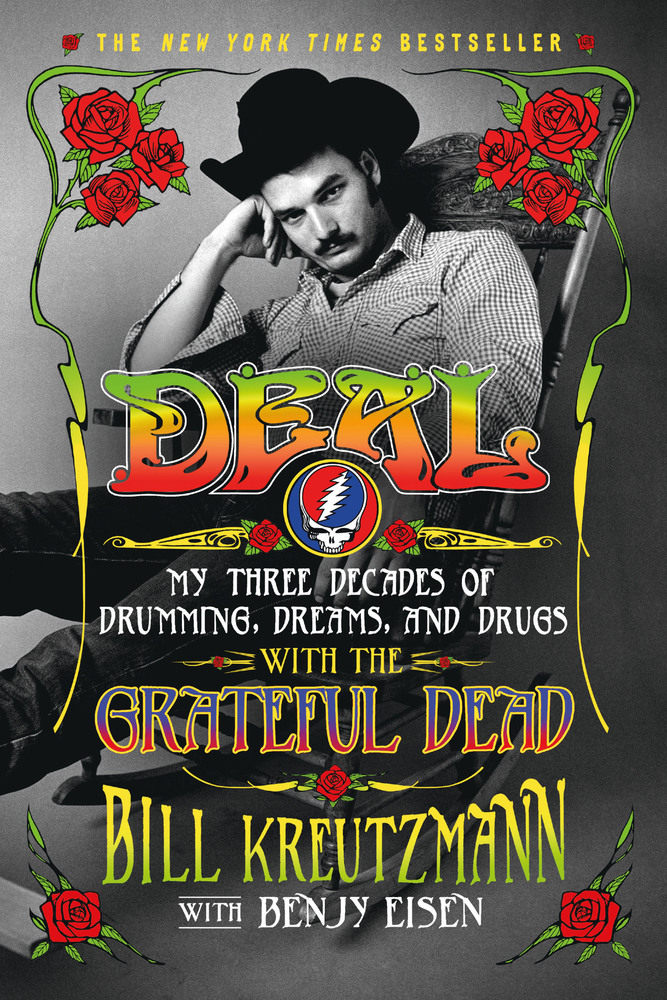
Bill Kreutzmann…if you get a chance read his book Deal: My Three Decades of Drumming, Dreams, and Drugs with the Grateful Dead. I covered it here a while back. It’s an education in the rock world…or the Dead world of the 60s through the 90s. If you are offended by drugs, sex, and great music…pass it by.
Robert Hunter: “Sugaree was written soon after I moved from the Garcia household to China Camp. People assume the idea was cadged from Elizabeth Cotten’s ‘Sugaree,’ but, in fact, the song was originally titled ‘Stingaree,’ which is a poisonous South Sea manta. The phrase ‘just don’t tell them that you know me’ was prompted by something said by an associate in my pre-Dead days when my destitute circumstances found me fraternizing with a gang of minor criminals. What he said, when departing, was: ‘Hold your mud and don’t mention my name.’
“Why change the title to ‘Sugaree’? Just thought it sounded better that way, made the addressee seem more hard-bitten to bear a sugar-coated name. The song, as I imagined it, is addressed to a pimp. And yes, I knew Libba’s song, and did indeed borrow the new name from her, suggested by the ‘Shake it’ refrain.”
Bill Kreutzmann Drummer for the Dead:The album, Garcia, was cut at Wally Heider Studios in July 1971 and released by Warner Brothers the following January. There are a lot of songs on there that became Grateful Dead mainstays, in addition to “Deal”—we’re talking about straight-up classics like “Sugaree,” “Loser,” and “The Wheel.” Also, “Bird Song” is on there, which, to this day, is one of my all-time favorite Dead songs and one of my absolute favorite songs to play live (along with “Dark Star” and “The Other One”).
When I want musicians I’m playing with to learn any of those songs, I give them the Garcia versions. They’re just so good. I had a really great time making that album. Dealing exclusively with Jerry was the most effortless thing in the world. I didn’t have to do anything other than be myself. And play.
Cocaine was our special guest throughout those recording sessions, but you’d never be able to tell because everything was very laid back. I have no idea how we were able to do that, because cocaine isn’t exactly known for its relaxing properties. Maybe it was just the dynamic between us that made it all so … easy.
Sugaree
When they come to take you down When they bring that wagon round When they come to call on you and drag your poor body down
Just one thing I ask of you Just one thing for me Please forget you knew my name My darlin Sugaree
Shake it, shake it Sugaree Just don’t tell them that you know me
You thought you was the cool fool Never could do no wrong Had everything sewed up tight How come you lay awake all night long?
Just one thing I ask of you Just one thing for me Please forget you knew my name My darlin Sugaree
Shake it, shake it Sugaree Just don’t tell them that you know me
You know in spite of all you gained you still have to stand out in the pouring rain One last voice is calling you and I guess it’s time you go
Just one thing I ask of you Just one thing for me Please forget you knew my name My darlin Sugaree
Shake it, shake it Sugaree Just don’t tell them that you know me
Shake it up now, Sugaree I’ll meet you at the Jubilee If that Jubilee don’t come Maybe I’ll meet you on the run
One thing I ask of you Just one thing for me Please forget you knew my name my darling Sugaree
Shake it, shake it Sugaree but don’t tell them that you know me Shake it, shake it Sugaree Just don’t tell ’em that you know me
I first read about this concert-festival in a Grateful Dead biography… There is not much video footage from the concert. I never could understand why this concert didn’t hold up in history like some others like The Atlanta Pop festival and others. I’m not saying it should have been remembered like Woodstock because it’s cultural impact was like no others…but this drew more than any other festival including Woodstock.
An estimated 600,000 people came to this concert on July 28, 1973, in Watkins Glen N.Y. 45 years ago. Maybe the reason it is not as remembered is that only three bands performed…but the three bands were giant bands in their prime. The Grateful Dead, The Allman Brothers, and The Band.
From the bands themselves, almost all agree the sound check on Friday was better than the concerts.
Perspective about the concert by a member from each band.
Robbie Robertson from his book Testimony
Then we got a request from Bill Graham, who was putting together a show “just up the highway from us” at the Watkins Glen Raceway. We’d be performing with the Allman Brothers and the Grateful Dead. Playing some gigs could help us get “back on the stick,” as they say. We went up to Watkins Glen the day before the show for the sound check. Bill Graham said that the Dead would go on first and play for three or four hours—that was part of their thing, giving the audience their money’s worth. “Until the drugs wear off,” said Bill, laughing. We’d go on in the late afternoon, and the Allmans would take over at sundown. As we were leaving the sound check, it looked like cars were heading toward the racetrack from every direction. Bill said he expected maybe a hundred thousand or more. When we came back the next day, we couldn’t believe our eyes. Hundreds of thousands of people had showed up, and more just kept coming and coming. The crowds mowed down the high chain-link fences around the racetrack and filled the area as far as the eye could see. Bill was running around trying to make people pay admission, but the mobs were out of control. When it came time for the Band to take the stage, it started pouring. As we waited, hoping it was going to let up, Bill came over. “They’ve determined there are 650,000 people here. It’s the biggest concert in history.” The news was somewhere between an incredible accomplishment and a huge disaster. The rain started letting up, and Garth played some churchy, rainy-day keyboard sounds out over the crowd. When it was safe to go on, we decided to start our set with Chuck Berry’s “Back to Memphis.” And wouldn’t you know, as Levon sang that baby, the sun came out.
Gregg Allman from My Cross to Bear
Right before Brothers and Sisters came out, we played the festival at Watkins Glen with the Band and the Grateful Dead, in front of six hundred thousand people—the biggest show in history to that point. People always talk about Woodstock. Watkins Glen was like three Woodstocks. I think actually it might’ve been a little too big. They should have had people all the way around the raceway, and maybe had the stage in the center revolving real slowly, do a revolution in a minute. That’s not that complicated. A show like Watkins Glen was uncomfortable, because you know that you’re getting the show across to this many people, but you still got two times that many behind them. You could finish a song, take your guitar off, put it in the case, and latch it up before the last guy heard the last note. Sound ain’t all that fast, not compared to light.
When you’re playing in that situation, you’re kind of thinking about the end. Not that you’re wishing it to be over, but you can’t even hear yourself—that was back before we had the in-ear monitors. Everything was so loud. You just walk out there and start to wince before you even start playing. It’s hard to get any kind of coziness, any kind of feel with the audience. I guess there’s something about that many people seeing you all at once that’s real nice, but it’s just too much. You’re just like a little squeak in the middle of a bomb going off. But it was interesting, and it was a pretty fun day. People were OD’ing all over the place. And of course, Uncle Bill was there, which cured everything. It was exciting to be there and see it—and to be able to make ’em stand up, now that was something else.
Bill Kreutzmann from Deal
We made some questionable business decisions and we couldn’t sell records, but we sure could sell tickets. We sold around 150,000 tickets for a single show at a racetrack in Watkins Glen, New York, on July, 28, 1973. Yes, and more than 600,000 people ended up coming out for it. The lineup was just us, the Allman Brothers, and the Band. That show, called the Summer Jam at Watkins Glen, made it into the Guinness Book of World Records for what, at the time, was the largest audience ever assembled at a rock concert. In fact, that record may still hold today, at least in the U.S., and some have even proposed that it was the largest gathering in American history. Originally, the bill was supposed to just be the Dead and the Allmans, but our respective camps fought with the promoter over which band would get headliner status. The solution was that both bands would co-headline and they’d add a third, “support” act. The friendly (“-ish”) competition between us and the Allman Brothers carried through to the event itself. And yet, the memory that I’m most fond of and hold most dear from that whole weekend was jamming backstage with Jaimoe, one of the Allman’s drummers. We were just sitting in the dressing room, banging out rhythms, and that was a lot of fun for me. Jaimoe backed Otis Redding and Sam & Dave before becoming a founding member of the Allman Brothers, where he remains to this day. He’s a soulful drummer and just an incredible guy who is impossible not to like. As for the show itself, it is a well-known fact that the Grateful Dead always blew the big ones. Watkins Glen was no exception. However, we still got a great night of music out of it—the night before. The show took place on a Saturday, but by Friday afternoon there were already about 90,000 people in front of the stage. I’ve heard others place that number closer to 200,000. Either way, the audience was already many times the size of any of our regular shows, and the show was still a full day away. The only duty we had on Friday was to do a soundcheck, and even that was somewhat optional. The Band soundchecked a couple of songs. The Allman Brothers soundchecked for a bit. Then, perhaps spurred on by our friendly rivalry, we decided to one-up both bands by turning our soundcheck into a full-on, two-set show. Naturally, without any of the pressure of the “official show” the next day, we really let loose and played a good one. There was an eighteen-minute free-form jam that eventually made it onto So Many Roads, one of our archival box sets. It’s good music, all right, and it still holds its own. On the day of the actual show, we had to fly into the venue via helicopter because the roads were all backed up, like what happened at Woodstock. People left their cars on the side of the road and walked for miles to the gig. I remember looking down from the helicopter and seeing the most incredible impressionist painting, a Monet of heads, shoulders, tie-dyes, baseball caps, and backpacks, packed front to back. You couldn’t see the ground for the crowd. To this day, I’ve never seen anything else like that. Nowadays at large music events and festivals, they have golf carts for artists and crews to get around, but back then they used little motor scooters. Early, during the day of our supposed “soundcheck,” I commandeered one of these scooters and, because the venue was an actual racetrack, I decided to do a lap. This was before the gates were opened. The scooter went maybe fifteen or eighteen miles an hour, something stupid like that, and it took forever just to do one lap. But I did it. And that’s when I first started to get a feel for the scale of the event and just how large it was. During the Summer Jam itself, I watched the other bands play and I honestly thought the Allman Brothers played better on the big day than we did. As for the Band, well, they always sounded great.
If you have read this long…below is some crowd video and a little of the music.
The book is called Deal: My Three Decades of Drumming, Dreams, and Drugs with the Grateful Dead.
This book is what you would imagine from the drummer (one of them) of the Grateful Dead. Music, drugs, women, drugs, travels, guns, drugs, death, drink and more drugs. Actually, I really enjoyed the book. He is very open and very honest about his actions good and bad.
He is not a shy guy whatsoever. He shares his feelings about any subject that comes up. He does go into the music and how he feels about his bandmates. Most are positive but he does not hold back.
He covers the complete career of the band. He openly said he was very happy being the only drummer of the band when Mickey Hart quit and didn’t like it one bit when Mickey rejoined the band…at first anyway.
He goes into his relationship with Jerry Garcia. He also admits the guilt the band share in not trying to help Garcia more…but Jerry was his own man. He writes about the so-called keyboard player curse the band had in their career.
He tells us about the 72 European tour, shows they played near the pyramids and the Festival Express. I will say this…this band had fun. They were like a family and treated their employees well for the most part.
The only thing that I wish he would have shared more about was Pigpen. The band was apparently in the dark about how bad Pigpen was doing before he died. Maybe he didn’t share it with them.
I learned a lot about the Dead that I didn’t know about.
The book keeps going at a good pace. With the Dead’s long career he never lacks for stories. A lot of rock autobiographies are coming out and again this one takes the template that Keith Richards made with his book “Life” and fills it in.
Bill Kreutzmann from Deal about Garcia and heroin:
I’m pretty sure Jerry wasn’t into heroin during the making of Garcia; as far I know, he hadn’t even discovered it yet. But when he did, during subsequent Grateful Dead albums, it could become difficult just to get him to show up, unfortunately. That got to be really old, really fast, for all of us. We wanted to play music with him so badly that we’d put up with it, which—in hindsight—was crazy. Nobody else in the band would’ve been able to get away with it; at least, not to the extent that he did. But Jerry Garcia was the exception. It also opens up a moral question that we can talk about now, but we can never truly answer, since he’s not with us. There was a certain feeling, toward the end, that Jerry was using the Grateful Dead to finance his drug habit. That’s a sad thought. I don’t think he ever intended it to be that way or for it to get to that point or to hurt anyone. He was as pure of a musician as they come. But heroin addiction will change a person in ways that are tragic and discouraging.








 PowerPop... An Eclectic Collection of Pop Culture