Sam Mendes has directed some huge films like 1917, American Beauty, Road To Perdition, and Skyfall to name just a few.
This looks interesting and new…and potentially groundbreaking. In recent years Queen and Elton John got a biopic treatment but I never thought someone would try The Beatles because it was a lot to put into one movie. Well this will be four different movies that will intersect through the perspective of each Beatle.
Each film will be told from the point of view of a different band member, and will eventually “intersect to tell the astonishing story of the greatest band in history.” Sony will distribute the films worldwide in 2027 and with this intriguing promise: “The dating cadence of the films, the details of which will be shared closer to release, will be innovative and groundbreaking.”
I posted this on February 14, 2021, and every year this is the first song that comes to mind on Valentine’s day. I then thought…enough time has gone by so I’m posting it again. Sorry to cheat but to me it is such a Valentines song that I just had to.
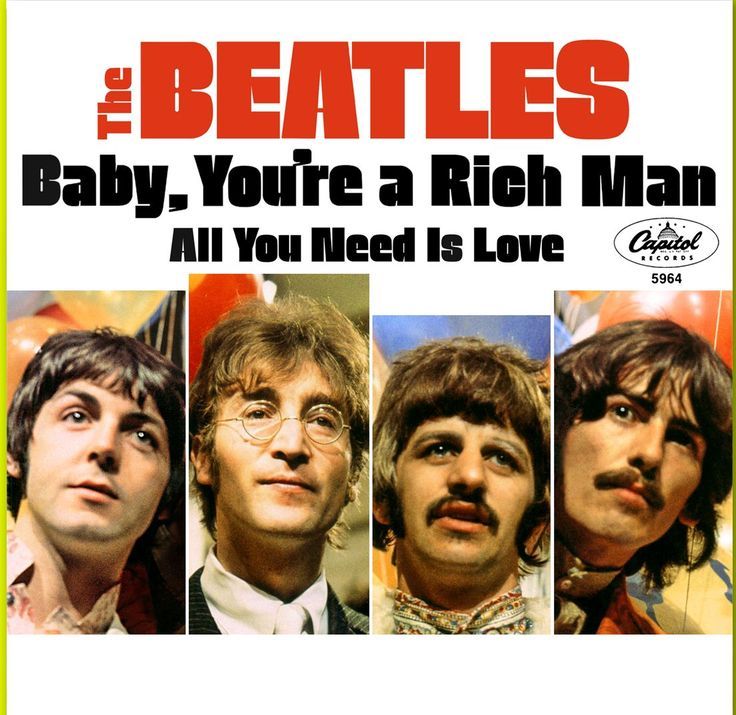
I hope all of you have a great Valentine’s Day… let’s join the Beatles on June 25, 1967, for All You Need Is Love. There’s nothing you can do that can’t be done…
How nerve-racking this had to be even if you were a Beatle. They performed this on one of the first Satellite hookups around the world. An estimated 350 million people were watching. This performance was a rock and roll milestone…they were in front of the world.
The show was called “Our World”, the first worldwide TV special. Broadcast in 24 countries on June 25, 1967, the show was six hours long and featured music from 6 continents, with The Beatles representing Britain.
If any of you remember this show…please comment.
At the Beatles’ feet were members of The Rolling Stones, The Who, Cream, The Hollies, and The Small Faces helping by singing along.
The song peaked at #1 almost everywhere and probably even in Venus and Mars in 1967.
Musically, this song is very unusual. The chorus is only one note, and the song is in a rare 7/4 tempo. In the orchestral ending, you can hear pieces of both “Greensleeves,” a Bach two-part invention (by George Martin) and Glenn Miller’s “In The Mood.” Royalties were paid to Miller for his contribution.
Just think of all of the bits of paper all of them wrote or scribbled on and threw away. John Lennon’s hand-written lyrics for this song sold for one million pounds in the summer of 2005. Lennon left them in the BBC studios after this appearance, and they were salvaged by a very smart BBC employee.
From Songfacts
The concept of the song was born out of a request to bring a song that was going to be understood by people of all nations. The writing began in late May of 1967, with John and Paul working on separate songs. It was decided that John’s “All You Need Is Love” was the better choice because of its easy to understand message of love and peace. The song was easy to play, the words easy to remember and it encompassed the feeling of the world’s youth during that period.
“All You Need Is Love” was a popular saying in the ’60s anti-war movement. The song was released in the middle of the Summer of Love (1967). It was a big part of the vibe.
John Lennon wrote this as a continuation of the idea he was trying to express in his 1965 song “The Word.” John was fascinated by how slogans effect the masses and was trying to capture the same essence as songs like “We Shall Overcome.” He once stated, “I like slogans. I like advertising. I love the telly.” In a 1971 interview about his song “Power To The People,” he was asked if that song was propaganda. He said, “Sure. So was ‘All You Need Is Love.’ I’m a revolutionary artist. My art is dedicated to change.”
It was not until 1983 and the publication of the in the book John Lennon: In My Life by Pete Shotton and Nicholas Schaffner that it was revealed that John Lennon was the primary composer of the song. It is typical of Lennon: Three long notes (“love -love -love”) and the rise of excitement with at first speaking, then recital, then singing, then the climax and finally the redemption. This as opposed to McCartney’s conventional verse, verse, middle part, verse or A,A,B,A. Lennon felt that a good song must have a rise of excitement, climax and redeeming.
Ringo’s second son, Jason, was born the day this hit #1 in the US: August 19, 1967. Jason is also a drummer.
McCartney sang the chorus to The Beatles 1963 hit, “She Loves You” at the end: “She loves you yeah yeah yeah… She loves you yeah yeah yeah”
This begins with a clip from the French national anthem, “La Marseillaise,” written and composed by Claude Joseph Rouget de Lisle in Strasbourg on April 25, 1792. Its original name was “Chant de guerre de l’Armee du Rhin” (“Marching Song of the Rhine Army”) and it was dedicated to Marshal Nicolas Luckner, a Bavarian-born French officer from Cham. It became the rallying call of the French Revolution and got its name because it was first sung on the streets by troops from Marseille upon their arrival in Paris. Now the national anthem of France, the song was also once the anthem of the international revolutionary movement, contrasting with the theme of The Beatles song. In the late 1970s, Serge Gainsbourg recorded a reggae version “Aux Armes et cetera,” with Robbie Shakespeare, Sly Dunbar and Rita Marley in the choir in Jamaica, which resulted in him getting death threats from veterans of the Algerian War of Independence.
Al and Tipper Gore had this song played at their wedding. They married in 1970 and separated in 2010.
George Harrison mentioned this in his 1981 song “All Those Years Ago” with the line, “But you point the way to the truth when you say ‘All you need is love.'” Harrison’s song is a tribute to John Lennon, who was killed in 1980.
This was used in the climactic final episode of the UK sci-fi series The Prisoner, and was the entrance music for Queen Elizabeth II during the UK Millennial celebrations of 1999. It was also sung by choirs across the kingdom in 2002 during the Queen’s Golden Jubilee celebration.
In 2007, this was used in an advertising campaign for Luvs diapers with the lyrics changed to “All You Need Is Luvs.” While Beatles songs have been used in commercials before, notably “Revolution” in spots for Nike and “Hello Goodbye” for Target, this peace anthem shilling for diapers didn’t go over well with fans who thought it sullied The Beatles legacy. The publishing rights to “All You Need Is Love” and most other Beatles songs are controlled by the Sony corporation and Michael Jackson, which means The Beatles cannot prevent a company from re-recording the song and using it in a commercial.
When asked what his favorite lyric is during an interview with NME, John Lennon’s son Sean replied: “My list of favorite things changes from day to day. I like when my dad said: ‘There’s nothing you can know that isn’t known/ Nothing you can see that isn’t shown/ Nowhere you can go that isn’t where you’re meant to be.’ It seems to be a good representation of the sort of enlightenment that came out of the ’60s.”
All You Need Is Love
Love, love, love Love, love, love Love, love, love
There’s nothing you can do that can’t be done Nothing you can sing that can’t be sung Nothing you can say, but you can learn how to play the game It’s easy Nothing you can make that can’t be made No one you can save that can’t be saved Nothing you can do, but you can learn how to be you in time It’s easy
All you need is love All you need is love All you need is love, love Love is all you need
All you need is love All you need is love All you need is love, love Love is all you need
There’s nothing you can know that isn’t known Nothing you can see that isn’t shown There’s nowhere you can be that isn’t where you’re meant to be It’s easy
All you need is love All you need is love All you need is love, love Love is all you need
All you need is love (all together now) All you need is love (everybody) All you need is love, love Love is all you need
Love is all you need (Love is all you need) Love is all you need (Love is all you need) Love is all you need (Love is all you need) Love is all you need (Love is all you need) Love is all you need (Love is all you need) Love is all you need (Love is all you need) Love is all you need (Love is all you need) Love is all you need (Love is all you need) Love is all you need (Love is all you need) Love is all you need (Love is all you need) Love is all you need (Love is all you need) (Love is all you need) (Love is all you need) (Love is all you need) Yesterday (Love is all you need) Oh Love is all you need Love is all you need Oh yeah Love is all you need (She love you, yeah, yeah, yeah) (She love you, yeah, yeah, yeah) (Love is all you need) (Love is all you need)
I had this scheduled for later in March but since it’s February 9…I thought I would move it up. It was exactly 60 years ago today on February 9, 1964, that The Beatles appeared on the Ed Sullivan Show for the first time.
This Smokey Robinson song is a great one…I really like both versions of this song. You can’t go wrong with either one. You will not beat Smokey’s voice but I like how The Beatles adapted their sound to it. Lennon did a great job on this one. This is close to what the Beatles would have sounded like in the Cavern or Hamburg.
The Beatles liked covering B sides and songs that were not hits but this one was a hit just the year before. Smokey was a huge influence on them in this time frame of 1962-63. Seven live takes of the song were first recorded, featuring all four Beatles playing their usual instruments and singing without overdubs, accompanied by producer George Martin on piano. Only four of these performances were complete (three of them being false starts), “take seven” being the keeper. The song was featured on With The Beatles released in the UK on November 22, 1963.
Smokey Robinson said he was thrilled that The Beatles would cover one of his songs. He also said that The Beatles were the first white band that came out and said they were influenced by him and other black artists. He also said they helped other black artists when they made that statement to be heard.
Later on when the Beatles toured America…it was written in their contract that they would absolutely not play in front of a segregated audience.
Robinson was influenced by Sam Cooke’s Bring It All Home To Me…which I can hear. Cooke would sometimes perform at Robinson’s church with his group the Soul Stirrers and Robinson was a huge fan.
While recording the vocal track for the song “Woman” on the Double Fantasy album… Yoko commented that John sounded like a Beatle. Lennon corrected her by saying, “Actually I’m supposed to be Smokey Robinson at the moment, my dear, because The Beatles were always supposing that they were Smokey Robinson.”
You Really Got A Hold On Me
I don’t like you
But I love you
See that I’m always
Thinking of you
Oh, oh, oh,
You treat me badly
I love you madly
You’ve really got a hold on me
You’ve really got a hold on me, baby
I don’t want you
But I need you
Don’t want to kiss you
But I need you
Oh, oh, oh
You do me wring now
My love is strong now
You’ve really got a hold on me
You’ve really got a hold on me, baby
I love you and all I want you to do
Is just hold me, hold me, hold me, hold me
I want to leave you
Don’t want to stay here
Don’t want to spend
Another day here
Oh, oh, oh, I want to split now
I just can quit now
You’ve really got a hold on me
You’ve really got a hold on me, baby
I love you and all I want you to do
Is just hold me, hold me, hold me, hold me
You’ve really got a hold on me
You’ve really got a hold on me
This song is not one of Ringo’s best songs but it probably is my secret favorite of his because of what it’s about. The song is about the status of the Beatles in early 1970.
I usually don’t describe what a song is about because I like the back stories to songs much more…and everyone interprets songs a different way…but this one is known to be about the other Beatles. This was the B side to It Don’t Come Easy…it’s a very basic simple song…no great work of art but it has a charm about it because it’s Ringo.
The first verse is about Paul… he talks about his farm, and his new wife Linda, and Paul was very quiet around this time and he stopped coming to Apple. He also told Ringo to get out of his house when Ringo delivered a message from the 3 Beatles for McCartney to delay releasing his debut album because of Let It Be releasing at the same time. They finally gave in to Paul. Ringo was wondering if Paul would play music with him when he came by again. And when he comes to town, I wonder if he’ll play with me.
The second verse is about John. Ringo sings about John and Yoko doing the bed in and what I thought was “Cocaine” as a kid was really a lesser drug…”Cookies.” He also references Yoko with “With his mama by his side, she’s Japanese.” At the end of the verse…unlike Paul he knows John will play music with him. And when he comes to town, I know he’s gonna play with me.
The third verse is about George. Ringo and George were extremely close in the Beatles and afterward. Things did pop up between them through the years but they remained friends. He describes George in the first line, Pattie Boyd Harrison in the second, and George’s famous mansion Friar Park in the 3rd. Ringo and George wrote together and George hung out with Ringo more than the other Beatles. He’s a long-haired, cross-legged guitar picker, um-um. With his long-legged lady in the garden picking daisies for his soup. A forty acre house he doesn’t see, ‘Cause he’s always in town playing for you with me.
The last verse was pretty much true…Ringo knew a little piano and guitar but that is about it other than drums. It’s the last verse that had to make Beatle fans happy at the time. “And when I go to town I wanna see all three.”
Early 1970
Lives on a farm, got plenty of charm, beep, beep.
He’s got no cows but he’s sure got a whole lotta sheep.
And brand new wife and a family,
And when he comes to town,
I wonder if he’ll play with me.
Laying in bed, watching tv, cookies!
With his mama by his side, she’s japanese.
They scream and they cried, now they’re free,
And when he comes to town,
I know he’s gonna play with me.
He’s a long-haired, cross-legged guitar picker, um-um.
With his long-legged lady in the garden picking daisies for his soup.
A forty acre house he doesn’t see,
‘Cause he’s always in town
Playing for you with me.
I play guitar, a – d – e.
I don’t play bass ’cause that’s too hard for me.
I play the piano if it’s in c.
And when I go to town I wanna see all three,
And when I go to town I wanna see all three,
And when I go to town I wanna see all three.
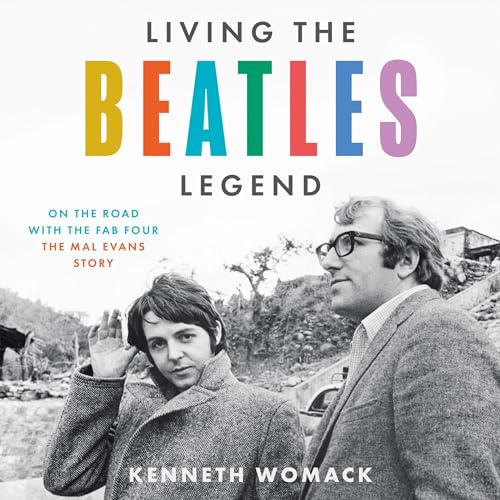
I’ve been waiting on this book since I read about the Beatles in the 70s as a kid. I knew the story…after a showdown with police Mal Evans was shot and killed on January 5, 1976. He was working on his autobiography at the time. Evans was the last person you would think would die that way…and in this case…he wanted it. Could the police have handled it better? Yes, but Mal had said that is how he wanted to go out. He forced the situation. He was only 40 years old.
Mal Evans along with Neil Aspinal were the roadies for the Beatles. Imagine that…2 roadies for the world’s biggest band. Mal worked at a telephone company in the early ’60s but he loved rock and roll…especially Elvis Presley. He would go see bands at the Cavern and struck up a friendship with George Harrison. George told him since he loved music…take a part-time job as a bouncer at The Cavern. The Beatles automatically liked him from the start. He was a big guy at 6’4″ but he never wanted to use violence. More times than not…he talked his way out of trouble. Aspinal was their only roadie and when Love Me Do and then Please Please Me came out…they needed another person because Aspinal was worn out.
The book covers his entire life and of course, focuses on the years 1963 – 1976. It’s a wonder we have the book at all. All of Mal Evan’s diaries and papers were lost for 12 years after he died. They were discovered by a paralegal who was looking through the basement of a publishing company. They were stored in 6 banker boxes so he had a lot of material including original lyrics to many Beatle songs. He kept about everything and you could say he was the Beatle’s first historian.
He made his mark in history. He was a talent scout for Apple and signed The Iveys which later became Badfinger. Without him pushing them they probably would not have been signed. After the Beatles broke up he continued to work for them as solo artists. Mal loved the Beatles and they in turn trusted him and Neil more than anyone else. He tried a few things like songwriting and he did get some songs covered. He also did a bit of acting appearing in a few of the Beatles movies and also a few with Ringo. When making sure The Beatles had some private space in public he would keep fans away to a point…but was always nice. He said he didn’t want to be rude to the fans who made the Beatles who they were.
His son Gary helped Womack with this book including full access to all of the papers left behind by Mal. His family were the ones who suffered. He was gone most of the time especially when the Beatles were touring. After touring was over he moved his family to London but still was rarely home.
I would highly recommend this book. Kenneth Womack had full access to his diaries and used many of the entries. This book turned up a lot of things about them that I had no clue about. It also gave a different look at their personalities on an everyday basis. Near the end, Mal went to the 2nd Beatles convention and spoke. He started to battle depression in the seventies after living in California and missing his wife and kids back in London. He picked up a girlfriend in California and that made his guilt worse. Drugs also affected him in the end.
If you are a Beatles fan…get the book. I wrote this book review originally with over 15 paragraphs but I was telling his story more than critiquing the book. At the end, Mal was working on his book and lined up a publishing deal. All the Beatles signed off on it and wanted to see Mal succeed. He was known for his kindness and loyalty. He told each Beatle in 1974 that he was leaving to do his own thing but continued to help them out.
Mal appeared in every Beatles movie but Yellow Submarine and you see him throughout Get Back.
He produced “No Matter What” by Badfinger
He helped Paul write Fixing A Hole and Sgt Peppers Lonely Hearts Club Band
The original producer of Keith Moon’s solo album
If anyone is interested…I’m including some of the Foreward by his son Gary Evans.
This book is the product of decades of toil. It would not have been possible without the initial determination of my father, Mal Evans, to capture the Beatles’ story as it unfolded before him. He knew, even in his earliest days as a bouncer at the Cavern Club door, that the boys were something special. As he traveled with them across the whole of England and, eventually, the world, he recorded his memories in the pages of his diaries and filled up notebooks with his drawings and recollections, all the while taking thousands of candid photographs and saving ephemera of all shapes and sizes—a receipt here, a scrap of lyrics there.
When my dad sat down to compose his memoir for Grosset and Dunlap in 1975, he realized the difficulty inherent in taking up a pen to capture his thoughts. Fortunately, he was aided by a stenographer, who transcribed his words to the letter, and by the sage advice of Ringo Starr: “If you don’t tell the truth,” he told my dad, then “don’t bother doing it.” And so, Dad did.
On January 4, 1976, when he simply couldn’t stomach the act of living another day, my father orchestrated his own demise in a Los Angeles duplex. He left behind the fruits of decades of collecting, along with a full draft of his memoir, which he planned to call Living the Beatles’ Legend: 200 Miles to Go. He had even gone so far as to plot out the book’s illustrations, with the assistance of a friend who had served as an art director, and mocked up a couple of cover ideas.
My dad’s death threw all this into disarray. For a time, Grosset and Dunlap made various attempts at publishing Living the Beatles’ Legend, but my mother, Lily, understandably distraught over her estranged husband’s tragic death, simply wanted his collection to be returned to our family back in England, so that we could sort things out for ourselves. As we later learned, in the days after my father died in Los Angeles, Grosset and Dunlap transported the materials from L.A. to New York City, eventually placing them in a storage room in the basement of the New York Life Building.
And that’s where they sat for more than a dozen years, to be rescued from the garbage heap only by the quick thinking of Leena Kutti, a temporary worker who discovered my dad’s materials—along with the diaries, the photographs, and the memoir—recognizing she was in the presence of a most unusual archive. When her efforts to raise the alarm with the publishing house fell on deaf ears, Kutti took it upon herself to march uptown to the Dakota, where she left a note for Yoko Ono, one of the few genuine heroes in the strange progress of my father’s artifacts. In short order, Yoko alerted Neil Aspinall, my dad’s counterpart during the Beatles years. With the assistance of some shrewd Apple lawyering, Neil saw to it that the collection was finally delivered to our family home in 1988.
For several years, my dad’s manuscripts and memorabilia were stored in our attic. I would periodically dip into them and reacquaint myself with the person whom I had lost when I was fourteen years old. Thumbing through the materials reminded me why I loved my father so dearly, in spite of the flaws that drove him away from us and led to his death at age forty. Over the years, my family has struggled with the idea of sharing Mal’s story. Then, in 2004, a forger created an international sensation when he claimed to possess Dad’s collection in a suitcase full of artifacts he had discovered in an Australian flea market. The news was quickly picked up and shared across the globe with much fanfare before it was proven to be a hoax.
To stem the ensuing confusion, my mum and I consented to a 2005 interview with the Sunday Times Magazine, even going so far as to allow the publication of a few excerpts from my dad’s diaries. The tide began to change for us in July 2018, when I decided to follow in my father’s, and the Beatles’, footsteps and retrace the famous “Mad Day Out” photo session on its fiftieth anniversary. I was joined that day by my good friend, actor and playwright Nik Wood-Jones. Along the way, we had the remarkable good fortune to cross paths with filmmaker and Beatles aficionado Simon Weitzman, who was on a similar mission.
As my friendship with Simon developed, I confided in him about the ongoing challenge of sharing my dad’s story with the world. He assured me that he knew just the guy to make it happen. Through Simon, I met Ken Womack via Zoom in 2020, during the first few months of the Covid-19 pandemic. Ken had already authored several books about the Beatles, but more important, Simon trusted him implicitly. Almost as soon as we began working together, I knew that Ken was the right collaborator to tell my dad’s story with the historical integrity it required. Over the years, I have come to understand the ways in which Beatles fans the world over adore “Big Mal,” and to his credit, Ken has been able to honor that connection while also mining the truth of my dad’s life, warts and all.
Working with our friends at HarperCollins, we are proud to share the present book with you—a full-length biography detailing my dad’s life with (and without) the Beatles. A second, even more richly illustrated book will follow in which we provide readers with highlights from my dad’s collection, including the manuscripts he compiled, the contents of his diaries, numerous drawings and other ephemera, along with a vast selection of unpublished photographs from our family archives and from his Beatle years.
The present effort simply wouldn’t have been possible without the saving graces of people like Leena Kutti, Yoko Ono, Neil Aspinall, Simon Weitzman, and Nik Wood-Jones. And now, thanks to Ken, readers will be able to experience my dad’s story with the vividness it deserves. Ken, you kindly lent me your ears over the past three years; I got by with more than a little help from you, my friend.
My father meant the world to me. He was my hero. Before Ken joined the project, I thought I knew my dad’s story. But what I knew was in monochrome; now, some three years later, it is like The Wizard of Oz, my dad’s favorite film, when the scene shifts from black-and-white Kansas to the dazzling multicolored brilliance of Oz. Ken has added so much color, so much light to my dad’s story. He has shown me that Mal Evans was the Beatles’ greatest friend. Yes, Big Mal was lucky to meet the Beatles, but the Beatles possessed even more good fortune when, for the first time, all those years ago, my dad happened to walk down the Cavern Club steps. The rest is music history.
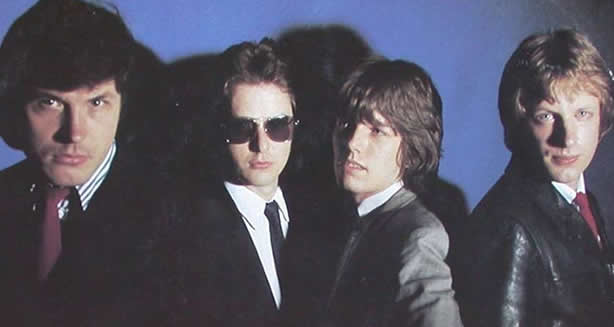
CB and I were emailing each other and he sent me a few links to this band. They were a great British pub band that formed in 1977. They got together after the split of another band named The Flying Tigers. As CB and I have done these…I usually give you a “sample platter” of them and later on I’ll concentrate on one song at a time in a later post. This should introduce you to them.
The first thing I noticed was how good their songs sound. Many pub bands I’ve heard have a muddy sound to them but this band sounded clear and great. I do remember one of their songs…it was a cover of the Standells Dirty Water. Their producer until 1989 was a guy named Vic Maile who helped shape their overall sound. He was a winner…he worked with artists such as Fleetwood Mac, Jimi Hendrix, Led Zeppelin, Eric Clapton, The Pirates, Hawkwind, Motörhead, The Godfathers, The Kinks, Small Faces, Dr. Feelgood, Girlschool, and the Deep Fix. Most of those bands I’ve covered.
They released nine studio albums and three live ones between 1979 and 2008. They were considered a Pub band but you also hear a lot of that great 1960s garage sound in lead singer Bill Hurly’s voice. They remind me of pre-Godfathers…they take no prisoners and come right at you. Their songs are rough and raw but their melodic and catchy at the same time. Their choice of covers is quite interesting. They pick many songs you wouldn’t think.
They also made a tribute live album to the Beatles called The Inmates Meet The Beatles: Live In Paris. They did it in their style and made the songs their own which is a great way of doing it. They even managed to take one of the very few Beatles songs I don’t like and turned it on its head. I like their version of it…Little Child.
Enough of me babbling on…let’s listen to the Inmates. I’ll start off with one that you should know. I do remember this song and this version. Their first album First Offence peaked at #40 on the Billboard Album Charts. The song Dirty Water peaked at #51. I’ve included songs from their first three albums.
The next song is a cover of a song called The Walk by Jimmy McCracklin and His Band originally released in 1958.
This song is Sweet Rain off of their 2nd album Shot in the Dark released in 1980. I can hear a lot of Them in this one. The guitar in this has an older sixties feel. This was the B-Side to the song below.
This song is the A-Side to Sweet Rain called Stop, It Baby off of their 2nd album Shot in the Dark released in 1980. It jumps and moves…very catchy.
This one called She’s Gone Rockin’ was off of their third album Heatwave in Alaska It was released in 1982.
This was on the American album Meet The Beatles (the UK version would be With The Beatles) that I first heard when I was a kid. Lennon’s voice in this is fantastic. It’s a bit more sophisticated than many of their other songs at the time. The lyrics and the chord structure are really good.
I’ve always liked this song and the song drew a serious review from William Mann. Willaim Mann was the music critic of The Times in London. The article, titled “What Songs The Beatles Sang…,” was printed on December 23rd, 1963, just over a month after the release of the album “With The Beatles” in the UK. This critical analysis was unlike any media exposure The Beatles were getting up to this time, most of which consisted of reports on the mass hysteria that accompanied their appearances or their hair.
“Harmonic interest is typical of their quicker songs, and one gets the impression that they think simultaneously of harmony and melody, so firmly are the major tonic sevenths and ninths built into their tunes, and the flat submediant key switches, so natural is the Aeolian cadence at the end of ‘Not A Second Time’ (the chord progression which ends Mahler’s Song of the Earth).”
Mann would go on to say that Lennon and McCartney were “the greatest songwriters since Schubert.”
Pop music wasn’t considered important enough for serious music critics to review. Lennon and McCartney had no formal musical training. They wrote by feel, which Lennon said in 1973: “Intellectuals have the problem of having to understand it. They can’t feel anything. The only way to get an intellectual is to talk to him and then play him the record. You couldn’t put a record on and just let him hear it.”
The effect of William Mann’s review had such a lasting impact that the subject was still raised in a 1980 interview shortly before John’s death. His last words on the subject of Aeolian cadences were, “To this day I don’t have any idea what they are. They sound like exotic birds!”
This is one Lennon and McCartney song that was written solely by John Lennon. He said he was influenced again by Smokey Robinson and the Miracles.
Not A Second Time
You know you made me cry I see no use in wondering why I cry for you
And now you’ve changed your mind I see no reason to change mine I cry
It’s through, oh-oh You’re giving me the same old line I’m wondering why You hurt me then, you’re back again No, no, no, not a second time
You know you made me cry I see no use in wondering why I cry for you, yeah
And now you’ve changed your mind I see no reason to change mine I cry
It’s through, oh-oh You’re giving me the same old line I’m wondering why You hurt me then, you’re back again No, no, no, not a second time
Not a second time Not a second time No, no, no, no, no No, no, no (not a second time)
It’s that time of year…and this is one-holiday song that is on my list and not worn out. I first heard this in 1994 when I bought the Beatles Anthology album. I never knew of this song before. This song was never officially released until it appeared as the B-side to “Free As A Bird” in 1994. I’ve posted it every year since I’ve blogged and will continue to do so…it’s repetitive but I like it…it drives home the point.
My friend Dave posted this song in 2021 and he has more info than I do so check it out.
The song is credited to Lennon-McCartney-Harrison-Starkey. The original version was distributed to The Beatles fan club in 1967. It’s the only song written specifically for the Beatles Fan Club members. Along with the Beatles…actor Victor Spinetti and roadie Mal Evans were on the recording.
Between December 1963 and December 1969, they sent out 7 flexi discs that had spoken and musical messages to their official fan clubs in the UK and the US at Christmas time.
The Beatles recorded this in 1967 and wasn’t released until 1994 paired with “Free As A Bird”. It is a fun Christmas song that will stick in your head. The Beatles did not release a Christmas song commercially… only to their fan club when they were active.
Many performers of this era like The Beach Boys and The Four Seasons released Christmas songs, but The Beatles never had an official Christmas release.
Christmas time is here again
Christmas time is here again Christmas time is here again Christmas time is here again Christmas time is here again
Ain’t been round since you know when Christmas time is here again O-U-T spells “out”
Christmas time is here again Christmas time is here again Christmas time is here again Christmas time is here again
Ain’t been round since you know when Christmas time is here again O-U-T spells “out”
Christmas time is here again Christmas time is here again Christmas time is here again Christmas time is here again
Ain’t been round since you know when Christmas time…[music continues and fades to background]
[spoken]
This is Paul McCartney here, I’d just like to wish you everything you wish yourself for Christmas.
This is John Lennon saying on behalf of the Beatles, have a very Happy Christmas and a good New Year.
George Harrison speaking. I’d like to take this opportunity to wish you a very Merry Christmas, listeners everywhere.
This is Ringo Starr and I’d just like to say Merry Christmas and a really Happy New Year to all listeners
[a John Lennon pastiche at this point, very hard to understand]
Before the weekend starts…I want to wish everyone a Merry Christmas or Happy Holidays…whichever you prefer. Every day since I started this blog I try to post an interesting song or some pop culture fact. Every day most of you drop by for a view and I do appreciate it so much.
I’m looking forward to finishing up this year and us all discovering the new year together. I can’t believe this is my 6th year of doing this and if not for the feedback I get daily I would have stopped a long time ago. I don’t know how much I discover about music that you don’t already know… but I have learned so much from you all.
I remember when I started in 2017 it took me around 6 months to get one follower, one like, and a comment. I don’t take anyone for granted and I want you to know that and also a huge THANK YOU. You don’t have to stop by…but you do…you must be a glutton for punishment! I hope you and your families have a happy holiday and safe travels.
As I’ve told people before…I rarely do anniversaries. Skylab, Duane Allman, Lynyrd Skynyrd, and a few others but this one I will post as long as I blog.
I grew up in the seventies and became a teen in the 1980s. The Beatles were not popular where I lived to say the least. One concerned mother of a friend actually called my mom warning her that I was headed toward destruction because I was listening to the Beatles at around 11 years old. No, I’m not kidding. My mom, bless her heart, told the lady that “Max knows right from wrong. You worry about your child and I’ll worry about about mine.” Ok back to December of 1980.
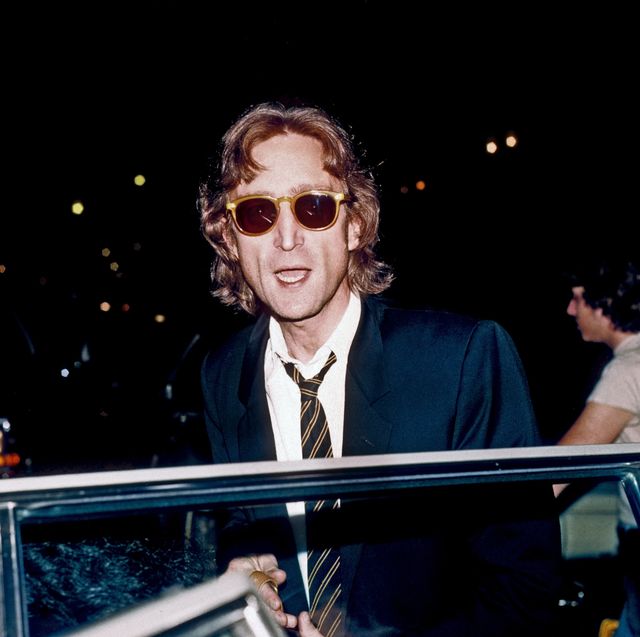
Damn this date. Every Dec 8th I can’t help but think of where I was when I heard. This year’s release of Now and Then only heightened the anger, sadness, and confusion over what happened. I post this post every year on this date and will continue. I have updated it each year and I’ve almost rewritten it since I posted it first back in 2018…and if it’s too long now I apologize. I still feel what I felt on that date. Although to be accurate it was on December 9th that I found out…the next morning getting ready for school.
When I watched the news clips at the time I felt like an interloper because all of these fans who were sobbing grew up with Lennon in real time…I was this 13-year-old kid who was late to the party…a decade late.
It’s odd to think the Beatles had only been broken up for 10 years when this happened…to a 13-year-old at the time…that was a lifetime but in reality, it’s nothing. To put it in perspective… it’s now 2023 and 10 years ago was 2013…that doesn’t seem that long ago does it? I was only 3 years old when the Beatles broke up so I had no clue.
Since second grade (1975), I’ve been listening to the Beatles. While a lot of kids I knew listened and talked about modern music …I just couldn’t relate as much. By the time I was ten, I had read every book about The Beatles I could get my hands on. In a small middle TN town…it wasn’t too many. I was after their generation but I knew the importance of what they did…plus just great music. The more I got into them the more I learned about the Who, Stones, and the Kinks. I wanted to get my hands on every book about the music of the 1960s. Just listening to the music wasn’t enough…I wanted to know the history.
I spent that Monday night playing albums in my room. Monday night I didn’t turn the radio on…I’m glad I didn’t…The next morning I got up to go to school and the CBS morning news was on. The sound was turned down but the news was showing Beatle video clips. I was wondering why they were showing them but didn’t think much of it.
Curious, I turned the volume up and found out that John Lennon had been shot and killed. I was very angry and shocked. The bus ride to school was quiet… at school, it was quiet as well. Some teachers were affected because John was their generation. Some of my friends were shocked but some didn’t get the significance at the time and some didn’t care.
I went out and bought the White Album, Abbey Road, and Double Fantasy in late December of 1980…I can’t believe I didn’t have those two Beatles albums already…now whenever I hear any song from those albums they remind me of the winter of 80-81. I remember the call-in shows on the radio then…pre-internet… people calling to share their feelings for John or hatred for the killer.
The next few weeks I saw footage of the Beatles on specials that I had never seen before. Famous and non-famous people pouring their hearts out over the grief. Planned tributes from bands and everyone asking the same question…why?
My young mind could not process why a person would want to do this to a musician. A politician yea…I could see that…not that it’s right but this? A musician? Martin Luther King, Bobby Kennedy, and JFK were before my time. By the mid-1970s John had pretty much dropped out of sight…John and Yoko released Double Fantasy on November 17, 1980, and suddenly they were everywhere…Less than a month later John was murdered. The catchwords were Catcher in the Rye, Hawaii, handgun, and insane. The next day we were duly informed who killed John in the First, Middle, and Last name format they assign to murderers. I won’t mention his name.
I didn’t want to know his name, his career, his wife’s name, his childhood…I just wanted to know why… he says now…” attention”
I noticed a change happened after that Monday night. John Lennon was instantly turned into a saint, something he would have said was preposterous. Paul suddenly became the square and the uncool one and George and Ringo turned into just mere sidemen. Death has a way of elevating you in life. After the Anthology came out in the 90s that started to change back a little.
I called my dad a few days after it happened and he said that people were more concerned that The Beatles would never play again than the fact a man, father, and husband was shot and killed. He was right and I was among those people until he said that. Dad was never a fan…he was more Elvis, Little Richard, and country music… but he made his point. When my father passed in 2005 I thought about this conversation and knew he was teaching me again.
It was odd being into the Beatles at such a young age and after their time so to speak. While my peers were talking about all the contemporary artists at the time…all I talked about was John, Paul, George, and Ringo. I would end up comparing all the new music I heard to theirs…and that wasn’t fair at all to new music. I would think to myself…well this song (any new song at the time) wasn’t as good as Strawberry Fields and so on. I, fortunately, grew out of that but it took a while.
Below is a video of James Taylor telling how he met the killer a day before Lennon was murdered. Also, Howard Sterns broadcast the day after.
The bicentennial in America and everything that wasn’t nailed down was painted Red, White, and Blue. It was the first year I remember becoming aware of news and popular culture. In 1977 I would start watching the news and following baseball.
I always liked the imagery of this song.
When Phil Lynott was a kid his mother Philomena ran an illegal drinking den in Manchester, England. Phil was often with his mother in this den. Some of her most frequent returning customers were members of the Quality Street Gang (a group of criminals operating in Manchester, England, in the 1960s, 1970s, and 1980s).
He would spend his time observing the gang, their mannerisms, the way they talk, and the way they fight. All of this observation eventually inspired him to write a song about them called “The Boys Are Back In Town.”
I always liked this song by Seger. This song is a staple on classic radio and I still listen to it when it comes on. Seger has great imagery in this song.It took Seger around six months to write this song. Along with “Turn The Page,” this was one of just two songs Seger ever wrote on the road. Night Moves was a breakthrough hit for Seger, introducing the heartland rocker to a much wider audience. He had been very popular in Michigan ever since his first album in 1969… which had the hit Ramblin’ Gamblin’ Man. That song went to #17 on the Hot 100, but over the next few years, he struggled to make a national impact.
Lynyrd Skynyrd’s Freebird was originally released on the (Pronounced ‘Lĕh-‘nérd ‘Skin-‘nérd) in 1973 but the live version is what hit in 1976 with a single released off of One More From The Road. This is when the song became a legend. Personally, I like the studio version of it a lot but live it was unbeatable.
It’s become so ingrained that people will shout this out at concerts. In 2016 someone shouted this out at a Bob Dylan concert…guess what? Bob and his band went into the ending of the song where it rocks.
This is the band at Knebworth in 1976.
Punk was around in the UK and in America, we had the Ramones.
The Ramones were no frills and to the point. No long solos (or any) or instrumental breaks. Just 2-minute rock songs full of energy. This was the song that helped launch the Ramones.
The song never charted but is probably their best-known song because of the many movies, TV shows, and commercials it’s been in. The song was mainly written by drummer Tommy Ramone, while bassist Dee Dee Ramone came up with the title (the song was originally called “Animal Hop”). Dee Dee also changed one line: the original third verse had the line “shouting in the back now”, but Dee Dee changed it to “shoot ’em in the back now.”
This song still sounds fresh today. Got To Get You Into My Life was on Revolver released in 1966. It was not released as a single at the time. Any other band would have released it as a single.
In 1976 it was released as a single and peaked at #7 in the Billboard 100…not bad for a song that was 10 years old. It was released off of the horribly packaged compilation album Rock and Roll Music. Capital Records seemed to forget The Beatles represented the 60s, not the 50s that the album cover represented.
Because of work and home projects…I’m going to take a short break and close the joint down. I’ll be back on November 17th. Last year I took a month and it was too long all at once and I took a couple of weeks this past April.
Thank you all for reading and commenting because that is the reason I still do this…the interaction. Along with the projects, this will give me a few days to recharge the batteries.
I didn’t think I’d see this band on any modern chart in my lifetime.
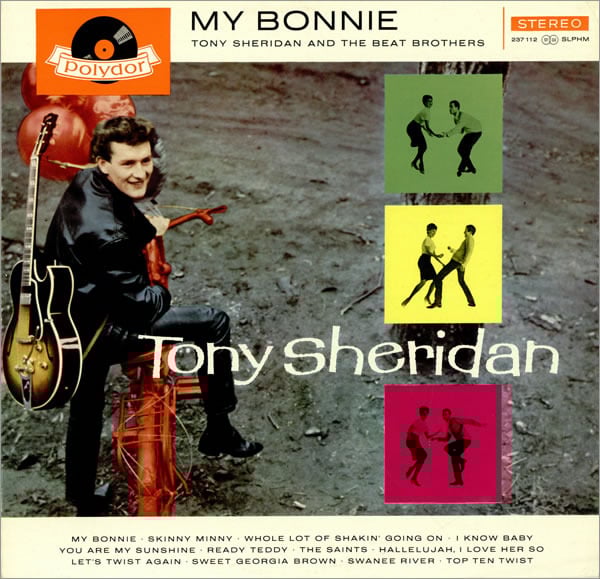
Tony Sheridan was an excellent guitarist and had a good rock voice. The Beat Brothers were The Beatles and they punch this old standard up of My Bonnie Lies Over The Ocean. This record is probably the most important record they made …even as just a backing group.
They were thrilled to be on a record. “I didn’t stop playing it for days,” George told the NME two years later. Teenager Jimmy Campbell would remember Paul running up the stairs at Aintree Institute shouting “This is our record!” He made the DJ Bob Wooler put it on and he was bouncing all over the place just listening to himself coming out of the speakers. He was really made up. “Listen to that!”
Brian Epstein ran NEMS record store and one of his policies was to get any song that he might not have in stock. Around mid-afternoon on Saturday, October 28, 1962, a young man from Knotty Ash, Raymond Jones, walked into the NEMS shop on Whitechapel and tried to buy the record.
What happened next is the subject of conflicting accounts, though they end the same way. Jones remembers that Brian Epstein, unable to find “My Bonnie” in any release lists, asked him questions about it, which concluded with Jones saying the Beatles were locals and “the most fantastic group you will ever hear.” Brian himself, in his autobiography, suggested this additional information only came to him over the following days, and in the raw interview transcript for that book, he said one of his shop-girls noted Jones’ order.
That led Brian Epstein to the Cavern Club where the Beatles played. That is somewhere that he would probably have never gone. Raymond Jones’s simple request would go down in history. Soon after, Brian was managing the Beatles and within a year they got George Martin’s attention and the rest is history.
While the Beatles were in Hamburg they were signed to a record contract by Bert Kaempfert. He recorded many cuts with The Beatles backing Sheridan and also a few by themselves. One original was the Lennon-Harrison instrumental Cry For A Shadow. The rest were standards like Ain’t She Sweet and When the Saints Come Marching In. The Beatles were fortunate with Bert Kaempfert. He wasn’t a shark…he signed them and when they had a chance to sign with EMI…he only asked that they record a couple of more songs and he let them go.
My Bonnie was released in October of 1961 in Germany and peaked at #32 in the German charts. It didn’t do much in the UK but fans knew about it and wanted it. The Beatles were very popular in Liverpool at the time and it sold well there after Brian got it in his store. Later on when they released Love Me Do it sold over 10,000 copies in Liverpool alone.
Record executives thought Epstein bought that many to put it in the charts but no….they really sold. Most people outside of Liverpool couldn’t understand how a “new” band would sell that many but they had been popular there since coming back from Hamburg in 1961. The Beatles started their own fan club in 1962 before Brian met them.
Their old bass player, Stuart Sutcliffe was there, but Paul played bass during the sessions.
My Bonnie
My Bonnie lies over the ocean
My Bonnie lies over the sea
My Bonnie lies over the ocean
Oh bring back my Bonnie to me
My Bonnie lies over the ocean
My Bonnie lies over the sea
Well my Bonnie lies over the ocean
Yeah bring back my Bonnie to me
Yeah bring back, ah bring back
Oh bring back my Bonnie to me to me
Oh bring back, oh bring back
Oh bring back my Bonnie to me
Well my Bonnie lies over the ocean
My Bonnie lies over the sea
Yeah my Bonnie lies over the ocean
Oh I said bring back my Bonnie to me
Yeah bring back, ah bring back
Oh bring back my Bonnie to me to me
Oh bring back, ah bring back
Oh bring back my Bonnie to me
This guitar riff is incredibly hard to learn. I’ve learned some difficult riffs before but this one I finally gave up on. It’s doable but not one you can just pick up quickly. How John came up with this unorthodox riff is beyond me. John came up with some great riffs. Daytripper, I Dig a Pony, I Feel Fine, Yer Blues, I Want You (She’s So Heavy), Cold Turkey, and more.
I’ve always remembered the Joe Walsh story about this song…He said he worked for weeks to master this song by himself. Only to find out later that it was two guitars playing the riff, not one… after Ringo told him.
The song was never released as a single. One of the things I like about the Beatles is the songs that they never released as singles would be milestones for other bands. I think it perfectly encapsulates the mid-sixties pop sound. You can also hear early power pop in this song. I always thought this would have fit better on Rubber Soul but I don’t care…great song.
John or Paul never said what the song was about or what inspired it. Some have speculated that the “bird” was Mick Jagger’s then-girlfriend Marianne Faithfull. Others say it was about an interview that Frank Sinatra gave and he kept using the phrase “How’s your bird?” What caught John’s attention was the press release from Sinatra’s PR firm that read: “If you happen to be tired of kid singers wearing mops of hair thick enough to hide a crate of melons… ‘Tell me that you’ve heard every sound there is ‘and your bird can swing.
Sinatra was not a fan of rock music when it came out. He said “Rock and roll smells phoney and false. It is sung, played, and written, for the most part, by goons. It is the most brutal, ugly, desperate, vicious form of expression it has ever been my displeasure to hear.”
Frank did soften up a bit as the sixties went along. He covered “Something” written by George Harrison and said it was the greatest love song written in the last 50 years.
Some songs I have to listen to a few times to like and some the first time. This one was love at first listen. It’s not a Beatle’s masterpiece but if you like catchy guitar riff-driven songs then you can’t go wrong with this one. The song was written primarily by John. The song was released on the UK version of Revolver and the “Yesterday and Today” compilation in America in 1966. The dual guitar solo rates at #69 on the “100 Greatest Guitar Solos” list by Rolling Stone magazine.
George Harrison: “I think it was Paul and me, or maybe John and me, playing in harmony,” it’s “quite a complicated little line that goes through the middle-eight.”
Paul McCartney: “George and I would work out a melody line, then I would work out the harmony to it. So we’d do it as a piece, ‘And Your Bird Can Sing’ – that’s what that is. That’s me and George both playing electric guitars. It’s just the two of us live. It’s a lot easier to do with two people, believe me. It’s another one of our little tricks!”
And Can Your Bird Can See
You say you’ve got everything you want And your bird can sing But you don’t get me You don’t get me
You say you’ve seen the seven wonders And you bird is green But you can’t see me You can’t see me
When your prized possessions Start to weigh you down Look in my direction I’ll be round, I’ll be round
When your bird is broken Will it bring you down You may be awoken I’ll be round, I’ll be round
You tell me that you’ve heard every sound there is And your bird can swing But you can’t hear me You can’t hear me
I will be in a meeting today…so I’ll be late in commenting.
I’m so sad that we are leaving the 60s. I do love the 70s but the 60s I think were rock/pop’s best decade.
Great year… Led Zeppelin had arrived the year before and The Beatles released Abbey Road, which was the year of George. I could have flipped a coin on Something or Here Comes The Sun. This is the last year I’ll be able to include the Holy Trinity of Rock…The Beatles, The Who, and The Rolling Stones while they were all still together.
Something was written about his then-wife Pattie Boyd. This one moved his songwriting abilities up in the eyes of his bandmates Lennon and McCartney and the world. George had written some good songs before like Taxman, If I Needed Someone, and While My Guitar Gently Weeps but this one…this one placed him in another league. George had two of the highlights on Abbey Road with Something and Here Comes The Sun. Something tells me we will be seeing Mr. Harrison next year…just a hunch!
So many Led Zeppelin songs I could have had here off the second album…or the Brown Bomber. I picked Ramble On over Whole Lotta Love because it has that light-heavy feel.
Creedence Clearwater Revival was rising in 1969. They ended up being one of the best American bands ever. They only had a short window but they took advantage of it. If you want proof that life isn’t fair… Green River was kept from #1 because of the bubblegum song “Sugar, Sugar” by The Archies.
The song was written by John Fogerty.
I always thought The Who was the best pure rock band out there…and I still do. They released Tommy in 1969 and although I never thought it was their best…it was and is still iconic.
It has many classic rock songs that we know and this one included…this is the Who playing We’re Not Going To Take It. It was written by Pete Townshend.
Blind Faith was a Supergroup made up of Eric Clapton, Steve Winwood, Ginger Baker, and Ric Grech. They released just one album. Winwood wrote Can’t Find My Way Home and sang lead. Many critics thought that Blind Faith sounded a lot more like Traffic than Clapton’s Cream, which is what Clapton was going for.












 PowerPop... An Eclectic Collection of Pop Culture