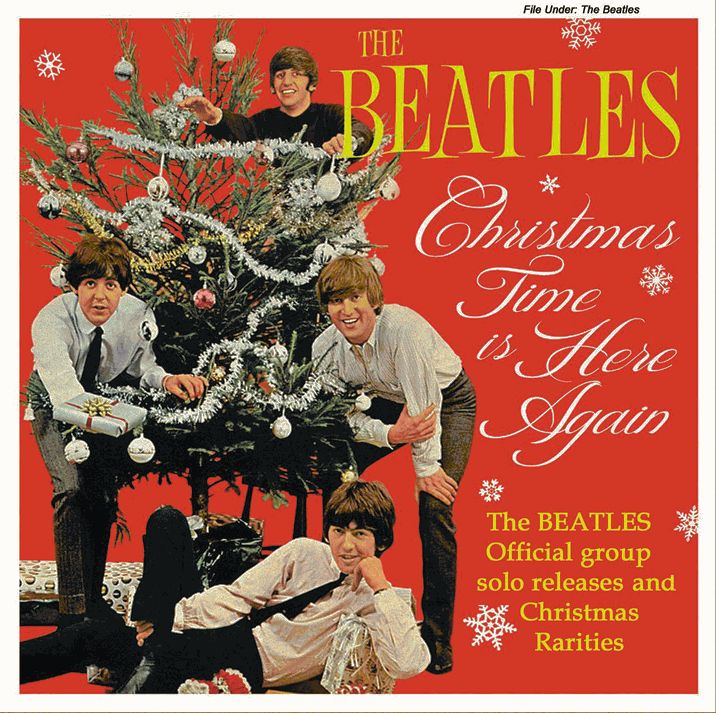
The Beatles recorded this in 1967 and wasn’t released until 1994 paired with “Free As A Bird”. It is a fun Christmas song that will stick in your head. The Beatles did not release a Christmas song commercially… only to their fan club when they were active.
Recorded December 6, 1966, and November 28, 1967, in London, England, this song was never officially released until it appeared as the B-side to “Free As A Bird” in 1994. The original version was distributed to The Beatles fan club in 1967. It’s the only song ever written specifically for the Beatles Fan Club members.
Many upbeat Pop groups of this era like The Beach Boys and The Four Seasons released Christmas songs, but The Beatles never had an official Christmas release.
Christmas Time Is Here Again
Christmas time is here again Christmas time is here again Christmas time is here again Christmas time is here again
Ain’t been round since you know when Christmas time is here again O-U-T spells “out”
Christmas time is here again Christmas time is here again Christmas time is here again Christmas time is here again
Ain’t been round since you know when Christmas time is here again O-U-T spells “out”
Christmas time is here again Christmas time is here again Christmas time is here again Christmas time is here again
Ain’t been round since you know when Christmas time…[music continues and fades to background]
[spoken]
This is Paul McCartney here, I’d just like to wish you everything you wish yourself for Christmas.
This is John Lennon saying on behalf of the Beatles, have a very Happy Christmas and a good New Year.
George Harrison speaking. I’d like to take this opportunity to wish you a very Merry Christmas, listeners everywhere.
This is Ringo Starr and I’d just like to say Merry Christmas and a really Happy New Year to all listeners
[a John Lennon pastiche at this point, very hard to understand]
In between new wave and hair metal, there was an occasional pop/rock hit in the 80s. This one was catchy and it stuck with you. The opening line “Josie’s on a vacation far away, Come around and talk it over” is hard to get out of your head after hearing it. It got massive airplay in my corner of the world.
The song was performed by the Outfield. Formed in Manchester, England and signed to Columbia Records as “The Baseball Boys,” the group changed their name to The Outfield. They released their debut album Play Deep in 1985 which peaked at #9 in the Billboard Album Charts. Your Love was on the album and peaked at #6 in the Billboard 100, #37 in Canada, and #83 in the UK.
“Your Love” was written by the band’s guitarist, John Spinks, who died of liver cancer in 2014 at age 60.
I don’t know whether I like the song or hate it because I can still hear the damn thing in my head.
From Songfacts
With a distinctive guitar riff and an unforgettable opening line, “Your Love” became one of the most memorable hits of the ’80s. When lead singer Tony Lewis declares, “Josie’s on a vacation far away, come around and talk it over,” we know he’s up to something. Our hero spends the rest of the song in seduction mode, trying to convince this girl (probably and ex-girlfriend) to have a one-night-stand. He pulls every trick from the player’s handbook:
Nobody Will Ever Know (“Stay the night but keep it undercover”) I Really Need Comfort (“Another shoulder to cry upon”) I Don’t Know Where Else To Turn (“I ain’t got many friends left to talk to”) It Won’t Mean Anything (“I just wanna use your love tonight”)
Does he capture his prey? We never find out, but it’s clear that Josie deserves better.
The song became an ’80s classic and the showcase song for the band, which scored four more Top 40 hits: “All the Love in the World” (#19, 1985), “Since You’ve Been Gone” (#31, 1987), “Voices of Babylon” (#25, 1989) and “For You” (#21, 1990).
In 2013, Saturday Night Live did a skit based on this song where host Josh Hutcherson speaks in the song’s lyrics, trying to convince Josie’s friend to have an affair. In the skit, Hutcherson is Josie’s younger brother. It’s a great visualization of the dynamic, as the girl rebuffs him at first, but is drawn in when he gets to the blue talk (“I can’t hide the way I’m feelin’…”).
Your Love
Josie’s on a vacation far away Come around and talk it over So many things that I want to say You know I like my girls a little bit older
I just want to use your love tonight I don’t want to lose your love tonight
I ain’t got many friends left to talk to Nowhere to run when I’m in trouble You know I’d do anything for you Stay the night but keep it under cover
I just want to use your love tonight I don’t want to lose your love tonight
Try to stop my hands from shaking But something in my mind’s not making sense It’s been a while since we were all alone But I can’t hide the way I’m feeling
As you’re leaving please would you close the door? And don’t forget what I told you Just ’cause you’re right that don’t mean I’m wrong Another shoulder to cry upon
I just want to use your love tonight I don’t want to lose your love tonight I just want to use your love tonight I don’t want to lose your love tonight I just want to use your love tonight I don’t want to lose your love tonight Use your love, lose your love, your love! I don’t want to lose your love tonight (I don’t wanna, I don’t wanna, I don’t wanna) Lose your love tonight (your love) Lose your love tonight (your love) Lose your love tonight (your love) (Lose your) I don’t want to lose your love tonight
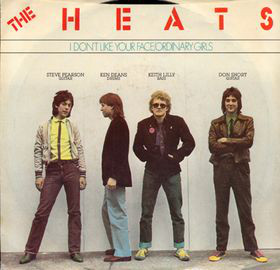
While reading about Nirvana from other Seattle musicians…this band came up in the conversations as one of the great Seattle bands. The Heats were 10 years before Nirvana but were really popular in the Seattle area.
Before Grunge, The Heats played in the Northwest. In 1980 They were the biggest band in the area. Everyone was convinced they were only going to get bigger.
“They were top dog,” said fellow Seattle musician and KJET/KNDD personality Jim Keller. “Opening for them was like opening for a major concert artist, with barricades to keep the fans back at the front of the stage. “And more than any other group, they made it cool for Seattle bands to do original songs.”
They sold thousands of copies of the records they produced themselves. They played some big shows in Seattle and opened up for The Kinks and toured around the US with Heart and The Knack.
This song was the B side to “I Don’t Like Your Face” released in 1980
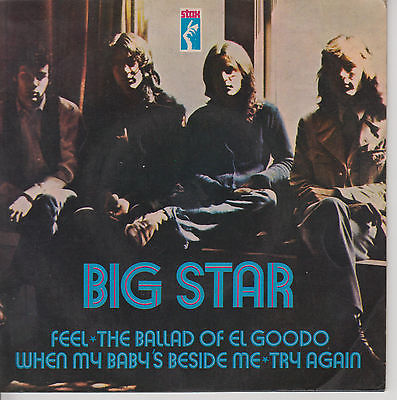
Great riff by Alex Chilton and full of the hooks that Big Star is known for. This song was the A-side to In The Street released in 1972. Both songs are on Big Star’s album #1 Record.
With the exception of some smart critics, at the time of their existence, Big Star was all but ignored. Big Star played a one-off promotional show for the Memphis Rock Writer’s Convention at Lafayette’s Music Room in Memphis in May of 1973. It cemented them into legendary status due to the writers who witnessed it and carried the message of Big Star out in their writing. Chris Bell had left the band by the time this live show was recorded.
The song is credited to Alex Chilton and Chris Bell.
When My Baby’s Beside Me
Don’t need to talk to my doctor Don’t need to talk to my shrink Don’t need to hide behind no locked door I don’t need to think
‘Cause when my baby’s beside me, I don’t worry When my baby’s beside me, all I know When my baby’s beside me, I don’t worry When my baby’s beside me, all I know
Read all my books and talked about Listen to my radio Been in school and dropped right out Tryin’ to find out what I didn’t know
But when my baby’s beside me, I don’t worry When my baby’s beside me, all I know When my baby’s beside me, I don’t worry When my baby’s beside me, all I know
Don’t need to talk to my doctor Don’t need to talk to my shrink Don’t need to hide behind no locked door I don’t need to think
‘Cause when my baby’s beside me, I don’t worry When my baby’s beside me, all I know When my baby’s beside me, I don’t worry When my baby’s beside me, all I know
When my baby’s beside me, I don’t worry When my baby’s beside me, all I know When my baby’s beside me, I don’t worry When my baby’s beside me, all I know
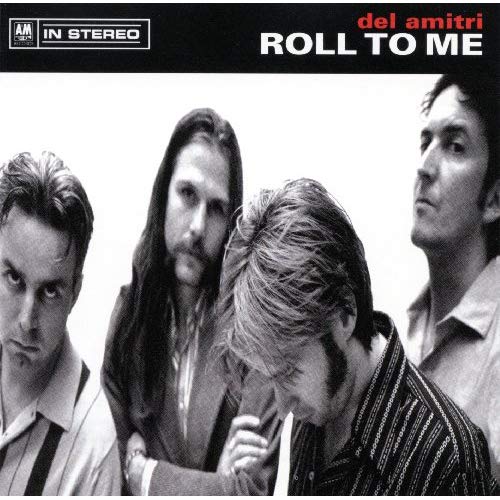
In 1995 “Roll to Me” peaked at #10 in the Billboard 100, #5 in Canada and #22 on the UK charts. One of the many power-pop songs of the 90s.
Ironically it was the band’s biggest hit and they did not like the song. Del Amitri toured the US when this became a hit, but they played the song reluctantly, often telling the audience that it was something they had to do. Del Amitri wasn’t able to get a foothold in the States, and this was their last hit there.
They are a Scottish alternative rock band formed in Glasgow in 1980. In 2002 the band went on hiatus and reformed in 2014 and are now still together.
Roll to Me
Look around your world pretty baby Is it everything you hoped it’d be The wrong guy, the wrong situation The right time to roll to me
Roll to me
Look into your heart pretty baby Is it aching with some nameless need? Is there something wrong And you can’t put your finger on it? Right, then roll to me
And I don’t think I have ever seen A soul so in despair So if you want to talk the night through Guess who will be there?
So don’t try to deny it pretty baby You’ve been down so long you can hardly see When the engine’s stalled and it won’t stop raining It’s the right time to roll to me Roll to me Roll to me
And I don’t think I have ever seen A soul so in despair So if you want to talk the night through Guess who will be there?
So, Look around your world pretty baby Is it everything you hoped it’d be The wrong guy, the wrong situation The right time to roll to me The right time to roll to me The right time to roll to me…oooh
When I saw the Stones on the 2006 Bigger Bang tour I was looking forward to this song than any other. It was the second time I had gone to see them. This time it was in Kentucky at the famous Churchill Downs venue that is not meant for Rock and Roll but it was cool.
The lyric “Making bets on Kentucky Derby Day” drew a huge response from the rain-drenched crowd. The song was on the great Sticky Fingers album released in 1971. Gram Parsons who was into country music heavily and hanging around with the Stones probably influence this track to a point.
This song rolled during the final credits of The Big Lebowski. Allen Klein, the ex Rolling Stones manager and owner of the song initially wanted $150,000 for the movie’s use of it. He was then convinced to let them use it for free when he saw the scene in which The Dude says, “I hate the f—in’ Eagles, man!”. The version in the movie was a Townes Van Zandt cover.
From Songfacts
In this song, Mick Jagger addresses a girl named Susie with more than a little disdain: She’s welcome to send him dead flowers, but he’ll put roses on her grave. The music and lyrics both have a distinct country vibe. Jagger explained in 1995: “I love country music, but I find it very hard to take it seriously. I also think a lot of country music is sung with the tongue in cheek, so I do it tongue-in-cheek. The harmonic thing is very different from the blues. It doesn’t bend notes in the same way, so I suppose it’s very English, really. Even though it’s been very Americanized, it feels very close to me, to my roots, so to speak.”
Mick Jagger, 2003: “The ‘Country’ songs we recorded later, like ‘Dead Flowers’ on Sticky Fingers or Far Away Eyes on Some Girls, are slightly different (than our earlier ones). The actual music is played completely straight, but it’s me who’s not going legit with the whole thing, because I think I’m a blues singer not a country singer – I think it’s more suited to Keith’s voice than mine.” >>
The line, “I’ll be in my basement room with a needle and a spoon” is probably a reference to shooting up heroin.
Dead Flowers
Well when you’re sitting there in your silk upholstered chair Talkin’ to some rich folk that you know Well I hope you won’t see me in my ragged company Well, you know I could never be alone
Take me down little Susie, take me down I know you think you’re the queen of the underground And you can send me dead flowers every morning Send me dead flowers by the mail Send me dead flowers to my wedding And I won’t forget to put roses on your grave
Well when you’re sitting back in your rose pink Cadillac Making bets on Kentucky Derby Day Ah, I’ll be in my basement room with a needle and a spoon And another girl to take my pain away
Take me down little Susie, take me down I know you think you’re the queen of the underground And you can send me dead flowers every morning Send me dead flowers by the mail Send me dead flowers to my wedding And I won’t forget to put roses on your grave
Take me down little Susie, take me down I know you think you’re the queen of the underground And you can send me dead flowers every morning Send me dead flowers by the U.S. Mail Say it with dead flowers in my wedding And I won’t forget to put roses on your grave No, I won’t forget to put roses on your grave
This song is on the B side of Abbey Road in the medley right after Mean Mr. Mustard.The song was brought up and recorded on a demo for the White Album. John then brought it up for inclusion on Let It Be. After that he made the statement that he would give it to a “Liverpool Folk Singer.”
John contributed Sun King, Mean Mr. Mustard, and Polythene Pam to the medley.
The song was about two people… Pat Hodgett, who was a regular attendee at the Cavern Club when The Beatles played in the early 60’s. It was readily known that Pat was in the habit of eating polythene… The Beatles affectionately referred to her as “Polythene Pat”
John remembering the second girl: So this poet took me to his place, and I had a girl and he had one he wanted me to meet. He said she dressed up in polythene, which she did. In polythene bags. She didn’t wear jackboots and kilts – I just sort of elaborated – and no, she didn’t really look like a man. There was nothing much to it. It was kind of perverted sex in a polythene bag. But it provided something to write a song about.”
The poet’s name was Royston Ellis… The girl in the polythene bag could have been Royston’s girlfriend at the time…remembered as Stephanie.
Paul McCartney: “John, being Royston’s friend, went out to dinner with him and got pissed (drunk) and stuff and they ended up back at his apartment with a girl who dressed herself in polythene for John’s amusement, so it was a little kinky scene…She was a real character.”
From Songfacts
Polythene is a British term for polyethylene, a plastic polymer used in containers, insulation, and packaging. Written by John Lennon, this song has a rather strange background, and fortunately, our Beatles expert Pattie Noah has sorted it out.
Lennon sang this in a thick Liverpool accent. Like the other Beatles, his regular singing voice sounded very American because he grew up listening to US artists.
In the line, “She’s the kind of a girl that makes the News Of The World,” The News Of The World is a tabloid newspaper that specializes in risqué news reporting. Pam must have been a wild girl.
The Beatles recorded this as one song with “She Came In Through the Bathroom Window.”
Originally intended for The White Album, this was used in a suite of songs at the end of Abbey Road.
Polythene Pam
Well, you should see Polythene Pam She’s so good-looking but she looks like a man Well, you should see her in drag dressed in her polythene bag Yes, you should see Polythene Pam Yeah, yeah, yeah
Get a dose of her in jackboots and kilt She’s killer-diller when she’s dressed to the hilt She’s the kind of a girl that makes the “News of the World” Yes, you could say she was attractively built Yeah, yeah, yeah
This short song was on the B Side of Abbey Road in the Medley. I really like Paul McCartney’s fuzz bass on this track. The song is right before “his sister Pam’s” song Polythene Pam which continues the medley.
John Lennon: In Mean Mr Mustard I said ‘his sister Pam’ – originally it was ‘his sister Shirley’ in the lyric. I changed it to Pam to make it sound like it had something to do with Polythene Pam. They are only finished bits of crap that I wrote in India.
John Lennon got the idea for this song from a newspaper article he read about a miser. “Mr. Mustard” was John Mustard, who was described in the story as “an exceptionally mean man.” His wife was divorcing him because, among other things, she couldn’t stand being in the dark all the time – he insisted on keeping the lights off most of the time to save money. The article appeared in the Daily Mirror on June 7, 1967, with the headline, “Scotsman’s Meanness ‘Was Cruel.'”
The article read:
SCOTSMAN’S MEANNESS ‘WAS CRUEL’
“Scotsman John Mustard – an “exceptionally mean man” – gave his wife only £1 in the year before they parted, a Divorce Court judge said yesterday.
Mr. Mustard, a civil servant, was also so mean with lighting and heating that he went far beyond what any wife could be expected to bear, said Mr. Justice Rees.
LIVED IN THE DARK
To save electricity, he would turn off the light while they were listening to the radio, “because it was not necessary to see in order to listen.”
And he would also shave and go to bed in the dark.
The judge said:- “He was at pains to explain that he came from North of the Border, where carefulness was part of the upbringing.”
He added that:- “His conduct affected her health and made life unendurable.”
The judge granted 55-year-old Mrs. Freda Mustard, a deputy head mistress, a decree nisi because of cruelty by Mr. Mustard, who lives at Old Park-View, Enfield.
HE DENIED IT
Mr. Mustard, 65, denied cruelty and alleged that his wife deserted him. The judge rejected that allegation.
The judge said he did not believe that Mr. Mustard was being vicious or unpleasant toward his wife.
But there was “a menacing quality about him to which he wife was particularly sensitive.”
From Songfacts
John Lennon wrote most of this when he was in India at the Maharishi’s meditation camp with the other Beatles in 1967. He didn’t think much of the song, calling it and “Polythene Pam” “finished bits of crap that I wrote in India.”
It wasn’t the first time John Lennon was inspired by a newspaper story: some of the lyrics in “A Day In The Life” came from articles he read in the Daily Mail.
The Beatles recorded this as one song with “Sun King.” It’s part of a suite of songs at the end of Abbey Road.
The Beatles considered using this on The White Album, but decided not to.
Mean Mr. Mustard
Mean Mister Mustard sleeps in the park Shaves in the dark trying to save paper Sleeps in a hole in the road Saving up to buy some clothes Keeps a ten-bob note up his nose Such a mean old man Such a mean old man
His sister Pam works in a shop She never stops, she’s a go-getter Takes him out to look at the queen Only place that he’s ever been Always shouts out something obscene Such a dirty old man Dirty old man
The power of this song really showed live. The Who’s performance at Woodstock was probably my favorite performance in the movie. The Who were well known by Woodstock but the movie helped cement their superstar status in the rock world.
Tommy is not my favorite Who album but the album changed dynamics when played live. It came to life in a way that the album didn’t.
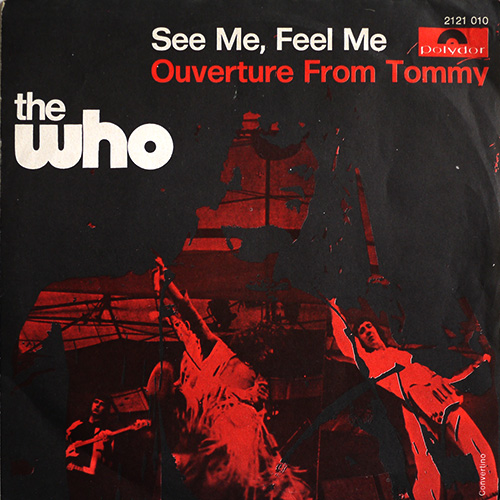
I was on my friend Hanspostcard’s top 40 post and saw this song at #11. I was surprised it peaked that high in 1970…higher than Pinball Wizard. The song closes out Tommy with a bang.
I saw the Who in 2016 and they did this song. Seeing Zac Starkey (Ringo’s Son) drum for them is surreal. Keith Moon was his Godfather and Keith gave him his first set of real drums. He is the only drummer they have had to really fill Keith’s shoes…and it’s natural.
Also…check out the Who’s (Who) new album…personally, I think it’s the best one they have released since the 1970s.
From Songfacts
This is the last song on Tommy, the first “rock opera.” It tells the story of a deaf, dumb, and blind kid who becomes a pinball champion and is idolized by his followers. This was a very uplifting song to end the rock opera. The show got mostly good reviews.
The Who performed the album from start to finish on their tour. Roger Daltrey sang this as the character Tommy.
The message of unification and hope in this song was inspired by Meher Baba, a guru Pete Townshend was following. Townshend wrote Tommy in an attempt to bring people together through rock music.
Tommy was made into a play as well as a movie. The 1975 movie starred Jack Nicholson, Ann Margaret, Tina Turner and Elton John. Daltrey played Tommy and Keith Moon was the evil Uncle Ernie.
See Me, Feel Me
See me, feel me, touch me, heal me See me, feel me, touch me, heal me See me, feel me, touch me, heal me See me, feel me, touch me, heal me
Listening to you I get the music Gazing at you I get the heat Following you I climb the mountain I get excitement at your feet
Right behind you I see the millions On you I see the glory From you I get opinions From you I get the story
Listening to you I get the music Gazing at you I get the heat Following you I climb the mountain I get excitement at your feet
Right behind you I see the millions On you I see the glory From you I get opinions From you I get the story
Listening to you I get the music Gazing at you I get the heat Following you I climb the mountain I get excitement at your feet
Two men…one a neurotic neat freak, the other a compulsive slob had absolutely nothing in common except a Manhattan apartment. The Odd Couple is a very underrated television series. Jack Klugman and Tony Randall had great chemistry on this show. There have been many remakes of this story but none matched this series in my opinion.
I did like the movie with Jack Lemmon and Walter Matthau. The play was written in 1965 by Neil Simon and the movie was made in 1968. The show ran from 1970 to 1975.
Felix Unger: Everyone knows Aristophanes wrote a play called the Birds. Oscar Madison: Everyone but me.
Oscar Madison: Aristophanes……….. Felix Unger: Ridiculous!
The Odd Couple: Password
The Characters: Felix Unger, Oscar Madison, Officer Murray Greshler, Allen Ludden, Betty White, Miriam Welby, Myrna, Mitzi Ferguson, and Millicent
Oscar and Felix meet Allen Ludden and his wife Betty White both playing themselves. Allen tells Oscar he likes his sports column and invites him on his game show Password. Oscars turns him down but Felix talks Oscar into accepting and using him as a partner. Felix is ecstatic… he can be his roommate’s partner. Oscar takes some convincing to be on the show with Felix but he finally agrees…much to his later dismay.
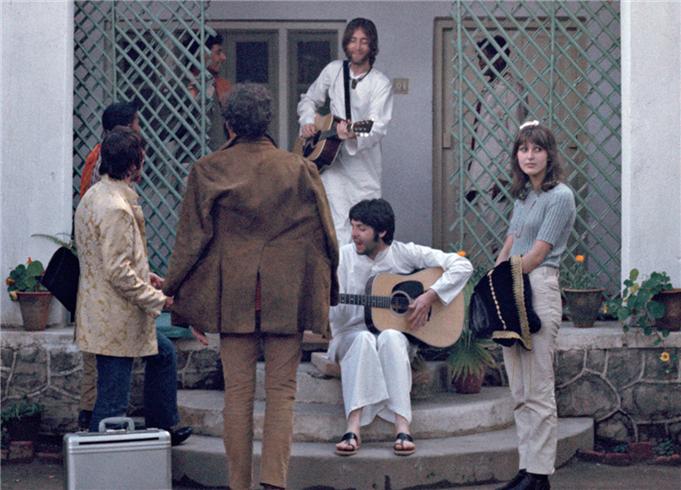
A beautiful song that was written by Paul McCartney that was on the White Album. Paul wrote it in India with a little help from Donovan to shape the song. It took 67 takes to get this song. McCartney played acoustic guitar and vocalized the bass (you can hear him going “bom, bom” in parts). John Lennon and Ringo Starr both added percussion using various instruments… George Harrison didn’t play on it at all.
The song would have fit comfortably on earlier Beatle albums. The melody is memorable and I always really liked the short guitar break after the choruses.
Paul McCartney: “I was doing a song, ‘I Will,’ that I had as a melody for quite a long time but I didn’t have lyrics to it. I remember sitting around with Donovan, and maybe a couple of other people. We were just sitting around one evening after our day of meditation and I played him this one and he liked it and we were trying to write some words. We kicked around a few lyrics, something about the moon, but they weren’t very satisfactory and I thought the melody was better than the words so I didn’t use them. I kept searching for better words and I wrote my own set in the end; very simple words, straight love-song words really. I think they’re quite effective. It’s still one of my favorite melodies that I’ve written. You just occasionally get lucky with a melody and it becomes rather complete and I think this is one of them; quite a complete tune.”
I Will
Who knows how long I’ve loved you You know I love you still Will I wait a lonely lifetime If you want me to, I will
For if I ever saw you I didn’t catch your name But it never really mattered I will always feel the same
Love you forever and forever Love you with all my heart Love you whenever we’re together Love you when we’re apart
And when at last I find you Your song will fill the air Sing it loud so I can hear you Make it easy to be near you For the things you do endear you to me You know I will I will
I’m not writing this to put down CD’s/Mp3’s or Vinyl…just wanted to know your opinion. There is room for both in today’s world. When we are on the go so much…the answer is easy…digital. When I take a walk every day I have my iPhone with my music and audiobooks. When I’m at home…I’m starting to more and more listen to vinyl.
I had a huge collection of albums and singles when I was younger. Unfortunately, many were lost during my early twenties moves from apartment to apartment. In the late nineties, I started to work in the IT field, so I drifted to CD/ digital for convenience if anything.
Slowly in the 2000s, I started to pull out the albums I still had and bought a turntable. Yes, I heard some scratches but some were immaculate. I noticed a difference right away and I then realized what warmth I had been missing with CD’s/mp3’s. I’ve heard some people say Digital serves the music. Vinyl serves the romantics…I don’t really agree with that. Yes, digital is clear…so clear you can hear things that weren’t meant to be heard…some sounds (tambourine, handclaps etc…) were meant to be lower in the mix to be felt more than heard.
One song that I noticed a lot of difference was “I Want To Hold Your Hand” by the Beatles. The vinyl single when played, jumps out at you. When I heard it on CD it was flat and sterile. It’s hard to describe it in words but there was a sharpness and a rawness that was missing on the CD.
Earlier CD’s were heavily compressed…they have come a long way but it’s still a difference. The below video is quite long but he does mention that the record companies are making CDs more about high-end quality now than “loudness.”
I know MP3’s are not the ideal format for quality. Flac is one of the best formats I have found.
I am not an Audiophile nor do I play one on TV…I can listen to either format but I do know what vinyl lovers are talking about…what about you?
Father Christmas, give us some money We’ll beat you up if you make us annoyed Father Christmas, give us some money Don’t mess around with those silly toys
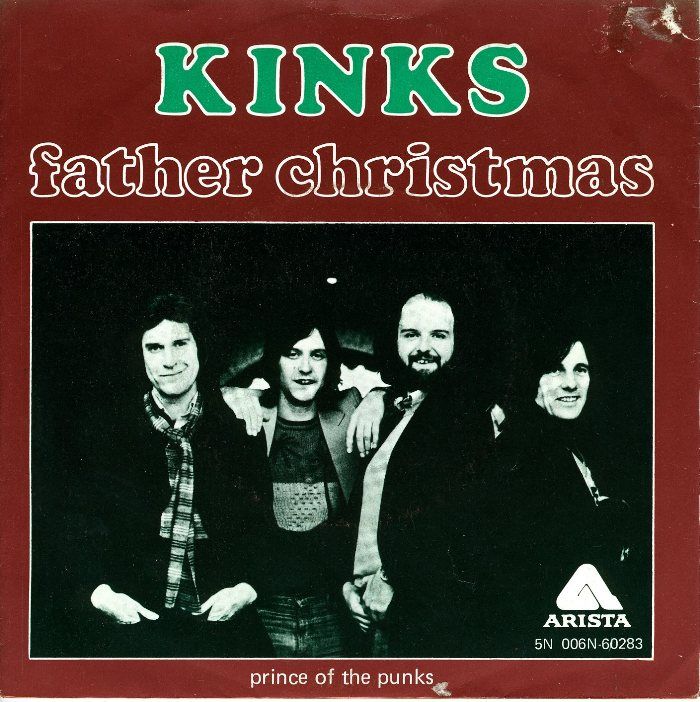
I’ve always like this raw and rough Christmas song. A writer at the NME wrote “”Successful Xmas songs are more about mood than specifics, but as this is an anti-Christmas song, it’s fine.” This is the kind of song you would expect from Ray Davies. Anti-Christmas or not…it has become a popular classic Christmas song that gets airplay every year.
The single was released during the height of punk rock and certainly exudes a punk attitude. Dave Davies told ABC Radio that he “always thought The Ramones would do a great version of it. I don’t know why they didn’t do it.”… thinking about it…Dave was right…it would have fit them perfectly.
The song was released in 1977 with the B side Prince Of The Punks. The track was included on the Arista compilation Come Dancing with The Kinks and is also available as a bonus track on the CD reissue of the Kinks’ 1978 album Misfits.
From Songfacts
“Father Christmas” is the name used in The UK and Australia for Santa Claus. This song is about a kid whose Christmas experience is a bit unusual. He never believed in Father Christmas, but finds himself performing as the character, and gets mugged by kids who tell him they want his money, not toys. He asks that if Father Christmas does exist, he bring a job for his dad and a machine gun so he can scare off the kids who mugged him.
This song is played in the background at the end of the movie Step Brothers as the camera is slowly zooming in on the family during The Holidays.
Ray Davies frequently stole shows by performing the song live wearing a Santa costume. “When the record came out we were on tour with a very successful band at the time supporting them,” he recalled during an interview with Southern California radio station KSWD. “I went on dressed as Santa at the end of the show to do ‘Father Christmas.’ And the other band found it hard to follow us. The following night with the same band I went to run on but there was a bunch of heavies preventing me from running on stage. And I was protesting. But the people said, ‘The Kinks didn’t do an encore but Santa Claus was there and they were stopping him from going on stage.'”
In England, Father Christmas is the personification of Christmas, in the same way as Santa Claus is in the United States. Although the characters are now synonymous, historically Father Christmas and Santa Claus have separate entities, stemming from unrelated traditions.
First written about in Tudor England and pre-dating the first recording of Santa Claus, Father Christmas was a jolly, well-nourished man who typified the spirit of good cheer at Christmas, bringing peace, joy, good food and wine and revelry. In time, the tradition merged with America’s Santa Claus with both riding in a reindeer-pulled sleigh carrying a sackful of toys that lands on the roofs of houses that contain good children. The mythical, white bearded Santa/Father Christmas then enters the properties through their chimneys clutching gifts for the well-behaved little ones inside.
Father Christmas
When I was small I believed in Santa Claus Though I knew it was my dad And I would hang up my stocking at Christmas Open my presents and I’d be glad
But the last time I played Father Christmas I stood outside a department store A gang of kids came over and mugged me And knocked my reindeer to the floor
They said Father Christmas, give us some money Don’t mess around with those silly toys We’ll beat you up if you don’t hand it over We want your bread so don’t make us annoyed Give all the toys to the little rich boys
Don’t give my brother a Steve Austin outfit Don’t give my sister a cuddly toy We don’t want a jigsaw or monopoly money We only want the real mccoy
Father Christmas, give us some money We’ll beat you up if you make us annoyed Father Christmas, give us some money Don’t mess around with those silly toys
But give my daddy a job ’cause he needs one He’s got lots of mouths to feed But if you’ve got one I’ll have a machine gun So I can scare all the kids on the street
Father Christmas, give us some money We got no time for your silly toys We’ll beat you up if you don’t hand it over Give all the toys to the little rich boys
Have yourself a merry merry Christmas Have yourself a good time But remember the kids who got nothin’ While you’re drinkin’ down your wine
Father Christmas, give us some money We got no time for your silly toys Father Christmas, please hand it over We’ll beat you up so don’t make us annoyed
Father Christmas, give us some money We got no time for your silly toys We’ll beat you up if you don’t hand it over We want your bread so don’t make us annoyed Give all the toys to the little rich boys
There has been many versions of this song but this one is the one I listen to the most.
Lou Baxter wrote this song but it was called “Merry Christmas Blues” and Charles Brown took it home to work it out. He rewrote it with the new title. Baxter wanted Charles Brown to record it the way Charles rewrote it and it became a big hit with Brown singing with Johnny Moore’s Three Blazers. Then the music business struck again…The company promised Charles he would have a co-writer credit but of course, it didn’t happen and Johnny Moore had his name listed on the song instead. Charles never got paid royalties for the song. It was originally released in 1947 and peaked at #3 in the Charts.
Charles Brown was inducted into the Rock and Roll Hall of Fame in 1999 but died before the induction.
Bruce Springsteen released a version of the song that I know the best.
This Dec 31st, 1980 performance of Merry Christmas Baby was recorded at Nassau Veterans Memorial Coliseum in Uniondale, NY, during The River Tour. The song was played in its E Street Band arrangement. It was released in November 1986 as the B-side to WAR. This was the lead single from the Live/1975-85 box set.
It was also on a complication album A Very Special Christmas of various artists released in 1987.
Merry Christmas Baby
Bring it down, band!
Now, I just came here tonight to say… I just wanna say… I just wanna say…
Merry Christmas baby, you surely treat me nice Come on, merry Christmas baby, you surely treat me nice I feel just like I’m living, living in paradise
Now listen Now you see, I feel real good tonight And I got music on the radio And I feel real good tonight And I got music on the radio And the boys in the band are playing pretty good! Now, I feel just like I wanna kiss you Underneath my mistletoe
But now listen Santa came down chimney, half past three With lots of nice little presents for my baby and me Merry Christmas baby, you surely treat me nice And I feel like I’m living, just living in paradise Come on boys!
Well now, Santa came down chimney, half past three With lots of nice little presents for my baby and me Merry Christmas baby, you surely treat me nice I feel like I’m living, I’m living in paradise
And I just came down to say Merry Christmas baby I just wanna say, merry Christmas baby I just wanna say, merry Christmas baby I just wanna say, merry Christmas baby And happy New Year, too! Oh yeah! Play it boys, go! Merry Christmas Ha-ha-ha-ha-ha-happy New Year Ohhhh!
I watched this show on PBS when I was young but I started to watch it again during the 2000s and I haven’t stopped. I always loved this British sitcom. It wasn’t as clever as Fawlty Towers but not much is equal to that show. This show featured a very snobby class system with some silly gags but with no apologies. You could count on Mrs Slocombe’s “cat” being mentioned and would always hear…”Don’t worry…They’ll ride up with wear.” and Mr. Humphries declaring “I’m Free.” This show is the closest thing you will get to a time machine straight to the seventies.
Captain Stephen Peacock: Oh, yes, it brought back memories of the army. The lads, the heat, the sunset and the endless shifting sands.
Mr. Lucas: How long were you at Bognor Regis, Captain Peacock?
Captain Stephen Peacock: Mr. Lucas, when you were at school, I was with some of the toughest soldiers in the world, chasing Rommel through the desert.
Mr. Humphries: Some people have all the luck.
Are You Being Served: Camping In
The Characters: Mr. Lucas, Mrs. Slocombe, Captain Peacock, Mr. Humphries, Miss Brahms, Mr. Grainger, Mr. Rumbold, Mr. Mash, The Scottish Customer, The 38C Cup, The Large Brim with Fruit, The Secretary, The Man with the Large Bra, and The Leatherette Gloves
Due to a transport strike, the staff is forced to stay in the store overnight. Mr. Rumbold makes them sleep in tents—much to their displeasure. What at first seems to be a nightmare soon proves to be a chance for everyone to share in each other’s companionship.






:format(jpeg):mode_rgb():quality(40)/discogs-images/A-296352-1196133623.jpeg.jpg)




 PowerPop... An Eclectic Collection of Pop Culture