I thought I would do something different with this post. In the comments I’ve read a lot about what you think of songs. I also had a post asking Who helped Form Your Musical Tastes way back 5 years ago. This one is a little different.
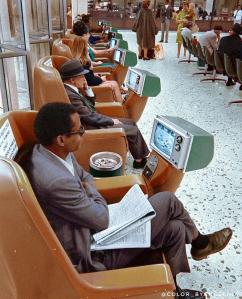
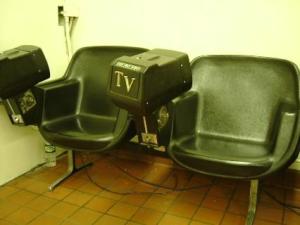
Instead of telling you just my memories, I would like to hear your memories. What is the first song you remember hearing that stuck with you? For me, the answer is one song I heard in 1971. Leaving on a Jet Plane, which ironically I heard in an airport picking up a family member. I can still see the airport with those Tel-A-Chairs around…do you remember those? I can also remember the smell of the airport… no, not a bad one.
Anyway…what is the first song you remember?
Tel-A-Chairs were coin-operated televisions that you would put a dime or a quarter into to watch a few minutes of a show. They were at airports, bus stations, and train stations. I would LOVE to have one of those.
Marshall reminds me of Nick Lowe a little because they make every song sound like a potential hit in a good way. It’s a kind of song that makes everything feel alright for three minutes. It’s one of those perfect power pop songs.
He got his first break playing John Lennon in the off-Broadway touring company of the musical Beatlemania between 1978-1980. Crenshaw said: “In the beginning, I was bothered by it, as an egotistical young person, maybe because I had just gotten out of Beatlemania, and I was sick of any kind of heavy association with some other figure.”
He later played Buddy Holly in La Bamba in 1987. “I’ve been a Buddy Holly fan all my life. The joy still comes across in his music. It’s really got its own je ne sais quoi. It really stands apart from a lot of ’50s rock, because it conveys a sense of intimacy. I think it’s because it was made in this little building on the side of a highway late at night with this isolated group of people.”
Marshall Crenshaw’s 1982 self-titled debut is a rare bird in the rock canon, a flawless record that never seems to age. On the album with the jangle of Someday, Someway and the Buddy Holly bop of Cynical Girl, Mary Anne is the track that quietly steals the show. That chorus. It just opens up like sunshine bursting through the clouds. “Mary Anne, you’re not alone,” Crenshaw assures her, and suddenly you’re not alone either.
The arrangement is a masterclass in restraint. The chiming guitars are pure Rickenbacker, and the bassline has a McCartney-esque melody. No frills, no tricks, just three minutes of songcraft that feels like it could’ve been pulled from AM radio in 1966. In the endless search for a great pop song, Mary Anne is the kind of track that makes you stop searching for a while.
Marshall Crenshaw peaked at #50 on the Billboard album charts in 1982. As the old phrase goes…it’s got more hooks than a tackle box.
Mary Anne
It isn’t such a crime It isn’t such a shame It happens all the time You shouldn’t take the blame Go on and have a laugh Go have a laugh on me Go on and have a laugh At all your misery
Mary Anne, Mary Anne (don’t cry Mary Anne) I really wanna tell you Mary Anne, Mary Anne I’m thinking of you Mary Anne, Mary Anne (don’t cry Mary Anne) I really wanna tell you Mary Anne, Mary Anne, Mary Anne
You take a look around And all you seem to see Is bringing you down As down as you can be Go on and have a laugh Go have a laugh on me Go on and have a laugh At how bad it can be
Mary Anne, Mary Anne (you’ll be all right) I really wanna tell you Mary Anne, Mary Anne I’m thinking of you Mary Anne, Mary Anne (you’ll be all right) I really wanna tell you Mary Anne, Mary Anne, Mary Anne
Mary Anne, Mary Anne (goodnight Mary Anne) I really wanna tell you Mary Anne, Mary Anne I’m thinking of you Mary Anne, Mary Anne (goodnight Mary Anne) I really wanna tell you Mary Anne, Mary Anne, Mary Anne
My sister, who shared such classics as Down By the Lazy River by the Osmonds with me, also shared some good stuff. She liked Mellencamp before he was known as Mellencamp; she had the album Nothin’ Matters and What If It Did before the hits like “Jack and Diane” shot John to stardom.
This song was not on that album, but she had this single back in the late seventies. Let’s rewind. In 1979, Mellencamp was still going by John Cougar, a name thrown to him by his manager in a transparent attempt to give him some glam-rock marketability. He hated it, but he played the game. The song first surfaced on A Biography, his second album, which only saw release in Australia in 1978.
When it finally hit U.S. ears via the album John Cougar a year later, it sounded like something beamed in from a Midwestern garage. The album peaked at #64 on the Billboard 100 and #77 in Canada in 1979.
On the album version, the intro alone is a beast. Nearly three minutes of instrumental buildup, a swirling, stomping jam that sounds like an E Street Band warm-up exercise. Mellencamp makes you wait. When he finally spits out that opening line, I need a lover who won’t drive me crazy, you welcome it.
Mellencamp would later refine his sound, focusing on heartland anthems and a few ballads. But this song is a declaration of frustration, lust, and escape. The song peaked at #28 on the Billboard 100 in 1979 after being rereleased.
I Need A Lover
I need a lover that won’t drive me crazy (I need a lover that won’t drive me crazy) I need a lover that won’t drive me crazy Some girl that knows the meaning of, “Hey, hit the highway”
Well, I’ve been walkin’ the streets up and down Racing through the human jungles at night I’m so confused, my mind is indifferent Hey, I’m so weak, won’t somebody shut off that light? Aw
Electricity runs through the video And I watch it from this hole I call home And all the stonies go dancin’ to the radio And I got the world callin’ me up here Tonight on the phone
I need a lover that won’t drive me crazy Some girl to thrill me and then go away I need a lover that won’t drive me crazy Some girl that knows the meaning of, uh “Hey, hit the highway”
Well, I’m not wiped out by this poolroom life I’m living I’m gonna quit this job, and go to school, or head back home And I’m not askin’ to be loved or be forgiven Hey, I just can’t face shakin’ in this bedroom One more night alone
I need a lover that won’t drive me crazy I need a lover that won’t drive me crazy I need a lover that won’t drive me crazy Some girl that knows the meaning of, uh “Hey, hit the highway”
I need a lover that won’t drive me crazy Some girl to thrill me and then go away I need a lover that won’t drive me crazy Some girl that knows the meaning of, uh “Hey, hit the highway” You betcha
This song is for Song Lyric Sunday for Jim Adams’s blog. This week, the theme is to find a song that is based on reality. A prompt inspired by Badfinger (Max) of PowerPop. Whoever that crazy guy is.
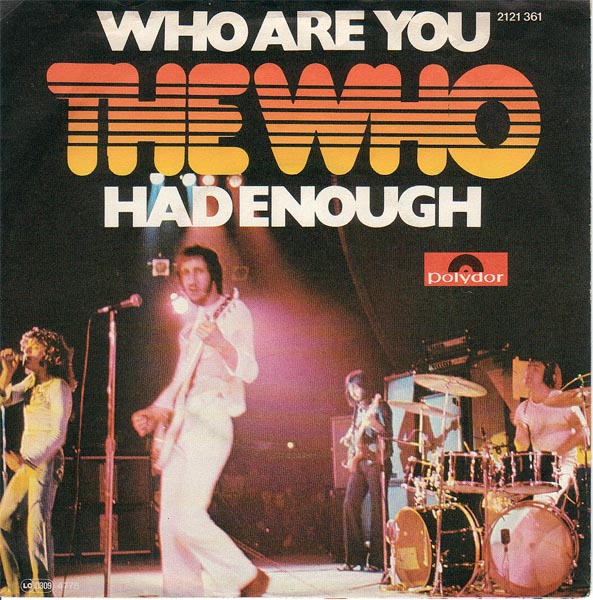
Great song by The Who and one of the first Who songs I knew. Keith Moon was not in the best shape by this time, but his drumming on this is still fantastic. The song helped define classic radio along with its siblings Baba O’Riley and Won’t Get Fooled Again. Unlike some 80s synth sounds, these synths of those three songs still sound fresh today.
Pete Townshend wrote it in the aftermath of a meeting with some industry suits, wandered into a Soho pub, ran into some of the Sex Pistols, and came out very drunk with a bruised ego and the chorus to one of The Who’s most iconic late-period tracks. Rock bottom, meet the charts. This song, released in August 1978, was the title track to what would turn out to be Keith Moon’s final album. He died three weeks after its release, and that ghost haunts the band to this day.
This isn’t the mod, youthful energy of My Generation anymore, it’s the sound of grown men staring into the abyss of their own legend. The Who had spent a decade writing operas, smashing instruments, and becoming arena rock icons. And suddenly they were competing with punk bands they helped inspire.
Townshend once said, Who Are You was a cry of frustration, about the music industry, about the punk movement, about himself. Many of Townsend’s songs are about real-life events. The song peaked at #14 in the Billboard 100 and #18 in the UK in 1978. The album Who Are You peaked at #2 on the Billboard Album Charts, #2 in Canada, and #6 in the UK.
Pete Townshend: “I’d like to think that where the song came from wasn’t the feet that I was drunk when I did the demo, but the fact that I was f–king angry with Allen Klein, and that the song was an outlet for that anger.”
Roger Daltrey: “We were getting incredible accolades from some of the new Punk bands. They were saying how much they loved The Who, that we were the only band they’d leave alive after they’d taken out the rest of the establishment! But I felt very threatened by the Punk thing at first. To me it was like, ‘Well, they think they’re f—ing tough, but we’re f—ing tougher.’ It unsettled me in my vocals. When I listen back to ‘Who Are You?’ I can hear that it made me incredibly aggressive. But that’s what that song was about. Being pissed and aggressive and a c—!”
Who Are You
Who are you? Who, who, who, who? Who are you? Who, who, who, who? Who are you? Who, who, who, who? Who are you? Who, who, who, who?
I woke up in a Soho doorway A policeman knew my name He said “You can go sleep at home tonight If you can get up and walk away”
I staggered back to the underground And the breeze blew back my hair I remember throwin’ punches around And preachin’ from my chair
Well, who are you? (Who are you? Who, who, who, who?) I really want to know (Who are you? Who, who, who, who?) Tell me, who are you? (Who are you? Who, who, who, who?) ‘Cause I really want to know (Who are you? Who, who, who, who?)
I took the tube back out of town Back to the Rollin’ Pin I felt a little like a dying clown With a streak of Rin Tin Tin
I stretched back and I hiccupped And looked back on my busy day Eleven hours in the Tin Pan God, there’s got to be another way
Who are you? Ooh wa ooh wa ooh wa ooh wa
Who are you? Who, who, who, who? Who are you? Who, who, who, who? Who are you? Who, who, who, who? Who are you? Who, who, who, who?
Well, who are you? (Who are you? Who, who, who, who?) I really want to know (Who are you? Who, who, who, who?) Tell me, who are you? (Who are you? Who, who, who, who?) ‘Cause I really want to know (Who are you? Who, who, who, who?)
I know there’s a place you walked Where love falls from the trees My heart is like a broken cup I only feel right on my knees
I spit out like a sewer hole Yet still receive your kiss How can I measure up to anyone now After such a love as this?
Well, who are you? (Who are you? Who, who, who, who?) I really want to know (Who are you? Who, who, who, who?) Tell me, who are you? (Who are you? Who, who, who, who?) ‘Cause I really want to know (Who are you? Who, who, who, who?)
I want to thank halffastcyclingclub for bringing this song up when reading the Levon Helm post called The Mountain I posted last week. I’d never heard it and fell for it immediately. I listened to it over and over again. Such a cool vibe of looking back in this song.
The song is not just a song, it’s a family photograph yellowing at the edges, the kind you keep tucked in a drawer and only pull out when you’re feeling brave enough to remember. Written for his parents, and about a real place in Kentucky that no longer exists the way it used to. We can all relate to this. I grew up in a small city in Tennessee, and it’s completely different now than it was when I grew up. Sometimes progress is good and sometimes not.
I don’t usually dissect songs, but this one hit me. Prine was only in his mid-twenties when he wrote it, but he already sounded like someone who’d lived a dozen lives. It’s not just a memory, it’s a eulogy with a banjo. “And daddy won’t you take me back to Muhlenberg County / Down by the Green River where Paradise lay…” And the punchline comes just a beat later: “…Well I’m sorry my son, but you’re too late in askin’ / Mr. Peabody’s coal train has hauled it away.”
That’s it right there. Prine gives you a warm hug and slips a dagger in your back before the first verse is out. It’s a protest song in overalls, gentle, but furious. Not angry, but quietly heartbroken. He’s not shouting down injustice; he’s telling you what it feels like when the land your family once lived on gets strip-mined out of existence.
This song was the fifth track on his 1971 debut album, which is ridiculous when you think about it. As young as he was, and writing a song like this. Plenty of artists have covered Paradise. Dwight Yoakam, John Denver, John Fogerty, even the Everly Brothers, but none of them touch the original. Because it wasn’t just a song to Prine. It was a love letter to something that couldn’t love him back anymore.
Lynn Anderson released it in 1975, and it was the most commercially successful release. It peaked at #26 on the Billboard Country Charts and #16 on the Canadian Country Charts.
Paradise
When I was a child my family would travel Down to Western Kentucky where my parents were born And there’s a backwards old town that’s often remembered So many times that my memories are worn
And Daddy, won’t you take me back to Muhlenberg County? Down by the Green River where Paradise lay Well, I’m sorry, my son, but you’re too late in asking Mister Peabody’s coal train has hauled it away
Well, sometimes we’d travel right down the Green River To the abandoned old prison down by Airdrie Hill Where the air smelled like snakes we’d shoot with our pistols But empty pop bottles was all we would kill
And Daddy, won’t you take me back to Muhlenberg County? Down by the Green River where Paradise lay Well, I’m sorry my son, but you’re too late in asking Mister Peabody’s coal train has hauled it away
Then the coal company came with the world’s largest shovel And they tortured the timber and stripped all the land Well, they dug for their coal till the land was forsaken Then they wrote it all down as the progress of man
And Daddy, won’t you take me back to Muhlenberg County? Down by the Green River where Paradise lay Well, I’m sorry my son, but you’re too late in asking Mister Peabody’s coal train has hauled it away
When I die, let my ashes float down the Green River Let my soul roll on up to the Rochester Dam I’ll be halfway to Heaven with Paradise waitin’ Just five miles away from wherever I am
And Daddy, won’t you take me back to Muhlenberg County? Down by the Green River where Paradise lay Well, I’m sorry my son, but you’re too late in asking Mister Peabody’s coal train has hauled it away
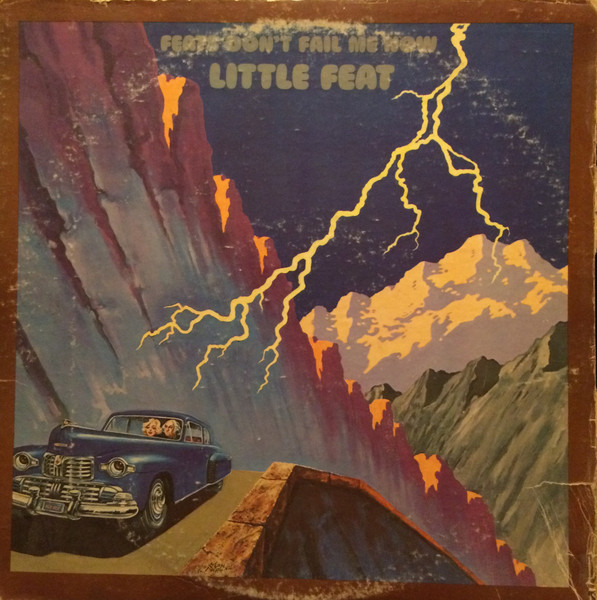
I love Little Feat. A musician’s band that sounds great. This song is filled with funk and southern-fried sophistication. It’s really tight at 2 minutes and 57 seconds; this track from Little Feat’s Feats Don’t Fail Me Now album is equal parts swagger, groove, and swampy gospel-tinged funk. It captures everything that made the Lowell George-led era of the band so distinct: tight arrangements, terrific guitar, and soulful vocals.
Only Little Feat could’ve made this record. The band was already deep into their groove by 1974, but this album is where the voodoo met the vinyl with that sound. Lowell George, rock and roll’s most underrated guitarist and a man who sounded like he’d lived three lifetimes by 29, delivers a great vocal as well. “Two degrees in be-bop, a PhD in swing / He’s the master of rhythm, he’s a rock and roll king!” It’s a tongue-in-cheek tribute to the healing power of boogie, but also a serious testament to Little Feat’s freakish musical chemistry and ability.
The whole track hangs on that in-the-pocket rhythm section. The band is in lockstep throughout, Richie Hayward’s drumming is crisp and funky, Paul Barrere and Lowell George’s guitars weave effortlessly, and Bill Payne’s piano rides just behind the beat, and it could have carried the song alone. There’s even some gospel call-and-response in the backing vocals. It’s a shuffle, but it’s never lazy. It’s slick, but not slick-slick.
George’s slide solo? It says something and punctuates the song. Feats Don’t Fail Me Now peaked at #36 on the Billboard Album Charts and #40 in Canada in 1974. The song peaked at #34 on the Billboard 100 later in 1981.
Rock and Roll Doctor
There was a woman in Georgia didn’t feel just right She had fever all day and chills at night Now things got worse, yes a serious bind At times like this it takes a man with such style I cannot often find A doctor of the heart and a doctor of mind
If you like country with a boogie beat he’s the man to meet If you like the sound of shufflin’ feet he can’t be beat If you wanna feel real nice, just ask the Rock and Roll doctor’s advice
It’s just a country town but patients come From Mobile to Moline from miles around Nagodoches to New Orleans In beat-up old cars or in limousines To meet the doctor of soul, he’s got his very own thing
Two degrees in be-bop, a PHD in swing He’s the master of rhythm he’s a rock and roll king
If you like country with a boogie beat he’s the man to meet (he’s the man to meet) If you like the sound of shufflin’ feet he can’t be beat (I say he can’t be beat) If you… If you wanna If you wanna feel real nice, just ask the Rock and Roll doctor’s advice
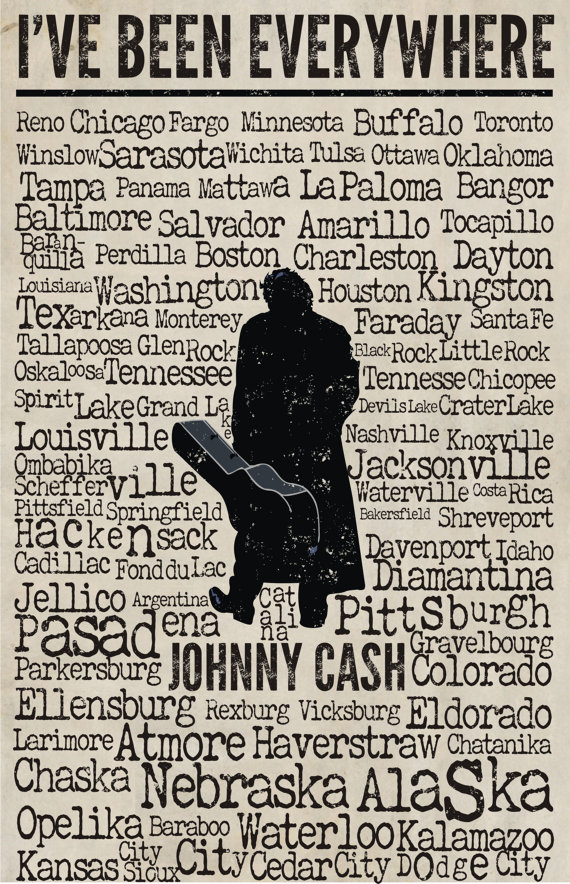
I don’t think any performer is as popular and liked across generations and genres as Johnny Cash. I’ve met hard rock, country, and blues fans who love him. He was an American Icon. This man had been everywhere, and he had the stories to back it up.
The song originated in Australia in 1959, written by Geoff Mack, which name-checked towns like Mooloolaba and Wollongong. Lucky Starr popularized it in Australia at the time. Hank Snow gave it an American twist in the early ‘60s, with a rapid-fire list of U.S. towns delivered at a gallop, sounding like he was being chased by a state trooper and an angry tour promoter at the same time.
Hank Snow made this song popular in 1962 by taking it to #1 on the Billboard Country chart and #68 on the Billboard 100. Johnny covered this song in 1996, and it’s the version I remember. Cash had a way of making a song his own. He released it in 1996 but had been doing it for years live.
The genius of it, though, is that despite the fast pace, it never feels like a gimmick in his hands. There’s that world-weary baritone voice, like a man unrolling a crumpled map that’s been folded a thousand times. The song becomes not just about where he’s been, but what he’s seen, motels, hotels, and empty stages. He’s been everywhere, but not always by choice.
The song was on the album American II: Unchained produced by Rick Rubin. The album peaked at #26 on the Billboard Country Album Charts and #170 on the Billboard 200 in 1996.
I hope everyone living in the U.S. has a happy, safe Fourth of July! I know I will!
I’ve Been Everywhere I was totin’ my pack along the dusty Winnemucca road, When along came a semi with a high and canvas-covered load. “If you’re goin’ to Winnemucca, Mack, with me you can ride.” And so I climbed into the cab and then I settled down inside. He asked me if I’d seen a road with so much dust and sand. And I said, “Listen, I’ve traveled every road in this here land!”
I’ve been everywhere, man. I’ve been everywhere, man. Crossed the desert’s bare, man. I’ve breathed the mountain air, man. Of travel I’ve a-had my share, man. I’ve been everywhere.
I’ve been to Reno, Chicago, Fargo, Minnesota, Buffalo, Toronto, Winslow, Sarasota, Wichita, Tulsa, Ottawa, Oklahoma, Tampa, Panama, Mattawa, La Paloma, Bangor, Baltimore, Salvador, Amarillo, Tocopilla, Barranquilla, and Padilla, I’m a killer.
I’ve been everywhere, man. I’ve been everywhere, man. Crossed the desert’s bare, man. I’ve breathed the mountain air, man. Of travel I’ve a-had my share, man. I’ve been everywhere.
I’ve been to Boston, Charleston, Dayton, Louisiana, Washington, Houston, Kingston, Texarkana, Monterey, Faraday, Santa Fe, Tallapoosa, Glen Rock, Black Rock, Little Rock, Oskaloosa, Tennessee to Hennessey, Chicopee, Spirit Lake, Grand Lake, Devil’s Lake, Crater Lake, for Pete’s sake.
I’ve been everywhere, man. I’ve been everywhere, man. Crossed the desert’s bare, man. I’ve breathed the mountain air, man. Of travel I’ve a-had my share, man. I’ve been everywhere.
I’ve been to Louisville, Nashville, Knoxville, Ombabika, Schefferville, Jacksonville, Waterville, Costa Rica, Pittsfield, Springfield, Bakersfield, Shreveport, Hackensack, Cadillac, Fond du Lac, Davenport, Idaho, Jellico, Argentina, Diamantina, Pasadena, Catalina, see what I mean-a.
I’ve been everywhere, man. I’ve been everywhere, man. Crossed the desert’s bare, man. I’ve breathed the mountain air, man. Of travel I’ve a-had my share, man. I’ve been everywhere.
I’ve been to Pittsburgh, Parkersburg, Gravelbourg, Colorado, Ellensburg, Rexburg, Vicksburg, El Dorado, Larimore, Admore, Haverstraw, Chatanika, Chaska, Nebraska, Alaska, Opelika, Baraboo, Waterloo, Kalamazoo, Kansas City, Sioux City, Cedar City, Dodge City, what a pity.
I’ve been everywhere, man. I’ve been everywhere, man. Crossed the desert’s bare, man. I’ve breathed the mountain air, man. Of travel I’ve a-had my share, man. I’ve been everywhere.
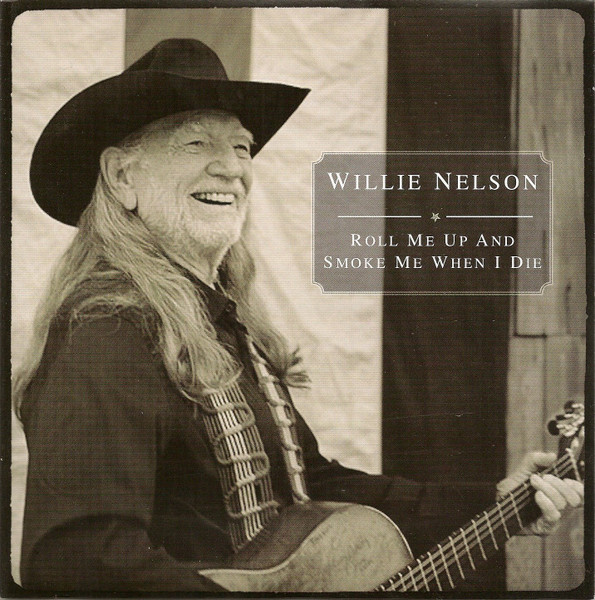
Wanted to have a little fun today. What better way to celebrate July 4th than with Willie Nelson and my next American Artist? The Willie Nelson set I watched on June 25th was probably the first real country act I’ve seen in concert, other than in street fairs in Nashville. Willie has done what few others have: appealed to a vast array of genres like Johnny Cash and Dolly Parton. The man is 92 and still going out there every night.
The couple in front of us took this picture.
If there were a Mount Rushmore for country outlaws, Willie Nelson wouldn’t just be on it, he’d be carving the damn thing with a joint in one hand and Trigger (his guitar) slung over his back. And with this song, Willie laughs at his legend and turns it into a porch-sing-along for the afterlife.
Released in 2012 on his Heroes album, this track arrived with a puff of smoke, wrapped in that unmistakable red-headed goodness. It’s a song about death that somehow feels like a party. Leave it to Willie to make his own funeral plans sound like a tailgate party. Beneath the title and chorus is something far more poignant: a man looking mortality in the eye and saying, You’re not killing my vibe.
The lineup of guests: Snoop Dogg, Kris Kristofferson, and Jamey Johnson all pile in for the chorus like it’s some high-end dive bar jam session. The vibe is half gospel, half roadhouse. The songwriters are Willie Nelson, Buddy Cannon, Rich Alves, John Colgin, and Mike McQuerry.
Roll Me Up and Smoke Me When I Die
Roll me up and smoke me when I die And if anyone don’t like it, just look ’em in the eye I didn’t come here and I ain’t leaving, so don’t sit around and cry Just roll me up and smoke me when I die
Now you won’t see no sad and teary eyes When I get my wings and it’s my time to fly Call my friends and tell ’em there’s a party, come on by And just roll me up and smoke me when I die
Roll me up and smoke me when I die And if anyone don’t like it, just look them in the eye I didn’t come here and I ain’t leaving, so don’t sit around and cry But just roll me up and smoke me when I die
And I’d go, I’ve been here long enough So sing and tell more jokes and dance stuff Just keep the music playing, that will be a good goodbye Roll me up and smoke me when I die
Roll me up and smoke me when I die And if anyone don’t like it, just look ’em in the eye I didn’t come here and I ain’t leaving, so don’t sit around and cry Just roll me up and smoke me when I die
Hey, take me out and build a roaring fire Roll me in the flames for about an hour And take me out and twist me up and point me towards the sky And roll me up and smoke me when I die
Roll me up and smoke me when I die And if anyone don’t like it, just look ’em in the eye I didn’t come here and I ain’t leaving, so don’t sit around and cry Just roll me up and smoke me when I die
I first heard this song on a car commercial. It was nice to hear something from T. Rex other than Bang a Gong. T Rex was never huge in America, but for a few years was very popular in the UK. They were one of the biggest UK Glam Rock bands.
It was released in 1973 as a non-album single. 20th Century Boy opens with a riff that could crack the sidewalk. It doesn’t crawl out of the speakers so much as leap from them. It’s all swagger, glam, and distortion turned up to 11.
The song sounds so modern with Tony Visconti’s production. It never cracked the Top 10 in the U.S., but in the UK it was a smash. The song found new life in commercials and soundtracks. It’s Bolan doing what he did best, selling you not just a song, but an attitude. He wasn’t offering truth or authenticity; he was offering escape.
Their popularity soared in 1971-72, and a mania that was called “T. Rexstasy”. In 1972, Ringo Starr produced and directed a concert film called Born to Boogie about T Rex. This song peaked at #3 in the UK Charts in 1973 and #11 in 1991.
The band only charted 3 songs in the Billboard 100 with one top ten hit…Bang a Gong. In the UK, they scored 4 number ones and 21 top forty songs.
20th Century Boy
Friends say it’s fine Friends say it’s good Everybody says it’s just like Rock ‘n Roll I move like a cat Charge like a ram Sting like a bee Babe I wanna be your man
Well it’s plain to see you were meant for me Yeah, I’m your boy, your 20th Century toy
Friends say it’s fine Friends say it’s good Everybody says it’s just like Rock ‘n Roll Fly like a plane Drive like a car Hold out your hand Babe I’m gonna be your man
And it’s plain to see you were meant for me Yeah, I’m your toy, your 20th Century boy
20th Century toy, I wanna be your boy [4x]
Friends say it’s fine Friends say it’s good Everybody says it’s just like Rock ‘n Roll Move like a cat Charge like a ram Sting like a bee Babe I’m gonna be your man
And it’s plain to see You were meant for me Yeah I’m your toy Your 20th Century boy
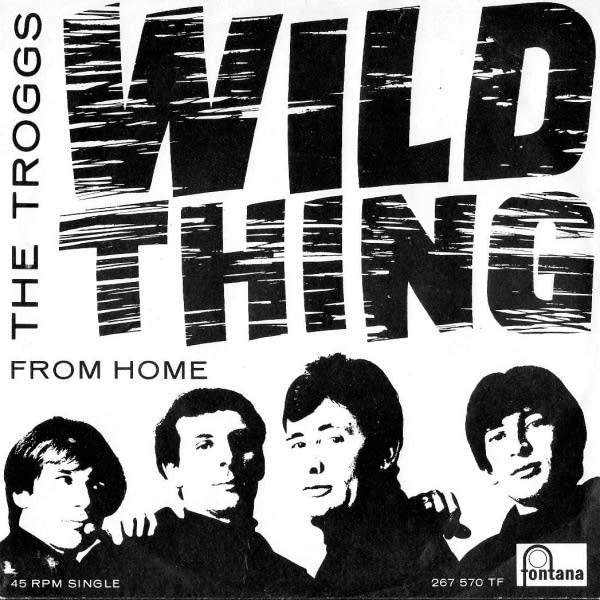
I had an obsession with this band when I was a kid. I wanted to know everything about them, but back then, you could not search Google or find many any books on The Troggs. I did learn about the Trogg Tapes, which were hilarious! A friend of mine had a bootleg cassette of them in the 80s. It’s them in a session and probably breaking the record for the number and variations of f**k in a session. It probably has more than Scarface did with Pacino. It was better than many comedy albums I bought back then. “Put a Little Bit of F***ing Fairy Dust Over the Bastard!” It doesn’t get much rock and roll than that.
Some songs arrive like lightning. This song showed up like a Molotov cocktail tossed into the tea party of mid-’60s pop, three chords, one brain cell, and more raw tension than a teenage first kiss. This is pre-punk, garage rock, and sexual threat, all crammed into 2 minutes and 34 seconds of glorious slop. The opening chord staggers into the room like a drunk on a bender.
If you were in a garage band in the sixties…or now, you probably have played this song. This is the Troggs’ claim to fame in the history of Rock and Roll. They had other good songs, but nothing that had this much influence. The song is as raw as you could get at the time. It’s also a song like ‘Louie Louie’ that every garage band has played or at least tried to play once.
Reg Presley, one of rock’s unlikeliest frontmen (a former bricklayer with a sneer in his voice), had just enough voice to get him through. They were not stocked with great talent, but they sounded raw, and they had songs that were tailored for them. Instead of excellent musical chops, they had enthusiasm and just enough talent to make it exciting. And it worked.
The band combined a pop touch with a garage band style, resulting in two top ten songs and four songs in the Billboard 100. This song peaked at #1 on the Billboard 100, #2 in the UK, and #2 in Canada in 1966.
Many people will remember the Jimi Hendrix version at the Monterey Pop Festival in 1967. Comedian Sam Kinison also did a version in 1989. The first version of this song was by The Wild Ones in 1965. Secondhandsongs shows 153 versions of this song.
Chip Taylor (whose real name was Chip Voight) was a singer-songwriter who wrote this song. Taylor is the brother of actor Jon Voight and the uncle of Angelina Jolie. He has made a fortune on this song because it’s been in countless movies and TV Shows. He also wrote Angel of the Morning.
Chip Taylor: “I was on the floor laughing when I was through. Wild Thing’ came out in a matter of minutes. The pauses and the hesitations are a result of not knowing what I was going to do next.”
Reg Presley: “There was a guy there (at DJM) called Dennis Berger, who had a heap of demos on his desk. The first one I picked up was Wild Thing. I took a look at the lyric sheet and read: ‘Wild Thing-you make my heart sing-you make everything groovy.’ It seemed so corny, I thought, Oh my God, what are they doing to us! Then I played Chip Taylor’s demo- just guitar and him- and it was incredible. The other boys all liked it too. Chip Taylor later told us our version was just what he wanted.”
Wild thing
You make my heart sing You make everything groovy Wild thing Wild thing, I think I love you But I wanna know for sure Come on and hold me tight I love you
Wild thing You make my heart sing You make everything groovy Wild thing
Wild thing, I think you move me But I wanna know for sure So come on and hold me tight You move me
Wild thing You make my heart sing You make everything groovy Wild thing Oh, come on, wild thing Shake it, shake it, wild thing
If Paul Brady’s name doesn’t ring out like Dylan’s or Springsteen’s, that might just be because he was too versatile for his own good. In the music industry, which prefers its musicians to pick a lane and stick to it, Brady chose the scenic route, wandering from Irish traditional ballads to blue-eyed soul, from Dylan-esque singer-songwriter fare to ‘80s radio pop.
Brady was born in Strabane, a town in County Tyrone, Northern Ireland in 1947. He was raised in a musical household (his mother taught piano), Brady was classically trained early on but gravitated toward American rock and blues as a teenager, playing in local showbands before finding his way into the 1960s Dublin folk scene.
This song is on his album Trick or Treat, released in 1991. Paul was a busy man on this album. He is listed doing vocals, mandolin, piano, keyboards, tin whistle, percussion, drum programming, acoustic, and electric guitar. Some of Toto helped him out in the studio for this one. One of them was Toto drummer Jeff Porcaro in one of the last projects before his death. This song sounds like it should have been blaring out on the radio in the summer of 1991. The album did peak at #1 on the Irish Charts.
I want to add one more song from his second album, Hard Station, to give you another example of him. Hard Station was released a decade earlier than Trick or Treat in 1981. This man is worth checking out!
On Crazy Dreams, that opening guitar riff is tight and dry, like a fuse just waiting to burn down. Then Brady’s voice comes in, urgent, soulful, every syllable laced with exasperation and hope. It’s very smooth without being too smooth.
Can’t Stop Wanting You
Hot words on a summer night You ‘n’ me having a fight One drink and it all come out Before I knew what we were fightin’ about
Hurt come from a midnight place Dressed in a web of lace Brainstorm blowin’ up inside I can’t stop wanting you I can’t stop wanting you
Now I know it’s a modern world And baby you’re a modern girl And I try to be tops at school Pickin’ up on these modern rules Teacher come and teacher go Teacher know when a boy is slow This boy got a lot to learn I can’t stop wanting you I can’t stop wanting you
It’s a new kind of world For a boy and a girl And my mind’s in a whirl I can’t stop wanting you I can’t stop wanting you
Hot words on a summer night You ‘n’ me having a fight One drink and it all come out Before I knew what we were fightin’ about I tried but the truth is out I can’t stop wanting you I can’t stop wanting you
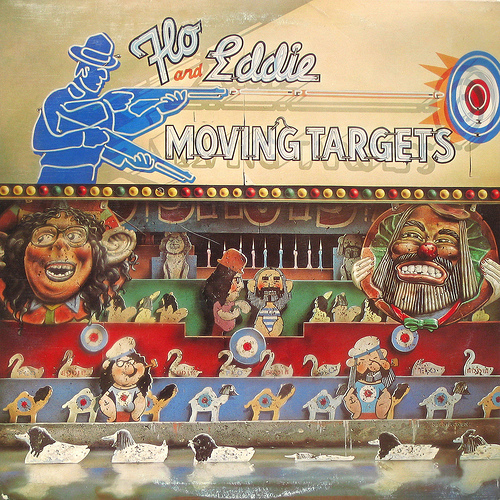
When I heard this song, I had to find out who it was. I was watching Late Night with the Devil, and this song played. I finally looked at the Soundtrack and to my surprise, it was Flo and Eddie. Flo (Phlorescent Leech) is Mark Volman, and Eddie is Howard Kaylan. Mark and Howard were the two founding members of the 1960s band The Turtles. The Turtles had a large vocal sound. Kaylan is a very good singer, and when combined with Volman, it made a unique sound for the Turtles.
After the Turtles broke up, Howard and Mark Volman went by the name “Flo and Eddie” for legal reasons (old Turtles contract). They made a career of unusual rock-comedy albums and developed a following. They immediately began playing with Frank Zappa and the Mothers of Invention and were there when Frank was pushed off the stage at the Rainbow. They were also in the Zappa movie, 200 Motels.
Flo & Eddie were what happened when two of the strangest, funniest, and most musically savvy minds to ever pass through the Top 40 were given free rein. This song was never a hit. It didn’t even scrape the charts. But like most of the best Flo & Eddie material, it was an inside joke with enough melody to trick you into thinking it WAS a hit. It’s a song about being past your prime, sung with the kind of confidence that says you never bought into the hype in the first place. If this came on the radio between Pablo Cruise and Seals & Crofts, you might not notice anything was different until you realized it was mocking both of them while sounding just as good.
The song opens with a clean piano, all smooth and clean guitars, but the lyrics are just… off. The chorus says “keep it warm,” but what is it, exactly? A bed? A place in your heart? An old seat at the Hollywood Squares? Richard Dawson’s seat on Match Game? Kaylan delivers it with such sincere charm that it takes a few listens before you realize it’s about disillusionment, being outdated, all the while dressed up in a Beach Boys falsetto.
The production was immaculate. Jim Pons (also ex-Turtle, ex-Zappa) lays down a bass line that fits the song perfectly. The arrangements swirl like mid-70s L.A. excess seen through a cracked, warped rearview mirror.
The song was on their 1976 album Moving Targets.
Keep It Warm
Write another song for the money Something they can sing, not so funny Money in the bank to keep us warm
Stick another grape in the juicer Or fill your guts with grease and get looser You are what you eat, so eat it warm
Roll another joint for the Gipper Get the Gipper high, he gets hipper Stick it in his mouth and keep him warm
Elect another jerk to the White House Gracie Slick is losing her Dormouse Take her off the streets and keep her warm (oh-oh)
Fight another war if they make you Squeal on a friend or they’ll take you The future’s in your lap, so keep it warm
Warm, here in your arms (ooh-ooh, ooh-ooh) Safe from all harm, where I belong (ooh-ooh, ooh-ooh) Warm, cozy and calm (ooh-ooh, ooh-ooh) Another dawn, together warm (ooh-ooh, ooh-ooh)
My Woody’s broken down by the beach now And TM’s gotten far out of reach now Tell the Mahareesh to keep it warm (We’re picking up good vibrations)
And George is suing Paul, suing Ringo And immigration wants John and Yoko All they need is love to keep them warm
Kill another whale with your power Shoot a bunch of kids from a tower Snipe them in their cars, blood keeps them warm
Or make a better world from the old one Make yourself a baby and hold one Hold her in your arms and keep her warm
Keep her warm, keep her warm Keep her warm, keep her warm Keep her warm, keep her warm Keep her warm, keep her warm Keep her warm…
I remember when this album was released, it sounded so pure. Some singers you can spot a mile away. Dylan, Young, Cash, and Levon are part of that group. His strong southern roots tie him to a worn-in in earthy sound.
Sometimes a singer is married to a feeling that no one else has, and Levon had that quality. Some songs are meant to be heard by him, and Robbie Robertson was the first to notice this and used it to its full effect. This song was on Dirt Farmer, Levon’s 2007 comeback record and his first solo album in a quarter-century. He was battling throat cancer when he recorded it, his voice raspier than in the old Band days, but somehow more potent.
The song was written by Steve Earle, and Levon brought the song to life. Earle does a great version of it as well, but it was a perfect song for Levon to interrupt. The arrangement is a slow march of banjo, fiddle, and mandolin, paced like a funeral procession up a foggy Appalachian ridge. But it’s that voice that carries the load. Levon sings it not as a narrator but as a ghost buried with his kin under the mountain he gave his life to.
What’s remarkable about Dirt Farmer is how Helm made it in the twilight of his life, and yet it plays like the core of his legacy. He wasn’t trying to impress anyone or reinvent The Band; it’s pure Levon. It was produced by Larry Campbell and Amy Helm, his daughter.
The album won the Grammy Award for Best Traditional Folk Album in February 2008. I usually don’t list Grammy awards, but if any album deserved an award…this one does.
This live video is shaky but the only one I found. The sound is fine.
The Mountain
I was born on this mountain a long long time ago Before they knocked down the timber and stripped mined all the coal When you rose up in the morning before it was light To go down in that dark hole and come back up at night I was born on this mountain, this mountain’s my home She holds me and she keeps me from a worry and a woe Well they took everything she gave, she gave it now she’s gone But I’ll die on this mountain, this mountain’s my home
I was young on this mountain but now I am old And I knew every holler, every cool swimmin’ hole Til a one night I lay down and I woke up to find That my childhood was over I went back down in the mine
There’s a hole in this mountain it’s dark and it’s deep And God only knows all the secrets that it keeps There’s a chill in the air only miners can feel There’re ghosts in the tunnels that the company sealed
A thank you to Dave for publishing this for Turntable Talk. The theme was looking for artists who left popular bands to go solo. I could have done a Beatle easily, but Pete was perfect for this.
Pete recorded Empty Glass a little before the Who recorded their first album without Keith Moon, Face Dances. This was Pete Townshend’s only solo American Top 10 hit, but it charted as high as any Who song released in America… I Can See For Miles also peaked at #9.
This wasn’t The Who smashing guitars or railing against society. This was Pete, solo and sincere, pulling back the curtain and offering something deceptively simple: vulnerability, all wrapped in a three-minute pop song.
Pete always put his solo career on the back burner for The Who. On the surface, Let My Love Open the Door sounds like a pure pop song, but don’t be fooled. There’s gospel in its meaning. Townshend was deep in his Meher Baba-influenced spiritual quest at the time, and this song doubles as a kind of secular hymn. God, lover, self, take your pick. The message lands the same: let something bigger than your pain inside.
The song peaked at #9 on the Billboard 100, #5 in Canada, and #46 in the UK in 1980. The song was on the album Empty Glass, which peaked at #5 in the Billboard Album Charts, #2 in Canada, #21 in New Zealand, and #11 in the UK. Two of the musicians on this track, the bass player Tony Butler and drummer Mark Brzezicki, formed the Scottish rock quartet Big Country in 1981. Chris Thomas who produced this album, also worked with The Beatles, Pink Floyd, The Sex Pistols, Badfinger, and U2, among others.
Pete’s manager at the time didn’t think the song belonged on the album and fought against it. He said it didn’t sound like a Townshend song. He called to apologize after the song hit.
Let My Love Open The Door
When people keep repeating That you’ll never fall in love When everybody keeps retreating But you can’t seem to get enough
Let my love open the door Let my love open the door Let my love open the door To your heart
When everything feels all over Everybody seems unkind I’ll give you a four-leaf clover Take all worry out of your mind
Let my love open the door Let my love open the door Let my love open the door To your heart, to your heart
I have the only key to your heart I can stop you falling apart Try today you’ll find this way Come on and give me a chance to say
Let my love open the door It’s all I’m living for Release yourself from misery There’s only one thing gonna set you free That’s my love That’s my love
Let my love open the door Let my love open the door Let my love open the door Let my love open the door
When tragedy befalls you Don’t let it drag you down Love can cure your problems You’re so luck I’m around
Let my love open the door Let my love open the door Let my love open the door To your heart
Great song, great music, great voice. You want funk? You want soul? You want a dirty-sounding clavinet? Step right up, Rufus has got you covered. There’s something raw and unpolished here that gives the song its character. It’s not trying to be slick. It’s lean and mean, clocking in under four minutes, and still manages to say everything it needs to say. It’s still one of my favorite AM singles of the 1970s. It would fit in today as well.
Chaka… She’s the axis this record spins on. Her voice doesn’t so much sing the lyrics; she dominates them. Stevie Wonder brought a few songs to the studio, and she stunned her bandmates by saying she didn’t like them. She was 19 and pregnant and not in the best of moods. Stevie asked her for her astrological sign, and she said Aries. He then delivered this song, which she loved.
Tony Maiden’s talkbox guitar gives it that extra wobble, while Kevin Murphy’s clavinet lays down a foundation so nasty you could mop the floor with it. This song came off the 1974 album Rags to Rufus. Stevie Wonder recorded it himself in 1973 but never released it. The song peaked at #3 on the Billboard 100 and #21 in Canada in 1974. The Talk-Box, which Frampton later used, sounds great in this song.
Rufus evolved from a group called The American Breed, who had a hit with “Bend Me, Shape Me.” They took their name from a column in Popular Mechanics magazine called “Ask Rufus,” later shortened to Rufus when Chaka Khan joined the band in 1972.
Tell Me Something Good
You ain’t got no kind of feeling inside I got something that will sure ‘nough set your stuff on fire You refuse to put anything before your pride What I got something will knock all your pride aside
Tell me something good Tell me that you love me, yeah Tell me something good Tell me that you like it, yeah
Got no time is what you’re known to say I’ll make you wish there was forty eight hours to each day The problem is you ain’t been loved like you should What I got to give will sure ‘nough do you good
Tell me something good Tell me that you love me, yeah Tell me something good Tell me that you like it, yeah
You ain’t got no kind of feeling inside I got something that will sure ‘nough set your stuff on fire You refuse to put anything before your pride What I got something will knock all your pride aside
Tell me something good (oh, yeah, yeah) Tell me that you love me, yeah Tell me something good Tell me that you like it, yeah
Tell me something good (tell me baby baby, tell me) Tell me that you love me, yeah, yeah, yeah yeah Tell me something good (oh, tell me, tell me, tell me) Tell me that you like it, yeah, yeah, don’t you like it, baby?










 PowerPop... An Eclectic Collection of Pop Culture