I posted a song by the Stems earlier called Tears Me In Two and they recorded this song at the same session. They released their first EP Rosebud Volume 1 in 1985 and it included Love Will Grow.
The EP reached #72 in the Australian charts in 1986.
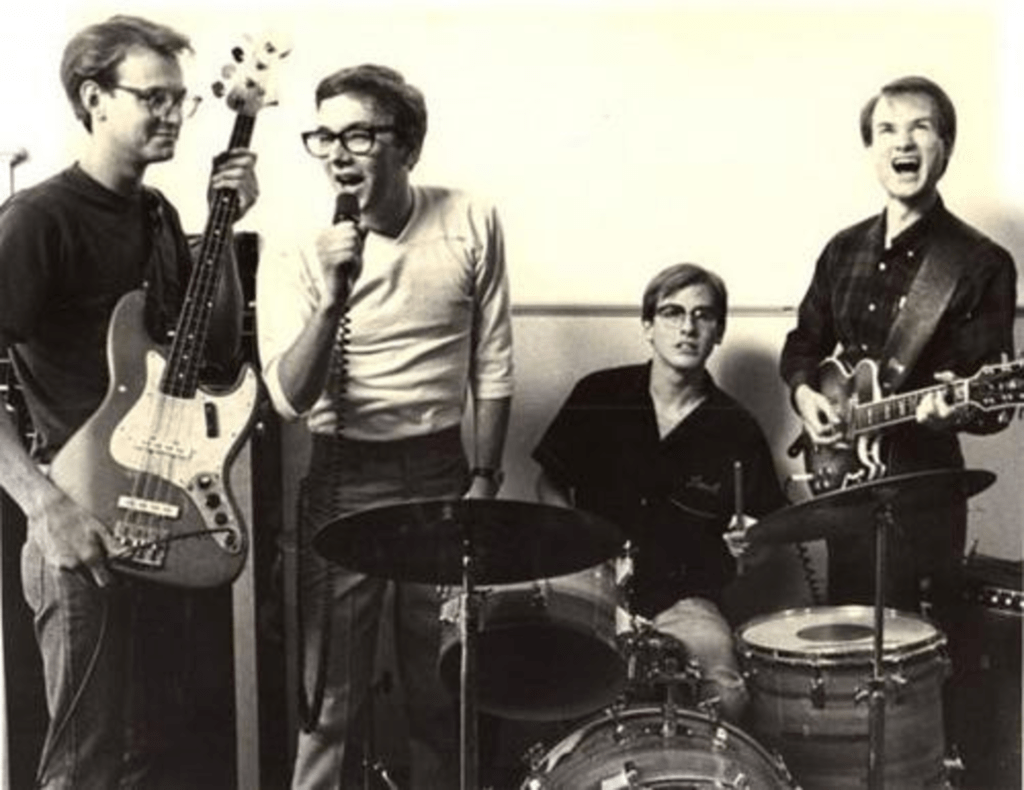
The Stems were a garage punk band formed in Perth, Western Australia in late 1983. They were hugely popular in Australia. The band broke up in 1987 and reunited in 2003 and are still together. The still have three of the original members. Dom Mariani, Julian Matthews, and David Shaw.
They are very popular to this day in Australia. Their debut single “She’s a Monster/Make you Mine” reached the top of the independent charts and also sold 500 copies in England. The single was to be the 2nd highest selling independent single for Australia in 1985, second only to the Hoodoo Gurus.
They were one of the few indie bands that sometimes made it on the mainstream charts.
Love Will Grow
Feeling down and not so bright Another lost and lonely night I try so hard not to feel this way I could not fight these blues away
Then you came along and you made me know How it is our love will grow How it is our love will grow
Yesterday I could not speak My days were sad, confused, and weak A cut was bleeding deep inside of me Anxiety that I could not hide
Then you came along and you made me know How it is our love will grow How it is our love will grow How it is our love will grow How it is our love will grow
Then you came along and you made me know How it is our love will grow How it is our love will grow How it is our love will grow How it is our love will grow
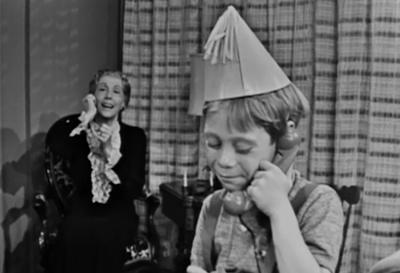
This one is one of my favorites. It’s dark and it still works today. It’s a great episode and features Bill Mumy as little Billy Bayles who just lost his grandmother or did he? The grandmother played by Lili Darvas tried to live through Billy vicariously in many ways and ignored what the mother of the child said or thought. You can feel the tension between the grandmother and her daughter in law.
This can happen in a family and cause trouble so it made the episode much more relatable. The darkness of the episode is shocking considering the time it was made.
**SPOILERS** below
This show was really heavy. It addressed the loss of a grandparent and two attempted suicides of a five year old boy. Not your average show in the 60s or now for that matter. Who knew a toy telephone could be so damn frightening? That was one determined grandmother…she wasn’t letting go of Billy even in the afterlife.
This episode is videotaped and it benefits from it…adding to eerie feeling.
Bill Mumy would appear in three Twilight Zones. He would later become known in the TV show Lost In Space.
This show was written by Charles Beaumont, Bill Idelson, and Rod Serling
Rod Serling’s Opening Narration:
As must be obvious, this is a house hovered over by Mr. Death, an omnipresent player to the third and final act of every life. And it’s been said, and probably rightfully so, that what follows this life is one of the unfathomable mysteries, an area of darkness which we, the living, reserve for the dead—or so it is said. For in a moment, a child will try to cross that bridge which separates light and shadow, and, of course, he must take the only known route, that indistinct highway through the region we call The Twilight Zone.
Summary
Billy Bayles loves his Grandma Bayles and likes the present she’s given him, a toy telephone which she says will allow them to communicate forever. Grandma Bayles is ill however and soon dies but Billy claims he can speak to her on their special telephone. When he tells his parents that she wants him to join her, wherever she’s gone to, they pay no mind. When he throws himself in front of their neighbor’s car however, it all gets deadly serious.
Rod Serling’s Closing Narration:
A toy telephone, an act of faith, a set of improbable circumstances, all combine to probe a mystery, to fathom a depth, to send a facet of light into a dark after-region, to be believed or disbelieved, depending on your frame of reference. A fact or a fantasy, a substance or a shadow—but all of it very much a part of The Twilight Zone.
CAST
Rod Serling…Narrator
Philip Abbott…Chris Bayles
Lili Darvas…Grandma Bayles
Patricia Smith…Sylvia Bayles
Bill Mumy…Billy Bayles
Jenny Maxwell…Shirley
Reid Hammond…Mr. Peterson
Henry Hunter…Dr. Unger
Lew Brown…Fireman
Arch Johnson…Fireman
A dark country blues song by the Stones with help from Marianne Faithfull.
Mick Jagger wrote the music in Rome in 1968. Marianne Faithfull wrote the lyrics, but The Stones did not give her an official songwriting credit until they released it on their 1998 live album No Security. The Stones were very protective about songwriting credits to say the least…they made sure most of their songs were credited to Jagger/Richards.
The Stones recorded this in 1968. Ry Cooder played the bottleneck guitar on this track. He was filling in for the Brian Jones, who died before this song was released. This was the only song on Sticky Fingers that Mick Taylor, who replaced Jones, didn’t play on.
A little trivia on Sticky Fingers… The Sticky Fingers album had an actual zipper on the cover. On many copies, this track was damaged because the zipper pressed into it. To solve the problem, the zipper was opened before the album shipped, this way it just dented the label.
Marianne Faithfull: “I just liked the name, and loved Lou Reed’s work, ‘Sister Ray and ‘Heroin.’ I liked the idea poetically. I thought it was like Baudelaire, but the song doesn’t glamorise anything. It was a really interesting vision.”
From Songfacts
Marianne Faithfull recorded this during The Stones’ Let It Bleed sessions (she was Mick Jagger’s girlfriend at the time). Her version was released in 1969 and tanked. Decca Records pulled it after 2 weeks.
The song is about a man who gets in a car accident and dies in the hospital while asking for morphine.
Faithfull was not a heavy drug user when she wrote the lyrics, but became an addict in 1971, at the same time The Stones’ version was released. She called this her “Frankenstein,” consuming her and leading her into an abyss of drugs. In later years, she was able to break the habit resume a successful career as both a singer and an actress.
Some of the lyrics were inspired by the time Anita Pallenberg, Keith’s girlfriend, was hospitalized and given morphine.
The Stones recorded this in 1968, but their version was not released until 1971.
This was left off the Spanish release of Sticky Fingers because of the explicit content. It was replaced with “Let It Rock.”
This was influenced by the Velvet Underground, who were writing dark songs about drugs, especially heroin.
Not long after writing the song, the lyrics came painfully true to Marianne Faithfull. She recalled to The Guardian: “The story is about a man in a car accident in hospital, who’s very damaged and wants to die. It isn’t exactly what happened to me, but my feelings about it are probably the same. I was hospitalized in Sydney after an attempted suicide after Brian Jones died. It was a terrible time.”
Sister Morphine
Here I lie in my hospital bed Tell me, sister Morphine, when are you coming round again? Oh, I don’t think I can wait that long Oh, you see that I’m not that strong
The scream of the ambulance is sounding in my ears Tell me, sister Morphine, how long have I been lying here? What am I doing in this place? Why does the doctor have no face?
Oh, I can’t crawl across the floor Ah, can’t you see, Sister Morphine, I’m trying to score
Well it just goes to show Things are not what they seem Please, sister Morphine, turn my nightmares into dreams Oh, can’t you see I’m fading fast? And that this shot will be my last
Sweet cousin Cocaine, lay your cool cool hand on my head Ah, come on, sister Morphine, you better make up my bed ‘Cause you know and I know in the morning I’ll be dead Yeah, and you can sit around, yeah and you can watch all The clean white sheets stained red
This song’s drums caught my attention…and the use of sex drive in a little different way.
The Embarrassment formed in Wichita, Kansas in 1979. The group consisted of John Nichols – vocals, organ, Bill Goffrier, vocals, guitar, Brent “Woody” Giessmann, drums, Ronnie Klaus, bass…
Bill, John, and Woody more or less grew up together, started a punk rock trio in 1977. They recorded between November 1979 and May 1983, touring and playing out more or less continuously during this time.
Towards the end of 1983, the band decided that it was best for each member to pursue their own interests (musical and otherwise) and the group stopped functioning as a full-time project. The separation was not brought about by the typical personal or musical differences. It was more a matter of wanting to explore other parts of what life had to offer.
Their fans called them The Embos and they never really broke up or reformed – they never stopped writing songs together. So finally, in 1990 The Embarrassment came back with their first new studio recording in seven years, God Help Us on Bar/None Records. They also released an album in 2000 called Blister Pop.
The band has played random concerts after that including one at The Roadhouse, in Wichita.
After they broke up in 1983 the drummer Brent “Woody” Giessmann would go play with the Del Fuegos.
Sex Drive
Scott’s Trans Am has the windows down But he’s in a jam when the girl’s around He yells “Hey, get outta my way I haven’t had any sex all day” He stops at the curb and he opens the hood He’s on the main drag and he thinks that’s good He thinks that’s good He’s on the main drag and he thinks that’s good He’s on the main drag and he thinks that’s good
I’m going on a sex drive I’m going on a sex drive Sex drive Sex drive
Jim took the bus, the engine is missing He tries for the lust of Sarah’s kissing If Jim gets his way and the bus makes a trip They’ll have a highway lane with none of her lip None of her lip A highway lane with none of her lip Highway lane with none of her lip
I’m going on a sex drive Sex drive Sex drive
Mr. Brown drove out of town Takin’ his wife he took his wife He took his wife Takin’ his wife he took his wife Takin’ his wife he took his wife
I’m going on a sex drive I’m going on a sex drive Sex drive Sex drive
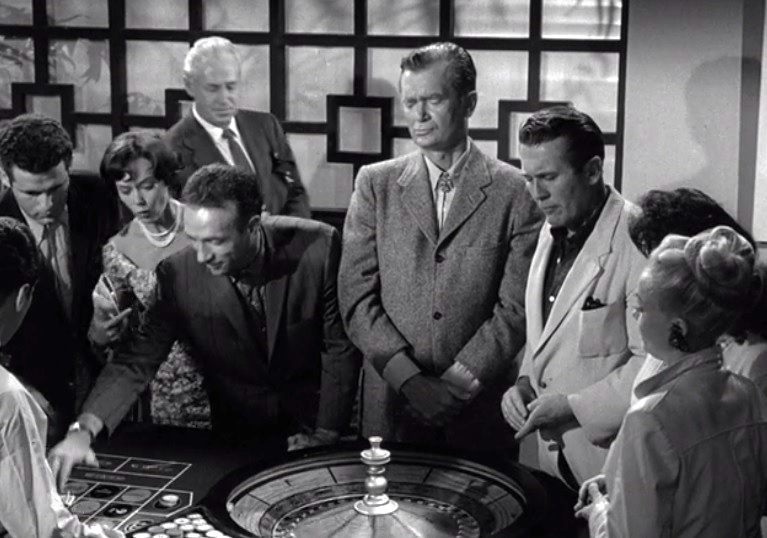
Buddy Ebsen who plays Jimbo Cobb has always been a favorite of mine. The soon to be Beverly Hillbilly star and the original Tin Man does a great job in this Twilight Zone. It is a good episode and keep an eye out for a car crash near the start…the crash was from the movie 1958 movie Thunder Road. Buddy has a talent (Psychokinesis) of being able to move things with his mind. Jimbo has a level head unlike his greedy friend Ace Larsen.
As Rod says in the closing narration… Some people possess talent, others are possessed by it. When that happens, the talent becomes a curse…which I thought was great.
The Prime Mover was based on an unpublished story by George Clayton Johnson. Explains Johnson… Charles Beaumont could get an assignment, he needed a story, he didn’t have a story, none of his stories seemed suitable. He therefore bought from me my story. He paid me six hundred dollars for it. My name never ended up on the screen, it was an accident of production for which Buck Houghton apologized. I felt bad that my name wasn’t on it, but I thought it was a good show.
The slot machine seen at the first of the show was in the episode The Fever.
This show was written by Charles Beaumont, Rod Serling and George Clayton Johnson (uncredited)
Rod Serling’s Opening Narration:
Portrait of a man who thinks and thereby gets things done. Mr. Jimbo Cobb might be called a prime mover, a talent which has to be seen to be believed. In just a moment he’ll show his friends, and you, how he keeps both feet on the ground, and his head in the Twilight Zone.
Summary
Ace Larson owns a roadside diner. It’s a dreary existence for him, his girlfriend Kitty Cavanaugh, and his friend and employee Jimbo Cobb. Through a serious accident just outside his diner, Ace learns for the first time that Jimbo has telekinetic powers. Ace the gambler sees an easy way to make his fortune, and the three of them set off for Las Vegas. Jimbo has little trouble making roulette balls fall on the right number or making any point with a pair of dice. Ace learns the hard way, however, that there can be too much of a good thing.
Rod Serling’s Closing Narration:
Some people possess talent, others are possessed by it. When that happens, the talent becomes a curse. Jimbo Cobb knew, right from the beginning, but before Ace Larsen learned that simple truth, he had to take a short trip – through The Twilight Zone.
CAST
Rod Serling…Narrator
Dane Clark…Ace Larsen
Buddy Ebsen…Jimbo Cobb
Jane Burgess…Sheila
Christine White…Kitty Cavanaugh
William Keene…Desk clerk
Nesdon Booth…Big Phil Nolan
Clancy Cooper…Trucker
Robert Riordan…Hotel Manager
Joe Scott…Croupier
Ghosts On The Road was on their first LP Walking in the Shadow of the Big Man released in 1984. So far this will be the third song I’ve posted from Guadalcanal Diary and all three have been on this album. I will be getting this album soon. My next post by them will be a selection from a different album…but I know of 2 more on this album that this album that I will post in the future.
Walking in the Shadow of the Big Man drew a huge response from college radio and critics and college radio programmers. That in turn got the attention of the big labels. In 1985 Elektra Records signed them and reissued the album. More touring followed, as did a cameo appearance in a comedy called Rockin’ Road Trip playing Ghosts Of The Road.
The band formed in the early eighties in Marietta, Georgia. They broke up in 1989. They would reform in 1997 but didn’t release any more new material.
Give this band a listen…you may like them.
Ghosts On The Road
Phantom headlights, broken white line Bloodstains on the highway, glowing power lines Signal thirty whispers softly through the pine
He said that no one could take her away None that could tear them apart The song she was singing made a mans blood run cold Like a moth in flames, torn from his heart
Ghost on the road, ah Ghost on the road, ah Ghost on the road, ah Ghost on the road, ah
Flashing road signs misty red eyes lost on the highway, not a soul in sight endless black ribbon racing through the night
She said that nothing in the world would survive lonely spirit float on the wind No candles burned to light his way in this life No one saw the veil of sorrow closing to an end
Ghost on the road, ah Ghost on the road, ah Ghost on the road, ah Ghost on the road, ah
Four barrells roll, down a country road Driver never sleeps, engine never slows They say he’ll stop one day and look back to see a girl who waits by the bend Her silvery laugh will remind him of one past by his side until the night must call her home again
Robert Emhardt as Professor Ackerman does a great job in this. I have watched many shows with this great character actor. Dean Jagger is very good in the pivotal role of Ed Lindsay.
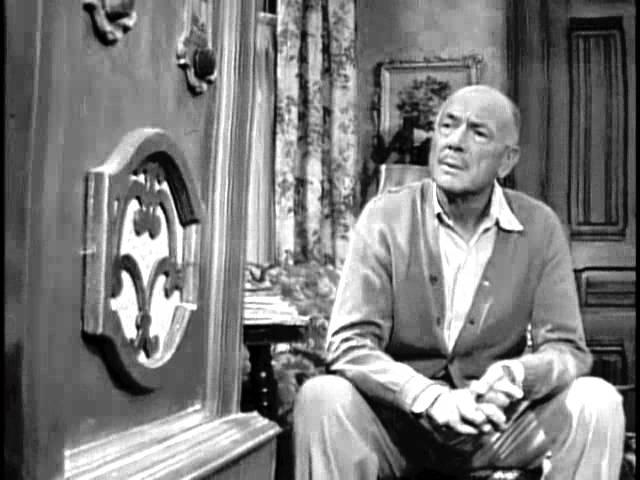
I’ve always liked this episode. The episode plays heavily into nostalgia and someone stuck there. People today would probably not think of old radio shows but it still works and with the radio it gives it a different feeling than an old tv show would. Now with Satellite radio you could live in the past with radio and it would not be strange.
When you watch something you have to keep in mind what time period it was filmed in. It relies on nostalgia a little too much but I did like the episode and it’s worth watching. This one was one of the episodes on videotape and unlike the scarier ones…this one suffers from it.
Static was based on a story by OCee Ritch (I’ve seen his name spelt OCeo and OCee), a friend of Charles Beaumont. The idea for it came from a party given by Richard Matheson attended by both Ritch and a fan of old-time radio who performed bits of radio nostalgia.
This show was written by Charles Beaumont, Oceo Ritch and Rod Serling
Rod Serling’s Opening Narration:
No one ever saw one quite like that, because that’s a very special sort of radio. In its day, circa 1935, its type was one of the most elegant consoles on the market. Now with its fabric-covered speakers, its peculiar yellow dials, its serrated knobs, it looks quaint and a little strange. Mr. Ed Lindsay is going to find out how strange very soon when he tunes in to the Twilight Zone.
Summary
Ed Lindsay has been living in the same boarding house for over 20 years and he has become an embittered old man. He doesn’t like how the world has changed around him and his crotchety behavior has made him certainly the most disliked man there. When he turns on his old radio however, he gets music from the 1940’s on a station that, it turns out, has been off the air for 15 years. There’s a reason he hears the music however, a reason a fellow boarder reminds him of.
Rod Serling’s Closing Narration:
Around and around she goes, and where she stops nobody knows. All Ed Lindsay knows is that he desperately wanted a second chance and he finally got it, through a strange and wonderful time machine called a radio, in the Twilight Zone.
CAST
Rod Serling…Narrator
Dean Jagger…Ed Lindsay
Carmen Mathews…Vinnie
Robert Emhardt…Professor Ackerman
Arch W. Johnson…Roscoe Bragg
Alice Pearce…Mrs. Nielson
Clegg Hoyt…Shopkeeper (the “junk dealer”)
Stephen Talbot…Boy
Lillian O’Malley…Miss Meredith
Pat O’Malley…Mr. Llewellyn
Eddie Marr…Real Estate Pitchman (uncredited)
Bob Crane…the disc jockey (uncredited)
Roy Rowan…the radio announcer (uncredited)
This is another band I wish I would have known more about in the 80s.
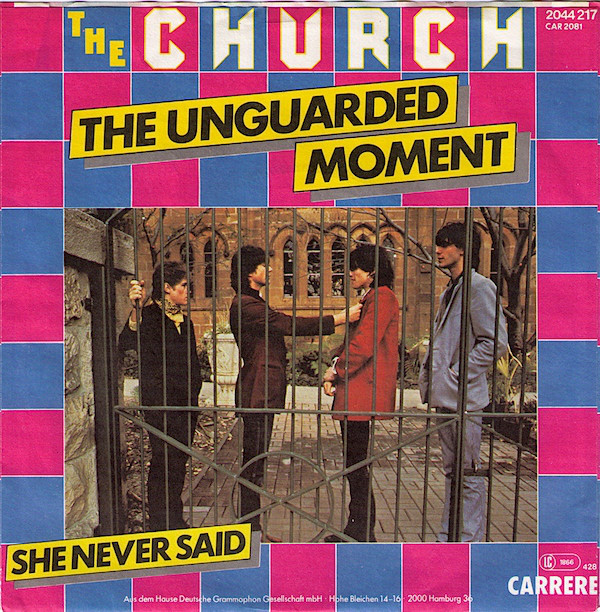
This song’s main riff reminds me a little of Ticket To Ride after being juiced up a little. The Church was an Australian alternative band that released this song in 1981. It was the second single from their 1981 debut album, Of Skins and Heart.
It was written by Steve Kilbey, lead singer and bassist and Mikela Uniacke, who was his wife at the time. The lyrics caught my attention in this song. They are well put together and clever
The song peaked at #22 in Australia and #19 in New Zealand in 1981. The band is still together but Steve Kilbey remains the only original member. They have released 25 albums in their career and have charted everywhere.
The album peaked at #7 in New Zealand, #22 in Australia, and #31 in Canada.
From Wiki: In January 2018, as part of Triple M’s “Ozzest 100”, the ‘most Australian’ songs of all time, “The Unguarded Moment” was ranked number 57.
The Unguarded Moment
So hard Finding inspiration I knew you’d find me crying Tell those girls with rifles for minds That their jokes don’t make me laugh They only make me feel like dying In an unguarded moment
So long Long between mirages I knew you’d find me drinking Tell those men with horses for arms That their jokes don’t make me bleed They only make me feel like shrinking In an unguarded moment
So deep Deep without a meaning I knew you’d find me leaving Tell those friends with cameras for eyes That their hands don’t make me hang They only make me feel like breathing
In an unguarded moment In an unguarded moment In an unguarded moment In an unguarded moment In an unguarded moment In an unguarded moment In an unguarded moment In an unguarded moment (In an unguarded moment) In an unguarded moment (In an unguarded moment) In an unguarded moment (In an unguarded moment)
The slightly distorted 12 string guitar and Nick Saloman’s voice gives a strong Byrds sound. The song though is just good with or without the Byrds sound. Lights Are Changing was released in 1987 and this is what I wish was playing on the radio in my area.
Nick Saloman began performing thirty years ago as a guitarist in cover bands during the late 1960s in London. In 1979 he formed a band called the Von Trap Family.
In 1986, Saloman released a ninety minute cassette to a few friends of himself playing original material under the alias The Bevis Frond name. The first releases was under his own record company Woronzow records.
This song was on the Triptych album released in 1988. Saloman is productive if nothing else. They have released 27 albums. https://bevisfrond.bandcamp.com/
On the bands first recordings Saloman played many of the instruments. Members include Cyke Bancroft, Dominic Colletti, Martin Crowley, Graham Cumming, and Rie Gunther.
The band has had many members through the years but they are there to do Nick Saloman’s music projects. Their albums have had underground success.
Nick Saloman: “When you’re [as old as I was at the time] and you’ve never gotten anywhere, you kind of think that you’ve had it. So I just started doing self-indulgent stuff on my own without worrying about things like getting a record deal. I honestly didn’t think anyone would care. But lo and behold, people were interested, and it changed my life.”
Lights Are Changing
Disappearing out of sight along the open road Into indistinct horizons – they had no time to reload Like a silver bullet from a gun, an arrow from a bow Like an equine star you hear about me everywhere you go
All through nebulae I was racing in my mind I tripped on the light fantastic and I’ve never looked behind You slow down you slow down my lights are changing You slow down you slow down our lights are changing You fly so high yeah and you move so fast You’re running blindly from the past Slow down you slow down green lights are changing
Oh changing all the time Oh changing all the time
Looking through these hollow eyes across the great unknown Growing greater every second, growing harder with each stone Yeah and you who judge your freedom by the quantity you score Would it make you any freer if you took a little more?
All that summertime I revolved around your eye In accelerating spirals in an asymmetric sky You slow down you slow down my lights are changing You slow down you slow down my lights are changing You fly so high yeah and you move so fast You’re running blindly from the past Slow down slow down green lights are changing
Oh changing all the time Oh changing all the time You slow down you slow down lights are changing You slow down you slow down my lights are changing Well you slow down you slow down my lights are changing
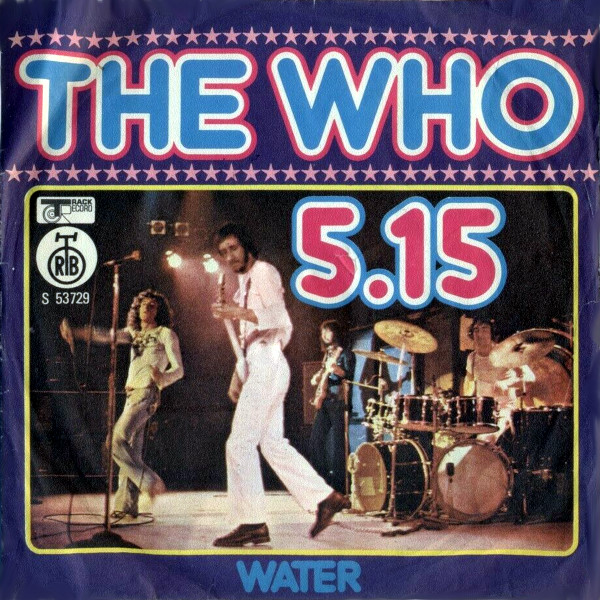
This was a rare Who song that had no demo made of it. Townshend’s demo’s were sometimes just as good as the studio versions the band recorded. The whistle on the song came about after Townshend’s driver bribed a British train driver with five pounds to sound the train’s whistle as it pulled out, despite breaking the station rules.
This song was not released as a single in America…at the time of the album release in 1973 they released it in Europe and Germany.
In 1979 the soundtrack from the movie came out and it was released as a single in America. It charted at #45 in the Billboard 100.
The Who had a contest in 2011 for someone to make a video for this song.
It was announced :
To commemorate the album’s release and pay homage to 1960s mod culture — Pete Townshend and Roger Daltrey are launching a “5:15” video contest, inviting filmmakers and animators to submit a music video for “5:15” that “does for the track what the Quadrophenia film did for the album.”
Townshend and Daltrey say the video should “reflect the 1960s mod culture and show inspiration from the musical and visionary journey portrayed in that era. The winning video will be produced as the official video for ‘5.15’.”
I have the winner at the bottom and it is a really cool video. The winning video was directed by Jeff Rodenberg. The George Harrison estate did the same thing for the song What Is Life.
Roger Daltrey:Ron Nevison, who was the producer at the time with Pete, recorded it with echo on the vocal which can never be removed now,” he explained. “It just makes the vocal sound thin. It was the biggest recording mistake we ever made. The echo diminishes the character as far as I’m concerned. It always pissed me off. From day one I just f—ing hated the sound of it. He did that to my voice and I’ve never forgiven Ron for it.”
From Songfacts
This is the first track on the second disc of Quadrophenia, Pete Townshend’s rock opera about Jimmy, a pill-popping mod cockney who tries to find reality from sexual encounters, the company he keeps, and the clothes he wears. Only when he drowns in the ocean does he discover himself.
In this song, Jimmy The Mod takes the train (the 5:15) back to Brighton, once the site of the Mods’ triumph against the Rockers, and en route he remembers various experiences of himself and his fellow Mods. Jimmy’s recollections are in the main unhappy – anger, confusion, violence, sexual frustration, and rootlessness dominate his thoughts as he keeps returning to the thought: “Inside, outside, leave me alone. Inside, outside, nowhere is home.”
The term “Quadrophenia” was coined by Pete Townshend, referring to schizophrenia, times two. The character Jimmy The Mod was a quadrophenic: Townshend wanted each of his four personalities to represent one of the four band members. This didn’t work as planned, as he was so much more involved in the project than the other members.
During an infamous performance of the song on BBC’s Top Of The Pops, Townshend demolished the Gretsch guitar that he’d used for the bulk of Who’s Next and Quadrophenia. The Who went on to earn a life ban from BBC premises after Townshend flicked two fingers at the show’s producer and Keith Moon attacked a steward who refused him entry to the bar.
Townshend’s rage was genuine: The BBC, enforcing union rules, made the group record a new track for their lip-synched performance. The Who recorded their segment on October 3, 1973, which was broadcast on the 500th Edition special of the show the the next evening with the offensive gestures edited out. The ban was lifted after representatives for The Who sent a letter of apology to the BBC.
5:15
Why should I care, why should I care?
Girls of fifteen Sexually knowing The ushers are sniffing Eau-de-coloning The seats are seductive Celibate sitting Pretty girls digging Prettier women
Magically bored On a quiet street corner Free frustration In our minds and our toes Quiet storm water M-m-my generation
Uppers and downers Either way blood flows
Inside outside, leave me alone Inside outside, nowhere is home Inside outside, where have I been? Out of my brain on the five fifteen
Out of my brain on the train Out of my brain on the train On a raft in the quarry Slowly sinking Back of a lorry Holy hitching Dreadfully sorry Apple scrumping Born in the war Birthday punching
He man drag In the glittering ballroom Gravely outrageous In my high heel shoes Tightly undone They know what they’re showing Sadly ecstatic That their heroes are news
Inside outside, leave me alone Inside outside, nowhere is home Inside outside, where have I been? Out of my brain on the five fifteen
Out of my brain on the train Out of my brain on the train, on the train, out of my brain Woo Out of my brain on the train Here it comes Woo Out of my brain on the train, on the train Out of my brain on the train Why should I care? Why should I care
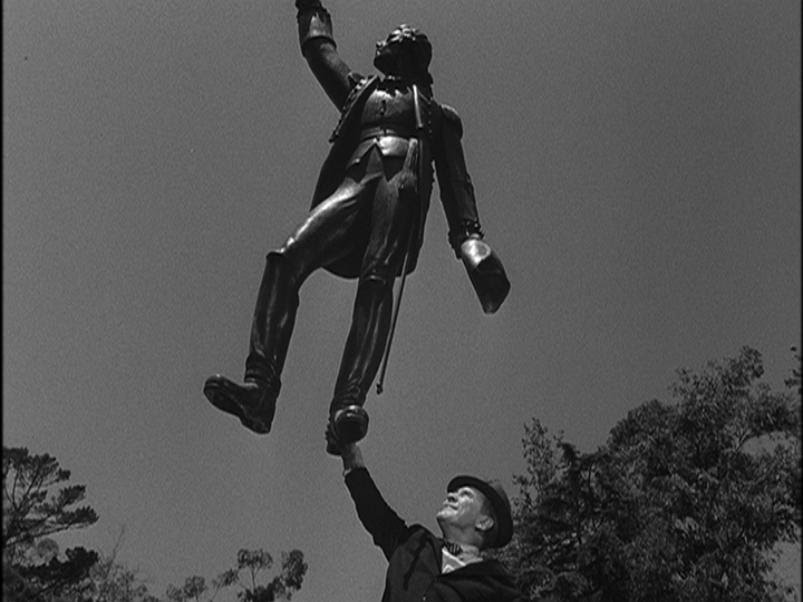
This is a comedic episode that does have humorous moments. This is another one Serling wrote about human nature. Burgess Meredith plays Luther Dingle, a vaccum salesmen, who is pretty much a human punching bag. He lets people walk over him like the character played by Don Rickles . He is given the gift of strength by aliens and is observed. He then proceeds to over use the gift.
A year before, in an article about The Twilight Zone, a reporter had mistakenly referred to the main character of Mr. Denton on Doomsday as Mr. Dingle. Serling must have liked the name, for he created Mr. Dingle, the Strong. The casting as always is superb… it’s a very entertaining episode.
In this episode and many others like The Twilight Zone: Will the Real Martian Please Stand Up?, a majority of the actors are smoking due to the demand of one of the Twilight Zone’s sponsors, a cigarette company.
This show was written by Rod Serling
Rod Serling’s Opening Narration:
Uniquely American institution known as the neighborhood bar. Reading left to right are Mr. Anthony O’Toole, proprietor, who waters his drinks like geraniums but who stands foursquare for peace and quiet and for booths for ladies. This is Mr. Joseph J. Callahan, an unregistered bookie, whose entire life is any sporting event with two sides and a set of odds. His idea of a meeting at the summit is any dialogue between a catcher and a pitcher with more than one man on base. And this animated citizen is every anonymous bettor who ever dropped rent money on a horse race, a prize fight, or a floating crap game, and who took out his frustrations and his insolvency on any vulnerable fellow barstool companion within arm’s and fist’s reach. And this is Mr. Luther Dingle, a vacuum cleaner salesman whose volume of business is roughly that of a valet at a hobo convention. He’s a consummate failure in almost everything but is a good listener and has a prominent jaw. And these two unseen gentlemen are visitors from outer space. They are about to alter the destiny of Luther Dingle by leaving him a legacy, the kind you can’t hardly find no more. In just a moment, a sad-faced perennial punching bag, who missed even the caboose of life’s gravy train, will take a short constitutional into that most unpredictable region that we refer to as The Twilight Zone.
Summary
Luther Dingle is a meek and mild-mannered vacuum cleaner salesman. He spends some time in a bar but always seems to be in the middle of others arguments and always seems to get the worst of it. Courtesy of visiting – but invisible – aliens, he is given great strength, some 300 times greater than that of a normal human being. Dingle becomes something of a local celebrity but just how long will his powers last?
Rod Serling’s Closing Narration:
Exit Mr. Luther Dingle, former vacuum cleaner salesman, strongest man on Earth, and now mental giant. These latter powers will very likely be eliminated before too long, but Mr. Dingle has an appeal to extraterrestrial notetakers as well as to frustrated and insolvent bet losers. Offhand, I’d say that he was in for a great deal of extremely odd periods, simply because there are so many inhabited planets who send down observers, and also because, of course, Mr. Dingle lives his life with one foot in his mouth—and the other in The Twilight Zone.
CAST
Rod Serling…Narrator
Burgess Meredith…Luther Dingle
Don Rickles…Bettor
James Westerfield…Anthony O’Toole
Edward Ryder…Callahan
James Millhollin…Abernathy
Douglas Spencer…1st Martian
Michael Fox…2nd Martian
Donald Losby…1st Venusian
Greg Irwin…2nd Venusian
Douglas Evans…Man
Phil Arnold…Man
Frank Richards…Man
Jo Ann Dixon…Woman with carriage
Jay Hector…Boy wearing white helmet
Bob Duggan…Photographer
Robert McCord…Customer
This is raw, raw, and more raw. It didn’t fit in with the 80s mainstream and is one of the reasons I like it so much.
There are not as many answering machines anymore…although we still have one that is connected to our VOIP phone. We live in the middle of the country where cell phones are iffy sometimes.
Paul is the only Replacement on this song. He did the guitars, percussion, and vocals.
Westerberg liked a girl in Ann Arbor, Michigan, and would court her long-distance. Sometimes he’d call to talk her and get her answering machine instead. He said at the time that he wasn’t a modern person and that technology irritated him. If technology did in the 80s I can’t imagine what he feels today.
He poured that frustration into “Answering Machine.” He considers it one of the best songs he did with the Replacements. The song was on the album Let It Be released in 1984 and is considered one of their best albums. It was ranked number 241 on Rolling Stone‘s list of the 500 greatest albums of all time.
At the song’s conclusion, amid a wall of noise and effects, he would shout out Michigan’s 313 area code; he also threw out a couple others, including New York City’s 212, to cover his bases with a few other girls, just in case.
Paul Westerberg:“There was real passion, and there was a real person on the other end, and that made it all come to life.”
Answering Machine
Try and breathe some life into a letter Losing hope, we’ll never be together My courage is at its peak You know what I mean How do you say you’re okay To an answering machine? How do you say goodnight To an answering machine?
Big time’s got its losers Small town’s got its vices A handful of friends One needs a match, one needs some ice Call-waiting phone in another time zone How do you say I miss you To an answering machine? How do say good night To an answering machine?
(If you’d like to make a call, please hang up and try again If you need help, dial the number…)
I get enough of that
Try to free a slave of ignorance Try and teach a whore about romance
How do you say I miss you To an answering machine? How do you say good night to An answering machine? How do you say I’m lonely to An answering machine? The message is very plain Oh, I hate your answering machine I hate your answering machine I hate your answering machine…
(If you’d like to make a call, please hang up and try again… If you need help…)
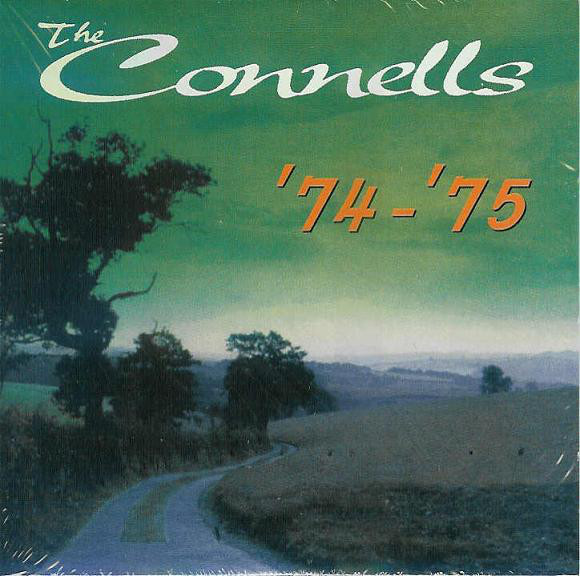
This is a very good acoustic pop song by the Connells.
The Connells were an alternative rock group formed in Raleigh, North Carolina in 1984 by David Connell (bass), his brother Mike Connell (guitar), Doug MacMillan (vocals) and John Shultz (drums), who was soon replaced by former Johnny Quest percussionist Peele Wimberley. In 1990 they added Steve Potak (keyboards) to their line up.
The band placed some songs in the alternative charts in the late 80s and 90s as they were played heavily on college radio The band released their 8th album in 2001 and since then haven’t done much. They never broke up but would get together and play various concerts… they are about to release their 9th album Steadman’s Wake on September 24, 2021.
This acoustic 1993 song became an unexpected smash hit in Europe, topping the pop charts in a couple of countries. The song peaked at #14 in the UK and was #1 in Sweden and Norway…It was on their Ring album.
The video is pretty cool. It was originally shot at Needham B. Broughton High School in the band’s hometown Raleigh, North Carolina in 1993, and features members of the Class of 1975 showing their yearbook pictures and them in 1993. In 2015 they remixed the song and updated the video to show the classmates they filmed in 1993 originally… and what they looked like now.
’74 – ’75
Got no reason for coming to me And the rain running down There’s no reason And the same voice coming to me like it’s all slowin’ down And believe me
I was the one who let you know I was your sorry-ever-after seventy-four, seventy-five
It’s not easy Nothin’ to say ’cause it’s already said It’s never easy When I look on in your eyes then I find that I’ll do fine When I look on in your eyes then I’ll do better
I was the one who let you know I was your sorry-ever-after ‘seventy-four, seventy-five Giving me more and I’ll define ‘Cause you’re really only after seventy-four, seventy-five
Got no reason for coming to me And the rain running down There’s no reason When I look on in your eyes then I find that I’ll do fine When I look on in your eyes then I’ll do better
I was the one who let you know I was sorry-ever-after seventy-four, seventy-five Giving me more and I’ll define ‘Cause you’re really only after seventy-four, seventy-five
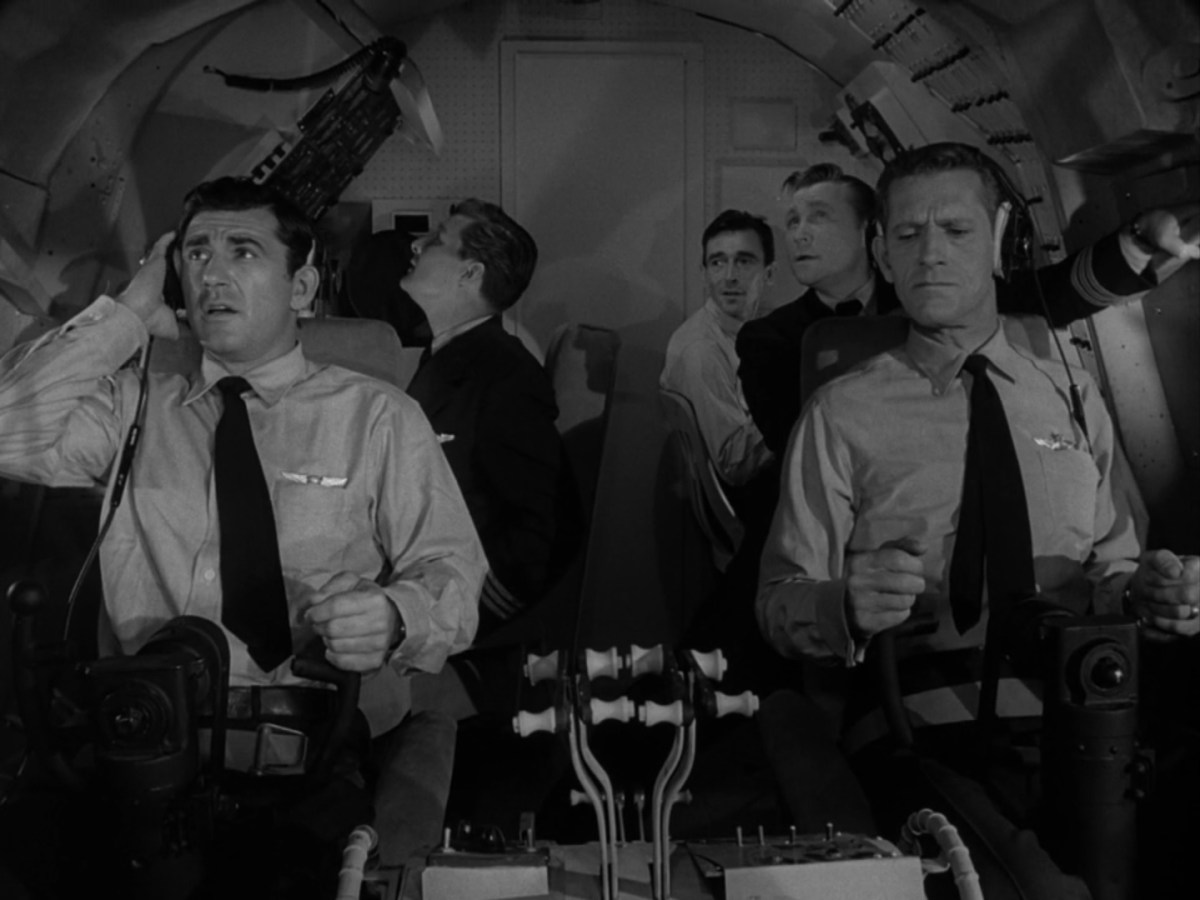
This one is one of my all time favorite Twilight Zone episodes. It is a time travel episode and this time it gives you a reason for the time travel. After picking up a freak tail wind that accelerates the plane past three thousand knots and through a shock wave, the crew of Global 33 is unable to raise anyone on the radio. Descending below the cloud cover to get a site reading, they see a Manhattan Island devoid of buildings. They are back in time but when?
Something happened to Serling to inspired him to write the episode… There was some mail on his desk at the production company, and on the top was an envelope from American Airlines, and he opened that one first. It was a brochure offering a mockup of a 707 passenger cabin to any studio that was going to film a scene. It was something they used in stewardess training and they decided to build another one. They had this one on the West Coast and they were going to rent it out or sell it. This gave Serling the idea…he even consulted with pilots to get the dialog accurate in the cockpit.
SPOILER
The most expensive piece of film ever shot for Twilight Zone was the dinosaur watching the plane go by..
This show was written by Rod Serling
Rod Serling’s Opening Narration:
You’re riding on a jet airliner on route from London to New York. You’re at 35,000 feet atop an overcast and roughly fifty-five minutes from Idlewild Airport. But what you’ve seen occur inside the cockpit of this plane is no reflection on the aircraft or the crew. It’s a safe, well-engineered, perfectly designed machine. And the men you’ve just met are a trained, cool, highly efficient team. The problem is simply that the plane is going too fast, and there is nothing within the realm of knowledge or at least logic to explain it. Unbeknownst to passenger and crew, this airplane is heading into an uncharted region well off the beaten track of commercial travelers—it’s moving into The Twilight Zone. What you’re about to see we call “The Odyssey of Flight 33.”
Summary
Global Flight 33 is en route from London to New York in what appears to be a routine flight in a modern jetliner. Suddenly however, the jet’s speed increases to an incredible 3000 knots and they arrive in New York rather quickly. Neither the captain or his well-trained crew can explain what happened – a strange tail-wind perhaps – but they are certainly not prepared for what they find as they survey the land below them.
Rod Serling’s Closing Narration:
A Global jet airliner, en route from London to New York on an uneventful afternoon in the year 1961, but now reported overdue and missing, and by now, searched for on land, sea, and air by anguished human beings, fearful of what they’ll find. But you and I know where she is. You and I know what’s happened. So if some moment, any moment, you hear the sound of jet engines flying atop the overcast—engines that sound searching and lost—engines that sound desperate—shoot up a flare or do something. That would be Global 33 trying to get home—from The Twilight Zone.
CAST
Rod Serling … Narrator / Self – Host (uncredited)
John Anderson … Capt. ‘Skipper’ Farver
Paul Comi … 1st Officer John Craig
Sandy Kenyon … Navigator Hatch
Wayne Heffley … 2nd Officer Wyatt
Harp McGuire … Flight Engineer Purcell
Betty Garde … Passenger
Beverly Brown … Janie
Nancy Rennick … Paula
Jay Overholts … Passenger
Lester Fletcher … RAF Man
Robert McCord … Passenger (uncredited)
The guitar on this song hooked me…it has a tremolo effect that resembles The Smiths How Soon Is Now.
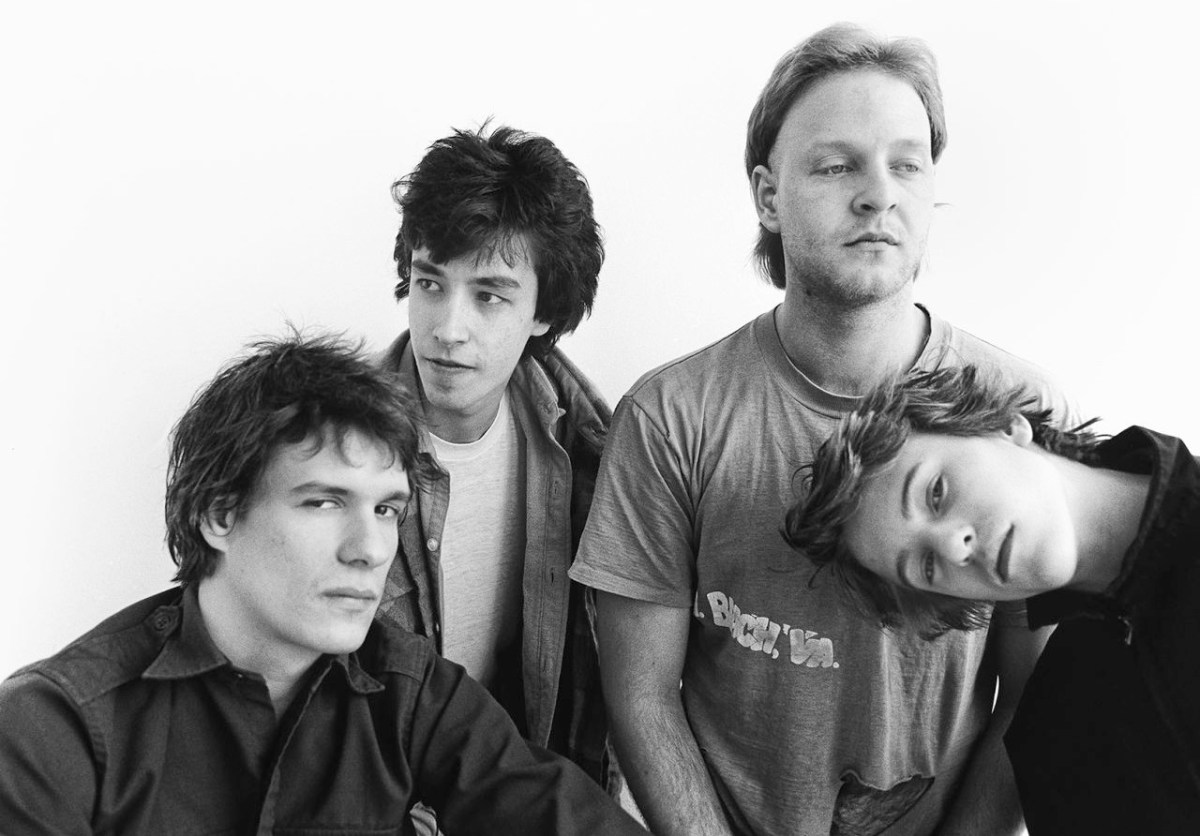
A band named DMZ broke up in 1979 and from that lead singer and organist Jeff “Monoman” Conolly formed Lyres in Boston. The original lineup of the band featured Conolly, Rick Coraccio (bass), Ricky Carmel (guitar), and Paul Murphy (drums). The nickname Monoman for Jeff Conolly came because of his love of monophonic recordings of the ’60s and in part because of his monomaniacal obsession with vintage rock & roll.
A four-song EP that came out in 1981 called AHS-1005. The EP won the group attention outside of Boston, and a single followed in 1983, “I Really Want You Right Now” with the B side “Help You Ann.” Jeff Conolly wrote Help You Ann.
The band has released 8 studio and live albums and 3 EPs. The band is still together and playing.
The song was included on the On Fyre album released in 1984. From Wiki: Trouser Press called the album “simply the [garage-rock] genre’s apotheosis, an articulate explosion of colorful organ playing, surging guitars and precisely inexact singing. AllMusic gave it 4 out of 5 stars.
In 2018 Jeff Conolly announced that a new album by the Lyres was being recorded.
Help You Ann
There he go and he talk to you just like a fool He’s got no use for you now and that’s why I feel the same way too
Well, he’s done putting you down and as cynical as he can be He spending money on some things that you used to give to me for free
Sometimes I get so mad And I wanna hurt you But I did the best I can And I wanna, I wanna help you, Ann
He’s so bad, he stole up all the money that you made Yeah, he’s got a use for you now An apartment on the choo choo train
Well, he’s no good for you Ann When I kill him, I’ll snatch you one day That’s right, I want you myself Spend up all the money I could save
So I’m back here again ‘Cause I wanted you so Said, I wanna be your man And I wanna, I wanna help you, Ann
And I wanna help you, Ann Said, I wanna help you, Ann And I wanna help you, Ann And I wanna, I wanna help you, Ann Said I wanna, I wanna help you, Ann Just as fast as I can And I wanna help you, Ann Just as fast as I can And I wanna help you, Ann
And I wanna help Said, I wanna help you, Ann Just as fast as I can And I wanna help you, Ann And I wanna help Said, I wanna help you, Ann Just as fast as I can, right






 PowerPop... An Eclectic Collection of Pop Culture