Animals – House of the Rising Sun

I bought this 1964 single when I was 12 in 1979. On the B side was the wonderful Bring It On Home to Me. I became an Animals fan that day. Let’s talk about a song so soaked in sorrow, so drenched in drama, that it feels like a dark southern gothic fable set to tape.

This is a British band covering an old American folk ballad about a New Orleans house of ill repute, and somehow, they made it definitive. The song had already passed through Woody Guthrie, Lead Belly, and Bob Dylan before it landed in the hands of The Animals. But it wasn’t until Eric Burdon opened his mouth that the song finally got its fangs. His voice is more of a howl than singing at times, and gives the song the oomph it needed. 

Historians have not been able to definitively identify The House Of The Rising Sun, but the two instances I have read about are these: 

1) The song is about a brothel in New Orleans. The House Of The Rising Sun was named after its occupant Madame Marianne LeSoleil Levant (which means “Rising Sun” in French), and was open for business from 1862 (occupation by Union troops) until 1874, when it was closed due to complaints by neighbors. It was located at 826-830 St. Louis St.

2) It’s about a woman’s prison in New Orleans called the Orleans Parish women’s prison, which had an entrance gate adorned with rising sun artwork. This would explain the “ball and chain” lyrics in the song.

The song peaked at #1 in the Billboard 100, #1 in Canada, and #1 in the UK in 1964. 

More than anything, his song cemented The Animals as the most dangerous-sounding band to crawl out of the British Invasion. It wasn’t the pop of the Hollies or Herman Hermits. This was dark. Gritty. Adult. You believed every damn word.

The original lineup only recorded three albums, yet nevertheless managed to break out eight Top 40 hits between 1964 and 1966. Alan Price left in 1965, and John Steel the following year. Also in 1966, Chandler left to start managing artists, and he discovered Jimi Hendrix in Greenwich Village.

Eric Burdon: “I don’t think that The Animals got a chance to evolve. We were the first to admit that we took blues songs from American artists, but if the Animals had stuck together and worked together instead of worrying about who was getting all the money, we could have evolved more and come out with more music to be proud of.”

The B side on my single

House of The Rising Sun

There is a house in New Orleans
They call the Rising Sun
And it’s been the ruin of many a poor boy
And God I know I’m one

My mother was a tailor
She sewed my new blue jeans
My father was a gamblin’ man
Down in New Orleans

Now the only thing a gambler needs
Is a suitcase and trunk
And the only time he’s satisfied
Is when he’s on a drunk

Oh mother tell your children
Not to do what I have done
Spend your lives in sin and misery
In the House of the Rising Sun

Well, I got one foot on the platform
The other foot on the train
I’m goin’ back to New Orleans
To wear that ball and chain

Well, there is a house in New Orleans
They call the Rising Sun
And it’s been the ruin of many a poor boy
And God I know I’m one

McCoys – Hang On Sloopy

A relative gave me this single when I was around 7 or 8 years old, and I’ve been a fan ever since. It’s mid-sixties garage rock that was fronted by a great guitarist. 

This thing is raw, ragged, and ridiculously catchy. It’s also one of the most unlikely #1 hits of the mid-’60s. A teenage bar band out of Indiana fronted by a 16-year-old Rick Derringer (still using his birth name, Zehringer), drafted into the spotlight by producers looking for someone to finish off a half-assembled track. What they delivered was a rock ‘n’ roll time capsule.

They opened for a band called The Strangegloves, who were a group of producers who formed a band and had a hit called I Want Candy. The Strangegloves, an American band, told everyone they were from Australia and said they were shepherds who got rich by crossbreeding sheep. Yes, it was the sixties. They gave Rick and the Raiders (before they changed their name to the McCoys)a chance to record this song. 

It started life as “My Girl Sloopy,” a minor R&B single by The Vibrations in 1964. But the McCoys stripped it down to its most essential parts and cranked up the amp. By the time it hit the airwaves in 1965, it was an instant anthem for kids who didn’t have a lot of time for nuance.

The song peaked at #1 in the Billboard 100 and #5 in the UK in 1965. The McCoys were not one-hit wonders. They had another top 10 hit named Fever and a top 40 hit named Come On Let’s Go.

The song was written by Bert Berns and Wes Farrell. Bert Berns wrote many songs in the sixties and signed Van Morrison to his first solo contract. The name “Sloopy” most likely originated from Dorothy Sloop, a jazz singer from Steubenville, Ohio. Sloop, who died in 1998 at age 85, performed in the New Orleans area using the name “Sloopy.”

This video was done later than the song in 1975. The Dancer, Lisa Leonard Dalton, was surprised when her video went viral a few years ago. Here is a short bio of her

Hang On Sloopy

Hang on Sloopy, Sloopy hang on

Sloopy lives in a very bad part of town
And everybody there tries to put my Sloopy down
Sloopy I don’t care what your daddy do
‘Cause you know Sloopy girl I’m in love with you
And so I’m singing

Yeah, yeah, yeah, yeah

Sloopy let your hair down girl, let it run down on me

Come on Sloopy, come on, come on
Well, come on Sloopy, come on, come on

Well it feels so good, come on, come on
You know it feels so good, come on, come on

Well shake it, shake it, shake it Sloopy, come on, come on
Well shake it, shake it, shake it yeah
Yeah

Yeah, yeah, yeah, yeah

Twilight Zone 1980s – I, of Newton

Many of the reboots of the Twilight Zone in the 80s were weak, but there were a few that hit the mark. The one I remembered the most is this one. An eight-minute episode of Ron Harris (Barney Miller) and Sherman Hemsley (The Jeffersons). It’s quick and straight to the point, and I thought written and acted brilliantly. The perfect task to send the devil on. 

Flamin’ Groovies – Shake Some Action

This is a great power pop record. This band had different phases, blues rock, and then power pop after co-founder Roy Loney left. Over the decades, Shake Some Action has aged better than nearly anything else from its era. It doesn’t belong to 1976, not really, it belongs to the die-hard power pop fans that followed.

The Flamin’ Groovies first recorded this song in 1972, but the song was not released until their 1976 album of the same name, which was produced by Dave Edmunds, who sped up the tempo of the track and pushed the vocals. According to lead guitarist Cyril Jordan, the descending phrase he played on lead guitar was overdubbed about six times. Edmunds would also put remote microphones around the studio to fatten up certain passages.

The band started in 1965 with Roy Loney and Cyril Jordan. By the end of the sixties, they clashed over where to go. Loney was more Stones, and Jordon leaned toward the Beatles. Loney left in 1971, and they got an 18-year-old lead singer named Chris Wilson. They moved to London and started to work with Dave Edmunds. With Chris, they did more power pop, and that is when Shake Some Action came about, with Wilson and Jordon writing it.

They would go on to be a great power pop band and also be known as an early proto-punk band…they pretty much covered the gamut. This anti-drug song was written by Jordon and Loney before he left…Chris Wilson is singing it.

Wilson left in the early eighties, but the band continued until around 1994. They regrouped in 2012, including Chris Wilson. The Flamin’ Groovies have released 9 studio albums and one as late as 2017.

Shake Some Action

I will find a way
To get to you some day.
Oh, but I, babe, I’m so afraid I’ll fall, yeah.
Now can’t you hear me call?

Shake some action’s what I need
To let me bust out at full speed.
I’m sure that’s all you need
To make it all right.

It’s taken me so long
To get where I belong
Oh, but, oh, please don’t send me back that way, yeah.
For I will make you pay.

Shake some action’s what I need
To let me bust out at full speed.
I’m sure that’s all you need
To make it all right.

If you don’t dig what I say
Then I will go away.
And I won’t come back this again. No.
‘Cause I don’t need a friend.

Shake some action’s what I need
To let me bust out at full speed.
I’m sure that’s all you need
To make it all right.

What is the First Song You Remember?

I thought I would do something different with this post. In the comments I’ve read a lot about what you think of songs. I also had a post asking Who helped Form Your Musical Tastes way back 5 years ago. This one is a little different. 

Instead of telling you just my memories, I would like to hear your memories. What is the first song you remember hearing that stuck with you? For me, the answer is one song I heard in 1971. Leaving on a Jet Plane, which ironically I heard in an airport picking up a family member. I can still see the airport with those Tel-A-Chairs around…do you remember those? I can also remember the smell of the airport… no, not a bad one. 

 Anyway…what is the first song you remember?

Tel-A-Chairs were coin-operated televisions that you would put a dime or a quarter into to watch a few minutes of a show. They were at airports, bus stations, and train stations. I would LOVE to have one of those.

Marshall Crenshaw – Mary Anne

Marshall reminds me of Nick Lowe a little because they make every song sound like a potential hit in a good way. It’s a kind of song that makes everything feel alright for three minutes. It’s one of those perfect power pop songs. 

He got his first break playing John Lennon in the off-Broadway touring company of the musical Beatlemania between 1978-1980. Crenshaw said: “In the beginning, I was bothered by it, as an egotistical young person, maybe because I had just gotten out of Beatlemania, and I was sick of any kind of heavy association with some other figure.”

He later played Buddy Holly in La Bamba in 1987. “I’ve been a Buddy Holly fan all my life. The joy still comes across in his music. It’s really got its own je ne sais quoi. It really stands apart from a lot of ’50s rock, because it conveys a sense of intimacy. I think it’s because it was made in this little building on the side of a highway late at night with this isolated group of people.”

Marshall Crenshaw’s 1982 self-titled debut is a rare bird in the rock canon, a flawless record that never seems to age. On the album with the jangle of Someday, Someway and the Buddy Holly bop of Cynical Girl, Mary Anne is the track that quietly steals the show. That chorus. It just opens up like sunshine bursting through the clouds. “Mary Anne, you’re not alone,” Crenshaw assures her, and suddenly you’re not alone either. 

The arrangement is a masterclass in restraint. The chiming guitars are pure Rickenbacker, and the bassline has a McCartney-esque melody. No frills, no tricks, just three minutes of songcraft that feels like it could’ve been pulled from AM radio in 1966. In the endless search for a great pop song, Mary Anne is the kind of track that makes you stop searching for a while. 

Marshall Crenshaw peaked at #50 on the Billboard album charts in 1982. As the old phrase goes…it’s got more hooks than a tackle box.

Mary Anne

It isn’t such a crimeIt isn’t such a shameIt happens all the timeYou shouldn’t take the blameGo on and have a laughGo have a laugh on meGo on and have a laughAt all your misery

Mary Anne, Mary Anne (don’t cry Mary Anne)I really wanna tell you Mary Anne, Mary AnneI’m thinking of youMary Anne, Mary Anne (don’t cry Mary Anne)I really wanna tell you Mary Anne, Mary Anne, Mary Anne

You take a look aroundAnd all you seem to seeIs bringing you downAs down as you can beGo on and have a laughGo have a laugh on meGo on and have a laughAt how bad it can be

Mary Anne, Mary Anne (you’ll be all right)I really wanna tell you Mary Anne, Mary AnneI’m thinking of youMary Anne, Mary Anne (you’ll be all right)I really wanna tell you Mary Anne, Mary Anne, Mary Anne

Mary Anne, Mary Anne (goodnight Mary Anne)I really wanna tell you Mary Anne, Mary AnneI’m thinking of you Mary Anne, Mary Anne (goodnight Mary Anne)I really wanna tell you Mary Anne, Mary Anne, Mary Anne

John Mellencamp – I Need A Lover

My sister, who shared such classics as Down By the Lazy River by the Osmonds with me, also shared some good stuff. She liked Mellencamp before he was known as Mellencamp; she had the album Nothin’ Matters and What If It Did before the hits like “Jack and Diane” shot John to stardom

This song was not on that album, but she had this single back in the late seventies. Let’s rewind. In 1979, Mellencamp was still going by John Cougar, a name thrown to him by his manager in a transparent attempt to give him some glam-rock marketability. He hated it, but he played the game. The song first surfaced on A Biography, his second album, which only saw release in Australia in 1978.

When it finally hit U.S. ears via the album John Cougar a year later, it sounded like something beamed in from a Midwestern garage. The album peaked at #64 on the Billboard 100 and #77 in Canada in 1979. 

On the album version, the intro alone is a beast. Nearly three minutes of instrumental buildup, a swirling, stomping jam that sounds like an E Street Band warm-up exercise. Mellencamp makes you wait. When he finally spits out that opening line, I need a lover who won’t drive me crazy, you welcome it. 

Mellencamp would later refine his sound, focusing on heartland anthems and a few ballads. But this song is a declaration of frustration, lust, and escape. The song peaked at #28 on the Billboard 100 in 1979 after being rereleased. 

I Need A Lover

I need a lover that won’t drive me crazy(I need a lover that won’t drive me crazy)I need a lover that won’t drive me crazySome girl that knows the meaning of, “Hey, hit the highway”

Well, I’ve been walkin’ the streets up and downRacing through the human jungles at nightI’m so confused, my mind is indifferentHey, I’m so weak, won’t somebody shut off that light? Aw

Electricity runs through the videoAnd I watch it from this hole I call homeAnd all the stonies go dancin’ to the radioAnd I got the world callin’ me up hereTonight on the phone

I need a lover that won’t drive me crazySome girl to thrill me and then go awayI need a lover that won’t drive me crazySome girl that knows the meaning of, uh“Hey, hit the highway”

Well, I’m not wiped out by this poolroom life I’m livingI’m gonna quit this job, and go to school, or head back homeAnd I’m not askin’ to be loved or be forgivenHey, I just can’t face shakin’ in this bedroomOne more night alone

I need a lover that won’t drive me crazyI need a lover that won’t drive me crazyI need a lover that won’t drive me crazySome girl that knows the meaning of, uh“Hey, hit the highway”

I need a lover that won’t drive me crazySome girl to thrill me and then go awayI need a lover that won’t drive me crazySome girl that knows the meaning of, uh“Hey, hit the highway”You betcha

Who – Who Are You

This song is for Song Lyric Sunday for Jim Adams’s blog. This week, the theme is to find a song that is based on reality. A prompt inspired by Badfinger (Max) of PowerPop. Whoever that crazy guy is. 

Great song by The Who and one of the first Who songs I knew. Keith Moon was not in the best shape by this time, but his drumming on this is still fantastic. The song helped define classic radio along with its siblings Baba O’Riley and Won’t Get Fooled Again. Unlike some 80s synth sounds, these synths of those three songs still sound fresh today.

Pete Townshend wrote it in the aftermath of a meeting with some industry suits, wandered into a Soho pub, ran into some of the Sex Pistols, and came out very drunk with a bruised ego and the chorus to one of The Who’s most iconic late-period tracks. Rock bottom, meet the charts. This song, released in August 1978, was the title track to what would turn out to be Keith Moon’s final album. He died three weeks after its release, and that ghost haunts the band to this day. 

This isn’t the mod, youthful energy of My Generation anymore, it’s the sound of grown men staring into the abyss of their own legend. The Who had spent a decade writing operas, smashing instruments, and becoming arena rock icons. And suddenly they were competing with punk bands they helped inspire.

Townshend once said, Who Are You was a cry of frustration, about the music industry, about the punk movement, about himself. Many of Townsend’s songs are about real-life events.  The song peaked at #14 in the Billboard 100 and #18 in the UK in 1978. The album Who Are You peaked at #2 on the Billboard Album Charts, #2 in Canada, and #6 in the UK. 

Pete Townshend: “I’d like to think that where the song came from wasn’t the feet that I was drunk when I did the demo, but the fact that I was f–king angry with  Allen Klein, and that the song was an outlet for that anger.”

Roger Daltrey: “We were getting incredible accolades from some of the new Punk bands. They were saying how much they loved The Who, that we were the only band they’d leave alive after they’d taken out the rest of the establishment! But I felt very threatened by the Punk thing at first. To me it was like, ‘Well, they think they’re f—ing tough, but we’re f—ing tougher.’ It unsettled me in my vocals. When I listen back to ‘Who Are You?’ I can hear that it made me incredibly aggressive. But that’s what that song was about. Being pissed and aggressive and a c—!”

Who Are You

Who are you?
Who, who, who, who?
Who are you?
Who, who, who, who?
Who are you?
Who, who, who, who?
Who are you?
Who, who, who, who?

I woke up in a Soho doorway
A policeman knew my name
He said “You can go sleep at home tonight
If you can get up and walk away”

I staggered back to the underground
And the breeze blew back my hair
I remember throwin’ punches around
And preachin’ from my chair

Well, who are you? (Who are you? Who, who, who, who?)
I really want to know (Who are you? Who, who, who, who?)
Tell me, who are you? (Who are you? Who, who, who, who?)
‘Cause I really want to know (Who are you? Who, who, who, who?)

I took the tube back out of town
Back to the Rollin’ Pin
I felt a little like a dying clown
With a streak of Rin Tin Tin

I stretched back and I hiccupped
And looked back on my busy day
Eleven hours in the Tin Pan
God, there’s got to be another way

Who are you?
Ooh wa ooh wa ooh wa ooh wa

Who are you?
Who, who, who, who?
Who are you?
Who, who, who, who?
Who are you?
Who, who, who, who?
Who are you?
Who, who, who, who?

Well, who are you? (Who are you? Who, who, who, who?)
I really want to know (Who are you? Who, who, who, who?)
Tell me, who are you? (Who are you? Who, who, who, who?)
‘Cause I really want to know (Who are you? Who, who, who, who?)

I know there’s a place you walked
Where love falls from the trees
My heart is like a broken cup
I only feel right on my knees

I spit out like a sewer hole
Yet still receive your kiss
How can I measure up to anyone now
After such a love as this?

Well, who are you? (Who are you? Who, who, who, who?)
I really want to know (Who are you? Who, who, who, who?)
Tell me, who are you? (Who are you? Who, who, who, who?)
‘Cause I really want to know (Who are you? Who, who, who, who?)

John Prine – Paradise

I want to thank halffastcyclingclub for bringing this song up when reading the Levon Helm post called The Mountain I posted last week. I’d never heard it and fell for it immediately. I listened to it over and over again. Such a cool vibe of looking back in this song. 

The song is not just a song, it’s a family photograph yellowing at the edges, the kind you keep tucked in a drawer and only pull out when you’re feeling brave enough to remember. Written for his parents, and about a real place in Kentucky that no longer exists the way it used to. We can all relate to this. I grew up in a small city in Tennessee, and it’s completely different now than it was when I grew up. Sometimes progress is good and sometimes not. 

I don’t usually dissect songs, but this one hit me. Prine was only in his mid-twenties when he wrote it, but he already sounded like someone who’d lived a dozen lives. It’s not just a memory, it’s a eulogy with a banjo. “And daddy won’t you take me back to Muhlenberg County / Down by the Green River where Paradise lay…”
And the punchline comes just a beat later:
“…Well I’m sorry my son, but you’re too late in askin’ / Mr. Peabody’s coal train has hauled it away.”

That’s it right there. Prine gives you a warm hug and slips a dagger in your back before the first verse is out. It’s a protest song in overalls, gentle, but furious. Not angry, but quietly heartbroken. He’s not shouting down injustice; he’s telling you what it feels like when the land your family once lived on gets strip-mined out of existence.

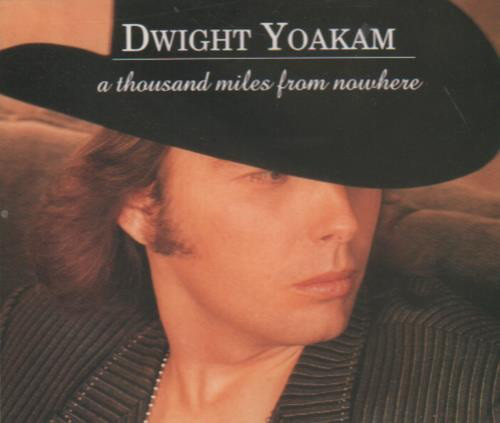
This song was the fifth track on his 1971 debut album, which is ridiculous when you think about it. As young as he was, and writing a song like this. Plenty of artists have covered Paradise. Dwight Yoakam, John Denver, John Fogerty, even the Everly Brothers, but none of them touch the original. Because it wasn’t just a song to Prine. It was a love letter to something that couldn’t love him back anymore.

Lynn Anderson released it in 1975, and it was the most commercially successful release. It peaked at #26 on the Billboard Country Charts and #16 on the Canadian Country Charts. 

Paradise

When I was a child my family would travel
Down to Western Kentucky where my parents were born
And there’s a backwards old town that’s often remembered
So many times that my memories are worn

And Daddy, won’t you take me back to Muhlenberg County?
Down by the Green River where Paradise lay
Well, I’m sorry, my son, but you’re too late in asking
Mister Peabody’s coal train has hauled it away

Well, sometimes we’d travel right down the Green River
To the abandoned old prison down by Airdrie Hill
Where the air smelled like snakes we’d shoot with our pistols
But empty pop bottles was all we would kill

And Daddy, won’t you take me back to Muhlenberg County?
Down by the Green River where Paradise lay
Well, I’m sorry my son, but you’re too late in asking
Mister Peabody’s coal train has hauled it away

Then the coal company came with the world’s largest shovel
And they tortured the timber and stripped all the land
Well, they dug for their coal till the land was forsaken
Then they wrote it all down as the progress of man

And Daddy, won’t you take me back to Muhlenberg County?
Down by the Green River where Paradise lay
Well, I’m sorry my son, but you’re too late in asking
Mister Peabody’s coal train has hauled it away

When I die, let my ashes float down the Green River
Let my soul roll on up to the Rochester Dam
I’ll be halfway to Heaven with Paradise waitin’
Just five miles away from wherever I am

And Daddy, won’t you take me back to Muhlenberg County?
Down by the Green River where Paradise lay
Well, I’m sorry my son, but you’re too late in asking
Mister Peabody’s coal train has hauled it away

Little Feat – Rock and Roll Doctor

I love Little Feat. A musician’s band that sounds great. This song is filled with funk and southern-fried sophistication. It’s really tight at 2 minutes and 57 seconds; this track from Little Feat’s Feats Don’t Fail Me Now album is equal parts swagger, groove, and swampy gospel-tinged funk. It captures everything that made the Lowell George-led era of the band so distinct: tight arrangements, terrific guitar, and soulful vocals. 

Only Little Feat could’ve made this record. The band was already deep into their groove by 1974, but this album is where the voodoo met the vinyl with that sound. Lowell George, rock and roll’s most underrated guitarist and a man who sounded like he’d lived three lifetimes by 29, delivers a great vocal as well. “Two degrees in be-bop, a PhD in swing / He’s the master of rhythm, he’s a rock and roll king!” It’s a tongue-in-cheek tribute to the healing power of boogie, but also a serious testament to Little Feat’s freakish musical chemistry and ability. 

The whole track hangs on that in-the-pocket rhythm section.  The band is in lockstep throughout, Richie Hayward’s drumming is crisp and funky, Paul Barrere and Lowell George’s guitars weave effortlessly, and Bill Payne’s piano rides just behind the beat, and it could have carried the song alone. There’s even some gospel call-and-response in the backing vocals.  It’s a shuffle, but it’s never lazy. It’s slick, but not slick-slick.

George’s slide solo? It says something and punctuates the song. Feats Don’t Fail Me Now peaked at #36 on the Billboard Album Charts and #40 in Canada in 1974. The song peaked at #34 on the Billboard 100 later in 1981. 

Rock and Roll Doctor

There was a woman in Georgia didn’t feel just rightShe had fever all day and chills at nightNow things got worse, yes a serious bindAt times like this it takes a man with such style I cannot often findA doctor of the heart and a doctor of mind

If you like country with a boogie beat he’s the man to meetIf you like the sound of shufflin’ feet he can’t be beatIf you wanna feel real nice, just ask the Rock and Roll doctor’s advice

It’s just a country town but patients comeFrom Mobile to Moline from miles aroundNagodoches to New OrleansIn beat-up old cars or in limousinesTo meet the doctor of soul, he’s got his very own thing

Two degrees in be-bop, a PHD in swingHe’s the master of rhythm he’s a rock and roll king

If you like country with a boogie beat he’s the man to meet (he’s the man to meet)If you like the sound of shufflin’ feet he can’t be beat(I say he can’t be beat)If you…If you wannaIf you wanna feel real nice, just ask the Rock and Roll doctor’s advice

Johnny Cash – I’ve Been Everywhere

Happy 4th of July and a belated Canada Day. 

I don’t think any performer is as popular and liked across generations and genres as Johnny Cash. I’ve met hard rock, country, and blues fans who love him. He was an American Icon. This man had been everywhere, and he had the stories to back it up. 

The song originated in Australia in 1959, written by Geoff Mack, which name-checked towns like Mooloolaba and Wollongong. Lucky Starr popularized it in Australia at the time. Hank Snow gave it an American twist in the early ‘60s, with a rapid-fire list of U.S. towns delivered at a gallop, sounding like he was being chased by a state trooper and an angry tour promoter at the same time.

Hank Snow made this song popular in 1962 by taking it to #1 on the Billboard Country chart and #68 on the Billboard 100. Johnny covered this song in 1996, and it’s the version I remember. Cash had a way of making a song his own. He released it in 1996 but had been doing it for years live. 

The genius of it, though, is that despite the fast pace, it never feels like a gimmick in his hands. There’s that world-weary baritone voice, like a man unrolling a crumpled map that’s been folded a thousand times. The song becomes not just about where he’s been, but what he’s seen, motels, hotels, and empty stages. He’s been everywhere, but not always by choice.

The song was on the album American II: Unchained produced by Rick Rubin. The album peaked at #26 on the Billboard Country Album Charts and #170 on the Billboard 200 in 1996.

I hope everyone living in the U.S.  has a happy, safe Fourth of July! I know I will!

I’ve Been Everywhere
I was totin’ my pack along the dusty Winnemucca road,
When along came a semi with a high and canvas-covered load.
“If you’re goin’ to Winnemucca, Mack, with me you can ride.”
And so I climbed into the cab and then I settled down inside.
He asked me if I’d seen a road with so much dust and sand.
And I said, “Listen, I’ve traveled every road in this here land!”

I’ve been everywhere, man.
Crossed the desert’s bare, man.
I’ve breathed the mountain air, man.
Of travel I’ve a-had my share, man.
I’ve been everywhere.

I’ve been to
Reno, Chicago, Fargo, Minnesota,
Buffalo, Toronto, Winslow, Sarasota,
Wichita, Tulsa, Ottawa, Oklahoma,
Tampa, Panama, Mattawa, La Paloma,
Bangor, Baltimore, Salvador, Amarillo,
Tocopilla, Barranquilla, and Padilla, I’m a killer.

I’ve been everywhere, man.
Crossed the desert’s bare, man.
I’ve breathed the mountain air, man.
Of travel I’ve a-had my share, man.
I’ve been everywhere.

I’ve been to
Boston, Charleston, Dayton, Louisiana,
Washington, Houston, Kingston, Texarkana,
Monterey, Faraday, Santa Fe, Tallapoosa,
Glen Rock, Black Rock, Little Rock, Oskaloosa,
Tennessee to Hennessey, Chicopee, Spirit Lake,
Grand Lake, Devil’s Lake, Crater Lake, for Pete’s sake.

I’ve been everywhere, man.
Crossed the desert’s bare, man.
I’ve breathed the mountain air, man.
Of travel I’ve a-had my share, man.
I’ve been everywhere.

I’ve been to
Louisville, Nashville, Knoxville, Ombabika,
Schefferville, Jacksonville, Waterville, Costa Rica,
Pittsfield, Springfield, Bakersfield, Shreveport,
Hackensack, Cadillac, Fond du Lac, Davenport,
Idaho, Jellico, Argentina, Diamantina,
Pasadena, Catalina, see what I mean-a.

I’ve been everywhere, man.
Crossed the desert’s bare, man.
I’ve breathed the mountain air, man.
Of travel I’ve a-had my share, man.
I’ve been everywhere.

I’ve been to
Pittsburgh, Parkersburg, Gravelbourg, Colorado,
Ellensburg, Rexburg, Vicksburg, El Dorado,
Larimore, Admore, Haverstraw, Chatanika,
Chaska, Nebraska, Alaska, Opelika,
Baraboo, Waterloo, Kalamazoo, Kansas City,
Sioux City, Cedar City, Dodge City, what a pity.

I’ve been everywhere, man.
Crossed the desert’s bare, man.
I’ve breathed the mountain air, man.
Of travel I’ve a-had my share, man.
I’ve been everywhere.

I’ve been everywhere.

Willie Nelson – Roll Me Up and Smoke Me When I Die

Wanted to have a little fun today. What better way to celebrate July 4th than with Willie Nelson and my next American Artist? The Willie Nelson set I watched on June 25th was probably the first real country act I’ve seen in concert, other than in street fairs in Nashville. Willie has done what few others have: appealed to a vast array of genres like Johnny Cash and Dolly Parton. The man is 92 and still going out there every night. 

The couple in front of us took this picture. 

If there were a Mount Rushmore for country outlaws, Willie Nelson wouldn’t just be on it, he’d be carving the damn thing with a joint in one hand and Trigger (his guitar) slung over his back. And with this song, Willie laughs at his legend and turns it into a porch-sing-along for the afterlife.

Released in 2012 on his Heroes album, this track arrived with a puff of smoke, wrapped in that unmistakable red-headed goodness. It’s a song about death that somehow feels like a party. Leave it to Willie to make his own funeral plans sound like a tailgate party. Beneath the title and chorus is something far more poignant: a man looking mortality in the eye and saying, You’re not killing my vibe.

The lineup of guests: Snoop Dogg, Kris Kristofferson, and Jamey Johnson all pile in for the chorus like it’s some high-end dive bar jam session. The vibe is half gospel, half roadhouse. The songwriters are Willie Nelson, Buddy Cannon, Rich Alves, John Colgin, and Mike McQuerry.

Roll Me Up and Smoke Me When I Die

Roll me up and smoke me when I dieAnd if anyone don’t like it, just look ’em in the eyeI didn’t come here and I ain’t leaving, so don’t sit around and cryJust roll me up and smoke me when I die

Now you won’t see no sad and teary eyesWhen I get my wings and it’s my time to flyCall my friends and tell ’em there’s a party, come on byAnd just roll me up and smoke me when I die

Roll me up and smoke me when I dieAnd if anyone don’t like it, just look them in the eyeI didn’t come here and I ain’t leaving, so don’t sit around and cryBut just roll me up and smoke me when I die

And I’d go, I’ve been here long enoughSo sing and tell more jokes and dance stuffJust keep the music playing, that will be a good goodbyeRoll me up and smoke me when I die

Roll me up and smoke me when I dieAnd if anyone don’t like it, just look ’em in the eyeI didn’t come here and I ain’t leaving, so don’t sit around and cryJust roll me up and smoke me when I die

Hey, take me out and build a roaring fireRoll me in the flames for about an hourAnd take me out and twist me up and point me towards the skyAnd roll me up and smoke me when I die

Roll me up and smoke me when I dieAnd if anyone don’t like it, just look ’em in the eyeI didn’t come here and I ain’t leaving, so don’t sit around and cryJust roll me up and smoke me when I die

Just roll me up and smoke me when I die

T-Rex – 20th Century Boy

I first heard this song on a car commercial. It was nice to hear something from T. Rex other than Bang a Gong. T Rex was never huge in America, but for a few years was very popular in the UK. They were one of the biggest UK Glam Rock bands.

It was released in 1973 as a non-album single. 20th Century Boy opens with a riff that could crack the sidewalk. It doesn’t crawl out of the speakers so much as leap from them. It’s all swagger, glam, and distortion turned up to 11.

The song sounds so modern with Tony Visconti’s production. It never cracked the Top 10 in the U.S., but in the UK it was a smash. The song found new life in commercials and soundtracks. It’s Bolan doing what he did best, selling you not just a song, but an attitude. He wasn’t offering truth or authenticity; he was offering escape. 

Their popularity soared in 1971-72, and a mania that was called “T. Rexstasy”. In 1972, Ringo Starr produced and directed a concert film called Born to Boogie about T Rex. This song peaked at #3 in the UK Charts in 1973 and #11 in 1991.

The band only charted 3 songs in the Billboard 100 with one top ten hit…Bang a Gong. In the UK, they scored 4 number ones and 21 top forty songs.

20th Century Boy

Friends say it’s fine
Friends say it’s good
Everybody says it’s just like Rock ‘n Roll
I move like a cat
Charge like a ram
Sting like a bee
Babe I wanna be your man

Well it’s plain to see you were meant for me
Yeah, I’m your boy, your 20th Century toy

Friends say it’s fine
Friends say it’s good
Everybody says it’s just like Rock ‘n Roll
Fly like a plane
Drive like a car
Hold out your hand
Babe I’m gonna be your man

And it’s plain to see you were meant for me
Yeah, I’m your toy, your 20th Century boy

20th Century toy, I wanna be your boy [4x]

Friends say it’s fine
Friends say it’s good
Everybody says it’s just like Rock ‘n Roll
Move like a cat
Charge like a ram
Sting like a bee
Babe I’m gonna be your man

And it’s plain to see
You were meant for me
Yeah I’m your toy
Your 20th Century boy

20th Century toy, I wanna be your boy [4x]

Troggs – Wild Thing

I had an obsession with this band when I was a kid. I wanted to know everything about them, but back then, you could not search Google or find many any books on The Troggs. I did learn about the Trogg Tapes, which were hilarious! A friend of mine had a bootleg cassette of them in the 80s. It’s them in a session and probably breaking the record for the number and variations of f**k in a session. It probably has more than Scarface did with Pacino. It was better than many comedy albums I bought back then. “Put a Little Bit of F***ing Fairy Dust Over the Bastard!” It doesn’t get much rock and roll than that.

Some songs arrive like lightning. This song showed up like a Molotov cocktail tossed into the tea party of mid-’60s pop, three chords, one brain cell, and more raw tension than a teenage first kiss. This is pre-punk, garage rock, and sexual threat, all crammed into 2 minutes and 34 seconds of glorious slop. The opening chord staggers into the room like a drunk on a bender.

If you were in a garage band in the sixties…or now, you probably have played this song. This is the Troggs’ claim to fame in the history of Rock and Roll. They had other good songs, but nothing that had this much influence. The song is as raw as you could get at the time. It’s also a song like ‘Louie Louie’ that every garage band has played or at least tried to play once. 

Reg Presley, one of rock’s unlikeliest frontmen (a former bricklayer with a sneer in his voice), had just enough voice to get him through. They were not stocked with great talent, but they sounded raw, and they had songs that were tailored for them. Instead of excellent musical chops, they had enthusiasm and just enough talent to make it exciting. And it worked. 

The band combined a pop touch with a garage band style, resulting in two top ten songs and four songs in the Billboard 100. This song peaked at #1 on the Billboard 100, #2 in the UK, and #2 in Canada in 1966.

Many people will remember the Jimi Hendrix version at the Monterey Pop Festival in 1967. Comedian Sam Kinison also did a version in 1989. The first version of this song was by The Wild Ones in 1965. Secondhandsongs shows 153 versions of this song. 

Chip Taylor (whose real name was Chip Voight) was a singer-songwriter who wrote this song. Taylor is the brother of actor Jon Voight and the uncle of Angelina Jolie. He has made a fortune on this song because it’s been in countless movies and TV Shows. He also wrote Angel of the Morning

Chip Taylor: “I was on the floor laughing when I was through. Wild Thing’ came out in a matter of minutes. The pauses and the hesitations are a result of not knowing what I was going to do next.”

Reg Presley: “There was a guy there (at DJM) called Dennis Berger, who had a heap of demos on his desk. The first one I picked up was Wild Thing. I took a look at the lyric sheet and read: ‘Wild Thing-you make my heart sing-you make everything groovy.’ It seemed so corny, I thought, Oh my God, what are they doing to us! Then I played Chip Taylor’s demo- just guitar and him- and it was incredible. The other boys all liked it too. Chip Taylor later told us our version was just what he wanted.”

Wild thing

You make my heart sing
You make everything groovy
Wild thing
Wild thing, I think I love you
But I wanna know for sure
Come on and hold me tight
I love you

Wild thing
You make my heart sing
You make everything groovy
Wild thing

Wild thing, I think you move me
But I wanna know for sure
So come on and hold me tight
You move me

Wild thing
You make my heart sing
You make everything groovy
Wild thing
Oh, come on, wild thing
Shake it, shake it, wild thing

Paul Brady – Can’t Stop Wanting You

If Paul Brady’s name doesn’t ring out like Dylan’s or Springsteen’s, that might just be because he was too versatile for his own good. In the music industry, which prefers its musicians to pick a lane and stick to it, Brady chose the scenic route, wandering from Irish traditional ballads to blue-eyed soul, from Dylan-esque singer-songwriter fare to ‘80s radio pop.

Brady was born in Strabane, a town in County Tyrone, Northern Ireland in 1947. He was raised in a musical household (his mother taught piano), Brady was classically trained early on but gravitated toward American rock and blues as a teenager, playing in local showbands before finding his way into the 1960s Dublin folk scene.

This song is on his album Trick or Treat, released in 1991. Paul was a busy man on this album. He is listed doing vocals, mandolin, piano, keyboards, tin whistle, percussion, drum programming, acoustic, and electric guitar. Some of Toto helped him out in the studio for this one. One of them was Toto drummer Jeff Porcaro in one of the last projects before his death. This song sounds like it should have been blaring out on the radio in the summer of 1991. The album did peak at #1 on the Irish Charts.

I want to add one more song from his second album, Hard Station, to give you another example of him. Hard Station was released a decade earlier than Trick or Treat in 1981. This man is worth checking out!

On Crazy Dreams, that opening guitar riff is tight and dry, like a fuse just waiting to burn down. Then Brady’s voice comes in, urgent, soulful, every syllable laced with exasperation and hope. It’s very smooth without being too smooth. 

Can’t Stop Wanting You

Hot words on a summer night
You ‘n’ me having a fight
One drink and it all come out
Before I knew what we were fightin’ about

Hurt come from a midnight place
Dressed in a web of lace
Brainstorm blowin’ up inside
I can’t stop wanting you

Now I know it’s a modern world
And baby you’re a modern girl
And I try to be tops at school
Pickin’ up on these modern rules
Teacher come and teacher go
Teacher know when a boy is slow
This boy got a lot to learn
I can’t stop wanting you

It’s a new kind of world
For a boy and a girl
And my mind’s in a whirl
I can’t stop wanting you

Hot words on a summer night
You ‘n’ me having a fight
One drink and it all come out
Before I knew what we were fightin’ about
I tried but the truth is out
I can’t stop wanting you