Tomorrow Dave will be hosting a post of mine on his site A Sound Day…and I will be hosting a post by him… right here…end of commercial!
I wanted to shake things up a little today…This post is about my first car… what was your first car?
It’s funny how you don’t know what you have when you have it. I was 16 in 1983 and my mom surprised me with my first car. It was used…it cost her 1000 dollars. I thought it was cool and everything, but I didn’t know cars. The car was a year older than I was at the time. It was purplish…I currently cannot find a picture of it. Inside was off-white cloth seats with blue carpet…not factory I assure you.
I drove the wheels off of that car. The engine was decent, and it didn’t burn much oil at all for an old car.
Was it a perfect car for a 16-year-old boy? NO, it was not the perfect first car for a kid.
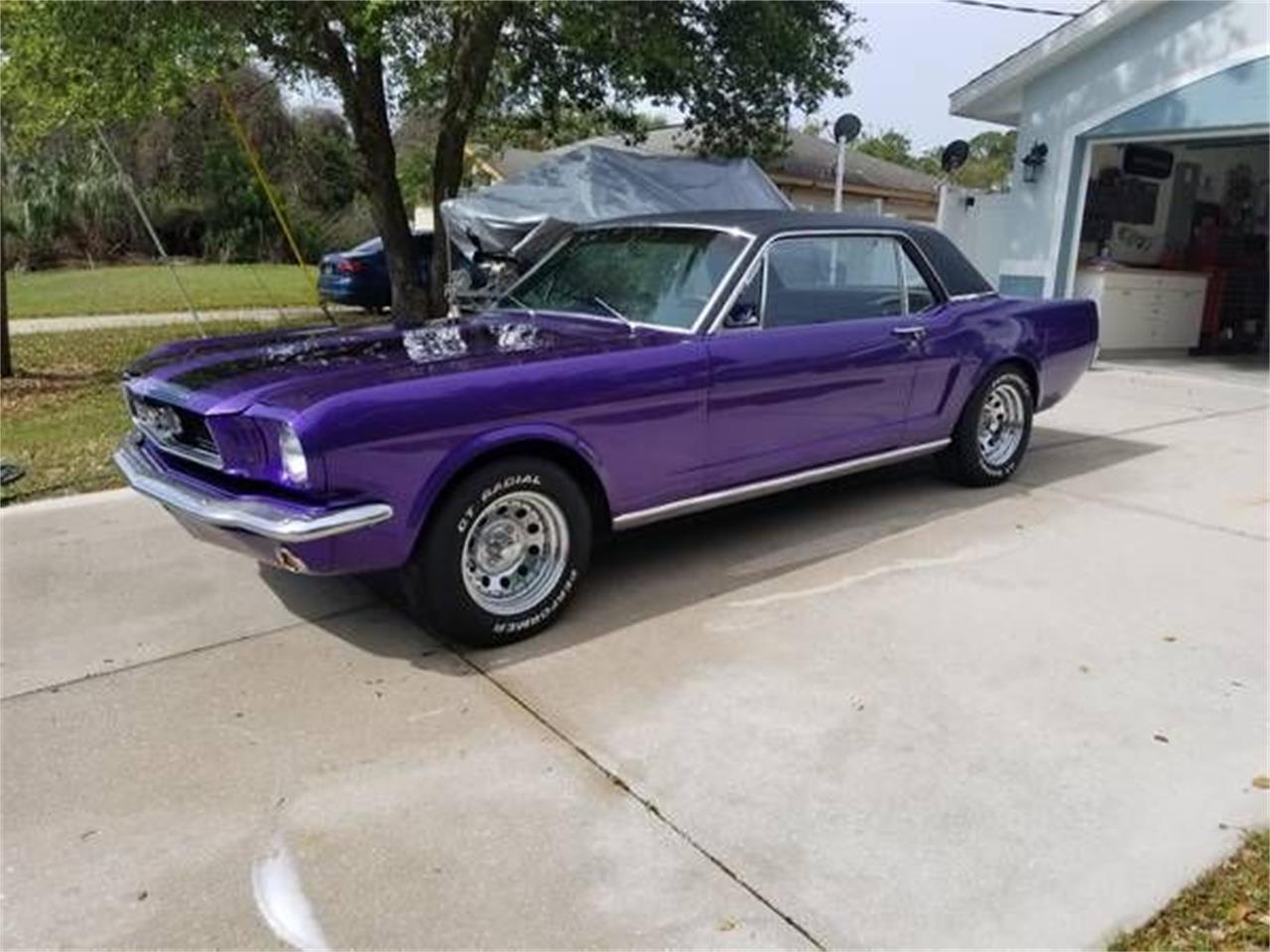
My mom had bought me a 1966 Mustang. I still cannot believe I had this car. No sixteen-year-old should have a classic Mustang…but then again…in 1983 they were not classic yet.
It looked something like this except with a bad homemade matte finish, no cool wheels, way more beat up, and it looked much older even then. In other words, the model was the same, but the similarities ended there.
Those cars do not have much room, but my friends and I made it work. Our band would have gigs or practice and the four of us would pile into the car…with our amps and drum kit. The passenger back window would not roll all the way up and in winter our drummer would be in the back seat on that side…he said his teeth would hurt because he was so cold when we arrived at our destination with the bass drum in his lap.
The first time it snowed, I got out in the car. I didn’t know what I was doing at all. No one ever taught me how to drive in snow. In middle Tennessee, we don’t get much snow now… but in the 70s and 80s, we did. We got off of school early that day because of the snow so a couple of friends of mine (Kenny and Paul) jumped in the car and we went out exploring the winter wonderland. Kenny was in the backseat with my Epiphone guitar that stayed with me. Paul was riding shotgun and we were happy getting out of school early.
I drove us around most of the day and it was at least 5 inches of very wet snow on the roads. I thought well, this is no problem. That is until we started down a certain snow-covered hill. I did the one thing you don’t do on snow…locked up the breaks. Everything was in slow motion when that happened. I suddenly said…” we are going to wreck guys”. I heard a laugh and sure enough, off we went into a creek.
We hit the creek bed with a crunching thud… everybody was tossed around. What was the first thing your humble writer asked? Did I ask how everyone was? No, the first thing I asked was “Hey, Kenny… is my guitar ok?”…Ya, I was a sensitive 16-year-old. They never let me forget that to this day. By the way, the guitar was ok and Paul and Kenny still walk the earth today so no one was seriously hurt.
We had no money on us, we walked through the snow for a couple of miles…me carrying my guitar to a friend’s house and I borrowed $25 for a tow truck.
I was extremely lucky with the Mustang. The only damage was the passenger side fender. It took me months to find a fender for that car. I finally had to order it from a junkyard, and it cost me 75 dollars in 1984.
In 1985 the Mustang broke down and I got another car instead of getting it repaired but not after racking up a lot of mileage and fun… You only get one first car…and mine was something to remember. Now when I see an old Mustang, I think of how I wish I would have appreciated mine more.
I really like this one a lot. It has a feel of a horror movie because it is somewhat of a ghost story. It’s about an older lady who starts getting calls in the middle of the night. Gladys Cooper is brilliant as Elva Keene in this episode. Elva is confused and frightened by persistent phone calls from an eerie sounding caller.
Gladys also appeared in Nothing in the Dark opposite Robert Redford in the 3rd season. Who else but Rod Serling could take something as simple as an inanimate object, a telephone, and turn it into an element of fear and dread?Highly suspenseful episode with an ironical ending. So who is the caller interrupting elderly Elva’s rest? One typical Twilight Zone trait is here…loneliness. This one will make you hesitant to answer the phone at night.
From IMDB Trivia: The title of Richard Matheson’s original short story is “Long Distance Call”. However, as there was already an episode of The Twilight Zone (1959) with this title, The Twilight Zone: Long Distance Call (1961), the title of this episode had to be changed.
Originally scheduled to air on November 22, 1963, it was preempted by John F. Kennedy’s assassination. In the alternate timeline featured in The Twilight Zone: Profile in Silver/Button, Button (1986) in which JFK’s assassination was prevented, a CBS television announcement is heard: “We will now return to our regular programming” and the theme of The Twilight Zone (1959) is played, a reference to the intended broadcast date of this episode.
Elva’s phone number is KL-5-2368. The K and the L are both the number 5 on the phone dial. “555” is an exchange number commonly thought to be reserved by the phone companies for use by TV and movies in order to prevent prank phone calls to real people. In fact, only 555-0100 through 555-0199 are now specifically reserved for fictional use, and the other numbers have been released for actual assignment.
On the day that this episode was first aired (February 7, 1964), The Beatles arrived in the United States in preparation for their first appearance on The Ed Sullivan Show (1948): The Ed Sullivan Show: Meet The Beatles (1964).
This show was written by Rod Serling and Richard Matheson
Rod Serling’s Opening Narration:
Miss Elva Keene lives alone on the outskirts of London Flats, a tiny rural community in Maine. Up until now, the pattern of Miss Keene’s existence has been that of lying in her bed or sitting in her wheelchair, reading books, listening to a radio, eating, napping, taking medication—and waiting for something different to happen. Miss Keene doesn’t know it yet, but her period of waiting has just ended, for something different is about to happen to her, has in fact already begun to happen, via two most unaccountable telephone calls in the middle of a stormy night, telephone calls routed directly through—the Twilight Zone.
Summary
The elderly Elva Keene is not too happy when she begins receiving phone calls in the middle of the night. At first the calls are little more than static and her complaints to the local telephone operator, Miss Finch, seem to go unheeded. Over time however, she begins to hear a man’s voice but out of fear, tells whoever it is to go away. When Miss Finch reports they’ve found the problem, Elva visits the site only to realize the identity of the caller, and that regardless of anything she’s said, desperately wants the calls to continue.
VIDEO SPOILERS
Rod Serling’s Closing Narration:
According to the Bible, God created the Heavens and the Earth. It is man’s prerogative—and woman’s—to create their own particular and private Hell. Case in point, Miss Elva Keene, who in every sense has made her own bed and now must lie in it, sadder, but wiser, by dint of a rather painful lesson in responsibility, transmitted from the Twilight Zone.
I remember this song well. In 1981 I was 14 and after I bought the Start Me Up single I went out and bought Tattoo You. Tattoo You was a good Stones album. In fact, I would say it was their last great album. I did like a few of the albums that would follow but this one had everything.
The Stones had dug down deep in their vaults for several songs. Some songs came from the Mick Taylor era. The Stones first recorded this song in 1978 at the Some Girls sessions. Lyrics were added and it was repackaged for Tattoo You.
The song is said to be pointed at the UK. The Stones rarely performed in England because of the huge taxes that were levied on entertainers… it was much more profitable for them to live and work elsewhere.
Hang Fire means a delay or delayed in taking action or progressing. The original title was said to be “Lazy Bitch,” supposedly aimed at a certain British prime minister.
The tour for this album was massive. I remember vividly wanting to go but they didn’t come to Nashville. It was the first rock tour I remember being publicized as an event rather than a concert. You must remember the Stones were getting “old.” People were saying this could be it for the band because they were over the hill. Mick was a whopping 38 years old in 1981. If only we knew what was coming!
The American leg was sponsored by Jovan which yea…I went out and got their cologne. It was the largest grossing tour of 1981 with $50 million in ticket sales. Roughly two million concert goers attended the concerts, setting various ticket sales records.
Most importantly about this tour. It was the last time the Stones toured without backup singers and musical help on stage. Yes, they sounded more ragged on this tour but…that fit them perfectly. I would have rather heard Keith sing backup than pitch perfect backup singers. I did get to see them in the 90s and in 2006.
A film of the tour was released in 1983 called Let’s Spend the Night Together directed by Hal Ashby.
From Songfacts
A “hang fire” is a delay from when a trigger is pulled on a flintlock gun and when it actually fires. The expression means a delayed response, but in this song could apply to the lazy people who won’t take action. It’s also a great phrase to sing, which Mick Jagger does a few different ways throughout the song, sometimes stretching out “fire,” and other times keeping it contained.
In the UK, “Hang Fire” wasn’t released as a single, but in America it was the third single from the Tattoo You album, which hung around for a while. The song peaked at #20 in May 1982, 10 months after the album was released.
MTV launched on August 1, 1981, giving The Rolling Stones instant access to a new audience in America. They were ready, having made several videos (known as “promotional films” back in the day) already with director Michael Lindsay-Hogg, who returned to helm the Tattoo You videos. “Start Me Up” was the first in the set, showing the band performing the song on an empty set. This was typical, as Lindsay-Hogg kept the focus on the band, which were adept performers with a lead singer who could pull focus. “Hang Fire” had a similar look, but with posters of the album artwork adorning the set. These low-budget videos did very well on MTV, which was thrilled to have The Stones in rotation.
Hang Fire
In the sweet old country where I come from Nobody ever works Yeah nothing gets done We hang fire, we hang fire
You know marrying money is a full time job I don’t need the aggravation I’m a lazy slob I hang fire, I hang fire Hang fire, put it on the wire baby Hang fire, hang fire put it on the wire baby, go ahead Hang fire
We’ve got nothing to eat We got nowhere to work Nothing to drink We just lost our shirts I’m on the dole We ain’t for hire Say what the hell Say what the hell, hang fire Hang fire, hang fire, hang fire, put it on the wire, baby Hang fire, hang fire, hang fire, hang fire Hang fire, hang fire, put it on the wire, baby
Doo doo doo Doo doo doo Doo doo doo Doo doo
Doo doo doo Doo doo doo Doo doo doo Doo doo, hang fire, hang fire, hang fire
Doo doo doo Doo doo doo Doo doo doo, hang fire, hang fire, put it on the wire, baby Doo doo
Doo doo doo Doo doo doo Doo doo doo Doo doo
Yeah ten thousand dollars, go have some fun Put it all on at a hundred to one Hang fire, hang fire, hang fire, put it on the wire, baby Doo doo Doo doo, hang fire, hang fire put it on the wire Hang fire, hang fire, hang fire, hang fire Put it on the wire, baby Put it on the wire
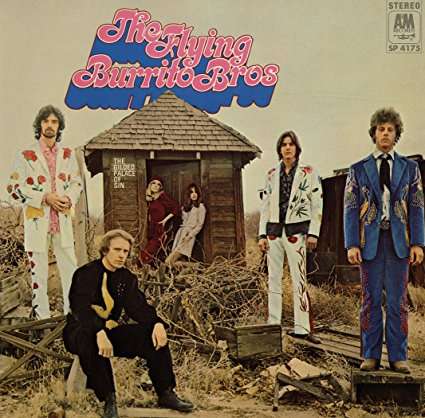
This song is my favorite of the Flying Burrito Brothers. It came off their great country album The Gilded Palace of Sin. It didn’t chart at the time. It probably would have helped if they would have given it a proper name but regardless… it’s a great song.
Parsons wrote this song with Burrito bass player Chris Ethridge while the band was living in their San Fernando Valley house that was dubbed “Burrito Manor.”
This song, like the album The Gilded Palace of Sin, barely made a dent on the music world of 1969. They did develop a cult following after this albums release that included Bob Dylan and The Rolling Stones. The band was more popular with other musicians than the public.
Gram joined the Flying Burrito Brothers after leaving the Byrds in 1968.
The Gilded Palace of Sin. One thing you notice are the “Nudie” suites on the front cover. Nudie Cohn was an American tailor who designed decorative rhinestone-covered suits. Parsons’ suit was hand-stitched by Manuel Cuevas, Nudie Cohen’s protégé, who has called the suit “a map for him to follow to his death.”
The green leaves featured in the design on the front of the jacket are a marijuana plant, and the red-petaled flowers above them are poppies, the natural source of morphine, opium, and heroin. Gram Parsons would die in 1973 and the cause of death was an overdose of morphine and alcohol
This album was a major influence on the Eagles, Travis Tritt, Vince Gill, Alan Jackson, Clint Black, and Randy Travis.
Hot Burrito #1
You may be sweet and nice But that won’t keep you warm at night ‘Cause I’m the one who showed you how To do the things you’re doing now He may feel all your charms He might hold you in his arms But I’m the one who let you in I was right beside you in the end Once upon a time You let me feel you deep inside But nobody knew, nobody saw Do you remember the way we cried? I’m your toy I’m your old boy But I don’t want no one But you to love me No, I wouldn’t lie You know I’m not that kind of guy Once upon a time You let me feel you deep inside But nobody knew, nobody saw Do you remember the way we cried? I’m your toy I’m your old boy But I don’t want no one But you to love me No, I wouldn’t lie You know I’m not that kind of guy
To wrap 1970’s AM Radio Gold week up…I had to include this one….so I hope you have a happy Sunday…in your Chevy Van or whatever you drive. This song takes me back to being a kid hearing on a car radio at night. I try not to repeat songs on my blog…but with this theme…I just had to include this one. For me when I think of AM radio…this is the first one that comes to mind. I posted a small post about this song 4 years ago…hope you don’t mind.
Sammy Johns re- released Chevy Van back in 1975 and it peaked at #5 in the Billboard 100,#7 in Canada and #2 in New Zealand. It is pure AM 70’s pop and it caught my imagination as a youngster.
I remember vans in the seventies…painted with all kinds of designs until the minivan came and ruined the whole damn thing. We went from this:
to this…in a blink of an eye. No place to hide in this one.
The musicians that back Johns are the famous Wrecking Crew from Los Angeles. The song has been covered by many Country artists and most recently by Eric Church.
John’s compositions have also been recorded or covered by other artists such as Waylon Jennings, Sammy Kershaw, Conway Twitty. Jennings sang John’s composition “America” on a nationally broadcast ceremony to mark the restoration done on the Statue of Liberty. This led to the success of the single which went gold and was even nominated country song of the year.
Also this song was the theme song to the movie The Van (which yea…I have) released in 1977. It was the first movie Danny DeVito was in. I thought I would include a movie trailer to The Van. It won’t be confused with The Godfather at anytime but it’s a fun B 70s Movie.
Thank you for reading this week!
Chevy Van
I gave a girl a ride in my wagon She rolled in and took control She was tired and her mind was a-draggin’ I said get some sleep and dream of rock and roll
‘Cause like a picture she was layin’ there Moonlight dancin’ off her hair She woke up and took me by the hand She’s gonna love me in my Chevy van And that’s all right with me
Her young face was like that of an angel Her long legs were tanned and brown Better keep your eyes on the road, son Better slow this vehicle down
‘Cause like a picture she was layin’ there Moonlight dancin’ off her hair She woke up and took me by the hand She’s gonna love me in my Chevy van And that’s all right with me
I put her out in a town that was so small You could throw a rock from end to end A dirt road Main Street, she walked off in bare feet It’s a shame I won’t be passin’ through again
‘Cause like a picture she was layin’ there Moonlight dancin’ off her hair She woke up and took me by the hand We made love in my Chevy van And that’s all right with me
This episode is a weak one but it does contain some science fiction for sci-fi fans. It is not the worse episode of the series but certainly not the best. Most of the time I do not question TZ logic but on this occasion, I had to. Aliens are on the planet and are trying to blend in with the rest of society. Do you think it’s wise to be three leather jacket motorcycle-riding beatniks moving in a residential neighborhood in the early 60s? Would the term “sore thumb” be used in this case?
I knew the leading lady looked familiar. It was Shelley Fabares who played Ellen Tillman who would 3 decades later star in the TV series Coach. She and Lee Kinsolving who plays Scott bumped this up from a 2. Denver Pyle is also in this episode but really doesn’t have much to do. Earl Hamner Jr admitted in an interview later that this episode was bad. He was not as proud of it as most of the other episodes of The Twilight Zone that he wrote.
From IMDB trivia:
In “The Twilight Zone Companion” (1983), Marc Scott Zicree described this episode as “It Came from Outer Space (1953) meets The Wild One (1953).”
When the real estate agent’s sign is shown in close-up, its phone number is “485-412,” not the standard 7 digit number it should have been. This was presumably done to avoid accidentally using a real number without resorting to the usual 555 prefix.
The close-up of the Invasion Commander’s eye resembles the logo of CBS which produced this show. It is the “All-Seeing Eye” of the Illuminati, also known as the “Eye of Providence” of the Free Masons. It is unclear if CBS is an adept of either practice.
The street is the same as the one in the season one episode “The Monsters are Due on Maple Street”.
All exteriors were shot in Universal’s back lot. As the bikers enter town at the beginning of the episode, they drive right past the town square made famous in Back to the Future (1985).
This show was written by Rod Serling and Earl Hamner Jr.
Rod Serling’s Opening Narration:
Three strangers arrive in a small town; three men in black leather jackets in an empty, rented house. We’ll call them Steve, and Scott, and Fred, but their names are not important; their mission is, as three men on motorcycles lead us into the Twilight Zone.
Summary
Three leather-clad motorcycle-riding young men arrive in a small town where they rent a house on a quiet residential street. The neighbors aren’t too sure about them but they are certainly exotic, certainly in the eyes of young Ellen Tillman. The three men leave the house unfurnished and move in with several large crates. As Ellen and her father interact it becomes clear they are something very special indeed. Ellen and Scott begin spending time together while the two others continue with their plans.
Rod Serling’s Closing Narration:
Portrait of an American family on the eve of invasion from outer space. Of course, we know it’s merely fiction—and yet, think twice when you drink your next glass of water. Find out if it’s from your local reservoir, or possibly it came direct to you….from the Twilight Zone.
CAST
Rod Serling … Narrator / Self – Host (uncredited) Lee Kinsolving … Scott Michael Forest … Steve Tom Gilleran … Fred Michael Conrad … Police Officer/Alien Shelley Fabares … Ellen Tillman Denver Pyle … Stuart Tillman Irene Hervey … Martha Tillman
We just got 2-3 inches of snow last night…Summer Breeze is just what we need.
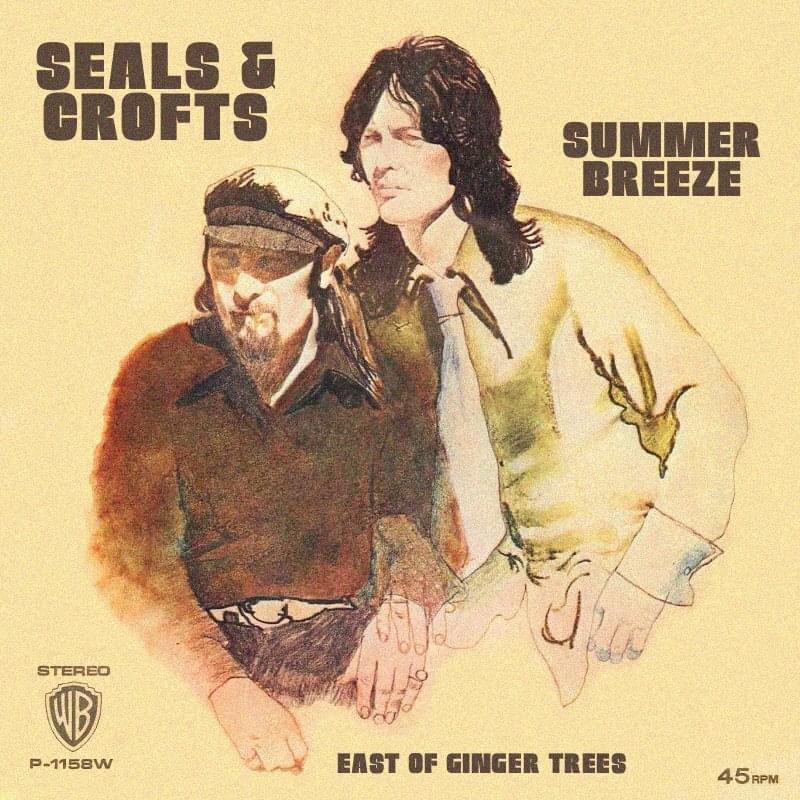
I’m probably the only one out there that always thought it was “Seals and Croft” not a plural Crofts. Other than me not paying attention all my life to that…this song IS the 70s. No song I can write about represents AM Gold better than this one.
Jim Seals and Dash Crofts were from Texas. They belonged to a later version of The Champs…The Champs had a hit “Tequila” in 1958. When the group dissolved in 1965, they worked with several other artists including Gene Vincent. In 1969 they released their first album as a duo. “Summer Breeze” was the first hit single, appearing on their fourth album in fall 1972.
“Summer Breeze” almost went nowhere. By the fall of 1972 the album Summer Breeze had been out for a couple of months, but the title single…the song the duo had worked so hard to perfect had barely charted, and their label informed them it would do no more promotion. While they were on tour in Boston, their manager convinced them that while they were there, they should show up to one of the city’s most popular radio stations and play “Summer Breeze” for a DJ.
The DJ ended up liking it. After listening to it, he looked up and delivered the news… Summer Breeze was going into rotation. The song quickly caught on in Boston and other markets like Philadelphia and Dallas, soon followed. When they got back to L.A., they heard Summer Breeze on the car radio.
Jim Seals is the brother of Dan Seals, who was “England Dan” in the duo England Dan and John Ford Coley. They had several hit songs in the ’70s.
The song peaked at #6 in the Billboard 100, #6 in Canada, and #14 in New Zealand in 1973.
I’ve always liked a 1974 cover by the Isley Brothers also, featuring much livelier guitar. It peaked at #16 in the UK. Some of the other artists to cover it include Johnny Mathis, The Main Ingredient, and Jason Mraz.
Jim Seals:“A very simple song about a man coming home from work and hearing the dog barking and things like that, and to a lot of people the song’s about looking for security. Our meaning goes further than that, for a prison can be the prison of self and a person can become insecure and paranoid if he doesn’t have a direction in his personal life.”
From Songfacts
“Blowing through the jasmine in my mind”? Long before it was a Disney princess, jasmine was a kind of flower that blooms in the summer. Also good for tea, Seals & Crofts use it to bring about feelings of contentment and harmony in this song, which is a feel-good classic about enjoying some simple pleasures in life with the ones you love. Jim Seals explained in 1972: “We operate on a different level, we try to create images, impressions and trains of thought in the minds of our listeners.”
Seals & Crofts were devoted to the Baha’i faith, and believed that by writing about life itself, many meanings would emerge for the listener.
Type O Negative released a very foreboding cover of “Summer Breeze” in 1993 that was used in the 1997 movie I Know What You Did Last Summer. Other movies to use the song include:
Rock Odyssey (1987) King of California (2007) Land of the Lost (2009) Vacation Friends (2021)
It also appears in these TV shows: Freaks and Geeks (“Dead Dogs and Gym Teachers” – 2000) How I Met Your Mother (“Matchmaker” – 2005) Girls (“The Return” – 2012) Family Guy (“Yacht Rocky” – 2019) The Blacklist (“The Protean (No. 36)” – 2021)
Summer Breeze
See the curtains hangin’ in the window, in the evenin’ on a Friday night A little light a-shinin’ through the window, lets me know everything is alright
Summer breeze, makes me feel fine, blowing through the jasmine in my mind Summer breeze, makes me feel fine, blowing through the jasmine in my mind
See the paper layin’ in the sidewalk, a little music from the house next door So I walked on up to the doorstep, through the screen and across the floor
Summer breeze, makes me feel fine, blowing through the jasmine in my mind Summer breeze, makes me feel fine, blowing through the jasmine in my mind
Sweet days of summer, the jasmine’s in bloom July is dressed up and playing her tune And I come home from a hard day’s work And you’re waiting there, not a care in the world See the smile a-waitin’ in the kitchen, food cookin’ and the plates for two Feel the arms that reach out to hold me, in the evening when the day is through
Summer breeze, makes me feel fine, blowing through the jasmine in my mind Summer breeze, makes me feel fine, blowing through the jasmine in my mind
“Whoso would be a man, must be a nonconformist.”― Ralph Waldo Emerson
Personally, I think this is one of the most important Twilight Zone episodes ever made. It could have been made now.
This one is deeply disturbing and not in a monster or twist sense…it tackles an issue that still is going strong. Did Rod Serling have a crystal ball or did he see where everything was going? This episode takes place in the 21st century and yes, it is very relatable now. In a time now where our cars, houses, and clothes look the same you could see this coming and with plastic sugery it is essentially here. On our phones, computers, tv’s, and magazines we are hit with a barrage of advertising aimed at beautifying ourselves. We are obssessed with celebrities looking perfect and mimicking them. We can lose our identity if we are not careful as a whole.
There is a line in the episode where the lead character says “Is that good being like everybody? Isn’t that the same as being nobody?” and that line speaks volumes. The episode is about when a person turns 19, he or she must choose which body and face they want to go through life with. All the choices are basically models and they are forced to go through with this operation. However, it’s not only the body and face that is changed, it’s their outlook and personality. They are always shallow and happy because no deep thoughts are allowed. The lead character Marilyn Cuberle is billiantly played by Collin Wilcox and you feel like she is alone in the world.
The episode is not about beauty. It’s not about if you are beautiful you are automatically shallow. I think people have misread it through the years. It’s about conforming to the social norm. There is the social price that we pay for not conforming, but I would rather pay it with intrest than go along with the crowd. In a world where everything is beautiful, nothing is.
*** I apologize for interupting here but this is a personal reflection on what this episode means to me. The quote at the top “Whoso would be a man, must be a nonconformist.” by Ralph Waldo Emerson is the most important quote I’ve ever read. I found it in high school and later on I was wrote up at work (I don’t work at that place now) because I had it on my computer desktop. I was not “part of the team” with thoughts like that. ***
IMDB Trivia: All the characters are named after conventionally beautiful film stars of the day: Lana for Lana Turner, Marilyn for Marilyn Monroe, Grace for Grace Kelly, Rex for Rex Harrison, Eva for Eva Marie Saint, Valerie for Valerie Allen.
Three separate characters – Uncle Rick, Dr. Rex, and Dr. Sigmund Friend – were identical in appearance, but were distinctly different as portrayed by Richard Long. Uncle Rick was kindly and down-to-earth; Dr. Rex was eerily good-natured, with some peculiar mannerisms; and “Sigmund Friend” was a Freud-like, ominous and shadowy character with a thick German accent.
This episode is reported to be the inspiration for “Uglies”, a 21st Century series of young adult science fiction novels by Scott Westerfeld.
When Marilyn shows her mother Lana a picture of herself (Lana) before her own “Transformation,” the picture is of Collin Wilcox with a different hairstyle. Wilcox was herself twenty-eight years old when she made this episode (and just two years younger than Suzy Parker), but the premise made it possible for her to be credible as a nineteen-year-old.
This episode is based on Charles Beaumont’s short story, “The Beautiful People”, which first appeared in the September 1952 issue of the science fiction magazine “If”.
This show was written by Charles Beaumont, John Tomerlin, and Rod Serling
Rod Serling’s Opening Narration:
Given the chance, what young girl wouldn’t happily exchange a plain face for a lovely one? What girl could refuse the opportunity to be beautiful? For want of a better estimate, let’s call it the year 2000. At any rate, imagine a time in the future where science has developed the means of giving everyone the face and body he dreams of. It may not happen tomorrow, but it happens now, in The Twilight Zone.
Summary
As Marilyn Cuberle approaches her 19th birthday she faces a momentous decision. Like everyone else in this futuristic society, she must choose which look she will adopt in the transformation process. Here, all men and women look like one of a series of approved faces, all are beautiful or handsome. Marilyn doesn’t want to change her appearance and is happy to look different from anyone else. Everyone assures her that she is under no obligation to undergo the transformation – but they go out of their way to make it difficult for her to say no.
Rod Serling’s Closing Narration:
Portrait of a young lady in love – with herself. Improbable? Perhaps. But in an age of plastic surgery, body building and an infinity of cosmetics, let us hesitate to say impossible. These, and other strange blessings, may be waiting in the future, which, after all, is The Twilight Zone.
CAST
Rod Serling … Narrator / Self – Host (uncredited) Collin Wilcox…Marilyn Cuberle Suzy Parker…Lana Cuberle / Eva / Doe / Grace / Jane / Patient / Number 12 Richard Long…Uncle Rick / Dr. Rex / Sigmund Friend / Dr. Tom / Tad / Jack / Attendant Pam Austin…Valerie / Marilyn (after transformation) / Number…
The Jackson Five had some great pop songs in the seventies. Most of the early songs were full of energy and infectious. They called their music bubblegum soul. This was the first Jackson 5 single released by Motown Records (they released a single on a local label in Gary, Indiana, in 1968). It launched their career and went to #1 in the US, as did the next three releases: “ABC,” “The Love You Save” and “I’ll Be There.”
The song peaked at #1 in the Billboard 100, #2 in Canada, #2 in the UK, and #12 in New Zealand 1969-1970.
Motown had set up offices in Los Angeles, which is where the Jackson 5 relocated and where this song was written and recorded. The top songwriting/production team at Motown, Holland-Dozier-Holland, had left the label to get better terms, so there was a huge void that many Motown writers were trying to fill.
Their first three songs were written and produced by a Motown collective known as “The Corporation”: Freddie Perren, Deke Richards, Fonce Mizell, and Berry Gordy Jr. Gordy was head of the label and assigned them that name, which kept the focus on the team instead of the individuals within it – if one member deigned to leave, he could replace him.
The Jackson 5 found a winning formula early. Michael Jackson sang the lead and his brothers added vocals in the song. It also opened the door for family groups with young lead singers, notably the Osmonds and the DeFranco Family.
It has gained popularity because of being included on the 2014 soundtrack Guardians Of The Galaxy, which was a #1 hit in America for two weeks.
From Songfacts
The Jackson 5 were a family group from Gary, Indiana, that were auditioned to exhaustion by their father, Joe, before signing with Motown Records in 1968. Joe made sure the youngest brother, Michael, was out front – his voice, dance moves and stage presence were the star of the show. When “I Want You Back” was released in October 1969, Michael was just 11 years old, but by that point he had so much training he could handle the promotional appearances and rigorous schedule. The entire group was media trained by Motown, and for a while they were ordered to tell a story about how Diana Ross discovered the group. For the most part, they came off as a regular family, with Michael citing basketball and catching lizards as hobbies. They described their sound as “bubblegum soul,” a term that explains their appeal to both black and white audiences.
This song tells a tried-and-true story about a guy who took his girl for granted and now desperately wants her back now that she’s left him. Making it work from the perspective of an 11-year-old boy took some doing, but the upbeat track takes the weight off, so it sounds more like a schoolyard crush. There are also lots of answer lines in the lyric (“Let you go, baby…”) that give the other members of the group a chance to chime in.
“I Want You Back” started as a song Freddie Perren, Fonce Mizell, and Deke Richards wrote for Gladys Knight & The Pips called “I Want To Be Free.” Perren and Mizell were childhood friends from New Jersey who moved to Los Angeles and teamed up with Deke Richards, a producer at Motown. When Berry Gordy heard the song, he decided it could be a good fit for the Jackson 5 if it got a rewrite. Michael Jackson reminded Gordy of Frankie Lymon, another teenage star, Gordy suggested they write it as if it were for Lymon. They reworked the song, changing the storyline so it’s about a young kid trying to get his girl back, and they fashioned a lively track to underline it.
When the song took off, Perren, Mizell, Richards and Gordy became the songwriting/production team that powered the Jackson 5. Stung by the loss of his marquee team of Holland-Dozier-Holland, Gordy branded this new team “The Corporation,” which is how the songwriting credit was listed. This kept the writers’ names off the record, ensuring they would remain anonymous. They became the first West Coast songwriting team to make a big impact at Motown.
The musicians who played on most of the ’60s Motown hits were members of their Detroit house band, the Funk Brothers. The Jackson 5 recorded in Los Angeles with a new group of session players. On “I Want You Back,” they included Louis Shelton and David Walker on guitars, Wilton Felder on bass, and Gene Pello on drums.
This song opens with an ear-catching piano glissando that was played by two of the song’s writers, Freddie Perren and Fonce Mizell.
Berry Gordy went out of his way to make this a hit, using all his resources at Motown to do so. With the ’60s coming to a close and Motown moving west, Gordy wanted to mint new stars at the label, and he knew he had a winner in the Jackson 5. One of his ploys was to claim the group was discovered by Diana Ross, and have her showcase the group for industry bigwigs. Ross was also in transition, having recently left The Supremes and launched her solo career. This bit about Ross finding the group proved a solid talking point and was propagated for decades. Nobody seemed to care that it was a ruse – there was a lot more to talk about concerning the Jackson 5 and their precocious lead singer.
Two popular songs sampled this in 2001: Jay Z used it on “Izzo (H.O.V.A.)” and it was also used on Lil’ Romeo’s “My Baby.” In 1992, it was sampled on the Kris Kross hit “Jump.”
The sci-fi soul singer-songwriter Janelle Monáe covered this as a bonus track on the deluxe edition of her The Electric Lady album. She explained to A.V.Club that she chose this particular tune as it resonated with her. “There are so many amazing Michael Jackson songs from different stages of his career,” she said, “and that happened to be one of my favorite stages. It makes people happy, and I love the tone, and musically, it has a lot of places to go for our orchestra. It has a lot of odd instrumentation.”
“The version I did does not sound like the Jackson 5 original recording,” Monáe continued. “I wanted to interpret it my way and record it differently, while continuing to pay homage to him, but I saw it in a different light. I’m really excited to let you guys hear it because you’ll get a chance to hear that song from my perspective. I had a dream about it and how I wanted it to be recorded.”
This song appears in the films Now and Then (1995), Drumline (2002), Daddy Day Care (2003) and Friends with Benefits (2011).
I Want You Back
When I had you to myself, I didn’t want you around Those pretty faces always make you stand out in a crowd But someone picked you from the bunch, one glance is all it took Now it’s much too late for me to take a second look
Oh baby, give me one more chance (To show you that I love you) Won’t you please let me back in your heart Oh darlin’, I was blind to let you go (Let you go, baby) But now since I’ve seen you it is on (I want you back) Oh I do now (I want you back) Ooh ooh baby (I want you back) Yeah yeah yeah yeah (I want you back) Na na na na
Trying to live without your love is one long sleepless night Let me show you, girl, that I know wrong from right Every street you walk on, I leave tear stains on the ground Following the girl I didn’t even want around
Let me tell ya now Oh baby, all I need is one more chance (To show you that I love you) Won’t you please let me back in your heart Oh darlin’, I was blind to let you go (Let you go, baby) But now since I’ve seen you it is on
All I want All I need All I want! All I need!
Oh, just one more chance To show you that I love you Baby baby baby baby baby baby! (I want you back) Forget what happened then (I want you back) And let me live again!
Oh baby, I was blind to let you go But now since I’ve seen you it is on (I want you back) Spare me of this cost (I want you back) Give me back what I lost!
Oh baby, I need one more chance, hah I’d show you that I love you Baby, oh! Baby, oh! Baby, oh! I want you back! I want you back!
Bread was one of the first bands I found out about. My sister loved them because every time she started to date someone or broke up with someone…out came the Bread albums. She is 8 years older than me so I was just 6 when she was 14 but I knew the dating cycle of a teenage girl rather well at that time.
My sister now…(she will kill me if she finds out I posted this)
Bread was a soft rock band that later on I probably would have never claimed that I liked…but I did…and still do. I called them a guilty pleasure (the guilt-o-meter peaks) for a while but hell…I like them. When I hear the opening guitar in this song, it’s the early seventies again.
The song peaked at #4 in the Billboard 100 and #6 in Canada in 1971. It also peaked at #1 in the Easy Listening chart in America and Canada. The song was on the album Mana that peaked at #21 in the Billboard Album charts and #16 in Canada.
David Gates was the writer who wrote most of the hits. Gates is a very good singer songwriter who knows how to write a good pop melody. In this song there is no chorus to speak of but it works well.
David Gates:“I wrote that one night at the dining room table, after my kids and my wife had gone to bed. It took me about an hour and a half, with an extra verse left over. If you look at it, there’s a few bizarre lines in there, like ‘you and I would simply fly away’ – that’s kind of an unusual thought. When I was done, I said, ‘That’s the best song I’ve ever written and probably will be the best song I’ll ever write.’ For me it’s really held up over time, more than any of the others.”
One odd fact about this song… Kojak actor Telly Savalas recorded a spoken-word version that went to #1 in the UK in 1975.
If
If a picture paints a thousand words, Then why can’t I paint you? The words will never show the you I’ve come to know. If a face could launch a thousand ships, Then where am I to go? There’s no one home but you, You’re all that’s left me too. And when my love for life is running dry, You come and pour yourself on me.
If a man could be two places at one time, I’d be with you. Tomorrow and today, beside you all the way. If the world should stop revolving spinning slowly down to die, I’d spend the end with you. And when the world was through, Then one by one the stars would all go out, Then you and I would simply fly away
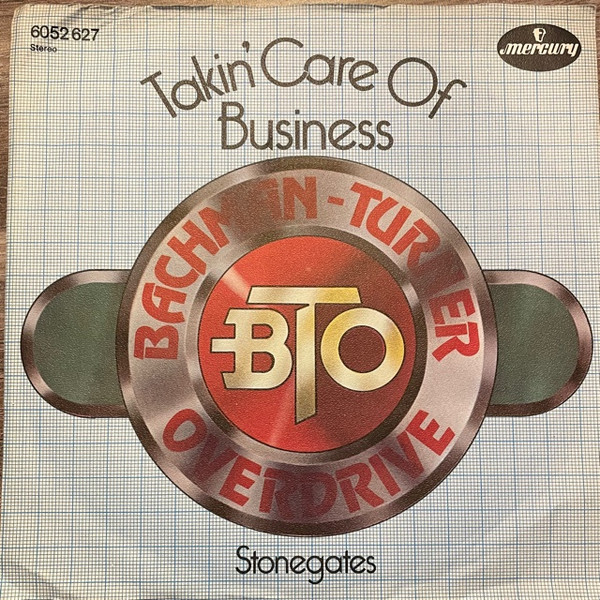
There were times when I could not hear this song anymore because it’s been played so much but…now I enjoy hearing it again. It is a great song but a song that radio has played endlessly. When I think of this phrase, I think of Elvis. Elvis loved the saying…he wore a “TCB” necklace and called his backing group “The TCB Band.”
Canadian Randy Bachman wrote this song and the music was inspired by The Beatles Paperback Writer. He came up with the idea for the song in the late-’60s while he was still a member of The Guess Who. After hearing Paperback Writer and he used that music to create a song about going to work called “White Collar Worker,” which needed a new hook to complete.
For the lyric, Bachman was listening to C-Fox radio on the way to the club and heard the DJ say they were “Takin’ Care of Business,” which gave him the idea for the hook. Singing his lyrics to “White Collar Worker,” Bachman sang “Takin’ Care of Business” in the breakdown, and he had his song.
The song lay dormant until Bachman formed Bachman-Turner Overdrive and was playing a show when lead singer Fred Turner’s voice gave out. Forced to sing for a set, Bachman told the band to “Play these three chords over and over – C, B flat, and F – endlessly and when I get to the hook, help me out.”
Randy Bachman: “Ralph (Murphy) and I wrote a song in ’67 called ‘A Little Bit Of Rain.’ That riff is used in the middle of ‘Takin’ Care Of Business,’ just to break the monotony because ‘Takin’ Care Of Business’ was three chords over and over and over. It had no bridge. No hook. No song format, other than that it was ‘Louie Louie.’ Endless, mind-bashing of three chords. And the original version, as I explained at the Ryman, had twelve chords. That’s why nobody liked it. It had an incredible number of chords.”
From Songfacts
The band captured the feel of jamming in the club by having Bachman sing it, which Turner appreciated since it would give his voice a rest at their shows. Bachman had a sore throat and a head cold when he recorded his vocals.
The song propelled the phrase “Takin’ care of business” into the popular lexicon, forever to be used by athletes, performers and the common man to indicate they are on the job.
While the song title implies an industrious responsibility, a closer listen reveals that this song is more of a slacker anthem. The singer is presumably unemployed, and he “loves to work at nothing all day.”
Norman Durkee played the piano on this track. So who is this Norman fellow? John Presho, who knew Bachman and worked security at their concerts, gives this account: “Randy Bachman told me that when BTO was in the recording studio the record producer wasn’t happy with the raw version of that song. BTO took a time out, ordered a pizza and went back to work on the song. A while later there was a knock on the studio door and it was the pizza delivery man. After giving the band their pizza he commented that ‘Takin’ Care of Business’ was a great song but it needed some piano playing. The pizza man introduced himself as Norman and said that he was a piano player. BTO thanked and tipped him and sent him on his way. Hours later with no improvement in the song they decided to call Norman, but no one got his phone number or could remember the name of the pizza place. BTO called a half dozen pizza houses before they were able to track him down. The band paid Herman’s $75 to join the musicians union so he could play the piano in the recording studio.”
BTO being introduced by the great Keith Moon.
Takin’ Care Of Business
You get up every morning from your alarm clock’s warning Take the 8:15 into the city There’s a whistle up above and people pushin’, people shovin’ And the girls who try to look pretty And if your train’s on time, you can get to work by nine And start your slaving job to get your pay If you ever get annoyed, look at me I’m self-employed I love to work at nothing all day
And I’ll be taking care of business (every day) Taking care of business (every way) I’ve been taking care of business (it’s all mine) Taking care of business and working overtime, work out
If it were easy as fishin’ you could be a musician If you could make sounds loud or mellow Get a second-hand guitar, chances are you’ll go far If you get in with the right bunch of fellows People see you having fun just a-lying in the sun Tell them that you like it this way It’s the work that we avoid, and we’re all self-employed We love to work at nothing all day
And we be taking care of business (every day) Taking care of business (every way) We be been taking care of business (it’s all mine) Taking care of business and working overtime
Mercy Whoo All right
Take good care of my business When I’m away, every day Whoo
You get up every morning from your alarm clock’s warning Take the 8:15 into the city There’s a whistle up above and people pushin’, people shovin’ And the girls who try to look pretty And if your train’s on time, you can get to work by nine And start your slaving job to get your pay If you ever get annoyed, look at me I’m self-employed I love to work at nothing all day
And I be taking care of business (every day) Taking care of business (every way) I’ve been taking care of business (it’s all mine) Taking care of business and working overtime, take care
Takin’ care of business, whoo Takin’ care of business Takin’ care of business Takin’ care of business Takin’ care of business (every day) Takin’ care of business (every way) Takin’ care of business (it’s all mine) Takin’ care of business and working overtime, whoo
Takin’ care of business Takin’ care of business We be takin’ care of business We be takin’ care of business Takin’ care of business Takin’ care of business Takin’ care of business
Don Gordon who plays Salvadore Ross a troubled young man who has fits of rages. He soon finds out that human characteristics can be bought, sold, and exchanged like stock. There is one thing though…it’s a price steeper than money. Salvadore starts out as another Serling low life. A small-time man looking for shortcuts who only want things without giving back. His newfound power has no explanation, but I didn’t mind.
This is an episode about getting what you want and how essential it is to be true to yourself in attaining it. Sometimes it’s not about having it but how you get it. The acting is top-notch. Don Gordon went on to have 134 acting credits in 6 different decades. He also appeared in the Twilight Zone appearance since The Four of Us Are Dying. The character here is similar…cocky, slightly cruel, and short-tempered.
From IMDB Trivia: Based upon a short story of the same name, written by Henry Slesar and first published in the May 1961 issue of The Magazine of Fantasy & Science Fiction by Mercury Press, Inc.
Kathleen O’Malley plays the nurse and J. Pat O’Malley played the older patient in the hospital. They were not related, however, when he began his career, he was known as Pat O’Malley, but when he arrived in Hollywood, he became known professionally as J. Pat O’Malley to avoid confusion with the actor Pat O’Malley who was, in real life, the father of Kathleen O’Malley.
The character of Salvadore Ross is 26, but the actor playing him, Don Gordon, was 38.
The $100,000.00 offer in 1964 would be the equivalent of about $896,000.00 in the year 2022.
This show was written by Jerry McNeely, Henry Slesar, and Rod Serling
Rod Serling’s Opening Narration:
Confidential personnel file on Salvadore Ross. Personality: a volatile mixture of fury and frustration. Distinguishing physical characteristic: a badly broken hand, which will require emergency treatment at the nearest hospital. Ambition: shows great determination towards self-improvement. Estimate of potential success: a sure bet for a listing in Who’s Who in the Twilight Zone.
Summary
Salvadore Ross is a volatile mix of violence and frustration. He’s not very bright and hasn’t made much of himself so far. He is very much in love with Leah Maitland though she has told him she doesn’t want to see him anymore. He thinks she won’t see him because her father doesn’t approve and that they both think she can do better. When he realizes he can actually exchange parts of himself, like his age, with others he sets out on a path to make himself more acceptable to both of them.
Rod Serling’s Closing Narration:
The Salvadore Ross program for self-improvement. The all-in-one, sure-fire success course that lets you lick the bully, learn the language, dance the tango and anything else you want to do. Or think you want to do. Money-back guarantee. Offer limited to…the Twilight Zone.
CAST
Rod Serling … Narrator / Self – Host (uncredited) Don Gordon…Salvadore Ross Gail Kobe…Leah Maitland Vaughn Taylor…Mr. Maitland J. Pat O’Malley…Old Man Douglass Dumbrille…Mr. Halpert Douglas Lambert…Albert Rowe Seymour Cassel…Jerry (uncredited) Ted Jacques…Bartender (uncredited) Kathleen O’Malley…Nurse (uncredited)
I had a greatest hits package by the Guess who given to me by a relative. At the time I thought the Guess Who and The Who were the same.
The title of this song was inspired by Bob Dylan. Randy Bachman said he got the idea after hearing the Dylan song “Ballad In Plain D” on the radio. It was a very long song, and just as Bachman was about to turn off the radio, Dylan sang the line “She came undone.” Bachman said the lyrics were about a girl he saw at a party who went into a coma after dropping acid.
Canadian Jazz guitarist Lenny Breau taught Bachman some chords and you can hear the jazzy feel of the song. Bachman also was influenced by an obscure Kenny Rankin song called “Soft Guitar.”
Burton Cummings learned to play the flute for this song. In his old band The Deverons he played saxophone. While playing at a music store Cummings saw a flute in a case. Burton learned from the dealer that the fingering for the flute was the same as a sax (except for C).
Their name came about when their label Quality Records released their first hit single (“Shakin’ All Over”) credited only to “Guess Who?” in an attempt to build a mystique around the band. They wanted the public to believe that this was a possible British band. The real name of the band was “Chad Allan & The Expressions,” but radio station DJs continued to refer to them as “The Guess Who.” when playing subsequent singles.
This was released as the B-side of Laughing. It got radio play when some disc jockeys flipped the single and played it. That in turn prompted the record company to release it as an A-side 4 months later.
The song peaked at #21 in Canada and #22 in the Billboard 100 in 1969. The song was on the album Canned Wheat.
Undun
She’s come undun She didn’t know what she was headed for And when I found what she was headed for It was too late
She’s come undun She found a mountain that was far too high And when she found out she couldn’t fly It was too late
It’s too late She’s gone too far She’s lost the sun
She’s come undun She wanted truth but all she got was lies Came the time to realize And it was too late
She’s come undun She didn’t know what she was headed for And when I found what she was headed for Mama, it was too late
It’s too late She’s gone too far She’s lost the sun She’s come undun
Too many mountains, and not enough stairs to climb Too many churches and not enough truth Too many people and not enough eyes to see Too many lives to lead and not enough time
It’s too late She’s gone too far She’s lost the sun
She’s come undun
It’s too late She’s gone too far She’s lost the sun
She’s come undun She didn’t know what she was headed for And when I found what she was headed for It was too late
She’s come undun She found a mountain that was far too high And when she found out she couldn’t fly Mama, it was too late
It’s too late She’s gone too far She’s lost the sun
I haven’t had a theme week in a while. This week will be 1970’s songs that you would have heard on AM Radio back then that were big pop hits…as you were cruising in your parent’s LTD or some other vehicle.
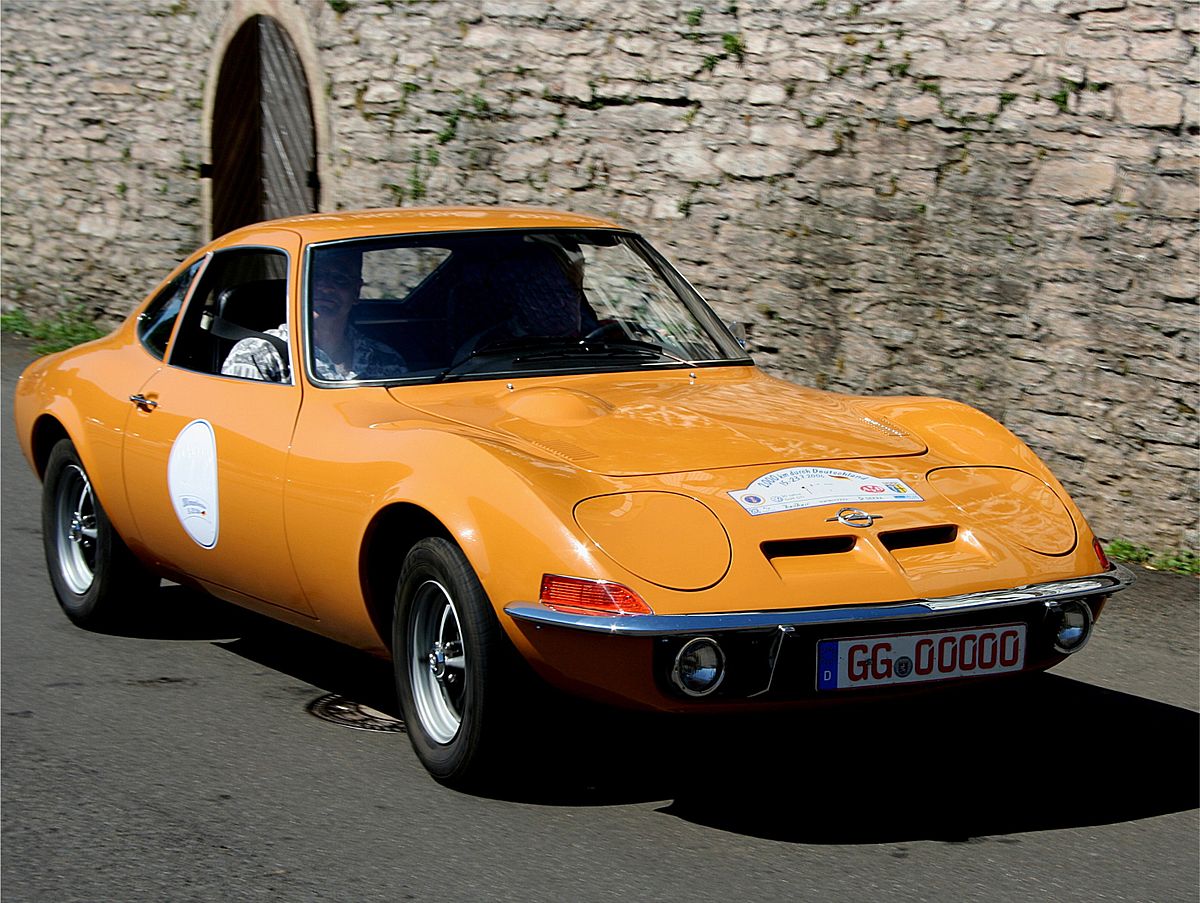
This is one of those AM Gold radio singles from the seventies. It’s made to be heard through an AM station while you are riding in your…insert your 1970s car of choice (mine would be an Opel GT).
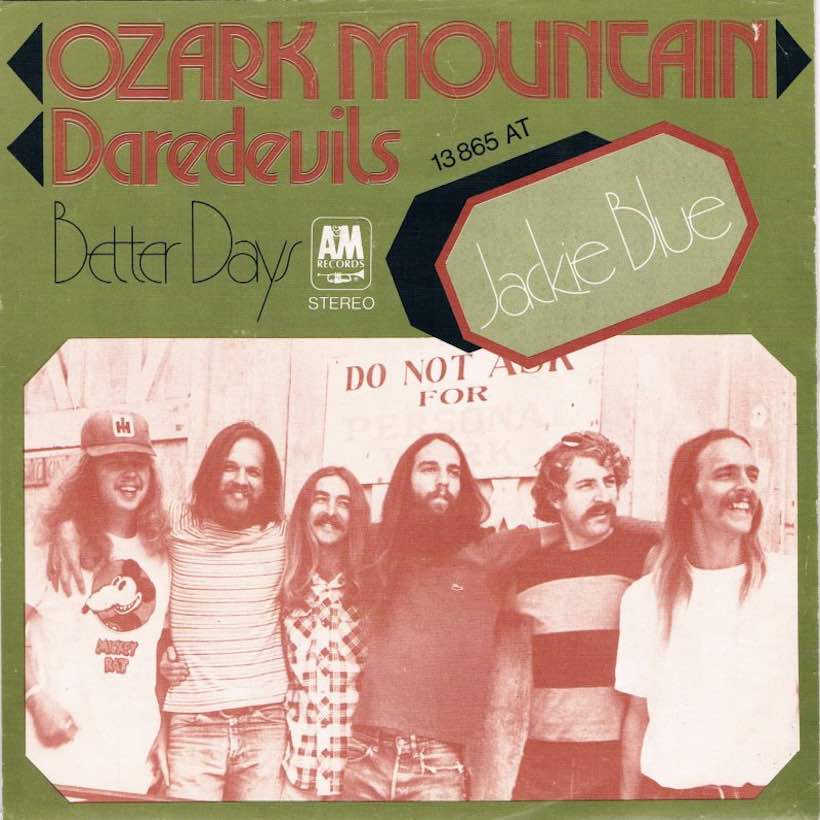
The Ozark Mountain Daredevils were, in one word, eclectic. They have been called southern rock, country, country rock, and pop. This song is one of those great pop hits during the mid-seventies. It is part of my childhood DNA.
The band started out with the name “Family Tree” but they found out that another band was using that name, so they stopped using it. They soon had a “naming party” and came up with “Cosmic Corn Cob & His Amazing Ozark Mountain Daredevils” but decided to shorten the name…and none of the band wanted to be called Cosmic Corn Cob.
The song was written by bandmates Steve Cash and Larry Lee. The song was inspired by someone they had met in L. A. that was strung out on drugs. It was a guy who partied way too much…when they recorded the song, they changed Jackie to a girl.
This song was off of their It’ll Shine When It Shines album released in 1974. The song peaked at #3 in the Billboard 100, #2 in Canada, and #9 in New Zealand. It was the biggest hit of their career…they are known most for this song and If You Want To Get To Heaven. After their first two albums, they didn’t have a lot of big hits but retained a good following. They have released 8 studio albums and 6 charting singles…the latest album was released in 2018 called Off The Beaten Path.
Bassist Mike ‘Supe’ Granda: “[Ozarks drummer] Larry Lee brought the song to us. He said he wrote it about a guy we knew. Every night, this guy would go out to the nightclub with a wad of money and a pocket full of blow and he’d be out there chasing women. “So we played this song for about a year. After we recorded the song we went to LA to mix it, and A&M said: ‘You’ve recorded a number one song, but Jackie needs to be a girl.’ So Larry took Steve Cash, our lyricist, into the other room, and three or four hours later they came out and Jackie was a girl. Larry laid his vocals down, and it flipped all of us out. “We’d been hearing this song about a guy for a year-and-a-half, and all of a sudden it was about a girl. But it sounded great.”
Jackie Blue
Ooh, Jackie Blue Lives her life from inside of her room Hides a smile when she’s wearin’ a frown Ooh, Jackie you’re not so down
You like your life in a free-form style You’ll take an inch but you’d love a mile There never seems to be quite enough Floating around to fill your lovin’ cup
Ooh, Jackie Blue What’s a game girl, if you never lose? Ask a winner and you’ll probably find Ooh, Jackie they’ve lost at sometime
Don’t try to tell me that you’re not aware Of what you’re doing and that you don’t care You say it’s easy, just a natural thing Like playing music, but you never sing
Ooh, Jackie Blue Making wishes that never come true Going places that you’ve never been Ooh, Jackie Blue, you’re going again
Ooh, Jackie Blue Lives a dream that can never come true Making love is like sifting through sand Ooh, Jackie, it slips through your hand
Every day, in your indigo eyes I watch the sunset but I don’t see it rise Moonlight and stars in your strawberry wine You’d take the world but you won’t take the time
Ooh-hoo-hoo, Jackie Blue Lives her life from inside of a room Makes you think that her life is a drag Ooh Jackie, what fun you have had
My friend and I discovered his father’s Buffalo Springfield’s greatest hits album in the early eighties. I grew to be a fan then and there, before I knew about Stills, Young, and the rest. Broken Arrow was my favorite song but Mr. Soul, For What It’s Worth, and this one we could not get enough of.
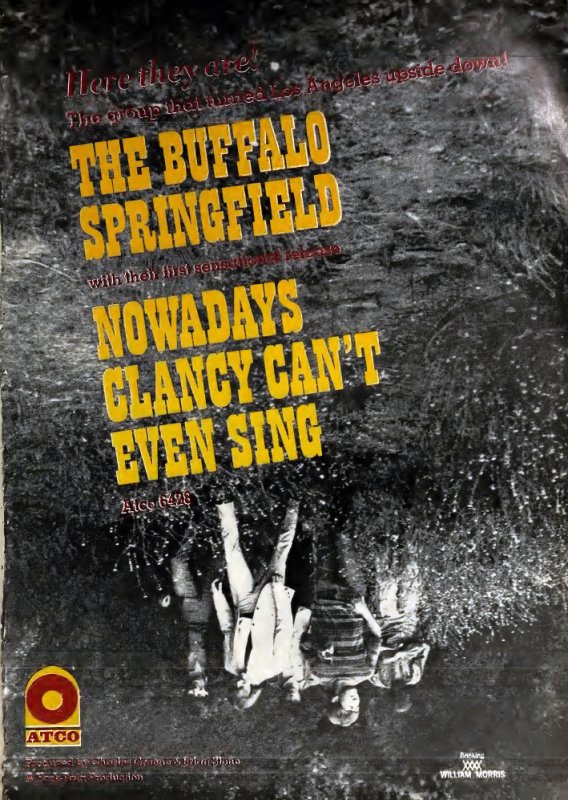
This song was Buffalo Springfield’s first single and the breakout for both Stephen Stills and Neil Young – although it wasn’t supposed to be. Originally the song Go and Say Goodbye by Stephen Stills on the A-side and Young’s Nowadays Clancy Can’t Even Sing on the B-side, before their producers caved to pressure from distributors and flipped the sides.
Richie Furay sings the lead on this song after hearing Young play it earlier. Furay had songs he wanted to include on the album. His songs got lost in the shuffle with the Stills and Young and the developing rivalry between the two.
It wasn’t a smash by any means, but it charted at #110 in the Billboard 100 and #75 in Canada in 1966… so it got some airplay and was a regional success in California. Their album Buffalo Springfield peaked at #80 in the Billboard Album charts in 1967.
In Los Angeles, California’s WKHJ was the first radio station to play the song. Buffalo Springfield’s management arranged this feat by giving the station advanced tapes of “A Day In The Life” by the Beatles, which gave them the chance to break the song ahead of anyone else.
Neil Young wrote this song, which is partially based on one of his real-life schoolmates. Ross “Clancy” Smith attended Kelvin High School in Winnipeg, Canada, with Young.
Neil Young:“He was a kind of persecuted member of the community. He used to be able to do something, sing or something, and then he wasn’t able to do it anymore. The fact was that all the other problems or things that were seemingly important didn’t mean anything anymore because he couldn’t do what he wanted to do.”
The Carpenters did a version on their album Ticket To Ride in 1969.
From Songfacts
Further stress on the band’s debut was brought about by frustration with their producers. Though the legendary Ahmet Ertegun was their mentor, they’d been hooked up through the management team of Charlie Greene and Brian Stone, who were clearly out of their depth. Greene and Stone named themselves Buffalo Springfield’s producers and had them signed not to Atlantic proper or even their subsidiary Atco, but to their own York/Pala Records label, giving them a bigger slice of the profit pie than they otherwise would have been entitled to. As drummer Bruce Palmer is quoted in Neil Young: Long May You Run: The Illustrated History, “They were the sleaziest, most underhanded, backstabbing motherf–kers in the business! They were the best!”
Also from that book: “What hurt the album more than anything, though, was Greene and Stone’s production. Despite the Springfield’s strength as a live act, the managers forced each musician to record separately, piecing the parts together. Worse, after the band participated in the mono mix, Greene and Stone quickly converted the album to stereo, resulting in a tinny mix that outrages the group to this day. Young commented that Greene and Stone made them sound like the All-Insect Orchestra.”
In the same book, classmate Diana Halter says Clancy had multiple sclerosis, and was “so intelligent and so bright that he masked the sweet soul beneath it all.”
All accounts taken together, it’s hard to put an exact picture together of what made Clancy such a standout figure, but all agree he was exactly that.
Though Clancy was an inspiring figure in the song, “Nowadays Clancy Can’t Even Sing” is about Young as much as it about Clancy. He wrote it in 1965 after having a terrible time in Toronto, where his attempts to get things going as a professional musician totally flopped. The rejection he experienced there was so complete (“humbling,” as he called it) that it sent him into a fit of introspective, frustrated songwriting. Out of this pain began to emerge the songwriting style on which Young would build his legend. The pinnacle of those songs, many of which were only recorded on demos or not recorded at all, was “Nowadays Clancy Can’t Even Sing.”
Released on Buffalo Springfield’s eponymous debut album, the song peaked at #110, which wasn’t very good at that time. Unlike the modern era when there are so many bands and expectations are a bit more muted, back then a major-label act, even a new one, was expected to at least break into the top 100 to be considered commercially viable. The song was popular in the Los Angeles area, however, which was the nexus of hippie counterculture.
Young first recorded this song on a January 1966 demo for Elektra Records (Elektra rejected the demos). It can be heard on the 2009 release of The Archives Vol. 1 1963–1972.
There’s a live solo recording of the song on Sugar Mountain – Live at Canterbury House 1968.
The psychedelic band Fever Tree recorded the song in 1968 on their self-titled debut album.
Furay got an early preview of this song from Young himself when the Canadian visited Furay’s New York City apartment. He was auditioning to be house performer at a nightclub called the The Bitter End and played it there. Some of the auditions were recorded but haven’t been released anywhere.
The Clancy Brothers inspired the musical form in this song, with its Irish-styled 2/4 rhythm verses and 3/4 rhythm choruses.
Many journalists and historians have noted this song as Young’s artistic breakthrough, the one that helped him find the niche that would give him the kind of appeal that endured over 50 years later.
Who’s coming home on old 95?
Einarson in Don’t Be Denied posits that this line might refer to a trip that Young took home to Winnipeg in the fall of ’65, suggesting that the train was numbered 95.
Nowadays Clancy Can’t Even Sing
Hey who’s that stomping all over my face? Where’s that silhouette I’m trying to trace? Who’s putting sponge in the bells I once rung? And taking my gypsy before she’s begun? To singing the meaning of what’s in my mind Before I can take home what’s rightfully mine Joinin’ and listenin’ and talkin’ in rhymes Stoppin’ the feeling to wait for the times Who’s saying baby that don’t mean a thing ‘Cause nowadays Clancy can’t even sing
And who’s all hung-up on that happiness thing? Who’s trying to tune all the bells that he rings? And who’s in the corner and down on the floor? With pencil and paper just counting the score? And who’s trying to act like he just in between? The night isn’t black, it can only be screened Don’t bother looking you’re too blind to see Who’s coming on like he wanted to be Who’s saying baby, that don’t mean a thing ‘Cause nowadays Clancy can’t even sing
And who’s coming home on the old ninety five? Who’s got the feeling to keep him alive Though havin’ it, sharin’ it ain’t quite the same It ain’t no gold nugget you can’t lay a claim Who’s seeing eyes through the crack in the floor There it is baby don’t you worry no more Who should be sleepin’ but is writing this song Wishin’ and a-hopin’ he weren’t so damned wrong Who’s saying baby, that don’t mean a thing ‘Cause nowadays Clancy can’t even sing Who’s saying baby that don’t mean a thing ‘Cause nowadays Clancy can’t even sing













 PowerPop... An Eclectic Collection of Pop Culture