This post is a 4-in-1 deal…Let’s Stick Together was on Bob Dylan’s album Down In The Groove…considered his worst album by some critics. I never thought that…I bought it when it came out and it’s not that bad. The worse Bob Dylan album is much better than a lot of others.
This song has been covered by a lot of artists. The confusing part is the song not only goes by Let’s Stick Together but also Let’s Work Together.
Our band covered this one and we did it with the arrangement that Dylan laid down. I like this song no matter who covers it. I like Bryan Ferry, Canned Heat, and Wilbert Harrison’s version.
Wilbert Harrison originally wrote and recorded this blues-style R&B number as “Let’s Stick Together,” a plea for fidelity in a fractured marriage. That version, released in 1962, didn’t make the charts (until Bryan Ferry covered it in 1976) but never left Harrison’s mind. Seven years later, he resurrected the song, keeping the melody but changing the lyrics. “I thought I’d put some words to it that meant a bit more.”
Changing the title to “Let’s Work Together,” Harrison’s new message of unity was aimed at a nation rife with conflict over the Civil Rights Movement and the Vietnam War.
Canned Heat didn’t want to overshadow Harrison with their version. In fact, if they’d known the singer was going to have success with it, they never would have recorded it in the first place. They first heard the tune when it was still making the rounds at underground radio stations. Their new guitarist Harvey Mandel played it for the rest of the guys and suggested they cover it, but their co-vocalist, Bob “The Bear” Hite, wanted to wait a few months to see if Harrison would chart first. According to drummer Adolfo de la Parra, Hite didn’t like taking songs away from living black musicians unless they weren’t hits.
Bryan Ferry had success with the song…peaking at #4 in the UK in 1976 and #1 in Australia. In 1988 Ferry did an updated version of the song, re-mixed by Bruce Lampcov & Rhett Davies. This re-recording reached #12 in the UK chart. Ferry had the most success with the song.
Let’s Stick Together
Well, a marriage vow, you know, it’s very sacred The man put us together, now, you wanna make it Stick together Come on, come on, stick together
You know, you made a vow, not to leave one another, never Well, ya never miss your water ’til your well runs dry Now, come on, baby, give our love a try, let’s stick together Come on, come on, stick together
We made a vow, not to leave one another, never Well, ya never miss your water ’til your well runs dry Come one, baby, give our love a try, let’s stick together Come on, come on and stick together You know, we made a vow, not to leave one another, never
It might be tough for a while, but consider the child Cannot be happy without his mom and his papi
Let’s stick together Come on, come on, stick together You know, we made a vow, not to leave one another, never
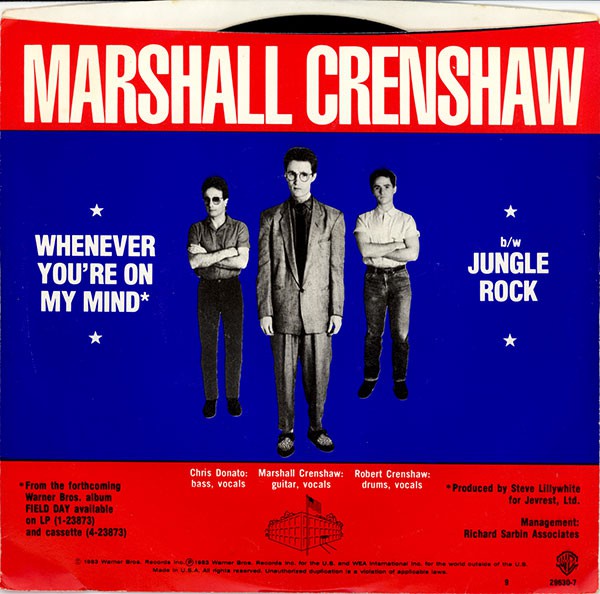
Marshall Crenshaw wrote this song during the making of his debut album but was saved for his second album release. I had his first two albums in the 80s and I thought the guy would be huge. He could come up with some sophisticated, unexpected chord changes in a song yet maintain the feel of the song.
This song has a wonderful guitar intro that sets up the song. As the old phrase goes…it’s got more hooks than a tackle box.
He got his first break playing John Lennon in the off-Broadway touring company of the musical Beatlemania between 1978-1980. Crenshaw said: “In the beginning, I was bothered by it, as an egotistical young person, maybe because I had just gotten out of Beatlemania, and I was sick of any kind of heavy association with some other figure.”
He later played Buddy Holly in La Bamba in 1987. “I’ve been a Buddy Holly fan all my life. The joy still comes across in his music. It’s really got its own je ne sais quoi. It really stands apart from a lot of ’50s rock, because it conveys a sense of intimacy. I think it’s because it was made in this little building on the side of a highway late at night with this isolated group of people.”
“I always say the guys from the ’50s who invented ’60s rock were Chuck Berry and Buddy Holly. When you watch documentaries about Holly, you see people like Keith Richards, and he still gets broken up talking about him. The English guys, they just loved Buddy Holly.”
He released his self-titled debut album in 1982 and it was nearly perfect. This song was on Field Day his second album that was released in 1983. The album peaked at #52 in the Billboard 100 in 1983. This song peaked at #103 in the Billboard 100 and #23 in the Main Rock tracks in 1983.
He also performed as a guest vocalist for the Smithereens since the 2017 death of their lead singer Pat DiNizio.
Ronnie Spector recorded a cover of this song in 2003.
When Ever You’re On My Mind
I think about you and forget what I’ve tried to be Everything is foggy and hard to see It seems to be, but can it be, a fantasy? Whenever I think about you, strangers eyes in the crowd flash past I go on and think of the fate you’ve cast It seems to be a reverie, you’re here with me
’cause whenever you’re on my mind Whenever you’re on my mind I leave the world behind Whenever you’re on my mind
I think about you and I’m weak though I’m in my prime Set my watch and still lose the track of time It seems to be, but can it be, a fantasy? Whenever I think about you, strangers eyes in the crowd flash past I go on and think of the fate you’ve cast It seems to be a reverie, you’re here with me
Whenever you’re on my mind Whenever you’re on my mind I leave the world behind Whenever you’re on my mind
I never thought I’d be in this situation It seems wherever I go I’m with you And though I never seem to find my place At every turn I see your face Whenever I think about you It seems to be a reverie, you’re here with me ’cause whenever you’re on my mind Whenever you’re on my mind I leave the world behind Whenever you’re on my mind
Welcome to the Hanspostcard TV Draft. I hope you will enjoy it! Today’s post was written by Lisa at https://tao-talk.com/
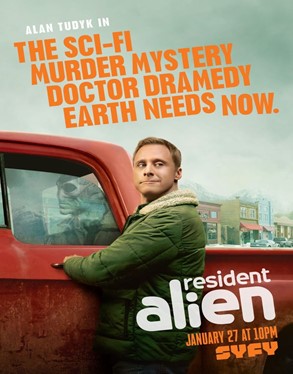
Yes, I am being contrary by changing my mind yet again from the list I started out with. Instead of Showtime’s City on a Hill, which is an excellent series and recommended, I’m going with one that I just watched the first of two seasons of and plan on watching the other as soon as I can find it. The name of the series is Resident Alien and it airs on the SyFy Channel. It is based on a Dark Horse comic ( https://www.darkhorse.com/Comics/19-670/Resident-Alien-1) by Peter Hogan and Steven Parkhouse, and written for the screen by Chris Sheridan with 11 others getting screen writing credits. There have been 8 different directors for the 18 episodes made so far.
Genre: comedy; drama
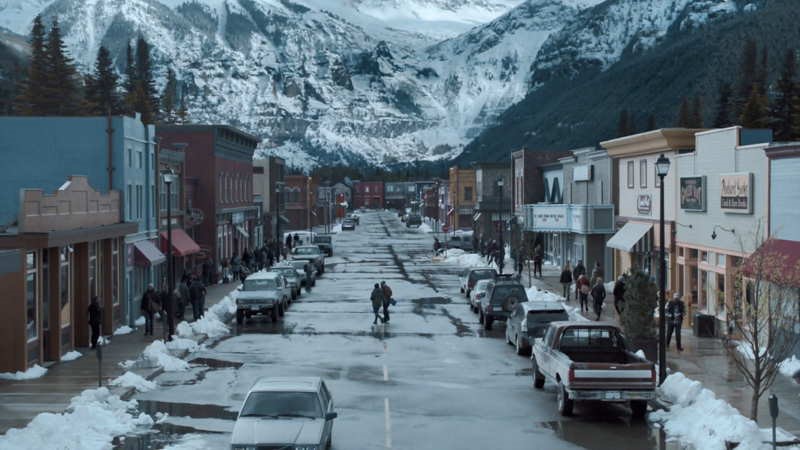
Setting: The story is set in the fictitious town of Patience, Colorado, but it was filmed in and around Vancouver, British Columbia, Canada. There are frequent drone shots of a small community nestled among snowy mountains (which I just learned at imdb: The expansive overhead shots that they often play at the beginning of new segments, which show most and sometimes all of the the town, set in the midst of the surrounding mountains, are pictures of Telluride, Colorado.) Watching TV shows set in small towns in the mountains is the next best thing to being there. Actually the setting brings back pleasant memories of another small town setting of one of my favorite shows of all time, Northern Exposure, set in Cicely, Alaska (but actually filmed in Roslyn, Washington.) While I’m thinking about it, the setting is just one similarity between the two shows.
Starring:
Alan Tudyk plays the main character, Harry Vanderspeigle. The real Harry is a doctor who has a wonderful cabin right on the shores of the lake of the town. When the alien’s ship crash lands in the snow of the mountains, the alien comes across Harry’s cabin, kills him, and assumes his form. The ET is on Earth for a mission, which is to arm and detonate a doomsday device; as the galaxy is sick and tired of humans and their terminally toxic foibles. The plan was to land, arm the device, and leave. Now that the spacecraft is damaged and pieces are strewn that need to be found in the mountain snow, not to mention the doomsday device is also lost, it will take ET some time to fulfill his mission.
Asta Twelvetrees
Sara Tomko plays Asta Twelvetrees. Asta is a nurse at Dr. Hodges, the town doctor’s, practice. As the story opens, we learn that Dr. Hodges has been found dead in his office. Asta was very close to Dr. Hodges. When Harry is enlisted by the mayor to fill in for the deceased doctor until a replacement can be hired, Asta and Harry get acquainted with each other. Thankfully, Asta is a very open-minded and accepting person, as Harry is one hella odd duck. Asta’s dad runs the town’s restaurant. She has relationship and other family issues that are often plot lines.
Deputy Liv and Sheriff Mike
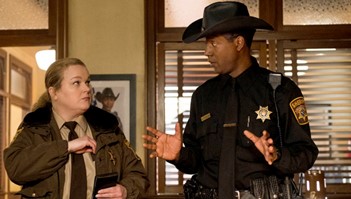
Corey Reynolds plays Sheriff Mike Thompson, who has given himself the nickname, “Big Black,” which is both ironic and funny as hell. Sheriff Thompson is an egotistical but lovable person who, as one of the few black people in the town, has to make sure he is nobody’s fool because he’s representing. Sheriff Thompson’s sidekick, Deputy Liv Baker, played by Elizabeth Bowen, is just that to him, a sidekick. Deputy Baker is never taken seriously by him and is often verbally abused by the sheriff. All Deputy Liv wants is to be taken seriously as a law enforcement officer. She’s got real skills, but nobody seems to notice them.
D’Arcy
Alice Wetterlund plays D’Arcy Bloom, who is a bartender who once was a contender for an Olympic medal in some winter sport until she got a terrible injury that brought her back to her hometown. She and Asta grew up together and are best besties. D’Arcy develops a terrible crush on Harry once he’s on the scene and is willing to take a lot of unwitting insensitivity on Harry’s part (or should I say the alien in Harry’s form, who knows nothing about social cues of humans.)
Ben, Kate, and Max Hawthorne
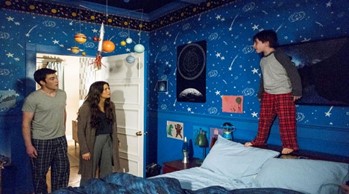
Levi Fiehler plays Mayor Ben Hawthorne, who is benevolent, yet often out of his depth, especially when dead bodies start turning up here and there. He does act decisively in appointing Harry as the interim doc. How could he know that Harry is an ET in human clothing? Ben is married to Kate, played by Meredith Garretson, who is loving wife and mother with an inquisitive mind. Ben and Kate’s young son (I think he’s around 10 years old,) Max, is played by Judah Prehn. We learn that Judah is one of that rare percentage of humans who is able to see what the ET who is camoflaged as Harry really looks like. Of course he freaks out the first several times he sees him. He does his best to convince others in the town of what Harry really is, but everyone thinks it’s his overactive imagination. Much of the plot of the first season revolves around Max proving to others that Harry is an ET and Harry trying to kill Max (although not all that seriously. This is a comedy, after all.)
Sheriff Mike and Dan Twelvetrees
Gary Farmer plays Dan Twelvetrees. Dan is Asta’s father and owner of the town’s cafe. Dan raised Asta as a single parent and did a good job of it. The cafe is a frequent meeting place for the main characters.
The rest of the cast are good also, but in describing them I might give away important plot points.
Synopsis: The show revolves around ET/Harry learning how to pass as a human until he can get his ship reassembled, find the doomsday device, and head back to his home planet. In the meantime he has to keep people from believing Max. As Harry integrates into his community there are ongoing funny situations and other events that arise that keep things entertaining. Impressions: There is a lot to like about, “Resident Alien.” Foremost is Alan Tudyk as Harry/ET. He’s already got a sort of strange look, and his range of odd and goofy expressions are impressive. He knows just how to play this character to bring him to life. I truly adore the two female leads, Asha and D’Arcy. They are both strong women who have been through significant challenges, yet they came through and are there to be supportive community members in their little town. I also adore the interactions between Sheriff Mike and Deputy Liv, which make for a lot of funny scenes. I also think Mayor Ben is one of the better roles. Not only is there a lot of material for him as mayor but there are multiple family situations that show up over the season; most significant is how he and Kate deal with Max when he insists that Harry is an ET. Speaking of Max, he is simply wonderful as the sharp-minded kid who isn’t going to be outwitted by some old ET. I’ve already talked about the setting. The plots are slow-paced and creative. The humor is pervasive and often dark, yet there are some dramatic and poignant moments dispersed along the way. Grade: 9 Awards: 1 win and 10 nominations
Sources:
top image
Dark Horse comics
imdb
Atlas of Wonders
image Asta
image Deputy Liv and Sheriff Mike
image of D’Arcy
image Hawthorne Family
image Sheriff Mike and Dan
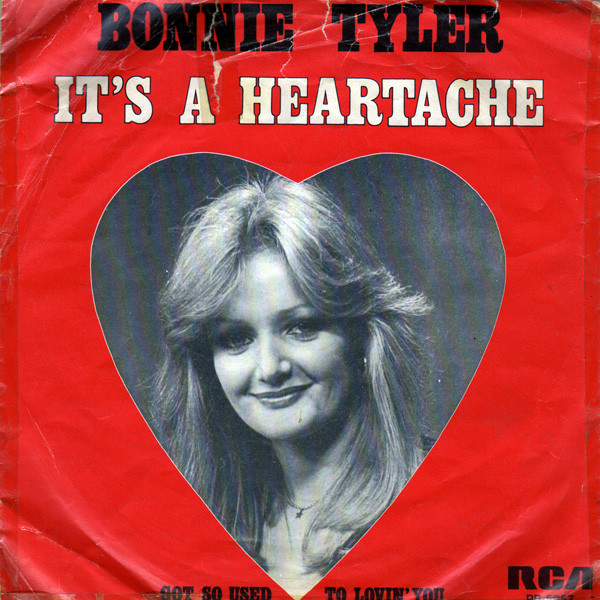
Late seventies at the skating rink…this one was played and that is what I think of. I knew enough about Rod Stewart at the time I was 10-11 to think this was him for a while. My sister got the single and I loved it. Rod Stewart finally covered the song in 2007.
It’s a Heartache was released in 1978 and peaked at #3 in the Billboard 100, #4 in the UK, and #1 in Canada. It also crossed over to the country charts at #10. The single sold over 6 million copies. This song fits Bonnie Tyler’s voice perfectly. The song was written by Ronnie Scott and Steve Wolfe.
Bonnie Tyler had throat problems severe enough to require surgery in 1976, the procedure can often be career-threatening. In this case, however, the nodules that she developed singing in nightclubs in her native Wales turned out to be career-making. She was told not to speak 6 weeks after her surgery but she did and it helped cause the rasp.
Some useless trivia… The two weeks that “It’s A Heartache” was at #3, for those two weeks the #1 record was “Shadow Dancing” by Andy Gibb and at #2 was “Baker Street” by Gerry Rafferty
The drummer on this song was Mike Gibbons of Badfinger.
It’s a Heartache
It’s a heartache Nothing but a heartache Hits you when it’s too late Hits you when you’re down
It’s a fool’s game Nothing but a fool’s game Standing in the cold rain Feeling like a clown
It’s a heartache Nothing but a heartache Love him ’til your arms break Then he let’s you down
It ain’t right with love to share When you find he doesn’t care for you It ain’t wise to need someone As much as I depended on you
Oh, it’s a heartache Nothing but a heartache Hits you when it’s too late Hits you when you’re down
It’s a fool’s game Nothing but a fool’s game Standing in the cold rain Feeling like a clown
It ain’t right with love to share When you find he doesn’t care for you It ain’t wise to need someone As much as I depended on you
Oh, it’s a heartache Nothing but a heartache You love him ’til your arms break Then he let’s you down
It’s a fool’s game Standing in the cold rain Feelin’ like a clown It’s a heartache Love him ’til your arms break Then he let’s you down It’s a fool’s game
Welcome to the Hanspostcard TV Draft. I hope you will enjoy it! Today’s post was written by Paula at http://paulalight.com
LA Law
Welcome back to Max’s Power Pop! Today I am discussing the legal drama series LA LAW, which ran for eight seasons – from September 1986 to May 1994 – and was based around a fictional Los Angeles law firm called McKenzie, Brackman, Chaney and Kuzak (later Becker was added to the name). Filming took place in downtown Los Angeles. Steven Bochco and Terry Louis Fisher created the popular show; it won 15 Emmy Awards, four of which were for Primetime Emmy Award for Outstanding Drama Series. Fisher was fired from the show during the second season and filed a lawsuit against Bochco and the studio, creating a legal drama within a legal drama.
“The show contains many of Bochco’s trademark features, including an ensemble cast, large number of parallel storylines, social drama, and off-the-wall humor. It reflects the social and cultural ideologies that were occurring when the show was produced in the 1980s and early 1990s, and many of the cases featured on the show dealt with hot-button issues such as capital punishment, abortion, racism, homophobia, sexual harassment, HIV/AIDS, and domestic violence. The series often also reflects social tensions between the wealthy senior lawyer protagonists and their less well–paid junior staff.” ~ Wikipedia
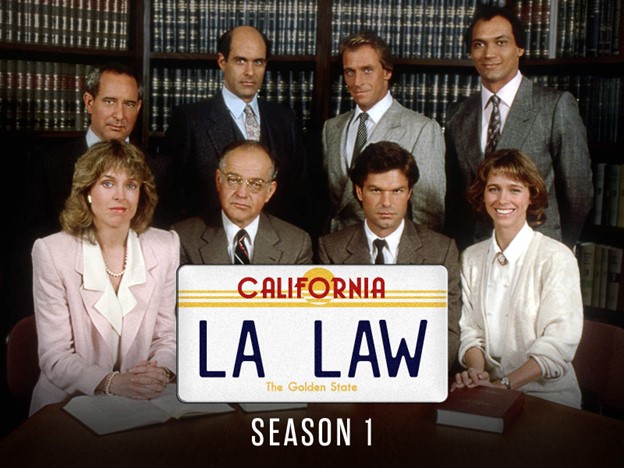
The eight main characters on the show pictured above were played by the following actors (first row, left to right): Jill Eikenberry as Ann Kelsey (associate/partner), Richard Dysart as Leland McKenzie (senior partner), Harry Hamlin as Michael Kuzak (partner), and Michele Greene as Abby Perkins (associate). On the second row, left to right, we have Michael Tucker as Stuart Markowitz (associate/partner and husband of Ann Kelsey), Alan Rachins as Douglas Brackman, Jr. (managing partner/interim senior partner), Corbin Bernsen as Arnie Becker (partner), and Jimmy Smits as Victor Sifuentes (associate).
Additionally, there were a number of recurring roles, such as Susan Ruttan as Roxanne Melman (secretary), Susan Dey as Grace Owens (deputy district attorney, etc.), and Blair Underwood as Jonathan Rollins, an associate who cross-examined a man to death (one of my favorite scenes!). The show also featured relatively unknown guest stars that went on to greater success, such as Jeffrey Tambor, Kathy Bates, David Schwimmer, Bryan Cranston, Kevin Spacey, William H. Macy, Christian Slater, Steve Buscemi, and Lucy Liu. There were also some famous faces who appeared as themselves in cameos, such as Buddy Hackett and Vanna White.
The show presented so many interesting and varied storylines about the law, business practices in general, romantic and other relationships, and family life. I particularly enjoyed the episodes where Roxanne had a significant role. Unfortunately, LA Law ended abruptly after the eighth season without any wrap-up or finale. Shows about lawyers remain a popular theme though, and there have been many other legal dramas since LA Law, including Suits, with our favorite duchess Meghan Markle, and Better Call Saul, the prequel sequel to Breaking Bad.
~*~
Paula Light is a poet, novelist, flash fiction fan, cupcake connoisseur, mom, grandma, cat mommy, etc. Her blog can be found at http://paulalight.com.
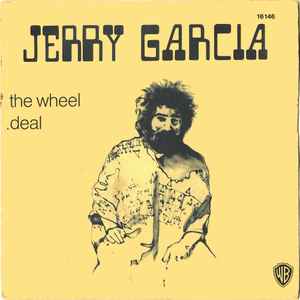
I haven’t heard this song as much as Sugaree but I like it almost just as well.
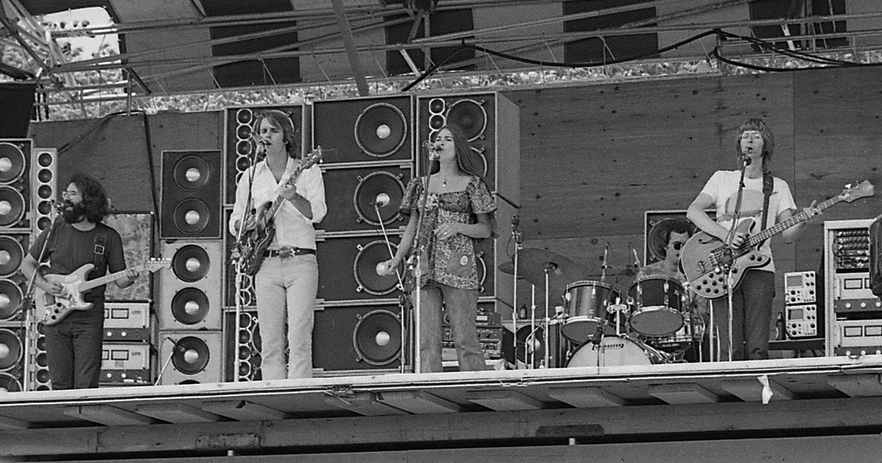
It is so well crafted and it swings with the best of them. This was off of his debut Garcia album and his voice is in perfect form. When I think of Jerry Garcia I never think…hmm great vocalist… but this changes my mind. His voice is so clear…it shows what a good vocalist Garcia could be. Robert Hunter’s words flow through you while Garcia’s guitar dances all around. He tops it off with a versatile solo.
The album is a mix of folk, country, blues, jazz, experimental, and rock. I love the roots music because it’s so clean and genuine. He made the album in 1971 with mostly himself. Bill Kreutzmann (Dead Drummer) was the only other musician credited on Garcia, which was recorded at Wally Heider’s Studio D in San Francisco in July 1971 and released in January 1972.
Garcia also did the album for a cash infusion to buy a house for himself and Carolyn Adams (Mountain Girl) and two children. This was recorded a year after Working Man’s Dead and American Beauty…considered two of the best Grateful Dead albums. Many of the songs on this album became staples for the Grateful Dead in concert.
Bill Kreutzmann was credited as co-writer on 5 of the tracks and Garcia and Hunter on 5 tracks. Robert Hunter also collaborated with Bob Dylan on songs Duquesne Whistle, Ugliest Girl In The World, and the minor hit Silvio. He also co-wrote all but one track on the Bob Dylan album Together Through Life released in 2009.
Jerry Garcia on making the album: I’m doing it to be completely self-indulgent—musically. I’m just going on a trip. I have a curiosity to see what I can do and I’ve a desire to get into 16-track and go on trips which are too weird for me to want to put anybody else I know through. And also to pay for this house!
Jerry Garcia: I’ll probably end up doing it with a lot of people. So far I’m only working with Bill Kreutzmann because I can’t play drums. But everything else I’m going to try to play myself. Just for my own edification. What I’m going to do is what I would do if I had a 16-track at home, I’m just going to goof around with it. And I don’t want anyone to think that it’s me being serious or anything like that—it’s really me goofing around. I’m not trying to have my own career or anything like that. There’s a lot of stuff that I feel like doing and the Grateful Dead, just by fact that it’s now a production for us to go out and play, we can’t get as loose as we had been able to, so I’m not able to stay as busy as I was. It’s just a way to keep my hand in so to speak, without having to turn on a whole big scene. In the world that I live in there’s the Grateful Dead which is one unit which I’m a part of and then there’s just me. And the me that’s just me, I have to keep my end up in order to be able to take care of my part of the Grateful Dead. So rather than sit home and practice—scales and stuff—which I do when I’m together enough to do it—I go out and play because playing music is more enjoyable to me than sitting home and playing scales.
Deal
Since it costs a lot to win, and even more to lose, You and me bound to spend some time wond’rin’ what to choose. Goes to show, you don’t ever know, Watch each card you play and play it slow, Wait until that deal come round, Don’t you let that deal go down, no, no.
I been gamblin’ hereabouts for ten good solid years, If I told you all that went down it would burn off both of your ears. Goes to show you don’t ever know Watch each card you play and play it slow, Wait until that deal come round, Don’t you let that deal go down, no, no.
Since you poured the wine for me and tightened up my shoes, I hate to leave you sittin’ there, composin’ lonesome blues. Goes to show you don’t ever know Watch each card you play and play it slow, Wait until that deal come round, don’t you let that deal go down.
Wait until that deal come round, don’t you let that deal go down, Wait until that deal come round, don’t you let that deal go down, Don’t you let that deal go down, don’t you let that deal go down.
Welcome to the Hanspostcard TV Draft. I hope you will enjoy it! Today’s post was written by Keith at https://nostalgicitalian.com/
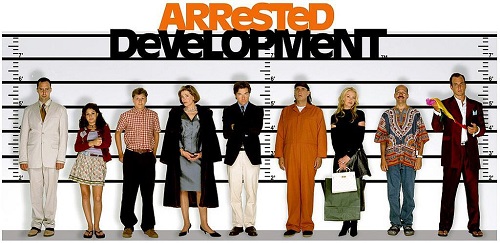
My ninth pick in the Hanspostcard TV Show Draft is a show that consistently made me laugh out loud – Arrested Development. I know going into this blog that it was a show that not everyone “gets.” I recall going to work raving about the show and how much I laughed at it. I encouraged others to watch it. Some got it and most didn’t.
In almost everything you read about the show, it is referred to as “a cult classic.” To a degree, I guess that may be true. I remember how giddy I got when a couple people in my sleep program also were big fans of the show. We were constantly quoting it in class as many stared at us like we were freaks. Maybe we were.
Before continuing, let me say that I chose this show based on the 3 seasons that aired on Fox. I am aware that years later, two more seasons were produced by Netflix (where you can see the entire 5 seasons). As a fan of the show, I watched the two additional seasons, and while there were some funny moments, and while I loved seeing the return of the cast/characters, it lacked so much of what the first three seasons had. That being said, let’s move on …
Ask me the question, “Just why is Arrested Development so good?” or “What makes the show so funny?” and I cannot give you an answer. In preparing to write this, I did a Google search of those questions. There were many Reddit forums and fan sites that come up with personal opinions about it, but none of them really has a solid answer. After all, “comedy is subjective.”
The Origins of the Show
In 2002, Actor/Director Ron Howard had the idea to create a TV comedy that would involve using handheld cameras and shoot sort of like reality TV. It was to have a look of a documentary, yet be a comedy. NBC’s The Office was shot this way and often referred to as a “mock-umentary.”
He met with some people at Imagine Entertainment to discuss the idea and Mitch Hurwitz mentioned the fact that there were a lot of corporate accounting scandals that were in the news (like Enron and Adelphia), and the story of a family that went from rags to riches might work. Howard liked the idea and had Hurwitz begin writing the series. After creating the story’s characters and plot line, he had a pilot script done in January of 2003 and the first episode was shot just two months later. Howard acted as the show’s narrator and in the opening credits welcomes viewers to the “story of a wealthy family who lost everything, and the one son who had no choice but to keep them all together. It’s Arrested Development”.
The show is about a family – albeit a VERY dysfunctional family. I think that is what makes this whole show work. Watching each of these characters, with their own insecurities and idiosyncrasies, interacting with each other allows for comedy to flourish. (It also will cause you to see members of your own family as members of this one!) Add to brilliantly funny “cut-aways,” narrator comments, and strong comedy writing and you have a show that will make your sides hurt from laughing.
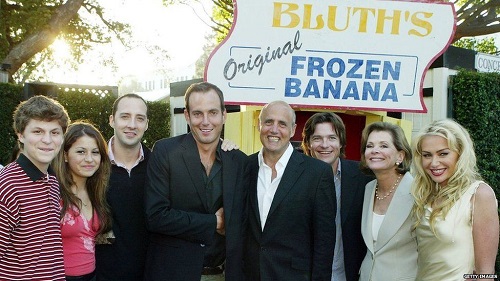
In a nutshell, the show follows the formally wealthy Bluth family as Micheal (Justin Bateman), the only responsible Bluth, tries to keep them and their company from going completely bust while desperately attempting to set a good example for his teenage son (Micheal Cera). The family includes imprisoned father George (Jeffrey Tambor), hypercritical matriarch Lucille (Jessica Walter), failed magician Gob (Will Arnett), spoiled sister Lindsay (Portia de Rossi), and man-child Buster (Tony Hale).
Wikipedia describes the show this way:
The plot of Arrested Development revolves around the members of the Bluth family, a formerly wealthy family who continue to lead extravagant lifestyles despite their changed circumstances. At the center of the show is Michael Bluth, the show’s straight man, who strives to do the right thing and keep his family together, despite their materialism, selfishness, and manipulative natures. Michael is a widowed single father. His teenage son, George Michael, has the same qualities of decency but feels a constant pressure to live up to his father’s expectations and is often reluctant to follow his father’s plans. He battles with a crush he has on cousin Maeby, which developed from a kiss she gave him as part of a prank.
Michael’s father, George Bluth Sr., is the patriarch of the family and a corrupt real estate developer who is arrested in the first episode. George goes to considerable lengths to manipulate and control his family in spite of his imprisonment, and makes numerous efforts to evade justice. His wife, and Michael’s mother, Lucille Bluth, is ruthlessly manipulative, materialistic, and hypercritical of every member of her family, and constantly drinks alcohol. Her grip is tightest on her youngest son, Byron “Buster” Bluth, an over-educated (yet still under-educated) mama’s boy who has dependency issues and is prone to panic attacks.
Michael’s older brother is George Oscar Bluth II, known by the acronym “Gob” (pronounces like “Job” in the Bible). An unsuccessful professional magician whose business and personal schemes usually fail or become tiresome and are quickly abandoned, Gob is competitive with Michael over women and bullies Buster. Michael’s twin sister Linday is spoiled and materialistic, continually seeking the center of attention and leaping on various social causes for the sake of vanity. She is married to Tobias Funke (David Cross), a discredited psychiatrist-turned-aspiring actor. Tobias is a self-diagnosed “never-nude” (a disorder comparable to gymnophobia) whose language and behavior have heavily homosexual overtones to which he seems oblivious and which are the center of much tongue-in-cheek comedy throughout the series. Their daughter is Mae “Maeby” Funke (Alia Shawkat), a rebellious teen with an opportunistic streak, who seeks to defy her parents for the sake of attention, and otherwise pursues boys and power, and furthers her complicated relationship with George Michael.
The supporting cast and characters are just as strong and developed as the main ones. Those include Jeffrey Tambor as George Sr.’ identical twin Oscar, Liza Minnelli as Lucille Austero (or Lucille 2), Carl Weathers appears as himself (and is hilarious), and Henry Winkler as the family’s attorney Barry Zuckerkorn. Other guest stars include Ed Begley Junior, Ben Stiller, Christine Taylor, Julia Louis-Dreyfus, and Charlize Theron.
One Reddit user said:
I’ve never found another sitcom on TV that assumed its viewers had concentration spans and didn’t need to be spoon fed things. The producers were more than happy to let a brilliant joke sail past half the audience rather than overexpose it so everyone watching understood. They were not only happy to include subtle references to episodes that occurred a year or two before they were happy to throw in references to things that were going to happen later in the season. And all without a laugh track or excessive mugging to the camera to tell us when to laugh.
Of course being subtle and extremely clever on its own isn’t enough to make a good sitcom. Arrested Development also benefited from brilliant stories, very clever writing and perfect performances from the entire cast.
The countless in-jokes, references to other jokes and jokes that reference jokes that are referencing the in-jokes. The show is so layered that there are literally hundreds of clever idiosyncrasies within each episode. Like someone said earlier, the viewer feels rewarded when they get a joke that refers to an earlier episode.
One of the things I still love about the show is that it gets better with each viewing! I can watch an episode again and find jokes I had missed before. It is constantly offering a “pay off.” It is different from say Friends or Fraiser, in that every time you watch an episode again, you find a comedy “nugget.”
There are many fantastic running gags on the show. Rolling Stone wrote a very nice article on them. You can find that here:
Visual gags and word play were often a source of laughs on the show. I remember one gag that really pushed the envelope and left me laughing and wondering how they got away with it at the same time:
One of the silliest gags on the show is the Bluth Family Chicken Dance, which is mentioned in the video above. It is not something they all do in unison, let me be clear on that. Each member of the Bluth family has their own – very unique way – of dancing like a chicken. This is often used when insinuating that another family member is chicken or scared of doing something. I’m including this video, because in the one above, some of the “set up” to the full family dance was omitted.
In the middle of the third season, it was clear that viewership was down and the show was probably going to be cancelled. As a matter of fact, Fox pulled the show from the November sweeps that year AND cut down the order for 22 episodes to just 13 (something which became a joke throughout that third season.)
In 2004, the show was nominated for 7 Emmy awards and won five of them. It won for Outstanding Comedy Series, Outstanding Directing for a Comedy Series, Outstanding Casting for a Comedy Series, Outstanding Single-Camera Picture Editing for a Comedy Series and Outstanding Writing for a Comedy Series. It was praised by critics for being one of the funniest shows on TV, but the ratings never really lived up to that hype.
I was excited to write about this show, but now that I am reaching the end, I feel that I have in no way, shape, or form done it justice. I just don’t know how to do that. It is a show that makes me laugh out loud, yet I cannot fully explain why. It is a show that you will either love or hate – based on what you find funny.
Remember at the beginning of this blog I asked: “Just why is Arrested Development so good?” or “What makes the show so funny?”
In an interview with The Guardian, Justin Bateman may have the answer! He explained the key to what makes Arrested Development so hilarious is how seriously the characters take their ridiculous lives. He states that the sitcom is actually more like a drama for its ensemble of characters. The comedy, he feels, comes from the fact that the Bluth family has no idea how funny they really are.
“This is not funny to anybody inside the show. This is a drama to them. Almost like an animal documentary, where you’re watching these freaks, and how they gather their food, and how they make their house. And let’s make sure we all whisper because we don’t want these folks to know how much we’re laughing at them.” – Justin Bateman
This band was known mostly for Sweet Home Alabama, Gimme Three Steps, Simple Man, and Free Bird for the most part. It’s a shame really because they have some outstanding album cuts.
I’ve had love-hate feelings with them because people automatically think you have to like them…if you are from the south. Our band would refuse to play their music for the longest time. Now I’m embarrassed we thought that way.
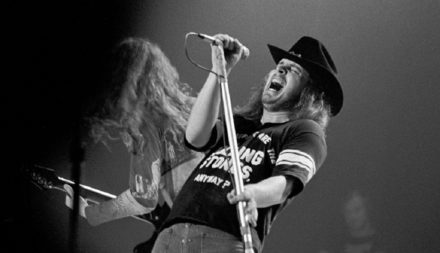
After a little time, I started to realize how great of a rock band they were…southern or not. Their influences were The Stones, Yardbirds, and most of all Cream…and it showed. At the time of their crash in 1977, Street Survivors had just been released 3 days and it was moving fast up the charts. This was going to be their big breakthrough album…and it was. They were a double-threat band…they could hit with singles and make superb rock albums. If not for the crash they would have been up in the stardom league of Aerosmith at least.
Ronnie Van Zant was a fantastic songwriter and a good singer. He is a singer who knew his limits and stayed within them. He would never write any words down…he would walk around the band during rehearsal and start to make up verses while hearing riffs and he would have a finished song.
I was really surprised by this song. I always liked it but…it sounded different from the other songs and I never knew why. I assumed that this song was recorded in 1977 but I was wrong. One More Time was recorded back in 1970 – 1971 when they were making demos and just starting their recording career. That was 2 years before they released their first album.
It was written by Van Zant and guitarist Gary Rossington. They worked on this album for a long time…they re-recorded every song on Street Survivors twice except this one. They dropped some other songs they worked on and pulled out this demo from the vaults and used it. The band re-mixed it and it blended in with the other new songs but I can hear now while listening to What’s Her Name and others on the album.
Street Survivors peaked at #5 in the Billboard Album Charts and #3 in Canada in 1977. The band has sold 28 million albums in the US since 1991 when Nielsen SoundScan started tracking sales, not including album sales for the band’s first 17 years.
His voice sounds a little different in this song because it was so early in their career and he was learning. Van Zant sings this song in a controlled cool while delivering this line.
So I’ll take the word of a liar One more time, one more time
One More Time
How can you stand there smilin’ After all you’ve done You know it seems to make you happy When you’ve hurt someone Twice before you fooled me With your deceivin’ and lyin’ Come in and close the door One more time, one more time
Yeah you’ve been gone so long No one knows where And you say that you still love me Then show me you care ‘Cause you got what it takes sweet mama To make a man feel fine So I’ll take the word of a liar One more time, one more time
Girl you’ve got me hungry Losin’ my mind I know I’m playin’ with fire Get burned every time Yes I’m a fool for you baby I can’t deny But I got to have your sweet love One more time, one more time
Girl you’ve got me hungry Losin’ my mind I know I’m playin’ with fire I get burned every time Yes I’m a fool for you mama I can’t deny But I got to have your sweet love One more time, one more time
Yes I’m her fool once more I can read her brown eyes But when the rooster crows tomorrow Well its her turn to cry I’m headed down that old road She lost her free ride So tonight I’ll take what I paid for One more time, one more time One more time
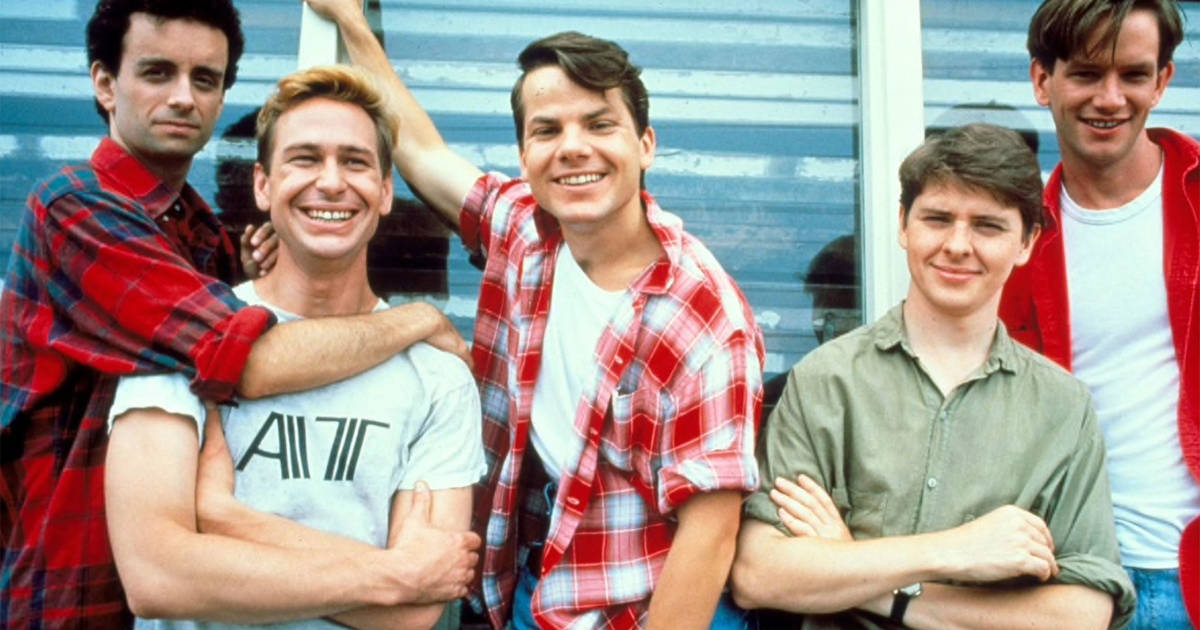
The Kids in the Hall are a sketch comedy troupe based out of Toronto, Canada. You could say they are the Canadian Monty Python. Or perhaps, the Canadian Saturday Night Live? Like Monty Python, they are an all-male group of 5 writer/performers (the Pythons had six) who create edgy sketch comedy often bordering on the absurdist, and frequently don wigs and dresses to portray female characters. Like Saturday Night Live, their show was produced by Lorne Michaels and performed in front of a live audience (albeit, it was not broadcast live). But at the heart of things, The Kids in the Hall are their own thing, creators of something outside the mainstream of comedy of the 1980s and 1990s and capturing the ethos of Generation X, paralleling the rise of alternative rock at the same time. A recently released documentary about the Kids calls them Comedy Punks.
Let’s meet the Kids!
Dave Foley (b. 1963) is the member of the troupe who feels most mainstream in his comedy approach, but that is on a relative scale. His boyish good looks were often contrasted with antisocial behavior, such as a surgeon who kills all his patients or an axe murderer, both of whom get away with it because of their charm. He was also considered the “hottest” of the Kids when dressed as woman. Not surprisingly, later in his career he starred in the American sitcom NewsRadio, and provided voices for the Pixar movies A Bug’s Life and Monsters University.
Bruce McCulloch (b. 1961) is probably the weirdest of the Kids in his comedy approach. Inspired by art movies, his surreal monologues and filmed pieces evoked a mood of absurdity rather than just telling jokes. Outside of the Kids in the Hall he has recorded music and directed several movies and tv shows.
Kevin McDonald (b. 1961) is probably a lovely person in real life, but has a talent for playing really annoying characters. A lot of his self-deprecating humor contains a dark undercurrent of the volatility of his childhood growing up with an alcoholic father. McDonald has provided his voice for the Disney movie Lilo & Stitch and its spinoffs and had a recurring role on That 70s Show.
Mark McKinney (b. 1959) specialized in creating characters and is probably the Kid most similar in comedy style to Saturday Night Live (and he did in fact join the cast of SNL from 1995 to 1997). His most notable characters include Mr. Tyzik the Headcrusher and the Chicken Lady. Outside of his work with the Kids he’s appeared in numerous movies and tv shows, the strangest of which is Guy Maddin’s The Saddest Music in the World.
Scott Thompson (b. 1959) performs comedy informed by his gay identity with a definite emphasis on using comedy to advance LGBTQ equality, which was very bold in the 1980s and 1990s. Most notably, he reclaimed the effeminate gay man stereotype through his character Buddy Cole who delivered hilarious monologues. He also frequently portrayed Queen Elizabeth II, one of the rare celebrity impersonations on The Kids in the Hall. His other work includes appearances in many movies and tv shows, including a regular role on The Larry Sanders Show.
Foley and McDonald met in the early 1980s in the Toronto comedy scene and became a writing and performing team. Their partnership is the strongest among all the Kids and has remained so throughout the troupe’s history. Meanwhile, McCulloch and McKinney met in Calgary where they performed with a group called The Audience. Moving to Toronto to expand their opportunities, McCulloch and McKinney met Foley and McDonald and in 1984 they formed The Kids in the Hall. The name came from an old Sid Caesar gag blaming bad jokes on the young writers who hung around the studio. Their shows in Toronto’s comedy clubs became a big attraction. Thompson saw them perform and pretty much willed himself into a spot in the group. Early sketches like “Reg” showcased their humor style at its most sick and twisted.
Saturday Night Live producer Lorne Michaels saw the Kids perform in 1985 and hired McKinney and McCulloch to come to New York to be writers. Eventually, Michaels determined that it would be better to keep the Kids together as a group and worked to get them their own show. The pilot for The Kids in the Hall broadcast on CBC Television in Canada and on HBO in the United States in 1988, followed by a full series of 20 episodes in 1989-1990. Enhancing the Gen X zeitgeist, the Toronto alternative rock band Shadowy Men on a Shadowy Planet provided the theme song, “Having an Average Weekend,” as well as the music to interstitials between sketches and performing live for the studio audience. The band’s music is described as instrumental surf rock, however since the Shadowy Men recorded a track called “We’re Not a F*****g Surf Band,” so we’ll have discover a new genre for them.
The Kids and the Hall had several recurring characters, but carefully avoided the SNL habit of overexposing them to please the fans. Characters appeared when they had a very good and very funny reason to be there. A number of sketches revolved around the company A.T. & Love with characters ranging from an incompetent boss (Foley), hard-pressed businessman Danny Husk (Thompson), and the secretaries Kathie (McCulloch) and Cathy (Thompson). These characters had the versatility to appear in sketches together, on their own, or with a completely different group of characters. Another series of sketches focused on rebellious Gen X teen Bobby Terrance (McCulloh), his more conservative parents (McKinney and Foley), and his best friend, the stoner Bauer (Thompson).
While Thompson was the only gay member of the troupe, sketches with LGBTQ characters were common, including scenes of men kissing men when that was taboo on American TV (one of the many things that got edited between CBC and CBS transmissions). The recurring sketch “Steps” featured three gay men discussing the issues of the day where the audience was laughing with them not at them. Despite the Kids being all men, they never saw dressing up in wigs and dresses as funny in of itself, unlike say Milton Berle. Instead they did their best to portray women as fully-formed characters and offer an honest female perspective. Dave Foley even has a good attitude toward menstruation.
After five seasons and 101 episodes, the Kids were ready to pack it in, physically exhausted and drained of ideas. The final episode broadcast on April 15, 1995 showed them being buried alive in a shared grave. The next step naturally appeared to be making movies, and in April 1996 they released Kids in the Hall: Brain Candy. The making of the film was a miserable experience for everyone involved and tensions ran high, especially toward Foley who everyone resented for signing a contract to star in NewsRadio while they were working on the film. The movie bombed although some fans consider it a cult classic (I am not one of them). The Kids went their own ways for a few years but with reruns of the show in constant rotation on Comedy Central, the troupe’s fan base grew bigger than ever.
By 2000, tensions had eased enough to bring the Kids back together, this time returning to the stage for a North American Tour. Performing in front of live audiences again energized the Kids creatively, and they were able to resume their close personal relationships as well. The Kids went on the road for more tours, introducing new sketches. In 2010, they returned to TV, stepping beyond sketch comedy for the first time in the darkly comic 8-part miniseries Death Comes to Town which aired on CBC. I hadn’t heard of this series until recently so I haven’t watched it yet but I hear it’s good. Just this May, seemingly out of nowhere, the Kids in the Hall TV series returned for season 6, with 8-episodes streaming on Amazon Prime. While the Kids have physically aged, they haven’t lost a step and the new episodes are as funny as ever. The final episode ends with the Kids getting buried again, but I think we’ll see the Kids in the Hall again soon! Until then, here’s one of my favorite sketches, “The Night of the Cow”
The Who’s Next album was released in 1971 and is one of the greatest classic rock albums ever released. This song is a song one clocking in at a short 2:11 and unlike most of the album…this one is softer. Pete Townshend originally wrote this for his Lifehouse project, where the character of Ray, a Scottish farmer, was intended to sing the song, which expresses the sentiment that love is meant to be shared.
The song was originally recorded several months prior to Who’s Next, as a four-minute electric version with Townshend singing lead and playing rhythm guitar, and the lead solos performed by Leslie West, the guitarist for New York power trio Mountain. The Who was recording at the Record Plant in New York, and Townshend reportedly didn’t want to spend time on overdubs, so West was called in to play on the track.
After a falling out with producer Kit Lambert, the band recorded an acoustic version that was used on the album. The Who often played the harder Rock version at their concerts. This version can be heard on their 1974 Odds & Sods album.
If two versions weren’t enough… Townshend’s original demo of the song appears on the six-disc Lifehouse Chronicles, songs from Townshend’s never fully-completed Lifehouse rock opera. This demo clocks in at 1:31, with no solo and Townshend taking advantage of the then-novel oscillator bank on his Arp synthesizer.
The album peaked at #4 in the Billboard Album Charts, #5 in Canada, and #1 in New Zealand in 1971.
Love Ain’t For Keeping
Layin’ on my back In the newly mown grass Rain is coming down But I know the clouds will pass You bring me tea Say “the babe’s a-sleepin'” Lay down beside me Love ain’t for keeping
Black ash from the foundry Hangs like a hood But the air is perfumed By the burning firewood The seeds are bursting The spring is a-seeping Lay down my darling Love ain’t for keeping Lay down beside me Love ain’t for keeping
Lay down beside me Love ain’t for keeping Lay down my darling Love ain’t for keeping
Welcome to the Hanspostcard TV Draft. I hope you will enjoy it! Today’s post was written by Mike at https://musiccitymike.net
Suits
Yes, it’s that show that featured Prince Harry’s American wife, actress Meghan Markle, now the Duchess of Sussex if she’s not yet been sent to exile for being so gripey. Let me just get it out of the way and say that she handled her acting duties about as well as she has her time as a member of the British Royal family. Nuff said.
After that odd intro, I’ll further confuse everyone by adding that I am also selecting a series that I quit on after Season 7 of its nine seasons. While that had to do mainly with the exit of some of the show’s best lead characters, it also can be said that Suits was a show that was great when it was good and awful when it was bad.
Suits is a New York City-based legal drama that follows the pursuits of Harvey and Mike. The former, played by Gabriel Macht, is a handsome, uber-confident, high-powered corporate attorney. The latter, played by Patrick Adams, is a young man with an eidetic memory who despite lacking the necessary credentials, works as an attorney alongside his boss Harvey. Keeping the truth about Mike hidden becomes as interesting to the story lines as do the cases and settlements that these two gents win together.
If reading this at all interests you in Suits, I highly recommend that you at least watch the fabulous debut episode whose storyline shows how Mike manages to get where he is working at a major NYC law firm without having a law degree or passing the Bar Exam on his resume.
Down the road however, the show’s writing had its ups and downs, likely due to the host USA Network’s inability to sport a steady team of writers. But great characters and strong acting really made this show what it was. Among the strong roles were Rick Hoffman as the eccentric but loveable attorney Louis, Sarah Rafferty as the drop-dead gorgeous and highly competent legal assistant Donna, and Gina Torres as the cunningly clever and insightful managing partner Jessica.
I guess Macht’s Harvey character is what I enjoyed most about Suits. He’s the kind of guy that’s easy to look up too. Highly driven and devotedly adept at his occupation, he doesn’t like to lose and usually doesn’t. And even though he works just about around the clock, he has this admirable wholeness to his personality. He’s the consummate New Yorker who knows the best hot dog cart and where to get a great cup of coffee. There are autographed Michael Jordan (presumably a one-time client) basketballs in his office along with a turntable and a huge collection of vinyl, Let’s just say that Harvey depicts “corporate cool” at its best.
Of the show’s flaws, it’s easy to spot that the Suits is not filmed in NYC (it’s Toronto) and it dove me crazy how in just two seconds flat someone is able to get the gist of a legal brief shoved in their face. These peeves aside, the legal squabbles are interesting as are their solutions. There are also interesting plot lines involving partnership in-fighting, Louis’s many neuroses, and Mike’s romance with Rachel (played by the future Duchess). However, every so often there was a script that was a dud, and after Mike left, the show lost its appeal.
So, while not a series I recommend watching from start to finish, there’s enough greatness in Suits to poke around a bit. I’m sure that my love for all things NYC and my once desire to be an attorney have something to do with my love for the show. Give it a try if you haven’t.
His sound, voice, and echo draws me in and keeps me there. The slow intro and then music kicks in. His voice goes with that slapback echo better than any other singer. His influence can be heard through the decades including Springsteen in Glory Days.
This was released in 1956 from their debut album of the same name. Like many of the songs on the record, it only came in at around two and a half minutes long… but those two and a half recordings rocked. This gem was written by Gene Vincent and Hal Levy. The song peaked at #16 in the UK in 1956.
Vincent was injured in a car accident on April 16, 1960…with Eddie Cochran in a taxi which killed Cochran. Vincent whose leg was weak due to a wound incurred in combat in Korea…was injured. He walked with a noticeable limp for the rest of his life. In 1962 he was in Hamburg and played on the same bill as the Beatles. The Beatles got close to him.
George Harrison told a story about going with a drunk Vincent to his hotel room. Vincent thought his girlfriend was cheating on him so he shoved a gun in Harrison’s hand. George was shocked and didn’t want any part of that.
The Beatles played at least 14 of Gene Vincent’s songs in their sets before they made it. A song like Somewhere Over The Rainbow that the Beatles would never think of covering until Gene Vincent covered it and gave the song his ok.
Paul McCartney: “I remember hearing Blue Jean Bop on an album that I think John had; going to a place near Penny Lane for the afternoon, having a ciggy, and just listening to records. Blue Jean Bop was always one of my favorites. The first record I ever bought was Be Bop-A-Lula. We loved Gene.”
Bluejean Bop
Bluejean baby, with your big blue eyes Don’t want you looking at other guys Got to make you give me, one more chance I can’t keep still, so baby let’s dance
Well the bluejean bop is the bop for me It’s the bop that’s done in a dungaree You flip your hip, free your knee Squeal on your heel baby, one to three Well the bluejean bop, bluejean bop Oh baby, bluejean bop, bluejean bop Oh baby, bluejean bop, baby won’t you bop with Gene (bop Blue Caps, bop)
Well bluejean baby when I bop with you Well my heart starts hoppin’ like a kangaroo My feet do things they never done before Well bluejean baby, give me more more more Well the bluejean bop, bluejean bop Oh baby, bluejean bop, bluejean bop Oh baby, bluejean bop, baby won’t you bop with Gene (rock again Blue Caps, go)
Well the bluejean bop, bluejean bop Oh baby, bluejean bop, bluejean bop Oh baby, bluejean bop, baby won’t you bop with Gene (Blue Caps, bop with Gene now, let’s go)
Well it’s, bluejean bop, bluejean bop Bluejean, bluejean bop Oh baby, bluejean, bluejean bop Bluejean, bluejean bop Bluejean, oh baby, won’t you bop with Gene
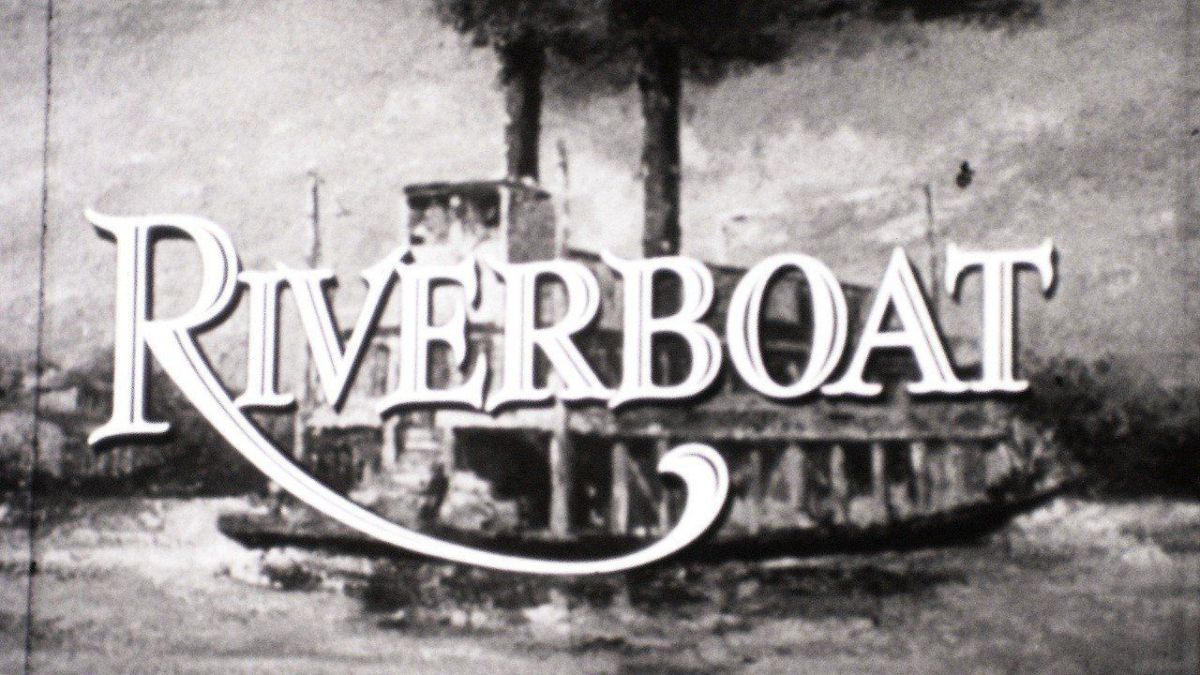
We have a religious broadcaster in Atlanta that dedicates much of its evening entertainment on its primary subchannel to ancient black-and-white television shows, from the 1950’s and early 1960’s. Some were syndicated shows, while others ran briefly on network TV. One such show was Riverboat, which originally ran on NBC for two seasons, from 1959 to 1961 (31 episodes in the 1959-1960 season and 13 in the 1960-61 season).
The best description I have found for the show is “Wagon Train on a riverboat.” Like Wagon Train, it was an anthology series, this one based around the captain and crew of the riverboat Enterprise. NBC bought into the show as a competitor to ABC’s Maverick, which had lost James Garner, who was replaced by Roger Moore.
The captain of the Enterprise was Grey Holden, played by Darren McGavin. The initial pilot of the boat was Ben Frazer, played by a young Burt Reynolds, who had been cast in an attempt to lure the female viewers of the show. Reynolds left the show after 20 episodes, unable to get along with McGavin; the second season featured Noah Beery Jr. as pilot Bill Blake. Other regulars were, according to Wikipedia:
Dick Wessel, as chief stoker Carney Kohler, was cast in 41 episodes, Jack Lambert was cast in 23 episodes as first mate Joshua MacGregor (having played a different character, Tony Walchek, earlier in the series), John Mitchum co-starred in 10 episodes as Pickalong, the ship’s cook, Michael McGreevey was cast in 17 episodes as cabin boy Chip Kessler, and William D. Gordon played first mate Joe Travis in 13 episodes before his character’s death.
It was considered a Western, even though most of the show’s action took place on the Ohio, Mississippi, and Missouri Rivers. It took place during the antebellum period of the South; of some concern was the fact that there were no African American characters or actors, this despite the fact that historically the majority of dock laborers were Black or Creole. The network and sponsors of the show didn’t want to upset the viewers, particularly those in the South. The writers and McGavin felt this was stupid, but that was life during that period.
The remainder of the weekly casts were made up of guest stars, such as Mary Tyler Moore, Elizabeth Montgomery, Jeanne Crain, Mercedes McCambridge, Ricardo Montalban, Vincent Price, Eddie Albert, and in one show Sandy Kenyon as a pre-presidential Abraham Lincoln. A full list of the guest stars can be found here.
The shows were well-written with an eye towards the history of that period. There are Indian conflicts, con men, beautiful women, stowaways, dangerous cargo, and plenty of fisticuffs. As Mary would say, it was better than the average schlock. When it went off the air, it was replaced by The Americans, a show set during the Civil War.
If you get a chance, it’s worth your time to see it.
I can imagine listening to this song floating down the river on a warm southern day. How could anyone not like that title? I first heard this song in the 80s from a friend’s brother who was a complete Dead Head.
Hello baby, I’m gone, goodbye Half a cup of rock and rye
While Robert Hunter and Jerry Garcia were writing the song, Garcia had a problem with one particular word in this line: Cueball’s made of styrofoam and no one’s got the time.
Robert Hunter said that Garcia argued: “This is so uncharacteristic of your work, to put something as time-dated” or whatever that word would be “as Styrofoam into it.” I’ve never sung that song without regretting I put that line in. Jerry also didn’t like songs that had political themes to them, and in retrospect, I think this was wise because a lot of the stuff with political themes from those days sounds pretty callow these days.”
The song was a popular one in concert…It was performed over 230 times live by The Grateful Dead over the years.
The song was on the Wake of the Flood album released in 1973… but not without its problems. It came three long years after the Dead’s previous studio album, American Beauty. Now, this would be normal but back in the seventies that was a lifetime.
The Dead had just left Warner Bros and were without a record deal. Then manager Ron Rakow talked to Garcia about starting the label and soon it was agreed. They made a decision to start their own record label like The Beatles and Stones did…except for one thing. They had no one to distribute them. Phil Lesh said: “We already owned our own sound system. Booking and travel were in-house. It seemed as if being our own record company would be worth a try. No one could see a downside.”
Rakow talked for a while about distributing records by ice cream trucks. Yes…fans would place their order through the local ice cream truck vendor and you would pick up your album with… a snowcone I guess. The voice of reason soon prevailed and they eventually got United Artists to distribute their records.
Wake of the Flood was their first studio album released on their new Grateful Dead Records. They did release two singles before that. They had problems after the release. They took a call from one distributor… the copies he’d received of Wake of the Flood sounded so bad, he said, that kids were bringing them back to the stores. The Dead office thought it was a hustle…retailers wanting records sent to them for free until he asked yet another grousing store owner to send him a copy of the supposedly flawed record. What arrived in the mail at the Dead office was a truly fake Wake of the Flood… a cover that amounted to a mimeographed photo of the artwork and an LP with music that sounded as if it had been copied from a cassette, complete with hissing noises. They’d been bootlegged.
One source says the label was told in advance by shadowy figures in Brooklyn that any release on Grateful Dead Records would be bootlegged and that they would have no choice but to go along with it. Soon after that batch, the bootlegs stopped and it was over as quick as it started. The band lost up to 90,000 because of the bootlegs.
Soon after the album’s release, Warner Bros released a greatest hits album called Skeletons in the Closet. Wake of the Flood peaked at #18 in the Billboard Album Charts and #30 in Canada in 1973.
Garcia talked about the line: I lost my boots in transit babe A pile of smoking leather
“I was in an automobile accident in 1960 with four other guys… 90-plus miles an hour on a back road. We hit these dividers and went flying, I guess. All I know is that I was sitting in the car and there was this… disturbance… and the next thing, I was in a field, far enough away from the car that I couldn’t see it.
“The car was crumpled like a cigarette pack… and inside it were my shoes. I’d been thrown completely out of my shoes and through the windshield. One guy did die in the group. It was like losing the golden boy, the one who had the most to offer. For me it was crushing, but I had the feeling that my life had been spared to do something, to either go whole hog or not at all…That was when my life began. Before that I had been living at less than capacity. That event was the slingshot for the rest of my life. It was my second chance, and I got serious.”
Mississippi Half-Step Uptown Toodeloo
On the day that I was born
Daddy sat down and cried
I had the mark just as plain as day
which could not be denied
They say that Cain caught Abel
rolling loaded dice,
ace of spades behind his ear
and him not thinking twice
Half-step
Mississippi Uptown Toodleloo
Hello baby, I’m gone, goodbye
Half a cup of rock and rye
Farewell to you old southern sky
I’m on my way – on my way
If all you got to live for
is what you left behind
get yourself a powder charge
and seal that silver mine
I lost my boots in transit babe
A pile of smoking leather
Nailed a retread to my feet
and prayed for better weather
Half-step
Mississippi Uptown Toodleloo
Hello, baby, I’m gone, good-bye
Half a cup of rock and rye
Farewell to you old southern sky
I’m on my way – on my way
They say that when your ship comes in
the first man takes the sails
The second takes the afterdeck
The third the planks and rails
What’s the point to callin shots?
This cue ain’t straight in line
Cueball’s made of styrofoam
and no one’s got the time
Half-step
Mississippi Uptown Toodleloo
Hello baby, I’m gone, goodbye
Half a cup of rock and rye
Farewell to you old southern sky
I’m on my way – on my way
Across the Rio Grand-eo
Across the lazy river
Across the Rio Grand-eo
Across the lazy river
I wanted to do a more modern show other than Life On Mars…and this would qualify as it…kinda. It has been on the air since 1975… a whopping 47 years. It’s been on life support at times but has always pulled through. It’s an institution at this point. There is not enough room on a post to go over every cast. Everyone has their favorites some were extremely funny and some were extremely bad (1980 – 1981 cast) and they all make up the history of this show.
I’m going to concentrate on the original cast and how the show became SNL. Most of you have favorite different casts…usually, the one you grew up with.
Even if you don’t like this show or what it’s become…it was a cultural landmark and no one can deny that. It changed television forever. The show started because Johnny Carson wanted more time off. NBC had been airing reruns of Johnny Carson’s Tonight Show on the weekends to fill space in their lineup. This allowed them to double-dip on profits from Carson’s outrageously popular show without spending another dime on production costs. He told NBC he would only be making four shows a week, which meant that best-of Carson shows that had been airing on Saturday nights would now need to be moved to a weeknight.
NBC executive Herbert Schlosser sought to create a new show with an old format…a variety show to fill the slot on Saturday Night. He picked Lorne Michaels, a Canadian writer who only had a handful of credits to be the producer. Michaels started a show that was far different than Schlosser imagined but to his credit… Schlosser was behind it and pushed for it to be on the air. The first two shows were experiments but by the third show, they found the format they would keep to this day. The funny thing is…Johnny Carson never liked the show.
Lorne Michaels made the show to appeal to baby boomers with a touch of Avant-Garde and “guerrilla-style comedy.” It was a game-changer much like All In The Family was to sitcoms. Late-night was never again a wasteland. This show helped open the doors for David Letterman and other shows to follow it.
It started out as “Saturday Night.” The Saturday Night Live title belonged to ABC for a show hosted by Howard Cosell who was out of his league. After Cosell’s show was cancelled, ABC let Saturday Night have the “Live” part.
Who was the best cast through the years? This is a question that is debated over and over again. People argue and usually pick the cast they grew up with. I grew up in the Eddie Murphy and Joe Piscopo era. Personally, I always thought the original cast was the best era of the show. Yes, I thought the Murphy and Piscopo casts were very funny along with later casts that had Dana Carvey, Michael Myers, Chris Farley, Chris Rock, and many others that followed. The first five seasons had something extra that others would not and could not have. It had an underground feel that vanished after it became a pure comedy show. They had a massive amount of talent in that first class.
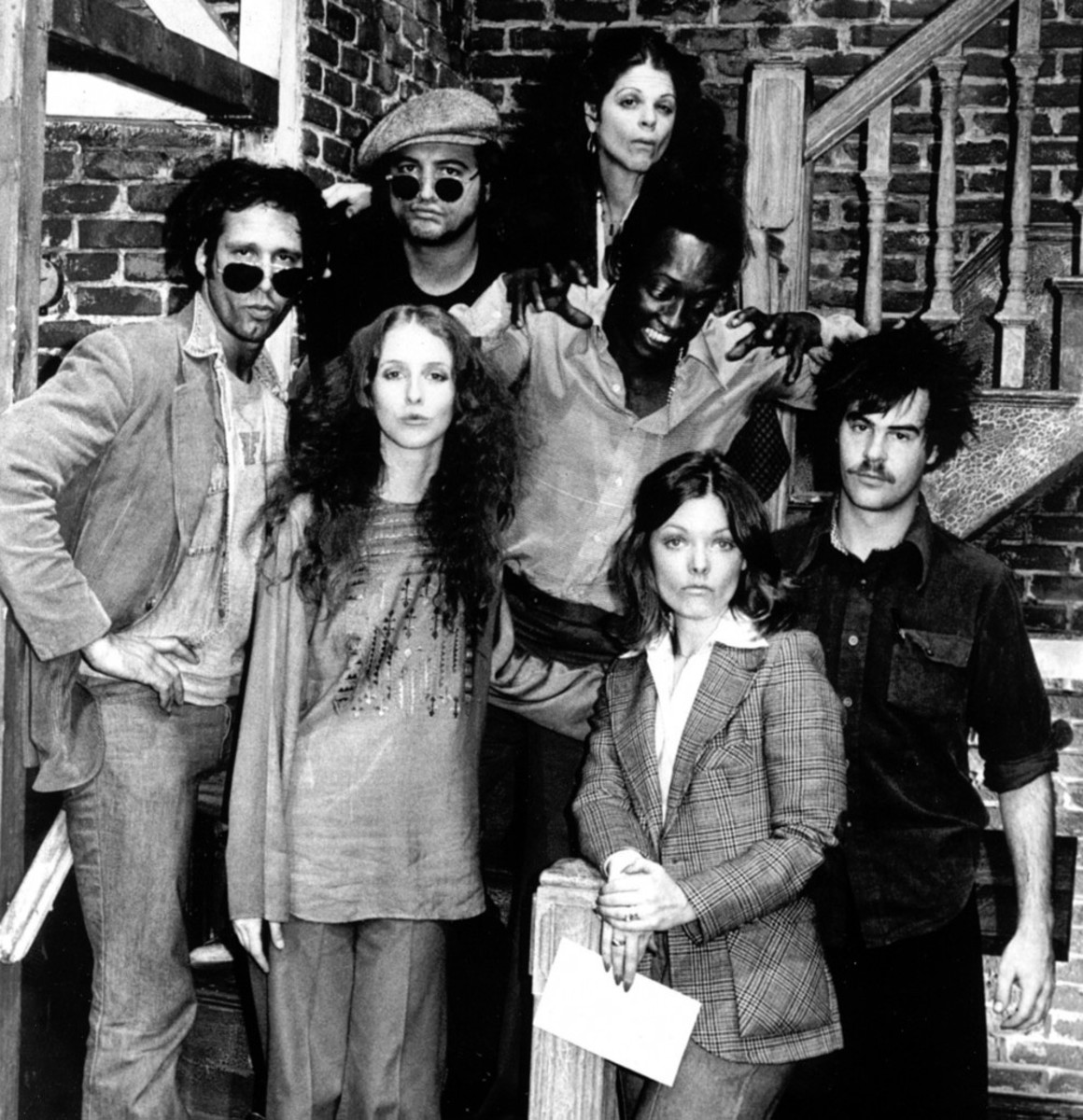
John Belushi, Dan Ackroyd, Chevy Chase (though I liked his replacement better…Bill Murray), Gilda Radner, Jane Curtin, Garrett Morris, and my favorite overlooked cast member Laraine Newman. They were the perfect cast for that time.
Why do I like the original cast the most? They tried new things and went out on a limb. Some of the skits succeeded some fell flat but they were different from anything on TV at that time…and also at this time. That cast pushed the envelope and made the network executives worry. The host each week was usually under the radar actors, writers, comedians musicians, and sometimes athletes. The musical guests were mostly rarely seen performers that weren’t on tv…prime time or otherwise. Frank Zappa, Leon Redbone, The Kinks, Patti Smith, Ry Cooder, Kinky Friedman, and others. You would have more popular musicians like Paul Simon but the show gave you a great variety.
No way would Michaels ever dream of that now…he usually gets whoever is the most popular to draw in ratings. He can no longer do what he did in the 70s because of that. He also used the complete ensemble. It was not Eddie Murphy, Joe Piscopo, and everyone else of the early eighties. It was about building an unknown cast and all of them having a shot…not a star-driven show that gave all the best bits to the big names. He made sure the entire cast had a lead in skits and parody commercials. Dick Ebersol who followed Lorne Micheals, was famous for getting stars in the cast and the show revolving around them.
A lot of the skits are now famous… Ackroyd’s Bassomatic, the Samurai, the uncomfortable but funny Word Association with Richard Pryor, The Killer Bees, The Mr. Bill Show, Weekend Update, Roseanne Rosannadanna, Land Shark, Bag of Glass, The Wild and Crazy Guys, the Coneheads, The Lounge Singer, Mr. Mike, The Blues Brothers and many more.
The writers for the show were not in the variety show comedy vein..they were not in the current SNL vein either. The style was more aggressive, especially with Michael O’Donoghue. He was a comedy trailblazer with National Lampoon and added black humor to SNL. Other writers were Franken and Davis, Rosie Shuster, Alan Zweibel, Marilyn Miller, Anne Beatts, Herb Sargent, Tom Schiller, and also Ackroyd and Chase.
The original group also did some serious skits along with comedy and trips into the bizarre (See the ultra-dark “Mr. Mike”). …It separated the original from any other cast.
I like the feel of the underground the first five years had but you can only be that for so long…popularity takes over. Those first 5 years (the first four were great…the fifth very good) set the foundation that holds to this day…just without the daring and danger.
Ann Beatts was one of the original writers who saw the popularity of the show rise beyond anything she ever imagined. She knew the risk-taking traits in the show would have to end because of it. “You can only be avant-garde for so long until you become garde.”
By the 5th season (1979-1980), it was a circus grown out of proportion. The cast by that time were usually bigger stars than the guest hosts. Everyone left after that season along with Lorne Michaels. The show went on without him until 1985 when he rejoined. It was never the same again. Sometimes it was funny and sometimes not but it was never the same experimental show it was at the start.
What other show would introduce “Acapulco Gold” and “Orange Sunshine” to a national television audience?
The Bassomatic…something you cannot explain with words.












 PowerPop... An Eclectic Collection of Pop Culture