Beatles – Good Day Sunshine

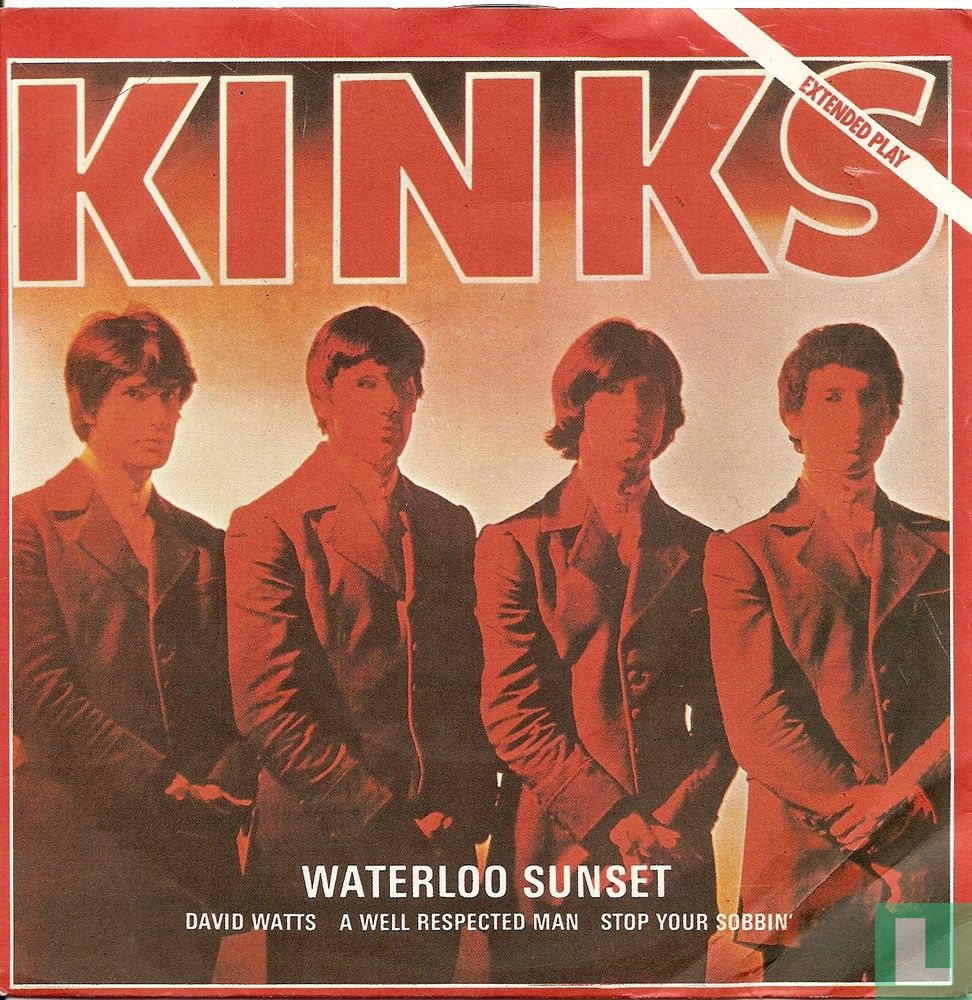
It’s hard to be unhappy when you hear this song. McCartney said the song was influenced by The Lovin’s Spoonful’s song Daydream. I can hear that but I can’t help but think the song was also influenced a little by The Kinks. I could hear Ray Davies singing this song.

Beatles - Good Day Sunshine

Original handwritten lyrics to Good Day Sunshine

McCartney did admit to hearing not only Lovin Spoonful but the Kink’s Sunny Afternoon. Most of these British bands would play off each other and the fans were the benefactors to this. John Sebastian would not know about this until 1984 (quote down below) Paul mentioned it in an interview.

Ray Davies did in fact rave about this song in Disc and Music Echo magazine…a very popular British popular music magazine in the 60s and early 70s. The song has a bounce to it and also an older sound…even in 1966 when it was released.

The song was on the album Revolver. That album I think personally is their artistic best…not my number 1 favorite but one of the greatest albums ever made. When they hit America in 1964 all of their albums progressed ahead and weren’t the same. They never remade an album…they were always looking to improve and change. You could see the progression of this from Help! to Rubber Soul to Revolver. After Revolver came their most famous album Sgt Pepper’s Lonely Hearts Club Band. With Revolver, listeners heard more sophisticated sounds and techniques adopted by the Beatles. This song was not released as a single…but it could have been.

The album peaked at #1 on the Billboard 100, Canada, The UK, and probably Mars as well.

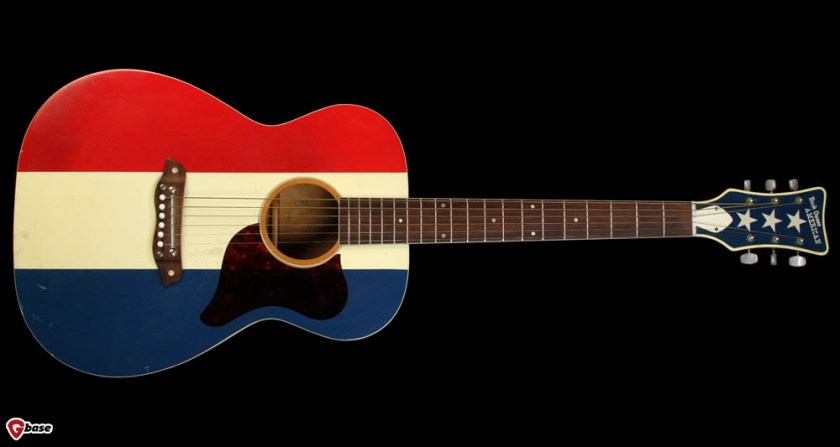
An interesting piece of info on this song. Now all of you non-musicians may not care about this part but George Harrison played bass on this song…so please indulge me. George was right-handed so he could not play Paul’s left-handed basses. He ended up renting one out to play at the session.

I thought I knew most of the instruments they played but this I didn’t know. He played a 1965 Burns Nu-Sonic bass guitar. There is a reason I never heard of this bass guitar. The Nu-Sonics were one of the first instruments discontinued by Baldwin after they bought the Burns company in September 1965. They disappeared from the catalog by the fall of ’66 so the total production run for all versions was only about two years.

Beatles - Good Day Sunshine Bass

Here is a picture of George playing the Nu-Sonic Bass Guitar. 

Paul McCartney: “Once again, I was out at John’s house in Weybridge. I’d driven myself there from my home in London in my beautiful sierra-blue Aston Martin, ejector seat and all. I love to drive, and an hour’s drive is a good time to think of things; if you’ve got half an idea, you can flesh it out on the way. I would often arrive at John’s place with a fully formed idea. Sometimes I would have to wait, if John was late getting up; he was a lazy bastard, whereas I was a very enthusiastic young man. Mind you, if I did have to wait there was a little swimming pool I could sit beside.”

“Around that time there was quite a spate of summer songs. ‘Daydream’ and ‘Summer In The City’ by The Lovin’ Spoonful, The Kinks’ ‘Sunny Afternoon’…We wanted to write something sunny. Both John and I had grown up while the music hall tradition was still very vibrant, so it was always in the back of our minds. There are lots of songs about the sun, and they make you happy: ‘The Sun Has Got His Hat On’ or ‘On The Sunny Side Of The Street.’ It was now time for us to do ours. So we’ve got love and sun, what more do we want?”

Paul McCartney: “Wrote that out at John’s one day…the sun was shining, influenced by The Lovin’ Spoonful. It was really very much a nod to The Lovin’ Spoonful’s ‘Daydream,’ the same traditional, almost trad-jazz feel. That was our favorite record of theirs. ‘Good Day Sunshine’ was me trying to write something similar to ‘Daydream.’ John and I wrote it together at Kenwood, but it was basically mine, and he helped me with it.”

John Sebastian: “One of the wonderful things The Beatles had going for them is that they were so original that when they did cop an idea from somebody else it never occurred to you, I thought there were one or two of their songs which were Spoonfuloid but it wasn’t until Paul mentioned it in a Playboy interview (in 1984) that I specifically realized we’d inspired ‘Good Day Sunshine.’”

Good Day Sunshine

Good day sunshine
Good day sunshine
Good day sunshine

I need to laugh, and when the sun is out
I’ve got something I can laugh about
I feel good, in a special way
I’m in love and it’s a sunny day

Good day sunshine
Good day sunshine
Good day sunshine

We take a walk, the sun is shining down
Burns my feet as they touch the ground

Good day sunshine
Good day sunshine
Good day sunshine

And then we lie, beneath a shady tree
I love her and she’s loving me
She feels good, she knows she’s looking fine
I’m so proud to know that she is mine

Good day sunshine
Good day sunshine
Good day sunshine
Good day sunshine
Good day sunshine
Good day sunshine
Good day sunshine

Graham Parker – Local Girls

I posted a Graham Parker album (Howlin’ Wind) a while back and it was the first time I’d heard it. This song…as soon as I heard it I remembered it. I remember MTV and Fridays playing this video in the 1980s.

Graham Parker - Squeezing Out Sparks

This was on the album Squeezing Out Sparks released in 1979. The album peaked at #18 in the UK, #79 in Canada, and #40 on the Billboard 100. Parker had just left Mercury Records and this was his debut on Arista Records.

I’ve listened to Squeezing Out Sparks and there is not a weak song on the album. Parker had felt like Rumour had overplayed on his albums to this point. He told them they need to play like they were in a studio and not live. After that… once they were clicking, it only took 11 days to complete the album.

This album didn’t include horns that were on his albums up to this point. It was a no-frills approach that made it arguably his finest album. This song has everything you want. Smart writing, catchy hook, and Parker’s voice is on point.

Normally, Parker named his albums after song titles, although this time he toyed with calling it “The Basingstoke Canal” after a waterway connecting to the Thames River, about 30 miles from where he was born in the London area of Hackney…but he woke up one morning with a song on the album called You Can’t Be Too Strong going through his head with the lyric “I know it gets dark down by Luna Park/But everybody else is squeezing out a spark/That happened in the heat, somewhere in the dark.”

Graham Parker: “‘Local Girls,’ of course, refers to the girls in my/your hometown, not the girls in someone else’s town. … The idea for ‘Local’ is from remembering what it was like to be a boy at home, looking out the window, seeing a rather toothsome piece stroll by, nose in the air perhaps, down the quiet semi-detached suburban street, and knowing that she probably already (at 13/14 years of age) fancies herself as an army wife (I grew up next door to an army camp and the squaddies were always stealing the girlfolk) and is going to look upon your feeble advances with some disdain. It’s a fairly typical the-object-of-ones-desire-is-always-out-of-reach-type song, just about 30 times better and more pregnant with meaning/detail than pretty much anyone else on the planet could even begin to aspire to, is all”

Graham Parker:  “It wasn’t until I’d done all my Hippie traveling and being a freak and all that, and got back and lived with my parents and started to absorb all influence of my earlier years. I just pushed myself out in the world, got to London and met the right people, including Dave Robinson, who became my manager. He put the band the Rumour around me. So that was basically the beginnings of my career. I was just basically what I consider to be a successful singer/songwriter/musician by the time I came to write Squeezing Out Sparks. It was very inspired times for me, and that’s what resulted in that album.”

Local Girls

Sit by my window and look outside, wonder why the sun don’t shine on me
What’s wrong with you, you stupid child, don’t you think that I’m the one
You’re waiting to see?
Don’t talk too much ’cause she falls for the suckers, makes her feel
Everything is secure
Don’t ever leave a footprint on the floor

Don’t bother with the local girls, don’t bother with the local girls
They don’t bother me

She’s probably half-wit, she must be straight,
Or bound to have a mother who knows nothing but hate
Don’t want to love her, I’d rather knock her down
Standing at the bus stop where she waits each morning
So isolated that she thinks that the army is the place where a man ought to be
Don’t bother with them, they don’t bother me

Don’t bother with the local girls, don’t bother with the local girls
They don’t bother me

They got the walk, they got the talk, right down without a flaw
At 6:00 I got to stop my dreaming at the counter of the store

Don’t bother with the local girls, don’t bother with the local girls
They don’t bother me

Without a doubt I got to intercept, must be time someone ran and shouted in
Their head
You look all right in the cheap print dress,
But every time you swish it ’round you make me disappear
I’m aware of exactly what I’m doing, making everything a mystery
Don’t bother with it, it don’t bother me

Jerry Lee Lewis – Whole Lotta Shakin’ Goin’ On

Electric…that is the best way I can describe Jerry Lee Lewis. From those old black and white clips in the fifties, the Killer was doing just that. Using all of his limbs to pulverize the piano. The song peaked at #3 on the Billboard 100, #8 in the UK, and #1 on the Billboard Country Chart in 1957. It is one of the most recognizable songs of the 1950s.

This song was written by Roy Hall (using the pseudonym Sunny David) and Dave “Curly” Williams. Hall was a songwriter/piano player who ran a music venue in Nashville and played in Webb Pierce’s band. Lewis’s version sold over 6 million copies. Roy didn’t get to enjoy the money from the song for too long…he had to sign his royalties away to his ex-wife.

“Whole Lotta Shakin’ Goin’ On” was Lewis’s second single, following “Crazy Arms,” which had failed to chart. But Lewis, well aware of his own talent, was pushed by producer Sam Phillips’s work in Sun Studio and brought “Whole Lotta Shakin’ Goin’ On” into the recording sessions confident that it could be a hit. Recording sessions took place in February 1957, in Sun Studios.

Lewis claimed to have heard the song from the singer Johnny Littlejohn at the Wagon Wheel nightclub in Natchez, Mississippi. He was a force of nature… he transformed the landscape of any song he moves through, and “Whole Lotta Shakin’ Goin’ On” was no different.

This song was the first of Lewis’ four Top 40 hits, which all occurred in a period of about a year and a half… but he had a huge country career starting in the 60s.

Whole Lot of Shakin’ Goin’ On

Come along my baby, whole lotta shakin’ goin’ on
Yes, I said come along my baby, baby you can’t go wrong
We ain’t fakin’, while lotta shakin’ goin’ on

Well, I said come along my baby, we got chicken in the barn
Woo-huh, come along my baby, really got the bull by the horn
We ain’t fakin’, whole lotta shakin’ goin’ on

Well, I said shake, baby, shake
I said shake, baby, shake
I said shake it, baby, shake it
And then shake, baby, shake
Come on over, whole lotta shakin’ goin’ on
Oh, let’s go!

Alright

Well, I said come along my baby, we got chicken in the barn
Whose barn? What barn? My barn
Come along my baby, really got the bull by the horn
We ain’t fakin’, whole lotta shakin’ goin’ on

Easy now
Shake it
Ah, shake it, baby
Yeah
You can shake it one time for me
Ye-ah-ha-ah, I said come on over, baby
Whole lotta shakin’ goin’ on
Now, let’s get down real low one time now
Shake, baby, shake
All you gotta do, honey, is kinda stand in one spot
Wiggle around just a little bit, that’s when you got it, yeah
Come on baby, whole lotta shakin’ goin’ on
Now let’s go one time

Shake it baby, shake, shake it baby, shake
Woo, shake baby, come on babe, shake it, baby, shake
Come on over, whole lotta shakin’ goin’ on

Jimi Hendrix – Castles Made Of Sand

I’ve always liked Jimi’s mellow songs. The song moves so well because of his guitar playing and the futility of life lyrics. The song originally appeared on the Axis: Bold as Love album released in December of 1967.

He never liked talking much about his past, but he reveals some in this song. Sarita Cannon has written a book that explores Hendrix’s identity as a Black Cherokee. Hendrix’s Indigenous ancestry has never been documented by blood. His grandmother, a vaudeville performer from Vancouver, British Columbia, passed along Cherokee traditions to him. incorporated Indigenous themes in his music, including this song, the instrumental “Cherokee Mist” and the 1967 anthem “I Don’t Live Today.” His mother had stated that she was part Cherokee.

Many believed that this song is an instance of Hendrix reflecting on painful memories from his childhood, including his parents’ tumultuous separation and his mother’s illness, Hendrix himself never confirmed the inspiration behind the song. Leon Hendrix, Jimi’s brother, has said the lyrics were about their father’s alcoholism and their family. He said the soldier in the song is Leon himself. At one time  Leon was taken away by Child Protective Services.

Castles Made Of Sand was not released as a single and did not chart although the album peaked at #3 on the Billboard 200 Album Charts in 1968.

This album was his second studio album to be released. His third and last album Electric Ladyland was released in October of 1968. Since Hendrix died in 1970…a glut of albums have been released. The man must have recorded in his sleep.

Castles Made Of Sand

Down the street you can hear her scream you’re a disgrace
As she slams the door in his drunken face
And now he stands outside
And all the neighbours start to gossip and drool
He cries oh, girl you must be mad,
What happened to the sweet love you and me had?
Against the door he leans and starts a scene,
And his tears fall and burn the garden green

And so castles made of sand fall in the sea, eventually

A little Indian brave who before he was ten,
Played war games in the woods with his Indian friends
And he built up a dream that when he grew up
He would be a fearless warrior Indian chief
Many moons passed and more the dream grew strong until
Tomorrow he would sing his first war song and fight his first battle
But something went wrong, surprise attack killed him in his sleep that night

And so castles made of sand melts into the sea, eventually

There was a young girl, whose heart was a frown
‘Cause she was crippled for life,
And she couldn’t speak a sound
And she wished and prayed she could stop living,
So she decided to die
She drew her wheelchair to the edge of the shore
And to her legs she smiled you won’t hurt me no more
But then a sight she’d never seen made her jump and say
Look a golden winged ship is passing my way

And it really didn’t have to stop, it just kept on going…

And so castles made of sand slips into the sea, eventually

Shawn Mullins – Lullaby

I was trying to think of the name of this song and described what I could…and my friend Dave gave me the answer from my few clues. In 1998 I heard this song constantly and always liked it.

The lyric that made me like the song was They hung out with folks like Dennis Hopper and Bob Seger and Sonny and Cher. I’m a sucker for pop culture references… like that should surprise anyone. Shawn Mullins wrote the song after a woman in Los Angeles talked to him about her childhood and teenage years. Mullins said “There were certain details, like Sonny & Cher and Bob Seger, things in it that were real. But there’s also certain things about her character in the song that aren’t really like her. The person in the song took a sadder turn. The actual girl really had her act together and she was very smiley. Her smile was incredible.”

Shawn was based in Atlanta and pressed copies of the single that was released independently. Good fortune hit when an Atlanta radio station slipped the song into the rotation. Lullaby gained traction and Columbia won a bidding war and he signed with them. He started to open up for big names but never hit the Hot 100 again. Mullins’ first album, he said he wanted to do something different and it flopped… as well as his second album. He now records independently.

He has probably made a decent living off of this song because it’s been used in movies and TV shows…I remember hearing it on The Office. The song peaked at #7 on the Billboard 100, #2 in Canada, and #9 in the UK in 1998-99.

Shawn Mullins: “The whole album was written from journal entries that I would do on the road, so, after that night the lyric was pretty much done. I never edited back then at all.”

Lullaby

She grew up with the children of the stars
In the Hollywood hills and the boulevards
Her parents threw big parties
Everyone was there
They hung out with folks like Dennis Hopper and Bob Seger and
Sonny and Cher

She feels safe now in this bar on Fairfax
And from the stage I can tell that she can’t let go and she can’t
Relax
And just before she hangs her head to cry
I sing to her a lullaby
I sing:

Everything’s gonna be all right
Rock-a-bye, rock-a-bye
Everything’s gonna be all right
Rock-a-bye, rock-a-bye, rock-a-bye

She still lives with her mom outside the city
Down that street about a half a mile
And all her friends tell her she’s so pretty
But she’d be a whole lot prettier if she smiled once in a while
‘Cause even her smile looks like a frown
She’s seen her share of devils in this angel town

Everything’s gonna be all right
Rock-a-bye, rock-a-bye
Everything’s gonna be all right
Rock-a-bye, rock-a-bye, rock-a-bye

I told her I ain’t so sure about this place
It’s hard to play a gig in this town and keep a straight face
Seems like everybody’s got a plan
It’s kind of like Nashville with a tan

Everything’s gonna be all right
Rock-a-bye, rock-a-bye
Everything’s gonna be all right
Rock-a-bye, rock-a-bye, rock-a-bye

Atomic Rooster – The Devil’s Answer

This is another song I noticed on the BBC Life On Mars TV series in the mid-2000s.

Atomic Rooster… Now that is a name. I’ve been in short-term bands with different names such as… “The Flying Junebugs”, “The Cryin ‘Shame” and “Green Swingset” but Atomic Rooster is unique.

Atomic Rooster was an English rock band, originally composed of former members of The Crazy World of Arthur Brown. Throughout their history keyboardist, Vincent Crane was the only constant member and wrote the majority of their material.

The band was founded by the late British blues pianist Vincent Crane, originally with British drummer Carl Palmer, after Crane left The Crazy World of Arthur Brown which he had co-founded in 1966. During 1970 they formed Atomic Rooster as decided in New York, and the band’s first gig was headlining at the Lyceum, London, with Deep Purple as support. The first Atomic Roster single was “Friday the 13th”, and the first album was Atomic Ro-o-oster.

Their history is defined by two periods: the early-mid-1970s and the early 1980s. Their genre in music is difficult to define since they went through radical changes in a very short time during the life of the band. However, their best-known era represented a more hard rock/progressive rock sound, exemplified by their only hit singles… Tomorrow Night peaked at #11 in the UK and The Devil’s Answer peaked at #4… both in 1971.

The Devil’s Answer

People are looking but they don’t know what to do
It’s the time of the season for the people like you
Come back tomorrow, show the scars on your face
It’s a clue to the answer we all chase

Three, five and seven lift the heaviest load
reach the top of the heaven that’s fallen below
Devil may care but you wish for the best can’t you see there’s an answer that lies there
Come all you sinners and keep with the time
can we see all the faces that have fallen behind
Don’t make the reason it’s a secret for you

There’s a clue to the answer we all know
There’s no clue to the answer we all know
People are looking but they don’t know what to do
It’s the time of the season for the people like you
Come back tomorrow, show the scars on your face

It’s a clue to the answer we all chase

Doors – Roadhouse Blues

This is one of my favorite songs I like by them. The song peaked at #50 on the Billboard 100 and #41 in Canada in 1970. This was the B side of the song “You Make Me Real.”

John Sebastian from the Lovin’ Spoonful played the harmonica on this recording. He is identified on the album as “G. Puglese” because of Sebastian’s contract with Reprise Records. Lonnie Mack played the bass on this one with is unusual…the Doors usually let the keyboard handle the bass parts.

Topanga Corral

Morrison was said to write this song about The Topanga Corral, a windowless nightclub in Topanga Canyon. There were also bungalows in the back that Morrison mentions in the song. The club burnt down in the seventies. It is remembered for artists such as Canned Heat, Spanky and Our Gang, Linda Ronstadt, and Little Feat playing there.

Morrison was convicted of indecent exposure and sentenced to six months in jail, but he died while the case was being appealed. In 2010, Florida Governor Charlie Crist granted Morrison a pardon, clearing him of the charges.

It was on the album Morrison Hotel. The album peaked at #4 on the Billboard Album Charts, #3 in Canada, and #12 in the UK in 1970.

Robby Krieger on Morrison Hotel: “Ray (Manzarek, keyboards) had been driving around downtown LA, and he saw this place called Morrison Hotel. So we decided to go down and shoot some photos there, but the guy who owned the hotel wouldn’t let us inside it. I guess they thought we were hippies. There were a lot of drunks and bums hanging around that area. Anyway, we snuck in there real quick when he wasn’t looking and got the shot that became the cover of Morrison Hotel.”

Outtakes from one of Morrison’s recording sessions were used to dub his voice into this version on the 2000 tribute album Stoned Immaculate, where he duets with John Lee Hooker.

Roadhouse Blues

Ah keep your eyes on the road, 
Your hands upon the wheel. 
Keep your eyes on the road 
Your hands upon the wheel. 
Yeah, we’re going to the roadhouse, 
Gonna have a real good-time. 

Yeah, the back of the roadhouse, 
They’ve got some bungalows. 
Yeah, the back of the roadhouse, 
They’ve got some bungalows. 

They dance for the people 
Who like to go down slow. 

Let it roll, baby, roll. 
Let it roll, all night long. 

Do it, Robby, Do it! 

You gotta roll, roll, roll, 
You gotta thrill my soul, alright. 
Roll, roll, roll, roll-a 
Thrill my soul. 

*improv* 
Passionate Lady. 
Passionate Lady. 
Give up your vows. 
Give up your vows. 
Save our city. 
Save our city. 
Ah, right now. 

Well, I woke up this morning 
And I got myself a beer. 
Well, I woke up this morning 
And I got myself a beer. 

The future’s uncertain 
And the end is always near. 

Let it roll, baby, roll. 
Let it roll, all night long.

Hüsker Dü

I want to thank Dave from A Sound Day. Dave will explain what is happening in the first paragraph. I’ve always wanted to do a post on Husker Du but didn’t know where to start. So Dave wrote this post and I wrote a post for him on The Replacements that he is posting today. The two bands are from the same music scene in Minneapolis and knew each other well.

“Not long after Athens and sometime before Seattle, the epicenter of the American underground rock scene was Minneapolis.” So wrote Magnet magazine. That time was the mid-to-late-’80s, and at the forefront of that was two angry bands – Husker Du and the Replacements. Both had huge cult followings and flirted with bigtime success but neither really broke through in a big way. But each influenced later bands and are widely respected. Now the odd thing is my friend Max and I have some similar musical tastes but each of us like one of those bands and are close to oblivious to the other. So he suggested we write a little for each other’s sites about “our” bands. For me, that was Husker Du.

I’m guessing there’s a good chance that you’ve heard of Husker Du. But a much more limited chance you’ve heard them or know their music. That’s understandable. At home in the U.S., they’ve never had a top 40 single nor a platinum album. But they paved the way for bands you might have heard of, like Nirvana, Soundgarden and the Foo Fighters.

First the name. Husker Du is actually Norwegian for “Do you remember?” and it was the name of a board game and also a European TV game show. Someone in the band knew of it and inserted it into one of their songs in progress as a kind of placeholder for lyrics and it ended up sticking as the band name. They added “umlauts” – those dots – over the “u”s in the name to make it seem more menacing.

They were a power trio, formed in 1979 by guitarist/singer Bob Mould , bassist Greg Norton and his mustache, and drummer/singer Grant Hart. With a similar origin to R.E.M., they formed by way of a mix of college students and record stores. R.E.M.’s college guys met Peter Buck in a record store; Husker Du had Bob Mould who was a college student who hung around a record store in the Twin cities where Grant Hart worked and Greg Norton (a friend of Hart’s at the time) hung around. Appropriately, Peter Buck was a fan of Husker Du’s and noted “I played with Husker Du several times and hung out with them.”  When they started the band they were all 20 or younger.

Husker Du was initially loud, fast, angry, and rather anti-social. And did I mention very loud? “Fueled by testosterone, alcohol, boredom, anger at the government…” Mould would later say. Probably a lot of amphetamines or speed too, he might have added.  Anyone who’s ever had the misfortu… err, “opportunity”… to be around fans of thrash metal or hardcore punk knows there is no shortage at all of bands who can turn the amps up to 11, shout nonsensical lyrics, and generally rage noisily like a late night thunderstorm.  Ones that can do that while actually making music, songs that have melody and make sense, are much rarer. And that’s what Husker Du did. I think Max here once made a great point – he liked Howard Jones because you could strip away the production and layered synthesizers of his ’80s new wave and you’d still be left with real songs that had merit. So too Husker; many of their songs could be taken down to an acoustic guitar and singer and still hold their own as real songs. That was part of their appeal to me.

They played almost nightly in the early-’80s and soon got signed to the small, indie SST label owned by underground punkers Black Flag. They put out their first record in 1982. By 1984, they’d grown tired of conventional thrash music and according to Mould wanted to do something new that “is going to be beyond the whole idea of ‘punk rock’ or whatever.” The result was Zen Arcade, a record Rolling Stone declared “the closest hardcore will ever get to opera” and then New Day Rising and Flip Your Wig and its single “Makes no sense at All.” The album hit #1 on the influential CMJ record chart – sort of a college rock list in the States – and on the British indie charts and the single #2 on the Indie rock charts over there. But big-time success eluded them,  even when they showed their sense of humor and did a cover of “Love is All Around”, parodying the opening of another Minneapolis landmark, the Mary Tyler Moore Show. What it did though was start a bidding war for their services among the major labels.  They ended up signing with Warner Bros. in late ’85, the first real truly alt-rock band to do so, because Warner agreed to give them creative freedom and the ability to produce their own records. This played a part in R.E.M.’s decision to choose Warner a couple of years later also and probably changed the way many “underground” bands looked at the huge multi-nats thereafter.  Some fans accused them of selling out, but the group felt they had hit a “ceiling” with SST; they couldn’t press enough records to meet demand nor promote their acts to get them radio play or prestige billing in concert. Even though they didn’t hit the mega-stardom levels some thought, it was a good move for Husker Du. Grant Hart had to get a loan at his mom’s credit union to pay for the first HD record. But, as Mould would point out Warner “always paid on time” and after signing with them “we all bought houses. Modest houses.”

Their first WB album was Candy Apple Grey, which had the single “Don’t Want to Know If You’re Lonely”. It got good reviews and sold better than the predecessors (which were rumored to have sold in the neighborhood of 5000 copies in the U.S., in some cases) . It got them more notice on college stations and even occasionally on MTV.  But to me, their crowning achievement was Warehouse : Stories and Songs, which came out in 1987. It was a sprawling 20-song double LP (but single CD), and like their others self-produced and recorded in Minnesota.

It was a continuing evolution for them. As Allmusic put it, in their review which gave it a perfect 5-stars, it was “cleaner and more produced” than anything they’d done before but “they never sound like they are selling out.”  It was also the one that the alt-rock station that I listened to much of the time in the late-’80s, CFNY Toronto, latched onto. It blew me away. There was a lot of mainstream “heavy metal” around, or its imitation, at the time from Motley Crue to Bon Jovi, but nothing on air sounded like these short, high-powered, angst-filled rockers that would leave the guitars and amps of a Def Leppard or Posion shaking in their boots. But they were strangely likable too. Clearly, they’d heard a Beatles or Byrds or Fleetwood Mac record in their time and they carried over a bit of that melodic craftmanship.

Eleven of the 20 were written by Bob Mould, and the other nine, Grant Hart. Which points to an underlying issue – the band was breaking up by then, mostly due to personality problems. Norton had just gotten married and the band’s manager commit suicide. But Mould and Hart had grown to despise each other. They were competitive and jealous (each wanted more of the writing credits than the other) of one another. Both were gay, which was unusual in that style of music but would be no issue except it was also widely rumored, but never confirmed, that they had been a couple who’d broken up by Warehouse. Mould has said “I’ve never talked about Grant’s situation and I never will. I think that’s personal.” More widely confirmed is that they were going in different directions in lifestyle. Mould was quitting drugs and had all but given up drinking, meanwhile, Hart was battling heroin addiction with limited success and refusing to go to the rehab his bandmates wanted him to attend. This made him less than reliable as a player in gigs. In the end, the band cut short their tour for this album and officially broke up in early-’88.

But they left us with this opus. Agreed, a bit overblown (Mould has said since it should have been a single LP instead) with some fantastic, angsty rock tunes like “Bed of Nails”, “She Floated Away”, a Grant Hart tune allmusic calls a “sea shanty” that always appealed to me and the very-near hit “Could You Be the One?”. That two-and-a-half-minute bit of Flying V guitar angst and nervousness over a relationship’s direction jumped out of the speakers at me and got a good amount of play on both MTV and Canada’s Much Music, as well as influencing later videos by their use of colored screens and so forth.

The album only barely hit the British top 100 and peaked at #117 on Billboard at home but remains one of the best ’80s guitar-rock albums and one that caught some other musicians’ ears. Kurt Cobain listed them as one of his favorite bands and his one-time bandmate, Dave Grohl? Well, he says “I was a huge Husker Du fan and obviously Bob Mould’s music has influenced the way I write music and play guitar. A lot of what I do comes from Bob.”

Bob Mould has been the one who has carried on and had success in music post-Husker. He briefly had the underrated power pop band Sugar (hmm, another topic for Power Pop blog, Max?) and has put out numerous solo albums ranging from acoustic guitar balladry to electronica to raging neo-punk. Definitely, a career worth looking into now and again. Greg Norton quit to become a restauranteur and chef, while Hart played in some indie bands and segued into visual arts quite a bit before sadly passing away of cancer and hepatitis in 2017.

Thanks, Max for letting me drone on and talk a bit about an American band I think deserves more attention than they got.

Tommy James And The Shondells – Crystal Blue Persuasion

My sister had most of Tommy James’ hits back in the day on singles. Crimson and Clover was cracked so I taped it up on the other side…and it played great…minus the scratches. I would probably never buy an album by him unless it was a greatest hits because he had some good ones.

Most people thought this song was about drugs and I can see that. At the time there was a popular blue color LSD tablet in circulation so people automatically thought it was about that. The line “It’s a new vibration” was about James becoming a Christian. James realized afterward that the title fit with his budding interest in religion, with the words sourced from the Biblical Book of Revelation.

Tommy James and The Shondells regretted a decision they made. They turned down Woodstock which would have made their hip meter go up a bit. At the time he was writing this song he was working with another band. The band was Alive and Kicking and James wanted them to record Crystal Blue Persuasion but Tommy James’ label boss would not let him give them this song. He ended up writing another song for that band…Tighter, Tighter. That song became a huge hit for them. What’s strange about that…is Alive and Kicking were on the same label as Tommy James…Roulette who was rumored to have mafia ties.

There have been numerous cover versions of the song, including those by Tito Puente, Joe Bataan, The Heptones, Morcheeba, Concrete Blond, and John Wesley Harding. The song has also appeared in films, TV, and commercials. It was used in an episode of Breaking Bad titled “Gliding Over All,” where Walter White expands his crystal meth business overseas.

The song peaked at #2 on the Billboard 100 and #1 in Canada in 1969. The credited writers are Eddie Gray, Tommy James, and Mike Vale.

Tommy James on recording it: “When we got it into the studio, we just overproduced it, plain and simple, We got it done and listened to it and we said, ‘That’s not the song we wrote.’ I spent the next month or so going in the studio every week pulling stuff out and putting stuff in, trying to make it work. Finally, in about four weeks, we had pulled out the drums completely. We took out all the guitars except for my rhythm guitar on tremolo, and Eddie had a little flamenco guitar part that he played. One keyboard, just kind of a trickling Hammond organ. And a bongo drum. And that was it. About 80 percent of the instruments on there, we had to pull out. We let it breathe.”

Tommy James: “‘Crystal Blue’ was interesting. First of all, I was becoming a Christian at that time, and we never thought a thing about it. We never thought that doing something semi-religious was any big deal. We didn’t think of it as being politically incorrect or anything like that. We just did what felt right. I wrote ‘Crystal Blue Persuasion’ with Eddie Gray and Mike Vale. Eddie came up with the little guitar riff, and Mike and I did the lyrics. And it just felt very right as a sort of semi-religious poetic song, but it turned out to be one of the hardest records I’ve ever made.

We went in and had a set of drums, we had guitars, we had keyboards, and by the end, we just realized we had totally overproduced the record. It just was not ‘Crystal Blue Persuasion’ anymore. It was a nice track, but wasn’t right. So we had to produce the record, and then we had to un-produce the record. And one by one we just started pulling the instruments out, until we ended up with a conga drum, a bongo, a tambourine, a flamenco guitar, and a very light-sounding bass. We took out the drums completely. We took out all the keyboards except one, which was a Hammond. And basically ended up with about four instruments on it. And suddenly it became ‘Crystal Blue Persuasion,’ the song that we had written. It has kind of an effervescent sound about it, a lot of atmospherics that just weren’t there when it had all those instruments on it. Suddenly when you emptied out the record it sounded like ‘Crystal Blue’ again. It had that light airy sound, which it needed to be right. And it took us about six weeks to do all that. It really was a very intricate un-production, pulling all the things out. Actually, it was tougher than putting them in because you didn’t want to mess up the record, but you wanted to empty it out. So it came out and went #1 for us. It was the follow-up to ‘Sweet Cherry Wine.’ We were in Hawaii when it went #1, and I often think of Hawaii as I think of ‘Crystal Blue Persuasion.'”

Crystal Blue Persuasion

Look over yonder
What do you see?
The sun is a-rising
Most definitely

A new day is coming (ooh, ooh)
People are changing
Ain’t it beautiful? (Ooh, ooh)
Crystal blue persuasion

Better get ready to see the light
Love, love is the answer (ooh, ooh)
And that’s all right

So don’t you give up now (ooh, ooh)
So easy to find
Just look to your soul (your soul)
And open your mind

Crystal blue persuasion, hmm, hmm
It’s a new vibration
Crystal blue persuasion
Crystal
Blue persuasion

Maybe tomorrow
When he looks down
On every green field (ooh, ooh)
And every town
All of his children
And every nation
There’ll be peace and good brotherhood

Crystal blue persuasion, yeah
Crystal blue persuasion, aah-aah
(Crystal blue persuasion, aah-aah)

Los Bravos – Black Is Black

This song has always sounded really good…especially in headphones.  Los Bravos were a Spanish beat group quintet with a German lead singer named Mike Kogel. They were one of the few rock groups from a non-English speaking country to have an international hit, in part because they were one of the few Spanish acts to sing in English. They formed in 1965 and were based in Madrid.

The song peaked at #1 in Canada, #4 on the Billboard 100, and #2 in the UK in 1966. This song was written by the British team of Michelle Grainger, Tony Hayes, and Steve Wadey.

In America, the group followed this up with the unfortunately titled “Going Nowhere,” which reached #91 later in 1966. “Bring A Little Lovin” did a little better, going to #51 in 1968. In the UK, their only other chart entry was “I Don’t Care,” which went to #16 in 1966.

Vox Continental Organ

The organ you hear is a Vox Continental that Manuel Fernández played on this track. This instrument was used on many classic tracks from the ’60s, including “96 Tears” and “The House Of The Rising Sun.”

Kogel was not a native English speaker (he had to have the lyrics written out phonetically), and his vocals had unusual intonations. When this song was released…some thought Gene Pitney was singing it because Mike Kogel sounded so much like him.

The British producer Ivor Raymonde took a trip to that country and signed the group, who at the time were using the name Mike & The Runaways. He brought them to London and had them record “Black Is Black,” which was their first release as Los Bravos.

Black is Black

Black is black, I want my baby back
It’s grey, it’s grey, since she went away, oh oh
What can I do, ’cause I, I’m feelin’ blue

If I had my way, she’d be here today
But she’d go in time, and leave me to cry again, oh no
What can I do, ’cause I, I’m feelin’ blue

I can’t choose, it’s too much to lose when our love’s too strong
Maybe if she would come back to me, then I can’t go wrong

Bad is bad, that I feel so sad
It’s time, it’s time, that I felt peace of mind, oh oh
What can I do, ’cause I, I’m feelin’ blue

I can’t choose, it’s too much to lose when our love’s too strong
Maybe if she would come back to me, then I can’t go wrong

Black is black, I want my baby back
It’s grey, it’s grey, since she went away, oh oh
What can I do, ’cause I, I’m feelin’ blue

‘Cause I, I’m feelin’ blue, ’cause I, I’m feelin’ blue

Crabby Appleton – Go Back ….Power Pop Friday

I’m reaching into the obscurity bin for this one but it’s a good song. They didn’t have any hits further, leading them to be called as a one hit wonder.

Crabby Appleton was founded in Los Angeles, California, founded by Michael Fennelly. Fennelly was previously with another band The Millenium, a pop band that recorded one album, Begin.

Fennelly was also Crabby Appleton’s principal songwriter, and the lineup was rounded out by bassist Hank Harvey, keyboardist Casey Foutz, percussion Felix “Flaco” Falcon, and drummer Phil Jones. The group was initially named as Stonehenge but re-named themselves as Crabby Appleton, after a Tom Terrific cartoon character.

Crabby Appleton from Tom Terrific | Artsy, Cartoon characters, Cartoon

This band was not exactly a household name but this single is really good. Go Back was released in 1970 and it peaked at #36 in the Billboard 100. The album, Crabby Appleton, made it to #175 on the Billboard 200 album charts.

It was produced by Don Gallucci… formerly of the Kingsmen. The drummer Phil Jones also played percussion and drums for Tom Petty on every song but one on Full Moon Fever. He has also played with Joe Walsh, Johnny Rivers, and Waddy Wachtel.

Fennelly embarked on a solo career and recorded two albums Lane Changer and Stranger’s Bed from the early to mid-1970s. He also went on to work with other artists such as Steely Dan.

The band did release two albums before breaking up in 1971. Bands like this fascinate me. I listened to their debut album and it’s really good…I have to wonder if Electra didn’t push them enough.

I do remember hearing this song in the 70s.

Go Back

You don’t hold me so well
And it’s not hard to tell
When you know in your heart
That it’s wrong

‘Cause your thoughts are not here
And you’re making it clear
That the one you love is gone

Well, I can’t tell you your life, no
I can’t tell you what to do
But you know, yes, you know
That’s it’s true

I think you better go back
Go back to your lover, go back
He’s the one you really love
Go back, go back to your bed
I said, go back
He’s the one you’re thinking of

Go back, go back to your bed
I said go back, girl
As fast as you can, go back

Now you look good to me
Still, I can’t help but see
You’ve been thinking of him
All the time

And you know it’s not right
When you kiss me tonight
You pretend his lips are mine

Yeah, I can’t tell you your life, no
I can’t tell you what to do
But you know, yes, you know
That it’s true

I think you better go back
Go back to your lover, go back
He’s the one you really love
Go back, go back to your bed
I said, go back
He’s the one you’re thinking of

Go back, go back to your bed
I said, go back, girl
As fast as you can
Go back, whooooooa
Go back, go back to your lover
Go back
Go back, go back to your bed
I said, go back

Deep Purple – Space Truckin’

I had a relative that played this song to death…but I didn’t mind. Machine Head is a great hard rock album.

The intro to this song is worth the price of admission. Jon Lord’s organ has a filthy dirty sound. The half-step riffs in the refrain were inspired by the theme music for the Batman TV program composed by Neal Hefti. Blackmore asked singer Ian Gillan if he could write any lyrics over the riff, and the rest of the song evolved from there.

Machine Head peaked at #1 in the UK, #1 in Canada, and #7 in the Billboard Album Charts in 1972. Ian Gillan, Ritchie Blackmore, Roger Glover, Jon Lord, and Ian Paice – are all credited as writers of this song.

This song actually got into space when the astronaut Kalpana Chawla took a copy of the Machine Head album with her on board the Space Shuttle Columbia, which sadly disintegrated before it could land back on Earth during its 2003 mission. Chawla got to know Deep Purple guitarist Steve Morse, which is why she brought the album with her. Morse wrote a song called “Contact Lost,” which appeared on the 2003 Deep Purple album Bananas in memory of Chawla and the others on board.

The album Machine Head was recorded in a hotel. The plan was to use the Montreux Casino in Switzerland as a studio to help capture their live sound, but the day after they got there, it burned down during a Frank Zappa concert. We all know that story told so well as told in Smoke On The Water.

They ended up recording this at the Grand Hotel and they used the Rolling Stones mobile unit that Zeppelin and a few others used at that time. That was a genius idea…you could have a studio in your house or an old castle somewhere if you wanted.

Ace Frehley covered this song in 2020. 

Space Truckin

Well, we had a lot of luck on Venus
We always had a ball on Mars
We’re meeting all the groovy people
We’ve rocked the Milky Way so far
We danced around with Borealis
We’re space trucking ’round the the stars

Come on, come on, come on
Let’s go space truckin’
Come on, come on, come on
Space truckin’

Remember when we did the moonshot?
And pony trekker led the way
We’d move to the Canaveral moonstop
And every ‘naut would dance and sway

We got music in our solar system
We’re space truckin’ ’round the stars

Come on, come on, come on
Let’s go space truckin’
Come on, come on, come on
Space truckin’

The fireball that we rode was moving
But now we’ve got a new machine
Yeah, yeah, yeah, yeah the freaks said
Man those cats can really swing

They’ve got music in their solar system
They’ve rocked around the Milky Way
They dance around the Borealis
They’re space truckin’ everyday

Come on, come on, come on
Let’s go space truckin’
Come on, come on, come on
Space truckin’

Come on, come on, come on
Let’s go space truckin’
Come on, come on, come on
Space truckin’

Yeah, yeah, yeah, space truckin’
Yeah, yeah, yeah, yeah, yeah, yeah
Yeah, yeah, yeah, space truckin’
Yeah, yeah, yeah

Isley Brothers – It’s Your Thing

Great song by the Isley Brothers…

It’s a fun song that never gets old….they produced it themselves. They had been recording for Motown but left the label in 1968 to take more control of their music. This was their first release after leaving Motown, and it was a huge success, hitting #1 on the R&B charts and selling over two million copies.

The group never had a bigger chart hit in America, but became one of the top acts of the ’70s, enjoying the creative control that came with recording on their own label. The song peaked at #1 on the Billboard R&B Charts, #2 on the Billboard 100, and #3 in Canada in 1969. 

Ernie Isley, just 16 years old, played bass on this song…the first time playing that instrument on a recording. Isley had played the bass when they were rehearsing the song, but a studio musician was supposed to handle it on the recording. When this hired hand couldn’t match what Ernie did at rehearsal, Ronald Isley made the call to have his younger brother play it instead. Ernie later said he was in “complete fear” during the recording.

Barry Gordy evidently wasn’t a fan of the Isley Brothers after they left him. When this song took off, Motown head Berry Gordy filed a lawsuit claiming The Isleys were still under contract when they recorded it. The court case went on for 18 years before a federal judge ruled that The Isley Brothers had recorded it after the Motown contract had lapsed.

They use the phrase “sock it to me” which Aretha Franklin had made popular with the song Respect. It also started to be used on the 60s show Laugh-In. This song also won a Grammy for best R&B vocal by group or duo in 1970.The song was written by Ronald Isley, O’Kelly Isley, and Jr.Rudolph Isley.

Ronald Isley said that he wrote the song while dropping his daughter off at her school one day. He hummed it over and over so he wouldn’t forget the lyrics. After he reached his mom’s house…he sang it to his older brother O’Kelly Isley…his brother told him right away…that is a hit!

The guitar player in this session was Charles Pitts Jr. who later played the famous wah-wah on “Theme From Shaft” by Isaac Hayes.

It’s Your Thing

It’s your thing
Do what you wanna do
I can’t tell you
Who to sock it to

It’s your thing
Do what you wanna do now
I can’t tell you
Who to sock it to

If you want me to love you, maybe I will
I need you woman, it ain’t no big deal
You need love now, just as bad as I do
Make’s me no difference now, who you give your thing to

It’s your thing (It’s your thing)
Do what you wanna do
I can’t tell you
Who to sock it to

It’s your thing (It’s your thing)
Do what you wanna do now
I can’t tell you
Who to sock it to

It’s your thing (It’s your thing)
Do what you wanna do
I can’t tell you
Who to sock it to

I’m not trying to run your life,
I know you wanna do what’s right,
Ah, give your love girl, do whatever you choose,
How can you lose, with the stuff you use?

It’s your thing (It’s your thing)
Do what you wanna do
I can’t tell you
Who to sock it to

It’s your thing (It’s your thing)
Do what you wanna do
Don’t let me tell you
Who to sock it to

Let me hear you say it’s my thing (It’s your thing),
I do what I wanna do…

Allman Brothers – Ain’t Wastin’ Time No More

This is one of the first Allman Brothers songs I remember hearing on the radio.

It’s a fantastic song that you don’t hear as much as some of the other Allman songs like Rambling Man. Gregg Allman had most of the music written already but wrote the lyrics right after his brother Duane died in a motorcycle wreck.

It’s about Gregg dealing with the loss of his brother and the soldiers coming back from Vietnam. The Allmans had just started recording the album Eat A Peach when Duane died. Soon after he passed they went to Miami to finish the album.

They started to work on this album in September of 1971 and laid down the basic tracks for “Blue Sky,” “Stand Back” and “Little Martha.” Duane Allman died on October 29, 1971. So those tracks have Duane playing on them and of course, all of the live material features him on guitar. After he died the band went back to the studio and recorded the rest and it was finished in December.

The album also included live tracks that were not used on At Fillmore East like One Way Out, Trouble No More, and a 33-minute “Mountain Jam” that was built off a riff from a Donovan song “There is a Mountain.”

They had some sort of chemistry live that was incredible. I’m usually not a fan of long endless live songs but they keep the intensity up…plus with this album, you get the best of both worlds. The album was released on February 12, 1972, and it peaked at #4 on the Billboard 100 and #12 in Canada. The original name was going to be “Eat A Peach for Peace.”

Dickey Betts had never played electric slide before but when Duane died he was forced to learn the old material and put his spin on Duane’s slide parts. He also came up with new slide parts to this song and Melissa.

The song peaked at #77 on the Billboard 100 in 1972.

Gregg Allman: Losing Duane really slammed Dickey too, but he didn’t show it. We didn’t see too much of Dickey after my brother died. He had this huge garden, and when something would piss him off, he would go out there and sling a hoe or a shovel or an ax for about four hours in the hot sun. He’d come back in for dinner, and he’d be okay. The cat really does have a heart, and I think he really cared about my brother—you don’t go naming your child after someone that you don’t care for.

When my brother died, Dickey really stepped up. He wood-shedded like crazy; I remember him learning how to play the slide part for “Ain’t Wastin’ Time No More” on the airplane, during the flight down to Miami to finish up Eat a Peach.

Ain’t Wastin’ Time No More

Last Sunday morning, the sunshine felt like rain
The week before, they all seemed the same
With the help of God and true friends, I’ve come to realize
I still have two strong legs, and even wings to fly

So I, ain’t a wastin’ time no more
‘Cause time goes by like hurricanes, and faster things

Well, Lord, Lord, Miss Sally, why are your cryin?
Been around here three long days, lookin’ like we’re dyin’
Go step yourself outside and look up at the stars above
And go on downtown, baby, find somebody to love

Meanwhile, I ain’t a wastin’ time no more
‘Cause time goes by like pourin’ rain, and much faster things

You don’t need no gypsy to tell you why
Ya can’t let one precious day to slip by
Well, look inside yourself, and if you don’t see what you want
May be sometimes then ya don’t
But leave your mind alone and just get high

Well, by and by, way after many years have gone
And all the war freaks die off, leavin’ us alone
We’ll raise our children, in the peaceful way we can
It’s up to you and me brother to try and try again

So, hear us now, we ain’t wastin’ time no more
‘Cause time rolls by like hurricanes
Runnin’ after the subway train
Don’t forget the pourin’ rain

Who – Substitute

I was born with a plastic spoon in my mouth
The north side of my town faced east, and the east was facing south

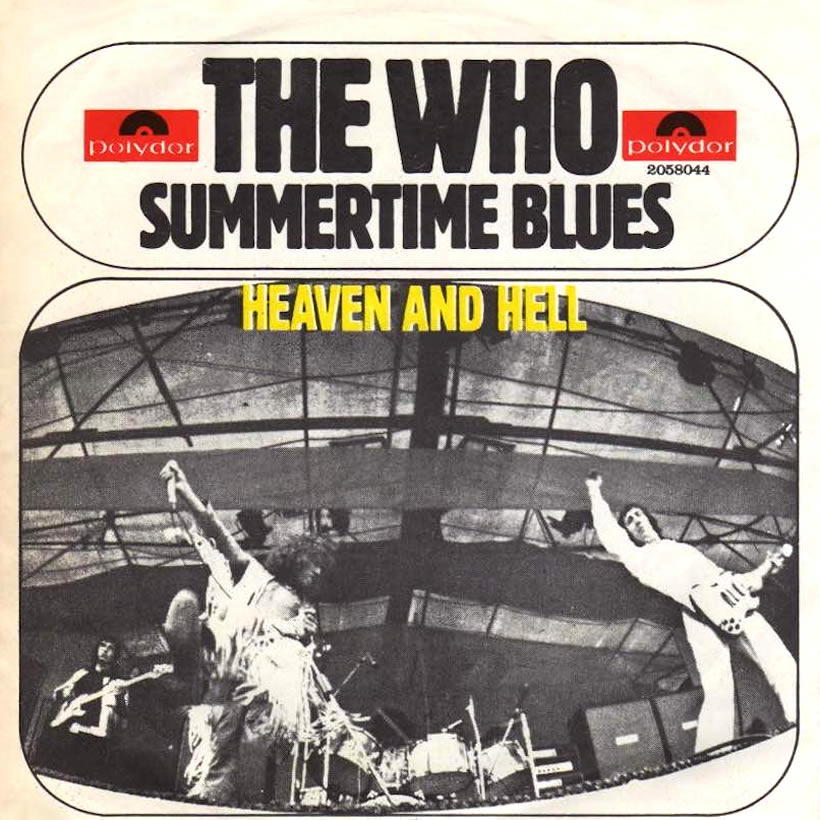
America missed out on The Who’s great early singles. Some didn’t hear their 60’s singles until after they hit with Tommy and released Meaty Beaty Big and Bouncy in 1971. It’s one of my favorite compilation albums. This one has a raw power to it and it’s pushed by John Entwistle and Keith Moon driving the song along.

Great song by The Who. The song peaked at #5 in the UK charts in 1966. The twelve-string guitar opening riff kicks into one of The Who’s best singles. This was a flop in the US, partly because it wasn’t promoted well. It was the only Who song released on Atco Records.

Townshend’s favorite song at the time was “Tracks of My Tears” by Smokey Robinson & The Miracles. Townshend loved the way Smokey sang the word “substitute” so perfectly “Although she may be cute she’s just a substitute ‘Cause you’re the permanent one” that he decided to celebrate the word with a song all its own. The song was also influenced by 19th Nervous Breakdown by the Rolling Stones. Townshend admitted to getting the riff from that song. Townshend also got his trademark windmill from watching Keith Richards warm up with his arms going above his head.

This was the first single The Who released after breaking their contract with their manager and producer, Shel Talmy. As part of the deal, Talmy got royalties from this and the other Who records over the next 5 years, which turned out to be albums that old-time producer Shel Talmy would never have produced. The albums were Tommy, Who’s Next, and  Quadrophenia.

After listening to a recording of the song, Keith Moon began to become paranoid, insisting that it wasn’t him drumming and that the band had gone behind his back and gotten another drummer. John Entwistle refuted this paranoia as ridiculous – he could hear Keith screaming on the recording as he did a difficult fill.

Substitute

You think we look pretty good together
You think my shoes are made of leather

But I’m a substitute for another guy
I look pretty tall but my heels are high
The simple things you see are all complicated
I look pretty young, but I’m just back-dated, yeah

(Substitute) your lies for fact
(Substitute) I can see right through your plastic mac
(Substitute) I look all white, but my dad was black
(Substitute) my fine linen suit is really made out of sack

I was born with a plastic spoon in my mouth
The north side of my town faced east, and the east was facing south
And now you dare to look me in the eye
Those crocodile tears are what you cry
It’s a genuine problem, you won’t try
To work it out at all you just pass it by, pass it by

(Substitute) me for him
(Substitute) my coke for gin
(Substitute) you for my mum
(Substitute) at least I’ll get my washing done

I’m a substitute for another guy
I look pretty tall but my heels are high
The simple things you see are all complicated
I look pretty young, but I’m just back-dated, yeah

I was born with a plastic spoon in my mouth
The north side of my town faced east, and the east was facing south
And now you dare to look me in the eye
Those crocodile tears are what you cry
It’s a genuine problem, you won’t try
To work it out at all you just pass it by, pass it by

(Substitute) me for him
(Substitute) my coke for gin
(Substitute) you for my mum
(Substitute) at least I’ll get my washing done

(Substitute) your lies for fact
(Substitute) I can see right through your plastic mac
(Substitute) I look all white, but my dad was black
(Substitute) My fine-looking suit is really made out of sack