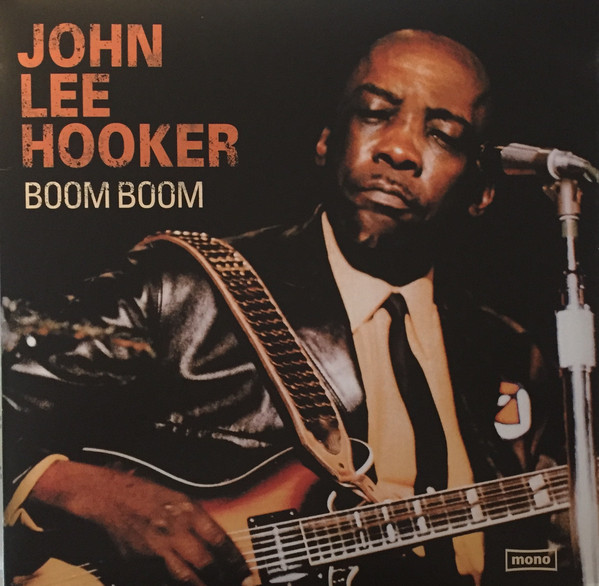
I wanted to throw some blues in this morning. I first heard Hooker’s version of the song while watching the Blues Brothers. I became an instant fan the second I heard it. It was written by John lee Hooker.
Boom Boom was the song that crossed over, marking his only entry on the US Hot 100 and becoming his signature song.
The song was released in 1962 and peaked at #16 in the Billboard R&B Charts and #60 in the Billboard 100.
Hooker recorded for Vee-Jay but members of Motown’s house band…The Funk Brothers… played on this. The Funk Brothers were great musicians and played on hundreds of hit records, but Motown didn’t pay them very well, so they would take gigs at other labels in the Detroit area to make extra money.
In 1992, this was used in a UK ad for Levi’s jeans. It was re-released that year and peaked at #16 in the UK charts and #24 in New Zealand.
In 1964 the Animals took the song to #43 in the Billboard 100 and #14 in Canada.
John Lee Hooker: “I used to play at this place called the Apex Bar in Detroit. There was a young lady there named Luilla. She was a bartender there. I would come in there at night and I’d never be on time. Every night the band would beat me there. Sometimes they’d be on the bandstand playing by the time I got there. I’d always be late and whenever I’d come in she’d point at me and say, ‘Boom Boom, you’re late again.’ And she kept saying that. It dawned on me that that was a good name for a song. Then one night she said, ‘Boom boom, I’m gonna shoot you down.’ She gave me a song but she didn’t know it.
I took that thing and I hummed it all the way home from the bar. At night I went to bed and I was still thinking of it. I got up the next day and put one and one together, two and two together, trying to piece it out – taking things out, putting things in. I finally got it down right, got it together, got it down in my head. Then I went and sang it, and everybody went, Wow! Then I didn’t do it no more, not in the bar. I figured somebody would grab it before I got it copyrighted. So I sent it to Washington, D.C., the Library of Congress, and I got it copyrighted. After I got it copyrighted I could do it in the bar. So then if anybody got the idea to do it I had them by the neck, because I had it copyrighted. About two months later I recorded it. I was on Vee-Jay then. And the record shot straight to the top. Then, after I did it, the Animals turned around and did it. That barmaid felt pretty good. She went around telling everybody I got John Lee to write that song. I gave her some bread for it, too, so she was pretty happy.”
From Songfacts
John Lee Hooker first recorded in 1948, and the next year released his classic “Boogie Chillen,” which eventually sold over a million copies. In the ’50s, he recorded under several different names (“Delta John” and “Birmingham Sam” among them) and refined his craft with constant live performances. By 1962, he was signed to Vee-Jay Records, who teamed him up with seasoned session players and tried to bring his music to a wider audience.
Hooker performed this when he appeared in the 1980 movie The Blues Brothers. It was the only movie Hooker ever appeared in.
Many blues bands have covered this over the years, including The Animals and The Yardbirds. It has become a blues standard.
Hooker didn’t play this live for a long time because he feared that he wouldn’t do it justice. He finally played it in his last two shows before his death.
This was used in a 2002 commercial for The Gap. In the ad, it was performed on roller skates by Baba Oje, a former member of Arrested Development. The advertising campaign, dubbed “For Every Generation,” used a variety of artists, including Willie Nelson, Ryan Adams, and Natalie Imbruglia.
Boom Boom
Boom, boom, boom, boom I’m gonna shoot you right down Knock you off of your feet And take you home with me Put you in my house Boom, boom, boom, boom
Ow ow ow ow ow Hmm hmm hmm Hmm hmm hmm hmm I love to see you strut Up and down the floor When you’re talking to me That baby talk I like it like that Oh yeah
Talk that talk Walk that walk
Won’t you walk that walk? And talk that talk And whisper in my ear Tell me that you love me I love that talk When you talk like that You knock me out Right off my feet Ho ho ho ho
Well, talk that talk And walk that walk Oh yeah Oh yeah Talk that talk, babe
Many Steve Miller songs I have heard too many times. This one hasn’t been worn out…at least not to me. Heart Like a Wheel came out in 1981 on the Circle of Love album. A great thin guitar sound on this song. The guitar makes the song to me.
Steve started his career more blues-oriented but with “The Joker” in 1973 started in a more pop/rock direction. If you listen to his music in the late sixties and early seventies it sounds completely different than this.
This song peaked at #24 on the Billboard 100 and #17 in Canada in 1981. Steve’s lyrics won’t ever be confused with Bob Dylan’s but the man can write a catchy pop/rock hook.
“Heart Like A Wheel”
I’ve got a heart like a wheel Feel like I got to roll Ooohh
Heart like a wheel I told you so And I’ve been loving you for so long You are the one Heart so real I love you so
Well, I can give what I take And you know I want to give you my love Babe I ain’t faking You know I want to give you my love
I’ve been loving you for so long You are the one Heart so real I love you so Come on and roll
I’ve been loving you for so long You are the one Heart so real I love you so
It takes two to make love It takes love to make a family real I got to know what you need I got to know what you really feel
And I’ve been loving you for so long You are the one Heart so real I love you so Come on and roll
You know it’s such a pity If you’re going to get the summertime blues Lovers everywhere are pairing off two by twos
And I’ve been loving you for so long You are the one Heart so real I love you so
I’ve been loving you for so long You are the one Heart so real I love you so
I really like this song…you have a crunchy brit sound guitar open it up with another great rhythm guitar intertwining with it.
Mutt Lange produced 4 songs on this album (Shades in Bed) including this one when he had to leave the album for prior commitments. the rest of the album was produced by Tim Friese-Greene. The last song recorded, “The Phone,” was a late addition to the album and was produced by Huw Gower.
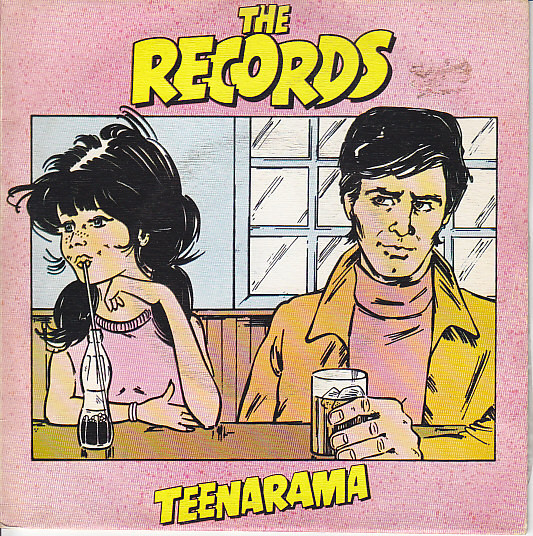
The Records were an English powerpop band formed in 1978. Teenarama was off their debut album Shades in Bed. The band included John Wicks – rhythm guitar, vocals, Huw Gower – lead guitar, vocals, Phil Brown – bass guitar, vocals, and Will Birch – drums, vocals.
AllMusic called the album “a pure pop masterpiece”
Teenarama
I wanted a holiday You sure had a lot To say every night I thought that a younger girl Could show me the world That was right Co-co-co-cola Is all you ever drink The way you smile The way you wink
Teenarama Is what you’re givin’ me (What you’re givin’ me) Teenarama Injections in the knee (Injections in the knee) Teenarama All that mellow drama Gimme gimme gimme gimme Gimme gimme Teenarama
I wanted a change of style To be with a juvenile For a week So I rented an apartment Then you went and lost the key
Sugar candy Is all you ever eat You’re so skinny You’re so sweet
Repeat Chorus
Monday School day You wait Weeks late Dirty star Coffee bar First bra Too far Ahhhh Co-co-co-cola Is all you ever drink The way you smile The way you wink
Great song by Elton that I heard early on in my life.
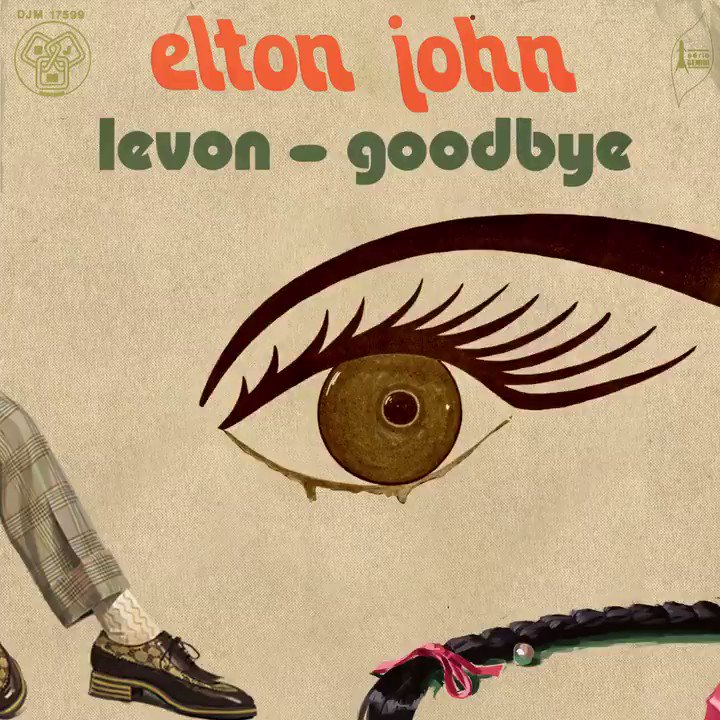
This was the first US single from Madman Across The Water, Levon runs 5:22 minutes and Elton would not let his record company cut it down for radio play. As a result many radio stations ignored it. The song didn’t chart high but proved to be an enduring song, earning airplay on classic rock and adult contemporary radio for decades to come.
The song peaked at #24 in the Billboard 100 and #6 in Canada in 1971.
The next single from the album was Tiny Dancer, which is even longer, at 6:12. Like Levon, that one fared poorly on the chart (#41) but… also became a classic. Neither song was issued as a single in the UK.
I always wondered if the song had anything to do with Levon Helm, but Bernie Taupin says that he simply made the name up because he likes it, and the song has nothing to do with Helm.
From Songfacts
In Susan Black’s book Elton John in His Own Words, Elton says of “Levon”: “It”s about a guy who just gets bored doing the same thing. It’s just somebody who gets bored with blowing up balloons and he just wants to get away from it but he can’t because it’s the family ritual.”
When Rolling Stone asked Taupin about the song in 2013, he insisted that he has no idea what he intended as the meaning. “It was a free-form writing,” he said. “It was just lines that came out that were interesting.
This is a great example of Taupin’s intricate, nuanced writing style that leads to many different interpretations. For instance, the “cartoon balloons” that Levon blows up all day could be balloons with cartoon characters printed on them, or perhaps something more figurative, like thought bubbles that appear in comic strips, indicating the thoughts that are constantly rising out of his consciousness.
Taupin and John made a great team because Elton could interpret his lyrics very well, giving life to the characters in the songs with a curious ambiguity that encouraged further listens. In many cases, Elton didn’t know what Taupin had in mind when he wrote the lyrics – when asked he would often reply, “you’ll have to ask Bernie.”
The actual New York Times page 1 headline that included the phrase “God Is Dead” is dated March 24, 1968; the full headline read, “‘God Is Dead’ Doctrine Losing Ground to ‘Theology of Hope’.”
The phrase also appeared in a major (page 3) article on January 7, 1970. Smaller pieces dated January and April 1966 that feature the phrase in their headings can also be found. None were on Christmas Day, but the January ones are close!
The cover art for the album was hand-embroidered on a Levi’s jacket. On the back, the track listing was hand-stitched. This kind of artwork has become scarce in the age of digital design.
Jon Bon Jovi covered this for the tribute album Two Rooms. Elton played piano on some of Bon Jovi’s recordings.
Sir Elton and his partner David Furnish became parents to a son born on Christmas Day 2010 to a surrogate mother in California. They named him Zachary Jackson Levon Furnish-John, which is how the baby boy ended up in this Songfact. It is assumed the name “Levon” was chosen because of the song’s line, “He was born a pauper to a pawn on a Christmas day.”
Levon
Levon wears his war wound like a crown He calls his child Jesus ’cause he likes the name And he sends him to the finest school in town
Levon, Levon likes his money He makes a lot they say Spends his days counting In a garage by the motorway
He was born a pauper To a pawn on a Christmas day When the New York Times Said God is dead and the war’s begun Alvin Tostig has a son today
And he shall be Levon And he shall be a good man And he shall be Levon In tradition with the family plan And he shall be Levon And he shall be a good man He shall be Levon
Levon’s sells cartoon balloons in town His family business thrives Jesus blows up balloons all day Sits on the porch swing watching them fly And Jesus, he wants to go to Venus Leave Levon far behind Take a balloon and go sailing, While Levon, Levon slowly dies
He was born a pauper To a pawn on a Christmas day When the New York Times Said God is dead and the war’s begun Alvin Tostig has a son today
And he shall be Levon And he shall be a good man And he shall be Levon In tradition with the family plan, woo And he shall be Levon And he shall be a good man He shall be Levon
And he shall be Levon And he shall be a good man And he shall be Levon In tradition with the family plan, woo And he shall be Levon And he shall be a good man He shall be Levon
This song was climbing in the charts in the top twenty when it was pulled. It was pulled because of the Kent State shootings and Neil Young wrote Ohio and CSN&Y wanted it released as soon as possible. Teach Your Children probably would have peaked in the top ten if not pulled.
The song peaked at #16 in the Billboard 100, #8 in Canada, and #19 in New Zealand in 1970.
Graham wrote this song while he was still playing with the Hollies but he never recorded it with them. He played it to Stephen Stills and Stills suggested a country arrangement which turned it into a hit.
Jerry Garcia performs the pedal steel guitar part of this track. He had been playing steel guitar for only a short period of time. Crosby told Nash he should ask Jerry to play steel guitar on the song. Garcia played on this song and Crosby, Stills, Nash, and Young worked with the Grateful Dead on harmonies for their acoustic albums Workingman’s Dead and American Beauty.
I would say it worked out well for both bands. Jerry told Graham Nash who wrote the song that he made a mistake but Graham wanted that take.
It was on the album Déjà Vu which peaked at #1 in the Billboard 100, Canada and #5 in the UK.
Graham Nash:I’d heard Jerry had just started playing pedal-steel guitar and asked if he would add a pedal track to my song. After the first take, I said, “Thanks, Jerry, you’re done.” “No, no,” he protested, “I fucked up that part when we go right into the chorus. Can I do another?”“Absolutely, do it,” I told him, “but I’m never going to use it. The first one was exactly what I wanted.”
And, of course, his pedal steel was one of the defining elements in that recording.
From Songfacts
Graham Nash wrote this song. The lyrics deal with the often difficult relationship he had with his father, who spent time in prison.
Graham Nash (from the liner notes of their 1991 boxed set): “The idea is that you write something so personal that every single person on the planet can relate to it. Once it’s there on vinyl it unfolds, outwards, so that it applies to almost any situation. ‘Teach’ started out as a slightly funky English folk song but Stephen (Stills) put a country beat to it and turned it into a hit record.”
Deja Vu was the first album the band recorded with Neil Young, but Young did not play on this.
According to the 2019 book Crosby, Stills, Nash & Young, Nash wrote the song while under the influence of hash. He taught it to the rest of the band in one day in the studio.
In Laurel Canyon: The Inside Story of Rock and Roll’s Legendary Neighborhood, Graham Nash is quoted as saying, “When I wrote ‘Teach Your Children’ and ‘Our House,’ we didn’t know what we were doing. ‘This sounds pretty fun, we can sing this, let’s do it!’ And then all of a sudden people are singing it back to me forty years later.”
An updated version with a new arrangement was used in a 1985 TV commercial for the Apple II computer. Bill Siddons, then manager for CSNY, told BAM magazine: “The whole idea of the spot was to show how to prepare your kids for the modern world, which is part of what ‘Teach Your Children’ is about.”
Shortly after writing this, Nash visited an art gallery and saw two photographs that crystallized the meaning of the song: Diane Arbus’ “Child with Toy Hand Grenade in Central Park” and Arnold Newman’s portrait of German industrialist Alfried Krupp. The singer told the news website Truthdig: “I put the ‘Hand Grenade’ photograph next to a picture of Krupp, who was the German arms magnate whose company was probably responsible for millions of deaths. It was an eerie photograph, a portrait, and the lighting is weird and his eyes are dark – a great image. And looking at them together I began to realize that what I’d just written [‘Teach Your Children’] was actually true, that if we don’t start teaching our children a better way of dealing with each other we’re f–ked and humanity itself is in great danger.”
At the end of The Office episode “Take Your Daughter To Work Day” (2006), Michael and Dwight perform this for the staff and their kids.
Teach Your Children
You who are on the road Must have a code that you can live by And so become yourself Because the past is just a good-bye. Teach your children well, Their father’s hell did slowly go by, And feed them on your dreams The one they picks, the one you’ll know by. Don’t you ever ask them why, if they told you, you will cry, So just look at them and sigh And know they love you.
And you, of tender years, Can’t know the fears that your elders grew by, And so please help them with your youth, They seek the truth before they can die.
Teach your parents well, Their children’s hell will slowly go by, And feed them on your dreams The one they picks, the one you’ll know by.
Don’t you ever ask them why, if they told you, you will cry, So just look at them and sigh and know they love you.
Love the guitar riff, the vibe, and the artist. To my surprise this was not released as a single in the US, but in 1995 a live version was used as the B-side of Kravitz’ “Rock And Roll Is Dead” single.
I first learned of Lenny Kravitz in 1989 with Let Love Rule which is probably my favorite song by him. I do like this one because it’s aggressive and right in your face. The song was released in 1993.
The song is about Jesus Christ, whom Lenny referred to as “the ultimate rock star.” It’s about how God gives choice to man about where to turn.
Lenny Kravitz:“I thought the subject matter was really interesting, because it’s coming from the mouth of Jesus Christ, as I thought. So basically, ‘Are you gonna go my way?’ meaning ‘my way of love.’ I had no idea that that song would become what it became. No idea. There was nothing on the radio like that. And the recording is so raw, it’s ridiculous.”
The music video, directed by Mark Romanek, finds Kravitz and his band performing beneath a brilliant chandelier. The clip earned him the MTV Video Music Award for Best Male Artist.
From Songfacts
. The opening lines spell it out:
I was born long ago I am the chosen I’m the one I have come to save the day And I won’t leave until I’m done
Kravitz played this on Saturday Night Live in 1993.
In an interview posted on his website, Kravitz explained the origin of this song: “We were just jamming in the studio. You know, I was jamming with Craig Ross, who I wrote the song with. It was one of those songs that happened in 5 minutes. We were jamming. I thought there was something happening. I told Henry to turn the tape machines on, and we played it. And that was it. And then I went and wrote the lyrics on a brown paper bag, I remember at my loft on Broome Street at the time. Went in and sang it the next day. And that was it.”
This was a #2 hit on the Modern Rock chart. Because it was released as an airplay-only single in the US, it wasn’t eligible for the Hot 100. At the time, many record labels chose to only release promo singles to radio stations so listeners would have to buy the whole album to hear the song. While the strategy worked for album sales, it also kept artists off the chart until the rules changed in 1998.
Are You Gonna Go My Way was Kravitz’ first Top 20 album in the US, where it peaked at #12. It hit #1 in the UK, Switzerland, Canada, and Australia.
This earned Kravitz Grammy nominations for Best Rock Vocal Performance, Solo and Best Rock Song. He lost to Meat Loaf for “I’d Do Anything For Love (But I Won’t Do That)” and Dave Pirner for Soul Asylum’s “Runaway Train,” respectively.
Tom Jones recorded this for the 1995 comedy The Jerky Boys. It’s also been covered by Robbie Williams, Mel B, and Adam Lambert.
This was used in the 1994 movie I Love Trouble, starring Julia Roberts. It also showed up on The Simpsons (“How I Spent My Strummer Vacation” – 2002) and Sex and the City (“Ghost Town” – 2001).
A remixed version was used at the opening theme to the 2001 video game Gran Turismo 3.
Are You Gonna Go My Way
I was born long ago I am the chosen I’m the one I have come to save the day And I won’t leave until I’m done
So that’s why you’ve got to try You got to breath and have some fun Though I’m not paid I play this game And I won’t stop until I’m done
But what I really want to know is Are you gonna go my way? And I got to got to know
I don’t know why we always cry This we must leave and get undone We must engage and rearrange And turn this planet back to one
So tell me why we got to die And kill each other one by one We’ve got to love and rub-a-dub We’ve got to dance and be in love
But what I really want to know is Are you gonna go my way? And I got to got to know
Are you gonna go my way? ‘Cause baby I got to know Yeah
I hope everyone is having a happy Monday…at least as happy as it can be.
I heard early REM albums from friends. They really made an impact with college kids and built a following. Then they released The One I Love and the dam burst. This song took it a step higher.
Peter Buck has commented that after this song’s success that the bands popularity soared. He mentioned that R.E.M. went from a respected band with a cult following to one of the biggest bands in the world.
This song was released in 1991 and on their Out of Time album. The song did very well. It peaked at #4 in the Billboard 100, #6 in Canada, #19, and #16 in New Zealand in 1991.
The title is based on the Southern expression “lost my religion,” meaning something has challenged your faith to such a degree you might lose your religion or cool.
REM was surprised when their record label chose this song as the first single from Out Of Time. Running 4:28 with no chorus and a mandolin for a lead instrument, it didn’t seem like hit material, but it ended up being the biggest hit of their career.
Michael Stipe revealed the lyrics about obsessional love were heavily influenced by The Police’s “Every Breath You Take,” which he called “the most beautiful, kind of creepy song.”
This won the Grammy in 1991 for Best Pop Performance by a Duo or Group with Vocal.
Peter Buck:“The music was written in five minutes. The first time the band played it, it fell into place perfectly. Michael had the lyrics within the hour, and while playing the song for the third or fourth time, I found my self incredibly moved to hear the vocals in conjunction with the music. To me, ‘Losing My Religion’ feels like some kind archetype that was floating around in space that we managed to lasso. If only all songwriting was this easy.”
From Songfacts
R.E.M. lead singer Michael Stipe wrote the lyrics, which he has said are about “obsession” and “unrequited love,” which is powerful and dangerous combination. Throughout the song, he is baring his soul, searching for hidden meaning and hopeful signs, but driving himself mad in the process.
“I love the idea of writing a song about unrequited love,” he told Top 2000 a gogo. “About holding back, reaching forward, and then pulling back again. The thing for me that is most thrilling is you don’t know if the person I’m reaching out for is aware of me. If they even know I exist. It’s this really tearful, heartfelt thing that found its way into one of the best pieces of music the band ever gave me.”
This song has its origins in guitarist Peter Buck’s efforts to try learn to play the mandolin. When he played back recordings of his first attempts, he heard the riff and thought it might make a good basis for a song. Explaining how the song came together musically, Buck told Guitar School in 1991: “I started it on mandolin and came up with the riff and chorus. The verses are the kinds of things R.E.M. uses a lot, going from one minor to another, kind of like those ‘Driver 8’ chords. You can’t really say anything bad about E minor, A minor, D, and G – I mean, they’re just good chords.
We then worked it up in the studio – it was written with electric bass, drums, and mandolin. So it had a hollow feel to it. There’s absolutely no midrange on it, just low end and high end, because Mike usually stayed pretty low on the bass. This was when we decided we’d get Peter (Holsapple) to record with us, and he played live acoustic guitar on this one. It was really cool: Peter and I would be in our little booth, sweating away, and Bill and Mike would be out there in the other room going at it. It just had a really magical feel.
And I’m proud to say every bit of mandolin on the record was recorded live – I did no overdubbing. If you listen closely, on one of the verses there’s a place where I muffled it, and I thought, well, I can’t go back and punch it up, because it’s supposed to be a live track. That was the whole idea.”
The video was directed by Tarsem Singh, who also did En Vogue’s “Hold On” and the Jennifer Lopez movie The Cell. It’s a very ambitious video filled with striking, vivid, biblical imagery.
The concept is based in part on Gabriel Garcia Marquez’ A Very Old Man with Enormous Wings. The novel tells the story of an angel who falls down from heaven and is displayed for profit as a “freak show.” Michael Stipe is a big Marquez fan and the whole idea of obsession and unrequited love is the central theme of the author’s masterpiece, Love in the Time of Cholera. The first line of that novel is: “It was inevitable: the scent of bitter almonds always reminded him of the fate of unrequited love.”
Michael Stipe’s dancing ties the video together as he moves like he is in the throes of revelation, a contrast to all the other characters who are barely moving. He wasn’t supposed to dance: The treatment had him singing lines from various poses, but when they shot it that way, it didn’t work at all. This put director Tarsem Singh’s grand production in jeopardy; he was so upset, he went to the bathroom and threw up. When he emerged, Stipe said, “Let me try to dance.”
There was no choreography – Stipe just let the spirit move him, and the results were sublime. He says his dancing is a mashup of Sinead O’Connor’s moves in her “The Emperor’s New Clothes” video and David Byrne’s gyrations in his “Once In A Lifetime” performances.
Stipe remembers being hot and bothered when recording his vocal. His heartfelt lyric needed a certain feel that was hard to achieve in the studio, so he recorded a lot of takes. He wasn’t happy with the engineer, who seemed out of it. “I was very upset,” he told Top 2000 a gogo. “I also got really hot because I was all worked up, so I took my clothes off and recorded the song almost naked.”
This was given the working title of “Sugar Cane” when the band demoed it in July 1990 at a studio in Athens.
A common misinterpretation of this song is that it was about John Lennon’s death, with the lyrics, “What if all these fantasies come flailing around” being a reference to Lennon’s last album Double Fantasy.
Michael Stipe took a laid-back approach with this song: “I remember that I sang this in one go with my shirt off. I don’t think any of us had any idea it would ever be … anything,” he noted in Part Lies, Part Heart, Part Truth, Part Garbage 1982-2011. Peter Buck added that Warner Bros. didn’t even want the song as a single, and everyone was surprised when it took off. “It changed our world. We went from selling a few million worldwide with Green to over 10 million. It was in that area where we had never been before which isn’t bad,” he said.
Peter Buck recalled to Uncut: “I bought a mandolin on tour in ’87, I think. It became a good songwriting tool. It never occurred to me to play mandolin in a bluegrass style. For me it was a rock instrument.”
Producer Scott Litt recalled his contribution to Mojo: “I remember mixing ‘Losing My Religion’ at Paisley Park. I had Bill (Berry, drums) nudging up to me and saying, ‘You know, I think the drums could be louder’, and he was spot on. The strings and the vocals are maybe more memorable, but the drums are really important. He’s even doubling the mandolin figure at the beginning. The last mix on that song was ‘drums boosted’ and that became the track.”
When introducing the song during an appearance on MTV Unplugged, Stipe pointed to the audience and said, “This is about you.” Mojo asked him what he meant. He replied shrugging, “No idea. It’s something I said on a night in 1991. I have no idea why I said it. Of course we attach the narrative in a song to the person with the voice, which is me. And so I get that. But it was not autobiographic.”
Artists to cover this song include Tori Amos, Lacuna Coil, Trivium and Swandive. Two versions have charted in America: the Glee Cast took it to #60 in 2010, and Dia Frampton’s version went to #54 in 2011.
The video was the big winner at the MTV Video Music Awards, winning six moonmen, including Video of the Year and Breakthrough Video.
Losing My Religion
(One, two, three, four, one, two)
Oh, life is bigger It’s bigger Than you and you are not me The lengths that I will go to The distance in your eyes Oh no, I’ve said too much I set it up
That’s me in the corner That’s me in the spotlight Losing my religion Trying to keep up with you And I don’t know if I can do it Oh no, I’ve said too much I haven’t said enough
I thought that I heard you laughing I thought that I heard you sing I think I thought I saw you try
Every whisper Of every waking hour I’m choosing my confessions Trying to keep an eye on you Like a hurt lost and blinded fool, fool Oh no, I’ve said too much I set it up
Consider this Consider this The hint of the century Consider this The slip That brought me to my knees Failed What if all these fantasies Come flailing around Now I’ve said too much
I thought that I heard you laughing I thought that I heard you sing I think I thought I saw you try
But that was just a dream That was just a dream
That’s me in the corner That’s me in the spotlight Losing my religion Trying to keep up with you And I don’t know if I can do it Oh no, I’ve said too much I haven’t said enough
I thought that I heard you laughing I thought that I heard you sing I think I thought I saw you try
But that was just a dream Try, cry Fly, try That was just a dream, just a dream, just a dream
I bought this single in 1981 and I still have it somewhere. After the opening chord (Abm) is strummed Gary US Bonds kicks into a very good Springsteen penned song. It peaked at #11 on the Billboard 100, #15 in Canada, #43 in the UK, and #11 in New Zealand. It came off the album Dedication.
This song was one of my favorite early 80’s hits. You could easily hear Springsteen singing this as well.
Bruce Springsteen, a big fan of Bonds, played his songs at many of his concerts in the ’70s before and after his rise to stardom. Gary had a #1 hit in 1961 with the song Quarter To Three.
. This was a comeback for Bonds and he was backed by members of the E Street Band and The Asbury Jukes. Bonds influenced Springsteen and Steve Van Zandt musically growing up.
I liked this song the first time I heard it…This bouncy song fit’s Gary’s voice and style perfectly.
“This Little Girl (Is Mine)”
Here she comes Walkin’ down the street You know she’s walkin’ just like She’s walkin’ to come and see me Oh, she’s so young and she’s so fine
I know what’s on your mind Know what you want to do But if you mess with her I’m gonna mess with you You better watch your step You better stay in line
This little girl is mine Oh-oh, this little girl is mine Oh-oh, this little girl This little girl This little girl is mine
Oh-oh, this little girl is mine Oh-oh, this little girl is mine Oh-oh, this little girl This little girl This little girl is mine
Well, if the world was mine to do with What I want to do, sir Well I’d wrap it up in a bow And give it all to her, yeah And all my love All of the time You know I’d hold her tight I’d never let her go And late at night You know I’d love her so Yeah, I’d treat her right So she’d never mind
This little girl is mine Oh-oh, this little girl is mine Oh-oh, this little girl This little girl This little girl is mine
Oh-oh, this little girl is mine Oh-oh, this little girl is mine Oh-oh, this little girl This little girl This little girl is mine Mine, mine, mine
[Instrumental Interlude]
Hey, you better watch out I’m telling you the score Are you going to be sweepin’ your Broken heart up off the floor Oh, and that ain’t all I’m telling you my friend I know what’s on your mind Know what you wanna do But if you mess with her I’m gonna mess with you You like the way she moves You like to watch her walk You better listen up ‘Cause man this ain’t just talk You better watch yourself You better stay in line
Now, mister I said This little girl is mine Oh-oh, this little girl is mine This little girl This little girl This little girl is mine
Oh-oh, this little girl This little girl This little girl is mine Oh-oh, this little girl This little girl
This little girl is mine Oh-oh, this little girl is mine Oh-oh, this little girl This little girl This little girl is mine
Yeah, yeah, yeah This little girl is mine Oh-oh, this little girl is mine Oh-oh this little girl This little girl This little girl She’s mine all mine
Now, this little girl is mine Oh-oh this little girl is mine Oh-oh this little girl This little girl This little girl is mine, mine, mine, mine
I got into Bob Marley and the Wailers a little later but better late than never. Jammin’ is on their ninth studio album Exodus. The album peaked at #20 in the Billboard Album Charts, #8 in the UK, and #46 in Canada.
In Jamaica, the word “jamming” refers to getting together for a celebration. Although it can also mean an impromptu musical session.
Marley wrote the song in exile in Nassau after the 1976 attempt on his life.
On December 3, 1976 several men raided Marley’s house and shot three included Marley but all survived. It was politically motivated…Marley and his band was rehearsing for a show that some viewed as Marley supporting the Prime Minister and his democratic socialist People’s National Party. Marley claimed he was neutral not supporting anyone. In the song Marley wrote the lyric No bullet can stop us now, we neither beg nor we won’t bow.
The gunmen were all captured and executed. The song peaked at #9 in the UK in 1977.
A detailed account of the assassination attempt is here.
Ooh, yeah! all right! We’re jammin’: I want to jam it wid you. We’re jammin’, jammin’, And I hope you like jammin’, too.
Ain’t no rules, ain’t no vow, we can do it anyhow: I’n’I will see you through, ‘Cause everyday we pay the price with a little sacrifice, Jammin’ till the jam is through.
We’re jammin’ – To think that jammin’ was a thing of the past; We’re jammin’, And I hope this jam is gonna last.
No bullet can stop us now, we neither beg nor we won’t bow; Neither can be bought nor sold. We all defend the right; jah – jah children must unite: Your life is worth much more than gold.
We’re jammin’ (jammin’, jammin’, jammin’) And we’re jammin’ in the name of the lord; We’re jammin’ (jammin’, jammin’, jammin’), We’re jammin’ right straight from yah.
Yeh! holy mount zion; Holy mount zion: Jah sitteth in mount zion And rules all creation.
Yeah, we’re – we’re jammin’ (wotcha-wa), Wotcha-wa-wa-wa, we’re jammin’ (wotcha-wa), See, I want to jam it wid you We’re jammin’ (jammin’, jammin’, jammin’) I’m jammed: I hope you’re jammin’, too.
Jam’s about my pride and truth I cannot hide To keep you satisfied. True love that now exist is the love I can’t resist, So jam by my side.
We’re jammin’ (jammin’, jammin’, jammin’), yeah-eah-eah! I want to jam it wid you. We’re jammin’, we’re jammin’, we’re jammin’, we’re jammin’, We’re jammin’, we’re jammin’, we’re jammin’, we’re jammin’;
Hope you like jammin’, too. We’re jammin’, we’re jammin’ (jammin’), We’re jammin’, we’re jammin’ (jammin’). I want to (i want to jam it wid you) – I want to –
I want to jam wid you now. Jammin’, jammin’ (hope you like jammin’ too). Eh-eh! I hope you like jammin’, I hope you like jammin’, ‘Cause (i want to jam it wid you). I want to … wid you.
I like – I hope you – I hope you like jammin’, too. I want to jam it; I want to jam it.
I’ve been listening to the Replacement recently after I read a post on them by Aphoristical. I listened to them quite a bit in the eighties but lost touch at the end of the decade…
This song is on the band’s 1987 album Pleased To Meet Me. The band was formed in band formed in Minneapolis, Minnesota in 1979. Skyways are one of Minneapolis’s signature features. They are second-story pedestrian bridges between buildings that are called skywalks or skybridges.
The album peaked at #131 in the Billboard Album Charts in 1987. It’s a gorgeous song…
Paul Westerberg: It’s our own little private song for Minneapolis. They’re basically the sidewalks above the streets, because it’s too cold in the winter to walk, and the businesses, y’know, feel they won’t get people to come downtown. It’s like you can walk for miles and not ever go outside. You can walk around the whole city through the skyway system. And it’s generally the people who are shoppers and [who] work. And so this song was sort of written from the point of a guy who’s like myself who — I don’t go up in the skyways, y’know. [laughs] What do I have to do up there? I never go shopping or anything. So I sit down there and watch the people walk by.
Skyway
You take the skyway, high above the busy little one-way In my stupid hat and gloves, at night I lie awake Wonderin’ if I’ll sleep Wonderin’ if we’ll meet out in the street
But you take the skyway It don’t move at all like a subway It’s got bums when it’s cold like any other place It’s warm up inside Sittin’ down and waitin’ for a ride Beneath the skyway
Oh, then one day, I saw you walkin’ down that little one-way Where, the place I’d catch my ride most everyday There wasn’t a damn thing I could do or say Up in the skyway
Yesterday was John’s birthday 80th birthday…that just doesn’t seem right. He has been gone for 40 years…the same amount that he lived.
I’m Losing You is on the Double Fantasy album released in 1980.
There are two versions of this song that are well known. Co-producer Tom Douglas brought Rick Nielsen and Bun E. Carlos of the band Cheap Trick to play on this song, but it was eventually re-recorded with the studio musicians. That is the version that ended up on the album.
The Rick Nielsen and Ben E. Carlos version was included years later on the John Lennon Anthology Collection released in 1998.
Some say the edgier track with Nielsen and Carlos wasn’t used because Yoko didn’t like the version, the recording didn’t fit in with the rest of the album, or it sounded a little too much like Cold Turkey…a previous song by Lennon. If I had to guess I would say it was because the track would have stood out against the others. Personally I would have went with the Nielsen and Carlos version anyway.
While on vacation in Bermuda during the summer of 1980, Lennon tried to call Yoko Ono but couldn’t get through to her and wrote this song based on his frustration.
Double Fantasy peaked at #1 in the Billboard Album Charts, Canada, and The UK in 1981.
From Songfacts
This is a track from Double Fantasy, Lennon’s final album during his lifetime, released only three weeks before his murder. The song resulted from John’s inability to get Yoko on the phone at a time when he feared for their relationship.
Yoko Ono told Q November 2010 that this is one of her favorite Lennon songs. She said: “I’m Losing You is an incredible song. I think as a songwriter, that tops it all. Some of the songs I’m in. But it’s almost like Picasso drawing a lot of his wife because his wife was around. And I was very lucky I was his wife.”
Director Jay Dubin, whose work at the time included commercials for Crazy Eddie’s, was called in to shoot a music video to promote the Double Fantasy album. On August 10, 1980, he brought his team to the Hit Factory studio and captured Lennon performing this song, along with “I’m Moving On” and some cover tunes. The video was abandoned after Lennon’s death a few months later and the footage has never materialized.
Here are the two versions
I’m Losing You
Here in some stranger’s room Late in the afternoon What am I doing here at all? Ain’t no doubt about it I’m losing you I’m losing you
Somehow the wires have crossed Communication’s lost Can’t even get you on the telephone Just got to shout about it I’m losing you I’m losing you
Well, here in the valley of indecision I don’t know what to do I feel you slipping away I feel you slipping away I’m losing you I’m losing you
Well now you say you’re not getting enough But I remind you of all that bad, bad, bad stuff So what the hell am I supposed to do? Just put a band-aid on it? And stop the bleeding now Stop the bleeding now Well…
I’m losing you I’m losing you
Well, well, well I know I hurt you then But hell, that was way back when Well, do you still have to carry that cross? (Drop it!) Don’t wanna hear about it I’m losing you I’m losing you
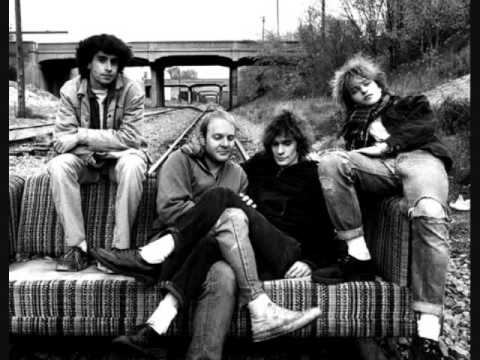
This song is from their second album Radio City. Their other guitarist Chris Bell had left the band leaving Alex Chilton as the only guitarist. In this song Chilton’s guitar is pushed to the front and after about a 46 second intro the song is on it’s way.
It’s a bluesy, funky, rocky, and soulful riff all built into one. Alex just takes off on the guitar with this one all through the song. The guitar has a tone that you don’t hear everyday. Whenever I’m playing guitar I go back to their albums to try to emulate a tone that Chilton found.
Alex Chilton was not the only one writing songs on the album. Bassist Andy Hummel wrote or co-wrote five of the albums’s 12 tracks. Jody Stephens pitched in and co-wrote one song with Chilton and Hummel.
Chilton remained the constant variable that made the band’s music soar. His September Gurls is among the band’s finest songs and one of the prototypical power pop songs.
Radio City is not as polished as their debut album but it’s just as good and many say better.
O My Soul
O my soul mama I lose control Go ahead and shake if you wanna And I’ll never know Wull come on You know it’s alright We’ve got all night You’re driving me mad And you shouldn’t do that We’re going to get on up And drink till we drop. You’re really a nice girl And I think you’re the most And when we’re together I feel like a boss
Trying to see you I’d know off your doors dying to see you I’m down on the floor.
I can’t get a license To drive my car But I don’t really need it If I’m a big star. Never you mind Go on and have a good time.
This is a duet with blues legend B.B. King. American blues musicians were a big influence on U2, and the group had a great admiration for King. I bought Rattle and Hum when it came out and thoroughly enjoyed it. This song and Angel of Harlem sold it enough for me to get it.
In 1987, King played a show in Dublin and found out U2 would be in the audience. U2 had just released The Joshua Tree and were very popular, especially in their native Ireland. After the show, King was honored to meet the band and humbled to find out they were big fans. He asked Bono to think of him sometime when he was writing a song, and later on this was the result.
King performed “When Love Comes to Town” with the band for the first time during their Joshua Tree tour at a concert in Fort Worth, Texas on November 24, 1987. Parts of this show as well as the soundcheck were included in the U2 concert documentary Rattle And Hum, which contains a scene where Bono is rehearsing this with King.
The song peaked at #68 in the Billboard 100, #41 in Canada, and #6 in the UK, and #4 in New Zealand in 1989.
After King died on May 14, 2015, U2 paid tribute to him during a show in Vancouver the following night during the Innocence + Experience Tour by playing “When Love Comes to Town” for the first time in 23 years.
From Songfacts
B.B. King opened for U2 on their 1989 “Lovetown” tour, which went through New Zealand, Japan, Ireland, Germany, and Holland. King joined U2 when they played this, which usually occurred near the end of their set.
The version used on Rattle And Hum was recorded with B.B. King at Sun Studios in Memphis, where King is royalty. This was one of several new songs on the album, which was a combination of live cuts from their 1987 tour and studio recordings.
This was a huge career boost for B.B. King. Although he was revered in the blues community, he wasn’t well known in the world of rock or pop. His association with U2 brought him a huge number of new fans and changed the dynamic of his audience, which became split between blues purists and rock fans who learned about him through U2. Many of King’s older fans did not appreciate the newcomers.
Admiration between King and Bono on this song was mutual; King was amazed that Bono could write such mature lyrics at such a young age, and Bono was blown away by King’s vocal. “I gave it my absolute everything I had in that howl at the start of the song,” Bono said. “Then B.B. opened his mouth, and I felt like a girl.”
This won the MTV Video Music Award for best video from a film in 1989. The video provided B.B. King with his first exposure to the MTV audience.
Near the beginning of their 1989 tour with B.B. King, U2 threw him a surprise birthday party. They invited King on a boat for what he thought was a fishing trip, but as soon as they left shore, they released balloons and sang Happy Birthday. That night, they had a fireworks display in his honor.
This was B.B. King’s biggest hit in the UK.
B.B. King got another career boost when he teamed up with Eric Clapton in 2000 to record an album called Riding With The King. Many blues legends remain in rock obscurity, but his collaborations with U2 and Clapton gave King a higher profile than any blues musician has achieved. After his recording with Clapton, King opened a series of nightclubs under his name. It helped that King remained a skilled guitarist and powerful vocalist into his 60s.
This was included on U2’s compilation, The Best Of 1980-1990.
BB King played his Gibson “Lucille” guitar probably through a Lab Series amp on this song.
Adam Clayton: “We discovered a common bond between us and some of these older artists like B.B. King. When we met him there was a whole world of understanding and nothing needed to be said. That has been the payoff of working ten years to get into this position. We no longer have to prove ourselves. It’s in the music and people can hear it.”
When Love Comes To Town
I was a sailor, I was lost at sea I was under the waves Before love rescued me I was a fighter, I could turn on a thread Now I stand accused of the things I’ve said
Love comes to town I’m gonna jump that train When love comes to town I’m gonna catch that flame Maybe I was wrong to ever let you down But I did what I did before love came to town
I used to make love under a red sunset I was making promises I was soon to forget She was pale as the lace of her wedding gown But I left her standing before love came to town
I ran into a juke joint when I heard a guitar scream The notes were turning blue, I was dazing in a dream As the music played I saw my life turn around That was the day before love came to town
When love comes to town I’m gonna jump that train When love comes to town I’m gonna catch that flame Maybe I was wrong to ever let you down But I did what I did before love came to town
When love comes to town I’m gonna jump that train When love comes to town I’m gonna catch that flame Maybe I was wrong to ever let you down But I did what I did before love came to town
I was there when they crucified my Lord I held the scabbard when the soldier drew his sword I threw the dice when they pierced his side But I’ve seen love conquer the great divide
When love comes to town I’m gonna catch that train When love comes to town I’m gonna catch that flame Maybe I was wrong to ever let you down But I did what I did before love came to town
I’m continuing my education on early Pink Floyd. Love what I’m hearing. This one is so sixties that you can smell the incense.
When I first heard this I thought one thing…sixties James Bond…and there is not more cooler than that. Cool guitar riff to open this one up.
It was on Pink Floyd’s debut album The Piper at the Gates of Dawn. It was written by Syd Barrett.
This song is essentially an ode to Syd Barrett’s cat, Sam. However, it was rumored that it might refer to another man in some kind of relationship with Jenny Spires, who was Barrett’s girlfriend at the time.
In the line, ” Jennifer Gentle you’re a witch,” “Jennifer Gentile” is said to refer to Spires.
Jenny Spires
Rob Chapman, A Very Irregular Head – The Life of Syd Barrett‘Lucifer Sam’ is the odd track out on the Piper album. Neither lengthy instrumental nor three-minute fairy tale, its taut style is a throwback to the Floyd’s earlier raw R&B. ‘Lucifer Sam’ has a compact form and driving riff that would have made it a prime candidate for a single (or at least a perfectly serviceable B-side) if there hadn’t already been stronger contenders. It’s a character song like ‘Arnold Layne’ rather than a still-life study like ’The Scarecrow,’ and by Syd’s oblique standards it is specific and direct. Jenny Spires appears thinly disguised as Jennifer Gentle and although the whole thing wiffs of stoned paranoia (‘that cat’s something I can’t explain’ – it’s just a cat, Syd, there really is nothing to explain) and menacing undertones it also possesses a nimble and playful wit.
Lucifer Sam
Lucifer Sam, Siam cat Always sitting by your side Always by your side That cat’s something I can’t explain
Jennifer Gentle you’re a witch You’re the left side He’s the right side Oh, no! That cat’s something I can’t explain
Lucifer go to sea Be a hip cat, be a ship’s cat Somewhere, anywhere That cat’s something I can’t explain
At night prowling sifting sand Hiding around on the ground He’ll be found when you’re around That cat’s something I can’t explain
It’s good to know somethings just don’t change. This could have been recorded in 1980 and we would not have known. We need consistent things in life and AC/DC gives that to us.
This is a new sneak peak single off of their upcoming album.
Well…they continue their tradition of a riff and a few chords and it works every single time. Brian Johnson, Cliff Williams, and Phil Rudd are back with them and they are coming out with a new album called…Power Up.
The album will contain unreleased songs that were written by Angus and his late brother Malcolm, who died in 2017.
“This record is pretty much a dedication to Malcolm, my brother,” Angus Young said… “It’s a tribute for him like ‘Back in Black’ was a tribute to Bon Scott.”
Here is a youtube comment I had to copy over:
by Thor Odinson
And ACDC came back to save the world.
Shot In The Dark
[Verse 1] I need a pick me up A Rollin’ Thunder truck I need a shot of you That tattooed lady wild Like a mountain lion I got a hunger, that’s the loving truth
[Pre-Chorus] You got a long night coming And a long night pumping You got the right position The heat of transmission
[Chorus] A shot in the dark Make you feel alright A shot in the dark All through the whole night A shot in the dark Yeah, electric sparks A shot in the dark Beats a walk in the park, yeah
[Verse 2] Blast it on the radio Breaking on the TV show Send it out on all the wires And if I didn’t know any better Your mission is to party Till the broad daylight
[Pre-Chorus] You got a long night coming And a long night going You got the right position The heat of transmission
[Chorus] A shot in the dark Make you feel alright A shot in the dark All through the whole night A shot in the dark Yeah, elеctric sparks A shot in the dark Beats a walk in the park, yеah
[Bridge] My mission is to hit ignition
[Chorus] A shot in the dark Make you feel alright A shot in the dark All through the whole night A shot in the dark Yeah, electric sparks A shot in the dark Beats a walk in the park, yeah








 PowerPop... An Eclectic Collection of Pop Culture