A fun soul song from the seventies. Jean Knight’s birth name was Jean Caliste. She adopted the professional name of Jean Knight because she felt that “Caliste” was too hard to pronounce. Love the bass sound in this song. It peaked at #2 in the Billboard 100 and #10 in Canada in 1971. The song reminds me of “”Groove Me” and they were recorded at the same studio…Malaco Studios in Mississippi.
After Knight recorded this song, it was given to several different national record labels, all of which rejected it. However, when King Floyd’s hit “Groove Me” became a #1 R&B hit in early 1971, the employees of Stax Records remembered Knight’s recording of “Mr. Big Stuff,” reconsidered, and released it.
This one was quite successful…not only did it stay on the R&B charts for 16 weeks… it went double platinum and was nominated for a Grammy. Not bad for a song that was at first rejected.
The reason I remember this song so well is because the band Everclear used the intro in their song AM Radio which I always liked. I’ll drop the video below. It’s a song about how important AM radio was in the 1970s. A fun song and a fun video.
Mr. Big Stuff
(Oh yeah, ooh)
Mr. Big Stuff
Who do you think you are
Mr. Big Stuff
You’re never gonna get my love
Now because you wear all those fancy clothes (oh yeah)
And have a big fine car, oh yes you do now
Do you think I can afford to give you my love (oh yeah)
You think you’re higher than every star above
Mr. Big Stuff
Who do you think you are
Mr. Big Stuff
You’re never gonna get my love
Now I know all the girls I’ve seen you with
I know you broke their hearts one after another now, bit by bit
You made ’em cry, many poor girls cry
When they try to keep you happy, they just try to keep you satisfied
Mr. Big Stuff, tell me tell me
Who do you think you are
Mr. Big Stuff
You’re never gonna get my love
I’d rather give my love to a poor guy that has a love that’s true (oh yeah)
Than to be fooled around and get hurt by you
Cause when I give my love, I want love in return (oh yeah)
Now I know this is a lesson Mr. Big Stuff you haven’t learned
Mr. Big Stuff, tell me
Who do you think you are
Mr. Big Stuff
You’re never gonna get my love
Mr. Big Stuff
You’re never gonna break my heart
Mr. Big Stuff
You’re never gonna make me cry
Mr. Big Stuff, tell me
Just who do you think you are
Mr. Big Stuff
You’re never gonna get my love
Mr. Big Stuff
This was an important year for me. It was the year I graduated from high school and I got into surf and alternative music. The pop charts were dismal to me so I turned to my records, tapes, and alternative radio stations. If I listed what I listened to in 1985…it would be Beatles, Jan and Dean, Beach Boys, Van Morrison, and The Who. There still were some things I listened to on the charts as you see down below.
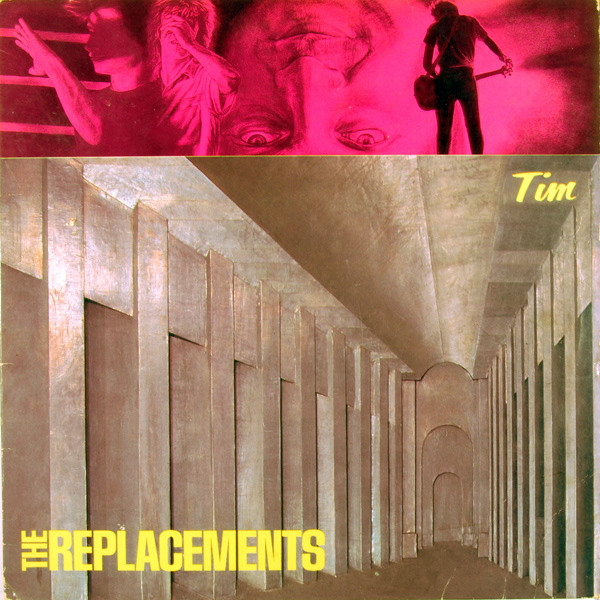
Replacements – Bastards Of Young
This is a lost anthem of the eighties that should have been taken up by my generation. Just because a song isn’t heard by the masses doesn’t mean it isn’t great. Westerberg’s songwriting in the 1980s rivaled any artist in that decade…including Springsteen.
This song starts with a raw cool riff and a scream…how much more rock and roll can you get? The lyrics are what got me into this song in the 80s. The song was on the album Tim released in 1985. It was produced by Tommy Ramone. Alex Chilton also helped out with the album.
It has no giant 80’s production…it’s raw and honest about youthful uncertainty and alienation.
Dire Straits – Money For Nothing
This was the first video played on MTV Europe. The network went on the air on August 1, 1987, six years after MTV in the US… This was back when MTV (Music Television) actually played music but now has questionable shows.
The clipped guitar sound won me over the first time I heard this.
In the US, this stayed at #1 for three weeks. It also won a Grammy in 1986 for best Best Rock Vocal Performance by a Duo or Group.
Dire Straits recorded this in Montserrat. Sting was on vacation there and came by to help. Sting sings on this and helped write it…Sting and Knophler were credited as songwriters. Sting did not want a songwriting credit, but his record company did because they would have earned royalties from it. It’s been said that the line “I Want My MTV” sounded very similar to a song Sting wrote for The Police: “Don’t Stand So Close To Me.”…well the same amount of syllables anyway.
Tom Petty – Don’t Come Around Here No More
When I first heard this song in the 1980s…the instrument that stood out was the sitar. I’ve been in love with that instrument since I heard Norwegian Wood. I want one and if I find a cheap one I will get it. One strum and you are back in the sixties and it fit this song well…or this song fits the sitar.
After Tom Petty and the Heartbreakers toured in 1983, they took some time off, and Petty started working with Dave Stewart from the Eurythmics. This was the first song they wrote together, and the psychedelic sound was a big departure from Petty’s work with The Heartbreakers.
It was at the time, my favorite video hands down.
The Smiths – How Soon Is Now? –
This intro is just plain epic. The Smiths had difficulty playing this song live. Johnny Marr had trouble recreating the guitar effect in concert. The tremolo is perfect in this song.
Bassist, Andy Rourke, called the song “the bane of The Smiths’ live career.”
This incredible song was the B side to William, It Was Really Nothing. It was on the album Hatful of Hollow. The album was a compilation album released in 1984 and Q magazine placed the album at No. 44 on its list of the “100 Greatest British Albums Ever.”
John Fogerty – Centerfield
Near spring training every year I listen to John Fogerty’s Centerfield. This was John Fogerty’s comeback after being away from the charts since 1975.
Along with “Talkin’ Baseball” and “Take Me Out To The Ballgame,” this quickly became one of the most popular baseball songs ever. It’s a fixture at ballparks between innings of games and plays at the Baseball Hall of Fame in Cooperstown, New York.
John Fogerty:“I’d hear about Ruth and DiMaggio, and as my dad and older brothers talked about the Babe’s exploits, their eyes would get so big. When I was a little kid, there were no teams on the West Coast, so the idea of a Major League team was really mythical to me. The players were heroes to me as long as I can remember.”
“It is about baseball, but it is also a metaphor about getting yourself motivated, about facing the challenge of one thing or another at least at the beginning of an endeavor. About getting yourself all ready, whatever is necessary for the job.”
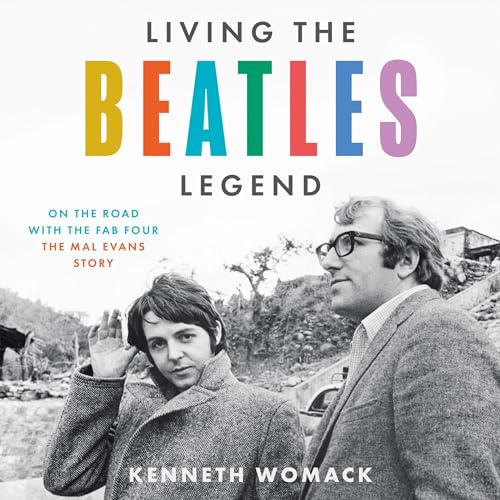
I’ve been waiting on this book since I read about the Beatles in the 70s as a kid. I knew the story…after a showdown with police Mal Evans was shot and killed on January 5, 1976. He was working on his autobiography at the time. Evans was the last person you would think would die that way…and in this case…he wanted it. Could the police have handled it better? Yes, but Mal had said that is how he wanted to go out. He forced the situation. He was only 40 years old.
Mal Evans along with Neil Aspinal were the roadies for the Beatles. Imagine that…2 roadies for the world’s biggest band. Mal worked at a telephone company in the early ’60s but he loved rock and roll…especially Elvis Presley. He would go see bands at the Cavern and struck up a friendship with George Harrison. George told him since he loved music…take a part-time job as a bouncer at The Cavern. The Beatles automatically liked him from the start. He was a big guy at 6’4″ but he never wanted to use violence. More times than not…he talked his way out of trouble. Aspinal was their only roadie and when Love Me Do and then Please Please Me came out…they needed another person because Aspinal was worn out.
The book covers his entire life and of course, focuses on the years 1963 – 1976. It’s a wonder we have the book at all. All of Mal Evan’s diaries and papers were lost for 12 years after he died. They were discovered by a paralegal who was looking through the basement of a publishing company. They were stored in 6 banker boxes so he had a lot of material including original lyrics to many Beatle songs. He kept about everything and you could say he was the Beatle’s first historian.
He made his mark in history. He was a talent scout for Apple and signed The Iveys which later became Badfinger. Without him pushing them they probably would not have been signed. After the Beatles broke up he continued to work for them as solo artists. Mal loved the Beatles and they in turn trusted him and Neil more than anyone else. He tried a few things like songwriting and he did get some songs covered. He also did a bit of acting appearing in a few of the Beatles movies and also a few with Ringo. When making sure The Beatles had some private space in public he would keep fans away to a point…but was always nice. He said he didn’t want to be rude to the fans who made the Beatles who they were.
His son Gary helped Womack with this book including full access to all of the papers left behind by Mal. His family were the ones who suffered. He was gone most of the time especially when the Beatles were touring. After touring was over he moved his family to London but still was rarely home.
I would highly recommend this book. Kenneth Womack had full access to his diaries and used many of the entries. This book turned up a lot of things about them that I had no clue about. It also gave a different look at their personalities on an everyday basis. Near the end, Mal went to the 2nd Beatles convention and spoke. He started to battle depression in the seventies after living in California and missing his wife and kids back in London. He picked up a girlfriend in California and that made his guilt worse. Drugs also affected him in the end.
If you are a Beatles fan…get the book. I wrote this book review originally with over 15 paragraphs but I was telling his story more than critiquing the book. At the end, Mal was working on his book and lined up a publishing deal. All the Beatles signed off on it and wanted to see Mal succeed. He was known for his kindness and loyalty. He told each Beatle in 1974 that he was leaving to do his own thing but continued to help them out.
Mal appeared in every Beatles movie but Yellow Submarine and you see him throughout Get Back.
He produced “No Matter What” by Badfinger
He helped Paul write Fixing A Hole and Sgt Peppers Lonely Hearts Club Band
The original producer of Keith Moon’s solo album
If anyone is interested…I’m including some of the Foreward by his son Gary Evans.
This book is the product of decades of toil. It would not have been possible without the initial determination of my father, Mal Evans, to capture the Beatles’ story as it unfolded before him. He knew, even in his earliest days as a bouncer at the Cavern Club door, that the boys were something special. As he traveled with them across the whole of England and, eventually, the world, he recorded his memories in the pages of his diaries and filled up notebooks with his drawings and recollections, all the while taking thousands of candid photographs and saving ephemera of all shapes and sizes—a receipt here, a scrap of lyrics there.
When my dad sat down to compose his memoir for Grosset and Dunlap in 1975, he realized the difficulty inherent in taking up a pen to capture his thoughts. Fortunately, he was aided by a stenographer, who transcribed his words to the letter, and by the sage advice of Ringo Starr: “If you don’t tell the truth,” he told my dad, then “don’t bother doing it.” And so, Dad did.
On January 4, 1976, when he simply couldn’t stomach the act of living another day, my father orchestrated his own demise in a Los Angeles duplex. He left behind the fruits of decades of collecting, along with a full draft of his memoir, which he planned to call Living the Beatles’ Legend: 200 Miles to Go. He had even gone so far as to plot out the book’s illustrations, with the assistance of a friend who had served as an art director, and mocked up a couple of cover ideas.
My dad’s death threw all this into disarray. For a time, Grosset and Dunlap made various attempts at publishing Living the Beatles’ Legend, but my mother, Lily, understandably distraught over her estranged husband’s tragic death, simply wanted his collection to be returned to our family back in England, so that we could sort things out for ourselves. As we later learned, in the days after my father died in Los Angeles, Grosset and Dunlap transported the materials from L.A. to New York City, eventually placing them in a storage room in the basement of the New York Life Building.
And that’s where they sat for more than a dozen years, to be rescued from the garbage heap only by the quick thinking of Leena Kutti, a temporary worker who discovered my dad’s materials—along with the diaries, the photographs, and the memoir—recognizing she was in the presence of a most unusual archive. When her efforts to raise the alarm with the publishing house fell on deaf ears, Kutti took it upon herself to march uptown to the Dakota, where she left a note for Yoko Ono, one of the few genuine heroes in the strange progress of my father’s artifacts. In short order, Yoko alerted Neil Aspinall, my dad’s counterpart during the Beatles years. With the assistance of some shrewd Apple lawyering, Neil saw to it that the collection was finally delivered to our family home in 1988.
For several years, my dad’s manuscripts and memorabilia were stored in our attic. I would periodically dip into them and reacquaint myself with the person whom I had lost when I was fourteen years old. Thumbing through the materials reminded me why I loved my father so dearly, in spite of the flaws that drove him away from us and led to his death at age forty. Over the years, my family has struggled with the idea of sharing Mal’s story. Then, in 2004, a forger created an international sensation when he claimed to possess Dad’s collection in a suitcase full of artifacts he had discovered in an Australian flea market. The news was quickly picked up and shared across the globe with much fanfare before it was proven to be a hoax.
To stem the ensuing confusion, my mum and I consented to a 2005 interview with the Sunday Times Magazine, even going so far as to allow the publication of a few excerpts from my dad’s diaries. The tide began to change for us in July 2018, when I decided to follow in my father’s, and the Beatles’, footsteps and retrace the famous “Mad Day Out” photo session on its fiftieth anniversary. I was joined that day by my good friend, actor and playwright Nik Wood-Jones. Along the way, we had the remarkable good fortune to cross paths with filmmaker and Beatles aficionado Simon Weitzman, who was on a similar mission.
As my friendship with Simon developed, I confided in him about the ongoing challenge of sharing my dad’s story with the world. He assured me that he knew just the guy to make it happen. Through Simon, I met Ken Womack via Zoom in 2020, during the first few months of the Covid-19 pandemic. Ken had already authored several books about the Beatles, but more important, Simon trusted him implicitly. Almost as soon as we began working together, I knew that Ken was the right collaborator to tell my dad’s story with the historical integrity it required. Over the years, I have come to understand the ways in which Beatles fans the world over adore “Big Mal,” and to his credit, Ken has been able to honor that connection while also mining the truth of my dad’s life, warts and all.
Working with our friends at HarperCollins, we are proud to share the present book with you—a full-length biography detailing my dad’s life with (and without) the Beatles. A second, even more richly illustrated book will follow in which we provide readers with highlights from my dad’s collection, including the manuscripts he compiled, the contents of his diaries, numerous drawings and other ephemera, along with a vast selection of unpublished photographs from our family archives and from his Beatle years.
The present effort simply wouldn’t have been possible without the saving graces of people like Leena Kutti, Yoko Ono, Neil Aspinall, Simon Weitzman, and Nik Wood-Jones. And now, thanks to Ken, readers will be able to experience my dad’s story with the vividness it deserves. Ken, you kindly lent me your ears over the past three years; I got by with more than a little help from you, my friend.
My father meant the world to me. He was my hero. Before Ken joined the project, I thought I knew my dad’s story. But what I knew was in monochrome; now, some three years later, it is like The Wizard of Oz, my dad’s favorite film, when the scene shifts from black-and-white Kansas to the dazzling multicolored brilliance of Oz. Ken has added so much color, so much light to my dad’s story. He has shown me that Mal Evans was the Beatles’ greatest friend. Yes, Big Mal was lucky to meet the Beatles, but the Beatles possessed even more good fortune when, for the first time, all those years ago, my dad happened to walk down the Cavern Club steps. The rest is music history.
When my Max Picks come up for 88…this will probably be in it. That year we had Keith Richards release Talk Is Cheap and a few weeks later The Traveling Wilburys released their debut album. The year before that George Harrison released his Cloud 9 album. I started to listen to mainstream radio a little more because of those three albums.
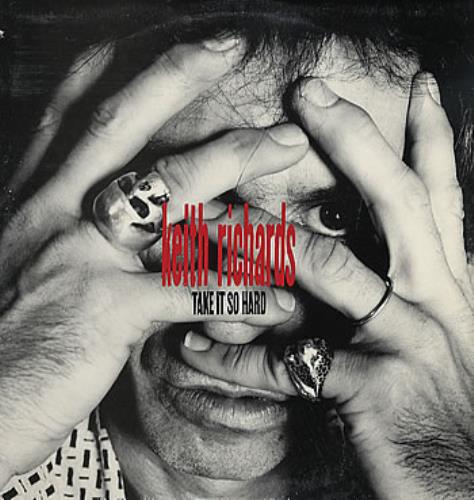
When I heard this song with the opening riff coming from that 5-string G turning that he is known for… it was love. I bought the album Talk is Cheap which some reviews half-jokingly called the best Rolling Stones album in years. The song got plenty of play on rock stations at the time. It peaked at #3 in the Mainstream Rock Tracks.
The album was recorded when Mick and Keith were feuding about the direction of the Stones. The Stones were not recording or playing live. “You Don’t Move Me Anymore” off the album points right at Mick.
Personally, I’ve always liked Keith Richards voice. Happy, Salt of the Earth, You Got the Silver, Before They Make Me Run rank among my favorite Stones songs. This song would fit on any Stones album.
The band Keith put together was great. Keith Richards: lead and background vocal, guitar Waddy Wachtel: guitar Steve Jordan: drums (he is now drummer for the Stones) Charley Drayton: background vocal, bass Ivan Neville: piano and keyboards
Waddy Wachtel: We went up to Canada and did the whole of the first record, Talk Is Cheap, there. I think the second track we cut was “Take It So Hard,” which is a magnificent composition. And I just thought, I get to play on this? Let’s go. And we played it a few times. I guess you could call it rehearsing. And there’s one take that is just a great pass. It’s just ridiculously good. It was the second tune of the night, and it was this killer fucking take of our strongest tune. I went back to the house going, we’ve conquered Everest already? These other mountains we can climb easily if we’ve got the big one down. And Keith didn’t want to believe it; he was going, I don’t want these guys thinking they’re that good. He made us do a retake. I don’t know why. The take was shouting, hey, dude, I’m the take. I think Keith just did it to make sure people stayed in focus. But it never sounded as good as that first take. When you’ve got it, you’ve got it. When we were putting the sequence of the album together, I insisted “Big Enough” should be the first song. Because the first time you hear Keith sing on that, that first line is amazing, his voice sounds so beautiful. He delivers it effortlessly. I said, people when they hear this, they’re not going to believe it’s fucking Keith Richards singing. And then we’ll hit ’em with “Take It So Hard.”
Keith Richards: Steve and I thought we ought to make a record and started to put together thecore of the X-Pensive Winos–so named later on when I noticed a bottle of Chateau Lafite introduced as light refreshment in the studio. Well, nothing was too good for this amazing band of brothers. Steve asked me who I wanted to play with, and first up, on guitar I said Waddy Wachtel. And Steve said, you took the words, brother. I had known Waddy since the ’70s and I’d always wanted to play with him, one of the most tasteful, simpatico players I know. And he’s completely musical. Understanding of it, empathetic, nothing ever needing to be explained. He’s also got the most uncanny ultrasonic ear, still tuned high after years of bandstands. He was playing with Linda Ronstadt and he was playing with Stevie Nicks– chick bands–but I knew my man wanted to rock. So I called him and said simply, “I’m putting a band together, and you’re in it.” Steve agreed that Charley Drayton should be the bass player, and I think it was just a general consensus that Ivan Neville, from Aaron Neville’s family from New Orleans, should be the piano player. There was no audition process whatsoever.
Take It So Hard
Giving up lovin’, easy to do
People so pitiful they never come through
Honey, honey, honey, I ain’t that way
(You want a little bit) once in a while, come on and get a bit
You shouldn’t take it so hard (yeah) you shouldn’t take it (yeah)
You shouldn’t take it so hard (yeah)
Take a look around you, tell me, what do you see?
People with little bits try, tryin’ to smile
Most of what you’ve gotten is free (yeah)
(Yeah) you shouldn’t take it so hard (yeah)
You shouldn’t take it so hard (yeah) you shouldn’t take it so hard (yeah)
You shouldn’t take it so hard (yeah)
Yank it up baby or go get yourself a new name
You want a little bit once in a while, yeah you got a taste for it
You shouldn’t take it (yeah) you shouldn’t take it so hard (yeah)
(Yeah)
You shouldn’t take it so hard (yeah)
You shouldn’t take it so hard (yeah)
You shouldn’t take it so hard (yeah)
You shouldn’t take it so hard (yeah)
I have always liked the song because it’s such a timeless song. This was before Justin Hayward and John Lodge joined the band.
The singer was Denny Laine who quit the Moodies in 1966 and was replaced by Justin Hayward. The Moody Blues started to open up for the Beatles in 1965. The two bands got close and Paul McCartney was a big fan of this song released the year earlier. Laine later ended up playing with Paul McCartney and Wings until 1980. During the 1976 Wings tour Paul stepped aside so Denny could sing this song.
What a mood this song creates. This was before the Moody Blues went searching for the lost chord…or evolved into an Art Rock type of band. They were just a beat group at this stage but the song’s arrangement pointed to a different direction. I would safely say this song was the most important one of their career because it broke them internationally. Without this song who knows what would have happened to them?
Ray Thomas and Justin Hayward tried singing it a few times live but as their music changed they dropped the song. The lineup that did this song was Graeme Edge (drums, backing vocals), Denny Laine (lead vocals, guitar), Mike Pinder (piano, backing vocals), Ray Thomas (backing vocals), Clint Warwick (bass, backing vocals). It was produced by Alex Murray.
The song was written by Larry Banks and Mike Milton Bennett and first released in 1964 by Bessie Banks. Her version did peak at #40 on the Cashbox R&B single charts. Bessie would be songwriter Larry Banks’s ex-wife. She said: “I remember 1963 Kennedy was assassinated; it was announced over the radio. At the time, I was rehearsing in the office of Leiber and Stoller. We called it a day. Everyone was in tears. “Come back next week and we will be ready to record ‘Go Now'”; and we did so. I was happy and excited that maybe this time I’ll make it. ‘Go Now’ was released in January 1964, and right away it was chosen Pick Hit of the Week on W.I.N.S. Radio. That means your record is played for seven days. Four days went by, I was so thrilled. On day five, when I heard the first line, I thought it was me, but all of a sudden, I realized it wasn’t. At the end of the song it was announced, “The Moody Blues singing ‘Go Now’.” I was too out-done. This was the time of the English Invasion and the end of Bessie Banks’ career, so I thought. America’s DJs had stopped promoting American artists”
The song peaked at #10 on the Billboard 100 #2 in Canada, and #1 in the UK in 1965.
Denny Laine: “It came in one of these suitcases full of records from America. This guy, James Hamilton, he was a friend of B. Mitchel Reed, who was a DJ, and he would send this stuff across. So I picked that one out especially because Mike Pinder was a piano player. (chuckles) We’d always get the gig where the piano would be out of tune and we’d get the slow handclap because they were waiting to tune the piano… (laughs) Anyway, we did ‘Go Now’ because it was a song with a piano in it.”
Go Now
We’ve already said “goodbye”
Since you gotta go, oh you’d better
Go now, go now, go now (go now, ooh)
Before you see me cry?
I don’t want you to tell me just what you intend to do now
‘Cause how many times do I have to tell you darlin’, darlin’
I’m still in love with you now
Whoa oh oh oh
We’ve already said “so long”
I don’t want to see you go, oh you’d better
Go now, go now, go now (go now, ooh)
Don’t you even try?
Tellin’ me that you really don’t want it to end this way
‘Cause darlin’, darlin’, can’t you see I want you to stay, yeah
Since you gotta go, oh you’d better
Go now, go now, go now (go now, ooh)
Before you see me cry
I don’t want you to tell me just what you intend to do now
‘Cause how many times do I have to tell you darlin’, darlin’
I’m still in love, still in love with you now
Ooh ooh ooh
I don’t want to see you go but darlin’, you better go now
But if I do you wrong, smoke my smoke, drink my wine Bury my snake skin boots somewhere I’ll never find
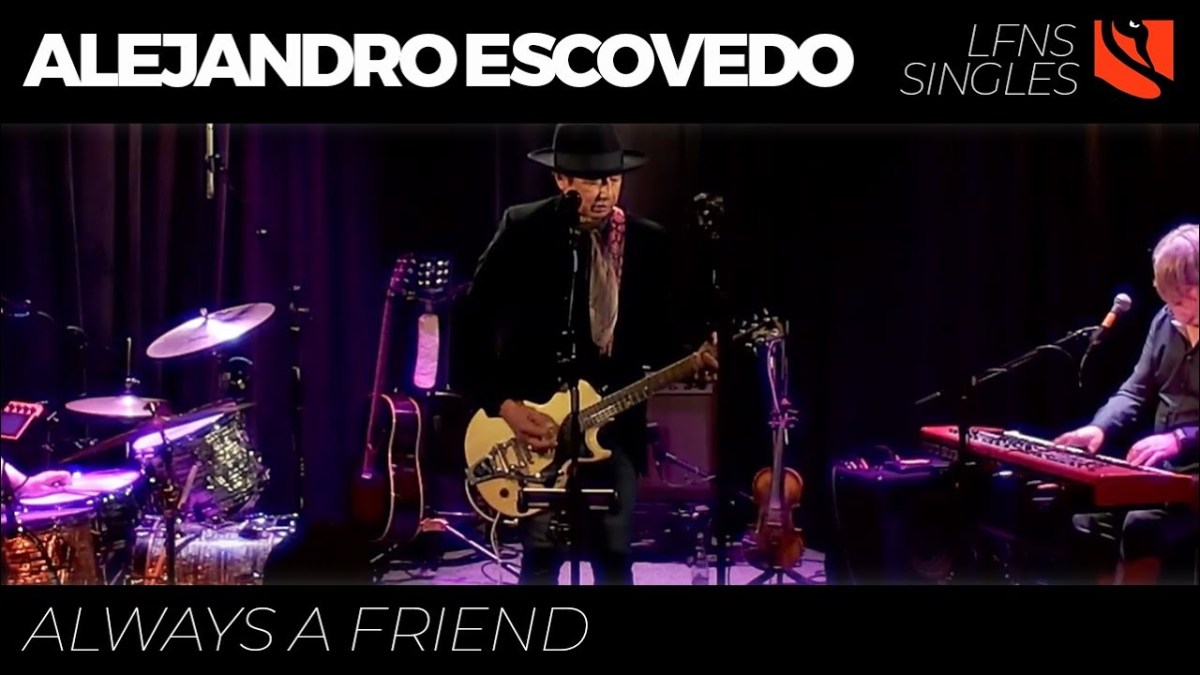
CB took a break from fishing and posted a song on Friday by Alejandro Escovedo. He sounded fantastic along with his band, featuring some great players like Peter Buck on guitar. I had never heard of Alejandro Escovedo but immediately liked what I heard. I started to go through his discography and I hit this song. He has a lot of good songs and needs to be heard.
I’ve found this world of Texas musicians and songwriters with some like Steve Earle, Joe Ely, Townes Van Zant, Guy Clark, Kris Kristofferson, and now I add Alejandro Escovedo to that growing list. These guys are some of the best singer-songwriters ever but only a few are well known. Escovedo combines power with excellent writing. Many times both don’t go together but when I heard some of his live performances you get the raw rock but with intelligent writing.
He was born in San Antonio, Texas in 1951, one of 12 children. His family was deep in music with his father playing in mariachi bands and swing combos before and after he migrated from Mexico. Later, Alejandro moved to California and saw acts such as Jimi Hendrix, Buffalo Springfield, the Doors, the Seeds, and the Flying Burrito Brothers. After that, he started to get into bands such as the New York Dolls and Stooges. Those two bands were a big influence on him.
Here is a very brief musical history. He began his musical career as a guitarist with the punk band The Nuns, in 1975. He then played with Judy Nylon in 1980 and cofounded Rank and File, in 1981. He left Rank and File and began True Believers with his brother Javier in 1982. The True Believers disbanded in 1987 and after that, he performed with The Alejandro Escovedo Orchestra, the Setters, and Buick MacKane. In 1992 he released his first album Gravity. Since then he has released 17 albums including La Cruzada in 2021.
Alejandro didn’t know it but Bruce Springsteen was a fan of his work. On April 14, 2008, Bruce was in Houston, Texas touring and he wanted Alejandro to come up with him on stage. Bruce loved this song as it was the lead single off of Escovedo’s album Real Animal released in 2008. The E Street Band learned it that day just so Bruce could play with Alejandro.
Alejandro Escovedo on being called up to sing with Bruce. “We were two hours out! I get there late, of course, like an hour before the show, He takes me to the dressing room, he has all the lyrics written out, he’s already run the band through it at sound check, and he and I sing it alone in the dressing room together.”
“And then I go out and see my first Bruce show, which just chopped my head off. It was unbelievable. I had never realized the magnitude and power. I was like, oh my God, I forgot how big rock ‘n’ roll could be.”
Alejandro Escovedo: “Those four minutes on stage with Bruce were more important than the 33 years I’ve been playing music. It just changed my life. It was like being blessed by the Dalai Lama. Suddenly all those years of working really hard and struggling, someone said, ‘You’re alright. You’re good at what you do. You deserve to be up here.’”
Always A Friend
Wasn’t I always a friend to you?
Wasn’t I always a friend to you?
Do you wanna be my friend?
Do you wanna be my friend?
Every once in a while honey let your love show
Every once in a while honey let yourself go
Nobody gets hurt no, nah
Nobody gets hurt
We came here as two, we laid down as one
I don’t care if I’m not your only one
What I see in you, you see in me
But if I do you wrong, smoke my smoke, drink my wine
Bury my snake skin boots somewhere I’ll never find
Still be your lover baby, oh oh, oh oh, oh oh
Wasn’t I always a friend to you?
Wasn’t I always a friend to you?
Do you wanna be my friend?
Do you wanna be my friend?
Every once in a while honey let yourself go
Every once in a while honey let your love show
Nobody gets hurt no, no
Nobody gets hurt
Well, I could be an astronaut on the wrong side of the moon
Or wrapped up like a baby on a bus under you
Wherever I go you go with me
But if I do you wrong, take the master suite, I’ll take the floor
Sleep in late, get your rest, I’ll catch up on mine
Still be your lover, baby, oh oh, oh oh, oh oh
Wasn’t I always a friend to you?
Wasn’t I always a friend to you?
Every once in a while honey let your love show
Every once in a while honey let yourself go, yeah
Nobody gets hurt, it’s only love, love, love
Oh oh, oh oh, oh oh
Dave posted this on January 16th on his Turntable Talk series. The theme was instrumentals. The problem wasn’t finding one…it was choosing one between all of the instrumentals out there.
I can’t really say how this song makes me feel. It still sounds futuristic, but I also feel nostalgic about an era before my time. It sounds both uplifting and melancholy at the same time.
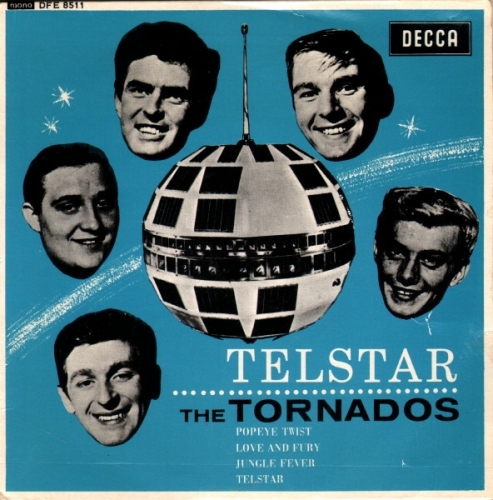
This was the best-selling British single of 1962. It was also the first song by a British group to hit #1 in the US. This did not happen again until The Beatles’ “I Want To Hold Your Hand” in 1964.
The legendary Joe Meek wrote and produced this song. This was an adventurous instrumental record for the time and ahead of its time. The song took off and peaked at #1 on the Billboard 100, in Canada, New Zealand, and the UK in 1962.
Meek was ahead of his time. He was doing things in a studio that the Beatles found years later like playing things backwards and getting different effects in 1962. Meek was a genius at recording. Some say he was a mad genius because some say he had mental illnesses and a narcissistic personality disorder. There is a movie I would recommend watching… Telstar: The Joe Meek Story.
An instrumental with space sound effects, this was inspired by the Telstar communications satellite, which was launched shortly before this song was written. Telstar had been launched for 5 weeks when this song came out. Telstar no longer functions but still orbits the earth to this day.
The Tornados were a club band that disliked the song, but Meek added his effects at his home studio above a leather shop in northern London. An overdubbed Clavioline keyboard provoked spooked space effects, while a backward tape of a flushing toilet evoked all the majesty of a space-bound rocket. The Clavioline was an early electronic keyboard that could create a range of otherworldly sounds, to play the main melody of the song, which he then layered with other instruments and sound effects to create an orchestral and ethereal sound that evokes the vastness and wonder of space.
The Tornados received little money from the song. Meek had leased the record to Decca Records and having negotiated a 5% royalty of the record sales he received 29,000 pounds, very little of which was passed on to The Tornados.
I’ve listened to the first demo of it and it’s not like anything the finished product sounded like.
A little more on Meek…that’s who developed this song. George Martin had just left EMI in 1965 and the head of EMI was Sir Joesph Lockwood. Lockwood thought of Joe Meek as a suitable replacement for Martin. Martin still produced the Beatles as a contractor, but Meek could fill in his other EMI duties. Meek was told about the job offer but he didn’t want to give up his independence, but it was tempting. Meek was unable to decide. On January 17, 1967, Sir Joseph finally called him to press for a decision. Meek joined the meeting accompanied by his lawyer. It’s not known how the meeting went, only the result is known: Joe Meek said no. Meek would be dead of a murder (his landlady) suicide the next month.
I’ve heard Captain Beefheart off and on through the years. To put it lightly…he was different.
Captain Beefheart was born Don Van Vliet and was a prodigy sculptor in his childhood. I first heard about him from a Beatles book…as I did with a lot of the artists I know. John and Paul were fans of his albums Trout Mask Replica and Safe As Milk.
This is one of Captain Beefheart’s most conventional and accessible songs and it has a nasty sound to it that I like. It has a great blues feel to it. Like Frank Zappa…he wasn’t for everyone. Speaking of Frank Zappa, he grew up with Vliet in California and they hung out as teenagers. Both of them bring something different to the table.
I would like to explore more of his music in the future. His music can be very abstract as he will switch tempos and experiment. I go in knowing I’m not going to be hearing many radio-friendly songs and I found a lot of songs that I like. I’ve been listening to Captain Beefheart closely for a few weeks now… I like a lot of what I’m hearing. He took chances like no one else.
This song was released as a promotional single back in 1966 with the B side as “Who Do You Think You’re Fooling.” Diddy Wah Diddy was written by Willie Dixon and Bo Diddley. Bo Diddley released this song in 1956.
There are two stories about how he got his name – the one he gave to David Letterman was that he chose it because he had a “beef in his heart” about how humanity was ruining the environment.
The second was in one of Frank Zappa’s biographies. “His girlfriend, Laurie, lived in the house with him, along with his Mom (Sue), his Dad (Glen), Aunt Ione and Uncle Alan… The way Don got his ‘stage name’ was, Uncle Alan had a habit of exposing himself to Laurie. He’d piss with the bathroom door open, and if she was walking by, mumble about his appendage – something along the lines of: ‘Ahh, what a beauty! It looks just like a big, fine beef heart.”
I have more to come from Captain Beefheart. I want to dip into some of his non-conventional songs.
The B-Side Who Do You Think You’re Fooling
Diddy Wah Diddy
I gotta gal down in Diddy Wah Diddy
(Diddy Wah)
Ain’t no town an it ain’t no city
(Diddy Wah)
She loves her man, just is a pity
Crazy ’bout my gal in Diddy Wah Diddy
(Diddy Wah)
This little girl is sweet as she could be
(Diddy Wah)
I know she’s in love with me
(Diddy Wah)
A lovely face, she’s so pretty
(Diddy Wah)
But she’s still way down in Diddy Wah Diddy
Ain’t no town, an it ain’t no city
But oh, how they love in Diddy Wah Diddy)
(Diddy Wah)
(Diddy Wah)
(Diddy Wah)
(Diddy Wah)
She kissed me all the time
(Diddy Wah)
She gonna turn me outta my mind
(Diddy Wah)
Anything, she says she’s ready
(Diddy Wah)
Run right back to Diddy Wah Diddy
(Diddy Wah)
(Diddy Wah)
(Diddy Wah)
(Diddy Wah)
Ain’t no town, ain’t no city
Lord, how they love in Diddy Wah Diddy)
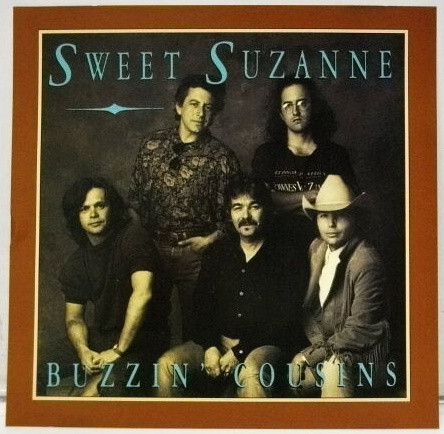
While researching a post about Joe Ely I came across this band. What a band it was. This was a one-off supergroup that was formed in the 1990s. I love jangle and this song has it…it’s called Sweet Suzanne and was written by John Mellencamp…he did assemble a supergroup. They all take turns singing lines…
The members included John Mellencamp, Joe Ely, Dwight Yoakam, John Prine, and James McMurtry. Mellencamp said this was his answer to The Travelin’ Wilburys. The band’s one-and-done status was by design, Mellencamp said. I wouldn’t expect an album or anything, It really was a one-shot deal.
In 1992, Mellencamp made his acting and directorial debut in the film Falling From Grace, a drama that cast the Midwestern singer as a country-music star who gets caught up in a Jerry Springer-level family drama during a trip home to Indiana. He needed another song for the soundtrack album.
The band all traveled to Bloomington Indiana to record the song in Mellencamp’s studio. They all stayed in a Best Western and McMurtry said: “Not long after I checked in, there was a knock on my door. I opened the door and there was John Prine and Joe Ely. Prine had a half-empty pint bottle of vodka in his hand and a big grin on his face. I don’t remember what happened after that.”
This song was from the Falling From Grace soundtrack. The song was an outtake from either The Lonesome Jubilee or Big Daddy album. Sweet Suzzane peaked at #68 on the Billboard Country Charts in 1992.
Released as a single to country radio, the song ended up being nominated for the 1992 CMA Award for Vocal Event of the Year. It lost to Marty Stuart and Travis Tritt’s This One’s Gonna Hurt You (For a Long, Long Time).
Sweet Suzanne
Now, Right now,
Look at the place I`m in,
When I think about things that I could have done
It´s impossible for me to pretend.
But I see it now as the lights grow dim
and the world starts to close its eyes.
I just wanted to say goodnight,
Sweet Suzanne.
I hear the music playin`
but I no longer understand,
Around the corner, down the street
It’s got to be better than where I am.
I see it all now, as the light grows dim
And the world starts to close its eyes.
I just wanted to say goodnight,
Sweet Suzanne.
I just wanted to say goodnight,
Just wanted to see if everything was all right,
Just wanted to say goodnight,
Sweet Suzanne.
Time goes by
Oh, so quietly,
Hazy days and memories
And in the end there was only me.
Wouldn`t have been, I ask sometimes,
But I see myself inside this rhyme.
Enjoyed what I had back then,
Would I do it again?
Well, I see it now
As the lights grow dim
I just wanted to say goodnight,
Sweet Suzanne.
I just wanted to say goodnight,
I just wanted to see if everything`s all right
Just wanted to say goodnight,
Sweet Suzanne.
I just wanted to say goodnight,
I just wanted to see if everything` s all right,
I just wanted to say goodnight,
Sweet Suzanne.
Some songs really take me back to a place I was when I heard it. This one was going roller skating with my sister who took me along with her. I never understood why my 16-year-old sister wanted to talk to guys while I was having the time of my life skating as an eight-year-old.
If you hear the rest of Elvin Bishop’s catalog…you wouldn’t believe this came from him. It’s a love song and a good one. Bishop is a blues guitarist who played in The Paul Butterfield Blues Band before forming his own group in 1968. Mickey Thomas who sang the song was a vocalist in Bishop’s band and sang lead on “Fooled Around And Fell In Love” and would later sing in Jefferson Starship.
Elvin can sing but his voice is suited more for blues. Elvin wrote the song and thought Mickey Thomas could sing it better…Mickey did a great job with it. The song peaked at #3 on the Billboard 100, #34 in the UK, and #22 in Canada in 1976.
In 2015, Bishop was inducted into the Rock & Roll Hall of Fame as a member of the Paul Butterfield Blues Band, and again in the Blues Hall of Fame as a solo artist in 2016. Many younger listeners discovered this song when it was used in the 2014 film Guardians Of The Galaxy and included on the soundtrack, which went to #1 in America.
I stumbled across a newer cover of this song that I really like around 6 months ago…it’s by the Winery Dogs. The band included Richie Kotzen, Billy Sheehan, and drummer Mike Portnoy. Give it a listen as well…they stayed true to the original and it sounds good.
Elvin Bishop: “My voice is very plain. It’s better suited for blues. It’s been good for me, because it’s made my songwriting strong, because to really get over with a voice like mine, which is not a thrill in itself – the quality of the voice – you have to have a strong story and really good words to capture people’s imagination.
And that tune, I gave it a try. The producer, Bill Szymczyk, said, ‘We need one more piece of material here. You got anything else laying around?’ I said, ‘Well, there’s this tune I wrote the other day.’ Well, not the other day. I’d actually tried to get a couple of other people to sing it, but somehow it didn’t work out. I said, ‘How about this ‘Fooled Around and Fell In Love’?’ We cut a track, it was a really nice track. I tried singing it, and I said, ‘That’s not buttering my biscuit, my vocal on this. Why don’t we give Mickey a shot at this?’ And the producer said, ‘Well, that’s big of you.’ And I said, ‘Well, I don’t think so. It’s just common sense, you know?’ And Mickey just tore it up.”
Fooled Around and Fell In Love
I must have been through about a million girls I’d love ’em then I’d leave ’em alone I didn’t care how much they cried, no sir Their tears left me cold as a stone
But then I fooled around and fell in love I fooled around and fell in love, yes I did I fooled around and fell in love I fooled around and fell in love
It used to be when I’d see a girl that I liked I’d get out my book and write down her name Ah, but when the, the grass got a little greener over on the other side I’d just tear out that page
I fooled around and fell in love I fooled around and fell in love, since I met you baby I fooled around and fell in love I fooled around and fell in love
Free, on my own is the way I used to be Ah, but since I met you baby, love’s got a hold on me It’s got a hold on me now I can’t let go of you baby
I fooled around and fell in love I fooled around and fell in love, oh yes I did I fooled around, fooled around, fooled around, fooled around, Fooled around, fooled around, fell in love Fooled around, fooled around, fooled around, fooled around, Fooled around, fooled around, fell in love I fooled around, fell in love I fell in love, I fell in love, yes I did
Of all Stevie Wonder songs…this one is at the top of the list for me.
Anything Stevie does I like. Sometimes when I hear a song it takes a few times for me to like it but this one…hooked me the first time. This song peaked at #2 on the Billboard 100, #5 in Canada, and #5 in the UK Charts in 1967. The song was written by Wonder, Lula Mae Hardaway, Henry Cosby, and Sylvia Moy. Lula Mae Haraway was Stevie Wonder’s mother.
The producer was Henry Cosby. He said to get the right vocal out of Wonder he took him to a Baptist church in Detroit. He had Stevie imitate the preacher. To do that Stevie wanted people in the studio with him when he was singing it. He said he had to feel the presence of people. Cosby then went outside the studio and pulled in people from the street who were passing by.
There is some dispute on who played bass on this song…Carol Kaye or James Jamerson? Allan Slutsky who wrote Standing In The Shadows of Motown disagrees with Carol Kaye on this song. He says that James Jamerson played bass in this session. The people he contacted from Motown swear it was James Jamerson. The Holland-Dozier-Holland songwriting team said it was Jamerson, and Hank Crosby, who co-wrote it and did production on this song, signed an affidavit saying that the bass line was performed by Jamerson.
Either way…you can’t go wrong with either of those bass players.
Carol Kaye: “The first four bars were written, so that thing was pretty straight. The first bar was written to give me an indication of what they wanted the rest of the tune. And then another part I can remember was written – that triad lick was written. And I screwed that one up. (laughing) I mean, you always remember when you make a mistake on the hits. And I made plenty of mistakes, but the feel of the record was good. And that’s the main thing. So the rest, I was on my own. No problem, a lot of chromatics and just aiming for the triads and stuff.”
Stevie Wonder: “Kind of speaks of my first love to a girl named Angie, who was a very beautiful woman. Actually, she was my third girlfriend but my first love. I used to call Angie up and, like, we would talk and say, ‘I love you, I love you,’ and we’d talk and we’d both go to sleep on the phone. And this was like from Detroit to California, right? You know, mother said, ‘Boy, what you doing – get off the phone!’ Boy, I tell you, it was ridiculous.”
I Was Made To Love Her
I was born in Little Rock
Had a childhood sweetheart
We were always hand in hand
I wore hightop shoes and shirt tails
Suzy was in pig tails
I know I loved her even then
You know my papa disapproved it
My mama boo-hooed it
But I told them time and time again
“Don’t you know, I was made to love her
Built my world all around her”
Yeah, hey, hey, hey
She’s been my inspiration
Showed appreciation
For the love I gave her through the years
Like a sweet magnolia tree
My love blossomed tenderly
My life grew sweeter through the years
I know that my baby love me
My baby needs me
That’s why we made it through the years
I was made to love her
Worship and adore her
Hey, hey, hey
All through thick and thin
Our love just won’t end
‘Cause I love my baby, love my baby, ah
My baby love me
My baby needs me
And I know I ain’t going nowhere
I was knee-high to a chicken
When that love bug bit me
I had the fever with each passing year
Oh, even if the mountain tumbles
If this whole world crumbles
By her side, I’ll still be standing there
‘Cause I was made to love her
I was made to live for her, yeah, hey, hey, hey
Ah, I was made to love her
Built my world all around her
Hey, hey, hey
Ooh, baby, I was made to please her
You know Stevie ain’t gonna leave her, no
Hey, hey, hey, ooh-wee, baby
We have some mega hits this year and some alternative hits.
Prince – Purple Rain – This is the song that really made me a Prince fan. I will always say that I liked his Around the World in a Day the best but the title song of Purple Rain is great.
Prince and his peers such as Bruce Springsteen, Madonna, and Michael Jackson were the artists who defined the decade of the 1980s in the top 40. In the late 70s my sister had a single that I would listen to. It was called “I Wanna Be Your Lover” and I didn’t pay attention to the artist. Later on, around the time Purple Rain came out…I looked at the single again and was surprised to see it was Prince. He had chart success before this but this album and movie broke him out internationally.
R.E.M – So. Central Rain – The song was on their Reckoning album released in 1984. REM. avoided the sophomore slump with Reckoning. It’s hard to beat this song as the first single off the album. I always thought So. Central Rain stands as one of the group’s most melodic songs.
The band chose to work with Murmur producers Don Dixon and Mitch Easter. They recorded the album in just a few weeks. Peter Buck told Rolling Stone magazine: “We were going through this streak where we were writing two good songs a week, We just wanted to do it; whenever we had a new batch of songs, it was time to record!”
Stevie Ray Vaughan – Voodoo Child (Slight Return) – Around this time is when I noticed SRV. I heard his guitar playing in songs and then watched him later on Austin City Limits. His guitar playing was on another level. I’d never seen anyone that aggressive on guitar. I was never a huge fan of many of his songs but I was of his guitar playing. He did an excellent cover of this song.
He covers a Jimi Hendrix song here. This song is like an atom bomb going off. From the first words “Well, I stand up next to a mountain and I chop it down with the edge of my hand” you know Stevie means business.
The song was on his second album Couldn’t Stand The Weather.
The Replacements – I Will Dare -I Will Dare was released in 1984 as an independent single and then included on their Let It Be album. I loved this song in the 80s and after hearing it in the past weeks…it was like the first time I listened to it. Peter Buck from REM is playing the intro to this song. Paul Westerberg wrote the song and plays mandolin. The Replacements were my top band of the 80s bar none.
Let It Be was the third full album by the band’s original lineup: lead singer and songwriter Paul Westerberg, guitarist Bob Stinson, bassist Tommy Stinson, and drummer Chris Mars.
This song should have cracked the top 40 but it didn’t…mostly because they were on a small Minneapolis record label named Twin/Tone.
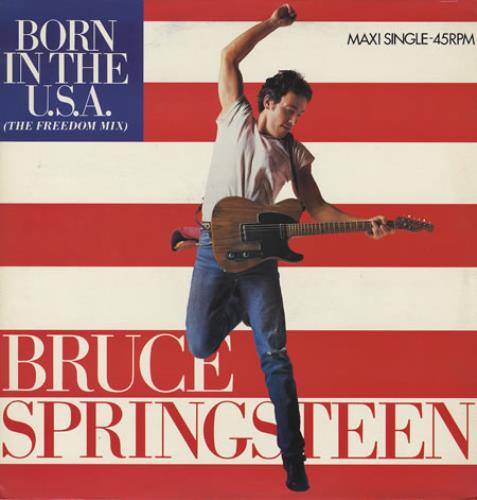
Bruce Springsteen – Born In The USA – Springsteen wrote this about the problems Vietnam veterans encountered when they returned to America. Vietnam was the first war the US didn’t officially win, and while veterans of other wars received a hero’s welcome, those who fought in Vietnam were mostly ignored when they returned to their homeland.
The other song that has someone really ripping the vocals is “Twist and Shout” sung by John Lennon with the Beatles. I remember back in the 80s Chrysler offered Springsteen $12 million to use this in an ad campaign with Bruce… Springsteen turned them down so they used “The Pride Is Back” by Kenny Rogers instead. Springsteen never let his music be used to sell products at that time.
I knew a couple of Springsteen fanatics before this album came out. They loved everything Bruce but after this album…they wanted nothing to do with him. Why? Because he wasn’t their secret anymore. For me, I guess it would be like if Big Star had hit huge…but I would love it!
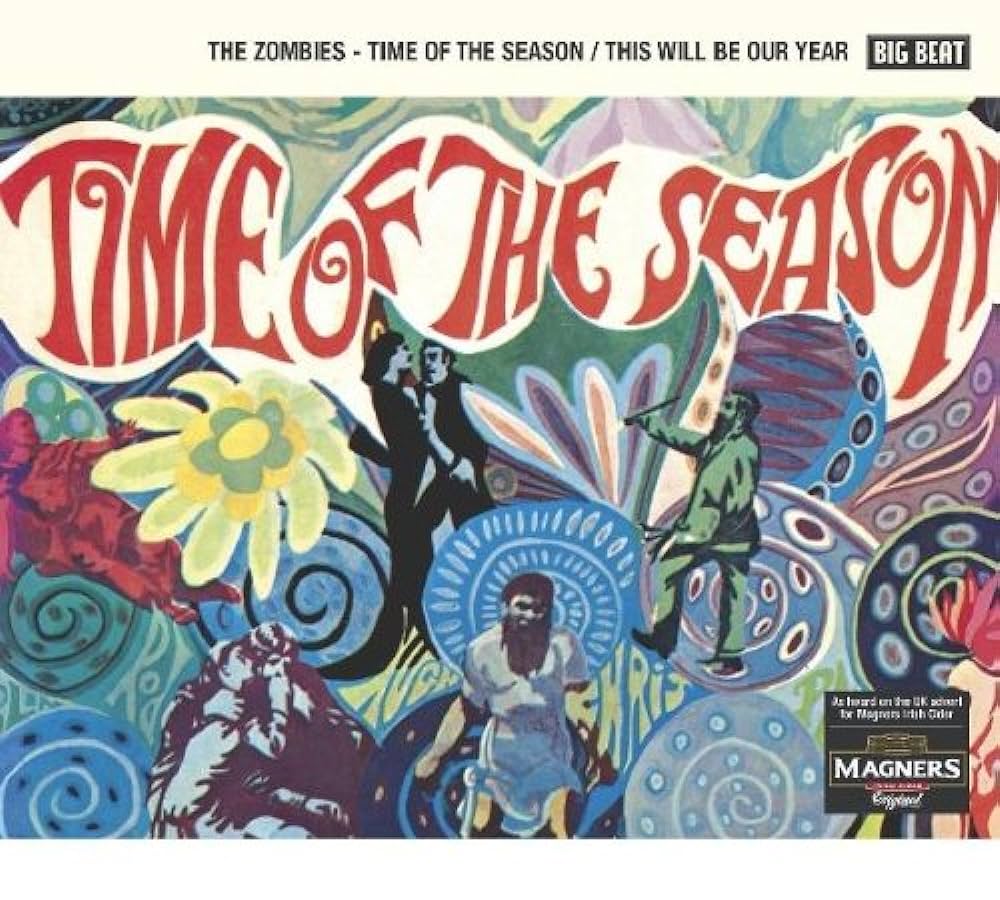
The Zombies were a band of excellent musicians…some of the best of the British Invastion. In 1968 they released Odessey and Oracle and in 1969 this song peaked at #3 in the Billboard 100 and #1 in Canada. The Zombies had already broken up by the time this song hit.
The Zombies had practically no budget when they made this album. They wanted orchestration on this album but couldn’t afford it but they figured something out. The Beatles just finished Sgt Pepper when the Zombies entered the studio. John Lennon had left his Mellotron so the Zombies used it instead of orchestration.
During the recording of the single, the band were arguing with each other. The biggest argument was between keyboardist Rod Argent, who wrote the song, and vocalist Colin Blunstone was over the line, “When love runs high.”Blunstone thought the high note at the end of the line was very hard to do and yelled at Argent. He told Argent that if he thought it was so easy he should sing it.
Blunstone ended up singing the song and doing a terrific job. The song is now a huge classic. The album has been remembered as one of the best pop albums of the sixties.
The first two singles flopped so The Zombies said enough was enough and broke up. Then came Al Kooper whoh really liked this album. He worked at Columbia Records and persuaded Clive Davis to release this record in America. He thought it had a poteintal for a hit single.
Al Kooper pushed this album to Clive Davis and that was a big reason it was released in America. After the band broke up Rod Argent formed “Argent” and Colin had a successful solo career in the UK.
In 2017, the four surviving original members (Colin Blunstone, Rod Argent, Chris White and Hugh Grundy) re-united for a North American tour marking the 50th anniversary of the recording of Odessey and Oracle.
Colin Blunstone: “It was written in the morning before we went into the studio in the afternoon, and I kind of struggled on the melody, Rod and I had quite a heated discussion – he being in the control room and me singing the song – and we were just doing it through my headphones. Because it had only just been written, I was struggling with the melody.
“It makes me laugh, because at the same time I’m singing, ‘It’s the time of the season for loving,’ we’re really going at one another.”
Time of the Season
It’s the time of the season
When love runs high
And this time, give it to me easy
And let me try with pleasured hands
To take you in the sun to (promised lands)
To show you every one
It’s the time of the season for loving
What’s your name?
Who’s your daddy?
(He rich) Is he rich like me?
Has he taken, any time (any time)
(To show) to show you what you need to live
Tell it to me slowly (tell me what)
I really want to know
It’s the time of the season for loving
What’s your name?
Who’s your daddy?
(He rich) Is he rich like me?
Has he taken, any time (any time)
(To show) to show you what you need to live
Tell it to me slowly (tell me what)
I really want to know
It’s the time of the season for loving
This song was off the Killer album. It peaked at #59 on the Billboard 100. The album peaked at #21 on the Billboard Album Charts, #11 in Canada, and #27 in the UK in 1971.
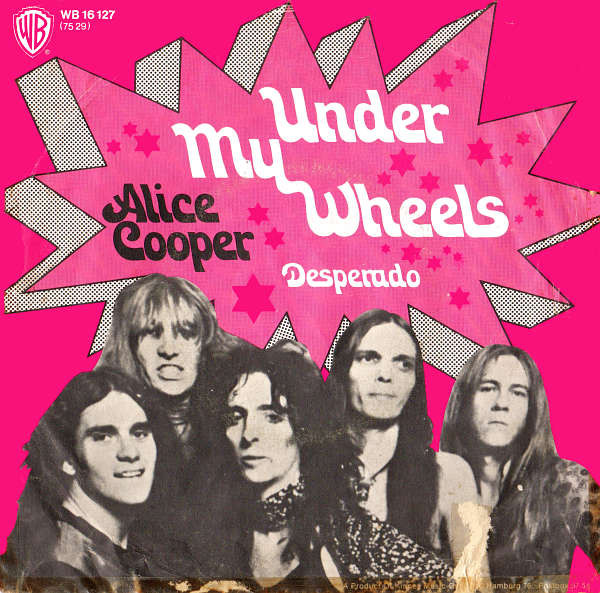
One of my favorites of Alice Cooper. The song wasn’t a giant success but it has remained in Alice’s set since it was released in 1971. The song’s impact can be seen in its inclusion in movies, TV shows, and video games. It has been covered by several other musicians, including Poison and Motörhead.
The guitar solo in this song is played by Rick Derringer. The songwriters were the group’s guitarist Michael Bruce and bass player Dennis Dunaway along with producer Bob Ezrin. The song is about a guy who accidentally runs over his girlfriend in the new car he just bought.
Alice Cooper has blended styles throughout his career. He has had Heavy Metal, rock, hard rock, and plain-out pop.
Alice Cooper’s real name is Vincent Furnier. Alice Cooper was the name of the band, but the name became so associated with the lead singer that he took it.
The band did a good job spreading the rumor that “Alice Cooper” was the name of a girl who was accused of being a witch in the 1600s, saying she contacted them through an Ouija board. Furnier later explained that he made it up when he was thinking of a sweet, innocent-sounding name that would contrast against their shocking stage show.
Cooper is a big family man which contradicts his reputation. Cooper is a born-again Christian and believes in the devil enough to have genuine supernatural fear. He’s never taken a Satanist stance and warns other bands against it. When he was a kid, his family was poor and there were very few presents. Now, Cooper goes crazy on Christmas, buying lots of gifts for his family.
Dennis Dunaway: This was another song that I wrote. I remember singing the song to Glen Buxton about this guy who’s just bought a brand new car and he’s going over to pick up his girlfriend and take her to the movies. Glen was like, ‘We don’t do girl songs!’ And I was like, ‘No, the guy runs over the girl.’ So he said, ‘Oh, OK.’ Ha ha! Anyway, Under My Wheels is about a guy who accidentally runs over his girlfriend, who he’s trying to impress with his new car. It was a fairly decent hit in America, and we also plugged it in Britain. We did a Killer tour over there when the single had just been released.
“Under My Wheels”
The telephone is ringing you got me on the run I’m driving in my car now anticipating fun
I’m driving right up to you babe I guess that you couldn’t see yeah yeah
But you were under my wheels why don’t you let me be
’cause when you call me on the telephone saying take me to the show
And then I say honey I just can’t go old lady’s sick and I can’t leave her home
The telephone is ringing you got me on the run I’m driving in my car now
I got you under my wheels I got you under my wheels I got you under my wheels
Got you under my wheels yeah yeah I got you under my wheels
Aah the telephone is ringing you got me on the run I’m driving in my car now anticipating fun
I’m driving right up to you babe I guess that you couldn’t see yeah yeah
But you were under my wheels why don’t you let me be
Yeah yeah got you under my wheels yeah yeah I got you under my wheels
I got you under my wheels got you got you got you got you
Under my wheels got you under my wheels wheels wheels wheels
This song has been covered many times. The one that is probably the most popular is by the hard rock band Nazareth. This version was the one that Nazareth heard to base their version on. It was written and composed by the American songwriter Boudleaux Bryant, who was a very prolific and successful songwriter for other artists throughout the 1950s and beyond.
Gram and Harris’s version is my favorite version of the song now. It was on Parson’s Grievous Angel album released in 1974. Parsons and Harris had a great musical partnership. You can hear it in this song on how their voices weaved together.
On the album… James Burton played electric lead guitar, Herb Pederson on rhythm, and Al Perkins on pedal steel. Bernie Leadon played dobro, and Byron Berline added some fiddle and mandolin. Linda Ronstadt always contributed vocals to a Harris-Parsons song that I will cover next.
Harris was talking about the making of the Grievous Angel Album: “Gram was in really good shape for that album, and we were really tight from working on the road together. The band knew what they were doing and we had the charts together by the time we got into the studio. We went in and, man, it was really fast – we did the tracks in five days and then a second five days for the vocals which were nearly all first or second takes. For all extent and purposes ist should be regarded as a ‘live’ album.”
“We didn’t really write songs together. He always carried those songs around in his head. He just needed a little prodding to get them out. That’s all I did. I helped him with a line here and there. I’d suggest something but those were his songs. I didn’t dispute the credit on ‘In My Hour Of Darkness’, which he gave to me. I think that was probably because at the same time, there was this big thing about that stupid album cover.”
What Harris was referring to about the cover was that it made Gram’s wife upset. It was originally a cover of Parson and Harris that Gram picked out. Parson’s manager was Phil Kaufman and he said that Gretchen Parsons, Gram’s wife, found out about the picture and fought with Parsons. So, she had the picture removed when it was released because Gram had passed away in September of 1973 and this album was released in 1974.
The Everly Brothers were the first to cover it, but they never released the song as a single. They planned to release this as a single, but industry politics got in the way. Their version is very good as well but Harris and Parson’s voices just sounded so good together for this particular song.
Emmylou Harris: “I really liked working with Gram, it was a completely new experience for me. I was a little weary at first because of Los Angeles and Hollywood and all, and I was very much East Coast orientated. I was very much on my guard but Gram was a very real person and, whenever I went out there, I always felt that I was in some kind of protective bubble. It was never Los Angeles itself, but always working with Gram and the music, and I kept myself in a very small circle.”
“It was the first time to have ever lost a close friend. I’m sure that all people have lost someone who is very dear to them, but Gram was young and so full of life. There are people who say ‘well, it was bound to happen’… but not to me because Gram was the most alive person I ever knew and breathed a whole lot into me and into my life. So he still remains very much alive in my heart.”
“Eventually Gram will find his place in history. He had a real creative vision of his own as a writer. Perhaps there is a shadow of that inspiration on my records but it’s not the gut level thing.”
Here is a live version from Gram and Emmylou from 1973.
Love Hurts
Love hurts, love scars Love wounds and mars Any heart not tough Nor strong enough To take a lot of pain Take a lot of pain Love is like a cloud Holds a lot of rain
Love hurts Mmm-mm, love hurts
I’m young, I know But even so I know a thing or two I’ve learned from you
I’ve really learned a lot Really learned a lot Love is like a stove Burns you when it’s hot Love hurts Mmm-mm, love hurts
Some fools think of happiness Blissfulness, togetherness Some fools fool themselves, I guess But they’re not fooling me
I know it isn’t true Know it isn’t true Love is just a lie Made to make you blue







 PowerPop... An Eclectic Collection of Pop Culture