I saw this quote by a critic about this song: “Take one part Small Faces, one part Who, one part Beatles, mix, cook to a boil and let rock!”
I found this song on their greatest hits. I would highly recommend one of their greatest hits to anyone.
A powerpop group from Cleveland Ohio in the early to mid-70s. They were influenced by the Beatles, Small Faces, The Who and The Beach Boys. They had some of the same problems as Badfinger, being too hard for pop and too soft for rock. Badfinger was overall more successful but the Raspberries had some top 40 hits.
This song peaked at #69 on the Billboard 100 in 1973. Tonight was originally on their 3rd album called Side 3 that peaked at 128 in the Billboard Album Chart in 1973. Eric Carmen would go on to greater success as a solo performer but I never thought he topped what he did with the Raspberries.
Tonight
One, two, three, four When you smiled at me And I saw your eyes All I ever wanted to be Was in your arms tonight You looked too young to know about romance Oh, yes you did But when you smiled, I had to take a chance I had to take a chance and be with you
Tonight I’ll be with you tonight Tonight You’ll love me too tonight Woh baby, tonight
I’m making love to you Woh, tonight Bop-om-doo-doh-woh-mop-shoo Woh, tonight You’re gonna love me too Tonight Woh, tonight
I don’t know myself If it’s wrong or right All I know is what I can feel So be my love tonight You looked too young to know about romance Oh, you know what I mean But when you smiled, I had to take a chance I had to take a chance and be with you
Woh, tonight Won’t you let me sleep with you, baby Woh, tonight I just wanna make you feel good inside, baby Woh, tonight Let me feel the love that’s in you Woh, tonight Come on, come on, come on, come on And let me Come on, baby Woh, tonight
I love garage rock and this song is what it’s all about. Distortion and feedback with a driving beat.
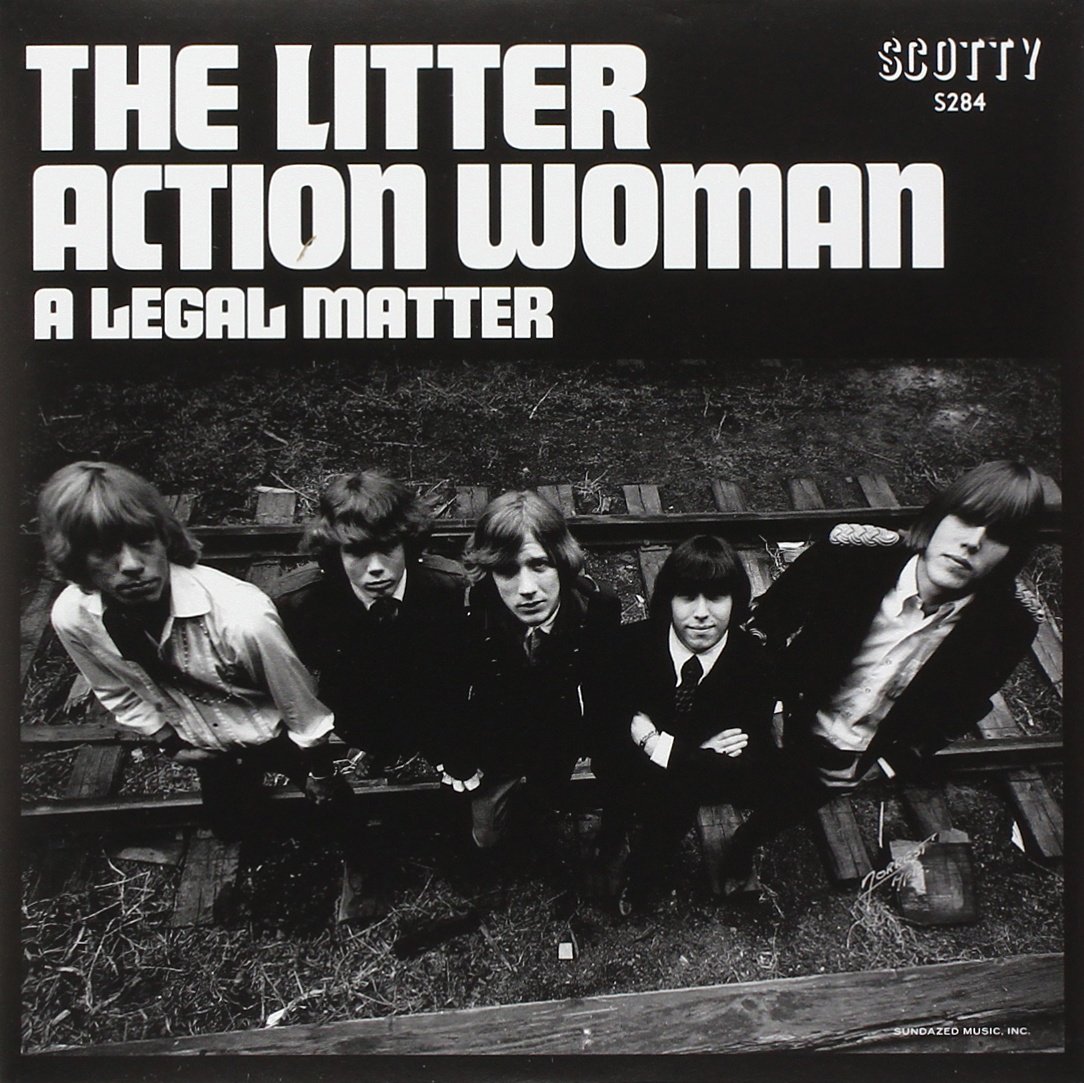
Action Woman is The Litter’s most well-known song. With its demonic fuzz/feedback guitar riffs and snarling lead vocal, it was an archetype of the tough ’60s garage rock and a precursor of the 70s punk movement.
The Litter was heavily influenced by British Invasion bands such as The Yardbirds and the Who, they recorded their debut single, Action Woman backed by The Who’s A Legal Matter with local producer Warren Kendrick in late 1966.
Kendrick wrote Action Woman for them. They finally signed to a major label in 1969 but their distortion was toned down a bit and their singer and guitar player was replaced. Their album Emerge peaked at #175 in the Billboard Album Chart.
The B side…Cover of The Who’s Legal Matter
Action Woman
Hey, Miss High and Mighty I’ve had all I can take Walkin’ right on by me That’s your last mistake
I’ve gotta find myself some action To satisfy my soul A little mad distraction Before I lose control
You say you love me good But why are you so cold? You say you own the world, But you don’t own my soul.
A little competition, now Maybe that’ll wake you up, Stir up some ambition, yeah And really shake you up.
Yeah! Oh!
I’m gonna find me an action woman To love me all the time, A satisfaction woman Before I lose my mind.
Yeah, I’m gonna find me an action woman To love me all the time, A satisfaction woman Before I lose my mind.
I’m gonna find me an action woman A satisfaction woman! I’m gonna find me an action woman! (fade out)
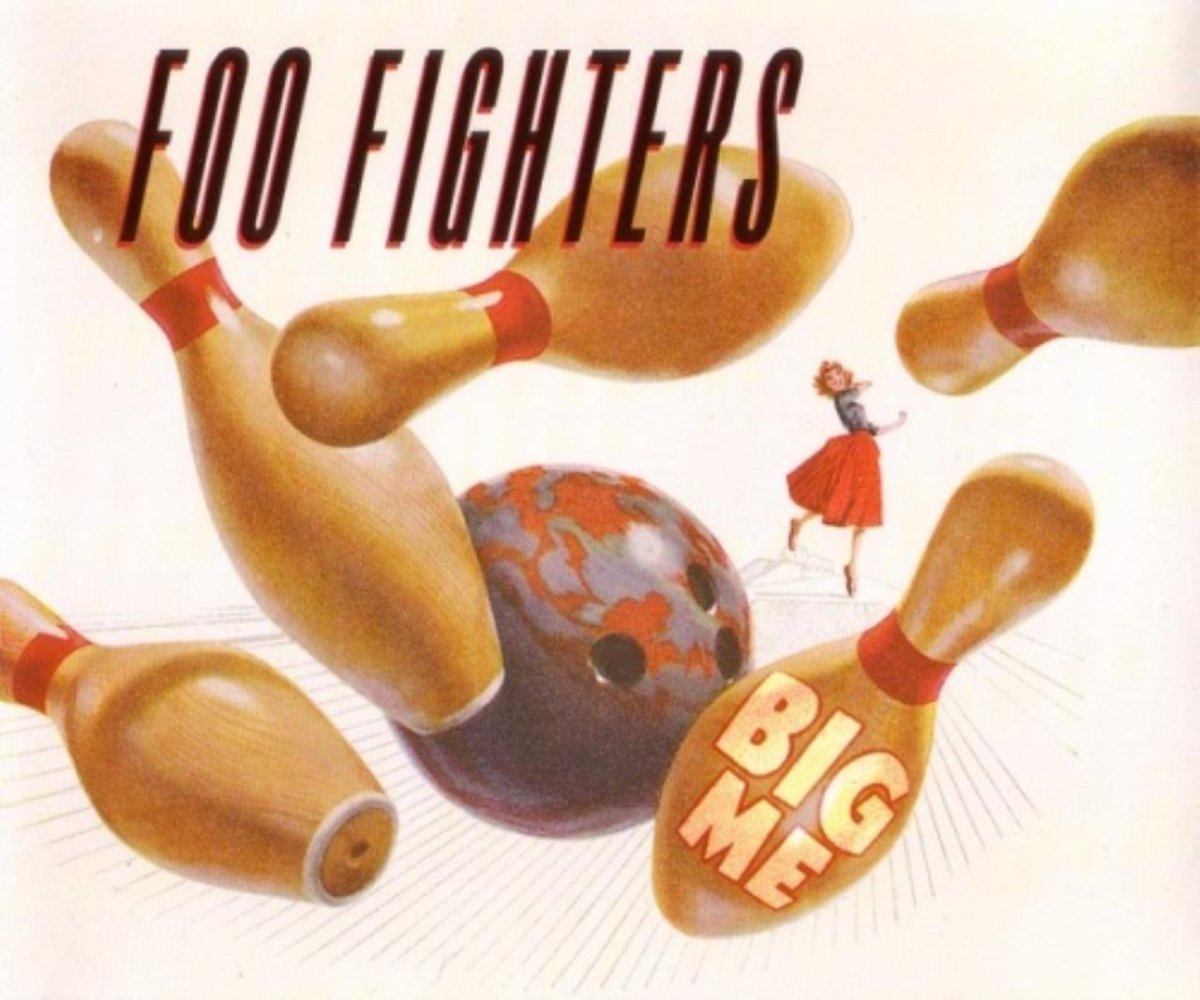
First time I heard this I liked it. It’s a sugary pop song and I was surprised at the time that Dave Grohl the drummer for Nirvana wrote and sang it.
The song peaked at #9 on the Alternative Charts and #19 in the UK in 1996.
David Grohl wrote this and many other songs on the album when he was still the drummer for Nirvana. Kurt Cobain knew he wanted to pursue projects outside of Nirvana, and had no problem with it.
The video is a takeoff on Mentos commercials. Mentos are mint candies that come in tubes. They are made in Europe, and the commercials had a campy feel. Unfortunately for The Foo Fighters, Mentos make great projectiles and for years fans would throw the candy at them when they played this.
They stopped playing the song because of the Mentos flying at them and didn’t start playing it again until Weezer, who was touring with them started to play the song.
It won the 1996 MTV Video Music Award for Best Group Video.
From Songfacts
This song is about being dumped. Lead Foo Dave Grohl broke it down: “Girl meets boy, boy falls in love, girl tells him to f–k off!”
The Mentos commercials became a big part of pop culture in the US. In each spot, someone gets a moment of inspiration after eating a mint and is then able to overcome some obstacle. In one spot, a woman’s car is boxed in, so she gets some burly construction workers to pick it up and move it for her. In another, a kid acts like a roadie to get backstage at a concert.
The video shows the band in similar situations, solving problems with the aid of their own special candy called Foo-tos.
This song was often covered by Weezer when the Foo Fighters and Weezer toured together in 2005.
The Foo Fighters released an acoustic version with Petra Haden singing with Dave Grohl for their 2006 live CD Skin and Bones.
In the video for the Foo Fighters song “Monkey Wrench,” which Grohl directed, a soothing version of “Big Me” plays as elevator music. Grohl commissioned the electronic act The Moog Cookbook, which had covered “Smells Like Teen Spirit” to his liking, to create this rendition for the video. The full electro version of “Big Me” can be heard on the Moog Cookbook compilation album Bartell.
Big Me
When I talk about it It carries on Reasons only knew When I talk about it Aries or treasons All renew
Big me to talk about it I could stand to prove If we can get around it I know that it’s true
When I talked about it Carried on Reasons only knew
But it’s you I fell into
When I talk about it It carries on Reasons only knew When I talk about it Aries or treasons All renew
Big me to talk about it I could stand to prove If we can get around it I know that it’s true
Well I talked about it Put it on Never was it true But it’s you I fell into
Well I talked about it Put it on Never was it true But it’s you I fell into
This song was a B side to Cripple Creek. This was on the Band’s self-titled second album The Band with peaked at #9 in 1970 in the Billboard Album Charts. The song was written by Robbie Robertson:
’ I told Levon I wanted to write lyrics about the Civil War from a southern family’s point of view. ‘Don’t mention Abraham Lincoln in the lyrics’ was his only advice, ‘That won’t go down too well.’ I asked him to drive me to the Woodstock library so I could do a little research on the Confederacy. They didn’t teach that stuff in Canadian Schools. When I conjured up the story about Virgil Caine and his kin against this historical backdrop, the song came to life for me. Though I did stop and wonder, can I get away with this? You call this rock ‘n’ roll? Maybe!
Joan Baez covered this song and it peaked at #3 in the Billboard 100 in 1971…while the Bands version didn’t chart…Life isn’t fair at times. Asked about the Baez version of this song, Robbie Robertson said it was “a little happy-go-lucky for me,” but he was thankful that it introduced many listeners to The Band.
The song appeared at number 245 on Rolling Stone magazine’s list of the 500 greatest songs of all time.
From Songfacts
Robbie Robertson wrote this song, which is set during the American Civil War – “Dixie” is a term indicating the old American South, which was defeated by the Union army. The song is not related to his heritage, as Robertson is half-Mohawk Indian, half-Jewish Canadian.
Robertson came up with the music for this song, and then got the idea for the lyrics when he thought about the saying “The South will rise again,” which he heard the first time he visited the American South. This led him to research the Civil War.
The main character in the song, Virgil Caine, is fictional, but there really was a “Danville train” and “Stoneman’s cavalry.”
The train would have been part of the Richmond and Danville Railroad, a vital conduit for the Confederate Army. George Stoneman was a Union cavalry officer who led raids on the railroad.
The vocals featured the 3-part harmonies of Levon Helm, Richard Manuel, and Rick Danko on the choruses, and Helm sang the verses. He was the only band member who was from the South (Arkansas), so it was fitting that he played the role of Virgil Caine, a Virginia train worker, in this song.
This was recorded in Sammy Davis Jr.’s house in Los Angeles. The Band rented it and converted a poolhouse into a studio to record their second album.
Joan Baez covered this in 1971. It was her biggest hit, reaching US #3 and UK #6.
Her version was recorded at Quad Studios in Nashville with producer Norman Putnam, who gathered about 20 people from around the studio to sing on the chorus. One of those voices belongs to Jimmy Buffett, who Putnam would later work with on his album Changes in Latitudes, Changes in Attitudes.
Baez changed some of the lyrics on her version. For example, she sings, “Virgil Cain is my name and I drove on the Danville train. ‘Til so much cavalry came and tore up the tracks again.” The original lyrics are, “Virgil Cain is THE name and I SERVED on the Danville train. ‘Til STONEMAN’S cavalry came and tore up the tracks again” referring to George Stoneman, who was a general in the Union army).
This was used as the B-side to “Up On Cripple Creek.”
The Night They Drove Old Dixie Down
Virgil Caine is the name, and I served on the Danville train ‘Til Stoneman’s cavalry came and tore up the tracks again In the winter of ’65, we were hungry, just barely alive By May the tenth, Richmond had fell, it’s a time I remember, oh so well
The night they drove old Dixie down, and the bells were ringing The night they drove old Dixie down, and the people were singin’ they went La, la, la, la, la, la, la, la, la, la, la, la, la, la
Back with my wife in Tennessee, when one day she called to me “Virgil, quick, come see, there goes Robert E Lee” Now I don’t mind choppin’ wood, and I don’t care if the money’s no good Ya take what ya need and ya leave the rest But they should never have taken the very best
The night they drove old Dixie down, and the bells were ringing The night they drove old Dixie down, and the people were singin’ they went La, la, la, la, la, la, la, la, la, la, la, la, la, la
Like my father before me, I will work the land Like my brother above me, who took a rebel stand He was just eighteen, proud and brave, but a Yankee laid him in his grave I swear by the mud below my feet You can’t raise a Caine back up when he’s in defeat
The night they drove old Dixie down, and the bells were ringing The night they drove old Dixie down, and all the people were singin’, they went Na, la, na, la, na, na, na, na, na, na, na, na, na, na
The night they drove old Dixie down, and all the bells were ringing The night they drove old Dixie down, and the people were singin’, they went Na, la, na, la, na, na, na, na, na, na, na, na, na, na
First time I heard this song was in the brilliant comedy Animal House by the fictional group Otis Day and the Knights. The movie was such a big hit that many people thought Otis Day And The Knights were a real group, so they went on tour. They did very well, selling out many of the places they played and released an album in 1989 called Shout. Otis Day’s real name is DeWayne Jessie.
This song was recorded in its first take during the studio session. Shout was never a big chart success (#47), but it sold over a million copies and became a rock and R&B classic. The Isley Brothers bought their mother a house in New Jersey with the proceeds from this. She was living in Cincinnati.
After Shout got some attention, RCA records signed the Isleys to a record deal despite concerns that people would not understand what they were singing.
From Songfacts
The Isleys wrote this on the spur of the moment at a Washington, DC, concert in mid-1959. As they performed Jackie Wilson’s “Lonely Teardrops,” Ronald Isley ad-libbed, “WELLLLLLLLLLL… you know you make me want to SHOUT” and Rudy and O’Kelly joined in on the improvisation. The audience went wild and afterwards, RCA executive Howard Bloom suggested putting it out as their first RCA single. >>
This evolved out of the call-and-response style The Isleys grew up singing in church. The organist from their church, Professor Herman Stephens, played on the song.
The Isley Brothers did not consider this a song at first. It was just a “thing” they would do onstage and the crowd would go nuts. They knew they were onto something when Jackie Wilson, who they were opening for, started using the stop-and-go style in his show.
This song has its own dance. When The Isleys sing the “little bit softer now” part, you go a little lower, then gradually rise up for the “little bit louder now part.” For the rest of the song, you just jump around and go crazy. It’s an easy dance, which makes it popular at weddings, proms, and other events where many rhythmically-challenged people end up on the dance floor.
The 1978 movie Animal House featured this in a famous scene where the frat brothers danced to it. The movie starred John Belushi and became a classic, helping revive interest in the song as well as the dance associated with it. In 2003, the group MxPx recorded a new version for the 25th anniversary DVD release of the movie.
In the UK, this is the song that introduced the singing sensation Lulu. The Scottish singer came to London at age 15 and recorded a version of the song with her group Lulu & The Luvvers that made it to #7 on the UK charts. Early on, Lulu often performed in Blues clubs where the song was a great fit. She soon became a very successful actress as well, appearing in the film To Sir With Love and scoring a #1 US hit with the title track.
Lulu, just 13 at the time, was introduced to the song by the Scottish rocker Alex Harvey, who she saw perform it in a Glasgow club called The Scene. Lulu added it to her act with The Luvvers, and it became their first hit when Lulu sang it at an audition for Decca records. She had a terrible cold when she recorded it, which gave her a rougher sound that suited the song.
The Isleys developed this on tours of black theaters in the late ’50s. They were usually low on the bill with other R&B acts.
The B-side of the single was “Shout Part 2,” an even wilder version.
The Isley Brothers next 4 singles tanked. They did not have another hit until “Twist And Shout” in 1962.
A cover version by Joey Dee And The Starlighters was a US Top 10 hit in 1962.
Shout
Well
You know you make me wanna (Shout!) Kick my heels up and (Shout!) Throw my hands up and (Shout!) Throw my head back and (Shout!) Come on now (Shout!)
Don’t forget to say you will Don’t forget to say, yeah Yeah, yeah, yeah, yeah (Say you will) Say it right now baby (Say you will) Come on, come on (Say you will) Say it, will-a you (Say you will) Come on now!
(Say) say that you love me (Say) say that you need me (Say) say that you want me (Say) you wanna please me (Say) come on now (Say) come on now (Say) come on now
(Say) I still remember (Shooby-doo-wop-do-wop-wop-wop-wop) When you used to be nine years old (Shooby-doo-wop-do-wop-wop-wop-wop) Yeah yeah! I was a fool for you, from the bottom of my soul, yeah! (Shooby-doo-wop-do-wop-wop-wop-wop) Now that you’ve grown, up (Shooby-doo-wop-do-wop-wop-wop-wop) Enough to know, yeah yeah (Shooby-doo-wop-do-wop-wop-wop-wop) You wanna leave me, you wanna, let me go (Shooby-doo-wop-do-wop)
I want you to know I said I want you to know right now, yeah! You been good to me baby Better than I been to myself, hey! hey! And if you ever leave me I don’t want nobody else, hey! hey! I said I want you to know-ho-ho-hey! I said I want you to know right now, hey! hey!
You know you make me wanna (Shout-woo) hey-yeah (Shout-woo) yeah-yeah-yeah (Shout-woo) all-right (Shout-woo) all-right (Shout-woo) come on now! (Shout) come on now! (Shout) yeah, yeah, yeah (Shout) yeah, yeah, yeah (good sound) (Shout) yeah, yeah, yeah (good sound) (Shout) yeah, yeah, yeah (good sound) (Shout) all-alright (good sound) (Shout) it’s all-alright (good sound) (Shout) all-alright (good sound) (Shout) all-alright (aah)
Now wait a minute! I feel alright! (Yeah yeah, yeah yeah!) Now that I got my woman I feel alright! Every time I think about you You been so good to me You know you make me wanna (Shout-woo) lift my heels up and (Shout-woo) throw my head back and (Shout-woo) kick my heels up and (Shout-woo) come on now (Shout-woo) take it easy (Shout-woo) take it easy (Shout-woo) take it easy (higher) (Shout) a little bit softer now (woo) (Shout) a little bit softer now (Shout) a little bit softer now (Shout) a little bit softer now (Shout) a little bit softer now (Shout) a little bit softer now (Shout) a little bit softer now (Shout) a little bit softer now (Shout) a little bit softer now (Shout) a little bit softer now (Shout) a little bit softer now (Shout) a little bit softer now (Shout) a little bit softer now (Shout) a little bit softer now (Shout) a little bit softer now (Shout) a little bit softer now (Shout) a little bit softer now
(Shout) a little bit louder now (Shout) a little bit louder now (Shout) a little bit louder now (Shout) a little bit louder now (Shout) a little bit louder now (Shout) a little bit louder now (Shout) a little bit louder now (Shout) a little bit louder now (Shout) a little bit louder now (Shout) a little bit louder now (Shout) a little bit louder now (Shout) a little bit louder now
(Shout) Hey! Hey! Hey! Hey! Hey! Hey! Hey! Hey!
Shout now! Jump up and shout now (woo) Jump up and shout now (woo) Jump up and shout now (woo) Jump up and shout now (woo) Jump up and shout now (woo)
Everybody shout now Everybody shout now Everybody, shout, shout Shout, shout, shout
It’s been 42 years since Lynyrd Skynyrd’s plane crashed in a swamp in Gillsburg, Mississippi. The band had just released the album “Street Survivors” and it was probably their best well-rounded album. With new guitarist Steve Gaines, they were primed for commercial success but on October 20, 1977, they lost singer-songwriter Ronnie Van Zant, guitarist Steve Gaines, backup singer Cassie Gaines, and road manager Dean Kilpatrick. The plane crash also claimed the lives of pilot Walter McCreary and co-pilot William Gray Jr.
A year earlier Steve Gaines joined the band and he was pushing them in directions they never had gone. Listening to “Street Survivors” you can hear his influence with songs I Never Dreamed and I Know A Little. Steve was a super talented guitarist, songwriter, and singer and I have to wonder where his career would have gone.
On this tour, they were headlining and moving up in status after years of touring as mostly an opening band.
Below is a good Rolling Stone article on the crash. The song below that is “I Never Dreamed,” a song heavily influenced by Gaines.
Great guitar riff that has been recycled into many songs, catchy chorus, and Neils unique voice. A nice mid-sixties rocker.
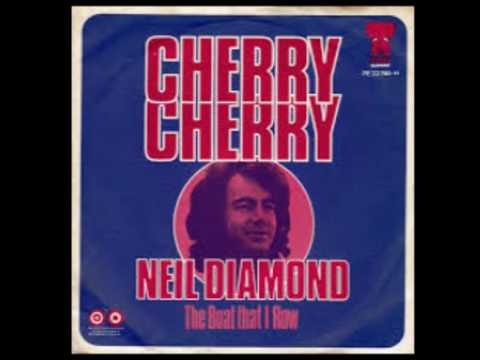
This started out with a guitar lick Diamond came up with that caught Jeff Barry’s ear. He and Greenwich loved it and encouraged Neil to finish the song. Jeff Barry and Ellie Greenwich produced the song.
The song peaked at #6 in the Billboard 100 in 1966.
In an interview with Melody Maker, Jeff Barry said that this song was originally “Money, Money,” but that he and Bang records owner Bert Berns convinced Diamond to make it lighter and more teen-friendly.
Neil Diamon has had 3 number 1 hits, 13 top ten hits, and 53 songs in the Billboard 100.
From Songfacts
Neil Diamond is the only credited songwriter on this track, but he got some help from Jeff Barry and Ellie Greenwich, who worked with him after he signed with Bang Records and produced the song. Barry and Greenwich were part of the Brill Building songwriting community, and had written many major hits, including “Be My Baby” and “Chapel Of Love.” They mentored Diamond early in his career and helped him create this Pop nugget, which helped make him a star.
Ever notice that there are no drums in this song? That’s because the version you hear was intended as a demo, with hand claps providing the drum beat. Diamond recorded the demo with Barry and Greenwich on backing vocals and Artie Butler on piano and Hammond organ. When they recorded the song in an official session complete with horns and drums, they couldn’t capture the exuberance of the demo. The drum and horn version was included on Diamond’s 1996 anthology In My Lifetime.
When this became a hit, Diamond’s songs were in demand. This led to The Monkees recording of Diamond’s “I’m A Believer,” which was the biggest hit of 1967.
Ellie Greenwich was not just a premier league songwriter, she was a fine backing singer as well; she and Jeff Barry often did the backing vocals for the songs they wrote. Neil Diamond recalled to Rolling Stone her contribution to this song: “Ellie was the best background singer ever. She did all the background parts on my early Bang records, ‘Cherry Cherry,’ ‘She Got the Way to Move Me,’ ‘Kentucky Woman’ – all of those records were Jeff and Ellie. They just had this great knack of singing all kinds of background parts and they were great at it. She invented the background parts to ‘Cherry Cherry.'”
Diamond made his TV debut performing this song on American Bandstand in 1966. Said Diamond, “American Bandstand was the holy grail of television shows for any Rock and Roll artist at that time.”
Cherry Cherry
Baby loves me Yes, yes she does Ah, the girl’s outta sight, yeah Says she loves me
Yes, yes she does Gonna show me tonight, yeah
She got the way to move me, Cherry She got the way to groove me She got the way to move me She got the way to groove me
Tell your mamma, girl, I can’t stay long We got things we gotta catch up on Mmmm, you know You know what I’m sayin’
Can’t stand still while the music is playin’ why’ain’t got no right No, no you don’t Ah, to be so exciting
Won’t need bright lights No, no we won’t Gonna make our own lighting
She got the way to move me, Cherry She got the way to groove me She got the way to move me She got the way to groove me
No, we won’t tell a soul where we gone to Girl, we do whatever we want to Ah, I love the way that you do me Cherry, babe, you really get to me
She got the way to move me, Cherry She got the way to groove me She got the way to move me She got the way to groove me
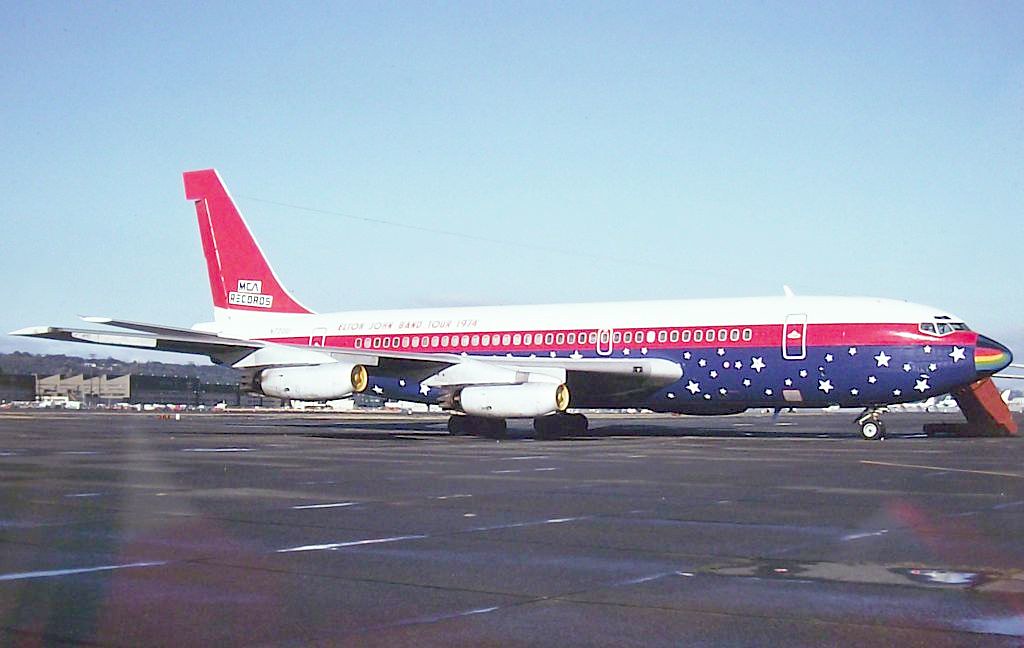
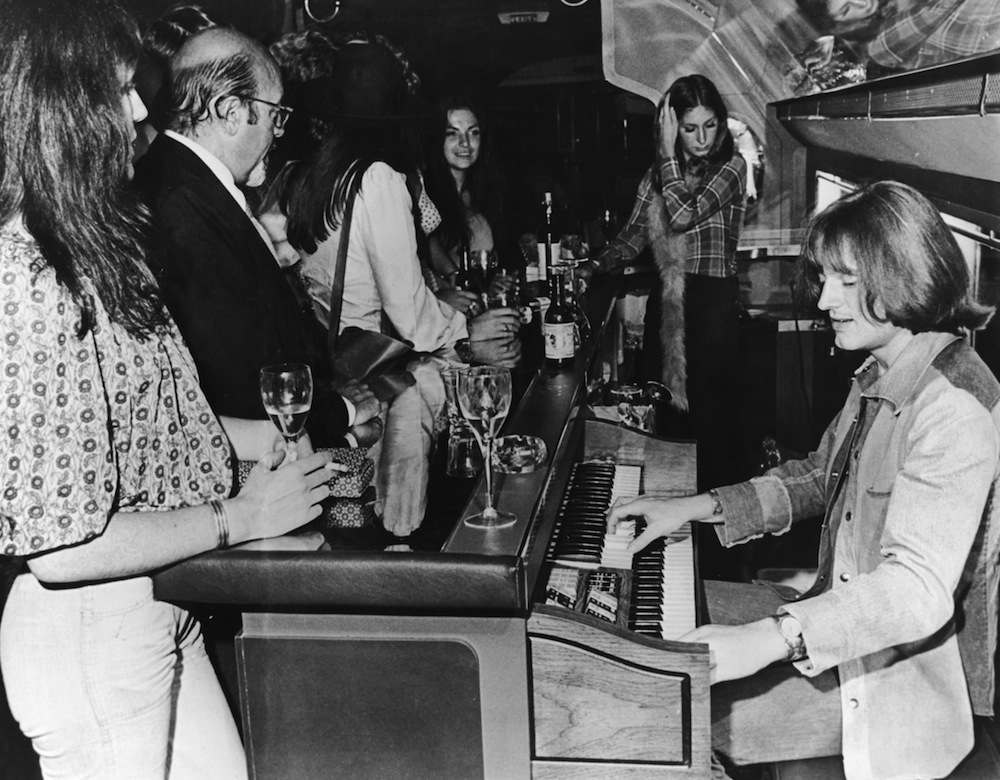
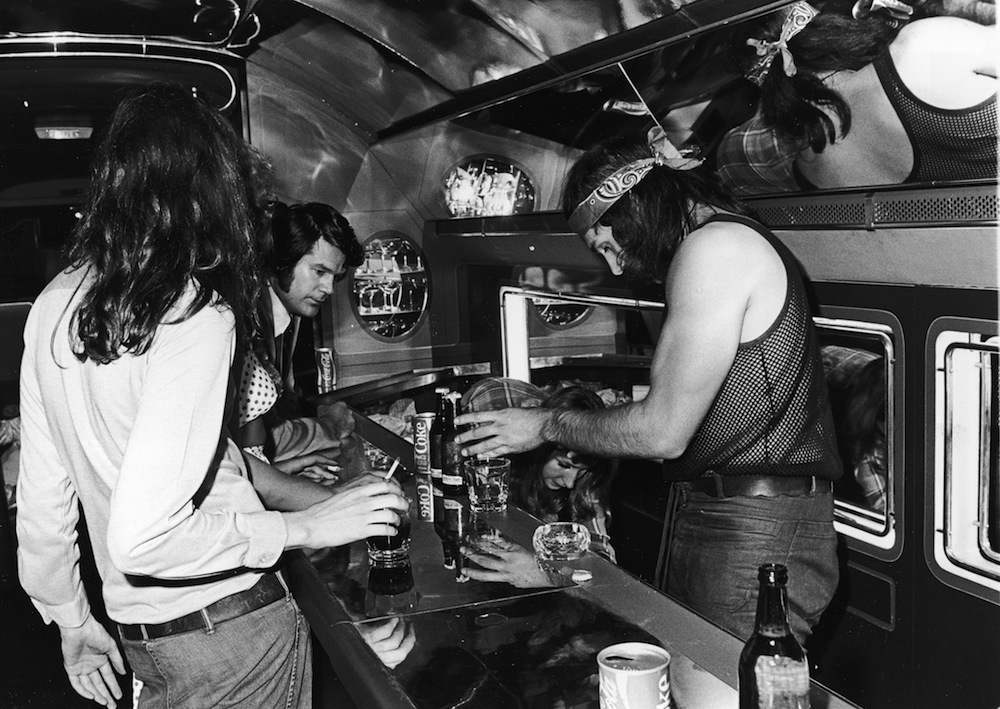
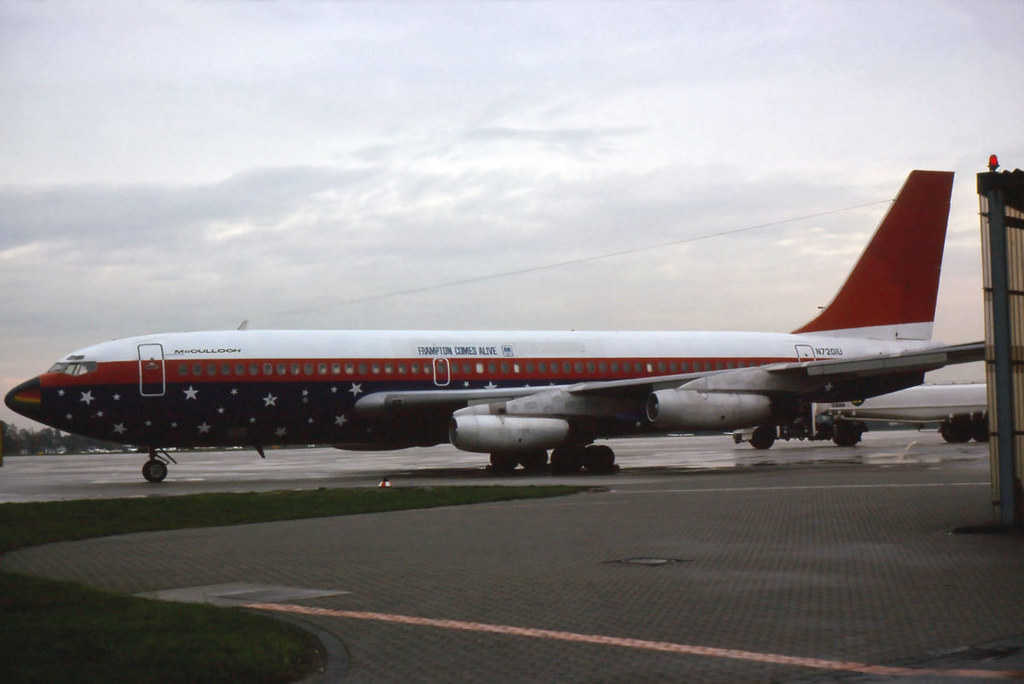
It’s 1973 and your band needs a plane all to themselves and you have the money ($2,500-per-flight hour ). You want an open bar…check…an organ…check…a fireplace…check…plenty of excesses…check check. The first time The Allman Brothers boarded they were greeted with “Welcome Allman Brothers” rendered in lines of cocaine on the club room bar.
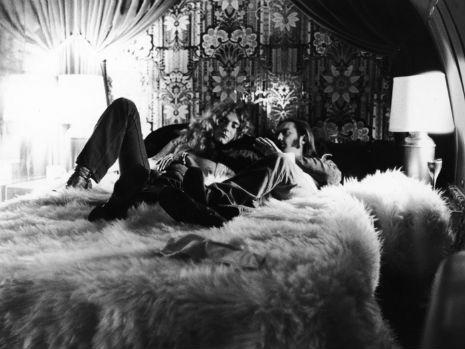
If you wanted the plane painted a different color…no problem…and your name could be stenciled on it. Bedrooms and enough space where Elton John could roller skate. It was redecorated to fit your taste.
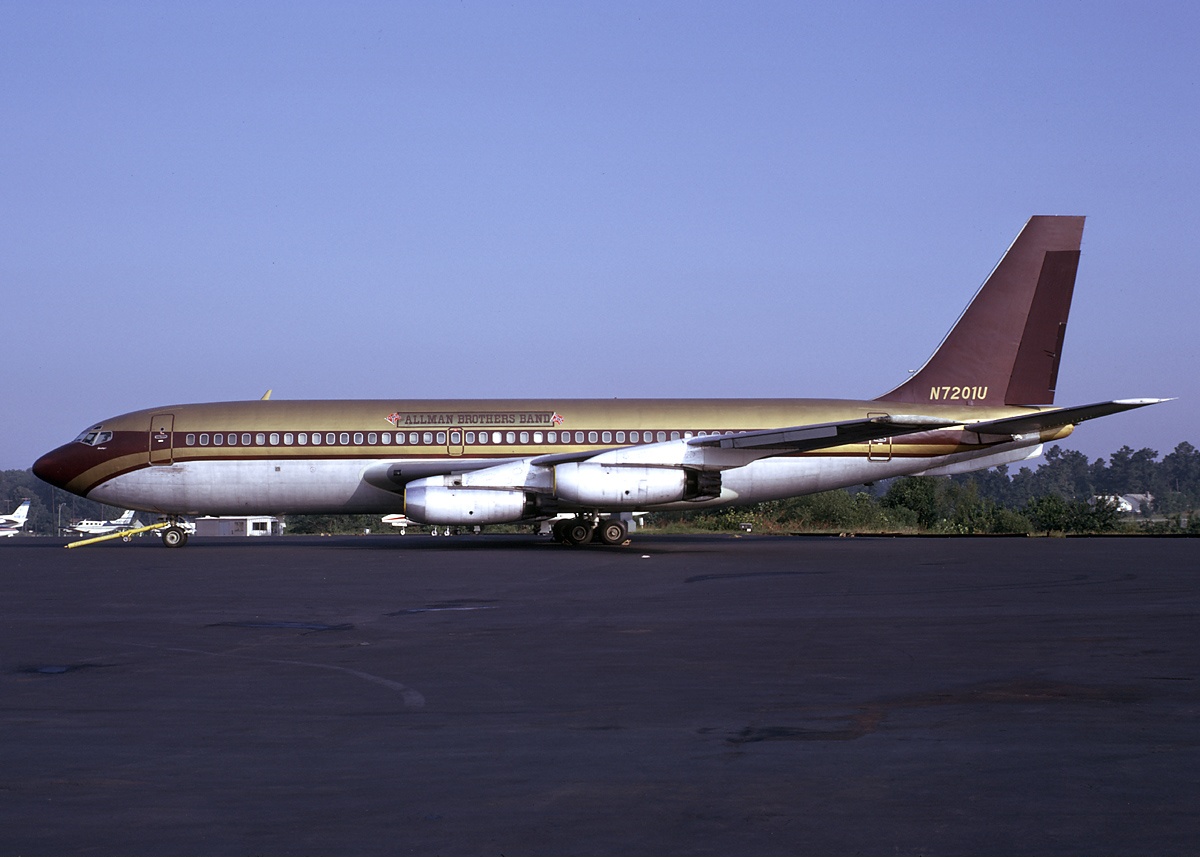
The registration number was N7201U, The Serial Number was 17907, it was the first B720 built and it was delivered to United Airlines on October 1960 and then purchased in 1973 by Contemporary Entertainment. Sherman and Sylvester invested $200,000 to reduce its seating capacity to forty and to install into the main cabin a bar, seats and tables, revolving armchairs, a 30-foot-long couch, a television set and a video cassette player, complete with a well-stocked video library.
The airplane was used by Led Zeppelin, Elton John, Alice Cooper, Bob Dylan and The Band, Deep Purple, Allman Brothers, The Rolling Stones, and Peter Frampton. John Lennon, Frank Sinatra, and Cher were passengers at one time or another.
Led Zeppelin is probably the most famous band that used it.
The plane was all about decadence and luxury. Many stories have originated on this plane from a lot of the bands that used it…I won’t repeat them here. Peter Frampton was the last to use it in 1976. After that, it developed engine problems. The Starship went through several ownership changes from 1977 through 1979 until it went into storage at Luton Airport. It was dismantled for parts starting in July 1982
With the times changing and fuel costs going up…this wasn’t as common after the 70s.
This is one rock and roll relic I would have loved to have flown on at least one time… it should have been saved and turned into a museum…or at least sold to me… Long live the Starship!
Songs can mark certain times in your life. When this one plays I remember my first car. It was a 1966 Mustang…not a good idea to give a classic car to a teenager.
I remember hearing this for the first time driving and thinking that this was not the same Robert Plant that a few years before was in Led Zeppelin. He was more subdued and you could tell he was changing his image a bit. The guitar is what stands out to me in this repetitive song. It had an elastic sound to it.
The song peaked at #39 in the Billboard 100 in 1984. I’m In The Mood was on The Principle fo Moments album which peaked at #8 in the Billboard album charts in 1983. I’m In The Mood was written by Robert Plant, Robbie Blunt, and Paul Martinez.
In The Mood
I’m in the mood for a melody I’m in the mood for a melody I’m in the mood
I’m in the mood for a melody I’m in the mood for a melody I’m in the mood
I’m in the mood for a melody I’m in the mood for a melody I’m in the mood
I can make you dance I can make you sing I can make you dance I can make you sing If you want me to
Oh I can make you dance I can make you sing I can make you dance I can make you sing If you want me to
Oh I can make you dance I can make you sing I can make you dance I can make you sing if you want me to
And your little song that you want to sing A little song that you want to sing sung in lieu
Here’s a little song that you want to sing A little song that you want to sing some of you
A little song that you want to sing A little song that you want to sing happy or blue
I’m in the mood, I’m in the mood, I’m in the mood
Why’d I end up doing it doin’ it doing it Do anything that you want me for if you want me to
Do it right gonna do it right Cause a matter of fact it’ll turn out to be strong If you want me to if you want me to Oh if you want me to if you want me to if you want me to
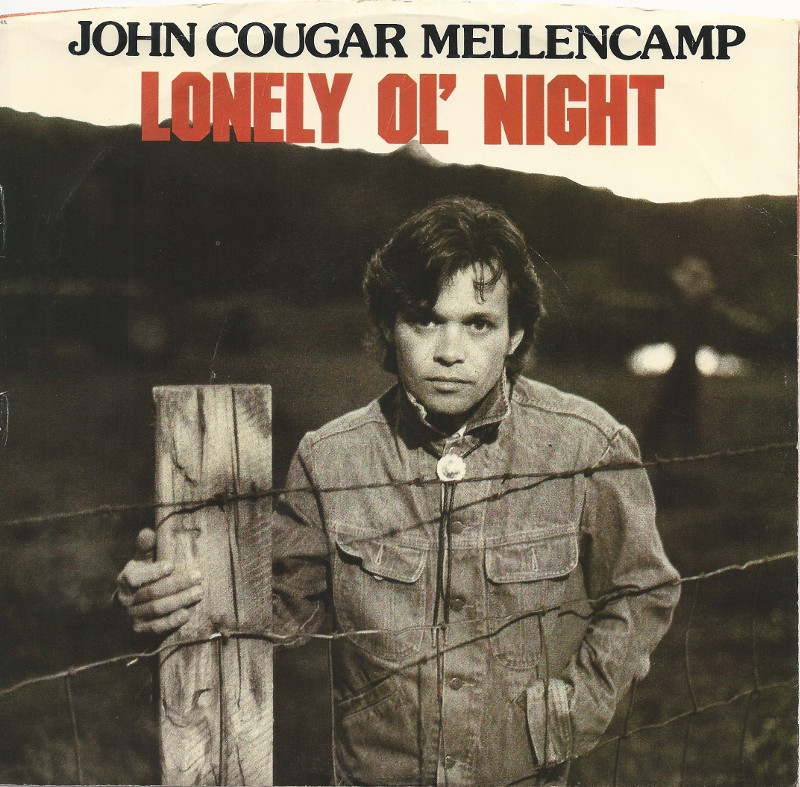
When I graduated high school in1985 this song was was all over the radio. It was on the Scarecrow LP and that album marked a change in Mellencamp’s songs. The change in his style started with the Uh Huh album that came out in 1983 but this one is when I became more of a fan.
This song peaked at #6 in the Billboard 100 in 1985. The Scarecrow album peaked at #2 on the Billboard album chart. Mellencamp’s Uh Huh started the transformation and this solidified his heartland Americana image.
The title and hook were lifted from dialogue in the 1963 movie Hud. When Brandon De Wilde’s character asks, “It’s a Lonesome old night, isn’t it?” Paul Newman replies, “Ain’t they all?”
From Songfacts
The lyrics, “He’s singing about standing in the shadows of love, I guess he feels awfully alone” refer to the song “Standing In The Shadows Of Love,” which was a #6 hit for the Four Tops in 1967. “Lonely Ol’ Night” reached the same plateau. >>
The Scarecrow album saw Mellencamp move to a more political direction in his songwriting, as he gave voice to American farmers, expressing their burdens in songs like “Rain on the Scarecrow” and “You’ve Got to Stand for Somethin’.” “Lonely Ol’ Night” was more typical of his earlier work, a romantic story set against a musical backdrop. Lyrically, it’s not far off from his 1980 track “Ain’t Even Done With The Night.”
Mellencamp borrowed from the movie again in his 1987 track “Paper in Fire” with the line, “We keep no check on our appetites.”
Lonely Ol’ Night
She calls me home She says baby it’s a lonely ol’ night I don’t know I’m just so scared and lonely all at the same time Nobody told me She was gonna work out this way no no no no no no I guess they knew We’d work it out in our own way
It’s a lonely ol’ night Can I put my arms around you? It’s a lonely ol nigh Custom made for two lonely people like me and you
Radio playin’ softly Some singer’s sad sad song He’s singing about Standing in the shadows of love I guess it feels awfully alone She says I know Exactly what he means yeah yeah yeah yeah yeah yeah And it’s a sad sad sad sad feeling When you’re living on those in betweens (But it’s OK)
It’s a lonely ol’ night Can I put my arms around you? It’s a lonely ol nigh Custom made for two lonely people like me and you
She calls me baby She calls everybody baby It’s a lonely ol’ night But ain’t they all?
It’s a lonely ol’ night Can I put my arms around you? It’s a lonely ol nigh Custom made for two lonely people like me and you
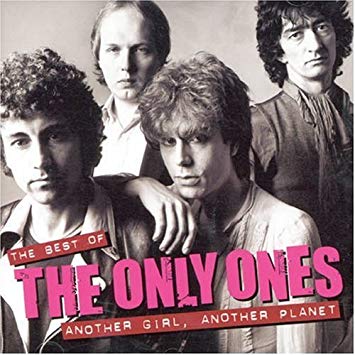
The Only Ones were a British band formed in 1976. Despite releasing three well-regarded albums between 1978 and 1980, The Only Ones faded away with this song as their best-known song and some critics say it’s a small masterpiece. Once the song gets going it is filled with guitar hooks.
Written by guitarist and lead vocalist Peter Perrett, “Another Girl, Another Planet” is as good as it got for The Only Ones. This uptempo number was the second track on their eponymous debut album. It was released twice as a single in 1978, both times on the CBS label. The first time it was backed by “Special View”, the second by “My Wife Says”.
This review by Allmusic is complimentary, to say the least.
In a world rife with injustice, the music industry has seen — if not perpetrated — more than its fair share of travesties (the sad saga of Badfinger comes immediately to mind). But one of the biggest involves, arguably, the greatest rock single ever recorded: the Only Ones’ “Another Girl, Another Planet.” The word “timeless” and “transcendent” get bandied about far too often when describing a song or an album, but in the case of “Another Girl,” even those terms are probably inadequate. The song marks that rare confluence of lyrical, instrumental, and vocal poetry that is so complete, so absolute, that it renders everything else — in, on, above, below, and around it — irrelevant while it plays.
The song did peak at 57 in the UK Charts when re-released in 1992. Its first chart appearance was in1981 at #44, for one week, on the New Zealand chart.
Other covers of this song included: Greg Kihn, The Replacements, Blink-182, The Dogs D’Amour, Beatsteaks and Babyshambles
From Songfacts
Although the song originally failed to chart, it has been re-released and covered more than once, and is surprisingly well known, although few would go as far as Andy Claps who in reviewing it for Allmusic said it is “that rare confluence of lyrical, instrumental, and vocal poetry that is so complete, so absolute, that it renders everything else – in, on, above, below, and around it – irrelevant while it plays.”
The song did eventually chart after being re-released in 1992, peaking at #57 in the UK.
Peter Perrett on writing the song: “I can remember what caused me to write ‘Another Girl, Another Planet.’ It would have been about April ’77 because we had it recorded by June. It was inspired by this girl from Yugoslavia. I didn’t go out with her, but she was like a total space cadet, which when I was really young I found interesting. She was just a bit weird- she’d say crazy things, and it just got me thinking that every girl has something to offer.
The Only Ones split in 1982 after being dropped by their label. They reformed in 2007 as a result of this song being used in a Vodafone advertising campaign.
Speaking about the writing of the song to Uncut August 2015,
It would have been written on my Guild acoustic. I think any good song should sound all right on acoustic guitar.”
Some radio stations refused to play the song because of its supposed drug content. Perrett told Uncut: “I put in drug-related imagery, but it wasn’t about drugs. At that time I was more addicted to sex and infatuation than I was to drugs.”
Another Girl, Another Planet
I always flirt with death I could kill, but I don’t care about it I can face your threats And stand up straight and tall and shout about it
I think I’m on another world with you, with you I’m on another planet with you, with you
You get under my skin I don’t find it irritating You always play to win But I won’t need rehabilitating, oh no
I think I’m on another world with you, with you I’m on another planet with you, with you
Another girl, another planet Another girl, another planet
Space travels in my blood There ain’t nothing I can do about it Long journeys wear me out But I know I can’t live without it, oh no
I think I’m on another world with you, with you I’m on another planet with you, with you
Another girl is loving you now Another planet, is holding you down Another planet
It doesn’t get much better than this. This song was off his self-titled debut album Marshall Crenshaw that peaked at #50 on the Billboard album charts in 1982. Marshall only had one chart hit and that was with Someday, Someway off of this same album…it just shows that life isn’t fair at times. Every song is good on this album…you cannot say that about most albums.
Songs like this… is the reason I do this on Fridays.
Marshall Crenshaw on the song: ‘Cynical Girl’ sounds like it just came off the top of my head in one pass; that’s probably what happened. Quite a few of my songs are like that: I just start singing and playing without any advance thought. But then, with ‘Cynical Girl’ and so many others, the words take time to arrive. I asked another person to take a crack at it first but the guy wrote something that had no cohesion. My idea for the lyrics came to me one day when I was walking out of traffic court, just out of the blue. The lyrics have an oddness to them, and humor too; they said some things that I wanted to say. People have sometimes asked me, ‘Who’s it about?’ ‘Did you find her yet?’, etc. It’s really not about a girl—that’s just off-the-shelf rock-and-roll language. To me, what the song says in a funny way is ‘I hate brain-dead mass-culture [stuff] and I want to hang around with people who feel the same.’ People have always really loved that song and identified with it and of course I love that!”
Cynical Girl
Well I’m goin’ out I’m goin’ out lookin’ for a cynical girl Who’s got no use for the real world I’m lookin’ for a cynical girl Well I hate TV
There’s gotta be somebody other than me Who’s ready to write it off immediately I’m lookin’ for a cynical girl
Well I’ll know right away by the look in her eye She harbors no illusions and she’s worldly-wise And I’ll know when I give her a listen that she She’s what I’ve been missin’ What I’ve been missin’ I’ll be lost in love
And havin’ some fun with my cynical girl Who’ll have no use for the real world I’m lookin’ for a cynical girl Well I’m goin’ out
I’m goin’ out lookin’ for a cynical girl Who’s got no use for the real world I’m lookin’ for a cynical girl
Yeah I’ll know right away by the look in her eye She harbors no illusions and she’s worldly-wise And I’ll know when I give her a listen that she She’s what I’ve been missin’ What I’ve been missin’ I’ll be lost in love
And havin’ some fun with my cynical girl Who’ll have no use for the real world I’m lookin’ for a cynical girl
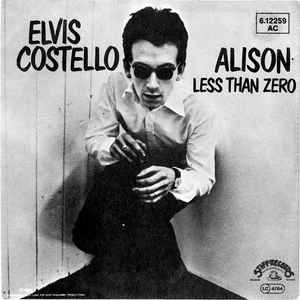
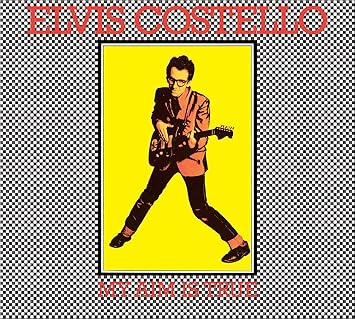
On Fridays, I could just start with his first album and post song after song and they would fit perfect. I was walking through a drug store in the late seventies as a kid and I saw this album cover…I thought what??? another person named Elvis? Who is this skinny guy?
While at the drug store the guy was playing this album and I heard Alison… That was the first thing I ever heard by Elvis. The album peaked at #32 in the Billboard Album Charts in 1978. His songs were different than a lot of the radio hits of the day…with different, I mean better.
Elvis Costello on the song: We put these cheap synth strings on the track before there were really even synths. They said, ‘The strings will make it a hit!’ It was never a hit.”
From Songfacts
Costello has never revealed who this song is about. In the liner notes to his Girls Girls Girls compilation album, he wrote, “Much could be undone by saying more.”
As is usually the case in Elvis Costello lyrics, the protagonist is sexually frustrated (see “Watching the Detectives”) and mad at the guy who always gets the girl. In this tale of unrequited love, “My aim is true” does not imply pure intentions; it means he wants to kill her.
The chorus is based on a song by The Detroit Spinners called “Ghetto Child.”
The line in this song, “My Aim Is True,” provided the title for the album.
My Aim Is True was Costello’s first album. He did not have a backing band at the time, so Nick Lowe, who produced the album, brought in a group called Clover. Huey Lewis was in the band, but didn’t participate in the sessions because they didn’t need a harmonica player. Alex Call was the lead singer of Clover, and he wasn’t needed on “Alison” either.
Call told us: “Elvis Costello was at that time Dec McManus, he was using his real name. He was just this mild-mannered, meek little songwriter who would hang out around Stiff Records, which was our management office. Elvis once said, ‘Man, I wish I could sing like you.’ They went and cut at this little place called Pathways – a little 8-track studio so small that all you had just enough space to play your instrument. They went in that first session, and in one session they cut ‘Alison’ and ‘Red Shoes’ and ‘Less Than Zero,’ these classic songs. I remember hearing them at this Rock ‘n’ Roll house we lived in outside of Headley, South of London called the Headley Grange House. John McFee (Clover bass player) brought back a reel-to-reel tape on one of those old Wollensak tape recorders. He played this stuff, and I mean, I was ready to quit after hearing that – it was so astounding. They did like three 8-12 hour sessions, and that was My Aim Is True. That is a classic record, just unbelievable. We were managed by the same guys and we hung out a lot with Nick. Nick produced a lot of our early sessions there. We made two albums with Mutt Lange, and nothing happened with the band. We came close in England to breaking a single, but it didn’t work and we ended up breaking up.” (Check out our interview with Alex Call.)
Linda Ronstadt recorded this on her 1978 Living in the USA album and released the song as a single. The single didn’t chart on the Hot 100 – a rare miss for Ronstadt, who was very popular at the time. The album, however, sold over two million copies, providing Costello with substantial royalties as the writer of one of its 10 tracks. He credits these earnings with keeping him afloat in the early years before he caught on.
There were two singles released in the US. The B-side of one has a mono version of “Alison,” the other has a live version of “Miracle Man” that was recorded on August 7, 1977 at the Nashville Rooms in London.
The B-side of the UK single is “Welcome to the Working Week.” A few copies were released with the A-side pressed on white vinyl while the B-side is the usual black.
This song was used in an episode of That 70’s Show when Hyde contemplates moving to New York to follow a girl who wants to start a punk rock band.
Linda Ronstadt was an early Elvis Costello admirer who was in the audience when he performed at Los Angeles’ Hollywood High in June 1978. When she recorded her version of “Alison,” she had one of her friends in mind: “A sweet girl but kind of a party girl type. I felt that she needed somebody to talk to her in a stern voice because she was getting married and she would have to change.”
One of Costello’s most enduring songs, he has performed it in concert for decades. “Some nights it comes to life in my head, and some nights it falls apart,” he told Rolling Stone in 2017.
The track’s producer, Nick Lowe, is one of Elvis Costello’s songwriting heroes. He told Uncut: “Since I was 17, I’ve wanted to write songs as good as Nick Lowe. ‘Alison’ was the result of a chemistry experiment involving Nick’s ‘Don’t Lose Your Grip on Love’ and a song by The Detroit Spinners.”
Some people think “Alison” is a murder ballad. “It isn’t,” Costello told Rolling Stone in 2002. “It’s about disappointing somebody. It’s a thin line between love and hate, as the (New York City R&B group) Persuaders sang.”
Alison
Oh, it’s so funny to be seeing you after so long, girl And with the way you look, I understand that you were not impressed But I heard you let that little friend of mine Take off your party dress
I’m not gonna get too sentimental Like those other sticky valentines ‘Cause I don’t know if you are loving somebody I only know it isn’t mine
Allison, I know this world is killing you Oh, Allison, my aim is true
Well, I see you’ve got a husband now Did he leave your pretty fingers lying in the wedding cake? You used to hold him right in your hand But it took all that he could take
Sometimes I wish that I could stop you from talking When I hear the silly things that you say I think somebody better put out the big light ‘Cause I can’t stand to see you this way
Allison, I know this world is killing you Oh, Allison, my aim is true My aim is true My aim is true My aim is true My aim is true My aim is true My aim is true My aim is true My aim is true My aim is true My aim is true My aim is true
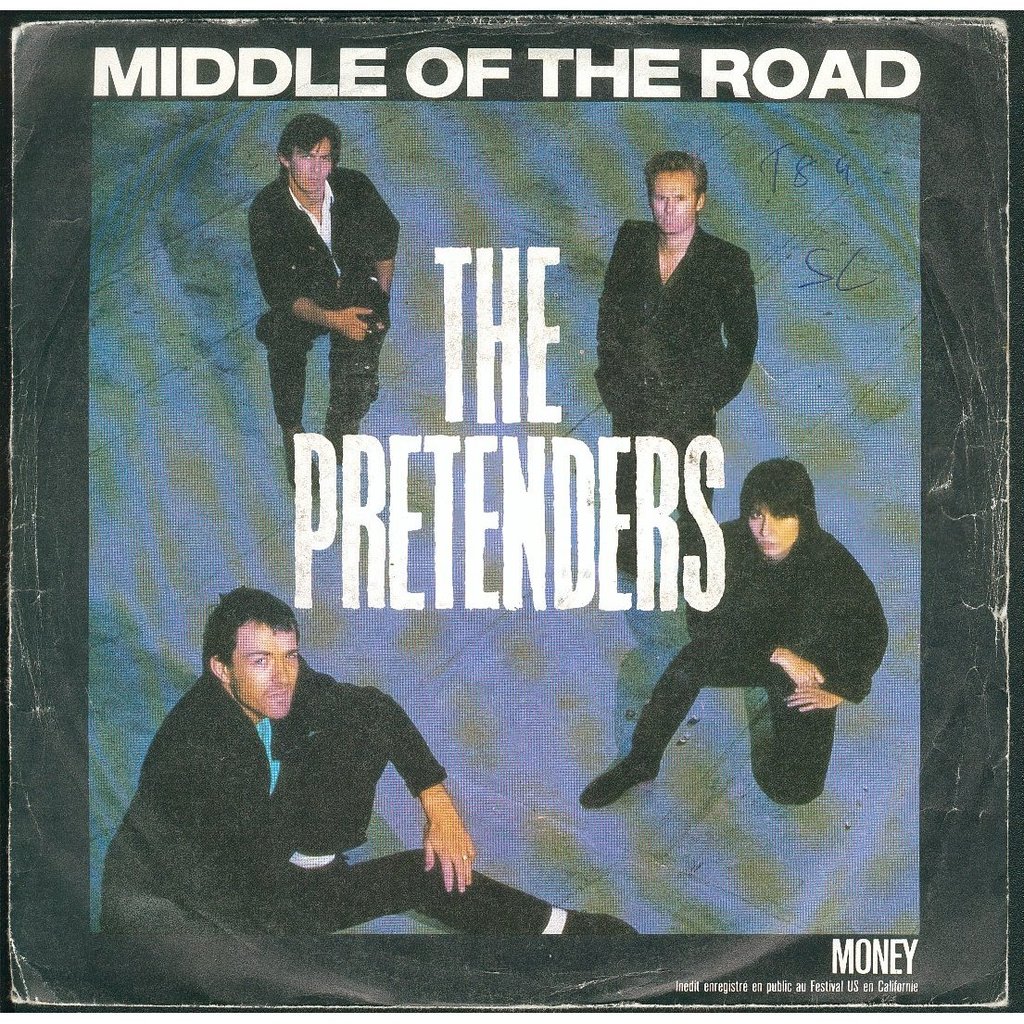
What strong song by Chrissie Hynde after two of her band members die and leaving Ray Davies.
She wrote this song, which finds her coping with transition and approaching middle age. Following the 1981 Pretenders album Pretenders II, two of the four band members – Pete Farndon and James Honeyman-Scott – died of drug overdoses, leaving just Hynde and drummer Martin Chambers, who remained the mainstays in the band amongst a rotating cast of guitarists and bass players.
This song peaked at #19 in the Billboard 100 in 1984.
From Songfacts
“Middle of the Road” is Chrissie Hynde’s credo. She told the Austin American-Statesman: “My personal discipline has been to try to stay in the middle, always, no matter what I’m doing. If I buy a jacket and it comes in three sizes, I want a medium. You have to learn how to temper yourself and hold back till you get to the end.”
Toward the end of the song, Hynde sings about the media hounding her. She has always tried to keep her private life to herself.
On this track, Hynde sings, “I got a kid, I’m 33.”
She was actually 32 when the song was released as a single in late 1983. In January that year, she had a daughter, Natalie, who she was raising as a single mother after leaving the father, Ray Davies from the Kinks.
A little after the 3-minute mark, Hynde lets loose one of the most famous yowls in rock. The feline inflection plays to the line, “I’m not the cat I used to be.”
Middle of the Road
The middle of the road is trying to find me I’m standing in the middle of life with my plans behind me Well I got a smile for everyone I meet As long as you don’t try dragging my bay Or dropping the bomb on my street
Now come on baby Get in the road Oh come on now In the middle of the road, yeah
In the middle of the road you see the darnedest things Like fat guys driving ’round in jeeps through the city Wearing big diamond rings and silk suits Past corrugated tin shacks full up with kids Oh man I don’t mean a Hampstead nursery When you own a big chunk of the bloody third world The babies just come with the scenery
Oh come on baby Get in the road Oh come on now In the middle of the road, yeah
The middle of the road is no private cul-de-sac I can’t get from the cab to the curb Without some little jerk on my back Don’t harass me, can’t you tell I’m going home, I’m tired as hell I’m not the cat I used to be I got a kid, I’m thirty-three
Baby, get in the road Come on now In the middle of the road Yeah
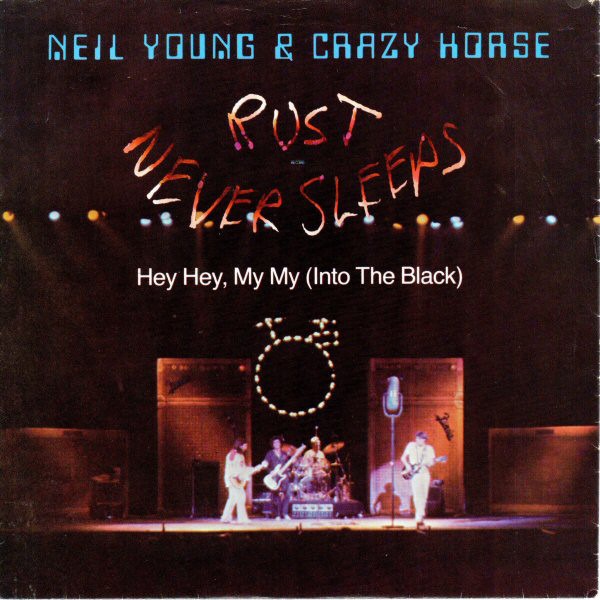
If death could be translated into a tone…Neil had it with his guitar when he played the Hey Hey, My My (Into The Black) intro. It’s one of the darkest, nastiest, ominous and distorted tones ever.
This is an alternate version of Young’s song “My My, Hey Hey (Out Of The Blue).” The lyrics are slightly different, and “Hey Hey, My My” is electric, while “My My, Hey Hey,” is acoustic. (At the bottom)
The two songs we are covering today are on Rust Never Sleeps. The album peaked at #8 on the Billboard album chart in 1979.
Ok… Now My My, Hey Hey (Out Of The Blue)… This song has the line (It’s better to burn out than to fade away) which I see is still being talked about to this day.
John Lennon expressed his disagreement with the “burn out or fade away” sentiment in this song: “I hate it. It’s better to fade away like an old soldier than to burn out. If he was talking about burning out like Sid Vicious, forget it. I don’t appreciate the worship of dead Sid Vicious or of dead James Dean or dead John Wayne. It’s the same thing. Making Sid Vicious a hero, Jim Morrison – it’s garbage to me. I worship the people who survive.”
Neil Young responded to the quote, saying that he was describing the paradoxical nature of the rock-and-roll lifestyle, not advocating it.
The line got responses from many rock stars and was included in Kurt Cobain’s suicide note.
From Songfacts
Young recorded this with the band Crazy Horse. It was the first time Young recorded with them since Zuma in 1975.
In the biography of Neil Young, Shakey by Jimmy McDonough, Neil points out that this song came about when he was jamming with the band Devo. The phrase, “Rust never sleeps” was uttered by Mark Mothersbaugh, and Neil, loving the impromptu line, acquired it.
The lyrics refer to “The King” and Johnny Rotten as rockers whose legacies live on. The king is Elvis Presley and Johnny Rotten was the lead singer of The Sex Pistols.
In The Complete Guide to the Music of Neil Young, Young explains why the line “rust never sleeps” appealed to him. “It relates to my career; the longer I keep on going the more I have to fight this corrosion. And now that’s gotten to be like the World Series for me. The competition’s there, whether I will corrode and eventually not be able to move anymore and just repeat myself until further notice or whether I will be able to expand and keep the corrosion down a little.”
This is the last song on the electric side of Rust Never Sleeps. The first side (first five songs on the CD) are acoustic.
The song has become a standby of Young’s live performances, being played at nearly every live show throughout his career, often as a closing song.
This was included on Live Rust, a concert album and video featuring Young playing against a backdrop of comically enormous amps and microphones.
Hey Hey, My My (Into the Black)
Hey hey, my my Rock and roll can never die There’s more to the picture Than meets the eye. Hey hey, my my.
Out of the blue and into the black You pay for this, but they give you that And once you’re gone, you can’t come back When you’re out of the blue and into the black.
The king is gone but he’s not forgotten This is the story of Johnny Rotten It’s better to burn out ’cause rust never sleeps The king is gone but he’s not forgotten.
Hey hey, my my Rock and roll can never die There’s more to the picture Than meets the eye.
My My, Hey Hey (Out Of The Blue)
My my, hey hey Rock and roll is here to stay It’s better to burn out Than to fade away My my, hey hey.
Out of the blue and into the black They give you this, but you pay for that And once you’re gone, you can never come back When you’re out of the blue and into the black.
The king is gone but he’s not forgotten This is the story of a johnny rotten It’s better to burn out than it is to rust The king is gone but he’s not forgotten.
Hey hey, my my Rock and roll can never die There’s more to the picture Than meets the eye. Hey hey, my my.