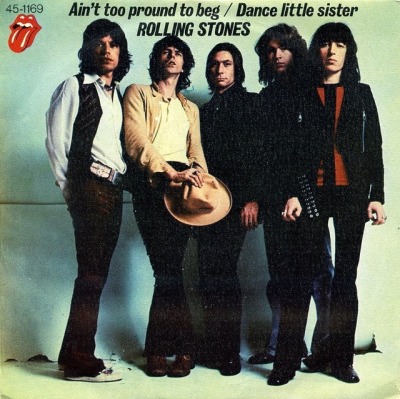
If this doesn’t get you going on a Sunday morning nothing will. Dance Little Sister was the B side to “Ain’t Too Proud To Beg” released in 1974. Thank goodness for B sides like this.
This is a great album track by the Stones. Keith Richard’s rhythm guitar just drives you in the ground…it is relentless. Dance Little Sister was on the It’s Only Rock and Roll Album and it’s an album that to me…wasn’t up to the previous five albums standards. One reason could be that Jimmy Miller was not the producer. I do like the album though…it has the great title track and some other good songs…including this one.
The album peaked at #1 in the Billboard Album Chart, #5 in Canada, and #2 in the UK in 1974,
Tracks like this make the Stones the Stones. Turn it up to 11 and have a great Sunday.
Dance Little Sister
On Thursday night she looked a fright Her pricky hair all curled, oh what a sight Dance, dance, little sister, dance
On Friday night, she all decked out Her high heel shoes, her dress so tight Dance, dance little sister, dance
On Saturday night she bass-a-dee She stepping high on Frederick’s Street Dance, dance, little sister, dance
I said, “Dance, dance little sister, dance Dance little sister, dance Dance little sister, dance” I said, “Dance, dance little sister, dance Dance little sister, dance Dance little sister, dance”
It make me hot, I wet with sweat It burn like hell, I’ve four hours left Dance, dance little sister, dance
Get next to me, drive me close Don’t mammaguay, I lose control Dance, dance with fire, dance
I said, “Dance, dance little sister, dance Dance little sister, dance Dance little sister, dance” I said, “Dance, dance little sister, dance Dance little sister, dance Dance little sister, dance”
Ah, jump out of Africa With a step that looks so bold Ah, when you’re kickin’ high It make my blood run cold
I said, “Dance, dance little sister, dance Dance little sisters, dance Dance little sister, dance” I said, “Dance, dance little sister, dance Dance little sister, dance Dance little sister, dance”
I said, “Dance, dance little sister, dance Dance little sister, dance Dance little sister, dance”
On Saturday night we don’t go home We bacchanal, ain’t no dawn Dance, little sister, dance
I said, “Dance, dance little sister Dance little sister Dance little sister, dance” I said, “Dance, dance little sister Dance little sister Dance little sister, dance”
It should be illegal to hear one of these songs without the other. The songs were off ZZ Top’s album Tres Hombres released in 1973. The album peaked at #8 in the Billboard Album Charts in 1974.
Billy Gibbons got the idea for this song when he was a teenager. He was talking on the phone to a friend who was known as “R&B Jr,” who had lots of strange sayings in his lexicon. One day Billy was talking to him on the phone when he blurted out, “Jesus Just Left Chicago!”
Billy Gibbons: “The two songs [“Waitin’ For The Bus” and “Jesus Just Left Chicago”] were written separately during sessions that were not too far apart. We were in the process of compiling the tracks for the album Tres Hombres, and that segue was a fortunate miscalculation by the engineer. He had been attempting to splice out some blank tape, and the result is that the two come off as a single work. It just seemed to work.”
Billy Gibbons on Tres Hombres:We could tell that we had something special. The record became quite the turning point for us. The success was handwriting on the wall, because from that point we became honorary citizens of Memphis.
From Songfacts
Also alluded to as “Jesus Done Left Chicago,” this track follows on from “Waitin’ for the Bus” on the Tres Hombres album – radio stations often play the songs together.
The Deep South is noted for its Christian roots, and in spite of the hostile reception rock ‘n’ roll received from the Bible Belt when it first reared its head, many contemporary musicians began their musical careers in or around the church. The most famous white rock ‘n’ roller from the Deep South to combine the two was of course Elvis Presley, who recorded the odd religious song.
Although “Jesus Just Left Chicago” isn’t exactly a hymn, it does have a spiritual dimension and is written more in the style of Black Christian music, adhering to a strict blues format. And Gibbons is actually known as Reverend Billy Gibbons!
Talking about this song with Rolling Stone, Gibbons explained: “We took what could have been an easy 12-bar blues and made it more interesting by adding those odd extra measures. It’s the same chords as “La Grange” with the Robert Johnson lick, but weirder. Robert Johnson was country blues – not that shiny hot-rod electric stuff. But there was a magnetic appeal: ‘What can we take and interpret in some way?'”
An early ZZ Top track, this kicks off the album Tres Hombres. For years, radio stations played it along with the following track, “Jesus Just Left Chicago,” keeping the natural segue on the album. This was an early casualty of automated corporate radio, as stations now rarely let one song flow into another like they do on the album.
In a 1985 interview with Spin magazine, ZZ Top bass player Dusty Hill said: “I’ve always liked that song. It’s a working man’s song. It’s been a couple of years, but I went to Austin from Houston and I decided, hell, I’ll ride the bus. I hadn’t done it in a long time. And you can meet some very unique people on a bus and in a bus station. I like to people watch. I love bus stations and train stations. The thing about a bus is who you have to sit beside. If the guy’s got good wine, it’s OK.”
Waitin’ On The Bus/Jesus Just Left Chicago
Have mercy, been waitin’ for the bus all day Have mercy, been waitin’ for the bus all day I got my brown paper bag and my take-home pay
Have mercy, old bus be packed up tight Have mercy, old bus be packed up tight Well, I’m glad just to get on and home tonight
Right on, that bus done got me back Right on, that bus done got me back Well, I’ll be ridin’ on the bus till I Cadillac
__________________________________________
Jesus just left Chicago And he’s bound for New Orleans Well now, Jesus just left Chicago And he’s bound for New Orleans Yeah, yeah Workin’ from one end to the other and all points in between
Took a jump through Mississippi Well, muddy water turned to wine Took a jump through Mississippi Muddy water turned to wine Yeah, yeah Then out to California through the forests and the pines Ah, take me with you, Jesus
You might not see him in person But he’ll see you just the same You might not see him in person But he’ll see you just the same Yeah, yeah You don’t have to worry ’cause takin’ care of business is his name
Gonna buy a tank and an aeroplane When she catches up with me won’t be no time to explain She thinks I’ve been with another woman and that’s enough To send her half insane
I was just going to post the lyrics for everyone to read…it explains it all…it’s funny and a great song. A favorite of mine from the Who. It’s a John Entwistle song with his brand of humor on display. He was married to his wife Alison at this time. It’s on the great Who’s Next album and was the B side to Baba O’Riley. It was released in 1971.
John wrote some good songs like Boris The Spider, Success Story, and Trick of the Light but he was in a band with Pete Townshend, and that makes it tough to be heard.
John (The Ox, The Quiet One, Thunderfingers) and Keith Moon made… to me, the best rhythm section in rock and roll.
On the studio version from Who’s Next, Entwistle sings and plays bass, in addition to performing the piano part and all of the brass parts…he’d also played the French horn on earlier Who records…
Run John Run!
My Wife
My life’s In jeopardy Murdered in cold blood is what I’m gonna be I haven’t been home since Friday night and now my wife Is comin’ after me
Give me police protection Gonna buy a gun so I can look after number one Give me a bodyguard — A black belt judo expert With a machine gun!
Gonna buy a tank and an aeroplane! When she catches up with me, Won’t be no time to explain She thinks I’ve been with another woman And that’s enough To send her half-insane!
Gonna buy a fast car, put on my lead boots, and take a long, long drive I may end up spendin’ all my money, But I’ll still be alive!
All I did was have a bit too much to drink And picked the wrong precinct Got picked up by the law and now I ain’t got time to think
Gonna buy a tank and an aeroplane! When she catches up with me, Won’t be no time to explain She thinks I’ve been with another woman And that’s enough To send her half-insane!
Gonna buy a fast car, put on my lead boots, and take a long, long drive I may end up spendin’ all my money, But I’ll still be alive!
And I’m oh, so tired of running Gonna lay down on the floor I gotta rest some time So I can get to run some more Yeah!
When Phil Lynott was a kid his mother Philomena ran an illegal drinking den in Manchester, England. Phil was often with his mother in this den. Some of her most frequent returning customers were members of the Quality Street Gang (a group of criminals operating in Manchester, England, in the 1960s, 1970s, and 1980s).
He would spend his time observing the gang, their mannerisms, the way they talk, and the way they fight. All of this observation eventually inspired him to write a song about them called “The Boys Are Back In Town”.
The song was on the Jailbreak album. The album peaked at #18 in the Billboard Album Charts, #10 in the UK, and #5 in Canada.
The Boys Are Back In Town peaked at #12 in the Billboard 100, #8 in Canada, #8 in the UK, and of course, #1 in Ireland where the band originated in 1976.
A big part of Thin Lizzy’s sound came from Phil Lynott’s vocals and the dual-lead guitar interplay of guitarists Scott Gorham and Brian Robertson.
From Songfacts
This gave Thin Lizzy worldwide exposure. They were popular in their native Ireland, but unknown elsewhere until this came out.
This was Thin Lizzy’s only Top 40 hit in the US, but they had several other hits in the UK.
Everclear covered this for the 1999 film Detroit Rock City. Their version was later used in the movie A Knight’s Tale.
This was used in commercials for Wrangler.
Thin Lizzy were surprised when this became their breakthrough hit – because they hadn’t wanted it on their Jailbreak album. Guitarist Scott Gorham recalled to Classic Rock: “We were playing in some club in the US when our manager came in and said, ‘Well, looks like we’ve got a hit.’ We were like, ‘Which song?’ Seriously, we didn’t have any idea at all which song it was that had taken off for us.”
“To tell you the truth, we weren’t initially going to put ‘The Boys Are Back In Town’ on the Jailbreak album at all,” he continued. “Back then you picked 10 songs and went with those because of the time restrictions of vinyl.”
“We recorded 15 songs, and of the 10 we picked, that wasn’t one of them,” Gorham added. “But then the management heard it and said, ‘No, there’s something really good about this song.’ Although back then, it didn’t yet have the twin guitar parts on it.”
The Boys Are Back In Town
Guess who just got back today Them wild-eyed boys that had been away Haven’t changed that much to say But man, I still think them cats are crazy
They were askin’ if you were around How you was, where you could be found Told ’em you were livin’ downtown Drivin’ all the old men crazy
The boys are back in town (The boys are back in town)
The boys are back in town (The boys are back in town again)
You know that chick that used to dance a lot Every night she’d be on the floor, shakin’ what she got When I say she was cool she was red hot I mean, she was steamin’
And that time over at Johnny’s place, Well, this chick got up and she slapped Johnny’s face Man, we just fell about the place If that chick don’t want to know, forget her
The boys are back in town (The boys are back in town)
The boys are back in town (The boys are back in town)
The boys are back in town (The boys are back in town) The boys are back in town (The boys are back in town again)
Spread the word around Guess who’s back in town
Just spread the word around
Friday night they’ll be dressed to kill Down at Dino’s Bar ‘n’ Grill The drink will flow and the blood will spill And if the boys want to fight, you better let ’em
That jukebox in the corner blastin’ out my favorite song The nights are getting warmer, it won’t be long Won’t be long till the summer comes Now that the boys are here again
The boys are back in town (The boys are back in town)
The boys are back in town (The boys are back in town)
The boys are back in town (The boys are back in town) Spread the word around The boys are back in town (The boys are back in town again)
The boys are back in town again Been hangin’ down at Dino’s The boys are back in town again
The acoustic guitar part that Paul wrote to this song is iconic now. The first few bars and you know what it is without hearing anything else. This song added to the texture of The White Album. On the same album you had the bone-crunching Helter Skelter, the rock and roll of Back in the USSR, the great pop of Sexy Sadie, the hard blues of Yer Blues, and then you have this song. It was credited to Lennon and McCartney but Paul wrote this one alone. The White Album was released in 1968 and it peaked at #1 in the Billboard 100, #1 in the UK, and #1 in Canada.
Paul McCartney wrote this about the civil rights struggle for African Americans after reading about race riots in the US. He penned it in his kitchen in Scotland after he heard about an incident in Little Rock when the federal courts forced the racial desegregation of the Arkansas capital’s school system.
Paul McCartney met two of the women who inspired the song in 2016.
Paul McCartney: “I was sitting around with my acoustic guitar and I’d heard about the civil rights troubles that were happening in the ’60s in Alabama, Mississippi, Little Rock in particular,” “I just thought it would be really good if I could write something that if it ever reached any of the people going through those problems, it might give them a little bit of hope. So, I wrote ‘Blackbird.'”
Dave Grohl: “It’s such a beautiful piece of music, perfect in composition and performance, and in its lyrics and in the range of his voice. Just learning that song made me a better guitar player and gave me a better appreciation of songwriting. To me it’s just musical bliss.”
From Songfacts
Only three sounds were recorded: Paul’s voice, his Martin D-28 acoustic guitar, and a tapping that keeps time on the left channel.
This tapping sound is a bit of a mystery, although in the Beatles Anthology video McCartney appears to be making the sound with his foot. Some sources have claimed it is a metronome.
The birds were dubbed in later using sound effects from the collection at Abbey Road, where the song was recorded.
McCartney did not have ornithological intentions when he wrote this song. In England, “bird” is a term meaning “girl,” so the song is a message to a black girl, telling her it’s her time to fly:
All your life
You were only waiting for this moment to arise
The guitar accompaniment for this song was inspired by Bach’s Bourrée in E minor for lute. This is often played on classical guitar, an instrument Paul McCartney and George Harrison had tried to learn when they were kids. McCartney told Mojo magazine October 2008: “We had the first four bars (of the Bourrée in E minor) and that was as far as my imagination went. I think George had it down for a few more bars and then he crapped out. So I made up the next few bars, and (sings his four-note variation Bach’s theme) it became the basis of ‘Blackbird.'”
This is one of the songs novice guitar players often try to learn, as it’s one of the most famous finger-style tunes. The singer Donovan claims some credit for teaching The Beatles a technique similar to the one McCartney used here when they were on a retreat to India in early 1968.
The word “bird” had been floating around Paul McCartney’s musical lexicon since 1958 when the Everly Brothers had a hit with “Bird Dog,” a song about a guy trying to steal another dude’s girl. McCartney was a huge fan of the Everly Brothers.
There have been hundreds of covers of this song. Perhaps the most enduring is Brad Mehldau’s instrumental jazz version, released in 1997. The only charting version of the song was by the Cast of Glee, which took it to #37 in 2011. Other notable covers include renditions by José Feliciano, Billy Preston, Sarah Vaughan, Jaco Pastorius, Crosby, Stills & Nash, Bobby McFerrin and Dwight Twilley. The Doves did a cover in 2002 for the soundtrack to the TV series Roswell.
The singer-guitarist Kenny Rankin recorded it for his 1974 album Silver Morning. McCartney was a big fan of Rankin’s rendition: when the Songwriters Hall of Fame induced Lennon and McCartney in 1987, McCartney skipped the ceremony but had Rankin accept the award on his behalf and perform “Blackbird.”
The “broken wings” concept had been fluttering about for a while, notably in Kahlil Gibran’s 1912 story The Broken Wings. (The Beatles song “Julia” uses lines from one of Gibran’s poems, but McCartney has never cited him as an influence on “Blackbird.”) In 1985, the American group Mr. Mister released their #1 hit “Broken Wings,” which was directly inspired by The Broken Wings and like “Blackbird,” used the line, “Take these broken wings and learn to fly.”
At the Academy Awards ceremony in 2016, Dave Grohl performed this song to accompany the “in memoriam” segment, recognizing those in the movie industry who died the previous year.
Blackbird Singing is the title of a book of poems McCartney wrote.
This is one of about 12 Beatles songs that McCartney often played in his live shows throughout his career. It lends itself to live performance because it is rather compact (it runs just 2:18) and can be played with just a guitar.
Blackbird
Blackbird singing in the dead of night Take these broken wings and learn to fly All your life You were only waiting for this moment to arise
Blackbird singing in the dead of night Take these sunken eyes and learn to see All your life You were only waiting for this moment to be free
Blackbird fly, blackbird fly Into the light of a dark black night
Blackbird fly, blackbird fly Into the light of a dark black night
Blackbird singing in the dead of night Take these broken wings and learn to fly All your life You were only waiting for this moment to arise You were only waiting for this moment to arise You were only waiting for this moment to arise
CCR is one band that crosses genres. I haven’t met many people that don’t like them. I can’t say the same for my band The Beatles, or The Stones, The Who, and others. Country fans, Metal fans, Rock fans, and bluegrass fans. It’s something about John Fogerty’s deceptively simple songs that says something to everyone.
John Fogerty did almost all the overdubs for the band until the Pendulum album when other members contributed. Pendulum is the album this song is on. Time was running out on this great band. John said this song was about the impending breakup of the band…Tom Fogerty had told the band he was quitting after the album was finished.
John’s brother Tom Fogerty quit the band after this album and CCR was then a trio. Tom’s voice was close to John’s and he felt restricted in CCR. If you want to hear what Tom sounded like…check out this post by Christian on the forgotten Forgerty brother. Creedence did release one more album after this called Mardi Gras without Tom and it has a few good songs but it’s not up to their standard.
I could tell you my feelings on this song but just listen to it today and it will make your Friday even better.
The song peaked at #8 in the Billboard 100, #1 in Canada, #3 in New Zealand and #36 in the UK in 1971.
John Fogerty: “That song is really about the impending breakup of Creedence. The imagery is, you can have a bright, beautiful, sunny day and it can be raining at the same time. The band was breaking up. I was reacting: ‘Geez, this is all getting serious right at the time when we should be having a sunny day.’”
From Songfacts
This song is John Fogerty’s take on the imminent departure of his brother Tom from the band, and the overall tension in the group at a time when they should have been enjoying their success. The line, “I want to know – have you ever seen the rain comin’ down on a sunny day?” refers to Tom leaving while CCR was at its commercial zenith. The flip side of this single, “Hey Tonight,” is John reassuring the band that all would go well despite the adversity.
Tom Fogerty left the group in early 1971, after this album was released. He released three solo albums before dying of tuberculosis in 1990. A fourth album, completed in 1988, was released posthumously.
According to John Fogerty, this song’s meaning changed for him over time. Introducing the song at a 2012 show in Arizona, he said: “This song was originally written about a very sad thing that was going on in my life. But I refuse to be sad now. Because now this song reminds me of my little girl, Kelsy, and every time I sing it, I think about Kelsy and rainbows.”
Fogerty added that this is his all-time favorite song, even though it’s one he wrote himself.
Musically, this song was inspired by the group Booker T. & the MG’s, whose most famous song is “Green Onions.” They opened for Creedence Clearwater Revival before CCR recorded the Pendulum album. John Fogerty loved the sound of Booker T. Jones’ Hammond organ, so he used it on some tracks for the album, including this one.
According to Stu Cook, this song and another track on the album, “Pagan Baby,” were written and rehearsed from scratch during one recording session. “Pagan Baby” was done in one take.”
This was used in the TV show Tour Of Duty, which was set in Vietnam during the war. >>
Bonnie Tyler covered this song for her 1983 blockbuster album Faster Than the Speed of Night. Her version reached #47 in the UK. >>
In 2006, Rod Stewart covered this song on his album Still the Same… Great Rock Classics of Our Time. >>
Allison Moorer covered this for her 2015 Down To Believing album. She explained why to Billboard magazine: “The record label wanted me to do a cover. I said ‘I don’t really think the record needs a cover on it,’ and we certainly have enough songs, but in the spirit of being cooperative, I said ‘OK, if you really want one, I’ll come up with something.'”
“If I was going to do a cover, it was going to be something that I had always wanted to do,” she continued. “I’m a huge Creedence fan, and that song might be my very favorite song of theirs. I’ve always thought it was the perfect country / rock song, and this record to me is a country / rock record, so I thought ‘If I’m ever going to this, this is the perfect time. I think what you hear on the record is actually the second take.”
As part of the CCR50 campaign to honor the 50th anniversary of Creedence Clearwater Revival, a video was commissioned for this song starring Jack Quaid, Sasha Frolova and Erin Moriarty as childhood friends in Montana. Directed by Laurence Jacobs, it takes a nostalgic turn when one of the friends moves away.
Willie Nelson recorded this with his daughter Paula Nelson for his duets album To All the Girls… The veteran country singer’s cover was included in the closing moments of the HBO miniseries Big Little Lies’ season 2 finale on July 21, 2019. The interest generated drove Nelson’s cover to a #36 debut on the Country chart dated August 3, 2019.
Have You Ever Seen The Rain
Someone told me long ago There’s a calm before the storm I know it’s been comin’ for some time When it’s over so they say It’ll rain a sunny day I know shinin’ down like water
I want to know Have you ever seen the rain? I want to know Have you ever seen the rain Comin’ down on a sunny day?
Yesterday and days before Sun is cold and rain is hard I know been that way for all my time ‘Til forever, on it goes Through the circle, fast and slow, I know it can’t stop, I wonder
I want to know Have you ever seen the rain? I want to know Have you ever seen the rain Comin’ down on a sunny day?
Yeah
I want to know Have you ever seen the rain? I want to know Have you ever seen the rain Comin’ down on a sunny day?
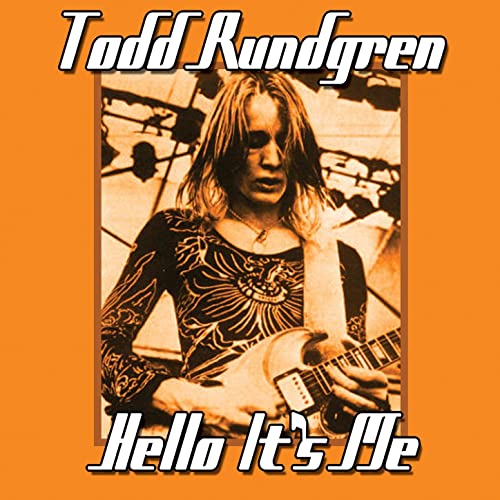
Todd is a wizard in the studio producing other acts and he is also a great artist himself. Hello It’s Me is a great pop song. It may be Todd’s best-known song.
This was originally recorded by Todd Rundgren’s 1960s band The Nazz, and included on their 1968 debut album. The Nazz version with lead vocals by Stewkey Antoni received little attention and peaked at just #66 in the US. The Nazz broke up in 1969 and was fondly remembered after the fact.
“It turns out now that The Nazz was everybody’s favorite undiscovered group,” Rundgren said in 1972, the year he released his third solo album Something/Anything? which contained a new version of this song that eventually caught on and established Rundgren as a solo artist.
This song, and many others Rundgren wrote at the time, was inspired by a high school relationship that didn’t work out. He graduated in 1966, wrote the song about a year later, and recorded the original Nazz version in 1968, so that relationship was still fresh in his mind.
In real life, Rundgren was the one getting dumped, but he flipped the story so he was breaking up with the girl. Speaking with Marc Myers in 2018, Rundgren explained that the girl was named Linda, and she was his high school girlfriend. He had long hair, and one day when he walked her home, Linda’s dad saw him for the first time and turned the hose on him – no hippie kid was going to date his daughter. A few days later, Linda acceded to her father’s wishes and broke up with him. She did it rather casually, which Todd didn’t appreciate.
Rundgren wrote the lyric thinking about how he would have liked Linda to break up with him: in a sensitive phone call where she tells him it’s important that he’s free.
Interestingly years later at a concert in Tulsa, Linda called him and Todd put her on the guestlist but didn’t tell her she inspired the song.
Hello It’s Me peaked at #5 in the Billboard 100 and #17 in Canada in 1973.
From Songfacts
Rundgren wrote this song, which takes us through a phone call where the singer breaks up with a girl. It’s a remarkably realistic account, devoid of sweeping metaphors typically found in breakup songs. We hear the one side of the phone call, which starts with the familiar greeting, indicating they’ve been together a while. Then they have “the talk,” where he hashes out why they can’t be together and lets her know that she should have her freedom. All he can ask in the end is that she think of him every now and then.
Remarkably, it was the first song Rundgren ever wrote. In his teens, Todd was an avid listener to music but it was only when he put The Nazz together at the age of 19 that the young musician realized he’d better start penning some material. He attributes the sophistication and success of this song to the vast amount of listening he’d done by the time he wrote it.
A specific musical inspiration was the Dionne Warwick song “Walk On By,” written by Burt Bacharach and Hal David. ” I hadn’t thought much about the songwriter’s role previous to listening to that record and realizing how different it was, how it had all the qualities of music that I admired, and yet it also was a song,” Rundgren said in his 2018 Songfacts interview. “That was the first time I really started to, in my own head, deconstruct what a songwriter was doing. That song had a lot of influence in ‘Hello It’s Me.'”
According to Rundgren, the chord progression for “Hello It’s Me” were lifted directly from the intro of jazz organist Jimmy Smith’s rendition of “When Johnny Comes Marching Home.”
Rundgren expected the album opener “I Saw The Light,” which was the first single from Something/Anything?, to be his big hit, even going as far as to say so in the liner notes rather tongue-in-cheek. However, his re-recording of “Hello It’s Me” eclipsed it on the charts – “I Saw The Light” stalled at #16. Both songs displayed his newfound admiration (and subsequent imitation) of Carole King following her Tapestry album.
“Hello It’s Me” was a very slow-moving hit; the Something/Anything? album was released in February 1972, and it only became a hit when radio stations started playing it over a year later and the song was subsequently released as a single. It didn’t hit the Top 40 until November 1973, and by then, Rundgren’s psychedelic album A Wizard, a True Star had been out for eight months. That album was a completely different sound, and Rundgren was in a completely different mindset. The record company didn’t put any singles out from Wizard for fear of alienating Rundgren’s fans, and Todd had a hard time performing the sudden hit that was now five years old. One of his more bizarre moments came when he performed the song on The Midnight Special wearing what looked like something from David Bowie’s closet. Rundgren’s girlfriend Bebe Buell called it his “Man-Eating Peacock outfit.”
This song was used as the ending clip in the first ever episode of That ’70s Show. The gang sings this in the car on the way to a Todd Rundgren concert. This clip also appears on the last episode of the show. >>
The 1968 version of this song by The Nazz was originally relegated to the B-side of another single, “Open My Eyes.” Ron Robin told us how the single got flipped. Says Ron: “How ‘Hello It’s Me’ by Nazz became a ‘sort of’ hit nationally was quite an accident. I was the music director/DJ at WMEX in Boston when a record promoter came by to tell me about this new group… Nazz. He was promoting ‘Open My Eyes,’ a terrific hard driving rocker. I loved it. At home I accidentally played the flip side of the record and heard ‘Hello It’s Me.’ It blew me away. I just had to add it to our playlist at the station. After a few weeks it made it to our top 5. We were the only station in the country playing it! Several months later other stations across the country started playing it. Several years later Todd records it in his new style without Nazz and of course without Nazz lead singer Stewkey.”
What is it about this song that has such lasting appeal? Kasim Sulton, who played bass in Rundgren’s band Utopia, told us that there is something special about Todd’s songwriting. “It’s so difficult to write a good lyric, a lyric that people turn their heads and say, ‘I know what you’re talking about, I know how you feel, I know what you mean. I know what he’s saying there,'” Kasim told us. “And then to put it in the context of a melody in a song is equally as hard. But Todd does that better than anybody I’d ever worked with, and I’ve worked with some great people over the years.”
Structurally, this isn’t typical of hit songs: the title appears just once (the opening line), and there’s no real chorus, just two repetitions of the bridge (“It’s important to me…”). It is, however, typical of Rundgren’s atypical songwriting – he rarely follows conventional form.
In our 2015 interview with Todd Rundgren, he called this “a selfish song.” Said Rundgren, “It’s me, me, me – it’s all about me. I’m in charge, and all this other stuff.”
For this reason, Rundgren didn’t play it when he toured with Ringo Starr’s All-Starr Band, as it didn’t fit in with the other songs in the show. Instead, Rundgren played a song he recorded with his band Utopia that was a hit for England Dan & John Ford Coley: “Love Is The Answer.”
Rundgren recorded a dark, Bossa Nova version of this song on his 1997 compilation album With A Twist. Speaking about the song in Mojo, he explained: “‘Hello It’s Me’ has become the albatross to me: everyone has attached to me the idea of the amateur singer, the amateur piano player, the funk-free boy doing his little song. But I just can’t go there anymore, I can’t even think there anymore.”
The Isley Brothers released a sultry R&B version running 5:32 on their 1974 album Live It Up. In their version Ron Isley repeats “Hello” several times in the intro.
When Erykah Badu was putting together But You Caint Use My Phone, her 2015 concept mixtape with songs dealing with phone calls, her old flame Andre 3000 (from Outkast), he was looking for song that she could use and came across the Isley Brothers recording. When he suggested it to Badu, she asked him to rap on it, which he did. Using the basic structure from the Isley’s version, but was used as the closing track on her mixtape.
Paul Giamatti performed this song in the movie Duets.
One of the backing singers was Vicki Sue Robinson, who had a disco hit a few years later with “Turn The Beat Around.” Her work on Something/Anything? (she also sang on the track “Dust In The Wind”), marked her first appearance on an album. She was one of the singers who had performed in the Broadway musical Hair that was invited to sing on the album.
When he first started working on Something/Anything?, Rundgren initially wanted to play all of the instruments himself, but once the project became too big, he enlisted a group of musicians for the album: Mark “Moogy” Klingman on organ, John Siomos on drums, Robbie Kogale on guitar, Stu Woods on bass, Randy Brecker on trumpet, Barry Rogers on trombone, and Michael Breckner on tenor sax.
The 1972 single opens with three distinct notes on the bass, a part Stu Woods came up with in the studio. The album version features a few false starts due to the confusion over which musicians were supposed to play first. “When we were in the studio, a lot of people had a hard time hearing where they were supposed to come in,” Rundgren recalled to Mix magazine in 2019. “The only person who was supposed to come in on four was the bass, and everyone else was supposed to come in on one, but everyone kept coming in on four. So if you listen to the album version, you can hear all these false starts.”
Rundgren didn’t have any concrete ideas for the new arrangement and came up with it on the fly in the studio. “I hadn’t written out the arrangements,” he explained. “I had something stewing in my head and said, ‘Here are the changes to the song,’ then taught them the changes, found the feel I liked. If somebody played something I didn’t like, I’d say, ‘No, don’t play that, change it to something else.’ I wanted it to be less dirge-y than the original and have a little more energy to it. Music had evolved a little, so I wanted something that sounded a bit more contemporary, as opposed to the original stripped-down band.”
The Nazz Version
Todd’s Studio Version
Hello It’s Me
Hello, it’s me I’ve thought about us for a long, long time Maybe I think too much but something’s wrong There’s something here that doesn’t last too long Maybe I shouldn’t think of you as mine
Seeing you, or seeing anything as much as I do you I take for granted that you’re always there I take for granted that you just don’t care Sometimes I can’t help seeing all the way through
It’s important to me That you know you are free ‘Cause I never want to make you change for me
Think of me You know that I’d be with you if I could I’ll come around to see you once in a while Or if I ever need a reason to smile And spend the night if you think I should
It’s important to me That you know you are free ‘Cause I never want to make you change for me
Think of me You know that I’d be with you if I could I’ll come around to see you once in a while Or if I ever need a reason to smile And spend the night if you think I should
Guitarist Lowell George and keyboardist Bill Payne formed Little Feat in 1969. Lowell George was a member of Frank Zappa’s Mothers of Invention. Bass player of the Mothers Roy Estrada joined along with drummer Richie Hayward.
This is one of their songs that got some airplay and I heard on a regular basis. It obviously is a southern sounding song…a great southern sounding song.
The band never broke out in huge commercial success but other musicians loved this band. One of them was Jimmy Page who named Little Feat his favorite American band in 1975. In the studio for this album, Lowell George stepped up as a producer and a leadership role. On the chorus, Bonnie Bramlett added a soulful voice to George’s.
The lineup had many changes through the years and unfortunately, Lowell died in 1979 of a heart attack. The band broke up after George’s death but reunited in 1987. The band continues today with Bill Payne still as a member.
This song was released in 1973 on the album of the same name. Dixie Chicken was written by Lowell George and Kibbee Martin.
Dixie Chicken
I’ve seen the bright lights of Memphis And the Commodore Hotel And underneath a street lamp I met a Southern belle Well she took me to the river, where she cast her spell And in that Southern moonlight, she sang a song so well If you’ll be my dixie chicken, I’ll be your Tenessee lamb And we can walk together down in dixieland Down in dixieland
Well we made all the hot spots, my money flowed like wine Then that low down Southern whiskey began to fog my mind And I don’t remember church bells or the money I put down On the white picket fence and boardwalk of the house at the edge of town But boy do I remember the strain of her refrain The nights we spent together, and the way she called my name
If you’ll be my dixie chicken, I’ll be your Tenessee lamb And we can walk together down in dixieland Down in dixieland
Well it’s been a year since she ran away Yes that guitar player sure could play She always liked to sing along She’s always handy with a song Then one night in the lobby of the Commodore Hotel I chanced to meet a bartender who said he knew her well And as he handed me a drink he began to hum a song And all the boys there, at the bar, began to sign along
If you’ll be my dixie chicken, I’ll be your Tenessee lamb And we can walk together down in dixieland Down in dixieland
This is the first Bowie song I remember hearing when I was really young. I associated it more with “Ziggy Stardust” as I remember cousins talking about him. This song was not a massive hit but is still continually played on the radio.
It was on my personal favorite album by Bowie…Hunky Dory.
The song features the work of musicians like Rick Wakeman, Mick Ronson, and Bowie playing the saxophone himself. According to Bowie, the song started out as a parody of night club life but evolved into a criticism of an artist looking for new ways to reinvent himself. Bowie continually reinvented his image, and the song eventually became a close relation of Bowie himself.
Bowie wrote this when he was going through a lot of personal change. Bowie’s wife, Angela, was pregnant with the couple’s first child, Duncan. Bowie got along very well with his father and was very excited to have a child of his own.
The song peaked at #66 in the Billboard 100 in 1972 but recharted at #41 in 1975.
It charted for the first time on the UK Singles Chart in 2016 at number 49 following Bowie’s death.
From Songfacts
This is a reflective song about defying your critics and stepping out on your own. It also touches on Bowie’s penchant for artistic reinvention.
According to Bowie, this song was a “kind of throwaway” – but people kept chanting for it at concerts and thus it became one of his most popular and enduring songs. Bowie had no idea it was going to become so successful, but the song connected with his young audience who could relate to lyrics like “These children that you spit on as they try to change their worlds, are immune to your consultations, they’re quite aware of what they’re going through.”
Bowie had just started using a keyboard to write songs, which opened up new possibilities for him in terms of melody and structure. This fresh approach resulted in “Changes.”
Bowie played the sax on this track, and his guitarist, Mick Ronson, arranged the strings. Rick Wakeman, who would later became a member of the prog rock band, Yes, played the piano parts at the beginning and end. Bowie gave Wakeman a lot of freedom, telling him to play the song like it was a piano piece. The piano Wakeman played was the famous 100-year old Bechstein at Trident Studios in London, where the album was recorded; the same piano used by Elton John, The Beatles and Genesis.
Bowie’s stuttered vocals in this song (“Ch-Ch-Changes”) are some of the most famous stutters in rock. It came well after “My G-G-Generation” but predated “B-B-B-Bennie And The Jets.
According to Mike Garson, who became Bowie’s keyboard player in 1972, when he auditioned for the gig, he played the first eight seconds of “Changes” when Bowie stopped him and gave him the gig.
Changes
Oh, yeah Mmm
Still don’t know what I was waitin’ for And my time was runnin’ wild A million dead end streets and Every time I thought I’d got it made It seemed the taste was not so sweet So I turned myself to face me But I’ve never caught a glimpse How the others must see the faker I’m much too fast to take that test
Ch-ch-ch-ch-changes Turn and face the strange Ch-ch-changes Don’t want to be a richer man Ch-ch-ch-ch-changes Turn and face the strange Ch-ch-changes There’s gonna have to be a different man Time may change me But I can’t trace time
Mmm, yeah
I watch the ripples change their size But never leave the stream Of warm impermanence And so the days float through my eyes But still the days seem the same And these children that you spit on As they try to change their worlds Are immune to your consultations They’re quite aware of what they’re goin’ through
Ch-ch-ch-ch-changes Turn and face the strange Ch-ch-changes Don’t tell them to grow up and out of it Ch-ch-ch-ch-changes Turn and face the strange Ch-ch-changes Where’s your shame? You’ve left us up to our necks in it Time may change me But you can’t trace time
Strange fascinations fascinate me Ah, changes are takin’ The pace I’m goin’ through
Ch-ch-ch-ch-changes Turn and face the strange Ch-ch-changes Ooh, look out you rock ‘n’ rollers Ch-ch-ch-ch-changes Turn and face the strange Ch-ch-changes Pretty soon now you’re gonna get older Time may change me But I can’t trace time I said that time may change me But I can’t trace time
I heard this song when I was younger. It wasn’t on the radio but a friend of mine who had some old Fleetwood Mac albums. Peter Green was/is a great guitar player and his voice fit the band perfectly.
This is among the last songs Peter Green wrote before quitting the band. A consistent riff carries the rhythm, while Green wails the lyrics. At the time, he was taking a lot of acid, but has always maintained this was about the evils of money.
The song didn’t chart in America but did peak at #10 in the UK in 1969.
Judas Priest covered this on their Hell Bent for Leather album in 1979.
Peter Green:“When I woke up I found I was writing this song. Next day I went out to the park and the words started coming. The Green Manalishi is the wad of notes, the devil is green and he was after me. Fear, inspiration is what it was, but it was that tribal ancient Hebrew thing I was going for. Ancient music.” More recently he admitted, “It took me two years to recover from that song. When I listened to it afterward there was so much power there… it exhausted me.”
From Songfacts
As Green explained in a 1996 interview with Mojo, the song is about the evils of money: the Green Manalishi was the devil manifested as a wad of cash. Green explained: “I had a dream where I woke up and I couldn’t move, literally immobile on the bed. I had to fight to get back into my body. I had this message that came to me while I was like this, saying that I was separate from people like shop assistants, and I saw a picture of a female shop assistant and a wad of pound notes, and there was this other message saying, ‘You’re not what you used to be. You think you’re better than them. You used to be an everyday person like a shop assistant, just a regular working person.’ I had been separated from it because I had too much money. So I thought, How can I change that?”
Peter Green built quite a legend by giving away most of his money. He gave most of his savings to a London-based charity called War On Want, which provided aid to developing nations, mostly in Africa. Green explained: “Last thing at night they used to put pictures on telly of starving people and I used to sit there eating a doughnut and thinking, Why have I got this big stash that I don’t need when probably I’m going to die with it and all this is going on?”
Rumors had it that “Green Manalishi” was a kind of LSD, but Peter Green insists that is was about money. It was based upon a recurrent dream he had in which he woke up unable to move while messages about money formed in his brain. Green recalls: (from an article by Neil Slaven on Union Square Music)
In retrospect, the song seems like an obvious cry for help from Peter Green, but this wasn’t so clear to his bandmates, who say that his descent was a gradual process, and that they didn’t read so much into this song. “Peter going off the rails was not an immediate thing,” Mick Fleetwood explained. “He left Fleetwood Mac under the most controlled circumstances.”
Fleetwood Mac – Green Manalishi (With The Two-Prong Crown)
Now, when the day goes to sleep And the full moon looks The night is so black that the darkness cooks
Don’t you come creepin’ around Makin’ me do things I don’t wanna do
Can’t believe that you need my love so bad Come sneakin’ around tryin’ to drive me mad Bustin’ in on my dreams Makin’ me see things I don’t wanna see
‘Cause you’re da Green Manalishi with the two prong crown All my tryin’ is up, all your bringin’ is down
Just takin’ my love then slippin’ away Leavin’ me here just tryin’ to keep from followin’ you
This song is probably my earliest memory of a Van Morrison song as a kid. I didn’t find out about him though until my senior year in high school. Somehow I never heard Brown Eyed Girl until I was eighteen.
Blue Money was a top 40 hit but you don’t hear it as much now. It’s a song that is off of his album His Band and the Street Choir released in 1971. The song became Morrison’s third best selling single of the 1970s, remaining on the charts for three months.
The album peaked at #32 in the Billboard Album Charts.
What Blue Money refers to in the song, and in most uses of the term, is money earned from racy photographs and images.
Blue Money
The photographer smiles Take a break for a while Take a rest, do your very best Take five, honey Five, honey
You search in your bag Light up a fag Think it’s a drag, but you’re so glad To be alive honey Alive honey
Said when this is all over You’ll be in clover We’ll go out and spend All of your blue money Blue money Blue money
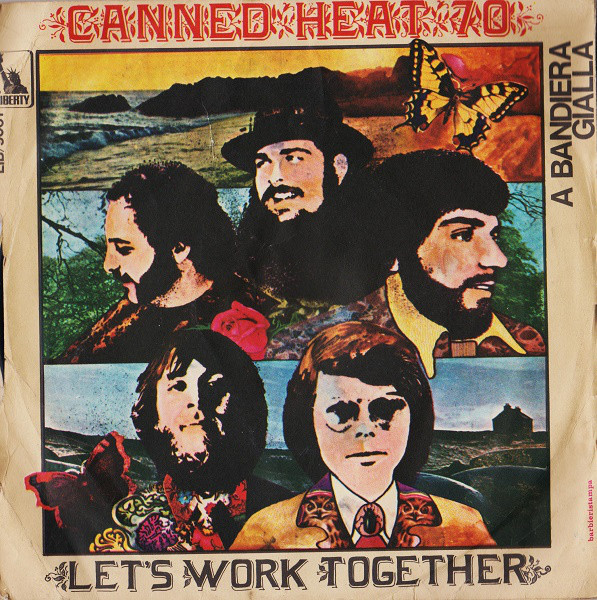
“Let’s Stick Together” was originally recorded by Wilbert Harrison in 1962. Eight years later, the American singer had a hit with a modified version, “Let’s Work Together,” which was covered by Canned Heat.
The song peaked at #26 in the Billboard 100 in 1970.
Canned Heat was a good blues band and their appearance at Woodstock raised their fortunes. They would end up with 3 top 40 songs and 2 more in the top 100. Going Up Country and On The Road Again were the band’s best-known hits. They were doing well but it came to an end when guitarist/vocalist Alan “Blind Owl” Wilson died on September 3, 1970. No one knows if it was a suicide or an accidental overdose of Seconal.
Canned Heat continues to this day but they were never as successful after Alan passed away. Bob Hite is singing this song.
Let’s Work Together
Together we’ll stand Divided we’ll fall Come on now, people Let’s get on the ball
And work together Come on, come on Let’s work together Now, now people Because together we will stand Every boy, every girl and man
People, when things go wrong As they sometimes will And the road you travel It stays all uphill
Let’s work together Come on, come on Let’s work together, ah You know together we will stand Every boy, girl, woman and man
Oh well now, two or three minutes Two or three hours What does it matter now In this life of ours
Let’s work together Come on, come on Let’s work together Now, now people Because together we will stand Every boy, every woman and man
Ah, come on Ah, come on, let’s work together
Well now, make someone happy Make someone smile Let’s all work together And make life worthwhile
Let’s work together Come on, come on Let’s work together Now, now people Because together we will stand Every boy, girl, woman and man
Oh well now, come on you people Walk hand in hand Let’s make this world of ours A good place to stand
And work together Come on, come on Let’s work together Now, now people Because together we will stand Every boy, girl, woman and man Ah, yeah
Well now, together we will stand Every boy, girl, woman and man Ah, yeah
Together we’ll stand Divided we’ll fall Come on now, people Let’s get on the ball
And work together Come on, come on Let’s work together Now, now people Because together we will stand Every boy, every girl and man
People, when things go wrong As they sometimes will And the road you travel It stays all uphill
Let’s work together Come on, come on Let’s work together, ah You know together we will stand Every boy, girl, woman and man
Oh well now, two or three minutes Two or three hours What does it matter now In this life of ours
Let’s work together Come on, come on Let’s work together Now, now people Because together we will stand Every boy, every woman and man
Ah, come on Ah, come on, let’s work together
Well now, make someone happy Make someone smile Let’s all work together And make life worthwhile
Let’s work together Come on, come on Let’s work together Now, now people Because together we will stand Every boy, girl, woman and man
Oh well now, come on you people Walk hand in hand Let’s make this world of ours A good place to stand
And work together Come on, come on Let’s work together Now, now people Because together we will stand Every boy, girl, woman and man Ah, yeah
Well now, together we will stand Every boy, girl, woman and man Ah, yeah
I loved this song when I heard it. To hear George sing about his time with The Beatles surprised me. Of all the Beatles George seemed to have the most resentment and some of it was understandable. A few years after this he would join the remaining Beatles and start on The Beatles Anthology.
George co-wrote the song with Jeff Lynne, who also co-produced the album that shortly pre-dates the two of them forming The Traveling Wilburys. ‘When We Was Fab’ is a musical nod to the psychedelic sound that the Beatles had made their own. George used a sitar, string quartet, and backward tape effects.
This one peaked at #23 in the Billboard 100, #20 in Canada, and #25 in the UK.
He also got some help from Ringo. Starr played drums on this track and a few others on the album. Harrison says that when he started writing the song, he had Ringo’s drumming in mind for the intro and the overall tempo.
The album was Cloud Nine…it peaked at #8 in the Billboard Album Charts, #5 in Canada, #10 in the UK, and #27 in New Zealand.
From Songfacts
Harrison wrote this after the Beatles had split up. It’s about the days of Beatlemania, when the group was known as “The Fab 4.” It sounds very much like a Beatles song.
Jeff Lynne, George’s bandmate from the superstar band The Traveling Wilburys and leader of The Electric Light Orchestra, produced this song and as well as the rest of this album. A huge Beatles fan, Jeff also appears briefly in the video for this song (look for the big afro).
Harrison states in this song: “income tax was all we had.” Excessive taxation was a scourge for him – he wrote the Beatles song “Taxman” on the subject.
Gary Wright, who had a big hit with “Dream Weaver,” played piano on this track.
When We Was Fab
One! Two! Back then long time ago when grass was green Woke up in a daze Arrived like strangers in the night (Fab! Doot, doot, doot doo) Long time ago when we was fab (Fab!) Back when income tax was all we had Caressers fleeced you in the morning light Casualties at dawn And we did it all (Fab! Doot, doot, doot doo) Long time ago when we was fab (Fab) In my world you are my only love
And while you’re in this world The fuzz gonna come and claim you But you mo better wise When the buzz gonna come and take you away Take you away. Take you away
The microscopes that magnified the tears Studied warts and all Still the life flowed on and on (Fab! Doot, doot, doot, Gear!) Long time ago when we was fab (Fab)
But it’s all over now, baby blue (Oo! doot, doot doot. Fab!) Long time ago when we was fab (Fab!) Like this pullover you sent me (Fab! Doot, doot, doot. Gear!) And you really got a hold on me (Fab! Doot, doot, doot, Gear!)
I thought the Counting Crows were refreshing when I heard Mr. Jones. I liked Adam Duritz’s voice a lot. The music press went over the top on hype though for The Counting Crows. Round Here was on their debut album August And Everything After which peaked at #4 in 1994 in the Billboard Album Charts.
The song peaked at #7 in the Billboard US Alternative Songs Charts, #70 in the UK, and #6 in Canada in 1994
This song won Best Rock Performance By A Duo Or Group With Vocal and one for Best New Artist
Adam Duritz:“This is a song about me,” “The song begins with a guy walking out the front door of his house and leaving behind this woman. But the more he begins to leave people behind in his life, the more he feels like he’s leaving himself behind as well, and the less substantial he feels about himself. That’s sort of what the song’s about: even as he disappears from the lives of people, he’s disappearing more and more from his own life.”
From Songfacts
This song dates back to Adam Duritz’ days in a band called the Himalayans, which he joined when he was a student at the University of California. That band – guitarist Dan Jewett, bass player Dave Janusko and drummer Chris Roldan – wrote the music for the song, to which Duritz added lyrics. The song became their most popular at concerts, and when Duritz formed Counting Crows, he brought the song with him. With his new bandmates Steve Bowman, David Bryson, Charlie Gillingham and Matt Malley, he worked up a new version of the song that was included on their first album, August And Everything After. Duritz made sure to credit everyone in both bands with writing the song, so “Round Here” has eight different writers listed on the composer credits.
The theme of childhood promises not panning out is one that shows up a lot in Duritz’ lyrics. In the chorus of this song, he lists some sayings that our parents often say: “Around here we always stand up straight,” “Around here we’re carving out our names.”
Said Duritz: “You’re told as a kid that if you do these things, it will add up to something: you’ll have a job, you life. And for me, and for the character in the song, they don’t add up to anything, it’s all a bunch of crap. Your life comes to you or doesn’t come to you, but those things didn’t really mean anything.
By the end of the song, he’s so dismayed that he’s screaming out that he gets to stay up as late as he wants and nobody makes him wait; the things that are important to a kid – you don’t have to go to bed, you don’t have to do anything. But they’re the sort of things that don’t make any difference at all when you’re an adult. They’re nothing.”
At the time, Counting Crows didn’t release singles in America, and it wasn’t until 1998 that Billboard allowed songs to chart on their Hot 100 that weren’t released as singles. As a result, the song is a chart anomaly: a very popular song that never showed up. It did make #31 on the Airplay chart, which was later integrated in the Hot 100. The group didn’t release singles so listeners would be compelled to buy the albums – a far more lucrative purchase, and arguably a more complete listening experience.
The band often plays extended versions of this song at concerts, which can be heard on the 10 minute performance on the song on their 2013 live album Echoes of the Outlaw Roadshow. “I think one of the nice things about playing music is a sense that whatever I want to do is okay,” Adam Duritz said in our 2013 interview. “As long as I’m really expressing something, then any way I want to express the song, it’s fine.”
Counting Crows made a video for this song, which was directed by Mark Neale, who would later direct The Verve Pipe’s video for “The Freshman” and the documentary Faster. It was the second video the band made (following “Mr. Jones”), and the last one they made for the album, since Adam Duritz wanted the band to scale back promotion when they became wildly popular. “I saw people around me putting out records that got a little too big, and that was the end of them,” Duritz told us. “I didn’t want that for us, so I stopped it.”
Round Here
Step out the front door like a ghost Into the fog where no one notices The contrast of white on white.
And in between the moon and you The angels get a better view Of the crumbling difference between wrong and right.
I walk in the air between the rain, Through myself and back again. Where? I don’t know Maria says she’s dying. Through the door, I hear her crying Why? I don’t know
‘Round here we always stand up straight ‘Round here something radiates
Maria came from Nashville with a suitcase in her hand She said she’d like to meet a boy who looks like Elvis And she walks along the edge of where the ocean meets the land Just like she’s walking on a wire in the circus She parks her car outside of my house, takes her clothes off, Says she’s close to understanding Jesus She knows she’s more that just a little misunderstood She has trouble acting normal when she’s nervous
‘Round here we’re carving out our names ‘Round here we all look the same ‘Round here we talk just like lions But we sacrifice like lambs ‘Round here she’s slipping through my hands
Sleeping children got to run like the wind Out of the lightning dream Mama’s little baby better get herself in Out of the lightning
She says, “It’s only in my head.” She says, “Shh, I know it’s only in my head.”
But the girl on the car in the parking lot Says: “Man, you should try to take a shot Can’t you see my walls are crumbling.”
Then she looks up at the building And says she’s thinking of jumping. She says she’s tired of life; She must be tired of something.
‘Round here she’s always on my mind ‘Round here (hey man) I got lots of time ‘Round here we’re never sent to bed early And nobody makes us wait ‘Round here we stay up very very very very late
I can’t see nothing, nothing Around here You catch me if I’m falling You catch me if I’m falling Will you catch me because I’m falling down on here I said ” I’m under the gun” ‘Round here. Oh man I said “I’m under the gun” ‘Round here. And I can’t see nothin’, nothin’. ‘Round here.
It doesn’t get much more classic than this song by The Band. I’ve covered the “Playing for a Change” version with Robbie Robertson, Ringo Starr, and many musicians across the world. It’s been covered by many artists but The Bands version will always be the goto version for me.
Robbie Robertson said he wrote this song one day while noodling with his guitar and trying to come up with songs for Music From Big Pink. When he looked inside his Martin guitar he saw the standard Martin imprint saying that the instrument was crafted in Nazareth, Pennsylvania. The name of the town spurred memories of a journey he made from his native Canada down to the Mississippi Delta when he was 16 years old. He thought of all the characters he met on that trip, and in his mind heard voices singing what would become the song’s chorus.
Robbie Robertson also claims this was influenced by the work of Luis Buñuel, a Spanish director who made some of the first movies dealing with surrealism. Robertson was intrigued by the characters in his films, who were often good people who did bad things.
The song peaked at #63 in the Billboard 100, #31 in Canada, and #21 in the UK in 1968.
The song is a standard now…it’s been covered by (from wiki) Little Feat, the Chambers Brothers, Eric Church, Chris Stapleton, Stoney LaRue, The Staple Singers, Waylon Jennings, Joe Cocker, Travis, Grateful Dead, Blues Traveler, New Riders of the Purple Sage, O.A.R., Edwin McCain, the Nitty Gritty Dirt Band, the Black Crowes, Spooky Tooth, Hanson, Old Crow Medicine Show, Panic! at the Disco, Shannon Curfman, Aretha Franklin, Joan Osborne, John Denver, Trampled by Turtles, Cassandra Wilson, Miranda Lambert, Al Kooper, and Mike Bloomfield, Deana Carter, New Madrid, Dionne Warwick, and Gillian Welch. Mumford & Sons, RatDog, and Bob Weir are also known to cover this song from time to time. Additional notable versions are by Zac Brown Band, Hoyt Axton, Lee Ann Womack, Smith, Weezer, the Allman Brothers Band, the Marshall Tucker Band, Free Wild, Brian Fallon, Aaron Pritchett, and others.
From Songfacts
This tells the story of a guy who visits Nazareth, and is asked by his friend Fanny to visit several of her friends. “The Weight” that is his load are all these strange people he promised he would check on. The song was never a big hit, but it endures as a classic rock staple.
Robbie Robertson got the only writing credit for this song, although other members of the group claimed that they contributed to this as well as many of their other songs and were not credited. Since only the writer receives royalties for a song, this created a great deal of tension in The Band.
The vocals are shared by Richard Manuel, Rick Danko, and Levon Helm, who harmonize on the choruses. Helm takes lead on the first three verses; Danko takes the fourth (“Crazy Chester followed me…); Helm and Danko share the last verse (“Catch the cannonball…).
One of the distinctive characteristics of The Band was their three lead vocalists. Helm had the added challenge of singing from behind his drum kit when they played live.
Nazareth, where the story takes place, refers to the town in Pennsylvania about 70 miles north of Philadelphia. The rock group Nazareth got their name from this line (“Went down to Nazareth, I was feeling about half past dead…”).
In the liner notes for the Across the Great Divide box set, Robbie Robertson is quoted as saying he chose that place because they make legendary Martin guitars there, so he was aware of the town and been there once or twice. Citizens of Nazareth, Pennsylvania, were thrilled when Robertson acknowledged it as the setting in this famous song. >>
Get the new iPhone SE
Ad by Metro by T-Mobile
See More
The characters in the song – Crazy Chester, Luke, Anna Lee, are based on friends of the band. In Levon Helm’s autobiography This Wheel’s On Fire: Levon Helm And The Story Of The Band, he explained:
“We had two or three tunes, or pieces of tunes, and ‘The Weight’ was one I would work on. Robbie had that bit about going down to Nazareth – Pennsylvania, where the Martin guitar factory is at. The song was full of our favorite characters. ‘Luke’ was Jimmy Ray Paulman. ‘Young Anna Lee’ was Anna Lee Williams from Turkey Scratch. ‘Crazy Chester’ was a guy we all knew from Fayetteville who came into town on Saturdays wearing a full set of cap guns on his hips and kinda walked around town to help keep the peace,if you follow me. He was like Hopalong Cassidy, and he was a friend of the Hawks. Ronnie would always check with Crazy Chester to make sure there wasn’t any trouble around town. And Chester would reassure him that everything was peaceable and not to worry, because he was on the case. Two big cap guns, he wore, plus a toupee! There were also ‘Carmen and the Devil’, ‘Miss Moses’ and ‘Fanny,’ a name that just seemed to fit the picture. (I believe she looked a lot like Caladonia.) We recorded the song maybe four times. We weren’t really sure it was going to be on the album, but people really liked it. Rick, Richard, and I would switch the verses around among us, and we all sang the chorus: Put the load right on me!”
There has been more than a little debate among classic rock DJs and enthusiasts over the real meaning of this song. Yes, Robertson has insisted time and again there is no biblical subtext, but many people think he may be deflecting. Consider the following:
– The narrator can’t find a bed in Nazareth, and the guy to whom he makes an inquiry just smiles and says “no.”
– Carmen and the devil were walking side by side, Carmen can go but her friend the devil has to stick around – an allusion to ever-present temptations.
– “Crazy Chester followed me and he caught me in the fall” – possible allusion to Paul on the road to Damascus.
– The most glaring one: “I do believe it’s time to get back to Miss Fanny, you know she’s the only one who sent me here with her regards for everyone” – Miss Fanny is the one who sent him to Nazareth, but now it’s time for him to go back to her; Miss Fanny is God, the “time” in question is the crucifixion, and “regards for everyone” is Jesus dying for all of man’s sins.
This was used in the movie Easy Rider. The Band performed the version heard in the movie, but on the soundtrack, a different group was used because of legal issues.
On September 28, 1968, this song reached its peak US chart position of #63. That same day, Jackie DeShannon’s cover reached its peak of #55 US. DeShannon’s release wasn’t what she had in mind. She explained in her Songfacts interview: “I absolutely said, ‘No way I’m going to do it, it’s The Band’s record, goodbye.’ But the label kept calling me, so I finally said, ‘Well, if you can get confirmation from The Band that they’re not putting it out as a single and I can do it with their permission, then okay.’ So, I recorded it. The record’s going up the chart and all of a sudden, here comes The Band’s single. Then Aretha Franklin’s version comes out. So I was at a radio station talking to the program director, and there were two other people promoting the same record outside the door.”
Aretha Franklin’s version was the biggest hit, reaching #19 in March 1969. Many other acts have since covered the song. A version by Diana Ross and the Supremes with The Temptations reached #46 in October 1969, which was the last time it charted in America. The song was also recorded by: A Group Called Smith, The Black Crowes, Bob Dylan, Grateful Dead, The Allman Brothers, Joan Osborne, Keller Williams, King Curtis & Duane Allman, Otis & Travis, Rotary Connection, Spooky Tooth, and The Ventures.
The album title came from the big pink house in upstate New York they rented and used as a recording studio. The Band was Bob Dylan’s backup band, and they moved there to be near Dylan while he was recovering from a motorcycle accident. Dylan offered to help with this album, but The Band refused because they wanted to make a mark on their own.
Robbie Robertson described this song as being about “the impossibility of sainthood.”
The Staple Singers sing on this in The Band’s 1978 concert film The Last Waltz. “Being in The Last Waltz was the most beautiful thing that ever happened to the Staple Singers,” Mavis Staples told Rolling Stone in 2015. “I still can’t get offstage without doing ‘The Weight.'”
While most of The Last Waltz was taken from The Band’s farewell concert in San Francisco, this performance was shot on a sound stage.
The line, “Catch a Cannonball now, to take me down the line,” refers to a train. There was no real Cannonball except in legend: It was popularized in the song from the 1800s called “The Wabash Cannonball,” and mentioned in some blues songs of the early 1900s, including the original version of “C.C. Rider.”
In 2007, this was used in a commercial for Cingular Wireless. Levon Helm took issue with it and sued BBDO, the advertising agency that came up with the campaign. Said Helm: “It was just a complete, damn sellout of The Band – its reputation, its music; just as much disrespect as you could pour on Richard and Rick’s tombstones.”
The Band played this at Woodstock in 1969. The festival fit in well with their schedule, as they were touring to promote their first album, Music From Big Pink. Their performance stands out as a highlight from the festival, and earned The Band a great deal of exposure. >>
Scottish rock band Nazareth, who are best known for their transatlantic hit “Love Hurts,” took their name from a lyric in this song – “I pulled into Nazareth, Was feelin’ about half past dead.”
This song was featured in the 1978 documentary of The Band, The Last Waltz, directed by Martin Scorsese. Most of the film was shot at their Thanksgiving Day, 1976 concert at the Winterland Ballroom in San Francisco, but their performance of “The Weight” was done in a studio with The Band joined by The Staple Singers, a gospel group who wrung out the spirituality of the song.
In celebration of Band drummer Levon Helm, who died in 2012, “The Weight” was performed at the Grammy Awards the next year with Mavis Staples joining Elton John, Mumford & Sons, the Zac Brown Band and Brittany Howard of Alabama Shakes. Unlike many star-packed performances that get messy fast, this one worked. The song is a great showcase for multiple performers and served as a fitting tribute to Helm.
Aretha Franklin’s version featured Duane Allman playing slide guitar using an empty bottle of decongestant pills.
Joe Cocker also covered this song. It was included on the 2005 deluxe edition of his 1970 live album, Mad Dogs & Englishmen.
Weezer covered this in 2008 and released it as a bonus track on The Red Album.
The Weight
I pulled into Nazareth, was feeling ’bout half past dead I just need some place where I can lay my head Hey, mister, can you tell me, where a man might find a bed? He just grinned and shook my hand, “No” was all he said
Take a load off Fanny, take a load for free Take a load off Fanny, and you put the load right on me
I picked up my bags, I went looking for a place to hide When I saw old Carmen and the Devil, walking side by side I said, “Hey, Carmen, c’mon, let’s go downtown” She said, “I gotta go, but my friend can stick around”
Take a load off Fanny, take a load for free Take a load off Fanny, and you put the load right on me
Go down, Miss Moses, ain’t nothin’ you can say It’s just old Luke, and Luke’s waiting on the judgment day Well, Luke, my friend, what about young Annalee He said, “Do me a favor, son, won’t you stay and keep Annalee company”
Take a load off Fanny, take a load for free Take a load off Fanny, and you put the load right on me
[Rick Danko] Crazy Chester followed me, and he caught me in the fog Said, “I will fix your rag, if you’ll take Jack, my dog” I said, “Wait a minute Chester, you know, I’m a peaceful man” He said, “That’s okay, boy, won’t you feed him when you can”
Take a load off Fanny, take a load for free Take a load off Fanny, and you put the load right on me
[Helm and Danko] Catch the cannonball, now to take me down the line My bag is sinking low, and I do believe it’s time To get back to Miss Fanny, you know she’s the only one Who sent me here, with her regards for everyone
Take a load off Fanny, take a load for free Take a load off Fanny, and you put the load right on me









 PowerPop... An Eclectic Collection of Pop Culture