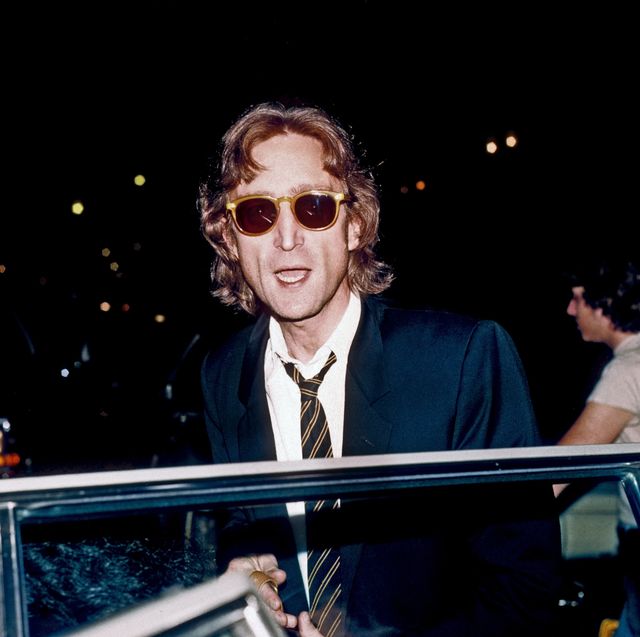
Bruce Springsteen – Merry Christmas Baby

There has been many versions of this song but this one is the one I listen to the most. The dynamics in this version is great.

This Dec 31st, 1980 performance of Merry Christmas Baby was recorded at Nassau Veterans Memorial Coliseum in Uniondale, NY, during The River Tour. The song was played in its E Street Band arrangement. It was released in November 1986 as the B-side to WAR. This was the lead single from the Live/1975-85 box set.

Although Chuck Berry and Elvis Presley covered “Merry Christmas Baby” before Bruce did, it sounds like he based  his version on Otis Redding’s 1968 version.

Lou Baxter wrote this song but it was called “Merry Christmas Blues” and Charles Brown took it home to work it out. He rewrote it with the new title. Baxter wanted Charles Brown to record it the way Charles rewrote it and it became a big hit with Brown singing with Johnny Moore’s Three Blazers.

Then the music business struck again…The company promised Charles he would have a co-writer credit but of course, it didn’t happen and Johnny Moore had his name listed on the song instead. Charles never got paid royalties for the song. It was originally released in 1947 and peaked at #3 in the Charts.

Moore died, largely unknown, in the 1960s. Brown, meanwhile, became renowned as a pioneer of the laid-back, piano-driven style of West Coast blues and was recognized as an early influence on Ray Charles; he had a renaissance in the 1990s, touring with Bonnie Raitt.

Charles Brown was inducted into the Rock and Roll Hall of Fame in 1999 but died before the induction.

It was also on a complication album A Very Special Christmas of various artists released in 1987.

Merry Christmas Baby

Bring it down, band!

Now, I just came here tonight to say…
I just wanna say…
I just wanna say…

Merry Christmas baby, you surely treat me nice
Come on, merry Christmas baby, you surely treat me nice
I feel just like I’m living, living in paradise

Now listen
Now you see, I feel real good tonight
And I got music on the radio
And I feel real good tonight
And I got music on the radio
And the boys in the band are playing pretty good!
Now, I feel just like I wanna kiss you
Underneath my mistletoe

But now listen
Santa came down chimney, half past three
With lots of nice little presents for my baby and me
Merry Christmas baby, you surely treat me nice
And I feel like I’m living, just living in paradise
Come on boys!

Well now, Santa came down chimney, half past three
With lots of nice little presents for my baby and me
Merry Christmas baby, you surely treat me nice
I feel like I’m living, I’m living in paradise

And I just came down to say
Merry Christmas baby
I just wanna say, merry Christmas baby
And happy New Year, too!
Oh yeah!
Play it boys, go!
Merry Christmas
Ha-ha-ha-ha-ha-happy New Year
Ohhhh!

Oh yeah!
Merry Christmas baby!
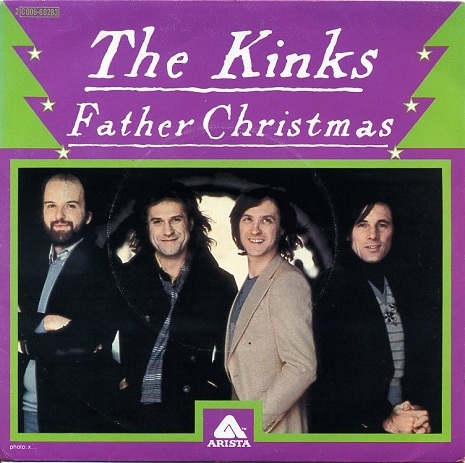
Kinks – Father Christmas

Father Christmas, give us some money
We’ll beat you up if you make us annoyed
Father Christmas, give us some money
Don’t mess around with those silly toys

This song always brings a smile to my face. Any Kinks Christmas song would have to be different…and this one is.

I’ve always like this raw and rough Christmas song. A writer at the NME wrote “Successful Xmas songs are more about mood than specifics, but as this is an anti-Christmas song, it’s fine.” This is the kind of song you would expect from Ray Davies. Anti-Christmas or not…it has become a popular classic Christmas song that gets airplay every year.

The single was released during the height of punk rock and certainly exudes a punk attitude. Dave Davies told ABC Radio that he “always thought The Ramones would do a great version of it. I don’t know why they didn’t do it.”… thinking about it…Dave was right…it would have fit them perfectly.

The song was released in 1977 with the B side Prince Of  The Punks. The track was included on the Arista compilation Come Dancing with The Kinks and is also available as a bonus track on the CD reissue of the Kinks’ 1978 album Misfits.

In England, Father Christmas is the personification of Christmas, in the same way as Santa Claus is in the United States. Although the characters are now synonymous, historically Father Christmas and Santa Claus have separate entities, stemming from unrelated traditions.

Ray Davies on performing the song as an opening act in the 70s: 

“When the record came out we were on tour with a very successful band at the time supporting them,” he recalled during an interview with Southern California radio station KSWD. “I went on dressed as Santa at the end of the show to do ‘Father Christmas.’ And the other band found it hard to follow us. The following night with the same band I went to run on but there was a bunch of heavies preventing me from running on stage. And I was protesting. But the people said, ‘The Kinks didn’t do an encore but Santa Claus was there and they were stopping him from going on stage.'”

Top 10 alternative Christmas bangers - The Gryphon

From Songfacts: First written about in Tudor England and pre-dating the first recording of Santa Claus, Father Christmas was a jolly, well-nourished man who typified the spirit of good cheer at Christmas, bringing peace, joy, good food and wine and revelry. In time, the tradition merged with America’s Santa Claus with both riding in a reindeer-pulled sleigh carrying a sackful of toys that lands on the roofs of houses that contain good children. The mythical, white bearded Santa/Father Christmas then enters the properties through their chimneys clutching gifts for the well-behaved little ones inside.

Father Christmas

When I was small I believed in Santa Claus
Though I knew it was my dad
And I would hang up my stocking at Christmas
Open my presents and I’d be glad

But the last time I played Father Christmas
I stood outside a department store
A gang of kids came over and mugged me
And knocked my reindeer to the floor

They said
Father Christmas, give us some money
Don’t mess around with those silly toys
We’ll beat you up if you don’t hand it over
We want your bread so don’t make us annoyed
Give all the toys to the little rich boys

Don’t give my brother a Steve Austin outfit
Don’t give my sister a cuddly toy
We don’t want a jigsaw or monopoly money
We only want the real mccoy

Father Christmas, give us some money
We’ll beat you up if you make us annoyed
Father Christmas, give us some money
Don’t mess around with those silly toys

But give my daddy a job ’cause he needs one
He’s got lots of mouths to feed
But if you’ve got one I’ll have a machine gun
So I can scare all the kids on the street

Father Christmas, give us some money
We got no time for your silly toys
We’ll beat you up if you don’t hand it over
Give all the toys to the little rich boys

Have yourself a merry merry Christmas
Have yourself a good time
But remember the kids who got nothin’
While you’re drinkin’ down your wine

Father Christmas, give us some money
We got no time for your silly toys
Father Christmas, please hand it over
We’ll beat you up so don’t make us annoyed

Father Christmas, give us some money
We got no time for your silly toys
We’ll beat you up if you don’t hand it over
We want your bread so don’t make us annoyed
Give all the toys to the little rich boys

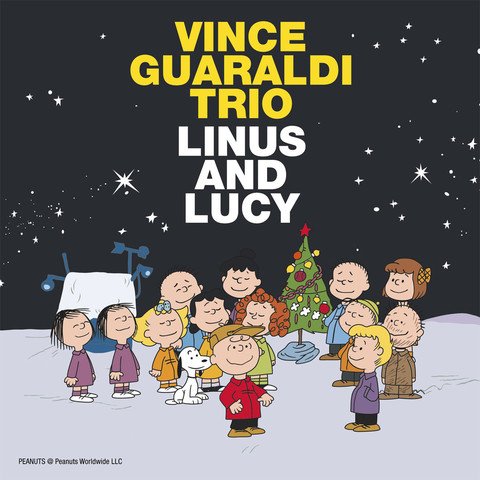
Vince Guaraldi Trio – Linus and Lucy

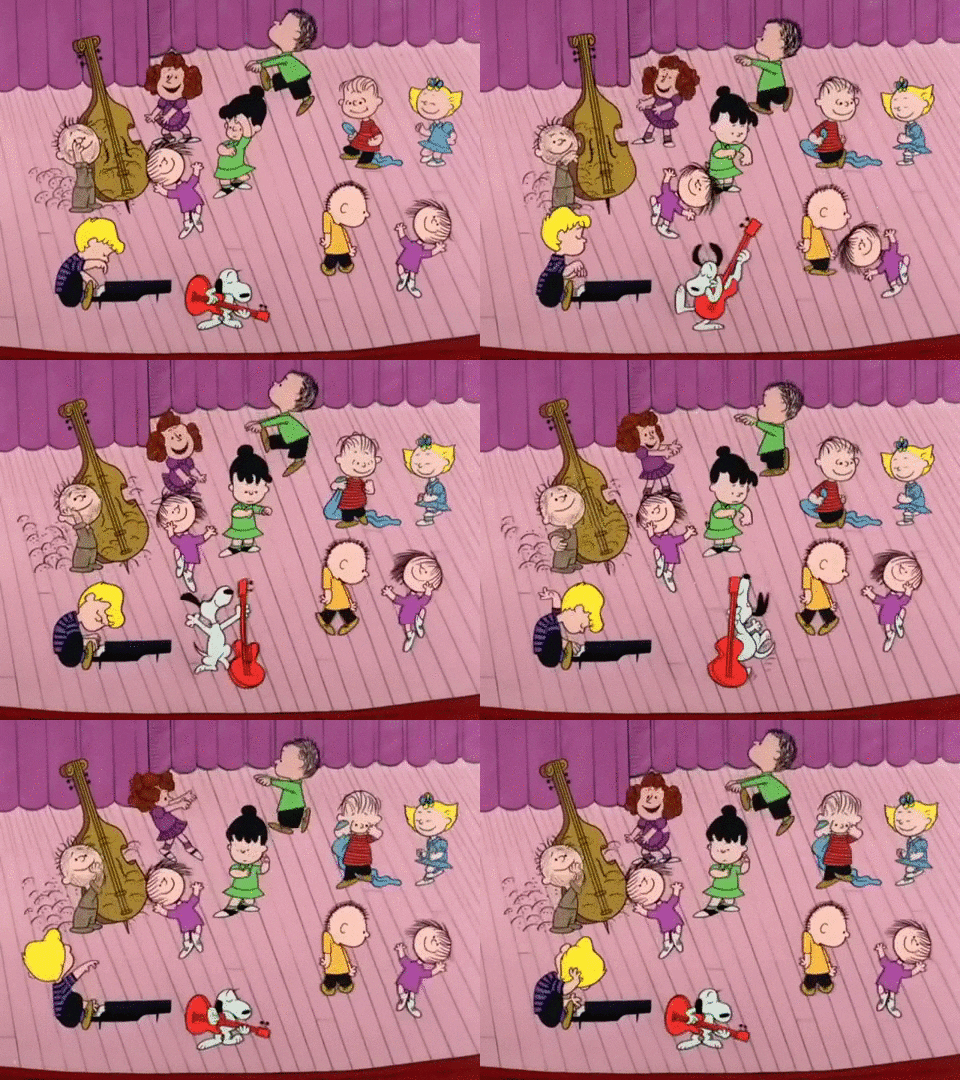
It’s hard to resist this song. It automatically makes me happy when I hear it. I see the Peanuts gang doing their thing.

Peanuts GIFs - Get the best GIF on GIPHY

This song I can hear anytime of the year and be happy. It’s associated with Christmas also…whichever… I never get tired of it.

I was reminded of this song this year in Hanspostcard’s song draft when run-sew-read’s pick was this song.

Ironically, just about everyone would call this “the Charlie Brown song” even though it’s actually titled after Linus and Lucy Van Pelt, brother and sister in Charles Schulz’s Peanuts comic strip universe.

The song is most famous for its use in the yearly favorite A Charlie Brown Christmas, which first aired in 1965, but it was written two years earlier for a documentary about Schulz and the Peanuts gang called A Boy Named Charlie Brown, which never aired.

Producer Lee Mendelson was in charge of the documentary and asked Vince Guaraldi to compose music for it

Guaraldi was huge in the jazz world and won the 1962 Grammy for Best Original Jazz Composition for “Cast Your Fate To The Wind” for his group, the Vince Guaraldi Trio. Mendelson was searching for what kind of music to play for the documentary when he took a taxi cab and “Cast Your Fate To The Wind” was playing as he crossed the Golden Gate bridge. He loved it and his decision was made.

Guaraldi wrote a series of songs for the project, including “Linus and Lucy,” that he recorded with his group, the Vince Guaraldi Trio. Even though A Boy Named Charlie Brown was shelved, the soundtrack was released in 1964, which is where “Linus and Lucy” first appeared.

In 1965, Mendelson put together the first Peanuts TV special, A Charlie Brown Christmas, using many of the same people who worked on the documentary. “Linus and Lucy” formed the score, and a song he wrote with Guaraldi called “Christmas Time Is Here” was included in a key scene.

When A Charlie Brown Christmas debuted in 1965, it quickly turned the Peanuts franchise into a television institution. That first special also shot Guaraldi to greater fame, and he became connected to all subsequent Peanuts shows.

Guaraldi would continue to work on Peanuts films until his death in 1976.

No words…just enjoy

Beatles – Christmas Time Is Here Again

It’s that time of year…and this is one holiday song that is on my list and not worn out. I first heard this in 1994 when I bought the Beatles Anthology album. I never knew of this song before. this song was never officially released until it appeared as the B-side to “Free As A Bird” in 1994. I’ve posted it every year since I’ve blogged and will continue to do so…it’s repetitive butI like it…it drives home the point.

My friend Dave posted this song a few days ago and he has more info than I do so check it out.

The song, credited to Lennon-McCartney-Harrison-Starkey. The original version was distributed to The Beatles fan club in 1967. It’s the only song ever written specifically for the Beatles Fan Club members. Along with the Beatles…actor Victor Spinetti  and roadie Mal Evans were on the recording.

Between December 1963 to December 1969, sent out 7 flexi discs that had  spoken and musical messages to their official fan clubs in the UK and the US at Christmas time.

The Beatles recorded this in 1967 and wasn’t released until 1994 paired with “Free As A Bird”. It is a fun Christmas song that will stick in your head. The Beatles did not release a Christmas song commercially… only to their fan club when they were active.

Many performers of this era like The Beach Boys and The Four Seasons released Christmas songs, but The Beatles never had an official Christmas release.

Christmas time is here again

Christmas time is here again

Ain’t been round since you know when
Christmas time is here again
O-U-T spells “out”

Christmas time is here again

Ain’t been round since you know when
Christmas time is here again
O-U-T spells “out”

Christmas time is here again

Ain’t been round since you know when
Christmas time…[music continues and fades to background]

[spoken]

This is Paul McCartney here, I’d just like to wish you everything you wish yourself for Christmas.

This is John Lennon saying on behalf of the Beatles, have a very Happy Christmas and a good New Year.

George Harrison speaking. I’d like to take this opportunity to wish you a very Merry Christmas, listeners everywhere.

This is Ringo Starr and I’d just like to say Merry Christmas and a really Happy New Year to all listeners

[a John Lennon pastiche at this point, very hard to understand]

John Lennon – Happy Xmas (War Is Over)

Merry Christmas everyone… another year older…and a new one just begun.  Dave just covered this one a few days ago.

This is my favorite Christmas song hands down. This song gets me in the Christmas mood like no other. The song is highly idealistic but that is alright. It was the early seventies and the time for idealism.

In 1969 John and Yoko had rented billboard spaces in 12 major cities around the world, for the display of black-and-white posters that declared “WAR IS OVER! If You Want It – Happy Christmas from John & Yoko”. Two years later this slogan became the basis for this song when Lennon decided to make a Christmas record with an anti-war message…plus John said he was sick of White Christmas.

War is Over - John & Yoko Billboard - Time Square - NYC 1969. | Yoko, War, John  lennon

John’s voice goes so well with this song. The song peaked at #2 in the UK charts in 1971….the song did peak at #42 in the Billboard 100 in 2019.

John Lennon and Yoko Ono wrote this in their New York City hotel room and recorded it during the evening of October 28 and into the morning of the 29th, 1971 at the Record Plant in New York. It was released in the US for Christmas but didn’t chart. The next year, it was released in the UK, where it did much better, charting at #2. Eventually, the song became a Christmas classic in America, but it took a while.

Lennon originally wrote this as a protest song about the Vietnam War, and the idea “that we’re just as responsible as the man who pushes the button. As long as people imagine that somebody’s doing it to them and that they have no control, then they have no control.”

The children’s voices are the Harlem Community Choir, who were brought in to sing on this track. They are credited on the single along with Yoko and The Plastic Ono Band.

I think of High School when I hear this song. Our school had a Christmas poster contest and a buddy and I made a poster as a joke and wrote “So this is Christmas and what have you done another year over, and a new one just begun” and won first prize…with an assist from John.

This didn’t appear on an album until 1975, when it was included on Lennon’s Shaved Fish singles compilation. This is one of the first Lennon albums I bought.

Happy Xmas (War is Over)

(Happy Christmas Kyoko)
(Happy Christmas Julian)

So this is Christmas
And what have you done
Another year over
And a new one just begun
And so this is Christmas
I hope you have fun
The near and the dear one
The old and the young

A very Merry Christmas
And a happy new year
Let’s hope it’s a good one
Without any fear

And so this is Christmas
For weak and for strong
For rich and the poor ones
The world is so wrong
And so happy Christmas
For black and for white
For yellow and red ones
Let’s stop all the fight

A very Merry Christmas
And a happy new year
Let’s hope it’s a good one
Without any fear

And so this is Christmas
And what have we done
Another year over
A new one just begun
And so happy Christmas
We hope you have fun
The near and the dear one
The old and the young

A very Merry Christmas
And a happy new year
Let’s hope it’s a good one
Without any fear
War is over, if you want it
War is over now

Happy Christmas

Foghat – I Just Want To Make Love To You

. Normally I would not sit around and think to myself… lets listen to some  70’s arena rock! Sometimes though it hits the spot. Foghat knew that genre very well. Slow Ride, Fool For the City, and this one rattled the windows. I always liked “Lonesome Dave” Dave Peverett the singer and guitar player. For me he was Foghat. 

I also always liked their name…Foghat…it just sounds like a cool rock and roll name. Foghat was born out of the blues band Savoy Brown. Dave Peverett, the drummer Roger Earl and the bassist Tony Stevens quit that band and decided to form their own band in 1970. The band wanted to take the sound of Savoy Brown a step further and add a rock edge to its basic boogie blues. The name Foghat was taken from a word that Peverett and his brother, John, had invented in a Scrabble game.

I also looked up the name and it said… Foghat: A euphemism for getting high on marijuana

This song was written by Willie Dixon and first recorded in 1954 by Muddy Waters.  Foghat’s version peaked at #28 in the Billboard 100 and #33 in Canada in 1977. The song was on the live album Foghat Live that peaked at #11 in the Billboard Album Charts. It was their highest charting album.

Our band covered this song and with no lyric sheet in those days…we would just make up words until the chorus. We would not have been radio friendly with our lyrics but it never failed to get people up. This one and Jumpin’ Jack Flash did the trick.

I Just Want To Make Love To You

I don’t want you cook my bread
I don’t want you make my bed
I don’t want your money too
I just want to make love to you

I don’t want you be no slave
I don’t want you work all day
I don’t want you to be sad and blue
I just want to make love to you

I can tell by the way that you baby talk
And I can see by the way that you twitch and walk
I can tell by the way that you treat your man
But I can love you, baby, it’s a crying shame

I don’t want you wash my clothes
I don’t want you keep a home
I don’t want you to be true
I just want to make love to you

I don’t want you be no slave
I don’t want you work all day
I don’t want you to be true
I just want to make love to you

I don’t want you keep a home
I don’t want you wash my clothes
I don’t want you to be true
I just want to make love

Dexy Midnight Runners – Geno

The only song I knew from Dexy Midnight Runners was Come On Eileen but UK #1s Blog (Check him out if you haven’t already) featured this #1 UK song from 1980. I have been listening to it ever since.

This song is about Geno Washington, a US Soul singer the band admired. Geno Washington was not huge in America but was popular in the UK.

There is a reason that America never heard the single. This was the second Dexys Midnight Runners single released in the UK, and it shot to #1 on the chart, becoming a crowd favorite along the way. They had no distribution in America, so the song wasn’t heard in the US.

They would soon be heard in the US with Come On Eileen. Kevin Archer, Kevin Rowland wrote the song and it peaked at #1 in the UK in 1980.

Dexys frontman Kevin Rowland was originally in a punk band called The Killjoys with guitarist Kevin “Al” Archer. Rowland had an idea to form a big soul band with a brass section and he founded Dexy’s Midnight Runners in 1978 in Birmingham, England with Archer. They took their name from Dexedrine…. a pep pill favored by ’60 mods.

Kevin Rowland : “I saw Geno Washington in 68 at the Railway Hotel in Harrow. I was 15 years old and out with all the older kids – you had to be 18 to get in – short-haired, cool-looking mods-turning-into-skinhead types. Looking back, it’s probably not the best gig I’ve ever been to, but I didn’t have anything to compare it to.”

From Songfacts

As Dexys Midnight Runners were on the upswing, packing club shows and getting positive press, Washington’s career had faded, and the once-revered singer found himself on the cabaret circuit. “Geno,” which was written by Dexys lead singer Kevin Rowland and guitarist Al Archer, is a tribute to Washington and also a look at the cyclical nature of entertainment.

Dexys Midnight Runners made their mark by adding their distinctive Celtic flavor to Soul music. They championed artists like Washington and did covers of songs by Sam And Dave, Aretha Franklin and the lesser-known Zoot Money. “Soul” was part of Rowland’s stage patter (“our hearts are full of soul…”), as he made it clear where their musical roots had grown.

On the band’s second album, they had a hit with a cover of “Jackie Wilson Said,” which was Van Morrison’s tribute to another Soul singer.ne.

Rowland told The Guardian that the lyrics are all true. He recalled: 

The video features plenty of scenes running around alleyways and jumping over railway station ticket barriers. Al Archer told Mojo: “We did all those things. It wasn’t any kind of gimmick, we did actually bunk the trains and all that.”

Geno

Geno, Geno, Geno, Geno, Geno!

Back in ’68 in a sweaty club
(Oh, Geno)
Before Jimmy’s Machine and The Rocksteady Rub
(Oh, Geno)
On a night when flowers didn’t suit my shoes
After a week of flunkin’ and bunkin’ school
The lowest head in the crowd that night
Just practicin’ steps and keepin’ outta the fights

Academic inspiration, you gave me none
But you were Michael the lover
The fighter that won
But now just look at me as I’m looking down at you
No, I’m not bein’ flash, It’s what I’m built to do

That man took the stage, his towel was swingin’ high
(Oh Geno)
This man was my bombers, my Dexy’s, my high
(Oh, Geno)
How the crowd, they all hailed you, and chanted your name
But they never knew like we knew
Me and you were the same
And now you’re all over, your song is so tame, brrr
You fed me, you bred me, I’ll remember your name

Academic inspiration, you gave me none
But you were Michael the lover
The fighter that won
But now just look at me as I’m looking down at you
No, I’m not bein’ flash, It’s what I’m built to do

Oh, Geno
(Oh, Geno)
Oh, Geno
(Oh, Geno)

Howlin’ Wolf – Killing Floor

I just posted a song by Howlin’ Wolf a week or so ago but I’ve been listening to him lately so here is another. This song comes with an interesting story between Jimi Hendrix and Eric Clapton.

When Jimi Hendrix came to England he made a huge impression right away. At a Cream gig he requested a chance to jam with the band. No one in those days asked to do this because Clapton was “God” on guitar to many people…plus Cream as a unit were super talented. Jack Bruce later said that Jimi was a brave person to do that because Cream were all top notch musicans.

Jimi plugged into Jack Bruce’s amp and broke into Killing Floor. Clapton was blown away by it because he never mastered the song. Jimi was ripping right through it at breakneck speed. According to Chas Chandler…Clapton just dropped his hands and was shocked.

Wolf released his version in 1964 and it was written by him.

Hubert Sumlin played guitar on the original version. He said that Wolf played the field, with several ladies in his stable. One of them, a woman named Helen, was so fed up with his philandering that she got a shotgun filled with buckshot and fired at him from a second-floor window.

So, the killing floor is a metaphor for depression, in Wolf’s case triggered by a woman who was so mad she was literally trying to kill him.

Led Zeppelin later used this song as the basis for The Lemon Song.

Eric Clapton:

“I remember thinking that here was a force to be reckoned with. It scared me, because he was clearly going to be a huge star, and just as we are finding our own speed, here was the real thing.” 

“It was amazing,”“and it was musically great, too, not just pyrotechnics.” 

From Songfacts

In this song, Howlin’ Wolf sings about how he should have left his woman a long time ago, imagining how much better he would have it if he went to Mexico when he had the chance. Now, he’s down here on the killing floor.

Wolf wasn’t the first to use the phrase “killing floor” in a song; the Mississippi blues musician Skip James recorded “Hard Time Killing Floor Blues” in 1931. James’ version was re-released in 1964, a year before Wolf recorded his “Killing Floor.”

Artists to cover this song include Albert King, Jimi Hendrix and Otis Rush.

Killing Floor

I should have quit you, a long time ago
I should have quit you, babe, long time ago
I should have quit you, and went on to Mexico
If I had-a followed my first mind
I’d been gone, since my second time

I shoulda went on, when my friend come from Mexico at me
But no, I was foolin’ with ya, baby, I let ya put me on the killin’ floor
Lord knows, I shoulda been gone
And I wouldn’t have been here, down on the killin’ floor
Yeah

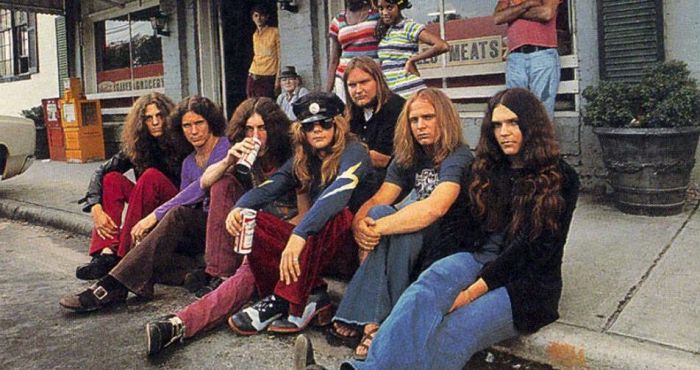
Lynyrd Skynyrd – I Need You

This album track came off of their second album Second Helping released in 1974. It was less than a year after their fantastic debut album called Pronounced ‘Lĕh-‘nérd ‘Skin-‘nérd. 

In my opinion they had some good albums after this one but not until their final one Street Survivors  did they match their first two.

Second Helping contained their big hit Sweet Home Alabama.  The album peaked at #12 in the Billboard Album Chart and #9 in Canada in 1974.

They played schools, parties, and bars for years before they hit it big. The band was first discovered in a rock club called Funnochio’s, on Peachtree Street in Atlanta, Georgia, in 1972. They were found by the famous Al Kooper, who had just landed an executive position at MCA Records and was searching to find some new talent for MCA’s “Sounds of the South” label. At that time Kooper was on tour supporting Badfinger at the time.

This album was produced by Al Kooper who was a founding member of Blood, Sweat, and Tears and he also played organ on Bob Dylan’s classic Like A Rolling Stone.

The three guitar attack was important with this band but it was Ronnie Van Zant’s songwriting that made them what they were. This song is a little slower but has that Skynryd build up of guitars. The band had some great album cuts and this is one of them.

Al Kooper: “Ronnie Van Zant was Lynyrd Skynyrd. I don’t mean to demean the roles the others played in the group’s success, but it never would have happened without him. His lyrics were a big part of it – like Woody Guthrie and Merle Haggard before him, Ronnie knew how to cut to the chase. And Ronnie ran that band with an iron hand. I have never seen such internal discipline in a band. One example: These guys composed all of their guitar solos. Most bands improvised solos each time they performed or recorded. Not them. Ronnie’s dream was that they would sound exactly the same every time they took the stage.” 

I Need You

Ain’t no need to worry
There ain’t no use to cry
‘Cause I’ll be comin’ home soon
To keep you satisfied

You know I get so lonely
That I feel I can’t go on
And it feels so good inside babe
Just to call you on the telephone
An’ I said…

Ooh baby I love you
What more can I say
Ooh baby I need you
I miss you more everyday

I woke up early this mornin’
And sun came shining down
And it found me wishin’ and a’hoping
Mama you could be around

Well you know I need you
More than the air I breathe
And I guess I’m just tryin’ to tell you woman
Oh what you mean to me yeah, yeah

Ooh baby I love you
What more can I say
Ooh baby I need you
I miss you more everyday
What I say…

I’m tryin’ to tell you I love you
In each and every way
I’m tryin’ to tell you I need you
Much more than just a piece of leg

Ooh baby I love you
What more can I say
Ooh baby I need you
I miss you more everyday

Ooh baby I love, love, love, love you
What more can I say yeah
‘Cause ooh baby I need your sweet lovin’
I miss you more an’ more everyday

Ooh baby I love you
Baby, baby I need ya

….

Mike Nesmith (1942-2021) and the Monkees influence

I had something else planned to post but I found out that Mike Nesmith passed away. Nesmith was a big inspiration to me. There is no question…Nesmith would have made it without the Monkees…he was a talented writer, actor, producer, novelist and a very good Texas guitar player.  He wrote some great country rock songs, Elephant Parts, and even a hit for Linda Ronstadt’s band The Stone Poneys…Different Drum.

While watching the reruns of the Monkees I bugged my mom to buy me a green wool hat with buttons but you can’t buy them off the shelf. She got me a green stocking cap…it wasn’t the same but I was happy.  When the Monkees are mentioned some people cringe but they still have a place in my 5-year-old heart…plus how many bands can say that Jimi Hendrix opened up for them? Although that might be the worst pairing ever.

I’m not saying they deserve to be remembered with the best bands ever. Not at all but they do need to be recognized for their influence on a couple of generations. They influenced a lot of kids to form bands…mostly because of their weekly prime-time television show and ensuing hit singles. In the 80s they had a big comeback with a tour and massive airplay on MTV… I got to see them then…without Nesmith though.

They were a lot of fun. I thought WOW… I must be in a band one day. Little did I know that being in a band was not living in a cool place at the beach and having adventures at every turn…not to mention everyone getting along…it just doesn’t happen that way…but it is a special feeling being in a band with an us against them attitude and a great growing experience.

After I went through the Monkees faze I discovered the Beatles, The Who, Stones, Kinks…anything British but I still have a soft spot for some of the old Monkees songs.

The Monkees basically took A Hard Days Night movie humor and made a television show around a life of a mid-sixties rock band. Kids wanted to form bands after seeing them romp around the screen with girls…who wouldn’t want that gig? Michael Stipe from REM has said  he was influenced by them.

They were not allowed to play on their first couple of albums…only sing…The Monkees were put together by Bob Rafelson and Bert Schneider for Screen Gems with two real musicians in the band…Michael Nesmith and Peter Tork… Micky Dolenz (he did sing in cover bands before The Monkees) and Davy Jones could sing and act…. and Mickey quickly learned drums.

When news came out that they didn’t play on their albums they were roundly criticized in the 1960s. They fought Don Kershner who controlled what they sang…. and won… The funny thing is many sixties pop bands didn’t play on their records and the Monkees actually started to play their own instruments on their third album (Headquarters)  and writing some songs for every album afterward.

In the second season of their tv show they started to gain more control. Some of those last episodes are very pot influenced…especially the episode called “The Frodis Caper”… It is surreal and broke the fourth wall…the second season is worth a watch…all of them are fun but the 1st season is more formulaic.

I still like many songs by them…anything written by Michael Nesmith (famous also for Elephant Parts), Pleasant Valley Sunday, Randy Scouse Git, Steppin Stone and Saturday’s Child.

All in all, they ended up singing and playing on some of the best-known sixties pop-rock hits.

I’ll just add one more thing…he Monkees belong in the Rock and Roll Hall of Fame.

….

Gary U.S. Bonds – Quarter To Three

I must admit I never heard of Bonds until Bruce Springsteen wrote a song for him called This Little Girl on Bond’s 1981 Dedication album.

Bruce covered this song in the seventies live. One performance in paticular was outstanding… the 1979 No Nukes concert encore (at the bottom).

I like Gary’s version a lot because of the party atmosphere which contrasts to the smoother records at the time.

After listening to the lyrics…I wondered who Daddy G was…Daddy G is Gene Barge, tenor saxman in an instrumental group called The Church Street Five, which released a song called “A Night With Daddy G” that reached #111 in February 1961.

Bonds’ real name is Gary Anderson. His label boss, Frank Guida, changed it to “U.S. Bonds” for his first single, New Orleans, as a play on the posters asking Americans to “buy U.S. savings bonds.” Pretty clever, but too many people, including many DJs, got it wrong and thought it was the name of a group. His next single, “Quarter To Three,” was initially issued as U.S. Bonds but soon changed to Gary U.S. Bonds, along with his subsequent releases.

The writing credits on this song go to Bonds and the three men who wrote the instrumental on which it is based…A Night With Daddy G.  They would be Gene Barge (Daddy G), Frank Guida, and Guida’s engineer and songwriting partner Joe Royster.

Daddy G was a popular guy…he got another mention a few months later when he showed up in the lyric to The Dovells song “Bristol Stomp,” where they sing about how they “rocked with Daddy G.” That song went to #2 in 1961.

The song went to #1 in the Billboard 100, #3 on the R&B Charts, and #7 in the UK in 1961.

From Songfacts

In this song, Gary U.S. Bonds sings about staying up till quarter to three in the morning, dancing to the swinging sax of Daddy G.

Like Bonds, The Church Street Five were signed to Legrand Records, owned by former record store owner Frank Guida. Bonds wrote a lyric for the song and recorded it (with Daddy G on saxophone) as “Quarter To Three.” In June 1961, it went to #1, where it stayed for two weeks.

Bruce Springsteen, a big fan of Bonds, played this at many of his concerts in the ’70s before and after his rise to stardom. When Springsteen played The Palladium in New York City on October 29, 1976, he brought Bonds on stage to perform the song. By this time, Bonds had long fallen out of favor (his last Hot 100 hit was in 1962 with “Copy Cat”) and stuck on the cabaret circuit. Springsteen worked at a breakneck pace for the next few years, but found time after the release on his 1980 album The River to work with Bonds, resulting in a successful 1981 comeback album for Bonds called Dedication.

Springsteen wrote a lot more songs than he could record, and three of them went to Bonds: “This Little Girl,” “Your Love” and the title track. Springsteen and members of his E Street band also played on the album and worked on the production. “This Little Girl” was a hit, going to #11 in the US and reviving Bonds’ career. When Springsteen brought Bonds on stage a few times in 1981, the crowds were far more familiar with him. In 1982, Springsteen and his band worked on another album for Bonds: On the Line.

Bonds sued Chubby Checker in 1962, claiming he stole “Quarter To Three” for his song “Dancin’ Party.” The case was settled out of court.

Quarter To Three

Don’t you know that I danced
I danced till a quarter to three
With the help, last night, of Daddy G
He was swingin on the sax like a nobody could
And I was dancin’ all over the room
Oh, don’t you know the people were dancin’
Like they were mad
It was the swingin’est band they had ever had
It was the swingin’est song that could ever be
It was a night with Daddy G
Let me tell you now
I never had it so good
Yeah and I know you never could
Until you get hip with that jive
And take a band like the Church Street Five
Oh don’t you know that I danced
I danced till a quarter to three
With the help last night of Daddy G
Everybody was as happy as they could be
And they were swingin with Daddy G
Blow Daddy

Let me tell you now
I never had it so good
Yeah and I know you never could
Until you get hip with that jive
And take a band like the Church Street Five
Oh don’t you know that I danced
I danced till a quarter to three
With the help last night of Daddy G
He was swingin on the sax like nobody could
And I was dancin all over the room
Oh don’t you know the
Dance, do bee wa dah
Dance, do bee wah dah
You can dance, do bee wah dah
You can dance, dance, dance

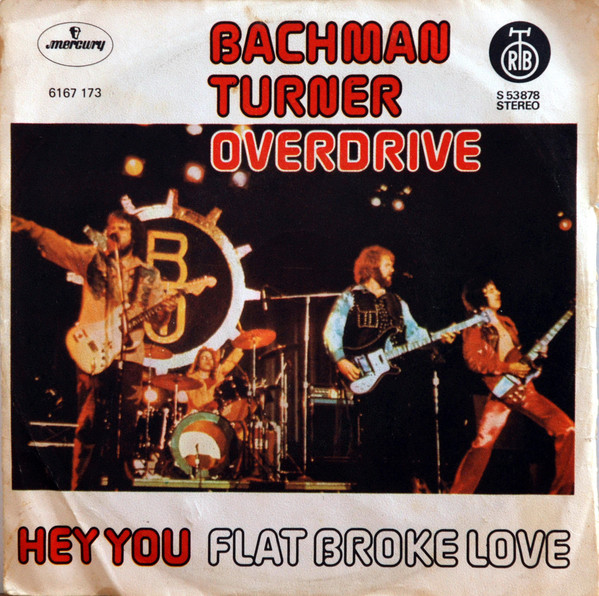
Bachman Turner Overdrive – Hey You

As a kid growing up this is one of the first bands that I knew the name of…I knew them as BTO and later found out their full name. Something that I didn’t know…”Bachman” is pronounced “Back-man” not “Bock-man“…I always used the latter pronouncement. An American DJ pronounced it wrong and it stuck for Americans.

Randy Bachman not only wrote this song but also was the lead singer. Turns out there was a purpose to this song…Randy was inspired.

There were rumors that Randy Bachman was directing the lyrics straight out of his old lead singer…Burton Cummings. They were both from The Guess Who. Cummings had said that Bachman would never make it in the music business after leaving their band. Burton was wrong in this case.

Randy did confirm all of the rumors years later. Randy Bachman: “I deserved to gloat a bit after all the mud Burton had slung at me.”

The song was on Four Wheel Drive and that album peaked at #1 in Canada and #5 in the Billboard Album Charts in 1975. There were two singles that were released… Quick Change Artist which charted at #7 and this one. Hey You did as well as the album…it peaked at #1 in Canada and #21 in the Billboard 100.

Randy left the band in 1977 but the band continued as “BTO.” Bachman returned in 1983, and the band has toured and recorded sporadically since.

I remember BTO opening up for Van Halen in 1986 on an 11-month tour. This was Van Halen’s first tour with new lead singer Sammy Hagar, who wanted BTO to blast out hits to get the crowd fired up. Van Halen would take the stage minutes later, leaving no time for the crowd to think about David Lee Roth.

Hey You

Hey you, you say you wanna change the world
It’s alright, with me there’s no regret
It’s my turn, the circle game has brought me here
And I won’t let down ’til every song is set

You realize now
You should have tried now, ooh
The music’s gone now
You lost it somehow
Hey you, sha la la la
Woo! Sha la la
Woo! Sha la la

Hey you, you say the race is much too fast
It’s okay, with me I’m keeping pace
It’s my game, the music is inside my head
For every one on top there’s one who can’t retrace

You realize now
You should have tried now, ooh ooh
The music’s gone now, you’ll find out
You lost it somehow
Hey you, sha la la la
Woo! Sha la la
Woo! Sha la la

You realize now, ooh
You could have tried now
The music’s gone now
You lost it somehow
Hey you, hey you, sha la la la
Hey you, sha la la la
Woo! Sha la la
Woo! Sha la la

Sha la la la, hey you, hey you, hey you (Woo!)
Sha la la la, ba-ba-ba-ba-ba-ba-baby, it’s true (Woo!)
Sha la la la, no time, no time left, no time (Woo!)
Sha la la la, don’t let me down, don’t let me down (Woo!)
Sha la la la, you gotta learn to take it easy, baby (Woo!)
Sha la la la, music’s over, it’s over (Woo!)
Sha la la la, too late, too late, too late (Woo!)
Sha la la la, I should have realised it a lot sooner than this (Woo!)
Sha la la la, hey you

December 8, 1980…Lennon

Damn this date. Every Dec 8th I can’t help but think of where I was at when I heard.  Get Back only heightened the anger and confusion over what happened.

It’s odd to think the Beatles had only been broken up for 10 years when this happened…to a 13 year old at the time…that was a lifetime but in reality it’s nothing.

Since second grade, I’d been listening to the Beatles. While a lot of kids I knew listened and talked about modern music …I just couldn’t relate as much. By the time I was ten I had read every book about The Beatles I could get my hands on. In a small middle TN town…it wasn’t too many. I was after their generation but I knew the importance of what they did…plus just great music. The more I got into them the more I learned about the Who, Stones, and the Kinks. I wanted to get my hands on every book about the music of the 1960s. Just listening to the music wasn’t enough…I wanted to know the history.

I spent that Monday night playing albums in my room. Monday night I didn’t turn the radio on…I’m glad I didn’t…The next morning I got up to go to school and the CBS morning news was on. The sound was turned down but the news was showing Beatle video clips. I was wondering why they were showing them but didn’t think much of it.

Curious, I walked over to the television and turned it up and found out that John Lennon had been shot and killed. I was very angry and shocked. The bus ride to school was quiet, at school, it was quiet as well. Some teachers were affected because John was their generation. Some of my friends were shocked but some really didn’t get the significance at the time and some didn’t care. A few but not many kids acted almost gleeful which pissed me off…It was obvious their parents were talking through them.

I went out and bought the White Album, Abbey Road and Double Fantasy in late December of 1980…I can’t believe I didn’t have the two Beatle albums already…now whenever I hear any song from those albums they remind me of the winter of 80-81. I remember the call-in shows on the radio then…pre-internet… people calling to share their feelings for John or hatred for the killer.

The next few weeks I saw footage of the Beatles on specials that I had never seen before. Famous and non-famous people pouring their heart out over the grief. Planned tributes from bands and everyone asking the same question…why?

My young mind could not process why a person would want to do this to a musician. A politician yea…I could see that…not that it’s right but this? A musician? Martin Luther King, Bobby Kennedy, and JFK were before my time.  By the mid-1970s John had pretty much dropped out of sight…John and Yoko released Double Fantasy on November 17, 1980, and suddenly they were everywhere…Less than a month later John was murdered. The catchwords were Catcher in the Rye, Hawaii, handgun and insane. The next day we were duly informed on who killed John in the First, Middle, and Last name format they assign to murderers.

I didn’t want to know his name, his career, his wife’s name, his childhood…I just wanted to know why… he says now…”attention”

I noticed a change happened after that Monday night. John Lennon was instantly turned into a saint, something he would have said was preposterous. Paul suddenly became the square and the uncool one and George and Ringo turned into just mere sidemen. Death has a way of elevating you in life. After the Anthology came out in the 90s that started to change back a little.

I called my dad a few days after it happened and he said that people were more concerned that The Beatles would never play again than the fact a man, father, and husband was shot and killed. He was right and I was among those people until he said that. Dad was never a fan but he made his point.

Below is a video of James Taylor telling on how he met the killer a day before Lennon was murdered.

Flamin’ Groovies – Whiskey Woman

This band was never huge but should have been. They were many things…a blues rock band and then blossomed into a great power-pop band. This song is during their blues/rock period.

It is off of their album Teenage Head. Years later a band in Canada were influenced by the Flaming Groovies…a band named after this album… Teenage Head. This album and Sticky Fingers by the Stones were released within weeks of each other. Mick Jagger reportedly noticed the similarities between the Groovies Teenage Head album … and thought the Flamin’ Groovies did the better take on the theme of classic blues and rock ‘n roll revisited in a modern context.

It’s a mid-tempo song  but when the vocal hits we have a hint of Sun Records slap back and I love it. Lead singer Roy Loney left the band just three weeks after Teenage Head was released. Some critics hold it up to  Sticky Fingers.

By the end of the sixties they clashed over where to go. Loney was more Stones and Cyril Jordon leaned toward the Beatles. Loney left in 1971 and they got an 18 year old lead singer named Chris Wilson and the power pop era began.

Whiskey Woman

I’ve been hungry all day long
For that girl whose wastin’ time
She was here but now she’s gone
I’ve got a taste for wine

Whiskey woman, why can’t you
See the hell you put me through?
We are tears dressed in blue

As I sit and write this song
You’re the one thing on my mind
We’ve been lovers far too long
The good times were passin by

Whiskey woman, I feel good
Locked me in her womanhood
Like I always knew she would

Yeah

Whiskey woman, I want you

Come on, come on
I want you
I want you
I want you

Where is the woman
Where are you
Where, where are you?
I want you
I want you, yeah

I want you
I want you
Where are you?

Where are you
Where are you
Oh, where are you?

Band – Chest Fever

The great Garth Hudson gives us a wonderful intro to this song. In live shows, the song became a Hudson showcase, with him improvising wildly on organ (and later, on synthesizer) before cutting into the song. This improvisation came to be known as “The Genetic Method.” .Eventually the improvisation quoted Bach’s “Fugue in D Minor” and followed into the song’s main riff. Only part of the improvisation was included on the actual album cut.

Garth Hudson was the Band’s secret weapon according to Robertson. Back when they were backing Ronnie Hawkins….they asked the classically trained Hudson to join them. His parents didn’t like the idea but… Hudson agreed to join the band on two conditions: that Hawkins buy him a Lowrey organ, and that he be paid an extra $10 a week to give music lessons to the other Hawks. After that he was in The Band.

This gem came from Music From Big Pink in 1968. The song is credited to Robbie Robertson. Levon Helm said that he and Richard Manual wrote the lyrics to the song.

I was talking to another blogger the other day about the Band. They lived up to their name more than about any other band. Not only did they all contribute to songs…not writing…but all of them did contribute some but they all could play each others instruments.

Music From Big Pink was a huge influence on other artists back then and to this day. George Harrison and Eric Clapton were two that were influenced by it. Eric even had ideas of joining the Band. You can hear it in music at that time. Psychedelic was out and more Americana or roots music was in. The album’s influence far outweighed it’s chart position.

The album peaked at #18 in Canada and #30 in the Billboard Album Chart. It has to be on the list of best debut albums of all time.

Robbie Robertson: When Garth played the intro to “Chest Fever,” which he called “The Genetic Method,” I was reminded there was no other keyboard player in rock ’n’ roll who had his improvisational abilities and imagination. 

Robbie Robertson: “It’s kind of a hard love song,” “But it’s a reversal on that old rock & roll thing where they’re always telling the girl, ‘He’s a rebel, he’ll never be any good.’ This time, it’s the other way around.” 

From Songfacts

The Band’s guitarist, Robbie Robertson, felt he needed a counterbalance for the album’s centerpiece, “The Weight.” He wrote the music for the song solely for that purpose.

Robertson, drummer Levon Helm, and pianist Richard Manuel improvised lyrics (Robertson often calls them meaningless) over the course of the song. Those lyrics remain unchanged on the track, although they loosely tell a story of a man thrown aside by a hard-drinking, fast-talking woman who subsequently literally becomes sick with love for her.

This was the opening song for the Band’s set at the Woodstock Festival in 1969. 

Chest Fever

I know she’s a tracker
Any style that would back her
They say she’s a chooser
But I just can’t refuse her
She was just there, but then she can’t be here no more

And as my mind unwheels
I feel the freeze down in my knees
But just before she leaves, she receives

She’s been down in the dunes
And she’s dealt with the goons
Now she drinks from a bitter cup
I’m trying to get her to give it up
She was just here, I fear she can’t be there no more

And as my mind unwheels
I feel the freeze down in my knees
But just before she leaves, she receives

It’s long, long when she’s gone
I get weary holding on
Now I’m coldly fading fast
I don’t think I’m gonna last very much longer

She’s stoned said the Swede,
And the moon calf agreed
But I’m like a viper in shock
With my eyes in the clock
She was just there somewhere and here I am again

And as my mind unweaves
I feel the freeze down in my knees
But just before she leaves, she receives