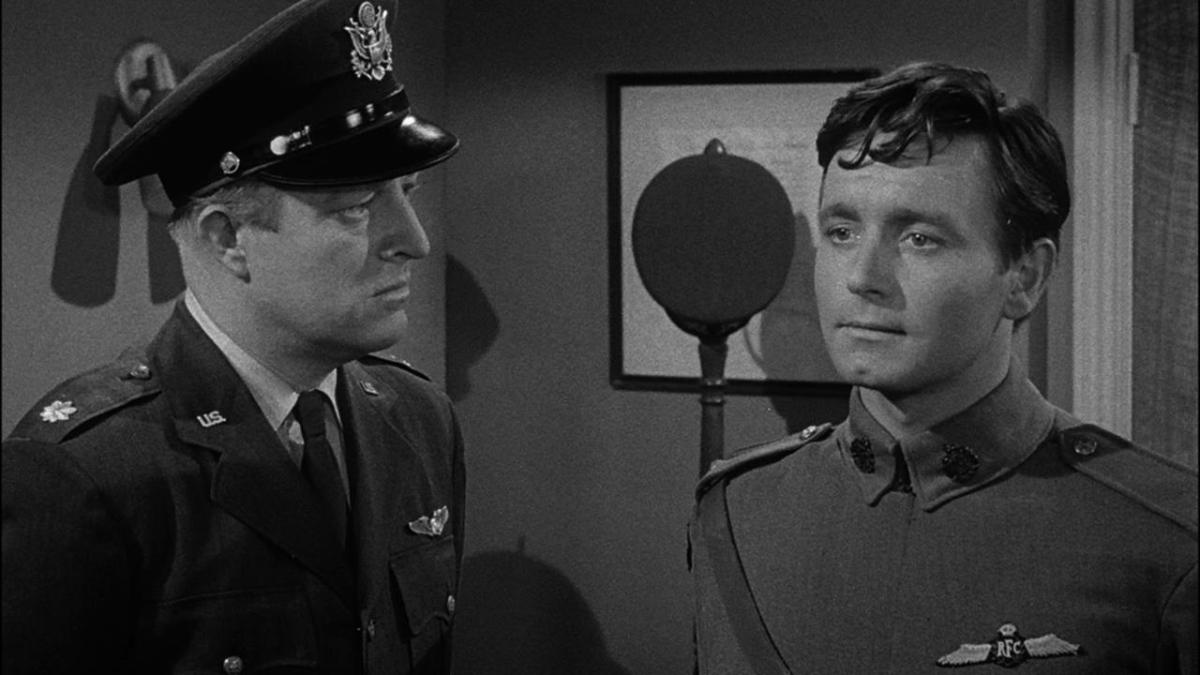
Twilight Zone – The Four of Us Are Dying

★★★ 1/2  January 1, 1960 Season 1 Episode 13

If you want to see where we are…HERE is a list of the episodes.

The first episode of a brand new decade that would see the world change immeasurably.

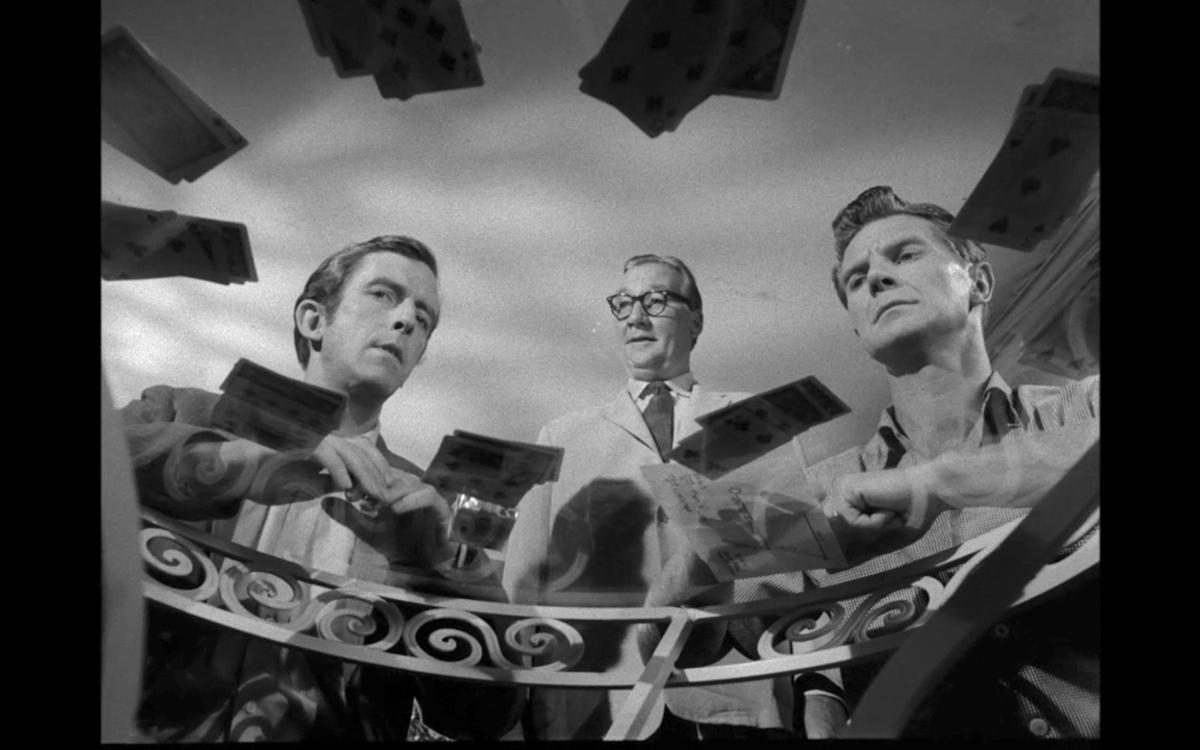
This episode has a great what if story. What if… you could change your face just by looking at a picture or from memory? Many times in the Twilight Zone these talents are given to people who want more out of life than they have earned. Instead of using this for the good…we have a small time crook trying to take advantage people.

He had his own face and he ended up changing into 3 different faces. He would scanned the paper and changed into people who he could take advantage of their situation. They were going to cast the same actor and use makeup but they decided to cast 4 different actors with same eye color and build.

This show was written by  Rod Serling  and  George Clayton Johnson

Rod Serling’s Opening Narration: 

His name is Arch Hammer, he’s 36 years old. He’s been a salesman, a dispatcher, a truck driver, a con man, a bookie, and a part-time bartender. This is a cheap man, a nickel-and-dime man, with a cheapness that goes past the suit and the shirt; a cheapness of mind, a cheapness of taste, a tawdry little shine on the seat of his conscience, and a dark-room squint at a world whose sunlight has never gotten through to him. But Mr. Hammer has a talent, discovered at a very early age. This much he does have. He can make his face change. He can twitch a muscle, move a jaw, concentrate on the cast of his eyes, and he can change his face. He can change it into anything he wants. Mr. Archie Hammer, jack-of-all-trades, has just checked in at three-eighty a night, with two bags, some newspaper clippings, a most odd talent, and a master plan to destroy some lives.

Summary

Arch Hammer arrives in the city and checks into a seedy hotel. He looks like any other man but looks can be deceiving. Hammer has the ability to change his appearance at whim, a trick he definitely uses to his own advantage. He takes on the appearance of the recently deceased musician Johnny Foster. who died in a car accident. He goes to meet Maggie, a lounge singer who is mourning Foster’s death, and convinces her to run off with him. He then takes on the appearance of Virge Sterig, a gangster whose bullet-riddled body was recently found in the river. He then visits mob boss Penell who double-crossed him to get his share of the money their most recent job. An unplanned change of face doesn’t go over well, however.

Rod Serling’s Closing Narration:

He was Arch Hammer, a cheap little man who just checked in. He was Johnny Foster, who played a trumpet and was loved beyond words. He was Virgil Sterig, with money in his pocket. He was Andy Marshak, who got some of his agony back on a sidewalk in front of a cheap hotel. Hammer, Foster, Sterig, Marshak—and all four of them were dying.

CAST

Harry Townes … Arch Hammer
Phillip Pine … Virge Sterig
Ross Martin … Johnny Foster
Don Gordon … Andy Marshak
Harry Jackson … Trumpeter
Bernard Fein … Penell
Peter Brocco … Mr. Marshak
Milton Frome … Detective
Beverly Garland … Maggie

Twilight Zone – What You Need

★★★1/2 December 25, 1959 Season 1 Episode 12

If you want to see where we are…HERE is a list of the episodes.

This is a good solid episode but not a classic. The thing about the Twilight Zone is… even the average episodes (average for the Twilight Zone) can become personal favorites.

An old man (Pedott) with a gift that can give you what you need. It could be cleaning fluid, a bus ticket, or a pair of scissors. You would not believe so, but you would end up needing them. He doesn’t use his gift on anyone but the ones he does bestow things to…they are usually grateful. What you need could be something small or something important to save your life.

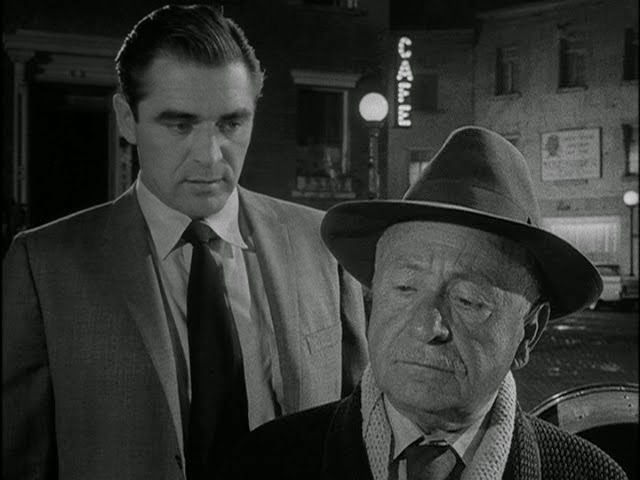
Enter Mr. Fred Renard played by Steve Cochran. He is a nobody…a nothing that wants to be a somebody and not earn it. He sees the old man with a gift and wants everything. Cochran plays this bad guy well. He is a bully and blames the world on his problems.

This show was written by Rod Serling and Henry Kuttner

Rod Serling’s Opening Narration: 

You’re looking at Mr. Fred Renard, who carries on his shoulder a chip the size of the national debt. This is a sour man, a friendless man, a lonely man, a grasping, compulsive, nervous man. This is a man who has lived thirty-six undistinguished, meaningless, pointless, failure-laden years and who at this moment looks for an escape—any escape, any way, anything, anybody—to get out of the rut. And this little old man is just what Mr. Renard is waiting for.

Summary

An old street vendor goes to a bar to sell his wares. However, he foresees what each costumer will need in a short period, selling precisely what they need. After selling in the bar, the crook Fred Renard mocks him and the peddler gives a pair of scissors for him. When Fred arrives at the hotel where he is lodged, his scarf is trapped on the elevator door and he only survives due to the pair of scissors. Now Fred believes that the peddler has a gift and he decides to force the old man to tell him the name of the horse that will win a race. The greedy Fred earns a large amount and seeks out the peddler threatening him again that the old man gives him a pair of shoes to Fred. But who needs the pair of shoes?

Rod Serling’s Closing Narration:

Street scene, night. Traffic accident. Victim named Fred Renard, gentleman with a sour face to whom contentment came with difficulty. Fred Renard, who took all that was needed—in The Twilight Zone.

CAST

Steve Cochran … Fred Renard
Ernest Truex … Pedott
Read Morgan … Lefty
Arlene Martel … Girl in Bar (as Arline Sax)
William Edmonson… Bartender
Doris Karnes … Woman
Fred Kruger … Man on Street
Norman Sturgis … Hotel Clerk

Twilight Zone – And When the Sky Was Opened

★★★★★ December 11, 1959 Season 1 Episode 11

If you want to see where we are…HERE is a list of the episodes.

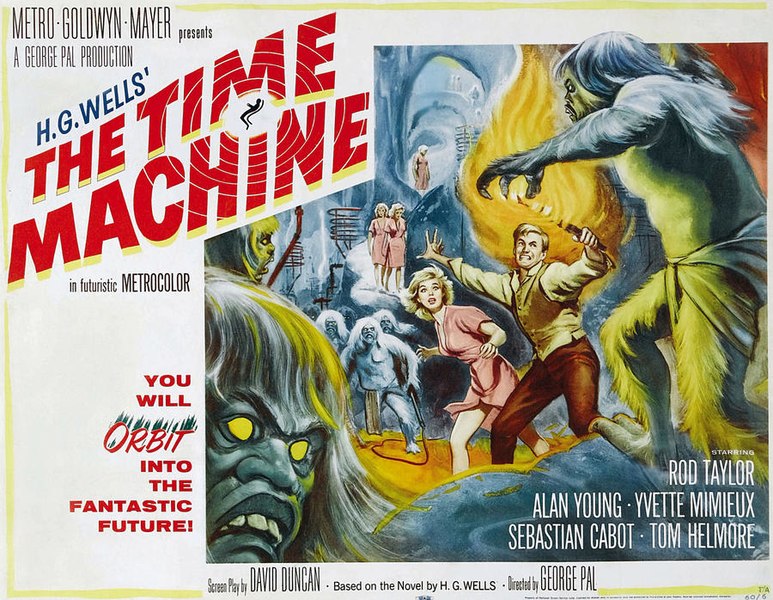
This is one of my favorites. Rod Taylor from the Time Machine drives this episode. I won’t give out 5 star ratings on just anything but this one does it for me. Each character goes through the same situation and there is no way they can explain it to anyone else. There is a little…just a little of “It’s A Wonderful Life” in this one. When George Bailey goes to his mother’s door and she said she didn’t know him…because he didn’t exist. What would happen if a friend you have known for years was wiped out of existence in everyone’s memory but yours?

Halfway through, you get an idea of what is going to happen but that doesn’t matter. You can feel the desperation in Lieutenant Colonel Clegg Forbes (Rod Taylor) as he tries to put together what happened to his friend and why no one else knows…and then it starts happening to him. 

  Also (Spoiler!) the character Major William Gart quickly vanished at the end. Rod Serling explained in a lecture that without his fellow astronauts to anchor him to this world, he had no way of holding on. It furthered the idea that Rod Taylor’s Forbes’s denial kept him in the world longer, and having heard the story of Harrington’s disappearance and seeing Forbes taken out, he had no way of denying the possibility.

Look for Miss. Landers (Sue Randall) from Leave it to Beaver as the Nurse.

This show was written by Rod Serling and Richard Matheson

Rod Serling’s Opening Narration: 

Her name: X-20. Her type: an experimental interceptor. Recent history: a crash landing in the Mojave Desert after a thirty-one hour flight nine hundred miles into space. Incidental data: the ship, with the men who flew her, disappeared from the radar screen for twenty-four hours…But the shrouds that cover mysteries are not always made out of a tarpaulin, as this man will soon find out on the other side of a hospital door.

Summary

The X-20 experimental spacecraft recently returned after venturing into a 900 mile orbit around the Earth. At one point, the craft disappeared for about 20 seconds and then suddenly reappeared before crashing in the Mojave desert. One of the crew, Maj. William Gart broke his leg on reentry but is recovering. Another of the astronauts, Lt. Col. Clegg Forbes, visits him but is obviously quite shaken. His recollection is there were 3 astronauts in the craft but the newspaper accounts mention only two. The third was Col. Ed Harrington but Gart says he never heard of him. As Forbes remembers it, he and Harrington went out the night before and Harrington begins to have a sense of not belonging. He then vanishes. As he searches for his friend, he can find no one who ever met the man.

Rod Serling’s Closing Narration:

Once upon a time, there was a man named Harrington, a man named Forbes, a man named Gart. They used to exist, but don’t any longer. Someone – or something – took them somewhere. At least they are no longer a part of the memory of man. And as to the X-20 supposed to be housed here in this hangar, this, too, does not exist. And if any of you have any questions concerning an aircraft and three men who flew her, speak softly of them – and only in – The Twilight Zone.

CAST

Rod Serling … Narrator (voice) (uncredited)
Rod Taylor … Lieutenant Colonel Clegg Forbes
Jim Hutton … Major William Gart (as James Hutton)
Charles Aidman … Colonel Ed Harrington
Maxine Cooper … Amy
Paul Bryar … Bartender
Sue Randall … Nurse
Joe Bassett … Medical Officer
Lisabeth Field … Nurse (uncredited)
Logan Field … Investigator (uncredited)
John Launer … Mr. Harrington (uncredited)
Oliver McGowan … Officer (uncredited)
Gloria Pall … Girl in Bar (uncredited)
Bernard Sell … Bar Patron (uncredited)

Modern Times

Hanspostcard is hosting a movie draft from 12 different genres…this is my comedy entry.

This was/ the first feature length Chaplin movie I ever watched. It was his last “silent” movie. The year was 1936 and “talkies” had been around for almost a decade and certainly the most popular movie format in the 1930’s. Chaplin stubbornly decided to carry on with another silent movie and I’m glad he did.

Chaplin was a smart man…he knew the little tramp could not talk on screen…the character was over with if he did…finished. That was part of his mystic. Another reason was the beauty of silent film at the time. He had perfected the art and talkies were full of clumsy lines delivered with immobile cameras and primitive microphones. They were improving but when silent movies ended…an art was lost forever.

Other actors at the time didn’t have the power or clout to try this but it worked brilliantly for Chaplin.  It was one of the top-grossing films of 1936. This after being told no one would want to see a silent movie in 1936…Charlie was once again right.

Chaplin did like the fact that he could insert sound effects into the movie with the technology. He wrote, directed, acted,  produced and also wrote the music for this movie. Modern Times has Chaplin’s finest music score. His most recognizable and commercially viable song, “Smile,” emerged from a melody used by him in this movie.

The film is very relevant today. Charlie takes on the machine age as humans are treated like cattle. Chaplin takes a swipe at  capitalism , industrialization and human exploitation.

The little tramp is finding it difficult to survive in the modern mechanized world. Failing as a worker on a factory assembly line, he gets into a series of adventures and misadventures, which leads him meeting a young recently orphaned “gamine” who ran away rather than end up in an orphanage. They try to survive in the world together, both on the run from the law, although his previous stints behind bars… were to him more appealing than life outside in the cold modern world.

The question becomes… can Charlie and the gamine individually or together  find their place in the modern world with all the odds against them?

Some famous scenes are in this movie. Chaplin in the automatic feeding machine, Chaplin and his boss in the gears of the machinery, and Chaplin going insane trying to tighten bolts on every thing.

It is a great film to start watching Chaplin if you haven’t seen any of his previous movies. One of the many remarkable things about Charlie Chaplin is that his films continue to hold up, to attract, and entertain audiences…you will enjoy this one!

Twilight Zone – Judgment Night

★★★1/2 December 4, 1959 Season 1 Episode 10

If you want to see where we are…HERE is a list of the episodes.

Rod Serling served in WW2 and he does have quite a few episodes about war. It’s been said that you pay for everything you do in this life. The character Carl Lanser will be paying for an eternity. World War II hadn’t been over for 15 years when Judgment Night premiered. It was still fresh in everyone’s mind.

Serling had a message starting with this episode. When Nazi’s fall in the Twilight Zone they will get their comeuppance. Serling didn’t make light of Nazis, pull any punches,  or turn them into a cartoon stereotype. Carl is portrayed as someone who perpetuated a deep evil and will be punished by God for it…and punished he is.

I love the twist in this episode but I think it is a little slow moving…but still a good one to watch. There are better WWII episodes.

This show was written by Rod Serling

Rod Serling’s Opening Narration: 

Her name is the S.S. Queen of Glasgow. Her registry: British. Gross tonnage: five thousand. Age: Indeterminate. At this moment she’s one day out of Liverpool, her destination New York. Duly recorded on the ship’s log is the sailing time, course to destination, weather conditions, temperature, longitude and latitude. But what is never recorded in a log is the fear that washes over a deck like fog and ocean spray. Fear like the throbbing strokes of engine pistons, each like a heartbeat, parceling out of every hour into breathless minutes of watching, waiting and dreading… For the year is 1942, and this particular ship has lost its convoy. It travels alone like an aged blind thing groping through the unfriendly dark, stalked by unseen periscopes of steel killers. Yes, the Queen of Glasgow is a frightened ship, and she carries with her a premonition of death.

Summary

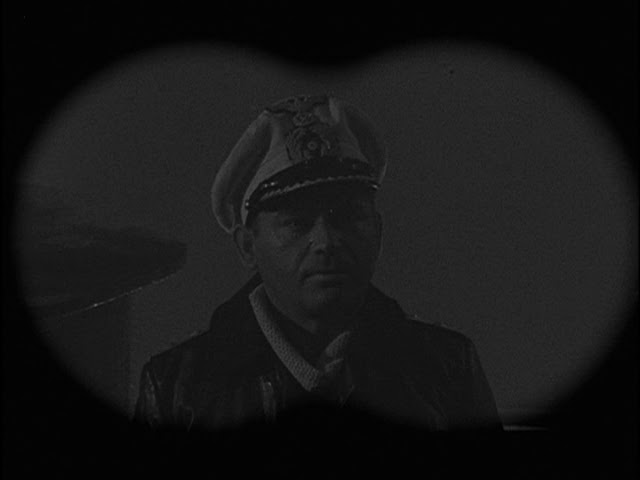
During World War II, a confused Carl Lancer finds himself as one of only a few passengers on a freighter, the S.S. Queen of Glasgow, traveling from London to New York. As he sits with other passengers, he begins to realize that he is the captain of a U-Boat that is at that very moment tracking the freighter with a view to sinking it. He also knows that in just over an hour the freighter will be attacked.

Rod Serling’s Closing Narration:

“The S.S. Queen of Glasgow, heading for New York, and the time is 1942. For one man it is always 1942—and this man will ride the ghost ship every night for eternity. This is what is meant by paying the fiddler. This is the comeuppance awaiting every man when the ledger of his life is opened and examined, the tally made, and then the reward or the penalty paid. And in the case of Carl Lanser, former Kapitan Lieutenant, Navy of the Third Reich, this is the penalty. This is the justice meted out. This is judgment night in the Twilight Zone.”

CAST

Rod Serling … Narrator (voice)
Nehemiah Persoff … Carl Lanser
Deirdre Owens … Barbara Stanley (as Deirdre Owen)
Patrick Macnee … First Officer McLeod
Ben Wright … Captain Wilbur
Leslie Bradley … Major Devereaux
Kendrick Huxham … Bartender
Hugh Sanders … Jerry Potter
Richard Peel … 1st Steward
Donald Journeaux … 2nd Steward
Barry Bernard … Engineer
James Franciscus… Lt. Mueller

Twilight Zone – Perchance to Dream

★★★ November 27, 1959 Season 1 Episode 9  (Episode 8 is Time Enough At Last which I covered in my top 10)

If you want to see where we are…HERE is a list of the episodes.

This one gets really creepy. Filmed in black and white works in the favor of this episode. It’s never been a favorite of mine but does have some scary scenes. I like the way they do the eerie dream scenes. A carnival at night with a cloudy atmosphere that is downright creepy. Suzanne Lloyd is stunning as Maya in Edward’s nightmares and as the secretary Miss Thomas.

The end has a nice twist but it’s not a classic episode but a good one.

This was the first Twilight Zone episode aired that was written by Charles Beaumont and also the first that was not written by Rod Serling. This episode was based upon a short story of the same name by Beaumont that was first published in the November 1958 issue of Playboy magazine.

This show was written by  Charles Beaumont

Rod Serling’s Opening Narration: 

Twelve o’clock noon. An ordinary scene, an ordinary city. Lunchtime for thousands of ordinary people. To most of them, this hour will be a rest, a pleasant break in a day’s routine. To most, but not all. To Edward Hall, time is an enemy, and the hour to come is a matter of life and death.

Summary

Edward Hall seeks the help of a psychiatrist, Dr. Rathman. He tells the doctor he hasn’t slept for days, and has been taking pills to stay awake, because he has a fear that if he does go sleep, he’ll die. He’s been having a series of dreams where each on’s part of a long story – like chapters in a book. The main character in his dream other than himself is a beautiful young woman, named Maya. He’s now reached the point of the story where he believes Maya will kill him and so he’s terrified to fall asleep.

Rod Serling’s Closing Narration:

They say a dream takes only a second or so, and yet in that second a man can live a lifetime. He can suffer and die, and who’s to say which is the greater reality: the one we know or the one in dreams, between heaven, the sky, the earth – in the Twilight Zone.

CAST

Richard Conte … Edward Hall
John Larch … Dr. Eliot Rathmann
Suzanne Lloyd … Maya / Miss Thomas

Twilight Zone – The Lonely

★★★★1/2 November 13, 1959 Season 1 Episode 7

If you want to see where we are…HERE is a list of the episodes.

This one is an excellent episode. This one probably isn’t recognized as a classic episode but it’s great. Two great character actors John Dehner and Jack Warden are in this episode. Plus you have a future star in Ted Knight that would go on to star as Ted Baxter in the Mary Tyler Moore show.

This episode…you feel the heat and the guy’s loneliness being a prisoner on a distance barren planet. This show makes you think…about the loneliness of the prisoner and when Captain Allenby gives the Jack Warden character a big box to open… makes you wonder what constitutes a human being.

The Lonely was filmed on location in Death Valley. Unprepared for the terrible conditions they would face, the crew suffered extreme dehydration and heat exhaustion and director of photography George T. Clemens even collapsed, falling from a camera crane while filming continued.

This show was written by Rod Serling

Rod Serling’s Opening Narration: 

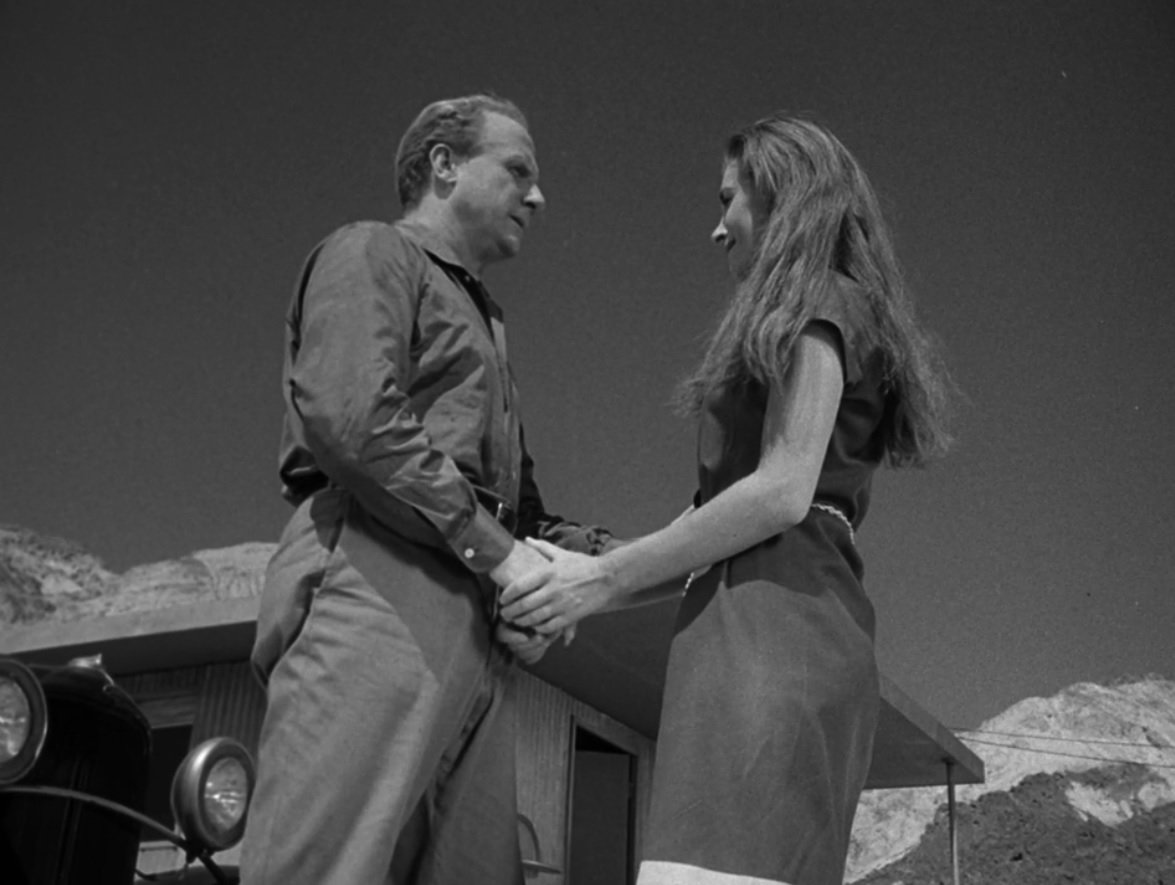
Witness if you will, a dungeon, made out of mountains, salt flats, and sand that stretch to infinity. The dungeon has an inmate: James A. Corry. And this is his residence: a metal shack. An old touring car that squats in the sun and goes nowhere for there is nowhere to go. For the record, let it be known that James A. Corry is a convicted criminal placed in solitary confinement. Confinement in this case stretches as far as the eye can see, because this particular dungeon is on an asteroid nine million miles from the Earth. Now witness, if you will, a man’s mind and body shriveling in the sun, a man dying of loneliness.

Summary

James A. Corry’s a man sentenced to prison; 50 years solitary on a distant asteroid. After 4 and a half years, James anxiously waits for Captain Allenby and his crew who every now and then bring him supplies, and also give him someone to talk to. When Captain Allenby arrives, he brings a suprise box for James; the ultimate female robot, named Alicia that is human-like and has feelings. James initially rejects her but soon falls in love with her. On the Captain Allenby’s next visit, he informs James he’s been pardoned and will return to Earth. But the ship only has enough room for him.

Rod Serling’s Closing Narration:

On a microscopic piece of sand that floats through space is a fragment of a man’s life. Left to rust is the place he lived in and the machines he used. Without use, they will disintegrate from the wind and the sand and the years that act upon them. All of Mr. Corry’s machines, including the one made in his image, kept alive by love, but now obsolete—in The Twilight Zone.

CAST

Rod Serling … Narrator (voice)
Jack Warden … James A. Corry
John Dehner … Captain Allenby
Jean Marsh … Alicia
Ted Knight … Adams (uncredited)
James Turley … Carstairs (uncredited)

Twilight Zone – Escape Clause

★★★★ November 6, 1959 Season 1 Episode 6 (Episode 5 is Walking Distance which I covered in my top 10)

If you want to see where we are…HERE is a list of the episodes.

In this episode we meet the Devil for the first of many times in The Twilight Zone. We also meet the sad little man…hypochondriac Walter Bedeker. This guy is so unlikable that you have no feeling for him whatsoever. You actually root for the devil.

David Wayne does a great job playing Mr. Bedeker and Virginia Christine is very good as his put upon wife. Thomas Gomez is a very business like devil who lays it out straight for Bedeker. I had it at 3 1/2 stars until I watched it again…the ending is worth it.

Saying that a Twilight Zone episode has a great twist is like saying the sun will rise but this one…is wonderful…and you feel some justice.

A couple of facts about this episode: The cast includes two actors each best known for starring in a long-running TV commercial: Virginia Christine (Mrs. Olson for Folgers Coffee) and Dick Wilson (Mr. Whipple for Charmin Bathroom Tissue).

This show was written by Rod Serling

Rod Serling’s Opening Narration: 

You’re about to meet a hypochondriac. Witness Mr. Walter Bedeker age forty-four. Afraid of the following: death, disease, other people, germs, draft, and everything else. He has one interest in life and that’s Walter Bedeker. One preoccupation, the life and well-being of Walter Bedeker. One abiding concern about society, that if Walter Bedeker should die how will it survive without him?

Hypochondriac Walter Bedeker has once again had his doctor come to his bedside but he can find absolutely nothing wrong with him. The doctor tells him his aches and pains are psychosomatic but he refuses to accept it. Later that night, a Mr. Cadwallader suddenly appears in his room and has a proposition for him: in return for his soul, he will give him immortality. He even has an escape clause in that if he ever gets tired of living, Cadwallader will provide him with a hasty demise. He accepts the deal and soon collects 14 insurance claims over a variety of accidents. He finds it all very boring however but his quest for a thrill brings results with an unexpected outcome.

Rod Serling’s Closing Narration:

There’s a saying, “Every man is put on Earth condemned to die, time and method of execution unknown.” Perhaps this is as it should be. Case in point: Walter Bedeker, lately deceased. A little man with such a yen to live. Beaten by the devil, by his own boredom, and by the scheme of things in this, the Twilight Zone.

CAST

Rod Serling … Narrator (voice)
David Wayne … Walter Bedeker
Thomas Gomez … Cadwallader
Virginia Christine… Ethel Bedeker
Raymond Bailey … Doctor
Wendell Holmes … Cooper
Dick Wilson … Jack
Joe Flynn … Steve
Nesdon Booth … Guard (as Nesden Booth)

Twilight Zone – The Sixteen-Millimeter Shrine

★★★1/2  October 23, 1959 Season 1 Episode 4

If you want to see where we are…HERE is a list of the episodes.

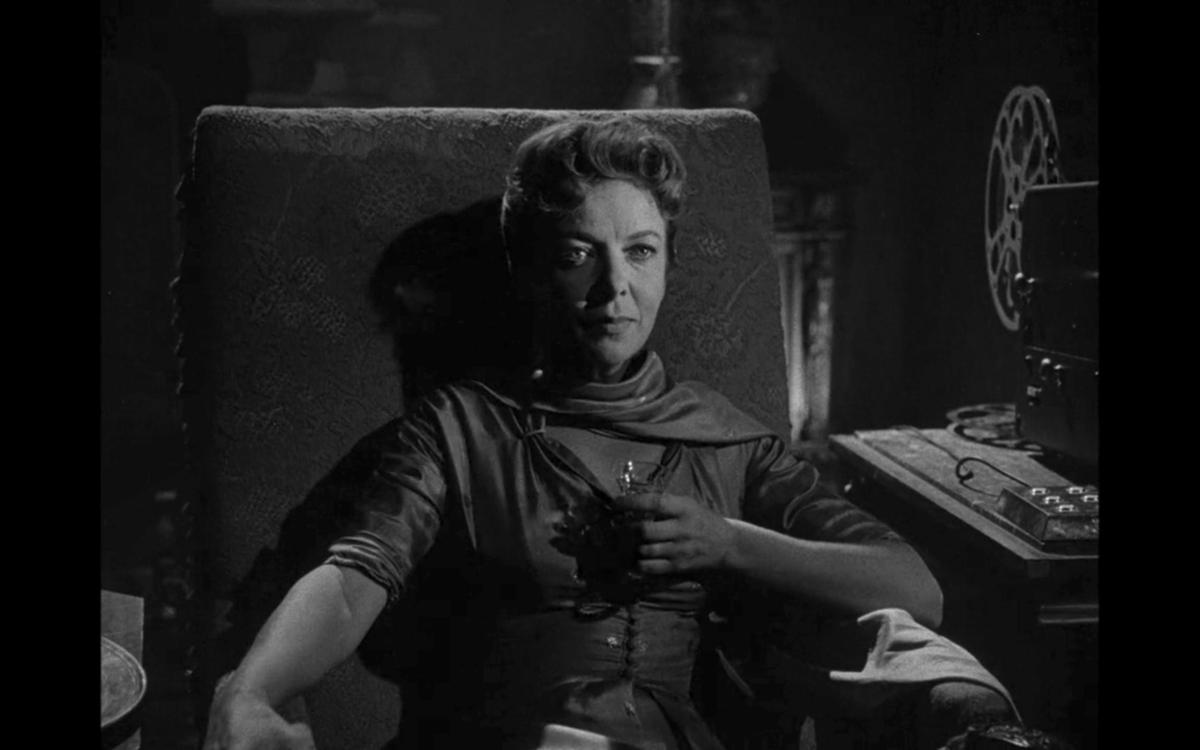
This episode has more than a strong resemblance to the film Sunset Boulevard. Barbara Jean Trenton who is played by the great actress and director Ida Lupino is an aging actress who continually looks back at her old films and forgets the world has gone on. The ending has a good twist but something about the episode just doesn’t live up to some of the great ones. Saying that, it still is a very good episode…an average Twilight Zone is better than many other’s best shows. 

Martin Balsam makes an appearance as her agent Danny Weiss. We will see Martin again in the fourth season in a much scarier role. He was also in the 1985-87 reboot Twilight Zone. I remember him the most in 12 Angry Men and his appearances many 60s and 70s tv shows. 

Ida Lupino, who starred in this episode, would later direct The Twilight Zone: The Masks. She became not just the only woman to direct an episode of the The Twilight Zone, but also the only person to both star in an episode and direct one.

Ida Lupino has 42 credits to her name as a Director. 

This show was written by Rod Serling

Rod Serling’s Opening Narration: 

Picture of a woman looking at a picture. Movie great of another time, once-brilliant star in a firmament no longer a part of the sky, eclipsed by the movement of earth and time. Barbara Jean Trenton, whose world is a projection room, whose dreams are made out of celluloid. Barbara Jean Trenton, struck down by hit-and-run years and lying on the unhappy pavement, trying desperately to get the license number of fleeting fame.

Summary

Former queen of the silver screen, Barbara Trenton’s a woman who lives in her past – watching her movies from more than 25 years earlier. Her housemaid, Sally’s worried by her behavior, and tells Barbara’s friend, and agent Danny Weiss. He tries to make Barbara move on, even getting her a role in an upcoming film. But Barbara lives in the past and won’t accept that she’s older now

Rod Serling’s Closing Narration:

To the wishes that come true, to the strange, mystic strength of the human animal, who can take a wishful dream and give it a dimension of its own. To Barbara Jean Trenton, movie queen of another era, who has changed the blank tomb of an empty projection screen into a private world. It can happen in the Twilight Zone.

CAST

Rod Serling … Narrator (voice)
Ida Lupino … Barbara Jean Trenton
Martin Balsam … Danny Weiss
Jerome Cowan … Jerry Hearndan
Ted de Corsia … Marty Sall
Alice Frost … Sally

Twilight Zone – Mr. Denton on Doomsday

★★★★1/2  October 16, 1959 Season 1 Episode 3

If you want to see where we are…HERE is a list of the episodes.

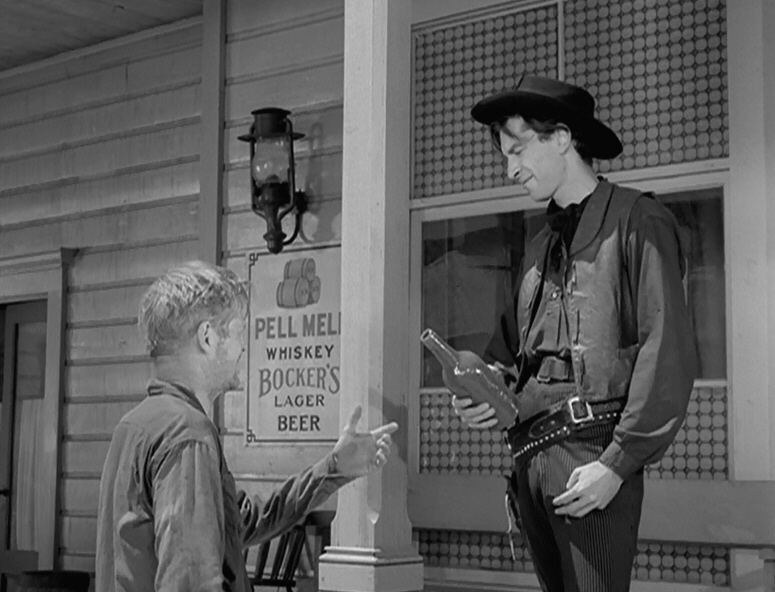
I think very highly of this episode. The more I watch it the more I enjoy it. We travel to the old West for this episode. We meet the town drunk Al Denton who was brilliantly played by Dan Duryea. A gunfighter named Dan Hotaling played by a young Martin Landau is making a fool of Denton by making him sing “How Dry I Am” for whiskey. He picks on Denton one too many times.

The show also has a mystical character (but of course…it’s the Twilight Zone) named Henry J. Fate and he tries to help Denton to redeem himself. I can’t say enough about Dan Duryea’s acting in this episode. The transformation of Denton and the nice twist at the end  makes this a great episode.

You get to know Al Denton and feel for him as he was an old gunfighter and it drove him to drinking…will he be forced into that line of work again?

This episode was written by Rod Serling

Rod Serling’s Opening Narration: 

Portrait of a town drunk named Al Denton. This is a man who’s begun his dying early—a long, agonizing route through a maze of bottles. Al Denton, who would probably give an arm or a leg or a part of his soul to have another chance, to be able to rise up and shake the dirt from his body and the bad dreams that infest his consciousness. In the parlance of the times, this is a peddler, a rather fanciful-looking little man in a black frock coat. [A revolver mysteriously appears on the ground next to Denton] And this is the third principal character of our story. Its function: perhaps to give Mr. Al Denton his second chance.

Summary

In the Old West, the drunkard Al Denton is bullied by the gunman Dan Hotaling to get some booze. The mysterious Henry J. Fate observes the humiliation and Al Denton finds a revolver on the street. When Dan sees Al Denton with a revolver in his hand, he challenges the drunk to a gunfight. Fate observes again and makes a movement with his hand that will change the life of Al Denton.

Rod Serling’s Closing Narration:

Mr. Henry Fate, dealer in utensils and pots and pans, liniments and potions. A fanciful little man in a black frock coat who can help a man climbing out of a pit—or another man from falling into one. Because, you see, fate can work that way, in the Twilight Zone.

CAST

Rod Serling … Narrator (voice)
Dan Duryea … Al Denton
Martin Landau … Dan Hotaling
Jeanne Cooper … Liz
Malcolm Atterbury … Henry J. Fate
Ken Lynch … Charlie
Arthur Batanide … Leader
Bill Erwin … Man
Robert Burton … Doctor
Doug McClure … Pete Grant

Twilight Zone – One for the Angels

★★★½   October 9, 1959 Season 1 Episode 2

If you want to see where we are…HERE is a list of the episodes.

This is a good episode of The Twilight Zone. It’s the first time we meet Death. He comes in different forms in the Twilight Zone. 73 year old Ed Wynn does a superb job as a salesman and a Santa Claus figure in the neighborhood. He is beloved by people but especially kids.

Murray Hamilton also is great as Mr. Death. He is very business like and he treats the job like any other job with deadlines and commitments. I must wonder what people thought in 1959 watching a show with Death stalking someone so businesslike.

Murray Hamilton is probably better remembered for his role playing Mr. Robinson in the 1967 film The Graduate.

Dana Dillaway who played Maggie: The scene where I was hit by the car was kind of morbid… I remember they kept spritzing the actor who was driving the car with a water spray bottle, who came around to see if I was okay while laying in the street… there is a publicity shot of me laying there and it’s kind of morbid!”

This show was written by Rod Serling

Rod Serling’s Opening Narration: 

Street scene: Summer. The present. Man on a sidewalk named Lew Bookman, age sixtyish. Occupation: pitchman. Lew Bookman, a fixture of the summer, a rather minor component to a hot July, a nondescript, commonplace little man whose life is a treadmill built out of sidewalks. And in just a moment, Lew Bookman will have to concern himself with survival – because as of three o’clock this hot July afternoon, he’ll be stalked by Mr. Death.

Lou Bookman is a street vendor; a pitchman, making a living selling what he can from his valise – radios, toys, ties and the like. After a long day, he returns to his shabby apartment to find someone waiting for him, someone he saw near where he had been selling that day. That person turns out to be Mr. Death who is there to tell Lou that his time on Earth has come to an end and that his “departure” will be at midnight. Lou tries to forestall his death by asking for a delay until he’s able to make a big sales pitch. It’s all a ruse however and Mr. Death shows him that his actions have consequences. As a result, Lou makes the pitch of his life.

Rod Serling’s Closing Narration:

Lewis J. Bookman, age sixtyish. Occupation: pitchman. Formerly a fixture of the summer, formerly a rather minor component to a hot July. But, throughout his life, a man beloved by the children, and therefore, a most important man. Couldn’t happen, you say? Probably not in most places – but it did happen in the Twilight Zone.

CAST

Rod Serling … Narrator (voice)
Ed Wynn … Lou Bookman
Murray Hamilton … Mr. Death
Dana Dillaway … Maggie Polanski
Jay Overholts … Doctor
Merritt Bohn … Truck Driver

Twilight Zone – Walking Distance… #1

Before we get to my number 1 episode…This has been so much fun I’m going to start a huge project. I want to review every Twilight Zone…all 156 episodes…so that will be next…my top 10 is not enough. I’ll start with S01E01 and work myself through and skip the 10 I’ve covered in this section. I’ve never rated shows or movies before but I will try that as well. 

This one gets a 5 out of 5 ★★★★★

Since ratings are subjective to who ever is going it…this is my system

★★★★★ This would be an exceptional episode…to me anyway
★★★★☆ This would be above the already high standards of the show
★★★☆☆ This would be a good to very good episode
★★☆☆☆ This would be just a little below average, the 4th season might see this
★☆☆☆☆ This would be a don’t watch…I don’t think this will ever be seen but I’m watching them all over to be sure

Now for my number 1 Twilight Zone episode! This one has my favorite element…Time Travel. How cool would it be to go back and meet your 11 year old self? Episodes 2-156 could change in my rankings but this one remains my favorite.

They really did this episode right. They followed through with everything. You were not wanting for answers at the end. It wasn’t just Martin who figured out he was back in time. It resolves it self nicely…with a valuable lesson. There are spoilers past this.

If you are new to the Twilight Zone this is a great one to start with…

Rod Serling’s opening narration: 

Martin Sloan, age thirty-six. Occupation: vice-president, ad agency, in charge of media. This is not just a Sunday drive for Martin Sloan. He perhaps doesn’t know it at the time, but it’s an exodus. Somewhere up the road he’s looking for sanity. And somewhere up the road, he’ll find something else.

Gig Young plays Martin Sloan who does a great job in this episode. Many people try to go back home but it’s never the same because of progress and change…Martin Sloan DOES go home and everything is the same…he even sees himself as a boy…and meets his parents…again. Also…watch out for a 4 year old Ron Howard…soon to be forever known as Opie on the Andy Griffith Show.

13 TV shows Ron Howard was on besides Happy Days and Andy Griffith

Rod Serling wrote this episode.

Martin Sloan (Gig Young), a 36-year-old executive, stops in a fuel station off an isolated country road. Not far away, 1.5 miles, is the sight of his hometown, Homewood, he’s very curious about all the kinds of things that shaped his childhood. Martin ventures to take a closer look, first he goes to an old shop where he used to get ice cream sodas. Martin is surprised to see the prices haven’t changed still a dime for a three scoop ice cream soda. Walking around Martin meets a kid, who is his old neighbor. It is then that he realizes he’s in 1934, when he was only 11-years-old. Things get complicated when he bumps into the young Martin, follows him to his house and meets with his parents. They won’t believe him when Martin says he’s in fact their grown up son. Later, Martin insists in talking with young Martin. He finds him on a carousel, where the child gets hurt falling. Martin will learn, after talking to his father, that every man has his own time and is perhaps better off not looking to the past.

Enough of my favorite episode…what is your favorite?

Rod Serling’s closing narration:

Martin Sloan, age thirty-six, vice-president in charge of media. Successful in most things but not in the one effort that all men try at some time in their lives—trying to go home again. And also like all men, perhaps there’ll be an occasion, maybe a summer night sometime, when he’ll look up from what he’s doing and listen to the distant music of a calliope, and hear the voices and the laughter of the people and the places of his past. And perhaps across his mind there’ll flit a little errant wish, that a man might not have to become old, never outgrow the parks and the merry-go-rounds of his youth. And he’ll smile then too, because he’ll know it is just an errant wish, some wisp of memory not too important really, some laughing ghosts that cross a man’s mind, that are a part of the Twilight Zone.

  • Gig Young as Martin Sloan
  • Frank Overton as Robert Sloan
  • Irene Tedrow as Mrs. Sloan
  • Michael Montgomery as Tweenage Martin
  • Ron Howard as Wilcox Boy
  • Byron Foulger as Charlie
  • Sheridan Comerate as Gas Station Attendant
  • Joseph Corey as Soda Jerk
  • Buzz Martin as Boy with Car
  • Nan Peterson as Woman in Park
  • Pat O’Malley as Mr. Wilson

My love of GODZILLA

No this is not a review of the new movie…just memories from a Godzilla fan. I will say though that I did enjoy the movie…The fight scenes are the best I’ve scene through this monster universe reboot…I felt like I was 10 again.

When I was a kid I loved monster movies. Huge monsters stomping through cities. My monster was and still is Godzilla. I watched all of those Japanese movies of the sixties and seventies and loved them. I will still watch one every once in a while. When I was around 11 I bought a monster book while on vacation in Florida. I took it to school and some jerk stole it. I would love to have that book back…so if you are out there…come on…give me the book back!

Godzilla Has A Bunch Of Ridiculous Movies That Actually Make King Of The  Monsters Look Sane - CINEMABLEND

My best friend growing up was named Ronald…he was and still is a huge Elvis fan and I am a huge Beatles fan (we both liked older music) and we would have good natured arguments over who was better. I still think I’m right!

Ok back to Monsters he was a Kong fan and Godzilla was my guy…another argument we would gladly have. After he sees the new movie we will probably have it again.

Godzilla Vs Kong Review | Movie - Empire

In 1998 a new Godzilla was in the theaters. I was so excited… normally I’m not a big fan of CGI BUT… with monster movies…oh yes! I could not believe what they did to my Godzilla…they made him a large sidewalk lizard. They changed his looks and sound. I didn’t think they would ever come out with anything again. At the time I did get some of the recent Japanese Godzilla movies and they were good.

1998

why is zilla 1998 so bad? - Godzilla Forum

In 2014 the movie Godzilla came out and I felt like a kid again. This was the Godzilla (minus the man in the suit) that I loved as a child…

We all know Kong connects with people and that is a great thing but Godzilla is just so cool with his atomic breath and dorsal plates. Godzilla looks at people like ants but as long as we don’t attack him…he is cool with us…except if you own tall buildings on the coast! If you do you better get a lot of insurance.

┐(◕﹏◕)┌

Here is Godzilla through the years.

Dr Seuss – The Sneetches

It only lasts around 12 minutes and it was squeezed in between Green Eggs and Ham and The Zax. They were packaged in a program called Doctor Suess On The Loose.

The Sneetches teaches us all that we are all the same no matter who we are or what we look like… and the stupidity of discrimination. I would wait all year for these 3 great segments…

There were two different types of Sneetches that live near the beach. The Star-Belly Sneetches have stars on their bellies. They believe that the star makes them more important than the Plain-Belly Sneetches who do not have stars. The Star-Belly Sneetches brag that they are the best on the beach and will not play games or socialize with those without the star.

sneetches.jpg

One day Sylvester McMonkey McBean arrives and announces that he can solve the problem for the Plain-Belly Sneetches for a small price. They agree to his offer. The Plain-Belly Sneetches enter a large machine and pop out with a star on the bellies. The Star-Belly Sneetches are angry because they no longer feel superior. They decide to pay Sylvester McMonkey McBean to take off their stars. The Sneetches pay to put on, take off, and put on the stars for the rest of the day.

Eventually, the Sneetches run out of money and Sylvester McMonkey McBean leaves with all their money. He leaves saying that a Sneetch never learns. However, the Sneetches did learn a lesson that day. They decide that no kind of Sneetch is better than another. They forgot about the stars and became friends.

A toast! Raise your marshmallow stick!

A toast! Raise your good fellow stick!

A toast to the silly gimmick-ick

That we have here and thar

Sound off and let the welcome ring

So what to your star-spangled thing?

A toast! Raise your marshmallow stick!

A toast! Raise your good fellow stick!

And pooh pooh pooh to your bellied star!

https://www.coursehero.com/lit/Selected-Works-of-Dr-Seuss/the-sneetches-summary/

Jim Dickinson – Dixie Fried

He hollered, rave on, children, I’m with you
Rave on, cats, he cried
It’s almost dawn, the cops are gone
Let’s all get Dixie fried

He was born James Luther Dickinson but most people knew him as Jim Dickinson. It doesn’t get much more southern than this album and the title track.

He worked at Memphis Sun Records and Ardent Studios in the 1960s on, to sessions with the Rolling Stones (piano on Wild Horses at Muscle Shoals), Ry Cooder and Bob Dylan. He also played with his roots band Mud Boy & The Neutrons and the Dixie Flyers.

Dickinson produced recordings for performers as diverse as Willy DeVille, Green on Red, Mojo Nixon, Tav Falco’s Panther Burns, Toots and the Maytals and Screamin’ Jay Hawkins.

In the 70s he produced Big Star’s 3rd Sisters/Lovers album and in the 80s The Replacements Please To Meet Me album in Memphis.

In 1971 he started to focus on production work, producing and appearing on Ry Cooder’s acclaimed Into The Purple Valley and Boomer’s Story albums. Atlantic offered him a chance to record a solo album, and his debut Dixie Fried came out in 1972. It gave him the chance to present his own off-beat take on southern roots music, resulting in an album full of R&B and country.

The song was written by Carl Perkins and Howard “Curley” Griffin.

So if you want… sit back and sip some Tennessee Straight Sour Mash Whiskey and get Dixie Fried.

Dixie Fried

On the outskirts of town, there’s a little night spot
Dan dropped in about five o’clock
Took off his jacket, said, the night is short
He reached in his pocket and he flashed a quart

He hollered, rave on, children, I’m with you
Rave on, cats, he cried
It’s almost dawn, the cops are gone
Let’s all get Dixie fried

Well, Dan got happy and he started raving
He pulled out a razor, but he wasn’t shaving
And all the cats knew to jump and hop
‘Cause Dan was raised in a butcher shop

He hollered, rave on, children, I’m with you
Rave on, cats, he cried
It’s almost dawn, the cops are gone
Let’s all get Dixie fried

Well, the cops heard Dan when he started to shout
They all ran in to see what it was about
And I heard him holler as they led him away
He turned his head and this is what he had to say

He hollered, rave on, children, I’m with you

Rave on, cats, he cried
It’s almost dawn, the cops are gone
Let’s all get Dixie fried

Now, Dan was the bravest man that we ever saw
He let us all know, he wasn’t scared of the law
The black dog barked, but the boy didn’t flinch
He said, it ain’t my fault, hon, that I been pinched

He hollered, rave on, children, I’m with you
Rave on, cats, he cried
It’s almost dawn, the cops are gone
Let’s all get Dixie fried

Now, Dan was the bravest man we ever saw
He let us all know he wasn’t scared of the law
And I heard him holler as they led him away
He turned his head and this was what he had to say

He hollered, rave on, children, I’m with you
Rave on, cats, he cried
It’s almost dawn, the cops are gone
Let’s all get Dixie fried

Yeah, it’s almost dawn, the cops ain’t gone
And I’ve been Dixie fried