Flo & Eddie – Keep It Warm

When I heard this song, I had to find out who it was. I was watching Late Night with the Devil, and this song played. I finally looked at the Soundtrack and to my surprise, it was Flo and Eddie. Flo (Phlorescent Leech) is Mark Volman, and Eddie is Howard Kaylan. Mark and Howard were the two founding members of the 1960s band The Turtles. The Turtles had a large vocal sound. Kaylan is a very good singer, and when combined with Volman, it made a unique sound for the Turtles. 

After the Turtles broke up, Howard and Mark Volman went by the name “Flo and Eddie” for legal reasons (old Turtles contract). They made a career of unusual rock-comedy albums and developed a following. They immediately began playing with Frank Zappa and the Mothers of Invention and were there when Frank was pushed off the stage at the Rainbow. They were also in the Zappa movie, 200 Motels.

Flo & Eddie were what happened when two of the strangest, funniest, and most musically savvy minds to ever pass through the Top 40 were given free rein. This song was never a hit. It didn’t even scrape the charts. But like most of the best Flo & Eddie material, it was an inside joke with enough melody to trick you into thinking it WAS a hit. It’s a song about being past your prime, sung with the kind of confidence that says you never bought into the hype in the first place. If this came on the radio between Pablo Cruise and Seals & Crofts, you might not notice anything was different until you realized it was mocking both of them while sounding just as good.

The song opens with a clean piano, all smooth and clean guitars, but the lyrics are just… off. The chorus says “keep it warm,” but what is it, exactly? A bed? A place in your heart? An old seat at the Hollywood Squares? Richard Dawson’s seat on Match Game?  Kaylan delivers it with such sincere charm that it takes a few listens before you realize it’s about disillusionment, being outdated, all the while dressed up in a Beach Boys falsetto.

The production was immaculate. Jim Pons (also ex-Turtle, ex-Zappa) lays down a bass line that fits the song perfectly. The arrangements swirl like mid-70s L.A. excess seen through a cracked, warped rearview mirror.

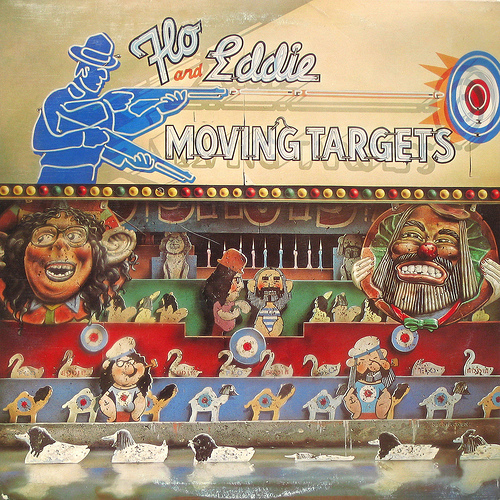
The song was on their 1976 album Moving Targets


Keep It Warm

Write another song for the moneySomething they can sing, not so funnyMoney in the bank to keep us warm

Stick another grape in the juicerOr fill your guts with grease and get looserYou are what you eat, so eat it warm

Roll another joint for the GipperGet the Gipper high, he gets hipperStick it in his mouth and keep him warm

Elect another jerk to the White HouseGracie Slick is losing her DormouseTake her off the streets and keep her warm (oh-oh)

Fight another war if they make youSqueal on a friend or they’ll take youThe future’s in your lap, so keep it warm

Warm, here in your arms (ooh-ooh, ooh-ooh)Safe from all harm, where I belong (ooh-ooh, ooh-ooh)Warm, cozy and calm (ooh-ooh, ooh-ooh)Another dawn, together warm (ooh-ooh, ooh-ooh)

My Woody’s broken down by the beach nowAnd TM’s gotten far out of reach nowTell the Mahareesh to keep it warm(We’re picking up good vibrations)

And George is suing Paul, suing RingoAnd immigration wants John and YokoAll they need is love to keep them warm

Kill another whale with your powerShoot a bunch of kids from a towerSnipe them in their cars, blood keeps them warm

Or make a better world from the old oneMake yourself a baby and hold oneHold her in your arms and keep her warm

Keep her warm, keep her warmKeep her warm, keep her warmKeep her warm, keep her warmKeep her warm, keep her warmKeep her warm…

Max’s Drive-In Movie – Sunset Boulevard

“I am big. It’s the pictures that got small.”

I didn’t find this movie until the 90s. In the late eighties, I was watching and reading about every silent movie and artist that I could. Clara Bow, Buster Keaton, and Charlie Chaplin were at the top of my list. Back then, you had to get book after more books. I would also find ads in magazines of people selling silent movies on VHS. 

In a  Keaton book, I saw this as a film credit. I then read some about the great Billy Wilder, director, screenwriter, and producer,  and I had to watch it. The movie did not disappoint. Buster’s part was nothing more than a cameo, but the movie more than made up for it. It’s funny how we find some movies. This would be high on top of my movie list. I’ve watched it so many times that I’ve lost count. I always notice something that I didn’t before. I keep hoping a change will happen, Joe will do something different, or just go back home. 

Billy Wilder’s Sunset Boulevard isn’t just a film noir. It’s a Hollywood horror story soaked in pool water and silent film ghosts. The real trick Wilder pulls here is making you feel both horror and heartbreak. Norma isn’t really a villain or a relic; she’s an open wound. She’s clinging to her dreams like a one-hit wonder who never got the memo that the charts moved on. And Joe Gillis? He’s the guy who sells out until he’s got nothing left but a typewriter and a guilty conscience.

The movie was released in 1950. By 1950, the first great silent film stars of the 20s were aging, and there was interest in knowing what happened to them. The Norma Desmond character was thought to be a composite of Mary Pickford, who lived her life in seclusion, Clara Bow, who had a mental illness, as well as some other silent greats. The name was a combination of silent-film star Norma Talmadge and silent movie director William Desmond Taylor, who was mysteriously shot and killed… and remains unsolved to this day..

The star of this movie, without a doubt, is Gloria Swanson as Norma Desmond. When we first meet Norma, we think she is just an over-the-top, egocentric former silent era actress. Slowly, we see what a psychotic existence she lives, and it only gets worse. Norma still thinks she is adored by millions. Her chauffeur, Max Von Mayerling, helps perpetuate this lie. We find out why as the movie goes along, and it is shocking. It will blow up in his face, but he never quits building her up.

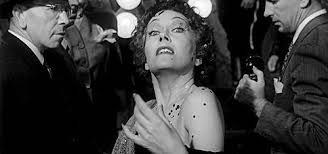
The final scene is chilling. Norma Desmond is in a catatonic state, asking for a close-up. Her eyes alone will send a shiver down your spine. The movie is full of great actors and actresses. The focus is on William Holden, Gloria Swanson, and Erich Von Stroheim. Holden was a great actor who appeared in movies such as The Bridge on the River Kwai, Stalag 17, and The Wild Bunch. Erich Von Stroheim plays Max, and in the twenties, Erich was a silent movie actor but best remembered as an avant-garde director in the 1920s. Gloria Swanson was a very successful silent movie actress who made a successful move to sound pictures. She also appeared on Broadway in the 40s and 50s. She started many production companies in the 1920s and 30s.

PLOT (Spoilers)

Screenplay writer Joe Gillis was desperately trying to sell his stories, but Hollywood did not want to listen. Joe had talent, but he wasn’t trying to write something great…just something that would sell. He was going to have to return home to Dayton, Ohio, a failure if something didn’t happen and soon. His car was getting repossessed, and he was trying to hide it just for a little while. While being chased by creditors, he parks it in a decrepit old mansion. Little did he know that former silent movie star Norma Desmond still lived there.  She used to be a big (“I am big, it’s the pictures that got small”) star.

Joe Gillis ended up being invited to stay to edit Norma’s film screenplay that she wrote. That screenplay was going to be her return to film.  One thing leads to another, and Joe ends up being a kept man, and he doesn’t like it one bit. As time goes by, life at Norma’s mansion…it gets darker and darker. Joe is stuck there working on Norma’s horrible screenplay while playing the good boy. He gets new clothes, perks, and is not wanting for anything…except freedom. There is a price to be paid for being kept by Desmond. He sneaks out and sees a young girl whom he writes with and falls for, but cannot break Norma’s grip.

__________________________________________

The movie was written by Charles Brackett and Billy Wilder. It was directed by Billy Wilder and released in 1950. This movie is one of the greats. It’s a movie that anyone who is a film fan must watch.

“Alright, Mr. DeMille, I’m ready for my close-up” 

Yes, she was indeed ready…she spent years getting ready for her final starring role. Just not the role you would think.

Pet Rocks

Sometimes pop culture takes a turn so bizarre, so ridiculous, that you can’t help but admire it. Why can’t I think of something like this? Gary Dahl did and became a millionaire.

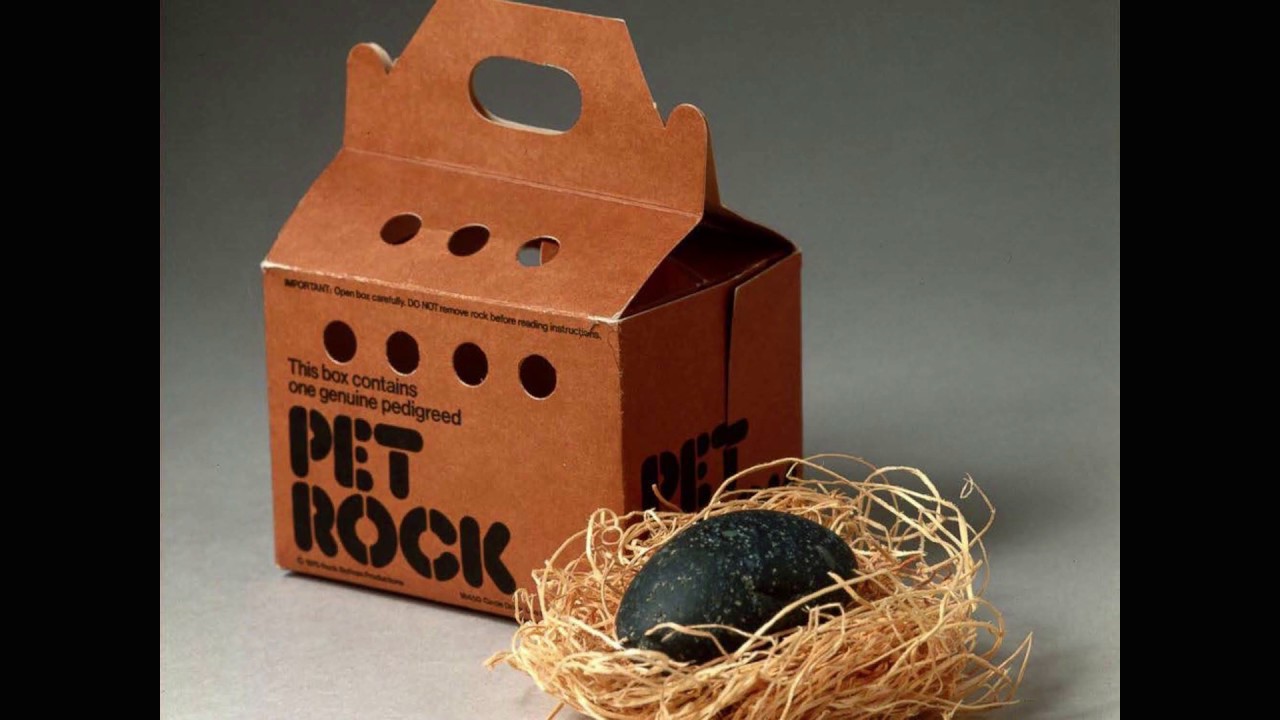
The pet came in a box with holes…of course, so the Rock could breathe and have a nest. They were $3.95 each, and each box contained “One Genuine Pedigreed” Pet Rock…A 32-page manual was included on how to take care of your special pet. The timing was perfect. In a post-Watergate America, cynicism was in, and irony was king. People were ready to buy something utterly meaningless just for the hell of it.

You want to understand the ‘70s in a nutshell? Forget disco and mood rings, look at the Pet Rock. It was the perfect gag gift in a world suddenly obsessed with kitsch, sarcasm, and pop irony.

Related image

More than a million people bought Pet Rocks as Christmas gifts in 1975. Gary Dahl, of Los Gatos, California, had the idea while joking with friends about his easy-to-care-for pet, a rock.

This pet ate nothing and didn’t bark or chew the furniture. Pet Rocks were sold with a funny manual that included tips on how to handle an excited rock and how to teach it tricks. By 1976, Gary Dahl was a millionaire, and Pet Rocks were the nation’s favorite pet.

By 1977, the fad had already burned out. Sales dropped. The joke wore thin. The world moved on. But like most pop phenomena, the Pet Rock was never really about longevity. It was about the moment. And it absolutely nailed it. He later referred to the Pet Rock craze as “a good joke that got out of hand.”

Here is the first part of the manual. I will not list the 32 pages of care…at the bottom is a very short old news report on this novelty item. Kids today don’t know what they are missing…they have iPhones….we had Pet Rocks.

Item 1.
Your new rock is a very sensitive pet
and maybe slightly traumatized from
all the handling and shipping required
in bringing the two of you together.
While you may look in on your new
pet from time to time, it is essential
that you leave your rock in its box for
a few days. It is advised that you set
the box in an area of your home
that is to become your PET ROCK’S
“special place”. Some PET ROCK
owners have found that the ticking of
an alarm clock placed near the box
has a soothing effect; especially at
night.
It takes most PET ROCKS exactly
three days to acclimate themselves to
their new surroundings. After seventy-two
hours have passed you may remove
the rock from its box and begin
enjoying your new pet.

Yes, I do have a pet rock and the box somewhere in storage. 


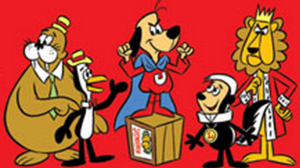
Underdog Is Here!

There’s no need to fear…Underdog is here!

Thanks, Keith, for hosting this and coming up with this great idea! Today, we go back to Saturday mornings. This was when we sat in front of the TV with our favorite cereal and watched hours of cartoons. So I asked my guests to write about their favorite cartoon or cartoon character growing up.

When I was growing up, we kids had two prime times for cartoons. Saturday mornings were our Super Bowl, packed with classics from Warner Bros. and Hanna-Barbera. Even Land of the Lost—though live-action—was a can’t-miss favorite. But not all the best cartoons aired on Saturdays. Every weekday morning, from 6 to 7 a.m. before school, we had another dose of animated fun, with shows like Rocky and Bullwinkle and Courageous Cat and Minute Mouse keeping us entertained.

Underdog debuted October 3, 1964, on the NBC network under the primary sponsorship of General Mills, and continued in syndication until 1973 (although production of new episodes ceased in 1967, for a run of 124 episodes.

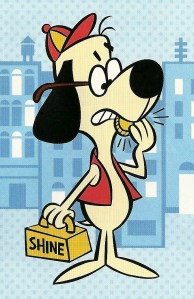
Underdog’s secret identity was Shoeshine Boy. He was in love with Sweet Polly Purebred, who was a news reporter. I would watch this cartoon before going to school in 1st and 2nd grade. Underdog would use his secret ring to conceal pills that he would take when he needed energy. NBC soon put an end to that.

For many years, starting with NBC’s last run in the mid-1970s, all references to Underdog swallowing his super energy pill were censored, most likely out of fear that kids would see medication that looked like the Underdog pills (red with a white “U”) and swallow them. Two instances that did not actually show Underdog swallowing the pills remained in the show. In one, he drops pills into water supplies; in the other, his ring is damaged, and he explains that it is where he keeps the pill—but the part where he actually swallows it was still deleted.

The shows introduced such characters as King Leonardo, Tennessee Tuxedo, Commander McBragg, Klondike Kat,  and more. Underdog was voiced by Wally Cox. Underdog always talked in rhyme and I’m a sucker for that in this and Dr Seuss. Two of the villains every week were Simon Bar Sinister and Riff Raff.

W. Watts Biggers teamed with Chet Stover, Treadwell D. Covington, and artist Joe Harris in the creation of television cartoon shows to sell breakfast cereals for General Mills. The shows introduced such characters as King Leonardo, Tennessee Tuxedo, and Underdog. Biggers and Stover contributed both scripts and songs to the series.

When Underdog became a success, Biggers and his partners left Dancer Fitzgerald Sample to form their own company, Total Television, with animation produced at Gamma Studios in Mexico. In 1969, Total Television folded when General Mills dropped out as the primary sponsor (but continued to retain the rights to the series until 1995; however, they still own TV distribution rights.

Underdog became a pop culture icon, with reruns airing for decades. The character was featured in toys, comics, and even a 2007 live-action film starring Jason Lee as the voice of Underdog. The theme song remains one of the most recognizable in cartoon history.

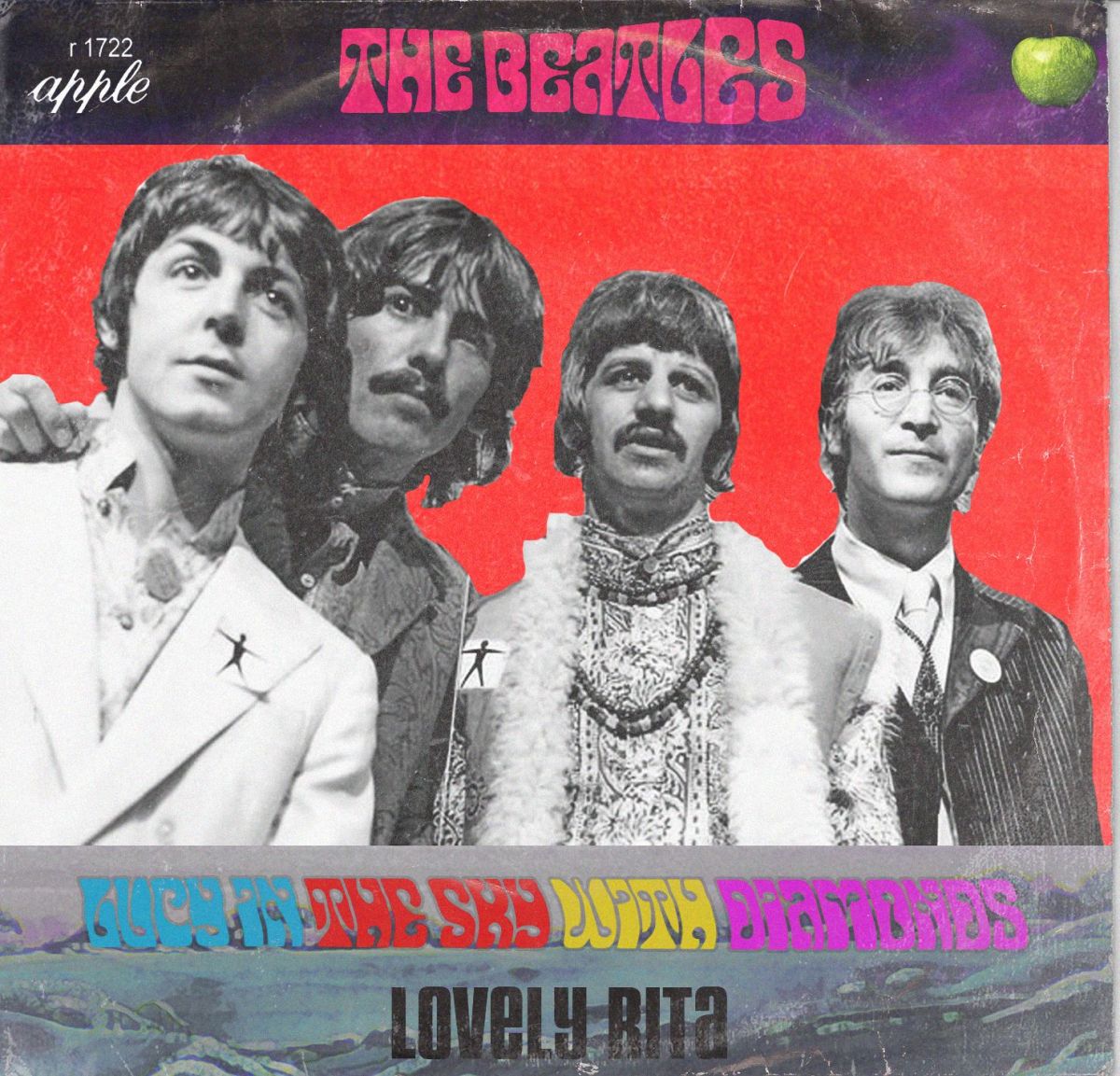
Beatles – Lovely Rita

I got Sgt Pepper in 1977 when I was 10. I sat there for hours, staring at the cover and listening to this music I had never heard before. This is one of the songs that grabbed my attention. I liked Lucy in the Sky with Diamonds, Good Morning, Good Morning, and Lovely Rita, but that quickly expanded. 

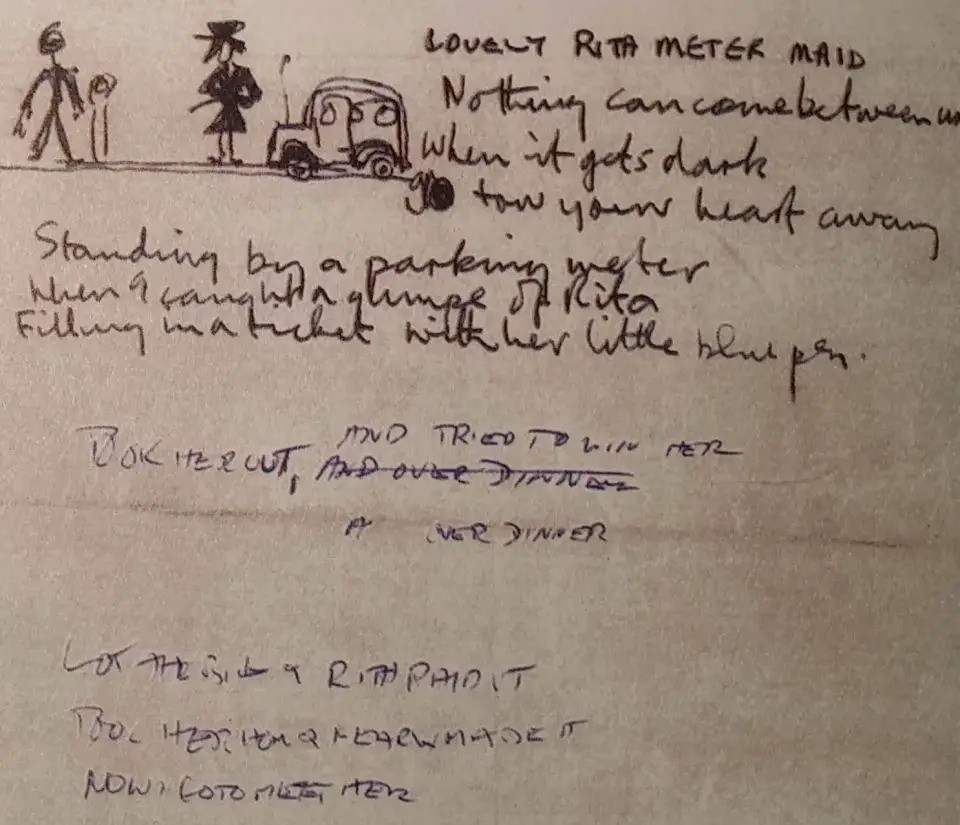
This song isn’t about a real person. It was Paul making up the character (I have his quote below) after hearing in America that they called Parking Meter Women “Meter Maids.” John didn’t particularly like the song because he liked songs about real things. He hardly ever just made things up…Lennon would write about people he knew or his experiences.

The Beatles recorded their debut album, Please Please Me, in a remarkably short amount of time. The entire recording process for the album took approximately 9 hours and 45 minutes of studio time. Now let’s fast forward 5 years from 1962 to 1966-67.

The Beatles spent up to 700 hours in the studio recording Sgt. Pepper’s Lonely Hearts Club Band. One of the main reasons was their desire to go beyond the limitations of the standard four-track recorder. To achieve this, they linked two four-track machines together—an innovative move at the time—and experimented throughout the process. While this technique wasn’t commonly used, it allowed them to push the boundaries of what was possible in the studio. Sgt. Pepper’s remains one of the most important albums in music history, not just for its songs, but for the groundbreaking recording techniques that helped shape the future of music.

The following year, The Band changed the course of music in some ways. They released Music From The Big Pink and influenced a generation. Bands started to play more earthy…more roots-oriented music. The Beatles did that by recording the rootsy White Album.

Beatles - Lovely Rita Lyrics

Paul McCartney: “I was bopping about on the piano in Liverpool when someone told me that in America, they call parking-meter women meter maids. I thought that was great, and it got to ‘Rita Meter Maid’ and then “Lovely Rita Meter Maid’ and I was thinking vaguely that it should be a hate song: ‘You took my car away and I’m so blue today’ and you wouldn’t be liking her; but then I thought it would be better to love her and if she was very freaky too, like a military man, with a bag on her shoulder. A foot stomper, but nice. The song was imagining if somebody was there taking down my number and I suddenly fell for her, and the kind of person I’d be, to fall for a meter maid, would be a shy office clerk and I’d say, ‘May I inquire discreetly when you are free to take some tea with me.’ Tea, not pot. It’s like saying ‘Come and cut the grass’ and then realizing that could be pot, or the old teapot could be something about pot. But I don’t mind pot and I leave the words in. They’re not consciously introduced just to say pot and be clever.” 

John Lennon: That’s Paul writing a pop song. He made up people like Rita, like a novelist. You hear lots of McCartney influence going on now on the radio: these stories about boring people being postmen and writing home.

Lovely Rita

(Lovely Rita, meter maid)

Lovely Rita, meter maid
Nothing can come between us
When it gets dark I tow your heart away

Standing by a parking meter
When I caught a glimpse of Rita
Filling in a ticket in her little white book
In a cap she looked much older
And the bag across her shoulder
Made her look a little like a military man

Lovely Rita, meter maid
May I inquire discreetly
When are you free to take some tea with me?

Rita

Took her out and tried to win her
Had a laugh and over dinner
Told her I would really like to see her again

Got the bill and Rita paid it
Took her home, I nearly made it
Sitting on the sofa with a sister or two

Oh, lovely Rita, meter maid
Where would I be without you
Give us a wink and make me think of you

(Lovely Rita, meter maid)

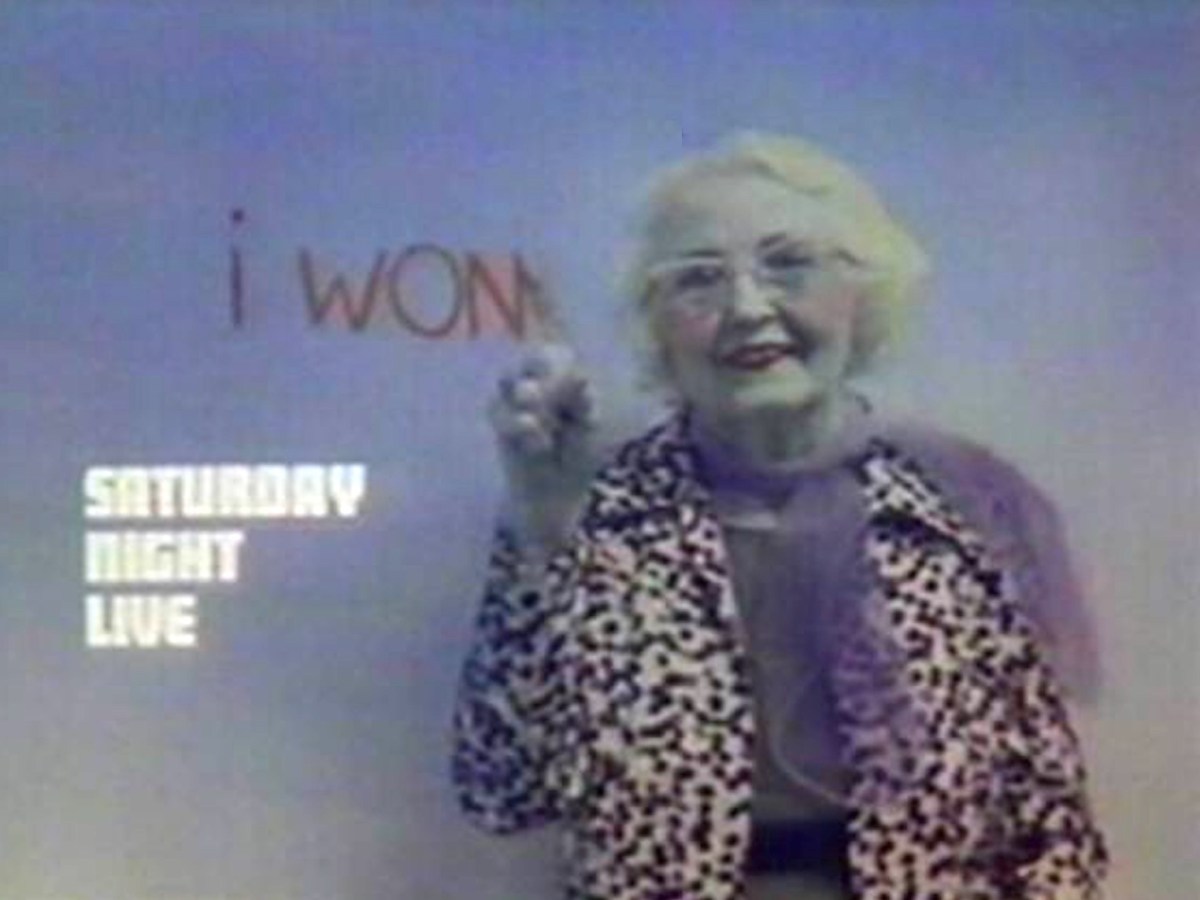
Miskel Spillman on SNL

These are the kind of posts I like the most. They are fun to write. 

Remember the SNL episode where Elvis Costello stopped playing a song and instead played a song Lorne Michaels did not want him to play? The song was Radio, Radio so Elvis defied Michaels and played it anyway. He banned Elvis from ever performing again on SNL. That was eventually lifted but that show is important and not only for that. The host of that show was special, to say the least. 

The person hosting that show was the only non-celebrity they ever had to host. At the time, she was the oldest person to host SNL at 80 years old. That record stood until 2010 when an 88-year-old Betty White hosted. Miskel Spillman won the “Anyone Can Host” contest that SNL had in 1977. The finalists were an unemployed Oregonian, a divorced mother of three, a freshman college student, the governor of South Dakota (Richard F. Kneip), and Miskel, an 80-year-old grandmother from New Orleans. 

The official “Anyone Can Host” ballot from November 1977

The show got over 150,000 entries. They all had them on an earlier show with Buck Henry as the host. The opening skit had John Belushi, Loraine Newman, and Buck Henry talking about how out of it Miskel Spillman seemed. Belushi then said he shared a joint with her. He said: WE SMOKED A JOINT OF OAXACAN AND MAUI WOWIE, A LITTLE HASH OIL…IT CALMED HER RIGHT DOWN.

Miss Spillman did a great job on the show. They limited her to an extent but she did well considering she had no experience. During her hosting stint, Spillman participated in various sketches, including one where she played the elderly girlfriend of John Belushi’s character. Her appearance remains a unique moment in SNL history. 

Lorne Michaels made the show to appeal to baby boomers with a touch of Avant-Garde and “guerrilla-style comedy.” It was a game-changer much like All In The Family was to sitcoms. Late night was never again a wasteland. This show helped open the doors for David Letterman and other shows to follow it. 

It started out as “Saturday Night.” The Saturday Night Live title belonged to ABC for a show hosted by Howard Cosell who was out of his league. After Cosell’s show was canceled, ABC let Saturday Night have the “Live” part.

Who was the best cast through the years? This is a question that is debated over and over again. People argue and usually pick the cast they grew up with. I grew up in the Eddie Murphy and Joe Piscopo era. Personally, I always thought the original cast was the best era of the show. Yes, I thought the Murphy and Piscopo casts were very funny along with later casts that had Dana Carvey, Michael Myers, Chris Farley, Chris Rock, and many others that followed. The first five seasons had something extra that others would not and could not have. It had an underground feel that vanished after it became a pure comedy show. They had a massive amount of talent in that first class. 

In the first 5 seasons, they tried things out, some failed some didn’t but they were going out on a limb and trying. The musical guests were also usually artists that didn’t appear on television at the time. If a guest host was too popular…Lorne would reject them. He would NEVER do that now.

Miskel would live a long life. She lived until she was 94 years old in 1992. She was one of only two hosts that were born in the 1800s. The other one was actress Ruth Gordon (She was a tad bit younger when she hosted). I would have loved to have met Miss Spillman…she looks like a lively fun lady. They did bring her up on the 50th anniversary. 

Miskel Spillman: “I love everyone in the cast, I watch it every Saturday night, and I thought, as I am 80 years old, I want a lot of old old people all over the world to watch it and get the thrill that I have every Saturday night watching it.”

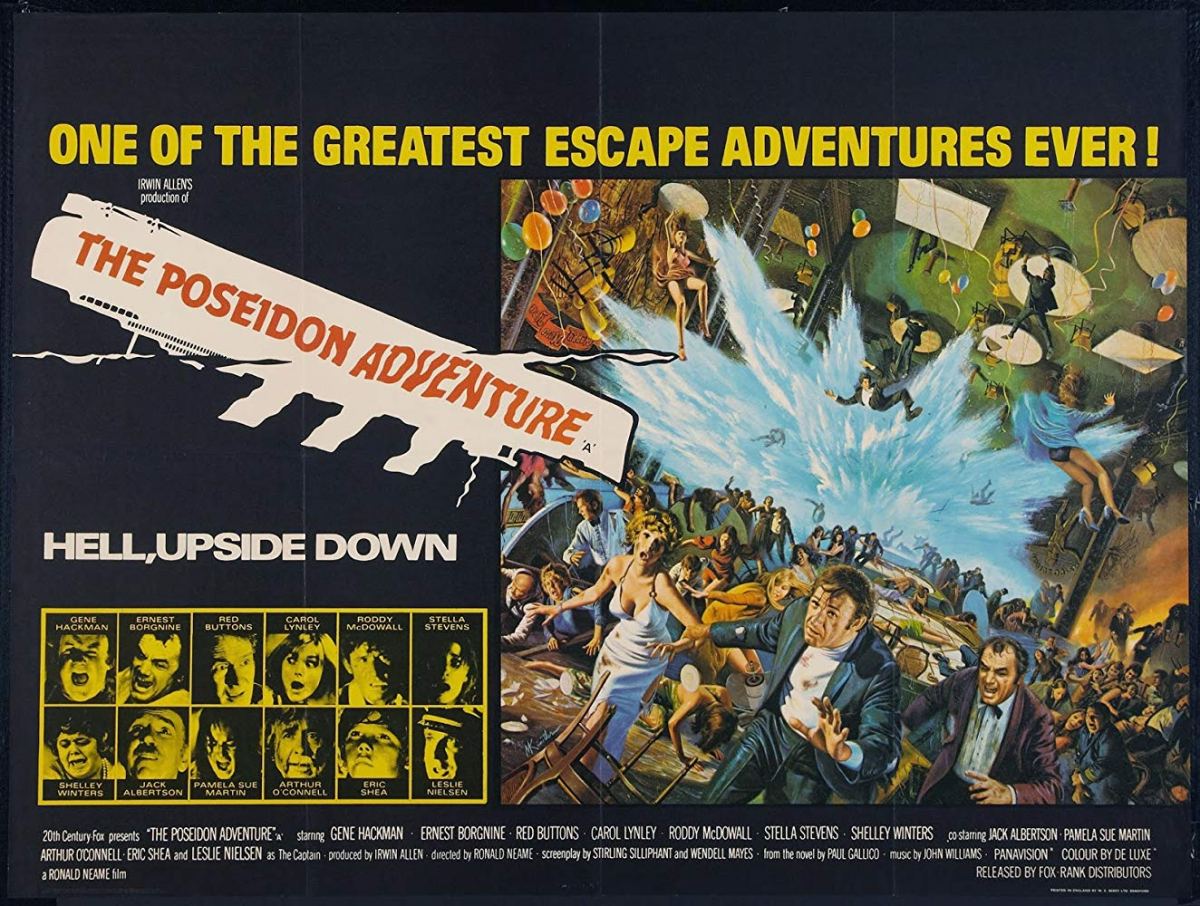
Max’s Drive-In Movie – The Poseidon Adventure

I watched this around 5 months ago for the first time in about 10 years. Altogether, I’ve seen it around 7 to 8 times. I added another watch since I wanted to post this. Disaster movies are hardly ever on “great” lists, but this is a disaster movie done right. Watching it in hindsight, you wouldn’t think a movie full of stars would be this good. Many times, if you see a lot of stars advertised, they are mostly cameos, but this is not the case with this movie.  

I have a weak spot for this kind of movie. Horror and Disaster movies I fall for right away, and yes, I’ve seen a lot of bad movies that way. This one, though, has some smarts to it, and it is enjoyable. The set for this movie must have been super expensive and huge. It’s one of those films that has everything. Gripping adventure scenes, non-stop crises, drama, sadness, and hotpants. I was around 7 (1974) when I saw it on television, and I loved it. It’s a film that offers something for both kids and adults. As I’ve said before, I dislike the word dated, but aside from the clothing styles, it still holds up today. Plus, the special effects have a realism that I prefer over CGI; they just feel more authentic.

It has earned a reputation as the best disaster film of the seventies, not just for its impressive special effects but for its compelling story of survival. The film follows a select group of people fighting to stay alive, and despite some being a bit annoying, you find yourself rooting for them. If you love star power, this movie delivers, featuring Gene Hackman, Shelley Winters, Ernest Borgnine, Red Buttons, Stella Stevens, Jack Albertson, Roddy McDowall, Leslie Nielsen, and more.

The acting was very good in this, as expected with their talent level. The film was based on Paul Gallico’s 1969 novel of the same name. It follows the journey of passengers and crew trying to escape a capsized luxury ocean liner. The budget was 4.7 million, a great amount back in 1972. It made over 125 million, so it did well. If I had to pick the two stars that had the biggest impact in this movie, it would be Gene Hackman and Ernest Borginine. They developed a rivalry in this movie, and it worked well for the survivors. Shelly Winters also did a good job, along with everyone else. She gained 35 pounds for the part of Belle Rosen. Afterward, she complained that she was never able to get back to her original weight. She received an Academy Award nomination for Best Supporting Actress.

The movie was directed by Ronald Neame. Also, don’t get this one confused with its “sequel” in 1979. That one wasn’t anywhere close to this one. 

PLOT

As the Poseidon sails on its final voyage before being retired, a festive New Year’s Eve party is underway. Meanwhile, the ship’s captain reluctantly follows orders from the ship’s owner to maintain high speed despite rough waters. Disaster strikes when a massive tsunami wave hits, flipping the ship upside down.

In the aftermath, a small group of survivors, led by the determined and strong-willed Reverend Frank Scott (Gene Hackman), must navigate their way upward toward the ship’s hull, which is now their only possible escape route. 

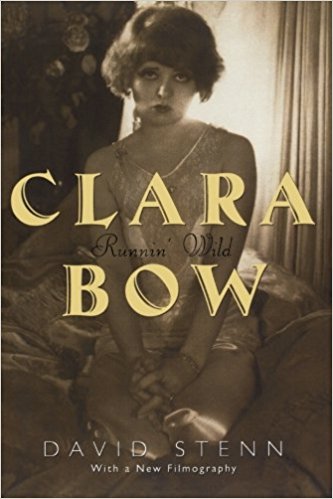
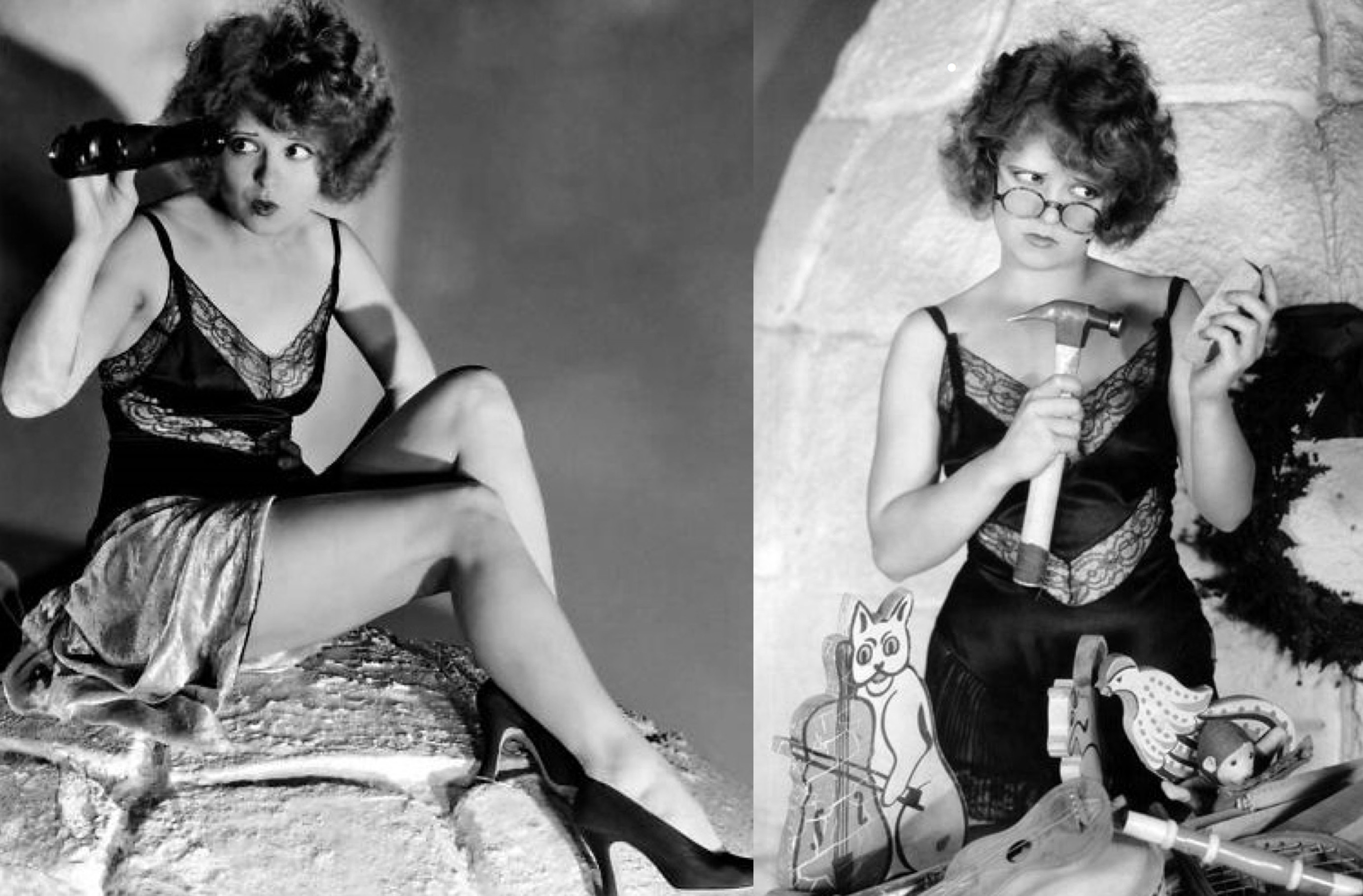
Clara Bow… The Only IT Girl

My favorite eras in the 20th century have always been the 1960s, 1970, and the 1920s. I was looking through some books in the early 90s inside a long-forgotten bookstore, and a picture of an actress caught my eye. There was something about Clara Bow that grabbed my attention. I had read about her in a terrible slanderous trashy book called Hollywood Babylon by  Kenneth Anger.  I was compelled to get this new book just by her stare from the cover. This book was written by David Stennand is called Clara Bow”Runnin’ Wild... I finished it in one night when I went to sleep at 5am. The book impressed me so much that a few years later, I tracked down David’s phone number (again pre internet) and I called Mr. Stenn just to tell him how much I loved the book. He graciously sent me an autographed copy of the book to replace my worn-out (loaned out again and again) copy to my friends.

Unlike Anger’s book of sensational garbage, David Stenn had facts about Clara, which have been proven wrong. Reading this book introduced me to the world of Buster Keaton, Charlie Chaplin, Mary Pickford, and Douglas Fairbanks. From there, my interest in silent movies grew. I always thought all silent movies were grainy, unwatchable films where all the actors were on speed. I soon was educated that most of those movies were played on the wrong projector at different speeds, and that is the reason for the sped-up action. The quality of many of those movies from the 20s is better quality than movies made in the 60s-80s when mastered right. Stunts were not faked, and CGI didn’t exist. Everything is real.

Clara had a terrible childhood where her mother was mentally ill and tried to kill her. Her father sexually abused her on top of everything else. Clara could cry on cue when she was an actress. The reason she was able to do this is because of something that happened to her in her childhood. She lived in Brooklyn, and their apartment complex caught on fire. She had a childhood friend named Johnny. Clara was looking for Johnny when the fire was raging and found him. The little boy was on fire, and she tried to put out the fire from his clothes and hair. He ended up dying in her arms. That is what she thought of, and the tears would come. 

In her movies, she sold the tickets. Paramount built movies off of her name and didn’t always give the best scripts, but she was electric on film. Your eyes will automatically go to her. She could convey more in one look than actresses today can say in 10 minutes. She was never appreciated as she should have been, and that is sad. She was never accepted by her peers and never invited to Hollywood parties because she was straightforward and said what was on her mind. Other actresses thought that was crude and stayed away from her.  She was great with fans, but stardom took its toll on her. She ended up marrying a Western actor named Rex Bell and went into seclusion.

She did some “talkies,” and they are enjoyable, but nothing beats her silent movies like IT (no Pennywise) and Wings (the first film to win an Oscar). Call Her Savage was her best talkie film. Check her out when you can… She is worth it. I didn’t know a thing about silent movies until I read Stenn’s book. It’s worth a read if you are a fan or not. Some other stars would not hang out with her because she was a straight talker. If she felt something, she would say it. 

Actress Lina Basquette said, “She wasn’t well liked amongst other women in the film colony. Her social presence was taboo, and it was rather silly because God knows Marion Davies and Mary Pickford had plenty to hide. It’s just that they hid it, and Clara didn’t.” Bow knew the truth. “I’m a curiosity in Hollywood,” she said. “I’m a big freak because I’m myself!”

Stenn finally set the record straight with Clara. 

Clara Bow + IT + scarf 3.jpg

clara.jpg

clara2.jpg

clara color.jpg

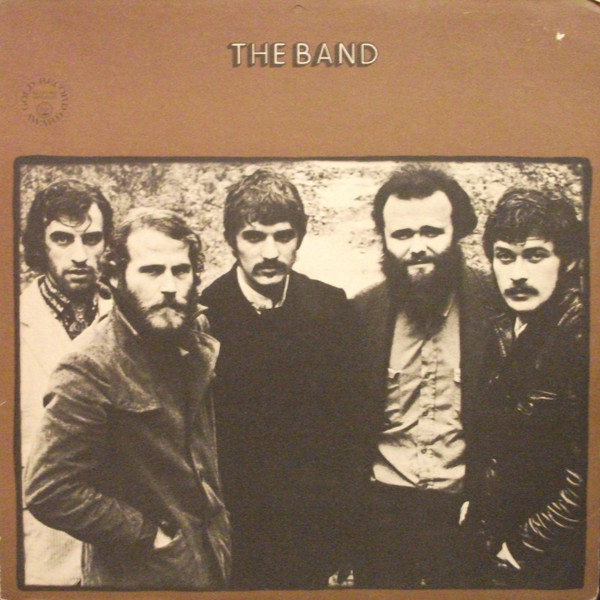
Band – The Band… album review

In Turntable Talk Dave said: This time around, we’re going Sans Sophomore Slump. We all remember the triumphant debuts to the scene by The Knack, Meat Loaf, the Ramones…but how many recall, let alone listen to ‘But the Little Girls Understand’, ‘Dead Ringer’s or ‘Leave Home’… the follow-ups for them? In other words a great 2nd album by any artist. Many times, that 2nd album is rushed, or the artist used all of their songs for the first album. The example I use is The Knack. It was a great fun first album and a bad second. 

Thank you, Dave, for including me in this so I can talk about this great album. There were a few that came to mind while doing this. The Who’s A Quick One, Van Morrison’s Astral Weeks, Carole King Tapestry, and many more but I decided on this great Americana band that was actually most Canadian. The album is called The Band, and its nickname is The Brown Album. Their first album was Music From Big Pin,k and it was released in 1968. This album was released in 1969. 

They recorded this album not in a recording studio but at Sammy Davis’s house in California. They remodeled the adjacent pool house into a recording studio. The Band fashioned a makeshift workshop environment similar to the one at their former home, Big Pink. The album peaked at #2 in Canada, #9 on the Billboard 100, and #25 in the UK.

The album is said to be a concept album about a past America. It’s an album that every rock fan should own. While even novice fans of the group likely know classics like “The Night They Drove Old Dixie Down” and “Up on Cripple Creak,” the record is an amazing listening experience from beginning to end. Robbie Robertson’s lyrics weave fluidly from one song to the next, while the musical accompaniment never disappoints.

Robertson wasn’t just a songwriter.  He was more of a director and screenwriter, tailoring roles that played to the strengths of his three leading men. He did have 3 lead singers to work with who could have fronted 3 other bands. They knew each other so well that he could pick who sang what and when. His songwriting process had more in common with films than rock songs.  Robertson would go to flea markets and antique stores to purchase screenplays. That’s how he wrote songs…like it was a screenplay. 

The man not only was a great storyteller, but many of his songs were mini-movies you could visualize. Who couldn’t imagine the drunkard and his sweetheart defender Bessie betting on horses up on Cripple Creek?  Those are not just songs; they are visual pictures sent through music that only Robertson could write. We continue to benefit from his hard work and gift…and always will.

Manuel was the most versatile singer in the Band. He was called the lead singer if someone asked. Manuel took the lead vocals on Across The Great Divide, Rockin’ Chair, and Jawbone, and shared it in King Harvest. Of all the singers, Manuel is overlooked more than the other two. It’s probably because he wasn’t singing lead on the huge “hits” such as The Weight, Up On Cripple Creek, and The Night They Drove Old Dixie Down. He does sing on one of my favorite Band songs ever…King Harvest (Has Surely Come). I didn’t realize how great a voice he had until I heard him sing Georgia On My Mind

Levon had that great southern voice that was earthy and soulful. Robertson knew just when to use Levon, and he did strengthen Robertson’s songs. Rick Danko had the most vulnerable voice of all three. I never quite heard a voice like his before or since. The amount of talent they had was staggering. I’m talking about voices here, but I haven’t even mentioned the musical skills of these guys. Garth Hudson, who recently passed, played keyboards like NO other. I mean no other. He made a massive wall of sound in the background that identified them from other bands. His approach to his sound was so unique that it’s not copied much because it has to be in the right musical surroundings. Robertson has said that there was no one like him period. 

This album contains some of their best-known and best tracks. Let’s look at some of the tracks. Now, is this as good as Music from Big Pink? I think so and in some ways, I like it more. I think it was their best album when all is said and done. I could yack and yack more…but just listen to the album!

Across The Great Divide, Rag Mama Rag, The Night They Drove Old Dixie Down, Up On Cripple Creek, Whispering Pines, King Harvest (Has Surely Come), When You Are Awake, Jemima Surrender, Rockin’ Chair, Look Out Cleveland, Jawbone, and The Unfaithful Servant. 

What a tracklist that is. 

Al Green – Tired of Being Alone

If I had to give a definition for soul music…I would play this song. Something about Al Green’s voice that is so soothing and exciting at the same time. Green originally wrote the song in 1968 and recorded a version while signed to Hi Records. However, the song was initially not released. Green said: “I was toting my song around in my pocket for days on end, saying, ‘Hey, I got a song.’ Finally, at the end of the session, I said, ‘Well, I still got a song.'” 

This song was released in 1971 as the first single from his album Al Green Gets Next to You. It was written by Al Green himself, along with Al Jackson Jr. (the drummer for his band, the Hi Rhythm Section). The song became a huge hit and is considered a classic. It has a blend of soul, gospel, and R&B, which did him well in his career. 

This song never gets old, and listening to Al’s voice certainly never gets old. This song peaked at #11 on the Billboard 100 and #36 in Canada. Al Green has had twenty songs in the Billboard top 100, eight top 10 songs, and a #1 with Let’s Stay Together. This song was a turning point in his career. This was his first top-twenty hit. Al Green Gets Next to You peaked at #58 on the Billboard Album Charts. 

During a 1979 concert in Cincinnati, he fell 12 feet off a stage and barely missed being seriously injured. Already a Christian, preaching in front of his Memphis congregation most every Sunday morning, Green thanked Jesus and walked away from performing, vowing never to return. “The fall was God’s way of saying I had to hurry up,” Green said a decade ago, smack in the middle of The Gospel Years. “I wasn’t moving toward God fast enough.” He has rarely performed live since then outside of his Church. 

Al Green is currently the Pastor at Full Gospel Tabernacle Church in Memphis TN.

Tired of Being Alone

I’m so tired of being alone,
I’m so tired of on my own,
Won’t you help me, girl,
Just as soon as you can.
People say that I’ve found a way,
To make you say,
That you love me.
But baby,
You didn’t go for that,
Ha, it’s a natural fact,
That I want to come back,
Show me where it’s at, baby.

I’m so tired of being alone,
I’m so tired of on my own,
Won’t you help me, girl,
Soon as you can.
I guess you know that I, uh,
I love you so,
Even though,
You don’t want me no more,
Hey, hey, hey, hey I’m cryin’ tears,
Through the years,
I tell you like it is,
Honey, love me if you can.

Ya baby,
Tired of being alone here by myself, now
I tell ya, I’m tired baby,
I’m tired of being all wrapped up late at night,
In my dreams, nobody but you, baby.
Sometimes I wonder,
If you love me like you say you do,
You see baby, I, I, I, I’ve been thinking about you,
I’ve been wanting to get next to you, baby,
Sometimes I hold my arms and I say,
Oh baby, yeah, needing you has proven to me,
To be my greatest dream, yeah

Awh!

I’m so tired of being alone,
I’m so tired of on my own,
Sometimes late at night I get to wonderin’ about you baby,
Baby, baby, ya ya, baby you’re my heart’s desire

Animals – It’s My Life

The Animals were one of the many British bands I learned through reading about the Beatles. A friend had House of the Rising Sun and I was mesmerized by the lead singer’s voice. Eric Burdon’s voice was huge and commanding. The Animals may have had the hardest edge of any of the British Invasion bands with the exception of the lesser-known Them with Van Morrison.

This song was written by Carl D’Errico and Roger Atkins specifically for The Animals. Eric Burdon didn’t like the song at all but changed a few words and he recorded it. This song starts off with Chad Chandler’s bass line and it sets the tone for the rest of the song. Eric Burdon sounds tough, determined, and cocky through the verses. The song peaked at #23 on the Billboard 100, #7 in the UK, and #2 in Canada in 1965.

They formed in 1963, from the fusion between two rival bands, one headed by bassist Chas Chandler, the other headed by organist Alan Price, stage veteran, former jazz pianist, and disciple of Ray Charles. Eric Burdon, who had played with Price until 1962, was hired as the singer. The Kontours changed their name first to The Alan Price Combo, after adding drummer John Steel, and then to The Animals, after adding guitarist Hilton Valentine.

The original lineup only recorded three albums, yet nevertheless broke out eight Top 40 hits between 1964 and 1966. Alan Price left in 1965, and John Steel the following year. Also in 1966, Chandler left to start managing artists, and he discovered Jimi Hendrix in Greenwich Village. Now a very different group, they were known as Eric Burdon & The Animals and had six additional Top 40 hits before finally disbanding in 1968.

It’s My Life

It’s a hard world to get a break in
All the good things have been taken
But girl there are ways to make certain things pay
Though I’m dressed in these rags, I’ll wear sable some day

Hear what I say
I’m gonna ride the serpent
No more time spent sweatin’ rent
Hear my command
I’m breakin’ loose, it ain’t no use
Holdin’ me down, stick around

But baby (baby)
Remember (remember)
It’s my life and I’ll do what I want
It’s my mind and I’ll think what I want
Show me I’m wrong, hurt me sometime
But some day I’ll treat you real fine

There’ll be women and their fortunes
Who just want to mother orphans
Are you gonna cry, when I’m squeezin’ the rye
Takin’ all I can get, no regrets
When I, openly lie
And leave only money
Believe me honey, that money
Can you believe, I ain’t no saint
No complaints
So girl go out
Hand it out

And baby (baby)
Remember (remember)
It’s my life and I’ll do what I want
It’s my mind and I’ll think what I want
Show me I’m wrong, hurt me sometime
But some day I’ll treat you real fine

(It’s my life and I’ll do what I want) Don’t push me
(It’s my mind and I’ll think what I want) It’s my life
(It’s my life and I’ll do what I want) And I can do what I want
(It’s my mind and I’ll think what I want) You can’t tell me
(It’s my life and I’ll do what I want) I’ll do what I want

He Likes It! Hey Mikey!

Hello everyone! 

I ordinarily don’t like commercials. I do like it when they try to be at least entertaining… This commercial has stayed in pop culture for over 50 years now. The commercial was created by the Doyle Dane Bernbach (DDB) advertising agency. This Life cereal commercial appeared in 1972 and ran until 1984. It was one of the longest-running commercials in history. 

I grew up watching Mikey’s brothers trying to get their brother who hates everything to eat the supposedly healthy Life Cereal. The phrase “Hey Mikey!” entered pop culture as a phrase used for unexpected approval of something.

Mikey was portrayed by John Gilchrist, and he is alive now and doing fine despite the urban legend that he died. A false rumor spread in the 1980s that John Gilchrist (Mikey) had died from eating Pop Rocks and drinking soda. This was completely untrue. He was alive and well.

Yes, word got around that the kid who played Mikey bought the farm by eating “pop rocks” and drinking soda. His stomach then exploded because of the lethal combination. A friend of his family actually called his mother in tears, saying she was so sorry about the loss of her son…when in reality he just got home from school.

PopRocks.jpg CokeTheRealThing.jpg

What is interesting about the commercial is that the two kids playing his brothers are John Gilchrist’s brothers in real life.

John today is Director of Media Sales at MSG Network and is living a happy life with his wife and kids…and yes he still enjoys Life Cereal.

D.B. Cooper case solved?

Hello everyone… I’ve missed talking to everyone and I wanted to get this posted before the weekend. I’ll see you tomorrow!

There are mysteries that we all have read about that were never solved. A few were D.B. Cooper, Jimmy Hoffa, and Amelia Earhart. Personally, I had my doubts about anyone solving them. D.B. Cooper was the alias of an unidentified man who, on November 24, 1971, hijacked a Boeing 727 aircraft (Northwest Orient Airlines Flight 305), extorted $200,000 in ransom, and parachuted out of the plane—disappearing without a trace. It remains one of the greatest unsolved mysteries in U.S. history. Is this certain that they found the right person? No, but it is sure looking that way. 

This is a brief summary of the original hijacking. Shortly after takeoff, at around 3:00 PM, Cooper handed a note to flight attendant Florence Schaffner, who initially ignored it, thinking it was a phone number. He noticed that and whispered: “Miss, you’d better look at that note. I have a bomb.” He demanded 200,000 in cash, four parachutes, and a fuel truck ready at Seattle-Tacoma Airport for refueling. The flight attendant asked to see the bomb, and Cooper opened his briefcase, revealing what appeared to be red cylinders with wires and batteries.

The airline told the FBI what was going on and they met his demands. The FBI got together the money and they recorded the serial numbers so they could track him down. The plane landed in Seattle and he demanded that they go to Mexico City. He told them to fly at a low altitude (10,000 feet) and a slow speed of 200 mph. Cooper knew the Boeing 727 had an aft stairway that could be lowered mid-flight. He knew how to control altitude and speed to make a parachute jump survivable. At 8:13 PM, over southwestern Washington, somewhere near Ariel, Washington, and the Lewis River, the crew noticed a sudden pressure change…Cooper had lowered the rear stairway and jumped out into the night. That was the last known sighting of Mr Cooper. The plane landed in Reno, Nevada and the investigation started. 

Through the years, money was found in a creek bed near where he jumped and he left a tie on the airplane. It wasn’t much to go on. There were suspects and one of them was Richard Floyd McCoy and four others but nothing could be proved…until an amateur YouTube documentary maker named Dan Gryder found something. He made a documentary after years of researching and actually traveling to sites. He heard from Chanté and Rick McCoy III and they claim their father, Richard McCoy Jr., was D.B. Cooper. 

They had a very unique parachute in their mom’s old things and it matched the one that was given to D.B. Cooper. Gryder said: That rig is literally one in a billion. The FBI marked Richard McCoy Jr. off the list back in the seventies. What took his kids so long to say something?  The brother and sister said they waited until their mother died in 2020 to come forward, fearing she could be implicated as the parachute that allegedly belonged to Cooper was found in her storage area outside their house.

The FBI didn’t believe it until they got in touch with Gryder and he took them to the sibling’s parachute AND deteriorated money…some with the serials intact. Although it’s not official… the agents have said they are certain that McCoy was D.B. Cooper. I don’t know why it took them so long. He did the SAME thing the next year (1972) to a different airline. McCoy hijacked a United Airlines passenger jet for ransom in April 1972 and again asked for parachutes. To be fair though…the FBI thought it was a copycat at the time. From the New York Post: Gryder claimed the parachute at the McCoys’ home matched the modified parachute prepared by veteran skydiver Earl Cossey for police as part of Cooper’s demands before he disappeared somewhere between Seattle and Reno, Nevada. DB Cooper sleuths have raised the possibility that Richard Jr. was the fugitive for years given his own criminal past.

Richard McCoy Jr. was arrested for the hijacking of American Airlines a few days after it happened. They found him with a duffel bag full of money from the hijacking. He received a 45-year sentence but he escaped from prison in 1974 along with other prisoners in a garbage truck. Three months later he was found in Virginia Beach, Virginia. He went inside his home and was greeted by the FBI and he shot at them and was killed in the shootout. 

He had the experience because he served two terms in the Army and then another one where he went to Vietnam. He was awarded an Army Commendation Medal and The Distinguished Flying Cross and he also served as a warrant officer in the Utah National Guard…and he did a lot of skydiving. 

The Paisley Underground Music Scene

I contributed this to Dave’s Turntable Talk series. He wanted us to write about a musical scene. I picked The Paisley Underground Music scene. 

I first picked the 80s Minnesota scene that produced bands like The Replacements, Hüsker Dü, The Suburbs, and Soul Asylum. It’s no secret that The Replacements are my favorite 1980s band but I’ve always been interested in the Paisley Music Underground Scene from Los Angeles that had some great music. Instead of listening to Thriller or Purple Rain…you would hear these artists that sounded like the 1960s bands that I always preferred. It was the same as REM when they began with their jangling guitars.  “Paisley Underground” was a moniker that helped music journalists describe their sound, which didn’t fit the New Wave or Rock.

I didn’t find out about this music scene until around 2020 or so. I was looking at a CD set called Children of Nuggets: Original Artyfacts from the Second Psychedelic Era, 1976–1995. The first version of Nuggets covers mostly the 1960s and Graham from Aphoristical Album Reviews is going through each song and he probably introduced the album to me.

I looked up the history of a band named Green On Red and found out they were part of this scene in Los Angeles in the 1980s. I wish I had known about it in real time because I would have been listening.  The scene started in Los Angeles in the early 1980s, the music was a blend of psychedelic rock, folk-rock, and garage-rock influences from the 1960s, mixed with a little punk. The scene’s name reflected its retro-psychedelic sound, with “paisley” referencing the design patterns often associated with 60s fashion.

This scene was full of talent with bands like Rain Parade, The Dream Syndicate, Green On Red, The Long Ryders, Mazzy Star, The Creeps, True West, Game Theory, and others. The Bangles were undoubtedly the most successful band to come out of that group of bands. That really surprised me because there were some very talented bands in this. 

The most known band to come out of it was The Bangles. You hear 1960s artists’ influence like The Byrds, Love, The Velvet Underground, and The Zombies. Many of the bands would contribute to each other’s albums and sometimes form sidebands out of two or three bands. 

All in all…the scene lasted until around 1990. Many of the bands started to break up around that time…even the Bangles. If you like 1960s music…look up some of the bands that I mentioned. I only wish some mainstream stations would have taken a chance and played them more. Many of them would have fit in the mid to late 1960s to early seventies.

The beauty of this music was that it was not a retro-forced sound…it sounded totally organic. 

Lite-Brite

One of my favorite toys growing up. To this day I like collecting vintage lighting fixtures like soft drink clocks or signs probably because of this toy. They came with designs that you could use to create different cartoons and clowns but I never used those. I liked to create my own masterpieces.

This toy allowed you to be creative in a very different way. It brought out the artistic side in you. You could design different things and it would light up your room in the dark with colors. Lite-Brite was invented by Joseph M. Burck, a senior designer at Chicago toy and game design company Marvin Glass and Associates. The company licensed Lite-Brite to Hasbro, which officially launched it in 1967. It became a staple toy in the 1970s. 

Of course…when I got older I would make crude messages on the Lite Brite for friends. Lite-Brite is recognized as one of the greatest toys of all time by the Toy Hall of Fame. It has become part of our pop culture. 

Lite Brite commercial from the 1970s. Did you have one growing up?