We are one year away from blasting off to strange and new lands. This year the radio was picking up a bit. You had the folk explosion and Motown was starting to raise the roof and Stax was rolling also. Some great artists are here plus one that would change the game.
Let’s start off with one of the musical leaders of the sixties who influenced his peers left and right. 22-year-old Bob Dylan released Blowin’ In The Wind which didn’t chart but soon would be covered over 300 times. A standard was born.
I usually favor Stax over Motown but that’s not to say I don’t like Motown because I do. This song is great I loved this song the first time I heard it. It’s Martha and the Vandellas doing Heat Wave. They added a little edge to the song. It was written by the incredibly talented team of Holland–Dozier–Holland.
The Ronnettes were beautiful and talented with a crazy…but well known producer Phil Spector. The group was an influence on the Stones and Beatles. The song was written by Jeff Barry, Ellie Greenwich, and Phil Spector.
What do I think of when I hear this song? That would be Animal House.
In 1963 The Kingsmen released a huge single and song that would be an important one in rock history. The original was written and performed by Richard Berry in 1955 and 3 other people covered it before Kingsmen in 1963… but this is the definitive version. Another one of those songs like Gloria…that every bar band has to know.
What is he singing? That debate would get the song banned for a while and even bring in the FBI to investigate. The popularity of the song and difficulty in discerning the lyrics led some people to suspect the song was obscene. The FBI was asked to investigate whether or not those involved with the song violated laws against the interstate transportation of obscene material. The limited investigation lasted from February to May 1964 and discovered no evidence of obscenity.
Last but certainly not least. The future was in the UK and America had no clue. In 1962 they had their first single release with Love Me Do. It peaked at #17 on the UK charts but the next single was released in January of 1963 in the UK. In America, it was released in February of 1963 but it was on a small label called Vee-Jay because Capitol Records in America kept rejecting anything from Britain for the most part. America never heard it because Vee-Jay couldn’t push it enough. It was a brilliant single called Please Please Me. The following year, America and Canada were introduced to the Beatles.
If you want to see where we are…and you missed a few…HERE is a list of the episodes in my index located at the top of my blog.
This show was written by Gene Roddenberry, John Meredyth, and D.C. Fontana
This is the first episode I saw Kirk avoiding a beautiful woman (Losira)…but he had a good reason.
The Enterprise is investigating a mysterious planet… it is only the size of the Moon and is a mere five thousand years old, but it appears to sustain life, have an atmosphere, and be the mass of the Earth. Just as Kirk, McCoy, Sul,u and an expendable geologist beam down to the surface, Losira appears in the transporter room, saying they must not go to the planet, then kills the transporter operator with a single touch. Soon after the away team arrives, the planet suffers a major earthquake; when it is over, there is no sign of the Enterprise.
As they search for anything that might be edible, Losira appears and approaches the geologist. She says she has come for him before touching and killing him. It isn’t that long before she is coming for the others, although it becomes apparent that she can only harm the specific person she has come for.
Back on the Enterprise, the crew discovers that the entire ship has been moved to a point almost a thousand light-years away, and the same woman kills an engineer as he examines the engines after Scotty states that something doesn’t feel right. Further investigations reveal sabotage that could destroy the ship as it hurtles back to the planet.
Losira touched Sulu on the planet and almost killed him until Kirk intervened. She can seemingly be anywhere at any time. She only kills the one she comes for…so when she came for Sulu, she didn’t hurt Kirk because he wasn’t a target. They thought they could fight it by splitting up and guarding the one she came for…then…she split into 3 Losiras. How is Losira doing this? Can she be beaten? Will the Enterprise blow up?
It’s a suspenseful episode with another subplot going on with an emergency on the Enterprise, and worth a watch. My problem is with my favorite character in the Star Trek universe. Spock is different in this one. He was more of a smart-aleck and sometimes downright rude to the crew. It’s as if the writers knew Spock somewhat but exaggerated him into a snarky Vulcan.
From IMDB:
Lt. Radha is both the first explicitly Hindu character (shown by the bright red dot on her forehead, known as a Bindi), and the first Enterprise helmswoman, to appear in Star Trek.
The center section of D’Amato’s tricorder differs substantially from the standard Starfleet model. Instead of tape discs and a moiré pattern, it features an intermittently glowing white panel and what appears to be a tubular sensor. In deference to D’Amato’s specialty, some prop-conscious fans have dubbed this a “geological tricorder.”
A new access tube was created for this episode to show where the matter-antimatter reaction chamber was.
Second and final appearance of Dr. M’Benga.
James Doohan lost a finger while fighting in WWII, and consistently hid his right hand during the series. While changing polarity on the magnetic probe, his hand can be clearly seen, which shows the absence of the finger.
This is the last episode of TOS in which Enterprise crew members (Wyatt, D’Amato, and Watkins) die onscreen or close to it. However, in Requiem for Methuselah (1969), Kirk will report in his opening log that three crew members have died of Rigellian fever.
Sulu discusses the silicon-based creatures on Janus VI, i.e., the Horta of The Devil in the Dark (1967).
In this episode, it is revealed there are (at least) three Doctors assigned to the USS Enterprise: Chief Medical Office Dr. Leonard McCoy, Dr M’Benga (also featured in ‘A Private Little War’), and Doctor Sanchez (the only appearance).
Normally characters are perfectly still when being energized. When Losira appears in the transporter room while the landing party beams out, Kirk is able to look up and see her kill the transporter chief. McCoy’s facial expression is also slightly different.
This is the only time a tricorder is shown on the “automatic distress” setting. In place of the usual data disc storage slot, it has a flashing light panel. Since the storage slot is visible in a previous scene, it must be on a type of swivel, allowing it to be rotated to reveal the panel when the unit is placed on this setting.
Spock’s calculation device was reused from the remote control prop created for Spock’s Brain (1968).
After D’Amato dies, Kirk uses his phaser to dig a grave for him. This is only the second time on Star Trek where a crewman is buried by the landing party on a planet, the first occurring in The Galileo Seven (1967). Usually, dead crewmen are returned to the ship. A similar burial will be shown in Star Trek: Generations (1994). One could also say that a “crewman is buried by the landing party on a planet” when Kirk is able to kill and entomb a mutating Gary Mitchell on Delta Vega in Where No Man Has Gone Before (1966), although no formal ceremony is shown.
The bypass valve room that Watkins enters consists of re-used pieces of the Yonada control room from For the World Is Hollow and I Have Touched the Sky (1968). The control panel was re-used from the Vians’ torture chamber in The Empath (1968).
Pavel Chekov does not appear in this episode, although Kirk mentions him.
This episode was used as the background for the Star Trek: Gateways novel ‘One Small Step’, by Susan Wright, which elaborates extensively on the story. The mysteries of this episode were used to help tie in the original series with the rest of the Gateways books.
This is the last episode of TOS to have an unknown stardate.
The Russian seismic event that Sulu mentions is the Tunguska event which occurred in 1908, in Siberia. Captain Kirk responds, “If I wanted a Russian history lesson, I would have brought along Chekov”.
Lee Meriwether is one of four actors to appear in Star Trek who previously played a Batman villain. Meriwether portrayed Catwoman in Batman: The Movie (1966). Malachi Throne played False Face during the first season of Batman before playing Commodore Mendes in The Menagerie: Part I (1966). Julie Newmar played Catwoman in the TV series, and was seen in Friday’s Child (1967). The final Batman “Special Guest Villain” to go from Batman to Star Trek was Frank Gorshin (known for his portrayal of The Riddler), who appeared as Commissioner Bele in Let That Be Your Last Battlefield (1969). In addition, two actors went from a role on Star Trek to a major guest role on Batman (Joan Collins (Edith Keeler / The Siren) and Roger C. Carmel (Harry Mudd / Colonel Gumm)), and dozens of bit players appeared on both shows and/or Mission: Impossible (1966).
Another occasion where network decency standards had a big effect on the costumes worn by women. The beautiful Losira costume had a strategic flap, that covered her navel. The networks usually didn’t allow the showing of a woman’s navel in 1969.
One of the few times a crewman who is not a red shirt, is killed ( D’Amato is in the Sciences Dept. and wears a blue tunic ).
Although already seen in “The Conscience of The King”, we get another example of how powerful the explosion of an overloaded hand phaser is. In “Conscience”, the phaser was jettisoned into space but was powerful enough to rock the ship. In This episode, the explosion is a lot more powerful. It lights up the entire area and people have to drop for cover.
Each time Losira becomes a one-dimensional figure and vanishes, there is the brief sound of a woman singing.
This takes place in 2268.
Dr. M’Benga reports to Spock that it looks like the crewman died because every cell in his body exploded from within, but he also states his findings are only preliminary. Then Dr. McCoy immediately determines the same diagnosis when on the planet, with his tiny whirring analyzer. One would assume that the Enterprise’s huge medical computer could have come to the same conclusion and faster than Dr. McCoy’s hand held device.
In the preview trailer, the visual effect of flashing blue lights has not been added in yet when Scotty’s corridor is shown.
William Shatner and Lee Meriwether would later co-star together in To Catch a Dead Man (1973).
Leonard Nimoy and Lee Merriweather would appear together in a number of episodes of the 4th season of Mission: Impossible (1966).
This was the last episode produced by series pioneer Robert H. Justman. As he said, nearly 30 years later, the show was “now strictly budget-driven. My never-ending battle to cut costs without compromising quality had failed. The ‘Star Trek’ I knew, and was proud to be a part of, was no more.”
Summary
Kirk and company find that all vegetation on the planet is poisonous to them and there is no source of water. Sulu finds brief readings of magnetic fields from the planet, but they disappear after a few moment. The 4 guys split up to do their tasks. D’Amato is confronted by the same woman (as on-board the Enterprise) and she touches D’Amato, who ends up dead. Kirk also discovers that the whole planet is made of a very dense rock.
CAST
William Shatner … Captain James Tiberius ‘Jim’ Kirk Leonard Nimoy … Mister Spock DeForest Kelley … Dr. McCoy Lee Meriwether … Losira James Doohan … Scott Arthur Batanides … D’Amato George Takei … Sulu Nichelle Nichols … Uhura Naomi Newman … Rahda (as Naomi Pollack) Booker Bradshaw … Dr. M’Benga Brad Forrest … Ensign Kenneth Washington … Watkins Bill Blackburn … Lieutenant Hadley (uncredited) Frank da Vinci … Lt. Brent (uncredited) Roger Holloway … Lt. Lemli (uncredited) Jeannie Malone … Yeoman (uncredited)
If you want to see where we are…and you missed a few…HERE is a list of the episodes in my index located at the top of my blog.
This show was written by Gene Roddenberry, George F. Slavin, and Stanley Adams
This is a dark episode.
Enterprise visiting the planet Gideon to negotiate its possible membership of the Federation. Everything they say makes their world like a paradise but they are isolationists and won’t even allow their planet to be scanned. Their one concession is to allow Kirk to beam down. When he does something apparently goes wrong… he rematerializes in the transporter room of the Enterprise strangely the ship appears to be abandoned and Kirk is suffering from an injury he doesn’t remember receiving.
He calls for Spock, McCoy, and the rest of the crew and no one is there. How could a Starship evacuate that fast? You are as confused as Kirk is when you are watching. It starts becoming apparent that this is a facsimile of the Enterprise as we repeatedly cut back to the bridge of the real Enterprise where the crew are concerned about what happened to the captain.
He searches and eventually meets one other person; a beautiful young woman who identifies herself as Odona. She claims to have no idea how she got on board; saying that she comes from a world that is so crowded that it is impossible to ever be alone. Alone together they start to grow close while strange things start to happen; we see crowds of people looking through the view-screen and it becomes apparent that the ship might not be moving.
It turns out they are on Gideon and that far from being a paradise it is an incredibly overpopulated planet where people live longer and longer but a cultural objection to contraception means babies are born at the same rate as before they want Kirk for a more radical solution… to introduce a disease.
While this is going on…on the real Enterprise Spock is getting really close to being frustrated. Starfleet has denied him to go and look for the Captain. Gideon’s ruler Hodin…is a true politician! He twists Spock’s words and his own for that matter to make sure no one beams down. Hurst won’t let Spock come down and investigate. In the end, Spock cuts some red tape, but even Vulcans can lose their patience and what he did was eminently logical.
SPOILERS
It’s a good episode but not great. There are many plot holes in this one. If you don’t have the room…why build a replica Enterprise? You could have just beamed Kirk down and got the same result. Their society believes in life but Hodin is willing to sacrifice his own daughter so she can catch a disease and spread it so the population will go down.
Some episodes are hard to explain…and this is one of them.
From IMDB:
The episode was written by Stanley Adams, who had earlier guest-starred as Cyrano Jones in The Trouble with Tribbles (1967). Adams has become concerned over the issue of overpopulation, and during production of Tribbles, mentioned to Gene Roddenberry that he thought it would be an interesting social topic for the series to address. However, Adams said that he was disappointed by the episode’s final results.
McCoy makes a sarcastic remark regarding Spock having a career as a diplomat. Spock would later go on to have a career in diplomacy, negotiating with the Klingons in Star Trek VI: The Undiscovered Country (1991) and working as an ambassador during the time of Star Trek: The Next Generation (1987).
The coordinates given to Kirk to transport down to the council chamber were 875 020 079. The coordinates the council member gave Scotty, to beam him up from, were 875 020 709. This is not a “goof” but a (admittedly silly) plot device of the episode.
Remarkably, this episode did not run afoul of NBC censors, despite Kirk broaching such sensitive matters as sexual sterilization and birth control.
When Kirk tries to address anyone on the ship, one of the shots, showing an empty corridor, is recycled from Is There in Truth No Beauty? (1968). Also, another shot shows an empty Sickbay – with the Red Alert indicator light flashing, an obvious pickup shot.
This is the only episode showing an exterior viewing port. The only other time a window looking outside the ship is seen is on the observation deck in The Conscience of the King (1966). Of course, in this case, the port seen is not on the real Enterprise. The exterior viewing port from this episode is the same design as the one used to witness Marta’s execution in Whom Gods Destroy (1969).
Gene Dynarski, who plays Krodak, the man who is beamed up to the Enterprise, appeared as one of the miners in the season one episode Mudd’s Women as Ben.
A sample of the reciting of the 875 020 079 coordinates was repeated multiple times at the end of the song ‘Mathematics of Chaos’ from Killing Joke’s 1994 album ‘Pandemonium’.
This is the second of two TOS episodes that show an empty Constitution-class bridge, the other installment being the first season outing This Side of Paradise (1967).
In This Side of Paradise (1967), Kirk stated in his log that the crew had committed mutiny and had effectively stranded him in orbit because he was unable to pilot the Enterprise by himself. Here, while he’s on the bridge with Odonna, he changes out one microtape for another at the engineering station. When Odona asks Kirk what he’d done, Kirk says he took the Enterprise out of warp and activated the sublight (impulse) engines. This suggests that Kirk can indeed pilot the Enterprise by himself with the assistance of the ship’s computer and pre-programmed microtapes, creating a plot hole for This Side of Paradise.
Sharon Acker (Odona) had earlier showed up on TV in The Night of the Sedgewick Curse (1968), in which she played Lavina Sedgewick. But in this case, she had the opposite problem, as the Sedgewick family had a history of Lubbock’s Distemper, a disease in which the sufferers age rapidly.
This takes place in 2268.
David Hurst would later play Justin Collins in three installments of the original Dark Shadows (1966) in 1971. One of eight actors to appear both in Star Trek and Dark Shadows, he is the only one who appeared in Trek before he appeared in Shadows.
Summary
While beaming down to the planet Gideon, Captain Kirk finds himself still in the transporter room. He can find no one on the ship, now apparently abandoned by the entire crew. He does find one other occupant on the Enterprise, a beautiful young woman, Odona, who does not know how she got there. Back on the real Enterprise, Spock tries to deal with Gideon’s representatives who claim that Kirk never arrived and claim no knowledge of his whereabouts. Soon, Odona falls deathly ill, which is exactly what the leaders of Gideon were hoping for. Spock soon realizes that there is a problem with the beam-down coordinates they were provided.
CAST
William Shatner … Captain James Tiberius ‘Jim’ Kirk Leonard Nimoy … Mister Spock DeForest Kelley … Dr. McCoy Sharon Acker … Odona David Hurst … Hodin ames Doohan … Scott George Takei … Sulu Nichelle Nichols … Uhura Walter Koenig … Chekov Gene Dynarski … Krodak Richard Derr … Admiral Fitzgerald Bill Blackburn … Gideon Inhabitant (uncredited) Frank da Vinci … Lt. Brent (uncredited) Jay D. Jones … Gideon Guard (uncredited)
CB (Cincinnati Babyhead) and I have got together again and worked on this post. When CB sent me the link to “Wild In The Streets” I was sold, hooked, and happy. The more I listened to Jeffreys music the more it affected me like Bruce Springsteen and Van Morrison did when I first heard them. Jeffreys’ music found a spot in me where Morrison and Springsteen lives. It’s deep, sprawling, and meaningful. Not many artists affect me like this. Like Big Star, The Replacements, and others…this man should be known to more people.
This post is a sample platter…I kept it relatively short so you can enjoy the songs. I’ll be covering more Garland Jeffreys coming up in the next few weeks to give more information rather than cramming everything in one post.
Jeffreys is a Brooklyn, N.Y.-born singer/songwriter who has released 15 studio albums in his 53-year career. His mixed heritage Puerto Rican and African-American is mirrored in his music, which embraces rock, soul, R&B, and reggae. He began his career performing solo in Manhattan clubs in 1966 after attending college at Syracuse University as an art major, where he became friends with Lou Reed. He then spent some time in Italy studying art before he came back to further his education at New York’s Institute of Fine Arts.
In 1969 he formed a band called Grinder’s Switch, they released just one album Garland Jeffreys & Grinder’s Switch. Members of that band played on the debut album of John Cale of the Velvet Underground. Jeffreys wrote a song for the album called Fairweather Friend and did backup vocals for it. In 1973 he released his first album entitled Garland Jeffreys.
Springsteen opened for Jeffreys at the Cafe Au Go Go back in 1972. They’ve stayed in touch ever since. Jeffreys appears on Light of Day, a great Springsteen tribute album, performing “Streets of Philadelphia” with just as much emotion as its author. He was friends with peers like Lou Reed, Bob Marley, John Lennon, and Joe Strummer, explored in both original songs (“Reggae on Broadway”) and a pair of choice covers (“I’m Waiting for the Man,” “Help”).
One thing I found is he really connected with baseball. His album One Eyed Jack has him on the front cover when he was a young kid in a baseball uniform and his childhood idol Jackie Robinson was on the back. Some of his credits list baseball players from Bobby Bonds to Brian Doyle.
Let us start off with the first song that CB sent me that won me over within a few seconds. It’s as New York as Martin Scorsese, Springsteen, The Yankees, The Statue of Liberty, and subways. It was released in 1973 as a single and was included in the 1977 album Ghost Writer… it is called Wild In The Streets. It’s naked, raw, and genuine…just like Jeffreys.
35 Millimeter Dreams is a song off of the 1977 album Ghost Writer. This one is catchy and it’s too bad it didn’t catch on when released as a single.
Hail Hail Rock and Roll…CB did a take on Hail Hail Rock and Roll. Some of his take: A little tribute to Rock n Roll by one of the best guys out there. This song gets into your blood. Garland knows his stuff. CB has been thinking about this rock and roll thing lately. All the music and pioneers that have contributed to this thing he loves so much. This song more than touches on a lot of those thoughts and feelings.
It was released in 1983 on the album Don’t Call Me Buckwheat.
Roller Coaster Town was released in 2011 on the album The King Of In Between. The album made numerous annual Best Of lists with NPR naming it a “best of the year so far” and Rolling Stone calling it one of the Best Under The Radar Albums of 2011.
City Kids is off the American Boy and Girl album released in 1979. Here is what CB says about the album: “This is NY music from Jeffrey’s experience. He’s lived it. Another one of those “How come artists that never made it bigger?” He is a NY poet. Songs got into me, moved me. What can I say? Springsteen’s ‘Wild Innocent’ vibe. This is his world like Scorsese’s. Close to the streets. When he sings ‘City Kids’ I’m gone with him. Sends a few shivers. Love the feel. Cousin to ”Jungleland’ by Bruce. ‘Matador’ is just beautiful. Sung in his distinctive voice. Hit the romantic side of CB.”
If you want to see where we are…and you missed a few…HERE is a list of the episodes in my index located at the top of my blog.
This show was written by Gene Roddenberry, Oliver Crawford, and Gene L. Coon
This is a good episode and it does have a message that is as subtle as a sledgehammer…I’m interested to see your point of view in the comments. In some ways the story is subtle. It’s not about who was right or who was wrong…it’s the hate between them that is the enemy. The hatred between the two races will only lead to destruction.
The Starship Enterprise has inadvertently crossed paths with two alien beings who have been at odds for 50,000 years, Lokai and Bele. A shuttlecraft was stolen from a Starbase 4 and the Enterprise is in pursuit. They use a tractor beam to “rescue” the shuttlecraft and a strange humanoid who is black on one side and white on the other.
His name is Lokai and he said he “borrowed” the shuttlecraft to escape a commissioner from the planet Cheron who has been pursuing him. When McCoy examines him, he determines that Lokai would be regarded as a superhuman when compared to average humans from Earth.
Shortly thereafter another humanoid obviously from the same planet appears on the Enterprise, Bele. He says the Enterprise holds “precious cargo”: Lokai. Bele also has the same trait of having a black side and a white side.
We learn that Bele regards Lokai as an inferior race and that Lokai’s “people” were destroying their civilization. By contrast, Lokai contends that Bele’s people enslaved his people. Bele also demonstrates abilities far above those of Earth humans. When the difference between the two is finely revealed, Kirk and Spock are somewhat flabbergasted as to the characteristic which distinguishes the individuals. Lokai’s race is black on the right side and white on the other. Bele is white on the right side and black on the left.
While this story device of humanoids with a black side and a white side may appear to be an obvious commentary on contemporary racial relations, the story does well to keep from portraying one side as being “right” and the other “wrong.” Lokai’s claims his people were oppressed by the people represented by Bele may at first seem like the obvious choice for our sympathies. But then we learn that Lokai’s people engaged in destruction on a mass scale. He also continually admonishes the crew for not carrying out justice because they are not willing to kill Bele. Simultaneously Bele believes he is pursuing not only Lokai but justice and that his apprehension of Lokai represents the greater symbolic rightness of “justice.”
SPOILERS:
This episode does have the marvelous self-destruct sequence initiated by Kirk, in which Spock & Scotty join in to voice the self-destruct codes. This sequence manages to squeeze out every bit of suspense possible for such a televised few minutes and foreshadows the now-famous sequence later duplicated in the 3rd Trek film, “The Search For Spock.” Knowing what we do now about that movie, the countdown to doom in this episode is all the more chilling. The ending is bleak but it backs up the point of the episode. This time Kirk’s speech didn’t work and nothing will work until they die.
Spock: To expect sense from two mentalities of such extreme viewpoints is not logical.
From IMDB:
The original story concept did not depict the aliens with bi-colored skin. One was a devil with a tail and the other was an angel. Episode director Jud Taylor came up with the idea of bi-colored skin shortly before the episode began filming. His original suggestion was that they be half-black/half-white, one color from the waist up and the other from the waist down, but each wearing reversed color schemes. The central idea stuck but the colors were finally separated along the vertical axis rather than along the horizontal.
Bele’s totally “invisible” ship perhaps is the most noticeable effect of the biggest budget cut in the original series.
During the filming of Frank Gorshin and Lou Antonio’s run sequences, Gorshin and Antonio collided with one another when neither actor knew the other was striding down opposite ends of the corridor. The camera crew hadn’t warned them that their scenes were being shot simultaneously.
The characters of Bele and Lokai are depicted as wearing gloves all the time. This was not because it was a requirement of the script or character descriptions, but because the black and white makeup would have smudged and rubbed off every time their hands touched anything or any other character.
This was the last episode Robert H. Justman worked on as co-producer. He left the show because of its declining quality and NBC’s harsh treatment of it.
This episode represents the last on-screen appearance of the hangar deck in the original series. The shuttlecraft makes one last appearance on the planet set of The Way to Eden (1969).
The screenplay was based on a story by Lee Cronin, the pseudonym of Gene L. Coon. He used a pseudonym because he had left Paramount and was under contract with Universal, so he was not supposed to be working for Paramount as well.
The characters of Bele and Lokai both wear shirts which are not pullovers but instead zip up the back. This was because makeup application with the shirts on would have soiled the shirts, and pulling shirts over their heads after the makeup was applied would have disturbed the makeup. Therefore makeup had to be applied first, including below the neckline of the mock turtlenecks they will be wearing. Then the shirts could be put on gently and laid over the made-up neck, and then zipped snugly up the back.
Frank Gorshin had trouble finding a way to interpret his character of Bele when he first received the script. He found the answer one evening, when he was watching a Kirk Douglas film on television with his wife. He realized that Douglas had portrayed the same kind of seething, angry, and stubborn character that he was looking for. Thus Gorshin used Kirk Douglas as a model for the role of Bele.
Gene L. Coon’s association with the series ended with the production of this episode. As with all of his contributions to the third season, the story was credited to one of his pen-names, Lee Cronin.
Every time there is a “red alert”, the camera quickly and repeatedly zooms in and out of a shot of one of the many flashing, red warning lights which indicate the red alert. This camera effect, no doubt an homage to Frank Gorshin’s role as The Riddler in “Batman” (1966-68), was only used in this episode.
The episode’s plot was a clear indictment of the discrimination and prejudice which was still rampant in the late 1960s by showcasing its complete absurdity, especially in light of the assassination of Martin Luther King less than a year prior, and just a few years after the Watts Riots and the events later depicted in the films Ghosts of Mississippi (1996), Malcolm X (1992) and Mississippi Burning (1988). The white/black and black/white makeup was also a rather obvious allegory to the tension that existed between many whites and blacks, especially in the Southern United States. However, many critics charged that this underlying message was considered much too obvious and heavy-handed, overshadowing what was otherwise excellent acting by Frank Gorshin and the series regulars.
This episode features a close-up of the Enterprise model. Zoom shots from below and above the saucer section are used, representing some of the rare ‘beauty shots’ of the ship filmed during the series. (Episodes Operation — Annihilate! (1967) and Metamorphosis (1967) have unique shots of the Enterprise as well.) During the opening credits in the first scene, for example, the camera glides underneath the saucer to an extreme close-up of the saucer’s phaser section and lights. That Which Survives (1969) uses the same shot briefly when the Enterprise is shaking at warp.
Leonard Nimoy (Spock) later directed Lou Antonio (Lokai) in Death on a Barge (1973).
The Saurian Brandy bottle makes an appearance in this episode (on a cabinet behind Spock in the scene where Bele is drinking with Kirk and Spock). The distinctive-shape container was actually a modified George Dickel 1964 commemorative edition “powder horn” whisky bottle.
The SciFi Channel, the DVD, and the remastered version added some new scenes that were not in the original broadcast or VHS versions. After Kirk makes his first log entry at the beginning of this episode, he asks Chekov about estimated time to Ariannus, tells Uhura to contact them to tell them that decontamination is to begin upon arrival, and asks Scotty if it will present any danger. Then, after the shuttle is bought to the hangar deck, there is a shot of the shuttlecraft docking with the Enterprise. Sulu then calls Kirk in the turbolift to inform him that hangar doors are closed. Finally, there is a shot of Kirk and Spock in the hallway, before they meet with the guards.
The costume Frank Gorshin wears is very similar in components to the costume he wore as The Riddler on Batman (1966).
Bele and Lokai have brown hair on their head, but their eyebrows are black and white to match their faces.
Summary
While on a mission of mercy, the Enterprise comes across a shuttlecraft stolen from Starbase 4. Its occupant is Lokai, a humanoid who is exactly half black and half white. Soon his pursuer, Commissioner Bele, arrives on board demanding that Lokai be turned over to him for transport to their home planet where Lokai has been convicted as a terrorist. Both men have extraordinary powers and it turns out that the pursuit has lasted 50,000 years. Their hatred of one another is racially based and, despite attempts by Kirk and others, they are not prepared to reconcile. The pursuit ends on their home planet where they learn the fate of their races.
CAST
William Shatner … Captain James Tiberius ‘Jim’ Kirk Leonard Nimoy … Mister Spock DeForest Kelley … Dr. McCoy Frank Gorshin … Bele Lou Antonio … Lokai James Doohan … Scott Walter Koenig … Chekov Nichelle Nichols … Uhura George Takei … Sulu Majel Barrett … Nurse Chapel Bill Blackburn … Lieutenant Hadley (uncredited) Frank da Vinci … Lt. Brent (uncredited) Roger Holloway … Lt. Lemli (uncredited) Jeannie Malone … Yeoman (uncredited)
I hope you like instrumentals…because this one has three. Let’s start this off with one of the best instrumentals of all time. Booker T. and The MG’s would keep releasing their groove songs through the sixties. An incredible array of talent with Booker T Jones, Lewie Steinberg, Al Jackson Jr., and the great guitarist Steve Cropper. The song was written by Booker T. Jones, Steve Cropper, Lewie Steinberg, and Al Jackson Jr. Lewie Steinberg would be replaced in 1965 by Donald “Duck” Dunn.
Because of the Ken Burns documentary on baseball…every time I hear this song…I can see Sandy Koufax’s left arm making magic in Dodger Stadium with pastel colors in the stands.
Bruce Channel‘s Hey Baby is a great song that was released this year. The harmonica part is catchy and will stick with you. Who was playing that riff on harmonica? No other than Delbert McClinton. He would later give John Lennon some lessons on the instrument in Hamburg. It was written by Margaret Cobb and Bruce Channel. Here is a bit of trivia for ya… This was the first Hot 100 #1 song with an exclamation point in its title.
Dick Dale…what a guitarist he was. This song is up there with my favorites. Miserlou was released in 62 and still sounds great today. Pulp Fiction helped to make it popular in the 1990s with a new generation.
Otis Redding had a voice that was like no other. Sam Cooke had a smooth-as-silk voice but Otis could give you both. He could sing a ballad and then turn around and growl a song.
The legendary Joe Meek wrote and produced this song. This was an adventurous instrumental record for the time and ahead of its time. The song blasted off for the Tornados. An instrumental with space sound effects, this was inspired by the Telstar communications satellite, which was launched shortly before this song was written. Telstar no longer functions but still orbits the Earth.
An overdubbed Clavioline keyboard provoked spooked space effects, while a backward tape of a flushing toilet evoked all the majesty of a space-bound rocket.
If you want to see where we are…and you missed a few…HERE is a list of the episodes in my index located at the top of my blog.
This show was written by Gene Roddenberry, Lee Erwin, and Jerry Sohl
As Kirk and Spock are about to embark on an away visit to a prison planet to deliver medical supplies, they suspect something isn’t quite right. The medical supply is medicine to help the criminally insane. Kirk arranges a code signal with Scotty before he beams him and Leonard Nimoy back on board.
That proved to be a wise precaution because when the two beam down the prison and it’s a prison for the criminally insane. The warden/governor of the planet Keye Luke has been overthrown and Steve Ihnat has taken over. This former starship commander is mad and also has developed shape-shifting abilities. The inmates have taken over.
I’ve read where some think Steve Ihnat went overboard playing the mad criminal Garth…well yea he did but that is what the role called for. He has ambitions just as mad people do, to take over the immediate universe with the Enterprise at his disposal and his ability now to become Captain Kirk. But there’s that signal code that Kirk arranged with Scotty. Can’t do much until he’s on the Enterprise.
Yvonne Craig plays Marta an Orion Slave Girl and is great in the part. The ending gets eventful. Garth turns into a clone of Captain Kirk and he fights the real Captain Kirk. Spock comes in and doesn’t know which one to stun. He uses his logic and listens…does he stun the wrong one?
If Yvonne Craig seems familiar…she played Batgirl on the Batman TV show.
From IMDB:
The plot of inmates taking over the asylum and impersonating the warden closely resembles Dagger of the Mind (1966), right down to the “agony chair” prop which is reused from that episode. In his memoir ‘I Am Not Spock’, Leonard Nimoy shares a memo that he wrote to the producers to complain about the similarities.
Garth’s costume is that of Galactic High Commissioner Ferris from The Galileo Seven (1967).
The episode’s title is often misattributed to the Greek playwright Euripides. However, the phrase “Whom the gods would destroy, they first make mad” is spoken by Prometheus in Henry Wadsworth Longfellow’s poem “The Masque of Pandora” (1875). Another version (“Those whom the gods wish to destroy they first make mad”) is quoted as a “heathen proverb” in ‘Daniel, a Model for Young Men’ (1854) by William Anderson Scott (1813-1885). Yet another variation on the phrase was given by historian Charles A. Beard, who, when asked to write a short volume summarizing the lessons of history, said that he could do it in four sentences. One of them was, “Whom the gods would destroy, they first make mad with power.”
The asylum planet’s name is based upon an historical place. Elba II is named after the Mediterranean island off of the coast of Italy where the French Emperor Napoléon Bonaparte was briefly exiled to in 1814. Napoleon succeeded in escaping from there in 1815 and was restored to power in France, but was later defeated at Waterloo. He then spent the remaining six years of his life on the remote South Atlantic island of Saint Helena. “Captain Garth” in this story was characterized as another Napoleon.
The remote control for the facility’s force fields is a repainted and redecorated phaser prop.
Garth’s torture chair is a reuse of the chair in the neural neutralizer room from Dagger of the Mind (1966), with the addition of earpieces mounted on either side.
Although Garth is a former Starfleet captain whose exploits were studied by Kirk at Starfleet Acadamy (and thus is at least a decade older than Kirk), the actor who played Garth – Steve Ihnat – is 3 years younger than William Shatner (Kirk).
Kirk refers to Spock as his “brother” and Spock agrees with this figurative interpretation of their relationship. Kirk would refer to Spock as his “brother” again in Star Trek V: The Final Frontier (1989).
In the United Kingdom, the BBC skipped this episode in all runs of the series through to the early 1990s, due to its content.
Steve Ihnat worked with Gene Roddenberry and DeForest Kelley in his failed pilot Police Story (1967), which led to his casting as Garth.
While the Andorian inmate is wearing an almost boa-like red costume, one of the Human inmates is wearing the traditional Andorian costume seen in the second season (and which can be seen again on an Andorian corpse in The Lights of Zetar (1969)).
Garth mentions several figures from Earth’s history who failed in their attempts to conquer the planet, among them Alexander, Caesar, Napoleon, Hitler, and the fictional name of Lee Kuan. This marks the second time the fictional name of Lee Kuan was mentioned in the original series, as Spock cited his name among Ramses II, Gaio Giulio Cesare, Alexander the Great, Napoléon Bonaparte, and Adolf Hitler in Patterns of Force (1968), where Spock stated that Earth’s history is “full of men seeking absolute power.”
Contrary to popular belief, the Tellarites in TOS always had three fingers, even in this episode. The fingers are sleeker in appearance than they were in Season Two. The Lights of Zetar (1969) would be the only time we see a Tellarite with five fingers in TOS.
The character of Garth led to an historic legal battle between CBS/Paramount and the fan filmmaking community: a battle about pitting digital rights and its owners, and the community which has fostered their growth in the first place. The Star Trek fan filmmaking community has always been very strong and vibrant one, even prior to the Internet. However, it’s been through such sites as YouTube, that the fan-made films have found a much wider audience. After receiving over $1million in Kickstarter funds, the makers of a proposed fan-made film based upon Garth’s battle at Axanar, were told by CBS/Paramount in no uncertain terms that doing so would be in violation of copyrighted material. This incident – and the uproar since – has roiled the community.
The suits worn by Garth’s men on the planet surface are the same environmental suits as worn by the Enterprise crew in The Tholian Web (1968).
Garth mentions Krotus in the list of leaders who preceded him but failed. Although never shown in any Star Trek (as of 2020), Krotus was an Andorian historical figure, a noted despot who harbored goals of great conquest, but ultimately failed. History would remember him as the Ka’Thelan Conqueror of Andoria, who swept across the planet, forcing the Andorians into a new cultural and technological era. His entire world bowed to him, but his empire ultimately crumbled and he was murdered by his own daughter.
This episode mentions a Starfleet battle strategy called “The Cochran Deceleration.” Although it was never seen used in the series, apparently it is so well known and used by all starship captains that it’s considered a classic battle maneuver.
This was the last live action appearance of the Orions in the “Star Trek” franchise until Borderland (2004) 35 years later.
This is the second consecutive episode to guest star an actor from the Batman (1966) TV series, namely, Yvonne Craig, and the third in a row to feature an actor connected to Batman, as Lee Meriwether (Losira in That Which Survives (1969)) played the Catwoman in the Batman: The Movie (1966) feature film. Previously, Frank Gorshin who played the Riddler played Commissioner Bele in Let That Be Your Last Battlefield (1969).
This was released in Jan. 1969 and Garth twice says, “Marta, my dear” in an apparent nod to The Beatles’ “White Album,” which was released Nov. 1968, and included the song “Martha, My Dear”, which was written by Paul McCartney as an ode to his Old English sheepdog Martha. In fact, this is merely a coincidence as the episode was filmed in October 1968, prior to the release of the “White Album”.
Spock’s sentence “Captain Kirk, I presume?” is an allusion to the famous but apocryphal question asked by explorer Henry Morton Stanley to David Livingstone on the shores of Lake Tanganyika on November 10, 1871: “Doctor Livingstone, I presume?” The question was later used as the basis for the title of Doctor Bashir, I Presume (1997).
Summary
The Enterprise travels to the planet Elba II, home of the last asylum for the criminally insane, to deliver a serum that should cure all of its remaining inmates. Kirk and Spock beam down to the planet’s surface where all seems in order, but they soon find the inmates now run the asylum, led by Garth (at one time a starship Captain, whose exploits were required reading at the Academy). Garth, who’s learned how to shape-shift, can take on the appearance of anyone, including Kirk or Spock. In the process of learning this ability, he lost his sanity. Garth plans to pose as the Captain, beam up to the Enterprise and take over the ship, but Kirk has a roadblock set up to overcome.
CAST
William Shatner … Captain James Tiberius ‘Jim’ Kirk Leonard Nimoy … Mister Spock DeForest Kelley … Dr. McCoy Steve Ihnat … Garth Yvonne Craig … Marta James Doohan … Scott George Takei … Sulu Nichelle Nichols … Uhura Dick Geary … Andorian (as Richard Geary) Gary Downey … Tellarite Keye Luke … Cory Bill Blackburn … Lieutenant Hadley (uncredited) Frank da Vinci … Lt. Brent (uncredited) Lars Hensen … Elba II Inmate (uncredited) Roger Holloway … Lt. Lemli (uncredited) Jeannie Malone … Yeoman (uncredited)
It’s hard to be unhappy when you hear this song. McCartney said the song was influenced by The Lovin’s Spoonful’s song Daydream. I can hear that but I can’t help but think the song was also influenced a little by The Kinks. I could hear Ray Davies singing this song.
Original handwritten lyrics to Good Day Sunshine
McCartney did admit to hearing not only Lovin Spoonful but the Kink’s Sunny Afternoon. Most of these British bands would play off each other and the fans were the benefactors to this. John Sebastian would not know about this until 1984 (quote down below) Paul mentioned it in an interview.
Ray Davies did in fact rave about this song in Disc and Music Echo magazine…a very popular British popular music magazine in the 60s and early 70s. The song has a bounce to it and also an older sound…even in 1966 when it was released.
The song was on the album Revolver. That album I think personally is their artistic best…not my number 1 favorite but one of the greatest albums ever made. When they hit America in 1964 all of their albums progressed ahead and weren’t the same. They never remade an album…they were always looking to improve and change. You could see the progression of this from Help! to Rubber Soul to Revolver. After Revolver came their most famous album Sgt Pepper’s Lonely Hearts Club Band. With Revolver, listeners heard more sophisticated sounds and techniques adopted by the Beatles. This song was not released as a single…but it could have been.
The album peaked at #1 on the Billboard 100, Canada, The UK, and probably Mars as well.
An interesting piece of info on this song. Now all of you non-musicians may not care about this part but George Harrison played bass on this song…so please indulge me. George was right-handed so he could not play Paul’s left-handed basses. He ended up renting one out to play at the session.
I thought I knew most of the instruments they played but this I didn’t know. He played a 1965 Burns Nu-Sonic bass guitar. There is a reason I never heard of this bass guitar. The Nu-Sonics were one of the first instruments discontinued by Baldwin after they bought the Burns company in September 1965. They disappeared from the catalog by the fall of ’66 so the total production run for all versions was only about two years.
Here is a picture of George playing the Nu-Sonic Bass Guitar.
Paul McCartney:“Once again, I was out at John’s house in Weybridge. I’d driven myself there from my home in London in my beautiful sierra-blue Aston Martin, ejector seat and all. I love to drive, and an hour’s drive is a good time to think of things; if you’ve got half an idea, you can flesh it out on the way. I would often arrive at John’s place with a fully formed idea. Sometimes I would have to wait, if John was late getting up; he was a lazy bastard, whereas I was a very enthusiastic young man. Mind you, if I did have to wait there was a little swimming pool I could sit beside.”
“Around that time there was quite a spate of summer songs. ‘Daydream’ and ‘Summer In The City’ by The Lovin’ Spoonful, The Kinks’ ‘Sunny Afternoon’…We wanted to write something sunny. Both John and I had grown up while the music hall tradition was still very vibrant, so it was always in the back of our minds. There are lots of songs about the sun, and they make you happy: ‘The Sun Has Got His Hat On’ or ‘On The Sunny Side Of The Street.’ It was now time for us to do ours. So we’ve got love and sun, what more do we want?”
Paul McCartney:“Wrote that out at John’s one day…the sun was shining, influenced by The Lovin’ Spoonful. It was really very much a nod to The Lovin’ Spoonful’s ‘Daydream,’ the same traditional, almost trad-jazz feel. That was our favorite record of theirs. ‘Good Day Sunshine’ was me trying to write something similar to ‘Daydream.’ John and I wrote it together at Kenwood, but it was basically mine, and he helped me with it.”
John Sebastian:“One of the wonderful things The Beatles had going for them is that they were so original that when they did cop an idea from somebody else it never occurred to you, I thought there were one or two of their songs which were Spoonfuloid but it wasn’t until Paul mentioned it in a Playboy interview (in 1984) that I specifically realized we’d inspired ‘Good Day Sunshine.’”
Good Day Sunshine
Good day sunshine
Good day sunshine
Good day sunshine
I need to laugh, and when the sun is out
I’ve got something I can laugh about
I feel good, in a special way
I’m in love and it’s a sunny day
Good day sunshine
Good day sunshine
Good day sunshine
We take a walk, the sun is shining down
Burns my feet as they touch the ground
Good day sunshine
Good day sunshine
Good day sunshine
And then we lie, beneath a shady tree
I love her and she’s loving me
She feels good, she knows she’s looking fine
I’m so proud to know that she is mine
Good day sunshine
Good day sunshine
Good day sunshine
Good day sunshine
Good day sunshine
Good day sunshine
Good day sunshine
If you want to see where we are…and you missed a few…HERE is a list of the episodes in my index located at the top of my blog.
This show was written by Gene Roddenberry, John Meredyth Lucas, and Arthur Singer
If you take Veruca Salt, Scarlett O’Hara, and mix her with Bellatrix Lestrange… you might come up with Elaan. She is a flat-out…handful (and I’m being nice)… to deal with as her first teacher and now Kirk can testify to it. But as it goes on…you do start having sympathy for her and understand her a bit more and why she is like she is.
Federation space politics and diplomacy are at the forefront of the plot. The Enterprise is directed to transport a princess (Elaan) from her world to their enemy’s world in an effort to marry her off to the enemy and thus ensure peace.
The problem is that Elaan is barbaric and has no intention of fulfilling her duties. And, once she comes aboard, she is a prima donna who needs civilizing before she’s ready to marry anyone. So, it’s up to Kirk, after she injures the other teacher, to civilize her. There’s a subplot of an assassination attempt through sabotage that’s thrown in for a little bit of tension.
Kirk becomes infected by Elaan’s tears. According to legend, and 23rd-century biochemistry, the tears of such a female enslave all men. This provides another excuse for Kirk to, uh, fraternize with an alien woman (see Wink Of An Eye) who is generally regarded as off-limits.
I started to feel a twinge of pity for her by the conclusion, despite her earlier antics. She seems doomed and forsaken at the end to spend the remainder of her life behaving in a certain fashion, contrary to her nature. France Nuyen does a great job playing Elaan. They cast her perfectly with her exotic looks. Even Kirk is hurt also seeing her go.
There is also a good space battle with a Klingon ship.
From IMDB:
France Nuyen is believed to be the first person of Vietnamese descent to appear on American television.
The story includes elements of both Homer’s “Iliad” (Helen of Troy, represented as Elaan of Troyius) and William Shakespeare’s “Taming of the Shrew” (the battle between the clever rational male and the unreasonable temper-tantrum-throwing female).
Mel Brooks based many of the characteristics of Princess Vespa in his classic Star Wars spoof Spaceballs (1987) on Elaan.
When the camera slowly tilts up Elaan’s skimpily clad body (bikini bottom and top) in the transporter, her belly button is covered as per the 1951 Code of Practices for Television Broadcasters, which prohibited female navel exposure. However, by the fall of 1966, this guideline was no longer being enforced. While it’s true costumes on Star Trek often obscured women’s navels, the network did not require it, contrary to a popular myth. In Mirror, Mirror (1967), both Nyota Uhura’s and Marlena Moureau’s navels were often seen, and the first time this happened was in Shore Leave (1966).
Presidential candidate Robert F. Kennedy was assassinated during the filming of this episode. France Nuyen, a big supporter of Kennedy, had been deeply shocked by the news while shooting her parts as Elaan.
The red “armor” of the Elasian guards’ costumes was constructed from a popular 1960s table place-mat, made of tiny plastic discs embedded in a plastic sheet. This is the same as the red stand-up collar worn by Galt in The Gamesters of Triskelion (1968).
When Mr. Spock scans the Dohlman’s necklace, the sound the necklace makes is the same as the sound made by the Martian tripods in The War of the Worlds (1953).
This episode features the first appearance of the classic D7 Class Klingon battle cruiser, designed and built by Star Trek art director Walter M. Jefferies. (Klingon ships previously had been represented by blobs of light or blips on a computer screen). Day of the Dove (1968), which was filmed later, but aired earlier, reused shots of the Klingon battle cruiser from this episode.
This is the only “TOS” episode that was written and directed by the same individual, in this case John Meredyth Lucas.
France Nuyen, who plays Elaan, starred opposite William Shatner on Broadway in “The World of Suzie Wong” from 1958 until 1960, and they would reunite again in A Small Beheading (1974).
A scene with Spock playing his Vulcan harp in the recreation room set was filmed but then edited out.
The Saurian brandy container makes an appearance in this episode. The bottle is actually a George Dickel commemorative edition “powder horn” whiskey bottle.
In Relics (1992), this was one of many adventures which the revived Scotty reminisced about.
The Klingon Captain says “No terms. Surrender must be unconditional and immediate,” paraphrasing the famous policy of US Civil War General Ulysses S. Grant.
Marked the only time in the series that McCoy actually spoke the line “You’re out of your Vulcan mind”. Because the line was frequently quoted and parodied throughout pop culture, it was only assumed to have been spoken multiple times over the course of the series.
The Perfect Mate (1992) is essentially a retelling of this story.
This and Errand of Mercy (1967) show a Klingon flip-top communicator similar to the ones used by Starfleet. This communicator was originally seen as an Eminiar VII communicator in A Taste of Armageddon (1967).
This episode takes place in 2268.
In A Small Beheading (1974) where William Shatner and France Nuyen are reunited, he plays a ship’s captain and she plays his wife, who is also a member of the Chinese royal family.
William Shatner and France Nuyen had previously starred together in the original Broadway cast of “The World of Suzie Wong.”
The sound effect heard as Kryton sabotages the dilithium crystal assembly is the same one heard in the episode “Arena” when the Metron speaks.
One of the only TOS episodes to have its score composed specifically for it (by Fred Steiner). Many of its cues were used in other third season episodes.
The episode title was inspired by the legend of ‘Helen of Troy ‘.
Summary
Kirk and the Enterprise crew are on a diplomatic mission to transport Elaan, a princess of her people, to Troyius where she is to marry the ruler in the hopes establishing peace between their two worlds. She’s rather a handful for Kirk and the crew of the Enterprise – imperious, demanding and completely lacking in anything remotely akin to manners. She even stabs the Troyian ambassador when he enters her quarters uninvited. It’s left to Captain Kirk to try and get her under control, but she does have the power to entice men, and soon Kirk is passionate for her. All the while, the Enterprise is being followed by a Klingon warship that is bent on destroying them. It is also apparent that the Enterprise has a saboteur on board.
CAST
William Shatner … Captain James Tiberius ‘Jim’ Kirk Leonard Nimoy … Mister Spock DeForest Kelley … Dr. McCoy France Nuyen … Elaan Jay Robinson … Petri Tony Young … Kryton James Doohan … Scott Nichelle Nichols … Uhura George Takei … Sulu Walter Koenig … Chekov Majel Barrett … Nurse Chapel Lee Duncan … Evans Victor Brandt … Watson Dick Durock … Guard #1 Charles Beck … Guard #2 K.L. Smith … Klingon Hal Baylor … Guard (uncredited) Bill Blackburn … Lieutenant Hadley (uncredited) Frank da Vinci … Transporter Operator (uncredited) Roger Holloway … Lt. Lemli (uncredited) Jeannie Malone … Bridge Yeoman (uncredited) Eddie Paskey … Lieutenant Leslie (uncredited)
I’ve always liked Jimi’s mellow songs. The song moves so well because of his guitar playing and the futility of life lyrics. The song originally appeared on the Axis: Bold as Love album released in December of 1967.
Jimi Hendrix and his mother Lucille Hendrix
He never liked talking much about his past, but he reveals some in this song. Sarita Cannon has written a book that explores Hendrix’s identity as a Black Cherokee. Hendrix’s Indigenous ancestry has never been documented by blood. His grandmother, a vaudeville performer from Vancouver, British Columbia, passed along Cherokee traditions to him. incorporated Indigenous themes in his music, including this song, the instrumental “Cherokee Mist” and the 1967 anthem “I Don’t Live Today.” His mother had stated that she was part Cherokee.
Many believed that this song is an instance of Hendrix reflecting on painful memories from his childhood, including his parents’ tumultuous separation and his mother’s illness, Hendrix himself never confirmed the inspiration behind the song. Leon Hendrix, Jimi’s brother, has said the lyrics were about their father’s alcoholism and their family. He said the soldier in the song is Leon himself. At one time Leon was taken away by Child Protective Services.
Castles Made Of Sand was not released as a single and did not chart although the album peaked at #3 on the Billboard 200 Album Charts in 1968.
This album was his second studio album to be released. His third and last album Electric Ladyland was released in October of 1968. Since Hendrix died in 1970…a glut of albums have been released. The man must have recorded in his sleep.
Castles Made Of Sand
Down the street you can hear her scream you’re a disgrace
As she slams the door in his drunken face
And now he stands outside
And all the neighbours start to gossip and drool
He cries oh, girl you must be mad,
What happened to the sweet love you and me had?
Against the door he leans and starts a scene,
And his tears fall and burn the garden green
And so castles made of sand fall in the sea, eventually
A little Indian brave who before he was ten,
Played war games in the woods with his Indian friends
And he built up a dream that when he grew up
He would be a fearless warrior Indian chief
Many moons passed and more the dream grew strong until
Tomorrow he would sing his first war song and fight his first battle
But something went wrong, surprise attack killed him in his sleep that night
And so castles made of sand melts into the sea, eventually
There was a young girl, whose heart was a frown
‘Cause she was crippled for life,
And she couldn’t speak a sound
And she wished and prayed she could stop living,
So she decided to die
She drew her wheelchair to the edge of the shore
And to her legs she smiled you won’t hurt me no more
But then a sight she’d never seen made her jump and say
Look a golden winged ship is passing my way
And it really didn’t have to stop, it just kept on going…
And so castles made of sand slips into the sea, eventually
If you want to see where we are…and you missed a few…HERE is a list of the episodes in my index located at the top of my blog.
This show was written by Gene Roddenberry, Joyce Muskat, and Arthur H. Singer
the Enterprise comes upon a superior alien race that selects the landing party of Kirk, Spock, McCoy, and a pair of unnamed crewmen as guinea pigs in a psychological experiment. The aliens look like second cousins to the Talosians and we know what intellects they had. You also know what happens to unnamed crewmen in any Star Trek episode.
This crowd is almost as good or bad depending on your point of view. The three regulars are put into a room together with a deaf-mute named Gem played by Kathryn Hays. She cannot speak, but her facial expressions tell much because Hays is a total empath with healing powers.
As all the series regulars are tortured, Gem heals them. But like that other healer from the big screen, John Coffey in The Green Mile it takes a lot out of Gem every time she heals. It’s soon clear she’s the object of the alien experiment.
This is an interesting and emotional episode dealing with the idea of self-sacrifice. Having Gem mute makes her more mysterious as she can’t tell people about herself… the members of the Enterprise must determine for themselves what she is and decide whether she is a fellow prisoner or working with those holding them captive. Kathryn Hays does a great job in the role… expressing Gem’s emotions entirely through facial expressions.
From IMDB:
This was DeForest Kelley’s favourite episode.
In the sequence of Gem absorbing the boils, Kathryn Hays was strapped to a board and kept absolutely still while make-up was applied. Stop-motion photography filmed the progression. The few moments of the scene took eight hours to film.
This episode contains another one of McCoy’s famous, “I’m a doctor, not a…” quotes. In this episode, it is “coal miner”.
The Empath was written by Joyce Muskat, one of only four fans who were able to sell scripts to the original series, the others being David Gerrold, Judy Burns, and Jean Lisette Aroeste.
After McCoy is tortured, his tattered uniform shirt is an older velour shirt, rather than the new polyester double knits that were used in the 3rd season.
The helical staircase in the station was also used in For the World Is Hollow and I Have Touched the Sky (1968).
The orange-red flickers that accompany the Vian transporter effect are frames of the same effect created to represent the Medusan ambassador Kollos.
Though identified as Thann and Lal in the closing credits, the two Vians are never called by their proper names on-screen.
The third season of Star Trek was famously only greenlighted after viewer pressure made the NBC network change their mind after they originally planned to cancel the series after the second season. One of the conditions that NBC insisted on when they finally commissioned a third season was for the production company to implement cuts to the production budget by 25%, and this resulted in production design shortcuts (such as reusing footage, props and sets from previous episodes) as well as a purported drop in the quality of some of the scripts. The budget cuts are particularly noticeable in this episode, one of the last of the third season. With the production budget for the entire series already thinly stretched and close to running out as the production schedule for season three drew to a close, the producers were forced to creatively save money by implementing minimal set design in the laboratory scenes where much of this story takes place (hence why these scenes were filmed against a black backdrop) and re-use the slightly redressed alien desert planet surface set previously seen in The City on the Edge of Forever (1967) among others.
In Turnabout Intruder (1969), Kirk (in Janice Lester’s body) mentions the events of The Empath to try to convince Spock of the mind switch.
The research station shown at the beginning is the same set used in The Naked Time (1966). While it’s not unusual to re-use sets, this also confirms that Starfleet used the same design of research station on various planets.
In the United Kingdom, the BBC skipped this episode in all runs of the series through to the early 1990s. Three other episodes were also skipped, Whom Gods Destroy (1969), Plato’s Stepchildren (1968), and Miri (1966). The reason given was because they dealt with the unpleasant subjects of madness, torture, sadism and disease.
In the final scene, Scotty refers to the story of ‘the pearl of great price’. This refers to a parable told by Jesus in Matthew 13:45-46.
This is the only episode whose first-act credits open on a completely black background.
This was one of the few episodes to quote the Bible.
The Empath bears many striking similarities to Nightmare (1963), where Earth men are subjected to various tortures and torments by bizarre aliens on a mostly barren set with just a few props and backdrops. Both “The Empath” and “Nightmare” were directed by John Erman.
The footage of the Minaran sun is re-used from Operation — Annihilate! (1967).
The preview of the episode shows Gem’s healing of wounds done by jump-cuts, rather than as fades.
Sound effects of the Vians’ laboratory were previously used in Norman’s lab in I, Mudd (1967).
The tripodal device in the center of the Vian laboratory appeared first in Spock’s Brain (1968) as the framework connected to the black box (by “light rays”) that housed Spock’s brain. It is inverted here from its earlier position.
Uhura and Chekov do not appear in this episode.
The couch seen in the underground lab is a gigantic version of the agonizers seen in Mirror, Mirror (1967) and Day of the Dove (1968). It was first seen as the Eymorg’s table in Spock’s Brain (1968).
This takes place in 2268.
Leonard Nimoy and Kathryn Hays were also cast together in Night Gallery’s “She’ll Be Coming For You” (S3:E10, 1972).
Summary
Kirk, Spock, and McCoy suddenly find themselves in an underground laboratory where they meet an attractive young woman who is not only mute but also an empath who can absorb someone else’s pain. When their captors make themselves known, they refuse to explain why the three men have been taken prisoner or why they and the young woman, whom McCoy has named Gem, are there. Inexplicably, they set about torturing them for no apparent reason. Fortunately, Gem’s empathic powers allow her to take away their pain, but only at great sacrifice to herself. When their captors tell Kirk that he must choose which of his men to die, their selflessness comes to the fore, leaving Dr. McCoy to volunteer himself. They all soon learn that the object of the experiment is Gem herself.
CAST
William Shatner … Captain James Tiberius ‘Jim’ Kirk Leonard Nimoy … Mister Spock DeForest Kelley … Dr. McCoy Kathryn Hays … Gem Alan Bergmann … Lal James Doohan … Scott George Takei … Sulu Davis Roberts … Dr. Ozaba Jason Wingreen … Dr. Linke Willard Sage … Thann Bill Blackburn … Lieutenant Hadley (uncredited) Dick Geary … Security Guard (uncredited) Roger Holloway … Lt. Lemli (uncredited)
If you want to see where we are…and you missed a few…HERE is a list of the episodes in my index located at the top of my blog.
This show was written by Gene Roddenberry, Arthur Heinemann, and Gene L. Coon
I always liked this episode…maybe more than some other Star Trek fans. The ending bothered me but other than that I loved it. I do have a question or two for you serious Star Trek fans coming up.
The Enterprise receives a distress signal, but when they arrived on the planet, they see it was once inhabited but is now totally depopulated. When they transport back to the ship, something is slipped in Kirk’s coffee by an unseen force. Suddenly, everyone but him appears to be moving slower and slower, though it’s actually Kirk that is accelerating in speed to such a degree that he seems to disappear…moving too fast for the human eye to detect.
Once this occurs, he discovers that there were survivors on the planet and they beamed aboard undetected because they, too, were moving at this hugely accelerated speed. The Scalosians plan on putting the ship’s crew in suspended animation and using the crew as breeding stock to be thawed out as needed, as the same thing that makes these beings accelerate also makes their men sterile.
So they have to mate outside of their race or their race will die.
I just noticed when Deela and Kirk are left alone in a room…it goes to another shot and when it comes back to the pair…Kirk is putting his boots on and Deela is combing her hair. It’s clear in a subtle way they had sex. I’m curious about how the censors allowed this. Nothing stops Kirk…even being held against his will.
SPOILERS
Kirk leaves a message to the others about what is happening. Spock, McCoy, and Nurse Chapel see it and McCoy comes up with an antidote so Spock drinks the Scalosian water and he speeds up to help Kirk. They get together and disable the freezing device that the Scalosians have put in place. Spock does have the antidote with him.
Why didn’t Kirk offer the Scalosians the antidote that he and Spock took? Would it have not worked with their body chemistry?
From IMDB:
The remastered version of this episode premiered in syndication the weekend of 13 January 2007. New shots of Scalos from space, as well as an enhanced matte painting of the surface were inserted into the episode, alongside more realistic phaser effects. This was the first remastered episode from third season to air and thus featured a “new” opening titles sequence.
Walter Koenig did not film any new footage for this. Chekov appears briefly in the opening scenes but it’s stock footage from earlier productions. He takes no part in the plot.
This contains the second time in The Original Series where Kirk is seen in what can be presumed to be a post-coital situation. He is seen zipping up his boots while sitting on the edge of his bed, with Deela standing nearby arranging her hair.
The hyper-accelerated movement plot was also used in The Night of the Burning Diamond (1966), produced by Gene L. Coon/Lee Cronin.
Written by Lee Cronin, the pseudonym of Gene L. Coon. The pseudonym was used because he had left Paramount and was under contract with Universal, so he was not supposed to be working for Paramount as well.
Loosely based on an H.G. Wells short story called “The New Accelerator”. A cartoon episode of The Lone Ranger (1966) also used this plot.
The Scalosian weapon was made from lathe-turned aluminum and was approximately 170 mm (6¾”) long. A sketch of the design appeared in the “Star Trek: The Original Series Sketchbook” (p. 91). The weapon made a sound identical to Klingon disruptors and the Ardana torture device in The Cloud Minders (1969).
The “Star Trek Customizable Card Game” features a wild card called “Boot Scene” (named after the famous suggestive scene with Deela) which can neutralize the opposing player’s Captain Kirk with a beautiful alien.
In the first scene, Scotty is shown on the bridge recording a log while other dialogue is played over this scene. The footage is reused from The Empath (1968). This is evident because Scotty wears a very different hairstyle, and another woman takes the place of Uhura. A piece of Scotty’s dialogue with Kirk on the planet below from “The Empath” can also be heard, very faintly. In fact, what he is saying originally played over Kirk’s communicator in “The Empath”.
This episode was, in essence, a bottle show with the need for only one set, a fountain, which was designed by Walter M. Jefferies.
As part of the condition of commissioning a third series of Star Trek, the network insisted on a cut in the budget of 25%. This meant that some episodes suffered notable cost cutting measures. This particular episode was considered one of the more lavish and expensive ones of series three due to the number of special effects that had to be created for the story.
Rael is also the name taken by Claude Vorilhon, the founder and actual leader of the UFO religion known as Raëlism. It started in 1973.
In a note from Gene Roddenberry to Fred Freiberger dated May 29th, 1968, he calls the water “Scalian water”, which may be a mistake on his part or a indication that the name was changed to “Scalosian” later.
This, along with ‘The Tholian Web’ and ‘The Cloud Minders’, was one of the most expensive stories to make from series 3 due to the number of effects shots needed. As the series budget had already been significantly cut back from the budget NBC had assigned to Seasons 1 & 2, some of the other stories filmed for the rest of Season 3 had to make noticeable cutbacks in their sets and effects to accommodate the high production cost of this episode. However, as other posters have noted, even here the budget was sparingly used with limited film sets.
This takes place in 2268.
Kathie Browne and Jason Evers also appeared together in Deathtown (1968).
In the accelerated world of the Scalosians and then Kirk and later Spock, touching anything (buttons, switches, machines, countertops, doors, etc), at the accelerated speed, would have the same (if not more) energy as a bullet from a gun. So, everything they touched in the unaccelerated world could blow apart as if it had been struck by a bullet. However, bullets are harder than hands/fingers so the latter might not have had an immediate effect. Over time, they might wear out through over-use.
Actress Kathie Browne (Deela), first worked with Gene Roddenberry in 1962 on an episode he wrote for Have Gun – Will Travel (1957), titled Taylor’s Woman (1962).
Captain James T. Kirk takes his coffee without milk.
When Kirk entered the accelerated world of the Scalosians, given everything they did within the ship, compared to the slower Enterprise crew, the crew’s movement could have equated to weeks or even months in the Scalosian world, not merely days. During that time, Kirk and the Scalosians would have needed to eat, sleep, use the bathroom, bath/shower and shave. Any appliances (e.g., shower, faucet or flushing toilet) would have operated far too slowly to be useable by Kirk and the Scalosians.
Summary
The Enterprise responds to a distress call from the planet Scalos, but when Kirk and a landing party beam down to the planet they find no living beings. It turns out that the Scalosians live at a much higher rate of acceleration, rendering them invisible to the human eye. One of the Scalosians, the beautiful and seductive Deela, accelerates Kirk so they can interact, where she tells him he cannot return to his normal life. For the crew, Kirk has virtually disappeared before their eyes. The Scalosians want to turn the Enterprise into a cryogenic storage facility for the crew. Kirk learns that at his current state of acceleration, they are subject to cellular degeneration and rapid aging should they suffer the slightest cut. He leaves a message for the crew but it is left to Mr. Spock to find a way to decipher it.
On this one…at least as far as the City…CGI brings the city to life…it’s one of the very few CGI effects that I liked.
CAST
William Shatner … Captain James Tiberius ‘Jim’ Kirk Leonard Nimoy … Mister Spock DeForest Kelley … Dr. McCoy Kathie Browne … Deela Jason Evers … Rael James Doohan … Scott George Takei … Sulu Nichelle Nichols … Uhura Majel Barrett … Nurse Chapel Erik Holland … Ekor Geoffrey Binney … Compton Bill Blackburn … Lieutenant Hadley (uncredited) Dick Geary … Scalosian / Security Guard #1 (uncredited) Eddie Hice Eddie Hice … Security Guard #2 (uncredited) Roger Holloway … Lt. Lemli (uncredited) Jay D. Jones … Engineer (uncredited) Jeannie Malone … Yeoman (uncredited)
If you want to see where we are…and you missed a few…HERE is a list of the episodes in my index located at the top of my blog.
This show was written by Gene Roddenberry, Meyer Dolinsky, and Arthur H. Singer
This is one of the more famous episodes of Star Trek but certainly not one of the great ones. It’s famous for the “first” interracial kiss on television. Whether it was the first is debatable but this was in prime time and remembered. The kiss happened between Captain Kirk and Uhura and within the storyline was forced by the enemy so to speak. It’s sad that it was such a big deal…and it shouldn’t have been.
What’s funny is Kirk…he had kissed green aliens and all kinds…the Captain loved women…so, in theory, this shouldn’t have been a big deal. I have to give Shatner a lot of credit here. The network wanted two shots…one of them kissing and one that they don’t. Time was running out while shooting and they could NOT go in overtime so Shatner messed the one up that they didn’t kiss on purpose so they would have to use the other. After hugging Uhura he crossed his eyes knowing they would not use that one.
For me…the kiss between Spock and Nurse Chapel was more compelling in the story but not history of course. Kirk and Uhura were just work colleagues who respected each other. Nurse Chapel had feelings for the unemotional Spock. Nurse Chapel said: “For so long I’ve wanted to be close to you. Now all I want to do is crawl away and die.” In other words, she wanted it to happen naturally and not forced which was a violation of both of them.
Kirk, Spock, and McCoy beam down to a culture patterned after ancient Greece, to treat an infection suffered by the group’s leader. However, the resemblance to the old-time Greek philosophers and intellectual is mostly superficial… the jerks here possess vast telekinetic powers and enjoy using them on ‘lesser’ beings for purposes of humiliation, to satisfy their sadistic need for vicarious entertainment. In other words, they’re bored as hell after an existence of over two millennia and the Enterprise crew offer a brief respite from the doldrums.
A cautionary take on the ‘power corrupts’ principle, the episode shows how these Platonians are unable or unwilling to hold back from using their power for even the briefest of periods. Kirk gets the first sampling when Parmen, the leader, forces him to slap himself repeatedly. It gets worse, much worse.
Their powers have allowed them to live here for centuries undetected. After saving the leader’s life, they ask McCoy to stay and be their doctor. He quickly declines but they won’t take no for an answer, even if that means torturing his friends in the process. We see Kirk continuously punching himself in the face, Spock almost crushing Kirk’s skull with his foot, and all sorts of bizarre interactions and movements. McCoy is able to isolate why this planet gave the people these powers. He creates a concoction in Kirk’s blood that allows him to battle the leader telekinetically. Kirk wins and warns the people to be better behaved or the Federation will come down and give them a shiner in the future.
SPOILERS BELOW
Michael Dunn who plays Alexander stole the show to me. His dialog was excellent as was his acting. My only criticism with the ending…is they didn’t show Alexander’s reaction to the Starship when he was beamed aboard.
From IMDB:
Network executives ordered director David Alexander to shoot a take where Kirk and Uhura did not kiss, just so it would be available. However, William Shatner crossed his eyes at the camera, making the take useless.
Nichelle Nichols said this was her favorite episode, due to Uhura’s being allowed to do something plot-crucial as opposed to her usual role as a glorified receptionist.
Leonard Nimoy composed the “Maiden Wine” song himself.
Nichelle Nichols has said that the Star Trek production offices received more mail on this episode than any other episode in the history of the series and, surprisingly, none of it was negative.
There is some dispute about whether the kiss actually occurred. According to the on-screen footage, it appears that the actors’ lips touched. However, both William Shatner and Nichelle Nichols claimed in ‘Star Trek Memories’ that NBC exerted pressure to forbid lip contact and to use a clever camera technique to conceal the “separation”. Looking closely, it appears that the actors’ lips are not touching; the angle only makes it look like they might be slightly touching.
In the UK, where interracial romance had already been depicted on television, the BBC dropped this episode and subsequent repeats purely on the violence factor, on the grounds that the sadistic treatment of the Enterprise Crew was not suitable for its early evening time slot. It was first shown in the UK on satellite television some 25 years later and on the BBC in December 1993.
This episode features the first and only time both Uhura and Chapel were beamed down to a planet together, and both are a part of the central storyline.
The musical number that Kirk and Spock are forced to perform consists of lines from different parts of ‘Through the Looking Glass’ (sequel to ‘Alice’s Adventures in Wonderland’) by Lewis Carroll.
Contrary to popular belief, this was not the first interracial kiss on American network television. This occurred previously in Movin’ with Nancy (1967) when Nancy Sinatra kissed Sammy Davis Jr., and it was also voluntary. When Captain Kirk (William Shatner) kissed Lieutenant Uhura (Nichelle Nichols), he kissed her involuntarily. The studio expressed some concern, and it was suggested instead that Spock should kiss Uhura ‘to make it less of a problem for the southern [US] audience’. Some stations in the South originally refused to air it.
Michael Dunn died of natural causes, just five years after this episode was shown, at age 38.
This is Alexander Courage’s last score for Star Trek. This episode was also the last episode to have an original score, although new songs for The Way to Eden (1969) and a Johannes Brahms paraphrase for Requiem for Methuselah (1969) were composed.
Michael Dunn (Alexander) was best known for playing villains such as Dr. Loveless on The Wild Wild West (1965). Dunn had previously been considered for the role of Little Balok in The Corbomite Maneuver (1966).
As Kirk and Spock are forced to perform at Parmen’s will, their faces are momentarily contorted into a manically happy face (Spock, ironically) and an overtly pouting one (Kirk). A re-occuring image of theatre masks doing these faces is very common in symbolizing the world of theatre.
Liam Sullivan, who plays Parmen, was cast because the producers thought (incorrectly) that he strongly resembled British actor Sir Laurence Olivier. (He looks nothing like Olivier.)
As with other episodes from this season, George Takei was unavailable due to his working on The Green Berets (1968).
Philana says she stopped aging at 30. Barbara Babcock was 31 at time of filming.
This takes place in 2268.
The fictional compound ‘kironide’ could be a reference to Cyranides/Kyranides, a Greek text on alchemy and magic from nearly 2000 years ago.
This is an illustration of how immune system may become less effective if not challenged (e.g., by pathogens or antigens). In this case, the Platonians had weakened their bodies from lack of use, greatly diminishing their resistance to infections and the ability to repair the most minor injury. The body’s internal “safeguards” always have to be working in order to be totally effective. In the next, Wink of an Eye (1968)(#3.11), the Scalosians have the same weakness but the reason is not explained.
Summary
Paste HerThe Enterprise responds to an urgent distress call from the planet Platonius. There, they find Platonius’ leader, Parmen, delirious after a small cut on his leg that has become massively infected. The residents of planet are an ancient civilization and, since relocating to Platonius after their original planet was destroyed, have developed telekinetic powers. Having cured Parmen, McCoy finds that they will not let him leave. Working with Alexander, the only Platonian not to have telekinetic power, Kirk, Spock and McCoy try to find a way to gain an advantage.
CAST
William Shatner … Captain James Tiberius ‘Jim’ Kirk Leonard Nimoy … Mister Spock DeForest Kelley … Dr. McCoy Michael Dunn … Alexander Liam Sullivan … Parmen Barbara Babcock … Philana James Doohan … Scott Nichelle Nichols … Uhura Majel Barrett … Nurse Chapel Ted Scott Ted Scott … Eraclitus Derek Partridge … Dionyd Bill Blackburn … Lieutenant Hadley (uncredited) Jeannie Malone … Yeoman (uncredited)
If you want to see where we are…and you missed a few…HERE is a list of the episodes in my index located at the top of my blog.
This show was written by Gene Roddenberry, Judy Burns, and Chet Richards
I’ve said that the third season was much better than I remembered…well this is one of the reasons. A 5-star episode. We get to see the relationship between Spock and Doctor McCoy up close in this one.
An excellent episode that provides all the elements necessary for the feud between Spock and McCoy to come to a climax. Without Kirk to referee and the situation growing more intolerable, Spock and McCoy find themselves alone to hear the “Final Orders” as part of their obligation to Kirk.
The reason Kirk is not there is because when Checkov, McCoy, Kirk, and Spock beam on the disabled Starship USS Defiant adrift in space… everyone is dead on the ship. By the looks of it they all killed each other. While this is going on the Defiant is going in and out of view like it’s slowly disappearing. After investigating and showing no one but them alive on the ship…all beam back except Kirk. The ship then disappears into subspace and it’s gone.
All the while… the ship is trapped by the Tholians in an obvious Tholian Web.
Kirk vanishes with the ship…and on top of the Captain missing…now whatever caused the other crew to kill each other is now on the Enterprise. They think Kirk is dead until Uhura sees a ghostly image of Kirk…was it Kirk or was it the illness that the Enterprise has now?
A classic Star Trek episode. My favorite part is when McCoy and Spock have to watch a video left to them by Kirk if he dies. After arguments between them up to this point…the video does help them get through it.
From IMDB:
Star Trek was nominated for an Emmy Award for the special effects in this episode.
This episode is the only time that Spock refers to McCoy by his nickname, Bones.
This was the only appearance of the Tholians in the “Star Trek” franchise until Future Tense (2003) 35 years later.
This is one of the few episodes in which all of the regular second and third-season characters, Kirk, Spock, McCoy, Scott, Sulu, Uhura, Chekov, and Chapel, appear.
This is the third time that the Enterprise has encountered another Constitution-class star ship with the entire crew dead. The others were in The Doomsday Machine (1967) and The Omega Glory (1968). By the end of The Ultimate Computer (1968) a fourth Constitution class, the Excalibur, is also lifeless.
This episode introduced the environmental suit. These suits were created by costume designer William Ware Theiss and consisted of silver lamé with a fabric helmet with screen mesh visor. Since these outfits were meant to be seen only in NTSC resolution, someone came up with the ingenious solution of making the “window” out of mesh. Mesh would provide the diffusion to make it seem there was something clear and solid in front of the actor’s face and reflections and recording dialog would be no problem. The way the shows were broadcast back then it would provide successful illusion of a solid face plate for the most part. It was not until DVD, which achieved the highest quality of NTSC resolution that the use of mesh became much more noticeable. And now, with high definition resolution, you can see the texture and wrinkling of the mesh quite easily.
According to James Doohan, NBC executives told him to comb his hair back for the third season. Doohan hated wearing his hair this way and stopped doing so during the filming of ‘The Tholian Web’.
Ralph Senensky began the direction of this episode but was fired and replaced by Herb Wallerstein. Senensky used the fisheye lens camera effect to show the viewpoint of a person affected by interspace. This technique had previously been used by Senensky in Is There in Truth No Beauty? (1968). (The Trek 25th Anniversary Celebration)
The antique Napoleon III ebony cabinet pedestal found in Spock’s quarters had previously appeared in the films It’s a Wonderful Life (1946) and Citizen Kane (1941).
The Defiant is not among the names of the fourteen Constitution-class starships that were established in “The Making of Star Trek”.
One of only two TOS episodes without a single guest star; the other was The Immunity Syndrome (1968).
When Chekov asks if there’s ever before been a mutiny aboard a starship, Spock responds by saying that there are absolutely no records of any such occurrence. This cleverly avoids answering the question directly. While there may be no mutiny “on record,” Spock well knows that there have been at least two, one of which he himself took part in, during The Menagerie: Part I (1966)/The Menagerie: Part II (1966). Another mutiny is mentioned years after the fact in Whom Gods Destroy (1969).
This is the first time, in the broadcast order, that Lt. Uhura’s quarters are shown. The first time via production order is in Elaan of Troyius (1968).
Herb Wallerstein is the credited director of this episode. Ralph Senensky was the original director, but was fired midway through filming and replaced by Wallerstein. Senensky refused any screen credit for this episode. However, he admitted, just to set the record straight, that half of the episode was his footage.
The space suits were later reused in Whom Gods Destroy (1969).
The ship’s chapel, which had previously appeared in Balance of Terror (1966), was a redress of the briefing room.
The lab apparatus and tubing that McCoy uses in attempting to synthesize the theragen derivative appears to have been recycled from The Devil in the Dark (1967), where it was used as part of Scotty’s makeshift replacement for the main circulating pump of the PXK pergium reactor.
Summary
The Enterprise finds the U.S.S. Defiant, which had disappeared three weeks earlier, in uncharted space. While they can see it on the view screen, their instruments can’t detect it as the space around them is in a state of flux. Captain Kirk and others beam aboard to find that the crew have all killed themselves. When all but Kirk returned to the Enterprise, the Defiant suddenly disappears. Spock believes Kirk may still be alive and is determined to bring him back, but the instability in space is affecting the crew, who are going mad (and starting to see the captain floating about the ship). Meanwhile, a pair of Tholian ships, thinking the Federation is intruding upon their space, is slowly weaving a web around the Enterprise to entrap them.
***I want to vent here for a second…or two or three. I don’t know if youtube has changed its policy but lately, every time I try to post a video for Star Trek…it’s age-restricted and will show blocked if you click on it. You can watch real people die on youtube but a 30-second clip from a 60s TV show? NO can’t have that.***
CAST
William Shatner … Captain James Tiberius ‘Jim’ Kirk Leonard Nimoy … Mister Spock DeForest Kelley … Dr. McCoy James Doohan … Scott George Takei … Sulu Walter Koenig … Chekov Nichelle Nichols … Uhura Majel Barrett … Nurse Chapel Sean Morgan … Lt. O’Neil Barbara Babcock … Cmdr. Loskene (voice) (uncredited) Paul Baxley … Defiant Captain (uncredited) Bill Blackburn … Lieutenant Hadley (uncredited) Bob Bralver … Berserk Engineer (uncredited) Frank da Vinci … Lt. Brent (uncredited) Louie Elias … Crazed Crewman (uncredited) Jimmy Fields … Security Crewman (uncredited) Roger Holloway … Lt. Lemli (uncredited) Jay D. Jones … Engineer (uncredited) Jeannie Malone … Yeoman (uncredited) Gary Wright … Enterprise Sciences Crewman (uncredited)
If you want to see where we are…and you missed a few…HERE is a list of the episodes in my index located at the top of my blog.
This show was written by Gene Roddenberry, Hendrik Vollaerts, and Arthur H. Singer
I like this one a lot. It’s one of the episodes I go to when I want to watch a Star Trek episode.
Doctor McCoy finds out he has a fatal disease and only has around one year to live. The Enterprise in attacked by a missile, launched from an asteroid on an independent collision course with highly populated planet, Darren 5, in 396 days, which has simple atomic power and an internal atmosphere, but no inhabitants.
Kirk, Spock and McCoy beam onto the ‘asteroid’ and soon discover that it is a generational ship and its crew, which is very much alive, have no idea that they are on a ship. In fact, the fact is deliberately hidden from the people aboard and actions that may lead to the truth coming out are punished by the ‘Oracle’.
The most senior person there is Natira, the High Priestess of the society, and she is clearly attracted to McCoy and he feels the same way. This makes it easy for him to keep her occupied while Kirk and Spock investigate the Oracle. Unfortunately, they are caught and forced to return to the Enterprise. McCoy however decides to spend his final year with Natira. Shortly afterward he learns that there may be a way to save the people of Yonada but it would mean reading their sacred book; something nobody may do until they reach their destination.
McCoy is in love with Natira and is ready to run off with her since he only has a year to live. It was nice seeing McCoy getting the female this time. The biggest criticism of this episode is too many coincidences in this one to make it believable but still a very enjoyable episode.
From IMDB:
Polycythemia is a real disease in which the body produces too many red blood cells and is not, by itself fatal. Xenopolycythemia would be an alien (xeno- = foreign, alien) variation of the disease. It is revealed Dr. McCoy is suffering from xenopolycythmia.
The voice of the Oracle was played by James Doohan.
Jon Lormer, who plays the Old Man, was also in The Return of the Archons (1967), and the original pilot, The Cage (1966).
The metal helical staircase is recycled from The Empath (1968).
The ancient Yonada text is based on Korean (Han-Gul-ma) alphabet.
The entrance set used for the entrance portal to the “underground” section of the Yonada world-ship was used again in The Cloud Minders (1969).
The ‘Book of the People’ is the same as ‘Chicago Mobs of the Twenties’ in A Piece of the Action (1968).
Byron Morrow, who portrayed Admiral Westervliet, also portrayed Admiral Komack in Amok Time (1967).
This has the longest title of any episode in the “Star Trek” franchise.
The field reader tube, normally used to take a medical patient’s vital signs, is used in this episode by McCoy to extract the instrument of obedience from Natira. This marks the only apparent close-up use of this prop in the series.
The music that accompanies the appearance of the old man played by Jon Lormer is the same music by Alexander Courage that played during some of his lines as Dr. Theodore Haskins in The Cage (1966).
When McCoy is being punished by the Oracle while talking to the Enterprise, Kirk says, “Bones what is it? Bones what is it?” This is a recorded line of dialogue reused from The Tholian Web (1968).
The bridge scene that runs under Kirk’s voiceover at the start of Act One (where Kirk enters the bridge from the turboshaft) is the same footage from the very beginning of the episode.
Summary
Dr. McCoy is diagnosed with a fatal disease and has only one year to live. When the Enterprise is fired upon, they trace the weapons to what appears to be a giant asteroid, some 200 miles wide, that is in fact a ship on a collision course with a heavily populated planet, Darren V. What they find when they beam over is that the local population that don’t realize they are on a ship. For McCoy the trip is liberating in many ways. He finds purpose with them but also love with their High Priestess, Natira. Kirk agrees to let him stay behind but when McCoy discovers a possible solution to the impending collision with Darren V, he returns to the alien vessel with Spock intent on re-directing the errant craft.
CAST
William Shatner … Captain James Tiberius ‘Jim’ Kirk Leonard Nimoy … Mister Spock DeForest Kelley … Dr. McCoy Katherine Woodville … Natira (as Kate Woodville) James Doohan … Scott George Takei … Sulu Walter Koenig … Chekov Nichelle Nichols … Uhura Majel Barrett … Nurse Chapel Byron Morrow … Admiral Westervliet Jon Lormer … Old Man Frank da Vinci … Transporter Operator (uncredited) Tony Dante … Fabrini Oracle Guard (uncredited) Jeannie Malone … Fabrini Servant (uncredited)


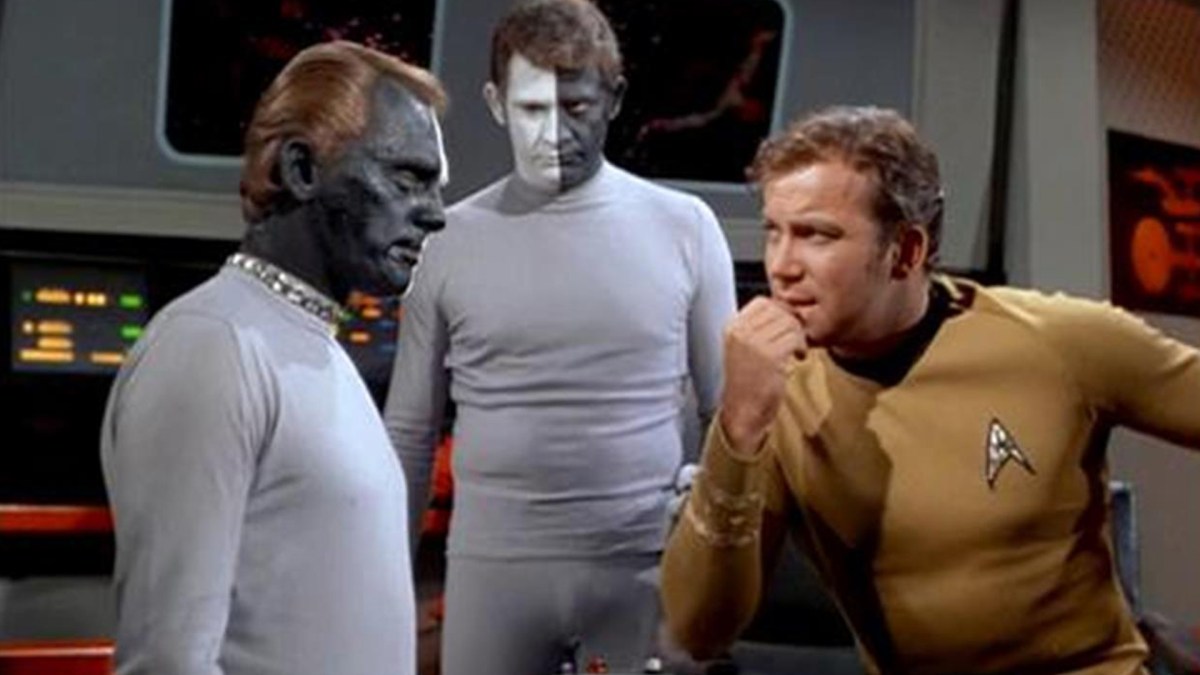

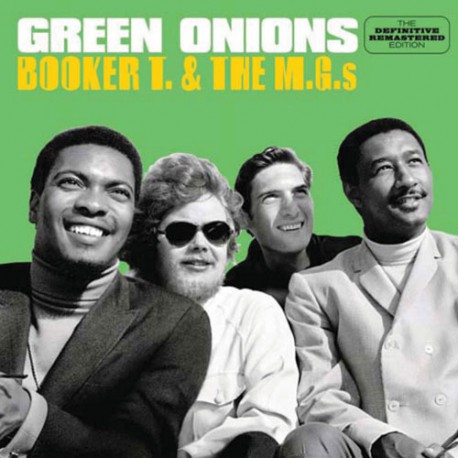
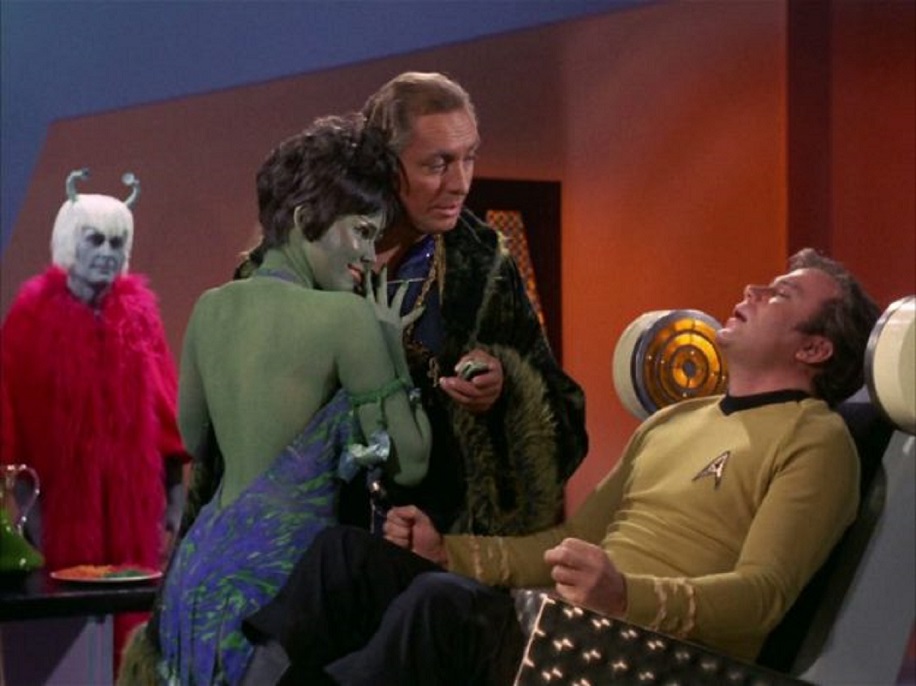
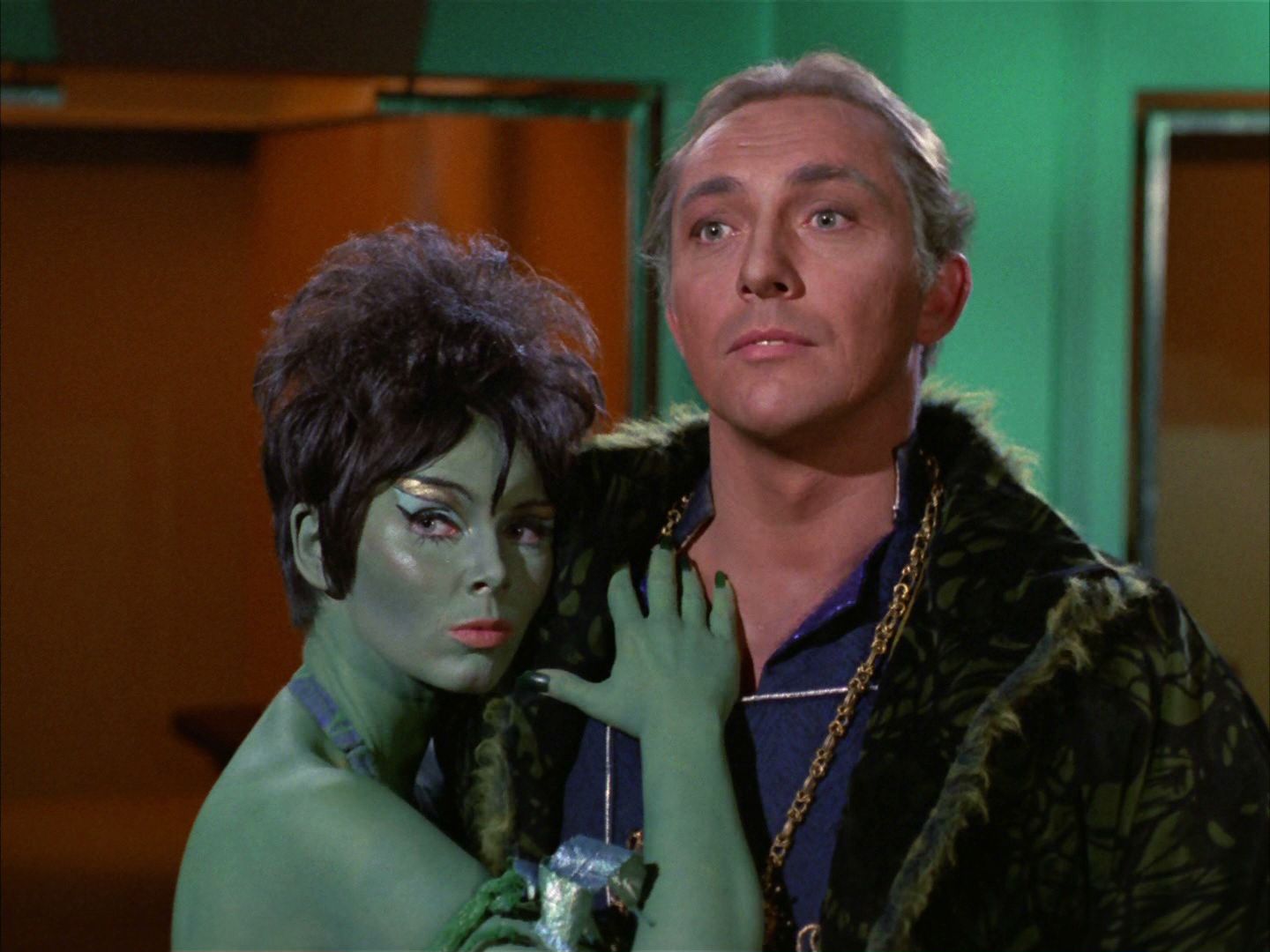


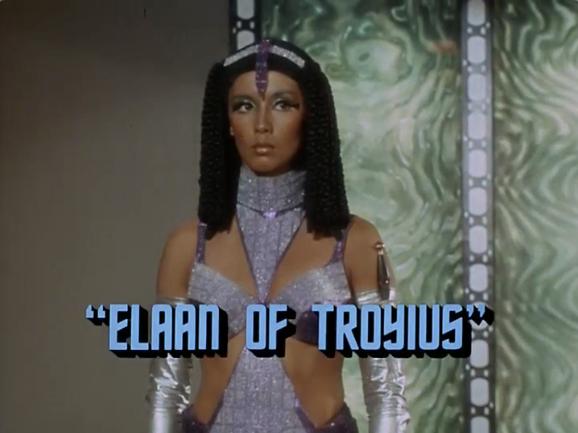
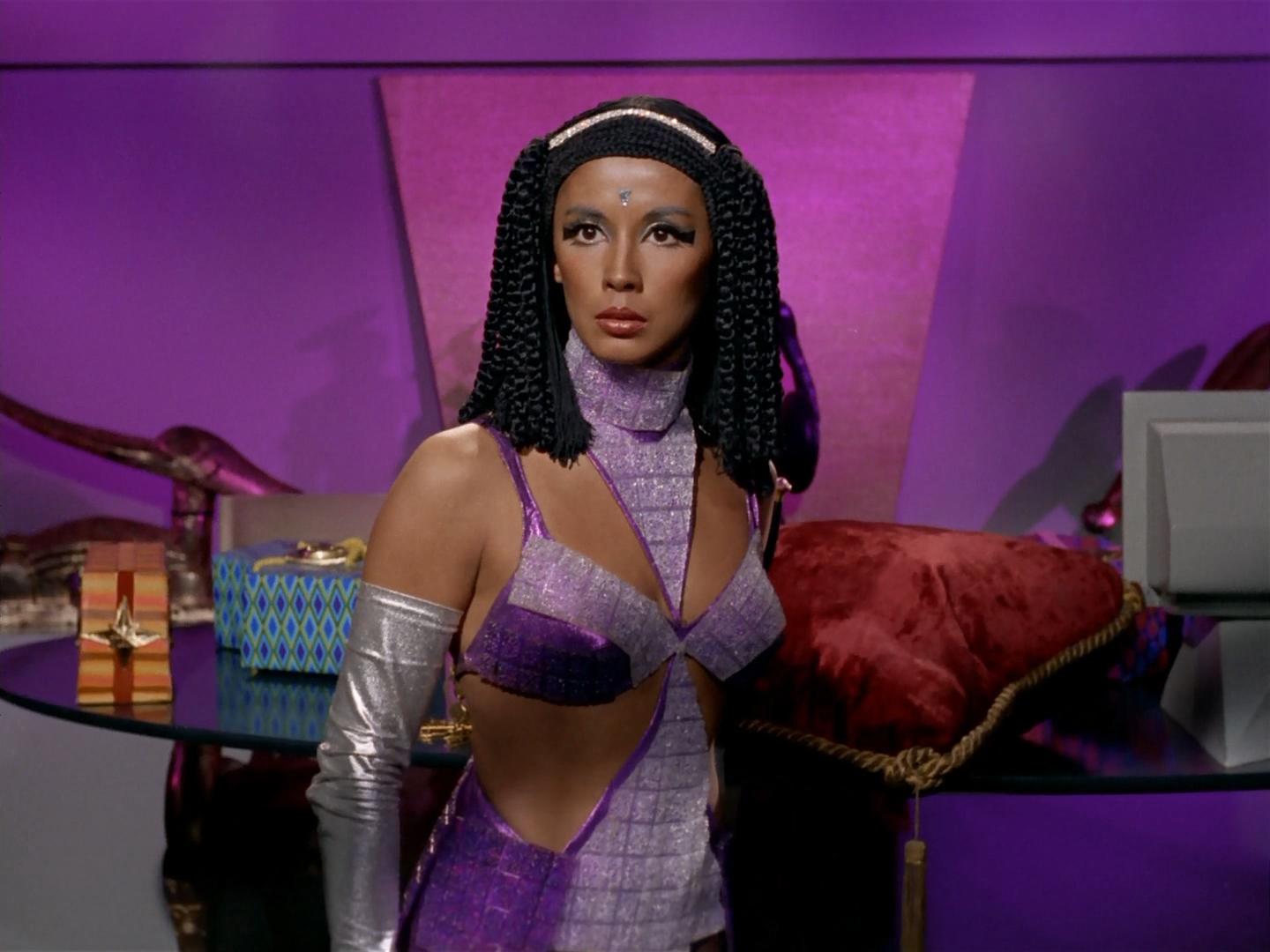


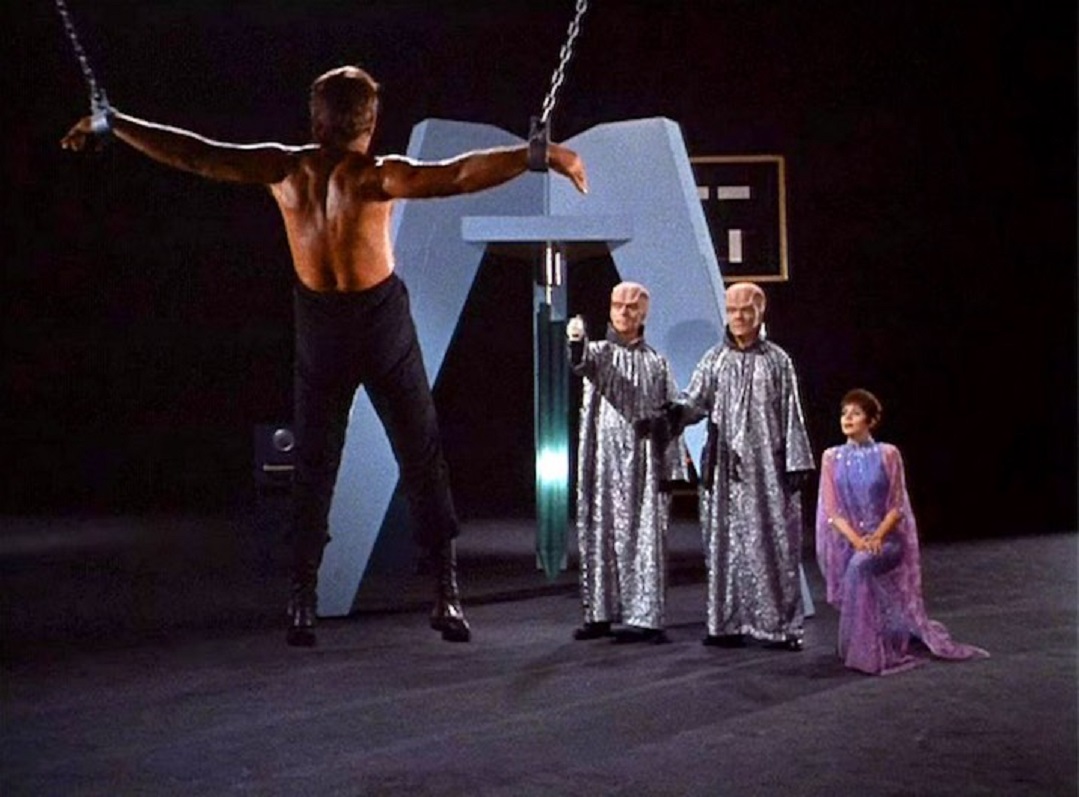



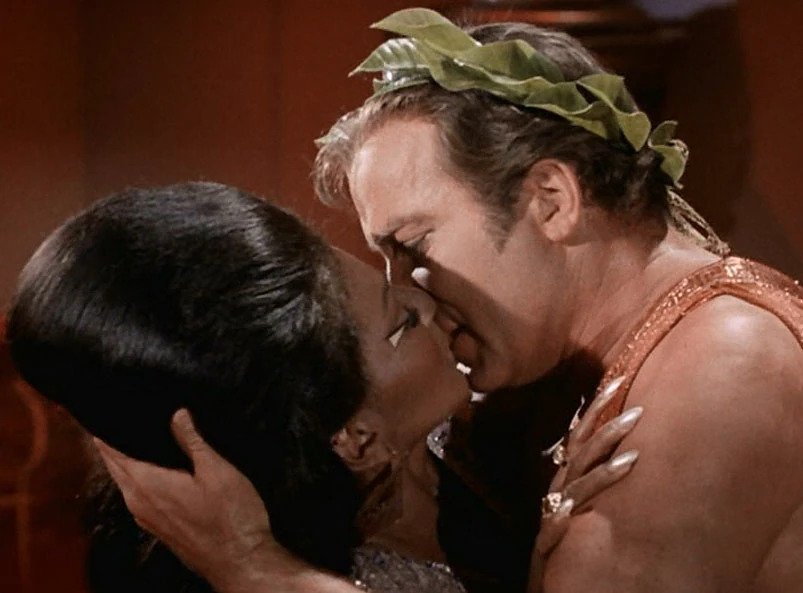


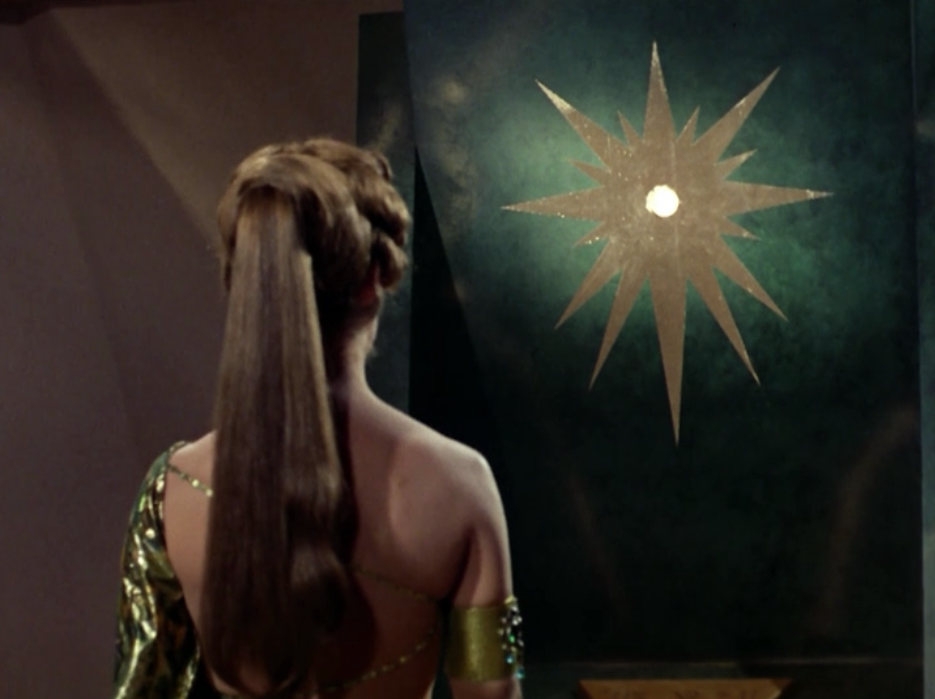
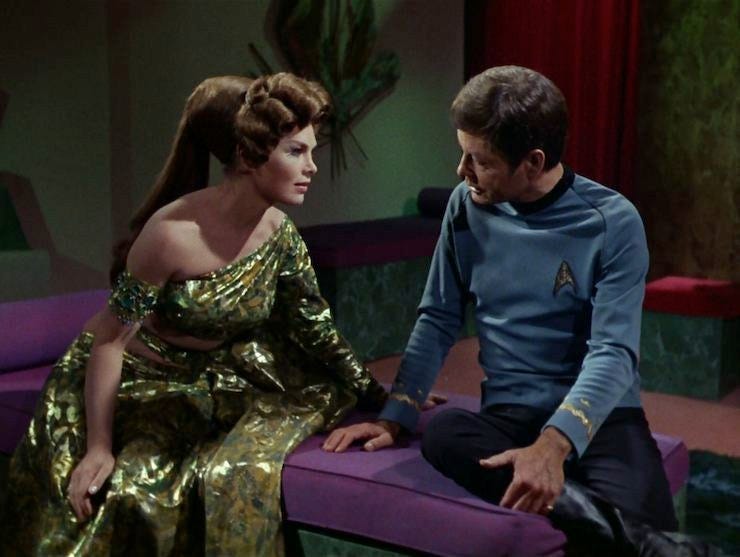
 PowerPop... An Eclectic Collection of Pop Culture