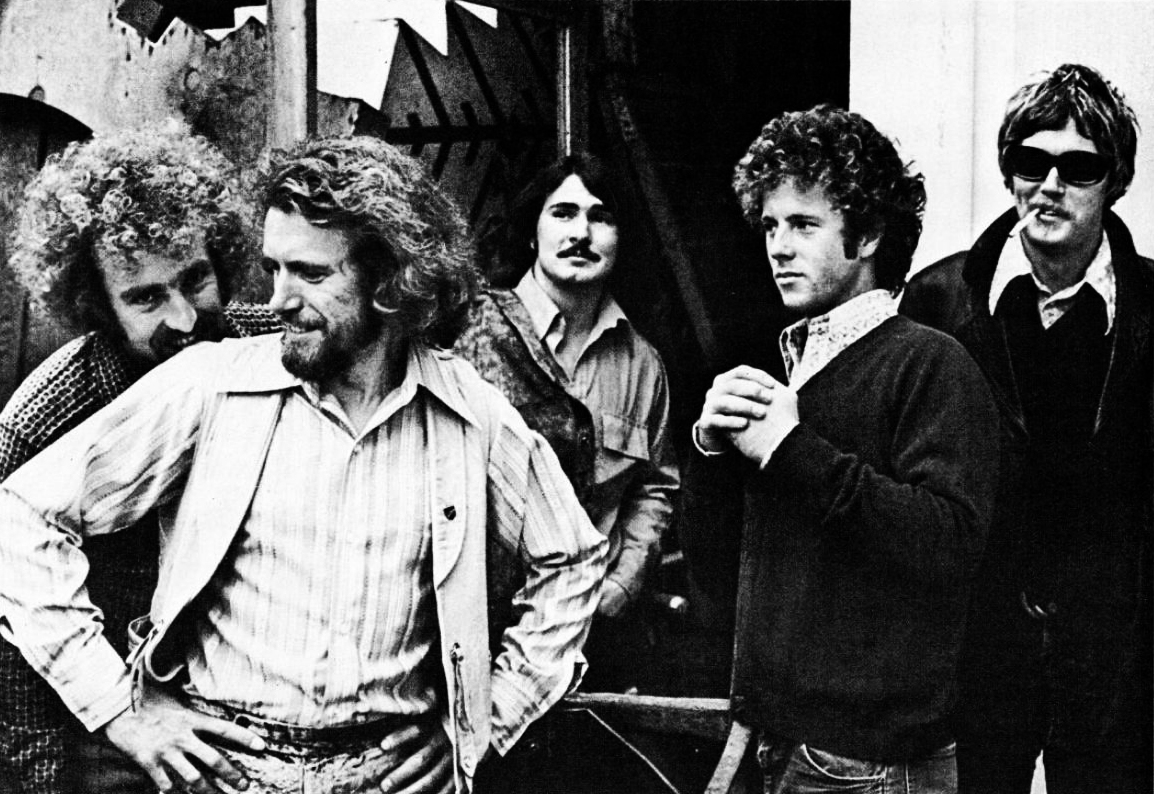
Dwight Yoakam – Guitars, Cadillacs

Buck Owens made the Bakersville sound popular and it’s one of my favorite types of country. My friend deKE mentioned this one on a list and again I’m surprised I haven’t posted it already. Yoakam and Steve Earle came out at around the same time and they were not like everyone else (George Jones has a funny quote about that at the bottom of the page). They were a breath of fresh air in country music and they crossed over genres as well.

It was released in 1986 and was the second single off of his debut album Guitars, Cadillacs, Etc., Etc. This song was written by Dwight Yoakam. Pete Anderson (producer) was a huge help in the making of the album. He provided some ideas music-wise, played the guitar, and even sang background vocals.

The two of them were surprised that the album had as much success as it did. Country music at the time was geared more toward country-pop and Dwight wrote these honky tonk type songs that weren’t popular at the time.

It originally came out as a six-track EP in 1984 on a small label. Warner Brothers were listening as he made it into a full album and it was released in 1986. The album peaked at #1 on the Billboard Country Charts, #61 on the Billboard Album Charts. The song Guitars, Cadillacs peaked at #4 on the Billboard Country Charts, and #2 on the Canadian Country Charts in 1986.

Rolling Stone magazine ranked this song as number 94 in their list of the 100 greatest country songs.

Dwight Yoakam:  “We were reinterpreting the Bakersfield ‘shuffle sound’ of Buck Owens and what he was doing with that terse kind of shuffle.”

Pete Anderson: “I was a guitar player for hire in the early ’80s in Los Angeles, and I played mostly country music. I played some blues gigs and kind of roots rock Americana gigs. He needed a guitar player to play a gig, and we played together. He was playing some of his original songs and I got to hear the songs and said..Man, these are really good songs.”

George Jones: ‘We spent all these years trying not to be called hillbillies, and Dwight Yoakam and Steve Earle fucked it up in one day.'”

Guitars, Cadillacs

Girl you taught me how to hurt real bad and cry myself to sleep
And showed me how this town can shatter dreams
Another lesson ’bout a naive fool who came to Babylon
And found out that the pie don’t taste so sweet

Now it’s guitars, Cadillacs, hillbilly music
Lonely, lonely streets that I call home
Yeah, my guitars, Cadillacs, hillbilly music
It’s the only thing that keeps me hangin’ on

Ain’t no glamour in this tinseled land of lost and wasted lives
Painful scars are all that’s left of me
Oh, but thank you girl for teachin’ me brand new ways to be cruel
If I can find my mind now I guess I’ll just leave

And it’s guitars, Cadillacs, hillbilly music
Lonely, lonely streets that I call home
Yeah, my guitars, Cadillacs, hillbilly music
It’s the only thing that keeps me hangin’ on

Oh it’s guitars, Cadillacs, hillbilly music
Lonely, lonely streets that I call home
Yeah, my guitars, Cadillacs, hillbilly music
It’s the only thing that keeps me hangin’ on

Gram Parsons and Emmylou Harris – Return of the Grievous Angel

A song I heard many many years ago. This is about as genuine as you can get.

What a beautiful song. Country or whatever you want to call it…it’s a great one. Gram Parsons and poet Tom Brown wrote this song. This song was on his last solo album Grievous Angel. Gram was not a country wanna-be…he was country. Keith Richards has said that Gram taught him everything he knows about country music. After hearing Gram Parsons…Merle Haggard wanted to produce him.

After leaving the Byrds, Parsons made a series of albums… Grievous Angel completes the cycle. Beginning with the Flying Burrito Brothers’ The Gilded Palace of Sin, the work progressed through Burrito Deluxe and Parsons’ earlier solo effort, GP.

Gram Parsons and Emmylou Harris3

I have not mentioned his singing partner yet. The wonderful and beautiful Emmylou Harris. Emmylou Harris was an unknown singer in her early twenties when Gram Parsons saw her perform at a folk club in Washington, D.C. in 1971. He recruited her the following year to sing on 1973’s classic album GP and the subsequent tour. She ended up on the GP album and this one…Grievous Angel.

Grievous Angel peaked at #195 on the Billboard Album Charts. If Parsons had survived it’s no telling what he and Emmylou would have done together. His voice wasn’t strong like Johnny Cash or Merle Haggard but it was so emotional that you were in the story with him.

This song describes the vision of home and love that haunts a wanderer through his travels across America.

Emmylou Harris:  “I would say until I had met Gram and started working with him I didn’t really understand or have a real love or feel for country music. Like most of my generation, you know, country music was politically incorrect for us at that point. It was associated with Republicans and Right Wing and that sort of thing. He taught me the beauty and the poetry, the simplicity, the honesty in the music. And the love of harmony came from really singing with him.”

Emmylou Harris: Well, we got fired after our first gig. We had two weeks of rehearsal. And I was just in the band. I never worked with a band. I didn’t know how you did things. So I just recorded things as we went down. But Gram didn’t focus on the material from the record; he just wanted to play songs. So we sat around and played all these songs, but we never worked up a beginning, middle, and end. It was such a train wreck that first night. But actually, before we got fired, the club got closed down because Weather Report had played there a few days earlier, and they were so loud that an injunction was put against the club. So, technically, we really didn’t get fired.

Emmylou Harris: “I discovered my own voice singing in harmony with Gram, there is something about the uniqueness of two voices creating a sound that does not come when they are singing solo, and I have always been fascinated by that. That song, and our harmony, is kind of a pinnacle of our duet-singing together.”

Return of the Grievous Angel

Won’t you scratch my itch, sweet Annie Rich
And welcome me back to town?
Come out on your porch or step into your parlor
And I’ll tell you how it all went down
Out with the truckers and the kickers and the cowboy angels
And a good saloon in every single town

Oh, and I remembered something you once told me
And I’ll be damned if it did not come true
Twenty thousand roads I went down, down, down
And they all lead me straight back home to you

‘Cause I headed west to grow up with the country
Across those prairies with the waves of grain
And I saw my devil
And I saw my deep blue sea
And I thought about a calico bonnet
From Cheyenne to Tennessee

We flew straight across that river bridge
Last night a half past two
The switchman waved his lantern goodbye and good day
As we went rolling through
Billboards and truckstops pass by the grievous angel
And now I know just what I have to do
Take it for me, James

And the man on the radio won’t leave me alone
He wants to take my money
For something that I’ve never been shown
And I saw my devil
And I saw my deep blue sea
And I thought about a calico bonnet
From Cheyenne to Tennessee

The news I could bring, I met up with the king
On his head an amphetamine crown
He talked about unbuckling that old bible belt
And lighted out for some desert town
Out with the truckers and the kickers and the cowboy angels
And a good saloon in every single town

Oh, but I remembered something you once told me
And I’ll be damned if it did not come true
Twenty thousand roads I went down, down, down
And they all lead me straight back home to you

Twenty thousand roads I went down, down, down
And they all lead me straight back home to you

Patsy Cline – Walkin’ After Midnight

I’ve always liked Patsy Cline…her voice was so good.  Fellow blogger Dana mentioned her name in the comments and I’m surprised I’ve never done a Cline post.

She was born Virginia Patterson Hensley. Known in her youth as “Ginny,” she began to sing with local country bands while a teenager, sometimes accompanying herself on guitar. By the time she had reached her early 20s, Cline was promoting herself as “Patsy” and was on her way toward country music stardom.

This song came out in 1957 but her voice sounds so fresh and vibrant. This was her first hit. It was a big crossover hit after she performed it on the variety show Arthur Godfrey’s Talent Scouts and won that night’s competition.

At only 15 years old, songwriter Alan Block wrote the original version of “Walkin’ After Midnight” in 1954. The song was based on a personal experience of Block’s, in which he found himself taking a solitary midnight stroll through the city streets. Block’s friend Donn Hecht later collaborated with him on the song, and the two fine-tuned its lyrics and melody.  It was originally intended for Kay Starr, a pop and jazz singer but she turned it down.

Cline didn’t like the song when she heard it but compromised with the record company (Four Star Records) and she recorded it. It was first released by Lynn Howard and the Accents the year before but wasn’t a hit.

The song peaked at #12 on the Hot 100 and #2 on the Country Charts in 1957.

Walkin’ After Midnight

(Wa-wa-walking, wa-wa-walking)
I go out walkin’ after midnight
Out in the moonlight
Just like we used to do, I’m always walkin’
After midnight, searchin’ for you (wa-wa-walking, wa-wa-walking)

I walk for miles along the highway
Well, that’s just my way
Of sayin’ I love you, I’m always walkin’
After midnight, searchin’ for you (wa-wa-walking, wa-wa-walking)

I stop to see a weepin’ willow
Cryin’ on his pillow
Maybe he’s cryin’ for me
And as the skies turn gloomy
Night winds whisper to me
I’m lonesome as I can be

I go out walkin’ after midnight
Out in the moonlight
Just hopin’ you may be somewhere a-walkin’
After midnight, searchin’ for me (Wa-wa-walking, wa-wa-walking)

I stop to see a weepin’ willow
Cryin’ on his pillow
Maybe he’s cryin’ for me
And as the skies turn gloomy
Night winds whisper to me
I’m lonesome as I can be

I go out walkin’ after midnight
Out in the moonlight
Just hopin’ you may be somewhere a-walkin’
After midnight, searchin’ for me (wa-wa-walking, wa-ooh-ah)

Townes Van Zandt – Pancho and Lefty

After the country post on Saturday…I looked through a lot of lists you all made. I listened…I want to thank Lisa for bringing this one up. It’s high time I did a post on Townes Van Zant. He was one of the best songwriters of the 20th Century.

What a songwriter Towns Van Zandt was…this song is probably best known for the Merle Haggard and Willie Nelson cover in 1983. The song peaked at #1 on the Country Billboard Charts and #1 on the Canadian Country Charts in 1983.

Willie Nelson has said that his and Merles duet album was almost complete but it lacked THAT song to put it over the top. Nelson said his daughter Lana suggested to him to listen to Pancho and Lefty by Townes Van Zandt. Willie then asked Townes what the song was about…and Townes said he didn’t know. Nelson then cut the track with his band. Willie and Merle had never heard that song before.

Nelson recorded it that night with his band and had to go and drag a sleepy Haggard (who was sleeping on his bus) to do the vocal part. The vocals were recorded in one take that night. They made a video of it and invited Townes to be in it. He was in the video as one of the Mexican  Federales.

The royalties from this song helped Van Zandt through the years. He told a story of getting pulled over by a couple of policemen. His car sticker was out of date so he got into the police car and they asked him what he does for a living. He said he was a songwriter and the policemen shook their heads. He then told them that he wrote “Pancho and Lefty” and their eyes lit up and they started to grin. Pancho and Lefty were the policemen’s police radio code names. They let Townes go after that.

Van Zandt did not like fame or what came attached to it. It’s been reported that he turned down opportunities to write with Bob Dylan. He respected Dylan a great deal but it was the celebrity part he didn’t want. He never ended up on a major label through his career…by choice. Steve Earle counted Townes Van Zandt as his mentor, and the two formed a close bond in the years since their initial encounter in 1978.

Unfortunately, Earle also adopted Van Zandt’s drug and alcohol habits. So bad, in fact, that Van Zandt actually visited Earle during a rare moment in which Townes was sober. Earle told him “I must be in trouble if they’re sending you.” Earle eventually named his son after Townes Justin Townes Earle.

The original song was on Van Zandt’s 1972 album The Late Great Townes Van Zandt. 

For Willie’s Big 60 show, Bob Dylan and Willie Nelson sang Pancho and Lefty. Bob covered the song sporadically in concert during the 90’s. In 2004, Rolling Stone ranked “Pancho and Lefty” 41st on its list of the “100 Greatest Country Songs of All Time.

Townes Van Zandt on being invited to be in the video: “It was real nice they invited me,”they didn’t have to invite me and I made I think $100 dollars a day. I was the captain of the federales. And plus I got to ride a horse. I always like that. It took four and a half days and that video was four and a half minutes long…The money goes by a strange life, or elsewhere. I mean it doesn’t come to me. But money’s not the question. I would like if I could write a song that would somehow turn one five-year-old girl around to do right. Then I’ve done good. That’s what I care about.”

Townes Van Zandt:  “I realize that I wrote it, but it’s hard to take credit for the writing, because it came from out of the blue. It came through me and it’s a real nice song, and I think, I’ve finally found out what it’s about. I’ve always wondered what it’s about. I kinda always knew it wasn’t about Pancho Villa, and then somebody told me that Pancho Villa had a buddy whose name in Spanish meant ‘Lefty.’ But in the song, my song, Pancho gets hung. ‘They only let him hang around out of kindness I suppose’ and the real Pancho Villa was assassinated.”

Pancho and Lefty

Living on the road my friend,
Is gonna keep you free and clean
Now you wear your skin like iron,
Your breath as hard as kerosene.
You weren’t your mama’s only boy,
But her favorite one it seems
She began to cry when you said goodbye,
And sank into your dreams.

Pancho was a bandit boy,
His horse was fast as polished steel
He wore his gun outside his pants
For all the honest world to feel.
Pancho met his match you know
On the deserts down in Mexico
Nobody heard his dying words,
Ah but that’s the way it goes.

All the Federales say
They could have had him any day
They only let him slip away
Out of kindness, I suppose.

Lefty, he can’t sing the blues
All night long like he used to.
The dust that Pancho bit down south
Ended up in Lefty’s mouth
The day they laid poor Pancho low,
Lefty split for Ohio
Where he got the bread to go,
There ain’t nobody knows

The poets tell how Pancho fell,
And Lefty’s living in cheap hotels
The desert’s quiet, Cleveland’s cold,
And so the story ends we’re told
Pancho needs your prayers it’s true,
But save a few for Lefty too
He only did what he had to do,
And now he’s growing old

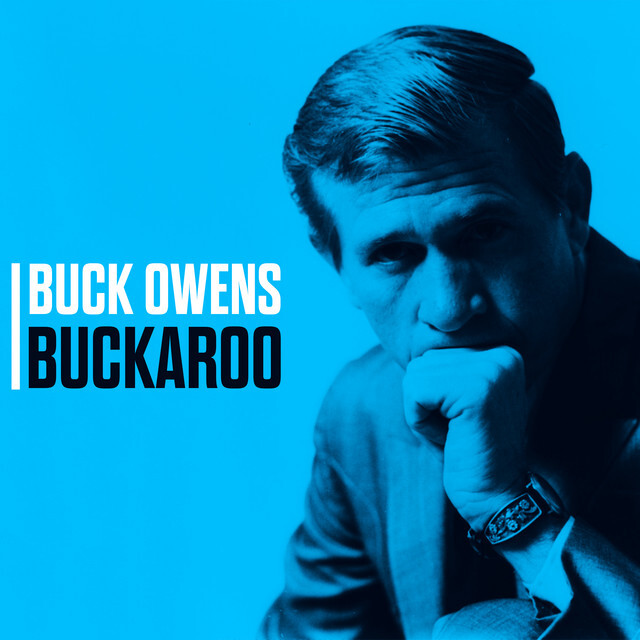
Buck Owens – Buckaroo

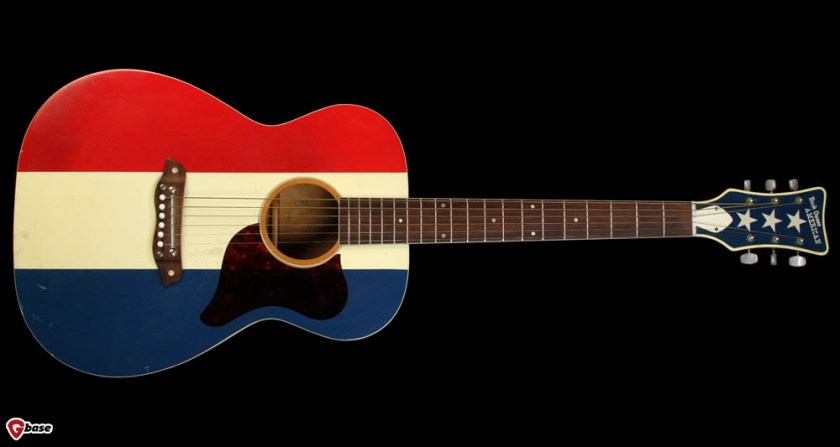
I remember watching Buck Owens and his red, white, and blue guitar on Hee Haw on Saturday nights. He wasn’t the musician that Roy Clark was…but who is? Owens had a great band and he was a really good musician to boot. This song is a cool instrumental. I want to thank Run-Sew-Read for suggesting this one. It’s probably my favorite song by Owens.

Buck Owens Guitar

And for those to whom this applies… Happy Labor Day!

In the 1950’s and 60’s Bakersfield California became an unlikely birthplace for a new sound…The Bakersfield Sound. Universally recognized as ‘The Country Music Capital of the West Coast’ and “Nashville West”, Bakersfield is the birthplace of what would become known worldwide as the Bakersfield Sound.

Who are some of the examples of this sound? Buck Owens and Merle Haggard. Both artists cut their teeth at the bars and honkytonks around Bakersfield before gaining international success. Later on, Dwight Yoakam carried on this sound with outstanding results.

Buck’s genre of country music was different. It was the Bakersville style of country. He didn’t have that exaggerated Southern voice with tractor lyrics. Well in this song…he didn’t have a voice at all! It’s an instrumental from 1965 and you can hear the British invasion seeping in Buck’s country song.

Buck Owen’s guitar player was a man named Don Rich. He was an excellent guitar player and helped Buck become successful. Not only was he a great guitarist but he was Buck’s best friend also. He died tragically in a 1974 motorcycle accident after leaving the studio. Owens pleaded with Rich to stop riding it but Rich kept on. Buck Owens refused to talk about it until the late nineties. He said:  “He was like a brother, a son, and a best friend. Something I never said before, maybe I couldn’t, but I think my music life ended when he died. Oh yeah, I carried on and I existed, but the real joy and love, the real lightning and thunder is gone forever.”

This song peaked at #1 on the Billboard Country Charts and  #60 on the Billboard 100 in 1965. In the video below…Don Rich is on the left.

Flying Burrito Brothers – Six Days on the Road

I got ten forward gears and a sweet Georgia overdrive
I’m taking little white pills and my eyes are open wide

I love this song so much. The first time I remember hearing it was in the Gimme Shelter film and the Flying Burrito Brothers were playing it before all hell broke loose. This is country music that I can get into.

I’ve heard this song by dozens of other artists. I’ve heard country and rock versions…and country/rock versions of it.  This song was originally written by Carl Montgomery and Earl Green, and originally performed by Dave Dudley, becoming Dudley’s first hit at #2 on the Country chart. It is often referenced as one of the first trucker songs.

In 1963 the Grand Ole Opry star Jimmy C. Newman let Dudley hear a demo for ‘Six Days on the Road’. It was an up-tempo song, it was a departure from the ballads Dudley had specialized in, and he was initially reluctant to record it. At the session in 1963 for ‘Six Days on the Road’, produced by Shelby Singleton at Kay Bank Studios, in Minneapolis, MN, the song was recorded unrehearsed and nailed on the second take. The release, on the independent Minneapolis label Golden Wing Records, led Mercury Records to sign him in Nashville.

Taj Mahal and Steve Earle did great versions of it as well.

The studio version came out on Hot Burritos Anthology released in 2000. A live version came out in 1972 that was on the Last of the Red Hot Burritos live album. By this time Gram Parson had left for a solo career and Bernie Leadon left for The Eagles. Chris Hillman was the only original member left. He left in late 1971 and A&M released this album and dropped the band.

According to Secondhandsongs.com …the song has 126 versions. Not too bad for a truck driver country song.

Dave Dudley on the recording session: “I went to make three songs, it took all the money I had to do it. We weren’t planning on a fourth song, but we found out we had 35 or 40 minutes of time left. So I gave the lyrics to the girl, and while she was typing it, we were learning it. We practiced it once, and on the second time through we got it.”

Six Days On The Road

Well, I pulled out of Pittsburgh rolling down the Eastern seaboard
I got my diesel wound up and she’s a running like never before
There’s a speed zone ahead alright but
I don’t see a cop in sight
Six days on the road and I’m gonna make it home tonight
I got ten forward gears and a George Overdrive
I’m takin’ little white pills and my eyes are opened wide
I just passed a Jimmy and White
I been passing everything in sight
Six days on the road and I’m gonna make it home tonight

Well, it seems like a month since I kissed my baby goodbye
I could have a lotta women but I’m not like some other guys
I could find me one to hold me tight
But I could never make believe it’s alright
Six days on the road and I’m gonna make it home tonight

The FBI is checkin’ on down the line
Well, I’m a little overweight but my log books way behind
But nothing bothers me tonight
I’m gonna dodge all the scales alright
Six days on the road and I’m gonna make it home tonight

My rigs a little old but that don’t mean she’s slow

There’s a good flame blowing from her smoke stack
Black as coal
Well, my home town’s coming in sight
And if you think I’m happy you’re right
Six days on the road and I’m gonna make it home tonight

Robbie Robertson music thoughts

You take what you needAnd you leave the restBut they should neverHave taken the very best

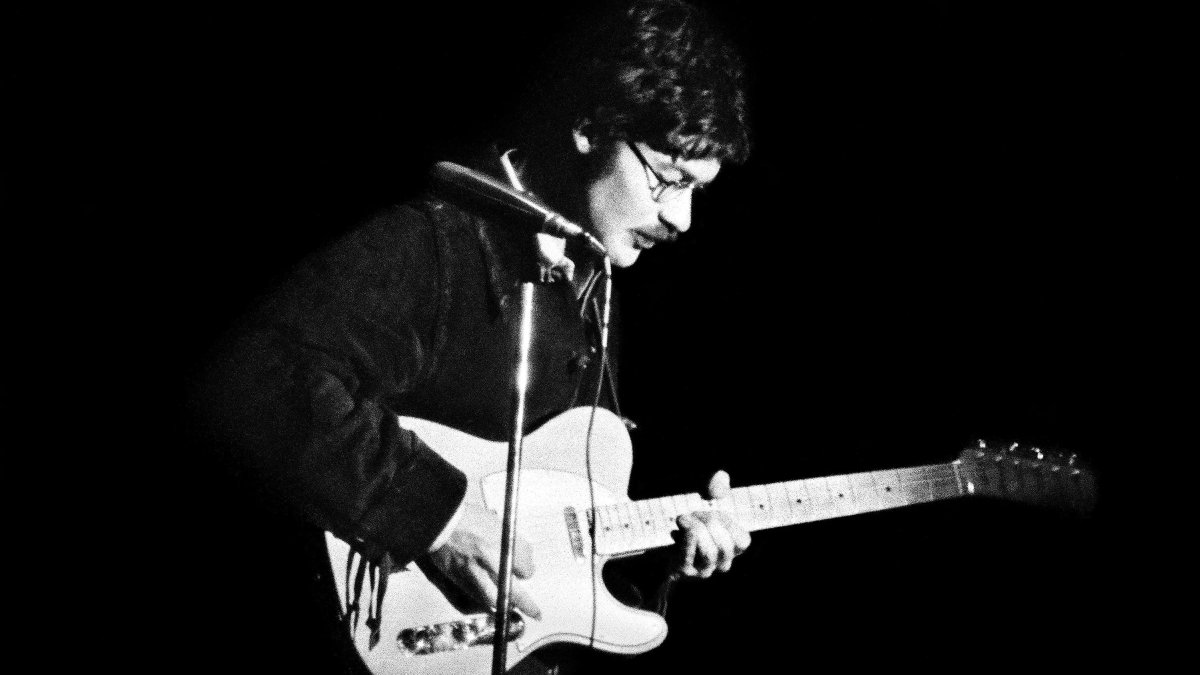
I wasn’t sure if I would post anything on Robbie Robertson but I had to if just for my sake. This loss hits me really hard as it does a lot of people. Most of us never knew the man but we did know him through his songs. I’m not going to list chart positions or anything like that. On this day for me, it’s just about how his music hits me.

Most artists I treat very unfairly. In my mind, they are frozen in time during a certain period. When I think of John Lennon I think of him in 1966…with Robbie Robertson, it was always around 1969-70 after writing two of the most important albums in rock history. In my mind, he was not 80 but 26 years old. So it was shocking to hear he passed away today.

The man not only was a great storyteller but many of his songs were mini-movies you could visualize. Who couldn’t imagine the drunkard and his sweetheart defender Bessie betting on horses up on Cripple Creek? You see and hear a hungry Virgil Kane and his wife struggle during the Civil War. In King Harvest, you get a view from a poverty-stricken farmer getting promises that will never happen. How about pulling into Nazareth and then seeing Carmen and the Devil walking side by side? Can you then visualize Miss Fanny sending her regards to everyone? I can.

Those are not just songs…they are visual pictures sent through music that only Robertson could write. He studied screenplays and that is how he wrote many of his songs and we continue to benefit from his hard work and gift…and always will.

Don Gibson – Oh Lonesome Me

I have heard this song all of my life and never knew much about it. I like the song because of the sad lyrics set against upbeat music.

Don Gibson wrote this song and it was produced by a legend of country music…Chet Atkins. Atkins, meanwhile, was inducted into the Country Music, Rock & Roll, and Musicians Halls of Fame. Atkins is also one of the primary figures credited with creating the “Nashville sound,” which transformed country music in the 1950s with a sound much cleaner and smoother than the style that preceded it.

Gibson released this in 1958 and it peaked at #7 on the Billboard 100. This was his only top-10 entry in the pop charts. Gibson, an inductee of the Country Music, Nashville Songwriters, and North Carolina Music Halls of Fame, wrote multiple songs now considered country standards.

It’s been covered by a lot of artists. Neil Young and The Kentucky Headhunters are just two that covered the song as well. It was the biggest hit The Headhunters had and it peaked at #8 on the Billboard Country Charts and #19 on the Canadian Country Charts in 1990.

Others who covered it are  Johnny Cash who took it to #13 Country and #93 on the Hot 100 in 1961…Stonewall Jackson’s 1970 rendition went to #63 Country. Other acts to cover the song include Bing Crosby, Bob Luman, Southern Culture on the Skids, Ray Charles, Connie Francis, and Bobbi Martin.

Neil Young covered it on his album After The Gold Rush in 1970.

Oh Lonesome Me

Everybody’s going out and having fun
I’m a fool for staying home and having none.
I can’t get over how she set me free.
Oh, lonesome me.

There must be some way that I can lose these lonesome blues
Forget about my past and find someone new
I’ve thought of everything from A to Z
Oh, lonesome me.

I’ll bet she’s not like me.
She’s out and fancy free,
Flirting with the boys with all her charms
But I still love her so,
And brother don’t you know
I’d welcome her right back here in my arms

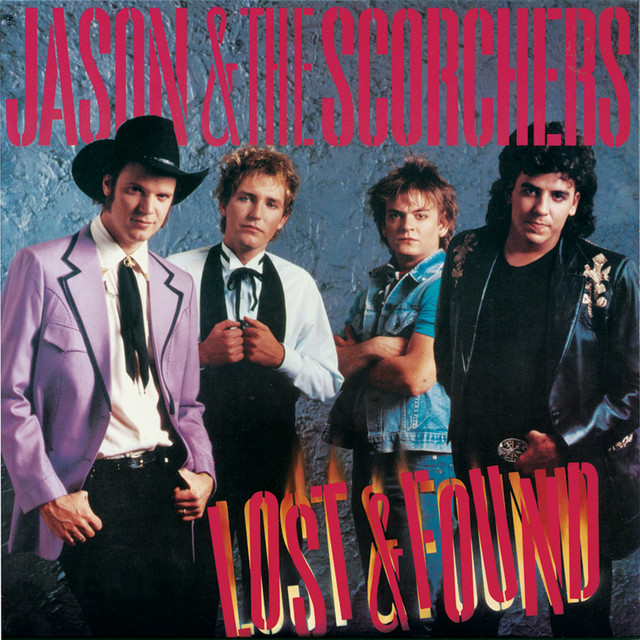
Jason and the Scorchers – Lost Highway

I truly love this band. They filled a space in the 80s for me. Loud unprocessed guitars with sparse production. They were close to the Georgia Satellites but more of a Rockabilly band on steroids. I was talking to fellow blogger Obbverse and he brought them up and I was very surprised he knew them. Not many outside the Southeast of America know much about them.

In the mid-eighties, I had a friend who was big into Jason and the Scorchers so I gave them a listen. They were big on college radio and they had many ties with Nashville and played here quite often. I saw them and Webb Wilder live downtown once. That is when I heard them do The Race Is On…the old George Jones song and it won me over. Their music seemed to have a kinship to the Georgia Satellites but they were a little more robust. They did have some MTV play with the song Golden Ball and Chain.

The band was formed in 1981. They were together through the 80s till the drummer Perry Baggs was diagnosed with diabetes and could not finish a 1990 tour. They have regrouped since then off and on and altogether have released 15 albums with the last one being in 2010. In 2012 Perry Baggs passed away because of diabetes.

They played a mixture between country and rock but fell into the cracks. They seemed too rock for country and too country for rock. Their concerts were simply unbeatable. They were led by frontman Jason Ringenberg and they released a couple of EPs before releasing their debut album Lost & Found in 1985. They were classified at one time as alt-country but I would add rock/punk/rockabilly in there also.

One of the things that made the band different is Jason wanted to sound country but guitar player Warner Hodges wanted to sound like AC/DC…that interplay made them unique. This song was on their 1985 album Lost and Found. The album peaked at #86 on the Australian album chart in 1987.

Most people will know the song Lost Highway…a hit by Hank Williams. It’s surprising but Hank didn’t write this song. Leon Payne wrote and released this song in 1948. Blind since he was a child, Payne wrote hundreds of songs, some of which were recorded by  Hank Williams, John Prine, Elvis Presley, George Jones, Johnny Cash, and many more.

I also added another live cover they did as a bonus…the old George Jones hit The Race Is On. 

Jason Ringenberg: “I kinda wanted to make a supercharged roots-rock band, some people were caught by surprise, but by and large people fell in love immediately. There was nobody else like us.”

Lost Highway

I’m a rollin’ stone, all alone and lost
For a life of sin I have paid the cost
When I pass by all the people say
Just another guy on the lost highway

Just a deck of cards, and a jug of wine
And a woman’s lies makes a life like mine
Oh, the day we met, I went astray
I started rollin’ down that lost highway

I was just a lad, nearly twenty-two
Neither good nor bad, just a kid like you
And now I’m lost, too late to pray
Lord, I’ve paid the cost on the lost highway

Now, boys, don’t start your ramblin’ around
On this road of sin, or you’re sorrow bound
Take my advice, or you’ll curse the day
You started rollin’ down that lost highway

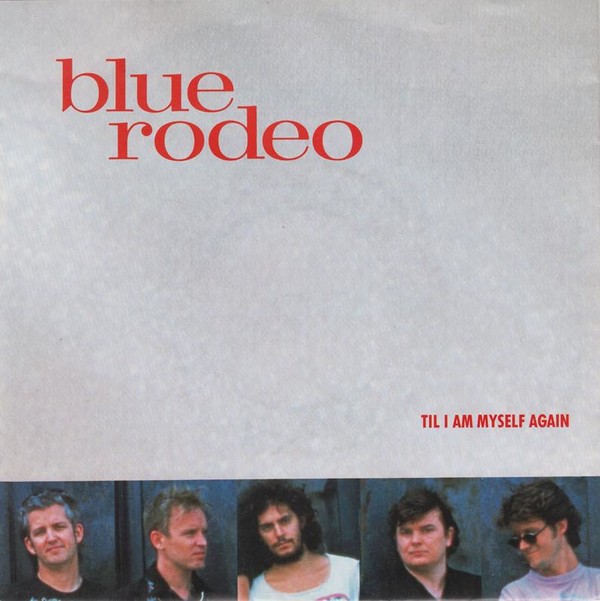
Blue Rodeo – Til I Am Myself Again ….Power Pop Friday

Happy Friday to you all! Today and Saturday I will be out of town but I will keep checking when I can.

This song could fit into different categories…country, country-rock, and power pop. It has a touch of the Byrds in this because of the 12-string Rickenbacker sound. Its melody is the reason that I like this one so much. This one (and a Sloan song) was going to go in Canadian Week but I ran out of days.

Blue Rodeo is a Canadian country rock band formed in 1984 in Toronto. Jim Cuddy and Greg Keelor, have been friends since high school, having both attended North Toronto Collegiate Institute.

Their record company did try to break into America because they hired Danny Goldberg as their US manager. Danny Goldberg was involved in some giant bands. He got his start in the 1970s with Led Zeppelin and later on, went to The Allman Brothers and then to Nirvana. Unfortunately, Goldberg left after the Casino album was released. He didn’t end up having much to do with the band according to Jim Cuddy.

This song was on their album Casino and it was released in 1990. The song peaked at #3 in Canada, #1 in the Canadian Country Charts, and #2 in the Canadian Adult Contemporary Charts. The song was on the Casino album released in 1991. The album peaked at #6 in Canada. The song was written by Jim Cuddy and Greg Keelor. Cuddy and Keelor are the two main singer/songwriters in the band.

They got Pete Anderson to produce the album. Anderson produced Dwight Yoakam, Roy Orbison, Jackson Browne, Buck Owens, K.D. Lang, and Lucinda Williams. He took the approach to Blue Rodeo as if they were recording 10 singles. He said their songs were entirely too long at that point and the band worked to tidy the songs up to under 4 minutes as you can see in the quote below.

Pete Anderson: They loved to jam, but the songs were way too long. They were ahead of bands like Phish and The String Cheese Incident. They were not a jam band per say, but they were on the front-end of that jam-band world. Those bands are not on the radio. A programmer looks at the back of the record and sees songs that are over four minutes and they will not play those songs unless it is hippy radio. We were going for a three-minute and 20-second consciousness for this record.

Jim Cuddy: “That was a very tumultuous time. Our manager [Danny Goldberg] quit right when we had finished recording; he really never had anything to do with us. That was a lesson learned. We did not make that record to break into the U.S. market or cater it for radio. That idea was imposed on us. We thought all our records would be accessible in the States. We made Casino based on records we liked such as Dwight Yoakam’s Guitars, Cadillacs, Etc. Etc. That was a guy Anderson worked with. We wanted to sound like that sonically and artistically. Pete came up before we went to L.A., made extensive notes, and shared them with us. We did some demos on an eight-track machine in our studio on Sorauren Avenue. Those demos are interesting to go back and listen to now. For example, ‘What Am I Doing Here.’ I remember Pete cut out one of the bridges in that song. I thought that was a great suggestion. We never were good with self-editing.

Bass Player Bazil Donovan: “That’s one of Jim (Cuddy’s) songs that came out of the time when we first toured the States and we were gone so long, that we became disconnected with reality. We spent so much time on a bus, in a plane or going to a gig somewhere, and we were new to all of that. It took its toll on us, we weren’t taking care of ourselves and we were probably drinking too much, and on the long road depression sets in. The song captures that, about how you can lose your spirit. We had spent like a whole year on the road. It’s funny how a dark experience can result in a great song. People dance to it like it’s a happy rocker, but the lyrics remind me of that dark time.”

Bazil Donovan:  “Pete had a concept. I remember one night we went to eat at El Pollo Loco and he said to us, ‘I want to make a record with you guys that has 10 singles on it. I don’t want to make stuff that is not going to get played. I don’t care if you have one arty tune that is an album track. My idea is to make hit songs.’ Listen to that record today and you can hear that. They are all three-minute pop-rock hits, which Pete was very good at. Some of our biggest songs came out of that record. I learned a lot from him. Before that, I didn’t know a lot about arranging. After I watched Pete work with arrangements it opened up the door for me and I thought about arranging myself. A lot of the stuff I learned there I have applied to stuff I’ve done since.”

Til I Am Myself Again

I want to know where
my confidence went
one day it all disappeared
and I’m lying in a hotel room
miles away
voices next door in my ear

Daytime’s a drag
nighttime’s worse
hope that I can get home soon
but the half-finished bottles of inspiration
lie like ghosts in my room

I wanna go
I know I can’t stay
but I don’t want to run
feeling this way
til I am myself
til I am myself
til I am myself again
There’s a seat on the corner
I keep every night
wait til the evening begins
I feel like a stranger
from another world
but at least I’m living again

There are nights
full of anger
words that are thrown
tempers that are shattered and thin
but the moments of magic
are just too short
they’re over before they begin

I know it’s time
one big step
I can’t go
I’m not ready yet
til I am myself
til I am myself
til I am myself again
I had a dream
that my house was on fire
people laughed while it burned
I tried to run but my legs were numb
I had to wait til the feeling returned

I don’t need a doctor
to figure it out
I know what’s passing me by
when I look in the mirror
sometimes I see
traces of some other guy

I wanna go
I know I can’t stay
but I don’t want to run
feeling this way
til I am myself
til I am myself
til I am myself again

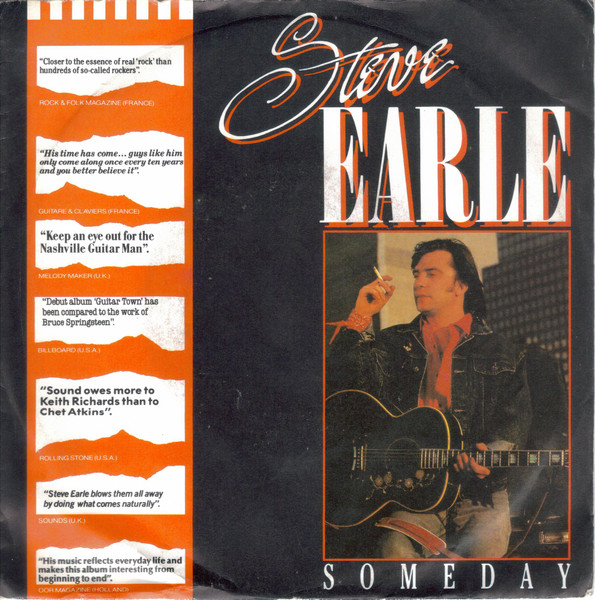
Steve Earle – Someday

Power Pop Friday will be back in two weeks. 

Ever since I heard him in the mid to late 80s I liked Steve Earle. He opened up for Bob Dylan in 1988 and he was fantastic. His music was between country, folk, and rock. You can’t really put Earle in a box…and you shouldn’t. I’ve read reviewers compare him to Randy Newman, Bruce Springsteen, and Waylon Jennings in the same review. That is a great span of artists.

The song is about escaping the town you are living in. I knew a lot of people who wanted to escape the small town I grew up in. The song reminds me a little of The River by Bruce Springsteen in content. It’s a song that many people will be able to relate to.

The song was from his debut album Guitar Town. I remember he was being played on country radio and WKDF…Nashville’s number-one rock station back in the 80s. The album is ranked 489 on Rolling Stone Magazine’s top 500 albums. They called it a rocker’s version of country. The album peaked at #1 on the Billboard Country Charts, #89 on the Billboard Album Charts, and #82 in Canada.

Four singles were pulled off of that album. Hillbilly Highway, Guitar Town, Someday, and Goodbye’s All We Got Left. All were in the top 40 in the Billboard Country Charts and two of them were top 10. Someday peaked at #28 on the Billboard Country Charts and #31 on the Canada Country Charts.

His next album Exit-0 is one that pushed him closer to the rock genre. His third album Copperhead Road broke him in the rock genre. Earle himself calls his music the world’s first blend of heavy metal and bluegrass…according to Wiki…Rolling Stone magazine called his music “Power Twang.”

Someday

There ain’t a lot that you can do in this town
You drive down to the lake and then you turn back around
You go to school and you learn to read and write
So you can walk into the county bank and sign away your life

I work at the fillin’ station on the interstate
Pumpin’ gasoline and countin’ out of state plates
They ask me how far into Memphis son, and where’s the nearest beer
And they don’t even know that there’s a town around here

Someday I’m finally gonna let go
‘Cause I know there’s a better way
And I want to know what’s over that rainbow
I’m gonna get out of here someday

Now my brother went to college cause he played football
I’m still hangin’ round cause I’m a little bit small
I got me a 67 Chevy, she’s low and sleek and black
Someday I’ll put her on that interstate and never look back

John Prine – In Spite of Ourselves

He’s got more balls than a big brass monkey
He’s a wacked out weirdo and a love bug junkie
Sly as a fox and crazy as a loon
Payday comes and he’s a howlin’ at the moon

There will be only one John Prine. He was down-to-earth and a wonderful songwriter. This song describes more couples than people may think. Both describe their marriage to each other in a different light.

I do have a second-hand John Prine story. A friend of mine named Chris went to see John Prine and Arlo Guthrie in the ’80s and met John in the parking lot after the concert. Prine was really talkative and asked Chris if he could boost his car off…which he did. Chris told me he was really down to earth and a genuinely nice guy.

He wrote this for a movie called Daddy and Them released in 2001. Prine is in the movie also…he plays Billy Bob Thorton’s brother and Andy Griffith is their dad. Prine talked about it and said that made him Opie’s stepbrother.

Iris Dement dueted with Prine on this song and fit the song perfectly. Prine developed cancer in 1998 in his neck…and after the operation, he wasn’t sure if he could sing again. After recording this song…everyone was happy because he still could do it. It was originally released in 1999 on the album In Spite Of Ourselves…and was released again when the movie came out in 2001.

That album was an album of duets. He thought that most people would turn him down but most agreed.  Lucinda Williams, Trisha Yearwood, Connie Smith, Melba Montgomery, Emmylou Harris, Patty Loveless, and Dolores Keane also appear. In Spite of Ourselves was the only original song on the album…the rest were covers.

The album peaked at #21 on the Billboard Country Charts and 197 on the Billboard 100. Critic Robert Christgau wrote: “… the costar is Iris DeMent, who kills on both the Bobby Braddock cornpone of “(We’re Not) The Jet Set” (rhymes with “Chevro-let set”) and the conflicted spouse-swapping of the impossible old George & Melba hit “Let’s Invite Them Over”—as well as Prine’s only new copyright, the title track, in which a husband and wife who love each other to death paint totally different pictures of their marriage.

In Spite of Ourselves

She don’t like her eggs all runny
She thinks crossin’ her legs is funny
She looks down her nose at money
She gets it on like the Easter Bunny
She’s my baby
I’m her honey
I’m never gonna let her go

He ain’t got laid in a month of Sundays
I caught him once and he was sniffin’ my undies
He ain’t too sharp but he gets things done
Drinks his beer like it’s oxygen
He’s my baby
And I’m his honey
Never gonna let him go

In spite of ourselves
We’ll end up a’sittin’ on a rainbow
Against all odds
Honey, we’re the big door prize
We’re gonna spite our noses
Right off of our faces
There won’t be nothin’ but big ol’ hearts
Dancin’ in our eyes

She thinks all my jokes are corny
Convict movies make her horny
She likes ketchup on her scrambled eggs
Swears like a sailor when shaves her legs
She takes a lickin’
And keeps on tickin’
I’m never gonna let her go

He’s got more balls than a big brass monkey
He’s a wacked out weirdo and a love bug junkie
Sly as a fox and crazy as a loon
Payday comes and he’s a howlin’ at the moon
He’s my baby
I don’t mean maybe
Never gonna let him go

In spite of ourselves
We’ll end up a’sittin’ on a rainbow
Against all odds
Honey, we’re the big door prize
We’re gonna spite our noses right off of our faces
There won’t be nothin’ but big ol’ hearts
Dancin’ in our eyes

In spite of ourselves
We’ll end up a’sittin’ on a rainbow
Against all odds
Honey, we’re the big door prize
We’re gonna spite our noses right off of our faces
There won’t be nothin’ but big ol’ hearts
Dancin’ in our eyes

There won’t be nothin’ but big ol’ hearts
Dancin’ in our eyes

In spite of ourselves

Steve Earle – I Ain’t Ever Satisfied

I first found out about Steve Earle through this song. It has remained one of my favorite songs. Steve has released a lot of great songs since but it’s the honesty of this song that I like so much.

I was working at a factory and going to college and I had a radio on while driving a tow motor.  After I heard it I immediately bought the album “Exit 0” and enjoyed the complete album. The lyrics ring true of the human spirit…we are never satisfied. Steve Earle was one of the highlights of the 80s for me. Down to earth music and very rootsy.

The night after I got Exit O I learned this song and our band played it. I went to my first Bob Dylan concert on August 20, 1989, and Steve Earle opened up for him. That was one of the best pairings I’ve seen. He played this song and the night was complete…Copperhead Road was pretty good also! I’ve seen Dylan 8 times but this was probably the worse. He played for maybe 40 minutes and left the stage. I remember someone behind me screaming…”I know you are an old son of a b****” but come on… Bob was 48 that year.

Steve is such an underrated American songwriter. The year before this song he released his breakout album Guitar Town. He was straddling the line between country and rock at this period. It’s hard to classify Earle and no need to…he writes great songs that many can relate to.

The song peaked at #26 on the Billboard Mainstream Rock Charts in 1987. The album Exit 0 peaked at #15 on the Billboard Album Country Charts and #36 in Canada.

Just a cool note… Waylon Jennings makes a cameo appearance at the end of the video.

I Ain’t Ever Satisfied

I was born by the railroad tracksWell the train whistle wailed and I wailed right backWell papa left mama when I was quite youngHe said now “One of these days you’re gonna follow me son”

Woh-oh-oh-oh-oh-oh-oh-ohI ain’t ever satisfiedWoh-oh-oh-oh-oh-oh-oh-ohI ain’t ever satisfied

Now I had me a woman she was my worldBut I ran off with my back street girlNow my back street woman could not be trueShe left me standin’ on the boulevard thinkin’ ’bout you

I’ve got an empty feeling deep insideI’m going over to the other sideLast night I dreamed I made it to the promise landI was standin’ at the gate and I had the key in my handSaint Peter said “Come on in boy, you’re finally home”I said “No thanks Pete, I’ll just be moving along”

Woh-oh-oh-oh-oh-oh-oh-ohI ain’t ever satisfiedWoh-oh-oh-oh-oh-oh-oh-ohI ain’t ever satisfied

Johnny Cash – Folsom Prison Blues

But I shot a man in Reno, Just to watch him dieJohnny Cash

It doesn’t get much better than that.

The man in black was The Man. Not many performers can cross genres like Johnny Cash did and still does. He first recorded this song in 1955 at Sun Records as the B side to “S3o Doggone Lonesome” but it was the live 1969 version that hit.

The At Folsom Prison album helped revitalize Cash’s career. Up to this point, his last Country top 40 entry was in 1964. This was recorded live at Folsom Prison in California on January 13, 1968, and that album came to define his outlaw image. The record company told him it wouldn’t work but Johnny recorded at the prison anyway.

Folsom Prison Blues peaked at #1 on the Billboard Country Charts, #1 on the Canadian Country Charts, #32 on the Billboard 100,  and #17 on the Canadian Pop Charts.  The song and album generated a lot of interest in the rebellious Johnny Cash, who made prison reform his political cause of choice. He started regularly performing in jails, doing about 12 shows a year for free mostly in Folsom and San Quentin.

The album peaked at #1 in the Billboard Country Charts, #13 in the Billboard Album Charts, and #27 in Canada.

Johnny Cash Flipping Bird

This iconic picture came from Folsom Prison. According to photographer Jim Marshall…he asked Cash to express what he thought of the prison authorities when he played the show. Marshall told Cash “let’s do a shot for the warden” and the picture was born. 

Cash saw Crane Wilbur’s 90-minute film Inside the Walls of Folsom Prison while stationed in Germany. It left an impression on Cash, who emphasized the tale of the imprisoned men, and inspired him to write a song. Johnny Cash: “It was a violent movie, I just wanted to write a song that would tell what I thought it would be like in prison.”

Cash’s first prison performance occurred in 1957 when he performed for inmates at Huntsville State Prison. The favorable response inspired Cash to perform at more prisons through the years. His next hit, recorded in San Quentin Prison, was the humorous “A Boy Named Sue,” which proved that he could be clever and funny.

Cash came off as a champion for the oppressed.  He got his own national TV show in 1969 and became one of the most popular entertainers of his era. His guests included Derek and the Dominos,  Joni Mitchell, Bob Dylan, Linda Ronstadt, Kris Kristofferson, Mickey Newbury, Neil Young, Gordon Lightfoot, Merle Haggard, James Taylor, Tammy Wynette, and Roy Orbison.

Isn’t that list incredible? Cash was considered a Country-Folk artist but look at the range of performers. The late sixties and seventies were like this ….and it’s the reason I like them so much…all the generations intersected at that point in time. I mean you have Eric Clapton and then you have Tammy Wynette on the guest list.

The lyrics to this song were based on a 1953 recording called Crescent City Blues by a bandleader named Gordon Jenkins with Beverly Maher on vocals. After filing a lawsuit, Gordon Jenkins received an out-of-court settlement from Cash in 1969. I have to say it does sound really close.

Johnny Cash: “I don’t see anything good come out of prison. You put them in like animals and tear out the souls and guts of them, and let them out worse than they went in.”

Rosanne Cash: “He was a real man with great faults, and great genius and beauty in him, but he wasn’t this guy who could save you or anyone else.”

Folsom Prison Blues

(Hello, I’m Johnny Cash)

I hear the train a-comin’
It’s rollin’ ’round the bend
And I ain’t seen the sunshine
Since I don’t know when
I’m stuck in Folsom Prison
And time keeps draggin’ on
But that train keeps a-rollin’
On down to San Antone

When I was just a baby
My Mama told me, “son
Always be a good boy
Don’t ever play with guns”
But I shot a man in Reno
Just to watch him die
When I hear that whistle blowin’
I hang my head and cry (play it to the verse, yeah)
(Sue it)

I bet there’s rich folks eatin’
From a fancy dining car
They’re probably drinkin’ coffee
And smokin’ big cigars
Well, I know I had it comin’
I know I can’t be free
But those people keep a-movin’
And that’s what tortures me (hit it)

(Howdy-ho)

Well, if they freed me from this prison
If that railroad train was mine
I bet I’d move it on, a little
Farther down the line
Far from Folsom Prison
That’s where I want to stay
And I’d let that lonesome whistle
Blow my blues away

(yeah)

Hank Williams – Jambalaya (On the Bayou)

Hank Williams only lived to be 29 years old. It’s hard to believe because he wrote so many classic songs during his short recording career. “The Hillbilly Shakespeare” was one of his nicknames.

He had not been in a studio for 6 months but this song brought him back. He recorded it on June 13, 1952, in Nashville. There was speculation that Hank Williams co-wrote the song with a gentleman named Moon Mullican. Williams had the sole credit but it has been said that Williams’s publishing agent Fred Rose stepped in and wanted William’s publishing company to get the credit and the money. It has been said that Rose possibly paid Mullican so he wouldn’t have to split the publishing with Moon’s label King Records. Williams got the inspiration for the song while listening to Cajuns talk on a bus trip.

The melody is based on the Cajun song “Grand Texas.” The song peaked #1 on the Country Charts for fourteen, non-consecutive weeks. The song also peaked at #20 on the US Billboard Most Played By Jukeboxes. Hank Williams was born with spina bifida occulta, a disorder of the spinal column and he killed the pain with narcotics and alcohol. If you look at pictures of Williams he looks much older than in his twenties, especially in the last year of his 29 on earth.

Before his death, he had been known to take morphine and drink heavily. On New Year’s Day 1953, he took his seat in the back of his 1952 powder blue Cadillac. As his driver, college student Charles Carr, headed toward a New Years show in Canton, Ohio, Williams’ health took a turn for the worse. Finally, after not hearing from the singer for two solid hours, the driver pulled the car over in Oak Hill, West Virginia, at 5:30 in the morning. Williams was pronounced dead a short while later.

Hank Williams was a genius when it came to songwriting. He influenced so many genres of music from Johnny Cash, The Beatles, Bob Dylan, and many more. He left a huge mark on the world in such a short time.

Williams was among the first class of artists inducted into the Country Music Hall of Fame in 1961, and in 2010, the Pulitzer Board awarded him a special citation for songwriting.

Charles Carr, the teenager who was driving Williams to his concert:

“Hank’s song ‘Jambalaya’ was just out on the radio and he asked me what I thought of it, I told him I didn’t care for it, that it didn’t make a bit of sense to me. Hank laughed and said, ‘You son of a bitch, you just understand the French like I do.

“We were just a couple of young guys on a car trip having fun.”

My favorite version of this song was by John Fogerty.

Jambalaya (On the Bayou)

Goodbye Joe me gotta go me oh my oh
Me gotta go pole the pirogue down the bayou
My Yvonne the sweetest one me oh my oh
Son of a gun we’ll have big fun on the bayou

Jambalaya and a crawfish pie and filé gumbo
Cause tonight I’m gonna see my ma cher amio
Pick guitar fill fruit jar and be gay-o
Son of a gun we’ll have big fun on the bayou

Thibodaux Fontaineaux the place is buzzin’
Kinfolk come to see Yvonne by the dozen
Dress in style and go hog wild me oh my oh
Son of a gun we’ll have big fun on the bayou
Settle down far from town get me a pirogue
And I’ll catch all the fish in the bayou

Jambalaya and a crawfish pie and filé gumbo
Cause tonight I’m gonna see my ma cher amio
Pick guitar fill fruit jar and be gay-o
Son of a gun we’ll have big fun on the bayou

Later on, swap my mon, get me a pirogue
And I’ll catch all the fish on the bayou
Swap my mon, to buy Yvonne what she need-oh
Son of a gun we’ll have big fun on the bayou

Jambalaya and a crawfish pie and filé gumbo
Cause tonight I’m gonna see my ma cher amio
Pick guitar fill fruit jar and be gay-o
Son of a gun we’ll have big fun on the bayou