John Prine – John Prine …album review

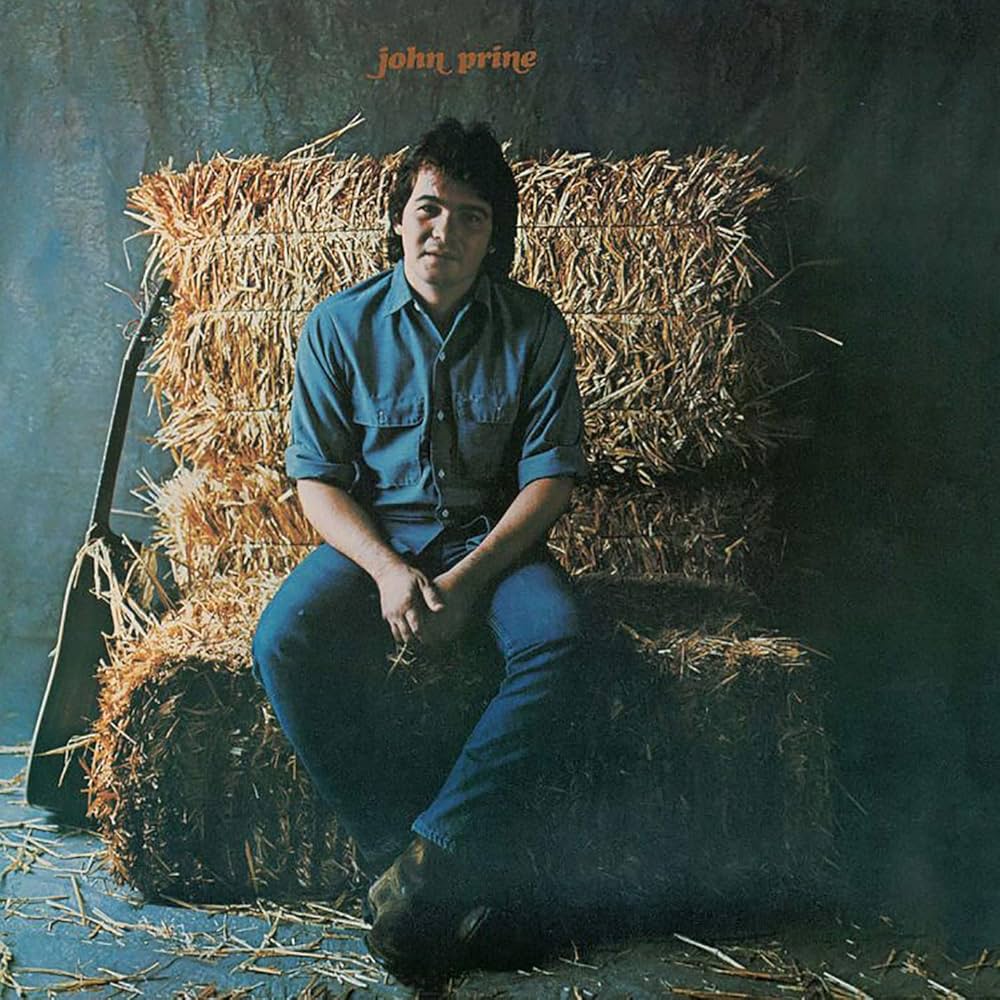
Ever since I wrote up the John Prine song Paradise (thanks to  halffastcyclingclub) I knew then I had to write up the album. This album is very daunting to write up. If one person listens to it, then my job is done. It is one of the best debut albums I’ve ever heard in rock, pop, country, folk, or anything else. I’m truly ashamed I didn’t dive into John Prine sooner. I knew some of his well-known songs like Dear Abbey, Angel From Montgomery, and a few other songs of his, but it was the song Paradise that totally won me over. Like the old lyric I remember from a long time ago…listening to this album is like taking a trip without leaving the farm

John Prine was working as a mailman in Chicago, delivering letters by day and sharpening songs by night. He began playing open mics at the Old Town School of Folk Music, where his storytelling and humor transfixed the audience. One night in 1970, Kris Kristofferson wandered in, heard Prine sing Sam Stone, and reportedly told his record label mates he’d just seen “the best songwriter I’ve ever heard.” That moment changed everything for Prine.

Atlantic Records moved quickly, pairing Prine with producer Arif Mardin, a surprising choice. Mardin, known for polished soul and pop productions. He immediately understood that these songs didn’t need a big production. Sessions were kept deliberately restrained, focusing on clarity and feel rather than polish. Many of the songs were already road-tested long before they were recorded. Hello In There, Sam Stone, and Paradise had been perfected in coffeehouses and small clubs

At 24 years old, he plays thirteen songs that feel lived in, warm, sly, funny, haunted, and most importantly, human. There is one thing I found out about this album. On first listen, I thought it was charming. On the tenth, it is devastating. On the twentieth, it feels like a friend you have known your whole life, and I’m not exaggerating.

Right from the opener Illegal Smile, Prine is already telling you “Last time I checked my bankroll, it was gettin’ thin, Sometimes it seems like the bottom is the only place I’ve been”. Then comes Spanish Pipedream, which practically bursts out of the speakers, preaching the joys of ditching society’s noise. blowing up your TV, and finding your own piece of mind. But the album’s heart and soul song runs deeper. Sam Stone, with its unforgettable line “there’s a hole in daddy’s arm where all the money goes,” still lands like a gut punch.

And then, of course, there is Angel from Montgomery. If Prine had written only that one song, he would still have ended up on songwriter Mount Rushmore. I won’t go over every song, but if you like great lyrics and great melodies, this is the album for you. Google the lyrics on this fine Sunday and sing along with John Prine. It will be a beautiful Sunday…trust me on that. My personal favorites? Paradise, Sam Stone, Illegal Smile, Angel from Montgomery, and…ah, just listen to them all.

Sam Stone

Sam StoneCame homeTo his wife and familyAfter serving in the conflict overseasAnd the time that he servedHad shattered all his nervesAnd left a little shrapnel in his kneeBut the morphine eased the painAnd the grass grew ’round his brainAnd gave him all the confidence he lackedWith a Purple Heart and a monkey on his back

There’s a hole in daddy’s arm where all the money goesAnd Jesus Christ died for nothin’, I supposeLittle pitchers have big earsDon’t stop to count the yearsSweet songs never last too long on broken radiosMmm-hmm-hmm-hmm

Sam Stone’s welcome homeDidn’t last too longHe went to work when he’d spent his last dimeAnd soon he took to stealin’When he got that empty feelin’For a hundred dollar habit without overtimeAnd the gold rolled through his veinsLike a thousand railroad trainsAnd eased his mind in the hours that he choseWhile the kids ran around wearin’ other people’s clothes

There’s a hole in daddy’s arm where all the money goesAnd Jesus Christ died for nothin’, I supposeLittle pitchers have big earsDon’t stop to count the yearsSweet songs never last too long on broken radiosMmm-hmm-hmm-hmm

Sam Stone was aloneWhen he popped his last balloonClimbing walls while sittin’ in a chairWell, he played his last requestWhile the room smelled just like deathWith an overdose hoverin’ in the air

But life had lost its funAnd there was nothin’ to be doneBut trade his house that he bought on the G.I. BillFor a flag draped casket on a local heroes’ hill

There’s a hole in daddy’s arm where all the money goesAnd, Jesus Christ died for nothin’, I supposeLittle pitchers have big earsDon’t stop to count the yearsSweet songs never last too long on broken radiosMmm-hmm-hmm-hmmHmmHmm-hmm-hmm-hmm

Jesse Ed Davis – ¡Jesse Davis! …album review

I’ve heard of this guy for so long, associated with Taj Mahal and solo Beatles tracks. He played on over 80 albums of other artists. His guitar playing was top shelf and was truly one of the guitar greats. He doesn’t get the attention he deserves. My admitted lack of knowledge of him led me to think he could only play guitar. Much like last week’s Link Wray post, who I didn’t know could sing, he had a really good voice. I also want to thank Lisa from Tao-Talk for posting a Davis song last Friday. 

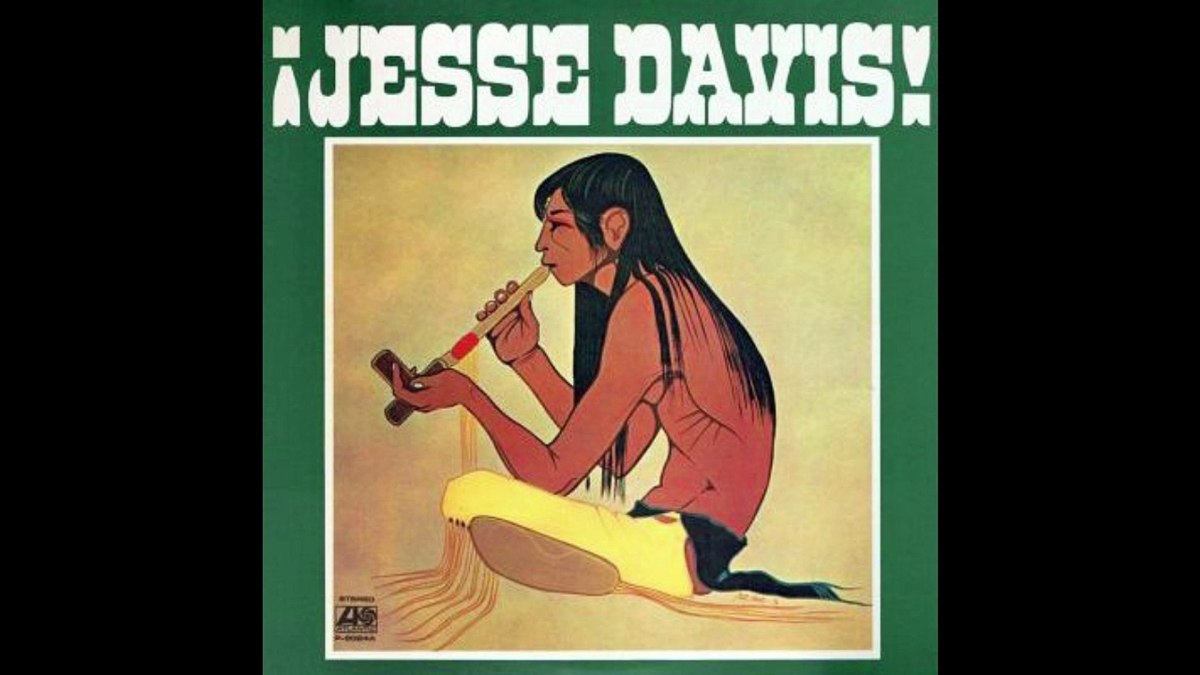
Jesse Ed Davis was Kiowa, Comanche, and Muscogee (Creek) on his father’s side, while his mother was of Kiowa and Cherokee descent with a small strand of European ancestry. In other words, he was overwhelmingly Native American, with family roots braided through several Plains and Southeastern tribes. He grew up connected to that identity, not as a stage costume, but as him. His dad painted the cover for this album. 

I started to go through his albums like ¡Jesse Davis!, Ululu, and Keep Me Comin or Keep On Coming. He has a couple more, which I still have to get to. I’m totally impressed by his rootsy music. Again, instead of just picking a song, I wanted to feature the album. There is no #1 hit on the album, nor do I think he was trying for that. Just really good, solid songs. 

When Jesse Ed Davis stepped into a studio to record his 1971 debut album ¡Jesse Davis!. He had already carved out a reputation as the guitarist you called when you wanted soul and a heavenly guitar tone, and most importantly, zero ego. He’d played with Taj Mahal, recorded with Gene Clark, and done sessions with everyone from Albert King to Earl Hooker, Jackson Browne, John Lennon, and a ton of other artists. Jesse was the go-to guitarist of the 1970s. 

How respected was he? On this album, he had some incredible guests. Eric Clapton, Leon Russell, Gram Parsons, Alan White, and the Gimme Shelter singer Merry Clayton. This album sounds like a loose jam session that worked all the way around. My favorite song on the album is Washita Love Child. It just hit me and has stuck. I found myself hitting the play button again and again. The band around him cooks with an irresistible looseness. You can hear Clapton on his track loud and clear. After researching for this post, I found out it was featured on the TV show  Reservation Dogs. 

The album works because it stays out of its own way. Lou Adler keeps the production loose and moving. Leon Russell arranged some of the songs and added his unique touch. The songs drift between blues, roots rock, and a kind of West Coast soul. Reno Street Incident floats in like someone cracked open a window at two in the morning. Every Night Is Saturday Night for Me comes alive with Leon’s piano, rolling forward like only Leon can do. And when Gram Parsons or Eric Clapton pop up, they don’t hijack the song; they simply join in.

What really holds everything together is Jesse’s guitar, a voice unto itself. He never shows off, he never “shreds,” he simply plays for the song. His solos feel lived in and warm. He didn’t shout to be heard; he just played. Hearing him play and sing on this album is like slipping into a holey, comfortable favorite shirt.

The album doesn’t scream commercial…it doesn’t scream at all. It’s an album you put on and listen to all the way through, and sit back and enjoy some great music. Jesse Ed Davis passed away in 1988 at the young age of 43. 

I added a 10-minute documentary clip.

Washita Love Child

I was born on the bank
in the Washitaw river
in a Kiowa Comanche teepee

Daddy had a hard time
Mama made his eyes shine
Lord, it was just us three
Well they weaned me riding bareback
And I’d tie my hair back
And i did that pow wow thang
Daddy showed up with his stand up guitar
and then we rocked it i believe

I’m a love child
and I’m running wild
hope it don’t take too long
I’m a love you
I’m a try to make you happy
you got to let me sing my song

Mama said to son
Said what about your school books?
Baby baby what about the draft?
Daddy said honey don’t you worry about this boy he’s headed somewhere
Got a guitar and a van to ride

He’s a love child
He’s gonna be running wild
Hope he don’t take too long
He’s gonna love you
He’s in love with me too
So we got to let him sing his song

Well i got myself together
And i’ve been rolling down the road
Gonna boogie down down down down
If i ever get a chance to boogie woogie you
Ha, you can’t sit down

Link Wray – Link Wray …album review

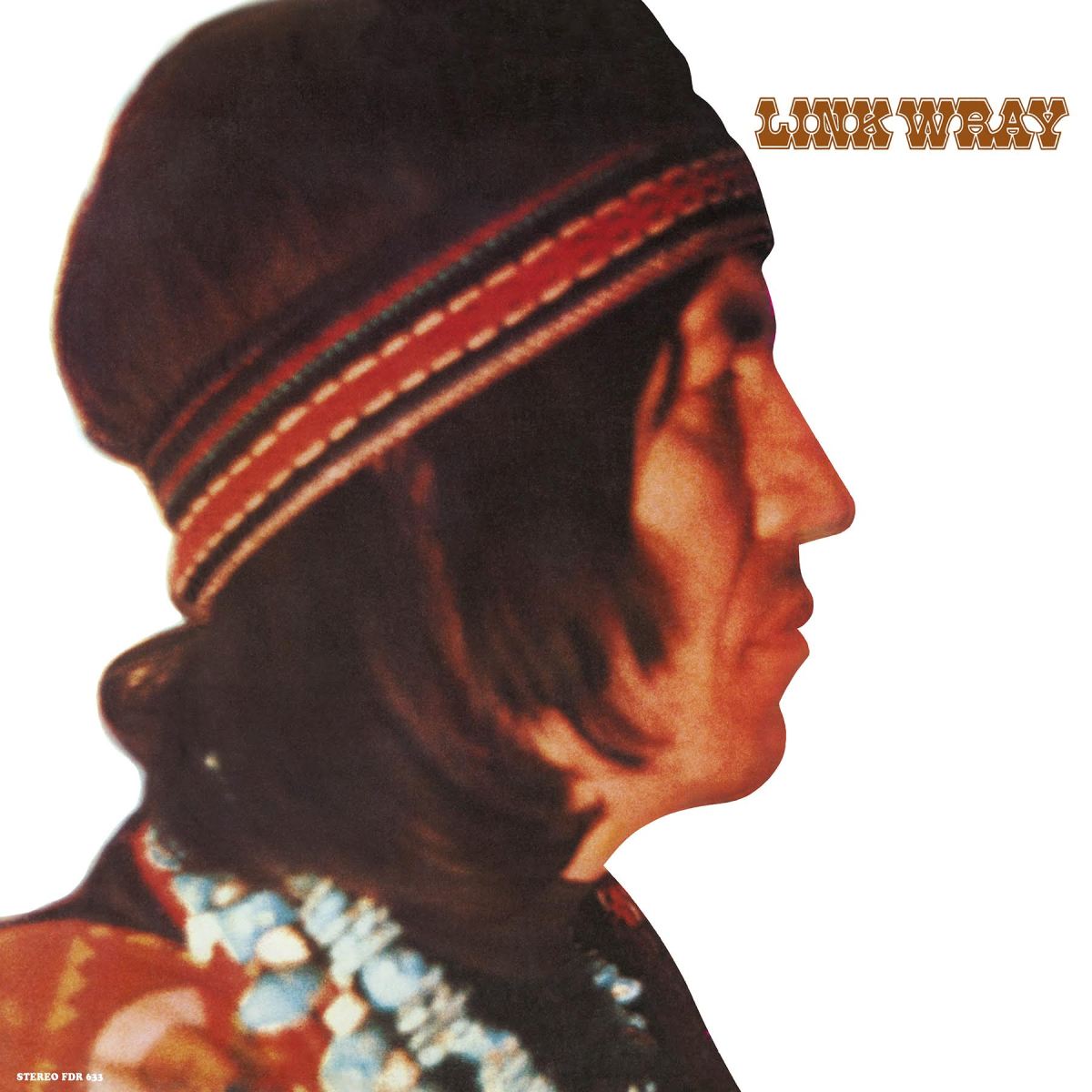
I was really taken aback when I saw this album. I played it, expecting an instrumental, and when I heard a voice, I thought it was a different singer. When I think of Link Wray, I think of Rumble and instrumentals like that. I was surprised when I found this roots album by him, recorded in 1971. I want to thank Lisa for posting something that made me think of this rare Link Wray album.

After serving in the military, Wray contracted tuberculosis and lost a lung, which made singing difficult, and doctors advised him against it. Because of his breathing difficulties, Wray began to focus more on expressive and experimental guitar playing, leading him to become known for his instrumental hits. Wray was a Native American of Shawnee descent. He grew up in North Carolina. Wray later honored his heritage in his music, with songs like Apache and Comanche.

This album was recorded in a converted chicken shack. His brother, Ray Vermon Wray, helped produce it along with Bob Feldman and Steve Verroca. Instead of power chords and a leather jacket, Link traded distortion for Americana, funk, gospel, and storytelling. It was earthy, roots-driven, and deeply personal, almost a different artist altogether from the one I thought I knew. After being freed from label pressures, Link finally made the music he grew up with: gospel from church revivals, Native American rhythms from family heritage, country blues, and Southern soul.

There were still guitars, but now they sat behind the songs instead of smashing through them. Tracks like Fire and Brimstone, Juke Box Mama, and Ice People feel like they were born out of the dirt. The grooves are loose, almost like field recordings. His voice, rarely heard on record before this, carries a soulful and weathered sound. He didn’t sound like a rock guitarist trying to sing; he sounded like a weathered preacher who happened to play guitar.

You hear old-time country on Take Me Home Jesus, boogie on God Out West, and Native rhythms driving Black River Swamp. No other rock guitarist of his generation made anything remotely like this. Only one song retains his old tone, and that’s the intro to Tail Dragger. If anything, it pointed the way decades later for artists like Los Lobos and the entire alt-country movement. If you want to hear some authentic Americana, listen to this album.

Polydor gave the album a shot, but the public wanted Link the guitar guy, not Link the backwoods Americana prophet. Sales were modest, and critics were divided. However, like many records that were too authentic for their time, it grew in legend over time. Today, many fans call the 1971 album his true masterpiece

Black River Swamp

I was born down in the countryDown where the cotton growsTurnin’ off the main highwayGoin’ down that country road

There’s a place down in the countryWhere the pine trees grow so tallWalk across that old log bridgeStretching ‘cross Black River Swamp

I can hear them bullfrogs croakingIn the blackness of the nightCalling me back to my childhoodDown here in Black River Swamp

Saw my name carved on a big oak treeDown there by the fishing holeAnd the smell of old Black RiverWhere the waters are deep and cold

I can hear the hound dogs howlin’Chasin’ that old fox where I used to roamDown there in the countryCallin’ me to Black River Swamp

I can hear them hound dogs howlin’Chasin’ that old fox where I used to roamDown there in the countryCallin’ me to Black River Swamp

I was born in the countryDown where the cotton growsTurnin’ off the main highwayGoin’ down that country road

There’s a place down in the countryWhere the pine trees grow so tallGo across that log bridgeStretching ‘cross Black River Swamp

Fabulous Thunderbirds – T-Bird Rhythm …album review

This album is like a bag of chips; you can’t stop at one song. Hence, the reason I dropped the one song and just went on to the complete album. These guys deserve some attention for more than their two hits. 

When I heard these guys in the 1980s, I loved what I was hearing. Tuff Enough hit, but the one that got me was Wrap It Up. Now I’ve gone back and started to listen to some of their other music, and it’s just what I expected. It’s tough, tight, and with a blues edge. What surprised me (it shouldn’t really) was who the producer was on this album. Nick Lowe strikes again in the middle of this tough R&B band. He really shows his versatility with this album.

Instead of trying to reshape the Thunderbirds, Lowe just pointed the microphones in the right direction and let them go. The production is warm and lean, nothing fancy, just that gritty barroom sound. He kept that edge to the music that the Thunderbirds would give.

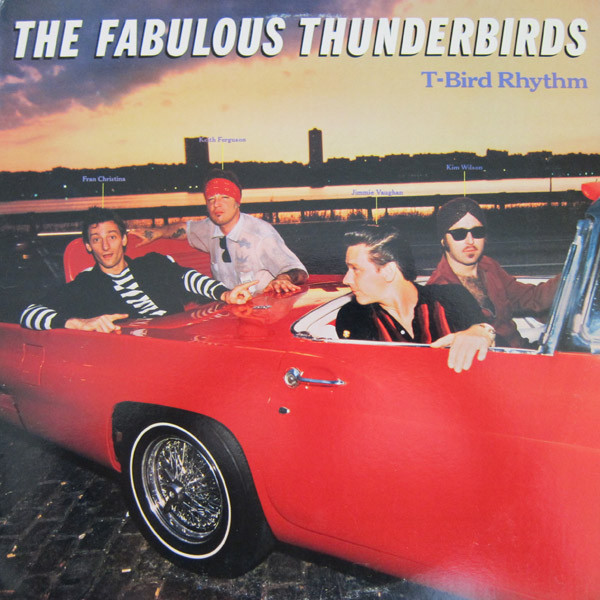
I was disappointed when I didn’t hear any more songs by them on the radio. I should have known that there would not be much more in the 1980s. Guitar-driven rock/blues just wasn’t in as much. This band didn’t just hit out of nowhere. They formed in 1974 with original members Jimmie Vaughan, Kim Wilson (singer), Keith Ferguson, and Mike Buck. Austin vocalist Lou Ann Barton also performed occasionally with the group during its early years.

I’ve heard the phrase it’s The Groove That Won’t Quit before…Well, I will apply that to this album. Tracks like My Babe and Diddy Wah Diddy sound like they came out of a 1956 jukebox, but there’s nothing nostalgic about it.   They gave life to R&B music in their own style and as contemporary as you could be in an era that wasn’t screaming for it. Every single note on this album feels road-tested.

One of my favorites off the album is How Do You Spell Love. It’s built like a tank and comes straight at you.  Another favorite is Can’t Tear It Up Enuff, Jimmie Vaughan’s Telecaster stings and swings, and Kim Wilson tears through the vocal. This is the album that put them on the map. A few years later, they would be headlining tours and having hits. 

This album was released in 1982 and rock critics were paying attention. The grouchy Robert Christgau wrote: “both sides open with fetchingly offhand ravers, Kim Wilson works his shoo-fly drawl for gumbo lilt, and the mysterious J. Miller contributes the irresistible ‘You’re Humbuggin’ Me’, which had me tearing through my Jimmy Reed records in a fruitless search for the original.”

Can’t Tear It Up Enuff

I’m in the mood to tear it up
I’m in my prime for tearing it up
I dig tearing up that stuff
I just can’t tear it up enuff

Don’t want no full time love
Baby let me be
I need a whole lotta part time love
To satisfy me
Don’t want no hand-me-downs
Got the biz rags on my back
I don’t need no used car
I got a brand new Cadillac

I’m dying to tear it up
I ain’t lying, I’m gonna tear it up
I dig tearing up that stuff
I just can’t tear it up enuff

I’ve got the finest weather
Living in this town
I’m sitting on top of the world
Nobody gonna get me down
I’ve got a diamond ring with
A gold bracelet to match
Baby, I got everything
With no strings attached
When it comes to having a party
I can’t be beat
Baby, just stay out of my kitchen
If you can’t stand the heat
You got to move, let’s go
I ain’t gonna wait for you
Got lots of places to go
And a whole lotta things to do

I’m in the mood to tear it up
I’m in my prime for tearing it up
I dig tearing up that stuff
I just can’t tear it up enuff

Sam Roberts – The Inhuman Condition …EP review

I just found this Canadian artist on a recommendation, and I’m loving what I’ve heard so far. I picked a song that I wanted to cover, but I started to listen to the EP and decided to make an EP review instead. I picked up on every song, and it stuck.

Sam Roberts was born in Westmount, Quebec, Canada, in 1974. He started with the violin and then transitioned to the guitar. He was influenced by classic rock and Brit Pop and makes no apologies about it.

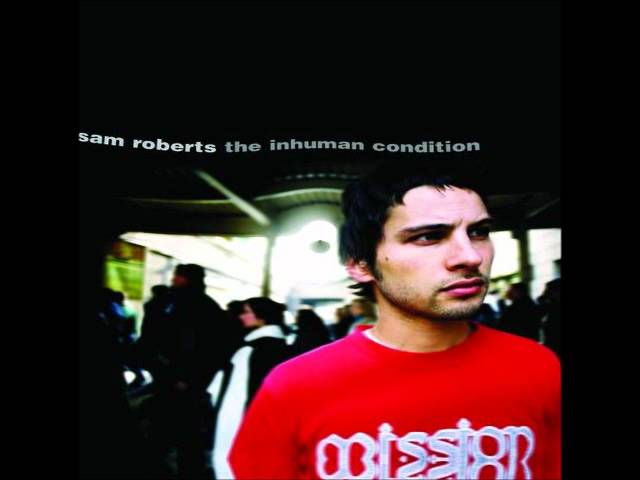
Roberts was still an indie artist when he released his 2002 EP The Inhuman Condition, recording much of it on his own dime. The song “Brother Down” caught fire organically; it wasn’t hyped or manufactured. It was word-of-mouth, the way rock used to spread. When the song crossed over to mainstream radio, it became a hit in Canada.

Roberts recorded much of it on his own, along with musician Jordon Zadorozny. Right out of the gate, “Brother Down” hit like an unexpected home run. That track alone could have carried the EP, and he could have filled it with filler, but he didn’t.

Back in 2002, before Spotify and playlist culture, there were still artists working their way onto the airwaves the old-fashioned way, by writing songs so good you couldn’t ignore them. Six songs, no filler, all good. It introduced a new voice to Canadian rock that felt classic and also forward-looking all at once. He is a guy who could hang with Tom Petty, The Clash, and Sloan, yet still sounds completely like himself.

I was intrigued by Brother Down, but then I listened to “Don’t Walk Away Eileen,” which was power pop joy. Big jangly guitars and a hook that could’ve been written in 1966 and still sound fresh. I won’t go through every track but the tracks go in different directions, but stay firmly with his style. When I listen to this EP, I think of The Tragically Hip and Tom Petty’s Damn the Torpedoes. I’ve spot listened to his other albums and this EP, and this one is a great place to start enjoying the music of Sam Roberts.

For you Canadians, if you only know “Brother Down,” go back and play the whole EP. It’s six songs of everything rock should be: melodic and human…and catchy.

Brother Down

One life to live but we’re doing it wrong
You see, got my brother down cause it’s nothing to me
Everyone’s saying that it’s wrong to cheat
But there’s no other way to get my life on easy street

Someone else telling you what you’re living for
Been knocking you down, now you’re looking for more
The only sound you hear is a closing door
Been looking for peace but they’re bringing you war
Rich man’s crying cause his money’s time
And poor man’s smiling cause he knows he ain’t blind
There’s a man over there says he’s tougher than me
But i got eyes that can see through fantasy

I think my life is passing me by

Take it all back cause it don’t mean nothing
If you give it away and you’re looking for something back
Wake up every morning when there’s nothing there
No reason to die but no reason to care

Someone else telling you what you’re living for
Been knocking you down now you’re looking for more
The only sound you hear is a closing door
Been looking for peace but they’re bringing you war
One life to live but we’re doing it wrong
You see, got my brother down cause it’s nothing to me
Rich man’s crying cause his money’s time
Poor man’s smiling cause he knows he ain’t blind

I think my life is passing me by

Hollyood Fats Band – The Hollywood Fats Band …album review

This guy was mentioned in the comments last week (he was playing guitar with the Blasters in a video I posted), and I was listening. A blues band that swung like they were on a chandelier… what an incredible band this was. When I write posts, sometimes I think of the readers who would like them. Christian is the one I’m thinking of here…I’m not a blues aficionado, but when I hear something great, no matter what it is…I play it. Rarely would I review a blues album, but this one is certainly worth it. His guitar playing took me by surprise. 

I loved how they recorded this. The band recorded the album in Los Angeles, using vintage tube gear, ribbon microphones, and a minimalist mic setup to capture the warmth and air of those old 1950s records. They wanted it raw, live, and most importantly, human. No overdubs, no studio tricks, just five musicians facing each other and playing to each other.

If you were hanging around the Los Angeles blues scene in the mid-1970s, you might’ve seen a big fedora-wearing guitar phenom named Michael “Hollywood Fats” Mann. For a few short years, he led a group that reminded the world that the West Coast had some great blues. The band had a deep Chicago and Texas blues sound. The Hollywood Fats Band didn’t last long, but they left their mark.

Michael Mann was just out of his teens when he was already playing alongside blues legends. He was born in Los Angeles in 1954. He sat in with the likes of Muddy Waters, John Lee Hooker, and Albert King when they hit town. He had a tone straight out of Chess Records. By the time he met harmonica player Al Blake and pianist Fred Kaplan in the mid-1970s, the idea of forming a blues revival band that really sounded like the old days began to take shape.

The lineup was a dream team for blues purists: Hollywood Fats on guitar, Al Blake on harp and vocals, Fred Kaplan on piano, Larry Taylor (formerly of Canned Heat) on upright bass, and Richard Innes on drums. They were in the middle of the disco era, but they stuck stubbornly to jump blues, and it swung. The chemistry was electric. Fats’ guitar lines just rip off those recordings I’ve been listening to, and the entire band was just fantastic.

Their lone studio album, The Hollywood Fats Band (recorded in 1979 and released in 1980), sounded like it had been transported from a Chess Records session with better fidelity. Sadly, it didn’t end well. Hollywood Fats struggled with addiction, and just as his reputation was spreading beyond the clubs of L.A., he died in 1986 at only 32. The band members carried on, but it was never the same.

There is not much film on the guy…this is not a great quality video, but you take what you can.

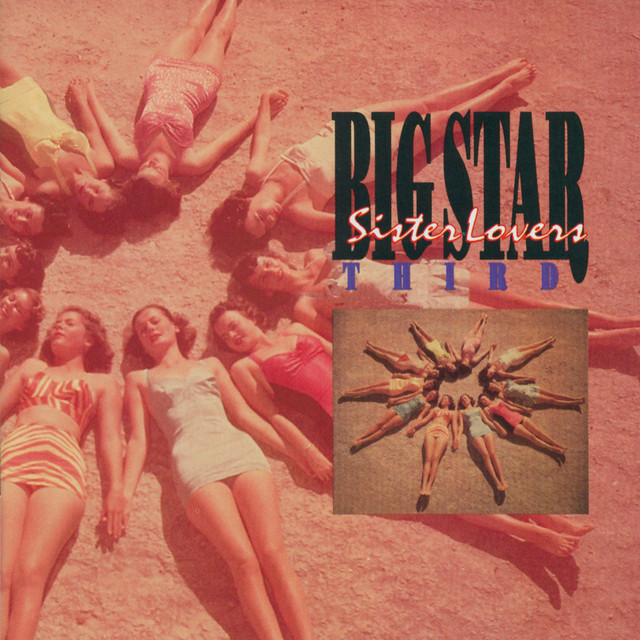
Big Star – Third/Sister Lovers …album review

This was written for Dave’s Tuntable Series. The topic is Going out on a High Note. We all have seen artists who stick around long after they should have exited gracefully. For this round, pick a musical artist who you think ended their career on a high note, a great final album, or a triumphant concert tour before they grew stale.

I could have picked The Beatles, probably one of the best examples of going out on top with Abbey Road, but as usual, I wanted to go down the path less travelled. I wanted to feature Big Star’s last album, recorded in 1974. Parts of the band did release an album in 2005 under the Big Star name, but I’m not counting that one. This album was on Rolling Stone Magazine’s 500 Greatest Albums list at #285. 

If there’s an album that feels like the final curtain was lowered, it’s Big Star’s Third/Sister Lovers album. Recorded in late 1974, it dribbled out years later in different forms; the record doesn’t just mark the end of Big Star, it feels like the end of Alex Chilton’s patience with power pop itself. This album had test pressings in 1975, but didn’t get officially released until 1978

Unlike #1 Record and Radio City, which had power-pop perfection, Third/Sister Lovers is messy and sometimes unsettling. It sounds less like a polished album and more like a band trying everything while the tape keeps rolling. Jim Dickinson’s production at Ardent Studios only added to the loose, haunted feel, he let Chilton and whoever else showed up throw down takes that feel unfinished and unfiltered.

Songs like Kizza Me, Jesus Christ, and Thank You Friends have some of Big Star’s old jangle, but the edges are jagged. Then you get Holocaust and Kanga Roo, two of the most desolate tracks they ever did. Holocaust is not something you hum; it’s something that stays with you afterward.

Part of the mythology of this album is that no one really knows the “real” tracklist. Different labels sequenced it differently when it trickled out in the late 70s and early 80s. By the time Rykodisc issued it on CD in the 90s and Omnivore Recordings gave us the expanded Complete Third box, it was clear… this wasn’t one neatly tidy album, it was choppy, uneven, and brilliant. 

For all its chaos, this album became a blueprint for generations of indie and alternative bands. You hear its fingerprints in REM., Replacements, and Wilco, artists who weren’t afraid to experiment with pop and let it stand on its own. For a band that never could catch a break, Big Star ended with an album that was seldom properly released, yet somehow became arguably their most influential. That’s Big Star in a nutshell: tragedy, beauty, and magic all together.

Thank You Friends

Thank you, friendsWouldn’t be here if it wasn’t for youI’m so grateful for all the things you helped me do.

All the ladies and gentlemenWho made this all so probable

Thank you, friendsI rejoice to the skiesDear ones like you do the best I doAs far as can see my eyes

All the ladies and gentlemenWho made this all so probable

Without my friends I got chaosI’m often a bead of light.Without my friends I’d be swept up high by the wind

do, do…

All the ladies and gentlemen (I said all)All the ladies and gentlemen (I said all)All the ladies and gentlemenWho made this all so probable

Thank you friends (thank you again)Thank you friends (thank you again)Dear, dear friends (thank you again)Thank you friends (thank you again)And again, and again…Never too late to start

Fleetwood Mac – Kiln House …album review

When most folks hear the words Fleetwood Mac, they immediately think of the Rumours-era band. But rewind just a few years earlier and you’ll find a very different band, one still rooted in the blues, still searching for direction after the departure of founding guitarist Peter Green. Starting that transitional phase is the album Kiln House.

Fleetwood Mac was changing throughout the decade, but 1970s Kiln House was one of their strangest detours. After Peter Green’s sudden exit, the band found itself leaderless. Instead of breaking up, Jeremy Spencer and Danny Kirwan took the lead and led the band through a melodic 1950s-inspired sound with that glorious echo. The entire album isn’t that, but it’s a heavy influence. 

 This is one of the most interesting bands ever. You can find a song in one of their many eras to satisfy anyone. This album was a departure from the Peter Green era. It didn’t have the intensity that Green brought, but it made up for it in some great songs. It was highly melodic with some complicated melodies, like Station Man (written by Danny Kirwan, Spencer, and John McVie); the later incarnation picked up on that song as well. The first song of this period I took notice of a few years ago was Jewel Eyed Judy from this album. 

Jeremy Spencer adored that 1950s rock style, and This Is the Rock is one of his tributes to that era. Another obvious one is the song Buddy’s Song. They also had some nice straight-out rock on the album with Kirwan’s Tell Me All the Things You Do.

This album ties the eras together for me. You had straight out rock, a touch of blues, rockabilly, country, and some pop that foreshadowed what was to come. It is probably the most varied Fleetwood Mac album I’ve listened to. You can hear Fleetwood Mac going toward something new.

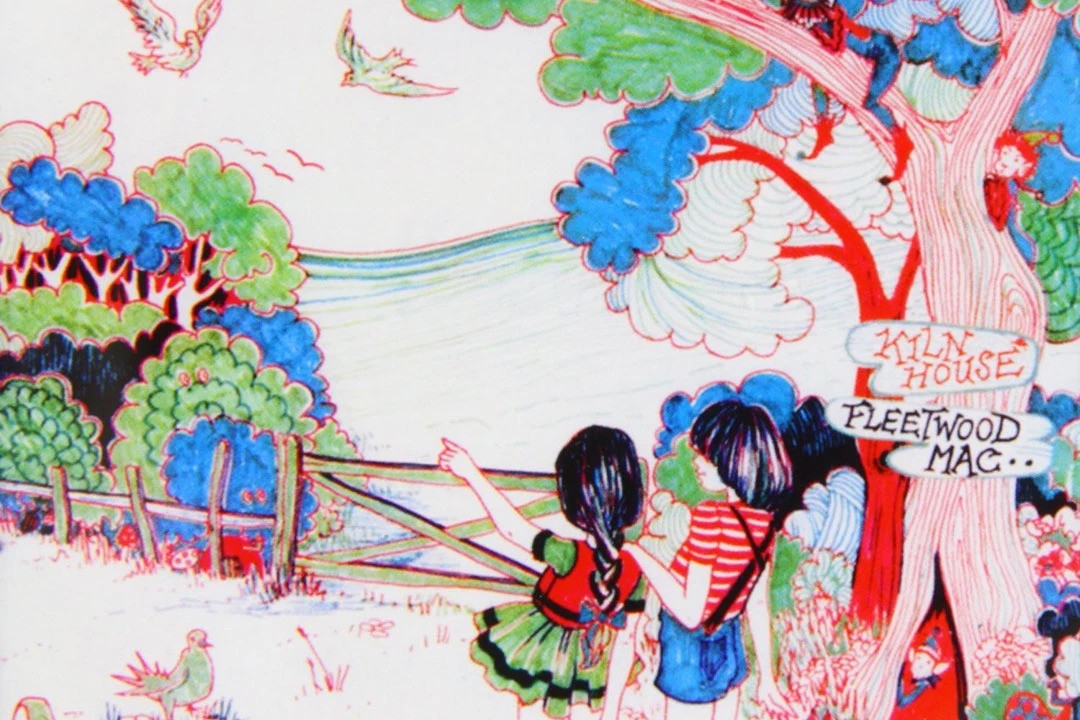
The album peaked at #69 on the Billboard Album Charts, #67 in Canada, and #39 in the UK. Christine McVie not only drew the cover, she also contributed to the album with backup vocals, keyboards, and even cover art. After this album, she became a full member.

This Is The Rock

This is the rockWe’ve been talking about (this is the rock)Yeah, this is the rockMakes you jump and shout (this is the rock)This is the rockThat knocks you right out

It makes you loseAll your troubles and caresYou’ll lose your bluesThey ain’t going nowhereThis is the rockThat hits you right there

Well you can get back on the roofAnd shout it all aroundGet up off your seats is what I’m putting downGet ’em all a hoppin’ to that crazy beatGet ’em all a boppin’ and a tappin’ their feet

‘Cause it’s the rockMoves you all day long (it’s the rock)Yeah, it’s the rockGettin’ everyone (it’s the rock)This is the rockIt really turns you on, woo

Well you can get back on the roofAnd shout it all aroundGet up off your seats is what I’m putting downGet ’em all a hoppin’ to that crazy beatGet ’em all a boppin’ and a tappin’ their feet

‘Cause it’s the rock (it’s the rock)Moves you all day long (it’s the rock)Yeah, yeah it’s the rockGettin’ everyone (it’s the rock)This is the rockIt really turns you on

Yeah, this is the rockIt really turns you onThis is the rockIt really turns you on

Well this is the rock

Bash & Pop – Friday Night Is Killing Me …album review

This band is a natural for me. I’ve read about them a lot, and now I’m listening to them much more. They fit into why I love rock and roll. The band is fronted by Tommy Stinson of The Replacements. Stinson started playing bass at age 11 and at 13 years old, played with the Replacements. After they broke up, he played bass for Guns N’ Roses for 16 years. He also played with Soul Asylum off and on. Before he joined Guns N’ Roses, he formed this band, which he would reform a few times in the future. 

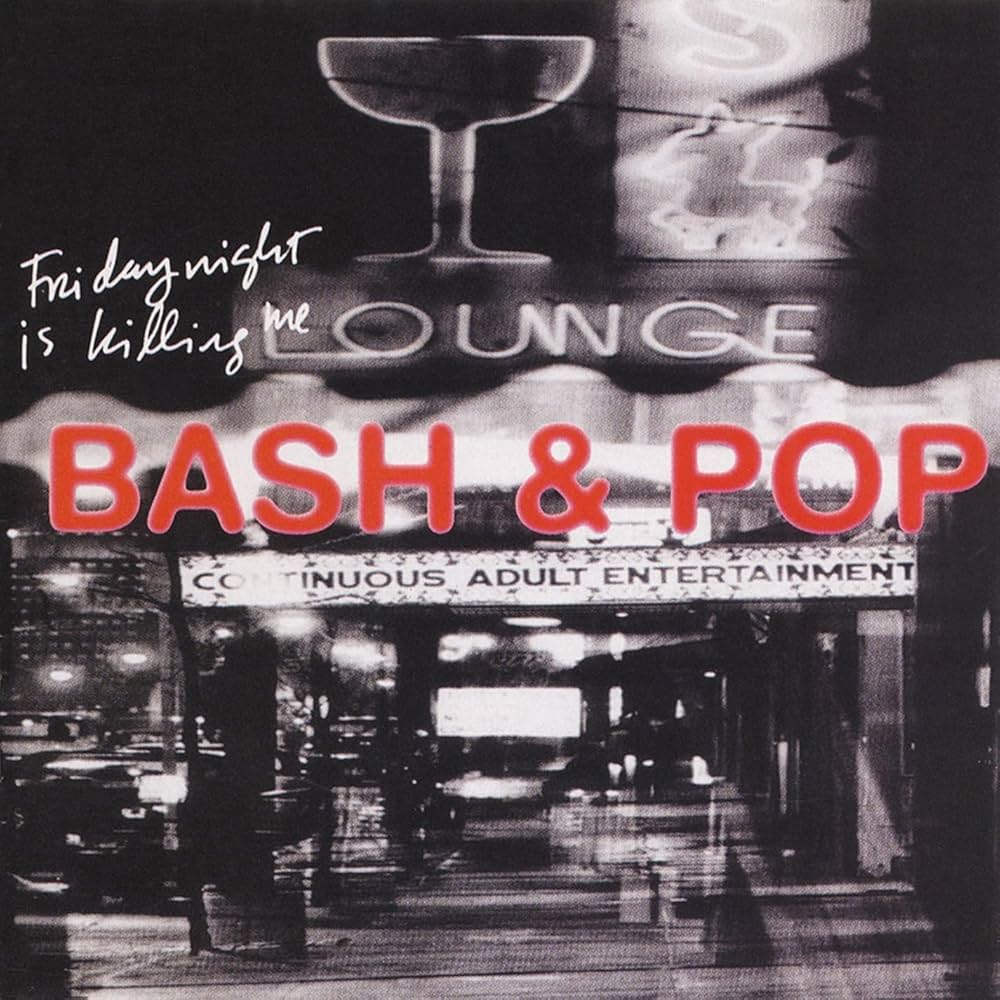
In 1993, Bash & Pop released their debut album: Friday Night Is Killing Me. It wasn’t another Replacements album. It was more Faces than Replacements. Paul Westerberg was the main writer of the Replacements, and here Stinson wasn’t trying to rewrite Let It Be or Tim. Instead, he played into a ragged, Keith Richards-type vibe that owed as much to the Stones and Faces as to his original band. The songs were loose and built around Stinson’s raspy vocals. I can’t get enough of this album. 

This was released at a time when grunge was dominating radio, so it got lost in the shuffle. But for those who found it, the record became a classic. It showed that Tommy Stinson could front a band and write quality songs with soul. They don’t have that slick commercial sound to it, and I applaud that. 

Tommy Stinson wrote most of the songs on the album, except one, Fast and Hard, which he co-wrote with Steve Foley. This album could be considered power pop, but a rough, as hell raw version of it, which I love! I’m super excited about this album as a whole. I really missed out in real time with this one. 

I’ve picked two songs off the album to highlight (Loose Ends and Never Aim To Please), and a link to Spotify to the source album. It is one of those records you hand to someone who thought rock was dead by the early ’90s. It’s alive here and full of heart. This album is for the fans of The Replacements, The Faces, or anyone who likes rock music and some great hooks. 

I usually don’t mention critics, but here are two. AllMusic wrote that “decades after its release, the album feels like a bit of the hangover from the ’80s, a celebration of irreverent roots rock performed with an audible grin.” Magnet considered it “the best batch of songs by any Replacement since 1987’s Pleased To Meet Me.”

Loose Ends

Miss come-and-go
Where you been now?
Put a red light on the rest
And wondered why and how
Your love it grows
But no one knows
Who’s on your mind, who’s on your lap
Don’t they look the same yet
It’s alright

Early morning, drinking tea, a slice of whole wheat
Another lesson you should’ve learned, you had to wait
You care too much, you care less
Headin’ for a better view, fail to impress
Well, I guess you’ve got too far to stray
No place particular is where you end your day
You know I got no, the pavement holds no one

It’s time to tie your loose ends up
Never mind which way
Time to tie your loose ends up (Tie ’em up)
No one left to blame, oh yeah

Butterflies that turn to knots
In your guts around your neck
You get ’em too tight and they slip again
‘Cause you look too far, ’cause you fall too fast
It’s a raincheck for a date, but you’ve no interest
Guess you’ve got too far to stray
Your heart’s breakin’ all over the place
You know I got no, the pavement holds no one

It’s time to tie your loose ends up (Tie ’em up)
How much you gonna take?
So time to tie your loose ends up (Tie ’em up)
You’ve got too much to shake

When mom comes home at last
It’s a whisper through the glass
Can’t you hear the voices screamin’
Yeah, I’m screamin’, “Go ahead and tie ’em up!”

You fall apart before my eyes
I’ll sweep the mess
And the shortcut through the dirt is always best
You look too far, you look to the west
Heading time is all you needed
I know best
And I guess you got too far to stray (stray)
No place particular is where you end your day (your day), oh no
And the pavement holds no one

Time to tie your loose ends up (Tie ’em up)
Never mind which way, yeah
Time to tie your loose ends up (Tie ’em up)
No one left to blame (Tie ’em up)
Time to tie your loose ends up (Tie ’em up)
How much you gonna take? (Tie ’em up)
Time to tie your loose ends up (Tie ’em up)
You got a lot to shake (Tie ’em up)
Time to tie your loose ends up (Tie ’em up)

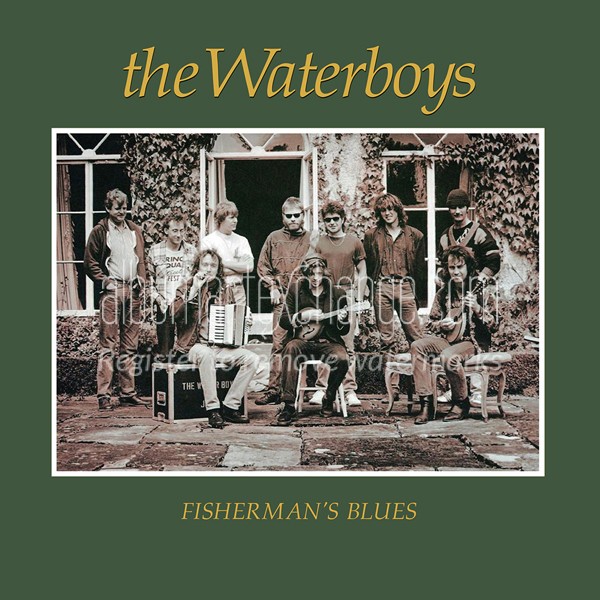
Waterboys – Fisherman’s Blues …album review

I’ve listened to this album before, but this week I had it on constantly, and I went through it many times. Not one clunker on this album. It’s one of those albums that is hard to pick just one song off and go with it. It needs to be listened to as a whole. I was just going to go with the song World Party but I kept listening to track after track and decided to go with the entire album. You have all kinds of musical styles on this album, including a tribute song about Hank Williams called Has Anybody Here Seen Hank?. It has something for everyone, but blended into one cohesive album voice. 

The impression I get from this album is The Basement Tapes by Dylan and The Band. Not comparing songs, no, just the freedom feel of the entire album. It sounds like they didn’t plan anything, and it just happened. When you pull that off, it’s pure magic. Not many albums are truly spontaneous, but when you get that feeling, bottle it quickly, because it doesn’t come often. 

The Waterboys were formed in 1983 by Scottish musician Mike Scott, the band’s leader and primary songwriter. Over the years, their music has evolved through various phases, blending elements of rock, folk, and Celtic influences. Fisherman’s Blues was the title track of their album released in 1988. 

Mike Scott recorded over 100 songs during this period. Only 13 made the cut for this album, and he made a good selection. This album helped inspire a wave of folk-rock revivalists in the late ’80s and early ’90s, and later on bands like Mumford and Sons. Mike Scott has said that Fisherman’s Blues was not one sound but a voyage, not a destination, but a process.

The album had a little of everything, like spirit, freedom, risk, and reinvention. It’s the sound of a band trying something new and getting lost in something older, wilder, and more timeless. It’s one of those rare albums where you feel like you’ve lived with the band. I’m going to go song by song…just listen to this album!

All the songs except for two covers (Sweet Thing by Van Morrison and This Land Is Your Land by Woody Guthrie) and a song called Dunford’s Fancy written by violinist Steve Wickham  were either written or co-written by Mike Scott. 

Karl Wallinger, who co-wrote World Party and was a key part of the early Waterboys, left during these sessions to form his own band, named World Party. I picked that song “World Party” below to highlight, plus the entire album on Spotify. What caught me was that it explodes out of the speakers with a honky-tonk style piano and a fiddle sawing like a buzzsaw through a barn wall. It’s hard not to like that. The song just makes me feel good.

The album peaked at #15 in New Zealand, #76 on the Billboard Album Charts, and #13 in the UK in 1988.

Mike ScottWe started recording our fourth album in early ’86 and completed it 100 songs and 2 years later. There was a lot of indecision. I got too involved in the album and I lost perspective. We had blues songs, gospel songs, country songs, rock songs and ballads. I didn’t know where to take it. It could’ve been a gospel or country album. It could’ve sounded more like This Is the Sea or it could’ve been a traditional album. It could’ve been anything.”

The tracklist to the original album

Fisherman’s Blues (Mike Scott, Steve Wickham)
We Will Not Be Lovers (Scott) – 7:03
Strange Boat (Scott, Anthony Thistlethwaite)
World Party (Scott, Trevor Hutchinson, Karl Wallinger)
Jimmy Hickey’s Waltz (Scott, Wickham, Thistlethwaite)
And a Bang on the Ear (Scott, Wickham, Thistlethwaite)
Has Anybody Here Seen Hank? (Scott)
When Will We Be Married? (Traditional, adapted: Scott, Thistlethwaite)
When Ye Go Away (Scott)
Dunford’s Fancy (Wickham)
The Stolen Child (Words: W.B. Yeats, Music: Scott)
This Land Is Your Land (Woody Guthrie)

World Party

Well it’s got nothing to do with anything that is realyou just believe in it and it’s trueYou can sooth like an angel or sigh like a saintyou can dream it and see it throughYou will live to see a sea of lightssparking on the face of a pearlClimb your own peakfind a new streak

Get yourself along to the world party (party!)

Now you’ve been building for yourself a cool place in the sandyou’re thinking that it’s mighty fineYou’ve got dust in your eyeballs, you got mud in your mouthbut it’s your head, it ain’t mineI’ve got a madman of my own to contend withcursing in the cave of my skullTurn the other cheekfind a new streak

Get yourself along to the world party (party!)

Well I heard a rumour of a golden agesomewhere back along the lineMaybe I dreamed it in a whisper orheard it in a spellIt was something to do with the sign of the timesand the only thing that I rememberIs a summer like a pretty girlwho shimmers and shinesMoving in timeshaking to the beat of the heart of the world

Party (party! party! party! party! party! party! party! party! party!)

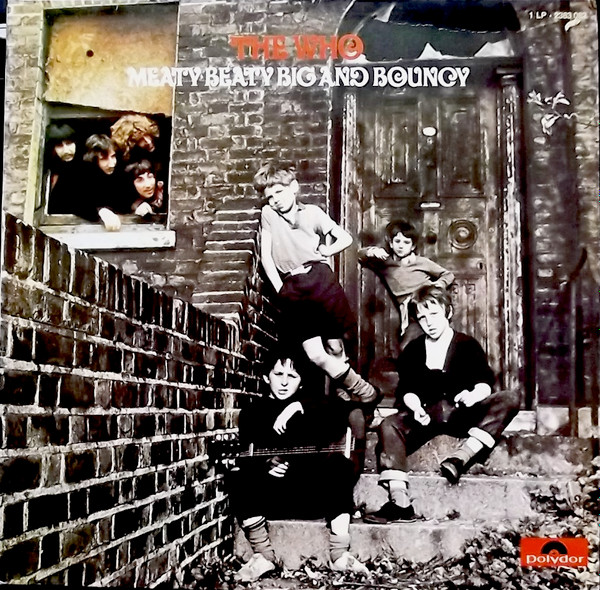
Who – Meaty Beaty Big and Bouncy … album review

I bought this album right after I had bought Wholigans and Who’s Next. I wanted to know what their sixties output was like besides My Generation and I Can See For Miles. This compilation album was released in 1971; it wasn’t just a sampler of radio singles; it was a brash declaration of how The Who reached the top and what they broke along the way. Most of these songs did not reach the ears of Americans and Canadians in the 1960s. If Who’s Next was their grand gesture, Meaty Beaty was their rowdy scrapbook. The album is exciting!

In Canada and America, most people know the Who’s Next material and after as well. This album is the roots of the band. They stretched the limits of recording, trying new things in the studio, much like The Beatles did, but with a rawer result.

Rock in the mid to late sixties was changing, and what a diverse set of songs that you hear from that period. This is when Pete Townshend was turning teenage anxiety into rock mini-operas and Keith Moon was trying to demolish every drum kit in London. The title, reportedly referring to the four members themselves, Meaty (Roger), Beaty (Keith), Big (John), and Bouncy (Pete), is cheeky and self-mythologizing. And the tracklist? Nearly perfect. These singles are where Moon started to get his wild drumming reputation. He is everywhere in these songs, especially I Can’t Explain, making them different from other bands.

I have said that my favorite kind of band to watch live is the ones that you think will fall apart with any song they play, but they pull it between the lines without going over the cliff. They did that with these songs in the studio.

You’ve got I Can’t Explain, The Kids Are Alright, and Substitute up front, each one a case study in amphetamine, fueled mod rock. These aren’t songs that build; they explode right from the opening riff. Substitute, in particular, grabs your attention with the loud backing, but also the lyrics. Substitute could be The Who’s best single ever. And then I’m a Boy, Happy Jack, Pictures of Lily, you realize Pete was already leaning into story-song territory years before Tommy became a rock opera.

Magic Bus is a Bo Diddley-beat freakout that somehow makes a song about public transportation sound like a spiritual quest, or My Generation, the track that blew the doors off rock ’n’ roll. If that bass solo doesn’t rattle you, check your pulse. There’s a through-line here: Townshend’s fascination with identity, repression, rebellion, and guilt. These songs are electric in the best sense of the word.

Later Who albums might be deeper (Quadrophenia) or grander (Who’s Next), but this one is the sound of the band becoming The Who. Loud, brash, and already mythic. If you want to learn about The Who…this is a great starting point. 

Love – Forever Changes ….album review

Pam from All Things Thriller recommended this band and the album Forever Changes. I’ve been following her blog for years, and I trust when she recommends someone, and she came through. I was not disappointed with this album. This album has been listed in the top 100 best albums ever by different publications. It doesn’t have a bad song on it. The album is not known for hit singles but for the collective whole of the songs on that album. I was going to pick one song, but again, this album needs to be listened to as a whole.

One single did get pulled off of this album called Alone Again Or and it did hit the UK and Billboard Charts, and it sounded familiar. The reason it did was because The Damned covered back in 1987.

This is a band that I heard of but never really heard as much. With founder Arthur Lee, Love fused garage rock, folk, psychedelia, and baroque pop. They were not commercial juggernauts, but they sure did sound great. This album’s core is acoustic, and they build on it from there. I could not stop listening to it all this week.  They were also one of the first racially diverse American rock bands.

Released in late 1967, just as the Summer of Love was peaking and already beginning to fall, it’s a record that doesn’t sound like its time, and doesn’t really belong to any other, either. This was the band’s 3rd album. Arthur Lee was just 22 when he put this band together. He already had two solid albums under his belt, full of garage rock, Byrds-like jangle, and attitude, but Forever Changes was something else entirely. It’s as if Lee had seen the whole California dream flicker and die and was moving on.

I’ve listened to this album around five times overall, and it keeps getting better. I love how they mixed the acoustic with jaw-dropping percussion and touches of electric guitar. I’m not going to go down the list of songs; the best way is to listen to it. 

The original lineup featured Lee, guitarist Johnny Echols, bassist Ken Forssi, drummer Don Conka (later replaced by Alban “Snoopy” Pfisterer), and singer/guitarist Bryan MacLean.

Alone Again Or

Yeah, said it’s all rightI won’t forgetAll the times I’ve waited patiently for youAnd you’ll do just what you choose to doAnd I will be alone again tonight my dear

Yeah, I heard a funny thingSomebody said to meYou know that I could be in love with almost everyoneI think that people areThe greatest funAnd I will be alone again tonight my dear

Yeah, I heard a funny thingSomebody said to meYou know that I could be in love with almost everyoneI think that people areThe greatest funAnd I will be alone again tonight my dear

Mahavishnu Orchestra – Birds of Fire …album review

We are taking a different path with this band today. It’s not the music I usually post, but I never post something I don’t like. I had the flu this week, and I listened to this band with headphones while recovering. This band really moved me in a lot of ways. It’s totally different for me, maybe you will be impressed like I was. Just pure music, and it takes you down a long, winding river. 

I tried picking out a song from this album and tried a few other songs from different albums, but it didn’t work. To write up this band, you have to listen to the complete album. First of all, I’m out of my pay grade here. When I first listened to these guys, I was overwhelmed. I guess you could call this progressive, but I don’t buy that with this band. That is too easy a tag. After I listened to this album, I went through a couple more, and it affected me quite a bit. 

You don’t listen to Mahavishnu Orchestra, you pretty much surrender to it. The first time you hear songs like Meeting of the Spirits (from their debut album) or Birds of Fire, it doesn’t matter if you’re coming from artists like Zeppelin, Rush, Miles Davis, or Ravi Shankar. What hits you is the raw voltage of their music. This is fusion played with the intensity of a rock band, but the complexity of a classical symphony. I think that sums it up. I compare it to being led into many different hallways in a huge mansion and visiting a new room at every turn. 

I’ve been telling other people about them. I’m not sure I can put this in words, but listening through headphones feels like I’m seeing the music. It’s like I’m seeing molecules for the first time, making up the whole. Listening to them, I hear things and figure out things I have never done with music before. Why does a beat fit here but not there? They have some of the most perfectly constructed music I’ve heard. I normally like music raw and imperfect, but I do make an exception with this band. The reason is that they keep an edge, and it doesn’t get boring.

Another thing I like about the songs is that they keep them the right length, and you don’t have any 30-minute songs. You can tell each song was part of something bigger. Each song is like another brick in this structure

A couple of weeks ago, I saw a clip of John McLaughlin live at a Jeff Beck Tribute. His playing was beyond great. I started to look at some of the bands he has been a part of. In the past few weeks, I’ve brushed up on my bass playing by dragging a bass out while listening to rockabilly. The Mahavishnu Orchestra is way above my level but yet I’ve picked up a few things. 

After playing with Miles Davis on fusion albums like Bitches Brew and In a Silent Way, John McLaughlin formed the Mahavishnu Orchestra in 1971. The name “Mahavishnu” was given to McLaughlin by his spiritual guru, Sri Chinmoy, reflecting the band’s philosophical, spiritual, and musical ambitions. Their albums were always evolving; they never just stayed put. 

This album seeped into the mainstream. It peaked at #5 in Canada, #15 on the Billboard Album Charts, and #20 in the UK in 1973. Their membership was fluid through the years. They were together from 1971 – 1976 and from 1984-1987. John McLaughlin was the one constant member. On this album, it was McLaughlin on guitar, Rick Laird on bass, Billy Cobham on drums, Jan Hammer on keyboards, and Jerry Goodman on violin. 

In closing, yeah, this is different from what I usually post and what you listen to and read about here. Some unknown critic at the time described this album as …Miles Davis jamming with Led Zeppelin on a Himalayan cliffside. So put that way…it fits. 

If you want the complete album on YouTube

Band – The Band… album review

In Turntable Talk Dave said: This time around, we’re going Sans Sophomore Slump. We all remember the triumphant debuts to the scene by The Knack, Meat Loaf, the Ramones…but how many recall, let alone listen to ‘But the Little Girls Understand’, ‘Dead Ringer’s or ‘Leave Home’… the follow-ups for them? In other words a great 2nd album by any artist. Many times, that 2nd album is rushed, or the artist used all of their songs for the first album. The example I use is The Knack. It was a great fun first album and a bad second. 

Thank you, Dave, for including me in this so I can talk about this great album. There were a few that came to mind while doing this. The Who’s A Quick One, Van Morrison’s Astral Weeks, Carole King Tapestry, and many more but I decided on this great Americana band that was actually most Canadian. The album is called The Band, and its nickname is The Brown Album. Their first album was Music From Big Pin,k and it was released in 1968. This album was released in 1969. 

They recorded this album not in a recording studio but at Sammy Davis’s house in California. They remodeled the adjacent pool house into a recording studio. The Band fashioned a makeshift workshop environment similar to the one at their former home, Big Pink. The album peaked at #2 in Canada, #9 on the Billboard 100, and #25 in the UK.

The album is said to be a concept album about a past America. It’s an album that every rock fan should own. While even novice fans of the group likely know classics like “The Night They Drove Old Dixie Down” and “Up on Cripple Creak,” the record is an amazing listening experience from beginning to end. Robbie Robertson’s lyrics weave fluidly from one song to the next, while the musical accompaniment never disappoints.

Robertson wasn’t just a songwriter.  He was more of a director and screenwriter, tailoring roles that played to the strengths of his three leading men. He did have 3 lead singers to work with who could have fronted 3 other bands. They knew each other so well that he could pick who sang what and when. His songwriting process had more in common with films than rock songs.  Robertson would go to flea markets and antique stores to purchase screenplays. That’s how he wrote songs…like it was a screenplay. 

The man not only was a great storyteller, but many of his songs were mini-movies you could visualize. Who couldn’t imagine the drunkard and his sweetheart defender Bessie betting on horses up on Cripple Creek?  Those are not just songs; they are visual pictures sent through music that only Robertson could write. We continue to benefit from his hard work and gift…and always will.

Manuel was the most versatile singer in the Band. He was called the lead singer if someone asked. Manuel took the lead vocals on Across The Great Divide, Rockin’ Chair, and Jawbone, and shared it in King Harvest. Of all the singers, Manuel is overlooked more than the other two. It’s probably because he wasn’t singing lead on the huge “hits” such as The Weight, Up On Cripple Creek, and The Night They Drove Old Dixie Down. He does sing on one of my favorite Band songs ever…King Harvest (Has Surely Come). I didn’t realize how great a voice he had until I heard him sing Georgia On My Mind

Levon had that great southern voice that was earthy and soulful. Robertson knew just when to use Levon, and he did strengthen Robertson’s songs. Rick Danko had the most vulnerable voice of all three. I never quite heard a voice like his before or since. The amount of talent they had was staggering. I’m talking about voices here, but I haven’t even mentioned the musical skills of these guys. Garth Hudson, who recently passed, played keyboards like NO other. I mean no other. He made a massive wall of sound in the background that identified them from other bands. His approach to his sound was so unique that it’s not copied much because it has to be in the right musical surroundings. Robertson has said that there was no one like him period. 

This album contains some of their best-known and best tracks. Let’s look at some of the tracks. Now, is this as good as Music from Big Pink? I think so and in some ways, I like it more. I think it was their best album when all is said and done. I could yack and yack more…but just listen to the album!

Across The Great Divide, Rag Mama Rag, The Night They Drove Old Dixie Down, Up On Cripple Creek, Whispering Pines, King Harvest (Has Surely Come), When You Are Awake, Jemima Surrender, Rockin’ Chair, Look Out Cleveland, Jawbone, and The Unfaithful Servant. 

What a tracklist that is. 

Cowsills – Cocaine Drain

This is a band I never really thought about posting, although they had some huge hits in the ’60s. This is NOT what I was expecting from the Cowsills.  This song has a Linda Rondstadt/Clapton 1970s feel to it. The album Cocaine Drain Plus 6 was recorded in 1978 but not released until 2008. Paul, John, Barry, Bob, and Susan Cowsill are on this one and worked with Chuck Plotkin. Billy or his mom wasn’t on this album. Susan does most of the singing, and when you hear her grown up…you understand why. 

Susan Cowsill was just a little girl when she joined her brothers in the ’60s. Here she is, just 19 years old, and she belts out this song and others. Like I said, it does have a Ronstadt feel, and she is a very good singer. The band sounds really good. John Hall wrote this song. Critics at the time caught them live playing this song and really liked it. 

Since the band was pigeonholed, they would perform under different names like The Secrets and The Critics in the 1970s. They got together in 1978 after playing in Los Angeles at the time. The album was never completed, and at some point, the master tapes were lost. For almost 30 years, the album existed only as a scratchy acetate. An acetate played like an old 45. They were created for demo or publishing purposes NOT for selling.

In March 2008 a version of the album was finally released, remastered from that acetate under Bob Cowsill’s direction. Several other previously unreleased tracks were included in the 2008 release. After the Cocaine Drain sessions, the Cowsills did some reunion shows in 1979–1980 but returned to their separate careers after that.

Audiophiles here will not be happy, as these are obviously recorded from acetate, and the hisses and pops of any 30-year-old LP are apparent. If they couldn’t get it released when it was recorded, they obviously couldn’t afford high remastering to clean it up, and the value in this release is that we finally get to hear these songs AT ALL. But there are only so many things you can do now, though it probably COULD be cleaned up. I like that the proceeds went straight to the band, as it was released to Apple via their self-owned Robin Records label. It was released as MP3s only. 

They have some good songs on there, and the album is not bad at all. Spotify doesn’t have it, but HERE is a link to the album on YouTube. I added a bonus song called That Particular Way from the same album. 

Cocaine Drain

I remember you,
When you were the talk of town.
You always said,
Hello and goodbye.

You looked me right in the eye.
I could be sure of you,
You’d never lie.
You’re so different now.
Are you going down that Cocaine Drain.

Now you’re up all night (up all night),
Feelin’ like a shining star.
But with the Lord in mind,
Let you forget who you really are (really are).

You’re a fragile thing after all.
Remember that even a heavenly body can fall.
And I’m afraid you’re fallin’, (fallin’)
Falling down that Cocaine Drain.
(I’m afraid, afraid you’re fallin’)
Falling down that Cocaine Drain.
(Cocaine Drain)

Now you’re keeping up,
With some pretty fancy company. (fancy company)
But if things get rough,
You know you can always come to me.
(Come to me)

But please don’t wait too long.
I’ve known a few before you who are already gone.
And I don’t want to see you (I don’t want to see you)
Slipping down that Cocaine Drain.
(Cocaine Drain)

I can’t stand by to see you
Slipping down that Cocaine Drain.
I don’t want to see you
(I don’t want to see you)
Slipping down that –
(I don’t want to see you) Cocaine Drain.
Slipping down that Cocaine Drain.
(I don’t want to see you)
Slipping down that Cocaine Drain.
(I don’t want to see you)
Slipping down that Cocaine Drain.
(I don’t want to see you).