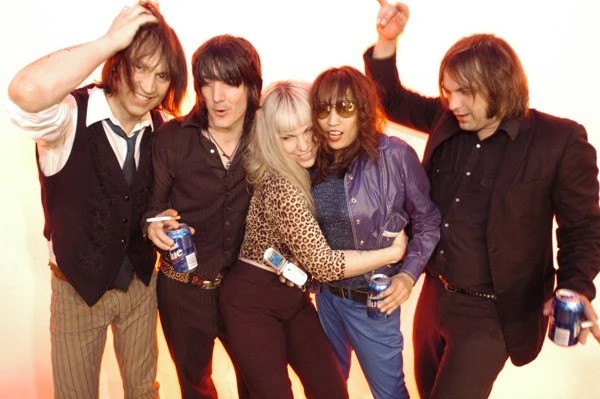
CB sent this band to me and they are raw and powerful with a unique singer. I really love garage type bands. Bands like this were big in the sixties and turned toward punk in the 70s. They made a comeback in the 80s against the synth based mainstream at the time. The alternative rock scene was born which I liked more than the then top 40 with The Replacements, REM, The Dead Kennedys, and more.
The hardest part about this post was picking out which song to highlight. The album I’ve listened to is The Detroit Cobras: The Original Recordings which rocks. All of their covers are loud raw and catchy like garage rock is. I loved how they picked the songs they covered. Songs that went under the radar when they were originally released.
This song…not to be confused with Ain’t That A Shame was originally recorded by Question Mark and The Mysterians. The song was written by their drummer Robert Martinez and released in 1969.
The Detroit Cobras were known for their reinterpretations of classic R&B, rock, and soul songs. Guess where they are from? They emerged in the mid-1990s and added to the garage rock revival movement of that era. They came out of the same Detroit scene as the White Stripes did.
The band was formed in 1994 by guitarist Steve Shaw and drummer Jeff Meier but lead vocalist Rachel Nagy and guitarist Mary Ramirez would become the core of the band. The Cobras set themselves apart by reimagining lesser-known songs from the 1950s and 1960s rather than writing their own original material.
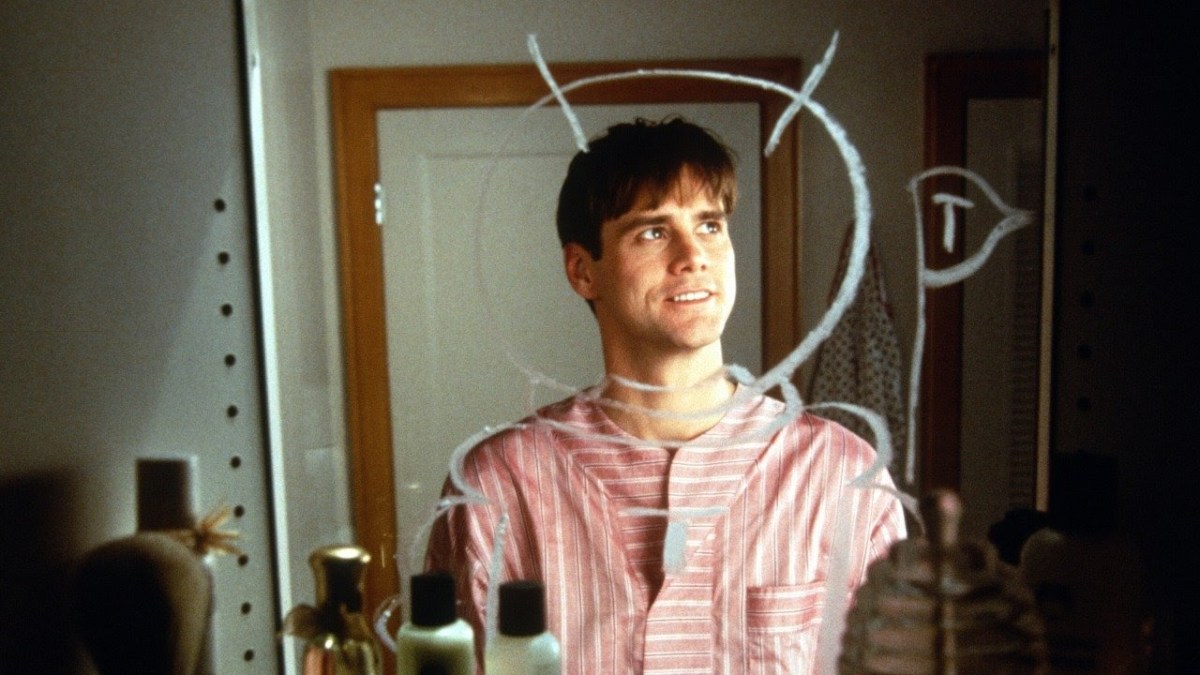
When I saw this 1998 movie I did with trepidation because of Jim Carrey. There is only so much of his comedy I can take at once but this was completely different. He did more of a serious turn in this movie and I must admit he was great. I’m not the world’s biggest Jim Carrey fan at all but this movie is brilliant.
Carey plays Truman Burbank, a man who unknowingly lives his entire life in a meticulously crafted, 24/7 reality TV show, with his every move broadcast to a global audience. I try to find themes in movies and this one explores themes of manipulation, personal freedom, commercialism, and the power of free will that wins out.
This movie was like looking into the future…a bleak near future. The Kardashians and others followed showed “real life” (heavy sarcasm) and delivered Warhol’s 15-minute fame theory in the worst possible way. To be honest…I’m honestly amazed that this movie’s plot hasn’t been tried.
Truman Burbank lives a seemingly perfect life in Seahaven, a fictional island town somewhere that is mixed between the 1950s and the 1990s. He was unaware that his entire existence was being broadcast to millions around the world. Every person he interacts with, including his wife, best friend, and co-workers, is an actor playing a role. As Truman begins to notice inconsistencies and strange events like a stage light falling from the “sky” and his wife advertising products mid-conversation…he starts to question his reality.
The film builds towards a powerful climax as Truman embarks on a journey of self-discovery and challenges the artificial world he has been confined to, sailing across the set’s ocean (which he is scared of) in search of freedom. Funny, he wanted to see the world but didn’t know the world was watching him being born, his first step, his first kiss, his marriage, and his escape.
This is a SPOILER but the most poignant thing about the movie to me is when he decides to go to the real world and the show ends. All of those people who bought Truman merchandise and tuned in through the years applauded and said hmm… what’s on another channel? They moved on quickly without a thought or care…and hopefully, Truman did the same.
I have so many feelings about this movie. After I watched it for the first time I took a second look in the mirror and the consistent things in my life and thought hmm what if? And you know what? There IS something called The Truman Syndrome… Psychologists later identified a phenomenon called “The Truman Show Delusion” where individuals believe their lives are being staged and broadcast.
CB recommended this band and it’s fresh sounding and I like their choice of covers. When I heard Imelda May sing…that was all I needed. I heard Hound Dog first and it sounds very 40s but yet modern. They now have a different singer but she is also great…Sophie Shaw. This is different for me and I like it…it’s nice to switch up occasionally. When I heard Hallelujah! I Love Him So it got me into them much more. I know this song very well…it was one of the first songs Quarrymen recorded and that led me to Ray Charles who wrote and recorded the song.
Blue Harlem has been one of the top swing/jump-blues bands on the London scene for over 25 years. They have become regular favorites at venues such as the world-famous Ronnie Scott’s, The 100 Club, The Hippodrome, Hideaway, Jitterbugs, and more. They have been invited on three occasions to perform at Highgrove House charity balls for the Prince’s Trust.
They are a British band formed in 1996 by tenor saxophonist and arranger Al Nicholls. Known for blending jazz and rhythm and blues, they take inspiration from the swing and jump blues styles of the 1940s and 1950s.
.They have also enjoyed international recognition, performing at festivals across Europe and the Middle East. Blue Harlem played a huge role in launching the career of vocalist Imelda May, who gained fame and success after performing with them. Sophie Shaw now serves as their lead singer, bringing a new feel to the band’s sound.
Imelda May left the group in the early 2000s. After leaving, May quickly rose to fame in her own right with the release of her debut solo album No Turning Back in 2003, followed by her breakthrough album Love Tattoo in 2008.
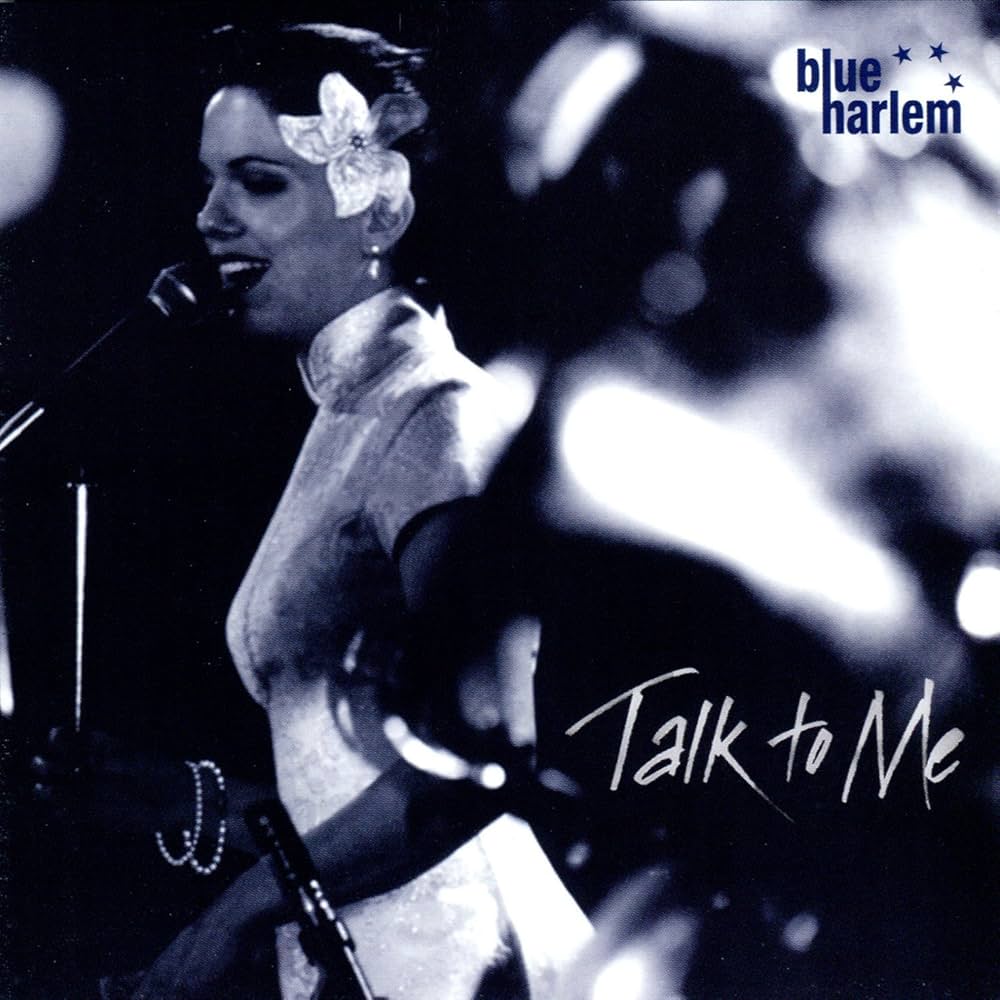
Hallelujah! I Love Him So was on the album Talk To Me released in 2005 with May lead singing. I added Hound Dog by Blue Harlem as well…it was on their Me And My Radio album released in 2011.
I have three songs. The bottom two feature Imelda May singing Hound Dog and Hallelujah! I Love Him So. Below is Sophia Shaw singing Swing Brother, Swing. She is a very good singer as well but I like May a little more.
Hallelujah! I Love Him So
Let me tell you ′bout a boy I know He is my baby and he lives next door Every morning before the sun comes up He brings my coffee in my favorite cup That’s why I know, yes I know Hallelujah I just love him so
When I′m in trouble and I have no friends I know he’ll go with me until the end Ev’rybody asks me how I know I smile and tell them he told me so That′s why I know, yes, I know Hallelujah I just love him so
Now if I call him on the telephone And tell him that I′m all alone By the time I count from one to four, I hear him on my door In the evening when the sun goes down When there is nobody else around He kisses me and he holds me tight He tells me “baby everything’s all alright” That′s why I know, yes I know Hallelujah I just love her so
Today’s installment of this series goes back to Max at Power Pop (that’s me!). We are stopping here but haven’t closed the door on revisiting more famous brother acts. Randy’s original post on mostlymusiccovers.com is here. Randy and I want to thank all of you who have followed along! At the bottom, I have the complete series labeled.
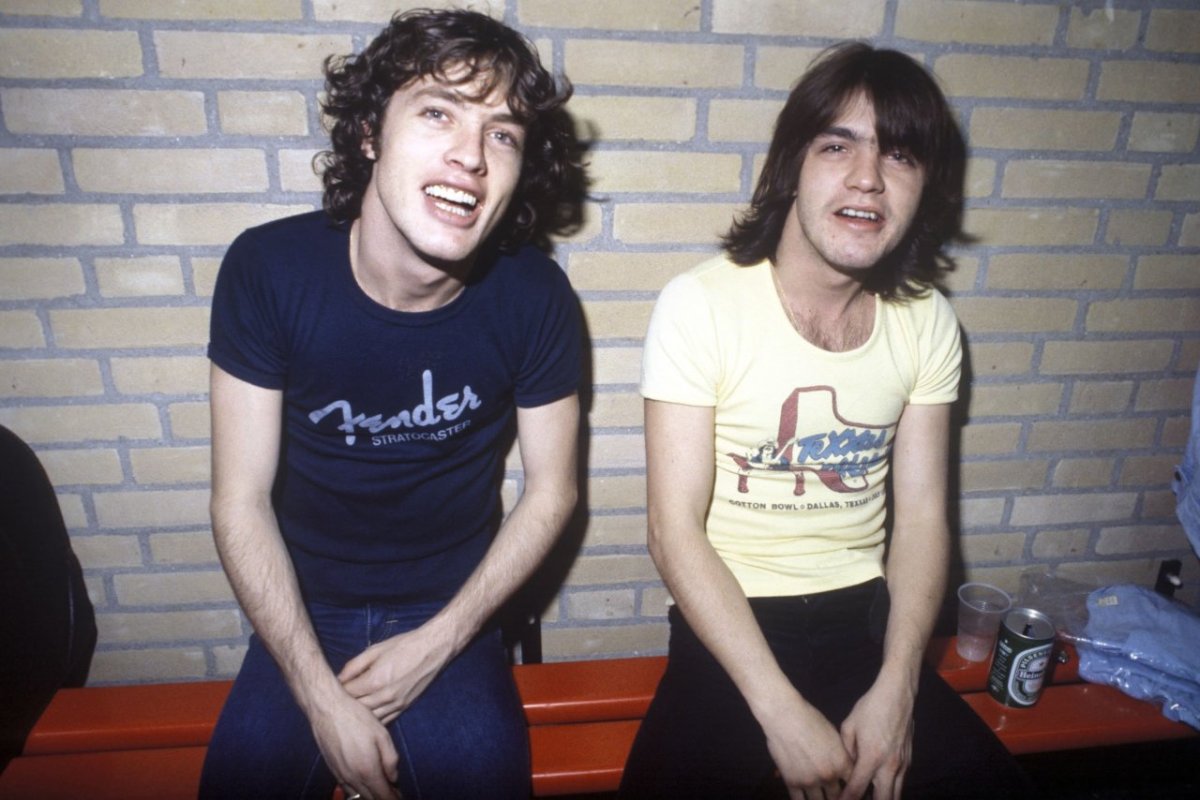
Angus and Malcolm Young were the co-founders of the legendary rock band AC/DC. They had a unique and dynamic relationship that was marked by both collaboration and rivalry. The band was formed in 1973 by Malcolm, with Angus joining a little later. They were called AC/DC. The band’s name is inspired by the abbreviation for “alternating current/direct current” (AC/DC), signifying power and energy. They were influenced most by Chuck Berry, and you can hear it in their music. Malcolm would play rhythm guitar with Angus taking up the lead guitar for decades to come. They also had a brother named George who would help his younger brothers immensely in music. His contributions cannot be overstated.
Malcolm was born on January 6, 1953, and Angus on March 31, 1955, in Glasgow Scotland. In 1963 the family moved to Sydney Australia. George Young was born in 1946 and started a band called The Easybeats in 1964 playing rhythm guitar and either writing or co-writing many of their songs. They had 7 top 10 hits in Australia, two number one hits, and altogether 15 top 40 hits there! They did have one international hit which was “Friday On My Mind” which peaked at #1 in Australia, #2 in New Zealand, #6 in the UK, #13 in Canada, and #16 on the Billboard 100. It’s still played on classic rock radio today.
He encouraged his younger brothers to form a band, recognizing their talent and potential. George, along with his Easybeats bandmate Harry Vanda, mentored Malcolm and Angus. His experience in the music industry provided insights into songwriting, recording, and navigating the business. George would end up co-producing (with Vanda) six AC/DC albums. He would also produce some songs for future albums. The band underwent several lineup changes before settling with Bon Scott as the lead vocalist. They release their debut album, “High Voltage” exclusively in Australia in 1974. Angus and Malcolm would collaborate closely with songwriting.
Malcolm was a perfectionist in the studio while Angus was more of a free spirit. That caused some clashes but none to the degree of other brothers in rock.
Angus’s schoolboy-uniformed antics on stage were a stark contrast to Malcolm’s more reserved presence. This was important to the band’s success. They went through tough times with Bon Scott dying and starting again with a new singer Brian Johnson, but they only got more popular. It was a sad ending for Malcolm though. In 2014 Malcolm could no longer remember lyrics to songs. He was diagnosed with alcohol-related dementia and passed away in 2017. These brothers used their rivalries as a positive thing and pushed each other to greatness.
I’m going to post a couple of posts today…this one and one that is leading up to Halloween!
On October 26, 1997, I saw The Rolling Stones at Vanderbilt. That is where I met Steve Forbert and that is the only time I got to see Sheryl Crow. It was in the afternoon and her voice soared through the Fall afternoon air. She performed great and I became even more of a fan that day.
At the time you had female artists like Gwen Stefani, Mariah Carey, Celine Dion, and then here comes Sheryl with her electric guitar with a rock edge…one of the best opening acts I ever saw. In the late 80s, she struggled to break through as artists like Madonna and Paula Abdul ruled the airwaves. Her first album Tuesday Night Music Club wasn’t released until she was 31 in 1993. That was because female singer/songwriters finally started to gain popularity in the 90s.
The song was written by Sheryl Crow and her producer Bill Bottrell. This song is off of her debut album Tuesday Night Music Club. The song peaked at #36 on the Billboard 100, #3 in Canada, and #33 in the UK in 1994.
Now she is really into pro-environmental concerns. On her tours, she demands only biodegradable cups and dinnerware be used by the caterer, as well as food that is “organic and purchased from local suppliers as much as possible” and water that “must be sourced from a local spring water vendor.” She also asks for separate plastic, glass, and paper recycling bins and wants her buses and trucks to be fueled with biodiesel only.
A fun sidenote to Sheryl. The first guitar she ever had was a 1964 Gibson Country and Western acoustic and she calls it The Moneymaker because most of the hits she wrote…was on that guitar.
Sheryl Crow:You’ve got a bunch of really young women out there who don’t really understand the importance of what they’re doing. They allow themselves to be exploited and they actually play that game and use sex to sell themselves. It undermines our credibility as artists.
Sheryl Crow talking about her parents: My earliest, most vivid memories are of them coming home with their friends and playing records – Stan Getz, Stan Kenton, Ella Fitzgerald – and me and my sisters sleeping out on the stairs so we could hear them.
Can’t Cry Anymore
Tell me you don’t care
Or tell me you’re just scared
But give me something I can hold on to
Just say what’s on your mind
Or am I just wasting time?
If you don’t want somebody loving you
You’ve got one foot in and one foot out the door
And baby I can’t take it anymore
Just give it to me
Give it to me
Give it to me
All your love
You’ve got demons in your past
You think real love doesn’t last
So you pull me close and then push me away
Can’t you look me in the eye?
Could you scream or laugh or cry?
But baby if you’re leaving say goodbye
But if you can’t find the right words anymore
Well then take me up the stairs and close the door
Give it to me
Just give it to me
Give it to me
All your love
Oh baby I’m begging you please
You’ve got me down on my knees tonight
I know what we have is real
Please remember how it feels to us
You’ve got one foot in and one foot out the door
And baby I can’t take it anymore
Give it to me
Just give it to me
Give it to me
All your love
Give it to me
Give it to me
Give it to me
All your love
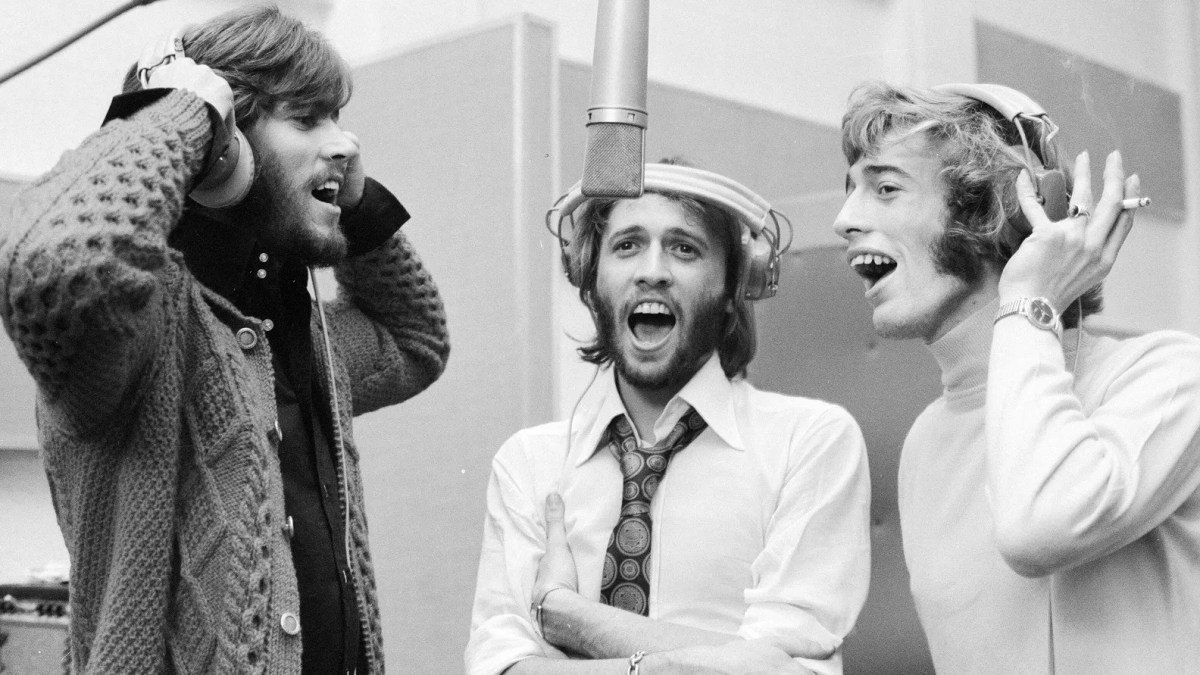
We all know the great album Brothers in Arms from Dire Straits, but sometimes those brothers are “at arms” rather than in them. In this part of the mini-series Randy, from mostlymusiccovers.com, talks about the “Rock ‘Em Sock ‘Em” Siblings of the Bee Gees.
“To Love Somebody” was written by Robin and Barry Gibb. It was released as a single in 1967 and reached #41 in their native UK. The song did better elsewhere making several top 10s and #17 on the Hot 100. It would be a cover by Michael Bolton released in 1992 that put it at #1 on the Adult Contemporary charts in Canada and the US. It has endured to become a classic with over 210 versions of the song.
Formed in 1958 with brothers Barry, Robin and Maurice. After the family’s move to Australia they found their first success, just the three boys returned to their native UK in 1967. They would go on to sell an estimated 200 million records, post nine #1s on the Hot 100 and entered the top five of the most successful bands in history.
Life was not so easy, with an unreliable father they became the bread winners for the family at a very young age. Despite the pressures the boys got on quite well, until the dreaded “S” word enter in. Success. Their first #1 in the UK was “Massachusetts” in 1967. Robin sang lead on it and it was a position he was not willing to give up. The in-fighting began.
This is not perhaps the level of fighting on the same scale as some of our other brother groups, but they were not producing any hits and Robin was really at the heart of a split up in 1969. The reconciliation produced their first US #1 Hot 100 hit, “How Can You Mend a Broken Heart” in 1971. It was very much an autobiographical song. Success is fleeting in the music business and another downturn followed as their next album was a flop. By 1975 they had all moved to the US. Both Robin and Maurice struggled mightily with addiction problems. Robin seemed to tolerate the more democratic Barry becoming the defacto leader, but there were tensions. Not enough though to stop them from reinventing themselves yet again.
The Disco era and Saturday Night Fever saw them rise to incredible worldwide success with eight Hot 100 #1 hits in the mid to late 1970s. Younger brother Andy would join in the success. Everyone knows the rise and fall of Disco, and no one paid a heavier price than the Bee Gees. All of a sudden no one wanted to hear a Bee Gees song. In fact, they were and are still hated by some. I was not a disco fan, but I was a Bee Gees fan, and I took my fair share of ribbing for it.
Despite all this turmoil surrounding them, only minor tensions erupted, and Barry, Maurice and Robin would discover other people respected their songwriting abilities. First came “Woman in Love” by Barbra Streisand, and then “Islands in the Stream” by Dolly Parton and Kenny Rogers, both worldwide #1 smash hits. And also, songs for Dionne Warwick, Diana Ross and others. So, the brothers Gibb had risen from the ashes for yet a third time but as songwriters. And then remarkably a fourth time, as recording success returned once again and they placed four more songs in the top 10 in the UK in the 90s.
Maurice would die at age 53 in 2003 and despite attempts to regroup, the band that was the Bee Gees were effectively no more. Younger brother Andy had died in 1988 and Robin in 2012. Barry the oldest, has continued to record and perform.
A huge Thank You to Randy from mostlymusiccovers.com for publishing all of these that him and I wrote.
We all know the great album Brothers in Arms from Dire Straits, but sometimes those brothers are “at arms” rather than in them. In this part of the mini-series Max (that’s me!), from PowerPop, talks about the “Rock ‘Em Sock ‘Em” Siblings of Noel and Liam Gallagher of the legendary band Oasis. Randy from https://mostlymusiccovers.com originally posted this post here.
The feud between the Gallagher brothers, Noel (left) and Liam (right), of the British rock band Oasis is one of the most toxic in music history.
Their volatile relationship has been marked by public spats, physical altercations, and a war of words in the media. The brothers have different personalities, with Noel often seen as the more reserved and serious musician, and Liam as the more volatile and outspoken lead singer. The Gallagher brothers are cultural icons in the UK, known as much for their music as for their childish spats.
“Wonderwall” (1995)
Noel was born on May 29, 1967, and Liam was born on September 21, 1972, in Manchester, England. The Gallagher family faced a troubled home life, with an abusive father, which led to their mother Peggy eventually leaving with her sons. Both got interested in music in their teens. Noel worked as a roadie for The Inspiral Carpets, which gave him insight to the music industry and songwriting. In Liam’s teen years he got interested and formed a band called The Rain.
In 1991, Liam’s band, The Rain, was struggling when Noel joined after returning from touring with The Inspiral Carpets. Noel agreed to join only if he could take creative control. The band was renamed Oasis, and with Noel as the principle songwriter. In 1994 Oasis released their debut album, Definitely Maybe, which became the fastest-selling debut album in the UK at the time.
“Don’t Look Back in Anger” (1995)In 1996 Liam pulled out of an MTV Unplugged performance at the last minute due to a claimed sore throat, forcing Noel to perform alone. Liam then heckles Noel from the audience. In 2000, Noel temporarily quits the band after a backstage fight with Liam but then returns. In 2009, Noel quits the band after another backstage fight with his brother. Noel cites his inability to work with Liam as the reason. Oasis was done but the fighting kept going. Their documentary Oasis: Supersonic in 2017 consists of the brothers insulting each other in separate interviews. They moved the show to Twitter in 2018 with Liam blaming Noel of blocking an Oasis reunion. Liam also accuses Noel of not being allowed to see his niece. Liam then insulted Noel’s wife…and the hits just keep coming to this day.
It’s a shame because Oasis was one of the UK’s biggest bands.
I thought this was appropriate today since tomorrow will kick off two weeks of Kinks songs. A huge Thank You to Randy from mostlymusiccovers.com for publishing all of these that him and I wrote.
We all know the great album Brothers in Arms from Dire Straits, but sometimes those brothers are “at arms” rather than in them. In part two of the mini-series Max (that’s me!), from PowerPop, talks about the “Rock ‘Em Sock ‘Em” Siblings of Ray and Dave Davies of the legendary band The Kinks.
Ray Davies was born in 1944 and Dave in 1947 in Muswell Hill, North London. One of the granddads of rock’s sibling rivalries starts with the Davies brothers. Ray Davies, as the lead vocalist and principal songwriter of The Kinks, often clashed with his younger brother Dave Davies, who played lead guitar in the band. Their tumultuous relationship was fueled by creative differences, sibling rivalry, and personal conflicts. The two have admitted coming to blows many times right before shows.
Ray Davies is known for being a perfectionist and prickly at the best times. Dave is known as a free spirit who likes to go with the flow. The Kinks were formed in 1963 by the brothers and included Peter Quaife and Mick Avory. Their first success came the following year with worldwide hits such as You Really Got Me, All Day and All of the Night, and Tired of Waiting for You all top 10 hits in the UK and America. The Kinks never got to the level of The Who, Beatles, or Stones. One of the reasons was because they were banned for 4 years from touring in America for using non-union roadies during a tour. Another rumor was bad behavior, but it seems the non-union help rings truer.
They were the youngest in a family with 6 sisters. At age 13 Ray was thrilled by being gifted a guitar by his 31-year-old sister Rene, but she died the same night. Dave, got an underage girl pregnant when they were both 15 and the parents kept the couple apart. Dave remembers fighting Ray and he knocked Ray down once and thought he seriously hurt him. He goes over to check on Ray and Ray pummeled him. Nice.
When Ray got married in 1964, he made Dave the best man, but Dave was smashed and could not function at the wedding. At Dave’s 50th birthday party…Ray came in and smashed the cake and left. In 2013 they got together again and wrote some songs in Ray’s kitchen in harmony. It only lasted a short time. They started an old argument over the song.
‘You Really Got Me”. Dave said that yes, his older brother wrote the riff and the song, but he cut a slit in the amp speaker to make that sound. Ray refused to acknowledge how important that sound was to the success of the song. Underneath it all though they do love each other and protect each other from other people. They are not above fighting with each other though. In 2021 there was a statement by the brothers that they were going to regroup and record again. We can only hope that they make it to the end and finish it.
Randy from mostlymusiccovers.com and I teamed up to write about different brothers in rock and roll through the years. This is the first one of the series. I combined the introduction with this first post. I will post these on Sunday mornings.
We all know the great album Brothers in Arms from Dire Straits, but sometimes those brothers are “at arms” rather than in them. In a periodic mini-series Randy, from mostlymusiccovers.com, and I will explore some “Rock ‘Em Sock ‘Em” Siblings. As it happens the Knopfler brothers are among many sets and while we can’t talk about all of them, we will feature some of the better-known sibling rivalries. Two, three, and sometimes even more brothers in a band, well, stop being a band of brothers. How many more cheesy puns can we come up with? Just some of the names Randy and I discussed were; The Everly’s, The Fogerty’s, The Gibb’s, to the Gallagher’s, Allmans, and the Davies.
For those of you who have not checked out Randy and his blog, you really need to. He has been writing a blog about Cover Songs, music genres, and artists since early 2018. He gets in-depth with many artists You can read about the origins of Rock and Roll, Blues, R&B, and Country Music. There are Cover Song and Chart statistics as well, all with a focus on the 1950s, 60s, and 70s at MostlyMusicCovers.com. He has also helped me out with blues artists and Canadian Charts in general.
While we can’t get too in-depth as literally books have been written, we can give a good thumbnail sketch of the bash ups and the break ups. A few days ago Randy mentioned that brothers Doug and Rusty Kershaw had split, but I did not read about it being that acrimonious, more of a creative differences situation. Our brother stories have a bit more ‘punch’ to them.
This is the first post in a periodic mini-series where Randy from mostlymusiccovers.com and I will explore some “Rock ‘Em Sock ‘Em” Siblings. The original post is here. Randy tells us about Don and Phil Everly.
“Bye, Bye, Love” The Everly Brothers first big hit from 1957.
Don was born in 1937 (2021) and Phil in 1939 (2014), raised in Kentucky, the brothers would move to Nashville in 1955 to pursue a recording career. As in the above clip it was “Bye, Bye, Love” in 1957 that sent the brothers skyrocketing. Written by Felice and Boudleaux Bryant it was #1 on the Country chart, #2 in the US and Canada, #6 in the UK and 14 in Australia, and #14 on the R&B chart. Their next song “Wake Up Little Susie” was #1 in the US and Canada, #2 in the UK, and #3 in Australia.
They toured with Buddy Holly in 1957 and 1958 and became very close, Buddy’s death, Feb. 3, 1959 would have a devastating impact on the pair. Don wrote their next and last #1 hit “Cathy’s Clown” in 1960. This was after a dispute with the record/publishing company, leaving Acuff/Rose and unfortunately songwriters Felice and Boudleaux Bryant.
Still, they had a busy schedule, the demands of touring and the pressures of performing and recording, the inevitable happened. The use of amphetamines was rampant in the business and they both got hooked.
By the mid 1960’s they fought over just about everything and of the two it was Don that had the most severe drug problem. Chart success was eluding them and the brothers were not getting along, but it was kept a closely guarded secret that they were able to hold for several years. Don attempted to go solo in 1970 but had no success. Things finally came to a head and in 1973 they agreed their July 14/15 show would be the last one.
Don was drunk before the show started, part way into the show Phil smashed his guitar and walked off stage. Don would finish the show and perform solo the next night. They did not speak for nearly ten years. They would reunite in 1983, had a great reunion concert, and released an album EB84, produced and named in his style 1 by Dave Edmunds that charted #38 on Billboard and #24 on the Country Album chart. They continued to perform periodically, and in 2003 they toured with Paul Simon. They remained close until Phil’s death at age 74 in 2014. Don passed in 2021 at age 84.
“On the Wings of a Nightingale” written for The Everly Brothers by Paul McCartney
Despite the battles and the hardship, they gave us some of the most remarkable harmonies ever-ly recorded.
Dave Edmunds released his 7th Studio album called D.E. 7th in 1982.
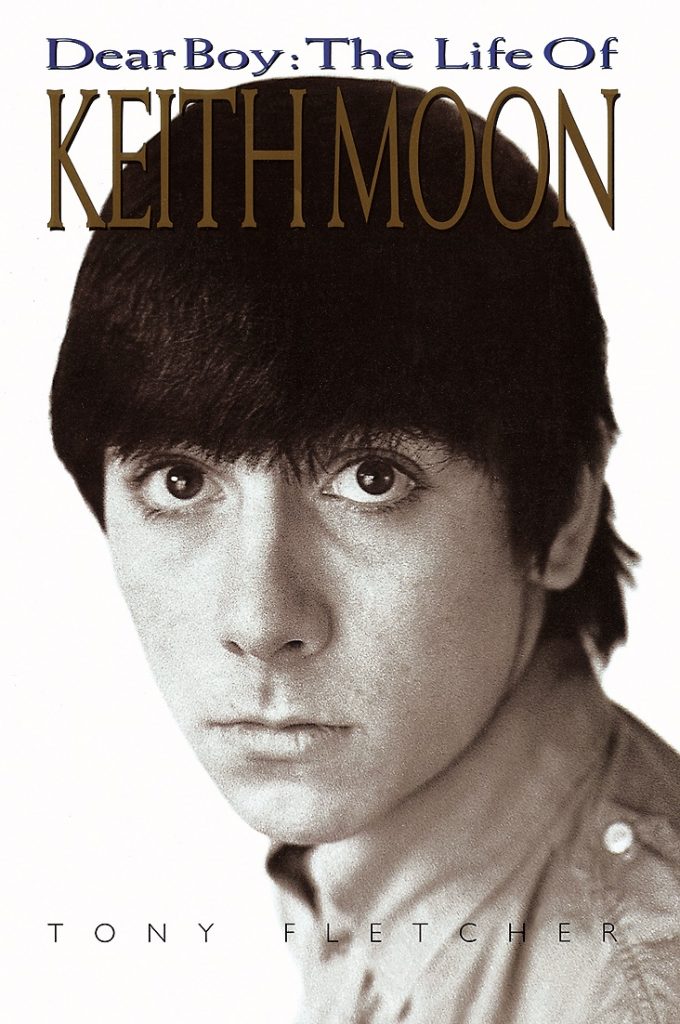
I didn’t think I would ever see an extensive book (nearly 600 pages) on Keith Moon. Tony Fletcher wrote this book and he thoroughly researched Keith and he had been a fan since his teenage years. As a teenager, he actually met Keith before he died.
Fletcher talks to everyone of importance in Keith’s life. The only disappointing thing for me and for Fletcher himself is he had to debunk some of the myths about Keith. The great story of him driving a car in the pool of a Flint Michigan Holiday Inn… didn’t happen… but the real story is just as interesting though.
The veil is drawn back on a lot of myths. It’s not a book full of Keith doing wild things like the book “Full Moon”. This one shows his ugly side also. Keith had one of the most dangerous traits you could have…the ability not to be embarrassed. Think about that…that keeps us in check at times. With Keith, anything could happen at any time.
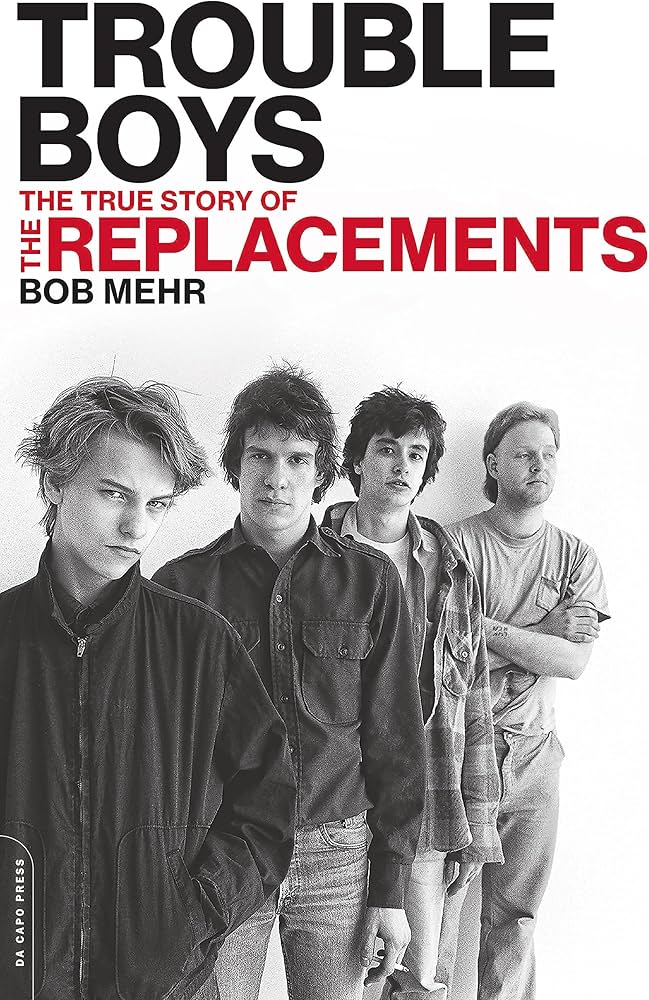
Trouble Boys – Bob Mehr
One of the only books about The Replacements. After this book, I started to understand the reckless and sabotaging behavior of the band. It also goes through the tough decision of Bob Stinson leaving the band only to die a few years later.
It was interesting to see the relationship they had with other bands such as REM at the time. They would goad each other into making better albums. I was a fan before I read it but it increased my interest by a bunch afterwards.
Up and Down with the Rolling Stones – Tony Sanchez
This was the first book I read on the Rolling Stones when I was around 13. It’s an easy but dark read. It’s written by Tony Sanchez, Keith’s drug dealer and sometimes partner in crime. Tony was also a photographer who took photos of the Stones and the Moody Blues. Spanish Tony, as he was called hung around with the Stones, Moody Blues and also knew the Beatles.
It’s full of wrecked cars, heroin, dead friends, sleazy characters, and some eventful journeys. At first, I would take some of the stories with a grain of salt but most of the events were verified by Keith’s book “Life.”
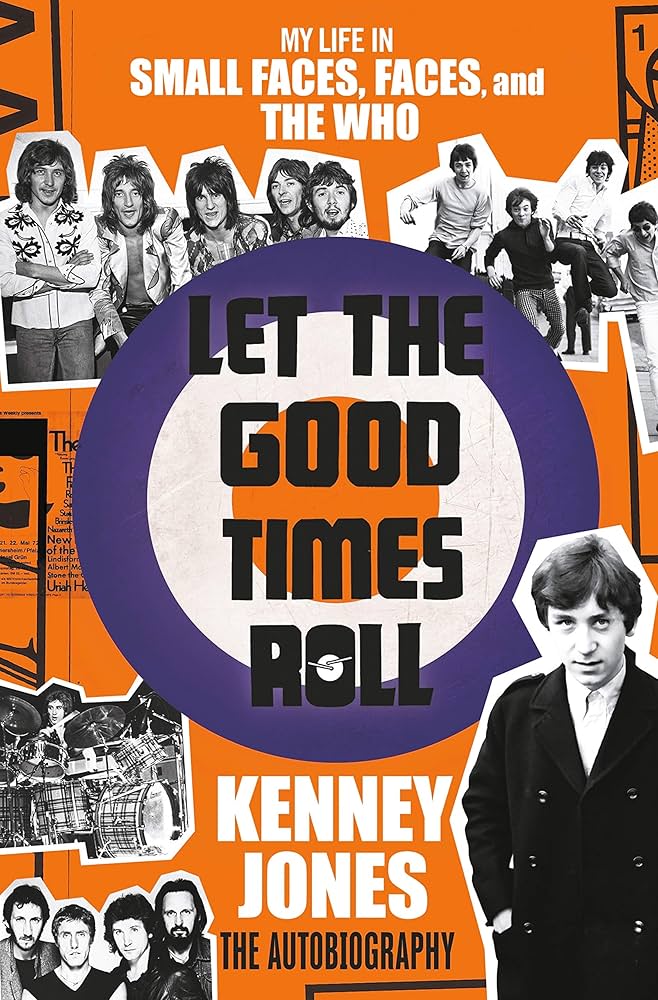
Let The Good Times Roll – Kenney Jones
Kenney Jones was the drummer of three of England’s most influential bands – The Small Faces, The Faces and for a few years The Who. I was pleasantly surprised by this book. Kenney keeps the book interesting from his childhood, teen years, swinging London, the Swinging Seventies, up til now.
I never knew much about the Small Faces and Faces and this book answered some questions I had about both bands. He gave much more information than Roger Daltrey did in his book about Jone’s tenure as the drummer of the Who and their difficulties. Personally, I don’t think Kenney was the right drummer for the Who but then again…I don’t think anyone could have taken Moon’s place. He does give an interesting perspective on it though.
I didn’t’ realize that Keith Moon and Kenney were as close as they were. Kenney had played with the Who before in sound checks when the Small Faces and Who were touring with each other and Moon couldn’t be found. After Moon died a few strange things happened to Kenney right before Bill Curbishley (The Who’s Manager) called to see if he would join. The strange events helped him make the decision.
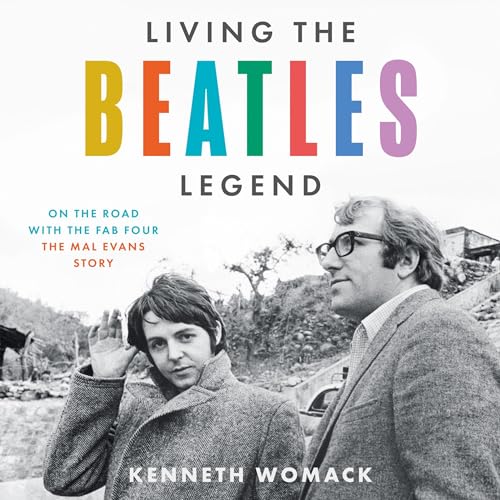
Living The Beatles Legend – Kenneth Womack
I did a review on this last year but I wanted to get it in here.
I’ve been waiting on this book since I read about the Beatles in the 70s as a kid. I knew the story…after a showdown with police Mal Evans was shot and killed on January 5, 1976. He was working on his autobiography at the time. Evans was the last person you would think would die that way…and in this case…he wanted it. Could the police have handled it better? Yes, but Mal had said that is how he wanted to go out. He forced the situation. He was only 40 years old.
Mal Evans along with Neil Aspinal were the roadies for the Beatles. Imagine that…2 roadies for the world’s biggest band. Mal worked at a telephone company in the early ’60s but he loved rock and roll…especially Elvis Presley. He would go see bands at the Cavern and struck up a friendship with George Harrison. George told him since he loved music…take a part-time job as a bouncer at The Cavern. The Beatles automatically liked him from the start. He was a big guy at 6’4″ but he never wanted to use violence. More times than not…he talked his way out of trouble. Aspinal was their only roadie and when Love Me Do and then Please Please Me came out…they needed another person because Aspinal was worn out.
I would highly recommend this book. Kenneth Womack had full access to his diaries and used many of the entries. This book turned up a lot of things about them that I had no clue about. It also gave a different look at their personalities on an everyday basis. Near the end, Mal went to the 2nd Beatles convention and spoke. He started to battle depression in the seventies after living in California and missing his wife and kids back in London. He picked up a girlfriend in California and that made his guilt worse. Drugs also affected him in the end.
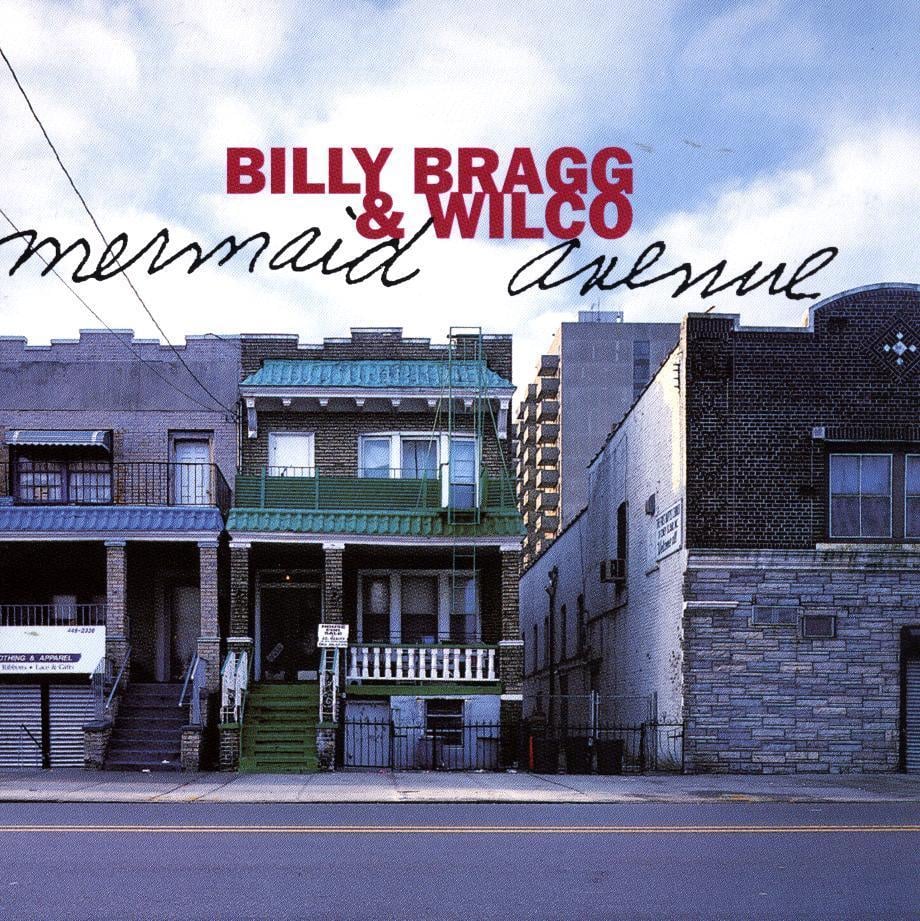
Since I did the Car Songs post and obbverse recommended Black Nova, I’ve been listening to Wilco much more. I first heard of Wilco when I heard the song “Secret of The Sea” which was on the album Mermaid Avenue Volume II. This song was on the first volume.
Mermaid Avenue was a collaborative album by the band Wilco and the British singer-songwriter Billy Bragg. It features previously unpublished lyrics by the legendary folk musician Woody Guthrie. The album was released in 1998 and is named after the street in Coney Island, New York, where Guthrie lived. There were 3 albums in all.
I can’t imagine the pressure Bragg and Wilco felt doing this. Having the legendary Woody Guthrie lyrics in front of you and writing melodies around them. They brought in a new generation of fans to Woody Guthrie. In this song, Jeff Tweedy wrote the music around Guthrie’s lyrics. Many of these lyrics were written in the 1930s – 1940s and finished in 1997.
The project was started by Woody Guthrie’s daughter, Nora Guthrie, who wanted to breathe new life into her father’s huge collection of unpublished lyrics. She invited Billy Bragg to set the lyrics to music, and Bragg, in turn, invited Wilco to join the project. They did a fantastic job on these albums.
The album was well-received by critics, who praised Bragg and Wilco for their ability to honor Guthrie’s legacy while bringing his lyrics into a modern musical context. Mermaid Avenue was nominated for a Grammy Award for Best Contemporary Folk Album.
The album peaked at #34 in the UK and #90 on the Billboard 100 in 1998.
Billy Bragg: I hate to draw comparisons, but it’s what Dylan and the Band were doing in the Basement Tapes. They took those old folk songs, that had deep roots, and they messed around with them and made a great record. We were able to apply that same idea to these songs, although we were perhaps more radical, because we had the whole history of rock music between when Woody wrote the songs, and us, whereas Dylan was quite early on in that tradition. That’s the trick with these Woody Guthrie compilations, is not to be too reverent to the material. Don’t worry about Woody’s words – they’re going to work. Bring yourself in – do what you think he would do. Do what you think you should do. Meet him half way.
There’s a hundred different ways to write a song. And every way is the right way, as long as you end up with a song. Some of those songs that Woody wrote, who knows what tunes he had for them? Maybe we were miles off, maybe we were close, I don’t know. But ultimately it’s what the guy was saying that matters – not the way he was saying it. And what he was saying is preserved. We were fortunate enough to put a frame around his artistic endeavors.
At My Window Sad and Lonely
At my window sad and lonely Oft times do I think of thee Sad and lonely and I wonder Do you ever think of me?
Every day is sad and lonely And every night is sad and blue Do you ever think of me, my darling As you sail that ocean blue?
At my window, sad and lonely I stand and look across the sea And I, sad and lonely wonder Do you ever think of me?
Will you find another sweetheart In some far and distant land? Sad and lonely now I wonder If our boat will ever land
Ships may ply the stormy oceans And planes may fly the stormy sky I’m sad and lonely but remember Oh, I will love you ’til I die
On August 12, 2024, I will post two weeks of Kinks songs from different bloggers… I’m looking forward to it as we will hit many Kinks eras… 1963 – 1993.
See You Then! Also…a huge thank you to all the bloggers who agreed to do this. I really appreciate you giving your time for this. I think the readers will enjoy it.
When I first heard this song…I thought this song was very different. It’s almost like its origin was in a dream. I can imagine this song being a soundtrack to a fever dream easily. It’s that guitar with its sliding and bending notes. The guitar player was James Calvin Wilsey who played that haunted-sounding lead.
I remember hearing Isaak before this hit from a friend who had his Silvertone album. I really liked a song called Gone Ridin’. It was rockabilly with a modern twist. I talked to my friend recently and we talked about Isaak. He agreed with me that we never saw the success of Wicked Game coming.
Most of the time, songs that go out on a limb and are different are not heard as much. My blog is full of those songs but this one actually reached the masses. Along with that guitar is Isaak’s haunting but strong voice. He wrote it one night when a troubled lady was coming over to his house (see quote at bottom).
The song peaked at #6 on the Billboard 100, #3 in Canada, #7 in New Zealand, and #10 in the UK. It also reached #2 on the Billboard Alternative Charts in 1990. The song was on the 1989 album Heart Shaped World.
When the song was placed in a movie it took off. An instrumental version was used in the David Lynch film called Wild At Heart in 1990. That certainly helped the song as well. I’m a huge David Lynch fan and Chris had this to say about him. “I enjoy talking about David Lynch because he’s such a great guy. The question I get about him is, ‘How is David Lynch? Is he scary or spooky or something?’ I don’t think it’s ever guys who make films like David makes or who have that kind of weird bent in their artwork–those guys are probably the nicest guys in real life because they’ve expressed all of their weird angles. The guys you have to watch are the guys who go, ‘I’m a scout master, the proud father of two children, and I’m also a deacon in the church.’ Then you go, ‘Be careful.’ If he’s out in the back yard at night with a shovel, be careful because he’s burying something.”
Chris Isaak: “This one I wrote really late at night and it was written in a short time, because I remember that a girl had called me and said, ‘I want to come over and talk to you,’ and ‘talk’ was a euphemism. And she said, ‘I want to come over and talk to you until you’re no longer able to stand up.’ And I said, ‘Okay, you’re coming over.’ And as soon as I hung up I thought, ‘Oh, my God. I know she’s gonna be trouble. She’s always been trouble. She’s a wildcat. And here I am, I’m going to get killed, but I’m doing this.’ And I wrote ‘Wicked Game’: ‘world’s on fire and no one can save me but you.’ It’s like you start thinking about it, and by the time she came over to the house, I had the song written. And I think she was probably upset because I was more excited by the song. (Laughing) I was like, ‘Yes, you’re gorgeous, baby. But listen to this song!'”
Chris Isaak: “I think that sometimes you get easy ones that come very quick and you’re really glad – you go, ‘Wow, where’d this come from?’ It’s so fast to write. And then there’s other songs that you do and it’s like doing your homework. It’s like you really are working and biting the pencil and working on that third verse. Most of the time you do work. But sometimes you get lucky.”
Wicked Game
The world was on fire and no one could save me but you It’s strange what desire will make foolish people do I never dreamed that I’d meet somebody like you And I never dreamed that I’d lose somebody like you
No, I don’t wanna fall in love (this world is only gonna break your heart) No, I don’t wanna fall in love (this world is only gonna break your heart) With you With you (This world is only gonna break your heart)
What a wicked game you play, to make me feel this way What a wicked thing to do, to let me dream of you What a wicked thing to say, you never felt this way What a wicked thing to do, to make me dream of you
And I don’t wanna fall in love (this world is only gonna break your heart) No, I don’t wanna fall in love (this world is only gonna break your heart) With you
The world was on fire and no one could save me but you Strange what desire will make foolish people do I never dreamed that I’d love somebody like you And I never dreamed that I’d lose somebody like you
No, I don’t wanna fall in love (this world is only gonna break your heart) No, I don’t wanna fall in love (this world is only gonna break your heart) With you (this world is only gonna break your heart) With you (with you) (This world is only gonna break your heart)
No, I (this world is only gonna break your heart) (This world is only gonna break your heart)
Take a little Americana and mix it with a little jangle and you get this song. The Bodeans were a great band in the 80s and 90s but never got to the masses consistently. However, this song did reach a big audience.
In 1977 Sophomores Sam Llanas and Kurt Neumann meet in study hall at Waukesha South High School and bond over a shared love of music. The two later end up playing music together. In 1980 At Neumann’s urging, Llanas dropped out of college to pursue music full-time. The group pursues gigs at small bars, clubs, dances, and events. Llanas comes up with the name, Da BoDeans.
Llanas and Neumann added drummer Guy Hoffman (Oil Tasters, Confidentials, later the Violent Femmes) and bass player Bob Griffin (The Agents) to fill out their sound in 1983.
Upon its release, “Closer to Free” did not achieve huge chart success. However, its fortunes changed when it was selected as the theme song for the Fox television drama Party of Five, which premiered in 1994.
The song was on their 5th studio album called Go Slow Down. It was produced by the legendary T-Bone Burnett in 1993. The album peaked at #127 on the Billboard Album Chart.
The song peaked at #16 on the Billboard 100 and #1 in Canada in 1993.
Closer To Free
Everybody wants to live how they wanna live and
Everybody wants to love how they wanna love and
Everybody wants to be closer to free
Everybody wants respect, just a little bit
And everybody needs a chance once in a while
Everybody wants to be closer to free
Everybody one, everybody two, everybody free
Everybody needs to touch, you know now and then and
Everybody wants a good good friend
Everybody wants to be closer to free
I said everybody one, everybody two, everybody free
Everybody wants to live like they wanna live
And everybody wants to love like they wanna love
And everybody wants to be closer to free
If you ever watch something I recommend…please give this short one-hour film a chance. Someone brought a DVD of this for me to watch around 7 years ago. I thought it was going to be boring. I ended up watching it twice in one sitting. It will draw you in. I watch it at least once every year or two.
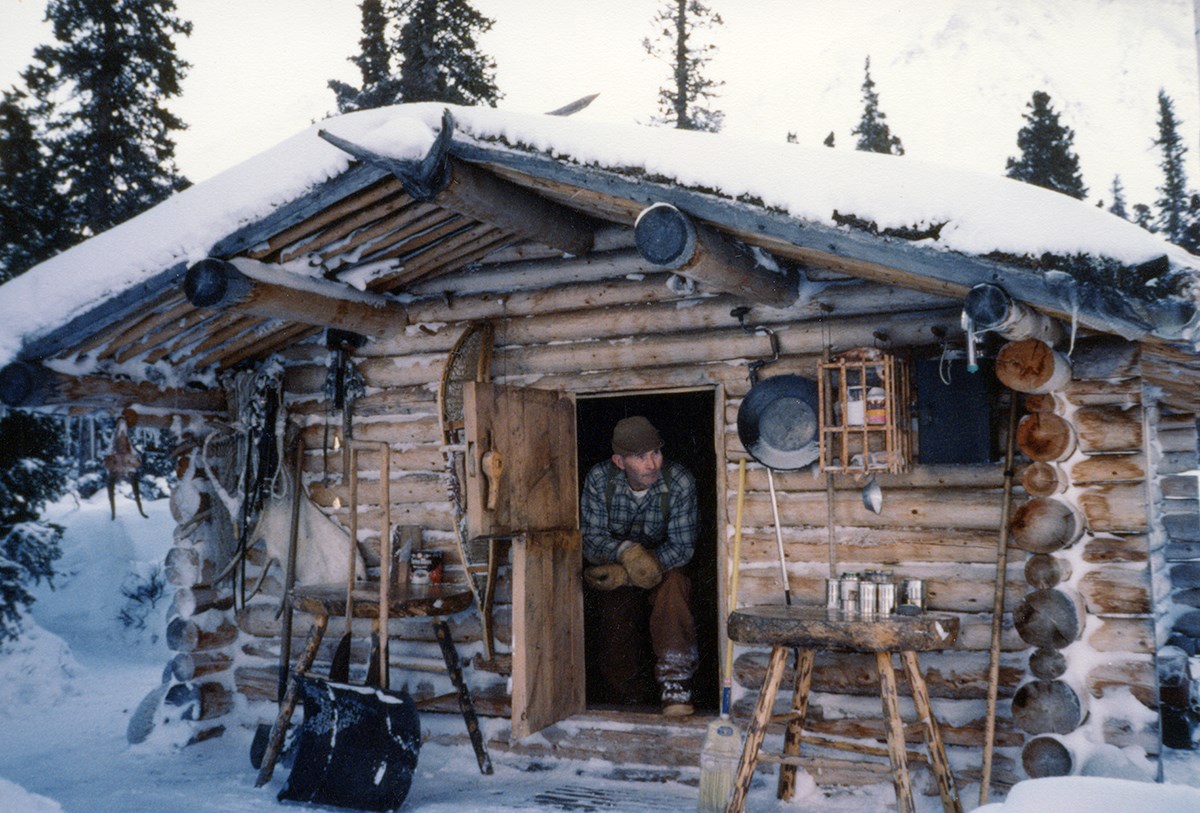
A 50-year-old man named Dick Proenneke is in Twin Lakes Alaska in 1968 and films himself building a retirement cabin. He starts out by staying in a friend’s cabin. He starts gathering wood and making some of the tools he uses as he goes. This man…is a real man. if he needs a spoon…he starts carving himself out one. He builds this cabin and makes everything including wood hinges for the door. He also made hinges out of his tin containers. He gathers rocks from somewhere down the lake and brings them back… then he starts building his chimney.
He is by himself and sets up the camera everywhere he goes. He goes out fishing when he is hungry and hunting for meat for the winter only taking what he needs. He uses just what he needs and doesn’t take more from nature than he could use. He makes almost everything from scratch. He uses his tin canisters for different things. He buries one and covers for a refrigerator. The only help he receives is a pilot friend who lands every now and again to deliver supplies. He was a master craftsman, to say the least.
He also filmed all the wildlife around. Rams, wolves, bears, birds, and Caribou. He also gets some great shots of the area around Twin Lakes. The snowy mountains were breathtaking.
It doesn’t sound that special but I have watched it at least 6 more times since the night I watched it twice… sometimes showing it to other people. He makes it look so easy. He filmed enough to have a few more short documentaries which were released but nothing matches that first one. This man made me feel like a mouse, a kid, a beginner, a slouch. He is so talented and tough.
He ended up staying there until 1999 alone and then left to live with his brother at age 82. Dick passed away at 86 in 2003. The cabin is still there and is on the National Register of Historic Places. People come from all over the world to visit it.
I wish YouTube had the complete documentary but they don’t. I watch modern YouTube videos of people visiting the cabin now. They see his cache in the back, his sled, and all the cabin parts. You see him in 1968 building those items. Like I said earlier, there are more documentaries on him but start with this one. This one is great. I’ve never had someone tell me they were disappointed in it.









 PowerPop... An Eclectic Collection of Pop Culture