Nick Lowe – I Knew The Bride

Great pop song by Nick Lowe. This version was released in 1985 and peaked at #77 in the Billboard 100. Huey Lewis served as producer on this song. Dave Edmunds had covered it in 1977.

This is an interview with Nick in 1985 talking about his new album The Rose of England and getting help from Elvis Costello and Huey Lewis.

The British new wave singer-songwriter-producer got crucial help on the album from two old friends: Huey Lewis and Elvis Costello.

“Huey Lewis is the only person I ever knew as a normal person and then watched him become a megastar before my very eyes,” Lowe says.

“His first band, the Clover, played on Elvis’ first album, which I produced, and Huey played some bits on my first album. So this year I was telling Huey that Columbia didn’t like my new album, because they didn’t think it was commercial enough.

“Huey said, ‘No problem, let’s do “I Knew the Bride.” ‘But that’s a bit of a chestnut,’ I told him. ‘I wrote it nine years ago for Dave Edmunds.’ And he said, ‘Your fans may know that, but let’s face it, their numbers are not exactly legion. Let’s recut it with a more modern sound.’ So we cut it in three days with his band, the News, and all of a sudden Columbia decided the album was exactly what they were looking for.”

When Lowe started recording, longtime friend Costello came down to the studio as always. “Elvis got real excited that we were recording almost totally live,” Lowe recounts. “We just set up the microphones, and away we went. He phoned me up a few days later and said, ‘I’ve got this song you might like to try, Nick.’

“I sort of dreaded listening to it. Although Elvis is a great songwriter, his songs usually have tons of chords and vocal twists and very personal lyrics, none of which really fit my style. But he played me the song, ‘Indoor Fireworks,’ and it was pretty straightforward; I suppose it’s about the breakup of his marriage. I was very pleased to record it; my own marriage had also just ended, but there had been no fireworks; it was all quite amicable and boring.”


I Knew the Bride

I knew the bride when she used to rock and roll
Well, the bride was a picture in the gown that her mama wore
When she was married herself nearly twenty-seven years before
They had to change the style a little but it looked just fine
Stayed up all night, but they got it finished just in time
Now on the arm of her daddy, she’s walkin’ down the aisle
I see her catch my eye and give me a secret smile
Maybe it’s too old fashioned, but we once were close friends
Oh but the way that she looks today, she never could have then
Well, I can see her now in her tight blue jeans
Stuffin’ all her money in the record machine
Spinnin’ like a top, you should of seen her go
I knew the bride when she used to rock and roll
Well, the proud daddy only want to give his little girl the best
So he put down a grand on a cozy little lover’s nest
You could have called the reception an unqualified success
At a flash hotel for a hundred and fifty guests
Well, take a look at the bridegroom smilin’ pleased as pie
Shakin’ hands all around with a glassy look in his eye
He got a real good job and his shirt and tie is nice
But I remember a time when she never would have looked at him twice
Well, I can see her now drinkin’ with the boys
Breakin’ their hearts like they were toys
She used to do the pony, she used to do the stroll
I knew the bride when she used to rock and roll
Well, I can see her now with her walk man on
Struttin’ up and down to her favorite song
I still remember when she used to want to make a lot of noise
Hoppin’ and boppin’ with the street corner boys
She used to wanna party, she used to wanna go
I knew the bride when she used to rock and roll
I knew the bride when she used to do the pony
I knew the bride when she used to rock and roll
I knew the bride when she used to want to party
I knew the bride when she used to rock and roll

The Who albums ranked 13 -7

After the Beatles, The Who are my favorite band. I was lucky enough to see them twice but not lucky enough to see them as nature intended…with Keith Moon. I’m going to attempt to rank 13 of their albums. I will not go by chart success or how many sold.

I usually would not include live albums but Live At Leeds is no ordinary live album. I’m also including Odds and Sods, an album of outtakes and rarities because of so few studio albums and it was released while they were still going strong.

This is 13 through 7… next will be 6 through 1


Endlesswirecover.jpg

13. Endless Wire – 2006 – This album was released in 2006. Obviously, I’m not as close to this album as The Who’s other albums..but I’ve listened to it more recently than the other albums.  It’s a good album but the best way I can describe it is it’s not as defined as other albums and the mini-opera Wire and Glass can get tedious. There are some good songs such as Black Widow’s Eyes (the only song featuring Zac Starkey), A Man in a Purple Dress and the different but good  God Speaks of Marty Robbins… I will say that time has affected Rogers voice more than Petes. Petes voice sounds really good on this album. Roger does fine but age has treated Pete’s voice well.

Tracklist

1 Fragments
2 A Man In A Purple Dress
3 Mike Post Theme
4 In The Ether
5 Black Widow’s Eyes
6 Two Thousand Years
7 God Speaks Of Marty Robbins
8 It’s Not Enough
9 You Stand By Me
Wire & Glass (A Mini-Opera)
10 Sound Round
11 Pick Up The Peace
12 Unholy Trinity
13 Trilby’s Piano
14 Endless Wire
15 Fragments Of Fragments
16 We Got A Hit
17 They Made My Dream Come True
18 Mirror Door
19 Tea & Theatre
20 We Got A Hit (Extended Version)
21 Endless Wire (Extended Version)
its hard.jpg

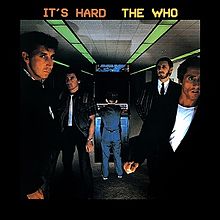
12. It’s Hard – 1982 – One thing I will say about this album. It has aged better than I thought it would.  I was never a big fan of this album. I liked some songs like Eminence Front, Athena and some of the tracks like Cry if you Want. This was the last studio Who album until 2006 Endless Wire. The band was not happy at this time and the end was coming…at least until they reunited at the end of the 80s for a reunion tour.

Tracklist

Athena
It’s Your Turn
Cook’s County
It’s Hard
Dangerous
Eminence Front
I’ve Known No War
One Life’s Enough
One At A Time
Why Did I Fall For That
A Man Is A Man
Cry If You Want
The_who_face_dances_album.jpg

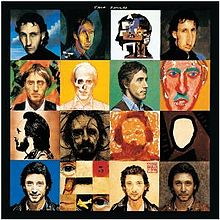
11. Face Dances – 1981 – This album has been slammed by critics and fans alike. I bought the album when it was released.  Face Dances was The first album without their engine, Keith Moon. Kenney Jones was a great drummer for the Small Faces and Faces but there is only one drummer for the Who and that was Keith. There are some good songs. “You Better You Bet”  (what I call “Who Are You’s” weak sister) Don’t Let Go the Coat, Another Tricky Day, and The Quiet One.

The album is tame compared with other Who albums but the melodies are strong.

Tracklist
You Better You Bet
Don’t Let Go The Coat
Cache Cache
The Quiet One
Did You Steal My Money
How Can You Do It Alone
Daily Records
You
Another Tricky Day
 

odds and sods.jpg

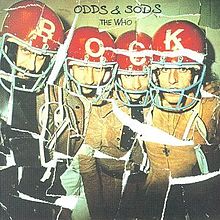
10. Odds and Sods – 1974 –  This album was released in 1974 of outtakes and rarities that The Who had in the Vaults. The highlights are Long Live Rock, Naked Eye, Pure and Easy, and Postcard by John Entwistle. This album full of outtakes were as good as other bands A-songs.

Tracklist

Postcard
Now I’m A Farmer
Put The Money Down
Little Billy
Too Much Of Anything
Glow Girl
Pure And Easy
Faith In Something Bigger
I’m The Face
Naked Eye
Long Live Rock
Who_Are_You_album_cover.JPG

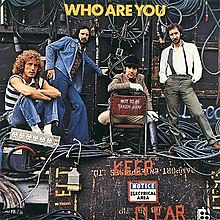
9. Who Are You – 1978 –  Keith Moon was not well during this album. Still, I’ll take a 70 percent Keith Moon over a 100 percent anyone else for the Who. It contained the Who classic title track, Sister Disco, 905, and Music Must Change. Pete continued what he started with the Who By Numbers album by writing from the perspective of an aging rocker. This album sold faster than any other Who album. Within the month of its release, Keith Moon was gone for good.

Tracklist

New Song
Had Enough
905
Sister Disco
Music Must Change
Trick Of The Light
Guitar And Pen
Love Is Coming Down
Who Are You

The_who_by_numbers_cover.jpg

8. Who by Numbers – 1975 – Pete wrote songs so personal that Roger didn’t feel right about singing some of the songs. Pete was wondering at this point if The Who were still relevant anymore. He felt old by rock standards and wondered if the band should just pack it in.

This album had to grow on me but now I do appreciate the personal songs that Pete wrote.

The best-known song is Squeeze Box but the album is full of good songs. Slip Kid, However Much I Booze, Dreaming from the Waist and Blue Red Grey. With Punk music starting to happen Pete wrote in “They Are All In Love”

Hey, goodbye all you punks
Stay young and stay high
Hand me my checkbook
And I’ll crawl out to die

If Pete had only known the future…they were only in their twenties at that time…that is just the beginning now.

Tracklist 

Slip Kid
However Much I Booze
Squeeze Box
Dreaming From The Waist
Imagine A Man
Success Story
They Are All In Love
Blue Red And Grey
How Many Friends
In A Hand Or A Face
A_quick_one.jpg

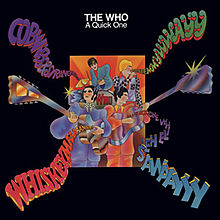
7. A Quick One – 1966 – The mini-opera starts here. A Quick One, While He’s Away is a classic song made of fragments weaved with each other to make a whole. Everyone writes at least one song for this album. John Entwistle with his signature tune Boris the Spider, Keith Moon turns out the crazy and strange “Cobwebs and Strange,” and a bit of power pop with I Need You. They also covered Heatwave with the familiar Who flair.

A forgotten great power pop song on this album is So Sad About Us. The overall sound of this album is incredible.

Tracklist

Run Run Run
Boris The Spider
I Need You
Whiskey Man
Heatwave
Cobwebs And Strange
Don’t Look Away
See My Way
So Sad About Us
A Quick One, While He’s Away


Maybe it’s no coincidence that the last three albums in the ranking are in order of release. Face Dances and It’s Hard both have a classic Who song in You Better You Bet and Eminence Front respectively. They both have some strong songs surrounding them…I just thought that Face Dances had more than It’s Hard.

Endless Wire is missing not only Keith but by 2006 also John. It’s hard to compete against your past when you are missing your entire rhythm section. It’s a different Who album and not as exciting…but anything written by Pete is worth listening to.

Next Up will be 6 Through Number 1


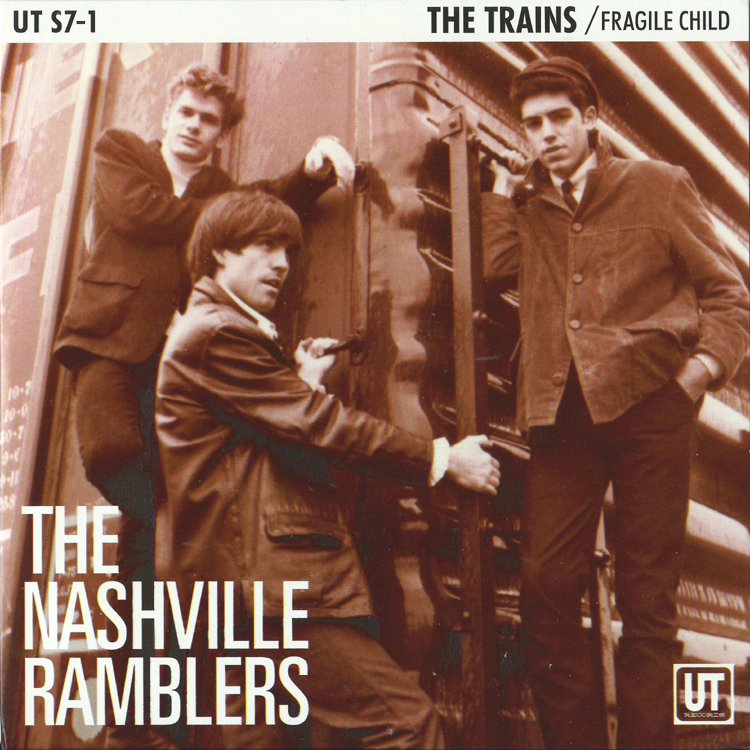
The Nashville Ramblers – The Trains

The Nashville Ramblers was a band from San Diego. The song “The Trains” was recorded in 1985 for a compilation album American Heart and Soul. they also recorded 2 other songs for the album… an original called “Nashville Rambling” and a cover of a Golliwog (pre-Creedence Clearwater Revival) song called “Fragile Child.”

Steven Van Zandt called the song  “one of the examples most indescribably beautiful romantic nostalgia, disguised in a pop song.”

There is not much out there on this group. Youtube does have some performances. This song did not chart because it was hardly known about. The band wasn’t known until 20 years after this was recorded and their song was released on another compilation album. The song has a cult following.


I found this bit of info…It’s really interesting and a very good song. The song would have worked in 65 as well. It’s a shame that a wider audience never knew about them. I’ve been playing it to anyone that would listen.

https://www.midheaven.com/item/trains-fragile-child-by-nashville-ramblers-7

Recorded in 1985, “The Trains” by THE NASHVILLE RAMBLERS is one of the greatest pop songs of the entire era. Aided and abetted by ace producer MARK NEILL (Black Keys), the band expertly channeled their key influences—Beatles, Remains, Hollies, Everly Brothers, and others—and shaped them into something fresh, urgent and breathtakingly original. A heart-stopping melody, evocative lyrics, a driving beat, soaring harmonies, a dynamic, reverb-soaked production—to hear “The Trains” was to fall in love with it. And every time you heard it, you fell in love again. However, outside a small circle of fans, though, very few people ever heard it. In an era when do-it-yourself was how-it-was-done, the Ramblers waited for somebody else to do it for them. Nobody did—not really anyway. In 1986 “The Trains” and one other Ramblers song appeared on an obscure UK-only compilation, but few people noticed. The moment was lost—if it was ever there at all—and “The Trains” slipped quietly back underground to become a whispered secret passed through the years between a growing coterie of admirers. Many discovered the song for the first time in 2005 when it was included on Rhino’s Children of Nuggets box set—by then it was almost 20 years old. Fully remastered by Mark Neill directly from the original vaccum tube analog 3-track master tape, this shiny black 45rpm single and packaged in a deluxe hard cover picture sleeve, it’s paired with a terrific, previously unreleased version of the Golliwogs’ “Fragile Child” recorded at the same session. Edition of 1,000 copies.

If you know any more info please comment.


I just found this wiki page…just translate to English

https://pt.wikipedia.org/wiki/The_Nashville_Ramblers

The Trains

She acts unaware of her smile or the scent of her hair
When she leaves a room she takes everyone’s eyes out their heads
But I hurt too much to let her bring me down
But when she’s not around
I can hear the trains underground
When I’m alone
I can feel the sun going down
How can I explain all the reasons she frightens me so
When she has the power to burn me right down to my soul
But then every night I see her in my dreams
But the days in between
She tears me apart at the seams
Once I was strong
She’s taught me what loneliness means

No, nobody else could understand her like I do
So I gotta make her realize she loves me too
And I do
I really do

But then every night I see her in my dreams
But the days in between
She tears me apart at the seams
Once I was strong
She’s taught me what loneliness means
She acts unaware of her smile or the scent of her hair
When she leaves a room she takes everyone’s eyes out their heads
But I hurt too much to let her bring me down
But when she’s not around
I can hear the trains underground
Once I was strong
I can feel the sun going down
I can hear the trains underground
I can feel the sun going down
I can hear the trains underground


A Quick Word on The WHO

The Who started off as the Detours and had a drummer named Doug Sandom. After an argument with Pete, Doug quit the band. Keith Moon then joined and the sound and the band took off. They found the member to complete one of the best bands to emerge from the sixties. They were the band of the Mods and wore British Flags, target shirts, and other Pop Art attire.

Controlled chaos is the best way I know how to describe the Who’s early singles. My favorite rhythm section in Rock and Roll… John Entwistle and Keith Moon were all over the place but they were all over the place together.  What John and Keith gave musically cannot be underestimated. They were the engine that made The Who go…Pete Townshend coined the phrase “power pop” and they were the ultimate power pop band. Roger Daltrey was transformed from a good blues singer to a rock god. They released several classic albums… Who’s Next, Quadrophenia, Tommy, and Live at Leeds., The Who Sell Out…

The Who along with the Kinks were the forerunners of Punk. The Who’s early singles were raw and driving Can’t Explain, My Generation, Substitute, The Kids Are Alright, Pictures of Lily, I’m a Boy, and I Can See For Miles…

They moved from those early raw songs and released albums with songs such as Won’t Get Fooled Again, Baba O’Riley, Behind Blue Eyes, Love Reign O’er Me, Who Are You, Bargain. The Real Me, We’re Not Going to Take It, and 5:15

Pete took the rock concept album to an art form.

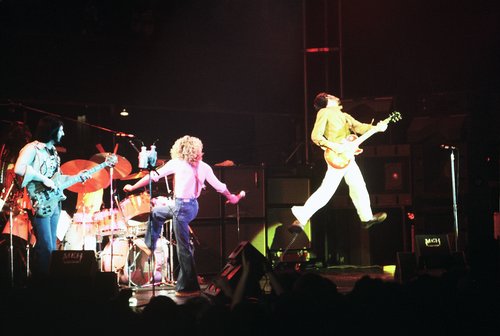
When they were at their performing peak they were untouchable. Check out the album or DVD of Live at the Isle of Wight Festival.

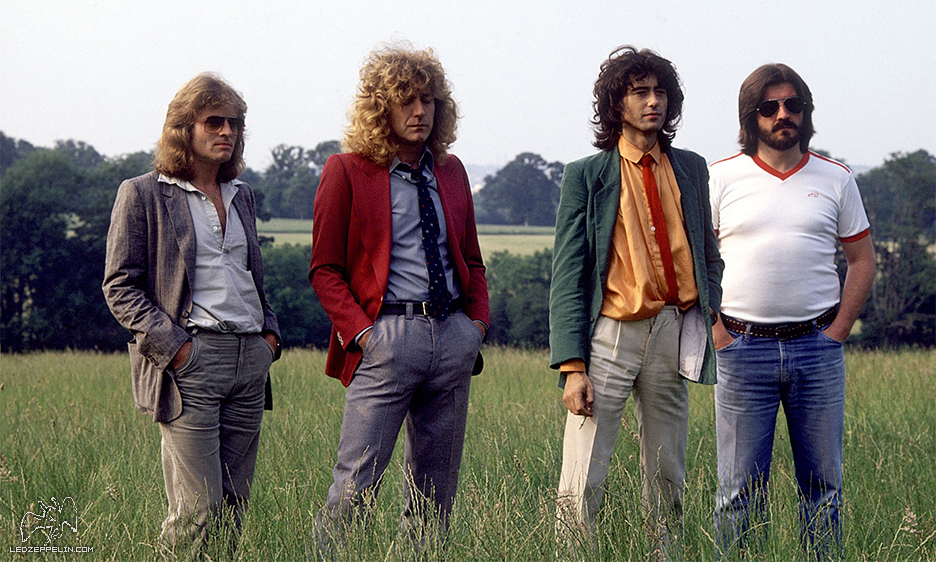
Their peer at that time had a great rhythm section, a great guitarist and a dynamic lead singer…Led Zeppelin. The Who were not as popular and they didn’t sell as many records as Led Zeppelin but The Who were fun… they more inviting.

They were the complete package. They had a good songwriter (Entwistle) in the band…and a great one (Pete). If you look at lists and influences…  10 ten rock drummers, top ten rock bassists etc..all of the Who come up in their respective category.

Led  Zeppelin made the right choice in not replacing John Bonham. The Who decided to go on without Moon and were never the same again without Moon. Some of their songs were good afterward but they did not have the drive and spirit that Moon gave them and they were not complete without him.

I’ve never found a band other than the Beatles that moved me as much. Pete’s songs are high energy with a dash of spirituality.

I will revisit the Who again and coming up soon  I’m going to attempt to rank the Who albums.

https://www.youtube.com/watch?v=v_3ks7-OjGc&ab_channel=LouVJOfficial


OCS761009-01-FP.jpg

prvWHO    76    117.jpg

the-who2c-en-medio-de-contundentes-guitarrazos2c-avisaba-de-lo-tonto-que-es-cambiar-una-tiranc3ada-por-otra1.jpg

xtc.jpg


Feeling Like A Pop Star

I was on a stage playing bass beside my bandmates. We were playing on a large stage that known acts had played before. There were 2000-3000 screaming females in the audience. We couldn’t do anything wrong. Then we played the only song I sang at the time…Brown Eyed Girl. Again the place went nuts and I was being singled out by a few. shouts of “Hey blue pants  (I had just bought some blue pants at Chess King…give me a break…it was the 80s), look over here!”

I never heard an audience that loud before while performing in my short 6 years of playing in front of people. We were an 80s band that didn’t play 80s music…We played Summertime Blues, Under My Thumb, Jumping Jack Flash, Roadrunner and kept going…we slipped in an original song and they kept screaming. I could barely hear myself play. I thought to myself…wow so this is what it’s like…We played around 15 songs in all.

Before I go on I will tell how and why this happened. Was I dreaming the whole thing? No, I was not dreaming. I was actually playing and soaking this up. I was 22 and I enjoyed every second of it. I thought any guy could get used to this…

I had been playing bass with a guitar friend of mine named Ronald since we were thirteen. He and I  played in a backwoods bar when we were 16 with a drummer and a singer. This band we were in now was not the one we started with but it was talented… but not this talented!

No, we had a gig at a Women’s prison. They wanted to be entertained and they were very appreciative. Bless all of them because they made us feel on top of the world. In the next few days, we thought we were better than what we were (the meaning of believing your own press)…our band broke up soon after…I joined a new one not long after that.

I kept playing for a few more years on weekends in bars, clubs, theaters, and parties. We even recorded in an old studio. I’ve played in front of big crowds again but never again with that much excitement. I had great times and met some great people but for that one day, that brief time,  I was a pop star…or rather I felt like a pop star. I got to see what it was like for a brief amount of time and I won’t lie…it was a great but fleeting feeling.


The Bangles – If She Knew What She Wants

When I heard this song and saw the video  I knew I liked this band. I like the call and answer vocal arrangement and the jangly guitar.  This song came out right after the massive hit Manic Monday but I always favored this one.

It peaked at #26 on the Billboard 100 in 1986 and #31 in the UK.

If She Knew What She Wants

If she knew what she wants
(He’d be giving it to her)
If she knew what she needs
(He could give her that too)
If she knew what she wants
(But he can’t see through her)
If she knew what she wants
He’d be giving it to her
Giving it to her
But she wants everything
(He can pretend to give her everything)
Or there’s nothing she wants
(She don’t want to sort it out)
He’s crazy for this girl
(But she don’t know what she’s looking for)
If she knew what she wants
He’d be giving it to her
Giving it to her
I’d say her values are corrupted
But she’s open to change
Then one day she’s satisfied
And the next I’ll find her crying
And it’s nothing she can explain
Some have a style
That they work hard to refine
So they walk a crooked line
But she won’t understand
Why anyone would have to try
To walk a line when they could fly
No sense thinking I could rehabilitate her
When she’s fine, fine, fine
She’s got so many ideas traveling around in her head
She doesn’t need nothing from mine

Cheap Trick

I’ve always admired Cheap Trick. First of all, they didn’t look like any other band. They had two bonafide looking rock stars in lead singer Robin Zander and bassist Tom Peterson. Their great guitar player Rick Nielsen looked like Huntz Hall from the old Bowery Boys films and the drummer Bun E Carlos looked like an old uncle you would have somewhere.

They were a hard-working band from Rockford Illinois in the mid-70s. None of their first three albums made it in the top 40 but they did have a single to chart…a single off their third album “Heaven Tonight” was the first to chart in America…”Surrender” (Studio Version) peaked at #61 on the Billboard 100 in 1978. They were not getting any traction in America but in Japan, they were getting huge.

They toured Japan in 1978 with a Beatlemania atmosphere and played at Budakon and recorded a live album there. “Cheap Trick at Budakon” is what finally broke them in America in 1979.

I got to see Cheap Trick in 1984 in Opryland and I  became a fan. They had some great rockers but also some power-pop gems like “Voices.” The albums I like are Heaven Tonight, Dream Police, In Color and of course Live at Budakon.

They never had that milestone studio album that really marked their career like some bands but they made enough good music to be remembered. They were inducted into the Rock and Roll Hall of Fame in 2016.

Voices

You didn’t know what you were looking for
Till you heard the voices in your ear

Hey, it’s me again
Plain to see again
Please, can I see you every day?
I’m a fool again
I fell in love with you again
Please, can I see you every day?

You didn’t know what you were looking for
Till you heard the voices in your ear
You didn’t know what you were looking for
Till you heard the voices in your ear

Words don’t come out right
I try to say it oh, so right
I hope you understand my meaning
Hey, it’s me again
I’m so in love with you again
Please, can I see you every day?

You didn’t know what you were looking for
Till you heard the voices in your ear
You didn’t know what you were looking for
Till you heard the voices in your ear

I remember every word you said (word you said)
I remember voices in my head (in my head)
I remember every word you said (word you said)

(I) Your voices 
(Heard your voice) Cool voices 
Warm voices
It was just what I needed to

(Words) Cool voices 
(Don’t seem right) Warm voices
Your voices
It’s just what I needed for

(Love) Warm voices
(Is the word) Your voices
Cool voices
It was just what I needed to

(I) Your voices 
(Heard your voice) Cool voices 
Warm voices
It was just what I needed to
Just what I needed to
Just what I needed

You didn’t know what you were looking for
Till you heard the voices in your ear
You didn’t know what you were looking for
Till you heard the voices in your ear

Saturday Night: A Backstage History of Saturday Night Live

If you want to know why and how Saturday Night Live came to be…this is the book. It covers the first 10 years of the show but is primarily about the first 5 years and the one terrible year after the classic cast left. It was written by Doug Hill and Jeff Weingrad and they interviewed practically everyone connected with the show and it is surprising on how objective they are throughout the book.

Working on the show was/is not for the thin-skinned. It was rough and no one was spared…not even the stars at first. The book goes into detail about how the show started a pattern of work that continued through the decades. The troubles the female writers went through trying to do their job. The endless drugs that fueled many of the all-night writing sessions.

The atmosphere could be very sexist, insulting and aggressive. Michael O’Donoghue was the key writer and gave SNL the edge but he could be difficult. When he left the show he was missed. When the original cast, writers, and Lorne Michaels left, Jean Doumanian took over the show for a year. Things didn’t go well, to say the least. The book details the transition then to Dick Ebersol.

The show went from an ensemble show trying new ideas to a star-driven formulaic show under Ebersol. Maybe the show was destined to do that anyway and it would never be the same again.

I’ve read a few books on SNL but as far as the creation and original cast…this is the one to go to.


Eddie and the Cruisers

This movie was based on the 1980 novel by P. F. Kluge. I’ve always liked the 1983 film. At the time the movie came out the rumors of Jim Morrison still alive and Elvis sightings were everywhere and the movie fulfilled some fantasies of “What If.”

It’s about an early sixties band that played fifties type music and were gaining a following. They meet Frank Ridgeway an awkward backward pianist that played classical music. Eddie Wilson sees his potential and starts teaching him how to play rock and roll.

Eddie’s musical vision is ahead of its time. He uses Frank’ classical background to start working on an album called “Season in Hell.” When you hear snippets of the album it is years ahead of their time period. Most of the band hated the new music. The record company rejected the album because it was to “dark and strange.”

After that Eddie’s car crashed through a railing on a bridge and his body was never found. Did Eddie die?

The film picks up in the 80s when a reporter is asking the former Cruisers questions about the lost album.

I really liked this movie. The sequel not as much.

The soundtrack was by John Cafferty and the Beaver Brown Band. A hit song was released off the soundtrack. “On The Darkside” peaked at #7 on the Billboard Hot 100 chart.

The movie flopped at the box office but when played on HBO it became a cult classic.

The Cast…

Tom Berenger
Michael Paré
Joe Pantoliano
Helen Schneider
David Wilson
Kenny Hopkins
Michael “Tunes” Antunes
Ellen Barkin
Kenny Vance

https://www.youtube.com/watch?v=nYDAF6NbgKc&ab_channel=JackButler

“On The Dark Side”
The dark side’s callin’ now, nothin’ is real 
She’ll never know just how I feel 
From out of the shadows she walks like a dream 
Makes me feel crazy, makes me feel so mean 

Ain’t nothin’ gonna save you from a love that’s blind 
When you slip to the dark side you cross that line 
On the dark side, oh yeah 
On the dark side, oh yeah

Martin Briley – Salt In My Tears

With a line like “You Ain’t Worth The Salt In My Tears” in a song…how could you not listen? This song was released in 1983 and reached #36 on the Billboard Charts. I liked the song because it had a catchy guitar riff which stood out at the time with all the synth music going on.

Martin Briley is a talented musician… below is from Wikipedia

Briley has received orchestral commissions, and has written songs for such artists as Céline Dion, *NSYNC, Dream, Michael Bolton, Mietta, Kenny Loggins, Pat Benatar, Jessica Andrews, Five Star, Jeff Healey, Rebecca St. James, Nana Mouskouri, Willie Nile, Gregg Allman, Night Ranger, David Hasselhoff, Patrick Swayze, Michael Monroe, Chastity Bono, Peter Tork, Nikki Webster, Hope Partlow, Natascha Sohl, Ballas Hough, Phil Stacey, Orianthi, The Maine and Barry Manilow.

Salt In My Tears

I never did it, no, I won’t admit it
Why should I lie for you anymore
You never loved me
You pushed and shoved me
I see the woman I never saw

I saw you laugh when the knife was twisted
It still hurts but the pain has shifted
I’m looking back at the time that drifted by
But I won’t cry for the wasted years
Cause you ain’t worth the salt in my tears

Feeling neglected, used and rejected
You need a shoulder to lean upon
Baby you picked him, found your next victim
Don’t worry, someone will come along

I broke the spell that you kept me under
I had enough of the rain and thunder
I lost track of the time and I wonder why
But I won’t cry for the wasted years
Cause you ain’t worth the salt in my tears

I’ll sit around and drink a few more beers
Until the memory just disappears
Cause you ain’t worth the salt in my tears

I saw you laugh when the knife was twisted
It still hurts but the pain has shifted
I’m looking back at the time that drifted by
But I won’t cry for the wasted years
Cause you ain’t worth the salt in my tears

Cause you ain’t worth the salt in my tears

The La’s – There She Goes

A song by a British band called The La’s. A very good pop song that has no verses…it just repeats the chorus four different ways four different times. The song peaked at #49 on the 1991 Billboard Chart and #13 on the UK charts in 1990.

It was written by the singer Lee Mavers and recorded in 1988 and remixed and released again in 1990.

Many people think the song was about heroin. Paul Hemmings an ex-guitarist for the band denies that rumor. Either way, it is a perfectly constructed pop song.

It’s been covered by a lot of artists but probably most successfully by Sixpence None the Richer. I’ve always liked The La’s version the best.


“There She Goes”

There she goes
There she goes again
Racing through my brain
And I just can’t contain
This feeling that remainsThere she blows (there she blows again)
There she blows again (there she blows again)
Pulsing through my vein (there she blows again)
And I just can’t contain
This feeling that remainsThere she goes
There she goes again
She calls my name
Pulls my train
No one else could heal my pain
But I just can’t contain
This feeling that remains

There she goes
There she goes again
Chasing down my lane
And I just can’t contain
This feeling that remains

There she goes (there she goes again)


Famous Rock Intros

I thought about what would be the most recognizable riffs in rock music. This doesn’t mean I like these the best… I’m sure I missed many more. They are in no particular order.

  1. Smoke On The Water – Probably the most well-known riff of Rock and Roll. I’ve heard so many beginning guitar players butcher this one… and I was one of them at one time.
  2. Satisfaction – This helped start Keith Richards on his way to becoming The Human Riff. The intro is immediately recognizable.
  3. Daytripper – John Lennon was no slouch creating memorable riffs. I Feel Fine, Yer Blues and Daytripper…My personal favourite is And Your Bird Can See
  4. Black Dog – To my surprise, this riff was not Jimmy Page…it was written by the very underrated John Paul Jones
  5. You Really Got Me – As soon as that early raw distorted guitar starts you know the very English Ray Davies is about to sing.
  6. Another One Bites the Dust – It’s a Bass intro that won’t leave your head. When it came out I could not go anywhere without hearing someone hum, whistle, or sing it…it is infectious
  7. Purple Haze – Jimi’s intro that shot him in the stratosphere.
  8. Wild Thing and Louie Louie – Same three-chord pattern but you know what they are right away.
  9. Baba O’ Riley – As soon as you hear the first 2 seconds…you know what it is.
  10. Back in Black – AC/DC using the same chords over and over to great effect.

Honourable Mention… Hard Days Night, Can’t Explain, Sunshine of Your Love, Sweet Home Alabama.

The “Compleat” Beatles 1982

This is what Beatle fans had until the Anthology came out in 1995 and turned a new generation onto the Beatles. I wore out the recorded VHS copy my cousin gave me. It is a two hour documentary of the Beatles. It was narrated by actor Malcolm McDowell (Clockwork Orange) and was well done. I remember watching this and “The Kids Are Alright” in the 80s. It was nice seeing the footage that was not as available as today.

I do remember some small frustrating parts of it. I think it was  “Hey Jude” about to begin (David Frost Show) and whoever cut the film placed a George Martin voice over during some of the performance. Remember this was a time when you couldn’t just go on youtube and see performances. Overall it was very well made. I still have a copy of it somewhere. Paul McCartney bought out the negative rights to the film in the 1990s to clear the way for Anthology and below is that story from Wikipedia.

The Compleat Beatles was initially released as a PBS documentary in the United States, and then on VHS, Betamax, CED and Laserdisc that same year on the MGM/UA Home Video label. The 1982 Laserdisc was released in both Analogue and Stereo versions, as well as being released in Japan and England (in PAL format) in 1983.[3]

The film did very well, and in 1984 Delilah Films and Metro-Goldwyn-Mayer arranged for it to be released theatrically in the U.S. by a small distributor named Teleculture. This contributed to its continuing to be a best seller on VHS. Some years later, when Paul McCartney was preparing The Beatles Anthology, he bought the negative and all the rights to the film from Delilah to get it off of the market and clear the way for his production. That, according to the film’s director Patrick Montgomery, is why it is not available on DVD or any newer formats and “probably never will be.”

If you find a copy somewhere buy it…it is worth it. Even if you already have Anthology. The Beatles Anthology is far superior but it does make a good companion piece.

This is from Rolling Stone magazine. It went over the other documentaries of the band. They make a good case for The Compleat Beatles. The link to the page is:

Again nothing has compared to the Anthology but The Compleat Beatles was very well done.

https://www.rollingstone.com/music/music-features/the-compleat-beatles-10-takeaways-from-great-overlooked-fab-four-doc-121193/

But one Beatles doc you might not know – and its cause has not been helped by not having an authorized DVD release yet – is 1982’s The Compleat Beatles, written by David Silver, directed by Patrick Montgomery, and narrated by Malcolm McDowell, chief droog from Stanley Kubrick’s A Clockwork Orange. Clocking in at two hours – and titled in the spirit of The Compleat Angler, England’s definitive book on fishing, from 1653 – The Compleat Beatles tells the band’s entire story, from pre-fame days, with checkpoints at each album, right up through the breakup. It’s brimming with keen musical analysis, and a coterie of voices you normally don’t get with a Beatles documentary.

For a long time, in the VHS era, it was a staple of high-school music teachers, starting 35 years ago in the summer and fall of ’82. If you were lucky enough to have had the TV set wheeled in by a Beatles-mad instructor, you know this is a special film.

Here are 10 reasons to check out this overlooked masterwork of the Beatles’ cinematic canon.

1. Writer David Silver had a pitch-perfect understanding of the Beatles’ career arc – and importance in their time and beyond.
“Poets of a generation, heroes of an era,” The Compleat Beatles begins, with Malcolm McDowell reciting Silver’s lines with Shakespearean gravity. This is to be a proper assessment of a band that was so much more than a rock & roll collective, something we’re made to feel immediately. “Like all poets and heroes, they reflected the spirt of their times.” The early sequences in the film present footage of a bygone Liverpool, which looks pretty grim, as if nothing mercurial could emerge from this seaport. When the opening chords of the Beatles’ cover of Chuck Berry’s “Rock and Roll Music” kick in, the film itself seems to pop with possibility, as if infused with Beatle-esque spirit. There was nothing the band couldn’t do, and now there will be nothing this movie can’t do.

2. Gerry Marsden was an ace witness to what the Beatles were doing.
The leader of Gerry and the Pacemakers, perpetual Liverpudlian also-rans, Gerry Marsden was always broad-spirited when it came to talking about the band that so outpaced his own, but you don’t get to hear him very much on film. Here he explains how the Liverpool acts were able to transform skiffle into something far grittier from what he terms the “ackky dacky” sounds of Lonnie Donegan. First he whips out a guitar to show how Donegan would play “Jambalaya,” before remarking “we’d get the record and we’d rock it up a little bit,” entering forth into a cool little demonstration. It’s a great primer for how the Northern bands were able to develop their own sound from what was a reductive, chipper genre in skiffle.

3. Early manager Allan Williams was quite the character.
Williams liked his tall tales, and the Beatles basically screwed the guy over after he hooked them up with Hamburg and they jumped ship for Brian Epstein, but Williams clearly loved reminiscing about his relationship with the band, which would continue on for a while still. (And resurface later when the legality of the Hamburg Star Club tapes was in dispute.) He describes a letter from Howie Casey of Derry and the Seniors begging him not to send “that bum group the Beatles” over to Hamburg, for fear that this would mess up everyone else’s good thing. Williams then goes on to (accurately) describe the style of then-drummer Pete Best as not very clever. Hardly a feeling-sparer, which is probably why the likes of John Lennon liked him – at least for a while.

4. George Harrison’s mom deserves serious props. The Compleat Beatles does an excellent job of synthesizing how the Beatles came together in their pre-fame years (complete with an image of John Lennon’s report card decrying his “insolence”), with a clear, concise chronology, and valuable insight directed towards the subject of George Harrison and his mother. Most Beatles studies focus, in terms of maternal subjects, on Lennon and his mother, Julia, and Paul McCartney and his late mother, Mary, but Mrs. Harrison knew a thing or two about rocking out. “To his classmates, George Harrison was the boy whose father drove the bus they all rode to school,” McDowell states. “His mother sat up with him night after night as he taught himself how to play Buddy Holly songs,” with his inclusion in the Quarrymen assured because “his mother could tolerate their noisy rehearsals.” Way to go, Mrs. H.

5. Reeperbahn mainstay Horst Fascher was one badass MF.
The Compleat Beatlesmakes commendable use of the underrated Star Club material to soundtrack several scenes, and it’s a delight when self-professed Beatles protector Horst Fascher turns up on camera. He made sure that they didn’t get in too much distress on their first Reeperbahn forays, or, as he puts it in the film, “If you are in trouble with some girls who are prostitutes, and you don’t know the girls are prostitutes, and the pimps find out, you can get in a lot of trouble,” which made Horst the guy to seek out to cure your ills and keep your ass intact, given that he was a former boxer who had been booted from competition for killing a sailor in a street fight. Ah, Hamburg.

6. The Litherland Town Hall show from December 27th, 1960, was the watershed gig of the Beatles’ career.The film also features a number of segments with Bill Harry, a friend of the band who was instrumental in spreading the good word about them in Liverpool – even before they deserved it – with his Mersey Beatmagazine, which documented the comings and goings of life on the local beat scene. Harry gives the backstory for the gig that would change the Beatles’ career. “They came back from Hamburg still as an unknown band,” Harry remembers, but he promoted they hell out of them, “because they were close friends of mine.” This got a promoter to book them at Litherland Town Hall, shortly following Christmas in 1960. Allan Williams was there, too. “The moment the Beatles struck up and did their stomping, every kid froze, and then they ran to the stage and started screaming.” That would be the gist of a lot of what was to follow.

7. According to George Martin, “Yesterday” was the crucial pivot point for the band’s sonic development.
Martin is eloquent throughout The Compleat Beatles: erudite, dapper, utterly sure of himself, being interviewed in a recording studio by his console, with no Beatles intruding with misremembered bits of info, something that dogged the Anthology. It’s just Martin, holding a master class in what it was like from his end to work with these guys. “They always wanted to have new ideas and sounds coming through. I found that they were almost more inquisitive than I was. In fact, in the end, it kind of exhausted me. Sometimes they knew what they wanted to do, but more often than not, they didn’t,” coming across like Yoda both frustrated and blown away by the gifts of Luke Skywalker. Regarding “Yesterday”: “It isn’t really a Beatles song,” Martin remembers saying to McCartney, then goes through how he made his pitch for the Beatles to forsake their standard drum-bass-guitar attack, which would become, through various methods, the mode of the future.

8. The doc features the coolest, trippiest, most cost-effective visual evocation of “Tomorrow Never Knows” ever filmed.
McDowell’s narration intones that “Two of John’s songs ‘She Said She Said’ and ‘Tomorrow Never Knows’ were the results of his recent experiments with drugs” – fair enough – as a quick tour of Revolver begins, but what follows is brilliant: Using only the cover of the album, director Montgomery, through a series of sweeps, pans and fast dissolves, gives us something of a visual acid trip, as “Tomorrow Never Knows” blasts from the soundtrack. Once you see the effect, it’s hard to disgorge it from your mind each time going forward that you hear that mindblower of a track.

9. The band’s final world tour was pure terror, and no film better evokes it.With a collage of on-the-street interviews, footage from Beatles record burnings and people getting hurt at shows as frantic MCs plead for calm, The Compleat Beatlesprovides a strong sense of why touring had to stop for the band. As the footage unfurls, there’s a low droning figure in the soundtrack, sort of like the protracted hum of the final chord on the Sgt. Pepperalbum stretched out for several minutes. We also get a self-righteous cop in Minneapolis who goes on at some length about how much he hates the Beatles: “As far as Beatle music, I could care about it not one bit personally … one of their group, with the British accent, told us they would never come back to Minneapolis, and I told him that would be too soon for me.”

 10. In Martin’s view, the Beatles were fated to become huge. George Martin has a lot of key lines regarding his four upstarts and their career. At one point he states, “Without Brian Epstein, the Beatles wouldn’t have existed,” by which he means that success would not have come to them and they would not be the galvanic entity we all know. But Martin is in downright Socratic mode, though, when he ventures towards a larger explanation for that success. “I think that the great thing about the Beatles was that they were of their time, their timing was right. They didn’t choose it – someone chose it for them. But the timing was right, and they left their mark in history because of it.”

Ronnie Lane: The Passing Show

I didn’t know much about Ronnie Lane when I watched this documentary. It covers his childhood through his tragic death and the period after he left the Faces. He was loved by his peers and a talented musician and songwriter.

Ronnie’s mom had Multiple Sclerosis and Ronnie was in denial about himself until he was diagnosed with it. I didn’t know about the documentary until I ran across it on youtube.

I would recommend this to any music fan.

Ronnie Lane was a Britsh songwriter and bass player. He started with the Small Faces as the bass player and he and Steve Marriott wrote most of bands songs. The Small Faces never toured America so they never really broke out big. They did have 11 top twenty hits in the UK but only one in America with Itchycoo Park charting at #16.

Steve Mariott left the Small Faces in 1968 and Rod Stewart and Ronnie Wood joined Ronnie Lane, Kenney Jones, and Ian McLagan to start The Faces. The Faces released four albums between 1970-1973… First Step, Long Player, A Nod is as Good as a Wink…to a Blind Horse and Ooh La La. They were one of the top grossing touring bands.

After Rod Stewart’s solo career took off his interest in the band began to wane and in 1973 Ronnie Lane quit. After Ronnie left the Faces, they made no more studio albums.

Ronnie started his own folk-country band named “Slim Chance” and released a surprise hit single “Come On” in 1973 and it went to #11 in the UK. Ronnie had a unique idea of touring. His tour was called “The Passing Show” which toured the countryside with a circus tent and included a ringmaster and clowns.

In 1976 he owed a record company an album and he was in financial trouble. He asked Pete Townshend to help him record an album. The album was called “Rough Mix” and it was a very strong album with great reviews but the record company didn’t promote it and the sales were not great.

During the recording of “Rough Mix” Lane diagnosed with was Multiple Sclerosis. He still toured with Eric Clapton and others afterward and released an album in 1979 called “See Me.”

In 1983 Ronnie called some of his musician friends to do some charity concerts for the Research for Multiple Sclerosis. They were known as the ARMS (Action into Research for Multiple Sclerosis) Charity Concerts. Musicians such as Eric Clapton, Jeff Beck, Jimmy Page, Steve Winwood, Bill Wyman, Charlie Watts, and more came out to support Ronnie.

Ronnie Lane died of Pneumonia while in the final stages of Multiple Sclerosis in 1997

How Come

https://www.youtube.com/watch?v=p_PMoD0CSOI&ab_channel=RollingStones50yrs3

.


Webb Wilder

In the late eighties, a song came on the radio that I liked…It was called Poolside by Webb Wilder. It was a quirky song by a quirky singer. He looks like he dropped out of a 50’s black and white detective show. By 1991 I was walking through a street fair in Nashville and there he was playing with his band. He had just put out an album called Doodad that got some local and national airplay. His music is a mixture of rock/country/rockabilly/punk and anything else he can throw in.

I’ve seen him a couple of times and he delivers. He did get some MTV and VHI play nationally in 1991-92. He had a top 20 hit with “Tough It Out” in 1992.  His other known songs are “Meet Your New Landlord,” Poolside,  and “Human Cannonball”. He has a great band called the Beatnecks.

Webb’s quote when asked what kind of music he plays.

 “I came to Nashville as kind of a hunch, an educated guess that it would be a good place for me. Rock ‘n’ roll and country have more in common than not. We don’t have the typical Nashville country sound, but we thought we could use that to our advantage. It’s sorta like we’re a roots band for rock ‘n’ roll fans and a rock band for roots fans” he also adds these phrases…“Swampadelic”, “Service-station attendant music”, “Uneasy listening”, “Psychobilly”

Meet Your New Landlord by Webb.


Tough It Out