So I might steal your diamonds, I’ll bring you back some gold
This was a surprise hit for Gregg Allman. The Allman Brothers broke up in 1982 because the 1980s were a hard time for older rock bands…especially bands that jammed a lot on stage and were nowhere near New Wave. Gregg was also going through severe substance abuse problems at the time.
When I read Gregg’s autobiography I was shocked that Gregg didn’t write this song. He and Dickey Betts were the main songwriters of the Allman Brothers. The song described Gregg perfectly. It was written by Tony Colton and Phil Palmer. The song helped revive Allman’s standing with rock and pop audiences.
The song peaked at #1 in the US Album Rock Tracks Billboard charts and #49 in the Billboard 100 in 1987.
Allman spent three days in jail for drunk driving a few weeks before the I’m No Angel album was released. He had been arrested in September 1986 after failing a roadside sobriety test in Belleview, Florida.
From Songfacts
This was the title track from Gregg Allman’s fourth solo album. Most of the ’80s were a tough time for Allman: He was in a drug-induced funk for much of the decade, but came out of it long enough to record this album.
This was an appropriate song for Allman, who endured years of alcohol and drug problems and five failed marriages. In the song, he explains that with him, you have to take the good with the bad. He’s a classic dangerous rebel type, complete with tattoos and a dark side. He’s letting the girl know that she’ll love him anyway, even as he drives her crazy.
Gregg Allman wrote most of his own songs and had a hand in composing most of the Allman Brothers catalog, but he didn’t write “I’m No Angel.” The song was written by Phil Palmer and Tony Colton; Palmer is a British session guitarist who recorded with Dire Straits and Eric Clapton; Colton was in a band called Head Hands and Feet with Albert Lee in the ’70s before moving on to songwriting and production work. They submitted the demo to Allman, who immediately identified with the song and decided to record it.
Cher opened her 1988 concerts with this song. Her tumultuous marriage to Allman lasted 1975-1979.
Allman never became a video star, but he did make a foray into the MTV age with his video for this song, where he and his band break down in front of a dilapidated saloon. Conveniently, there are instruments set up, so they start playing while ghosts appear from the bygone days of the Old West. Allman’s avatar is hanged, but not before he kisses his comely executioner.
Jeff Stein, who also did Tom Petty’s “Don’t Come Around Here No More” and Billy Idol’s “Rebel Yell,” was the director.
This was one of only two hits for Allman as a solo artist; in 1974 his song “Midnight Rider,” originally recorded with his band The Allman Brothers, reached #19 after he included it on his first solo album and issued it as a single.
I’m No Angel
No I’m no angel No I’m no stranger to the street I’ve got my label So I won’t crumble at your feet
And I know baby So I’ve got scars upon my cheek And I’m half crazy Come on and love me baby
So you find me hard to handle Well I’m easier to hold So you like my spurs that jingle And I never leave you cold So I might steal your diamonds I’ll bring you back some gold
I’m no angel, no I’m no angel No I’m no stranger to the dark Let me rock your cradle Let me start a fire with your spark
Oh come on baby Come and let me show you my tattoo Let me drive you crazy Come on and love me, baby
So you don’t give a darn about me I never treat you bad I won’t ever lift a hand to hurt you And I’ll always leave you glad So I might steal your diamonds I’ll bring you back some gold I’m no angel
No I’m no angel No I’m no stranger to the dark Let me rock your cradle Let me start a fire in your heart
Oh come on, baby Come and let me show you my tattoo Let me drive you crazy Come on and love me baby
Oh come on, baby Drive me crazy Drive me crazy Oh come on, baby Oh come on, baby Oh come on, baby
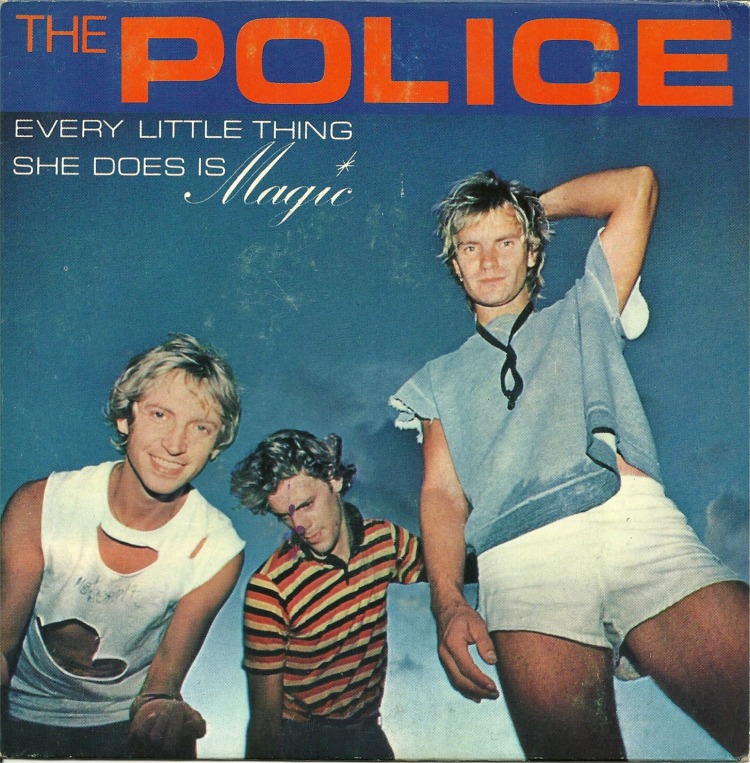
This was originally an acoustic ballad Sting wrote while The Police were known as Strontium 90 and included bassist Mike Howlett. You can hear the first recording of this song at the bottom of the post above the version that we all know.
I liked these earlier Police songs. Ghost in the Machine also included Spirits in the Material World and Invisible Sun.
The song was on the album Ghost In The Machine and was released in 1981. The album peaked at #2 in the Billboard Album Charts, #1 in the UK, #1 in Canada, and #5 in New Zealand.
The song peaked at #3 in the Billboard 100, #1 in the UK, #1 in Canada, and #7 in New Zealand in 1981.
Sting:“When I moved to London in 1975, I was struggling to make a living. I auditioned at the Zanzibar in Covent Garden. I sang ‘Every Little Thing She Does Is Magic’ and the guy said: ‘We need commercial hit songs. We don’t need this kind of stuff.'”
Stewart Copeland:“We tried it fast, we tried it slow, we tried it reggae, we tried it punk, we tried it as a bossa nova,” “We tried every which way, but nothing. To the extent that we did it different from the demo was the extent to which it didn’t sound like a hit anymore. So, eventually, in a morning grump, I show up at the studios and I say, ‘Guys, I tell you what, just play me your f–king demo, lead me through the changes and see if that works.’ So, they put up the demo, and Sting is standing over me pointing out where the verse, the chorus, and all the different pieces are. I kind of knew that by now anyway because of all the different versions we had done, and then I just cranked out one take of OK, play the f–king demo and I’ll play along and see if that works, and it kinda did.”
From Songfacts
Sting used a lyric from this, “Do I have to tell the story of a thousand rainy days since we first met? It’s a big enough umbrella but it’s always me that ends up getting wet,” on some other songs he wrote, including The Police’s “O My God” from Synchronicity and “Seven Days” from his solo album Ten Summoner’s Tales.
True to their punk roots, The Police have some colorful and dysfunctional characters in their early songs. While this song seems very endearing, the guy clearly has some issues, as he pursues a girl who does not return his affections. He might be crossing over into stalker territory as he resolves to call her up “a thousand times a day.”
The video, directed by Derek Burbidge, shows the band in Montserrat, an island in the Caribbean where they recorded the album. Many of the shots are in George Martin’s AIR Studios, where they did their recording, but we also see people of the island with the members of the band. The Police were deeply influenced by the music of the Caribbean (reggae music).
The Police had been making videos since 1978, but Ghost in the Machine was their first album released after MTV launched. It was good timing for the band – they quickly became video stars and one of the biggest acts in America.
This was the first demo Sting ever played for his bandmates. Good thing it’s not a timely tune: They didn’t record it until their fourth album, Ghost in the Machine.
In 1982 this won the Best Pop Song at the annual Ivor Novello Awards.
Sting worked up a new demo of this song in early 1981 with the French Canadian keyboard player Jean Roussel, which they recorded at Roussel’s studio near Montreal. When The Police’s record company heard it, they pegged it as a hit and had the band record it, even flying in Roussel to play on it. But getting the magic that was on the demo proved difficult, and for days they struggled with it. Finally, drummer Stewart Copeland had Sting put the demo on and count him through the changes as he played to it. Sting conducted him through it, and they finally got the drum take. The rest of it Sting, Summers and Roussel were able to complete. According to Copeland, he was seething with anger when he did his take, which gave him the energy he needed to make it work.
The intro to this song was used by German R&B singer Sebastian Hamer for “Immer Noch.” His song’s meaning is just about the opposite of the original. >>
In the book MTV Ruled the World – The Early Years of Music Video, Police drummer Stewart Copeland talks about the fallout from playing with all those buttons during this video: “‘Every Little Thing She Does Is Magic’ we shot in Montserrat, and it’s strange how that was regarded as, ‘The Who destroying equipment of our time,’ because we were trashing that Trident desk. And that desk, by the way, ended up at Studio One in A&M, here in Los Angeles, and I’ve been to five or six different studios around the world that claim that the Neve sitting in their room is the one that we trashed. And I don’t know which one is which. One Neve is the same as the other, if you ask me. And we weren’t aware of trashing it at all. We were in the habit – because we were all very fit – of climbing over it, because it was very long. And if you were over there and you wanted to get over here to hit a fader or something, we’d just climb over it. Certainly, we were not cognizant of any abuse of the console. But we were just dancing around.”
This song was included on Ghost in the Machine to try and “leaven the rather sober tone of the rest of the record,” Sting wrote in Lyrics By Sting. “It was written in 1976, the year I moved to London. I had no money, no prospects, nowhere to live. All I had was Stewart Copeland’s phone number and some vague idea of forming a band. It was the year of the Sex Pistols, punk rock, aggressive loud music, violent lyrics, and ‘Anarchy In The UK.’ And I wrote this song, which tells you how in touch with the times I was.”
This was used in The Office (US) episode “Phyllis’ Wedding” in 2007. It also appears on the soundtrack of the Adam Sandler movie The Wedding Singer and the 2005 film Bewitched. >>
A rather obvious hit, this was the first single from the Ghost in the Machine everywhere except the UK, where “Invisible Sun,” a song dealing with the political climate in Belfast, was issued first.
Every Little Thing She Does Is Magic
Though I’ve tried before to tell her Of the feelings I have for her in my heart Every time that I come near her I just lose my nerve As I’ve done from the start
Every little thing she does is magic Everything she do just turns me on Even though my life before was tragic Now I know my love for her goes on
Do I have to tell the story Of a thousand rainy days since we first met It’s a big enough umbrella But it’s always me that ends up getting wet.
Every little thing she does is magic Everything she do just turns me on Even though my life before was tragic Now I know my love for her goes on
I resolved to call her up a thousand times a day. And ask her if she’ll marry me in some old fashioned way. But my silent fears have gripped me long before I reach the phone Long before my time has tripped me must I always be alone
Every little thing she does is magic Everything she do just turns me on Even though my life before was tragic Now I know my love for her goes on
Every little thing she does is magic Everything she do just turns me on Even though my life before was tragic Now I know my love for her goes on
Oh yeah oh yeah oh yeah Every little thing, every little thing, every little thing, every little thing Every little, every little, ever little, every little thing she does Every little thing she does Every little thing she does Every little thing she does
I was moved by this movie. It brought back the Cold War that even as kids we thought about from time to time. I watched this movie Wednesday night and I have been thinking about it ever since.
It’s not a movie to cheer you up by any means. It’s about an elderly British couple named Jim and Hilda Bloggs who read that war was about to begin. This was made during the cold war and Jim comes home with government brochures on how to prepare for a nuclear attack. They both keep thinking of WW2 and neither were knowledgeable on the horrors of nuclear war.
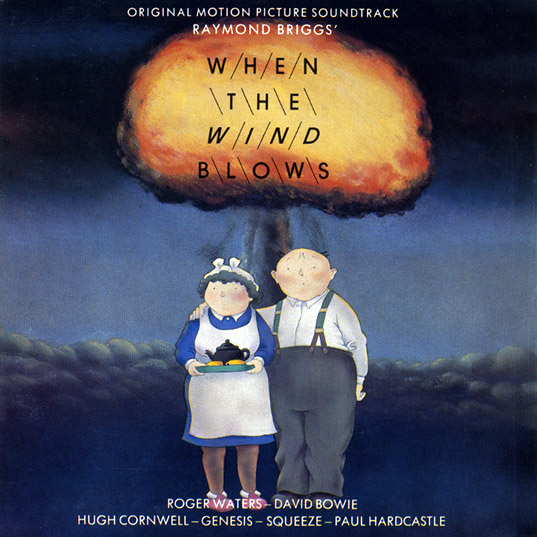
You really get invested in this couple and as the story unfolds and it’s terribly realistic. Jim keeps reading the brochure and both are optimistic about it all without fully understanding it…Even after the worse happens they remain confident that all will be well…it’s worth a watch. When the Wind Blows was based on a 1982 graphic novel, by British artist Raymond Briggs, that shows a nuclear attack on Britain by the Soviet Union.
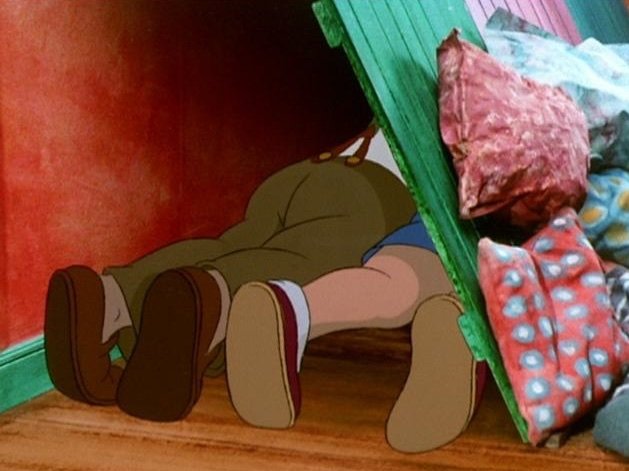
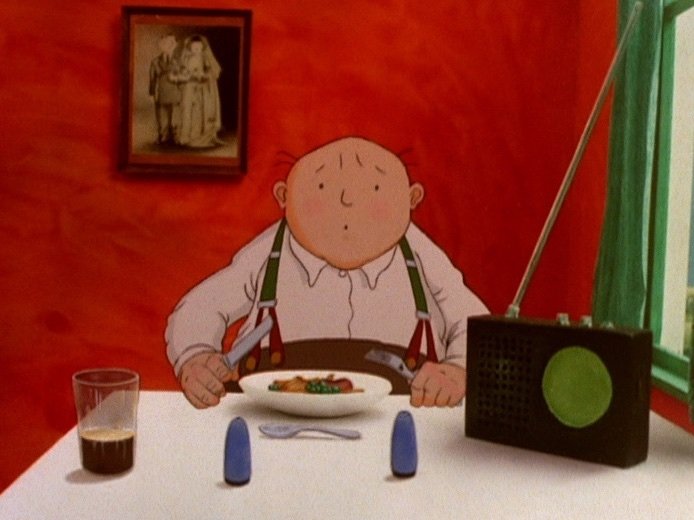
It looks like a stop-motion background but with cartoon characters for the bulk of the movie. A technical crew employed a striking combination of hand-drawn and stop-motion animation to bring to life Briggs’ characters, the numerous fantasy/dream sequences, and the soon-to-be nuclear-ravaged, picture-postcard surroundings of the Sussex countryside.
The music… David Bowie sings the theme “When The Wind Blows” and he was going to give more tracks but decided to back out to focus on his album. Roger Waters came in and finished it up. Squeeze also adds to the soundtrack.
Yet another hit off of Born in the USA. It took me a little longer to get into this one. This was intially my least favorite song on the Born in the USA album. It grew on me because of the guitar.
Springsteen wrote this for Donna Summer, but decided to keep it for himself after recording the demo. A fan of the disco diva, Springsteen gave her a song called “Protection.”
Cover Me would have fit Donna Summer perfectly. The song peaked at #7 in the Billboard 100, #16 in the UK, #12 in Canada, and #7 in New Zealand in 1984.
Arthur Brown did a remix of Cover Me and Bruce liked it so much that he started to adapt parts of it live. This version peaked at #11 in the Billboard Dance/Club Charts in 1984.
The Arthur Baker Remix
Cover Me
The times are tough now, just getting tougher This whole world is rough, it’s just getting rougher Cover me, come on baby, cover me Well I’m looking for a lover who will come on in and cover me
Now promise me baby you won’t let them find us Hold me in your arms, let’s let our love blind us Cover me, shut the door and cover me I’m looking for a lover who will come on in and cover me
Outside’s the rain, the driving snow I can hear the wild wind blowing Turn out the light, bolt the door I ain’t going out there no more
This whole world is out there just trying to score I’ve seen enough I don’t wanna see any more, Cover me, come on in and cover me I’m looking for a lover who will come on in and cover me
Outside’s the rain, the driving snow I can hear the wild wind blowing Turn out the light, bolt the door I ain’t going out there no more
This whole world is out there just trying to score I’ve seen enough I ain’t gonna see any more, Cover me, wrap you arms around and cover me Well I’m looking for a lover who will come on in and cover me Ah looking for a lover who will come on in and cover me Yeah I’m looking for a lover who will come on in and cover me
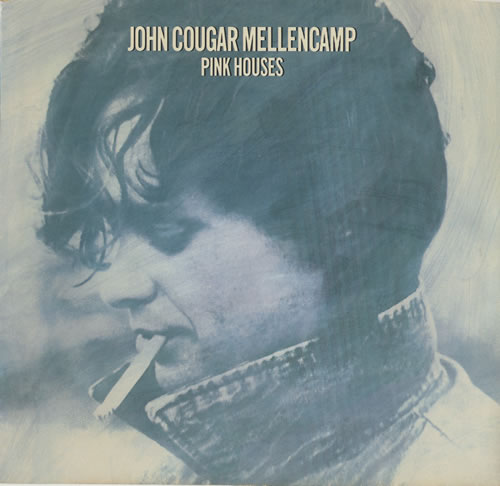
I remember this song well but I also remember the MTV giveaway contest. Oh yes, you could win a free house in Indiana where Mellencamp was from…a pink one of course! MTV got a good deal on the first house…20,000 dollars…there was a reason for that. It was across the street from a toxic dump. MTV then had to get another house and they finally did and gave it away. Susan Miles won the house along with a pink jeep and a garage full of Hawian Punch…not sure how that factored in.
Inspiration for this song came when Mellencamp was driving on Interstate 65 in Indianapolis. As described in the first verse, he saw a black man sitting in a lawn chair just watching the road. The image stuck with Mellencamp, who wasn’t sure if the man should be pitied because he was desolate, or admired because he was happy.
Pink Houses peaked at #8 in the Billboard 100 and #15 in Canada in 1984. The song was on the Uh-Huh and that album peaked at #9 on the Billboard Album Charts in 1984. This is the album that in my opinion placed John Mellencamp with the so-called “Heartland Rockers” like Bruce Springsteen, Tom Petty, and Bob Seger.
From Songfacts
Mellencamp is from a rural town in Indiana and often writes about the American experience. His songs are sometimes misinterpreted as patriotic anthems, when a deeper listen reveals lyrics that deal with the challenges of living in America as well as the triumphs. Mellencamp has expressed his love for his country, but has also criticized the US government for going to war in Iraq, developing a dependency on foreign oil and not doing more to support the working class.
“It’s really an anti-American song,” Mellencamp told Rolling Stone about “Pink Houses.” “The American dream had pretty much proven itself as not working anymore. It was another way for me to sneak something in.”
MTV ran a contest based on this song where they gave away a pink house in Indiana. They got a great deal on the place – John Sykes at the network remembers paying $20,000 for it – but unfortunately, the house was across from a toxic waste dump. When Rolling Stone ran an article pointing this out, Sykes flew to Indiana and bought another house, which is the one they gave away (after painting it pink). The ordeal provided one of the many strange-but-true memories of the early MTV years (and not the only one involving a contest – when they did a promotion with Van Halen making a viewer a “roadie for a day,” the guy who won almost died from the alcohol, drugs and assorted excess). According to Sykes, the house near the waste dump stayed on the books at MTV until 1992, as they couldn’t get rid of it.
Uh-Huh was the first album where Mellencamp used his real name. His manager named him “Johnny Cougar” when he started out, a name he used on his first two albums. He then became “John Cougar” until his seventh album, Uh-Huh, when he used John Cougar Mellencamp. In 1990, he recorded as John Mellencamp.
Changing his name was out of character, as he was notoriously combative with his record company and refused to participate in conventions like listening parties. But he knew that the only way he could ever call his own shots was by making hits, and the name change seemed like a good call, even though it didn’t suit him. When his plan worked, earning his autonomy, he started the process of changing to his real name.
Mellencamp’s previous hits, notably “Hurts So Good” and “Jack & Diane,” took him a long time to write. “Pink Houses” was different, and marked a creative breakthrough.
“I started writing every day and painting and drawing, and I found myself open to suggestion,” he said in his Plain Spoken DVD. “I wrote a song called ‘Pink Houses’ that came very quickly. I wasn’t thinking about it – I saw something a couple of days before, and I just more-less reported on it, and it came out to be ‘Pink Houses.’ True art is always a surprise. It’s not constructed. If it doesn’t surprise the person that’s writing it, it’s not going to surprise the person that’s listening.”
Mellencamp performed an 8-minute version of this with Kid Rock at the 2001 “Concert For New York,” a benefit for victims of the World Trade Center attacks.
Pink Houses
There’s a black man with a black cat Living in a black neighborhood He’s got an interstate running’ through his front yard You know, he thinks, he’s got it so good And there’s a woman in the kitchen cleaning’ up evening slop And he looks at her and says: “Hey darling, I can remember when you could stop a clock”
Oh but ain’t that America, for you and me Ain’t that America, we’re something to see baby Ain’t that America, home of the free, yeah Little pink houses for you and me, oh for you and me
Well there’s a young man in a T-shirt Listenin’ to a rock ‘n’ roll station He’s got a greasy hair, greasy smile He says: “Lord, this must be my destination” ‘Cause they told me, when I was younger Sayin’ “Boy, you’re gonna be president” But just like everything else, those old crazy dreams Just kinda came and went
Oh but ain’t that America, for you and me Ain’t that America, we’re something to see baby Ain’t that America, home of the free, yeah Little pink houses, for you and me, oh baby for you and me
Well there’s people and more people What do they know, know, know Go to work in some high rise And vacation down at the Gulf of Mexico Ooo yeah
And there’s winners, and there’s losers But they ain’t no big deal ‘Cause the simple man baby pays the thrills, The bills and the pills that kill
Oh but ain’t that America, for you and me Ain’t that America, we’re something to see baby Ain’t that America, home of the free, yeah Little pink houses for you and me, ooo, ooo yeah
Ain’t that America, for you and me Ain’t that America, hey we’re something to see baby Ain’t that America, oh the home of the free, Yeah yeah yeah yeah yeah yeah yeah Little pink houses babe for you and me, ooo yeah ooo yeah
I remember Columbo well when I was a kid but I never watched it much…until the lockdown that we all are going through. Now I know why this show was popular. A detective show that shows you “who done it” before you are into it for 10 minutes. You get enjoyment out of seeing how Columbo can find the killer. Back in the early seventies…Columbo was one of the most popular characters on television.
Peter Falk played Columbo for 35 years and in five different decades (1968-2003) counting the pilots. He looked like a walking unmade bed but was brilliant at solving cases. He would pester his suspect to death…very polite with “I’m sorry” and the main phrase as he was walking away…”There’s just one more thing.” that is followed by “There’s something that bothers me” and so on.
The killer would end up confessing or probably wanting to beg for jail simply to escape him.
The show lasted for 69 episodes. Each episode was over an hour long. It was part of The NBC Mystery Movie program that worked on a rotating basis – one per month from each of its shows. The shows were McMillian and Wife, McCloud, Hec Ramsey, and Columbo. Columbo was taken off the air in the late seventies but came back on the air in the eighties.
Falk had to wear a glass eye because his eye was taken out because of a tumor when he was 3 years old. That made Columbo’s trademark squint. He wore his raincoat and later on had a basset hound. Stories of his wife were always at hand all the while studying his suspect to see if they would slip.
Falk really made that role. If you get a chance to see it…try it. The stories are interesting and you will see some stars you might have forgotten about.
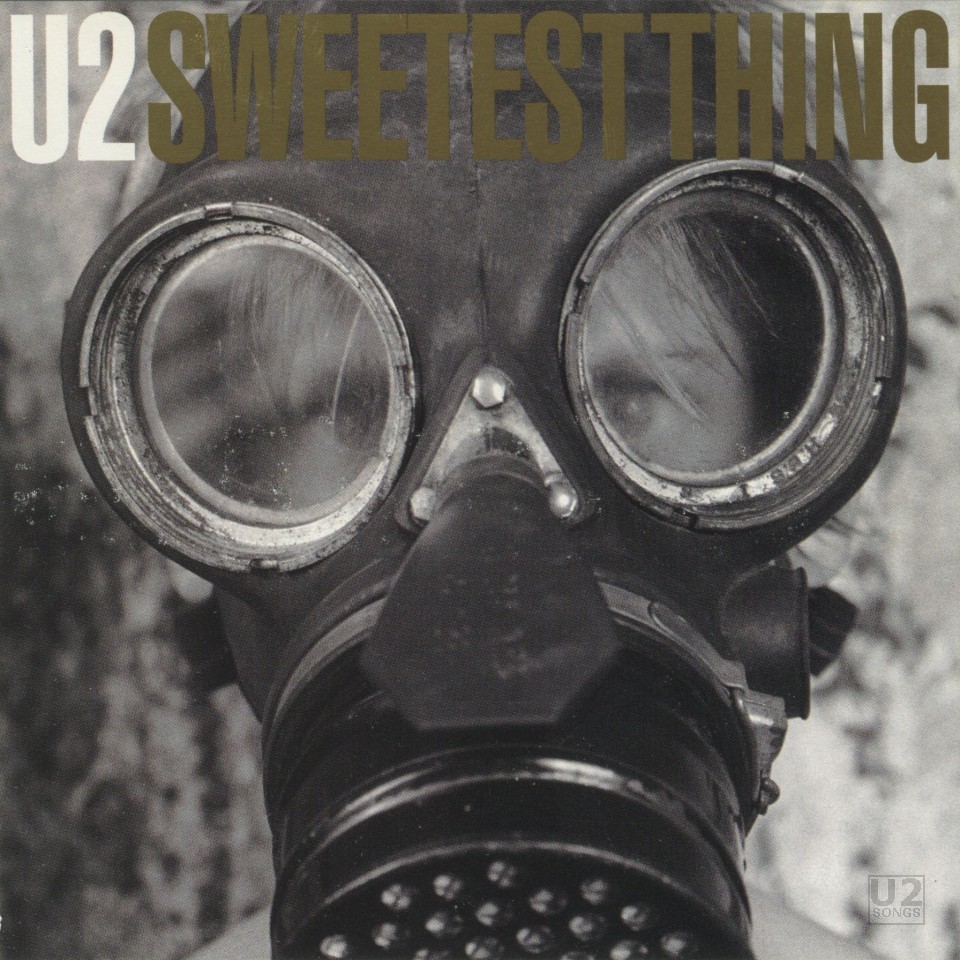
Bono wrote this as a birthday present to his wife, Ali. On her birthday, he was working on recording The Joshua Tree, so he was trying to make up for it. It was originally released as a B-side on the “Where the Streets Have No Name” single in 1987. The song was later re-recorded and re-released as a single in October 1998 for the band’s compilation album The Best of 1980–1990.
The song peaked at #63 in the Billboard 100 in 1998.
All proceeds from the song were given to the charity “The Children of Chernobyl”, which was chosen by Ali as her chosen charity, an organization that brought children affected by the Chernobyl disaster to visit and stay with Irish families.
Bono about his wife: “I’m a bit of a stray dog. I would not have been in the queue to get married had I not met someone as extraordinary as Ali. I always felt more myself with her than with anybody.” He describes the first time he saw her: “I thought she looked Spanish, a rose for sure, dark with blood-red lips.”
From Songfacts
U2 recorded this for The Joshua Tree, but left it off because they felt it did not fit in on the album. It was originally released as the B-side to a 7″ single that also included “Where The Streets Have No Name” and “Silver And Gold.”
This was rerecorded and released on U2 The Best Of 1980-1990 in 1998.
In 1998, this was released as a single with proceeds going to Children Of Chernobyl, the favorite charity of Bono’s wife, Ali.
The video shows Bono orchestrating an elaborate apology to Ali, who appears at the beginning of the clip getting into a horse-drawn carriage. The camera then cuts to Bono, who is facing her, and stays on him as they go for a ride down a street in Dublin. Along the way, Bono makes various outlandish offerings to win her favor, starting with the Irish group Boyzone, who climb on board. Next comes a marching band, a fire engine (with firemen), a string section, Irish step dancers from Riverdance, and an elephant. It’s not clear if the apology works, but he sure made an effort.
It looks like the Bono section is all one shot, but there are actually several edits made where the light flares come in. Kevin Godley, who directed it, did something similar on U2’s video for “Numb,” where the camera stays on The Edge for almost the entire time.
U2 didn’t play this live until March 17, 2000, when they played it a ceremony in Dublin where they were being honored. The following year, it made the setlist for their Elevation tour, then was mothballed until 2015 for their Innocence + Experience tour.
Boyzone star Ronan Keating revealed to co-host Harriet Scott on the Magic Radio Breakfast Show that Bono initially offered the song to him, but he insisted that U2 take it instead. Keating said: “It was U2’s, they had to sing it, I knew they had to sing it.
The Sweetest Thing
My love she throws me like a rubber ball Oh oh oh, the sweetest thing She won’t catch me or break my fall Oh oh oh, the sweetest thing Baby’s got blue skies up ahead But in this I’m a rain cloud You know she likes a dry kind of love Oh oh oh, the sweetest thing
I’m losing you I’m losing you Ain’t love the sweetest thing
I wanted to run but she made me crawl Oh oh oh, the sweetest thing Eternal fire, she turned me to straw Oh oh, the sweetest thing You know I got black eyes But they burn so brightly for her This is a blind kind of love Oh oh oh, the sweetest thing
I’m losing you Oh oh oh, I’m losing you yeah Ain’t love the sweetest thing Ain’t love the sweetest thing Oh oh, yeah, oh
Blue-eyed boy meets a brown-eyed girl Oh oh oh, the sweetest thing You can sew it up but you still see the tear Oh oh oh, the sweetest thing Baby’s got blue skies up ahead And in this I’m a rain cloud Oh this is a stormy kind of love Oh oh oh, the sweetest thing
Oh oh, the sweetest thing Oh oh oh, the sweetest thing
When John Fogerty released the Centerfield album in 1985 I was excited. He had disappeared from the music scene for 10 years. I gave up hope of ever hearing new music from him. I kept hoping he would regroup with Creedence but I didn’t know at that time of the hostile history between them. This album was highly anticipated. I bought the album and it didn’t disappoint.
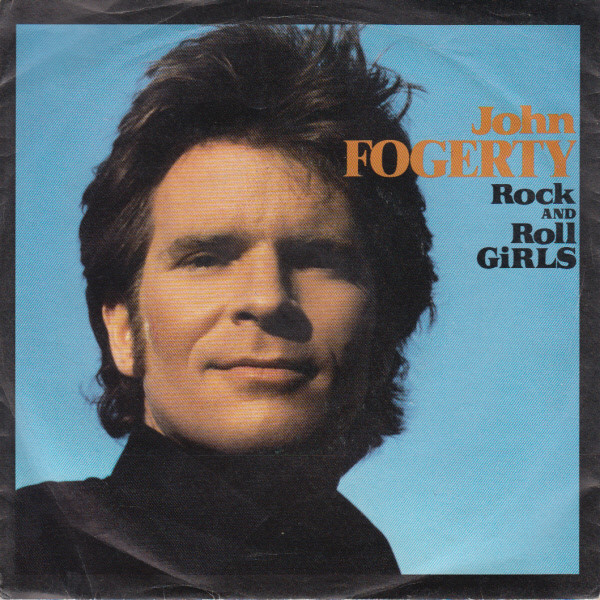
This is the second track on Fogerty’s Centerfield album, his first in 10 years. The song was inspired by his 12-year-old daughter, Laurie. Fogerty would watch her and her best friend hanging out and jokingly call them the Rock and Roll Girls.
The song peaked at #20 in the Billboard 100, #16 in Canada, #38 in New Zealand, and #83 in the UK in 1985.
Rock and Roll Girls
Sometimes I think life is just a rodeo The trick is to ride and make it to the bell But there is a place, sweet as you will ever know In music and love and things you never tell You see it in their face, secrets on the telephone A time out of time, for you and no one else
Hey, let’s go all over the world Rock and roll girls, rock and roll girls
Yeah, yeah, yeah
If I had my way, I’d shuffle off to Buffalo Sit by the lake and watch the world go by Ladies in the sun, listenin’ to the radio Like flowers on the sand, the rainbow in my mind
Hey, let’s go all over the world Rock and roll girls, rock and roll girls
Hey, let’s go all over the world Rock and roll girls, rock and roll girls
Hey, let’s go all over the world Rock and roll girls, rock and roll girls, yeah, yeah, yeah
This wraps up Full Moon Fever for the week. I hope you enjoyed it. I didn’t cover every song but we did get to quite a few. The other posts on this album are at the bottom.
This song I don’t hear much more…Love Is A Long Road is a song that I had forgotten about which got some airplay back in 1989.
This is one of the many songs that charted from Full Moon Fever. This song peaked at #7 in the Billboard Mainstream Rock Tracks in 1989. Tom Petty and Mike Campbell wrote this song. This was the 5th single released from the album. Dave from “Have A Sound Day” has a good post about this album.
How did Jeff Lynne meet Tom Petty about producing Full Moon Fever? Jeff said he was on Sunset Boulevard and saw Tom… Here is what Jeff said: “He beeped his horn and I kept thinking, ‘Who’s that?’” “And it was Tom. ‘Hi, Tom!’ He said, ‘Pull over – I wanna have a word with you.’ He’d just been listening to George [Harrison’s album, Cloud Nine, which I’d just worked on, co-produced it, and he really liked it. He said, ‘Do you fancy writing some songs together?’ I said, ‘I sure do.’”
There was a girl I knew She said she cared about me She tried to make my world The way she thought it should be Yeah we were desperate then To have each other to hold But love is a long, long road
There were so many times I would wake up at noon With my head spinning ’round I would wait for the moon And give her one more chance To try and save my soul But love is a long, long road
Yeah it was hard to give up Some things are hard to let go Some things are never enough I guess I only can hope For maybe one more chance To try and save my soul But love is a long, long road
Tom Petty had written this song for Southern Accents, and it had in the vault for that time. They were going through songs really fast, and Jeff Lynne asked, ‘Have you got anything laying around?’ Tom brought this song out of the closet. He had cut a demo with Stevie Nicks (video at the bottom), just the two of them. That was the only thing Tom had, just that demo. Jeff made it into a Buddy Holly Style record.
The song added to the texture of Full Moon Fever. It is a fun song along with Yer So Bad.
Jeff Lynne on Tom Petty: “I always liked Tom,” “I always loved his style, and he’s so American. It’s a great thing for an English person to actually work with a real Southern American… they’ve got the best voices. George always said, ‘It’s like they’ve got a head start over English people because they already have a twang.’ They’ve just got this lovely-sounding voice.”
Tom Petty and Stevie Nicks on the Demo
The Apartment Song
I used to live in a two-room apartment Neighbors knockin’ on my wall Times were hard, I don’t wanna knock it I don’t miss it much at all
[Chorus:] Oh yeah I’m alright I just feel a Little lonely tonight I’m okay, most of the time I just feel a little lonely tonight
I used to need your love so badly Then I came to live with it Lately I get a faraway feeling And the whole thing starts again
Steve Nicks visited Atlantic Records’ president Doug Morris and made her pitch for her first solo record: “So, listen, what I’d really like to do is be in Tom Petty and the Heartbreakers’ band. He said, ‘No. That’s not going to happen.'” She then asked: “So I can make, like, a Tom Petty girl album?” And she made Bella Donna.
Tom Petty met Nicks while he was recording his group’s album Damn The Torpedoes. She asked him half-jokingly if he could write her a song that she could record for her first solo album. Petty didn’t take her request seriously at first, but Nicks reiterated her request a year later as Petty was putting together his Hard Promises album. Petty wrote a ballad called “Insider” at his home, played it to the Heartbreakers (to their approval), recorded a demo with his band, and sent the demo to Nicks. After listening to the demo of “Insider,” Nicks visited Petty at his studio, taped the song with Petty and the Heartbreakers, then gave the tape to Petty, saying, “You love this so much… YOU take the song.” He did, and included it on Hard Promises.
Shortly after Insider was finished, Petty and company recorded a song that he and guitarist Mike Campbell composed about a year earlier…”Stop Draggin’ My Heart Around” – and sent that demo to Nicks’ producer, Jimmy Iovine. She loved it, saying, “That’s what I wanted all along.” Nicks and Petty ended up doing it as a duet.
The song peaked at #3 in the Billboard 100, #5 in Canada, and #11 in New Zealand in 1981.
Chrissie Hynde would often play the Petty role in this song when she toured with Nicks in the ’00s. They would have a lot of fun with the song…I have it at the bottom.
From Songfacts
This song is about a couple with a complicated relationship. She wants to get rid of him, but he has a hold on her heart. When she tells him to stop dragging that heart around, he explains that he’s just trying to protect her, as “you need someone looking after you.”
Many of the songs Nicks has sung over the years involve hearts in different states of breaking, and many are about her intimate relationships, written either by her or her Fleetwood Mac bandmate/soulmate, Lindsey Buckingham. This song is one of the few she could sing without dealing with the emotional baggage behind it, as it has nothing to do with her personally.
Nicks wanted Petty to produce Bella Donna. He gave it a shot, but it didn’t work out and Jimmy Iovine was brought in. This created an interesting dynamic as Iovine and Nicks began living together while they were making the album.
This was the biggest hit for either Stevie Nicks (as a solo act) or Tom Petty and the Heartbreakers (who had a competing single out – “Woman In Love” – that didn’t chart). Five years later, they joined forces again and hit #37 with a live version of the Springfields/Searchers classic “Needles and Pins.”
In addition to being The Heartbreakers’ guitarist, Mike Campbell has played on albums by many other artists, including several by Stevie Nicks. He told us how this came together: “I had written the music and Tom had written the words. The Heartbreakers had recorded a version of it with Jimmy Iovine, and Jimmy being the entrepreneur that he was, he was working with Stevie, and I guess he asked Tom if she could try it, and it just developed from there. We cut the track as a Heartbreakers record and when she decided to do it we used that track and she came in and sang over it.” (Read more in our interview with Mike Campbell.)
This had the good fortune of being released around the time MTV went on the air. They didn’t have many videos at the time, so this got a lot of airplay. It introduced a younger audience to Nicks and Petty.
Bella Donna was Nicks’ first solo album. Her output with Fleetwood Mac sold extremely well, but solo success was hardly ensured. When Nicks finished the album, her producer Jimmy Iovine told her she didn’t have a single, and if she didn’t record “Stop Draggin’ My Heart Around,” “your record’s going to tank and then you’re not going to have a solo career.”
Nicks was dismayed about removing one of the songs on the album to make room for the track, but she took Iovine’s advice. “I went home and said, ‘You’ve got to drop this self-esteem you’ve got going on right now and realize that the whole reason you even hired Jimmy Iovine was because he produced Tom Petty and you always wanted to be in Tom Petty And The Heartbreakers,” Nicks said while introducing the song in concert. “I said: ‘Okay, I’ll do it.’ So, anyway, ‘Stop Draggin’ My Heart’ became a huge single, all because Mr. Tom Petty was generous enough to give me that song.”
The song was released as the first single and rose to #3, setting the stage for more hits. The next single was another duet: “Leather And Lace” with Don Henley, which reached #6. It wasn’t until the third single that Nicks was finally on her own: “Edge Of Seventeen” reached #11.
A few years after this was released, Dave Stewart of Euryhmics wrote “Don’t Come Around Here No More,” which he and Iovine started producing for Nicks. By this time, Iovine and Nicks had broken up, and when she came over to work on the song, things didn’t go well and she stormed out. Iovine brought in Tom Petty and they completed the song with him, something Nicks knew was fair considering “Stop Draggin’ My Heart Around” went on her album. (as told in The Dave Stewart Songbook)
On her 2001 album Trouble In Shangri-La, Nicks thanked Petty in the liner notes. She asked him to write another song for her, but he refused and encouraged her to write it herself. After that conversation, she started writing songs for the album.
Tom Petty had a connection to another song on the album. His wife, Jane, told Nicks that she was “at the age of 17” when she met Tom. Like her husband, Jane was from Gainesville, Florida, and had such a strong country accent that Stevie thought she said “edge of 17,” which provided the title for one of her most popular songs.
In the liner notes to her TimeSpace album, Stevie Nicks said: “Jimmy (Iovine) played this song to me while he was still finishing Tom’s album; it was one of those songs that Tom was not going to do, and he told Jim that I could do it. I wasn’t used to doing other people’s songs, so I didn’t really like the idea at first, but I loved Tom Petty, so I agreed to try. So we went into the studio and sang it live, together. I was completely entranced, and I instantly fell into love with the song. Duets were the things I loved the most… maybe this was a second beginning. And we would sing like no one else, and nobody else would ever sing like us.”
Petty and Nicks reunited to perform this song when Petty was honored as the MusiCares Person of the Year on February 10, 2017.
Before giving her induction speech, Harry Styles sang this with Nicks when she entered the Rock and Roll Hall of Fame in 2019 as a solo artist.
Stop Draggin’ My Heart Around
Baby you’ll come knocking on my front door Same old line you used to use before I said yeah… well… what am I supposed to do I didn’t know what I was getting into
So you’ve had a little trouble in town Now you’re keeping some demons down Stop draggin’ my… Stop draggin’ my… Stop draggin’ my heart around
It’s hard to think about what you’ve wanted It’s hard to think about what you’ve lost This doesn’t have to be the big get even This doesn’t have to be anything at all
I know you really want to tell me good-bye I know you really want to be your own girl
Baby you could never look me in the eye Yeah you buckle with the weight of the words Stop draggin’ my… Stop draggin’ my… Stop draggin’ my heart around
There’s people running ’round loose in the world Ain’t got nothing better to do Than make a meal of some bright eyed kid You need someone looking after you
I know you really want to tell me goodbye I know you really want to be your own girl
Baby you could never look me in the eye Yeah you buckle with the weight of the words Stop draggin’ my… Stop draggin’ my… Stop draggin’ my heart around
It’s hard to be down and listen to this song. According to Rundgren, most of this song came to him in a dream, including the entire chorus. Fortunately, he was at home near his studio, so he was able to quickly roll out of bed, record what he could remember, and fill in the rest later.
He said that he never took the song seriously and was surprised when it was released as a sing.
The song peaked at #63 in the Billboard 100 in 1983.
Rundgren added that he believes the song became popular “solely because of the line about banging on the boss’s head,” and said, “It’s a party anthem, and at least once a year I get a request to use it in a commercial or a movie. I hate playing it live, though. I feel ape-like. My hands get tired, my ears get tired. But the audience loves it.”
From Songfacts
Rundgren is a distinguished songwriter, musician and composer, but this novelty romp is one of his most-played songs. How does he feel about the broad swath of the population that know him only for this song? In an interview with Bullz-Eye, he explained: “I like the idea that I’ve written a song that is well known to a broad segment of the population…and they have no idea why they know it! In the same sense that everybody knows ‘Happy Birthday,’ but they can’t remember the first time they heard it, and they have no idea who wrote it. But you’ve penetrated the cultural consciousness in a way that transcends the typical pop song, and what it means is that if I never have another hit record on the radio again, that song is still going to be around likely twenty-five years from now. People probably don’t remember Gary Glitter, but they know “Rock And Roll Part 2″! And in that sense, it has somewhat of a more protractile life span, I guess.”
In a Songfacts interview with Todd Rundgren, he cited this as one of the most important songs of his career, because “I made so much money off of it.” He added: “Everybody likes to hear that ‘Bang The Drum’ song, but everyone’s connection to that is that one line in the song where it talks about abusing your boss (‘I pound on that drum like it was the boss’s head’). I can identify with that, but I don’t really enjoy playing the song that much because it’s just a lot of screaming and flailing around.”
Some of the commercial uses of this song include a TV commercial for Carnival Cruise Lines and a scene in the TV show The Office. It is played at a variety of sporting events and frequently used in movie trailers. Radio stations often play it at quitting time (5 p.m.), as an anthem for working stiffs ready to escape the clutches of their employer. In 2012, Rundgren said that the song makes him “six figures every couple of months,” thanks mostly to Carnival.
After moving to Hawaii, Rundgren had some fun with this song, performing a ukulele version called “Bang On The Ukulele Daily” that he introduced as “an old Hawaiian war chant.” You can hear it on his 2000 album One Long Year.
To mark his 60th, 65th and 70th birthdays, Rundgren organized “Toddstock” celebrations for his core fans, which were intimate gatherings in the outdoors. At these events, drum circles often formed to play “Band The Drum All Day.”
Bang The Drum All Day
I don’t want to work I want to bang on the drum all day I don’t want to play I just want to bang on the drum all day
Ever since I was a tiny boy I don’t want no candy I don’t need no toy I took a stick and an old coffee can I bang on that thing till I got Blisters on my hand because
When I get older they think I’m a fool The teacher told me I should stay after school She caught me pounding on the desk with my hands But my licks was so hot I made the teacher want to dance And that’s why
Listen to this Every day when I get home from work I feel so frustrated The boss is a jerk And I get my sticks and go out to the shed And I pound on that drum like it was the boss’s head Because
I can bang that drum Hey, you want to take a bang at it? I can do this all day
When I bought Full Moon Fever in 1989 I was happy with my first pass through the album. The album doesn’t have seven hits like Born In The USA but it doesn’t have a bad track on it.
Tom Petty started running down his dream of being a rocker in 1961 when he met Elvis Presley. Petty, 11 years old, came to the Ocala, Florida set where Elvis was working on the film Follow That Dream – a title Tom took to heart. In a brief encounter, Petty saw how Elvis captivated onlookers and made the girls go crazy. Petty became fascinated with Elvis and set out to follow his path.
This song peaked at #23 in the Billboard 100, #23 in Canada, and #55 in the UK in 1989.
Those noises were made by Shannon and Jeff Lynne; Petty used them as an interlude to mark the middle of the album because you don’t have to flip over a CD. This section was included only on CD versions of Full Moon Fever but survived the transition when the album was released digitally….I have this at the bottom
From Songfacts
In this song, Petty sings about driving into the great wide open, with nothing but glorious possibility in his path.
The animated video was inspired by a comic strip called Little Nemo In Slumberland by Winsor McKay. Each strip told the story of one of Nemo’s dreams, and at the end, he always woke up.
Full Moon Fever was listed as a Tom Petty solo album even though members of The Heartbreakers played on it. Roy Orbison, George Harrison and Jeff Lynne also played on it.
Heartbreakers’ guitarist Mike Campbell wrote this with Petty and Jeff Lynne. The three of them worked on the album at Campbell’s house. Petty and Campbell were very impressed with Lynne’s production techniques, and learned a lot from the experience. Campbell gave us an example of Lynne’s style: “We’d put the mics up on the drums, and he’d walk out and take the microphone over the drum and he’d turn it away from the drum facing the corner, and he’d go ‘OK, record it like that.’ Sure enough, 99% of the time he’d be right. We’d go, ‘Yes sir, Mr. Lynne.’ We learned so much from him about arrangements and countermelodies and all kinds of stuff.” (Check out our interview with Mike Campbell.)
The line, “Me and Del were singin,’ little ‘Runaway'” is a reference to the 1961 Del Shannon hit “Runaway.” Shannon is credited on the album for “barnyard noises,” which can be heard just after this song ends on the album. Under the animal noises, Petty says, “Hello CD listeners. We have come to the point in this album where those listening on cassettes or records will have to stand – up or sit down – and turn over the record or tape. In fairness to those listeners, we will now take a few seconds before we begin Side 2. Thank you, and here is Side 2.”
In 2007, the documentary Runnin’ Down A Dream was released. Directed by Peter Bogdanovich, the film chronicles the career of Tom Petty and the Heartbreakers. >>
Tom Petty and the Heartbreakers played this at the halftime show of the Super Bowl in 2008. Rather than the usual medley of hits, the band played four full songs, the others being “American Girl,” “I Won’t Back Down” and “Free Fallin’.”
Hello CD Listeners
Runnin’ Down A Dream
It was a beautiful day, the sun beat down I had the radio on, I was drivin’ Trees flew by, me and Del were singin’ little Runaway I was flyin’
Yeah runnin’ down a dream That never would come to me Workin’ on a mystery, goin’ wherever it leads Runnin’ down a dream
I felt so good like anything was possible I hit cruise control and rubbed my eyes The last three days the rain was unstoppable It was always cold, no sunshine
Yeah runnin’ down a dream That never would come to me Workin’ on a mystery, goin’ wherever it leads Runnin’ down a dream
I rolled on as the sky grew dark I put the pedal down to make some time There’s something good waitin’ down this road I’m pickin’ up whatever’s mine
Yeah runnin’ down a dream That never would come to me Workin’ on a mystery, goin’ wherever it leads Runnin’ down a dream
I’m including at least one song off of Tom’s album Full Moon Fever every day this week…So if you don’t know the album stay tuned, if like the album stay tuned,and if you don’t like the album…sorry. It was a great album released in 1989 that was arguably the peak of Tom’s career.
Full Moon Fever
Tom was not happy with the last Heartbreakers album (Let Me Up (I’ve Had Enough) released in 1987 and wanted a change. Mike Campbell (Heartbreakers guitar player): “Tom called me up and said, ‘We’re done. I think we’re done.” He called back later and said that at least temporarily he wasn’t going to work with the Heartbreakers.
He ended up using Belmont Tench and Howie Epstein from the Heartbreakers for a few songs but it was Tom Petty, Jeff Lynne, Mike Campbell and Phil Jones on drums who made the album. They did have some help from George Harrison, Roy Orbison, and Del Shannon among others.
Released in 1989, Full Moon Fever would become Petty’s greatest commercial success. During its creation Jeff Lynne helped inspire him to create some of his best and most popular songs. But along the way he also risked further alienating several members of the Heartbreakers.
Free Fallin’
Free Fallin’ may be the song he is most remembered. Tom Petty and Jeff Lynne wrote and recorded “Free Fallin'” in just two days, the first song completed for Full Moon Fever.“We had a multitude of acoustic guitars,” Petty told Rolling Stone of the song’s Byrds-y feel. “So it made this incredibly dreamy sound.”
The song peaked at #7 in the Billboard 100, #5 in Canada, #4 in New Zealand, and #59 in the UK in 1989.
Tom Petty: “There’s not a day that goes by that someone doesn’t hum ‘Free Fallin” to me or I don’t hear it somewhere,” “But it was really only 30 minutes of my life.”
From Songfacts
Mike Campbell is The Heartbreakers’ guitarist. He has also produced and written the music for many of their songs, as well as “The Boys of Summer” and “The Heart Of The Matter” for Don Henley. Mike told us about working with Jeff Lynne: “When we did that first record with Jeff Lynne, Full Moon Fever, that was an amazing time for me because it was mostly just the three of us – me and Tom and Jeff – working at my house. Jeff Lynne is an amazing record-maker. It was so exciting for a lot of reasons. First of all, our band energy in the studio had gotten into kind of a rut, we were having some issues with our drummer and just kind of at the end of our rope in terms of inspiration – having a lot of trouble cutting tracks in the studio.
This project came along and really we were just doing it for fun at the beginning, but Jeff would come in and every day he would blow my mind. It was so exciting to have him and Tom come over and go, ‘OK, here’s this song,’ and then Jeff would just go. I’d never seen this done before, he’d say, ‘OK, here’s what we’re going to do: Put a drum machine down. Now put up a mic, we’re going to do some acoustic guitars. Put up another mic, were going to do a keyboard. OK, here’s an idea for the bass. Mike, let’s try some guitar on this. I’ve got an idea for a background part here…’
Sure enough, within five or six hours, the record would be done, and we’d just sit back and go, ‘How the f-ck did you do that?’ We were used to being in the studio and like ‘OK, here’s how the song goes’ and everybody would set up to play and just laboriously run the song into the ground, and it usually got worse and worse from trying to get the groove and the spirit and trying to get a performance out of five guys at once. This guy walked in and he knew exactly how to put the pieces together, and he always had little tricks, like with the background vocals how he would slide them in and layer them, and little melodies here and there. Tom and I were soaking it up. Pretty amazing, a very exciting time, like going to musical college or something.” (Read more in our interview with Mike Campbell.)
In a 2006 interview with Esquire magazine, Petty said: “‘Free Fallin” is a very good song. Maybe it would be one of my favorites if it hadn’t become this huge anthem. But I’m grateful that people like it.”
The lyrics deal with Los Angeles culture, mentioning actual places in the area: Reseda, Mulholland and Ventura Boulevard. It implies that the people of LA will casually use others for personal gain, as the singer has just dumped a girl and doesn’t even miss her. Petty was born and raised in Gainesville, Florida and moved to LA with The Heartbreakers in 1974. His outsider perspective came in handy in this song.
Directed by Julien Temple, the music video was ahead of its time in that it featured skateboarding before the X Games existed and action sports went mainstream. Legendary skater Mark “Gator” Rogowski appears in the video.
Petty considers this song a ballad; it’s one of his few hits without a guitar solo. There are plenty of ballads on his albums, but his record companies rarely released them as singles.
Petty and the Heartbreakers played this to close out their set at the halftime show of the Super Bowl in 2008. The song turned out to be appropriate for the New England Patriots, who were undefeated going into the game and led at halftime, only to lose at the end to the New York Giants. In 2002, when the Patriots won their first Super Bowl, the featured song at halftime was “Beautiful Day” by U2.
A live version by John Mayer returned this song to the US Hot 100 in July 2008, going to #51.
Petty performed this song, along with “Runnin’ Down A Dream,” with The Heartbreakers on Saturday Night Live when they were the musical guests on May 20, 1989. Their record company, MCA, wanted them to play “I Won’t Back Down,” which was out as a single and climbing the charts, but Petty defied them.
Petty often tells a story about performing this song at a pivotal night in his career. His label, MCA, rejected the Full Moon Fever album when he submitted it in 1988, claiming they didn’t hear a hit. Crestfallen, he went to a dinner party with George Harrison and Jeff Lynne at the home of Mo Ostin, head of Warner Bros. Records. Harrison had them break out the guitars and play “Free Fallin’,” which everyone thought was great. When Petty explained that it wasn’t good enough for his label, Ostin offered to sign him and put it out. They did the deal, but kept it secret until Petty fulfilled his commitment to MCA. Ostin didn’t have to put it out though: In 1989, management changed at MCA; the new regime liked Full Moon Fever and released it.
While MCA kept him in limbo, Petty teamed up with Lynne, Harrison, Roy Orbison and Bob Dylan to form the Traveling Wilburys, a fruitful and highly acclaimed collaboration that sold over 3 million copies of their first album.
The song achieved its highest position on the UK singles chart in May 2012 after being covered by contestant Max Milner on the music talent show The Voice. It previously peaked at #64 in 1989.
Here’s what Tom Petty said about this song on his VH1 Storytellers appearance:
“‘I used to ride down Mulholland Drive and make up songs. Some of the songs were good, and some of the songs just wouldn’t swing. I had this one: [sings] ‘Mulholland Drive’ and I never could get anywhere with that song. So, I sat down one day with my friend Jeff Lynne and we were playing around on the keyboard. I hit this lick and he said, ‘That’s a good lick you got there,’ and I played it again. So, just to make him laugh I started to make up words:
She’s a good girl, loves her mama
Loves Jesus and America too
She’s a good girl, crazy about Elvis…
And he goes, ‘Good.’
I said, ‘What? What was good?’
‘It’s all good, just sing that.'”
The girl in the music video is Devon Kidd (born Devon Renee Jenkin). She also had roles in Enemy Of The State, Slammer Girls and Slumber Party Massacre III.
She was a gymnast and model when she got the call to audition for “Free Fallin’.”
“I don’t know if you want to do it,” her agent said. “It’s a small job.”
She knew Tom Petty and “Free Fallin'” and jumped at the opportunity. Today, it’s probably the role she’s best known for.
Free Fallin’
She’s a good girl, loves her mama Loves Jesus and America too She’s a good girl, crazy ’bout Elvis Loves horses and her boyfriend too
It’s a long day living in Reseda There’s a freeway runnin’ through the yard And I’m a bad boy ’cause I don’t even miss her I’m a bad boy for breakin’ her heart
And I’m free, free fallin’ Yeah I’m free, free fallin’
All the vampires walkin’ through the valley Move west down Ventura boulevard And all the bad boys are standing in the shadows All the good girls are home with broken hearts
And I’m free, free fallin’ Yeah I’m free, free fallin’ Free fallin’, now I’m free fallin’, now I’m Free fallin’, now I’m free fallin’, now I’m
I want to glide down over Mulholland I want to write her name in the sky Gonna free fall out into nothin’ Gonna leave this world for a while
And I’m free, free fallin’ Yeah I’m free, free fallin’
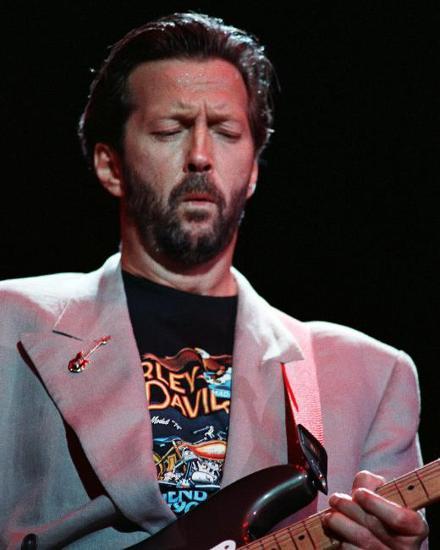
When I think of lead guitar players…Eric Clapton is usually the first to automatically come to mind. I’ve seen Clapton twice and was always impressed with his trademark blues licks. His Cream era guitar playing influenced generations of guitar players.
This is a song I don’t hear as much anymore and I’ve always liked it. This song was written and originally recorded by the rock pioneer Bo Diddley in 1957.
He never considered putting it on a record until guitarist Robert Cray and drummer Jim Keltner started jamming on the song one day in the studio during the Journeyman sessions. The Cray/Clapton combo on this song makes it a favorite of guitar fans.
Eric released the song as the B-side of “Bad Love,” the first single from Journeyman. …I like this one better than the A side.
Before You Accuse Me
Before you accuse me, take a look at yourself Before you accuse me, take a look at yourself You say I’ve been spending my money on other women You’ve been taking money from someone else
I called your mama ’bout three or four nights ago I called your mama ’bout three or four nights ago Well your mother said “Son” “Don’t call my daughter no more”
Before you accuse me, take a look at yourself Before you accuse me, take a look at yourself You say I’ve been spending my money on other women You’ve been taking money from someone else
Come back home baby, try my love one more time Come back home baby, try my love one more time If I don’t go on and quit you I’m gonna lose my mind
Before you accuse me, take a look at yourself Before you accuse me, take a look at yourself You say I’ve been spending my money on other women You’ve been taking money from someone else






 PowerPop... An Eclectic Collection of Pop Culture