This is probably the first song I remember by Iggy Pop back in the 80s.
This song was originally recorded by Australian rocker Johnny O’Keefe with The Deejays in 1958 as “Wild One.” Deejays saxophonists Johnny Greenan and Dave Owens drafted the song over drinks after a particularly wild concert and Johnny O’Keefe later chipped in.
The song was an immediate hit and made Johnny O’Keefe the first Australian rocker to reach the national charts. Iggy Pop covered it for his Blah Blah Blah album. Released as a single, it became his only UK Top 10 hit.
The song peaked at #1 in New Zealand, #10 in the UK, #65 in Canada, and #27 in the Mainstream Rock Billboard Charts.
The album Blah Blah Blah peaked at #75 in the Billboard Album Charts, #61 in Canada, #43 in the UK, and #19 in New Zealand in 1986.
From Songfacts
Johnny O’Keefe (1935-1978) was a pioneering Australian Rock singer whose career began in the 1950s and ended with his early death in the late 1970s of barbiturate poisoning. Often referred to by his nickname, “The Wild One,” O’Keefe was the first Australian Rock star.
The lyrics are about youngsters wanting to be cool and wild.
In Australia this has been used as the theme music for the ABC’s all-night music video show Rage for over 20 years.
Iggy Pop’s version has featured in the movies Adventures in Babysitting (1987) and Problem Child 2 (1991).
A cover by Christopher Otcasek featured in Pretty Woman (1989). Other cover versions include “Real Wild Child” by Joan Jett and The Blackhearts (1993), “Wild One” by Status Quo (2003) and Christian pop band Everlife’s “Real Wild Child,” which appears as the theme song in Disney’s The Wild (2006). >>
This is Kesha’s favorite song. She told Spinmagazine: “It’s the last song I play before I walk onstage and the first song I play when I get off stage. It always gets me going.”
Real Wild Child (Wild One)
Well I’m just outta school Like I’m real real cool Gotta dance like a fool Got the message that I gotta be A wild one Ooh yeah I’m a wild one
Gotta break it loose Gonna keep ’em movin’ wild Gonna keep a swingin’ baby I’m a real wild child
Gonna met all muh friends Gonna have our self a ball Gonna tell my friends Gonna tell them all That I’m a wild one Ooh yeah I’m a wild one
Gotta break it loose Gonna keep ’em movin’ wild Gonna keep a swingin’ baby I’m a real wild child
I’m a real wild one An’ I like a wild fun In a world gone crazy Everything seems hazy I’m a wild one Ooh yeah I’m a wild one
Gotta break it loose Gonna keep ’em movin’ wild Gonna keep a swingin’ baby I’m a real wild child
I’m a wild one I’m a wild one I’m a wild one Oh baby I’m a wild one
Gotta break it loose Gonna keep ’em movin’ wild Gonna keep a swingin’ baby I’m a real wild child
This song was the title track of Georges 1987’s superb album. Song starts off with Harrison and Clapton trading licks and George matches him with his slide guitar. George was not a virtuoso type of guitar player but he was one of the best slide guitarists in the business. Guitar players are still trying to get his tone.
George wasn’t a self-indulgent guitar player…he always played for the song and always gave the song what it needed.
I love the blues-tone that Jeff Lynne got out of this production. He emphasized the bass drum and the bass to make it sound grounded.
Although the album was titled Cloud Nine, Harrison decided to use the numeric “9” in the song’s title to avoid confusion with the Temptations’ 1968 hit song “Cloud Nine.”
The song wasn’t released as a single but it’s a great-sounding song. This album marked a huge comeback for George. This album peaked at #8 in the Billboard 100, #5 in Canada, and #10 in the UK in 1988.
After this album, George formed the Travelin Wilburys.
Cloud 9
Have my love It fits you like a glove Join my dream, tell me yes Bail out should there be a mess The pieces you don’t need are mine
Take my time I’ll show you cloud nine Take my smile and my heart They were yours from the start The pieces to omit are mine
Have my love Use it while it does you good Share my highs but the times That it hurts pay no mind The pieces you don’t need are mine
I’ll see you there on cloud nine
Take my hope Maybe even share a joke If there’s good to be shown You may make it all your own And if you want to quit that’s fine While you’re out looking for cloud nine
John Mellencamp took a three-chord pattern that is used many times in rock and roll (Cherry, Cherry is one) and turned it into Rock in the USA. The song worked well…in the middle of the eighties, he turned this very 60’s sounding song into a big hit. The song peaked at #2 in the Billboard 100 and #7 in Canada in 1986.
Mellencamp name-drops several artists, particularly Frankie Lyman, Bobby Fuller, Mitch Ryder, Jackie Wilson, Shangra La’s, Young Rascals, Martha Reeves and James Brown. These artists were Mellencamp’s influences while growing up.
This song was on the Scarecrow album. To prepare for this album Mellencamp had a great idea. He had his band run through 60’s rock songs for a month. They learned them inside and out and applied the feel on the new songs they were working on the album.
Larry Crane the guitarist: “We got a bunch of those tapes you see advertised on TV with all the old songs on them, and God, we learned everything.”
Rolling Stone Magazine’s “100 Best Albums of the Eighties,” ranked Scarecrow at #95… that surprises me that it’s that low on the list. In my opinion, this album was the peak of his career.
From Songfacts
“R.O.C.K. in the U.S.A.” is subtitled “A Salute to ’60s Rock,” and despite Mellencamp’s feeling that “I don’t think people are getting the idea of what the song’s about, so I must’ve not done a very good job,” the song became a big hit. It tells the story of how rock and roll emerged in America, and how those (now infamous) musicians that were not afraid to take personal risks for the sake of their music became a strong influence on the next generation, including Mellencamp, who sings: “[They] Filled our head full of dreams, turned the world upside down.”
Growing up, Mellencamp listened to AM radio at a time when the same station would play a mix of styles, exposing him to rock, folk, soul and R&B at an early age.
John Mellencamp released “R.O.C.K. in the U.S.A.” in 1985 on his eighth album Scarecrow. The album peaked at #2 in the US, with three Top 10 hit singles, this being the biggest. The overall theme of the album is the decay of societal foundations in rural America, but this song is a departure from that theme. Far from satirical, Mellencamp intends to portray a mournful U.S.A. that has been slowly eaten out from inside by the industries that substitute greed for the American Dream, but “R.O.C.K. in the U.S.A” was so against the grain of this album’s emotional profile that Mellencamp almost excluded it from the album.
Mellencamp’s interest in recreating the sounds of the heyday of rock & roll has spanned his entire career; in 2009 he recorded songs for the 2010 album No Better than This at Sun Studios (in the footsteps of Elvis) and other historical locations. The recording techniques used for this album are purposefully raw in an attempt to reconnect with his roots, a reflection of Mellencamp’s ideology of “Real music, for real people!”
In this way, Mellencamp was paying homage, but he was also paying his dues. For example, the late Bobby Fuller’s mention on a Top 10 song, and a platinum album, was enough to revive flagging interest in the artist (as well as get Mellencamp a credit on a Bobby Fuller Four Best-Of album). Said Mellencamp: “When I played in Albuquerque, I think it was, his [Fuller’s] mom and some of his family came down to see me play. They acted like I gave them 60 million dollars just for mentioning his name. They gave me his belt that he died in.”
The instrumental break in this song is very clever. When we first hear it, it’s played on an ocarina, which is a small wind instrument of ancient Eastern origins, thought to be 12,000 years old, and often made in the shape of a bird and used to imitate its fluting song. This is a nod to the song “Wild Thing” by The Troggs, which featured an ocarina solo. In Mellencamp’s song, the riff is then played on guitar and later on keyboards, going through various musical forms popular in ’60s rock. In concert, Mellencamp would often bring a fan onstage to dance with him during this section.
In the months prior to recording Scarecrow, Mellencamp’s band worked their way through nearly a hundred cover songs. Mellencamp hoped that through these covers, they would absorb the stylistic essence of the era through osmosis. Mellencamp’s bassist Toby Myers admitted that, “I thought he was giving us busywork, but he wanted us to understand what made those songs tick so we could put some of that grit into his songs.” The band was surprised by the sheer quantity of different styles that characterized the era. “Take an old Rascals song for example,” Mellencamp said. “There’s everything from marching band beats to soul music to country sounds in one song.”
For the Scarecrow album, Mellencamp moved away from the stage-name, John Cougar, which had been given to him by Tony DeFries, his first manager, and became “John Cougar Mellencamp” (he would drop the “cougar” completely by 1989). This was a fortunate move, because 2009 saw the release of the hit sitcom Cougar Town starring Courteney Cox (as the main “cougar”). The ensuing taunts that would have come with the transition of cultural interpretation from a cougar being an imposing catamount to a sexy middle-aged woman might have been enough to revive Mellencamp’s reputation as a hothead prone to bursts of anger in his old age. As if continually being compared to Bruce Springsteen wasn’t enough…
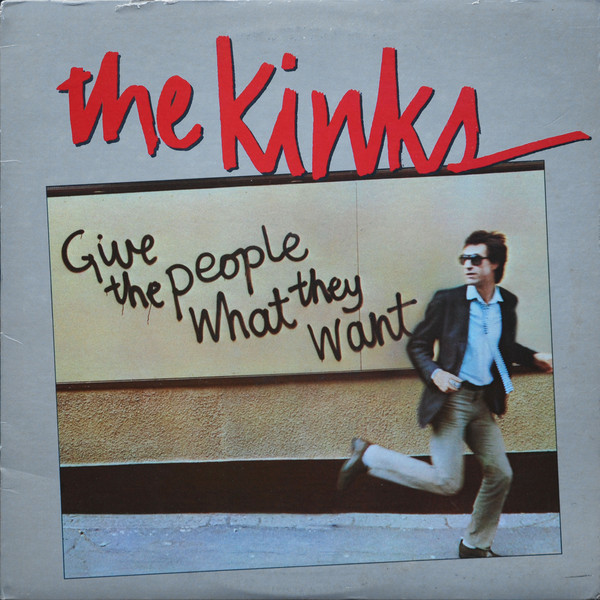
This song forms part of a greater genre of songs that spell out words in the lyrics, like Otis Redding’s song “Respect” (made famous by Aretha Franklin) or “Lola” by the Kinks.
Mellencamp’s title wasn’t too far from Bruce Springsteen’s “Born In The U.S.A.,” released a year earlier. That song was often misinterpreted as a celebration of America, when it was really about the plight of a Vietnam War veteran.
In keeping with ’60s hit single tradition, Mellencamp kept this song under three minutes long – it clocks in at 2:54.
R.O.C.K. in the U.S.A.
They come from the cities And they come from the smaller towns Beat up cars with guitars and drummers Goin crack boom bam
R.O.C.K. in the U.S.A. R.O.C.K. in the U.S.A. R.O.C.K. in the U.S.A., Yeah, Yeah! Rockin’ in the U.S.A.
Said goodbye to their families Said goodbye to their friends With pipe dreams in their heads And very little money in their hands Some are black and some are white Ain’t to proud to sleep on the floor tonight With the blind faith of Jesus you know that they just might, be Rockin’ in the U.S.A. Hey!
Voices from nowhere And voices from the larger towns Filled our head full of dreams Turned the world upside down
There was Frankie Lyman-Bobby Fuller-Mitch Ryder (They were Rockin’) Jackie Wilson-Shangra-las-Young Rascals (They were Rockin’) Spotlight on Martha Reeves Let’s don’t forget James Brown Rockin’ in the U.S.A. Rockin’ in the U.S.A. Hey!
R.O.C.K. in the U.S.A. R.O.C.K. in the U.S.A. R.O.C.K. in the U.S.A., Yeah, Yeah! Rockin’ in the U.S.A.
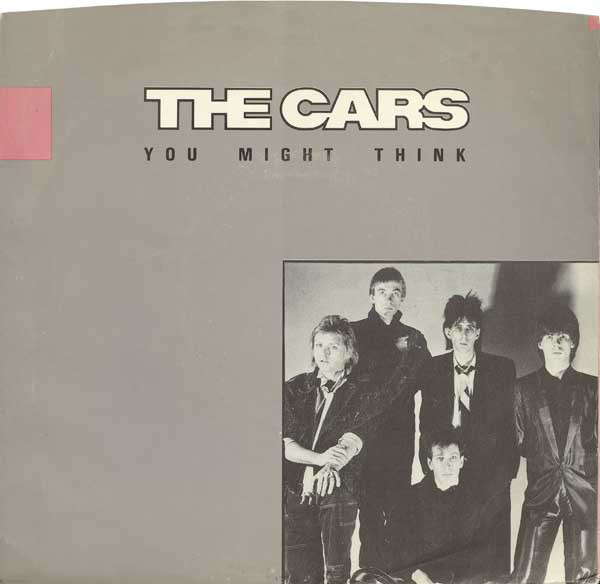
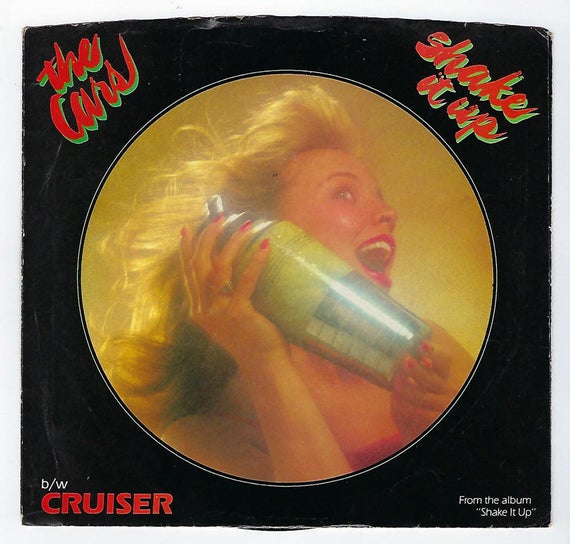
Shake It Up was the title track to The Cars’ fourth album. This was their first top 10 hit which is surprising with all of the well-known songs they had released to this point.
They had been playing around with this song for a few years but they didn’t like the sound of it. They basically started all over and changed the song completely and then worked it out.
The Shake It Up album came out in 1981, just a few months after the first MTV broadcast. The release became a big hit for the Cars, a top 10 album that would eventually go multi-platinum… aided by this song.
The song peaked at #4 in the Billboard 100, #7 in Canada, and #26 in New Zealand in 1982.
The album peaked at #9 in the Billboard Album Chart.
The song is typical Cars…catchy chorus and full of hooks. Ric Ocasek wrote the song but did say he was never too thrilled about the lyrics.
Drummer David Robinson: “We recorded [‘Shake It Up’] a couple of times in the studio and dumped it, and we were going to try it one more time, and I was fighting everybody,” “So we thought, let’s start all over again, like we’ve never even heard it – completely change every part – and we did. Then, when it was through and all put back together, it was like a brand-new song.”
From Songfacts
Written by frontman Ric Ocasek, it’s an outlier in that it’s very straightforward, simply encouraging us all to get on the dance floor and boogie like nobody’s watching. Ocasek’s songs were generally far more enigmatic.
This song has some throwback elements, like the “ooo ooo ooo” backing vocals and references to a “quirky jerk” and “night cats” – lingo that was hep in the ’60s when songs about dancing were in vogue. At the same time, “Shake It Up” as a futuristic sound, with synthesizers and drum machines that were part of the new wave.
Released as the lead single from the album, “Shake It Up” was a big American hit for The Cars, getting them into the Top 10 for the first time. Some fans accused them of “selling out,” but the band insisted they were simply progressing (one point in their defense: they continued to live in Boston instead of relocating to New York or Los Angeles). The jabs came mostly from the UK, where the band got lots of positive press early on but faced the wrath of a finicky press when they released this song about dancing. In the UK, “Shake It Up” wasn’t released as a single.
The Cars are one of the groups who can be credited with opening the New Wave sound up to the mainstream. As noted in Seventies Rock: The Decade of Creative Chaos, “The fact that new music was getting airplay at all – New Wave or not – was somewhat remarkable.” When The Cars came on the scene in 1978, the Bee Gees and all the disco craze they brought with them dominated the charts. While mainstream radio was reluctant to put a punk record on the air, it found New Wave less intimidating.
Meanwhile, Ken Tucker muses about the New Wave movement in The Rolling Stone Illustrated History of Rock and Roll: “Kids all over the country decided to play Record Promotion: if the big boys wouldn’t sign up their local bands, the fans would, with a vengeance. Mimeographed manifestos and homemade rock magazines multiplied as ways to push burgeoning local scenes; they plugged cherished unknowns and finessed an ad hoc network for distributing their records.” Notice any similarities with 1978 music culture and the Internet-fostered music scene now?
Shake It Up Demo
Shake It Up Studio Version
Shake It Up
Uh well, dance all night, play all day Don’t let nothin’ get in the way Dance all night, keep the beat Don’t you worry ’bout two left feet
Shake it up Shake it up, oo yeah Shake it up Shake it up
Dance all night and get real loose You don’t need no bad excuse Dance all night with anyone Don’t let nobody pick your fun
Shake it up, oo, oo Shake it up, yeah yeah Shake it up, oo, oo Shake it up
That’s right, I said Dance all night Go go go Dance all night Get real low Go all night Get real hot Well, shake it up now, all you’ve got, woo
Dance Oo dance
Uh well, dance all night and whirl your hair Make the night cats stop and stare Dance all night, go to work Do the move with a quirky jerk
Just shake it up, oo oo Shake it up, oo yeah Shake it up Shake it up
Uh well, dance all night Go go go Get so light Get real low Dance all night Get real hot Shake it up, with all you’ve got, woo
Shake it up, make a scene Let them know what you really mean And dance all night, keep the beat And don’t you worry ’bout two left feet
Just shake it up, oo, oo Shake it up, oo oo, yeah Shake it up, oo, oo Shake it up, oh, yeah
Shake it up, shake it up babe Shake it up, oo, oo Shake it up, shake it up babe Shake it up, oo, oo
Shake it up, shake it up, yeah yeah, shake it up Oo oo, shake it up Shake it up, shake it up babe Shake it up, oo, oo
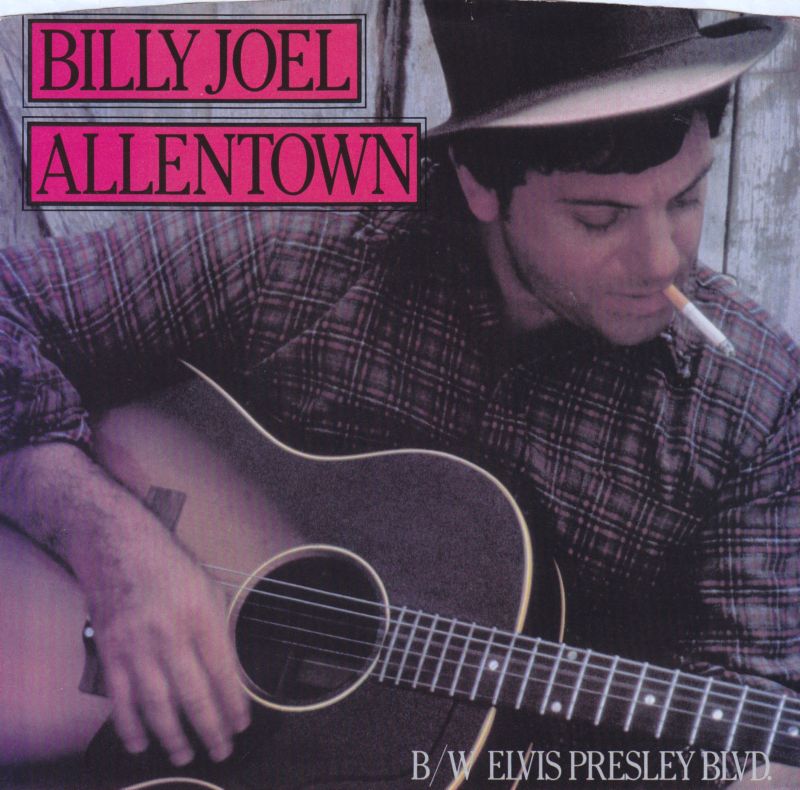
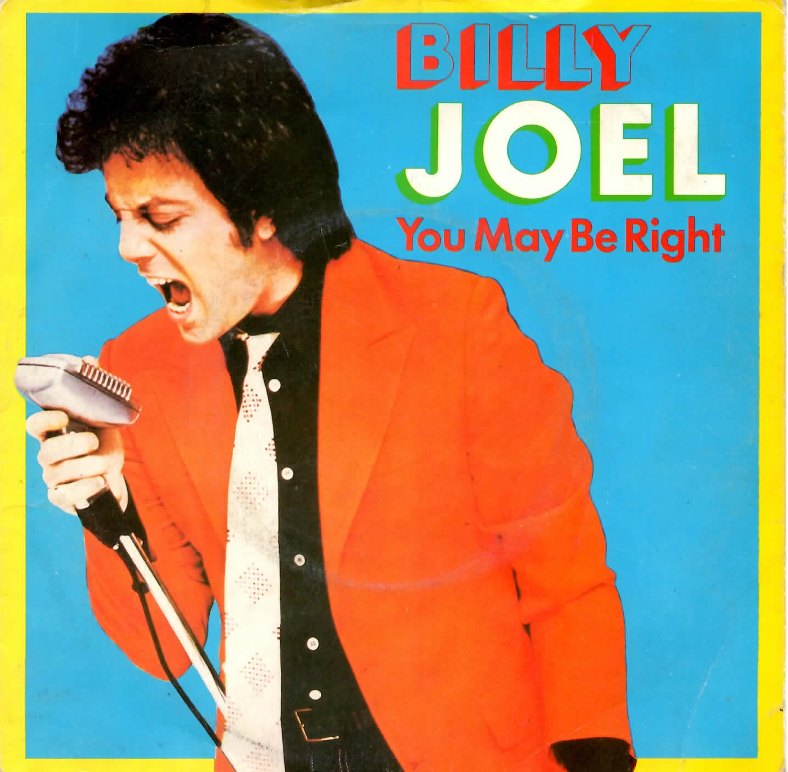
A great single by Billy Joel with a song off of the Nylon Curtain album.
Allentown is a town in Northeast Pennsylvania about 45 minutes away from the Pocono mountains. An industrial town, many of the once-thriving factories and mills had fallen on hard times when Joel wrote the song, and unemployment in the area was at an all-time high of 12%.
Also mentioned in the song is nearby Bethlehem, Pennsylvania, whose main employer, Bethlehem Steel, had been closing operations. Joel sings about the unemployed workers in the line, “Out in Bethlehem they’re killing time, filling out forms, standing in line.”
When the album and single were released in 1982, the Mayor of Allentown PA was Joe Dadonna, who had the difficult job of promoting the image of his city during the worst economic crisis of its history. While many locals viewed “Allentown” as a put-down of their declining city, Mayor Dadonna saw it as an opportunity for some publicity and promotion.
The song was on the Nylon Curtin released in 1982.
The song peaked at #17 in the Billboard 100 and #21 in Canada, and #1 in New Zealand in 1982.
The steel mill this song is written about is now a casino.
From Songfacts
Billy Joel did not grow up in Allentown – he grew up in Levittown, on Long Island. In an interview with James Lipton on Inside the Actors Studio, he compared Allentown with his hometown while he was growing up, noting the similarities. Joel stated that the original title was “Levittown,” and the original lyrics seemed kind of bland, and he felt that they would possibly be considered boring to the listeners.
Some of the original lyrics included lines like, “Well we’re living here in Levittown. And there’s really not much going down. I don’t see much when I look around. The grass is green, the trees are brown. And we’re living here in Levittown.” So, during the time of the upcoming studio sessions for The Nylon Curtain, Billy took a trip to Pennsylvania. It was here that he came up with the idea for new lyrics. At that time, he had Bethlehem in mind, but was worried people would suddenly get the impression that the song was religious (the birth of Christ was said to have happened was Bethlehem, Israel). It is worth noting that Bethlehem and Allentown are right next to each other. So, he started writing down some lyrics for what later became the song “Allentown.”
The distinctive chord at the beginning was originally a mistake, but Joel decided he liked the way it sounded and left it in.
The song starts with the blowing of a steam whistle in a factory. This was common in the days of steel mills and lumber companies. Usually, whistles were blown at the beginning of a work day, to summon workers to their duties, to announce shift changes, to call them to their lunch hour at noon, and at the end of a work day, to let them know that it was 5:00 and it was time to go home. Also, when listened to carefully, in the background with the music, one can hear the rhythmic pounding of a pile driver, a machine for delivering repeated blows to the top of a pile for driving it into the ground. The machine consists of a frame which supports and guides a hammer weight, together with a mechanism for raising and dropping the hammer or for driving the hammer by air or steam.
Joel played a benefit concert in Allentown, Pennsylvania on December 27, 1982 as this song was climbing the charts.
The video was directed by Russell Mulcahy, whose work was all over MTV in their early years, with many videos to his credit by Fleetwood Mac, Elton John and Duran Duran. Billy Joel had little interest in music videos, so he let the directors control them. The “Allentown” video stays true to the song in the sense that we see young men coming back from the war and struggling to find work, but these men are far more shirtless and muscular than you would expect. In I Want My MTV by Craig Marks, Joel said: “It’s really gay. There’s a shower scene with all these good-looking, muscular young steel workers who are completely bare assed. And then they’re all oiled up and twisting valves and knobs. I’d missed this completely when I was doing the video. I just thought it was like The Deer Hunter.”
This is the biggest hit to mention the state of Pennsylvania in the lyric (“for the Pennsylvania we never found”). Darryl Worley’s “Have You Forgotten?,” a 2003 song about the September 11 attacks, was the next hit to mention the state.
Allentown
Well we’re living here in Allentown And they’re closing all the factories down Out in Bethlehem they’re killing time Filling out forms Standing in line Well our fathers fought the Second World War Spent their weekends on the Jersey Shore Met our mothers in the USO Asked them to dance Danced with them slow And we’re living here in Allentown
But the restlessness was handed down And it’s getting very hard to stay
Well we’re waiting here in Allentown For the Pennsylvania we never found For the promises our teachers gave If we worked hard If we behaved So the graduations hang on the wall But they never really helped us at all No they never taught us what was real Iron and coke And chromium steel And we’re waiting here in Allentown
But they’ve taken all the coal from the ground And the union people crawled away
Every child had a pretty good shot To get at least as far as their old man got But something happened on the way to that place They threw an American flag in our face
Well I’m living here in Allentown And it’s hard to keep a good man down But I won’t be getting up today
And it’s getting very hard to stay And we’re living here in Allentown
I remember this song well…it was a breakthrough song for REM. I knew some very intense REM fans and they were not happy that they were in the top 10. The cat was out of the bag and the band was not their secret anymore.
The moment that guitarist Peter Buck played that riff on his Rickenbacker 325 I knew I liked this song. It had the jangly sound that previous REM songs had but this one had a larger commercial appeal. This song broke them through to the masses.
The song peaked at #9 in the Billboard 100, #11 in Canada, #16 in the UK, and #6 in New Zealand in 1987.
It was on the album Document and it peaked at #10 in the Billboard Album Charts, #13 in Canada, #28 in the UK, and #17 in New Zealand.
Michael Stipe describes this song as about using people over and over. It sounds like a love song until the line, “A simple prop to occupy my time.”
Mike Mills (Bass Player): “Peter Buck came up with the riff on his porch. I remember Peter, showing me that riff and thinking it was pretty cool, and then the rest of the song flowed from there. We played the whole song as an instrumental until Michael (Stipe) came up with some vocals for it.”
From Songfacts
The lead vocal on the chorus contains just one word: “Fire,” which Michael Stipe draws out into a long wail. In the background, you can hear bass player Mike Mills singing, “She’s comin’ down on her own, now.”
This is not based on any real person or event. The band made up the lyrics while they were on a tour.
For a while, Stipe thought this was too brutal a song to record. He told Q magazine in 1992: “It’s probably better that they think it’s a love song at this point. That song just came up from somewhere and I recognized it as being really violent and awful. But it wasn’t directed at any one person. I would never write a song like that. Even if there was one person in the world thinking, This song is about me, I could never sing it or put it out… I didn’t want to record that, I thought it was too much. Too brutal. I think there’s enough of that ugliness around.”
This was R.E.M.’s first hit song. They had been recording since 1981 and growing a following.
Bush played this at Woodstock ’99 with a much harder sound.
Robert Longo directed the music video for this song, which has images of tenement buildings, dancers and lonely couples, mixed with sweeping clouds, lighting bolts and bursts of flame. The director of photography was Alton Brown, who would go on to be a Food Network star with shows like Good Eats, Iron Chef America and Cutthroat Kitchen.
Speaking to Mojo in 2016, Stipe said that he wasn’t at all dismayed that so many people misinterpreted the sarcastic and spiteful lyrics as a straightforward love song. “I didn’t like the song to begin with,” he explained. “I felt it was too brutal. I thought the sentiment was too difficult to put out into the world. But people misunderstood it, so it was fine. Now it’s a love song, so that’s fine.”
The One I Love
This one goes out to the one I love This one goes out to the one I’ve left behind A simple prop to occupy my time This one goes out to the one I love
Fire (she’s comin’ down on her own, now) Fire (she’s comin’ down on her own, now)
This one goes out to the one I love This one goes out to the one I’ve left behind A simple prop to occupy my time This one goes out to the one I love
Fire (she’s comin’ down on her own, now) Fire (she’s comin’ down on her own, now)
This one goes out to the one I love This one goes out to the one I’ve left behind Another prop has occupied my time This one goes out to the one I love
Fire (she’s comin’ down on her own, now) Fire (she’s comin’ down on her own, now) Fire (she’s comin’ down on her own, now) Fire (she’s comin’ down on her own, now)
Peter Wolf was a great frontman for J Geils. Peter and keyboard Seth Justman wrote most of the songs for them. They hit big in 1982 with their more pop-oriented album Freeze Frame. Up until that time they were more R&B.
Come Back was included on the Love Stinks. With that album, the band began to update their sound for the new decade. This record setup Freeze Frame to be a huge hit.
Peter Wolf and Seth Justman wrote this song.
The song peaked at #32 in the Billboard 100 and #19 in Canada in 1980.
Come Back
When you left me all alone You left me cryin’ on my own Tell me, tell me, what you gonna do Tell me pretty baby ‘Cause I’m still in love with you
Come back (baby) Come back-won’t you come back to me Come back (baby) Come back-won’t you come back to me
Here I’m standin’ such a fool It’s not like you babe Oh, don’t be cruel Help me, help me ‘Cause you know I’m not that strong Help me, help me darlin’ I’ve been lonely for too long
Come back (baby) Come back-won’t you come back to me Come back (baby) Come back
Tell me, tell me, what you gonna do Tell me pretty baby ‘Cause I’m still in love with you
Come back (baby) Come back-won’t you come back to me Come back (baby) Come back-won’t you come back to me Come back (baby) Come back-please come back to me darlin’-aah Come back (baby) Come back-won’t you come back to me
But they can’t touch me now And you can’t touch me now They ain’t gonna do to me What I watched them do to you
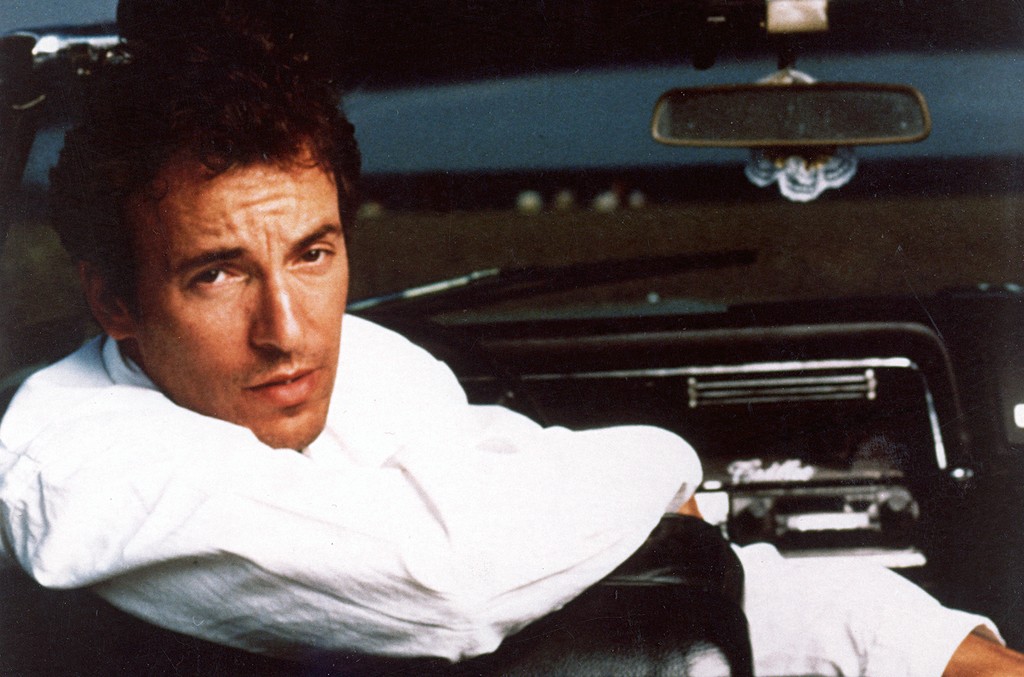
Great song by Bruce Springsteen that was written and recorded in 1977 for the Darkness on the Edge of Town album…but Bruce later included it on The River. They Ain’t Gonna Do To Me What I Watched Them Do To You. Lines like this keep me coming back to Bruce. This is one of the strongest songs on that album and one of my favorites of Springsteen.
According to Bruce’s autobiography and his song introduction, this song is about Springsteen’s relationship with his dad. They didn’t get along, but later in life, Bruce realized his father worked very hard to support his family and came to appreciate his efforts. Bruce can also thank his dad for inspiring the rebellious spirit that led him to follow his dreams. Determined not to work a typical factory type job like his dad, Springsteen followed his dreams and made music for a living.
Bruce Springsteen: “I could never talk to my old man, he could never talk to me, my mother couldn’t talk to him. So I was glad when I finally got old enough and I started to live alone. Then for about ten years I never saw my folks that much. And just recently we came back from Europe and I got a phone call a night or two later that my father had gotten sick.
I went out to California where he was in the hospital there. I started thinkin’ on the way about all the things that I always wanted to say to him and I never said and I always figured, well, someday we’ll sit down and we’ll talk about why it was the way it was when I was young, talk about why he felt the way he did. But the years go by and it never comes up. I guess it feels like a dangerous subject or something. But he got sick and I realized that he was gettin’ old and that if I had somethin’ to say to him, I should say it now.”
Independence Day
Well Papa go to bed now it’s getting late Nothing we can say is gonna change anything now I’ll be leaving in the morning from Saint Mary’s Gate We wouldn’t change this thing even if we could somehow ‘Cause the darkness of this house has got the best of us There’s a darkness in this town that’s got us too But they can’t touch me now And you can’t touch me now They ain’t gonna do to me What I watched them do to you
So say goodbye it’s Independence Day It’s Independence Day All down the line Just say goodbye it’s Independence Day It’s Independence Day this time
Now I don’t know what it always was with us We chose the words, and yeah, we drew the lines There was just no way this house could hold the two of us I guess that we were just too much of the same kind
Well say goodbye it’s Independence Day It’s Independence Day all boys must run away So say goodbye it’s Independence Day All men must make their way come Independence Day
Now the rooms are all empty down at Frankie’s joint And the highway she’s deserted down to Breaker’s Point There’s a lot of people leaving town now Leaving their friends, their homes At night they walk that dark and dusty highway all alone
Well Papa go to bed now it’s getting late Nothing we can say can change anything now Because there’s just different people coming down here now And they see things in different ways And soon everything we’ve known will just be swept away
So say goodbye it’s Independence Day Papa now I know the things you wanted that you could not say But won’t you just say goodbye it’s Independence Day I swear I never meant to take those things away
To those that it applies…Happy Independence Day! I’ll have a couple of songs coming up related to Independence Day.
I never got into comic books like Marvel or DC…I would save up my allowance for Cracked and Mad magazine…and records of course. Mad Magazine was by far the most popular out of all of the satire comic magazines. William Gaines was the publisher of Mad magazine and was brilliant.
1952 – Present…now you an only get Mad from Comic Book Shops or order it. The new editions consist of mostly material from their archive.
Cracked was known as the poor man’s Mad but I still liked it and the magazines shared some writers and artists through the years. I bought my first Cracked Magazine when Mad was sold out but I never missed an issue after that.
1958-2007 Now the name is alive on a website but no longer a comic.
Alfred E Newman and Sylvester P. Smythe
Don Martin was my favorite artist. He was one of Mad’s most famous artists. He was there from 1956 to 1988. He was known as “Mads Maddest Artist” and then moved to Cracked and was jokingly known as “Cracked’s Crackedest Artist.”
Fellow Cracked artist Dan Clowes: “As far as I could tell, he was happy, don’t think he ever seemed to notice that Mad was respected, whereas Cracked was loathed.”
Happy Friday! This song will get it off to a…strange start. But strange is good.
Ok…there is NO one like Devo. No one before or after… they were one original band. They are the best at what they do because no one does what they do but them. Am I a big fan of Devo? No, but sometimes just to break the monotony, I play one…nothing breaks the monotony like Devo.
I’ve told this story before, but…I showed my son the SNL clip of Devo (De-Evolution) when he was around 10-12 years old and I looked around at his confused/scared look… his mouth was hung open. He asked me slowly…Dad, what was that? Son, that was Devo…it still works…whatever IT is.
The song was written by Mark Mothersbaugh and Gerald Casale. The song was produced by Roy Thomas Baker…the same producer who produced Queen, The Cars, Alice Cooper, and Cheap Trick to name a few.
It was on the album that peaked at #47 in the Billboard Charts and #10 in New Zealand. With this album, they moved away from guitars to all synthesizers, which angered some fans but the band had been saying that was their goal.
It was released in 1982 and peaked at #13 in the US Billboard Bubbling Under The Hot 100 Chart.
Peek-a-Boo!
Peekaboo I can see you And I know what you doSo put your hands on your face And cover up your eyes Don’t look until I signal PeekabooHa ha ha ha Ha ha ha ha Peekaboo
The way that we weren’t Is what we’ll become So please pay attention While I show you some Of what’s about to happen
Peekaboo I know what you do Cause I do it too
So put your hands on your face And cover up your eyes Don’t look until I signal Peekaboo
Ha ha ha ha Ha ha ha ha Peekaboo
Laugh if you want to or say you don’t care If you can not see it, you think it’s not there It doesn’t work that way
Peekaboo I can see you And I know what you do
So put your hands on your face And cover up your eyes Don’t look until I signal Peekaboo
I felt like a pickled priest Who was being flambed
No one writes like Pete Townshend…bless him. I’ve come to really like Eminence Front but when this album came out, this is the song that I drawn to at first.
The song was written about actress Theresa Russell who Pete had a crush on that the time. He did a demo at the time called “Teresa for the Face Dances Album. She was then going with Nic Roeg. By the time The Who came to record the song for It’s Hard, Teresa Russell had wed Nic Roeg. The guitarist was nervous about publicly naming his crush so he renamed it “Athena.” What Pete’s then-wife Karen Astley felt about this we don’t know.
The song reached #28 in the Billboard 100, #5 in Canada, and #40 in the UK in 1982.
Roger Daltrey felt that concealing the subject of the song’s true identity was a mistake. “Pete was talking to me about Nick Roeg’s girlfriend and how he fancied her, and that song was written about her – but then it changed into ‘She’s a bomb’.
Roger Daltrey: I’ve got a psychological problem with it,” “It’s a great record; there’s so much energy on that thing, but I still don’t think there’s a center to that song. The fact that he changed the title in that and didn’t stick to what it was supposed to be lost its center to me.”
Pete Townshend:The song was written after I had been to see The Wall with my friend Bill Minkin and the actress Theresa Russell who was about to marry the film director Nic Roeg with whom I hoped to work on a new version of Lifehouse. I got drunk as usual, but I had taken my first line of cocaine that very evening before meeting her and decided I was in love. When I came to do the vocal on the following day I was really out of my mind with frustration and grief because she didn’t reciprocate
From Songfacts
Pete Townshend wrote this song the day after he was knocked back by American actress Theresa Russell.
The guitarist told TheWho.net how he went to see The Wall with his friend Bill Minkin and Russell. (The actress was engaged to the film director Nic Roeg with whom he was planning to work on a new version of Lifehouse.) “I got drunk as usual, but I had taken my first line of cocaine that very evening before meeting her and decided I was in love,” Townshend explained. “When I came to do the vocal on the following day [February 15, 1980] I was really out of my mind with frustration and grief because she didn’t reciprocate.”
Teresa Demo
Athena
I had no idea how much I need her In peaceful times I hold her close and I feed her My heart starts palpitating When I think my guess was wrong But I think I’ll get alone She’s just a girl She’s a bomb
Athena All I ever want to do is please her My life has been so settled And she’s the reason Just one word from her And my troubles are long gone But I think I’ll get along She’s just a girl She’s a bomb She’s a bomb Just a girl, just a girl Just a girl, just a girl Just a girl, just a girl She’s just a girl
Athena My heart felt like a shattered glass in an acid bath I felt like one of those flattened ants You find on a crazy path I’d have stopped myself to give her time She didn’t need to ask Was I a suicidal psychopath She’s just a girl She’s a bomb She’s just a girl She’s a bomb Consumed There was a beautiful white horse I saw on a dream stage He had a snake the size of a sewer pipe Livin’ in his rib cage
I felt like a pickled priest Who was being flambed You’ve got me requisitioned blondie She’s just a girl She’s a bomb I’m happy She’s a bomb I’m ecstatic Just a girl, just a girl Just a girl, just a girl Just a girl, just a girl Just a girl
Look into the face of a child Measure how long you smiled Before the mem’ry claimed How long would children remain How long could children remain
Athena You picked me up by my lapels And screamed “leave her” I felt like waking up in heaven On an empty meter And now you’re stuck With a castrated leader And I hate the creep I didn’t mean that She’s a bomb I just said it She’s a bomb Please She’s a bomb
Athena I had no idea how much I need her My life has been so settled And she’s the reason Just one word from her And my troubles are long gone Ooh but I get along She’s just a girl She’s a bomb She’s just a girl She’s a bomb
This was the first video played on MTV Europe. The network went on the air on August 1, 1987, six years after MTV in the US… This was back when MTV (Music Television) actually played music but now has questionable shows.
The clipped guitar sound won me over the first time I heard this.
In the US, this stayed at #1 for three weeks. It also won a Grammy in 1986 for best Best Rock Vocal Performance by a Duo or Group.
Dire Straits recorded this in Montserrat. Sting was on vacation there and came by help. Sting sings on this and helped write it…Sting and Knophler were credited as songwriters. Sting did not want a songwriting credit, but his record company did because they would have earned royalties from it. It’s been said that the line “I Want My MTV” sounded very similar to a song Sting wrote for The Police: “Don’t Stand So Close To Me.”…well the same amount of syllables anyway.
The song was banned in Canada in 2011.
One offended listener complained to the Canadian Broadcast Standards Council in 2010 about the song’s inclusion of a homosexual slur, and the CBSC ruled that the use of the gay slur breaches the national broadcast authority’s code of ethics. The CBSC ruled that the song can be played on the radio in an edited form without the slur.
The CBSC ruling panel said that even though the song has been accepted for the past 25 years it does not mean that its lyrics are acceptable today. At least two stations, CIRK FM in Edmonton and CFRQ-FM in Halifax, played the unedited version of “Money for Nothing” repeatedly for one hour out of protest.
Later in the year, the CBSC left it up to the stations to decide and the ban was lifted.
Mark has said he was writing it to show how narrow-minded people could be. He was a journalist at one time.
Mark Knopfler: “I was reporting, verbatim, what a particular guy thought about music,” he said. “I transcribed his words there and then. He was a meathead. To him being a rock star was easy, hence ‘that ain’t working.'”
“Weird Al” Yankovic parodied this for his movie UHF. The parody is called “Beverly Hillbillies (Money For Nothing).” Strait’s frontman, Mark Knopfler, OK’d the parody under one condition: Knopfler would play guitar on the song.
The song peaked at #1 in the Billboard 100, #1 in Canada, #4 in the UK, and #4 in New Zealand.
From Songfacts
This song is about rock star excess and the easy life it brings compared with real work. Mark Knopfler wrote it after overhearing delivery men in a New York department store complain about their jobs while watching MTV. He wrote the song in the store sitting at a kitchen display they had set up. Many of the lyrics were things they actually said.
The innovative video was one of the first to feature computer generated animation, which was done using an early program called Paintbox. The characters were supposed to have more detail, like buttons on their shirts, but they used up the budget and had to leave it as is. It won Best Video at the 1986 MTV Video Music Awards.
The video was directed by Steve Barron, who also directed the famous a-ha video for “Take On Me” and Thomas Dolby’s “She Blinded Me With Science.”
Mark Knopfler took the directive to write an “MTVable song” quite literally, using the network’s tagline in the lyrics. The song ended up sounding like an indictment of MTV, but Les Garland, who ran the network, made it clear that they loved the song and were flattered by it – hearing “I Want My MTV” on the radio was fantastic publicity even if there were some unfavorable implications in the lyrics.In the book I Want My MTV, various people who worked at the network explain that Dire Straits’ manager asked the network what they could do to get on the network and break through in America. Their answer was: write a hit song and let one of the top directors make a video.
Steve Barron was dispatched to do the video, and charged with the task of convincing Mark Knopfler, who hated videos, to do one that was groundbreaking. Barron says that Knopfler wasn’t into the idea, but his girlfriend – an American – was at the pitch and loved the idea. Knopfler agreed (in part because he didn’t have to appear in it), and Barron hired a UK production company called Rushes to work on it. Said Barron: “The song is damning to MTV in a way. That was an ironic video. The characters we created were made of televisions, and they were slagging off television. Videos were getting a bit boring, they needed some waking up. And MTV went nuts for it. It was like a big advertisement for them.”
The line “I want my MTV” was the basis of the cable network’s promotional campaign. They played clips of musicians saying, and often times, screaming the line between videos.
The album version runs 8:26 with an extended outro. The single was cut down to 4:38.
Mark Knopfler played a Les Paul Junior plugged into a Laney amp on this track. Producer Neil Dorfsman recalled in Sound On Sound magazine May 2006: “We were going for a ZZ Top sound, but what we ended up getting was kind of an accident.”
Twenty-five years after the song’s release it was banned from public broadcast in Canada after one person complained about it being homophobic. The original version included a description of a singer as “that little faggot with the earring and the make-up” plus two other uses of the word “faggot,” although a cleaned-up edition was made available, Oz-FM in Newfoundland played the first edition in February 2010 at 9:15 at night. The result was a single complaint and the Canadian Broadcast Standards Council ruled that the unedited version of the song was unacceptable for air play on Canadian radio stations because it “refers to sexual orientation in a derogatory way.”
Knopfler has pointed out the song was written from the viewpoint of a stupid character who thinks musicians make their “money for nothing” and his stupidity is what leads him to make ignorant statements. Speaking in late 1985 to Rolling Stone the Dire Straits songwriter expressed his feelings about people who react angrily to the song. He said: “Apart from the fact that there are stupid gay people as well as stupid other people, it suggests that maybe you have to be direct. I’m in two minds as to whether it’s a good idea to take on characters and write songs that aren’t in the first person.”
Common sense finally prevailed on August 31, 2011 when the Canadian Broadcast Standards Council put an end to the ban and allowed individual radio stations to once again decide for themselves whether to play the classic rock tune.
In 2005, the duo Deep Dish sampled this on their song “Flashing For Money,” which was based on their song “Flashdance” (not the Irene Cara song). It was the first time Dire Straits allowed one of their songs to be sampled. “Flashing For Money” was released on the B-side of Deep Dish’s single “Say Hello.”
Reel Big Fish released an album in 2007 called Monkeys For Nothin’ And The Chimps For Free. The title is a takeoff on this song.
Money For Nothing
(I want my, I want my MTV) (I want my, I want my MTV) (I want my, I want my MTV) (I want my, I want my MTV)
Now look at them yo-yo’s, that’s the way you do it You play the guitar on the MTV That ain’t workin’ that’s the way you do it Money for nothin’ and your chicks for free
Now that ain’t workin’ that’s the way you do it Lemme tell ya, them guys ain’t dumb Maybe get a blister on your little finger Maybe get a blister on your thumb
We got to install microwave ovens, custom kitchen deliveries We got to move these refrigerators, we gotta move these color TV’s
See the little faggot with the earring and the make up Yeah buddy that’s his own hair That little faggot got his own jet airplane That little faggot he’s a millionaire
We got to install microwave ovens, custom kitchen deliveries We got to move these refrigerators, we gotta move these color TV’s
I shoulda learned to play the guitar I shoulda learned to play them drums Look at that mama she got it stickin’ in the camera man We could have some-
And he’s up there, what’s that? Hawaiian noises? Bangin’ on the bongos like a chimpanzee That ain’t workin’ that’s the way you do it Get your money for nothin’, get your chicks for free
We got to install microwave ovens, custom kitchen deliveries We got to move these refrigerators, we gotta move these color TV’s
Listen here Now that ain’t workin’ that’s the way you do it You play the guitar on the MTV That ain’t workin’, that’s the way you do it Money for nothin’ and chicks for free Money for nothin’ chicks for free Money for nothin’ chicks for free Money for nothin’ chicks for free Money for nothin’ chicks for free Money for nothin’ chicks for free Money for nothin’ get your chicks for free Money for nothin’ and the chicks for free Money for nothin’ and the chicks for free
Look at that, look at that Money for nothin’ chicks for free (I want my, I want my MTV) Money for nothin’ chicks for free (I want my, I want my MTV) Money for nothin’ chicks for free (I want my, I want my MTV) Money for nothin’ chicks for free (I want my, I want my MTV) Easy, easy money for nothin’ (I want my, I want my MTV) Easy, easy chicks for free (I want my, I want my MTV) Easy, easy money for nothin’ (I want my, I want my MTV) Chicks for free (I want my, I want my MTV) That ain’t workin’
Money for nothing, chicks for free Money for nothing, chicks for free
“The bomb in the baby carriage was wired to the radio”
That lyric got my attention when I first heard the song. The song sounded so different at the time than anything else that was going on.
Paul Simon wrote the lyrics for this song when he returned to America from South Africa When he was there his concern was recording just the music.
The words had to work with the track that Simon’s producer Roy Halee assembled from the reels of tape they returned with. It took Simon a long time to finish the lyrics, working in phrases like “the boy in the bubble and the baby with the baboon heart” in a way that would mesh with the African rhythm.
This song is credited to Simon and Forere Motloheloa.
There was a United Nations cultural boycott in place that was designed to pressure political leaders into giving up their Apartheid policy. The boycott was to keep popular musicians away from places like Sun City where they played to the white ruling class in South Africa. The problem was that any violation of the boycott could undermine the sanctions, and many locals were not happy with Simon’s visit. Some people still complain about him making this album there.
These South African sanctions didn’t just keep outside musicians away from the country, but it also kept their local music from getting out… Simon only heard it because a friend gave him a bootleg cassette tape.
The song peaked at #86 in the Billboard 100 in 1986. The singles off the album didn’t have huge success in Billboard because they didn’t fit easily into the 80’s radio formats.
Paul Simon: “‘The Boy In The Bubble’ devolved down to hope and dread. That’s the way I see the world, a balance between the two, but coming down on the side of hope.”
The Boy In The Bubble
It was a slow day And the sun was beating On the soldiers by the side of the road There was a bright light A shattering of shop windows The bomb in the baby carriage Was wired to the radio
These are the days of miracle and wonder This is the long distance call The way the camera follows us in slo-mo The way we look to us all
The way we look to a distant constellation That’s dying in a corner of the sky These are the days of miracle and wonder And don’t cry, baby, don’t cry Don’t cry
It was a dry wind And it swept across the desert And it curled into the circle of birth And the dead sand Falling on the children The mothers and the fathers And the automatic earth
These are the days of miracle and wonder This is the long distance call The way the camera follows us in slo-mo The way we look to us all, oh yeah
The way we look to a distant constellation That’s dying in a corner of the sky These are the days of miracle and wonder And don’t cry baby, don’t cry Don’t cry
It’s a turn-around jump shot It’s everybody jump start It’s every generation throws a hero up the pop charts Medicine is magical and magical is art Think of the boy in the bubble And the baby with the baboon heart
And I believe These are the days of lasers in the jungle Lasers in the jungle somewhere Staccato signals of constant information A loose affiliation of millionaires And billionaires and baby
These are the days of miracle and wonder This is the long distance call The way the camera follows us in slo-mo The way we look to us all, oh yeah
The way we look to a distant constellation That’s dying in a corner of the sky These are the days of miracle and wonder And don’t cry baby, don’t cry Don’t cry, don’t cry
I bought the Nebraska album when it was released when I saw the video for this song. Bruce recorded this album on a Tascam 4 track machine as a demo for the band. He tried to do the songs with the E-Street band but they just didn’t sound as good as the demo.
The album was only Bruce with an acoustic guitar with overdubs by him. It’s one of my favorite all-time favorite songs and albums by Bruce.
The Band covered this song in 1993, years after Robbie Robertson left. I like this version just as well as Bruce’s original. Levon Helm does a great job on the vocals.
The first line, “They blew up the Chicken Man in Philly last night,” was taken from a newspaper article about a mob hit in Atlantic City. The “Chicken Man” was Phil Testa, number two man in the Philadelphia Mob under Angelo Bruno.
After Bruno was murdered in his car, Testa was blown up by a bomb placed under his front porch. These hits were orchestrated by Nicky Scarfo, who took over the Philly boys so he could control the new Atlantic City gambling rackets. He made such a mess of things that he and most of his crew were either murdered or in jail within a few years.
The Nebraska album peaked at #3 in the Billboard 100, #3 in the UK, Canada, and New Zealand in 1982.
From Songfacts
Atlantic City is a very poor city in New Jersey where gambling is legal. When casinos were built there in the early ’80s, it was supposed to revitalize the city. The casinos made it a popular tourist destination, but the city itself continues to be very run-down. There is a stark contrast between the glamorous casinos on the boardwalk and the city itself. Atlantic City is also a haven for organized crime, and it’s implied that the narrator, who struggles with his finances and ruminates on the inevitability of death, as taken a job as a hit man.
This was the first Springsteen song to be made into a video (unless you count live performance clips), but Bruce does not appear in it. Springsteen had no interest in making concept videos, but an executive at his label, Columbia Records, named Arnold Levine knew that Bruce could benefit from exposure on MTV and put together the clip using footage of Atlantic City. MTV was based in New York and run by radio veterans who were big fans of Springsteen, so the video got some airplay on the network, which was trying to stick to a rock format in 1982.
This is the only track from Nebraska included on Springsteen’s Greatest Hits album.
The title and many of the images are shared with a 1981 Louis Malle movie starring Burt Lancaster and Susan Sarandon.
Springsteen recorded this as a demo on a 4-track tape recorder in his house. After trying it with the band, he decided this and the other songs that would make up Nebraska sounded best as he originally recorded them.
The version on the album is acoustic, but the plugged-in live version is a concert favorite.
Other songs Springsteen wrote about his home state of New Jersey towns include “Freehold” and “Fourth Of July, Asbury Park.” He is wildly popular there.
This was released as a single in Europe, but not the US.
Springsteen recorded three takes, each with slightly different lyrics, on the tape he gave his manager which became Nebraska.
Since Springsteen did not tour for Nebraska, the first time this was played in concert was on the Born In The U.S.A. tour two years later.
When Bruce Springsteen toured with The Seeger Sessions Band in 2006, they played a drastically different arrangement of this song with multiple outros. This can be heard on the 2007 album Live in Dublin.
Atlantic City
Well they blew up the chicken man in Philly last Night now they blew up his house too Down on the boardwalk they’re gettin’ ready For a fight gonna see what them racket boys can do
Now there’s trouble busin’ in from outta state And the D.A. can’t get no relief Gonna be a rumble out on the promenade and The gamblin’ commission’s hangin’ on by the skin of its teeth
[CHORUS:] Everything dies baby that’s a fact But maybe everything that dies someday comes back Put your makeup on fix your hair up pretty and Meet me tonight in Atlantic City
Well I got a job and tried to put my money away But I got in too deep and I could not pay So I drew what I had from the Central Trust And I bough us two tickets on that Coast City bus
[CHORUS:]
Now our luck may have died and out love may Be cold but with you forever I’ll stay We’re goin’ out where the sand’s turnin’ to gold So put on your stockin’s ’cause the night’s getting’ cold and maybe everything dies That’s a fact but maybe everything that dies Someday comes back
Now I been lookin’ for a job but it’s hard to find Down here it’s just winners and losers and Don’t get caught on the wrong side of that line Well I’m tired of comin’ out on the losin’ end So honey last night I met this guy and I’m Gonna do a little favor for him Well I guess everything dies baby that’s a fact But maybe everything that dies someday Comes back Put your makeup on fix your hair up pretty and Meet me tonight in Atlantic City
I read about Squeeze in Rolling Stone magazine when this album came out. They were being compared to the Beatles and I thought they were going to hit big. They did have a top ten hit off of this album…Tempted.
Is This Love is a very good power pop song that was on the band’s fourth album, East Side Story. It was written by Glenn Tilbrook and Chris Difford. It was written about Difford’s then-recent marriage.
Glen Tilbrook was influenced by The Beatles on this song. He also said the ending was Elvis Costello’s idea. Roger Bechirian and Elvis Costello produced this song and also the album.
Is That Love peaked at #35 in the UK…it was also #1 in Israel in 1981. The album peaked at #44 in the Billboard Album Chart,
Chris Difford: “This was written around the time I got married. I remember being in the bathroom and seeing Cindy’s wedding ring next to the soap, which inspired me to write the lyric. I don’t think it was particularly about our marriage, but it started off a sequence of ideas in my head.”
Is That Love?
You’ve left my ring by the soap Now is that love? You cleaned me out, you could say broke Now is that love? The better, better, better it gets The more these girls forget That that is love
You won’t get dressed, you walk about Now is that, is that A teasing glance has pushed me out Now is that, is that The tougher, tougher, tougher it gets The more my lips frequent Now that is love
Beat me up with your letters, your walk out notes Funny how you still find me right here at home Legs up with a book and a drink Now is that love that’s making you think
You’ve called my bluff, I’m not so hot Now is that love? My assets froze while yours have dropped Now is that, is that It’s the cupid, cupid, cupid disguise That more-or-less survived Now that is love
Beat me up with your letters, your walk out notes Funny how you still find me right here at home Legs up with a book and a drink Now is that love that’s making you think
You’ve made my bed, the finger points Now is that, is that love The more you, more you, more you cool down The easier love is found Now that is love