Lynyrd Skynyrd – I Know A Little

The reason I like this song is caught in the intro. The guitar in this is a lot of fun. Unlike most Lynyrd Skynyrd songs this one was not partly written by Ronnie Van Zant. The new guitar player Steve Gaines wrote this before he joined them.

Gaines replaced Ed King as the band’s guitarist in 1976, but died in the 1977 plane crash that also claimed the lives of lead singer Ronnie Van Zant and Gaines’ sister Cassie, who was a backup singer for the group. This song provides a glimpse of songwriting and guitar talent.

Steve Gaines was a special talent. I personally believe he would have gone far in music outside of that band. There is guitar playing on Street Survivors that you never heard with that band before. Very sophisticated chord patterns and riffs with songs like “I Never Dreamed.”

This song was the B side to What’s Your Name.

From Songfacts

You won’t find diatribes on the complexities of interpersonal relationships in the Skynyrd catalog, but you will find simple explanations. This song is a great example.

Why do people get the blues? From digging what they can’t use. And if you want to hold on to a man, a good way to do it is through commitment. You only need to know a little about love – the rest you can guess.

This is a great example of Skynyrd guitarist Steve Gaines’ contributions to the band. He wrote the song himself, and also wrote or co-wrote three other songs on the album. as Van Zant sings about a guy who has a strong feeling that his girl is cheating on him.

Skynyrd guitarist Gary Rossington told Guitar School magazine, July 1993, that he’d never heard anybody, including the current guitarists in the band, play the picking on this song quite right – the way Steve Gaines did.

This is one of many Skynyrd songs that was never released as a single but endured as a classic track in their catalog. It earned lots of airplay on Classic Rock radio and became one of their most popular live songs, performed at most of their shows when they re-grouped after the plane crash.

Steve Gaines recorded this before he joined Lynyrd Skynyrd.

I Know A Little

Yes sir

Well the bigger the city, well the brighter the lights
The bigger the dog, well the harder the bite
I don’t know where you been last night
But I think mama, you ain’t doin’ right

Say I know a little
I know a little about it
I know a little
I know a little ’bout it
I know a little ’bout love
And baby I can guess the rest

Well now I don’t read that daily news
‘Cause it ain’t hard to figure
Where people get the blues
They can’t dig what they can’t use
If they stick to themselves
They’d be much less abused

Say I know a little
Lord I do know a little about it
I know a little
I know a little ’bout it
I know a little ’bout love
Baby I can guess the rest
Play me a little, oh yeah
Yeah

Well if you want me to be your only man
Said listen up mama, teach you all I can
Do right baby, by your man
Don’t worry mama, teach you all I can

Say I know a little
Lord I do know a little about it
I know a little
I know a little ’bout it
I know a little ’bout love
Baby I can guess the rest
Well I know a little ’bout love
Baby I want your best

Happy Days influence on Pop Culture

I remember the phrases that were on the show and phrases that the show spawned after it went off the air…like “Jump The Shark” and the “Chuck Cunningham Syndrome” (more below on them)

I watched Happy Days as a kid and even got the theme as a single. The show first aired in 1974 and finally came to a halt in 1984. Ever since then it’s gone into syndication.

Happy Days was centered around Ritchie Cunningham (Ron Howard) and his friends and family but the Fonz (Henry Winkler) character soon eclipsed Ritchie. The show portrayed 1950s life as a teenager but it did mirror the problems all teenagers encounter.

Fonz was everywhere in the seventies. Kids at school would do the hair in the mirror thing. If I only had a nickel every time I heard “heeeeyyyy” I would be a rich man. T-Shirts, lunch boxes, notebooks, and anything “Happy Days” could be printed on was… Phrases included Sit On It, Exactamundo, Bucko, and more became popular…Yowsah Yowsah Yowsah!

Two more phrases came because of the show. Jump the Shark and the Chuck Cunningham Syndrome but more in them in a minute.

Richie had some understanding parents… Howard and Marion Cunningham were always there with a solution and he had a sometimes bratty but typical little sister Joanie. His best friends were Potsy and Ralph Malph who would mostly get Richie in trouble.

Happy Days also spawned a number of spin-offs, including the hit shows Laverne & Shirley and Mork & Mindy. We won’t discuss Joanie Loves Chachi…no that didn’t happen.

In the Seventies, a 50s revival was happening at the time and this show certainly added to it. Movies like Grease, American Graffiti, and The Last Picture Show were hits also.

Now some fun stuff.

Jump the Shark – A definition… “(of a television series or movie) reach a point at which far-fetched events are included merely for the sake of novelty, indicative of a decline in quality”

This originated from Happy Days. It was the episode where Fonzie jumps over a shark while on water-skis. This was way outside the original storyline of the show. If you want to know which one…Season 5 Episode 3 of a three-part episode storyline.

The Chuck Cunningham Syndrome – One of the definitions I found…  occurs when a character in a television mysteriously vanishes from the show. No write-off, no death, not even a passing explanation of what happened to the character.

This originated from Happy Days. Poor Chuck was Ritchie’s brother and he is in a total of 11 episodes in the first two seasons. After that, we never see nor hear anything from Chuck again. Did aliens abduct him? Was he in the Witness Protection program? Was he a spy? Was he a figment of the family’s imagination? Did he grow up to be Alice Cooper?

This is where “Jump The Shark” was born…Yea, a guy from Milwaukee is going to water ski and jump a shark…with a leather jacket on.

Talking Heads – Psycho Killer

There are bands that are hard to tell apart from other bands…and then there are bands like Devo and The Talking Heads that sound like no one else.

Psycho Killer is a song from their 1977 album Talking Heads: 77. It was the only song from the album to appear on the Billboard charts, peaking at #92 in the Billboard 100.

Part of the chorus and the bridge are in French. The verse translates to “What I did, that evening, what she said, that evening fulfilling my hope I throw myself towards glory.” The chorus lyric “Qu’est-ce que c’est?” means “What is this?”

The lyrics were said to be inspired by the character Norman Bates in the movie Psycho.

David Byrne: “Chris and Tina helped me with some of the French stuff. I realized, ‘That holds up. That’s a song.’ I may have been inspired by other things when I was writing it, but I hadn’t heard anything quite like it before. I was also writing completely from the character’s point of view. We played it. People liked it. I thought, ‘Oh, I can do more.'”


From Songfacts

This was the result of lead singer David Byrne trying to write an Alice Cooper song, but it came out much more introspective. It ended up being about the thoughts of a murderer.

The “Fa Fa” part comes from an Otis Redding song called “Fa-Fa-Fa-Fa-Fa (Sad Song).” Redding and other Soul singers were a big influence on Talking Heads.

Byrne wrote this two years before it was recorded. It was Talking Heads’ first album.

Byrne never thought this would be a hit. He considered it a “silly song” at the time, and was surprised when it took off.

The Tom Tom Club, a group led by former Talking Heads Tina Weymouth and Chris Frantz, often plays this at their concerts with Tina singing the lead vocal.

This is the first song played in the Talking Heads movie Stop Making Sense.

An acoustic version was the flip side of the single.

This appears on the live albums Stop Making Sense and The Name Of This Band Is Talking Heads.

Artist to cover this song include Barenaked Ladies, Phish, Brand New, Local H and Velvet Revolver.

The 2017 Selena Gomez hit “Bad Liar” samples the bassline from this track. David Byrne has no problem with it. “I would have an issue if somebody took, say, ‘This Must Be The Place,’ which is a very personal love song,” he told Rolling Stone. “Other than that, yeah, repurpose the stuff.”

Psycho Killer

I can’t seem to face up to the facts
I’m tense and nervous and I can’t relax
I can’t sleep ’cause my bed’s on fire
Don’t touch me I’m a real live wire

Psycho Killer
Qu’est-ce que c’est
Fa-fa-fa-fa-fa-fa-fa-fa-fa-far better
Run run run run run run run away oh oh
Psycho Killer
Qu’est-ce que c’est
Fa-fa-fa-fa-fa-fa-fa-fa-fa-far better
Run, run, run, run, run, run, run, away oh oh oh
Yeah yeah yeah yeah!

You start a conversation you can’t even finish it
You’re talking a lot, but you’re not saying anything
When I have nothing to say, my lips are sealed
Say something once, why say it again?

Psycho Killer
Qu’est-ce que c’est
Fa-fa-fa-fa-fa-fa-fa-fa-fa-far better
Run run run run run run run away oh oh oh
Psycho Killer
Qu’est-ce que c’est
Fa-fa-fa-fa-fa-fa-fa-fa-fa-far better
Run, run, run, run, run, run, run, away oh oh oh oh!
Yeah yeah yeah yeah!

Ce que j’ai fais, ce soir la
Ce qu’elle a dit, ce soir la
Realisant mon espoir
Je me lance, vers la gloire, OK
Yeah yeah yeah yeah yeah yeah yeah yeah yeah yeah
We are vain and we are blind
I hate people when they’re not polite

Psycho Killer
Qu’est-ce que c’est
Fa-fa-fa-fa-fa-fa-fa-fa-fa-far better
Run run run run run run run away oh oh oh
Psycho Killer
Qu’est-ce que c’est
Fa-fa-fa-fa-fa-fa-fa-fa-fa-far better
Run, run, run, run, run, run, run, away oh oh oh
Yeah yeah yeah yeah oh!

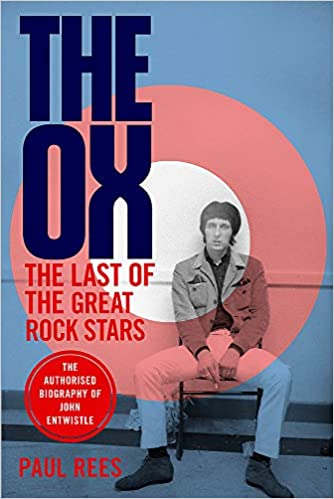
The Ox: The Authorized Biography of The Who’s John Entwistle…. by Paul Rees

When I see the word “authorized” I get really skeptical that they will not tell the complete story. This one proved me wrong. John’s son Christopher had said that this book was going to be warts and all. He was correct in that. I was super excited to read this. In the past year, I re-read Pete Townshend’s autobiography, Roger Daltrey’s autobiography, and re-read Keith Moon’s biography by Tony Fletcher and to top it off the Kenney Jones biography.

John actually wrote 4 chapters himself in 1990 when he wanted to write his own book. He soon grew tired of it and just stored it away. Rees did manage to incorporate some of what he wrote that included stories about him and Moon I never heard. John Entwistle is the least written about of the four. Any info on him is nice and a lot of this was new to me. Rees goes over the highlights and you don’t get dragged down at any point. The only thing I didn’t like was…like Daltrey’s autobiography it’s short…only 320 pages long.

The book goes through the history of the Who that Who fans know but with a lot of anecdotes. I found out more about John’s life than I ever knew. You see where he developed his black humor and he was probably the best pure musician in that band. I would recommend this book to any rock music fan. You get some funny stories also…

One about the Who opening up for the Beatles and listening to them through monitors in the dressing room rolling on the floor laughing hearing The Beatles sing obscene words to their songs “I Want To Hold Your ****”…A Hard Day’s ****. because the screaming was so loud and they couldn’t be heard out front.

Why I looked forward to this book…

___________________________________________________________________________________________

John was a bass hero of mine growing up. I started off learning trying to learn the riffs he did by slowing Who albums with my finger so the riffs would be slower…but they were still fast. Most bass players fill in the empty space but with the Who, there wasn’t much empty space because of Moon’s playing. He played what amounted to lead bass and it worked well…his harmonics made up for the lack of other instruments.

Keith Altham (journalist): John was an enigma. That he was the best bass guitarist of his generation is not in dispute, but because of the peculiar demands placed upon him by The Who he wasn’t a bass player in the accepted sense of the term because he didn’t play bass like anyone else, any more than Keith Moon played the drums like anyone else or, for that matter, Pete Townshend the guitar. “His playing was so dextrous and inventive that he was often indistinguishable from a second guitar.”

Lemmy: “He’s the best player in Rock and Roll ever…no contest”

John Entwistle: “I just wanted to play louder than anyone else …

Bill Wyman: John was the Jimi Hendrix of bass players

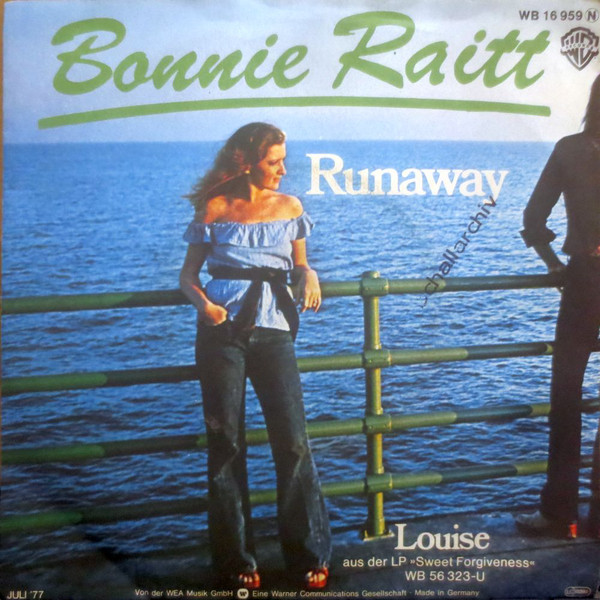
Bonnie Raitt – Runaway

A couple of weeks ago we looked at Bonnie Raitt in the late 80s…Here she is in the 70s putting a new bluesy twist on Runaway. It was her breakthrough in the Singles Charts. It would be 12 more years before she broke through big with the album Nick of Time.

Del Shannon and his keyboard player, Max Crook, wrote with this while they were playing a club in their hometown of Battle Creek, Michigan. Crook played a keyboard called a “Musitron” on Del’s version of the song.

The Raitt version of Runaway peaked at #57 in the Billboard 100 and #79 in Canada. It was on the Sweet Forgivness album released in 1977 which peaked at #25 in the Billboard Album Charts.

Runaway

As I walk along I wonder what went wrong
With our love, a love that was so strong
And as I still walk on I think of the things
We’ve done together while our hearts were young
I’m a walking in the rain, to the bone I feel the pain
Wishing you were here by me to end this misery
And I wonder, I w-w-wonder, why, you ran away
And I wonder if you will stay, my little runaway, my runaway
I’m a walking in the rain, to the bone I feel the pain
Wishing you were here by me to end this misery
And I wonder, I w-w-wonder baby yeah, you know why, you ran away
And I wonder if you will stay, my little runaway, my little runaway
Come back baby
(Run, run, runaway)
You left me standing in the rain
(Run, run, runaway)
Come back baby
(Run, run, runaway)
Standing in the rain
(Run, run, runaway)

Babys – Every Time I Think of You

The Babys had a brief career in the spotlight and had some hits. Back On My Feet Again, Isn’t It Time, and this one. They were a good opening act for many bands at that time but although having a few top 40 hits never did breakthrough big.

Internal conflicts led to the founder, guitarist, and keyboard player Michael Corby being removed from the group by Chrysalis Records in 1978. The three remaining members of the Babys…John Waite, Wally Stocker, and Tony Brock completed the album for a January 1979 release. Jonathan Cain would join in 1980 and his membership would be shortlived.

During a performance in Cincinnati on December 9, 1980 (the day after John Lennon had been murdered), John Waite was pulled from the stage by an overzealous fan during an encore and seriously injured his knee. Following a subsequent final performance by the group in Akron, Ohio, the remainder of the tour was canceled, and the group disbanded following the tour.

They broke up in 1981 and John Waite went solo and had a number 1 hit… and Jonathan Cain joined Journey. Wally Stocker and Tony Brock would later play in Rod Stewart’s band.

Every Time I Think Of You was written by Jack Conrad and Ray Kennedy and released in 1979 as the lead single from The Babys’ third studio album Head First. 

The song peaked at #13 in the Billboard 100, #8 in Canada, and #41 in New Zealand in 1979.

Every Time I Think Of You

Every time I think of you
It always turns out good
Every time I’ve held you
I thought you understood

People say a love like ours
Will surely pass
But I know a love like ours
Will last and last

But maybe I was wrong not knowing how our love should go
(How our love, how our love should go)
But I wasn’t wrong in knowing how our love would grow
(How our love, how our love would grow)

And every time I think of you (every time)
Every time I think of you (every single time)
It always turns out good

Seasons come and seasons go
But our love will never die
Let me hold you, darlin’
So you won’t cry

‘Cause people say that our love affair
Will never last
But we know a love like ours
Will never pass

But maybe I was wrong not knowing how our love should go
(How our love, how our love should go)
But I wasn’t wrong in knowing how our love would grow
(How our love, how our love would grow)

And every time I think of you (every time)
Every time I think of you (every single time)
It always turns out good

People say a love like ours
Will surely pass
But I know a love like ours
Will last and last

But maybe I was wrong not knowing how our love should go
(How our love, how our love should go)
But I wasn’t wrong in knowing how our love would grow
(How our love, how our love would grow)

And every time I think of you
Every time I think of you
It always turns out good

Every time I think of you

Every time I think of you

Every time I think of you

Rod Stewart – I Don’t Want to Talk About It

Rod Stewart has gone through many phases of his career. He started off as a rocker and his voice was one of the best around in an era of great voices in the late 60s and early 70s. I liked the Faces era and his early solo acoustic-based songs a lot. His Mercury albums are for the most part very good.

This song was on the B side of the UK single of The First Cut Is The Deepest in 1977 and it peaked at #1 in the UK…In America, it wasn’t released until 1979 and it peaked at #46 in the Billboard 100 in 1980. I didn’t’ hear the song until I got the Greatest Hits.

Danny Whitten wrote this song while he was in Crazy Horse.  Danny was a creative force in the group as their rhythm guitarist and lead vocalist. Whitten was battling a heroin addiction at the time and died a year later when on November 18, 1972 he overdosed and died. Crazy Horse released a self-titled album with this song included.

Rod Stewart recorded this song for his 1975 album Atlantic Crossing, which was produced by Tom Dowd.

One interesting note…

The Sex Pistols topped the charts of most major British music publications with “God Save The Queen,” which mocked the monarchy and the celebrations. The Sex Pistols’ song suspiciously stalled at #2 on the official chart, placing behind Rod Stewart’s version of “I Don’t Want To Talk About It.” There were many accusations that the chart was rigged to avoid embarrassment in the week of the jubilee.

From Songfacts

Nils Lofgren, who was also in Crazy Horse, recalls in the book 1000 UK #1 Hits by Jon Kutner and Spencer Leigh: “Danny was a very soulful man and a good man and he was the one who got me in Crazy Horse. I loved his song, ‘I Don’t Want To Talk About It,’ and I think it is one of the greatest ballads ever. It has a very haunting lyric and put two lines into the song because Danny was so ill when he recorded it. He could still sing and play but he wasn’t bothered with much else. We said, ‘Danny, we’ve got to do this song, it’s a great song’ and he said, ‘It needs a second verse’ and this went on for months. He never could get it together and then we were in the studio and got in an argument, and he said, ‘Okay, well, one of you write it.’ I left the studio and wrote a couple of lines quickly and I said,’What about these” and he said, ‘Fine, let’s do it’. Danny and I sat opposite each other with acoustic guitars and Ry Cooder was playing slide on his lap and it came out beautifully.”

The Crazy Horse album was an assemblage of top-tier musicians and producers. Along with Danny Whitten and Nils Lofgren, Jack Nitzsche, Ry Cooder, Billy Talbot and Ralph Molina played on it, and it was produced by Nitzsche and Bruce Botnick.

It enjoyed just modest sales, but was adored by critics, including John Mendelsohn, who called this song an “unexaggerably lovely ballad” in his Rolling Stone review.

Whitten never got to perform the song with Crazy Horse, as his addiction pushed him out of the group. He was replaced by George Whitsell, who played on the group’s next album, Loose, released in 1972. Whitten picked up again with Neil Young’s band, but again his addiction led to his dismissal.

However, at the Christmas concerts Stewart gave in London that year, he was taken aback when his fans started singing the chorus to “I Don’t Want To Talk About It” along with him – continuing even when he dropped out to watch them. Because of their obvious enthusiasm for this song, Stewart’s label decided to issue it as his next single. Since so many of Rod’s followers already had Atlantic Crossing, a track from Night On The Town, “The First Cut Is The Deepest,” was included on the flip side and issues as a double-A side disc. The single went to #1 for four weeks in the UK.

In 1988 the duo Everything But The Girl recorded a cover version which bought them their first UK Top 10 hit when it climbed to #3.

They recorded the song at a time when they were frustrated with the lack of success from their first three albums and the constant criticism revolving around their change of sound with every record. Ben Watt of the duo explained to Q in 1996 that covering this song was in response to never being able to please everyone, stating: “When we did ‘I Don’t Want To Talk About It,’ we were almost trying to say, ‘F–k you then! We’ll do a cover version, that’s what you really meant.'” Watt angrily continued, “And of course it went to #3, and completely backfired again!”

EBTG vocalist Tracey Thorn echoed Watt’s thoughts in 2012 to The Quietus when asked about the annoyance of the song being added to the beginning of their album Idlewild when it became an unexpected success. Said Thorn: “Obviously the trouble with having a hit with something like a cover of a ballad, you attract a whole new set of listeners. Which is great, but on the other hand they start to pigeonhole you a little bit, and there was a period around that time where for a few years after where we did pick up an audience that began to get older and expect certain things from us.”

Stewart sang this song as a duet in his concert One Night Only! Live at Royal Albert Hall, with Amy Belle. Stewart told the audience, “A week ago this girl was busking the streets of Glasgow,” and he felt that it was his right to bring her into the limelight because “I was discovered busking at a train stop.”

Nils Lofgren recorded a new version of this song for his 2015 solo album UK2015 Face the Music Tour.


I Don’t Want To Talk About It

I can tell by your eyes
That you’ve probably been cryin’ forever
And the stars in the sky
Don’t mean nothin’ to you, they’re a mirror

I don’t wanna talk about it
How you broke my heart
If I stay here just a little bit longer
If I stay here, won’t you listen to my heart?
Whoa, heart

If I stand all alone
Will the shadow hide the color of my heart?
Blue for the tears, black for the night’s fear, heart
And the stars don’t mean nothin’ to you, they’re a mirror

I don’t wanna talk about it
How you broke my heart
If I stay here just a little bit longer
If I stay here, won’t you listen to my heart?
Whoa, heart, my heart, whoa, heart

I don’t wanna talk about it
How you broke my heart
If I stay here just a little bit longer
If I stay here, won’t you listen to my heart?
Whoa, heart, my heart, whoa, heart
My heart, whoa, heart, my heart, whoa, heart

Neil Young – The Needle and the Damage Done

This is a powerful song by Neil. This song was the B side of Old Man. It’s gotten a lot of airplay through the years and serves as a cautionary tale for drug use. The lyric “every junkie’s like a settin’ sun” says it all.

Neil Young wrote this one about Danny Whitten, one of the original members of his band Crazy Horse. In 1971, Young went on tour and hired Crazy Horse and Nils Lofgren as backup. During rehearsals, Whitten was so high on heroin that he couldn’t even hold up his guitar. Young fired him, gave Whitten 50 bucks (for rehab) and a plane ticket back to Los Angeles. Upon reaching LA, Whitten overdosed on alcohol and Valium, which killed him.

This wouldn’t be Young’s only loss from heroin. Longtime friend and roadie Bruce Berry would also overdose on heroin just months after Whitten. Berry’s song is “Tonight’s The Night,” on the album of the same name.

The song was on Harvest which peaked at #1 in the Billboard Album Charts.

Neil Young on Danny Whitten: “I felt responsible. But really there was nothing I could do. I mean, he was responsible. But I thought I was for a long time. Danny just wasn’t happy. It just all came down on him. He was engulfed by this drug. That was too bad. Because Danny had a lot to give. boy. He was really good.”


From Songfacts
Danny Whitten was one of the founding members of Crazy Horse and was very influential on much of Young’s work preceding his heroin addiction. His influence is particularly noticeable on Young’s second album, 1969’s Everybody Knows This is Nowhere. Leading up to Whitten’s dismissal from the band and overdose, Young even attempted daily one-on-one lessons to try and rehabilitate his old friend.

As quoted in Neil Young: Long May You Run: The Illustrated History, Neil Young says of the tragic death of Whitten: 

The song’s first line mentions a “cellar door.” Young and Crazy Horse, with Whitten, had played Washington DC’s Cellar Door club in 1969.

Young’s famous version was recorded live at the University Of California in January 1971, a year before it appeared on his Harvest album.

A solo, acoustic performance of this song by Young from Massey Hall in Toronto on January 19, 1971 features on his 2007 Live at Massey Hall 1971 album. He introduces it with a short explanation: “Ever since I left Canada, about five years ago or so and moved down south… found out a lot of things that I didn’t know when I left. Some of ’em are good, and some of ’em are bad. Got to see a lot of great musicians before they happened, before they became famous – y’know, when they were just gigging. Five and six sets a night, things like that. And I got to see a lot of great musicians who nobody ever got to see, for one reason or another. But, strangely enough, the real good ones that you never got to see was… ’cause of, ahhm, heroin. An’ that started happening over an’ over. Then it happened to someone that everyone knew about. So I just wrote a little song.”

This was one of the songs that Young performed at Live Aid in 1985.

Young made this succinct statement about the song in the liner notes to his album Decade: “I am not a preacher, but drugs killed a lot of great men.”

Flea, famed bassist of The Red Hot Chili Peppers, played the song frequently on a 1993 tour following the singer John Frusciante’s temporary departure due to heroin addiction.

The song has struck a long-lived chord with broad range of musicians. Over the years, it’s also been covered by Pearl Jam’s Eddie Vedder, Dave Matthews, and Jewel.

At Young’s 1995 Bridge School benefit concert, the Pretenders sang this in honor of Blind Melon frontman Shannon Hoon, who died a week earlier from a drug overdose. Blind Melon was scheduled to play the event but canceled after Hoon’s death.

The Needle and the Damage Done

I caught you knockin’ at my cellar door,
I love you baby can I have some more?
Oh, the damage done.

I hit the city and I lost my band,
I watched the needle take another man.
Gone, gone, the damage done.

I sing the song because I love the man,
I know that some of you don’t understand.
Milk blood to keep from runnin’ out.

I’ve seen the needle and the damage done,
a little part of it in everyone,
but every junkie’s like a settin’ sun.

ELO – Evil Woman

This is the first ELO song I remember being really popular on radio. The piano intro hooks me every time.

This song was recorded at Musicland Studios in Munich, Germany in 1975. Jeff Lynne wrote the song on a piano in the studio on the last days of recording, writing it very quickly.

The band’s recording for all of the other songs for the Face The Music album had been completed when Jeff needed another song. One morning, while the rest of the band was out, he sat at the piano and played the opening piano riff, which became the basis of the song. Later that same day, the rest of the band came in and recorded the backing track. The lyrics were written and recorded the next day at Musicland.

The line “There’s a hole in my head where the rain comes in,” was inspired by the Beatles song, “Fixing a Hole.”

The song peaked at #10 in the Billboard 100, #6 in Canada, #10 in the UK, and #8 in New Zealand in 1976.

Evil Woman

You made a fool of me
But them broken dreams have got to end

Hey, woman, you got the blues
‘Cause you ain’t got no one else to use
There’s an open road that leads nowhere
So just make some miles between here and there
There’s a hole in my head where the rain comes in
You took my body and played to win
Ha, ha, woman, it’s a cryin’ shame
But you ain’t got nobody else to blame

Evil woman
Evil woman
Evil woman
Evil woman

Rolled in from another town
Hit some gold, too hard to settle down
But a fool and his money soon go separate ways
And you found a fool lyin’ in a daze
Ha, ha, woman, what you gonna do
You destroyed all the virtues that the Lord gave you
It’s so good that you’re feelin’ pain
But you better get your face on board the very next train

Evil woman
Evil woman
Evil woman
Evil woman (hey hey hey)

Evil woman
Evil woman
Evil woman
Evil woman

Evil woman, how you done me wrong
But now you’re tryin’ to wail a diff’rent song
Ha, ha, funny, how you broke me up
You made the wine, now you drink a cup
I came runnin’ ev’ry time you cried
Thought I saw love smilin’ in your eyes
Ha, ha, very nice to know
That you ain’t got no place left to go

Evil woman
Evil woman
Evil woman (evil woman)
Evil woman

Evil woman (what an evil woman)
Evil woman (such an evil woman)
Evil woman (what an evil woman)
Evil woman (such an evil woman)

Evil woman (what an evil woman)
Evil woman (such an evil woman)
Evil woman (what an evil woman)
Evil woman (such an evil woman)


Rolling Stones – Dance Little Sister

If this doesn’t get you going on a Sunday morning nothing will. Dance Little Sister was the B side to “Ain’t Too Proud To Beg” released in 1974. Thank goodness for B sides like this.

This is a great album track by the Stones. Keith Richard’s rhythm guitar just drives you in the ground…it is relentless. Dance Little Sister was on the It’s Only Rock and Roll Album and it’s an album that to me…wasn’t up to the previous five albums standards. One reason could be that Jimmy Miller was not the producer. I do like the album though…it has the great title track and some other good songs…including this one.

The album peaked at #1 in the Billboard Album Chart, #5 in Canada, and #2 in the UK in 1974,

Tracks like this make the Stones the Stones. Turn it up to 11 and have a great Sunday.

Dance Little Sister

On Thursday night she looked a fright
Her pricky hair all curled, oh what a sight
Dance, dance, little sister, dance

On Friday night, she all decked out
Her high heel shoes, her dress so tight
Dance, dance little sister, dance

On Saturday night she bass-a-dee
She stepping high on Frederick’s Street
Dance, dance, little sister, dance

I said, “Dance, dance little sister, dance
Dance little sister, dance
Dance little sister, dance”
I said, “Dance, dance little sister, dance
Dance little sister, dance
Dance little sister, dance”

It make me hot, I wet with sweat
It burn like hell, I’ve four hours left
Dance, dance little sister, dance

Get next to me, drive me close
Don’t mammaguay, I lose control
Dance, dance with fire, dance

I said, “Dance, dance little sister, dance
Dance little sister, dance
Dance little sister, dance”
I said, “Dance, dance little sister, dance
Dance little sister, dance
Dance little sister, dance”

Ah, jump out of Africa
With a step that looks so bold
Ah, when you’re kickin’ high
It make my blood run cold

I said, “Dance, dance little sister, dance
Dance little sisters, dance
Dance little sister, dance”
I said, “Dance, dance little sister, dance
Dance little sister, dance
Dance little sister, dance”

I said, “Dance, dance little sister, dance
Dance little sister, dance
Dance little sister, dance”

On Saturday night we don’t go home
We bacchanal, ain’t no dawn
Dance, little sister, dance

I said, “Dance, dance little sister
Dance little sister
Dance little sister, dance”
I said, “Dance, dance little sister
Dance little sister
Dance little sister, dance”

ZZ Top – Waitin’ For The Bus/Jesus Just Left Chicago

It should be illegal to hear one of these songs without the other. The songs were off ZZ Top’s album Tres Hombres released in 1973. The album peaked at #8 in the Billboard Album Charts in 1974.

Billy Gibbons got the idea for this song when he was a teenager. He was talking on the phone to a friend who was known as “R&B Jr,” who had lots of strange sayings in his lexicon. One day Billy was talking to him on the phone when he blurted out, “Jesus Just Left Chicago!”

Billy Gibbons: “The two songs [“Waitin’ For The Bus” and “Jesus Just Left Chicago”] were written separately during sessions that were not too far apart. We were in the process of compiling the tracks for the album Tres Hombres, and that segue was a fortunate miscalculation by the engineer. He had been attempting to splice out some blank tape, and the result is that the two come off as a single work. It just seemed to work.”

Billy Gibbons on Tres Hombres: We could tell that we had something special. The record became quite the turning point for us. The success was handwriting on the wall, because from that point we became honorary citizens of Memphis.


From Songfacts

Also alluded to as “Jesus Done Left Chicago,” this track follows on from “Waitin’ for the Bus” on the Tres Hombres album – radio stations often play the songs together.

The Deep South is noted for its Christian roots, and in spite of the hostile reception rock ‘n’ roll received from the Bible Belt when it first reared its head, many contemporary musicians began their musical careers in or around the church. The most famous white rock ‘n’ roller from the Deep South to combine the two was of course Elvis Presley, who recorded the odd religious song.

Although “Jesus Just Left Chicago” isn’t exactly a hymn, it does have a spiritual dimension and is written more in the style of Black Christian music, adhering to a strict blues format. And Gibbons is actually known as Reverend Billy Gibbons! 

Talking about this song with Rolling Stone, Gibbons explained: “We took what could have been an easy 12-bar blues and made it more interesting by adding those odd extra measures. It’s the same chords as “La Grange” with the Robert Johnson lick, but weirder. Robert Johnson was country blues – not that shiny hot-rod electric stuff. But there was a magnetic appeal: ‘What can we take and interpret in some way?'”

An early ZZ Top track, this kicks off the album Tres Hombres. For years, radio stations played it along with the following track, “Jesus Just Left Chicago,” keeping the natural segue on the album. This was an early casualty of automated corporate radio, as stations now rarely let one song flow into another like they do on the album.

In a 1985 interview with Spin magazine, ZZ Top bass player Dusty Hill said: “I’ve always liked that song. It’s a working man’s song. It’s been a couple of years, but I went to Austin from Houston and I decided, hell, I’ll ride the bus. I hadn’t done it in a long time. And you can meet some very unique people on a bus and in a bus station. I like to people watch. I love bus stations and train stations. The thing about a bus is who you have to sit beside. If the guy’s got good wine, it’s OK.”

Waitin’ On The Bus/Jesus Just Left Chicago

Have mercy, been waitin’ for the bus all day
I got my brown paper bag and my take-home pay

Have mercy, old bus be packed up tight
Well, I’m glad just to get on and home tonight

Right on, that bus done got me back
Well, I’ll be ridin’ on the bus till I Cadillac

__________________________________________

Jesus just left Chicago
And he’s bound for New Orleans
Well now, Jesus just left Chicago
And he’s bound for New Orleans
Yeah, yeah
Workin’ from one end to the other and all points in between

Took a jump through Mississippi
Well, muddy water turned to wine
Took a jump through Mississippi
Muddy water turned to wine
Yeah, yeah
Then out to California through the forests and the pines
Ah, take me with you, Jesus

You might not see him in person
But he’ll see you just the same
You might not see him in person
But he’ll see you just the same
Yeah, yeah
You don’t have to worry ’cause takin’ care of business is his name

The Who – My Wife

Gonna buy a tank and an aeroplane
When she catches up with me won’t be no time to explain
She thinks I’ve been with another woman and that’s enough
To send her half insane

I was just going to post the lyrics for everyone to read…it explains it all…it’s funny and a great song. A favorite of mine from the Who. It’s a John Entwistle song with his brand of humor on display. He was married to his wife Alison at this time. It’s on the great Who’s Next album and was the B side to Baba O’Riley. It was released in 1971.

John wrote some good songs like Boris The Spider, Success Story, and Trick of the Light but he was in a band with Pete Townshend, and that makes it tough to be heard.

John (The Ox, The Quiet One, Thunderfingers) and Keith Moon made… to me, the best rhythm section in rock and roll.

On the studio version from Who’s Next, Entwistle sings and plays bass, in addition to performing the piano part and all of the brass parts…he’d also played the French horn on earlier Who records…

Run John Run!

My Wife

My life’s
In jeopardy
Murdered in cold blood is what I’m gonna be
I haven’t been home since Friday night and now my wife
Is comin’ after me

Give me police protection
Gonna buy a gun so I can look after number one
Give me a bodyguard —
A black belt judo expert
With a machine gun!

Gonna buy a tank and an aeroplane!
When she catches up with me,
Won’t be no time to explain
She thinks I’ve been with another woman
And that’s enough
To send her half-insane!

Gonna buy a fast car, put on my lead boots, and take a long, long drive
I may end up spendin’ all my money,
But I’ll still be alive!

All I did was have a bit too much to drink
And picked the wrong precinct
Got picked up by the law and now I ain’t got time to think

Gonna buy a tank and an aeroplane!
When she catches up with me,
Won’t be no time to explain
She thinks I’ve been with another woman
And that’s enough
To send her half-insane!

Gonna buy a fast car, put on my lead boots, and take a long, long drive
I may end up spendin’ all my money,
But I’ll still be alive!

And I’m oh, so tired of running
Gonna lay down on the floor
I gotta rest some time
So I can get to run some more
Yeah!

She’s comin’!
She’s comin’!
She’s comin’!
She’s comin’!
She’s comin’!
She’s comin’!
She’s comin’!
She’s comin’!
She’s comin’!
She’s comin’!

Thin Lizzy – The Boys Are Back In Town

I always liked the imagery of this song.

When Phil Lynott was a kid his mother Philomena ran an illegal drinking den in Manchester, England. Phil was often with his mother in this den. Some of her most frequent returning customers were members of the Quality Street Gang (a group of criminals operating in Manchester, England, in the 1960s, 1970s, and 1980s).

He would spend his time observing the gang, their mannerisms, the way they talk, and the way they fight. All of this observation eventually inspired him to write a song about them called “The Boys Are Back In Town”.

The song was on the Jailbreak album. The album peaked at #18 in the Billboard Album Charts, #10 in the UK, and #5 in Canada.

The Boys Are Back In Town peaked at #12 in the Billboard 100, #8 in Canada, #8 in the UK, and of course, #1 in Ireland where the band originated in 1976.

A big part of Thin Lizzy’s sound came from Phil Lynott’s vocals and the dual-lead guitar interplay of guitarists Scott Gorham and Brian Robertson.


From Songfacts

This gave Thin Lizzy worldwide exposure. They were popular in their native Ireland, but unknown elsewhere until this came out.

This was Thin Lizzy’s only Top 40 hit in the US, but they had several other hits in the UK.

Everclear covered this for the 1999 film Detroit Rock City. Their version was later used in the movie A Knight’s Tale. 

This was used in commercials for Wrangler. 

Thin Lizzy were surprised when this became their breakthrough hit – because they hadn’t wanted it on their Jailbreak album. Guitarist Scott Gorham recalled to Classic Rock: “We were playing in some club in the US when our manager came in and said, ‘Well, looks like we’ve got a hit.’ We were like, ‘Which song?’ Seriously, we didn’t have any idea at all which song it was that had taken off for us.”

“To tell you the truth, we weren’t initially going to put ‘The Boys Are Back In Town’ on the Jailbreak album at all,” he continued. “Back then you picked 10 songs and went with those because of the time restrictions of vinyl.”

“We recorded 15 songs, and of the 10 we picked, that wasn’t one of them,” Gorham added. “But then the management heard it and said, ‘No, there’s something really good about this song.’ Although back then, it didn’t yet have the twin guitar parts on it.”

The Boys Are Back In Town

Guess who just got back today
Them wild-eyed boys that had been away
Haven’t changed that much to say
But man, I still think them cats are crazy

They were askin’ if you were around
How you was, where you could be found
Told ’em you were livin’ downtown
Drivin’ all the old men crazy

The boys are back in town
(The boys are back in town)

The boys are back in town
(The boys are back in town again)

You know that chick that used to dance a lot
Every night she’d be on the floor, shakin’ what she got
When I say she was cool she was red hot
I mean, she was steamin’

And that time over at Johnny’s place,
Well, this chick got up and she slapped Johnny’s face
Man, we just fell about the place
If that chick don’t want to know, forget her

The boys are back in town
(The boys are back in town)

The boys are back in town
(The boys are back in town)

The boys are back in town
(The boys are back in town)
The boys are back in town
(The boys are back in town again)

Spread the word around
Guess who’s back in town

Just spread the word around

Friday night they’ll be dressed to kill
Down at Dino’s Bar ‘n’ Grill
The drink will flow and the blood will spill
And if the boys want to fight, you better let ’em

That jukebox in the corner blastin’ out my favorite song
The nights are getting warmer, it won’t be long
Won’t be long till the summer comes
Now that the boys are here again

The boys are back in town
(The boys are back in town)

The boys are back in town
(The boys are back in town)

The boys are back in town
(The boys are back in town)
Spread the word around
The boys are back in town
(The boys are back in town again)

The boys are back in town again
Been hangin’ down at Dino’s
The boys are back in town again

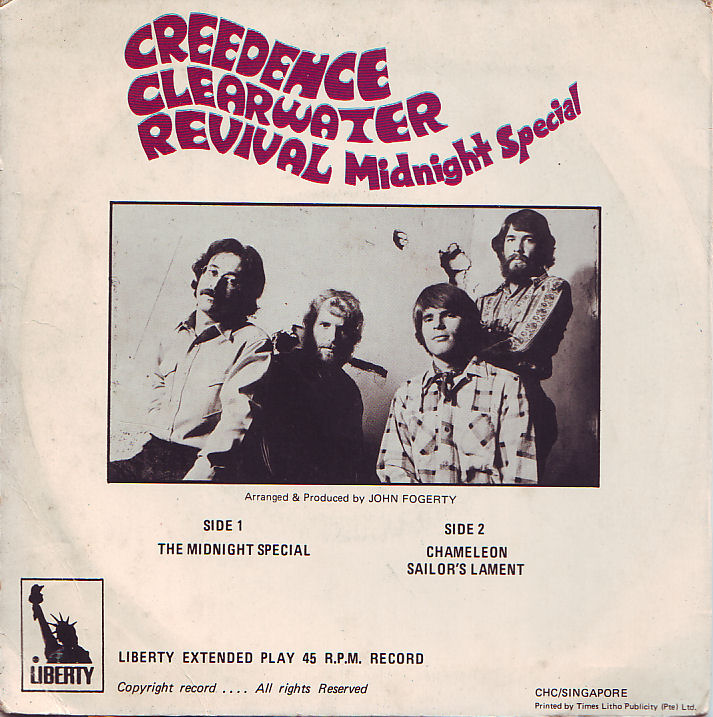
Creedence Clearwater Revival – Have You Ever Seen The Rain

CCR is one band that crosses genres. I haven’t met many people that don’t like them. I can’t say the same for my band The Beatles, or The Stones, The Who, and others. Country fans, Metal fans, Rock fans, and bluegrass fans. It’s something about John Fogerty’s deceptively simple songs that says something to everyone.

John Fogerty did almost all the overdubs for the band until the Pendulum album when other members contributed. Pendulum is the album this song is on. Time was running out on this great band. John said this song was about the impending breakup of the band…Tom Fogerty had told the band he was quitting after the album was finished.

John’s brother Tom Fogerty quit the band after this album and CCR was then a trio. Tom’s voice was close to John’s and he felt restricted in CCR. If you want to hear what Tom sounded like…check out this post by Christian on the forgotten Forgerty brother. Creedence did release one more album after this called Mardi Gras without Tom and it has a few good songs but it’s not up to their standard.

I could tell you my feelings on this song but just listen to it today and it will make your Friday even better.

The song peaked at #8 in the Billboard 100, #1 in Canada, #3 in New Zealand and #36 in the UK in 1971.

John Fogerty:  “That song is really about the impending breakup of Creedence. The imagery is, you can have a bright, beautiful, sunny day and it can be raining at the same time. The band was breaking up. I was reacting: ‘Geez, this is all getting serious right at the time when we should be having a sunny day.’”


From Songfacts

This song is John Fogerty’s take on the imminent departure of his brother Tom from the band, and the overall tension in the group at a time when they should have been enjoying their success. The line, “I want to know – have you ever seen the rain comin’ down on a sunny day?” refers to Tom leaving while CCR was at its commercial zenith. The flip side of this single, “Hey Tonight,” is John reassuring the band that all would go well despite the adversity.

Tom Fogerty left the group in early 1971, after this album was released. He released three solo albums before dying of tuberculosis in 1990. A fourth album, completed in 1988, was released posthumously.

According to John Fogerty, this song’s meaning changed for him over time. Introducing the song at a 2012 show in Arizona, he said: “This song was originally written about a very sad thing that was going on in my life. But I refuse to be sad now. Because now this song reminds me of my little girl, Kelsy, and every time I sing it, I think about Kelsy and rainbows.”

Fogerty added that this is his all-time favorite song, even though it’s one he wrote himself.

Musically, this song was inspired by the group Booker T. & the MG’s, whose most famous song is “Green Onions.” They opened for Creedence Clearwater Revival before CCR recorded the Pendulum album. John Fogerty loved the sound of Booker T. Jones’ Hammond organ, so he used it on some tracks for the album, including this one.

According to Stu Cook, this song and another track on the album, “Pagan Baby,” were written and rehearsed from scratch during one recording session. “Pagan Baby” was done in one take.”

This was used in the TV show Tour Of Duty, which was set in Vietnam during the war. >>

Bonnie Tyler covered this song for her 1983 blockbuster album Faster Than the Speed of Night. Her version reached #47 in the UK. >>

In 2006, Rod Stewart covered this song on his album Still the Same… Great Rock Classics of Our Time. >>

Allison Moorer covered this for her 2015 Down To Believing album. She explained why to Billboard magazine: “The record label wanted me to do a cover. I said ‘I don’t really think the record needs a cover on it,’ and we certainly have enough songs, but in the spirit of being cooperative, I said ‘OK, if you really want one, I’ll come up with something.'”

“If I was going to do a cover, it was going to be something that I had always wanted to do,” she continued. “I’m a huge Creedence fan, and that song might be my very favorite song of theirs. I’ve always thought it was the perfect country / rock song, and this record to me is a country / rock record, so I thought ‘If I’m ever going to this, this is the perfect time. I think what you hear on the record is actually the second take.”

As part of the CCR50 campaign to honor the 50th anniversary of Creedence Clearwater Revival, a video was commissioned for this song starring Jack Quaid, Sasha Frolova and Erin Moriarty as childhood friends in Montana. Directed by Laurence Jacobs, it takes a nostalgic turn when one of the friends moves away.

Willie Nelson recorded this with his daughter Paula Nelson for his duets album To All the Girls… The veteran country singer’s cover was included in the closing moments of the HBO miniseries Big Little Lies’ season 2 finale on July 21, 2019. The interest generated drove Nelson’s cover to a #36 debut on the Country chart dated August 3, 2019.

Have You Ever Seen The Rain

Someone told me long ago
There’s a calm before the storm
I know it’s been comin’ for some time
When it’s over so they say
It’ll rain a sunny day
I know shinin’ down like water

I want to know
Have you ever seen the rain?
I want to know
Have you ever seen the rain
Comin’ down on a sunny day?

Yesterday and days before
Sun is cold and rain is hard
I know been that way for all my time
‘Til forever, on it goes
Through the circle, fast and slow,
I know it can’t stop, I wonder

I want to know
Have you ever seen the rain?
I want to know
Have you ever seen the rain
Comin’ down on a sunny day?

Yeah

I want to know
Have you ever seen the rain?
I want to know
Have you ever seen the rain
Comin’ down on a sunny day?


Todd Rundgren – Hello It’s Me

Todd is a wizard in the studio producing other acts and he is also a great artist himself. Hello It’s Me is a great pop song. It may be Todd’s best-known song.

This was originally recorded by Todd Rundgren’s 1960s band The Nazz, and included on their 1968 debut album. The Nazz version with lead vocals by Stewkey Antoni received little attention and peaked at just #66 in the US. The Nazz broke up in 1969 and was fondly remembered after the fact.

“It turns out now that The Nazz was everybody’s favorite undiscovered group,” Rundgren said in 1972, the year he released his third solo album Something/Anything? which contained a new version of this song that eventually caught on and established Rundgren as a solo artist.

This song, and many others Rundgren wrote at the time, was inspired by a high school relationship that didn’t work out. He graduated in 1966, wrote the song about a year later, and recorded the original Nazz version in 1968, so that relationship was still fresh in his mind.

In real life, Rundgren was the one getting dumped, but he flipped the story so he was breaking up with the girl. Speaking with Marc Myers in 2018, Rundgren explained that the girl was named Linda, and she was his high school girlfriend. He had long hair, and one day when he walked her home, Linda’s dad saw him for the first time and turned the hose on him – no hippie kid was going to date his daughter. A few days later, Linda acceded to her father’s wishes and broke up with him. She did it rather casually, which Todd didn’t appreciate.

Rundgren wrote the lyric thinking about how he would have liked Linda to break up with him: in a sensitive phone call where she tells him it’s important that he’s free.

Interestingly years later at a concert in Tulsa, Linda called him and Todd put her on the guestlist but didn’t tell her she inspired the song.

Hello It’s Me peaked at #5 in the Billboard 100 and #17 in Canada in 1973.


From Songfacts

Rundgren wrote this song, which takes us through a phone call where the singer breaks up with a girl. It’s a remarkably realistic account, devoid of sweeping metaphors typically found in breakup songs. We hear the one side of the phone call, which starts with the familiar greeting, indicating they’ve been together a while. Then they have “the talk,” where he hashes out why they can’t be together and lets her know that she should have her freedom. All he can ask in the end is that she think of him every now and then.

Remarkably, it was the first song Rundgren ever wrote. In his teens, Todd was an avid listener to music but it was only when he put The Nazz together at the age of 19 that the young musician realized he’d better start penning some material. He attributes the sophistication and success of this song to the vast amount of listening he’d done by the time he wrote it.

A specific musical inspiration was the Dionne Warwick song “Walk On By,” written by Burt Bacharach and Hal David. ” I hadn’t thought much about the songwriter’s role previous to listening to that record and realizing how different it was, how it had all the qualities of music that I admired, and yet it also was a song,” Rundgren said in his 2018 Songfacts interview. “That was the first time I really started to, in my own head, deconstruct what a songwriter was doing. That song had a lot of influence in ‘Hello It’s Me.'”

According to Rundgren, the chord progression for “Hello It’s Me” were lifted directly from the intro of jazz organist Jimmy Smith’s rendition of “When Johnny Comes Marching Home.”

Rundgren expected the album opener “I Saw The Light,” which was the first single from Something/Anything?, to be his big hit, even going as far as to say so in the liner notes rather tongue-in-cheek. However, his re-recording of “Hello It’s Me” eclipsed it on the charts – “I Saw The Light” stalled at #16. Both songs displayed his newfound admiration (and subsequent imitation) of Carole King following her Tapestry album.

“Hello It’s Me” was a very slow-moving hit; the Something/Anything? album was released in February 1972, and it only became a hit when radio stations started playing it over a year later and the song was subsequently released as a single. It didn’t hit the Top 40 until November 1973, and by then, Rundgren’s psychedelic album A Wizard, a True Star had been out for eight months. That album was a completely different sound, and Rundgren was in a completely different mindset. The record company didn’t put any singles out from Wizard for fear of alienating Rundgren’s fans, and Todd had a hard time performing the sudden hit that was now five years old. One of his more bizarre moments came when he performed the song on The Midnight Special wearing what looked like something from David Bowie’s closet. Rundgren’s girlfriend Bebe Buell called it his “Man-Eating Peacock outfit.”

This song was used as the ending clip in the first ever episode of That ’70s Show. The gang sings this in the car on the way to a Todd Rundgren concert. This clip also appears on the last episode of the show. >>

The 1968 version of this song by The Nazz was originally relegated to the B-side of another single, “Open My Eyes.” Ron Robin told us how the single got flipped. Says Ron: “How ‘Hello It’s Me’ by Nazz became a ‘sort of’ hit nationally was quite an accident. I was the music director/DJ at WMEX in Boston when a record promoter came by to tell me about this new group… Nazz. He was promoting ‘Open My Eyes,’ a terrific hard driving rocker. I loved it. At home I accidentally played the flip side of the record and heard ‘Hello It’s Me.’ It blew me away. I just had to add it to our playlist at the station. After a few weeks it made it to our top 5. We were the only station in the country playing it! Several months later other stations across the country started playing it. Several years later Todd records it in his new style without Nazz and of course without Nazz lead singer Stewkey.”

What is it about this song that has such lasting appeal? Kasim Sulton, who played bass in Rundgren’s band Utopia, told us that there is something special about Todd’s songwriting. “It’s so difficult to write a good lyric, a lyric that people turn their heads and say, ‘I know what you’re talking about, I know how you feel, I know what you mean. I know what he’s saying there,'” Kasim told us. “And then to put it in the context of a melody in a song is equally as hard. But Todd does that better than anybody I’d ever worked with, and I’ve worked with some great people over the years.”

Structurally, this isn’t typical of hit songs: the title appears just once (the opening line), and there’s no real chorus, just two repetitions of the bridge (“It’s important to me…”). It is, however, typical of Rundgren’s atypical songwriting – he rarely follows conventional form.

In our 2015 interview with Todd Rundgren, he called this “a selfish song.” Said Rundgren, “It’s me, me, me – it’s all about me. I’m in charge, and all this other stuff.”

For this reason, Rundgren didn’t play it when he toured with Ringo Starr’s All-Starr Band, as it didn’t fit in with the other songs in the show. Instead, Rundgren played a song he recorded with his band Utopia that was a hit for England Dan & John Ford Coley: “Love Is The Answer.”

Rundgren recorded a dark, Bossa Nova version of this song on his 1997 compilation album With A Twist. Speaking about the song in Mojo, he explained: “‘Hello It’s Me’ has become the albatross to me: everyone has attached to me the idea of the amateur singer, the amateur piano player, the funk-free boy doing his little song. But I just can’t go there anymore, I can’t even think there anymore.”

The Isley Brothers released a sultry R&B version running 5:32 on their 1974 album Live It Up. In their version Ron Isley repeats “Hello” several times in the intro.

When Erykah Badu was putting together But You Caint Use My Phone, her 2015 concept mixtape with songs dealing with phone calls, her old flame Andre 3000 (from Outkast), he was looking for song that she could use and came across the Isley Brothers recording. When he suggested it to Badu, she asked him to rap on it, which he did. Using the basic structure from the Isley’s version, but was used as the closing track on her mixtape.

Paul Giamatti performed this song in the movie Duets. 

One of the backing singers was Vicki Sue Robinson, who had a disco hit a few years later with “Turn The Beat Around.” Her work on Something/Anything? (she also sang on the track “Dust In The Wind”), marked her first appearance on an album. She was one of the singers who had performed in the Broadway musical Hair that was invited to sing on the album.

When he first started working on Something/Anything?, Rundgren initially wanted to play all of the instruments himself, but once the project became too big, he enlisted a group of musicians for the album: Mark “Moogy” Klingman on organ, John Siomos on drums, Robbie Kogale on guitar, Stu Woods on bass, Randy Brecker on trumpet, Barry Rogers on trombone, and Michael Breckner on tenor sax.

The 1972 single opens with three distinct notes on the bass, a part Stu Woods came up with in the studio. The album version features a few false starts due to the confusion over which musicians were supposed to play first. “When we were in the studio, a lot of people had a hard time hearing where they were supposed to come in,” Rundgren recalled to Mix magazine in 2019. “The only person who was supposed to come in on four was the bass, and everyone else was supposed to come in on one, but everyone kept coming in on four. So if you listen to the album version, you can hear all these false starts.”

Rundgren didn’t have any concrete ideas for the new arrangement and came up with it on the fly in the studio. “I hadn’t written out the arrangements,” he explained. “I had something stewing in my head and said, ‘Here are the changes to the song,’ then taught them the changes, found the feel I liked. If somebody played something I didn’t like, I’d say, ‘No, don’t play that, change it to something else.’ I wanted it to be less dirge-y than the original and have a little more energy to it. Music had evolved a little, so I wanted something that sounded a bit more contemporary, as opposed to the original stripped-down band.”

The Nazz Version

Todd’s Studio Version

Hello It’s Me

Hello, it’s me
I’ve thought about us for a long, long time
Maybe I think too much but something’s wrong
There’s something here that doesn’t last too long
Maybe I shouldn’t think of you as mine

Seeing you, or seeing anything as much as I do you
I take for granted that you’re always there
I take for granted that you just don’t care
Sometimes I can’t help seeing all the way through

It’s important to me
That you know you are free
‘Cause I never want to make you change for me

Think of me
You know that I’d be with you if I could
I’ll come around to see you once in a while
Or if I ever need a reason to smile
And spend the night if you think I should

It’s important to me
That you know you are free
‘Cause I never want to make you change for me

Think of me
You know that I’d be with you if I could
I’ll come around to see you once in a while
Or if I ever need a reason to smile
And spend the night if you think I should