Beatles – I’m So Tired

Another gem from the White Album. John Lennon loved to sleep…he referenced it in another song on Revolver named “I’m Only Sleeping.” Paul would have a songwriting session planned with Lennon and would arrive at John’s house only to have to wake him up. I’ve always liked this song and fit perfectly with the diverse song styles of the album.

John wrote this at a transcendental meditation camp in India when he couldn’t sleep. He was meditating day and night, and after three weeks of meditation and lectures by the Maharishi, he thought of his future wife Yoko Ono while his current wife Cynthia was there with him.  and came up with the song. He even thought of inviting Yoko with him along with Cynthia… that would have added some spice to the trip. Bringing a date on a trip with your wife…probably a bad idea.

John mumbles something at the end of the song.

Mark Lewisohn’s book “The Beatles Recording Sessions” explains this final bit of Lennon mumbling as “Monsieur, monsieur, how about another one?“, insinuating that he was requesting another attempt at the backing vocals.  This final mumbling was the only one that made it onto the finished mix.

In 1969 when the “Paul is dead” rumor went around the world people insisted  when the mumbling at the end of this song was played backward, John was saying “Paul is dead, miss him, miss him, miss him!”  This made for yet another clue for the poor departed Paul …but of course was not true and Paul was and is very much alive… but it did ruin a lot of record player needles in the process of trying to find out.

John said this about the song: “One of my favorite tracks. I just like the sound of it, and I sing it well“.

From Songfacts

The voice at the end sounds like, “Paul is dead man, miss him,” when played backward. This helped fuel rumors that McCartney was dead and replaced by an actor that looked like him.

The line “When I hold you in my arms, and feel my finger on your trigger” from “Happiness Is A Warm Gun” appears in bootlegged, unreleased versions of this song as “When I hold you in your arms, when you show each one of your charms, I wonder should I get up and go to the funny farm.” 

The word “get” as used in this song is a well-known term as a quite mild insult that is still commonly used on Merseyside. Lennon is cursing Sir Walter Raleigh (who is credited with introducing tobacco to Britain from America in the 16th century) for indirectly getting him hooked on cigarettes.

At the bottom below the lyrics, I found a version of Paul singing the song and having a good time. It possibly is from the Let It Be sessions…I’m not sure.

I’m So Tired

I’m so tired, I haven’t slept a wink
I’m so tired, my mind is on the blink
I wonder should I get up and fix myself a drink
No, no, no.

I’m so tired, I don’t know what to do
I’m so tired, my mind is set on you
I wonder should I call you but I know what you would do

You’d say I’m putting you on
But it’s no joke, it’s doing me harm
You know I can’t sleep, I can’t stop my brain
You know it’s three weeks, I’m going insane
You know I’d give you everything I’ve got
For a little peace of mind.

I’m so tired, I’m feeling so upset
Although I’m so tired, I’ll have another cigarette
And curse Sir Walter Raleigh
He was such a stupid get.

You’d say I’m putting you on
But it’s no joke, it’s doing me harm
You know I can’t sleep, I can’t stop my brain
You know it’s three weeks, I’m going insane
You know I’d give you everything I’ve got
For a little peace of mind.

Give you everything I’ve got
For a little peace of mind.

I’d give you everything I’ve got
For a little peace of mind.

Zombies – This Will Be Our Year

This sounds like it should have been a hit but it was never pushed as a single at the time. It was the B side to Butcher’s Tale  (Western Front 1914) which is an experimental song and was a big surprise to the band that it was picked as the first single. Both are from the great album Odessey and Oracle in 1968. There are several songs on this album that could have been in the charts but Time of the Season was the only one that made it and it was a year after the album was released.

Bruce Eder of AllMusic gave the album five stars out of five, calling it “one of the flukiest (and best) albums of the 1960s, and one of the most enduring long-players to come out of the entire British psychedelic boom”.

On recording Odessey and Oracle….Rod Argent

“We had the chance of going in and putting things down in the way we wanted people to hear them and we had a new studio, we walked in just after The Beatles had walked out [after recording Sgt. Pepper]. We were the next band in. They’d left some of their instruments behind … I used John Lennon’s Mellotron, that’s why it’s all over Odessey and Oracle. We used some of their technological advances … we were using seven tracks, and that meant we could overdub for the first time. And it meant that when i played the piano part I could then overdub a Mellotron part, and it meant we could have a fuller sound on some of the songs and it means that at the moment the tour we’re doing with Odessey and Oracle it means we’re actually reproducing every note on the original record by having extra player with us as well.”

This Will Be A Year

The warmth of your love
Is like the warmth of the sun
And this will be our year
Took a long time to come

Don’t let go of my hand 
Now darkness has gone
And this will be our year 
Took a long time to come

And I won’t forget 
The way you held me up when I was down
And I won’t forget the way you said, 
“Darling I love you”
You gave me faith to go on

Now we’re there and we’ve only just begun
This will be our year
Took a long time to come

The warmth of your smile
Smile for me, little one
And this will be our year
Took a long time to come

You don’t have to worry
All your worried days are gone
This will be our year
Took a long time to come

And I won’t forget 
The way you held me up when I was down
And I won’t forget the way you said, 
“Darling I love you”
You gave me faith to go on

Now we’re there and we’ve only just begun
And this will be our year
Took a long time to come

Yeah we only just begun
Yeah this will be our year
Took a long time to come

Those Who Could Not Escape Their Character.

I’m not saying that these actors and actresses never acted in anything else but they ended up trapped in the role that ended up defining them good or bad. This list could have been much longer.

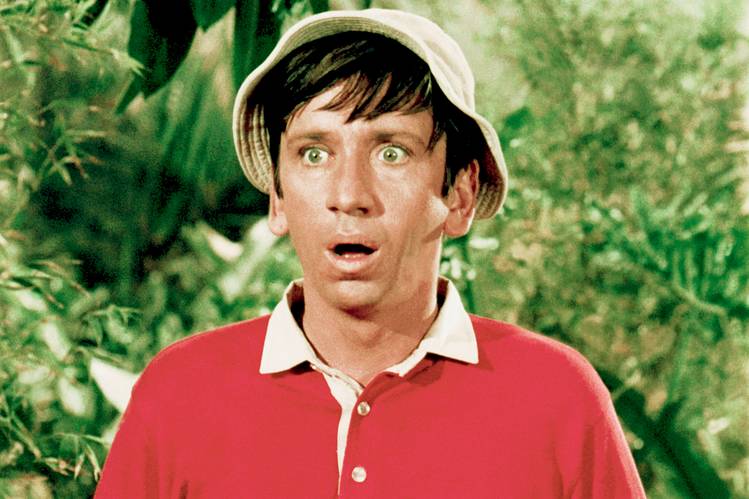
Bob Denver – Gilligan – I just picked Bob because he was the star of the show but a point could be argued that the entire cast of this show was eternally typecast. Bob Denver also played Maynard Krebs (which I loved) on The Many Lives of Dobie Gillis but Gilligan wins out.

Image result for bob denver

Mark Hamill – Luke Skywalker – After he auditioned for the title role in 1983 movie Amadeus the director dismissed the idea saying “I don’t want Luke Skywalker in this film.” He has broken a little out of the image by doing voiceovers like the Joker in Batman animated cartoons.

Related image

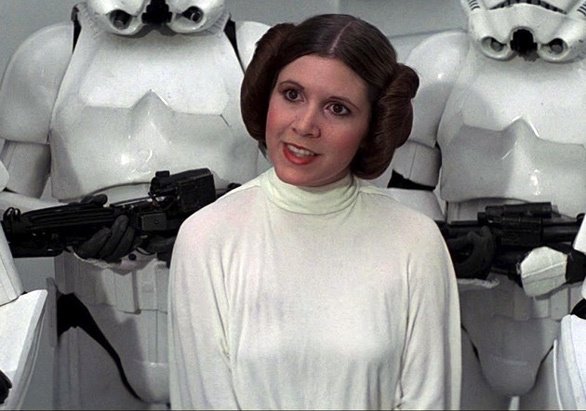
Carrie Fischer – Princess Leia – Harrison Ford was able to break out more successfully than his other two co-stars in Star Wars. Carrie Fischer acted in a lot of movies but could never shake Princess Leia…she is forever frozen in time in the minds of teenage nerds at the time and now.

Image result for princess leia no bra star wars

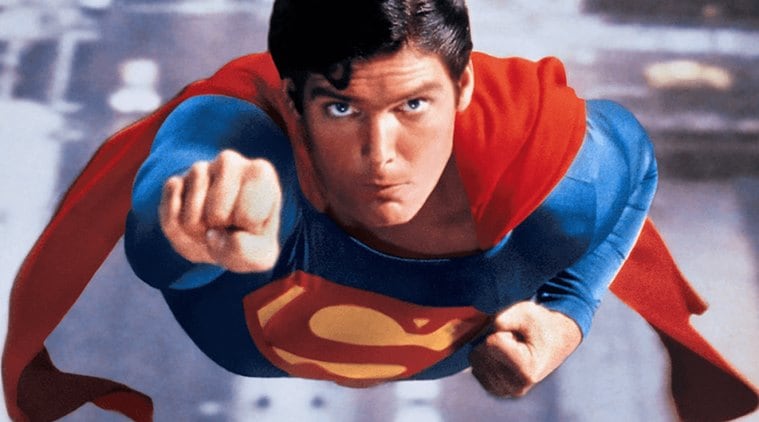
Christopher Reeve – Superman – He is said to have stated that he spent his career trying to “escape the cape.”… When I think of Superman…I do think of Christopher Reeve’s version

Image result for christopher reeves superman

George Reeves – Superman – See Above

Image result for george reeves superman

Barbara Eden – Jeannie – She appeared in many TV  movies but nothing topped beautiful Jeannie. Larry Hagman did manage to escape his character in I Dream of Jeannie into another…J.R. Ewing.

Related image

Elizabeth Montgomery – Samantha – Everyone’s favorite witch. Like Eden she did many TV movies…a lot of them really good but is known for Samantha.

Image result for Elizabeth Montgomery - Samantha

Don Adams – Maxwell Smart -Adams also provided the voices for the animated series Tennessee Tuxedo and His Tales  and Inspector Gadget but was

Image result for Don Adams - Maxwell Smart

Anthony Perkins – Is Norman Bates and there is no arguing that.

Image result for anthony perkins norman bates

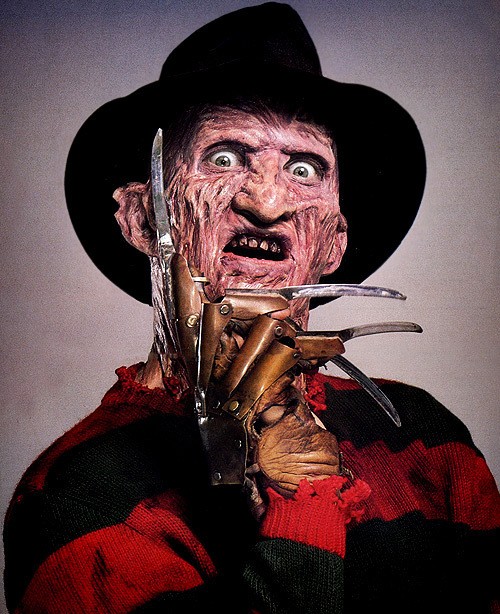
Robert Englund – Freddie Kruger – and I don’t believe he minds at all.

Image result for robert englund freddy krueger


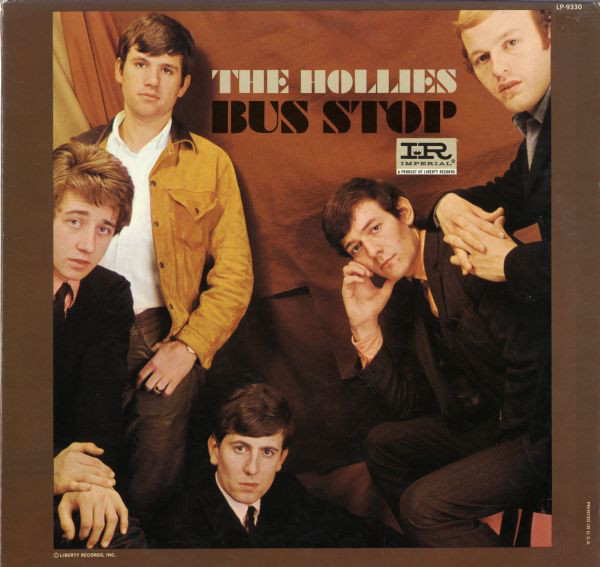
Hollies – King Midas In Reverse

Graham Nash wanted to change the direction of the Hollies and write songs that were more in vogue around this time instead of the simple pop songs they were writing. The song only made it to #18 in the UK charts and it was considered a failure compared to their earlier releases although it was praised by the critics. I think it is inventive and fits in really well with the times.

Nash wrote it after he got back from America on a tour. This was not the rest of the band’s favorite song by any means and they wrote a simple…very simple pop song to follow this song called Jennifer Eccles that of course went to #7 in the UK charts which a disheartened Nash hated and he left for greener pastures with Crosby, Stills, Nash, and Young. I can’t blame him for not liking Jennifer Eccles…it was a weak song.

The song only made it to #51 in the Billboard 100 in 1967. Maybe the change of direction didn’t sit too well with the public. It’s one of my favorites by the Hollies.

Graham said:  “My world was turning to sh*t at that point. I was on top of the world, we had 16 or 17 top ten hits, but I was feeling shitty. We made a great record of that song but it only got into the top 30, and the Hollies were always expecting their songs to go into the top 10. So they started to not trust me and not record my songs, ‘’Marrakesh Express’’ being one of them. So I wasn’t feeling that great about my life. It was all turning to sh*t, it wasn’t turning to gold, it was turning to rust.”

Personally, I like the song better than Marrakesh Express.

King Midas In Reverse

If you could only see me.
And know exactly were I am.
You wouldn’t want to be me,
Oh I can assure you of that.

I’m not the guy to run with,
Cause I’ll pull you off the line.
I’ll break you and destroy you
Give time.

He’s King Midas with a curse.
He’s king Midas in Reverse.
He’s King Midas with a curse.
He’s King Midas in Reverse.

It’s plain to see it’s hopeless,
Goin’ on the way we are.
So even though I loose you,
You’ll be better off by far.

He’s not the man to hold your trust, 
Everything he touches turns to dust in his hands.
Nothing he can do is right, he’d even like to sleep at night, but he can’t.

All he touches turns to dust

I wish someone would find me,
And help me gain control.
Before I loose my reason,
And my soul
He’s King Midas with a curse.
He’s King Midas in reverse.
He’s King Midas with a curse.
He’s king Midas in Reverse.
He’s King Midas with a curse
(all he touches turns to dust)
He’s Kind Midas in Reverse.
(all he touches turns to dust)
He’s King Midas with a curse,
(all he touches turns to dust)
He’s King Midas in Reverse


Beatles – It’s All Too Much

A George Harrison song that was inspired by… Pattie Boyd of course. It was on perhaps the worst Beatle album, the soundtrack to Yellow Submarine. This one I have always liked. The intro is psychedelic with an awesome loud guitar with an organ following. It’s not George’s or the Beatles best song but it fits well on the album and film. Like many Beatle songs…any other band would have featured this song more prominently on an album but the Beatles just stuck it on the soundtrack they didn’t care much about at the time.

Harrison said in 1999 that Paul McCartney played the screaming intro guitar on this song and John Lennon supplied the guitar feedback, allowing George to be free to concentrate only on vocals during the recording of this song.

The Beatles recorded this at De Lane Lea Recording Studios instead of Abbey Road because they were booked at the time.

From Songfacts

A verse was edited out of album version, cutting time from 8 minutes to 6. The full version appears in film Yellow Submarine.

This was by far the longest Beatles song until “Hey Jude” was recorded over a year later. 

The line, “With your long blond hair and your eyes of blue” was taken from the song “Sorrow,” originally recorded by the McCoys but popularly covered by The Merseys in 1966 and David Bowie in 1973.

It’s All Too Much

It’s all too much, it’s all too much

When I look into your eyes, your love is there for me
And the more I go inside, the more there is to see

It’s all too much for me to take
The love that’s shining all around you
Everywhere, it’s what you make
For us to take, it’s all too much

Floating down the stream of time, of life to life with me
Makes no difference where you are or where you’d like to be

It’s all too much for me to take
The love that’s shining all around here
All the world’s a birthday cake
So take a piece but not too much

Set me on a silver sun, for I know that I’m free
Show me that I’m everywhere, and get me home for tea

It’s all to much for me to see
A love that’s shining all around here
The more I am, the less I know
And what I do is all too much

It’s all too much for me to take
The love that’s shining all around you
Everywhere, it’s what you make
For us to take, it’s all too much

It’s too much, it’s too much

Too much, too much, too much

The Who – I Can’t Explain

Great debut single by “The Who.” They released a single before this one but the band had a different name…”The High Numbers.” The song was released in 1964 but peaked at #8 in the UK in 1965.

I Can’t Explain is a simple 3 chord song and what makes it go are the drums. Keith makes his presence felt right away. This was not released on an album until 1971. It is the first song on one of the best compilation albums I ever bought, Meaty, Beaty, Big, and Bouncy.

Roger Daltrey said: “When we turned up to record it there was this other guitarist in the studio – Jimmy Page. And he’d brought in three backing vocalists, which was another shock. He must have discussed it with our management, but not with us, so we were thrown at first, thinking, ‘What the f–k’s going on here?’ But it was his way of recording.”

Page ended up playing the riff and Townsend played the solo.

John Carter, Perry Ford, and Ken Lewis provided the background vocals. The trio were popular session singers in England, where they were known for their harmony vocals. For session work, they called themselves The Ivy League, but they went on to have a hit called “Let’s Go To San Francisco” as The Flower Pot Men. Perry Ford also played piano on this track.

From Songfacts

This was produced by an American named Shel Talmy. He was famous for putting loud, powerful guitar on the songs he produced, and had recently worked with The Kinks on their first hit, “You Really Got Me.” Talmy produced this in a similar style.

Jimmy Page of Led Zeppelin fame was a session musician at the time and was brought in to play guitar on this track. The Who producer Shel Talmy knew the guitar would be very prominent on this song and had Page ready in case Townshend couldn’t handle it. Pete did just fine, and quickly established himself as a premier rock guitarist.

The Who made their first US television appearance performing this on the ABC show Shindig. The program aired from 1964-1966 and featured many popular musicians performing their hits. The Everly Brothers, Glen Campbell, and Sonny and Cher were all frequent guests on the show.

Meaty, Beaty, Big And Bouncy was a 1971 compilation of The Who’s early hits, many of which did not appear on albums and could only be purchased as singles. In 1966, The Who broke their contract with manager and producer Shel Talmy. As part of the deal, Talmy got royalties from Who records over the next five years. By 1971, the band was able to release the compilation album without giving the royalties to Talmy.

The Who played this at the Woodstock festival in 1969. It was the second of 24 songs in their set, which ended with a performance of all the songs from their rock opera Tommy. The Who went on at 3 a.m. the second night of Woodstock and played until the sun came up the next day.

The Kinks song “You Really Got Me” was released the previous year and was also produced by Shel Talmy. If you hear similarities in the guitar riffs, you’re not along. Dave Davies of The Kinks says that when he heard “I Can’t Explain,” he thought those “cheeky buggers” from The Who were copying them.

This was a staple of the band’s setlists throughout their career. When The Who toured in 2015 for their 50th anniversary, it was the opening number. Promoting (sort of) the tour in a Rolling Stone interview, Pete Townshend said that he didn’t like performing, partly because songs like this one have no meaning for him anymore. “The first chord of ‘I Can’t Explain’ for me kind of sets the tone for the evening,” he said. “Is this going to be an evening in which I spend the whole evening pretending to be the Pete Townshend I used to be? Or do I pretend to be a grown-up? In both cases, I think I’m pretending.”

Roger Daltrey admitted to Mojo May 2018 that he thought “I Can’t Explain” was a bit namby-pamby. He explained: “It was the backing vocals. ‘Cos Shel Talmy got the Ivy League in. They did these kind of girly high (sings in comedy falsetto) ‘I caaan’t expaaaaain (laughs)’. But you know, it was commercial and it worked, and I was grateful for that.”

I Can’t Explain

Got a feeling inside (can’t explain)
It’s a certain kind (can’t explain)
I feel hot and cold (can’t explain)
Yeah, down in my soul, yeah (can’t explain)

I said (can’t explain)
I’m feeling good now, yeah, but (can’t explain)

Dizzy in the head and I’m feeling blue
The things you’ve said, well, maybe they’re true
I’m gettin’ funny dreams again and again
I know what it means, but

Can’t explain
I think it’s love
Try to say it to you
When I feel blue

But I can’t explain (can’t explain)
Yeah, hear what I’m saying, girl (can’t explain)

Dizzy in the head and I’m feeling bad
The things you’ve said have got me real mad
I’m gettin’ funny dreams again and again
I know what it means but

Can’t explain
I think it’s love
Try to say it to you
When I feel blue

But I can’t explain (can’t explain)
Forgive me one more time, now (can’t explain)

(Ooh) I said I can’t explain, yeah
(Ooh) you drive me out of my mind
(Ooh) yeah, I’m the worrying kind, babe
(Ooh) I said I can’t explain

Beatles – All I’ve Got To Do

You won’t find this song on a greatest hits package or hear it on the radio. The Beatles never performed the song live throughout their career and it’s a shame but it was an embarrassment of riches for them. It was one of my first favorite songs from them.

This song was written by John Lennon but of course, credited to Lennon-McCartney. This is where John’s voice cuts through everything and when the harmonies kick in on “All I Got To Do” I’m hooked. The song acted as filler on the album but it is way above a filler song. Any other group would have pushed this song.


John Lennon said: “I had the image of walking down the street and seeing her silhouetted in the window and not answering the ‘phone, although I have never called a girl on the ‘phone in my life! Because ‘phones weren’t part of the English child’s life.”

He also said, “That’s me trying to do Smokey Robinson again.”

All I’ve Got To Do

Whenever I want you around, yeah
All I gotta do
Is call you on the phone
And you’ll come running home, yeah
That’s all I gotta do.

And when I, I wanna kiss you, yeah
All I gotta do
Is whisper in your ear
The words you long to hear
And I’ll be kissing you

And the same goes for me
Whenever you want me at all
I’ll be here yes I will
Whenever you call
You just gotta call on me, yeah
You just gotta call on me

And when I, I wanna kiss you, yeah
All I got to do
Is call you on the phone
And you’ll come running home, yeah
That’s all I gotta do.

And the same goes for me
Whenever you want me at all
I’ll be here, yes I will
Whenever you call
You just gotta call on me
You just gotta call on me.

Oh, you just gotta call on me


Rock Combinations That Could Have Happened

Jimi Hendrix, Paul McCartney, Miles Davis, and jazz drummer Tony Williams. 

This one would have been interesting. Jimi had sent a telegram to Paul in 1969. The telegram said:

“We are recording and LP together this weekend in NewYork [sic],” “How about coming in to play bass stop call Alvan Douglas 212-5812212. Peace Jimi Hendrix Miles Davis Tony Williams.”

Beatles aide Peter Brown responded the next day say that McCartney was on Holiday and was not expected back until 2 weeks.

Of the ones on this post…this would have been the most musically interesting to me.

Image result for Jimi Hendrix, Paul McCartney, Miles Davis, and jazz drummer Tony Williams.


Elvis Presley album produced by David Bowie

Dwight Yokum said in an interview that David Bowie told him that in 1977 Elvis heard “Golden Years” on the radio and he called Bowie and asked him to produce his next album. This is a “he said he said” but it would have been a unique combination…but Bowie was no stranger to that.


A Bob Dylan/Beatles/Rolling Stones Super Album

In 1969 Producer Glyn Johns met Bob Dylan and Dylan told Johns that he would like to make an album with the Beatles and Stones. Glyn went back to England very excited and told Keith Richards and George Harrison and they were all for it. Ringo, Charlie, and Bill said they would do it. John didn’t say no but Mick and Paul said absolutely not…leaves you to wonder what it would have sounded like…

Glyn also said  “I had it all figured out. We would pool the best material from Mick and Keith, Paul and John, Bob and George, and then select the best rhythm section from the two bands to suit whichever songs we were cutting. Paul and Mick were probably, right, however, I would have given anything to have given it a go.”

XYZ Band

It would have been comprised of ex-Yes bassist and drummer, Chris Squire and Alan White, along with Jimmy Page of Led Zeppelin. XYZ was said to have stood for eXYes-&-Zeppelin. They had rehearsals and Robert Plant came to one to give it a try in 1981 but found the music too complex for his liking…he was also getting over the death of their drummer and his friend John Bonham.

This one didn’t excite me as much…now Chris Squire and Page does sound interesting and with Robert’s comment it looks like it was going to be a more Yes progressive path.


Bob Dylan – Love Minus Zero/No Limit

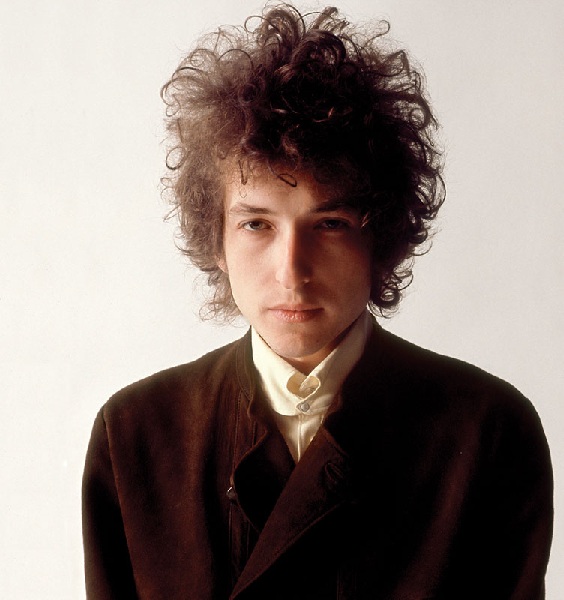
I usually post single releases but this song is one of my favorites of Bob Dylan. I can just read the lyrics of this song and enjoy it. Bob Dylan is the king of song imagery. It was written about his future wife Sara Lownds. It was released in 1965 on the “Bringing It All Back Home” album.

The lyric that hooked me was She knows there’s no success like failure, And that failure’s no success at all. That line is hard to beat.

The song was included on the album Bringing It All Back Home released in 1965. The song was not released as a single but the album peaked at #6 in the Billboard Album Charts.

The title of the song is one of a kind. It’s fun to read people’s interpretations of Dylan’s songs. His songs mean so many different things to people and he is never too open about revealing what they are about.

I found this of someone attempting to mathematically break down the song.

 It’s a strange way to title a song, with a slash in the middle. Until you realize that this is not a normal title per se. It’s an equation, like 4/2=2. In mathematics, the forward slash represents “divided by. Four divided by two equals two.

So what’s Love minus zero divided by no limit? Well, no limit equals infinity. It is infinite. Ten divided by infinity would be an infinitely small number. In fact, any finite number divided by infinity would be an infinitely small number.

However, if one’s love is infinite, and you subtract zero from that, the equation now reads “Infinity divided by infinity.” Which equals One. If each human heart is an infinity, it is through love that the two become one.


Love Minus Zero/No Limit

My love she speaks like silence
Without ideals or violence
She doesn’t have to say she’s faithful
Yet she’s true, like ice, like fire
People carry roses
Make promises by the hours
My love she laughs like the flowers
Valentines can’t buy her

In the dime stores and bus stations
People talk of situations
Read books, repeat quotations
Draw conclusions on the wall
Some speak of the future
My love she speaks softly
She knows there’s no success like failure
And that failure’s no success at all

The cloak and dagger dangles
Madams light the candles
In ceremonies of the horsemen
Even the pawn must hold a grudge
Statues made of matchsticks
Crumble into one another
My love winks, she does not bother
She knows too much to argue or to judge

The bridge at midnight trembles
The country doctor rambles
Bankers’ nieces seek perfection
Expecting all the gifts that wise men bring
The wind howls like a hammer
The night blows cold and rainy
My love she’s like some raven
At my window with a broken wing


The Crystals – Then He Kissed Me

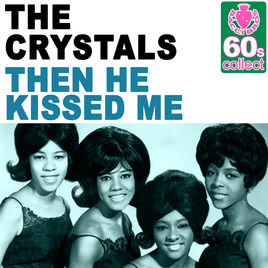
I always think of Goodfellas when I hear this. It is the scene where Ray Liotta takes Lorraine Bracco out to the Copacabana. The song peaked at #6 in the Billboard 100 in 1964.

Dolores “La La” Brooks is the only Crystal to perform on this song. Spector recorded the group’s first recordings in New York City, where they were from. When he relocated to Los Angeles, he had a group called The Blossoms (with Darlene Love singing lead) record the songs “He’s A Rebel” and “He’s Sure the Boy I Love,” which he issued as The Crystals.

On all following Crystals recordings, Spector flew Brooks from New York to Los Angeles to perform the lead vocals, but the other Crystals never made the trip, as Spector preferred to use local backup singers.

From Songfacts

By July 1963, Phil Spector had already made the Hot 100 with seven chart hits that he produced. He successfully ended his partnership with Lester Sill and began his marriage to Annette Merar. Shortly after his marriage, Spector traveled to New York looking for a song to follow up on The Crystals success with “Da Doo Ron Ron.” “Then He Kissed Me” was the perfect song for the group and Phil put together one of his most extravagant productions for the record. (Thanks to Kent at Forgotten Hits.)

This was also around the time when the group shrunk from five members to four, losing Mary Thomas, who left to get married.

Phil Spector produced this using his “Wall Of Sound” technique, which meant long hours in the studio for the musicians, as Spector was notoriously stingy allowing breaks. His engineer Larry Levine recalled: “He didn’t want to give them a bathroom break. Not because he wanted to work them to death, but because he didn’t want them to move microphones or bodies or anything. He wanted everything to stay as it was in the studio. But he would work for three hours or more before we ever put anything on tape. And I think the reason was he wanted to tire these great musicians so that they weren’t playing individualistic; they were too tired. And so they just melded into this wall of sound.”

This was written by Jeff Barry and Ellie Greenwich. Phil Spector also received a songwriting credit. 

Crystals lead singer La La Brooks was just 15 when she recorded this song. Had she ever been kissed? “Yeah,” she replied when we asked her. “My little boyfriend at 13 years kissed me on my mouth at the door. But not kiss kiss – you know what I’m saying?”

To coax the vocal performance out of La La Brooks, Phil Spector dimmed the lights in the studio and gave her specific instructions. “He said, ‘Think of somebody kissing you,'” Brooks told us. “I was a kid, so I’m not going to think like that. So he would turn off the lights, I would have a little light on my music, on my words, and then he said, ‘Now, concentrate.’ And I said (singing), ‘Well, he walked up to me and he asked me if I wanted to dance.’ He said, ‘That’s the way you do it!’

So I guess he had to train my mind to think that I was talking about a boy. He knew how to get things out of you.”

This was The Crystals’ last US Top 40 hit, as Phil Spector soon lost interest in them and turned his attention to another girl-group called The Ronettes. The song’s first appearance on an album was on a various-artists compilation of Phil Spector’s artists entitled Today’s Hits.

In 1965, the Beach Boys recorded a version titled “Then I Kissed Her,” which reached UK #4.

The flip side of the record was an instrumental called “Brother Julius,” which was named after a hamburger stand near the Gold Star studio where the recording sessions took place. Spector usually put throwaway songs on the B-sides of his singles so the DJs wouldn’t play them instead of the A-sides.

This song opens the 1987 movie Adventures in Babysitting, where Elisabeth Shue dances to it while getting ready for a date. The song was also used in a 2006 episode of The Simpsons called “Marge and Homer Turn a Couple Play.”

Then He Kissed Me

Well, he walked up to me and he asked me if I wanted to dance
He looked kinda nice and so I said I might take a chance
When he danced he held me tight
And when he walked me home that night
All the stars were shining bright
And then he kissed me

Each time I saw him I couldn’t wait to see him again
I wanted to let him know that he was more than a friend
I didn’t know just what to do
So I whispered I love you
He said that he loved me too
And then he kissed me

He kissed me in a way that I’ve never been kissed before,
He kissed me in a way that I want to be kissed forever more

I knew that he was mine so I gave him all the love that I had
And one day he took me home to meet his mon and his dad
Then he asked me to be his bride
And always be right by his side
I felt so happy I almost cried
And then he kissed me

Then he asked me to be his bride
And always be right by his side
I felt so happy I almost cried
And then he kissed me

Roy Orbison – In Dreams

How I love this song but…no matter how hard I try I cannot get the movie Blue Velvet out of my head while listening to it. The song helped revive Roy’s career when it appeared in the movie. Here is what Roy said:

Oh God! I was aghast, truly shocked! I remember sneaking into a little cinema in Malibu, where I live, to see it, Some people behind me evidently recognised me because they started laughing when the “In Dreams” sequence came on. But I was shocked, almost mortified, because they were talking about ‘the candy coloured clown’ in relation to doing a dope deal, then Dean Stockwell did that weird miming thing with that lamp. Then they were beating up that young kid! I thought, ‘What in the world? But later, when I was touring, we got the video out and I really got to appreciate not only what David Lynch gave to the song, and what the song in turn gave to the film, but how innovative the movie was, how it really achieved this otherworldy quality that added a whole new dimension to “In Dreams”. I find it hard to verbalise why, but Blue Velvet really succeeded in making my music contemporary again.

Roy Orbison claimed in interviews that the lyrics for this song came to him in a dream he wrote the music once he woke up. The song peaked #7 in the Billboard 100 in 1963. While the song was in the charts Orbison toured Britain with a new unknown group, named the Beatles.

From Songfacts

This song is featured in a key scene in the 1986 film Blue Velvet where Dean Stockwell’s character lip-synchs to the song. Orbison initially rejected director David Lynch’s request to use this song, but later made a video for the track with scenes from the film.

The use of this song in Blue Velvet sparked a career resurgence for Orbison. Because of legal entanglements, he didn’t have access to the master recordings of many of his hits, so after the movie drummed up interest in his work, he set about re-recording his songs for a compilation called In Dreams: The Greatest Hits. When Orbison asked Lynch if he could use footage of the film in a video for the re-recorded “In Dreams,” Lynch not only agreed, but offered to help with the song. With T Bone Burnett producing, Lynch directed Orbison in his performance as he would an actor in a film, and it worked, allowing Orbison to be faithful to the original recording by doing it with no overdubs.

Shortly before he died, Roy Orbison recorded a follow-up to this song called “In The Real World” on his 1989 album Mystery Girl.

In Dreams

A candy-colored clown they call the sandman
Tiptoes to my room every night
Just to sprinkle star dust and to whisper
“Go to sleep, everything is alright”

I close my eyes then I drift away
Into the magic night, I softly say
A silent prayer like dreamers do
Then I fall asleep to dream my dreams of you

In dreams I walk with you
In dreams I talk to you
In dreams you’re mine all the time
We’re together in dreams, in dreams

But just before the dawn
I awake and find you gone
I can’t help it, I can’t help it if I cry
I remember that you said goodbye

Too bad it only seems
It only happens in my dreams
Only in dreams
In beautiful dreams.

The Searcher… Elvis Presley

Whenever I start reading about someone (In this case Elvis Presley) I usually dive deep into them. I’ve watched a few documentaries on youtube and the Comeback Special.

Last week Slightly Charming (I highly recommend checking out her blog) recommended this documentary on Elvis and it is the best one I’ve watched about him. It’s an HBO production with commentary by Priscilla Presley, Bruce Springsteen, Tom Petty, Robbie Robertson, and many others.

It is a two-part documentary around 3 hours long both combined. Much like the Peter Guralnick books I’ve been reading it is very even-handed but it doesn’t pull any punches.

Elvis was an interesting person. A poor southern boy who gained fame and fortune quickly and handled it well considering what he was going through until his mother passed away. After that came the Army stint in Germany and from there while his fortune and fame grew his artistic credibility went down. In the mid-sixties, while The Beatles, Dylan, and the Stones dominated the charts…Elvis, a big influence to all three was stuck in a cycle of bad movies and bad soundtracks that he didn’t want to do.

The documentary goes over Colonel Tom Parker his manager, The infamous Memphis Mafia, Las Vegas, and the failed marriage to Priscilla.

The one thing this film does is concentrate on his music and not the parody he turned into at the end of his life. I found myself rooting for him during the 1968 Comeback Special. He had the spark back again and his voice was the Elvis we heard in the fifties. After the dismal movie soundtracks, he made this great comeback special but then it slowly started to go down. There was still good music to come but the end was in sight.

This great documentary is worth the time to check out.


Ernie K Doe – Mother-In-Law

A fun song with a sense of humor. It stays with me on one listen. Apparently, it stayed with others because it peaked at #1 in the Billboard 100 in 1961. Unfortunately, this was Ernie’s only top 40 hit.

This song was written by Allen Toussaint, who was Ernie K-Doe’s producer. Toussaint came up with the song when he was playing piano in his family’s living room, messing around with bits of a song he had heard from the gospel group the Harmonizing Four. Trying to think up lyrics, he came up with the title and quickly fabricated the story about a guy who is put through hell by his mother-in-law.

After researching this song…I found a picture of Ernie and Led Zeppelin in New Orleans.

Image result for ernie k doe and led zeppelin

From Songfacts

K-Doe’s real name: Ernest Kador. Born in 1936, he remained a popular singer and radio personality in New Orleans until his death in 2001. While best known as a singer, K-Doe was also an accomplished drummer.

The song plays on the stereotype of the meddling mother-in-law who feels the man who married her daughter isn’t good enough for her. Most songs of this nature would be labeled “novelty” records, but K-Doe’s sincere delivery kept that tag off the song in most publications.

Toussaint didn’t have a mother-in-law at the time – he was single – but he kept hearing comedians making mother-in-law jokes on TV, so he knew it would get a reaction. Toussaint says that his grandmother was horrified when she heard it, but forgave him later.

The bass singer on this track who repeats the “mother-in-law” refrain was Benny Spellman. The success of this song caused a running argument between K-Doe and bass singer Spellman as to who was responsible for the hit. Spellman prevailed upon Toussaint to write a song for him to record, “Lipstick Traces (on a Cigarette).” When Spellman recorded it, K-Doe sang backup vocals.

Allen Toussaint thought Ernie K-Doe would be a good fit for this song, since Ernie was known as a showman, and for making outrageous self-promotional statements. K-Doe claimed that this song “will last to the end of the Earth, because someone is always going to get married.”

This was by far the biggest hit for K-Doe, whose other chart entries were “Te-Ta-Te-Ta-Ta” (#53, 1961), “I Cried My Last Tear” (#69, 1961), “A Certain Girl” (#71, 1961) and “Popeye Joe” (#99, 1962). His 1970 song “Here Come The Girls!” was sampled by the Sugababes for their 2008 UK hit “Girls.”

In 1994, K-Doe opened a bar and music venue in New Orleans called “The Mother-in-Law Lounge” with his wife Antionette. After Ernie died in 2001, Antionette kept the venue alive, preserving Ernie’s memory with a fully costumed, look-alike mannequin of the singer. The lounge was completely destroyed by Hurricane Katrina in 2005, but reopened a year later. Antionette K-Doe died of a heart attack on February 24, 2009, which was the day of Mardi Gras.

K-Doe claimed that he fished the song out of Allen Toussaint’s trash can and recorded it because he related strongly to its sentiments: his mother-in-law was living in his house at a time of marital turmoil. In our interview with Toussaint, he explained what happened: “I wrote four songs for him to do, because we always recorded four songs at a time, and ‘Mother-In-Law’ was one of them. When I tried it out on him the first time, he began to shout and preach at it and I really didn’t like his approach to it. I thought it was a waste of time to try to get him to do it, so I balled it up and put it in the trash can, like I did with other songs. One of the backup singers, Willie Harper, thought it was just a wonderful song, so he took it out of the trash can and said, ‘K-Doe, why don’t you calm down and listen closer to the way Allen is doing it and try to do it like that? This is a good song.’ So he calmed down and didn’t preach at it, but did it like it finally came out.”

This song was recorded in New Orleans at J&M Studios, which was also where Little Richard and Fats Domino recorded. Allen Toussaint was a regular at the studio, sometimes recording his own material, but usually doing session work.

Mother-In-Law

Mother-in-law (mother-in law), mother-in-law (mother-in-law)
The worst person I know, mother-in-law, mother-in-law
She worries me so, mother-in-law, mother-in-law
If she leaves us alone, we would have a happy home
Sent from down below
(Mother-in-law) mother-in-law, (mother-in-law), mother-in-law

Sin should be her name, mother-in-law, mother-in-law
To me, they’re about the same, mother-in-law, mother-in-law
Every time I open my mouth, she steps in, tries to put me out
How could she stoop so low?
(Mother-in-law), mother-in-law, (mother-in-law), mother-in-law

I come home with my pay, mother-in-law, mother-in-law
She asks me what I make, mother-in-law, mother-in-law
She thinks her advice is a contribution
But if she will leave that will be a solution
And don’t come back no more
(Mother-in-law), mother-in-law, (mother-in-law), mother-in-law

Mother in law, mother in law, oh

Merle Haggard – Workin’ Man Blues

Merle Haggard had 38 number one hits, 71 top ten hits, and 101 songs in the top 100 in the country charts. I don’t listen to many country artists but Merle I do… Haggard wrote the song as a tribute to his working-class fan base. When the guitar riff starts up…I am hooked. Workin’ Man Blues” was a track on Haggard’s 1969 album A Portrait of Merle Haggard.

Haggard took the lead guitar lines himself, augmented by the great session player James Burton, who had made his reputation playing on all Ricky Nelson‘s great early hits and also played for Elvis Presley.

Lewis Talley added a third guitar on the track, with bass by Chuck Berghofer;  the drummer was Jim Gordon, known for his work with Delaney & Bonnie and as a member of Derek and the Dominos.

The song peaked at #1 in the Hot 100 Country Charts and #1 in the  Canadian RPM Country Tracks in 1969.

From Songfacts

“Working Man Blues” is about as obviously aimed as you can get, at the core audience of his fans, being blue-collar workers. Even at that, Haggard poses for the cover of the single in full business suit, tie, watch, and all. It’s sort of a cool solidarity with the audience, and a sympathetic bit of self-deprecating humor – “Don’t I look ridiculous like this?” The suit even seems to be tailored in a just-this-side-of-dandy fashion, just to make the point.

“Working Man Blues” is an excellent example of the country music sub-genre known as the “Bakersfield Sound.” Bakersfield, California was the locus of a back-to-basics breed of Country music in the ’60s and ’70s, popularized by Merle Haggard, Buck Owens, and the Buckaroos. It was kind of a “punking” of Country music, removing the slick studio production to focus on the bare essentials.

You can’t believe it thanks to the urban sprawl and metropolitan development today, but Bakersfield was once just as rural as the name suggests. As recently as 1970, it was just ranches and farms, from the freeway to the horizon, with a few “wide places in the road” for buildings. Today it’s the same smoggy concrete jungle that the rest of California is.

Haggard had an amazing work ethic, firing off an average of three albums in the space of a year. Critics noted that the prolific pace didn’t hurt the quality; music critic Mark Deming noted that a performer would be lucky to have the hits spanning a career that Haggard could pack into one album.

Working Man Blues

It’s a big job just gettin’ by with nine kids and a wife
I been a workin’ man dang near all my life 
I’ll be working long as my two hands are fit to use 
I’ll drink my beer in a tavern, 
Sing a little bit of these working man blues

I keep my nose on the grindstone, I work hard every day
Might get a little tired on the weekend, after I draw my pay
But I’ll go back workin, come Monday morning I’m right back with the crew
I’ll drink a little beer that evening, 
Sing a little bit of these working man blues

Hey hey, the working man, the working man like me
I ain’t never been on welfare, that’s one place I won’t be
Cause I’ll be working long as my two hands are fit to use
I drink a little beer in a tavern
Sing a little bit of these working man blues

Sometimes I think about leaving, do a little bummin’ around
I wanna throw my bills out the window catch a train to another town
But I go back working I gotta buy my kids a brand new pair of shoes
Yeah drink a little beer in a tavern,
Cry a little bit of these working man blues

Hey hey, the working man, the working man like me
I ain’t never been on welfare, that’s one place I won’t be
Cause I’ll be working long as my two hands are fit to use
I drink a little beer in a tavern
Sing a little bit of these working man blues
Yeah drink a little beer in a tavern,
Cry a little bit of these working man blues

Beatles – Sexy Sadie

This song has an excellent melody and John’s voice is great. It’s always been a favorite of mine. When I first got the White Album I zeroed in on Dear Prudence, Helter Skelter and this one at first.

John wrote this song about the Maharishi after John decided he wasn’t going to be the spiritual leader John thought. The song was called “Maharishi” but George convinced him to change the name of the song to Sexy Sadie. Personally, I think the Maharishi was good for them at the time. They cut down on the drugs and wrote some great songs without being pestered by the public or reporters.

George said this about John’s disillusionment of the Maharishi:  “Someone started the nasty rumor about Maharishi, a rumor that swept the media for years…This whole piece of bullsh*t was invented.  It’s probably even in the history books that Maharishi ‘tried to attack Mai Farrow‘ – but it’s bullsh*t, total bullsh*t.  Just go ask Mia Farrow.  There were a lot of flakes there; the whole place was full of flaky people.  Some of them were us.”

“The story stirred up a situation.  John had wanted to leave anyway, so that forced him into the position of thinking: ‘OK, now we’ve got a good reason to get out of here.’  We went to Maharishi, and I said, ‘Look, I told you I was going’…He couldn’t really accept that we were leaving, and he said, ‘What’s wrong?’  That’s when John said something like:  ‘Well, you’re supposed to be the mystic, you should know.’  We took some cars that had been driven up there…We drove for hours.  John had a song he had started to write which he was singing:  ‘Maharishi, what have you done?’ and I said, ‘You can’t say that it’s ridiculous.’  I came up with the title of ‘Sexy Sadie’ and John changed ‘Maharishi’ to ‘Sexy Sadie.’


From Songfacts

John Lennon wrote this about the Maharishi while he was leaving India in 1968. After attending his Transcendental Meditation camp with the other Beatles, Lennon thought The Maharishi was a crock.

The song describes Lennon’s total dissatisfaction with the Maharishi. While at his retreat, it has been said that the Maharishi attempted to rape Mia Farrow. Once The Beatles learned of this, they immediately went to the Maharishi, and Lennon announced they were all leaving. The Maharishi asked why? Lennon said, “If you’re so cosmic, you’ll know why.” As originally written, some of its lyrics were considered obscene and had to be refined. Lennon had used the Maharishi’s name but had to change it for fear of being sued. But, Sexy Sadie is the Maharishi. Needless to say, that was the end of the Maharishi and The Beatles relationship. 

Lennon dubbed the Maharishi “sexy” after he hit on Mia Farrow. Farrow’s sister, Prudence, was also there, and her experience led Lennon to write “Dear Prudence.”

Maharishi Mahesh Yogi was born on January 12, 1917. The founder of the Transcendental Meditation Movement, the Beatles spent time with the Maharishi in 1967-68; they were visiting him when they learned of the death of their manager Brian Epstein. John was disenchanted with the Maharishi and thought he was a hoax, and left abruptly convincing the others he was using the girls The Beatles had brought him.

This song required 52 takes and a full day-and-a-half of studio time. Lennon spent much of time cussing his way through the sessions, deeply hurt after coming to the conclusion that the Maharishi was not as holy as he’d hoped.

The song confirmed Charles Manson’s belief that the Beatles were talking directly to him, by virtue of one of his followers, Susan Atkins, having already been nicknamed Sadie Mae Glutz. Many of the tracks from The White Album (“Piggies” for example) were interpreted by Manson as messages directed to him.

In the Anthology book when The Beatles were talking about Manson, John Lennon was quoted as saying, “All the other fellows had some ‘influence’ on Manson, but not me I didn’t do nothing,” but Sadie was the nickname for Susan Atkins (Sadie Mae Glutz) which did contribute to Manson’s belief that the Beatles were singing about him and his “Family.” 

Sexy Sadie

Sexy Sadie, what have you done
You made a fool of everyone
Sexy Sadie, ooh, what have you done

Sexy Sadie, you broke the rules
You laid it down for all to see
Sexy Sadie, ooh, you broke the rules

One sunny day the world was waiting for a lover
She came along and turned on everyone
Sexy Sadie, the greatest of them all

Sexy Sadie, how did you know
The world was waiting just for you
Sexy Sadie, ooh, how did you know

Sexy Sadie, you’ll get yours yet
However big you think you are
Sexy Sadie, ooh, you’ll get yours yet

We gave her everything we owned just to sit at her table
Just a smile would lighten everything
Sexy Sadie, she’s the latest and the greatest of them all

She made a fool of everyone
Sexy Sadie

However big you think you are
Sexy Sadie