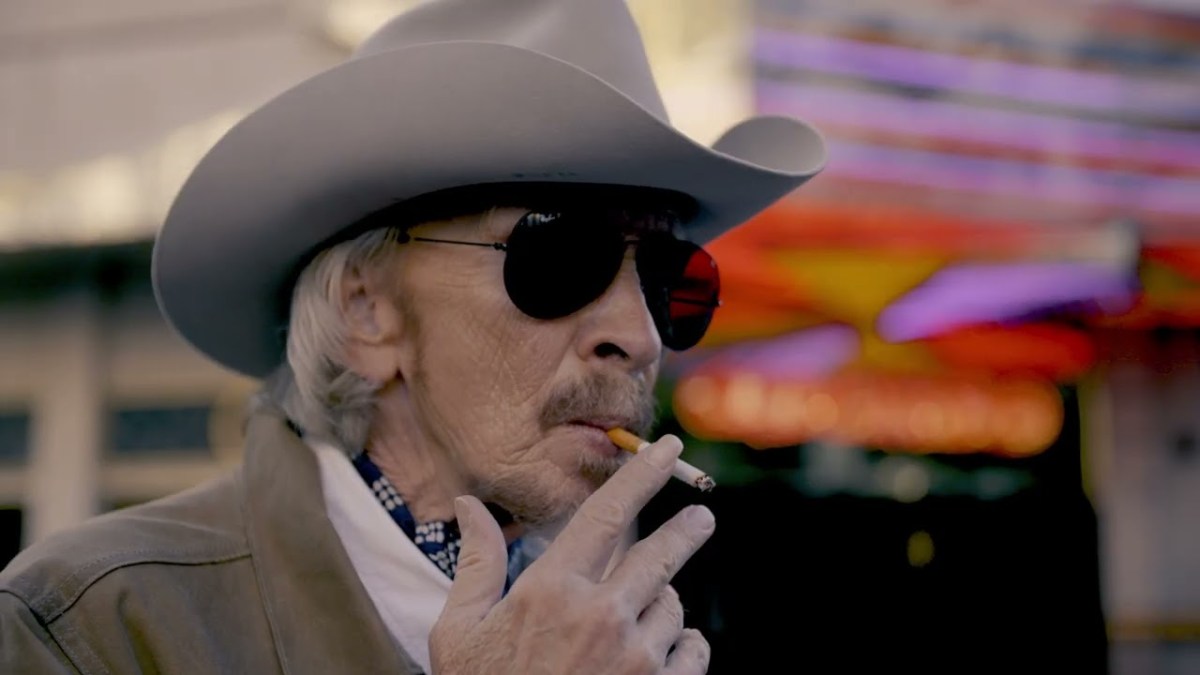
Dwight Yoakam – A Thousand Miles from Nowhere

A great single by Dwight Yoakam. I didn’t listen to much country in the 1990s. This one got my attention. I would say Steve Earle and Dwight Yoakam brought me back to country after hearing 1980s country. Those two artists had something substantial to offer and helped the country return to its roots, at least until Brooks arrived and took country music to hell.

I always liked Yoakam’s voice, a mix of Bakersfield twang and croon, which fits it perfectly. For me, this is Dwight at his peak, the product of the outsider cowboy image he made in the 1980s and 1990s. The album This Time had some great songs released from it. This song, Fast As You, and Ain’t That Lonely Yet. One thing I can say about Yoakam in this song is that he makes desolation sound beautiful.

The song peaked at #2 on the Billboard Country Charts and at #3 in Canada in 1993. The song was written by Yoakam and produced by Pete Anderson. The song was on Dwight’s album This Time. The album peaked at #4 in the Billboard Country Album Charts, #1 in the Canada RPM Album Charts, and #25 in the Billboard Album Charts.

Five singles were released from This Time. Each made the Country Top 40, and they all made the Canada top 5 Country in 1993-94.

The song was featured in two films, Red Rock West and Chasers.

Thousand Miles From Nowhere

I’m a thousand miles from nowhere
Time don’t matter to me
‘Cause I’m a thousand miles from nowhere
And there’s no place I want to be

I got heartaches in my pocket
I got echoes in my head
And all that I keep hearing
Are the cruel, cruel things that you said

I’m a thousand miles from nowhere
Time don’t matter to me
‘Cause I’m a thousand miles from nowhere
And there’s no place I want to be

Oh, I
Oh, I
Oh, I

Oh, I
Oh, I
Oh, I

I’ve got bruises on my memory
I’ve got tear stains on my hands
And in the mirror there’s a vision
Of what used to be a man

I’m a thousand miles from nowhere
Time don’t matter to me
‘Cause I’m a thousand miles from nowhere
And there’s no place I want to be

I’m a thousand miles from nowhere
Time don’t matter to me
‘Cause I’m a thousand miles from nowhere
And there’s no place I want to be

Oh, I

I’m a thousand miles from nowhere

I’m a thousand miles from nowhere

I’m a thousand
I’m a thousand

Beatles – Everybody’s Got Something To Hide Except for Me and My Monkey

 I wrote this for Dave’s site for Turntable Talk. He wanted us to write about a song with an animal in the title or lyrics. 

This is the Beatles at their most caffeinated, most chaotic, and most cracked. It’s them turning up the thermostat on rock & roll just to see if the walls start to melt. I liked the chaos and music they put to this song. It’s intense and doesn’t let up throughout the song. It’s like a cousin to Helter Skelter, but hopped up on confusion. That said, the song is very tight musically underneath the chaos. This is yet another reason I love the White Album. You have this on the same album as Blackbird and Rocky Raccoon. The Beatles, more than many bands, could adapt to a style of music and play it well.

Lennon sounds giddy, high on something, probably Yoko, maybe drugs, definitely freedom. The monkey might be Yoko. It might be his own self-made madness. Or maybe it’s a giant middle finger to everyone trying to box him in. What was it about? John said he, Yoko, and Paul thought it was drugs. Whatever it was made an interesting recording that still grabs my ear. 

The Beatles began working on this song, which continued until 3 a.m. The session was not a keeper, and the tape was to be taped over (EMI saving money), but in 2018, while remastering the album, they found an alternative version of this song that was recorded on the first night. Someone didn’t tape over it. Geoff Emerick, the Beatles’ sound engineer, had said that they recorded this song and Helter Skelter at maximum volume in the studio, and it showed in the final recording. 

It has one of my favorite song titles of all time. Chaos reigns in this song, and Paul adds a great short bass run…not to mention a fire bell ringing throughout. Lennon once said it was inspired by something Maharishi Mahesh Yogi would say (Take off your clothes and jump in the water type enlightenment), but by the time it was recorded for the White Album in June ’68, John had already dropped the Maharishi and picked up Yoko Ono. 

The White Album was released in 1968 and peaked at #1 on the Billboard Album Chart, #1 in Canada, #1 in the UK, and #1 about everywhere else…and it would be #1 as well in Max’s heart. 

If you’re looking for one of the most purely energetic cuts in the Beatles’ catalog, something that draws a direct line to punk, garage, and all the future people who liked their rock sweaty and unfiltered, this is your monkey.

John LennonAbout me and Yoko. Everybody seemed to be paranoid except for us two, who were in the glow of love.

Paul McCartney:  “He was getting into harder drugs than we’d been into and so his songs were taking on more references to heroin.  Until that point we had made rather mild, rather oblique references to pot or LSD.  Now John started to be talking about fixes and monkeys and it was a harder terminology which the rest of us weren’t into.  We were disappointed that he was getting into heroin because we didn’t really see how we could help him.  We just hoped it wouldn’t go too far.  In actual fact, he did end up clean but this was the period when he was on it.  It was a tough period for John, but often that adversity and that craziness can lead to good art, as I think it did in this case.”

Fats Domino covered this song.

Everybody’s Got Something To Hide Except Me And My Monkey

Come on come on come on come on
Come on is such a joy
Come on take it easy
Take it easy take it easy
Everybody’s got something to hide except for me and
My monkey.

The deeper you go the higher you fly
The higher you fly the deeper you go
So come on come on
Come on is such a joy
Come on make it easy
Come on make it easy.

Take it easy take it easy
Everybody’s got something to hide except for me and
My monkey.

Your inside is out and your outside is in
Your outside is in and your inside is out
So come on come on
Come on is such a joy
Come on make it easy
Make it easy make it easy
Everybody’s got something to hide except for me and
My monkey.

Turtles – You Baby

I was given the single Elenor as a kid, and since then, I’ve always had a soft spot for the Turtles. They never took themselves seriously and always seemed to have fun. Howard Kaylan and Mark Volman (later Flo and Eddie) could harmonize so well together, and those harmonies kept this song a step above garage rock. They were not going to be mistaken as the next pin-up stars in 16 magazine.

It’s almost comically simple, but that was the cool thing about mid-1960s pop music. You didn’t need a great plan; you just needed two and a half minutes adn a catchy tune. And with that soaring chorus, the Turtles sold it well. It’s a sound that would carry them through the next few years, although they would grow into more sophisticated pop music.

The band was formed by Mark Volman and Howard Kaylan in the early sixties. They were saxophone players who did whatever was trendy to make a living as musicians. They were also in the choir together in high school. They started off as an instrumental band, but with the Beatles and the British invasion, they soon switched to a rock and roll band with Howard Kaylan as lead singer. They hit with a Bob Dylan song called It Ain’t Me Babe released in 1965.

They were just getting started here, but they would end up with quite a career. I’m happy to say that I did see them, although in the ’80s with Flo and Eddie. 

This song was released in 1966 on the You Baby album. The song peaked at #20 on the Billboard 100 and #11 in Canada. The song was written by P.F. Sloan and Steve Barri. They would also write songs for the Grass Roots and the Association. 

Every time I post on The Turtles…I recommend watching their documentary… one of the most entertaining docs I’ve ever seen. If you have watched it…what do you think? It’s one of the funniest documentaries I’ve ever seen. 

You Baby

From the time I fall asleep‘Til the morning comes I dream aboutYou, babyAnd I feel all right‘Cause I know tonight I’ll be withYou, babyAnd who makes me feel like smilingWhen the weary day is through?

You baby, no-one but you, baby, nobody but youYou baby, no-one but you, baby, nobody but you

They say candy is sweetBut it just can’t compete withYou, babyYou’ve got everything I needAnd nobody can please likeYou do, baby (nobody but you)And who believes that my wildest dreamsAnd my craziest schemes will come true?

You baby, no-one but you, baby, nobody but youYou baby, no-one but you, baby, nobody but you

A little ray of sunshineA little bit of soulAdd just a touch of magicYou got the greatest thing since rock ‘n’ roll

You baby, no-one but you, baby, nobody but youYou baby, no-one but you, baby, nobody but youYou baby, no-one but you, baby, nobody but you

Impressions – People Get Ready

To my ears, this was always a hymn that doubled as a pop song. As smooth as you can get. After posting the Jerry Butler song this week, I wanted to hear some Impressions. It’s been covered by everyone from Jeff Beck and Rod Stewart to Bob Dylan, but the original remains untouchable.

The producer Johnny Pate understood that this song didn’t need horns blaring or big arrangements. The Impressions’ harmonies, Fred Cash and Sam Gooden’s voices around Curtis’s lead, were the orchestra, and it works perfectly. The roots of the song go back to Curtis’s church upbringing on Chicago’s North Side. He grew up playing guitar in gospel groups and listening to the Five Blind Boys of Alabama and the Soul Stirrers, where Sam Cooke had once stood at the mic.

The song was released just after the 1963 March on Washington and the Civil Rights Act of 1964. Dr. Martin Luther King Jr. often spoke of “the train of freedom,” and Mayfield picked up that imagery and carried it into the studio. The track would be used by King himself at some rallies. It was released in 1965 and peaked at #14 on the Billboard 100 and #3 on the Billboard R&B Charts. 

Curtis Mayfield: “While I had written a few Gospel songs, what would be looked upon as Gospel, I called them more inspirational, such things as ‘People Get Ready, this is a perfect example of what I believe has laid in my subconscious as to the preaching of my grandmother, and most ministers when they reflect from the Bible.”

Curtis Mayfield: “It doesn’t matter what color or faith you have, I’m pleased the lyrics can be of value to anybody.”

Curtis Mayfield doing a live version.

People Get Ready

People get ready, there’s a train a comin’ 
You don’t need no baggage, you just get on board 
All you need is faith, to hear the diesels hummin’
Don’t need no ticket, you just thank the Lord 

So people get ready, for the train to Jordan 
Picking up passengers coast to coast 
Faith is the key, open the doors and board ’em 
There’s hope for all, among those loved the most 

There ain’t no room for the hopeless sinner 
Whom would hurt all mankind, just to save his own, believe me now
Have pity on those whose chances grow thinner 
For there is no hiding place, against the kingdom’s throne 

So people get ready there’s a train a comin’ 
You don’t need no baggage, you just get on board 
All you need is faith, to hear the diesels hummin’ 
Don’t need no ticket, you just thank the Lord

Jerry Butler – He Will Break Your Heart

I could place Jerry Butler on the turntable and drift away in a cloud full of soul. He was nicknamed “The Ice Man” for his cool, smooth delivery. He wasn’t a flashy guy, didn’t move like James Brown or shout like Wilson Pickett, but when he sang, like EF Hutton, everyone listened.

He grew up in Chicago’s Cabrini-Green projects, and like so many soul legends, it began in the church with gospel music. By the late 1950s, he teamed up with a young Curtis Mayfield to form The Impressions. Their 1958 single, For Your Precious Love was a template for modern soul, which he co-wrote with Arthur and Richard Brooks. It had a gospel foundation dressed up as a pop song. Jerry left the group in 1960, but his partnership with Mayfield would remain throughout his career.

His songs would be covered by everyone from Aretha to Otis Redding. He would also eventually become a Chicago politician. Few artists could claim hit records on Vee-Jay, Mercury, Motown, and Philadelphia International, while also serving as a Cook County Commissioner for over 30 years. The man’s career stretched across six decades.

This song was written by Jerry Butler, Calvin Carter, and Curtis Mayfield. Butler’s voice is calm, and he gives it effortlessly.. The song peaked at #7 on the Billboard 100, #1 on the R&B charts, and #9 in Canada in 1960. 

This song didn’t just stop with Butler. The song took on a second life in 1975 when Tony Orlando & Dawn covered it under the longer title “He Don’t Love You (Like I Love You).” That version actually hit No. 1 on the Billboard Hot 100. Orlando may have had a bigger hit out of it, but Butler had the soul. 

I’m including a bonus song…Ain’t That Lovin’ You Baby, a duet with Betty Everett in 1964. They also had a #5 song together called Let It Be Me. According to Discogs, he released a total of 161 singles and EPs throughout his career, which lasted until 1983. Mr Butler passed away in February of this year at the age of 85 years old. 

He Will Break Your Heart

He don’t love you like I love you
If he did, he wouldn’t break your heart
He don’t love you like I love you
He’s tryin’ to tear us apart

Fare thee well, I know you’re leavin’ (I know you’re leavin’)
For the new love that you’ve found
The handsome guy that you’ve been dating, whoa
I got a feelin’ he’s gonna put you down, ’cause

He don’t love you like I love you
If he did, he wouldn’t break your heart
He don’t love you like I love you
He’s tryin’ to tear us apart

He uses all the great quotations
Says the things I wish I could say
Whoa, but he’s had so many rehearsals
Girl, to him it’s just another play
But wait
When the final act is over
And you’re left standing all alone
When he takes his bow and makes his exit
Girl, I’ll be there to take you home

He don’t love you (and he never will) like I love you
If he did, he wouldn’t break your heart
Oh, he don’t love you, girl, like I love you
He’s tryin’ to tear us apart

Whoa, he don’t love you

Louis Armstrong – What a Wonderful World

 I didn’t really listen to it until the 1980s when I saw Good Morning Vietnam. I’ve loved the song ever since. Sometimes a great song is a hit by a good performer. Sometimes a great performer makes a good song a hit. In this case… great meets great, and we have one for the ages. I can’t be a critic with this song…it’s about as perfect as you can get. 

This was completely out of step in 1968; it could have been sung in 1948, but it worked then as it does now. It was written by Bob Thiele (under the pseudonym George Douglas) and George David Weiss. The song was intended as a soothing counterpoint to the racial and political turmoil of the late 1960s. Some say the song was offered to Tony Bennet first, who reportedly turned it down; however, Weiss claims it was written specifically for Louis Armstrong.

Not such a wonderful world all of the time, but a wonderful song every time it is played. Not many songs can match the beauty of this recording. It only peaked at #112 in the Billboard Charts… but charted again in 1988 off the strength of the movie Good Morning Vietnam and peaked at #32 on the Billboard 100.

The song did peak at #1 in the UK in 1968, and Armstrong was the oldest male to ever top it at 66 years old. Eva Cassidy had a posthumous UK chart-topper. #1 UK hit with this song 11 months after she passed. Joey Ramone covered the song, and it was released posthumously. 

No matter how many weddings, graduations, and slow-motion movie montages have borrowed it since, the song never loses its sincerity.

I see trees of green, red roses too
I see them bloom for me and you
And I think to myself what a wonderful world

I see skies of blue and clouds of white
The bright blessed day, the dark sacred night
And I think to myself what a wonderful world

The colors of the rainbow so pretty in the sky
Are also on the faces of people going by
I see friends shaking hands saying how do you do
They’re really saying I love you

I hear babies crying, I watch them grow
They’ll learn much more than I’ll never know
And I think to myself what a wonderful world
Yes I think to myself what a wonderful world

James Brown – I Got You (I Feel Good)

This is another song I picked up from Good Morning Vietnam. James Brown releases enough energy in this song to light up a huge town. He kicks open the door like he always does. 

Browns band, the Famous Flames, were tight. When I say tight…I mean TIGHT. A band so tight they could lock into a groove like it was second nature. There was a reason for that, though. Brown wasn’t the type to just hit “record” and let it roll. He was a drill sergeant in pointy leather shoes, waving the band into the song.

He had a reputation for being a demanding taskmaster who expected perfection and discipline from his musicians. This extended to their appearance, punctuality, and performance, with fines imposed for any shortcomings. It paid off, though, in some of the best shows ever heard or seen. Brown’s process was obsessive. He’d run the song down once, stop halfway through, and demand another take.

What you hear is a LIVE take, not overdubbing, and you can tell from the excitement in the recording. When he recorded his songs, he was thinking of radio, but he would also think just as much of the stage presentation of it. He had all the bases covered. 

He had hits before, like “Papa’s Got a Brand New Bag,” and this was the follow-up, but this one was a game-changer. It peaked at #3 on the Billboard 100, his highest charting song ever on the Billboard 100. It also spent 6 weeks at number 1 on the R&B Charts. 

This live version has Brown doing a medley of Papa’s Got A Brand New Bag and I Got You (I Feel Good)

I Got You (I Feel Good)

I feel goodLike I knew that I would, yeah-yeah-yeah-yeah, ohI feel good, baby, whoo!Like I knew that I would, yeah-yeah-yeah-yeah, ohSo good

I, I feel niceLike sugar and spice, yeah-yeah-yeah-yeah, ohI, I-I-I loveLike sugar and spice, yeahSo nice

I, I feel goodLike I said that I would, yeah-yeahWhoo!Lord, have mercy, good God, get downSo good, I

Get downBring it back

When I hold you in my armsI know I can’t do no wrongWhen I hold you in my armsI know I can’t do no wrongWhen I hold you, baby, in my armsYou know I can’t do no wrongAnd that my love won’t do you no harm

Hit meI feel goodHit me, baby, hit me, loveLike I know that I would, yeahSo good

Yeah, I feel niceLike sugar and spice, yeah-yeah-yeah-yeahI feel nice, yeah-yeah-yeah-yeahLike sugar and spiceSo nice

Da-da-da-da, da-da-da-da-daDa-da-da, goo-ga

Hit me, I feel goodLike I knew that I would, yeah-yeah-yeah-yeahI, I-I, whoo!Hit meSo good, hey-heyWhoo-ah!

Babe Ruth and The Beatles

This very well could be one of those posts that sounded good in thought but not as good in action. 

Strange title, huh? Two of my biggest interests growing up were Babe Ruth and The Beatles. An unlikely pair, but they caught my attention and started me down the path of researching and, most importantly, reading. I can be very obsessive about subjects. I probably would be diagnosed with something.  When I find out about someone or some event, it’s not enough to know the event, but I want to know why, where, and how. Maybe that is the reason I started to blog. On the blogs, if Dave mentions a music festival that has been long forgotten, I want to know. If Lisa shows a painting on her site, I want to know who did it and what inspired them. When Halffastcyclingclub mentions a little-known artist or song, I want to know more about them. 

I always pay attention to the comment section. That is why I blog. When all of you start commenting, I look up the bands you mention. CB, obbverse, M.Y.,  Warren, Jim, Randy, Matt, Christian, Clive, Phil, Nancy, and Colin (apologies to everyone I left off!) have supplied me with artists that I listen to on a normal basis. Just because I don’t post on them doesn’t mean I don’t listen to that band or artist. It might be months, but they will usually always pop up. Anyway, enough of this boring stuff…on to this other boring stuff. I guess I felt I had to set this up. 

When I was a kid, George Herman Ruth was one of my heroes. I’m not a Yankee fan (always have been a Dodger fan); in fact, I usually root against them (especially last November). Those  Red Sox and Yankee teams he was on are great to look back on from 1914 through 1935. His stats are unbelievable, and his personality was as big as his home runs. The man would not leave a kid behind waiting for an autograph. He did have bad habits; you could ask any brothel about him if they were still alive. 

I parallel my interest in Babe Ruth with my interest in the Beatles. It’s not just the stats of Babe’s career or the popularity of the Beatles. It was never about popularity. No, because I didn’t know how great they were until I started to read about them. It’s an incredible story they both have. To start with little hope of making it in life, hardly at all…much less gaining popularity worldwide… and end up owning the world. Babe came from a poorer background, but the Beatles’  meeting at the right place and time defied the odds. So many things could have happened, but both worked out.

Both were bigger than life. People would travel from miles around to see The Babe hit one out or strike out, and the Beatles drew their share of people as well. They both defined a generation and are still talked about decades and in Babe’s case, a century later. Both are known around the world. You could go almost anywhere in the 20s – 50s and mention Babe Ruth, and they would know exactly who you were talking about. Even now, his name is alive, and the average person has heard of him, and it’s the same with The Beatles. 

Maybe that is the reason I’m drawn to Big Star, The Replacements, and other lesser-known artists, and I like to spotlight them. Why did some get so big and others with a lot of talent didn’t? There are similarities between sports and music. Yes, you can be a one-hit wonder in both. The Kingsmen with Louie Louie and Mark Fidrych with one huge season. Both professions can make you a star or a goat. You could get on Bubblegum cards with both as well. 

There is one difference between music and baseball/sports. In baseball, if you produce, you WILL get noticed or remembered. You might not be a Hall of Fame player, but you will get remembered by people. In music, you can produce the greatest album or song, but if the record company doesn’t promote you…it doesn’t matter because people won’t hear you. You are judged by the charts, and as we have all seen, sometimes the charts are not always the best. Want proof of that? Look up Chuck Berry’s only number 1 song

If I had a time machine…I would go back to 1922 and watch Babe Ruth play, and 1961 to see The Beatles play. I would have loved to have sat in the smoky Hamburg club and to go to the Polo Grounds to grab a beer and a dog and watch the Babe. 

Sir Douglas Quintet – She’s About a Mover

I’ve known this song since the 1980s, when I heard it many times on oldies channels at work. This Doug Sahm-written song has stuck with me through the decades. I thought about it recently when I ran across an ’80s or ’90s live version that he and keyboard player Augie Myers played. 

This song is a blend of Tex-Mex and garage rock, one of the best examples of 1960s garage rock. It’s bigger than the chart position suggests. It paved the way for the Tex-Mex sound to seep into rock, a little taste inside a pop single. Sixty years on, it still works.

It was 1964, the height of Beatlemania, and producer Huey P. Meaux had an idea. The British Invasion was cleaning up the charts, so why not package a bunch of Texas guys to look like they’d just flown in from England, but still sound like San Antonio? He slapped the name Sir Douglas Quintet on Doug Sahm’s new band, dressed them in matching suits, and let people assume they were another English import.

The band cut this song in Houston’s Gold Star Studios in late ’64. It was a fast, live-in-the-room recording session. Sahm had the riff for a while, but the groove came together when the drummer, Johnny Perez, locked into that hypnotic drum beat, pushing the song forward.

Augie Meyers’ organ was the hook. Huey Meaux knew the song’s repetitive, almost trance-like quality would make it stand out on the radio. The song peaked at #13 on the Billboard 100 and #15 in the UK in 1965. The song was named the number one Texas song by Texas Monthly. 

Doug’s voice has a Ray Charles-like sound, and they ended up with 3 top 40 songs and 4 songs in the Billboard 100.

I usually try to add live versions of the song in the era it came from, but I could not pass this one up…it’s just TOO good.  Doug Sahm and Augie Meyers are doing their thing in Austin, Texas, in 1975. I can’t stop listening to this version. Sahm had a great stage presence. 

She’s About a Mover

She was walking down the street
Looking fine as she could be, hey, hey
She was walking down the street
She’s looking fine as she could be, hey, hey
You know I love you, baby
Oh hear what is say, hey, hey

She walked right up to me
Said, “Hey, big boy, what’s your name?”
She walked right up to me
Said, “Hey, big boy, what’s your name?” Hey, hey
We had love and conversation
Oh yeah, what I say, hey hey

She’s about a mover
She’s about a mover
She’s about a mover
She’s about a mover
Hey, hey

She’s about a mover
She’s about a mover
You know I love you, baby
Oh yeah, what I say, yeah, hey

Now, she walked right up to me, talkin’ about me
She said, “Hey, big boy, what’s your name?”
Well, she walked right up to me
Said, “Hey, big boy, what’s your name?”
We had love and conversation
Oh yeah, what I say, hey hey

She’s about a mover
She’s about a mover
She’s about a mover
She’s about a mover, hey

Count Five – Psychotic Reaction

Another song that I found while listening to an oldies channel in the 1980s. This song reminds me of the Yardbirds in texture and feel. 

This band was a true one-hit wonder in 1966. When the singer-guitarist John Byrne was a freshman in college, his friend told him Psychotic Reaction would be a great name for a song. John had a melody in his head that day and wrote the song, but all of The Count Five contributed.

It was released in the summer of 1966 on the tiny Double Shot label. The single started getting airplay in California and then went national, climbing up the charts. Suddenly, these kids were lip-syncing on American Bandstand and touring with the Beach Boys and The Hollies, off-the-wall stuff for a bunch of guys who had barely been out of San Jose.

As fast as it blew up, it was over. The follow-up singles didn’t chart, the album (also called Psychotic Reaction) was rushed out and padded with covers, and by 1969, the band had quietly dissolved. Byrne went back to civilian life, and the rest scattered into day jobs. You know what, though? Of all the years I played, I would have gladly taken the role of a one-hit wonder. 

It peaked at #5 on the Billboard 100 and #3 in Canada in 1966. It is garage rock, psychedelic with some punk thrown in. The songwriting credits were Kenn Ellner, Roy Chaney, Craig “Butch” Atkinson, John “Sean” Byrne, and John “Mouse” Michalski. 

Psychotic Reaction

I feel depressed, I feel so bad
‘Cause you’re the best girl that I ever had
I can’t get your love, I can’t get a fraction
Uh-oh, little girl, psychotic reaction
(Shouted) And it feels like this!

I feel so lonely night and day
I can’t get your love, I must stay away
I need you girl, by my side
Uh-oh, little girl, would you like to take a ride, now
I can’t get your love, I can’t get satisfaction
Uh-oh, little girl, psychotic reaction


Bob Dylan – Positively 4th Street

Yes, I wish that for just one time you could stand inside my shoes, You’d know what a drag it is to see you

This song sent me down the path of being a Dylan fan. The raw, angry, emotional way Dylan spits out the lyrics sounds true. There’s no chorus. No bridge. Just verse after verse of contempt, all wrapped in a breezy organ and guitar.

The song never lets up…Bob just keeps hammering away at someone relentlessly. The song was rumored to be about people rather than one person. We will probably never know because I don’t see Dylan opening up about it. I always thought of this song as the sister song to Like a Rolling Stone. It, in fact, was the follow-up song to Like A Rolling Stone. It was a stand-alone single. 

But where Like A Rolling Stone is grand and sweeping, this song is really petty in the best possible way. This is a man lashing out at a specific circle of coffeehouse artists and Greenwich Village gatekeepers, likely in the folk community that once kissed his feet but now curses his loud amplifiers.

The beauty of this song is that it’s a protest song, but a personal one. It’s about betrayal, the smiling face that masks a knife in the back. It’s a story as old as you can get, and sung by a guy who was about to leave the folk scene in the rearview mirror.

There is a kind of glee to be had in hearing Dylan go full scorched-earth. This isn’t peace-and-love Bob, or even cryptic-poet Bob. This is “I-know-you-and-I-see-right-through-you” Bob. He’s less interested in making sense than in making you squirm. It’s brutal. 

The song peaked at #1 in Canada, #7 on the Billboard 100, and #8 in the UK in 1965.

Positively 4th Street

You’ve got a lotta nerve to say you are my friend
When I was down you just stood there grinnin’
You’ve got a lotta nerve to say you got a helping hand to lend
You just want to be on the side that’s winnin’

You say I let you down, ya know its not like that
If you’re so hurt, why then don’t you show it?
You say you’ve lost your faith, but that’s not where its at
You have no faith to lose, and ya know it

I know the reason, that you talked behind my back
I used to be among the crowd you’re in with
Do you take me for such a fool, to think I’d make contact
With the one who tries to hide what he don’t know to begin with?

You see me on the street, you always act surprised
You say “how are you?”, “good luck”, but ya don’t mean it
When you know as well as me, you’d rather see me paralyzed
Why don’t you just come out once and scream it

No, I do not feel that good when I see the heartbreaks you embrace
If I was a master thief perhaps I’d rob them
And tho I know you’re dissatisfied with your position and your place
Don’t you understand, its not my problem?

I wish that for just one time you could stand inside my shoes
And just for that one moment I could be you
Yes, I wish that for just one time you could stand inside my shoes
You’d know what a drag it is to see you

Shades of Blue – Oh! How Happy

This song brings back memories. It was released in 1966, but I heard it first in 1985 when I graduated and life was great…so it’s a ’60s song that reminds me of 1985. It was prom time, and after we left, with my white tuxedo with tails and a purple cummerbund, this came on the radio.  It will forever be linked to that moment in time for me. 

There’s a certain kind of record that arrives like a grinning stranger at your doorstep, all sunshine and tambourines and no agenda. This was written by the great Edwin Starr. This song is pure pop joy with a Motown sound. When he wrote this song, Starr was working for a Detroit record label that was eventually bought out by Motown. The song peaked at #12 on the Billboard 100 in 1966.

It doesn’t mess around. It goes straight to the chorus, like the song can’t wait to get to the part that matters. The lead vocal is flanked by a chorus of voices that sound like the world’s friendliest pep squad… cheering on a romance that actually worked out for once.

This was the only top ten hit for The Shades of Blue, who were a white Soul band from Detroit. The song came at a time when American Soul music influenced the British music industry, creating a genré called Northern Soul.

The lyrics won’t remind you of Bob Dylan or John Prine, but that doesn’t matter. They’d go on to release more singles, but none stuck like this one. Oh! How Happy is their legacy, and what a legacy to have: a song that never tries to be cool, only kind.

Oh How Happy

Do roo, do roo, do roo, do roo do… 

Oh how happy (you have made me)
I have kissed your lips
A thousand times
And more times than i can count
I have called you mine
You have stood by me
In my darkest hours
Sing
Oh how happy (you have made me)
In our years together
We’ve got stormy weathers
But our love has been so strong
For some how we carry on
Sing
Oh how happy (you have made me)
Oh how happy (you have made me), ooh, ooh
You brought joy
To my empty life, yeah
And all that was wrong
You made it right
Our love (our love)
Our love (our love)
Our love, yeah, yeah, yeah, yeah…
Oh how happy (you have made me)
Oh how happy (oh how happy)
Oh how happy, ooh… You…
You have made me (you have made me)

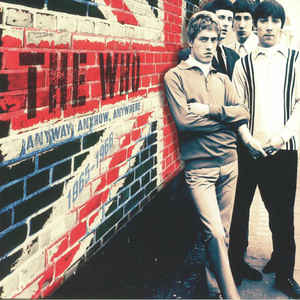
Who – Meaty Beaty Big and Bouncy … album review

I bought this album right after I had bought Wholigans and Who’s Next. I wanted to know what their sixties output was like besides My Generation and I Can See For Miles. This compilation album was released in 1971; it wasn’t just a sampler of radio singles; it was a brash declaration of how The Who reached the top and what they broke along the way. Most of these songs did not reach the ears of Americans and Canadians in the 1960s. If Who’s Next was their grand gesture, Meaty Beaty was their rowdy scrapbook. The album is exciting!

In Canada and America, most people know the Who’s Next material and after as well. This album is the roots of the band. They stretched the limits of recording, trying new things in the studio, much like The Beatles did, but with a rawer result.

Rock in the mid to late sixties was changing, and what a diverse set of songs that you hear from that period. This is when Pete Townshend was turning teenage anxiety into rock mini-operas and Keith Moon was trying to demolish every drum kit in London. The title, reportedly referring to the four members themselves, Meaty (Roger), Beaty (Keith), Big (John), and Bouncy (Pete), is cheeky and self-mythologizing. And the tracklist? Nearly perfect. These singles are where Moon started to get his wild drumming reputation. He is everywhere in these songs, especially I Can’t Explain, making them different from other bands.

I have said that my favorite kind of band to watch live is the ones that you think will fall apart with any song they play, but they pull it between the lines without going over the cliff. They did that with these songs in the studio.

You’ve got I Can’t Explain, The Kids Are Alright, and Substitute up front, each one a case study in amphetamine, fueled mod rock. These aren’t songs that build; they explode right from the opening riff. Substitute, in particular, grabs your attention with the loud backing, but also the lyrics. Substitute could be The Who’s best single ever. And then I’m a Boy, Happy Jack, Pictures of Lily, you realize Pete was already leaning into story-song territory years before Tommy became a rock opera.

Magic Bus is a Bo Diddley-beat freakout that somehow makes a song about public transportation sound like a spiritual quest, or My Generation, the track that blew the doors off rock ’n’ roll. If that bass solo doesn’t rattle you, check your pulse. There’s a through-line here: Townshend’s fascination with identity, repression, rebellion, and guilt. These songs are electric in the best sense of the word.

Later Who albums might be deeper (Quadrophenia) or grander (Who’s Next), but this one is the sound of the band becoming The Who. Loud, brash, and already mythic. If you want to learn about The Who…this is a great starting point. 

Cream – I Feel Free

Bomp, bomp, bomp, bomp, bomp I feel free…Jack Bruce’s voice in this is great and sets the tone of the song. The song peaked in the UK at #11 in 1967. It’s Cream before they were CREAM, before the mountain-top solos and the molten lava blues.

The track kicks off with that cool a cappella intro, a call-and-response chant that suspends it mid-air. Then Jack Bruce’s bass drops in like a swinging anchor, thumping along with a walking groove that practically skips. The whole song feels like it’s walking a line between psychedelia and British pop, and it works. It’s a perfect single from a band that rarely, if ever, cared about making singles.

Cream wasn’t known for a lot of fun songs. White Room, Sunshine of Your Love, and others meant business, but this one is fun and a little pop. They didn’t have many of those, but they did have a few. Wrapping Paper, I’m So Glad, and my personal favorite, the wonderfully bizarre Anyone For Tennis, have a place in my heart. 

British poet Pete Brown helped the band write the lyrics. Brown, who was a beat poet, had worked with Baker and Bruce before. He also wrote lyrics to Sunshine Of Your Love and White Room. Eric Clapton played a borrowed Les Paul guitar on this track, as his Beano album guitar had been stolen during album rehearsals. It was plugged into a new, 100-watt Marshall amp.

Speaking of Clapton, he used what he called his “Woman Tone” on his guitar in this song. It was one of the first times he used it. He got it by turning the amp all the way up, boosting the treble, cutting the bass, and playing a sustained guitar note.

I Feel Free

Bomp, bomp, bomp, bomp, bomp
I feel free
Bomp, bomp, bomp, bomp, bomp
I feel free
Bomp, bomp, bomp, bomp, bomp
I feel free
Bomp, bomp, bomp, bomp, bomp
I feel free
Bomp, bomp, bomp, bomp, bomp
I feel free
Bomp, bomp, bomp, bomp, bomp
I feel free
Bomp, bomp, bomp, bomp, bomp
I feel free
Bomp, bomp, bomp, bomp, bomp
I feel free
Bomp, bomp, bomp, bomp, bomp
I feel free

Feel when I dance with you,
We move like the sea.
You, you’re all I want to know.

I feel free.
I feel free.
I feel free.

I can walk down the street, there’s no one there
Though the pavements are one huge crowd.
I can drive down the road; my eyes don’t see,
Though my mind wants to cry out loud.

I, I, I, I feel free.
I feel free.
I feel free.

I can walk down the street, there’s no one there
Though the pavements are one huge crowd.
I can drive down the road; my eyes don’t see,
Though my mind wants to cry out loud,
Though my mind wants to cry out loud.

Dance floor is like the sea,
Ceiling is the sky.
You’re the sun and as you shine on me,

I feel free.
I feel free.
I feel free.

I, I, I, I

NRBQ – Stomp

The 1969 NRBQ self-titled debut album, released on Columbia Records, is a wonderfully scrappy introduction to a band that never played by the rules, even from the jump. This one caught my ear and never let go. I’m a newbie to the band, but I’ve listened to many of their albums and songs throughout their career in the past few months.

This is the beauty of blogs, everyone. When I first started, my foundation was the holy trinity of rock: the Beatles, the Who, and the Stones. I listened to more than them, of course, but now with all of your help, I’ve picked up on artists that I missed completely in real-time or the ones before I was aware or born. I love expanding my musical knowledge, and this band is part of that. It’s never too late to learn new/old music or movies for that matter. 

I believe that some of NRBQ’s greatest assets, such as eclecticism, unwavering artistic values, and humor, are also the reasons they never sold the millions of records they deserved. They are incredible musicians who have no problem being silly and loose as well.

While other bands at the time were chasing hits, studio trickery, and long jams, NRBQ (short for New Rhythm and Blues Quartet) decided to follow  Sun Records, Spike Jones, and Cecil Taylor, sometimes all in the same song. The album is a pre-punk, pre-power pop, pre-alt-country, pre-everything slab of glorious fun. There’s no single style to pin it down; it’s equal parts rockabilly, jazz, R&B, novelty, garage rock, and pure American musical mischief. One minute they’re playing jazz, the next they’re writing AM-radio pop that could’ve given Big Star a run for their money. In other words, if you want diverse music, NRBQ is the way to go. 

They were formed by pianist Terry Adams, guitarist Steve Ferguson, and drummer Frank Gadler, with the addition of bassist Joey Spampinato (originally Joey Spampanato) and drummer Tom Staley completing the lineup.

The album NRBQ peaked at #162 on the Billboard album charts. Stomp peaked at #122 on the Billboard 100 in 1969. The band has 24 studio albums, 14 live albums, and 15 compilation albums. Terry Adams, who formed the band, is still with them… to this day. 

Stomp

Everybody stomp, play it on the ground
Having lots of fun till the sun goes down
People got to know, miles and miles around
About the hidden secret of the stoppin’ so sound

Everybody stomp, play it on the ground
Having lots of fun till the sun goes down
Go and tell your friends, all about to stomp
They can tell there cousins and there mama and pa

And if you do refuse the rhythm my friend
Then you will have to miss the boat in the end
The biggest generation yet has come
But we got something for the old and young
And if you do refuse a+rhytum my friend
Then you will have to miss the boat in the end
You just might stop and stare and wonder why
But you’re just wasting time so come on try
(make it quick)

And if you do refuse a+rhytum my friend
Then you will have to miss the boat in the end
Everybody stomp, play it on the ground
Having lots of fun till the sun goes down
People got to know, miles and miles around
About the hidden secret of stoppin’ so sound
everybody stomp, everybody stomp
everybody stomp