Power Pop fan, Baseball, Beatles, Alternative music, old movies, and tv show fan. Also anything to do with pop culture in the 60s and 70s... I'm also a songwriter, bass and guitar player. Not the slightest bit interested in politics at all.
On Friday, March 10, 2023, my blog will be blessed…it will be guest hosted by many of you wonderful bloggers out there. I asked some bloggers to write about their favorite Beatles song or somewhere along those lines. In the next week or so that is what we will have.
I truly appreciate all of them writing on this subject. I admire all of them for their writing abilities and having fantastic sites. I’m calling it Beatles Week but in truth, it WILL go longer than a week. If it does so be it…I’m not going to rename it to Beatles 8 or more days… I think “week” has a certain ring to it.
We will have one post a day BUT…I will still have my Star Trek posts to work in on Wednesday, Saturday, and Sunday. Now…if any of you reading this would want to write about a favorite Beatle song…just tell me and I’ll get you in…although I’ll need to know by Friday. I so appreciate all of my readers and it’s been a joy working with all of these different bloggers. We do have a great community here on WordPress.
If you want to see where we are…and you missed a few…HERE is a list of the episodes in my index located at the top of my blog.
This show was written by gene Roddenberry and Paul Schneider
This is one of the lighter episodes of Star Trek. That doesn’t mean it isn’t good…quite the opposite. It shows intellect without discipline and power without a constructive purpose go nowhere.
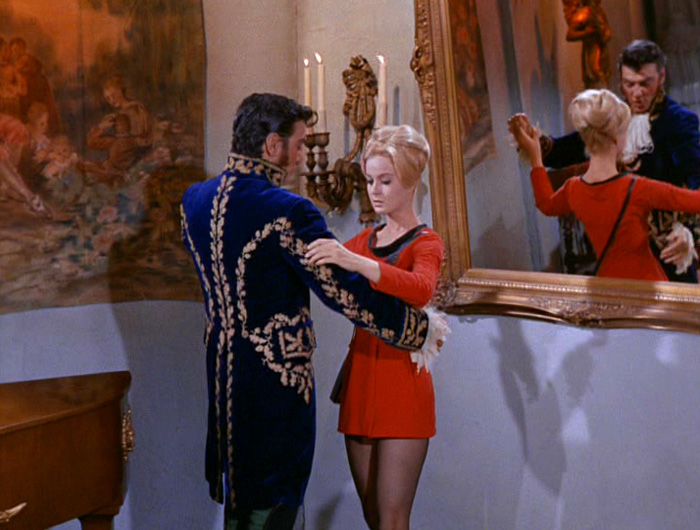
The star of this episode is not a crew member but is actor William Campbell who plays Trelane. Trelane can seemingly do anything he wishes. He can get people off of the Enterprise in a second. William Campbell is over the top in this episode and it fits perfectly!
I’ve always thought Trelane was a forerunner of the Q character, from the Next Generation series, and it is impossible to re-watch this episode without making comparisons. Many of them are favorable to actor William Campbell who played Trelane as if the role had been written for him.
Trelane appears to have stumbled upon an eighteenth-century decor but he gets so many things wrong such as the food with no taste. He’s stuck in space and he’s lonely. He wants the Enterprise crew for the company…but they all have work to do….and don’t have time to keep him entertained. They don’t have much of a choice though when they see how powerful he is.
Leonard Nimoy intrigues Trelane. He’s studied the earth, but he’s only gotten as far as the 18th century. A Vulcan like Spock is something he can’t account for. The very serious-minded Spock has no time to deal with what Captain Kirk and the rest realize is an immature mind. But a very powerful one who can change matter to energy and back simply at will.
The ending was amusing and sad when the revelation regarding Trelane’s story is revealed… I won’t give it away here.
From IMDB
The costume worn by Campbell as Trelane was rented from the Western Costume company. Almost two weeks after it was seen worn by Campbell on Star Trek, the same costume appeared in the Gilligan’s Island third season episode “Lovey’s Secret Admirer” worn by actor Jim Backus. A short time later, it was again re-used and worn by actor Michael Nesmith in The Monkees episode “The Prince and the Pauper”
William Campbell has said that the part of Trelane was really written for Roddy McDowall. The reason why it was eventually decided not to use him was that it was feared that the mannerisms of the character combined with McDowall’s look would make the character appear gay. Campbell was chosen because his supposedly “huskier look/build” would offset the foppish mannerisms of the character. However, he is not noticeably huskier than McDowell. In the fact, Campbell’s higher-pitched voiced and greater penchant for theatricality are more likely to appear gay than McDowell’s. The result is that Trelane’s over-the-top manner is (possibly deliberately) somewhat camp.
n an interview on the Star Trek: The Next Generation (1987) Season 7 DVD, John de Lancie said he believed that Gene Roddenberry, whether consciously or subconsciously, was channeling Trelane when he created Q.
William Campbell, who plays Trelane, would later play Captain Koloth in Star Trek: The Trouble with Tribbles (1967).
Barely visible before Trelane vaporizes it with the phaser is a strange bird-like creature with striped legs that is also in a display niche. It was the reuse of the humanoid bird creature costume, fleetingly and partially seen in the Talos zoo in Star Trek: The Cage (1966).
An M-113 creature is among the trophies on display in Trelane’s castle. When Dr. McCoy (the creature’s last defender in Star Trek: The Man Trap (1966)) sees it, he does a double-take. During the scene, the howling music theme from that episode is heard. It is possible that Trelane had observed Planet M-113 with his telescope at some point.
According to an interview with William Campbell in “The World of Star Trek”, in his fight with William Shatner in the forest, he fell down and dislocated his shoulder. Fortunately, as he flung his arm up in his instinctive reaction to the excruciating pain, the shoulder popped back into its socket. Due to Campbell’s injury, shooting finished in seven filming days, one day over schedule. Campbell can be seen favoring the injured shoulder, hold the arm limp.
The exact century in which Star Trek was set had not been determined during the filming of the original series. Kirk refers to people and events of the 18th and 19th century as being nine hundred years in the past, which could have placed the series in the 27th century or later. De Forest Research, Inc., the company who reviewed scripts for clearances and other related matters, noted in their commentary on the line “Then you’ve been looking in on doings nine hundred years past”: “Other scripts have placed it c. 200 years in the future, e.g. Star Trek: Shore Leave (1966). That places this reference in the 13th century.”
In his book Q-Squared, author Peter David related that Trelane was an adolescent Q entity. Trelane’s nature may seem inconsistent with Q lore, but David uses creative speculation to explain away any questions that may arise.
William Campbell recalled the part of Trelane as “It was just a great role. It was sensational. I’ll never forget it.” and “It would be very easy for any actor who had any training to play the Squire of Gothos. The character was so well written and, of course, it was the show”.
Summary
When Kirk and Sulu vanish into thin air from the bridge of the Enterprise, Spock sends a landing party to the planet below to locate them. What they find is an 18th century castle and a rather foppish man, Trelane, who seems to know a great deal about the Earth – even if it is the wrong time period. If truth be told, Trelane acts like a spoiled little boy and it’s obvious Kirk and the others have become his playthings. They soon realize that if they are to overcome Trelane and free themselves, they must locate and destroy his power source
CAST
William Shatner … Captain James Tiberius ‘Jim’ Kirk Leonard Nimoy … Mister Spock William Campbell … Trelane DeForest Kelley … Doctor Leonard ‘Bones’ McCoy Richard Carlyle … Jaeger Nichelle Nichols … Lieutenant Nyota Uhura George Takei … Lieutenant Hikaru Sulu James Doohan … Lieutenant Commander Montgomery ‘Scotty’ Scott Michael Barrier … DeSalle Venita Wolf … Yeoman Teresa Ross Barbara Babcock … Trelane’s Mother (voice) (uncredited) Bill Blackburn … Lieutenant Hadley (uncredited) Frank da Vinci … Lt. Brent (uncredited) Carey Foster … Enterprise crewmember (uncredited) Bart La Rue … Trelane’s Father (voice) (uncredited) Eddie Paskey … Lieutenant Leslie (uncredited)
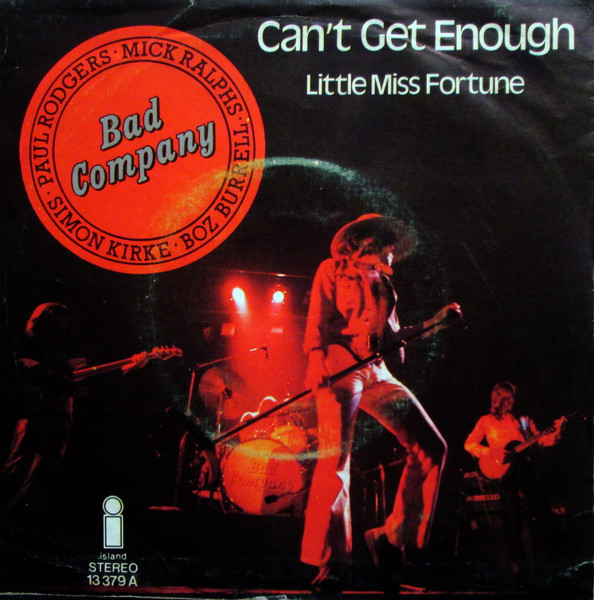
This song is worn out but I still get excited when I hear that intro! You also have one of the top vocalists in his generation…Paul Rodgers. I’ve always loved the feel of this song. The lyrics won’t challenge Dylan at any point but the feel makes up for it.
The band combined singer Paul Rodgers and drummer Simon Kirke from the band Free, guitarist Mick Ralphs from the band Mott the Hoople, and bassist Boz Burrell from King Crimson.
This song was their debut single off of their debut self-titled album. The song peaked at #5 on the Billboard 100, #3 in Canada, and #15 in the UK. The album Bad Company peaked at #1 on the Billboard 100, #1 in Canada, #3 in the UK, and #27 in New Zealand in 1974.
I will never understand why Mott The Hoople turned this song down. It was written by Mick Ralphs when he was still with Mott the Hoople, but the band rejected it. When Ralphs joined Bad Company, they didn’t mind it one bit. Ralphs also brought “Movin’ On” with him, which became the group’s next single, as well as “Ready For Love,” which he originally recorded with Mott The Hoople, but redid the song with Bad Company.
Bad Company had just formed and they were signed by Peter Grant (Zeppelin’s manager) to Led Zeppelin’s new Swan Song record label. This was by far the label’s best signing of outside artists…the most successful anyway. Grant traveled with Bad Company and gave them a lot of attention during this period. After a couple of years, no artist at Swan Song would get much attention.
They recorded the album with Ronnie Lane’s mobile studio at Headley Grange. That is where Zeppelin recorded a few of their albums.
Simon Kirke: “We were scattered all over this country house. Bad Company were doing their first album and I believe it was one of the first songs that we did. I was in the basement, Boz [Burrell] the bass player was in the boiler room, Mick Ralphs and Paul Rodgers were up in the main living room where the guitar amps were. So, in order to get their attention, because we couldn’t see each other, I did the count: ‘1, 2… 1, 2, 3…’ and then I did this ‘guh-brah’ to get everyone’s attention. And that’s how we kicked it off. It was born out of necessity.”
Can’t Get Enough
Well I take whatever I want
And baby I want you
You give me something I need
Now tell me I got something for you
Come on come on come on and do it
Come on and do what you do
I can’t get enough of your love
I can’t get enough of your love
I can’t get enough of your love
Well it’s late and I want love
Love that’s gonna break me in two
Don’t hang me up in your doorway
Don’t hang me up like you do
Come on come on come on and do it
Come on and do what you do
I can’t get enough of your love
I can’t get enough of your love
I can’t get enough of your love
I must admit…the first line threw me off when I first heard it at age 19. “Kicking off from centerfield” left me confused. Baseball has a centerfield but you don’t kick off. Of course, it’s soccer but back then I had no clue about the game.
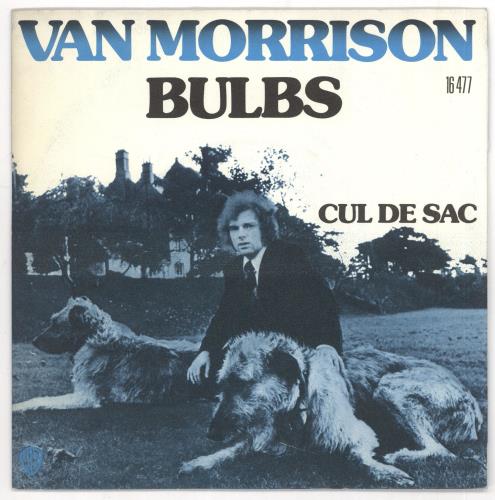
Bulbs was the only single to be taken from his 1974 album Veedon Fleece, with a B-side of “Cul de Sac” for the US release and “Who Was That Masked Man” for the UK release.
I bought Veedon Fleece sometime in the mid-eighties right after I bought his first six albums. I was heavily into Van the Man at that time…and still am. I thought this album was an improvement to the previous one called Hard Nose The Highway. The song kicked off the second side of the album. I would always buy the album and record it on cassette immediately so I could listen to it in my car.
Van Morrison is an interesting person. His musical landscape spanned so many genres in his career. You had the garage rock of Gloria and Here Comes The Night, the blues with Thank God For The Blues, jazz with Moondance, and everything in between including conventional rock and roll with Wild Night.
Van would be in the top 2-3 of my favorite vocalist of all time. I saw the man live on March 7, 2006, at the Ryman Auditorium. I had admired his voice for years but was knocked out by how great he was in concert. I’ve seen film clips of him live but you don’t get the full effect unless you see him in person.
Veedom Fleece peaked at #53 on the Billboard album charts, #80 in Canada, and #41 in the UK in 1974. He had a stretch of albums from 1968 to this one that is hard to beat. Astral Weeks, Moondance, His Band and the Street Choir, Tupelo Honey, Saint Dominic’s Preview, Hard Nose The Highway, and this one. I do like his other albums also but I like his late sixties to early seventies sound…The first time I noticed Van was on Saturday Night Live when he appeared and played songs from the album Wavelength. I was too young to know who he was though. It was when I heard Brown Eyed Girl in 1985 that I started to buy his albums and haven’t stopped liking him since.
Bulbs
I’m kicking off from center field A question of being down for the game The one shot deal don’t matter And the other one’s the same
Oh! My friend I see you Want you to come through (alright) And she’s standing in the shadows Where the street lights all turn blue
She leaving for an American (uhuh) Suitcase in her hand I said her brothers and her sisters Are all on Atlantic sand
She’s screaming through the alley way I hear the lonely cry, why can’t you? And her batteries are corroded And her hundred watt bulb just blew
Lallallal, alright, huhuhhuh
She used to hang out at Miss Lucy’s Every weekend they would get loose And it was a straight clear case of Having taken in too much juice
It was outside, and it was outside Just the nature of the person Now all you got to remember After all, it’s just show biz
Lallalal, huhuh, lallal
We’re just screaming through the alley way I hear her lonely cry, ah why can’t you? And she’s standing in the shadows Canal street lights all turn blue And she’s standing in the shadows Where the street lights all turn blue And she’s standing in the shadows Down where the street lights all turn blue Hey, hey, yeah
If you want to see where we are…and you missed a few…HERE is a list of the episodes in my index located at the top of my blog.
This show was written by Oliver Crawford, Shimon Wincelberg, and Gene Roddenberry
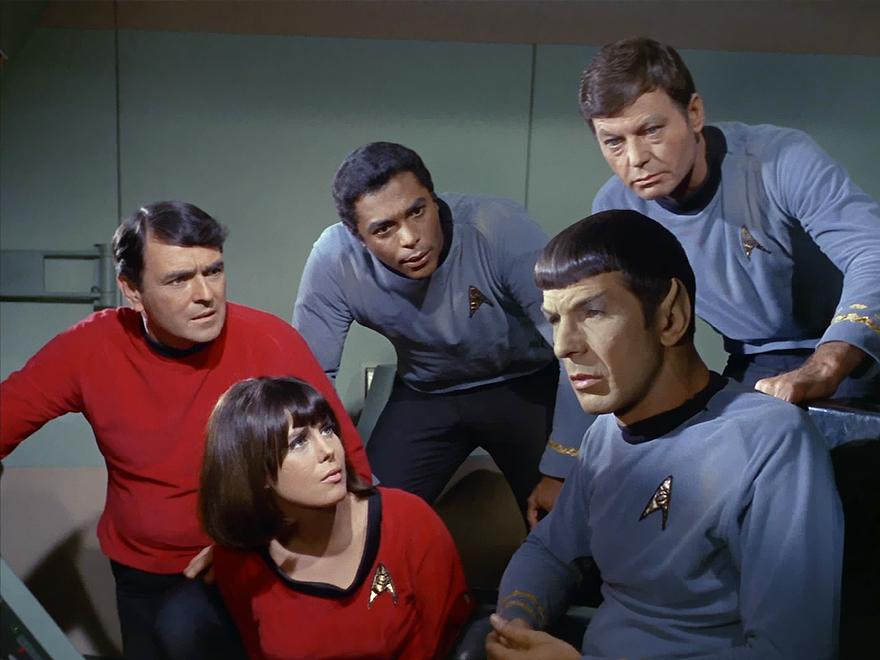
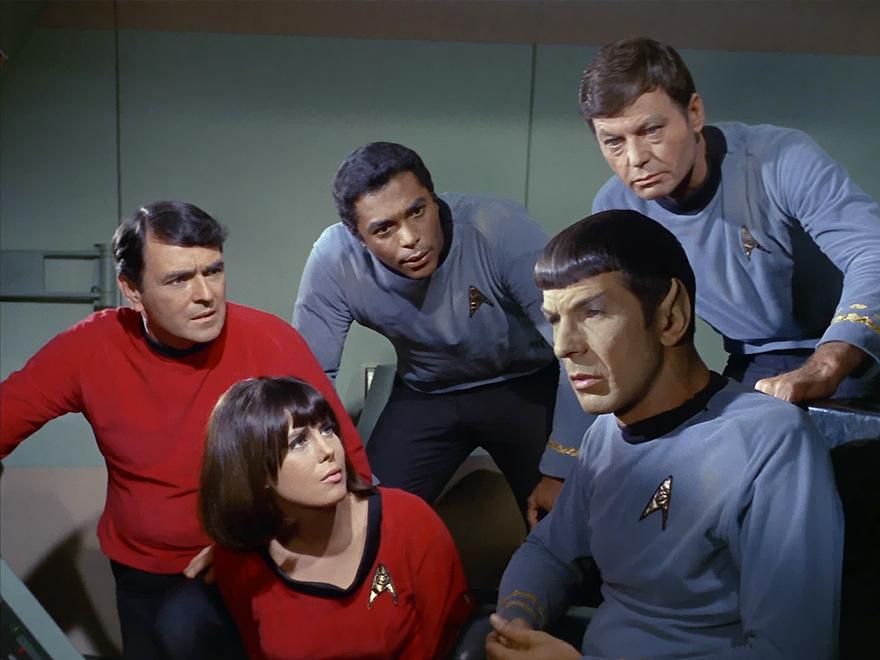
This was the first episode that was centered around Spock and not Captain Kirk. Spock is in control of the shuttle that is stranded on a planet. The special effects people did a great job with the shuttle taking off into space. You would see this again in Star Wars a decade later.
Spock is in charge of the space shuttle Galileo. Spock and the others aboard the shuttlecraft… crash land on an unexplored planet. With no sensors to find their crewmen, the Enterprise must figure out a way to locate the Galileo before its duty to deliver the medical supplies forces it to leave the crewmen for dead. Spock and company must survive on the planet’s surface, fending off the giant creatures that live there.
As the story plays out, the crew is not enamored of Spock’s logical based decisions. It highlights the personality of Spock and shows us how Spock thinks. I can see why the crew would have problems with Spock. When one crewman is killed, they must take off in a hurry but the crew wants to bury the man first. Spock doesn’t see the logic in putting everyone at risk to do that…but in the end, allows it anyway. I can totally see his side but it seemed rather cold-blooded…or green-blooded in Spock’s case.
Spock’s rationale for wanting to leave a crew member behind to save others was the first instance in the series of his use of the Vulcan axiom regarding the needs of the many outweighing the needs of the few or the one. Spock’s ever calm logical manner does grate on the nerves of Dr. McCoy more than usual as well as crewman Don Marshall. DeForest Kelley’s scenes with Nimoy have even more bite than usual, not to mention an almost mutinous Marshall.
At the end of the episode… we are led to believe that Spock’s final action while in charge was an act of emotion rather than logic. For me… it seemed the most logical act of the episode.
From IMDB:
After this episode was filmed, no new shots of the shuttlecraft miniature were taken. All shuttlecraft model shots used in the series were stock footage from this episode, sometimes matted into different backgrounds. The shuttle craft was built by AMT in exchange for them gaining the rights to make the plastic model kit version.
It has been noted that the behavior of some of the personnel, particularly Lt. Boma, was grossly insubordinate to Spock for a quasi-military organization like Starfleet. By contrast, Spock’s act of jettisoning the fuel and igniting it, in hopes of the USS Enterprise detecting, it is perfectly keeping with military procedures and a completely logical decision under the dire circumstances the crew was facing.
The story was partly drawn from Spock’s break-out popularity that had already occurred early on in the show’s run. According to Leonard Nimoy, as a result, one writer simply suggested a story in which Spock was seen commanding a vessel.
To make the creatures look larger than they really were, small spear and shield props were made for Robert ‘Big Buck’ Maffei to fling at the crew. The one that is dropped near the three men is fairly small in size, but in the next shot, it is much larger.
The producers liked Don Marshall’s performance as Boma, and intended to bring the character back. However, by that time, Marshall was already signed with Irwin Allen to co-star in Land of the Giants (1968) (which began filming in 1967, but only premiered a year later).
The black rectangular instrument with the round face on the aft bulkhead of the shuttlecraft is actually a Foxboro controller, a device used in the wastewater industry to control the level of sewage in holding tanks.
The basic premise of “The Galileo Seven” is that a small ship is forced down onto an alien planet inhabited by giant humanoids. Don Marshall, who plays Lt. Boma, would soon star in another show called Land of the Giants (1968) where he plays the co-pilot of a small ship that is forced down onto an alien planet inhabited by giant humanoids.
Summary
A shuttlecraft under Mr. Spock’s command is forced to land on a hostile planet. His emotionless approach to command does not sit well with some crew members, particularly Mr. Boma who challenges Spock at every opportunity. The Enterprise and Captain Kirk meanwhile have only a short time to find the lost shuttlecraft as they must deliver urgent medical supplies to Markus III in only a few days
CAST
William Shatner … Captain James Tiberius ‘Jim’ Kirk
Leonard Nimoy … Mister Spock
Don Marshall … Boma
DeForest Kelley … Doctor Leonard ‘Bones’ McCoy
James Doohan … Lieutenant Commander Montgomery ‘Scotty’ Scott
George Takei … Lieutenant Hikaru Sulu
Nichelle Nichols … Lieutenant Nyota Uhura
John Crawford … Commissioner Ferris
Peter Marko … Gaetano
Phyllis Douglas … Yeoman Mears
Rees Vaughn … Latimer
Grant Woods … Kelowitz
Robert ‘Big Buck’ Maffei … Creature (as Buck Maffei)
David L. Ross … Transporter Chief (as David Ross)
Majel Barrett … Enterprise Computer (voice) (uncredited)
Bill Blackburn … Lieutenant Hadley (uncredited)
Frank da Vinci … Lt. Brent (uncredited)
Eddie Paskey … Lieutenant Leslie (uncredited)
Ron Veto … Crewman (uncredited)
I will say it again today, unfortunately….our power has been out since Friday. Right now I’m using the last charge on my laptop with my phone as a hotspot. I called the county department and our electric company… over 200 trees were blown over on power lines. Some have electricity and some don’t…our road has a tree over the power lines. We are pretty much stuck here in the dark…Our electric company has called in help from other states…but right now all we can do is wait. This is a pic of my road. So I won’t be commenting much if any until there is once again power. Funny how we take some things for granted.
Now I have to go to my car to charge my dying phone again.
I almost didn’t post this song at all. Everyone knows that I’m non-political to the core. Even for a song that is over 50 years old… this one has drawn its admirers and haters. Was it a parody or was he serious? It goes both ways.
I always wondered if Merle Haggard was serious in this song. I really didn’t think he was totally and as it turns out he wasn’t on most of it. The song started as a joke but more and more people took it on face value and the song became huge. Merle said: “‘Okie’ made me appear to be a person who was a lot more narrow-minded, possibly, than I really am.”
As Haggard and his band were going to Muskogg Oklahoma he and drummer Eddie Burris started to write this song as a parody. Haggard spotted a sign that read, Muskogee, 19 miles, and he joked to Burris that they probably didn’t smoke marijuana in the small town. The rest of the band joined in and threw out other activities that probably wouldn’t be happening in Muskogee, and because of the times they were in, talked about the Vietnam War.
There are things Haggard didn’t like though… he didn’t like the protesters giving soldiers a hard time when Vietnam was going on when they didn’t have a choice but to go. When Johnny Cash visited the White House, Nixon wanted him to play this song. Cash refused and later said the song was a lightning rod for the anti-hippie movement.
I remember it as a kid very well. Country radio would play it to death back then. I would just sing along because it’s super catchy. There are a few country artists I really like. Merle Haggard, Johnny Cash, Willie Nelson, Waylon Jennings, Roy Clark, Buck Owens, Dolly Parton, Emmylou Harris, Loretta Lynn, Tanya Tucker, and the king of them all…Hank Williams Sr. I don’t care too much about what a fellow blogger…Jeff calls “Bro Country” which is on the airwaves now.
The song peaked at #1 in the Billboard Country music charts and #3 in the Canadian Country music charts in 1969-70.
I did find an interesting cover version by The Grateful Dead AND The Beach Boys together at the Fillmore in 1971. Mike Love is singing lead and you can hear Jerry Garcia’s guitar. The Dead also covered Mama Tried.
Merle Haggard:“We wrote it to be satirical originally. But then people latched onto it, and it really turned into this song that looked into the mindset of people so opposite of who and where we were. My dad’s people. He’s from Muskogee.”
Merle Haggard: “When I was in prison, I knew what it was like to have freedom taken away. During Vietnam, there were all kinds of protests. Here were these [servicemen] going over there and dying for a cause we don’t even know what it was really all about. And here are these young kids, that were free, bitching about it. There’s something wrong with that and with [disparaging] those poor guys. We were in a wonderful time in America and music was in a wonderful place. America was at its peak and what the hell did these kids have to complain about? These soldiers were giving up their freedom and lives to make sure others could stay free. I wrote the song to support those soldiers.”
Oki From Muskogee
We don’t smoke marijuana in Muskogee
We don’t take our trips on LSD
We don’t burn our draft cards down on Main Street
‘Cause we like livin’ right, and bein’ free
We don’t make a party out of lovin’
But we like holdin’ hands and pitchin’ woo
We don’t let our hair grow long and shaggy
Like the hippies out in San Francisco do
And I’m proud to be an Okie from Muskogee
A place where even squares can have a ball
We still wave Old Glory down at the courthouse
And white lightnin’s still the biggest thrill of all
Leather boots are still in style for manly footwear
Beads and Roman sandals won’t be seen
And football’s still the roughest thing on campus
And the kids here still respect the college dean
And I’m proud to be an Okie from Muskogee
A place where even squares can have a ball
We still wave Old Glory down at the courthouse
And white lightnin’s still the biggest thrill of all
And white lightnin’s still the biggest thrill of all
In Muskogee, Oklahoma, USA
If you want to see where we are…and you missed a few…HERE is a list of the episodes in my index located at the top of my blog.
This show was written by Theodore Sturgeon and Gene Roddenberry
The crew of the Enterprise is worn out. They all need to take some leave and this episode covers that. Several well-known future movies like Westworld, Ghostbusters, IT, and TV show Fantasy Island took their cue from the premise of this episode. Here, we get to really see them relax, converse and work together to figure out this planet’s puzzle…the strong narrative is a mystery again, of sorts, and the audience is along for the ride as the crew seeks to unravel a very bizarre series of events which some have a decidedly amusing flavor to them.
This one is a bit of a light/funny episode though at the same time a bit of a fantasy suspense thriller which is part of what makes the episode fun. The light/funny is not a negative at all. There are a bunch of things just appearing out of nowhere, Like McCoy was seeing a giant White Rabbit and Alice, and then more strange things happen.
Kirk was stressed out from the missions they had been on and wasn’t going to beam down to the planet to relax but Spock tricked him into it. He did beam down reluctantly and strange things started to happen to him.
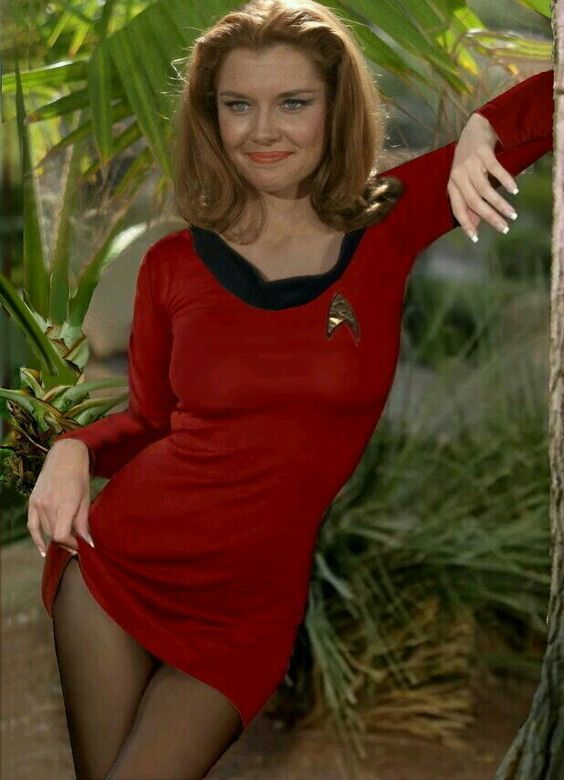
One thing that did disappoint me about this episode. Emily Banks who plays Yeoman Tonia Barrows was terrific in this role but this is the only episode she was in. The part was written for Yeoman Janice Rand but she had been written out of the series. I will talk about that in the Season 1 review. Fans loved her and wanted her back for the movies.
It’s a playful, fun episode. It’s not a good episode to introduce someone who is new to Star Trek… but great once you know what the original series is all about. If I say too much more I will spoil it for someone if I haven’t already.
From IMDB:
The episode was being rewritten as it was being shot. Cast members recalled Gene Roddenberry sitting under a tree, frantically reworking the script to keep it both under budget and within the realms of believability. As a result the filming went over schedule and took seven days instead of the usual six.
William Blackburn (a professional ice skater in real life), who played the White Rabbit, got the costume from Ice Capades for free. The claustrophobic Blackburn had a really painful time wearing it, especially as costume designer William Ware Theiss had originally sewn the Rabbit head to the suit. After nearly suffocating, Blackburn tore off the head, for which Theiss became very mad at him. Finally, they negotiated and Theiss put the head back with Velcro. Afterwards, Blackburn had no problem with the costume. He also commented that wearing the Gorn head in Star Trek: Arena (1967) was “even worse.”
A chained tiger is brought in to appear in the episode, and never directly interacts with any of the performers. William Shatner had originally hoped to wrestle it, but was persuaded that it would not be a wise decision.
This is the only episode in which the U.S.S. Enterprise is seen orbiting a planet from right to left. The shot was deliberately reversed in post-production because the shape of the Eastern United States and the Caribbean sea could clearly be seen on the globe used as a model for the planet.
The script called for an elephant to appear in the episode. An elephant was indeed “hired” by the production staff and brought to the set, but, due to running over time and other difficulties during shooting, the animal never made it before the cameras, which made associate producer Robert H. Justman (who was not on the set at the time and couldn’t oversee production) truly angry. Later, production staff members often jokingly asked assistant director Gregg Peters, “Say – when do you get to use your elephant?”
The original script featured Yeoman Rand as part of the landing party, but, as the character was written out of the series, she was changed to Yeoman Tonia Barrows. Also, in Theodore Sturgeon’s original script, the Yeoman had a share of close scenes with Kirk. In the rewrites, Gene L. Coon and Gene Roddenberry changed these to feature Doctor McCoy instead and introduced Kirk’s old Academy flame Ruth to the story. (In the Oct 3, 1966 draft, one incidence of “Yeoman Rand” is still present on page 58.)
When Rodriguez and Angela see a WWII air battle, the first plane seen is an American Vought F4U Corsair. It is then attacked by a Japanese Mitsubishi A6M “Zero.” The only time the two planes are seen together is a brief shot following the line “Come on!”
Gene Roddenberry deemed that Theodore Sturgeon’s original script contained too much fantasy and lacked credibility. Gene L. Coon was assigned to re-write it. However,, Coon misinterpreted the task and his draft turned out to be even more of a pure fantasy. Roddenberry then began to heavily re-write the script, but, since the production team had run out of time, Roddenberry had to do so while the episode was being filmed.
The preview of this episode shows Yeoman Barrows being accosted by Don Juan while she was wearing her princess costume. This scene was not used in the final cut.
Actress Emily Banks, who played Yeoman Tonia Barrows in her only appearance on the series, was interviewed by Entertainment Weekly for an all-Star Trek issue in 1994. Banks said that her most vivid memory of the appearance was that she seemed to be running all the time – or as she described it, she told the producers, “You don’t want actors – you want Olympic athletes!” Unused to that much sprinting, Banks said that her legs were stiff and sore for several days after the shooting wrapped.
Summary
The past three months have left the crew of the Enterprise exhausted and in desperate need of a break, but does this explain McCoy’s encounter with a human-sized white rabbit or Kirk crossing paths with the prankster who plagued his days at Starfleet Academy?
CAST
William Shatner … Captain James Tiberius ‘Jim’ Kirk
Leonard Nimoy … Mister Spock
Emily Banks … Yeoman Tonia Barrows
Oliver McGowan … Caretaker
Perry Lopez … Rodriguez
DeForest Kelley … Doctor Leonard ‘Bones’ McCoy
George Takei … Lieutenant Hikaru Sulu
Bruce Mars … Finnegan
Barbara Baldavin … Angela
Nichelle Nichols … Lieutenant Nyota Uhura
Marcia Brown … Alice
Sebastian Tom … Warrior
Shirley Bonne … Ruth
Paul Baxley … Black Knight (uncredited)
Bill Blackburn … White Rabbit (uncredited)
John Carr … Guard (uncredited)
Frank da Vinci … Lt. Brent (uncredited)
Jim Gruzalski … Don Juan (uncredited)
Jeannie Malone … Yeoman (uncredited)
Eddie Paskey … Lieutenant Leslie (uncredited)
Hello everyone. Because of the storms in our area we do not have electricity… I’m not sure when I will be able to comment. I have to charge my phone with the car.
The more I hear Ronnie Lane’s deep cuts the more I like him. The reason I started to blog is because of songs like this. Lane was with the Small Faces and then The Faces. He was a key member of each band. In the Small Faces, he played bass and wrote most songs with lead guitarist and guitar player Steve Marriott. Lane also sang some songs for them as well.
In the Faces, again he played bass and wrote songs by himself and with other members of the band. Again…he sang some songs but the lead singer was Rod Stewart. I like Lane’s voice a lot but he happened to be in two bands with two of the best lead singers of their generation.
The Poacher appeared on his 1974 album Anymore for Anymore released in 1974 after he left The Faces. His music was earthy, rootsy….real. You could almost picture Ronnie Lane on your back porch replicating these wonderful songs. No studio tricks just good melodies and lyrics. I’ve always been a lyric guy and I love a good phrase. For instance this song…Bring me fish with eyes of jewels, And mirrors on their bodies, Bring them strong and bring them bigger Than a newborn child. It just rolls so well together.
He had a dream of bringing music back to the people and all of them traveled in a gypsy-type caravan around the country like a circus. He thought that playing music just for money and fame was wrong. The lyrics to this song back that up…And I’ve no use for power And I’ve no use for a broken heart I’ll let this world go by. He is essentially rejecting the world and leaving himself behind.
The album was recorded with his mobile studio at his farm. You can hear animals and you can hear children playing in the background when you listen. It’s down to earth as Ronnie Lane was in real life. It’s a beautiful song that needs to be discovered by more people. It barely hit the UK charts when released.
During the recording of Rough Mix with Pete Townshend…Lane diagnosed with was Multiple Sclerosis. He still toured with Eric Clapton and others afterward and released an album in 1979 called See Me.
Ronnie Lane died of Pneumonia while in the final stages of Multiple Sclerosis in 1997
Ronnie Lane:“The idea for The Poacher came to me when I was living in a fortune teller’s caravan by the side of the River Thames at Pete Townshend’s back garden.”
Pete Townshend:“He was homeless at the time and they lived like gypsies and they used to cook in the open air.”
For you Jam/Paul Weller fans…here is Lane’s band Slim Chance and Weller playing this song.
The Poacher
Was fresh and bright and early
I went towards the river
But nothing still has altered just the seasons ring a change
There stood this old timer
For all the world’s first poacher
His mind upon his tackle
And these words upon his mind:
Bring me fish with eyes of jewels
And mirrors on their bodies
Bring them strong and bring them bigger
Than a newborn child
Well I’ve no use for riches
And I’ve no use for power
And I’ve no use for a broken heart
I’ll let this world go by
There stood this old timer
For all the world’s first poacher
His mind upon his tackle
And these words upon his mind:
Bring me fish with eyes of jewels
And mirrors on their bodies
Bring them strong and bring them bigger
Than a newborn child
I love the guitars in this song. Great hooks all the way around. This song was not released as a single…I would have bought it.
This song was on their debut album All Over The Place. It was written by Hoffs and Peterson. The song has no mention of Dover in the lyric…the title comes from the poem Dover Beach, published by the Englishman Matthew Arnold in 1867. The beach in question is the one at the bottom of the white cliffs in Dover, England, as in the 1940 song “The White Cliffs Of Dover.”
When they released this song they were part of the Paisley Underground scene… a Los Angeles scene with bands like Rain Parade, The Dream Syndicate, Green On Red, and others. The Bangles were undoubtedly the most successful band to come out of that group of bands.
Their album All Over The Place was released in 1984. It didn’t have a hit single and the album only peaked at #80 on the Billboard 100, #32 in New Zealand, and #86 in the UK. However…the album sold respectively and stayed on the charts for 30 weeks and that set their next album up.
Their next album Different Light shot them to stardom with the hits Manic Monday, Walk Like An Egyptian and my favorite song by them… If She Knew What She Wants. They made just one more album called Everything before breaking up in 1989. It had the hits In Your Room and Eternal Flame.
Dover Beach, although not a single, remains on their current setlist.
Vickie Peterson: “Susanna and I were slightly geekish about opening the Norton Anthology of English Literature, flipping through that and going, ‘Hey, this is a great line.’ She had come across the Matthew Arnold poem Dover Beach at some point and that inspired that song, that idea of applying the fantasy of escape and the reality of what that would really mean. It was a really fun time to just mine the world for ideas.”
Dover Beach
If I had the time
I would run away with you
To a perfect world
We’d suspend all that is duty or required.
Late last night you cried
And I couldn’t come to you
But on the other side
You and I, inseparable and walking.
Yeah, oh woe.
If we could steal away
Like jugglers and thieves
But we could come and go
Oh, and talk of Michaelangelo.
Oh woe.
If we had the time (we had the time)
We had the time.
The day you looked at me
And it was on your mind
The world is no one’s dream
We will never ever find the time.
Oh woe.
If we had the time
I would run away with you
To a perfect world
(To a perfect world).
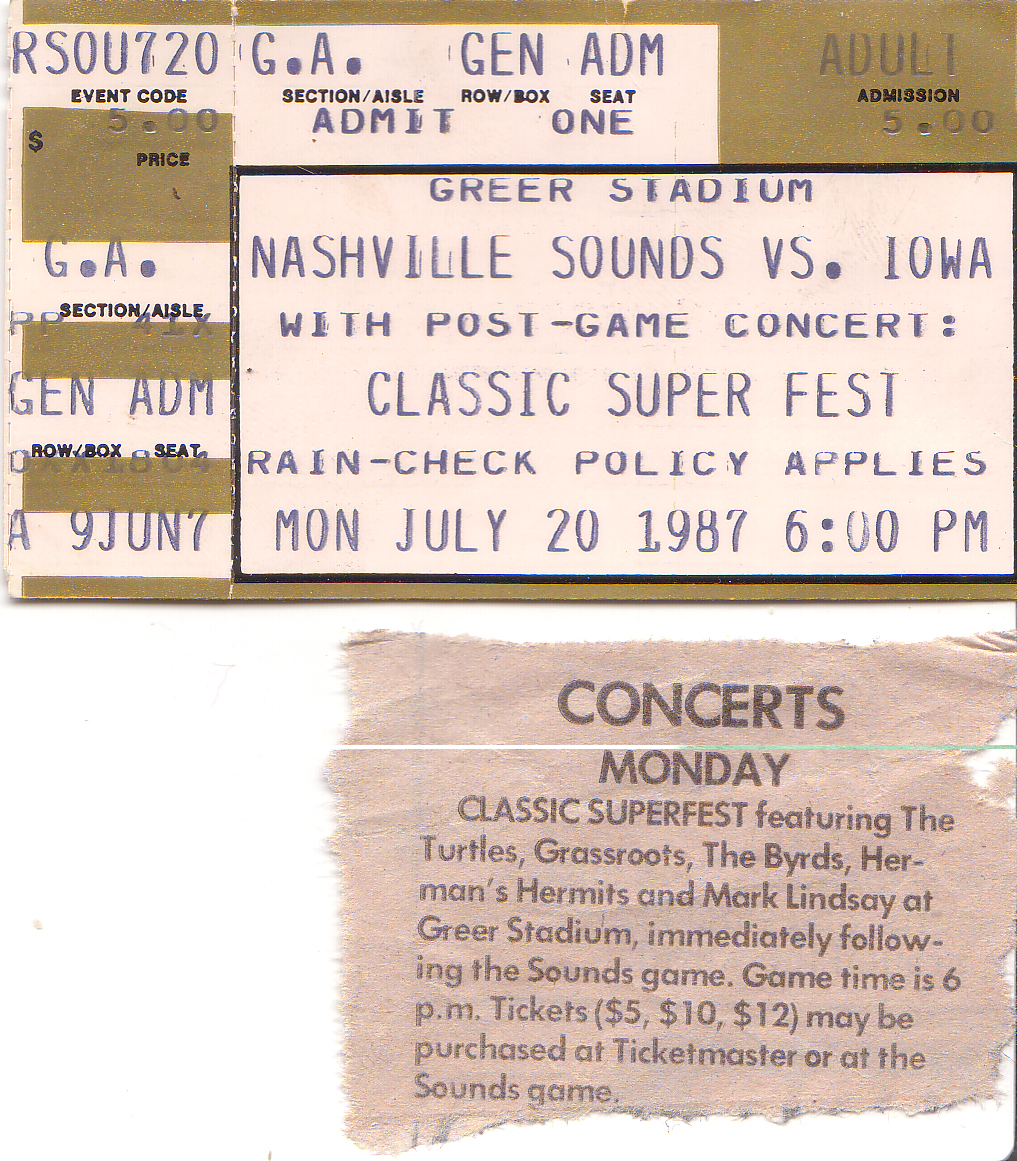
It all started with a cracked single of the song Eleanor by The Turtles when I was a kid. I was hooked on this band and soon got the greatest hits. They had some nice pop songs in their catalog. If you ever get a chance to see Flo and Eddie…go see them. I saw them on July 20, 1987, with many more bands…though not many original members, Flo and Eddie were there though. They kicked off the concert with Bon Jovi’s Shot Through The Hot…and said…”No no…we don’t play that crap…we play this crap” and proceeded to start playing their songs. I saw them at the local minor league baseball team’s stadium…they played at the end of the game.
This song was written by Gary Bonner and Alan Gordon…the same two who wrote their biggest hit…Happy Together.
The band was formed by Mark Volman and Howard Kaylan. They were saxophone players who did whatever was trendy in order to make a living as musicians. They were also in the choir together in high school.
They played surf-rock mostly at the time. They also played backup for The Coasters, Sonny And Cher, and The Righteous Brothers when they came through. After a while, Howard and Mark gave up the sax and became singers. They signed a deal with White Whale Records as The Crosswind Singers. When British groups took over America, they tried to pass themselves off as British singers and renamed themselves The Turtles.
Like The Byrds, The Turtles recorded a Bob Dylan song for their first single It Ain’t Me Babe and it was a hit. In 1967 they released Happy Together which peaked at #1. She’s Rather Be With Me was the follow-up single. Not a bad song to follow up the massive hit. This song peaked at #1 in Canada, #3 on the Billboard 100, #8 in New Zealand, and #4 in the UK in 1967. The two songs were on their album Happy Together. It peaked at #25 in the Billboard Album Charts…which is peculiar with you think about it…having two singles hit #1 and #3 off of that album but they were more of a singles band.
The Turtles recorded for a small record company named White Whale. They broke up in 1970 and part of the reason was to get away from their manager…who was also their first manager that got the job again.
Volman and Kaylan were very smart. When White Whale’s master recordings were sold at auction in 1974, the duo won the Turtles’ masters, making them the owners of their own recorded work. When the 80s came around and CDs were sold…they made the money and not their old record company. They also hosted some radio shows in the 70s and 80s and recorded soundtrack music for children’s shows like the Care Bears and Strawberry Shortcake.
They became known as Flo (Phlorescent Leech) and Eddie. Kaylan and Volman joined Frank Zappa’s Mothers of Invention as Flo and Eddie because of contractual restrictions of their record company. Kaylan and Volman sang backing vocals on several recordings by T. Rex, including their worldwide 1971 hit “Get it On (Bang A Gong). Later they did the backup vocals on Bruce Springsteen’s Hungry Heart.
If you are in any way interested in watching band documentaries… watch The Turtles doc! It is hilarious. I will include the full doc above the song.
Here is the documentary…watch it if you have time. What they did to their last manager (who was also their first) is classic! Now…I hope if you didn’t read most of this…READ NOW…if you don’t do anything else today…on the video below…their documentary… GO TO 1:12:46 and listen (or just click the link)…it’s very funny and very sad…this happened all of the time. Of course they were gullible…that helped! It is only a couple of minutes and starts with them talking about their 8 managers.
She’d Rather Be With Me
Some girls
Love to run around
Love to handle everything they see
But my girl
Has more fun around
And you know she’d rather be with me
Me oh my (me oh my, I’m a lucky guy)
Lucky guy is what I am
Tell you why, you’ll understand
She don’t fly although she can
Some boys (some boys)
Love to run around
They don’t think about the things they do
But this boy (this boy)
Wants to settle down
And you know he’d rather be with you
Me oh my (my)
Lucky guy is what I am (my)
Tell you why, you’ll understand (my)
She don’t fly although she can (my)
Some girls (some girls)
Love to run around
Love to handle everything they see
But my girl (my girl)
Has more fun around
And you know she’d rather be with
Yeah, she’d rather be with
You know she’d rather be with me
You know she’d rather be with me
You know she’d rather be with me
You know she’d rather be with me
Dave at A Sound Day gave writers a question to write about. If you could safely go back in time and move about for one day, what one concert or live performance would you choose to go to?
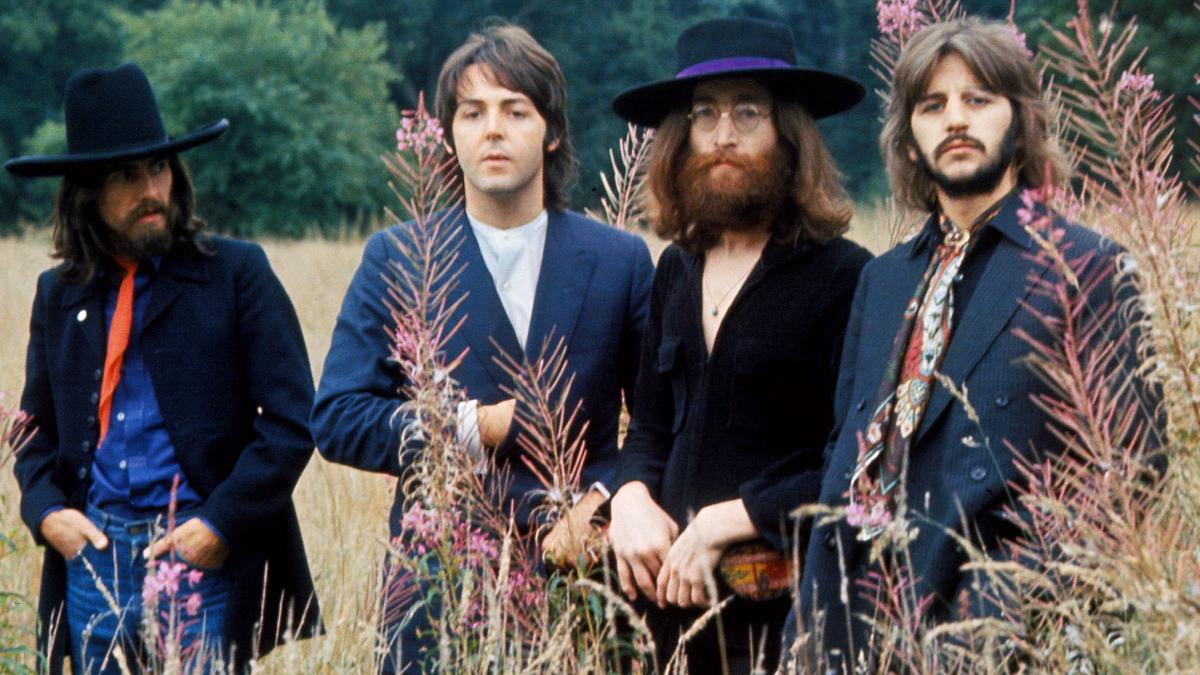
Well, that narrows it down to me because there are two cities that come to mind after he asked that. Now…if this was a baseball question I would go to New York in the twenties and see who I think was the best baseball player ever…Babe Ruth. But it’s music so the two cities are Hamburg and Liverpool…the Star Club in Hamburg or the Cavern in Liverpool…and I shouldn’t have to name the band.
I’m going to pick Hamburg…and the reason is The Beatles would play 6-8 hours a night compared to lunchtime sessions at the Cavern so to Germany I go! From everything I’ve read the performances there were off the charts. They played loud sweaty rock and roll there and accumulated way past 1000 hours playing there in a 3-year stretch from 1960 to 1962. It’s not a stretch to say at that time they could have had more hours on a stage than any other rock band.
The Beatles played over 250 nights in the seedy red-light district of Hamburg. If you average 6 hours a show that would be 1500 hours…that is why they could play so well with a wall of screaming in their ears later on. They would get to know the gangsters who would buy them champagne, the barmaids who would sell or give them Preludin (a type of diet pill speed so they could play all night…”prellies”), and the prostitutes who would take them in and befriend them. They also met Little Richard, Billy Preston, and Gene Vincent there.
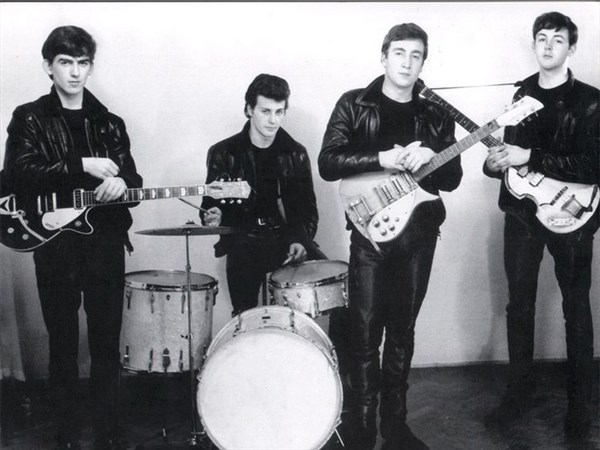
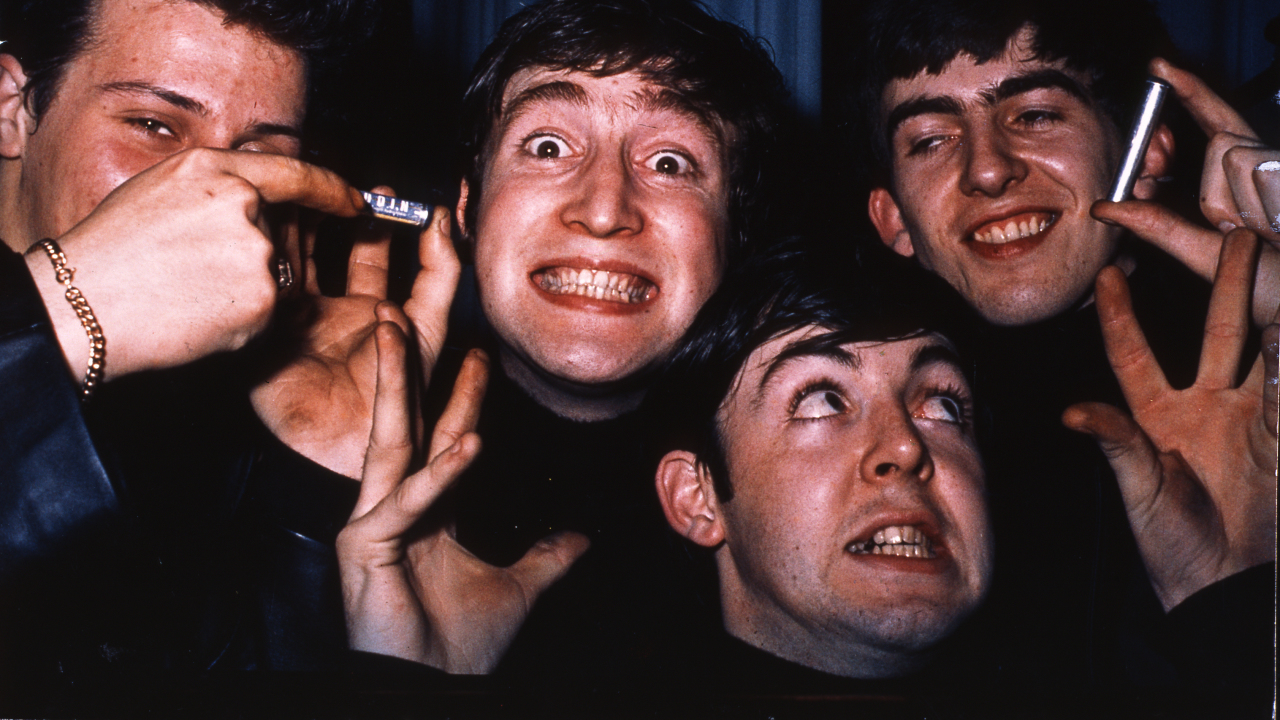
They slowed down in 1962 and didn’t play as long of sets but at the end they had Ringo. I would want to see them in 1960-61 when Stuart Sutcliffe was on bass and Pete Best was drumming. Other bands from England started to come over but none of them had the impact of the Beatles. They lived off of prellies and beer when they played and would go have an English breakfast when they could afford it. There are pictures of them holding a Preludin metal tube (what they came in) and grinning manically.
They would write a few songs but mostly played covers through this period of learning. They caused all kinds of trouble and there were rumors of John Lennon urinating off of a balcony on nuns…but that has been disproven…no he did urinate off of balconies but left the nuns alone. He once appeared with a real toilet seat around his head on stage after being angered and ripping it off a toilet. George was booted out of the country for being underaged and Paul and Pete were accused of trying to burn down a cinema. Stuart Sutcliffe found his true love there Astrid Kirchherr. He would die in 1962 of a brain hemorrhage at 22.
When they came back from Hamburg in 1960 to Liverpool…people were amazed and at first thought, they were a German band with their all leather clothes. They were a sensation because they played like no one else. Without Hamburg…there would probably be no Beatles. After they got back they started to play the Cavern regularly and the promoters were wary of them because of their reputation but soon knew they would make them a lot of money. They were NOT the grinning moptops that the world came to love. They were rough and tough growing up in Liverpool with further education in Hamburg. Often after shows in Liverpool, they would have to fight because of the rough audiences being jealous of their girlfriends who were fawning over them.
Well, that was long-winded…but Hamburg in 1961… is where I want Dave’s time machine to take me. I might hijack it and make another trip to the Cavern if Dave is not watching. So what is the saying about rock music? Sex, drugs, and Rock and Roll? This probably helped that saying along.
There are some low-fi recordings of them in Hamburg in 1962 with Ringo drumming which shows how stripped down and raw they were.
If you want to see where we are…and you missed a few…HERE is a list of the episodes in my index located at the top of my blog.
This show was written by Paul Schneider and Gene Roddenberry
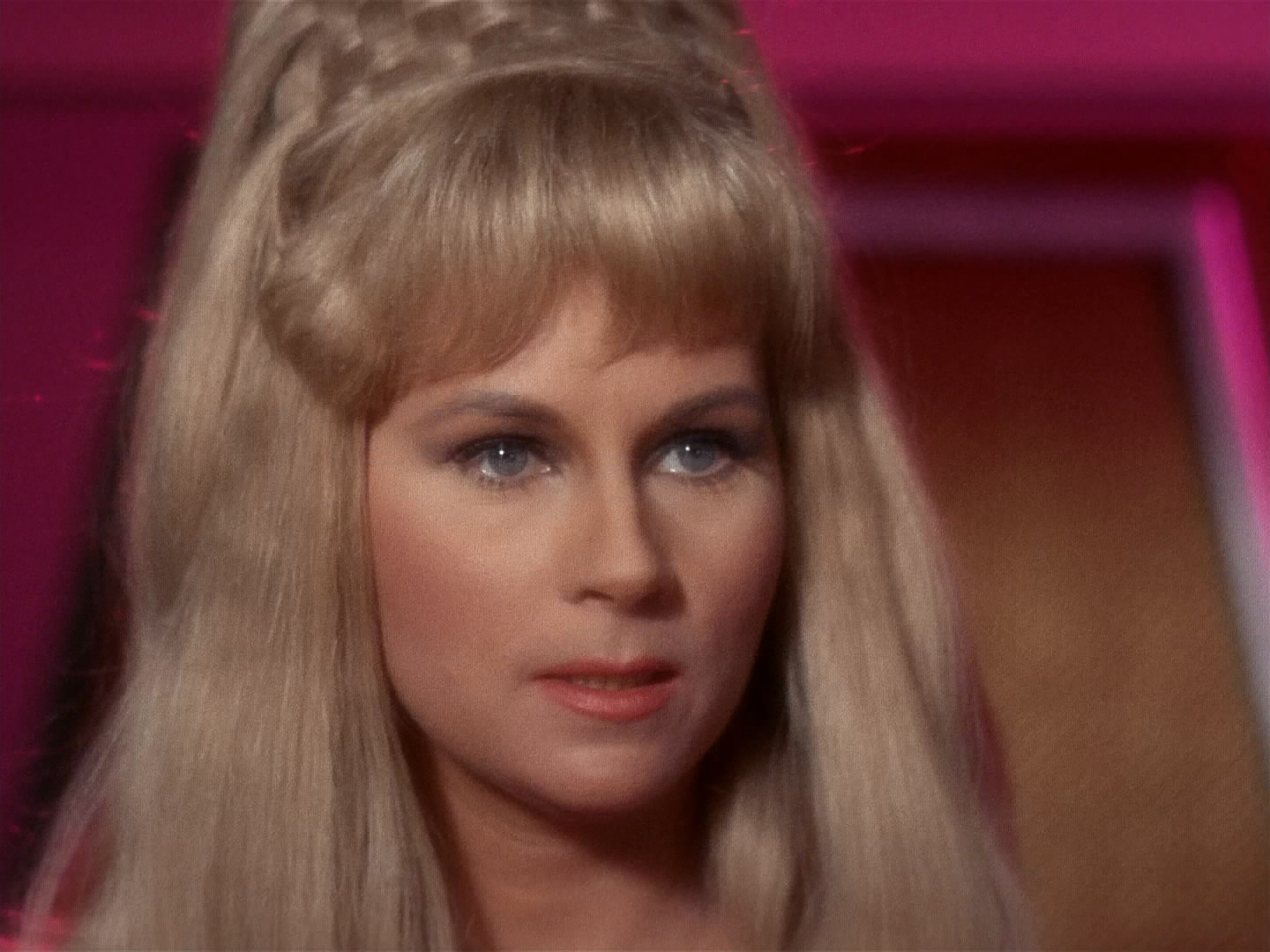
Before we get to the review and story…this is Grace Lee Whitney’s last episode with Star Trek. There are two stories about why she was let go. I will cover it when I do the First Season review in a few weeks…it’s not good and should not have happened. She would not appear again until the first movie came out in 1979.
Excellent Episode! This episode starts off with an attempted marriage on the Enterprise with Kirk about to lead the ceremony. When everyone was ready… a distress call came and everyone went back to their posts. Romulans are attacking a space post and the Enterprise is going to investigate.
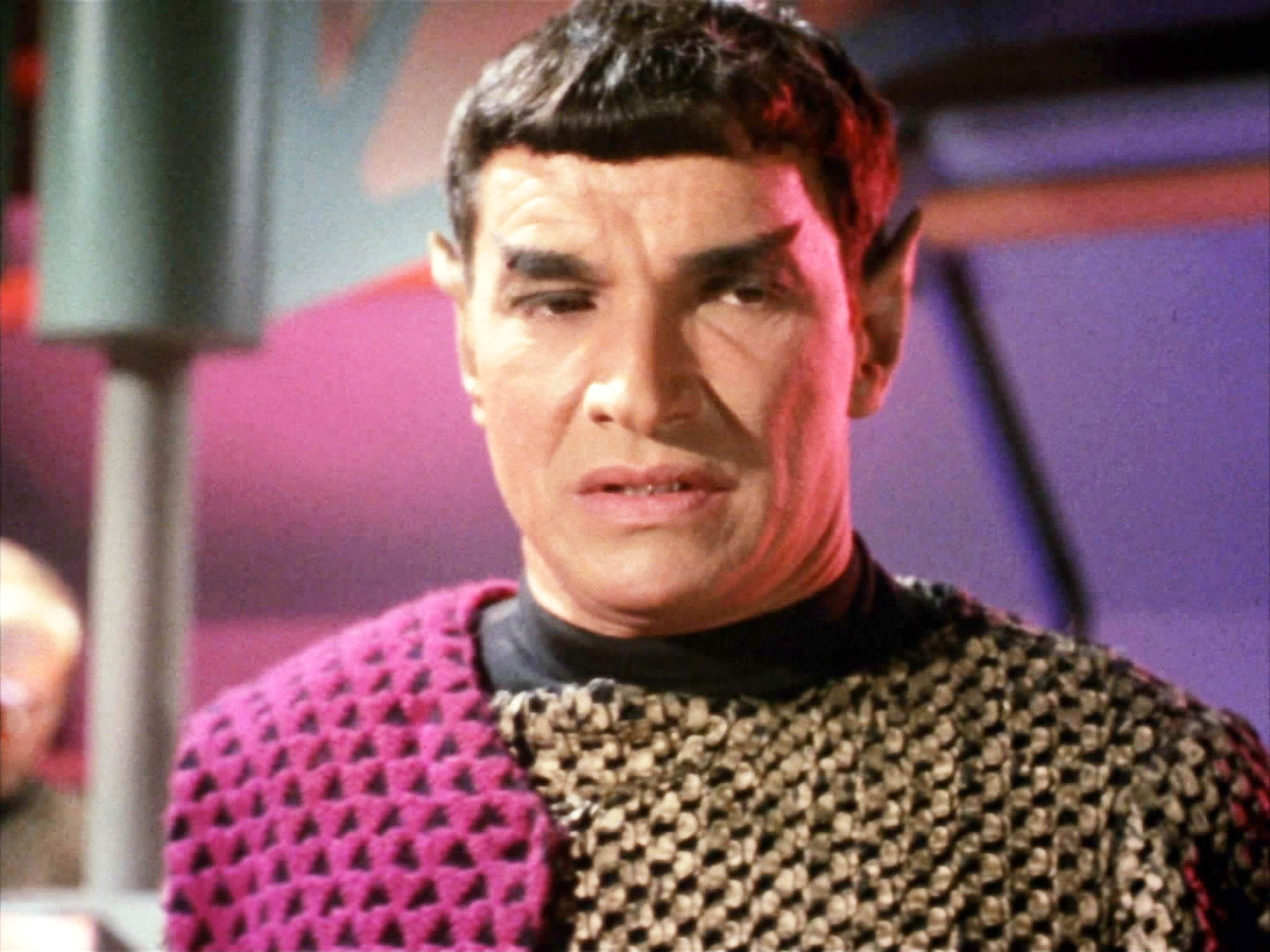
This episode is confined to the Enterprise and this is amazing because an episode just on the Enterprise could easily have been static and dull. But, because the writing was so fantastic and the main characters written and acted so well. Overall it’s very tense and exciting. For all of you die-hard Star Trek fans you will recognize Mark Lenard as the same actor who later played Spock’s father.
The Romulans and Vulcans descend from the same ancestor species…both have the same ears and some of the same traits. The writers lay down a not-so-subtle sub-text involving racial prejudice and bigotry. It’s clever that they do this by involving two alien races (Vulcans and Romulans), instead of those we are so generally used to, black and white, North and South, Semitic/anti-Semitic. It helps one to step outside the box of common stereotypes to question why one race, religion, or nationality is any better or worse than another.
Roddenberry was really well ahead of the curve on this, and he would do it again in future episodes. Rod Serling was doing the same thing through SciFi on the Twilight Zone. It looks like some of this bigotry was possibly inspired by the very vivid fear American and Russian citizens had at the time that either nation might be able to destroy the other with nuclear weapons.
Kirk takes a huge chance (a bluff) in this one…which teaches Spock about a game that he doesn’t know…poker. The acting, writing, and yes effects are all very good.
From IMDB:
Network restrictions at the time forbade the tackling of any contentious subjects such as the Vietnam War, the Civil Rights movement and the rise of feminism. “Star Trek”, under the guise of science fiction, boldly flouted these rules. This story, for example, openly deals with the subject of racism, as reflected through Lieutenant Stiles’ opposition to Mr Spock.
Budgetary and time constraints prevented the make-up and costuming departments from dressing up each Romulan in Vulcan ears as it was such a lengthy process applying them. So they hit on the idea of giving the lesser Romulans helmets, which were manufactured by Wah Chang. Mr. Chang was responsible for creating many iconic Star Trek hand props.
Mark Lenard plays the Romulan Commander, an apparent enemy of the Enterprise and its crew. However, later in his career, he played the famed role of Spock’s father, Sarek, and also played a Klingon in Star Trek: The Motion Picture (1979), making him the first actor to portray the three major alien races (Vulcan, Romulan, Klingon) in the Star Trek franchise.
When Leonard Nimoy held out for a better contract after the first season, Mark Lenard and Lawrence Montaigne were the two leading candidates to replace him as Spock. Nimoy eventually got a raise from $1250 to $2500 per episode.
Two actors who played Romulans in this episode returned in later episodes as Vulcans: Mark Lenard, the Romulan Commander, played Spock’s father, Sarek, in Star Trek: Journey to Babel (1967) (and several return appearances) and Lawrence Montaigne, Decius, played Spock’s rival, Stonn, in Star Trek: Amok Time (1967).
Final TOS appearance (in airing order) of Yeoman Janice Rand, who will not appear again until Star Trek: The Motion Picture (1979).
Mark Lenard said, “The Romulan Commander was one of the best roles I ever had on TV”. Comparing the part with that of Sarek, Lenard elaborated, “In many ways, I did enjoy that role [Sarek], but I think the more demanding role and the better acting role was the Romulan Commander”.
Summary
The Enterprise answers a distress call from Federation Outpost #4, a monitoring station on the Federation side of the neutral zone with the Romulan Empire. The outposts were established over a century ago and no one has actually seen a Romulan. The Romulan vessel seems to have some type of high-energy explosive device as well as a cloaking device to make the ship invisible. When it appears that Romulans bear a strong resemblance to Vulcans, Kirk must deal with a rebellious crew member. He must also engage in a dangerous cat-and-mouse game with a very intelligent Romulan commander.
CAST
William Shatner … Captain James Tiberius ‘Jim’ Kirk
Leonard Nimoy … Mister Spock
Mark Lenard … Romulan Commander
Paul Comi … Stiles
Lawrence Montaigne … Decius
DeForest Kelley … Doctor Leonard ‘Bones’ McCoy
Grace Lee Whitney … Yeoman Janice Rand
George Takei … Lieutenant Hikaru Sulu
James Doohan … Lieutenant Commander Montgomery ‘Scotty’ Scott
Nichelle Nichols … Lieutenant Nyota Uhura
Stephen Mines … Tomlinson
Barbara Baldavin … Angela
Garry Walberg … Hansen
John Warburton … The Centurion
John Arndt … Ingenieur Fields (uncredited)
Bill Blackburn … Lieutenant Hadley (uncredited)
Robert Chadwick … Romulan Scanner Operator (uncredited)
Frank da Vinci … Crewman (uncredited)
Walt Davis … Romulan Crewman (uncredited)
Vince Deadrick Sr. … Romulan Crewman (uncredited)
Jeannie Malone … Yeoman (uncredited)
John Hugh McKnight … Crewman (uncredited)
Sean Morgan … Brenner (uncredited)
Eddie Paskey … Lieutenant Leslie (uncredited)
Anthony Larry Paul … Crewman (uncredited)
Ron Veto … Crewman (uncredited)
This was left over from last week so I thought today would be a good day to put it to use.
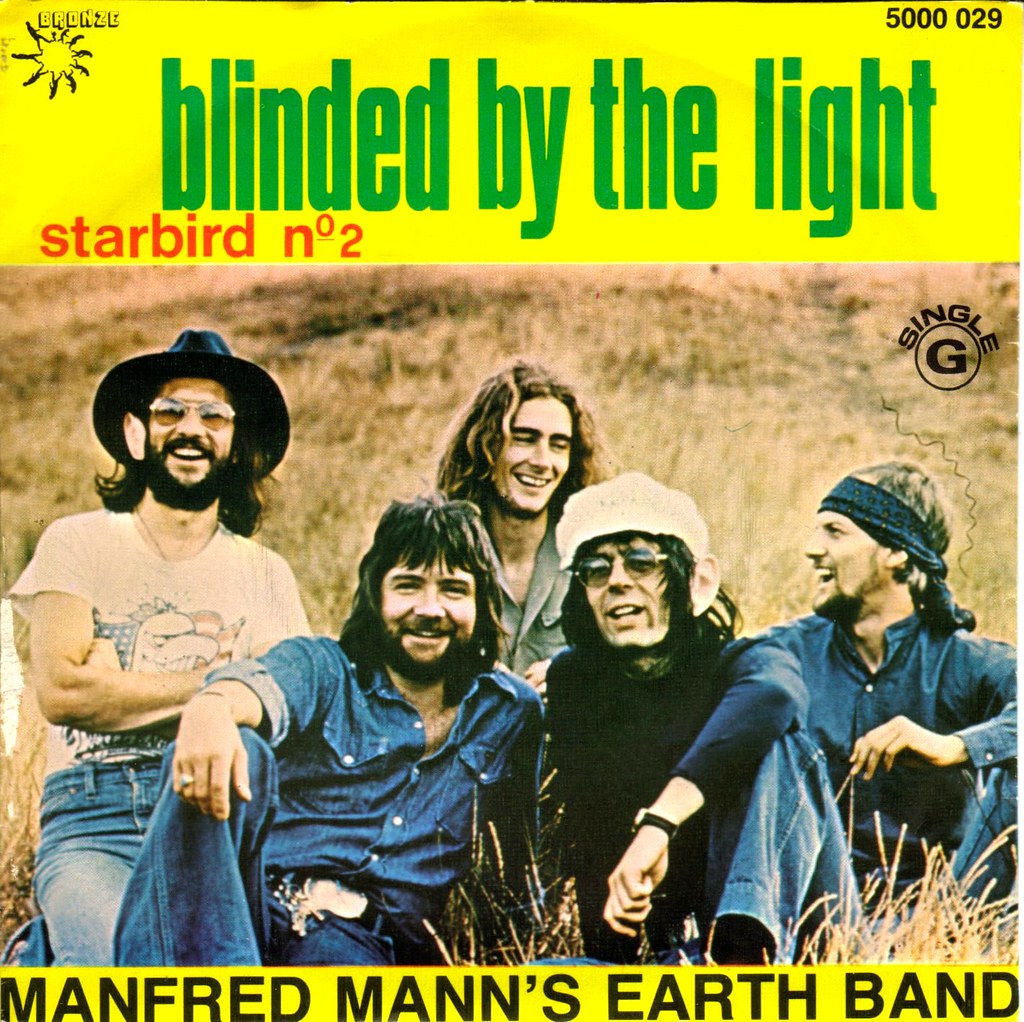
I first heard this on AM radio in the 70s as a kid. I didn’t know it was a cover at the time but later I bought Springsteen’s debut album and found it. I know I’m in the minority on this one…I like Bruce’s version more. I do like Manfred Manns’s version though…they made it an epic production and song…and if it wasn’t for their version…the song would not be as well known today so they did a great job on it. I like the way Bruce did the vocals and the extra verses are some lyrical gymnastics.
When putting their own spin on “Blinded by the Light,” Manfred Mann’s Earth Band changed a few of Springsteen’s original lyrics. The most recognizable part of the song, Blinded by the light / Revved up like a Deuce / Another runner in the night, was initially, Cut loose like a Deuce / Another runner in the night.
Bruce’s version is more stripped down as a more common song. The lyrics flow everywhere. The keyword Bruce wrote was “Deuce” and it came out as Douche in the Manfred Mann version. Bruce once said ” “Deuce was like a Little Deuce Coupe, as in a 2-seater Hot Rod. Douche is a feminine hygienic procedure. But what can I say, the public spoke.”
When the band was recording “Blinded by the Light,” they did everything they could do to make it a hit. As they played in the studio, they got stuck trying to transition between the chorus and the verses. Near the end, the drummer Chris Slade said to put the piano tune “Chopsticks” over it. Mann was skeptical of the idea and turned it down multiple times. But when Slade kept insisting, they tried it out. It worked surprisingly well.
The song peaked at #1 on the Billboard 100, #1 in Canada, #8 in New Zealand, and #6 in the UK in 1976-77.
Manfred Mann:“When we finally finished the album track I thought it had a great vibe, but the next question was how to get that into a single. The real problem was how to get from the chorus to the verse smoothly. The way we did it on the album wouldn’t work. I just couldn’t figure out a way to do it. And then – and this is why you need to be in a band – our drummer Chris Slade said: ‘Play Chopsticks over it’. We already had that elsewhere in the song, and I told him it wouldn’t work. But he kept insisting, and I kept saying no, until I suddenly realised that he wasn’t hearing Chopsticks itself, just the chords, which fitted perfectly. So we recorded those as backing vocals and added that to the original. This was in the days when you had to try and lock two tape machines in tandem, so that took another two days.”
Blinded By The Light
Blinded by the light
Revved up like a deuce, another runner in the night
Blinded by the light
Revved up like a deuce, another runner in the night
Blinded by the light
Revved up like a deuce, another runner in the night
Madman drummers bummers, Indians in the summer
with a teenage diplomat
In the dumps with the mumps as the adolescent pumps
His way into his hat
With a boulder on my shoulder, feelin’ kinda older
I tripped the merry-go-round
With this very unpleasin’ sneezin’ and wheezin’
The calliope crashed to the ground
The calliope crashed to the ground
But she was blinded by the light
Revved up like a deuce, another runner in the night
Blinded by the light
Revved up like a deuce, another runner in the night
Blinded by the light
Revved up like a deuce, another runner in the night
Blinded by the light
Revved up like a deuce, another runner in the night
Some silicone sister with a manager mister
Told me I got what it takes
She said, “I’ll turn you on, sonny, to something strong
Play the song with the funky break”
And go-kart Mozart was checkin’ out the weather chart
To see if it was safe outside
And little Early-Pearly came by in his curly-wurly
And asked me if I needed a ride
Asked me if I needed a ride
But she was blinded by the light
Revved up like a deuce, another runner in the night
Blinded by the light
She got down but she never got tired
She’s gonna make it through the night
She’s gonna make it through the night
But mama, that’s where the fun is
But mama, that’s where the fun is
Mama always told me not to look into the eyes of the sun
But mama, that’s where the fun is
Some brimstone baritone anticyclone rolling stone
Preacher from the east
Says, “Dethrone the dictaphone, hit it in it’s funny bone
That’s where they expect it least”
And some new-mown chaperone was standin’ in the corner
Watchin’ the young girls dance
And some fresh-sown moonstone was messin’ with his frozen zone
Remindin’ him of romance
The calliope crashed to the ground
But she was blinded by the light
Revved up like a deuce, another runner in the night
Blinded by the light
Revved up like a deuce, another runner in the night
Blinded by the light (madman drummers bummers, Indians in the summer)
Revved up like a deuce, another runner in the night (with a teenage diplomat)
Blinded by the light (in the dumps with the mumps as the adolescent pumps)
Revved up like a deuce, another runner in the night (his way into his hat)
Blinded by the light (with a boulder on my shoulder, feelin’ kinda older)
Revved up like a deuce, another runner in the night (I tripped the merry-go-round)
Blinded by the light (with this very unpleasin’ sneezin’ and wheezin’)
Revved up like a deuce, another runner in the night (the calliope crashed to the ground)
Blinded by the light (now Scott with a slingshot finally found a tender spot)
Revved up like a deuce, another runner in the night (and throws his lover in the sand)
Blinded by the light (and some bloodshot forget-me-not said daddy’s within earshot)
Revved up like a deuce, another runner in the night (save the buckshot, turn up the band)
Blinded by the light (some silicone sister with a manager mister)
Revved up like a deuce, another runner in the night (told me I got what it takes)
Blinded by the light (she said, “I’ll turn you on, sonny, to something strong”)
She got down, but she never got tired
She’s gonna make it through the night
I want to thank all of you for reading last week’s “covers” week. Based on the positive response…I’ll start doing covers on Tuesdays coming up.
I just finished another Grateful Dead book so I’ve been listening to the Dead’s albums. Wake of the Flood has slowly become one of my favorites. It’s hard to beat American Beauty and Workingman’s Dead but it’s up there.
The verses of this song are straight-up Grateful Dead but the chorus reminds me a little of The Beatles. No, the Dead didn’t copy anything but it’s a type of chorus that the Beatles would attempt. Phil Lesh’s bass is prominent in this song…so is Jerry Garcia’s wonderful weaving guitar playing.
Garcia wrote the music and the Dead’s lyricist Robert Hunter wrote the verses. The song was influenced by a tragic event. Robert Hunter wrote in his book: Remembering the great Vanport, Washington flood of 1949, living in other people’s homes, a family abandoned by father, second grade. Hunter didn’t state the proper year or state of the flood but some about him.
Hunter was not in the flood but he was 7 years old and in second grade when it happened. His father around this time also abandoned his family. Hunter would live in different foster homes until he returned to his mom.
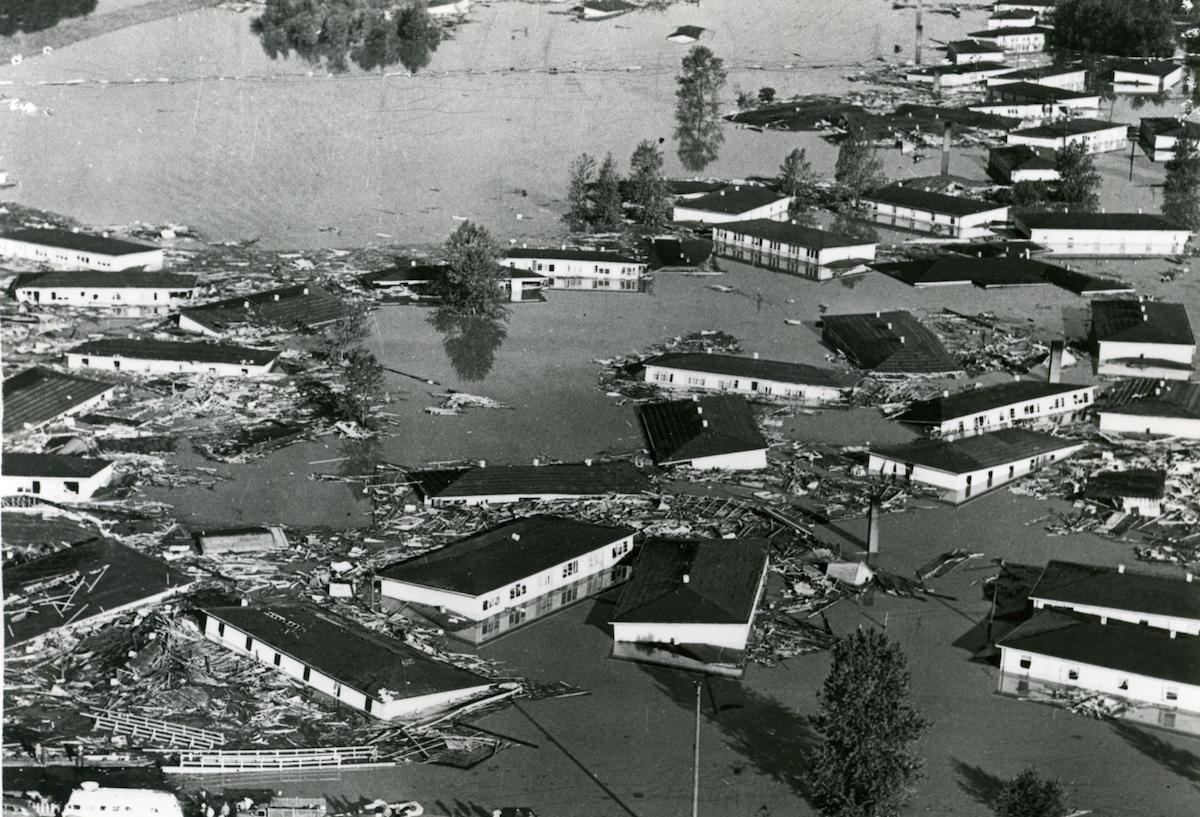
The song is about the flood that happened in Vanport City Oregon in 1948. Calling this a flood would be treating it mildly. It actually washed the town away. On Monday at 4:17 p.m. on Memorial Day 1948, a combination of heavy rainfall and the Columbia River heavy with melted snowfall broke a portion of the dike surrounding Vanport. Floodwaters fifteen feet deep washed Vanport away.
Residents had been assured by authorities that the dikes were holding and that they would be warned in ample time to evacuate. The break caught everyone, including the authorities, by surprise. Thankfully, the swamps within Vanport absorbed the initial surge, allowing around 40 minutes for most people to escape Vanport to higher ground along Denver Avenue. Still, 15-16 (different sources) people lost their lives in the flood.
Vanport is no more. Several acres of the former city became “West Delta Park” which is now the Portland International Raceway.
The song was on the Wake of the Flood album released in 1973… but not without its problems. It came three long years after the Dead’s previous studio album, American Beauty. They did release the live Europe 72 between the two albums. The Dead had just left Warner Bros and were without a record deal. So they did what other bands did at that time…make their own record company. This was the first album released on their new label.
Mickey Hart was not part of the Grateful Dead at this time. Mickey’s last show was 2/18/71 at the Capital Theater and he rejoined the band the last night of the “Farewell” shows at Winterland in October of ’74.
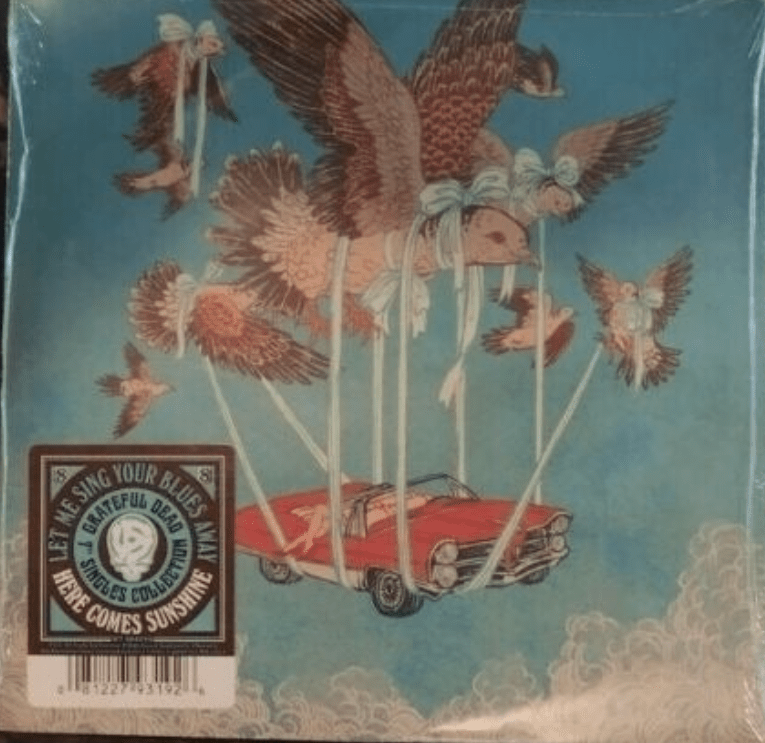
The album peaked at #18 on the Billboard Album Charts and #30 in Canada in 1973. This song was the B side to the single “Let Me Sing Your Blues Away.”
This would not be a Dead post if I didn’t give you a live version of it.
Here Comes Sunshine
Wake of the flood, laughing water, forty-nine
Get out the pans, don’t just stand there dreaming
Get out the way, get out the way
Here comes sunshine
Here comes sunshine
Line up a long shot maybe try it two times, maybe more
Good to know you got shoes to wear, when you find the floor
Why hold out for more
Here comes sunshine
Here comes sunshine
Asking you nice, now, keep the mother rollin’
One more time, been down before
You just don’t have to go no more, no more
If you want to see where we are…and you missed a few…HERE is a list of the episodes in my index located at the top of my blog.
This show was written by Barry Trivers and Gene Roddenberry
This episode starts off with Captain Kirk and his friend Dr. Thomas Leighton watching a performance of Macbeth by a Shakespearean acting troupe. The Doctor is sure that the actor that played Macbeth, who goes by Anton Karidian, is really “Kodos the Executioner” who was responsible for 4,000 deaths.
The episode involves the hunt for Kodos, a governor who apparently ordered the execution of half his settlement in order to assure that the rest could survive famine. And, the worst of it is after the executions, help unexpectedly arrived. After all of this is explained…you are not in love with Kodos but you see that his execution orders had a reason. It wasn’t just madness but against what Kirk believed in…exhausting every means of knowledge and know-how and never giving up.
Anton Karidian (Kodos?) has a daughter. The beautiful Barbara Anderson who plays Lenore Karidian goes right after the Captain’s attention and yes she gets it. Yes, Kirk is falling for her but he is also collecting information and digging for information. He makes this very personal after his friend Dr. Thomas Leighton was killed. He keeps it from his crew but Spock wants to know what is going on. Kirk makes it clear that he wants Spock to mind his own business.
Kirk is a double agent in this episode. Yes, he is entranced by Anton Karidian but he is using her for information also. While this is going on, the people who were witnesses to Kodo’s deed, are dying…or more truthfully getting killed. Kirk is one of those witnesses.
This is a solid episode and features some eye-catching set design. Injecting some Shakespeare into a science-fiction setting turns out to be a pretty interesting touch, showing that classics will never go out of style, even centuries later.
A quote from Karidian is interesting…and relevant now when Kirk was examining him to see if he was Kodos. “ I find your use of the word mercy strangely inappropriate, Captain. Here you stand, the perfect symbol of our technical society. Mechanized, electronicized, and not very human. You’ve done away with humanity, the striving of man to achieve greatness through his own resources.”
I think we as a society can relate to that quote in the era of technology we live in.
From IMDB:
Barbara Anderson developed a fever blister/cold sore on her lip during filming. Besides using makeup to partially disguise it, she was often filmed with part of her lower face in shadow.
When Kirk goes to the Leighton dinner party and comes out to meet Lenore, you can hear a very slow jazz version of the series’ theme song. This is the first time it has been played as “source music”. The other times this occurs in the original series is later in the episode when Kirk is speaking to Lenore in Karidian’s cabin, when Areel Shaw enters the bar in Star Trek: Court Martial (1967), and when Kirk, McCoy, and Tonia Barrows run to Sulu’s position in Star Trek: Shore Leave (1966).
This episode contains Star Trek’s first direct reference to eugenics, although there is an oblique reference in Star Trek: What Are Little Girls Made Of? (1966). Spock tells McCoy that Kodos applied his own theories of eugenics when sentencing certain colonists to death, causing McCoy to note that Kodos unfortunately wasn’t the first. Two seasons later, the concept of eugenics resurfaced prominently in Star Trek: Plato’s Stepchildren (1968) when Philana informs Spock that the Platonians are the result of a successful mass eugenics program.
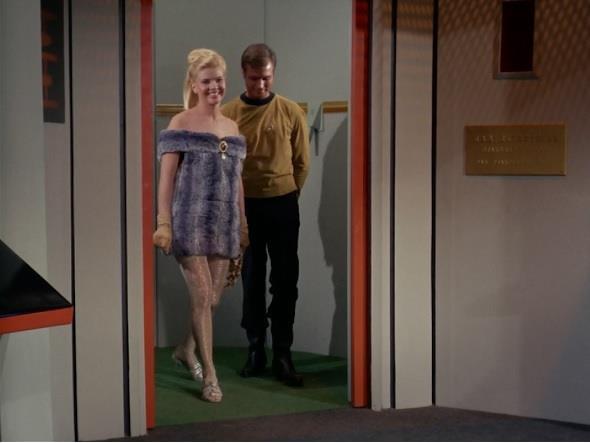
Barbara Anderson (Lenore Karidian) shares the record (with Ricardo Montalban and Joan Collins) for the most costumes worn in a single Trek episode by a guest star (six). She wears a maroon-colored dress for her Lady Macbeth costume, a blue dress with a veil at the party thrown by the Leightons, a fur mini-skirt dress when arriving on the Enterprise, a greenish multicolored mantle on the observation deck, a black and red evening dress when Kirk visits the Karidians in their quarters, and, finally, her yellow and lavender Ophelia costume. It could even be argued that the veil she wears while walking with Kirk just before discovering Tom Leighton’s body could be considered a seventh costume.
In the scene where security guards are searching for Kevin Riley in the corridors, rectangular seams are visible in the floor. This is where the grates visible in Star Trek: Charlie X (1966) and other early episodes were eliminated and filled in with the corridor floor material.
One of the few Original Star Trek episodes in which no-one from the USS Enterprise (even the red-shirts) is killed, although there is an almost successful poisoning.
This is the first of a long line of Star Trek productions which feature scenes, quotes, or references to William Shakespeare. In this case, the title comes from “Hamlet” (Act II, Scene 2). Scenes from Hamlet and Macbeth are acted out, and there is a paraphrase of “Julius Caesar” (Act 1, Scene 2): “Caesar, beware the Ides of March”.
Summary
Captain Kirk is informed by his old friend, Dr. Thomas Leighton, that the head of a Shakespearean acting troupe (known as Anton Karidian) was once known as “Kodos the Executioner”. Having seized power as Governor of Tarsus IV, Kodos had 50% of his colony (4000+ people) killed when the food supply was destroyed by an infestation, rather than have so many starve, not knowing that help was en route. Of the nine witnesses who could potentially identify Karidian as Kodos, only Kirk, Leighton, and a young crewman on the USS Enterprise, Kevin Riley (whose family was killed on Tarsus IV), survive. Kirk dismisses Leighton’s accusations until the latter turns up murdered, and Riley almost dies of poisoning while alone in an engineering sector where no one else is present, which Riley and others view as some sort of punishment although it was really Kirk’s misguided attempt to protect Riley. The other eyewitnesses have all died. Spock tells Bones that on each occasion the acting troupe was in close proximity. When finally challenged directly by Kirk, Karidian dramatically declines to confirm or deny anything but never asks who Kodos was and seems aware, although there is no reason he should be, of the details of what happened on Tarsus IV. Complicating things are Karidian’s beautiful daughter, Lenore, an actress in the troupe. And who’s really behind the murders
CAST
William Shatner … Captain James Tiberius ‘Jim’ Kirk
Leonard Nimoy … Mister Spock
Arnold Moss … Anton Karidian
Barbara Anderson … Lenore Karidian
DeForest Kelley … Doctor Leonard ‘Bones’ McCoy
Grace Lee Whitney … Yeoman Janice Rand
Nichelle Nichols … Lieutenant Nyota Uhura
William Sargent … Dr. Thomas Leighton
Natalie Norwick … Martha Leighton
David Somerville … Larry Matson (as David-Troy)
Karl Bruck … King Duncan
Marc Grady Adams … Hamlet (as Marc Adams)
Bruce Hyde … Kevin Riley
Tom Anfinsen … Crewman (uncredited)
John Astin … Capt. John Daley (voice) (uncredited)
Majel Barrett … Enterprise Computer (voice) (uncredited)
Bill Blackburn … Lieutenant Hadley (uncredited)
Frank da Vinci … Crewman (uncredited)
Robert H. Justman … Security Guard (voice) (uncredited)
Jeannie Malone … Yeoman (uncredited)
Eddie Paskey … Lieutenant Leslie (uncredited)
Ron Veto … Security Guard (uncredited)









 PowerPop... An Eclectic Collection of Pop Culture