Power Pop fan, Baseball, Beatles, Alternative music, old movies, and tv show fan. Also anything to do with pop culture in the 60s and 70s... I'm also a songwriter, bass and guitar player. Not the slightest bit interested in politics at all.
I’ve heard his name most of my life but never heard him. I’ve really enjoyed what I’ve been hearing going over his catalog. T-Bone Walker singing T-Bone Shuffle is so smooth. He has a blues and jazz thing going on and it’s hard to beat. It was released in 1949. He wrote the song and it’s been covered 42 times by The Robert Cray Band to Jools Holland.
T-Bone Walker (Aaron Thibeaux Walker) in Linden, Texas, Walker grew up in a musical family and began performing in his teens. He was influenced by Blind Lemon Jefferson, whom he often played with. Walker’s parents were musical and encouraged him to play. He could play several instruments including guitar, piano, and banjo.
In 1929, Walker made his recording debut under the name “Oak Cliff T-Bone,” recording Wichita Falls Blues and Trinity River Blues. He is credited with being one of the first musicians to use the electric guitar as a lead instrument. His 1942 recording of Mean Old World featured his pioneering electric guitar work.
1971, he won a Grammy Award for Best Ethnic or Traditional Recording for his album Good Feelin’. He was inducted into the Blues Hall of Fame in 1980 and the Rock and Roll Hall of Fame in 1987. He passed away in 1975 following a stroke.
I added a bonus pick today…Two Bones and a Pick was recorded in 1955 and released as part of the T-Bone Blues album in 1959.
T-Bone Shuffle
Let your hair down baby Let’s have a natural ball Let your hair down baby Let’s have a natural ball Cause when you’re not happy It ain’t no fun at all
You can’t take it with you That’s one thing for sure You can’t take it with you baby That’s one thing for sure There’s nothing wrong with ya baby That a good T-Bone shuffle can’t cure
Have fun while ya can Fate’s an awful thing Have fun while ya can Fate’s an awful thing You can’t tell what might happen That’s why I love to sing
I love the energy of this song. It has rock, soul, gospel, a tinge of blues plus a super lead singer. They did a great job of this Otis Blackwell song.
CB sent a link months ago on this band and got lost in the shuffle. I really like Roger Chapman’s voice. They were not a singles band…more like really great album tracks and I was enjoying them on my work trip last week. This song, however, would have fit in on the radio beside the Stones with no problem.
After the breakup of the band Family in 1973, Roger Chapman and Charlie Whitney decided to continue their musical collaboration. They initially formed a group called Chapman-Whitney Streetwalkers, which later became simply Streetwalkers. They knew the lineup would be fluid and it was from then on.
The initial lineup included Chapman and Whitney, along with other musicians such as John Wetton (bass), who later became famous with King Crimson and Asia, and drummer Ian Wallace, also from King Crimson. Another bass player they had, Nicko McBrain, later joined Iron Maiden. Ric Grech (bass player for Blind Faith) was also with them at times.
This song was on their album Red Card released in 1976. It’s full of great songs. That is the album I’ve been listening to recently. Red Card peaked at #20 on the UK charts in 1976.
The band had some internal tensions and the changing musical tastes (disco) led to the band’s disbandment in 1977. Roger Chapman and Charlie Whitney went on to pursue solo projects, with Roger Chapman achieving some success as a solo artist in Europe.
They released 4 studio albums, 2 live, and one greatest hits. They were a band that deserved more attention globally than they got. I’m also going to check the band Family out more now. Below is a video of them on the Old Grey Whistle Test…it should be ready to play Daddy Rolling Stone.
Daddy Rolling Stone
Now girls you think you’ve had lovin’ (yeah)
And girls you think you’ve had fun (yeah)
And sisters you ain’t seen nothin’ (yeah) till I come along
(Daddy Rolling) Oh, what’s my name ?
(Daddy Rolling) Yeah yeah yeah, what’s my game ?
(Daddy Rolling) Oh well, I’m Daddy, I’m Daddy, Daddy Rolling Stone, yeah yeah yeah
I’ve got a friend named Tony (yeah)
He’s got a girl named Cherise (yeah)
I’m gonna get that girl though he’s twice my size and I know I can do it like this
(Daddy Rolling) Oh, sing it to me
(Daddy Rolling) Yeah yeah yeah …
(Daddy Rolling) Oh well, I’m Daddy, I’m Daddy, Daddy Rolling Stone
That’s my name
Now girls you think you’ve had lovin’ (yeah)
And girls you think you’ve had fun (yeah)
And sisters you ain’t seen nothin’ (yeah) till I come along
(Daddy Rolling) Oh, what’s my name ?
(Daddy Rolling) Yeah, what’s my game ?
(Daddy Rolling) Oh well, I’m Daddy, I’m Daddy
I grew up listening to Zappa on the American Top 40 show with Casey Kasem. Uh…scratchthat. No, I only heard Zappa when I was over at a friend’s house with an older brother’s record collection. This was the first song I ever heard by him and it sticks with me after listening to it. The second song was Don’t Eat The Yellow Snow but I always favored this one.
This song reflects Zappa’s typical satirical style, poking fun at religion and society. I could only guess how many people were offended by this one. His songs still feel vibrant and new.
It was on the album Joe’s Garage which was released in two parts. “Act I” came out in September 1979, while “Acts II & III” followed in November 1979. The entire album was later released as a triple LP. He came up with the idea for Joe’s Garage as a satire on the music industry, government censorship, and society in general.
The album was about Joe, a young guitarist who started a garage band. The band gains popularity, but Joe soon faces disillusionment with the music industry. He gets involved with a groupie named Lucille, contracts a venereal disease, and ends up in trouble with the law.
I thought just maybe this would have been released as a single. Hell, he released the song Bobby Brown but not this one.
One thing the man didn’t get as much credit for as he deserved…his guitar playing was phenomenal.
Catholic Girls
Catholic Girls With a tiny little mustache Catholic Girls Do you know how they go? Catholic Girls In the Rectory Basement Father Riley’s a fairy But it don’t bother Mary
Catholic Girls At the CYO Catholic Girls Do you know how they go? Catholic Girls There can be no replacement How do they go, after the show?
All the way (That’s right, all the way!) That’s the way they go Every day (That’s right!) And none of their mamas ever seem to know Hip-Hip-Hooray For all the class they show There’s nothing like a Catholic Girl At the CYO When they learn to blow
They’re learning to blow All the Catholic Boys! Warren Cuccurullo Catholic Boys! Kinda young, kinda WOW! Catholic Boys! Vinnie Colaiuta . . .
Where are they now? Did they all take The Vow?
Catholic Girls! Carmenita Scarfone! Catholic Girls! Hey! She gave me VD! Catholic Girls! Toni Carbone!
With a tongue like a cow She could make you go WOW!
VD Vowdy vootie Right away That’s the way they go Every day Whenever their mamas take them to a show Matinee Pass the popcorn please There’s nothing like a Catholic Girl With her hand in the box When she’s on her knees
She was on her knees My little Catholic Girl Chorus: In a little white dress Catholic Girls They never confess Catholic Girls I got one for a cousin I love how they go So send me a dozen Catholic Girls OOOOOOH! (Well well now) Catholic Girls (Ma-ma-mum ma-ma-mum) Yai-ee-ahhh! Catholic Girls OOOOOOH! (Well well now) Catholic Girls (Ma-ma-mum ma-ma-ma-ma-mum) Yai-ee-ahhh!
Joe had a girl friend named Mary. They would meet each other at the Social Club. Hold hands And think Pure Thoughts But one night, at the Social Club meeting…
It’s a lot of fun doing these Car Songs…I could probably do one on just Cadillac songs alone! I hope you enjoy these. I try to pick songs with a car title in them. That is why I haven’t done Drive My Car and others. But I’m breaking that today…I am including a bonus.
Blasters – Long White Cadillac
A perfect road trip song from the 1983 album Non-Fiction. You’ll want to go out and buy a long white Cadillac and drive it on a long-lost highway. Dave Alvin wrote this song….The song is about the night Hank Williams died in back of a car. He died somewhere between Bristol, Tenn., and Oak Hill on the way to a New Year’s Day 1953 show in Canton, Ohio.
Dwight Yoakum recorded a version of this song in 1989 for his first greatest hits package Just Lookin’ for a Hit.
The Tom Robinson Band – Grey Cortina
This song was on his fantastic album Power In The Darkness. If you want to know a little more about him…I posted a song by the singer-activist a few months ago with the song Up Against The Wall. He has some great music and this album is great through and through.
Tom DID get his Grey Cortina in real life but… unfortunately, he said: “I bought the Cortina and it lasted 1 day before somebody ran into it and wrote it off (my fault) :-(“
Clash – Long Black Cadillac
This was a great cover by The Clash. It was on the London Calling album released in 1979. They started off as a punk band but The Clash, unlike some other Punk bands, could really play and sing well…, especially Mick Jones. He was probably the best pure musician in the band.
The song was originally by Vince Taylor and released in 1959. It was the B side to a song called Pledging My Love. Taylor wrote the song but Tony Sheridan is credited with the cool guitar riff running through the song. The song’s riff reminds me of the original Batman riff…or really the other way around.
Wilson Pickett – Mustang Sally
The music is in groove mode, but Pickett’s explosive voice drives it home. Mustang Sally was recorded at FAME studios in Muscle Shoals, Alabama. The studio had a unique sound plus some of the best musicians anywhere. It started to get the attention of Atlantic Records and they sent Pickett to record there. Later on, a guitar player known as Duane Allman would end up as a studio musician and talked Pickett into recording Hey Jude.
As soon as they finished this take… the tape flew off the reel and broke into pieces everywhere. Producer Tom Dowd cleared the room and told everyone to return in half an hour. Dowd pieced the tape back together and saved what became one of the coolest songs of the decade.
Quiet Riot – Slick Black Cadillac
This one is for my friend Deke. The song originally appeared on Quiet Riot’s second album, Quiet Riot II, released in 1978. This album was only released in Japan. A re-recorded version of Slick Black Cadillac was included on their more widely known album, Metal Health, released in 1983.
In high school, this album was played and played by our local rock station.
Bonus today…
Cars – Gary Numan
This was suggested by glyn40wilton… This song was released in 1979 was one of many signs a change was coming in music. The song peaked at #9 in the Billboard 100, #1 in the UK and #1 in Canada. The song was keyboard-driven with a synth riff.
Gary Numan on the inspiration of the song. “A couple of blokes started peering in the window and for whatever reason took a dislike to me, so I had to take evasive action. I swerved up the pavement, scattering pedestrians everywhere. After that, I began to see the car as the tank of modern society.”
Numan has stated that he has Asperger syndrome, which is a mild form of autism, but until he was diagnosed, he had a lot of trouble relating to other people.
There’s a crack up in the ceiling And the kitchen sink is leaking Out of work and got no money A Sunday joint of bread and honey
I’ve posted a lot by The Kinks but there are always more great songs I never covered and this is one of them. I like this one more than some of their huge hits…it’s a great song…catchy and meaningful.
Another Ray Davies song on the struggles of working-class life in Britain during the 1960s, focusing on themes of poverty, social inequality, and hopelessness. Not only in Britain in the 60s but extends to now as well all over. The title of the song says it all of being in a vicious cycle. This is just another example of Ray Davies’s brilliant songwriting. When you read the Ray Davies quotes at the bottom you will see where he was coming from.
Dead End Street was released in 1966 as a non-album single. It was quite successful peaking at #5 in the UK, #4 in New Zealand, #28 in Canada, and #73 on the Billboard 100. At that time, Ray, Dave, Pete Quaife, and Mick Avory were the Kinks. Also joining them was again…super session piano player Nicky Hopkins. It would be easier to list the songs Hopkins didn’t play on during the sixties. Quaife did not play bass on this song because of a scooter accident but John Daulton subbed for him.
Ray Davies said that Shel Talmy produced the song but he wanted more of a pop beat so they tricked Talmy. Ray Davies said: “He finished the track and said, ‘That’s great,’ and went home. Then we pretended to leave but came back to the studio and re-recorded the song. We played it to him the next day and he said, ‘See what I mean, there’s nothing wrong with it.’ He thought we were playing him his version.”
The video of this song shows the boys dressed as undertakers and it was directed by Ray himself.
Ray Davies: I wrote it around the time I had to buy a house and I was terrified. I never wanted to own anything because my dad had never owned property. He’d inherited from his dad that he had to rent all his life. So I still have inbuilt shame of owning anything. It’s guilt.”
Ray Davies: “My whole feeling about the ’60s was that it’s not as great as everyone thinks it is. Carnaby Street, everybody looking happy, that was all a camouflage. That’s what Dead End Street was about.
Dave Davies: “A song full of character, pathos, yet containing an underlying sense of hope. Reflecting a fondness for the past but at the same time expressing a determination and yearning for change.
“Anguished voices calling to a heartless world. A world where the plight of the ordinary person mattered little. “
Dead End Street
There’s a crack up in the ceiling And the kitchen sink is leaking Out of work and got no money A Sunday joint of bread and honey
What are we living for? Two-roomed apartment on the second floor No money coming in The rent collector’s knocking, tryna get in
We are strictly second class We don’t understand
Why we should be on dead end street (Dead end!) People are living on dead end street (Dead end!) I’m gonna die on dead end street Dead end street (yeah!) Dead end street (yeah!)
On a cold and frosty morning Wipe my eyes and stop me yawning And my feet are nearly frozen Boil the tea and put some toast on
What are we living for? Two-roomed apartment on the second floor No chance to emigrate I’m deep in debt and now it’s much too late
We both want to work so hard We can’t get the chance
People live on dead end street (Dead end!) People are dying on dead end street (Dead end!) I’m gonna die on dead end street Dead end street (yeah!) Dead end street (yeah!)
People live on dead end street (Dead end!) People are dying on dead end street (Dead end!) I’m gonna die on dead end street Dead end street (yeah) Dead end street (yeah)
Dead end street (yeah) Head to my feet (yeah) Dead end street (yeah) Dead end street (yeah) Dead end street (yeah)
How’s it feel? (Yeah) How’s it feel? (Yeah) Dead end street (yeah) Dead end street (yeah) Dead end street (yeah)
This is the second year I’ve posted this on the 4th. I hope you liked the previous post on The Blasters. Hendrix did a great version of The Star Spangled Banner in my opinion. He had served as a paratrooper in the 101st Airborne Division at Fort Campbell in Clarksville Tennessee in the early 60s.
Yes, this is my favorite version of the song. The poem that formed the basis of the lyrics was penned in 1814 during the War of 1812 by Francis Scott Key, a 35-year-old lawyer who was sent to negotiate with the British in an attempt to gain the release of an American prisoner they were holding.
Later, Key watched the bombardment of Fort McHenry from a ship he was on. The next morning he saw the Americans take down the battle-torn US flag at the fort and replace it with a larger one.
Key’s poem was published on September 17, 1814, the day after he returned to Baltimore. The poem was sung to the music of a popular British drinking song called “To Anacreon in Heaven, ” attributed to John Stafford Smith.
Any time someone does an unusual approach to this song…there is always a lot of complaining from people. Once when Jose Feliciano did the song in Game 5 of the MLB World Series in 1968 on guitar and singing…all hell broke loose. Some listeners thought he had “desecrated” and disrespected the national anthem but when asked about it, Feliciano explained that the reason he offered a non-traditional rendition of the anthem was to get people to pay attention to it. It was a great version of the song.
Hendrix took the stage at Woodstock at 8am…only around 30,000 were left out of the huge crowd there. He had been warned not to do the anthem when he toured but did it anyway. He even recorded a studio version and after his death, the takes were put together and released but the Woodstock performance is the one that is best known. What amazes me is when he is imitating bombs dropping…he suddenly goes right back in on time and doesn’t miss a lick.
He didn’t get as much flack as Feliciano did…I think because it wasn’t on prime time during a World Series.
The Blasters play what I would call rockabilly with some Americana thrown in. Some of the descriptions I found were rockabilly, blues, early rock and roll, punk rock, mountain music, rhythm and blues, and country…but in short…they rock.
American Music was first released on the band’s 1980 debut album, the self-titled American Music. The album was independently produced and helped establish The Blasters as a force in the roots rock movement. They recorded 22 songs, and many covers, whittling it down to 13 for the final product. Released in February 1980, it sold out but only 2000 were pressed then.
The Blasters never had mainstream success…but mainstream radio back in the 80s would have been greatly improved by these guys. They were a rock and roll band formed in 1979 in Downey, California, by brothers Phil Alvin (vocals and guitar) and Dave Alvin (guitar), with bass guitarist John Bazz and drummer Bill Bateman.
This sounds like a homage to the American musical heritage, it reflects the band’s influences from blues, rockabilly, and early rock ‘n’ roll. Its lyrics and upbeat tempo celebrate the rich tapestry of American music genres.
Below I have a long quote from Dave Alvin on recording an album that an unknown truck driver complimented the album and meant the world to them.
Dave Alvin: Phil, Bill, John, and I were working day jobs, rehearsing at night in a factory in Garden Grove and trying desperately to find any steady gig that paid more than free beer. Our friends, James Harman and Mike Foresta, had recorded a demo tape of us and we’d taken copies to every “cool” nightclub in the Hollywood/West LA area, but no one was interested in a roots band, especially one from Downey, California, with no hip credentials.
I read somewhere about “Rockin” Ronny Weiser and his small rockabilly label (Rollin’ Rock), so Phil called him about the possibility of recording us. Ronny was skeptical until Phil sang and played guitar over the phone and within an hour Phil and I were sitting in Ronny’s living room playing him our tape. Ronny dug the tape, but still wouldn’t make a commitment to record us because we’d only played in biker and country bars on the decidedly untrendy southeast side of LA County. We knew none of the Hollywood scenesters and tastemakers and they definitely didn’t know us. That is until this truck driver came by Ronny’s to pick up boxes of records to be shipped.
“Who’s this playing?” he asked Ronny.
“It’s us,” Phil said.
“Is this what these records are? If it is, I’ll buy a copy. My wife and I dig this kind of music. You can’t find music like this anymore.”
We couldn’t have asked for more even if we’d paid him a million bucks. Once he left, Ronny quickly discussed when we’d record our first album and within a few weeks we were in Ronny’s garage/studio. James and Mike were with us for moral support. We drank a lot of beer. Phil, the most experienced, led us patiently and sang his heart out. James let me record with a white Fender Stratocaster that he swore once belonged to Magic Sam. I made mistakes I’ll spend the rest of my life trying to forget, but Ronny kept pushing us to quit thinking too much and just keep it rockin’ (and with a rhythm section like John and Bill, that was no problem). After that first day of recording, we drove back to our side of town punching each other in excitement and jumping up and down in the car seats like little boys. we yelled at strangers in passing cars that we’d made a record and we were gonna be famous. I remember at one point all four of us had our heads out the car windows, laughing cursing, screaming, and howling at the moon.
American Music
Well, a U.S. soldier boy on leave in West-Berlin
No music there that rocks, just a thousand violins
They wanna hear some American music
American music
They wanna hear that sound right from the U.S.A
Well, it can be sweet and lovely, it can be hard and mean
One thing’s for sure, it’s always on the beam
They wanna hear some American music
American music
They wanna hear that sound right from the U.S.A
Well, it’s a howl from the deserts, a scream from the slums
The Mississippi rollin’ to the beat of the drums
They wanna hear some American music
American music
They wanna hear that sound right from the U.S.A
We got the Louisiana boogie and the delta blues
We got country, swing and rockabilly, too
We got jazz, country-western and Chicago blues
It’s the greatest music that you ever knew
It’s American music
It’s American music
It’s American music
It’s that crazy sound right from the U.S.A
See pop shows near Nashville
Get tickets as low as $5
Another band this week that didn’t break America but should have.
A great pop song by The Small Faces with Ronnie Lane on the lead vocal. Ronnie Lane was inspired to write this song by a book of Sufi wisdom given to him by Pete Townshend. The song was credited to Ronnie Lane and Steve Marriott. The Small Faces
In 1966-67 Ronnie Lane and Steve Marriott moved into a Westminster apartment, and a new drug entered their orbit that expanded their artistic vision almost beyond all recognition… LSD (Lysergic acid diethylamide).
This song came off of their best-known album, Ogdens’ Nut Gone Flake. In its initial release, the album was packaged in a mock tobacco tin that was a circular metal container with oversized folded paper as one finds in a pipe tobacco tin. It proved to be too expensive and impractical, so later releases were packaged in conventional cardboard album covers. A compact disc reissue also was marketed in a mock Ogdens tin.
Ogden’s Nut-brown Flake was a tobacco brand produced in Liverpool from 1899 onwards by Thomas Ogden.
The album was a psychedelic concept album. It was one of rock’s first concept albums coming before The Who’s Tommy. Side two follows a boy named Happiness Stan who is trying to find the missing half of the moon. The story was thought of on a boating trip to teh river Thames.
Ian McLagan on touring Australia and New Zealand: “[The Australian press] gave me hell from the very beginning, because I’d just been busted, I was on my way to Athens for a holiday but never got further than Heathrow. As I was showing my passport they smelt the hash on me, searched and busted me. As soon as we landed in Australia we had a press conference, so we’re all lined up in front of the television cameras and the first guy goes: ‘Steve Marriott, Ronnie Lane, Kenney Jones, Ian McLagan… you’re the drug addict right?’”
“On our way to New Zealand we had to stop off in Sydney. You couldn’t drink on internal flights back then, but one of Paul Jones’ Australian backing band passed a bottle around and the police were called. We weren’t even drinking but they arrested and held us in the first-class lounge where a waitress came straight up to us and said: ‘What would you like to drink?’ “So we drank. The police arrested us as soon as we arrived in New Zealand, but we ended up having a great time. Steve had his 21st birthday party; Keith [Moon] wrecked his room; it was business as usual.”
Kenney Jones: “The lyrics came from Ronnie’s Sufi investigations, with the importance of the ‘wheat in the field’ and all that, I love his melodic bass playing on it. He used to think like he was playing lead guitar and that mentally fused into his bass playing.”
Ian McLagan: “It was weird that they allowed Here Comes The Nice to come out at all, we were dabbling in all kinds of chemicals and Methedrine was one of them. We were wrong to have written about a speed dealer. They weren’t the nicest people. The guy you bought your hash from was usually just a head, but a speed dealer – like a coke or heroin dealer – was only interested in getting your money. It was quite different. They weren’t your friends.”
Son Of A Baker
There’s wheat in the field
And water in the stream
And salt in the mine
And an aching in me
I can no longer stand and wonder
Cause I’m driven by this hunger
So I’ll jug some water
Bake some flour
Store some salt and wait the hour
While I’m thinking of love
Love is thinking for me
And the baker will come
And the baker I’ll be
I am depending on my labor
The texture and the flavor
I’m not sure where to start on this one. It’s a David Lynch short film series that is around 42 minutes altogether. I’m a huge fan of Lynch and the atmosphere he creates. It’s only around 45 minutes long total. I have the complete film at the bottom of the post.
I would describe it as surrealistic, unnerving, confusing, and unnatural, with a sprinkling of dread. It’s not for everyone who likes more mainstream movies. It does not have a traditional plot to speak of. It has a touch of the bizarre that only David Lynch can bring you.
The film itself is really not scary itself…but…when I watched it late at night it gave me the creeps and I was looking around. It’s almost like looking at misery right in the eyes. The tagline is…
In a nameless city deluged by a continuous rain… three rabbits live with a fearful mystery.
Rabbits is a surreal series of short films that defies straightforward interpretation or logic. Released in 2002, the series features humanoid rabbits engaging in seemingly everyday activities, but in a deeply unsettling and atmospheric setting. The setting is what gets to you. The lighting of this series is incredible. You see their ear shadows on the wall and a constant storm outside. They keep saying something is wrong but you don’t know what.
David Lynch treats it like a sitcom with canned laughter except with the dark look. The rabbits sometimes speak in out-of-sync and incomplete sentences…The conversations that span over the nine episodes are directly connected in that the narrative seems to have been written and then rearranged. Some have put together all of the sentences on various websites.
You can get so many different meanings from it. Some say they are in purgatory, hell, or social comment on sitcoms or life.
The film is quite brilliant and it is very disturbing to watch. There are websites devoted to this film. After a while, I did want more but the film just continued to deliver what it had done at the very start except near the end where something happens…but you still are wondering. I think Lynch wants you to come to your own conclusion…because he is not doing it for you.
I’ve had this in my drafts for three years but never knew how to finish it and I’m not sure if I really succeeded now.
The Cast Was:
Naomi Watts – Suzi
Scott Coffey – Jack
Laura Harring – Jane
Here is a summary I lifted out of IMBD
Composed of nine episodes, David Lynch’s surrealist sitcom follows the strange co-existence and the disjointed conversations between three humanoid rabbits. Jack, in his impeccable suit, keeps walking in and out of the apartment, while Jane, in her pomegranate-red gown, does the ironing, and serious Suzie is sitting on a comfortable couch. Exchanging banalities, unexpected laugh-tracks interrupt the baffling moments of silence and the mysterious events that take place in the shoe-box apartment, leading to the ritualistic, and almost occult, recitation of eerie poetry, and the creepy, hair-raising encounter with something otherworldly. But, who is the man in the green coat?
This New Zealand band came out in the 80s. I learned about this band through Graham on his Aphoristic Album Reviews site. I love the jangle and their power pop ways. It’s too bad they didn’t get heard more. They did tour the US a few times opening for Radiohead.
The Bats were formed in Christchurch, New Zealand. The original lineup included Robert Scott (vocals, guitar), Kaye Woodward (guitar, keyboards, vocals), Paul Kean (bass), and Malcolm Grant (drums).
This song was from their debut album Daddy’s Highway released in 1987. They would go on to release 10 albums and 8 EPs. This song was used as the theme song for a television show called The Hollowmen. It was also used in the movie: Topless Women Talk About Their Lives.
The band released Foothills, their tenth studio album in 2020. They are a band worth checking out. Daddy’s Highway was recorded at Mascot Studios in Christchurch, New Zealand. The recording sessions took place in late 1986 and early 1987.
They were on an interesting New Zealand indie label called Flying Nun.
North by North
Some people are happy most of the time
But they don’t know they’re in line
I don’t know what to do with you
I don’t know how to deal with you
North by north
I’m still following home
North by north
I know your name
North by north
I’m still wondering why
I find out what you’re meaning now
Your term is darkness anyhow
I can’t find out what it is with you
If there is one thing I can’t get through
North by north
I’m still following home
North by north
I know your name
North by north
I’m still wondering why
Absolve the waiting that you’ve done
Take away those moments of fun
There won’t be much left there for you
I’m taught we’ve a choice in what we do
North by north
I’m still following home
North by north
I know your name
North by north
I’m still wondering why (why, why)
The bands I was in always did this song. I didn’t know this version at the time though…it was The Who’s version that we went by. That riff was a powerful guitar riff that kicked in after edging down the strings.
This song was written by Bo Diddley who came up with the ultimate riff with the song Bo Diddley. This song was released in 1959 and it peaked at #20 in the Billboard R&B Charts and #75 on the Billboard 100. It has been covered by many artists over the years and featured in various movies, TV shows, and commercials.
Bo Diddley was born Ellas Bates. He had his name changed to Ellas McDaniels when he was adopted. He took his stage name from a one-stringed Deep South instrument, the Diddley Bow.
You can be cool… but not Bo Diddley playing his square guitar cool… he was a great guitarist and showman.
I always loved his square guitar. He built a guitar that looked like no other. He designed and constructed a custom-built square-shaped guitar for himself, he then commissioned Gretsch Guitars and Kinman Guitar Electrix to build further custom-built square-shaped models for him.
Road Runner
I’m a road runner honey, Beep! Beep!
I’m a road runner honey, And you can’t keep up with me, I’m a road runner honey, And you can’t keep up with me, Come on, let’s race, Baby baby, you will see, Here I come, Beep! Beep!
Move over honey, Let me by, Move over baby, Let this man by, I’m gonna show you baby, look out your head, Gonna put some dirt in your eye, Here I go!
Oh yea, how am I doin? Beep! Beep!
Take my hand baby, I’m gonna prove to you that I’m a road running man, I wanna show you something, That I’m the fastest in the land, Now let me by, Beep! Beep! Oh yea, you said you’s fast, But it don’t look like you gonna last, Goodbye! I’ve got to put you down, I’ll see you some day, Baby, somewhere hangin’ around.
In 1974 I was 7 years old and my aunt…who was watching me for the night took me to see Dirty Mary, Crazy Larry, and Gone in Sixty Seconds (the original of course). Car chase movies were popular at the time and this was a good one. The cast includes Peter Fonda, Susan George, Adam Roarke, Roddy McDowall, and Vic Morrow. Kenneth Tobey was in the movie also…not a huge part but really good.
This movie always stuck with me because it is so real. It took a British director named John Hough to film this Americana car movie and he used the low budget to great effect – no studio sets, no process shots, no fakery…
It is a B movie but a fun B movie. Larry Rayder (Peter Fonda) is an aspiring NASCAR driver, Deke Sommers (Adam Roarke) is a mechanic. As they feel they collectively are the best, the only thing that is holding them back is money to build the best vehicle possible. They decide to rob a supermarket and are successful as they steal 150,000 dollars.
Larry’s one-night stand, Mary Coombs (Susan George) talks them into letting her go with them. The best part for me is when they steal a 1969 Dodge Charger R/T from a Flea Market. Fonda lives up to his name in this movie for the most part. Susan George’s character starts to realize this and starts to think that Adam Roarke is the one she should have liked.
Vic Morrow is fantastic in this movie as he always is in his films. A very tangible character that seems real. He was one actor who seemed completely natural in his roles. It was like he wasn’t acting at all.
I love cars and this was a time when cars actually looked different. They used three cars in this movie for the Charger. Two for the stunts and the main one for the normal shots. The color of them was Citron Yellow. A yellow car with a green tint. In the original movie, the car looked banana-yellow because of someone doing a wrong color correction. In the blue ray version, the car is like it was…Citron Yellow.
This is one I found of the color of the car with the original movie after the “color correction.”The car’s original color before color correction
A lot of the stunts were done by Peter Fonda. Susan George and Fonda both said that in the chase scenes, Fonda would be going over 100 mph with cars bumping into them. George has said that many of her screams were in fact real. The other stunts were done by stunt driver Carey Loftin. All without the aid of CGI, adding to the film’s excitement. That is why it looks so real…because it is.
The budget was 1.4 million and made over 28 million dollars (178 million today) back in 1974. When it was released, the film received mixed reviews from critics. However, it has since gained a cult following, particularly among fans of car chase films and 1970s cinema. It does have a great car chase. My favorite car chase in a movie is a 40-minute one in Gone in Sixty Seconds also released in 1974.
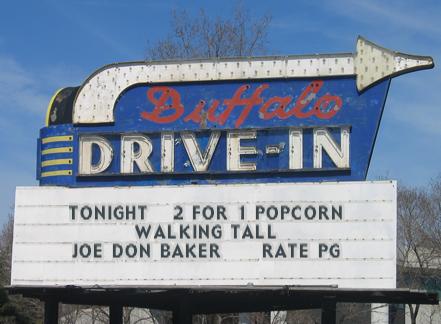
If you are bored and want to watch an entertaining car chase movie, you might like this one. Citizen Kane, it’s not but it’s a fun movie in which Peter Fonda made a fortune from a percentage deal he made. It really caught fire with Drive-In Theaters. If you have seen the movie and want to see a really good film locations video…watch this.
The filming locations were around Stockton California.
Looking through my index…I can’t believe I’ve never posted this one by Cream before. I’m rectifying that mistake today! The song was born from a riff they played in their first rehearsal.
You probably will ask yourself…what did NSU stand for? That would be courtesy of Eric Clapton. He had a venereal disease at the time that was called Non-Specific Urethritis. They thought it would be fun to name the song with the initials.
How this band must have sounded to ears when they first got played. Compared to what was going on it must have sounded like aliens. I would also include Jimi Hendrix with this wash of hard rock psychedelic music.
Cream was formed in 1966 and consisted of Eric Clapton (guitar, vocals), Jack Bruce (bass, vocals), and Ginger Baker (drums). They were one of the first supergroups, with members already having successful careers. Eric had played with The Yardbirds, Bluesbreakers, John Mayall & the Bluesbreakers, Powerhouse, and more. Jack Bruce played with Manfred Mann, Blues Incorporated, and helped form The Graham Bond Organisation. Ginger Baker played with Blues Incorporated, Johnny Burch Octet, and The Graham Bond Organisation before Cream.
The song was on their debut album Fresh Cream released in 1966. The album peaked at #39 on the Billboard Album Charts and #6 in the UK. I can’t find a reliable source but one source has it peaking at #39 in Canada.
This song was written by bassist Jack Bruce.
N.S.U.
Driving in my car, smoking my cigar,
The only time I’m happy’s when I play my guitar.
Singing in my yacht, what a lot I got,
Happiness is something that just cannot be bought.
I’ve been in and I’m out, I’ve been up and down,
I don’t want to go until I’ve been all around.
What’s it all about, anyone in doubt,
I don’t want to go until I’ve found it all out.
I haven’t reviewed Beck’s discography as much as I should have. This song is really good and so is the rest of the album. They touch on so many different styles.
The Jeff Beck Group was formed by guitarist Jeff Beck after he left The Yardbirds. The original lineup included Rod Stewart on vocals, Ronnie Wood on bass, Micky Waller on drums, and Nicky Hopkins on piano. This lineup is known for blending rock, blues, and jazz elements. The critics also cited this album as a big step to heavy metal and hard rock.
This was before The Faces with Wood and Stewart. Rod Stewart did some of his best vocals with this band. Spanish Boots was written by Jeff Beck, Rod Stewart, and Ronnie Wood. The song appears on Jeff Beck’s album Beck-Ola, released in 1969. Beck-Ola peaked at #39 in the UK, #15 on the Billboard 200, and #22 in Canada.
The album didn’t achieve the same level of commercial success as some of Jeff Beck’s later works but was critically acclaimed. Truth was their debut album, and it was released in 1968. It was a big success and critically acclaimed.
Spanish Boots
I used to work and take a salary In a hole up near a foundry But it did not take me too long To get my boots on a “So Long!” Long Spanish boots on a “So Long!” I took a day job in Bethlehem I nearly threw in the towel then But it did not take me too long To get my boots on a “So Long!” High Spanish boots on a “So Long!”
Dig it I took a Spanish haberdashery Restored with 15th century tapestry But oh, Mr. Nesbitt got the best of me So I strapped on my boots and said “So Long!” Laced up my high boots and “So Long!”
Goodbye Am on a job you see ‘Cause my old boots they mean too much to me Leather boots are just a mystery Put on my boots and said “So Long!” High Spanish boots on and “So Long!” Put on my boots and said “So Long!” Those old Spanish boots Put on my boots and said “So Long!” High Spanish boots
They’ve undid the aerial Tore down the merry-go-round This world’s all wrong So let’s go where we belong Pack up the stereo, meet at the burial ground
***I’m slipping this in today because my business trip was moved up a day so I won’t be posting until next Friday or Saturday. Have a great week next week!***
Jangle…CHECK… Harmonizing…CHECK…Overall power pop sound…CHECK. I love the sound of this band. Put them in 1965 and they would fit…place them on the alternative scene of the 1980s…and they would fit like a glove.
I usually don’t get super excited at newer music but this band I’ve liked everything I’ve heard. I always check out eclecticmusiclover (Jeff…it’s where I found this), christiansmusicmusings (Christian), and albumreviews (Graham) sites for newer music. They do the work so I don’t have to… by tracking these bands/artists down and I appreciate it.
This is some wonderful power pop. It has a nice Byrds/Jayhawks/Big Star sound. I could listen to this music all day and night. The Decemberists formed in 2000. They have released a total of 9 different albums since 2002. They are classified as an indie band but have had a number 1 Billboard album on the charts with The King Is Dead in 2011.
I’ve started to listen to their back catalog and along with power pop they blend in a lot of Americana with that. This American band was formed by Colin Meloy after he moved to Portland from Montana. He initially joined forces with Nate Query (bass), Jenny Conlee (keyboards, accordion), Ezra Holbrook (drums), and Chris Funk (guitar). The lineup has changed through the years, but Colin Meloy remains the main singer/songwriter with them.
Burial Ground is on their new album As It Ever Was, So It Will Be Again released on June 14, 2024. The song has already charted on the Billboard Alternative Chart at #2. This song features James Mercer…a singer/songwriter for The Shins on backup vocals.
Check this band out…if you like power pop/Americana you should like this.
Colin Meloy:“‘Burial Ground’ is in that time-honored pop song tradition, a paean to hanging out in graveyard. The melody hook came to me in a dream and I hummed it into my phone on waking. Most dream-songs are bad; this was the exception.”
Burial Ground
Oh, Len, come down And meet at the burial ground They’ve undid the aerial Tore down the merry-go-round This world’s all wrong So let’s go where we belong Pack up the stereo, meet at the burial ground
Here among the fallen leaves Are we alone, the ones that dare to breathe? Throw your worries down, they’re oh so gravely held You have carried them so well
Ooh, woah Ooh, woah
Oh, Len, come down And meet at the burial ground They’ve undid the aerial Tore down the merry-go-round This world’s all wrong So let’s go where we belong Pack up the stereo, meet at the burial ground
You laid down below a stone Saying, “Wherever they have gone, I long to go Somewhere out beyond these maladies in my head.” At least, I think that’s what you said
Oh-whoa, oh-whoa
Oh, Len (oh, Len) come down (come down) And meet at the burial ground (meet at the burial ground) They’ve undid the aerial Tore down the merry-go-round This world’s (this world’s) all wrong (all wrong) So let’s go where we belong (let’s go where we belong) Pack up the stereo, meet at the burial ground
Oh, Len (oh, Len) come down (come down) And meet at the burial ground (meet at the burial ground) They’ve undid the aerial Tore down the merry-go-round (merry-go-round) (Tore down the merry-go-round) This world’s (this world’s) all wrong (all wrong) So let’s go where we belong (let’s go where we belong) Pack up the stereo, meet at the burial ground
It’s a contract malarial, meet at the burial ground