Brian Jones: The Making of the Rolling Stones

A biography about Brian Jones who founded the Rolling Stones written by Paul Trynka. This is more of a sympathetic look on Brian than other books I’ve read. Trynka digs deep with meticulous research. He tries to be fair and Brian isn’t always shown as the nicest guy in the world but he also isn’t always the person that Mick and Keith seem to remember when they actually remember him at all.

This book is not just a rehash of the best-known things about Jones and the Stones. Some instances that Stones fans know like the period where Keith ran off with Brian’s girlfriend Anita Pallenberg, we get more information on what happened. He researched Brian’s childhood and adult life thoroughly and you feel like you know the man before the book is over.

This is not only a good book on Brian but also the birth of the Stones. After reading what I’ve read about Brian in past books, I had to wonder to myself, is this author trying to make Brian look better than he was? After reading more I didn’t think so. He interviewed over 100 people for this biography and many of them were either close friends or knew Brian. He was fair about the good and bad.

When you think of Brian Jones you can’t help but think of the way his life ended. Paul Trynka doesn’t miraculously find the definite answer to Brian’s death but he gives you the most recent events that have been uncovered and basic common sense answers to a mystery that probably will never be solved.

The Rolling Stones had three different lead/rhythm guitarists. Brian Jones, Mick Taylor, and Ronnie Wood. I make no secret of loving the Taylor period of the Stones. Saying that I will admit during the Brian Jones era they were more creative and tried different things. He was very important to their sound. Under My Thumb, Paint It Black, No Expectations, The Last Time, and Ruby Tuesday would not have been the same without Brian.

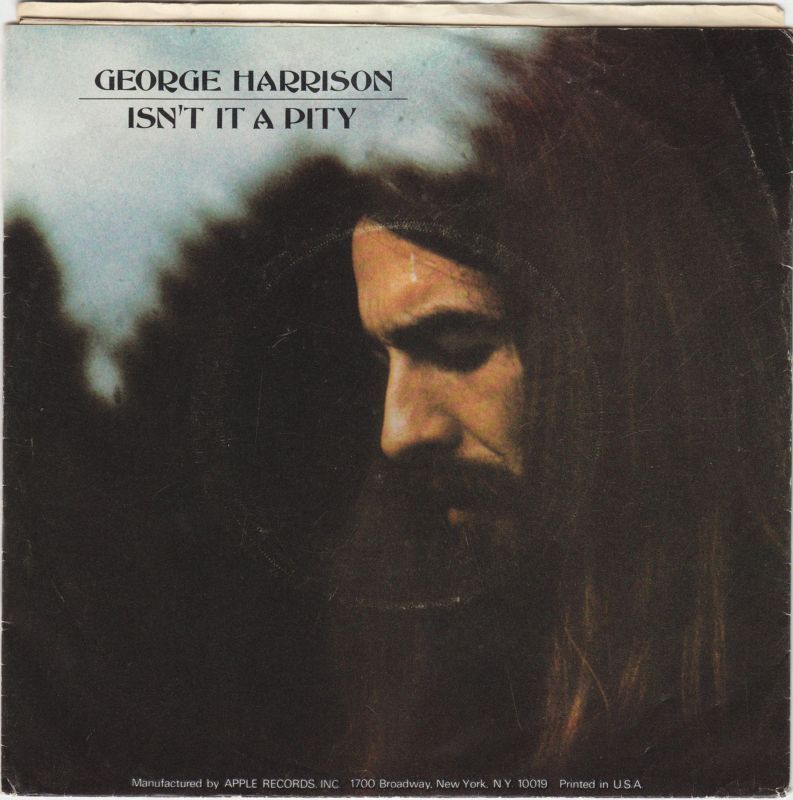
The book deals with the complicated relationship between Brian, Mick, and Keith. George Harrison and Brian Jones became friends and they had a lot in common. They were in a similar situation in their respective bands. The big difference was George had more of a support system than Brian did in his band. John and Paul had a monopoly on the songwriting but they would help George and he was given a chance to grow as a songwriter within the group. The Stones didn’t work that way.

Brian could be his own worst enemy and had a hard time handling fame but he was a very talented musician. Maybe the best musician in the band. Keith and Mick learned a lot from Brian. His musicianship, image, and outlook on life rubbed off on the more inexperienced Mick and Keith.

I would recommend this book to any Stones fan. You get a better picture of the earlier days. It is a reminder that it took more than Keith and Mick to get the Stones rolling.


A very good professional review of the book by Larry Rohter of the New York Times

Brian Jones is to the Rolling Stones what Leon Trotsky was to the Russian Revolution: organizer, ideologist and victim of a power struggle. Jones founded the group, gave it its name and recruited the schoolboys Mick Jagger and Keith Richards, who then marginalized him, eventually expelling him from the band. Since his death in 1969, a month after he was forced out, Jones has largely been airbrushed from the group’s history.

Paul Trynka’s biography “Brian Jones: The Making of the Rolling Stones” challenges the standard version of events, focused on Mr. Jagger and Mr. Richards, in favor of something far more nuanced. Though Mr. Trynka sometimes overstates Jones’s long-term cultural impact, his is revisionist history of the best kind — scrupulously researched and cogently argued — and should be unfailingly interesting to any Stones fan.

Specifically, “Brian Jones” seems designed as a corrective to “Life,” Keith Richards’s 2010 memoir. Mr. Trynka, the author of biographies of David Bowie and Iggy Pop, and a former editor of the British music magazines Mojo and Guitar, has interviewed Mr. Richards several times over the years and obviously likes him, but also considers his memory of events highly unreliable.

“History is written by the victors, and in recent years we’ve seen the proprietors of the modern Rolling Stones describe their genesis, their discovery of the blues, without even mentioning their founder,” Mr. Trynka remarks in the introduction. Without naming Mr. Richards, he also expresses his distaste for an assessment that appears in “Life,” that Brian Jones was “a kind of rotting attachment.”

The portrait of Jones that Mr. Trynka offers here is bifurcated. Though he is impressed with Jones’s “disciplined, honed sense of musical direction” and his dexterity on guitar and many other instruments, he does not hesitate to point out his subject’s more unpleasant personality traits: He was narcissistic, manipulative, misogynistic, conniving and dishonest about money. It’s not accidental that this book is called “Sympathy for the Devil” in Britain.

Mr. Trynka attributes Jones’s downfall to a conjunction of factors, some related to those character flaws but others external to him. Much has been written about the drug busts that swept up Mr. Jagger and Mr. Richards in the mid-1960s and their court battles, though Jones seems to have been even more of a target, because he was such a dandy and so successful with women.

But as Mr. Trynka tells it, Jones did not receive strong legal advice or fight charges as hard or as successfully as the Jagger-Richards team. After his first arrest, he pleaded guilty, which drove a wedge between him and other band members, who feared it would mean they could no longer tour abroad, all of which left him feeling crushed, isolated and vulnerable. That, in turn, increased his consumption of drugs and alcohol and made him less productive as a musician.

Nevertheless, Mr. Trynka demonstrates convincingly that the original Rolling Stones were Jones’s band and reflected his look, tastes and interests, not just the blues but also renaissance music and what today would be called world music. (He recorded the master musicians of Joujouka in the mountains of Morocco.) In “Life,” Mr. Richards describes his discovery of the blues-tinged open G guitar tuning, familiar from hits like “Honky Tonk Women” and “Start Me Up,” as life changing, and says it came to him via Ry Cooder in the late 1960s. But Mr. Trynka notes that Jones often played in that tuning from the band’s earliest days and quotes Dick Taylor, an original member of the Stones, as saying, “Keith watched Brian play that tuning, and certainly knew all about it.”

Some of Mr. Trynka’s account is not new, having appeared in “Stone Alone,” the often overlooked 1990 memoir of the Rolling Stones bassist Bill Wyman, or other books written by band outsiders. What makes Mr. Trynka’s book fresh and interesting, and gives it credibility, is the length he has gone to find witnesses to corroborate and elaborate on those stories.

It’s not just that Mr. Trynka has sought out those who worked with the band on the creative side, such as the singer Marianne Faithfull, the arranger Jack Nitzsche and the recording engineers Eddie Kramer, Glyn Johns and George Chkiantz. He has also interviewed those with more of a worm’s-eye view: drivers, roadies, office staff, old girlfriends and former roommates like James Phelge, whose surname the band would appropriate to designate songs that were group compositions rather than Jagger-Richard numbers.

“Brian Jones was the main man in the Stones; Jagger got everything from him,” the drummer Ginger Baker, who played in the band at some of its earliest shows and went on to become famous as a member of Cream, says in the book. “Brian was much more of a musician than Jagger will ever be — although Jagger’s a great economist.”

Citing those present at the creation, Mr. Trynka contends that Jones had a hand in composing some well-known Stones tracks, including “Paint It, Black” and “Under My Thumb.” He also claims that “Ruby Tuesday,” a No. 1 hit early in 1967, is actually a Jones-Richards collaboration — written not by Mr. Richards in a burst of inspiration and heartbreak in a Los Angeles hotel room, which is how the story is told in “Life” and elsewhere, but, according to Ms. Faithfull and Mr. Kramer, “labored over” by the pair in London for weeks.

“I used to say to Brain, ‘What on earth are you doing?’ ” Stan Blackbourne, the accountant for the Rolling Stones at their mid-1960s peak, recalls in the book. “ ‘You write some of these songs, and you give the name over as if Mick Jagger has done it. Do you understand, you’re giving ’em thousands of pounds!’ All the time I used to tell him, ‘You’re writing a blank check.’ ”

Mr. Trynka also looks into the circumstances of Jones’s death, on July 3, 1969, in the swimming pool at his home in East Sussex, once owned by A. A. Milne, but after all the Sturm und Drang that has come before, the subject is somewhat anticlimactic. In numerous books and in films like “Stoned,” it has been suggested that Jones was murdered, but Mr. Trynka painstakingly examines the flaws in each of the theories, and ends up close to the official verdict, “death by misadventure,” because of drug and alcohol consumption.

“The official coroner’s verdict on Brian’s death was perfunctory and lazy,” Mr. Trynka concludes. Nonetheless, “I’ve come to share their belief that Brian’s death was most likely a tragic accident” and to believe that “many of the existing theories that his death was in fact murder rely on unreliable witnesses.”

In the end, with the advantage of 45 years’ perspective, Mr. Trynka maintains, it is Jones’s music that matters. “It’s understandable why the survivors resent Brian Jones beyond the grave,” given his founder’s role, he argues, and also writes: “Brian Jones got many things wrong in his life, but the most important thing he got right.”


Everclear

In the late-1990s I started to listen to this band. They were formed in the early 90s by lead singer, guitarist, and songwriter Art Alexakis. Art’s dad left his mom and family and they had to survive in rough neighborhoods in LA. Some of the songs he wrote like “Father of Mine” relates that.

I must admit I know more of their radio songs but I have listened to their older albums and they are mostly solid. The album that caught my attention was “So Much For The Afterglow” with songs “I Will Buy You A New Life,””Everything to Everyone,” and “Father of Mine.” When I heard “I Will Buy You a New Life” on the radio I was hooked and got the album.

My favorite song by them is “Wonderful” that was released in 2000 on the album “Songs from an American Movie Vol. One: Learning How to Smile.” It’s about a divorce through a child’s eyes. I can relate to that so the song hit home in a lot of ways.

They also perform a good cover of Van Morrison’s “Brown Eyed Girl.”

One song off the album is a tribute to the 1970s called “AM Radio.” That one of course I love. Art grew up in the 70s and has said he was influenced by The Beatles, Led Zeppelin, Merle Haggard, Motown, Otis Redding, and Punk Rock in general. He knows how to write good hooks that will stay with you.

The AM radio video is hilarious.

Here is “Wonderful”

I want the things that I had before
Like a Star Wars poster on my bedroom door
I wish I could count to ten
Make everything be wonderful again


AM Radio


You can hear the music on the AM radio

The VCR and the DVD
There wasn’t none of that crap back in 1970
We didn’t know about a World Wide Web
It was a whole different game being played back when I was a kid

Wanna get down in a cool way
Picture yourself on a beautiful day
Big bell bottoms and groovy long hair
Just walkin’ in style with a portable CD player
No, you would listen to the music on the AM radio
Yeah, you could hear the music on a AM radio

Flashback, ’72
Another summer in the neighborhood
Hangin’ out with nothing to do
Sometimes we’d go drivin’ around
In my sister’s Pinto 
Cruisin’ with the windows rolled down
We’d listen to the radio station
We were too damn cool to buy the eight-track tapes
There wasn’t any good time to want to be inside
My mama wanna watch that TV all goddamn night

I’d be in bed with the radio on
I would listen to it all night long
Just to hear my favorite song
You’d have to wait but you could hear it on the AM radio
Yeah, you could hear the music on a AM radio
I can still hear Mama say ?°Boy turn that radio down!?±

?°Aw, Mom. Not that show again! I don’t wanna watch that show! 
Can’t we watch Good Times or Chico and the Man or something cool? 
Turn it off!”

Things changed back in ’75
We were all growing up on the in and the outside
We got in trouble with the policeman
We got busted gettin’ high in the back of my friend’s van

I remember 1977
I started going to concerts and I saw the Led Zeppelin
I got a guitar on Christmas day
I dreamed that Jimmy Page would come from Santa Monica 
and teach me to play
Teach me to play…

There isn’t any place that I need to go
There isn’t anything that I need to know
I did not learn from the radio

Yeah when things get stupid and I just don’t know
Where to find my happy
I listen to my music on the AM radio
You can hear the music on a AM radio

I like pop, I like soul, I like rock, but I never liked disco
We like pop, we like soul, we like rock, but we never liked disco…

No I never liked disco…


The Raspberries

A powerpop group from Cleveland Ohio in the early to mid-70s. They were influenced by the Beatles, Small Faces, The Who and The Beach Boys. They had some of the same problems as Badfinger, being too hard for pop and too soft for rock. Badfinger was overall more successful but the Raspberries had some top 40 hits.

“Go All The Way” (1972 #5),  I Wanna Be With You (1972 #16), Lets Pretend (1973 #35), and Overnight Sensation (1975 #18). They were too clean cut for rock fans to embrace. Matching suits and a teenybopper image. Unhip or uncool is what was many critics of that time wrote about them but their songs are melodic and fun.

Most bands have one song that is above the rest of their catalog. Many would probably say the Raspberries best song was Go All The Way but to me, it was Overnight Sensation. That song is their masterpiece. The song tells of the frustrations of trying to have a hit song on the radio with a heavy Who, Beach Boys, and Beatle sound.

After their album “Starting Over” in 1975 they broke up. If they could have stayed around a few more years they may have fit nicely with Cheap Trick, The Cars, The Knack, and Blondie.

Many artists list them as an influence and are fans such as KISS, Courtney Love, and oddly enough Bruce Springsteen and Axl Rose have mentioned them.

John Lennon was a fan of them and was in the studio when they made “Starting Over.”

Eric Carmen had a very successful solo career after the breakup but he stuck with pure pop in his music. He finally got the elusive hits he sang about in Overnight Sensation with All By My Myself, Never Gonna Fall in Love Again, and some songs off of the Dirty Dancing soundtrack. I never thought they were as good as his Raspberries songs.

The Raspberries reunited in 2004 and did a tour. I have watched some video of one of the shows and they were really tight.

If you want to get a cd that covers their career get “The Raspberries Greatest”

rasp great.jpg


The original members were

Eric Carmen (Volcalist, Guitar, Pianist, Bass)
Dave Smalley (Bass, Guitar)
Wally Bryon (Guitar)
Jim Bonfanti (Drummer)


Alias Smith and Jones

This television show only last three seasons from 1971-1973 and from reading the reviews of the day it attracted young viewers because of the young male leads Pete Duel and Ben Murphy. It’s a western comedy about two reformed non-violent bank robbers who are trying to go straight.

The Governor has promised them amnesty if they stay out of trouble for a while but no one can know so, they are still wanted. The episodes are humorous and different from the two big westerns at the time…Gunsmoke and Bonanza. The episodes tended to be uneven though but overall it was a good show.

Pete Duel was going through problems in his life at the time. During the first season, he was driving drunk and pulled into the path of an oncoming car. Two people were injured and one hospitalized. This would haunt him till his death and he would fight a drinking problem to the end.

Pete and Ben are in about every shot of the series. They both worked 12-14 hour days 6-7 days a week. Pete was never happy with the show. He was restless and wanted to do different things. When the second season started he was put on 2-year probation for the accident and lost his drivers license.

One quote from him around this time about being in a TV series was “It’s a big fat drag to any actor with interest in his work. It’s the ultimate trap.” He was very environmentally conscious and often spoke out on issues like pollution.

After being driven home from the set on December 30, 1971, he died of a self-inflicted gunshot wound in the early hours of December 31, 1971.

The show continued on with Roger Davis taking over Duel’s character in the series. It lasted only 17 episodes after Duel’s departure.

This is from Wikipedia… it’s a sad commentary

Upon learning of Duel’s death, executive producer Jo Swerling, Jr., initially wanted to end the series, but ABC refused.  Swerling later stated:

ABC said, “No way!” They said, “You have a contract to deliver this show to us, and you will continue to deliver the show as best you can on schedule or we will sue you.” Hearing those words, Universal didn’t hesitate for a second to instruct us to stay in production. We were already a little bit behind the eight ball on airdates. So, we contacted everybody, including Ben (Murphy), and told them to come back in. The entire company was reassembled and back in production by one o’clock that day shooting scenes that did not involve Peter — only 12 hours after his death.

The Intro

Narrator: Hannibal Heyes and Kid Curry – the two most successful outlaws in the history of the West. And in all the trains and banks they robbed, they never shot anyone. This made our two latter-day Robin Hoods very popular – with everyone but the railroads and the banks.

Jed ‘Kid’ Curry: There’s one we thing we gotta get, Heyes.

Hannibal Heyes: What’s that?

Jed ‘Kid’ Curry: Out of this business!

Sheriff Lom Trevors: The governor can’t come flat out and give you amnesty now. First you have to prove you deserve it.

Hannibal Heyes: Ah. So all we have to do is just stay out of trouble till the governor figures we deserve amnesty.

Jed ‘Kid’ Curry: But in the mean time, we’ll still be wanted.

Sheriff Lom Trevors: Well, that’s true. Till then only you, me and the Governor will know about it. It’ll be our little secret.

Hannibal Heyes: That’s a good deal?

Jed ‘Kid’ Curry: I sure wish the governor’d let a few more people in on our secret!

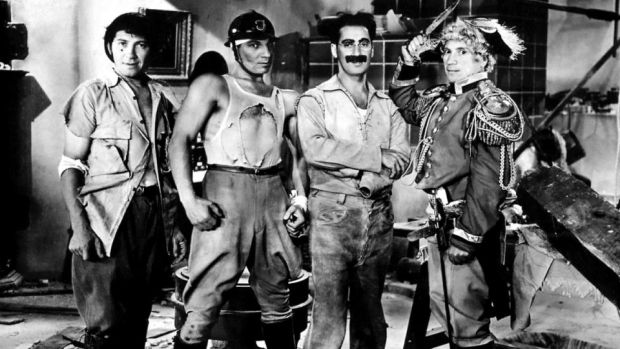
Harpo Speaks

I have mentioned this book before but not in detail. It is my favorite autobiography I’ve ever read. He starts off in his childhood in the late 1800s and ends up in the 1960s. I have read this book at least 7-10 times. It’s always my traveling companion on trips just in case I need something else to read. I’ve read books by and about Groucho and others written about the Marx Brothers but this book that Harpo and Rowland Barber wrote tops them all. He doesn’t go through all of the movies by detail but he packed so much living in his life that his life was full enough without much info about the movies.

He was always himself no matter what. The Brothers never would conform to anyone’s standards. He was counterculture before counterculture. Harpo jumped out of the window in 2nd grade and never came back but ended up hanging out with some of the best-known intellectuals of the 20th century and was a member of the Algonquin Round Table but yet he could hardly spell. He frequently stayed at William Randolph Hearst’s super-estate San Simeon. He called himself a professional listener…the only one of the bunch.

He taught himself the harp and played with an unorthodox style. Professional harp players would ask him to show them how he played some of the things he did…

Harpo was a good friend of Alexander Woolcott and Wolcott would invite Harpo and a select few to Neshobe Island in Lake Bomoseen in Vermont that Woolcott owned for the summers to play games and hang out every day. Harpo could make life interesting in the dullest of surroundings. He was friends with Robert Benchley, Salvador Dali, Dorothy Parker, Charles MacArthur, Alice Duer Miller, George Bernard Shaw,  Beatrice Kaufman, and Ruth Gordon.

Wolcott also arranged for Harpo to tour Russia in the 1930s. Harpo actually did a bit of Spy work for the American government at the time…transporting some papers on his leg out of Russia to America.

If you read this just to read about the Marx Brothers movie career…don’t…if you want to know what they went through to get where they did…then yes read it. This book tells what old-time Vaudeville was really like. Not a romantic version of it by some old timers that told their story after they retired. Awful boarding houses, spoiled food, and harassment by promoters.

He never seemed to age in spirit. He kept up with new things and was not stuck in the past.

His son Bill Marx wrote a book later on about his life with Harpo. When the Beatles came out Bill…who studied jazz and played piano, hated them. Harpo told him in 1964 that he better start liking them because their songs would last through time. He said this in 1964 before the Beatles matured. The guy had been around George Gershwin, Oscar Levant, and Irving Berlin. Bill said in 1970 he was playing piano in a club somewhere and what was he playing? Let It Be… “Dad was right.”

Harpo married Susan Flemming when he was 48 in 1936. George Burns asked him in 1948 how many children did he want to adopt? Harpo said “I’d like to adopt as many children as I have windows in my house. So when I leave for work, I want a kid in every window, waving goodbye.”

Harpo was known to wake one of his children up in the middle of the night if he worked late just to play games with them.

They ended up adopting 4 children…below was the house rules for the kids…

  1. Life has been created for you to enjoy, but you won’t enjoy it unless you pay for it with some good, hard work. This is one price that will never be marked down.
  2. You can work at whatever you want to as long as you do it as well as you can and clean up afterwards and you’re at the table at mealtime and in bed at bedtime.
  3. Respect what the others do. Respect Dad’s harp, Mom’s paints, Billy’s piano, Alex’s set of tools, Jimmy’s designs, and Minnie’s menagerie.
  4. If anything makes you sore, come out with it. Maybe the rest of us are itching for a fight, too.
  5. If anything strikes you as funny, out with that, too. Let’s all the rest of us have a laugh.
  6. If you have an impulse to do something that you’re not sure is right, go ahead and do it. Take a chance. Chances are, if you don’t you’ll regret it – unless you break the rules about mealtime and bedtime, in which case you’ll sure as hell regret it.
  7. If it’s a question of whether to do what’s fun or what is supposed to be good for you, and nobody is hurt whichever you do, always do what’s fun.
  8. If things get too much for you and you feel the whole world’s against you, go stand on your head. If you can think of anything crazier to do, do it.
  9. Don’t worry about what other people think. The only person in the world important enough to conform to is yourself.
  10. Anybody who mistreats a pet or breaks a pool cue is docked a months pay.


If you are looking for an autobiography…get this book.

Here is a small portion of Chapter 1 of Harpo Speaks!

I’ve played piano in a whorehouse. I’ve smuggled secret papers out of Russia. I’ve spent an evening on the divan with Peggy Hopkins Joyce. I’ve taught a gangster mob how to play Pinchie Winchie. I’ve played croquet with Herbert Bayard Swope while he kept Governor Al Smith waiting on the phone. I’ve gambled with Nick the Greek, sat on the floor with Greta Carbo, sparred with Benny Leonard, horsed around with the Prince of Wales, played Ping-pong with George Gershwin. George Bernard Shaw has asked me for advice. Oscar Levant has played private concerts for me at a buck a throw. I have golfed with Ben Hogan and Sam Snead. I’ve basked on the Riviera with Somerset Maugham and Elsa Maxwell. I’ve been thrown out of the casino at Monte Carlo.
Flush with triumph at the poker table, I’ve challenged Alexander Woollcott to anagrams and Alice Duer Miller to a spelling match. I’ve given lessons to some of the world’s greatest musicians. I’ve been a member of the two most famous Round Tables since the days of King Arthur—sitting with the finest creative minds of the 1920’s at the Algonquin in New York, and with Hollywood’s sharpest professional wits at the Hillcrest.
(Later in the book, some of these activities don’t seem quite so impressive when I tell the full story. Like what I was doing on the divan with Peggy Hopkins Joyce. I was reading the funnies to her.)
The truth is, I had no business doing any of these things. I couldn’t read a note of music. I never finished the second grade. But I was having too much fun to recognize myself as an ignorant upstart.
 
 I can’t remember ever having a bad meal. I’ve eaten in William Randolph Hearst’s baronial dining room at San Simeon, at Voisin’s and the Colony, and the finest restaurants in Paris. But the eating place I remember best, out of the days when I was chronically half starved, is a joint that was called Max’s Busy Bee. At the Busy Bee, a salmon sandwich on rye cost three cents per square foot, and for four cents more you could buy a strawberry shortcake smothered with whipped cream and a glass of lemonade. But the absolutely most delicious food I ever ate was prepared by the most inspired chef I ever knew—my father. My father had to be inspired because he had so little to work with.
I can’t remember ever having a poor night’s sleep. I’ve slept in villas at Cannes and Antibes, at Alexander Woollcott’s island hideaway in Vermont, at the mansions of the Vanderbilts and Otto H. Kahn and in the Gloversville, New York, jail. I’ve slept on pool tables, dressing-room tables, piano tops, bathhouse benches, in rag baskets and harp cases, and four abreast in upper berths. I have known the supreme luxury of snoozing in the July sun, on the lawn, while the string of a flying kite tickled the bottom of my feet.

I can’t remember ever seeing a bad show. I’ve seen everything from Coney Island vaudeville to the Art Theatre in Moscow. If I’m trapped in a theatre and a show starts disappointingly, I have a handy way to avoid watching it. I fall asleep.
My only addictions—and I’ve outgrown them all—have been to pocket billiards, croquet, poker, bridge and black jelly beans. I haven’t smoked for twenty years.

The only woman I’ve ever been in love with is still married to me.

My only Alcohol Problem is that I don’t particularly care for the stuff.

Juinor’s Farm/Sally G. by Paul McCartney and Wings

Juinor’s Farm/Sally G. single by Paul McCartney and Wings.

I had this single as a kid. Juinor’s Farm and Sally G were both partially recorded in Nashville during Paul’s six-week stay there in 1974. Juinor’s Farm is one of my favorite songs by Paul McCartney. The song rocks and the solo was performed by a 21-year-old Jimmy McCulloch. The song reached #3 in America. The band stayed at a farm in Lebanon TN around 30 miles from Nashville. I remember at the time it being big news that Paul McCartney was going to record in Nashville. I was seven years old and remember seeing Paul on the local news.

Jimmy McCulloch was a guitar prodigy… He was playing in a band when he was 11. He was in a band supporting The Who when he was 14 and in the band Thunderclap Newman in 1969 when he was 16. He went on to play with John Mayall (That guy knew how to pick guitar players) and Stone the Crows… He then went to play with Paul McCartney and Wings in 1974. He gave Paul’s songs an edge and I wish he would have stayed in Wings longer.

He left Paul to play with the reformed Small Faces in 1977.  In 1979 died of heart failure due to morphine and alcohol poisoning. You have to wonder how much better this guy could have been…

The B side was Sally G. and it hit #17 on the Billboard charts and even #51 on the country charts. This song has stayed with me through the years. When I listen to it…I think, now this is more of a what a country song should sound like. I really hate modern country music. No pickup trucks or tractors in this song. Modern country music could learn a lot by listening to country songs in this period and earlier. Paul composed the song after visiting a club in Printer’s Alley in Nashville.

This was McCartney’s last release on Apple Records

sallyg.jpg

This is from the Tennessean about Paul’s 1974 visit to Nashville. It was written by Dave Paulson

1974
Paul McCartney touched down at Metropolitan airport with his family on the evening of June 6, 1974, emerging from the plane wearing a green battle jacket and flashing a peace sign. The Tennessean reported that Paul answered questions “briefly but willingly” and even humored a group of kids who were amused by his British accent (he said the word “elevator” at their request).
The music superstar told a crowd of about 50 fans and members of the press that he’d come to Nashville for his three Rs — rehearsing, relating and riding. Music producer and executive Buddy Killen, who would act as the McCartneys’ Music City guide during their six-week stay here that summer, greeted the family upon their arrival.
The McCartneys rented a 133-acre farm just outside of Lebanon from songwriter Curly Putman (“Green, Green Grass of Home”) for $2,000 a week. They had requested a farm within 50 miles of Nashville that had horses and swimming facilities.
“I’ve got a farm in Scotland,” McCartney told reporters during an informal press conference on the farm. “You’re not the only people who have farms, you know. Back in Scotland, we’re country people in our own way.”
During their stay, the family visited the homes of Johnny Cash and Chet Atkins and even took in a few movies at their local drive-in.
McCartney and his family caused quite a stir when they joined the audience at Opryland for the third annual Grand Masters Fiddling Contest on June 16, 1974. During the intermission, Porter Wagoner and Dolly Parton performed their final show together before Parton embarked on her solo career. Linda McCartney got out of her seat several times to take photos of the duo. The McCartneys went backstage to meet with Wagoner and Parton, and then escaped into a waiting automobile.
McCartney told Nashville reporters that he was raised on country music, and he tried his hand at a bit of country songwriting while he was in town: He wrote the song “Sally G.” after a trip to Printer’s Alley.
McCartney drove around on a newly purchased motorcycle during the family’s Nashville visit. When a group of reporters waited at the Putman farm gate for a “highly informal” press conference, Paul and Linda rode past, smiling and waving.
Linda told The Tennessean she was “not much into materialism anymore,” though she had made a recent trip to Rivergate to purchase gifts for her family. Another big machine Paul loved — the Mellotron synthesizer — was not readily available in Tennessee at the time, to his chagrin.
As his time in Tennessee came to a close, McCartney told a group of local reporters that he hoped to mount a U.S. tour the following year, and that if it happened, Music City would definitely be on the itinerary.
“We just couldn’t skip Nashville,” he said. “We have too many friends here.”
McCartney continued to skip Nashville for the next 36 years.

When Paul did come I was there in 2010… he also came back in 2013 and I was there again. Three hours of one favorite after another…

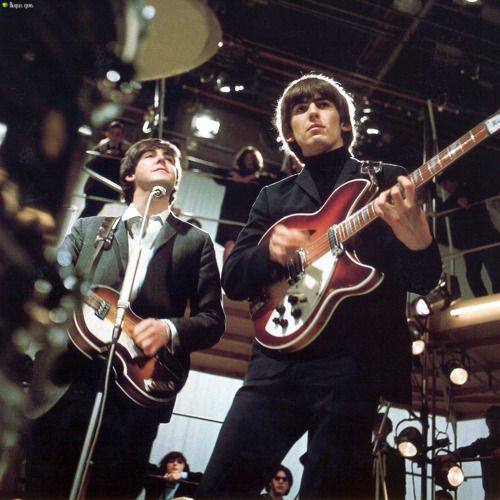
New Musical Express Winners 1965 Concert

I have the video of this show. First, the lineup to this event included

  • The Moody Blues
  • Freddie and the Dreamers
  • Georgie Fame and the Blue Flames
  • The Seekers
  • Herman’s Hermits
  • The Ivy League
  • Sounds Incorporated
  • Wayne Fontana and the Mindbenders
  • The Rolling Stones
  • Cilla Black
  • Donovan
  • Them
  • The Searchers
  • Dusty Springfield
  • The Animals
  • The Beatles
  • The Kinks

Think about the talent on that stage. To see the Stones, Animals, Van Morrison with Them, The Kinks and The Beatles all in the same day on the same stage. This would be a dream concert. Jimmy Saville hosted the event. It’s hard to watch the guy knowing what we know now about him.

It’s great to see The Rolling Stones with Brian Jones but you can tell the Beatles were THE Band of the day and were clearly the most anticipated.

You see a young Van Morrison fluff a line in “Here Comes The Night” but his voice comes through loud and clear. It’s a wonder you have a sound at all. In between songs you see roadies roll out amps and drums for the next band. They did quite well and it was never a long break between bands.

The sound quality is not the greatest but it’s good enough to watch considering the hectic way they had everyone perform.

The next year the Who, Rolling Stones, and the Beatles would play but The Beatles and Stones would not let their segments be recorded.

As far as I know, there is not an official release of this video…You can watch it on Youtube or order a bootleg DVD on various sites.

Deal by Bill Kreutzmann

The book is called Deal: My Three Decades of Drumming, Dreams, and Drugs with the Grateful Dead.

This book is what you would imagine from the drummer (one of them) of the Grateful Dead. Music, drugs, women, drugs, travels, guns, drugs, death, drink and more drugs. Actually, I really enjoyed the book. He is very open and very honest about his actions good and bad.

He is not a shy guy whatsoever. He shares his feelings about any subject that comes up. He does go into the music and how he feels about his bandmates. Most are positive but he does not hold back.

He covers the complete career of the band. He openly said he was very happy being the only drummer of the band when Mickey Hart quit and didn’t like it one bit when Mickey rejoined the band…at first anyway.

He goes into his relationship with Jerry Garcia. He also admits the guilt the band share in not trying to help Garcia more…but Jerry was his own man. He writes about the so-called keyboard player curse the band had in their career.

He tells us about the 72 European tour, shows they played near the pyramids and the Festival Express. I will say this…this band had fun. They were like a family and treated their employees well for the most part.

The only thing that I wish he would have shared more about was Pigpen. The band was apparently in the dark about how bad Pigpen was doing before he died. Maybe he didn’t share it with them.

I learned a lot about the Dead that I didn’t know about.

The book keeps going at a good pace. With the Dead’s long career he never lacks for stories. A lot of rock autobiographies are coming out and again this one takes the template that Keith Richards made with his book “Life” and fills it in.

Bill Kreutzmann from Deal about Garcia and heroin:

I’m pretty sure Jerry wasn’t into heroin during the making of Garcia; as far I know, he hadn’t even discovered it yet. But when he did, during subsequent Grateful Dead albums, it could become difficult just to get him to show up, unfortunately. That got to be really old, really fast, for all of us. We wanted to play music with him so badly that we’d put up with it, which—in hindsight—was crazy. Nobody else in the band would’ve been able to get away with it; at least, not to the extent that he did. But Jerry Garcia was the exception.
It also opens up a moral question that we can talk about now, but we can never truly answer, since he’s not with us. There was a certain feeling, toward the end, that Jerry was using the Grateful Dead to finance his drug habit. That’s a sad thought. I don’t think he ever intended it to be that way or for it to get to that point or to hurt anyone. He was as pure of a musician as they come. But heroin addiction will change a person in ways that are tragic and discouraging.


Ooh La La 1973

What a great song from The Faces. The song was written by Ronnie Lane and Ronnie Wood and sung by Wood. That is strange because The Faces had one of the best lead singers around at the time…Rod Stewart.

Stewart by this time was soaring as a solo artist and his interest in the Faces was waning. He claimed the song was not in his key to sing. He did do vocals for it then and Lane but Wood ended up singing the released version.

The Faces had one big hit…Stay With Me but this song is their greatest song to me. Rod Stewart finally covered the song in 1998 for a tribute to Ronnie Lane. Ronnie Lane did his own version with his band Slim Chance. Ronnie Wood also does it live in solo shows.

A song between Granddad and Son about the ways of love. The song never ages because the subject matter never changes and it is continually passed along. The song creates an atmosphere and Wood not known for his singing ability did a great job on this one.

The song was included in the 1998 film Rushmore and enjoyed renewed popularity.

It’s one of my favorite songs of all time. Just a beautiful melody and words.

Poor old granddad
I laughed at all his words
I thought he was a bitter man
He spoke of woman’s ways
They’ll trap you, then they use you
Before you even know
For love is blind and you’re far too kind
Don’t ever let it show
I wish that I knew what I know now
When I was younger
I wish that I knew what I know now
When I was stronger
The can can’s such a pretty show
They’ll steal your heart away
But backstage, back on earth again
The dressing rooms are gray
They come on strong and it ain’t too long
Before they make you feel a man
But love is blind and you soon will find
You’re just a boy again
When you want her lips, you get a cheek
Makes you wonder where you are
If you want some more and she’s fast asleep
Then she’s twinkling with the stars
Poor young grandson, there’s nothing I can say
You’ll have to learn, just like me
And that’s the hardest way
Ooh la la, ooh la la la yeh
I wish that I knew what I know now
When I was younger
I wish that I knew what I know now
When I was stronger


Are You Being Served?

A fun British sitcom that aired from 1972-1985. This comedy is not subtle…it’s obvious and in the open.

The show is about a department store called Grace Bros. owned by the elderly Grace brothers. It is operated with the British class system. The show highlighted the Menswear and Womenswear departments and also the Floor Walker the pretentious Captain Peacock. It also featured the incompetent floor manager…Mr. Rumbold.

The Women’s department was run by Miss Slocombe. A lady that is known for her hair color changing every day and the love of her pussy cat…they get a lot of mileage out of that. She tries to elevate herself over the working class but that is just what she is…Her assistant is the young very pretty Miss Brahms who talks with a cockney accent and is proud of being thought of as working class.

The head of the Men’s department is Mr. Granger who is older and near retirement and seems to be in a sour mood most of the time. Two more men work in the department… The junior in the department is Mr. Lucas who is always late and flirting with Miss Brahms, never has money and always has to wait his turn before he can serve anyone and make money because the other two men have seniority, The other man is Mr. Humphries…probably the most popular character of the show. He hints at being gay every episode but never comes out and says it…this is really played up…remember it is the 70s. The writers go for the obvious jokes many times but it’s still funny.

The Grace brothers owned the store and “Young” Mr. Grace was in fact not young at all. He was stingy and he always had a very young attractive girl by his side.

The maintenance guy Mr. Mash and Mr. Harmon were great. They would make the devices to advertise the merchandise. Sometimes the machine they made would blow up or show some naughty things to the customers. They were union and they thumbed their nose at the everyone.

Mix these personalities and you got a funny show. The purpose of the sitcom basically was to expose the class system and to parody it.

The customers that shopped at Grace Bros department store usually left disappointed. The phrases I remember the most are “Are you free?” and while having a customer try on pants that obviously doesn’t fit…You would hear an employee say don’t worry ”They’ll ride up with wear.”

Some of the cast left and past away during the run of the show. They were replaced with different characters and the show went on. When the show ended in 1985 a spin-off was made called Grace and Favour.

The core cast was strong and the show was very good until the start of the 80’s and like most shows, they were reaching more for stories and repeating themselves. In 1979 when Trevor Bannister who played Mr. Lucas left it started to go down.

The sitcom had 69 episodes and a movie in 1977… well, you can say 70 episodes because in 2016 a new episode was made with different actors playing the same characters.

I wouldn’t compare this to Fawlty Towers because Fawlty Towers was better written… but this is a fun sitcom nonetheless. I remember it when I was young being broadcast on PBS. It is worth a watch if you like British humor.

The cast was

Mollie Sugden – Miss Slocombe

Frank Thornton – Mr. Peacock

John Inman – Mr. Humphries

Wendy Richard – Miss Brahms

Nicholas Smith – Mr. Rumbold

Trevor Bannister – Mr. Lucas

Arthur Brough – Mr. Grainger

Harold Bennett – Young Mr. Grace

Larry Martyn – Mr. Mash

Arthur English – Mr. Harmon

James Hayter – Mr. Tebbs

Alfie Bass – Mr. Goldberg

Mike Berry – Mr. Spooner

Kenneth Waller – Old Mr. Grace


Wild Tales: A Rock and Roll Life

This is Graham Nash’s autobiography.

Graham narrates the audible version and does a good job weaving through his personal history. He starts with his blue-collar family and how Alan Clarke and he knew each other since school and formed The Hollies. The most interesting part to me was the mid-sixties era living in swinging London.

He wrote about his friendship with the Beatles and him getting an advance tape of Sgt Pepper from Brian Epstein. He had a great hi-fi system at his flat and he would show it off to anyone that came over. When the Turtles came over from America they were blown away by Sgt Peppers at top volume. He went on about how Sgt Peppers changed everything and it would eventually lead him to leave the Hollies.

Graham describes being a pop star in the mid-sixties in London. Shouldn’t we all live that life? Paul McCartney calls him up and invites him over to the All You Need Is Love session for the “Our World” program to be broadcast to millions.

He talks about how his friendship with Mama Cass led to meeting David Crosby and eventually CSN being born. Graham covers the CSNY period and his romantic relationships including  Joni Mitchell. He does cover the drama associated with CSNY and the troubled David Crosby. What kind of Rockstar bio would it be without drugs… Graham did his share and Crosby did our share. Graham handled them better than some.

Graham would write simple songs compared to Crosby, Stills, and Young but many times his songs would be the hits that drove some of the later albums…songs like “Just a Song Before I Go” and “Wasted on the Way.”

One thing I can say is he didn’t hold back or pull punches…but he still comes off as a really nice guy but it is his book.

This book helped sever his relationship with Crosby…for now anyway but Nash stressed through the book how much he cared for Crosby.

I would recommend this book to not only Hollies and CSNY fans but fans of 60’s and 70’s music and culture. After reading this I listened to more Hollies songs and I really began to appreciate their psychedelic period with songs like King Midas in Reverse.


The Traveling Wilburys

In the eighties, I made no secret of my dislike for a lot of music during that period. When I heard The Traveling Wilburys in 1988 it was like an oasis in the desert. A band that contained George Harrison, Bob Dylan, Roy Orbison, Jeff Lynne and Tom Petty. I went out and bought the album Traveling Wilburys Volume 1 and wore it out. There is not a song on that album that I didn’t like.

George Harrison started the group with Jeff Lynne and eventually, they picked up Bob Dylan, Roy Orbison, and Tom Petty…not a bad choice of additions. Just hearing Bob Dylan sing lines like “You don’t need no wax job, you’re smooth enough for me If you need your oil changed, I’ll do it for you free” was the worth the price of the album.

Handle with Care was the first single and it went to #2 on the Billboard Mainstream Rock Songs charts. I was surprised when I researched the other charting songs of The Wilburys first album… End of the Line went to #2 on Billboard Mainstream Rock Songs, “Last Night” #5, “Heading For The Light” #7 “Inside Out” #16

Tweeter and the Monkey Man is my favorite song off of that album. Bob taking playful jabs at Bruce Springsteen. The song reminded me of some of his earlier work.

Hearing Roy Orbison and Bob Dylan singing together was something I never thought I would ever hear. Roy’s voice was magnificent as always and it is sad that he died two months after the album’s release.

On the second album, Vol 3 of course… the songs as a whole were not as strong but I still like the album. They did miss Roy’s vocals and presence. Again Dylan sang my favorite song on the album with “If You Belonged To Me” with Dylan sounding vulnerable.  She’s My Baby went to #2  and The Wilbury Twist got some radio play but nothing like Handle With Care.

They also recorded two other songs Runaway and Nobody’s Child which was recorded for a benefit album. They did an excellent job of Nobody’s Child.

This helped revive the career of Orbison…unfortunately he didn’t get to enjoy the success of his solo album and hit “You Got It.”

Two bright spots in the late eighties for me was The Traveling Wilburys and Keith Richard’s solo album Talk Is Cheap.

I really wish older rockers would try to do this sort of thing now. Let’s say Fogerty, McCartney, Young, Richards, and throw in a younger David Grohl…or fill in your own names…No it wouldn’t be the same but I would like to hear the results.

You Know My Name (Look Up The Number) Beatles

I bought the Let It Be single by the Beatles in the mid-1970s from a relative’s yard sale. I loved Let It Be and then I flipped it over. The song started off with a catchy piano riff and then took a left turn never coming back.

I won’t even attempt to describe it because it would lose everything in words. It is a funny record (I don’t mean “My Love” bad funny… wo wo wo wo, wo wo wo wo…sorry Paul) it’s a comedy record. You could tell they were having a great time doing it.

Brian Jones played saxophone on the recording. Yes, that Brian Jones of the Rolling Stones. He dropped by the studio and John and Paul thought he would play some guitar but he had a sax so they thought of this tune and he played on it.

My friend and I would listen to this over and over. We would quote from it…”Welcome to Slaggers” at school. Sometimes…and this is probably sad but we still do.

The song was recorded in May of 1967 and June of 1969 and was released as the B side of Let It Be in 1970.

It’s just so off the wall. The thing that surprises me isn’t the 1967 sessions…it’s John and Paul working on this in 1969 when they were not exactly best mates anymore. How could you not get along and make this? I guess they went through bad and good periods like any friendship or partnership…

The original version was 6:08 long but John edited it down to 4:19 for the single release.

Here is a quote from John Lennon

“That was a piece of unfinished music that I turned into a comedy record with Paul. I was waiting for him in his house, and I saw the phone book was on the piano with ‘You know the name, look up the number.’ That was like a logo, and I just changed it. It was going to be a Four Tops kind of song – the chord changes are like that – but it never developed and we made a joke of it. Brian Jones is playing saxophone on it.”

Paul McCartney on Brian Jones

“I naturally thought he’d bring a guitar along to a Beatles session and maybe chung along and do some nice rhythm guitar or a little bit of electric twelve-string or something, but to our surprise, he brought his saxophone,”

“He opened up his sax case and started putting a reed in and warming up, playing a little bit. He was a really ropey sax player, so I thought, ‘Ah-hah. We’ve got just the tune.”

“It’s not amazingly well played but it happened to be exactly what we wanted. Brian was very good like that.”

Gower Guitars

I have three Gowers and one Grammer Guitar and I’m really proud to have them. They are part of my family heritage that I had nothing to do with…My family built guitars (Gower Guitars and Grammer Guitars) starting in the 1950s and made them until the 1970s. Country artists such as Johnny Cash, Leon Rhodes, Gordon Terry, and George Jones played Gower and Grammer Guitars.

I keep my eye out for them but on eBay, they are anywhere between $1500 – $5000 and more. They are rare…if you run up on one for a good price grab it. I don’t want them only for the family connection…they sound great.

I have two acoustics and two electrics. They didn’t make a lot of electric guitars. They all play great and the acoustics have the feel of a Martin. I asked my dad once why they didn’t make more electric guitars. He said because acoustics took craftmanship and electrics were basically “2 x 4’s with strings.”

Well, the electrics I have are more than that. The Green sunburst hollow body electric I have has a Gibson 335 feel and the mahogany solid body electric I have with original DeArmond pickups I would put it against any Gibson SG…

In the sixties, my family also built a studio where singer-songwriters Joe South, Dolly Parton, Willie Nelson, Ray Stevens, Johnny Bragg and drummer D. J. Fontana recorded demos there.

I remember when I was 4 or 5 and walking into the Grammer guitar shop in the early 70s around the time it ended. I will never forget that smell of wood and glue…I also remember the studio and walking in with my cousin Ricky and seeing egg crates on the wall. I do wish they would have continued.

I will let two of my relatives who were there at the time and remember, tell the history…one being Randy Gower who’s father was J.W. Gower and Ricky Moore who’s mother was Alma Moore. My father was Bobby Max Gower.

The below is some history by Ricky Moore and Randy Gower

Ricky Moore

In 1955 J.W. Gower and his sister Alma Moore started the Gower Company. The first guitar was made by bending the sides on a tree. This did not work well but they still got the Guitar together. After a few months, they had purchased some woodworking equipment and had a brick building built by their duplex where they lived.

They built acoustics and electrics from 1955 until the early 1960’s. They made their own guitar pickups. Alma Moore’s husband Kellice Moore built a machine out of an old sewing machine and an old part from a car to wind the pickups.

Randy Gower

Then one day, out of nowhere, dad (J.W. Gower) decided he wanted to build guitars. He went and visited a violin maker in town and picked his brain and as George Jones would say “The Race Was On”. The beginning of the guitar business was slow. If you had seen the first one you would have known why, uglier than a bowling shoe.  Made out of maple it was a big jumbo guitar.  The sound was good but it looked rough. He made the beast and he did not stop there. He made another one that looked better. Dad and his sister (Alma Moore) decided they could do this for a living so he and Alma’s husband Kellice Moore got together to build a brick o block shop in the back of the house where they could build guitars and do repair work on others. Gower Guitar began. It wasn’t long until he had the shop going. Alma and him would make a guitar on occasion. To help pay the bills they did a lot of repair work for the guys at the Opry. Paying the bills proved to be a challenge. I was only ten years old and I could tell for the time he was putting in on some of these jobs he was not charging enough. He would work 2 hours on a job and charge .50 cents. Granted this was 1958 and .50 was worth much more then than it is today but he was never going to get ahead. The shop was a who’s who of country music stars. Stonewall Jackson, Faron Young, Sonny James, Earl Scruggs, Eddie Arnold, Harold Bradley, Pete Wade and many more would hang out or pass through over the years.

I can remember being in the shop with a fire going in the old pot belly stove in the shop when Faron Young came by to pick up a job. He told dad he had just left the studio where he thought he had cut another hit. He reached down to pick up a guitar that was laying there, strummed a cord and said, “Hello Walls how’d things go for you today”. He was right it was a hit, a big hit.

Then there was Eddie Arnold. I came in from school one day and dad was on the phone with Mr. Arnold. As usual, I went over and ask for a nickel. For all of you, youngsters a nickel would buy a soda or candy bar back in the day. I regressed, he waved me off but I was persistent, I said give me a nickel, once again a wave off. I tried once more with the same response at which point I ran my hand down into his front pocket. I did n’t reach the bottom when out of nowhere a hand came flying across my face. He had smacked the shit out of me. I bounced off the block wall and stood there stunned in disbelief. That was the only time he ever smacked me but I will say I never really gave him a reason again, nor did I ever put my hand in his pocket again. To this day, if I hear or see Mr.  Eddy Arnold the hair will stand up on the back of my neck. Life lesson learned.

At some point in the early 60’s J.W. Gower and Kellice Moore decided to build a recording studio in the building they were making guitars in…no Gower guitars would be made again until the mid-1960’s. Around 1964 Billy Grammer came to the house and ask dad if he wanted to go into business with him making guitars. They went and got a third partner in Clyde Reid to help sell stock and raise money. The start of Grammer Guitar had its start.  They brought in a man named Fred Hedges who was an outstanding machinist to build equipment for the manufacturing process. It wasn’t long until dad realized the thing was not going to work out.  Billy and Clyde wanted to go to a laminated Rosewood for the backs and sides. Like most companies, this was just a cost saving and nothing more. However, dad contention was it affected the sound of the instrument and would not go along with the change.  They could not agree so dad left the company in ’66.

There was a gap between Grammer and the new Gower Co.

At some point, Hatch Reid approached dad about starting up Gower Guitar. Hatch was Clyde’s uncle and there again the money man.

J.W. Gower and his sister and brother Max started manufacturing acoustic guitars around 1966. The company was in business until sometime around 1969 when they went bankrupt. A salesman that worked for the company took orders for guitars and pocketed the money…

Alma Moore and her brother Max went back to Grammer Guitars and worked there until Grammer went out of business. Tut Taylor bought all the equipment at auction and leased the same building Grammer used. Alma Moore and her brother Bobby Max Gower worked for Tut Taylor until he also went out of business. She would go on to work for Gibson Guitars for 11 years until she retired. Max went on to work with Tut Taylor’s son Mark for a few years building wooden instruments.

J.W. Gower moved to Franklin, TN and made more Gower Guitars with his son Randy.


I’m proud to be associated with these guitars and studio if only by family. Not long ago I met the great guitarist Leon Rhodes before he passed away. We were introduced and when he heard who I was he started to tell me some stories about the old days and my family that I didn’t know.

All in all, I have 12 guitars… I like playing vintage guitars through vintage amps because I like the instruments to have a history. I like knowing I can get the exact sound now that someone got in 1970…I have some older guitars but the Gower guitars have part of my history.

This guitar was given to me by Randy Gower that J.W. Gower made. I wouldn’t take anything for it. My guitar guy installed humbucker pickups and I can get about any tone I want out of it.

gower green.JPG

This one plays like a Martin. It is the best acoustic I have. It was made in the early sixties.

Gower acoustic.JPG


An American Werewolf In London 1981

I always come back to this movie. This is a horror-comedy movie that works. It’s not a parody. It’s a horror movie that happens to have funny moments.

Two Americans (David and Jack) are traveling through Europe. They go to a pub (The Slaughtered Lamb) and it’s strongly hinted for them to stick to the main roads on their way out by the unfriendly locals…well guess what? They don’t and soon Jack is ripped to shreds and David is badly scratched by a werewolf. David wakes up in a hospital with Nurse Alex Price taking care of him. That is the nurse I would want.

David starts having horrific nightmares. In the hospital, Jack reappears to David as a decomposing corpse. He keeps telling David that he should kill himself because David will turn into a werewolf and kill others. David goes home with Alex and Jack keeps reappearing and eventually, David does turn into a werewolf.

He ends up killing bystanders as the werewolf and now Jack comes back and is decomposed more and this time brings the new kills to meet David.

Jack cares about David and hates the situation but he will be left to wander like this unless the werewolf curse is broken…

When the movie came out on VHS I bought it. It was one of the first movies I bought on DVD. It is very effective as a horror movie with comedy. That can be a hard thing to do without it becoming an outright parody.

John Landis had just finished The Blues Brothers and Animal House when he directed this. In two years he would hit again with Trading Places. Then came the Twilight Zone with the Vic Morrow tragedy. After that Landis’s career was damaged.

Rick Baker did the special effects for this movie. The transformation is great and the wolf is effective. The effects look good today.

The music is great. Bad Moon Rising, Blue Moon, and  Moondance are featured.

The cast is David Naughton, Griffin Dunne, Jenny Augguter, and Rick Baker makeup effects.

If you like horror movies you should like this. I would not recommend the sequel An American Werewolf in Paris…that one doesn’t stack up against the original.

Supposedly Max Landis, John’s son is planning to remake this movie. Personally, I don’t think it needs it. It’s hard to remake a classic.