Power Pop fan, Baseball, Beatles, Alternative music, old movies, and tv show fan. Also anything to do with pop culture in the 60s and 70s... I'm also a songwriter, bass and guitar player. Not the slightest bit interested in politics at all.
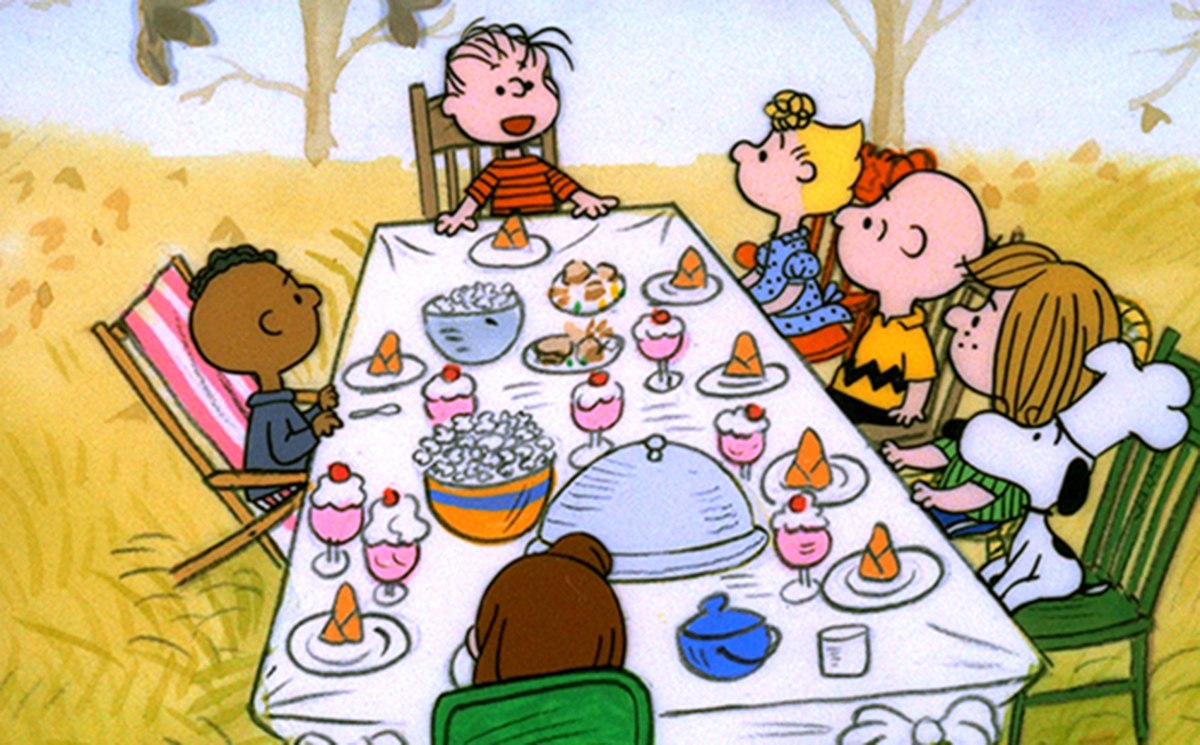
This first premiered on November 20, 1973, on CBS and won an Emmy Award. Great Thanksgiving special as always with the earlier Peanuts.
The Halloween, Thanksgiving, and Christmas Peanuts specials I always looked forward to. The way their world was only for kids where grownups were heard but only as noise in the background.
It starts off with Lucy tempting Charlie Brown with that football. Just one time I wanted to see Charlie kick the football…or Lucy at times.
It’s Thanksgiving and Peppermint Patty invites herself and Marcie over to Charlie Brown’s house but Charlie and Sally are ready to go to their grandmothers. Charlie talks to Linus and he suggests having two Thanksgiving dinners.
The only thing Charlie can come up with is feeding his friends toast and cold cereal which does not make Peppermint Patty happy whatsoever. She lets Charlie have it bad until Marcie remind her that she invited herself over.
Not going to give it away for those who have not seen this wonderful holiday cartoon. The music by Vince Guaraldi is excellent and makes every Peanuts cartoon special.
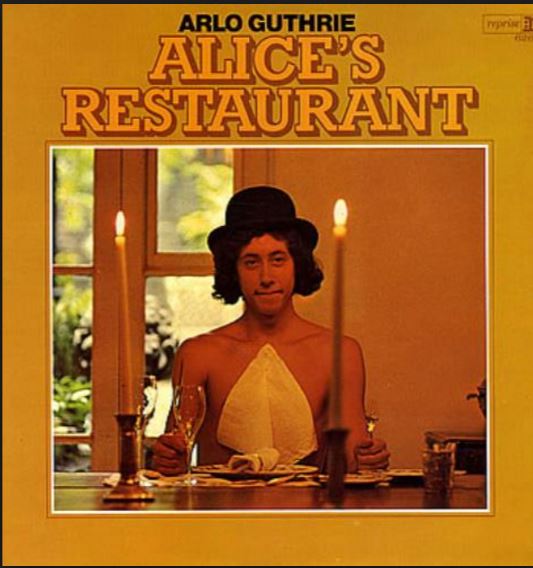
It’s not Thanksgiving without listening to this 1967 song. This song did not chart but he did have another version that did chart…it was called Alice’s Rock and Roll Restaurant that peaked at #97 in the Billboard 100.
There have been mixed reviews about the movie…I’ve always found it enjoyable. It’s not going to be confused with Gone With The Wind but it’s a fun period movie.
Below the song facts are Alice’s Rock and Roll Restaurant and Alice’s Restaurant Massacree.
Running 18 minutes and 34 seconds, this song is based on a true story that happened on Thanksgiving Day, 1965. Arlo was 18, and along with his friend Rick Robbins, drove to Stockbridge, Massachusetts to have Thanksgiving dinner with Alice and Ray Brock. Alice and Ray lived in a church – the former Trinity Church on Division Street in Stockbridge – and were used to inviting people into their home. Arlo and Rick had been traveling together, Arlo working his way up in folk singing and Rick tagging along. A number of people, Arlo and Rick included, were considered members of the family, so they were not guests in the usual sense.
When Ray woke up the next morning, he said to them, “Let’s clean up the church and get all this crap out of here, for God’s sake. This place is a mess,” and Rick said, “Sure.” Arlo and Rick swept up and loaded all the crap into a VW microbus and went out to the dump, which was closed. They started driving around until Arlo remembered a side road in Stockbridge up on Prospect Hill by the Indian Hill Music Camp which he attended one summer, so they drove up there and dumped the garbage.
A little later, the phone rang, and it was Stockbridge police chief William J. Obanhein. “I found an envelope with the name Brock on it,” Chief Obanhein said. The truth came out, and soon the boys found themselves in Obanhein’s police car. They went up to Prospect Hill, and Obie took some pictures. On the back he marked them, “PROSPECT HILL RUBBISH DUMPING FILE UNDER GUTHRIE AND ROBBINS 11/26/65.” He took the kids to jail.
The kids went in, pleaded, “Guilty, Your Honor,” were fined $25 each and ordered to retrieve the rubbish. Then they all went back to the church and started to write “Alice’s Restaurant” together. “We were sitting around after dinner and wrote half the song,” Alice recalls, “and the other half, the draft part, Arlo wrote.”
Guthrie, the son of legendary folk singer Woody Guthrie, greatly exaggerated the part about getting arrested for comic effect. In the song he is taken away in handcuffs and put in a cell with hardened criminals. >>
In the song, Guthrie avoids the draft and did not have to serve in Vietnam because of his littering arrest. In reality, he was eligible, but wasn’t drafted because his number didn’t come up.
Many radio stations play this on Thanksgiving. This is usually the only time they play it, since the song is over 18-minutes long.
Guthrie performed this song for the first time on July 16, 1967 at the Newport Folk Festival.
This reflected the attitude of many young people in America at the time. It was considered an antiwar song, but unlike most protest songs, it used humor to speak out against authority.
After a while, Guthrie stopped playing this at concerts, claiming he forgot the words. As the song approached it’s 30th anniversary, he started playing it again.
In 1991, Arlo bought the church where this took place and set up “The Guthrie Center,” where he runs programs for kids who have been abused.
Guthrie made a movie of the same name in 1969 which was based on the song.
Over the years, Guthrie added different words to the song. He recorded a new, longer version in 1995 at The Guthrie Center.
Alice’s Rock and Roll resaurant
Alice’s Restaurant
This song is called Alice’s Restaurant, and it’s about Alice, and the
Restaurant, but Alice’s Restaurant is not the name of the restaurant,
That’s just the name of the song, and that’s why I called the song Alice’s
Restaurant.
You can get anything you want at Alice’s Restaurant
You can get anything you want at Alice’s Restaurant
Walk right in it’s around the back
Just a half a mile from the railroad track
You can get anything you want at Alice’s Restaurant
Now it all started two Thanksgivings ago, was on – two years ago on
Thanksgiving, when my friend and I went up to visit Alice at the
Restaurant, but Alice doesn’t live in the restaurant, she lives in the
Church nearby the restaurant, in the bell-tower, with her husband Ray and
Fasha the dog. And livin’ in the bell tower like that, they got a lot of
Room downstairs where the pews used to be in. Havin’ all that room,
Seein’ as how they took out all the pews, they decided that they didn’t
Have to take out their garbage for a long time.
We got up there, we found all the garbage in there, and we decided it’d be
A friendly gesture for us to take the garbage down to the city dump. So
We took the half a ton of garbage, put it in the back of a red vw
Microbus, took shovels and rakes and implements of destruction and headed
On toward the city dump.
Well we got there and there was a big sign and a chain across across the
Dump saying, “Closed on Thanksgiving.” And we had never heard of a dump
Closed on Thanksgiving before, and with tears in our eyes we drove off
Into the sunset looking for another place to put the garbage.
We didn’t find one. Until we came to a side road, and off the side of the
Side road there was another fifteen foot cliff and at the bottom of the
Cliff there was another pile of garbage. And we decided that one big pile
Is better than two little piles, and rather than bring that one up we
Decided to throw our’s down.
That’s what we did, and drove back to the church, had a thanksgiving
Dinner that couldn’t be beat, went to sleep and didn’t get up until the
Next morning, when we got a phone call from officer Obie. He said, “Kid,
We found your name on an envelope at the bottom of a half a ton of
Garbage, and just wanted to know if you had any information about it. ” And
I said, “Yes, sir, Officer Obie, I cannot tell a lie, I put that envelope
Under that garbage. ”
After speaking to Obie for about forty-five minutes on the telephone we
Finally arrived at the truth of the matter and said that we had to go down
And pick up the garbage, and also had to go down and speak to him at the
Police officer’s station. So we got in the red vw microbus with the
Shovels and rakes and implements of destruction and headed on toward the
Police officer’s station.
Now friends, there was only one or two things that Obie coulda done at
The police station, and the first was he could have given us a medal for
Being so brave and honest on the telephone, which wasn’t very likely, and
We didn’t expect it, and the other thing was he could have bawled us out
And told us never to be seen driving garbage around the vicinity again,
Which is what we expected, but when we got to the police officer’s station
There was a third possibility that we hadn’t even counted upon, and we was
Both immediately arrested. Handcuffed. And I said “Obie, I don’t think I
Can pick up the garbage with these handcuffs on. ” He said, “Shut up, kid.
Get in the back of the patrol car. ”
And that’s what we did, sat in the back of the patrol car and drove to the
Quote Scene of the Crime unquote. I want tell you about the town of
Stockbridge, Massachusets, where this happened here, they got three stop
Signs, two police officers, and one police car, but when we got to the
Scene of the Crime there was five police officers and three police cars,
Being the biggest crime of the last fifty years, and everybody wanted to
Get in the newspaper story about it. And they was using up all kinds of
Cop equipment that they had hanging around the police officer’s station.
They was taking plaster tire tracks, foot prints, dog smelling prints, and
They took twenty seven eight-by-ten colour glossy photographs with circles
And arrows and a paragraph on the back of each one explaining what each
One was to be used as evidence against us. Took pictures of the approach,
The getaway, the northwest corner the southwest corner and that’s not to
Mention the aerial photography.
After the ordeal, we went back to the jail. Obie said he was going to put
Us in the cell. Said, “Kid, I’m going to put you in the cell, I want your
Wallet and your belt. ” And I said, “Obie, I can understand you wanting my
Wallet so I don’t have any money to spend in the cell, but what do you
Want my belt for? ” And he said, “Kid, we don’t want any hangings. ” I
Said, “Obie, did you think I was going to hang myself for littering?”
Obie said he was making sure, and friends Obie was, cause he took out the
Toilet seat so I couldn’t hit myself over the head and drown, and he took
Out the toilet paper so I couldn’t bend the bars roll out the – roll the
Toilet paper out the window, slide down the roll and have an escape. Obie
Was making sure, and it was about four or five hours later that Alice
(remember Alice? It’s a song about Alice), Alice came by and with a few
Nasty words to Obie on the side, bailed us out of jail, and we went back
To the church, had a another thanksgiving dinner that couldn’t be beat,
And didn’t get up until the next morning, when we all had to go to court.
We walked in, sat down, Obie came in with the twenty seven eight-by-ten
Colour glossy pictures with circles and arrows and a paragraph on the back
Of each one, sat down. Man came in said, “All rise.” We all stood up,
And Obie stood up with the twenty seven eight-by-ten colour glossy
Pictures, and the judge walked in sat down with a seeing eye dog, and he
Sat down, we sat down. Obie looked at the seeing eye dog, and then at the
Twenty seven eight-by-ten colour glossy pictures with circles and arrows
And a paragraph on the back of each one, and looked at the seeing eye dog.
And then at twenty seven eight-by-ten colour glossy pictures with circles
And arrows and a paragraph on the back of each one and began to cry,
’cause Obie came to the realization that it was a typical case of American
Blind justice, and there wasn’t nothing he could do about it, and the
Judge wasn’t going to look at the twenty seven eight-by-ten colour glossy
Pictures with the circles and arrows and a paragraph on the back of each
One explaining what each one was to be used as evidence against us. And
We was fined $50 and had to pick up the garbage in the snow, but that’s not
What I came to tell you about.
Came to talk about the draft.
They got a building down New York City, it’s called Whitehall Street,
Where you walk in, you get injected, inspected, detected, infected,
Neglected and selected. I went down to get my physical examination one
Day, and I walked in, I sat down, got good and drunk the night before, so
I looked and felt my best when I went in that morning. ‘Cause I wanted to
Look like the all-American kid from New York City, man I wanted, I wanted
To feel like the all-, I wanted to be the all American kid from New York,
And I walked in, sat down, I was hung down, brung down, hung up, and all
Kinds o’ mean nasty ugly things. And I waked in and sat down and they gave
Me a piece of paper, said, “Kid, see the phsychiatrist, room 604.”
And I went up there, I said, “Shrink, I want to kill. I mean, I wanna, I
Wanna kill. Kill. I wanna, I wanna see, I wanna see blood and gore and
Guts and veins in my teeth. Eat dead burnt bodies. I mean kill, Kill,
Kill, kill. ” And I started jumping up and down yelling, “kill, kill, ” and
He started jumping up and down with me and we was both jumping up and down
Yelling, “KILL, KILL.” And the Sargent came over, pinned a medal on me,
Sent me down the hall, said, “You’re our boy.”
Didn’t feel too good about it.
Proceeded on down the hall gettin more injections, inspections,
Detections, neglections and all kinds of stuff that they was doin’ to me
At the thing there, and I was there for two hours, three hours, four
Hours, I was there for a long time going through all kinds of mean nasty
Ugly things and I was just having a tough time there, and they was
Inspecting, injecting every single part of me, and they was leaving no
Part untouched. Proceeded through, and when I finally came to the see the
Last man, I walked in, walked in sat down after a whole big thing there,
And I walked up and said, “What do you want?” He said, “Kid, we only got
One question. Have you ever been arrested? ”
And I proceeded to tell him the story of the Alice’s Restaurant Massacre,
With full orchestration and five part harmony and stuff like that and all
The phenome… – and he stopped me right there and said, “Kid, did you ever
Go to court? ”
And I proceeded to tell him the story of the twenty seven eight-by-ten
Colour glossy pictures with the circles and arrows and the paragraph on
The back of each one, and he stopped me right there and said, “Kid, I want
You to go and sit down on that bench that says Group W…. Now kid!! ”
And I, I walked over to the, to the bench there, and there is, Group W’s
Where they put you if you may not be moral enough to join the army after
Committing your special crime, and there was all kinds of mean nasty ugly
Looking people on the bench there. Mother rapers. Father stabbers. Father
Rapers! Father rapers sitting right there on the bench next to me! And
They was mean and nasty and ugly and horrible crime-type guys sitting on the
Bench next to me. And the meanest, ugliest, nastiest one, the meanest
Father raper of them all, was coming over to me and he was mean ‘n’ ugly
‘n’ nasty ‘n’ horrible and all kind of things and he sat down next to me
And said, “Kid, whad’ya get?” I said, “I didn’t get nothing, I had to pay
$50 and pick up the garbage. ” He said, “What were you arrested for, kid? ”
And I said, “Littering.” And they all moved away from me on the bench
There, and the hairy eyeball and all kinds of mean nasty things, till I
Said, “And creating a nuisance.” And they all came back, shook my hand,
And we had a great time on the bench, talkin about crime, mother stabbing,
Father raping, all kinds of groovy things that we was talking about on the
Bench. And everything was fine, we was smoking cigarettes and all kinds of
Things, until the Sargeant came over, had some paper in his hand, held it
Up and said.
“Kids, this-piece-of-paper’s-got-47-words-37-sentences-58-words-we-wanna-
Know-details-of-the-crime-time-of-the-crime-and-any-other-kind-of-thing-
You-gotta-say-pertaining-to-and-about-the-crime-I-want-to-know-arresting-
Officer’s-name-and-any-other-kind-of-thing-you-gotta-say”, and talked for
Forty-five minutes and nobody understood a word that he said, but we had
Fun filling out the forms and playing with the pencils on the bench there,
And I filled out the massacre with the four part harmony, and wrote it
Down there, just like it was, and everything was fine and I put down the
Pencil, and I turned over the piece of paper, and there, there on the
Other side, in the middle of the other side, away from everything else on
The other side, in parentheses, capital letters, quotated, read the
Following words:
(“KID, HAVE YOU REHABILITATED YOURSELF?”)
I went over to the Sargent, said, “Sargeant, you got a lot a damn gall to
Ask me if I’ve rehabilitated myself, I mean, I mean, I mean that just, I’m
Sittin’ here on the bench, I mean I’m sitting here on the Group W bench
’cause you want to know if I’m moral enough join the army, burn women,
Kids, houses and villages after bein’ a litterbug. ” He looked at me and
Said, “Kid, we don’t like your kind, and we’re gonna send you fingerprints
Off to Washington. ”
And friends, somewhere in Washington enshrined in some little folder, is a
study in black and white of my fingerprints. And the only reason I’m
singing you this song now is cause you may know somebody in a similar
situation, or you may be in a similar situation, and if your in a
situation like that there’s only one thing you can do and that’s walk into
The shrink wherever you are, just walk in say “Shrink, You can get
Anything you want, at Alice’s restaurant. “. And walk out. You know, if
One person, just one person does it they may think he’s really sick and
They won’t take him. And if two people, two people do it, in harmony,
They may think they’re both faggots and they won’t take either of them.
And three people do it, three, can you imagine, three people walking in
Singin a bar of Alice’s Restaurant and walking out. They may think it’s an
Organization. And can you, can you imagine fifty people a day, I said
Fifty people a day walking in singing a bar of Alice’s Restaurant and
Walking out. And friends they may think it’s a movement.
And that’s what it is, the Alice’s Restaurant Anti-Massacre Movement, and
All you got to do to join is sing it the next time it comes around on the
Guitar.
With feeling. So we’ll wait for it to come around on the guitar, here and
Sing it when it does. Here it comes.
You can get anything you want, at Alice’s Restaurant
You can get anything you want, at Alice’s Restaurant
Walk right in it’s around the back
Just a half a mile from the railroad track
You can get anything you want, at Alice’s Restaurant
That was horrible. If you want to end war and stuff you got to sing loud.
I’ve been singing this song now for twenty-five minutes. I could sing it
For another twenty-five minutes. I’m not proud… Or tired.
So we’ll wait till it comes around again, and this time with four part
Harmony and feeling.
We’re just waitin’ for it to come around is what we’re doing.
All right now.
You can get anything you want, at Alice’s Restaurant
Excepting Alice
You can get anything you want, at Alice’s Restaurant
Walk right in it’s around the back
Just a half a mile from the railroad track
You can get anything you want, at Alice’s Restaurant
In the 1963 feature film The Pink Panther starring Peter Sellers, the Animated Credits opening featured our first look at the Pink Panther.
The cartoon series was made by DePatie-Freleng studios…the first short, “The Pink Phink,” won the 1964 Academy Award for Best Animated Short Subject…the first time an animation studio had won one with its very first cartoon.
What adds to the Pink Panther is Henry Mancini‘s popular theme music. The cartoon would not be the same without it. I bought the set years ago and showed them to my 6-year-old son at the time. He liked it as much as I did.
I watched it as a kid and it is probably the reason I ended up liking silent movies so much. Each show’s story has no dialog and is centered around the Pink Panther and “the little man” along with Mancini’s music.
There were 124 Pink Panther shorts were released between 1964 and 1978…there were some tv specials after the original series ended.
They tried having him talk in two episodes. It didn’t work and ruined the effect.
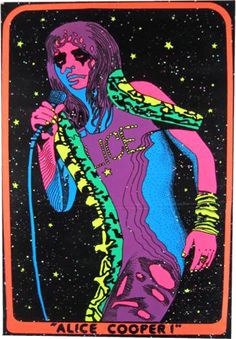
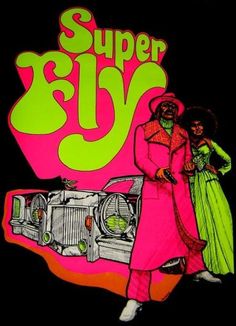
My sister went through a phase in the seventies when she had black lights and posters. I liked the effect and love some of the blacklight poster artwork. I claimed some of her posters when I got older. I did NOT claim her Osmond posters though. I left them to rot somewhere in a 1970s crawlspace. I loved the glowing effect of the black light posters and still do…
I’ve bought a few blacklight posters at yard sales through the years but they are getting harder to find all in one piece.
The black light poster has its roots in the 1950s with the introduction of fluorescent paint to the mass market. By the mid-1960s, fluorescent paints, and products found a massive audience in the psychedelic music scene.
For a while, this poster art was considered a relic of the 60s and 70s but according to Wiki, sales have surged since 2007 and five different companies are producing new posters now.
William H. Byler is credited with inventing the black light in 1935, and according to the University of Central Missouri, Byler graduated there in 1927 with a major in chemistry and physics.
These phosphors are what make things glow while under the light.
A blacklight poster is a poster printed with fluorescent inks which glow under a black light. The inks used contain phosphors which cause them to glow when exposed to ultraviolet light emitted from black lights.
I’ve seen vintage black light posters go between 100 – 600 dollars online.
If you have a burning desire to know more about black lights…go to the site below.
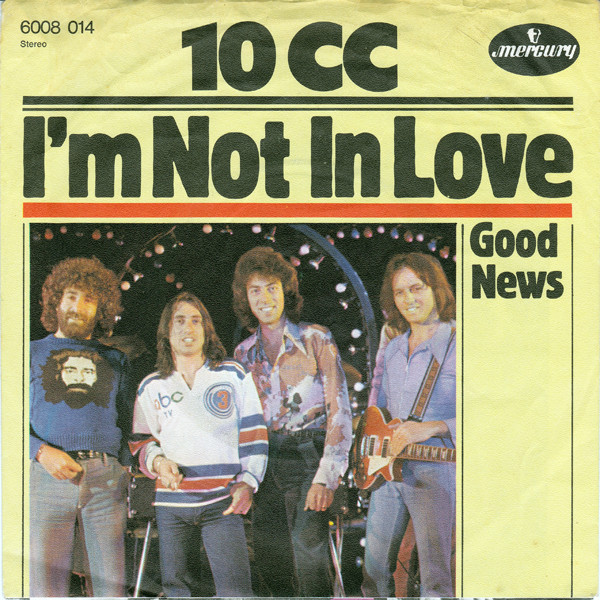
I always thought this was a clever song. The song peaked at #2 in the Billboard 100, #1 in the UK, and #1 in Canada. The overall wash sound was achieved by a total of 256 vocal overdubs in the background.
It was written by Eric Stewart and Graham Gouldman. Eric Stewart came up with the song by his wife telling him that he didn’t tell her he loved her enough. Eric said if I say it too much it would not mean anything.
“I met this gorgeous girl called Gloria at Halifax town hall. I was 18. She was 16. Three years later, we got married. A few years after that, Gloria told me: ‘You don’t say ‘I love you’ much anymore.’ I told her that, if I said it all the time, it would sound glib. But I started wondering how I could say it without using those actual words. So ‘I’m not in love’ became a rhetorical conversation with myself – and then a song.
I wrote the lyrics in a couple of days. The line, ‘I keep your picture up on the wall, it hides a nasty stain’ was about the crack in my bedroom wall at my parents’ house in Manchester. I’d put a photograph of Gloria over it. When I took the song to the band, they said: ‘I’m not in love’? What the f–k is that? You can’t say that!’ But Graham Gouldman, our bass-player and chord-master, agreed to work on it with me. We both liked The Girl From Ipanema, so we gave it a similar bossa nova style. Then Kevin Godley, our drummer, said it was crap.
We were about to scrap it and wipe the tape but, as I walked around the studio, I heard the secretary singing it and the window-cleaner whistling it. I knew we had a tune: we just hadn’t captured it properly. Kevin suggested doing it again, but with banks of voices. I thought that meant hiring a choir, but Lol Creme, our keyboard player, said we could do it using tape loops.”
I’m Not In Love
I’m not in love So don’t forget it It’s just a silly phase I’m going through And just because I call you up Don’t get me wrong, don’t think you’ve got it made I’m not in love, no no, it’s because..
I like to see you But then again That doesn’t mean you mean that much to me So if I call you Don’t make a fuss Don’t tell your friends about the two of us I’m not in love, no no, it’s because..
I keep your picture Upon the wall It hides a nasty stain that’s lying there So don’t you ask me To give it back I know you know it doesn’t mean that much to me I’m not in love, no no, it’s because..
Ooh you’ll wait a long time for me Ooh you’ll wait a long time Ooh you’ll wait a long time for me Ooh you’ll wait a long time
I’m not in love So don’t forget it It’s just a silly phase I’m going through And just because I call you up Don’t get me wrong, don’t think you’ve got it made I’m not in love I’m not in love
This is from Gregg Allman’s album Laid Back. Gregg started the album when the Allman Brothers were making Brothers and Sisters. He was having some problems with them and decided to make this one at the same time. The Allman Brothers originally performed Midnight Rider on their second album Idlewild South in 1970 but it wasn’t released as a single.
Gregg released this song in1974 and it peaked at #19 in the Billboard 100 and #17 in Canada.
Gregg Allman from his autobiography My Cross to Bear… Kim Payne was an Allman roadie.
On “Midnight Rider,” which is the song I’m most proud of in my career, I had all but the last part—so, as I like to say, I had the song by the nuts, I just had to reel it in. The third verse is really important because it’s kind of the epilogue to the whole thing. Basically, you state the problem in the first verse, you embellish on the problem in the second verse—like “let me tell you what a bitch she really is”—and then you usually have some music, to let you think about the words for a while and also get lifted up by that music. The bridge from the music to the third verse is when you want to be different, but you don’t want to go all the way from A to Z. You want something that contrasts things a little bit—kind of like matching a shirt with a pair of pants. You want it to be a little different, but not clashing. The bridge is where you say what you want to do about the problem, or what you’re damn sure going to do about it. Then the third verse is, like I said, the epilogue to the whole thing.
It might sound like I’m giving you a formula to write a song, but I’m not, because it’s never that simple. On “Midnight Rider,” I needed something to start the third verse, and Kim Payne came up with “I’ve gone by the point of caring,” which was exactly what I needed. “I’ve gone by the point of caring”—fuck it—and then, “Some old bed I’ll soon be sharing.” I’ve got another buck, and I ain’t gonna let ’em catch my ass, and then it’s just kinda off into the sunset.
Midnight Rider
Well, I’ve got to run to keep from hidin’, And I’m bound to keep on ridin’. And I’ve got one more silver dollar, But I’m not gonna let ’em catch me, no, Not gonna let ’em catch the Midnight Rider.
And I don’t own the clothes I’m wearing, And the road goes on forever, And I’ve got one more silver dollar, But I’m not gonna let ’em catch me, no Not gonna let ’em catch the Midnight Rider.
And I’ve gone by the point of caring, Some old bed I’ll soon be sharing, And I’ve got one more silver dollar,
But I’m not gonna let ’em catch me, no Not gonna let ’em catch the Midnight Rider.
No, I’m not gonna let ’em catch me, no Not gonna let ’em catch the Midnight Rider.
No, I’m not gonna let ’em catch me, no Not gonna let ’em catch the Midnight Rider.
This song peaked at #10 in the Billboard 100 in 1970 and #3 in the UK. The Marmalade were more successful in the UK by placing 10 top 10 singles in the UK charts but only charting Reflections of My Life in the Billboard top ten. It’s a song I heard many times when I was younger but didn’t know anything about it.
From Songfacts.
This dramatic ballad from the Age of Aquarius finds the singer describing a very bleak outlook on life and the times. The song was sort of a hippie version of the blues. >>
The Marmalade were a Scottish pop group who enjoyed several hits in the UK between 1968 and 1976. Originally a band called Dean Ford & The Gaylords, they changed their name to Marmalade in 1967. They are best remembered in Britain for their cover of the Beatles song “Ob-La-Di, Ob-La-Da” which topped the UK charts around Christmas 1968. In 1969, they signed to Decca Records, and their contract gave them complete freedom to write and produce their own records. The fruits of this arrangement was the recording of this song with its distinctive backwards guitar break, which was their only American hit.
This song was written by vocalist Dean Ford and the band’s main songwriter, keyboardist Junior Campbell. Campbell went on to pen the theme from the British TV series Thomas The Tank Engine, which was narrated in its first two seasons by Ringo Starr.
Reflections of My Life
The changing of sunlight to moonlight Reflections of my life Oh, how they fill my eyes
The greetings of people in trouble Reflections of my life Oh, how they fill my eyes
Oh, my sorrows Sad tomorrows Take me back to my own home
Oh, my crying (Oh, my crying) Feel I’m dying, dying Take me back to my own home
I’m changing, arranging I’m changing I’m changing everything Everything around me
The world is A bad place A bad place A terrible place to live Oh, but I don’t want to die
Oh, my sorrows Sad tomorrows Take me back to my own home
Oh, my crying (Oh, my crying) Feel I’m dying, dying Take me back to my own home
Oh, my sorrows Sad tomorrows Take me back to my own home
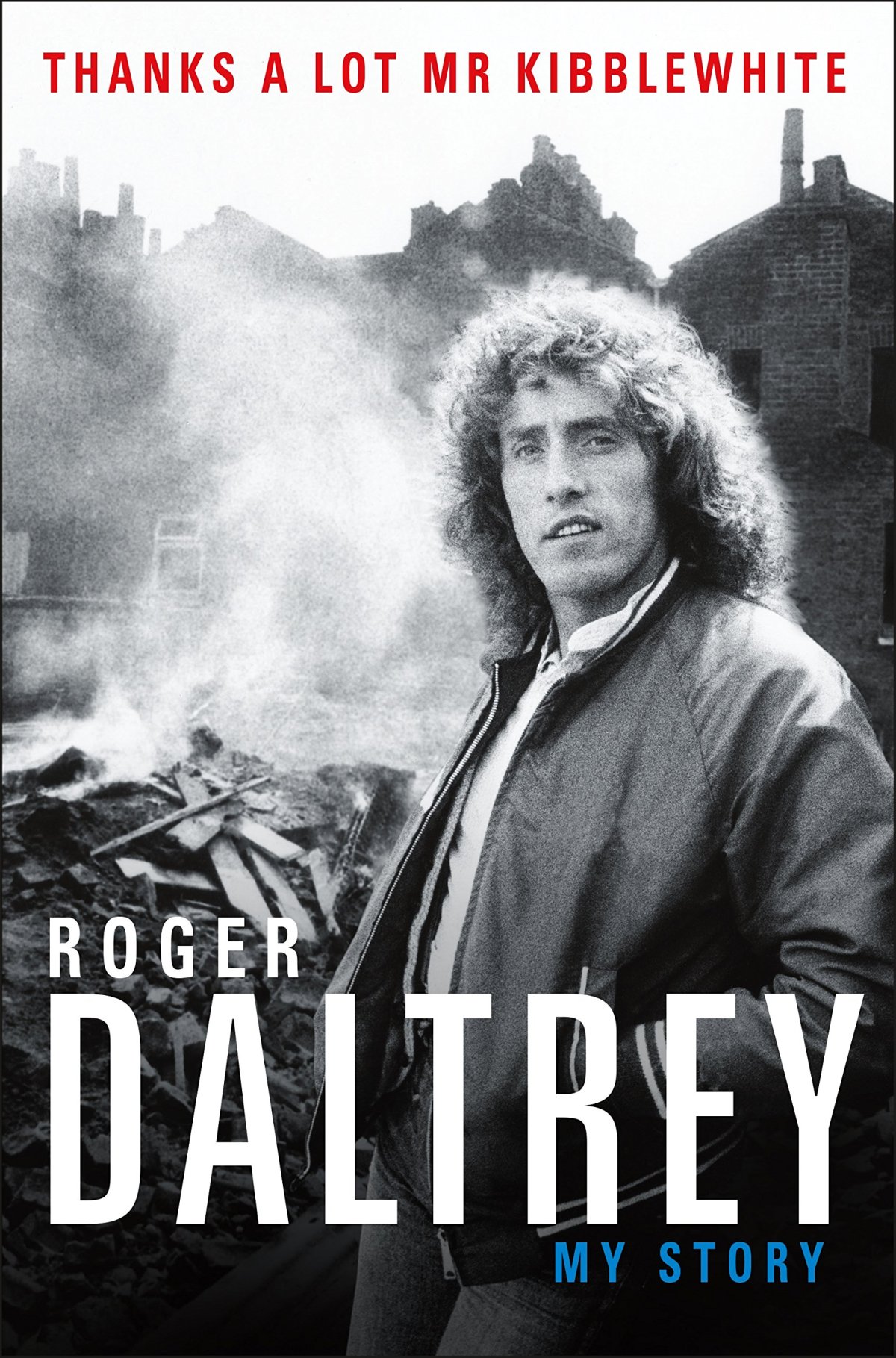
I just finished the audio version of this book. I’m a huge Who fan and I was looking forward to it. It was nice to hear the book narrated by Roger himself. It’s a solid book but I have only one complaint that I will get into below.
The positive about the book is you find out more about the different personalities of the Who and the reason they fought. Pete the artist, John the dark one, Keith the lunatic, and Roger blue-collar man of the band. We all knew those descriptions before but Roger tries to explain how it worked and didn’t work as a band. If you want to know The Who’s impact on rock music and culture go to Pete Townshend. If you want to get straight to the point with just the highlights…Roger is your man.
Roger is grounded, avoided most of the pitfalls in his profession, hard-working, and loves interpreting Pete’s music to the world. He goes into how he changed his singing style with Pete’s writing. How he became Tommy and the mod in Quadrophenia. He hits the highlights of The Who and his life without the Who in the 80s and part of the 90s.
The strongest part of this book is about his childhood and his collection of relatives. Roger seems very approachable, likable, and down to earth. Roger was the one constant in the band that you didn’t have worry about his on tour activities. He does talk about the high points of the Who and his acting career.
My biggest complaint is the book is too short. You get the impression that he didn’t think that anyone would want to hear any details whatsoever. He does give you some good stories but touches a subject and quickly leaves. It’s almost a cliff notes version as he didn’t dwell in any period long.
It is a quick and enjoyable read but leaves you wanting more.
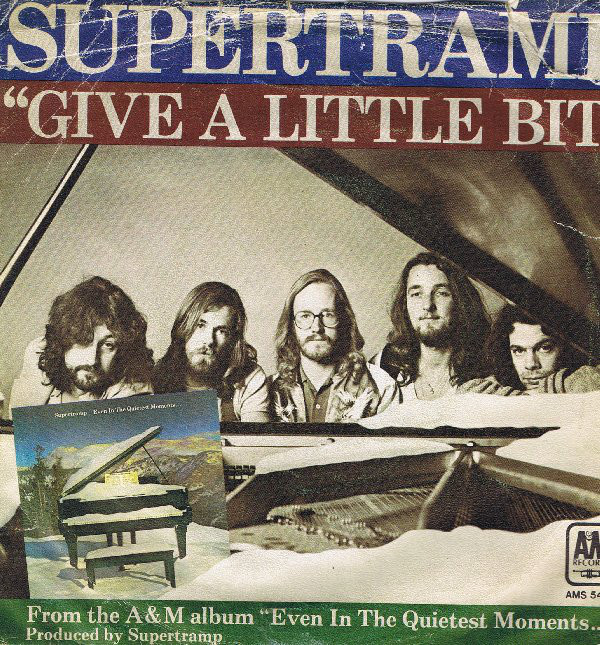
This is an extremely catchy song by Supertramp off of the album Even in the Quietest Moments… This was before their classic Breakfast In America. The song was inspired by “All You Need Is Love” by the Beatles.
The song peaked at #15 in the Billboard 100, #29 in the UK, and #8 in Canada in 1977.
The song was credited to Roger Hodgson and Rick Davies but Roger Hodgson wrote it. Roger Hodgson’s quote. “The song itself is such a pure, simple message that I think is really especially even more powerful today when the world has even more problems and it’s even more difficult sometimes to be compassionate and caring because we’ve got to put up all these barriers to survive; that it’s a song that really inspires people to give a little bit, not give a lot, just give a little bit and see how it feels and show that you care, and I know for me, every time I play it in concert, there’s something about that song.
I look out and people just start smiling straight away and sometimes they hug each other and they start singing with me. It’s a very unifying song with a beautiful, simple message that I’m very proud of and really enjoy playing today.”
Supertramp singer/guitarist Roger Hodgson wrote this song when he was a teenager, but didn’t record it until much later. It was about five years between when he wrote the song and when he brought it to the band. When we spoke with Hodgson in 2012, he explained: “I think it’s a great song. I didn’t realize it was when I first wrote it. It actually took me six years before I even brought it to the band. But I wrote it I think around 1970. That time, the late ’60s, early ’70s, was a very idealistic time, one of hope, a lot of peace and love and the dream of the ’60s was still very alive and maturing if you like.
That song has really taken on a life of its own, and I think it’s even more relevant today than when I wrote it. Because we really are needing to value love in a much deeper way, and also we’re needing to care. The song is basically saying: just show you care. You know, reach out and show you care. So in concert, it’s the perfect show closer because what I try to do in my show over two hours is unify the audience and unify all of us. So that at the end, when everyone stands up for ‘Give A Little Bit,’ they’re open and ready to open their hearts and sing at the top of their lungs and go away with a smile on their face. And that song really does, it has a very pure energy. The moment I start, people just start smiling. It’s amazing.”
Give A Little Bit
Give a little bit Give a little bit of your love to me Give a little bit I’ll give a little bit of my love to you There’s so much that we need to share Send a smile and show you care
I’ll give a little bit I’ll give a little bit of my life for you So give a little bit Give a little bit of your time to me See the man with the lonely eyes Take his hand, you’ll be surprised
Give a little bit Give a little bit of your love to me I’ll give a little bit of my life for you Now’s the time that we need to share So find yourself, we’re on our way back home
Going home Don’t you need to feel at home Oh yeah, we gotta sing
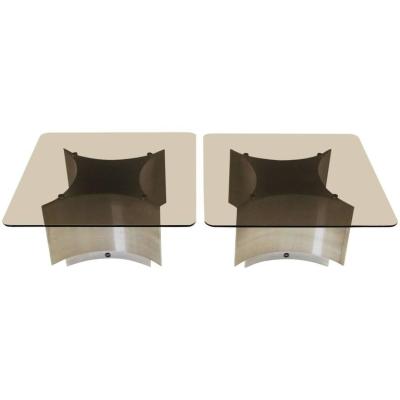
Ringo Starr and Robin Cruikshank formed a partnership in 1969 and they were located in the Beatles Apple building on Savile Row. In 1972 relocated with Apple to 54 St James Street.
Robin had originally worked for Ringo to design a stainless steel fireplace for Ringo and his wife Maureen. Ringo started to give Robin some suggestions and the two started to worked together on furniture and different designs for years after that. The partnership lasted until 1986 and after that Ringo let Robin use the name so Cruikshank could continue different projects.
If you ever run across anything made by RoR you probably have something very valuable.
Below was designed by RoR. I can’t imagine what it would have cost. I would take it in a second.
I remember seeing the below item on the news. Very expensive because they didn’t use reproduction parts…they all had authentic Roll Royce grills.
Here are some tables by RoR.
Below is Robin’s website featuring his new designs plus much more history.
This is a well-crafted song written by Russ Ballard and performed by Santana. I’m Winning didn’t have a Latin style like many of his seventies songs…it was more pop/rock and very catchy. It peaked at #17 on the Billboard 100 in 1981. Scottish vocalist Alex Ligertwood sang this song after Greg Walker left the band a little earlier.
It was released on the Zebop! album, a fascinating transitional LP that pushed Santana into the ’80s without completely abandoning the old mojo, “Winning” is anchored by one of the best vocal performances in the band’s catalog. His voice doesn’t just carry the tune; it owns it. He’s not just singing about triumph; he sounds like a man who’s been through the ringer and is finally exhaling.
Musically, this is a curious beast. Carlos’s guitar tone cuts through like sunlight through smoke. He doesn’t showboat, doesn’t shred, he sings with his strings, giving the track an emotional lift that Ballard’s original lacked.
Ligertwood also sang on the hit Hold On the next year.
I’m Winning
One day I was on the ground When I needed a hand Then it couldn’t be found I was so far down that I couldn’t get up You know and one day I was one of life’s losers Even my friends were my accusers In my head I lost before I begun I had a dream but it turned to dust And what I thought was love That must have been lust I was living in style When the walls fell in And when I played my hand I looked like a joker Turn around fate must have woke her Cause lady luck she was waiting outside the door I’m winning I’m winning I’m winning I’m winning and I don’t intend on losing again Too bad it belonged to me It was the wrong time and not meant to be It took a long time and I’m new born now I can see the day that I bleed for If it’s agreed that there’s a need To play the game and to win again
I’ve always liked early Chicago when Terry Kath was part of the band. Love the intro to this song and it takes me back to when I first heard the song. Saturday in the Park peaked at #3 in the Billboard 100 and #2 in Canada. Robert Lamm who wrote the song openly admits he based the melody on The Beatles “You Won’t See Me.”
Robert Lamm on Saturday in the Park
“Saturday in the Park is a prime example of how I take from what I experience in the world. It was written as I was looking at footage from a film I shot in Central Park, over a couple of years, back in the early ‘70s. I shot this film and somewhere down the line I edited it into some kind of a narrative, and as I watched the film I jotted down some ideas based on what I was seeing and had experienced. And it was really kind of that peace and love thing that happened in Central Park and in many parks all over the world, perhaps on a Saturday, where people just relax and enjoy each other’s presence, and the activities we observe and the feelings we get from feeling a part of a day like that.”
Chicago’s main songwriter, Robert Lamm, wrote this after a particularly exhilarating 4th of July spent in New York’s Central Park, where there were steel drum players, singers, dancers and jugglers. Lamm and Peter Cetera sang lead on the track.
like most Chicago singles, this didn’t chart in the UK. In America, however, it was their biggest chart hit to that point and also their first gold single, which at the time meant selling more than a million copies (“25 Or 6 To 4” somehow was never certified gold).
This song contains some of the most famous nonsense singing in rock: after Robert Lamm sings the line, “Singing Italian songs,” he sings some made up words approximating the Italian language.
Saturday In the Park
Saturday in the park, I think it was the Fourth of July Saturday in the park, I think it was the Fourth of July
People dancing, people laughing A man selling ice cream Singing Italian songs Everybody is another Can you dig it (yes, I can) And I’ve been waiting such a long time For Saturday
Another day in the park I think it was the Fourth of July Another day in the park I think it was the Fourth of July
People talking, really smiling A man playing guitar And singing for us all Will you help him change the world Can you dig it (yes, I can) And I’ve been waiting such a long time For today
Slow motion riders fly the colors of the day A bronze man still can tell stories his own way Listen children all is not lost, all is not lost, oh no, no
Funny days in the park Every day’s the Fourth of July Funny days in the park Every day’s the Fourth of July
People reaching, people touching A real celebration Waiting for us all If we want it, really want it Can you dig it (yes, I can) And I’ve been waiting such a long time For the day, yeah yeah
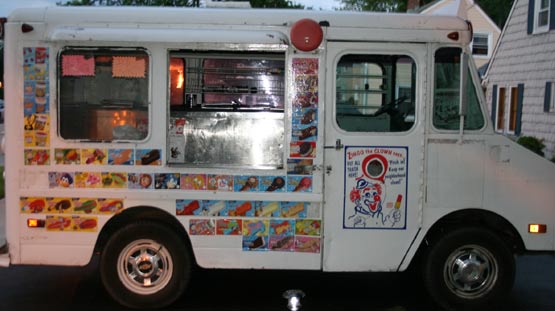
I grew up in a rural area… there was no ice cream man traveling on our dirt road.
I would go visit my grandmother in Nashville on weekends and some weekdays. She lived in the suburbs so we were surrounded by houses and pavement.
I remember the sound and excitement. That sound of the Ice Cream truck coming when I was a kid. I didn’t have anything like that at home. If I was inside my grandmother’s house…which was rare, I could hear that bell and that tune playing no matter what I was doing. Old McDonald or some song like that.
I would bum a quarter off of my grandmother with promises to do anything.
When I grew older and was a teenager and no longer cared about that I started to notice something strange about the new ice cream guy. He drove by ringing the bell to the tune of “Sympathy for the Devil” and 19 and 20-year-olds would stop him down the street… I don’t think a quarter would have bought what he was selling anymore.
I saw him a few more times pass by…ringing the bell to Jumpin’ Jack Flash…a true Stones fan… and then I never saw him again…He was selling a different kind of treat. So Cheech and Chong weren’t that far off…I heard a little later the police didn’t approve of his inventory.
These were fun in the summer. A piece of plastic with a garden hose attached and voilà… a wet fun slide. I would slide down with reckless abandonment until…until I would slide over a sharp rock that was poking through the yellow plastic…then I would slip ‘n slide to first aid but it was fun. It was a great way to spend a summer day and I wouldn’t trade a minute of fun on it for anything.
Slip ‘n Slide was invented by Robert Carrier. Wham-O manufactured it in 1961, the Slip ‘n Slide is still hugely popular today.
Carrier originally sewed 50 foot of Naugahyde and brought it home for his kid to play on and all the kids in the neighborhood came by to slide down the Naugahyde material that he hosed down. He stitched a long tube along one side, sewn shut at one end, with spaces between the stitching so that when you attached the hose, the water pressure would build up and water would squirt out those openings and lubricate the surface of the material.
Wham-O traded the Naugahyde for more cost-efficient plastic (still used today), shortened the length from 50 to 25 feet and took the toy to market in 1961. It was an immediate success: 300,000 were sold within the first six months, and the total reached more than 30 million by its 50th anniversary.
I’ve always liked the lyrics to this song and the overall sound of it. I liked all of the singles released off of their one and only album Boomtown. Welcome to the Boomtown, It Aint So Easy, and Swallowed by the Cracks. I was really looking forward to the follow-up album which never came.
Welcome to the Boomtown peaked at #37 in the Billboard 100 in 1986. Per Wikipedia, the two are planning to make a follow-up album. Over 30 years later…but better late than never.
Welcome to The Boomtown
Miss Christina drives a .944 satisfaction oozes from her pores she keeps rings on her fingers marble on the floor cocaine in her dresser bars on her doors she keeps her back against the wall she keeps her back against the wall so I say I say welcome welcome to the boomtown pick a habit we got plenty to go around welcome to the boomtown and all that money makes such a succulent sound welcome to the boomtown
Handsome Kevin got a little off track took a year off of college and he never went back now he smokes much too much he’s got a permanent hack deals dope out of Denny’s keeps a table in the back he always listens to the ground always listens to the ground so I say I say welcome to the boomtown pick a habit we got plenty to go around welcome to the boomtown and all that money makes such a succulent sound welcome to the boomtown
Well the ambulance arrived too late I guess she didn’t want to wait….















 PowerPop... An Eclectic Collection of Pop Culture