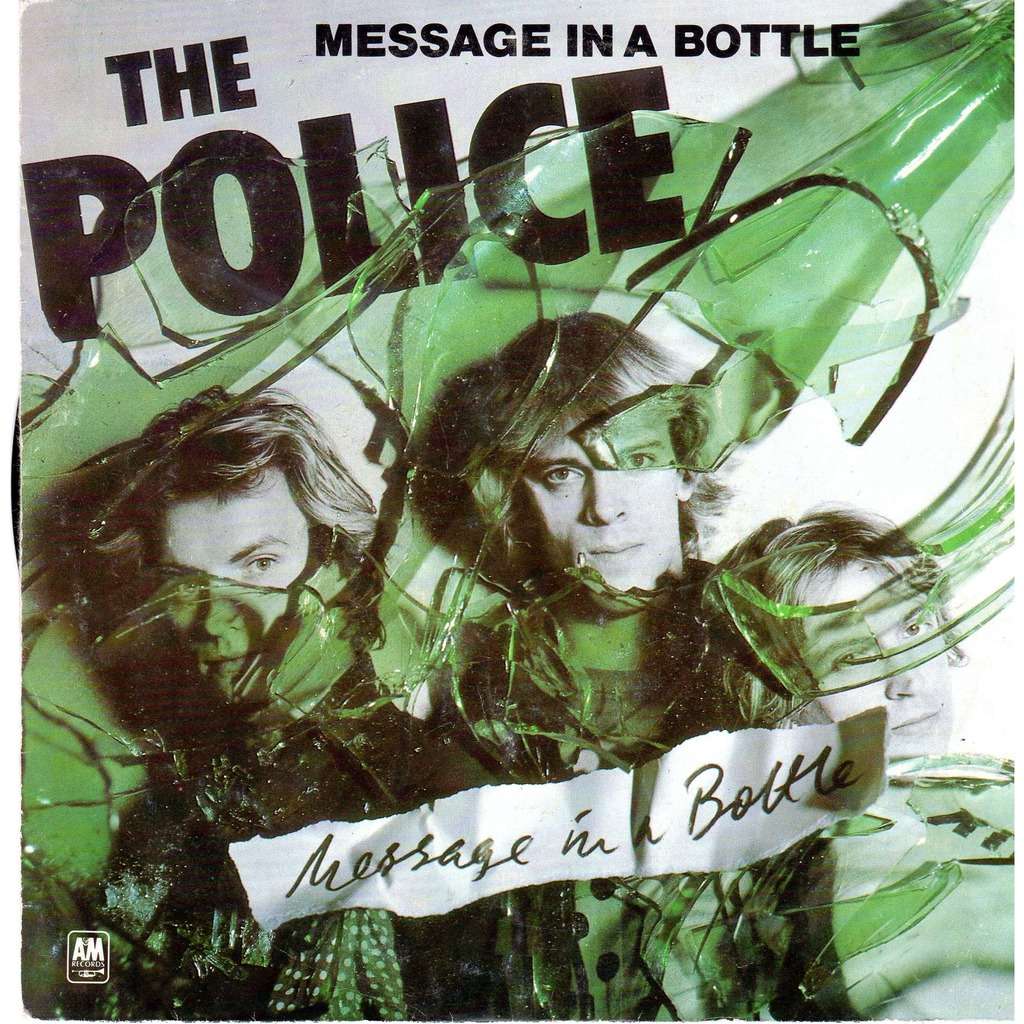
Police – Message In A Bottle

It’s one of those songs that I would have bet charted higher in the US than it did. In America, “Message In A Bottle” was just a minor hit, peaking at  #74 in the Billboard 100 in 1979. It wasn’t until their third album, Zenyatta Mondatta, released in 1980, that the group got much attention in the US.

The song peaked at #1 in the UK, #2 in Canada, and #11 in New Zealand.

Sting: “I used to sing Gregorian chants and plainsong as an altar boy. A lot of my melodies might reflect that love and my early exposure to that stark, melodic narrative. ‘Message In A Bottle’ reflects that, too.”

“I think the lyrics are subtle and well crafted enough to hit people on a different level from something you just sing along to. It’s quite a cleverly put together metaphor. It develops and has an artistic shape to it.”


From Songfacts

This song is about a guy stranded on a remote island. One day he finds a bottle, puts a message in it and throws it out to sea in hopes that someone will find it and come save him. He’s thrilled to wake up one morning and find a whole bunch (a hundred billion, by his count) of bottles on the shore, proving there are many other castaways just like him. The lyrics can be seen as a metaphor for being lonely and realizing there are lots of people just like you. >>

Guitarist Andy Summers said it was the best track he ever played on.

Until they were inducted into the Rock and Roll Hall of Fame, this was the last song The Police played together; after breaking up in 1986, they performed it at Sting’s wedding to Trudie Styler in 1992. Sting, Stewart Copeland, and Andy Summers were all a little drunk and didn’t play it very well, but the guests loved it. In 2003, The Police got together again for the induction ceremonies, where they played this along with “Roxanne” and “Every Breath You Take.”

This was the first single from the second Police album, Reggatta De Blanc (which means “White Reggae” in Police-speak). In the UK, their first album, Outlandos d’Amour, was released a year earlier but was still being discovered. “Roxanne” and “Can’t Stand Losing You” had charted, but the band was still bubbling under. “Message In A Bottle” was when they exploded in Britain; the song went to #1 on September 29, 1979 and stayed for three weeks. Their next single, “Walking On The Moon,” also went to the top. At this point, “So Lonely,” a track from their first album that flopped when it was issued as a single, was re-released, reaching #6 in March 1980.

Sting wrote in Lyrics By Sting: “I was pleased that I’d managed a narrative song with a beginning, a middle, and some kind of philosophical resolution in the final verse. If I’d been a more sophisticated songwriter, I would have probably illuminated this change of mood by modulating the third verse into a different key. But it worked anyway.”

This song is “Hey Jude”-like in its outro, with the phrase “sending out an SOS” repeated over and over for over a minute as it slowly fades. We counted 25 repetitions of the phrase.

Drummer Stewart Copeland overdubbed some cymbals and snare on top of this section, which he later came to regret. “I just overdid it,” he told Songfacts. “Where was Andy [Summers] when we needed him? Because usually it was Andy who was the limiter of our indulgence. He must have stepped out of the studio.”

The first person to hear the guitar riff for this song was not a person at all, but Sting’s dog. “I used to play it over and over again to my dog in our basement flat in Bayswater,” Sting wrote in Lyrics By Sting, “and he would stare at me with that look of hopeless resignation dogs can have when they’re waiting for their walk in the park. Was it that hopeless look that provoked the idea of the island castaway and his bottle? I don’t know, but the song sounded like a hit the first time we played it. The dog finally got his walk, and this song was our first number-one in the UK.”

This was the first-ever UK #1 for the A&M label, which Herb Alpert and Jerry Moss founded in 1962.

This might be the most famous song where a singer sends out an SOS distress signal, but it’s certainly not the only one. The Clash did it in “London Calling,” and many groups have done it metaphorically to signify love gone wrong.

Sting performed this at an Amnesty International benefit in 1981 that was used in a film released the following year called The Secret Policeman’s Other Ball.

This was one of the most popular live songs for the band, played at just about every concert after it was released, often as the set opener. Sting continued to perform it as a solo artist, including at his set at Live Aid in 1985.

After MTV launched in 1981, The Police made some high-concept, big-budget videos that were huge on the network. Prior to that, their videos were more restrained. The “Message in a Bottle” video combines concert footage with shots of the band performing it in some kind of backstage area. It was directed by Derek Burbidge.

Sting performed this with No Doubt at halftime of the 2003 Super Bowl between the Bucs and Raiders. No Doubt lead singer Gwen Stefani came out and sang with him about midway through. Stefani inducted Police into the Rock and Roll Hall of Fame later that year.

It may surprise you to learn that the song was influenced by the church music that Sting used to sing as a child. He explained in Isle of Noises by Daniel Rachel: isode “Fallen Angel”; in Doctors, in the 2011 episode “Message in a Bottle”; and in The Office (US), in the 2007 episode “Phyllis’ Wedding.”

The Police boxed set is called Message In A Box as a reference to this song.

The industrial metal band Machinehead covered this on their 1999 album The Burning Red >>

There is a 1999 film by the same name starring Kevin Costner, Robin Wright Penn, and Paul Newman that is not directly connected to this song. >>

In 2003, this song got the post-punk treatment when American Hi-Fi covered it for the film Rugrats Go Wild.

Message In A Bottle

Just a cast away an island lost at sea-o
Another lonely day, no one here but me-o
More loneliness than any man could bear
Rescue me before I fall into despair-o

I’ll send an S.O.S. to the world
I hope that someone gets my
I hope that someone gets my message in a bottle yeah
Message in a bottle yeah

A year has passed since I wrote my note
But I should have known this right from the start
Only hope can keep me together
Love can mend your life but love can break your heart

I’ll send an S.O.S. to the world
I hope that someone gets my
I hope that someone gets my message in a bottle yeah
Message in a bottle yeah
Oh message in a bottle yeah
Message in a bottle yeah

Walked out this morning I don’t believe what I saw
A hundred billion bottles washed up on the shore
Seems I’m not alone in being alone
A hundred billion castaways looking for a home

I’ll send an S.O.S. to the world
I hope that someone gets my
I hope that someone gets my message in a bottle yeah
Message in a bottle yeah
Message in a bottle whoa
Message in a bottle yeah

Sending out an S.O.S.
I’m sending out an S.O.S.
Sending out an S.O.S.

Golden Earring – Radar Love

I’ve heard this one a lot but I still love that simple bass line that drives the song. They did manage to get 8 songs in the Billboard 100 but with only two top twenty hits. Radar Love is a great driving song.

This song peaked at #13 in the Billboard 100 and #7 in the UK in 1973.

Golden Earring was founded 1961 and into the ’00s was still playing with the same lineup since 1970, doing 100+ shows a year in The Netherlands, Belgium, and Germany. The group is from The Netherlands, where this was a #1 hit. They had only one other hit. It didn’t come until 1982, with “Twilight Zone.”

To celebrate the fiftieth anniversary of the band, Golden Earring recorded a new track in October 2019, titled “Say When”

The time signatures to this song are quite different than your normal songs. I found this about it…so Jeremy if you are reading…you might be interested.

The song is all in 4/4 time, and the original tempo is around 100 BPM. It’s a very clever arrangement: the intro is on the beat of each bar at the start. The shuffle on the snare is semi triplets which give the illusion of the song speeding up. You have to quantize drum machines to a 6th beat. Consequently, the chorus is doubled up to give the impression that the tempo has speeded up to 200 BPM. You have to transpose the 4/4 bar so it can be played with in 1 beat of the bar. It does take a bit of lateral thinking to get your head around the math, but the song is all 4/4 at 100 BPM. 


From Songfacts

Before you could send a text message or call someone in their car, there was no way to communicate to a driver – unless you had a certain telepathic love that could convey from a distance your desire to be with that person, something you might call – Radar Love. In this song, the guy has been driving all night, but keeps pushing the pedal because he just knows that his baby wants him home.

Like many of Golden Earring’s songs, this began with the title and grew from there. Originally intended only as an album track, it turned out to be the only cut on their US debut album Moontan that they could whittle down to a single for radio. It became their showstopper at concerts, and provided a striking moment for their drummer Cesar Zuiderwijk, who would take a few steps back and leap at the drum kit near the end of the song.

This song is featured in the movie Detroit Rock City, about four teenage boys and their struggle to finally see the band KISS play live.

White Lion had a minor hit with their cover of this in 1989.

UK radio station Planet Rock carried out a survey of their listeners in 2011 regarding their favourite tracks for in-car listening. This song came out top with Deep Purple’s “Highway Star” the runner-up and AC/DC’s “Highway To Hell” in third place.

The line, “The radio’s playing some forgotten song, Brenda Lee’s coming on strong” is a reference to the 1966 Brenda Lee song “Coming On Strong,” which made #11 US. 

Radar Love

I’ve been drivin’ all night, my hands are wet on the wheel
There’s a voice in my head that drives my heel
My baby call said I need you here
It’s half past four and I’m shifting gears

When she gets lonely and the longing gets too much
She sends a cable coming in from above
Don’t need a phone at all
We got a thing that’s called radar love
We got a wave in the air
Radar love

The radio’s playin’ some forgotten song
Revelry’s coming on strong
The road has got me hypnotized
As I spin into a new sunrise

When I get lonely and I’m sure I’ve had enough
She sends comfort coming in from above
Don’t need no letters at all
We got a thing that’s called radar love
We got a line in the sky

No more speed I’m almost there
Gotta keep cool, now, gotta take care
Last car to pass, here I go
The line of cars drove down real slow
The radio plays that forgotten song
Brenda Lee’s coming on strong
The news man sang his same song
One more radar lover gone

When I’m feeling lonely and I’m sure I’ve had enough
She sends the comfort coming in from above
Don’t need no radio at all
We got a thing that’s called radar love
We got a light in the sky
We got a thing and its called radar love
We got a thing that’s called
Radar love

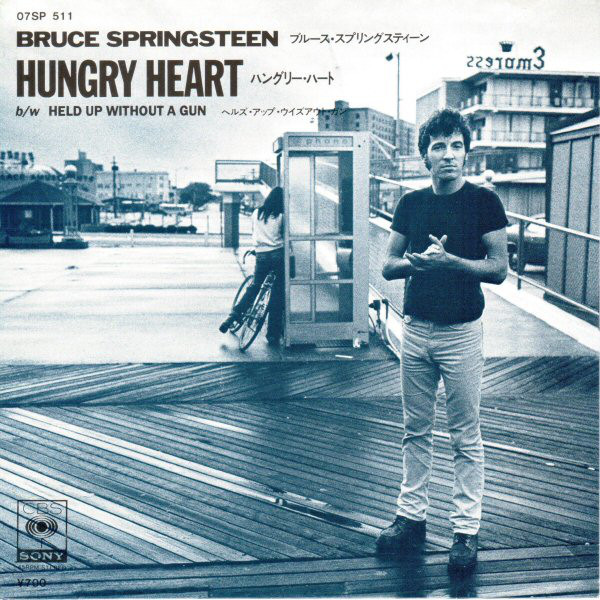
Bruce Springsteen – Hungry Heart 1980

Got a wife and kids in Baltimore, Jack
I went out for a ride and I never went back
Like a river that don’t know where it’s flowing
I took a wrong turn and I just kept going

It’s hard to beat that as an opening verse…once I heard that I was hooked. Springsteen met Joey Ramone in Asbury Park, New Jersey, Ramone asked Bruce to write a song for his band, The Ramones. Springsteen wrote “Hungry Heart” that night but decided to keep it.

Mark Volman and Howard Kaylan (Flo and Eddie) of The Turtles sang backup.

The song was on the album The River. The album peaked a #1 in the Billboard Album Charts in 1980. Hungry Heart peaked at #5 in the Billboard 100 in 1980. This was Springsteen’s first top 10 hit.

Bruce Springsteen: “I saw the Ramones in Asbury Park,”  “and we were talking for a while and I was like, ‘Man I’ve got to write the Ramones a song.’ So I went home and I sat at my table and I wrote it in about the time it took me to sing it. I brought it in and we went to make a demo for it or I played it for [Johnny Ramone], and he said, ‘Nah, you better keep that one.’ He was right about that. It did pretty well.”


From Songfacts

This was Springsteen’s first Top 10 hit. Born To Run was a big album five years earlier, but did not have any hit singles. This song proved that Springsteen could not just sell concert tickets and albums, but could record hit pop songs. 

This song explores a man’s wanderlust contrasted with his desire for a stable family life. Many of Springsteen’s songs are about wanting to get away, and in this song the main character concludes that he does not want to be alone.

Springsteen’s voice was slightly sped up on the recording, producing a higher vocal. Bob Dylan did the same thing on “Lay Lady Lay.” 

This was used in the Tom Cruise movie Risky Business. It was the first time a Springsteen song was used in a film.

In the 1981 Rolling Stone reader’s poll, this was voted best single. Springsteen also won for Best Artist, Album, and Male Singer.

Bruce has the audience sing the first verse and chorus when he performs this live.

The single was backed with “Held Up Without A Gun.” This started a tradition of using songs that did not appear on his albums as B-sides.

This went to #28 when it was Reissued in England in 1995. The first time it was released it only went to #44.

Springsteen performed this with Crosby, Stills, Nash & Young at Young’s first annual Bridge School benefit concert in 1986.

Hungry Heart

Got a wife and kids in Baltimore, Jack
I went out for a ride and I never went back
Like a river that don’t know where it’s flowing
I took a wrong turn and I just kept going

Everybody’s got a hungry heart
Lay down your money and you play your part
Everybody’s got a hungry heart

I met her in a Kingstown bar
We fell in love I knew it had to end
We took what we had and we ripped it apart
Now here I am down in Kingstown again

Everybody’s got a hungry heart
Lay down your money and you play your part
Everybody’s got a hungry heart

Everybody needs a place to rest
Everybody wants to have a home
Don’t make no difference what nobody says
Ain’t nobody like to be alone

Everybody’s got a hungry heart
Lay down your money and you play your part
Everybody’s got a hungry heart

The Clash – Rock The Casbah

When this came out it took me a while to warm up to it… but after a few listens I liked it. They were all over MTV then when they were opening up for the Who’s “farewell” tour.

Clash drummer Topper Headon wrote the music and the original lyrics. After he wrote it he was fired from the band because of drug problems… In the meantime, the song became an enormous hit in the US. In the music video for the song, its original Clash drummer Terry Chimes at the kit (he had returned to replace Headon temporarily).

Joe Strummer decided to take Headon’s lyrics in a different direction. According to former Clash co-manager Kosmo Vinyl, Headon’s original words were a filthy ode to his girlfriend. Joe Strummer wrote the lyrics with a more political bent.

This was The Clash’s biggest US hit, and along with “Train In Vain,” one of only two that reached the Top 40. They had several Top 40 hits in England.

The song peaked at #8 in 1983 in the Billboard 100. The album Combat Rock peaked at #7 in the Billboard Album Charts.

Dave from A Sound Day did a post on this song in January that you can read here. 


From Songfacts
The first line of Strummer’s re-written lyrics had a specific genesis: manager Bernie Rhodes was frustrated in the early Combat Rock sessions with every track ending up being really long (stuff like “Straight To Hell” and “Sean Flynn”) and in one session shouted, “Does everything have to be as long as raga?!” Strummer told Rolling Stone shortly before he died in 2002: “I got back to the hotel that night and wrote on a typewriter, ‘The King told the boogie men You gotta get that raga drop.’ I looked at it and for some reason I started to think about what someone had told me earlier, that you get lashed for owning a disco album in Iran.” This served as inspiration for the rest of the lyrics, about the people defying the Arab ruler (Shareef)’s ban on disco music and “Rocking the Casbah.”

“Casbah” (also spelled “Qasbah” or “Kasbah”) refers to walled areas in many North African towns, especially the one in Algiers. The lyrics use many different terms in humorous context from Arabic, Hebrew, Turkish and Sanskrit language and culture – along with Casbah, there are also Sharifs, Bedouins, Sheikh, kosher, raga and minerets in the song.

In the UK this single was backed on the B-side by “Long Time Jerk,” a song mostly written by bassist Paul Simonon about his then-girlfriend Pearl Harbour. “Jerk” wasn’t available anywhere else until it was included on the expanded Super Black Market Clash rarities compilation in 1993.

The US military used this as a rallying cry when they invaded Iraq in 1991. During Operation Desert Storm, Joe Strummer was irate over the song being one of the most requested on US radio because of the misunderstanding that it was an anti-Iraq in sentiment (a similar fate befell The Cure’s “Killing An Arab”).

With electronic sound effects and an intriguing video, this appealed to Americans more than any other Clash song, but it wasn’t a good representation of the band. For many young people in the US, The Clash were known as a British import with a catchy song, similar to MTV darlings like Thomas Dolby and A Flock of Seagulls. In England they were revered for breaking new ground as rock rebels.

When this became a hit, Joe Strummer considered leaving The Clash. He couldn’t justify singing rebellious songs when the band was rich and successful. In their early years, when they were struggling, their music was sincere, but he felt they were becoming a joke.

When the band broke up in 1985, it was speculated that their plan all along was to break up once they had conquered America, a feat that was achieved by “Rock the Casbah” becoming such a huge hit along with “Should I Stay or Should I Go?.”

The music video features an Arab and an orthodox Jewish person skanking, to go with the Middle Eastern theme. The parts of the Arab and Jew were played by Titos Menchaca (the sheik), and local theater director Dennis Razze (the Jew). Titos told us the story:

“We shot it in 1981 in and around Austin, Texas. This was a few months before MTV was even launched. At the time, I was a young film acting student (I had stage experience/training, but working in front of the camera is a different beast). My teacher was a guy named Loren Bivens. One day after class he mentioned that some guys were in from out of town to do some sort of film shoot. He didn’t know much about it but thought it’d be a good opportunity to work in front of a camera.

I chatted with them at their hotel room later. There was Don Letts, a rastah from London who would direct, John Hazard, ace camera man from New York, and some guy named Barry, who I later learned was their DP (director of photography). They explained that they were with the Clash and working in a brand new medium called “music videos” that bands were going to be using to pitch songs to record companies and other powers-that-be. It was such a foreign concept at the time that I didn’t think much about it after the interview until they called later and said they wanted me for the part of the sheik, they liked the contrast between my height (6’3″) and Dennis’, and the gig would pay $350 for one day’s work. NOW they had my attention.

This was Don’s directorial debut, so he was a bit unsure how to handle actors. But, he was extremely creative and we soon learned to glean from his instructions what he wanted from us in each scene.

A few quick notes about the shoot: The rock quarry scene near the beginning where I’m running – we shot that about 6 times because Don wanted to see dust flying off my shoulders à la Indiana Jones when he’s running from the natives at the beginning of the original Raiders movie which had just come out and was all the rage. He kept heaping more and more dirt on me and we kept doing takes until, mercifully, John and Barry told him it simply couldn’t be seen from that distance.

The scene where we’re jamming down the highway with the Austin skyline in the background – John was shooting out an open panel van door and there was lots of honking traffic behind us. That was real beer we were drinking all day.

For the final scene where we’re dancing in the crowd at the concert – some punk kept trying to worm his way into the shot and Don had to physically block him out (like a basketball player) so we could get the shot. (that venue has since been torn down to make a park).

We got to hang out with the band for a bit before the show. They struck me as quiet, serious. Sober, too. Joe Ely was there, also. That night, I hung out at a local reggae joint in Austin called Liberty Lunch (now torn down also) with Bivens, Barry, and these two brothers from New York who were former students of Bivens’ – in town to scout locations for their first feature, which Barry was going to DP for them.

I enjoyed some notoriety from the video when it became an MTV (and later VH1) mainstay, but that all kind of quieted down after a few years except for rabid fans of the band (of which there are many). I find it interesting that it has such social relevance now, as it did then. Maybe more. Also, kids today are rediscovering the Clash and when I do guest artist gigs at colleges my ‘cool factor’ shoots up immediately. Heh heh! Oh, by the way… Barry’s last name? Sonnenfeld. And the two brothers scouting locations? Joel and Ethan Coen. The movie? Blood Simple.

Dennis Razze, who played The Rabbi, told us:
“A casting agent friend of mine suggested I audition for this video shoot, so on a lark I went down to the Sheraton Hotel that night to audition. At 8pm or so was a long line around the block of guys auditioning, and finally around 11pm I was ushered into the hotel room to meet three guys who were doing the shoot. Titos, who was a friend of mine, was next in line so we went in together. They had a boom box on which they played this song I had never heard (“Rock the Casbah”) and asked us to improv to it. We danced around a bit and did some interaction as the two characters they wanted – the Sheik and the Rabbi. When we were done they told us on the spot we got the job. We were told to be back there at 5am for makeup and costume!

I had to wear three layers of dark heavy wool and also fake “locks” that were glued to my sideburns. The day of the shoot was ungodly hot as Austin can be in the summer. Close to 100 degrees. They drove us around in a van from location to location and by mid day we had also met the band who didn’t have much to do with us (and I didn’t have a clue who they were). They had rented an expensive film camera to do the shoot (most people don’t realize that music videos were shot on film) The director loved the little bits I added like the “Fiddler on the Roof” dance and spitting beer in the pool. He encouraged me to have fun and I had no trouble being silly. As the day went by, I began to really like the song that they played over and over again at each location. The coolest thing was doing the scene with the armadillo – what a cool creature, bigger than I thought one might be.

We didn’t end the very long day till around midnight after the concert shoot which was absolutely crazy because they just worked us into the audience in front of the stage and shot us and the band in real time during the concert. I was drenched in sweat by that time, exhausted, and just wanted to go home to bed.

I never thought I would hear another thing about the video, but six months later, friends of mine form the East Coast would call and say they saw me on HBO and later MTV. (I never saw the video myself till almost two years after it was shot) We were paid a few hundred dollars for our work, and because there were no residuals in the early days of music videos, we never made another cent off of our success. Given the number of times over so many years the video has been aired, Titos and I would have made a sizable sum I think if the video had been shot a year later when it was determined that music videos would work the same way as commercials.

Combat Rock was recorded at the Electric Ladyland studio in New York. Topper Headon recalled to Mojo magazine November 2008: “I loved New York, the 24-hour city. (But) we’d lost that unity and had stopped hanging out together as friends, and would all turn up at the studio at different times, writing stuff as and when it came up. The sessions were supposed to start at two in the afternoon, though by the time everyone turned up it was seven. I got there early, and what else was I going to do except put down an idea?” That idea was the drum pattern and tune for this song.

Live performances of this song often took a different direction, since by this time the band had given up on taking a keyboard player on tour. This meant the piano part couldn’t be played live, and the song took on a heavier, more all-out rock feel in a live setting.

It was a live staple from its introduction in 1982 through to the band’s breakup in 1985. Joe Strummer was so proud of the song that it was one of the Clash songs that he performed live with his solo band, The Mescaleros (who did indeed have a keyboard player!).

Rock The Casbah

Now the king told the boogie men
You have to let that raga drop
The oil down the desert way
Has been shakin’ to the top
The Sheik he drove his Cadillac
He went a-cruisin’ down the ville
The muezzin was a-standing
On the radiator grille

Shareef don’t like it
Rock the Casbah, rock the Casbah
Shareef don’t like it
Rock the Casbah, Rock the Casbah

By order of the prophet
We ban that boogie sound
Degenerate the faithful
With that craazy Casbah sound
But the Bedouin they brought out the electric camel drum
The local guitar picker got his guitar-picking thumb
As soon as the Shareef had cleared the square
They began to wail

Shareef don’t like it
Rock the Casbah, rock the Casbah
Shareef don’t like it
Rock the Casbah, Rock the Casbah

Now, over at the temple
Oh, they really pack ’em in
The in-crowd say it’s cool
To dig this chanting thing
But as the wind changed direction
Then the temple band took five
The crowd caught a wiff
Of that crazy Casbah jive

Shareef don’t like it
Rock the Casbah, rock the Casbah
Shareef don’t like it
Rock the Casbah, Rock the Casbah

The king called up his jet fighters
He said you better earn your pay
Drop your bombs between the minarets
Down the Casbah way

As soon as the Shareef was chauffeured outta there
The jet pilots tuned to the cockpit radio blare
As soon as the Shareef was outta their hair
The jet pilots wailed

Shareef don’t like it
Rock the Casbah, rock the Casbah
Shareef don’t like it
Rock the Casbah, Rock the Casbah

Shareef don’t like it, he thinks it’s not kosher
Rock the Casbah, rock the Casbah
Shareef don’t like it, fundementally can’t take it
Rock the Casbah, Rock the Casbah

Shareef don’t like it, you know he really hates it
Rock the Casbah, rock the Casbah
Shareef don’t like it, really, really hates it

Tornadoes in Nashville

I was driving to work this morning oblivious to the world around me listening to an audiobook. I got a call from the Mother In Law asking if I was ok. I was confused but she then told me about tornadoes on the ground in Nashville last night.

I live around 20 miles outside of Nashville in a small county. We had bad weather last night but nothing like that. I started to run into traffic and I saw huge tree branches on the interstate.

I got to work this morning and found out they touched down around 2-3 miles from where I work. I’ve seen a few buildings destroyed and it is heartbreaking to witness this. Over 40,000 are out of power and right now the death toll is 22 on the last report that I heard. In 1998 a tornado went through downtown Nashville.

This is the worst damage Nashville has had since the 2010 flood.


David Bowie – Modern Love

This was my favorite song off of the Lets Dance album released in 1983.

Stevie Ray Vaughan played guitar on this song. Bowie asked him to play on the Let’s Dance album after seeing him perform at a music festival.

David Bowie and Nile Rodgers wrote this song.  Modern Love peaked at #14 in the Billboard 100, #2 in Canada, #2 in the UK, and #6 in New Zealand in 1983. The album was also produced by Bowie and Rodgers.

Nile Rodgers said that Bowie came into his apartment one day and showed him a photograph of Little Richard in a red suit getting into a bright red Cadillac, saying “Nile, darling, that’s what I want my album to sound like.”

How cool is that?

From Songfacts

This is about the struggle to find solace in love and religion. It has also been suggested this song contemplates the old adage “The more things change the more they stay the same.” Explaining how he remained a force in pop music for so many years, Bowie sings, “It’s not really work it’s just a power to charm.” 

Bowie said this song’s call-and-response vocal arrangement “all comes from Little Richard.” A defining moment in Bowie’s childhood was when his dad came home with a copy of “Tutti Frutti.”

This sounds very similar to Elton John’s “I’m Still Standing.” They were both recorded around the same time and Bowie nor John were aware of each other’s song.

In 1987, Bowie re-recorded this with Tina Turner for a Pepsi commercial where he plays a scientist who creates the perfect woman (Turner), with a little help from Pepsi. The storyline is cribbed from the 1985 movie Weird Science.

Modern Love

I know when to go out 
Know when to stay in 
Get things done 

I catch a paper boy
But things don’t really change
I’m standing in the wind
But I never wave bye-bye
But I try, I try
There’s no sign of life
It’s just the power to charm
I’m lying in the rain
But I never wave bye-bye
But I try, I try
Never gonna fall for

(Modern love) walks beside me
(Modern love) walks on by
(Modern love) gets me to the church on time
(Church on time) terrifies me
(Church on time) makes me party
(Church on time) puts my trust in God and man
(God and man) no confession
(God and man) no religion
(God and man) don’t believe in modern love

It’s not really work
It’s just the power to charm
I’m still standing in the wind
But I never wave bye bye
But I try, I try
Never gonna fall for

(Modern love) walks beside me
(Modern love) walks on by
(Modern love) gets me to the church on time
(Church on time) terrifies me
(Church on time) makes me party
(Church on time) puts my trust in God and man
(God and man) no confession
(God and man) no religion
(God and man) I don’t believe in modern love

Modern love (modern love) 
(Modern love) 
(Modern love) 
(Modern love) 
(Modern love)
Modern love, walks beside me 
(Modern love) 
Modern love, walks on by 
(Modern love)
Modern love, walks beside me 
Modern love
Modern love, walks on by
Modern love
Never gonna fall for
Modern love
Modern love

The Byrds – Ballad of Easy Rider 1969

A Byrds song that is not as remembered as much as their earlier hits. I always liked the smooth opening and it fits very well with the movie.  .

The star and scriptwriter of Easy Rider, Peter Fonda, had wanted Bob Dylan to write the film’s theme song. However, when he approached Dylan, he declined. Instead, Dylan quickly scribbled a lyric fragment on to a napkin, before telling Fonda to give it to Roger McGuinn. Roger took Dylan’s lines turning them into the first verse then expanded upon them with his own lyrical and musical contributions.

The song peaked at #65 in the Billboard 100 in 1969.

When Bob Dylan saw a private screening of Easy Rider and realized that he had been credited as co-writer on its theme song, he telephoned McGuinn and demanded that his name be removed from the credits. It’s believed that Dylan disowned the tune as he hated the film’s ending.


From Songfacts

The version of the country-tinged tune used in the film and included on the Easy Rider soundtrack album is McGuinn singing and playing acoustic guitar whilst fellow Byrd Gene Parsons accompanies him on harmonica. The version that The Byrds would later release as a single and include on their Ballad of Easy Rider album is a completely different take performed at a quicker tempo.

Ballad of Easy Rider

The river flows
It flows to the sea
Wherever that river goes
That’s where I want to be

Flow river flow
Let your waters wash down
Take me from this road
To some other town

All he wanted
Was to be free
And that’s the way
It turned out to be

Flow river flow
Let your waters wash down
Take me from this road
To some other town

Flow river flow
Past the shaded tree
Go river, go
Go to the sea
Flow to the sea

The river flows
It flows to the sea
Wherever that river goes
That’s where I want to be

Flow river flow
Let your waters wash down
Take me from this road
To some other town

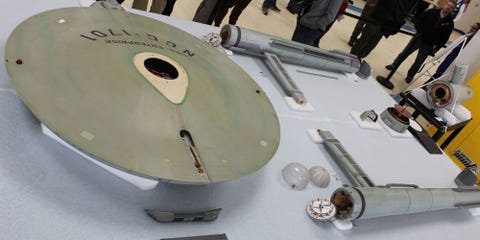
Where is…The Starship Enterprise Model Now?

Star Trek was a great part of my childhood. The Starship Enterprise or USS Enterprise was as big of a character as Spock or Captain James T. Kirk.

The USS Enterprise was designed by the original TV show’s Art Director Walter M. Jefferies, with input from series creator Gene Roddenberry. The ship’s registration number, NCC-1701, was inspired by Jefferies’ own 1935 Waco YOC airplane – which had the registration number NC-17740.

Two models of the Enterprise from the original series are still known to exist. The main model measures about 11 feet long, 32 inches high, and weighs about 200 pounds. That is a huge model.

It was made mostly of wood and formed plastic. The two engine pods were made using sheet metal tubes.

A second model, measuring about 18 inches long, was also used for some special effects shots in the series. It was made and fitted with blinking lights.

In 1974, the large Enterprise model was donated by Paramount Pictures to the Smithsonian Institute. It has been on display at their Air and Space Museum.

Walter’s brother John Jefferies owned the smaller model until December of 2001… it was then sold to a private collector.

So if you want to see the large USS Enterprise you will have to go to the Smithsonian. It is the one that appeared in every episode.

Restoring the original model at the Smithsonian. If you want to read about it…cool article here… https://www.popularmechanics.com/culture/tv/news/g2454/the-restoration-of-the-original-star-trek-enterprise-is-underway/

image

Creedence Clearwater Revival – Lodi

Every bar band who has ever played this song in hole in the wall bar… can relate to the lyrics. This song was the B-Side to Bad Moon Rising. CCR and The Beatles had the best double-sided singles of anyone in my opinion.

Lodi is a city in California located in the central valley, about 38 miles south of Sacramento and 87 miles away from Oakland. Fogerty and his earlier band (The Golliwogs) often performed in out of the way towns like Lodi.

Because of being the B side… Lodi peaked at #52 in the Billboard 100 while the A-side Bad Moon Rising peaked at #2 in 1969.

Drummer Doug Clifford on Lodi California: “There were nine people in there, they were all locals, they were all drunk and all they did all night was tell us to turn it down.”

From Songfacts

In Fortunate Son: My Life, My Music, John Fogerty explained that the inspiration for “Lodi” came from trips with his father around central California, an area of the world where he “felt very warm and special.” This seed of an idea grew into a story about a traveling musician whose career “is in the rearview mirror.” Fogerty was only 23 when he wrote this song about an aging musician.

This song is a reflection on John Fogerty’s days with The Golliwogs, an early version of Creedence Clearwater Revival. They had to struggle for success, playing wherever they could with dilapidated equipment and an often indifferent audience. He did not want a return to the Bad Old Days.

Al Wilson recorded a cover of this song. His version was issued on Soul City Records in America and on Liberty Records in the United Kingdom. It was played extensively in the few underground “Northern Soul” clubs of England during the late 1960s and early ’70s, getting its first exposure at the famous Twisted Wheel Club Allnighters in Manchester, England. 

In a radio interview, John Fogerty said when he was young his parents took him and his brother to camp at Lodi lake (called Smith lake then) and they hated camping there. So later on they wrote a song about Lodi using their old hatred for the place. 

Tesla did an acoustic version of this song that was included on their 1990 live album, Five Man Acoustical Jam. Each band member got to pick a song to cover for the set, and Tesla drummer Troy Luccketta chose “Lodi” since he was born there.

Lodi

Just about a year ago
I set out on the road
Seekin’ my fame and fortune
Lookin’ for a pot of gold
Thing got bad and things got worse
I guess you know the tune
Oh Lord, stuck in Lodi again

Rode in on the Greyhound
I’ll be walkin’ out if I go
I was just passin’ through
Must be seven months or more
Ran out of time and money
Looks like they took my friends
Oh Lord, I’m stuck in Lodi again

A man from the magazine
Said I was on my way
Somewhere I lost connections
Ran out of songs to play
I came into town, a one night stand
Looks like my plans fell through
Oh Lord, stuck in Lodi again

If I only had a dollar
For every song I’ve sung
Every time I had to play
While people sat there drunk
You know, I’d catch the next train
Back to where I live
Oh Lord, stuck in a Lodi again
Oh Lord, I’m stuck in a Lodi again

Roy Orbison – Running Scared

Running Scared is a song written by Roy Orbison and Joe Melson. The song peaked at #1 in the Billboard 100 and #9 in the UK. Roy’s voice turns this  into something more than just a pop song.

Something I’ve read about this session. Roy wasn’t happy with his first couple of takes. He felt he wasn’t singing that final verse loud enough. The orchestra seemed to be drowning him out. He’d been singing that final note in falsetto, and he finally decided to just sing it full-on, singing it as hard as he could. Orbison sang so hard the musicians in the orchestra stopped playing. They were stunned.

Running Scared, like many of his other songs, was recorded in RCA Studio B in Nashville with the session pros known as “The A-team.”

From Songfacts

A song called “Running Scared” delivered in the trembling tones of Roy Orbison sure sounds pretty bleak, especially when he starts singing about the girl’s past love and how she still feels for him. At the end, however, we find out that everything works out for the best, and the girl walks away with the singer. Orbison’s plaintive voice led many to believe that all his songs were based on misery, but he liked to point out that this one has a happy ending.

Orbison began his career with Sun Records in Memphis, where he was a Rockabilly singer – in 1956 he reached #59 US with “Ooby Dooby,” recorded with his group the Teen Kings. As a songwriter, he also cracked the charts with “So Long I’m Gone” (#72 for Warren Smith in 1957) and “Claudette” (#30 in 1958 for The Everly Brothers).

After moving to Monument Records, Orbison went to Nashville and teamed with fellow songwriter Joe Melson. The pair began writing more operatic songs that would become huge hits for Orbison and define his style – songs that “give you an up mood while you’re crying,” as Melson put it. Their first major success was “Only The Lonely (Know The Way I Feel),” which was followed by “Blue Angel,” “Up Town,” “I’m Hurtin'” and “Running Scared,” which the pair claimed they wrote in just five minutes.

 The engineer on these sessions was Bill Porter, who gave this song an exaggerated dynamic range, meaning some parts are very quiet and others are very loud. While most songs of the era had a range of about 3 decibels, Porter said that this one has 24.

This was the last song Roy Orbison ever sung live. His final performance was on December 4, 1988, just two days before his sudden passing, at a Cleveland-area venue. As was his usual habit, Orbison closed the show with “Running Scared.”

Running Scared

Just runnin’ scared each place we go
So afraid that he might show
Yeah, runnin’ scared, what would I do
If he came back and wanted you

Just runnin’ scared, feelin’ low
Runnin’ scared, you love him so
Just runnin’ scared, afraid to lose
If he came back which one would you choose

Then all at once he was standing there
So sure of himself, his head in the air
My heart was breaking, which one would it be
You turned around and walked away with me.

My Top Ten Favorite Guitar Solos

These are my favorite guitar solos. Some of these solos are intricate but some are pretty simple. I picked ones out that I have always liked. Some of them are not considered great but I always thought they were memorable. They caught my ear for one reason or another.


1. Cream – Crossroads – A live solo by Eric Clapton. He pulls notes out of the air and turns this cover of the Robert Johnson song into a great rock track.

2. Beatles – While My Guitar Gently Weeps – One of the few times someone else played on a Beatles track. This was Eric Clapton playing this solo. Eric played his guitar through a Leslie cabinet to make it more “Beatlely”

3. Jimi Hendrix – All Along The Watchtower – Jimi made this Bob Dylan song into his own.

4. Dire Straits – Sultans of Swing – I can hum this one all the way through. I know it better than the lyrics.

5. Elvis Presley – That’s Alright Mama – Scotty Moore nails this solo. It’s very simple but it’s perfect.

6. The Rolling Stones – Sympathy For The Devil – Keith’s solo compliments the song perfectly.

7. Led Zeppelin – Heartbreaker – My favorite solo by Jimmy Page

8. Tom Petty – Breakdown – Mike Campbell’s solo is just as part of the song as the lyrics are…

9. Queen – We Will Rock You – Not a difficult solo but catchy. This solo was one of the first ones that I ever noticed. Brian May plays solos you can hum.

10. Badfinger – Baby Blue – A very simple solo but it fits this great power-pop song.


Blodwyn Pig – Dear Jill

I want to thank Val for bringing up this band and song whom she saw open for Led Zeppelin. I love this era of hard blues but I wasn’t familiar with the band. When I heard this song…I knew I heard it before but couldn’t place it…it was featured in the great movie…Almost Famous.

What struck me was singer-guitarist Mick Abrahams’s vocals.

Ahead Rings Out was the debut album by British blues-rock band Blodwyn Pig. It was one of just 2 albums the band released, the other being Getting To This in 1970. The band was formed by former Jethro Tull guitarist Mick Abrahams in 1968.

Blodwyn Pig recorded two albums, Ahead Rings Out in 1969 and Getting To This in 1970. Both reached the Top Ten of the UK Albums Chart and charted in the United States.; Ahead Rings Out

The group was finished by Abrahams’ departure after 1970’s Getting to This. They briefly reunited in the mid-’70s, and Abrahams was part of a different lineup that reformed in the late ’80s; they have since issued a couple of albums in the 1990s.

Dear Jill

Sorry babe, but I won’t be home,
Won’t be home tomorrow.
Sorry darlin’ but I got to let you
Gotta let you down
Your wasten’ my time
Got no love
Love left to give you anymore.

I gotta look for, I gotta find me a brand new
Find me a brand new woman
You know I gotta find, the one that won’t
The one that won’t run around
You took everything I had, but I got no love,
Love left to give you anymore.

The Who – Pinball Wizard

It wasn’t the highest-charting song (See Me, Feel Me peaked at #12) but probably the most well-known song off their concept album Tommy.

It was the last song written for Tommy. Townshend wrote it when he found out influential UK rock critic Nik Cohn was coming to review the project. Townshend knew Cohn was a pinball fanatic, so he put this together to ensure a good review. Cohn gave it a great review, and pinball became the main theme of the rock opera.

After writing this song for Nik Cohn, Townshend almost didn’t even mention it to the band because he hated it so much. They told him to play it and told him he had written a hit. Meanwhile, he thought it was a mindless, badly written song.

The song peaked at #19 in the Billboard 100, #4 in the UK, #6 in Canada, and #8 in New Zealand.

From Songfacts

This is part of Tommy, the first “rock opera.” Tommy is about a young man who is deaf, dumb, and blind, but becomes a pinball champion and gains hordes of adoring fans. It was made into a play and continues to run as an off-Broadway production.

Tommy was made into a movie in 1975 starring Jack Nicholson, Ann Margaret, Tina Turner, and Roger Daltrey (who played Tommy). Elton John made an appearance as The Pinball Wizard and performed this song. His version hit UK #7.

Pete Townshend wrote this. It existed mostly in his head while they were recording it, and the other members of The Who had no idea how most of the story would end until they finished it. Townshend was not credited as the only songwriter on the project – John Entwistle wrote “Cousin Kevin” and “Fiddle About,” and Keith Moon got credit for “Tommy’s Holiday Camp.”

The character Tommy played pinball by feeling the vibrations of the machine. Townshend liked how that related to listeners picking up the vibrations of the music to feel the story.

The single version was sped up to make it more radio-friendly.

This was the most famous and enduring song from the Tommy project. Along with “See Me, Feel Me,” it is one of 2 songs from the album that The Who played throughout their career.

The Who performed this at Woodstock in 1969. The song was still fairly new, so many in the crowd did not recognize it. The Who were given the early morning slot, so they ended up playing this as the sun came up.

The Who performed the entire album from start to finish on their subsequent tour. Two of the dates were in the Metropolitan Opera House in New York City.

The famous guitar riff was sampled by The Shocking Blue on their 1969 hit “Venus,” which was covered by Bananarama in 1986.

The album got The Who out of a financial mess. After a legal battle with their manager, Shel Talmy, and some bad business deals in England, they were facing bankruptcy if it didn’t sell.

According to the book The Duh Awards by Bob Fenster, Rod Stewart asked Elton John if he should accept an offer to sing in Tommy. Elton told him no way, “Don’t touch it with a barge pole.” A year later, The Who asked Elton John to sing the same song. Elton grabbed his barge pole and took the offer. “I don’t think Rod’s quite forgiven me for that,” he commented years later. 

The Dutch group The Shocking Blue used the guitar riff from this song for their 1969 hit “Venus.”

Townshend played a 1968 Gibson SG Special guitar on this song.

This features in a commercial for the Toyota Supra GR that debuted during the 2019 Super Bowl between the Rams and Patriots. In the spot, a driver navigates a life-size pinball game in the vehicle.

Pinball Wizard

Ever since I was a young boy
I’ve played the silver ball
From Soho down to Brighton
I must have played them all
But I ain’t seen nothing like him
In any amusement hall

That deaf, dumb and blind kid
Sure plays a mean pinball!

He stands like a statue
Becomes part of the machine
Feeling all the bumpers
Always playing clean
Plays by intuition
The digit counters fall

That deaf, dumb and blind kid
Sure plays a mean pinball!

He’s a pinball wizard
There has to be a twist
A pinball wizard’s got such a supple wrist

‘How do you think he does it?
I don’t know
What makes him so good?’

Ain’t got no distractions
Can’t hear no buzzers and bells
Don’t see no lights a-flashin’
Plays by sense of smell
Always gets the replay
Never seen him fall

That deaf, dumb and blind kid
Sure plays a mean pinball!

I thought I was The Bally table king
But I just handed my pinball crown to him

Even on my favorite table
He can beat my best
His disciples lead him in
And he just does the rest
He’s got crazy flipper fingers
Never seen him fall

That deaf, dumb and blind kid
Sure plays a mean pinball!

37 Years Ago Today

Where were you on February 28, 1983? It’s very possible you were watching the final M*A*S*H episode. I was one of the 106 million that tuned in.

Goodbye, Farewell and Amen – The last episode of Mash. The show was so strongly anticipated that commercial blocks were sold higher than for the Superbowl that year… from Wiki…  It still stands as the most-watched finale of any television series, as well as the most scripted watched TV show.

https://www.washingtonpost.com/news/morning-mix/wp/2018/02/28/106-million-people-watched-mash-finale-35-years-ago-no-scripted-show-has-come-close-since/

Image result for mash finale


The Cars – Drive 1984

I always favored the Cars first two albums and those string of hits…but I did like their later output as well. Cars frontman Ric Ocasek wrote this song, but he didn’t sing the lead vocal…their bass player Ben Orr did.

The song peaked at #3 in the Billboard 100 and #5 (1984) #4 (1985) in the UK

This was the Cars’ highest-charting US single and their second-highest charting UK single, the highest being “My Best Friend’s Girl.”  In the UK, this hit #5 on its initial release. It was reissued one year later and reached #4. The royalties from its reissue were donated to the Band-Aid Trust.

The song was on the album Heartbreak City released in 1984 and peaked at #3 in the Billboard Album Charts.

From Songfacts

A very melancholy song by The Cars, this is written from the perspective of a guy who’s watching a woman (whom he presumably used to date) “going down the tubes,” trying to get her to take a hard look at what’s going on in her life. 

Orr died of Pancreatic cancer in 2000. When he died, “Drive” was played in his honor at a memorial service at the Rock and Roll Hall of Fame.

Orr also sang lead on the first Cars hit: “Just What I Needed.”

The Cars resisted the urge to use automotive imagery in their songs; “Drive” is a rare instance where they did.

At the Live Aid concert, this was used as background music to film clips of famine stricken Africa. The group performed on the Philadelphia stage and included “Drive” in their set.

The video was directed by a 23-year-old Timothy Hutton, who had won the Oscar for Best Supporting Actor for his role in the movie Ordinary People. Hutton aspired to direct, so when Ric Ocasek of The Cars suggested he do it, Hutton jumped at the chance.

Hutton cast the Czechoslovakian model Paulina Porizkova as the female lead in the clip. Auditioning for the role was the first time she met Ocasek, whom she married in 1989.

The Cars performed this on Saturday Night Live on May 12, 1984. 

This was used in two 2019 episodes of the TV series Arrested Development: “Saving for Arraignment Day,” and “Check Mates.” It was also used in the movies Midnight Heat (2007), Transformers (2007) and The Squid and the Whale (2005).

After the death of Princess Diana, the UK radio station XFM banned certain songs that might upset people. Their list of barred songs included “Drive.”

The song was covered by Sixx: A.M. on their 2014 album, Modern Vintage. Regarding the decision to record their own version, Nikki Sixx said: “We had started going down the street of [the Elvin Bishop hit] ‘Fooled Around And Fell In Love.’ One day I called [vocalist James Michael] up and just sang the opening line to ‘Drive’, and [he] said, ‘That’s a Sixx: A.M. song!’ I think it was an opportunity to cover a song that is so defined that you have to be very careful not to wreck it. That song is so loved by so many people, including us, that we really wanted to pay a real tribute to it, and I believe we have.”

“It’s such a simple song – the original version was so simple, but that’s what was exciting about it,” Michael added. “In a way, it’s a blank canvas, but you need to respect the simplicity … that’s what was so fun about the version we did, especially when [DJ Ashba] started doing his guitar solo. Even that had to be carefully structured around what the original song was.”


Drive

Who’s gonna tell you when
It’s too late
Who’s gonna tell you things
Aren’t so great
You can’t go on
Thinking nothing’s wrong
Who’s gonna drive you home tonight

Who’s gonna pick you up
When you fall
Who’s gonna hang it up
When you call
Who’s gonna pay attention
To your dreams
Who’s gonna plug their ears
When you scream

You can’t go on
Thinking nothing’s wrong
Who’s gonna drive you home tonight

Who’s gonna hold you down
When you shake
Who’s gonna come around
When you break

You can’t go on
Thinking nothing’s wrong
Who’s gonna drive you home tonight