Power Pop fan, Baseball, Beatles, Alternative music, old movies, and tv show fan. Also anything to do with pop culture in the 60s and 70s... I'm also a songwriter, bass and guitar player. Not the slightest bit interested in politics at all.
This song was released in 1976 on the Ramones debut album. I first heard this album in the early 80’s…and was struck by the economical way they produced their songs. Rapid fire songs one after the other…
I would NOT recommend what the Ramones are stating here. Bass player Dee Dee Ramone wrote this song, which is about sniffing glue, a cheap and easy way to… well to kill some brain cells. This is a pastime of bored teenagers with very bad judgment.
Running just 1:34, no one will accuse the Ramones of ripping off Bob Dylan. The song consists of these lyrics repeated, rinsed and washed.
Now I wanna sniff some glue
Now I wanna have somethin’ to do
All the kids wanna sniff some glue
All the kids want somethin’ to do
The Ramones didn’t really want folks to sniff glue. Tommy Ramone said: “I have a feeling Dee Dee was talking about his childhood, how he actually thought it was some kind of release when he was a kid. I thought of it as a parody. He might have been a little more serious.”
Johnny Ramone: “We couldn’t write about love or cars, so we sang about this stuff, like glue sniffing. We thought it was funny. We thought we could get away with anything.”
This is one of the tracks on the Ramones debut album. On their follow-up, they included a song called “Carbona Not Glue,” which is about graduating to cleaning solvent for a cheap high.
Now I Wanna Sniff Some Glue
Now I want to sniff some glue Now I want to have somethin’ to do All the kids want to sniff some glue All the kids want somethin’ to do
1-2-3-4 Now I want to sniff some glue Now I want to sniff some glue Now I want to have somethin’ to do All the kids want to sniff some glue All the kids want somethin’ to do One-two-three-four-five-six-seven-eight
Now I want to sniff some glue Now I want to have somethin’ to do All the kids want to sniff some glue All the kids want somethin’ to do Now I want to sniff some glue Now I want to have somethin’ to do All the kids want to sniff some glue All the kids want somethin’ to do
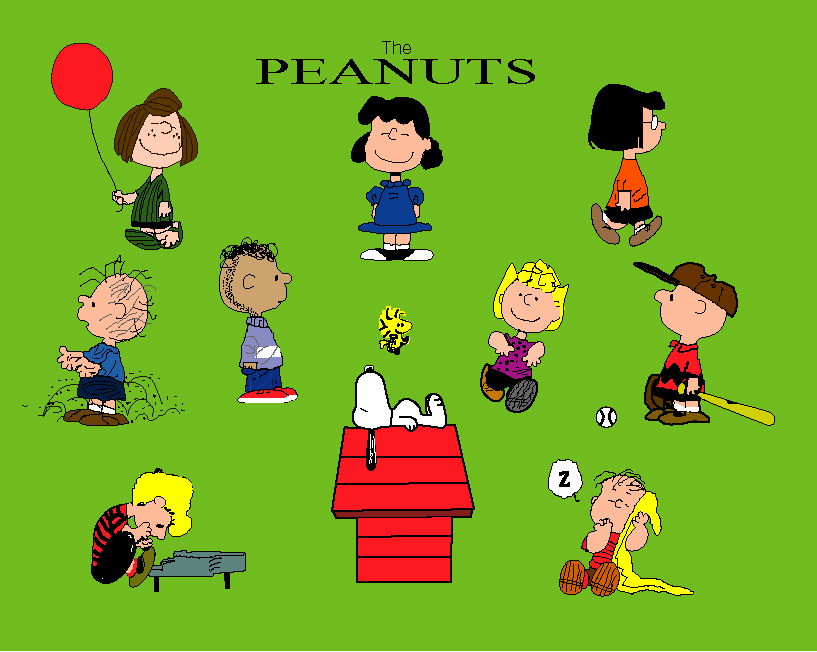
The Peanuts lived in a world where adults didn’t matter as much. The world was for kids only and anytime an adult came around and talked… all you heard was a wah, wah, wah wah… no words. All the kids owned their day to day activities. The Peanuts didn’t talk down to us…no they talked to us. They were also clever enough for adults to like.
Nobody ever wins every time in this life. Everyone loses sometimes…therefore everyone is Charlie Brown to an extent. Every person has failed at a big moments or at small moments. We felt for Charlie Brown because we felt for ourselves.
When my son was born…I thought oh great…Now I’m a grown up and I’m a wah, wah, wah, wah adult…My son will live his life and sometimes I will be just noise in the background.
Growing up, there was no other cartoon I looked forward to more than the Peanuts. Every holiday and any time one of the networks decided to show one… I was there. I would also read the occasional Sunday paper to see the Peanuts strip.
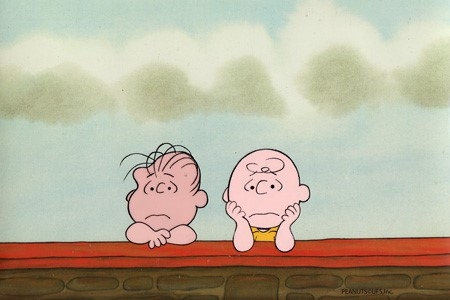
Everything from Linus telling us the true meaning of Christmas, Sally and Linus waiting for the Great Pumpkin, Lucy pulling that football from Charlie Brown, Snoopy being cool and taking care of Woodstock, Lucy being a Psychiatrist and Charlie Brown getting that sad looking Christmas tree…we got to peek into that world and listen to the wisdom that was going on while propped up on that brick wall.
Charlie Brown, one day when you grow up… I hope you end up with the little red head girl that you like so much and win just for once…for all of us.
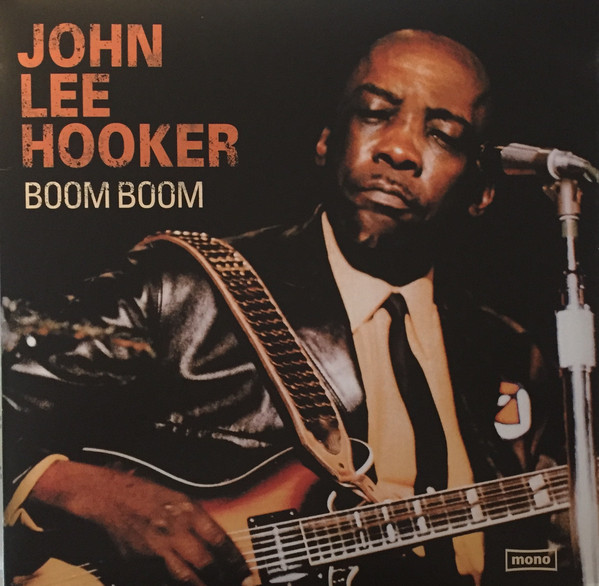
I wanted to throw some blues in this morning. I first heard Hooker’s version of the song while watching the Blues Brothers. I became an instant fan the second I heard it. It was written by John lee Hooker.
Boom Boom was the song that crossed over, marking his only entry on the US Hot 100 and becoming his signature song.
The song was released in 1962 and peaked at #16 in the Billboard R&B Charts and #60 in the Billboard 100.
Hooker recorded for Vee-Jay but members of Motown’s house band…The Funk Brothers… played on this. The Funk Brothers were great musicians and played on hundreds of hit records, but Motown didn’t pay them very well, so they would take gigs at other labels in the Detroit area to make extra money.
In 1992, this was used in a UK ad for Levi’s jeans. It was re-released that year and peaked at #16 in the UK charts and #24 in New Zealand.
In 1964 the Animals took the song to #43 in the Billboard 100 and #14 in Canada.
John Lee Hooker: “I used to play at this place called the Apex Bar in Detroit. There was a young lady there named Luilla. She was a bartender there. I would come in there at night and I’d never be on time. Every night the band would beat me there. Sometimes they’d be on the bandstand playing by the time I got there. I’d always be late and whenever I’d come in she’d point at me and say, ‘Boom Boom, you’re late again.’ And she kept saying that. It dawned on me that that was a good name for a song. Then one night she said, ‘Boom boom, I’m gonna shoot you down.’ She gave me a song but she didn’t know it.
I took that thing and I hummed it all the way home from the bar. At night I went to bed and I was still thinking of it. I got up the next day and put one and one together, two and two together, trying to piece it out – taking things out, putting things in. I finally got it down right, got it together, got it down in my head. Then I went and sang it, and everybody went, Wow! Then I didn’t do it no more, not in the bar. I figured somebody would grab it before I got it copyrighted. So I sent it to Washington, D.C., the Library of Congress, and I got it copyrighted. After I got it copyrighted I could do it in the bar. So then if anybody got the idea to do it I had them by the neck, because I had it copyrighted. About two months later I recorded it. I was on Vee-Jay then. And the record shot straight to the top. Then, after I did it, the Animals turned around and did it. That barmaid felt pretty good. She went around telling everybody I got John Lee to write that song. I gave her some bread for it, too, so she was pretty happy.”
From Songfacts
John Lee Hooker first recorded in 1948, and the next year released his classic “Boogie Chillen,” which eventually sold over a million copies. In the ’50s, he recorded under several different names (“Delta John” and “Birmingham Sam” among them) and refined his craft with constant live performances. By 1962, he was signed to Vee-Jay Records, who teamed him up with seasoned session players and tried to bring his music to a wider audience.
Hooker performed this when he appeared in the 1980 movie The Blues Brothers. It was the only movie Hooker ever appeared in.
Many blues bands have covered this over the years, including The Animals and The Yardbirds. It has become a blues standard.
Hooker didn’t play this live for a long time because he feared that he wouldn’t do it justice. He finally played it in his last two shows before his death.
This was used in a 2002 commercial for The Gap. In the ad, it was performed on roller skates by Baba Oje, a former member of Arrested Development. The advertising campaign, dubbed “For Every Generation,” used a variety of artists, including Willie Nelson, Ryan Adams, and Natalie Imbruglia.
Boom Boom
Boom, boom, boom, boom I’m gonna shoot you right down Knock you off of your feet And take you home with me Put you in my house Boom, boom, boom, boom
Ow ow ow ow ow Hmm hmm hmm Hmm hmm hmm hmm I love to see you strut Up and down the floor When you’re talking to me That baby talk I like it like that Oh yeah
Talk that talk Walk that walk
Won’t you walk that walk? And talk that talk And whisper in my ear Tell me that you love me I love that talk When you talk like that You knock me out Right off my feet Ho ho ho ho
Well, talk that talk And walk that walk Oh yeah Oh yeah Talk that talk, babe
Many Steve Miller songs I have heard too many times. This one hasn’t been worn out…at least not to me. Heart Like a Wheel came out in 1981 on the Circle of Love album. A great thin guitar sound on this song. The guitar makes the song to me.
Steve started his career more blues-oriented but with “The Joker” in 1973 started in a more pop/rock direction. If you listen to his music in the late sixties and early seventies it sounds completely different than this.
This song peaked at #24 on the Billboard 100 and #17 in Canada in 1981. Steve’s lyrics won’t ever be confused with Bob Dylan’s but the man can write a catchy pop/rock hook.
“Heart Like A Wheel”
I’ve got a heart like a wheel Feel like I got to roll Ooohh
Heart like a wheel I told you so And I’ve been loving you for so long You are the one Heart so real I love you so
Well, I can give what I take And you know I want to give you my love Babe I ain’t faking You know I want to give you my love
I’ve been loving you for so long You are the one Heart so real I love you so Come on and roll
I’ve been loving you for so long You are the one Heart so real I love you so
It takes two to make love It takes love to make a family real I got to know what you need I got to know what you really feel
And I’ve been loving you for so long You are the one Heart so real I love you so Come on and roll
You know it’s such a pity If you’re going to get the summertime blues Lovers everywhere are pairing off two by twos
And I’ve been loving you for so long You are the one Heart so real I love you so
I’ve been loving you for so long You are the one Heart so real I love you so
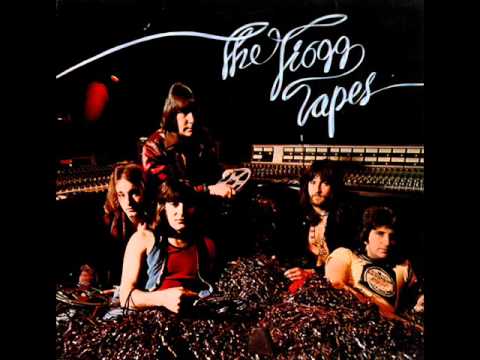
These tapes helped inspired the movie Spinal Tap and The Troggs were forever known for these tapes just as much as their big hits like Wild Thing, A Girl Like You, and Love Is All Around. If you are a rock fan and a comedy fan…I think you will like it.
They were working on a song in a session in 1970 but things weren’t going well, and the session degenerated into a F bomb fest…but a hilarious F bomb fest. A copy of the recording somehow made it onto the bootleg market and became legendary. Saturday Night Live even parodied the Troggs Tapes in a sketch with Bill Murray and John Belushi except using “flogging” in place of the real word.
A friend of mine had a tape of this in the 80s. It was many generations old but it was really funny. We would listen to it over and over and cry laughing. You can see where Spinal Tap got a lot of their ideas. The F word is used liberally to say the least. I’m positive the Troggs were not the only band to have these kind of talks but their engineer (Clive Franks) who evidently had a great sense of humor let the tapes roll….and later it was passed around as a bootleg.
Later on when Clive Franks was asked by his boss (Dick James) about the tape…he thought he was fired…but James wanted a copy…then the Troggs wanted to hear it including their lead singer Reg Presley…at first he was unhappy with the release, but later gave a positive opinion of it.
Later on Clive Franks was introduced to George Harrison as “the guy who made the Troggs Tapes” and George shook his hand and told him how much he enjoyed it.
This tape made it around to every major performer in the 1970s. Everyone from Bob Dylan, Aerosmith, Jeff Lynne, to George Harrison.
The release gave the Troggs an infamous reputation, though it also raised their public profile. Though the band’s career collapsed shortly after the session, it was revitalized by the bootleg’s notoriety and led to the band reforming and becoming popular with punk rock audiences towards the end of the 1970s.
If you have sensitive or virgin ears…don’t listen!
“Put a Little Bit of F***ing Fairy Dust Over the Bastard!”
This is a partial transcript…you don’t really need it to follow the “conversation.”
Ronnie Bond: “That is a fuckin’ No 1! If that baaa-stard don’t go, then Oi’ll fuckin’ retoire. Oi fuckin’ do!”
Dennis Berger (producer): “I agree – I think it is a good song.”
Ronnie: “But it fuckin’ well won’t be unless we spend a little bit of fuckin’ thought and imagination to fuckin’ make it a fuckin’ No 1. You’ve got to put a little bit of fuckin’ fairy dust over the baaa-stard!”
Dennis: “Well, we’ll put some fairy dust over it – I’ll piss over the tape.”
Ronnie: “Oi don’t know what it needs, Den …”
Dennis: “Aaah! I know that it needs strings – that I do know.”
Reg Presley: “You’ve got to have a fuckin’ bloke who says: ‘Oi’ve got a fuckin’ sound in here that’s fuckin’ great.'”
Tony Murray: “We need a producer who says: ‘You’re not doing that; you’re fuckin’ doing this.'”
Dennis: “Did you do exactly what Larry Page said?”
Chorus: “Yep!”
Tony: “That’s how they had hit records.”
Reg: “Because there was just one fuckin’ mind on it – not fuckin’ seven or eight.”
Ronnie: “We didn’t even fuckin’ get a say in it – it was fuckin’, wham, it was in the can regardless. You reckon that was bad? Fuck me! One take, that’s it, finish. You never ‘ad a fuckin’ say – it was out. As weak and fuckin’ insipid we used to think.”
Reg: “We thought With A Girl Like You was fuckin’ terrible and let’s go and do it again. And that was the only fuckin’ time he let us fuckin’ have our way. And could we get anything fuckin’ better?”
Ronnie: “No.”
Reg: “Fuckin’ … the first thing he fuckin’ did was it.”
Ronnie: “All fuckin’ day. We went in there at nine o’ clock and we didn’t come out till, fuck, about three o’clock the next fuckin’ morning, and they had Mick Jagger, you name it, they were fuckin’ in there to try and make it better.”
Reg: “What about a fuckin’ 12-string on it?”
Dennis: “Play the beginning again, Barry.”
(The identity of “Barry” is now lost in the mists of time. Vigorously-strummed guitar chords are affirmed as just the ticket by a slightly demented shriek of “Yeah! … No!!” from Reg.)
Reg: “You ‘ad it there at the beginning. Ron. It was soundin’ good. Ron?
Ronnie? Just listen for a sec …”
Ronnie: “You can say that all fuckin’ night, but Oi just cannot feel it any other than what Oi’ve been fuckin’ doing it.”
Reg: “You have played it tonight.”
Ronnie: “Don’t expect fuckin’ miracles just like that.
Reg: “It’s fuckin’ there – better than there. Oi can’t fuckin’ hear it any other way but that.”
Reg: “But you have done it. You did it.”
Tony: “Play duh-duh duh-duh duh duh.”
Reg: “No, no more beats.”
Tony: “Play duh-duh duh-duh duh-chuh on whatever drum you were playing it on originally.”
Reg: “You did it. You went duh-duh duh-duh duh chuh.”
Ronnie: “You can say that all fuckin’ night, but you won’t listen.”
Tony: “We can keep on trying …”
Ronnie: “You can say that all fuckin’ night, but you won’t listen.”
Tony: “We can keep on trying …”
Ronnie: “Yeah – well just shut your fuckin’ mouth for five minutes and give me a fuckin’ chance to do it. Don’t keep fuckin’, right into that fuckin’ microphone. Duh duh derh duh duh derh. Fuck me, Reg. Just fuck off, in there, and just keep going, fuckin’ do it, don’t just …”
Reg: “Well, just fuckin’ think, then.”
Ronnie: “Don’t just keep saying they’re not loud enough. Oi know they’re fuckin’ right. Oi can hear it ain’t right. Weeell, fuck me.”
Reg: “You can hear it’s fuckin’ not right, too.”
Ronnie: “Oi fuckin’ can, and Oi’m the one that’s playing it so Oi don’t want to hear … fuck … fuck … in me fuckin’ head, that’s what Oi gotta fuckin’ do, then Oi’ll do it. Yer big pranny.”
(Tum-tum-tum-ti-tum, goes the bass guitar. Tum-tum-tum-ti-tum, tum-tum-tum-ti-tum…)
Reg: “One, two, a one, two, three, four … Yer doing it fuckin’ wrong!”
Ronnie: “Oi know Oi am.”
Reg: “Dubba dubba dubba chah, dubba dubba dubba chah, dubba dubba dubba chah, dubba dubba … You din i’ in the beginning. Bloody hell, Oi can’t play to tha’.”
Ronnie: “Nor can fuckin’ Oi.”
Reg: “Well, you’re fuckin’ doin’ it!”
Ronnie: “Well, Oi can’t fuckin’ play to it either.”
Reg: “Hahahaha. Why don’t you just do what you fuckin’ started out doing – dubba dubba dubba chah. On your top one, dubba dubba dubba chah. Dubba dubba dubba chah.”
(On tom tom, Ronnie attempts to follow his singer’s sage advice. It sound hopeless.)
Reg: “Nooooo!”
Ronnie: (very heatedly) “Why don’t you fuckin’ … You’re talking out of the back of your fuckin’ aaaarse because all you want then is the same fuckin’ thing that Oi was playing fuckin’ originally in that baaa-stard.”
Reg: “But on different fuckin’ drums!”
Ronnie: [agitated] “Then all you want, then, is fuckin’ tha’ one, and the fuckin’ bass drum playing the same thing.”
Reg: “You’re the fuckin’ drummer!”
Ronnie: “Yes, you fuckin’ do, ‘cos that’s all you’re fuckin’ doing. You ain’t playing any fuckin’ thing else – orl roi’, Oi’ll play tha’. Oi’m goin’ nah-nah-nah-nah-nah-bomp, nah-nah-nah-nah-nah-bomp …” (He thumps in dull accompaniment, sarcastically).
Reg: “You don’t fuckin’ listen, that’s your trouble. Oi’m only asking you to do half of it on one drum, half of it on the other and the bang wherever you want to bang … Ronnie, can you ‘ear me? Wha’ abou’ trying’ i’ not just on that top skin floor and then your floor tom-tom, but split your hands so’s that one beat is doin’ it on the top drum, one’s doin’ it on the floor tom tom, then your bass.”
(A tinny tattoo beats out gamely.)
Reg (philosophically): “Fuckin’ drummer. Oi shit ’em.”
The song was on their album Rubber Soul released in 1965. What stands out is the Motown type bass line being played by Paul while George doubled him on guitar. Paul played lead with slide guitar.
George Harrison suggested the R&B arrangement and it was implemented as the rhythmic style of the song. The introduction to the song is confusing to some though.
This is another song by Lennon/McCartney but with Lennon saying it was mostly Paul’s song. Lennon though did write a lot of the lyrics as Paul’s original lyrics were pretty bad…per Paul. It was not released as a single.
According to McCartney, “‘Drive my car’ was an old blues euphemism for sex”.This expression was more common in the pre-automatic shift era of automobiles.
The opening two measures of “Drive My Car” still leave studied “musicologists” scratching their heads to this day. Producer Mark Hudson, who had worked with Ringo on his solo career for ten years, has related how he asked the drummer about the song’s introduction, saying that “he could never figure it out.” Ringo couldn’t even explain it.
The Beatles seem to do that a lot… A Hard Days Night intro and the beginning to I Want To Hold Your Hand have musicologist debating how something was done…and how it worked.
Paul McCartney:“The lyrics were disastrous and I knew it. Often you just block songs out and words just come into your mind and when they do it’s hard to get rid of them. You often quote other songs too and you know you’ve got to get rid of them, but sometimes it’s very difficult to find a more suitable phrase than the one that has insinuated itself into your consciousness.” Other songs he used as a template in this case most likely include “Can’t Buy Me Love” and “I Feel Fine,” both of which include lines about buying a “diamond ring” for someone.
Paul McCartney: “”It was wonderful because this nice tongue-in-cheek idea came and suddenly there was a girl there, the heroine of the story, and the story developed and had a little sting in the tail like ‘Norwegian Wood’ had, which was ‘I actually haven’t got a car, but when I get one you’ll be a terrific chauffeur.’ So to me it was LA chicks…and it also meant ‘you can be my lover.’ ‘Drive my car’ was an old blues euphemism for sex, so in the end all is revealed. Black humor crept in and saved the day. It wrote itself then. I find that very often, once you get the good idea, things write themselves.”
From Songfacts
Laden with sexual innuendo, this song is about a guy who meets an aspiring actress, who tells him he can “drive my car,” as she has a keen interest in him, and might even be in love.
She keeps trying to lure him in (“I can show you a better time”), but when he finally agrees to take the job, she admits that she doesn’t have a car, but still wants him to be her driver. It’s pretty clear that all this driving talk is leading to sex, but there’s no proof that it isn’t just a song about a guy, a girl, and a car – making it another radio-friendly Beatles track.
Originally, it was a very different song lyrically, with the chorus, “I can give you golden rings, I can give you anything, baby, I love you.” Knowing that storyline would lead them nowhere good, they hashed it out until they came up with “Drive My Car” for the title, and changed the song so it was the woman soliciting the man.
Paul McCartney played bass, piano and lead guitar on this one; George Harrison played guitar and did backing vocals. John Lennon sang lead with McCartney and also played tambourine.
The “beep beep” refrain is a take-off on The Beatles own “yeah, yeah yeah”s in “She Loves You” as well as a nod to The Playmates song “Beep Beep” (a #4 US novelty hit in 1958).
Paul McCartney played this at halftime of the 2005 Super Bowl. The year before, Janet Jackson exposed a breast on live TV, which caused a great deal of controversy. McCartney was a solid choice because he was unlikely to offend anyone.
At the 2005 Live 8 Concert in London, McCartney performed this in a duet with George Michael.
The title of the album comes from “plastic soul,” a derogatory phrase McCartney had overheard black musicians using about Mick Jagger. (“Plastic” in those days meant anything fake or processed.) Paul can be heard using the phrase in studio chatter on June 14, 1965, during recording of the “Help!” B-side “I’m Down.” Reliably, he put his own spin on the phrase.
Drive My Car
Asked a girl what she wanted to be She said, “baby, can’t you see I want to be famous, a star on the screen But you can do something in between
Baby, you can drive my car Yes, I’m gonna be a star Baby, you can drive my car And maybe I’ll love you”
I told a girl that my prospects were good And she said, “baby, it’s understood Working for peanuts is all very fine But I can show you a better time
Baby, you can drive my car Yes, I’m gonna be a star Baby, you can drive my car And maybe I’ll love you”
Beep beep’m beep beep yeah
Baby, you can drive my car Yes, I’m gonna be a star Baby, you can drive my car And maybe I’ll love you
I told a girl I can start right away And she said, “listen, babe, I got something to say I got no car and it’s breaking my heart But I’ve found a driver and that’s a start
Baby, you can drive my car Yes, I’m gonna be a star Baby, you can drive my car And maybe I’ll love you”
I really like this song…you have a crunchy brit sound guitar open it up with another great rhythm guitar intertwining with it.
Mutt Lange produced 4 songs on this album (Shades in Bed) including this one when he had to leave the album for prior commitments. the rest of the album was produced by Tim Friese-Greene. The last song recorded, “The Phone,” was a late addition to the album and was produced by Huw Gower.
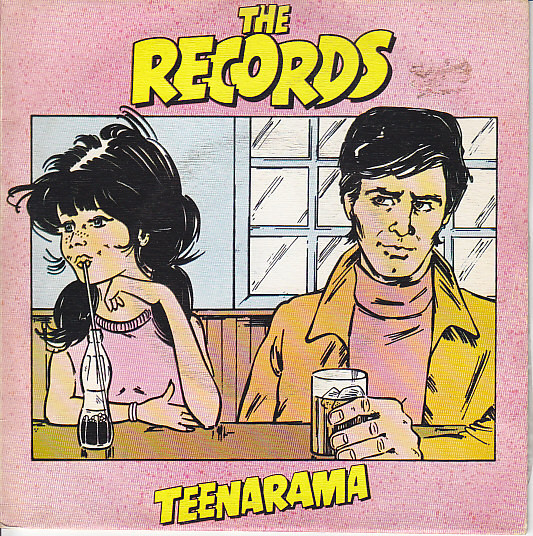
The Records were an English powerpop band formed in 1978. Teenarama was off their debut album Shades in Bed. The band included John Wicks – rhythm guitar, vocals, Huw Gower – lead guitar, vocals, Phil Brown – bass guitar, vocals, and Will Birch – drums, vocals.
AllMusic called the album “a pure pop masterpiece”
Teenarama
I wanted a holiday You sure had a lot To say every night I thought that a younger girl Could show me the world That was right Co-co-co-cola Is all you ever drink The way you smile The way you wink
Teenarama Is what you’re givin’ me (What you’re givin’ me) Teenarama Injections in the knee (Injections in the knee) Teenarama All that mellow drama Gimme gimme gimme gimme Gimme gimme Teenarama
I wanted a change of style To be with a juvenile For a week So I rented an apartment Then you went and lost the key
Sugar candy Is all you ever eat You’re so skinny You’re so sweet
Repeat Chorus
Monday School day You wait Weeks late Dirty star Coffee bar First bra Too far Ahhhh Co-co-co-cola Is all you ever drink The way you smile The way you wink
Great song by Elton that I heard early on in my life.
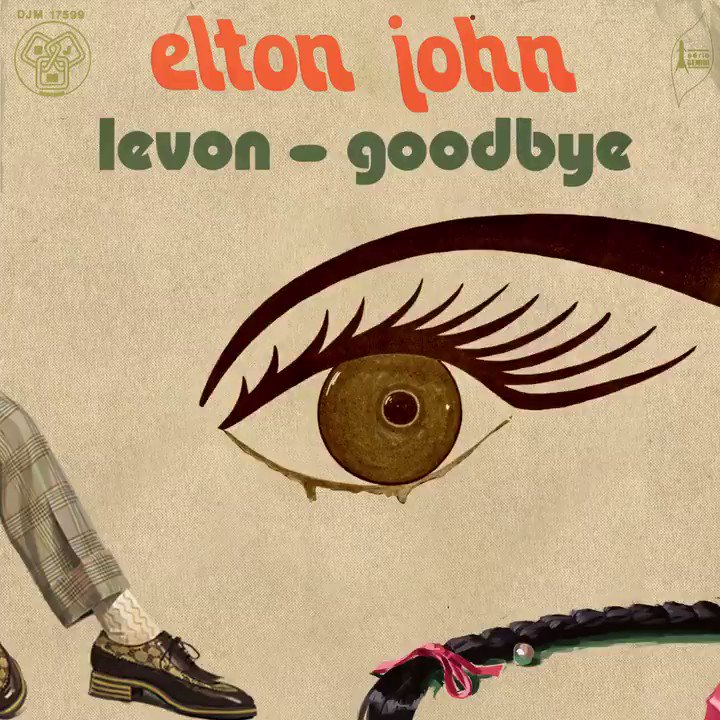
This was the first US single from Madman Across The Water, Levon runs 5:22 minutes and Elton would not let his record company cut it down for radio play. As a result many radio stations ignored it. The song didn’t chart high but proved to be an enduring song, earning airplay on classic rock and adult contemporary radio for decades to come.
The song peaked at #24 in the Billboard 100 and #6 in Canada in 1971.
The next single from the album was Tiny Dancer, which is even longer, at 6:12. Like Levon, that one fared poorly on the chart (#41) but… also became a classic. Neither song was issued as a single in the UK.
I always wondered if the song had anything to do with Levon Helm, but Bernie Taupin says that he simply made the name up because he likes it, and the song has nothing to do with Helm.
From Songfacts
In Susan Black’s book Elton John in His Own Words, Elton says of “Levon”: “It”s about a guy who just gets bored doing the same thing. It’s just somebody who gets bored with blowing up balloons and he just wants to get away from it but he can’t because it’s the family ritual.”
When Rolling Stone asked Taupin about the song in 2013, he insisted that he has no idea what he intended as the meaning. “It was a free-form writing,” he said. “It was just lines that came out that were interesting.
This is a great example of Taupin’s intricate, nuanced writing style that leads to many different interpretations. For instance, the “cartoon balloons” that Levon blows up all day could be balloons with cartoon characters printed on them, or perhaps something more figurative, like thought bubbles that appear in comic strips, indicating the thoughts that are constantly rising out of his consciousness.
Taupin and John made a great team because Elton could interpret his lyrics very well, giving life to the characters in the songs with a curious ambiguity that encouraged further listens. In many cases, Elton didn’t know what Taupin had in mind when he wrote the lyrics – when asked he would often reply, “you’ll have to ask Bernie.”
The actual New York Times page 1 headline that included the phrase “God Is Dead” is dated March 24, 1968; the full headline read, “‘God Is Dead’ Doctrine Losing Ground to ‘Theology of Hope’.”
The phrase also appeared in a major (page 3) article on January 7, 1970. Smaller pieces dated January and April 1966 that feature the phrase in their headings can also be found. None were on Christmas Day, but the January ones are close!
The cover art for the album was hand-embroidered on a Levi’s jacket. On the back, the track listing was hand-stitched. This kind of artwork has become scarce in the age of digital design.
Jon Bon Jovi covered this for the tribute album Two Rooms. Elton played piano on some of Bon Jovi’s recordings.
Sir Elton and his partner David Furnish became parents to a son born on Christmas Day 2010 to a surrogate mother in California. They named him Zachary Jackson Levon Furnish-John, which is how the baby boy ended up in this Songfact. It is assumed the name “Levon” was chosen because of the song’s line, “He was born a pauper to a pawn on a Christmas day.”
Levon
Levon wears his war wound like a crown He calls his child Jesus ’cause he likes the name And he sends him to the finest school in town
Levon, Levon likes his money He makes a lot they say Spends his days counting In a garage by the motorway
He was born a pauper To a pawn on a Christmas day When the New York Times Said God is dead and the war’s begun Alvin Tostig has a son today
And he shall be Levon And he shall be a good man And he shall be Levon In tradition with the family plan And he shall be Levon And he shall be a good man He shall be Levon
Levon’s sells cartoon balloons in town His family business thrives Jesus blows up balloons all day Sits on the porch swing watching them fly And Jesus, he wants to go to Venus Leave Levon far behind Take a balloon and go sailing, While Levon, Levon slowly dies
He was born a pauper To a pawn on a Christmas day When the New York Times Said God is dead and the war’s begun Alvin Tostig has a son today
And he shall be Levon And he shall be a good man And he shall be Levon In tradition with the family plan, woo And he shall be Levon And he shall be a good man He shall be Levon
And he shall be Levon And he shall be a good man And he shall be Levon In tradition with the family plan, woo And he shall be Levon And he shall be a good man He shall be Levon
I found the short video while looking around and thought I would post it. The drummers include Dave Grohl, Taylor Hawkins, Stewart Copeland, Questlove, Tre Cool, Max Weinberg, and Chad Smith.
In the span of just three minutes, we get a sense of exactly why the most famous drummers in rock and roll admire Ringo.
Another video I found is of a drummer explaining how Ringo played for the song and not to be recognized in the song.
Here is a drummer demonstrating how Ringo played for the song. He starts talking about Ringo around 50 seconds in.
This song was climbing in the charts in the top twenty when it was pulled. It was pulled because of the Kent State shootings and Neil Young wrote Ohio and CSN&Y wanted it released as soon as possible. Teach Your Children probably would have peaked in the top ten if not pulled.
The song peaked at #16 in the Billboard 100, #8 in Canada, and #19 in New Zealand in 1970.
Graham wrote this song while he was still playing with the Hollies but he never recorded it with them. He played it to Stephen Stills and Stills suggested a country arrangement which turned it into a hit.
Jerry Garcia performs the pedal steel guitar part of this track. He had been playing steel guitar for only a short period of time. Crosby told Nash he should ask Jerry to play steel guitar on the song. Garcia played on this song and Crosby, Stills, Nash, and Young worked with the Grateful Dead on harmonies for their acoustic albums Workingman’s Dead and American Beauty.
I would say it worked out well for both bands. Jerry told Graham Nash who wrote the song that he made a mistake but Graham wanted that take.
It was on the album Déjà Vu which peaked at #1 in the Billboard 100, Canada and #5 in the UK.
Graham Nash:I’d heard Jerry had just started playing pedal-steel guitar and asked if he would add a pedal track to my song. After the first take, I said, “Thanks, Jerry, you’re done.” “No, no,” he protested, “I fucked up that part when we go right into the chorus. Can I do another?”“Absolutely, do it,” I told him, “but I’m never going to use it. The first one was exactly what I wanted.”
And, of course, his pedal steel was one of the defining elements in that recording.
From Songfacts
Graham Nash wrote this song. The lyrics deal with the often difficult relationship he had with his father, who spent time in prison.
Graham Nash (from the liner notes of their 1991 boxed set): “The idea is that you write something so personal that every single person on the planet can relate to it. Once it’s there on vinyl it unfolds, outwards, so that it applies to almost any situation. ‘Teach’ started out as a slightly funky English folk song but Stephen (Stills) put a country beat to it and turned it into a hit record.”
Deja Vu was the first album the band recorded with Neil Young, but Young did not play on this.
According to the 2019 book Crosby, Stills, Nash & Young, Nash wrote the song while under the influence of hash. He taught it to the rest of the band in one day in the studio.
In Laurel Canyon: The Inside Story of Rock and Roll’s Legendary Neighborhood, Graham Nash is quoted as saying, “When I wrote ‘Teach Your Children’ and ‘Our House,’ we didn’t know what we were doing. ‘This sounds pretty fun, we can sing this, let’s do it!’ And then all of a sudden people are singing it back to me forty years later.”
An updated version with a new arrangement was used in a 1985 TV commercial for the Apple II computer. Bill Siddons, then manager for CSNY, told BAM magazine: “The whole idea of the spot was to show how to prepare your kids for the modern world, which is part of what ‘Teach Your Children’ is about.”
Shortly after writing this, Nash visited an art gallery and saw two photographs that crystallized the meaning of the song: Diane Arbus’ “Child with Toy Hand Grenade in Central Park” and Arnold Newman’s portrait of German industrialist Alfried Krupp. The singer told the news website Truthdig: “I put the ‘Hand Grenade’ photograph next to a picture of Krupp, who was the German arms magnate whose company was probably responsible for millions of deaths. It was an eerie photograph, a portrait, and the lighting is weird and his eyes are dark – a great image. And looking at them together I began to realize that what I’d just written [‘Teach Your Children’] was actually true, that if we don’t start teaching our children a better way of dealing with each other we’re f–ked and humanity itself is in great danger.”
At the end of The Office episode “Take Your Daughter To Work Day” (2006), Michael and Dwight perform this for the staff and their kids.
Teach Your Children
You who are on the road Must have a code that you can live by And so become yourself Because the past is just a good-bye. Teach your children well, Their father’s hell did slowly go by, And feed them on your dreams The one they picks, the one you’ll know by. Don’t you ever ask them why, if they told you, you will cry, So just look at them and sigh And know they love you.
And you, of tender years, Can’t know the fears that your elders grew by, And so please help them with your youth, They seek the truth before they can die.
Teach your parents well, Their children’s hell will slowly go by, And feed them on your dreams The one they picks, the one you’ll know by.
Don’t you ever ask them why, if they told you, you will cry, So just look at them and sigh and know they love you.
Love the guitar riff, the vibe, and the artist. To my surprise this was not released as a single in the US, but in 1995 a live version was used as the B-side of Kravitz’ “Rock And Roll Is Dead” single.
I first learned of Lenny Kravitz in 1989 with Let Love Rule which is probably my favorite song by him. I do like this one because it’s aggressive and right in your face. The song was released in 1993.
The song is about Jesus Christ, whom Lenny referred to as “the ultimate rock star.” It’s about how God gives choice to man about where to turn.
Lenny Kravitz:“I thought the subject matter was really interesting, because it’s coming from the mouth of Jesus Christ, as I thought. So basically, ‘Are you gonna go my way?’ meaning ‘my way of love.’ I had no idea that that song would become what it became. No idea. There was nothing on the radio like that. And the recording is so raw, it’s ridiculous.”
The music video, directed by Mark Romanek, finds Kravitz and his band performing beneath a brilliant chandelier. The clip earned him the MTV Video Music Award for Best Male Artist.
From Songfacts
. The opening lines spell it out:
I was born long ago I am the chosen I’m the one I have come to save the day And I won’t leave until I’m done
Kravitz played this on Saturday Night Live in 1993.
In an interview posted on his website, Kravitz explained the origin of this song: “We were just jamming in the studio. You know, I was jamming with Craig Ross, who I wrote the song with. It was one of those songs that happened in 5 minutes. We were jamming. I thought there was something happening. I told Henry to turn the tape machines on, and we played it. And that was it. And then I went and wrote the lyrics on a brown paper bag, I remember at my loft on Broome Street at the time. Went in and sang it the next day. And that was it.”
This was a #2 hit on the Modern Rock chart. Because it was released as an airplay-only single in the US, it wasn’t eligible for the Hot 100. At the time, many record labels chose to only release promo singles to radio stations so listeners would have to buy the whole album to hear the song. While the strategy worked for album sales, it also kept artists off the chart until the rules changed in 1998.
Are You Gonna Go My Way was Kravitz’ first Top 20 album in the US, where it peaked at #12. It hit #1 in the UK, Switzerland, Canada, and Australia.
This earned Kravitz Grammy nominations for Best Rock Vocal Performance, Solo and Best Rock Song. He lost to Meat Loaf for “I’d Do Anything For Love (But I Won’t Do That)” and Dave Pirner for Soul Asylum’s “Runaway Train,” respectively.
Tom Jones recorded this for the 1995 comedy The Jerky Boys. It’s also been covered by Robbie Williams, Mel B, and Adam Lambert.
This was used in the 1994 movie I Love Trouble, starring Julia Roberts. It also showed up on The Simpsons (“How I Spent My Strummer Vacation” – 2002) and Sex and the City (“Ghost Town” – 2001).
A remixed version was used at the opening theme to the 2001 video game Gran Turismo 3.
Are You Gonna Go My Way
I was born long ago I am the chosen I’m the one I have come to save the day And I won’t leave until I’m done
So that’s why you’ve got to try You got to breath and have some fun Though I’m not paid I play this game And I won’t stop until I’m done
But what I really want to know is Are you gonna go my way? And I got to got to know
I don’t know why we always cry This we must leave and get undone We must engage and rearrange And turn this planet back to one
So tell me why we got to die And kill each other one by one We’ve got to love and rub-a-dub We’ve got to dance and be in love
But what I really want to know is Are you gonna go my way? And I got to got to know
Are you gonna go my way? ‘Cause baby I got to know Yeah
I hope everyone is having a happy Monday…at least as happy as it can be.
I heard early REM albums from friends. They really made an impact with college kids and built a following. Then they released The One I Love and the dam burst. This song took it a step higher.
Peter Buck has commented that after this song’s success that the bands popularity soared. He mentioned that R.E.M. went from a respected band with a cult following to one of the biggest bands in the world.
This song was released in 1991 and on their Out of Time album. The song did very well. It peaked at #4 in the Billboard 100, #6 in Canada, #19, and #16 in New Zealand in 1991.
The title is based on the Southern expression “lost my religion,” meaning something has challenged your faith to such a degree you might lose your religion or cool.
REM was surprised when their record label chose this song as the first single from Out Of Time. Running 4:28 with no chorus and a mandolin for a lead instrument, it didn’t seem like hit material, but it ended up being the biggest hit of their career.
Michael Stipe revealed the lyrics about obsessional love were heavily influenced by The Police’s “Every Breath You Take,” which he called “the most beautiful, kind of creepy song.”
This won the Grammy in 1991 for Best Pop Performance by a Duo or Group with Vocal.
Peter Buck:“The music was written in five minutes. The first time the band played it, it fell into place perfectly. Michael had the lyrics within the hour, and while playing the song for the third or fourth time, I found my self incredibly moved to hear the vocals in conjunction with the music. To me, ‘Losing My Religion’ feels like some kind archetype that was floating around in space that we managed to lasso. If only all songwriting was this easy.”
From Songfacts
R.E.M. lead singer Michael Stipe wrote the lyrics, which he has said are about “obsession” and “unrequited love,” which is powerful and dangerous combination. Throughout the song, he is baring his soul, searching for hidden meaning and hopeful signs, but driving himself mad in the process.
“I love the idea of writing a song about unrequited love,” he told Top 2000 a gogo. “About holding back, reaching forward, and then pulling back again. The thing for me that is most thrilling is you don’t know if the person I’m reaching out for is aware of me. If they even know I exist. It’s this really tearful, heartfelt thing that found its way into one of the best pieces of music the band ever gave me.”
This song has its origins in guitarist Peter Buck’s efforts to try learn to play the mandolin. When he played back recordings of his first attempts, he heard the riff and thought it might make a good basis for a song. Explaining how the song came together musically, Buck told Guitar School in 1991: “I started it on mandolin and came up with the riff and chorus. The verses are the kinds of things R.E.M. uses a lot, going from one minor to another, kind of like those ‘Driver 8’ chords. You can’t really say anything bad about E minor, A minor, D, and G – I mean, they’re just good chords.
We then worked it up in the studio – it was written with electric bass, drums, and mandolin. So it had a hollow feel to it. There’s absolutely no midrange on it, just low end and high end, because Mike usually stayed pretty low on the bass. This was when we decided we’d get Peter (Holsapple) to record with us, and he played live acoustic guitar on this one. It was really cool: Peter and I would be in our little booth, sweating away, and Bill and Mike would be out there in the other room going at it. It just had a really magical feel.
And I’m proud to say every bit of mandolin on the record was recorded live – I did no overdubbing. If you listen closely, on one of the verses there’s a place where I muffled it, and I thought, well, I can’t go back and punch it up, because it’s supposed to be a live track. That was the whole idea.”
The video was directed by Tarsem Singh, who also did En Vogue’s “Hold On” and the Jennifer Lopez movie The Cell. It’s a very ambitious video filled with striking, vivid, biblical imagery.
The concept is based in part on Gabriel Garcia Marquez’ A Very Old Man with Enormous Wings. The novel tells the story of an angel who falls down from heaven and is displayed for profit as a “freak show.” Michael Stipe is a big Marquez fan and the whole idea of obsession and unrequited love is the central theme of the author’s masterpiece, Love in the Time of Cholera. The first line of that novel is: “It was inevitable: the scent of bitter almonds always reminded him of the fate of unrequited love.”
Michael Stipe’s dancing ties the video together as he moves like he is in the throes of revelation, a contrast to all the other characters who are barely moving. He wasn’t supposed to dance: The treatment had him singing lines from various poses, but when they shot it that way, it didn’t work at all. This put director Tarsem Singh’s grand production in jeopardy; he was so upset, he went to the bathroom and threw up. When he emerged, Stipe said, “Let me try to dance.”
There was no choreography – Stipe just let the spirit move him, and the results were sublime. He says his dancing is a mashup of Sinead O’Connor’s moves in her “The Emperor’s New Clothes” video and David Byrne’s gyrations in his “Once In A Lifetime” performances.
Stipe remembers being hot and bothered when recording his vocal. His heartfelt lyric needed a certain feel that was hard to achieve in the studio, so he recorded a lot of takes. He wasn’t happy with the engineer, who seemed out of it. “I was very upset,” he told Top 2000 a gogo. “I also got really hot because I was all worked up, so I took my clothes off and recorded the song almost naked.”
This was given the working title of “Sugar Cane” when the band demoed it in July 1990 at a studio in Athens.
A common misinterpretation of this song is that it was about John Lennon’s death, with the lyrics, “What if all these fantasies come flailing around” being a reference to Lennon’s last album Double Fantasy.
Michael Stipe took a laid-back approach with this song: “I remember that I sang this in one go with my shirt off. I don’t think any of us had any idea it would ever be … anything,” he noted in Part Lies, Part Heart, Part Truth, Part Garbage 1982-2011. Peter Buck added that Warner Bros. didn’t even want the song as a single, and everyone was surprised when it took off. “It changed our world. We went from selling a few million worldwide with Green to over 10 million. It was in that area where we had never been before which isn’t bad,” he said.
Peter Buck recalled to Uncut: “I bought a mandolin on tour in ’87, I think. It became a good songwriting tool. It never occurred to me to play mandolin in a bluegrass style. For me it was a rock instrument.”
Producer Scott Litt recalled his contribution to Mojo: “I remember mixing ‘Losing My Religion’ at Paisley Park. I had Bill (Berry, drums) nudging up to me and saying, ‘You know, I think the drums could be louder’, and he was spot on. The strings and the vocals are maybe more memorable, but the drums are really important. He’s even doubling the mandolin figure at the beginning. The last mix on that song was ‘drums boosted’ and that became the track.”
When introducing the song during an appearance on MTV Unplugged, Stipe pointed to the audience and said, “This is about you.” Mojo asked him what he meant. He replied shrugging, “No idea. It’s something I said on a night in 1991. I have no idea why I said it. Of course we attach the narrative in a song to the person with the voice, which is me. And so I get that. But it was not autobiographic.”
Artists to cover this song include Tori Amos, Lacuna Coil, Trivium and Swandive. Two versions have charted in America: the Glee Cast took it to #60 in 2010, and Dia Frampton’s version went to #54 in 2011.
The video was the big winner at the MTV Video Music Awards, winning six moonmen, including Video of the Year and Breakthrough Video.
Losing My Religion
(One, two, three, four, one, two)
Oh, life is bigger It’s bigger Than you and you are not me The lengths that I will go to The distance in your eyes Oh no, I’ve said too much I set it up
That’s me in the corner That’s me in the spotlight Losing my religion Trying to keep up with you And I don’t know if I can do it Oh no, I’ve said too much I haven’t said enough
I thought that I heard you laughing I thought that I heard you sing I think I thought I saw you try
Every whisper Of every waking hour I’m choosing my confessions Trying to keep an eye on you Like a hurt lost and blinded fool, fool Oh no, I’ve said too much I set it up
Consider this Consider this The hint of the century Consider this The slip That brought me to my knees Failed What if all these fantasies Come flailing around Now I’ve said too much
I thought that I heard you laughing I thought that I heard you sing I think I thought I saw you try
But that was just a dream That was just a dream
That’s me in the corner That’s me in the spotlight Losing my religion Trying to keep up with you And I don’t know if I can do it Oh no, I’ve said too much I haven’t said enough
I thought that I heard you laughing I thought that I heard you sing I think I thought I saw you try
But that was just a dream Try, cry Fly, try That was just a dream, just a dream, just a dream
I bought this single in 1981 and I still have it somewhere. After the opening chord (Abm) is strummed Gary US Bonds kicks into a very good Springsteen penned song. It peaked at #11 on the Billboard 100, #15 in Canada, #43 in the UK, and #11 in New Zealand. It came off the album Dedication.
This song was one of my favorite early 80’s hits. You could easily hear Springsteen singing this as well.
Bruce Springsteen, a big fan of Bonds, played his songs at many of his concerts in the ’70s before and after his rise to stardom. Gary had a #1 hit in 1961 with the song Quarter To Three.
. This was a comeback for Bonds and he was backed by members of the E Street Band and The Asbury Jukes. Bonds influenced Springsteen and Steve Van Zandt musically growing up.
I liked this song the first time I heard it…This bouncy song fit’s Gary’s voice and style perfectly.
“This Little Girl (Is Mine)”
Here she comes Walkin’ down the street You know she’s walkin’ just like She’s walkin’ to come and see me Oh, she’s so young and she’s so fine
I know what’s on your mind Know what you want to do But if you mess with her I’m gonna mess with you You better watch your step You better stay in line
This little girl is mine Oh-oh, this little girl is mine Oh-oh, this little girl This little girl This little girl is mine
Oh-oh, this little girl is mine Oh-oh, this little girl is mine Oh-oh, this little girl This little girl This little girl is mine
Well, if the world was mine to do with What I want to do, sir Well I’d wrap it up in a bow And give it all to her, yeah And all my love All of the time You know I’d hold her tight I’d never let her go And late at night You know I’d love her so Yeah, I’d treat her right So she’d never mind
This little girl is mine Oh-oh, this little girl is mine Oh-oh, this little girl This little girl This little girl is mine
Oh-oh, this little girl is mine Oh-oh, this little girl is mine Oh-oh, this little girl This little girl This little girl is mine Mine, mine, mine
[Instrumental Interlude]
Hey, you better watch out I’m telling you the score Are you going to be sweepin’ your Broken heart up off the floor Oh, and that ain’t all I’m telling you my friend I know what’s on your mind Know what you wanna do But if you mess with her I’m gonna mess with you You like the way she moves You like to watch her walk You better listen up ‘Cause man this ain’t just talk You better watch yourself You better stay in line
Now, mister I said This little girl is mine Oh-oh, this little girl is mine This little girl This little girl This little girl is mine
Oh-oh, this little girl This little girl This little girl is mine Oh-oh, this little girl This little girl
This little girl is mine Oh-oh, this little girl is mine Oh-oh, this little girl This little girl This little girl is mine
Yeah, yeah, yeah This little girl is mine Oh-oh, this little girl is mine Oh-oh this little girl This little girl This little girl She’s mine all mine
Now, this little girl is mine Oh-oh this little girl is mine Oh-oh this little girl This little girl This little girl is mine, mine, mine, mine
I got into Bob Marley and the Wailers a little later but better late than never. Jammin’ is on their ninth studio album Exodus. The album peaked at #20 in the Billboard Album Charts, #8 in the UK, and #46 in Canada.
In Jamaica, the word “jamming” refers to getting together for a celebration. Although it can also mean an impromptu musical session.
Marley wrote the song in exile in Nassau after the 1976 attempt on his life.
On December 3, 1976 several men raided Marley’s house and shot three included Marley but all survived. It was politically motivated…Marley and his band was rehearsing for a show that some viewed as Marley supporting the Prime Minister and his democratic socialist People’s National Party. Marley claimed he was neutral not supporting anyone. In the song Marley wrote the lyric No bullet can stop us now, we neither beg nor we won’t bow.
The gunmen were all captured and executed. The song peaked at #9 in the UK in 1977.
A detailed account of the assassination attempt is here.
Ooh, yeah! all right! We’re jammin’: I want to jam it wid you. We’re jammin’, jammin’, And I hope you like jammin’, too.
Ain’t no rules, ain’t no vow, we can do it anyhow: I’n’I will see you through, ‘Cause everyday we pay the price with a little sacrifice, Jammin’ till the jam is through.
We’re jammin’ – To think that jammin’ was a thing of the past; We’re jammin’, And I hope this jam is gonna last.
No bullet can stop us now, we neither beg nor we won’t bow; Neither can be bought nor sold. We all defend the right; jah – jah children must unite: Your life is worth much more than gold.
We’re jammin’ (jammin’, jammin’, jammin’) And we’re jammin’ in the name of the lord; We’re jammin’ (jammin’, jammin’, jammin’), We’re jammin’ right straight from yah.
Yeh! holy mount zion; Holy mount zion: Jah sitteth in mount zion And rules all creation.
Yeah, we’re – we’re jammin’ (wotcha-wa), Wotcha-wa-wa-wa, we’re jammin’ (wotcha-wa), See, I want to jam it wid you We’re jammin’ (jammin’, jammin’, jammin’) I’m jammed: I hope you’re jammin’, too.
Jam’s about my pride and truth I cannot hide To keep you satisfied. True love that now exist is the love I can’t resist, So jam by my side.
We’re jammin’ (jammin’, jammin’, jammin’), yeah-eah-eah! I want to jam it wid you. We’re jammin’, we’re jammin’, we’re jammin’, we’re jammin’, We’re jammin’, we’re jammin’, we’re jammin’, we’re jammin’;
Hope you like jammin’, too. We’re jammin’, we’re jammin’ (jammin’), We’re jammin’, we’re jammin’ (jammin’). I want to (i want to jam it wid you) – I want to –
I want to jam wid you now. Jammin’, jammin’ (hope you like jammin’ too). Eh-eh! I hope you like jammin’, I hope you like jammin’, ‘Cause (i want to jam it wid you). I want to … wid you.
I like – I hope you – I hope you like jammin’, too. I want to jam it; I want to jam it.
Duel was a TV movie that came out in 1971. It’s a great suspense movie that will keep you entertained.
It was Steven Spielberg‘s first full-length movie. It came out as a TV movie in the US but after some scenes were added it was released in theaters in Europe and Australia. It starred Dennis Weaver. This is a very good first movie by Spielberg. It had some grit to it that some of his movies lack…probably because of it’s low budget.
Duel was much better than your regular TV movie. Dennis Weaver was superb in it. Another star was the Truck itself. It had its own personality. This is one of the best TV movies ever made.
Steven Spielberg told Dennis Weaver at one time that he watches this movie at least twice a year to see what he did as far as techniques.
The story is simple but effective. It still works today.
It’s about a man who is driving to a business meeting and part of his journey is through the desert. He starts being followed by an ugly as hell diesel Peterbilt truck. The truck starts passing Weaver and then starts bumping him later on. The suspense in this movie is great. You cannot see the truck driver but he has plates from all over the US that makes you think he picks random people out and starts harassing them.
It reminds you of a Hitchcock film. The suspense builds and builds and you feel Dennis Weaver’s fear.
Weaver is run off the road by the truck and he sees a diner.
He stops at a diner and phones his wife about a fight they had the night before… He gets off the phone and thinks he finds the truck driver that’s been targeting him for miles inside the cafe…
If you like suspense movies the movie is worth a watch.







 PowerPop... An Eclectic Collection of Pop Culture